As weapons companies make money, depleted uranium destroys lives
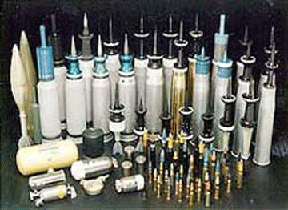 Uranium Weapons Still Making Money, Wreaking Havoc http://www.counterpunch.org/2014/05/15/uranium-weapons-still-making-money-wreaking-havoc/ by JOHN LAFORGE The US Army has awarded General Dynamics a $12 million contract to deconstruct and dispose of 78,000 depleted uranium anti-tank shells. The Pentagon’s May 6 announcement calls for “demilitarization” of the aging shells, as newer depleted uranium rounds are added to the US arsenal.
In the perpetually profitable business of war production, General Dynamics originally produced and sold some of the 120-millimeter anti-tank rounds to the Army. One of the richest weapons builders on earth, General Dynamics has 95,000 employees and sells its wares in 40 countries on six continents.
The International Coalition to Ban Uranium Weapons in Manchester, England, reports the armor-piercing shells to be disassembled are thought to be the large 105-millimeter and 120-millimeter anti-tank rounds. Depleted uranium, or DU, weapons are made of extremely dense uranium-238. More than 700,000 tons of DU has been left as waste in the US alone from the production of nuclear weapons and nuclear reactor fuel rods. The urankum-238 is left when fissionable uranium-235 is separated for H-bombs and reactor fuel. DU is only ‘depleted’ of this U-235. It is still a radioactive and toxic heavy metal. A tax and ecological liability, DU is given away free to weapons builders.
The Pentagon is replacing older DU shells in spite of international appeals for a moratorium on their use. The military is set to buy 2,500 large anti-tank rounds just this year at a cost of $30 million or over $10,000 each from Alliant Tech Systems, formerly of Minneapolis.
In 1991, during its 40-day, 1,000-sorties-per-day bombardment, between 300 and 800 tons of DU was blasted into Iraq by US forces. Another estimated 170 tons were used in the 2003 bombing and annexation. Toxic, radioactive contamination left from the use of these weapons (the DU burns and turns to dusty aerosol on impact) has been linked to the skyrocketing incidence of birth abnormalities in southern Iraq and to the Gulf War Syndrome among tens of thousands of US combat veterans.
After the US/NATO bombardment of Kosovo in 1999, our DU weapons were discovered to be spiked with plutonium and other isotopes. This news created a political uproar in Europe and led to the admission by the US Energy Department that “the entire US stock of depleted uranium was contaminated” with plutonium, americium, neptunium and technetium. United Nations investigators in Kosovo found sites hit with DU to be poisoned with all four isotopes. The Nation magazine reported that about 150,000 tons uranium-238 was dirtied with plutonium-239 and neptunium-237 and that “some apparently found its way to the Persian Gulf and Balkans battlefields.” (Robert Alvarez, “DU at Home,” The Nation, April 9, 2001, p. 24)
European papers shouting “Plutonium!” in headlines saw US and NATO officials rushing to microphones to claim with straight faces that their shells contained “mere traces of plutonium, not enough to cause harm,” and that the highly radioactive materials “were not relevant to soldiers’ health because of their minute quantities.” But plutonium is 200,000 times more radioactive than U-238 and ingesting less than 27 micrograms of plutonium-239 a millionth of an ounce — will cause lung cancer.
(One indication of just how poisonous these weapons are is that in 30 years of resisting nuclear weapons and the war system, the only ‘not guilty of trespass’ verdict I ever won from a jury followed a protest at Alliant Tech over its DU program. The jury agreed with four of us that since poison weapons are banned by the Geneva and Hague Conventions our action was an attempt at crime prevention.)
Long-term disposal plans for the uranium from 78,000 shells were not outlined by the Army. Uranium in the shells is often alloyed with titanium or molybdenum, and if these metals are not recycled, they could become part of our vast stockpile of DU, requiring indefinite storage as intermediate-level radioactive waste. Other parts of the munitions are currently disposed of as low-level rad’ waste in spite of the plutonium content.
Melting shells of the sea butterflies – a sign of global warming endangering oceans
 You Know the Ocean’s in Trouble When Your Shell Starts Melting http://www.enn.com/wildlife/article/47393 Things are getting really dicey for a little ocean creature called a pteropod. Better known as the “sea butterfly,” this delicate little sea snail is serving as an unfortunate bellwether of the deteriorating state of our oceans. Why? Conditions in the Antarctic ocean and along the West Coast of the U.S. have become so unnaturally acidic that the shells of sea butterflies are literally dissolving away.
“We did not expect to see pteropods being affected to this extent in our coastal region for several decades,” said Dr. William Peterson, an oceanographer at National Oceanic and Atmospheric Administration (NOAA)’s Northwest Fisheries Science Center, in a NOAA press release.
Damage that’s “several decades” early is a big alarm bell. We’d better pay close attention before it’s too late.
 What We’re Doing to Our Oceans
The chemistry of the world’s oceans is changing, thanks to the carbon dioxide humans continue to spew into our atmosphere. Oceans absorb between one quarter to one third of that carbon dioxide. Over time, it has turned the ocean from a slightly alkaline state to a bit more acidic.
According to some estimates, the ocean’s pH level 150 years ago was about 8.2. It’s now about 8.1. It may seem to be an infinitesimal shift, but it’s worse than it sounds. The more acidic the ocean gets, the harder it is for marine life like oysters, clams and corals to form calcium carbonite skeletons and shells.
In the case of pteropods, the increased acidity of the ocean is actually eating away at their shells.
“The first thing that happens is the dissolution of their shell,” NOAA’s Dr. Nina Bednarsek told PBS. “Dissolution can be mild, [to] very severe. Once you have it dissolving on the outside, you have to put so much more energy into the shell in order to maintain it. The energy that you would otherwise use for other important physiological maintenance you are putting in the shell maintenance.”
Researchers working off the coast of Oregon, Washington and California in 2011 discovered that over half of the sea butterflies they found onshore were victims of “severe dissolution damage.” Offshore, about 24 percent were damaged.
If we don’t change our ways, by 2050, researchers estimate that coastal waters will be 70 percent more acidic than they were in the pre-industrial era.
Continue reading at ENN affiliate, Care2.
Huge and worrying task of cleaning up Zion Nuclear Plant
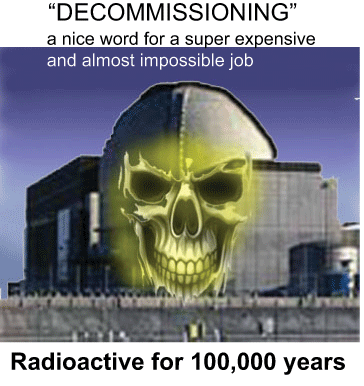
 Decommissioning Of Zion Nuclear Plant Raises Safety Concerns ZION, Ill. (CBS) 15 May 14. — It’s the largest closing of a nuclear plant in the United States, and it’s right in our backyard. The most critical and dangerous part of the process at Zion is underway right now with the transfer of used nuclear fuel. CBS 2’s Jim Williams is the only local TV reporter allowed inside to see firsthand what’s going on and to get answers to concerns about safety in this original report. For us, it was a first: an interview right next to a worker holding a radiation detector………….
The plant stopped operating 16 years ago, but what was left behind is so toxic robots were brought in.
“You don’t want men in there using hand tools and torches,” said Sauger.
By train and truck, they’re shipping the less hazardous material to Texas, Tennessee and Utah where it will be buried.
Dan Pryor is the project manager. He described the less hazardous material as “filters, rags, mops; things that might have been in contact with radiated material and might be contaminated.”
But spent nuclear fuel that had been in this cooling pool is being placed in steel cylinders called casks and then encased in concrete. Dave Kraft of the Nuclear Energy Information Service said, “We call this the nuclear bowling alley,” because all 65 casks will end up together above ground next to the old plant.
Kraft fears they could be a prime target for terrorists in a plane.
“If you have a huge fire from a burning airliner for example, It’s going to affect everything around,” said Kraft.
Kraft and Paul Kakuris, of the Dunesland Preservation Society worry the casks could break open, releasing radiation across the Chicago area and poisoning the Lake.
“We are at risk here. This is the water supply for 20 million people,” said Kakuris………Today, the casks are surrounded by high fences and razor wire. Heavily armed security guards are everywhere there. Still, it’s not enough to satisfy the critics.
“You only get one chance to be wrong,” said Kraft.
Another safety concern is how will those steel and concrete casks hold up over time before a permanent storage site is created? The nuclear regulatory commission expects them to be replaced in 100 years. But, environmentalists fear those casks may wind up sitting there next to Lake Michigan for much longer than that. http://chicago.cbslocal.com/2014/05/14/decommissioning-of-zion-nuclear-plant-raises-safety-concerns/
Nigeria to get nuclear power plant. Is this a GOOD idea?
Nigeria to get $6bn nuclear plant in 2022 – commission PUNCH, MAY 15, 2014 BY OLUSOLA FABIYI The Nigeria Atomic Energy Commission has revealed that the country will get a nuclear plant in 2022 at a cost of $6b dollars.
The Director, Human Resources of the commission, Professor Simon Mallam, who stated this on Thursday when he appeared before the national conference committee on Energy, also urged the Federal government to explore and develop all sources of energy available in the country…..Mallam further advised that although the country wasted a little time in the nuclear arena, it would still be able to deliver nuclear power by 2022 if the enabling environment and support could be given….http://www.punchng.com/news/nigeria-to-get-6bn-nuclear-plant-in-2022-commission/
US Catholic bishops and Iranian ayatollahs discuss nuclear weapons
 US bishops and Iranian ayatollahs hold talks on nuclear arms http://www.catholicherald.co.uk/news/2014/05/15/us-bishops-and-iranian-ayatollahs-hold-talks-on-nuclear-arms/ By PATRICIA ZAPOR on Thursday, 15 May 2014 It has been revealed that a small group of US Catholic bishops have met with Iranian ayatollahs to discuss nuclear weapons and the role of faith leaders in influencing political moves on the issue of Iran’s nuclear programme. Quietly, a small group of U.S. Catholic bishops and Iranian ayatollahs began in March what they intend to be an ongoing dialogue on nuclear weapons and the role of faith leaders in influencing political moves on the issue of Iran’s nuclear program. Continue reading
Low dose radiation’s harmful effects on fruit flies – implications for the human species
“These results may have broader implications beyond the model organism. In particular, they may indicate an increased risk of pathological response to radiation in humans carrying hypomorphic mutations of these genes in their genome (note that both genes are highly evolutionarily conserved). Such individuals may be more vulnerable than the bulk of the population to even low levels of radiation
 Researchers reveal the secret of radiation vulnerability Medical EXpress, 15 May 14, The scientists – Boris Kuzin, Ekaterina Nikitina, Roman Cherezov, Julia Vorontsova, Mikhail Slezinger, Olga Zatsepina, Olga Simonova, Grigori Enikolopov and Elena Savvateeva-Popova – studied Drosophila flies, in whose genome weak mutations of two different genes were combined. They concluded that these mutations synergistically strengthen their mutual phenotypic expression. In other words, the aggregate effect of these mutations is much greater than that which can be produced by one of them individually.
The mutant flies bred by the scientists have a number of significant peculiarities. The experiments have shown that even low doses of X-ray irradiation (not exceeding 10 R) can cause serious defects in those flies’ legs.
In contrast, in the flies with normal (unchanged) genome such defects could not be caused even by doses of irradiation hundreds of times higher. What is more, the combination of the two mutations worsened the long-term memory impairment, earlier observed in the flies with only one of the mutations. Continue reading
Uranium stock prices plunge along with disastrous uranium market
CHART: Uranium stocks vs spot price – something’s gotta give #auspolhttp://tinyurl.com/n25brbj Frik Els | May 15, 2014
The prospect of a Japanese nuclear reactor restart. The end of the Russia-US megatons to megawatts program last August, eliminating a huge source of supply. China’s accelerated plan to approve six to eight plants a year through 2020; part of its war on pollution. The possibility of a rethink in Germany about phasing out nuclear (coal is the only viable alternative and Putin’s gas is becoming dearer).As the stars aligned for a pickup in global uranium demand so did investors for uranium stocks.
But the rapid run-up in uranium shares – especially developers – didn’t turn out to be a leading indicator.
The spot price continued to slide going below $30 a pound to levels last seen in 2005. That dragged the long term price, where most uranium business is conducted, down to $45, a six year low.
Uranium stocks have now come down to earth as this chart from Haywood Securities shows.
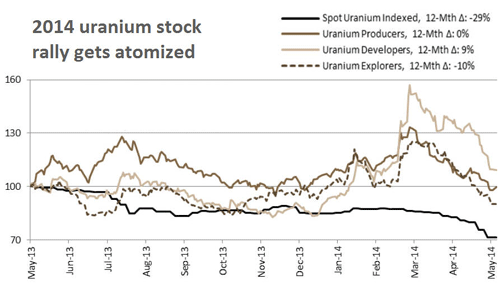
The independent investment dealer with $5 billion under management says now that the spot price appears to have found something of a floor, the sell-off may begin to slow down.
But the Vancouver-based firm cautions that the shares of producers and developers “remain at or above their indexed price point of 12 months ago, when spot uranium was $40.70 U3O8, a 40% premium to current spot”.
There may be more pain ahead
Pay cut for US nuclear weapons managers? – Heaven forfend!
 Nuclear Weapons Complex Reform Could Mean Pay Cut For Contractors Government Executive, By Douglas P. Guarino Global Security Newswire 15 May 14 The for-profit companies that run the U.S. nuclear weapons complex might have a pay cut in their future, though by how much and exactly when is still unclear.For decades the complex — which includes the national laboratories and other facilities responsible for developing and maintaining the nation’s atomic arsenal — operated on a non-profit basis. Taxpayer dollars sunk into it went directly toward scientific work related to weapons development and nonproliferation efforts.
Since the early 2000s, however, the sites have been run by for-profit, limited liability companies. A portion of the annual budget for each facility is set aside as an “incentive fee.” The better the job a contractor does managing a facility’s work in a given year, the larger the percentage of the total available incentive fee the company gets to take home.
Lately these contracts have been under increased scrutiny due to repeated cost overruns, delays and security failures across the nuclear weapons complex. In one of the most dramatic examples, an 82-year-old nun and two other peace activists in 2012 were able to infiltrate the Y-12 National Security Complex in Oak Ridge, Tenn., where bomb-grade uranium is stored.
Associate Deputy Energy Secretary Bruce Held has been questioning whether what he describes as “large fees” currently paid to manage the weapons sites are the best way to motivate all players involved.
- Performance at the national labs might actually improve, the former CIA officer says, if less money went toward the fees meant to motivate the management companies that run the sites, and if more funds went directly to the scientific work that the facilities conduct…..One significant change that appears to be in the works is an effort to make the maximum fee potentially available to the contractor smaller, and to have much of that fee be based on a fixed amount…….
- “But when you’re doing manufacturing and managing huge programs — [those are] not things that universities are very good at.”So that means you have to get the corporate world involved, and when you bring the corporate world in, they have shareholders they have to accommodate,” http://www.govexec.com/contracting/2014/05/nuclear-weapons-complex-reform-could-mean-pay-cut-contractors/84475/?oref=river
US nuclear companies keen to work on Fukushima clean-up
Kennedy vows U.S. help to Japan for Fukushima nuclear clean-up Planet Ark 5-May-14 Country: JAPAN Author: Yoko Kubota U.S. Ambassador to Japan Caroline Kennedy pledged U.S. support for the clean-up at Japan’s tsunami-wrecked Fukushima Daiichi nuclear power plant on Wednesday after her first visit to the site……..
Contaminated water accumulates at a rate of 400 tonnes a day at the plant as groundwater flows into the destroyed basements of the reactor buildings and mixes with highly radioactive water used to cool melted fuel.
Row upon row of huge blue and gray tanks that store contaminated water are lined up while pink, white and purple azalea bushes are in full bloom nearby. Overgrown plants curl onto the streets while pipes snake across the site where numerous cranes still stand.
About 1,200 to 1,300 tanks storing about 450,000 tonnes of contaminated water are on site and over the next two years Tepco wants to set up enough tanks to store 800,000 tonnes of water, said Kenichiro Matsui, a spokesman for the utility.
Up to 5,000 workers are on site each day, according to the Tepco spokesman, Matsui, up from about 4,000 a year ago. In future, that number is likely to increase to about 6,000, he said.
 Overseas companies including U.S. ones are eager to get in on the clear-up work and the decommissioning of the six reactors at the wrecked plant but most contracts have gone to Japanese companies……..
It’s good that she’s here because the situation at the plant needs to be reported worldwide,” said one man who now works as a driver for plant workers after hitting his annual radiation exposure limit in his former job at the site.http://planetark.org/enviro-news/item/71554
Long standing issues complicate nuclear negotiations with Iran
 The phantom at the Iran nuclear talks: weaponisation, Guardian, Julian Borger 15 May 14, How far should Iran go to resolve concerns over past weapons research to reach a comprehensive deal? ………. there is another issue waiting in the wings – the past. The general western intelligence consensus is that Iran had an organised weaponisation programme exploring how to build a warhead up to 2003, and that if research continued it was in a more dispersed manner………
even if Iran started working on weapons in the wake of the Iran-Iraq war (in which it saw the West as backing Saddam’s use of chemical weapons against Iran) but was now prepared to give up any such aspirations, it might still refuse to contemplate a confession. It would be a huge embarrassment in view of the Supreme Leader’s fatwa against nuclear weapons. Tehran could also see pressure for such a confession as a trick designed to justify a military attack. The question then for the West is whether to allow those fears stand in the way of deal that would constraint Iran’s future programme.
The mood music being put out by diplomats in Vienna suggests that the issue will not be a deal breaker for now. One solution, set out in a detailled report produced by the International Crisis Group, is for the problem to be kicked down the road. A comprehensive deal clinched in the next few months would commit Iran to resolving the issue satisfactorily with the IAEA. It would not let Iran off the hook but neither would it jeopardise non-proliferation gains that could be achievable now. http://www.theguardian.com/world/julian-borger-global-security-blog/2014/may/15/iran-nuclear-talks-weapons
Turkey – Coal mining and nuclear power – corporate corruption threatens society and environment but brings big corporations together
 OpEd by Arclight2011part2
Date posted 15 May 2014
Posted to nuclear-news.net
The Mine disaster at Soma has highlighted the issues in Turkey regarding corruption and corporate cost cutting causing health and safety issues . The Turkish government, just two weeks ago, denied an opposition party investigation into ongoing accidents and lax safety procedures ever since the privatisation of the industry in the 1990`s.

A connection between Soma Holdings and the Turkish government was deemed to be a contributing factor.
The price of coal had dropped drastically as wages were cut by using cheap unskilled labour and other cost cutting procedures.
This cost cutting can also be seen in the uranium industry, where the spot price for uranium is a mere (estimated) $20.22/lb (excluding tax and royalty), measured against the Australian spot price of US$34.50 / lb (A price that might cause Palladin mining to possibly go into liquidation as they have to produce their ore using more environmentaly secure practises. The real cost of safe extraction is $144 / lb).
It would be bad enough if Turkeys lax safety procedures (in the name of profit) were just limited to mining coal and uranium. However Turkey is now in the planning process to build eight reactors at two different sites in conjunction with French, Japanese Chinese and Russian consortiums.
 In Japan they are using homeless and disabled people with little engineering skills to work in TEPCOS destroyed Fukushima Daichi nuclear site using Yakuza gangster contractors. Areva, who is also involved in the cost cutting Fukushima Daichi nuclear site with their largely failed water processing equipment, are going to supply the design for the Franco-japanese venture.
(Image shows Yakuza recruitment offices in Tokyo)
Russia who is overseeing the beginnings of a civil war in the Ukraine will likely be constructing first reactor to be built using nuclear workers from Belarus who should really be working on the Chernobyl Sarcophagus but the EBRDs (based the City of London) will only give funds to its own International private contractors, so as to deny any funding going to the non privatised Belarus government.
The Chinese will be using an American Westinghouse designed reactor for part of the business deal. China has a terrible record on environmental, transparency and safety issues and they pair well with the USA who are similarly minded.
Finally, none of this could have been possible without causing a thermo nuclear war, was it not for the ever diplomatic and nuclear selling organisation called the IAEA. The IAEA have done more for environmental disaster coverups and corporate profits than the International monetary Fund and all the major oil and coal corporations put together.
(Image shows how Turkish officials deal with the “opposition”)
The corporate international media have not given you all the details on the Turkish mining disaster. They will not say that the “mourners” were confronted by the police. The media says the “opposition” or “demonstrators”, much as in the Ukraine where the opposition is called the “Russians” or “terrorists”. Nor will anyone ask the question as to where did all the Chernobyl sarcophagus money go? And why is the work stopped if the Chernobyl site is actually in a peaceful (if corrupt) Belarus?

(Chernobyl sarcophagus not in Ukraine (As most media claim) and everyone seems to have gone on extended lunchbreak)
My thoughts have to go to the victims of corporate greed in India, Turkey, Japan and the Ukraine and the future victims of corporate greed that will be deemed “terrorists” or similar and have the police or armies controlled by the corporations set upon them.
Links to the above posits are below;
Turkey plans to build two nuclear power plants
English.news.cn 2014-05-14
ANKARA, May 13 (Xinhua) — Turkey and the International Atomic Energy Agency (IAEA) discussed Tuesday about the country’s plans to build two nuclear power plants.
“Turkey and the IAEA would continue the cooperation in a strong way, Yildiz said, adding that the IAEA would increase the number of Turkish engineers working in the agency…..There are technology universities of nuclear power plants in France, Russia, South Korea, Japan and the United States. We plan to open one in Turkey,” the minister added.
http://news.xinhuanet.com/english/world/2014-05/14/c_133331477.htm
(Updated May 2014)
-
Turkey has had plans for establishing nuclear power generation since 1970. Today, plans for nuclear power are a key aspect of the country’s aim for economic growth.
-
Recent developments have seen Russia take a leading role in offering to finance and build 4800 MWe of nuclear capacity.
-
Application has been made for construction and operating licences for the first plant, at Akkuyu, and these are expected in mid 2014.
- A Franco-Japanese consortium is to build the second nuclear plant, at Sinop.
“The Energy minister said in April 2013 that talks were continuing with both Mitsubishi-Areva-led and Chinese consortia, the latter led by China Guangdong Nuclear Power (CGNPC) and proposing ACPR1000 reactors, with Fangchenggang 3&4 (due to be built from 2014) as reference units. These may eventuate for another site.”
“Australian-based Anatolia Energy Ltd* has a 100% interest in 18 exploration licences which include the Temrezli project. Project activities are undertaken by A Dur Madencilik Ltd (Adur), a wholly-owned subsidiary.”
* Anatolia Uranium Pty Ltd (AUL) has 65% ownership of the Temrezli project,
Anatolia Energy also has a significant tenement holding in the Sefaatli (35 km away) and West Sorgun areas.
The Rosatom agreement for Akkuyu also provides for setting up a fuel fabrication plant in Turkey.
http://www.world-nuclear.org/info/Country-Profiles/Countries-T-Z/Turkey/
Chain Reaction #119, Nov 2013, www.foe.org.au/chain-reaction/editions/119
The 12% price slump in July was the biggest monthly loss since March 2011. Since September 2, the spot price has been still lower, at US$34.00. Those prices are just over half the spot price of US$66.50 / lb on 11 March 2011, the first day of the triple-disaster in north-east Japan.
http://www.foe.org.au/uranium-price-slumps-paladin-energy-trouble
Soma Mines Tragedy: Turkey burning in protests after police clashes with mourners
http://www.dnd.com.pk/soma-mines-tragedy-turkey-burning-protests-police-clashes-mourners/
“Even though the previous information given by the unauthorized persons about the death roll correspond to our present data, this does not make them right.”
Minister Yıldız’s statement was not a coincidence. Soma Holding, the parent company of Soma Coal, has close ties with the AKP government. Melike Doğru, the wife of the general director of Soma Holding Mine Enterprises, is a councilor from the government party.
“A parliamentary proposal of investigation about the working conditions into Soma mine workers and work accidents in the town proposed by opposition parties was refused just two weeks ago, on April 29, by the majority votes of AKP deputies.”
“The EBRD and Belarus The current political, economic and structural reform environment in Belarus warrants the continued application of a calibrated strategic approach, incorporating both political and economic benchmarks to gauge the country’s progress or regress against its key Article 1 commitments and adjusting the Bank’s operational response accordingly”
https://nuclear-news.net/2014/04/19/jonathan-steele-ukraine-whats-behind-the-crisis-belarus-next/
http://www.power-eng.com/articles/2014/05/tepco-posts-4-3bn-profit.html
Vanunu Could Be FREE 18 May 2014 – Petition request!
A message from the campaign to
We are not free until Vanunu is FREE |
Invite your friends to sign the petition to World Media and Israel: We are not free, until Vanunu is free!

Posted By: TNT: Tell Nuclear Truths (campaign leader)
The current restrictions denying Vanunu his right to leave Israel expire on May 18, 2014.
For the last 10 years, Israel has renewed the restrictions but YOU can help Israel get the message that The World is watching and will not forget Vanunu by:
Visiting Vanunu’s website which he UPDATED on 13 May 2014
Posting a comment of support at Vanunu’s YouTube Channel
Thank YOU for already signing this petition, but will you now:
INVITE your friends to sign and share HERE
And email this link to your Media with the NEWS TIP that Vanunu could be FREE on 18 May 20014!
Hundreds ill after Fukushima radioactive trash burned in major Japanese city

 Medical Expert: Hundreds ill after Fukushima nuclear plant rubble burned in major Japanese city — Suffering nosebleeds, problems with eyes, throats and skin — Gov’t: Radiation levels were ‘low enough’ to be safe (PHOTO) http://enenews.com/medical-expert-hundreds-ill-after-fukushima-nuclear-plant-rubble-burned-major-japanese-city-suffering-nosebleeds-problems-eyes-throats-skin-govt-radiation-levels-low-enough-be-safe?utm_source=feedburner&utm_medium=email&utm_campaign=Feed%3A+ENENews+%28Energy+News%29
Asahi Shimbun, May 13, 2014: The manga series [‘Oishinbo’] has been in print since 1983 [selling] 120 million copies […] the May 12 installment includes a segment in which residents of Osaka complain about health problems after a nearby incinerator processes rubble transported from the Fukushima No. 1 nuclear power plant.
Japan Times, May 13, 2014: Osaka Prefectural Government took issue with the assertion, expressed by a character based on real-life medical expert Eisuke Matsui, that about 800 people living around an incinerator there have been affected by burning tsunami debris tainted with radiation from Tohoku. […] Osaka Prefectural Government claimed that no local doctors or authorities have received reports of ill health due to debris incinerated in the city’s Maishima area, contradicting the assertion made by the manga’s character Matsui. […] At every stage of the disposal, the radiation level was stable and low enough to be safe, the government said. —CAPTION: [Matsui’s] character portrayed in the manga ‘Oishinbo’ claims that about 800 residents living near an incinerator in the city of Osaka have exhibited symptoms of illnesses caused by radioactive fallout
Kyodo News, May 13, 2014: Citing [an] expert [Oishinbo] said hundreds of people living near an incineration site in the city of Osaka […] experienced nosebleeds or unpleasant symptoms affecting their eyes, throats and skin.
“Extremely Unjust”: Osaka professor arrested — Publicly opposed burning radioactive debris
Doctor: 300 times more radiation released to atmosphere when burning debris than gov’t claims
From 2012: Fukushima will start burning radioactive waste — 100,000 Bq/kg to be incinerated
Watch — Gundersen: Lots of serious ramifications from burning of nuclear waste — We are basically creating Fukushima all over again (VIDEO)
Militarising the Pacific – “island people are better radiation test subjects than mice are”
In a 1956 Atomic Energy Commission meeting, Merril Eisenbud, director of the AEC Health and Safety Laboratory, described the Marshallese thus: “While it is true that these people do not live, I would say, the way Westerners do, civilized people, it is nevertheless also true that these people are more like us than the mice.”.

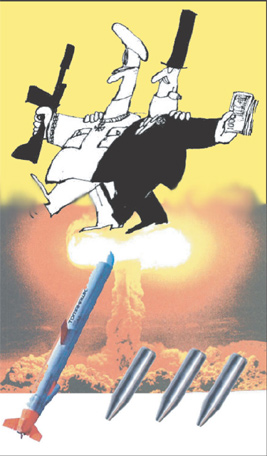 The Militarized Pacific: An Anniversary Without End 14 May 2014 By Jon Letman, Truthout | Op-Ed March 1, the 60th anniversary of the Castle Bravo test – a nuclear detonation over a thousand times more powerful than the bomb that destroyed Hiroshima – has come and gone. Predictably, major decadal events, like a 15-megaton explosion over a Micronesian atoll, garner fleeting attention, but it’s all the days between the anniversaries that tell the real story of those who live with the impacts.
For the people of the Marshall Islands, where Enewetak, Bikini and neighboring atolls were irradiated and rendered uninhabitable by 67 nuclear tests between 1946 and 1958, the brief anniversary recognition only underscores what little attention the Marshallese and, in a broader sense, millions of peoples of the Asia-Pacific are given by the US government and public……..
places like the US-backed naval base being built on South Korea’s Jeju island and the enormous military testing and training ranges in the Northern Mariana Islands (larger than much of the western United States) receive almost no attention. Names like Pagan, Rongelap and Kwajalein are scarcely known in the country that uses these islands for its own military testing……..
increased levels and types of cancers in the Marshall Islands, based on National Cancer Institute (NCI) research and firsthand accounts by Marshallese, are the result of nuclear testing. Continue reading
Turkey`s AKP government has ties with SOMA holdings – Plays down coal mine disaster and then sends in the troops
On Tuesday, May 13, at 15.00, Turkey witnessed one of the greatest workplace murders in its history. More than 700 mine workers were trapped in Soma Coal, a private lignite mine in Soma, in the western province of Manisa. The Justice and Development Party (AKP) government has tried to minimize the figures, while deploying hundreds of military troops and police forces to the town and the miners’ village of Eynes to head off possible unrest.
Ten hours after the explosion, Energy Minister Taner Yılmaz declared the death toll as 166, but the numbers are expected to rise. The Disaster and Emergency Directorate (AFAD) declared on Wednesday, at 2.30 that 265 bodies had been reached at the moment. Calls for immediate action are rising everywhere in the country
At “Soma Coal,” a private lignite mine company operating in Soma in the Aegean province of Manisa, one of the greatest workplace murders in Turkish history occurred on Tuesday, May 13 at 15.15. Mr. Çetin Uygur, a former chairperson of the Underground Mine Workers Trade Union, an affiliate of the Confederation of Progressive Trade Unions (DİSK), as well as a mining engineer, said in the early hours after the accident that this was the greatest workplace massacre in the history of the Turkish working class. Uygur stated that nearly 700 mine workers were trapped in the mine while adding that the AKP government was sending large numbers of military troops and police forces to the region with an eye to using force in order to suppress widespread reactions.
While hundreds of mine workers were trapped underground, the AKP government tried to minimize the death toll figures for a number of hours by declaring that only five were killed in the explosion. However, toward midnight, a widespread news blockage by the mainstream media broke down, and Mr. Uygur’s statement regrettably proved to be real.
Energy Minister Taner Yıldız, who initially said the “death toll figures are not important,” was forced to declare the number of killed mine workers first as 151, then as 166 following Manisa Mayor Cengiz Ergün’s statement that the death toll had already reached 157.
Minister Yıldız continued to dismiss the non-official statements, by saying: “Even though the previous information given by the unauthorized persons about the death roll correspond to our present data, this does not make them right.”
Minister Yıldız’s statement was not a coincidence. Soma Holding, the parent company of Soma Coal, has close ties with the AKP government. Melike Doğru, the wife of the general director of Soma Holding Mine Enterprises, is a councilor from the government party. Soma Coal also provided the infamous charity coal bags which were distributed by the AKP during the previous local elections. Charity distribution is one of the most important political tools of the government party in recruiting support from the country’s poor.
Soma Holding has profited greatly from its relations with the AKP government. The holding, which entered the underground mining sector during the privatization drive of the 1990s, was strengthened by the decision of the AKP government to legalize the “royalty” system which is based on renting in return for a coal share in 2005.
According to the previous statements of the president of Soma Holding, Alp Gürkan, thanks to the royalty system, the company has been able to reduce the cost of coal from 130-140 dollars per ton to 23.80 dollars per ton, including the royalty share. The subcontracting of unskilled mining labour was one of the main factors in reducing the costs, as the average monthly wage of nearly 5,000 mine workers is only 500 dollars.
The company also entered into the field of urban pillage in 2006 by buying the Tilage construction firm and beginning to transfer its profits obtained in the sub-contracted lignite mining sector to investments in the high-profit real estate/construction sector in İstanbul. The company has two important construction investments in İstanbul, one the Maslak Spine Tower in Sarıyer and the other a shopping mall in the Anatolian-side district of Kartal.
A parliamentary proposal of investigation about the working conditions into Soma mine workers and work accidents in the town proposed by opposition parties was refused just two weeks ago, on April 29, by the majority votes of AKP deputies.
Oxygen masks on dead miners’ faces
1 This Month
26 April – Chernobyl: Inside the Meltdown airs on National Geographic on Sunday 26th April from 4pm

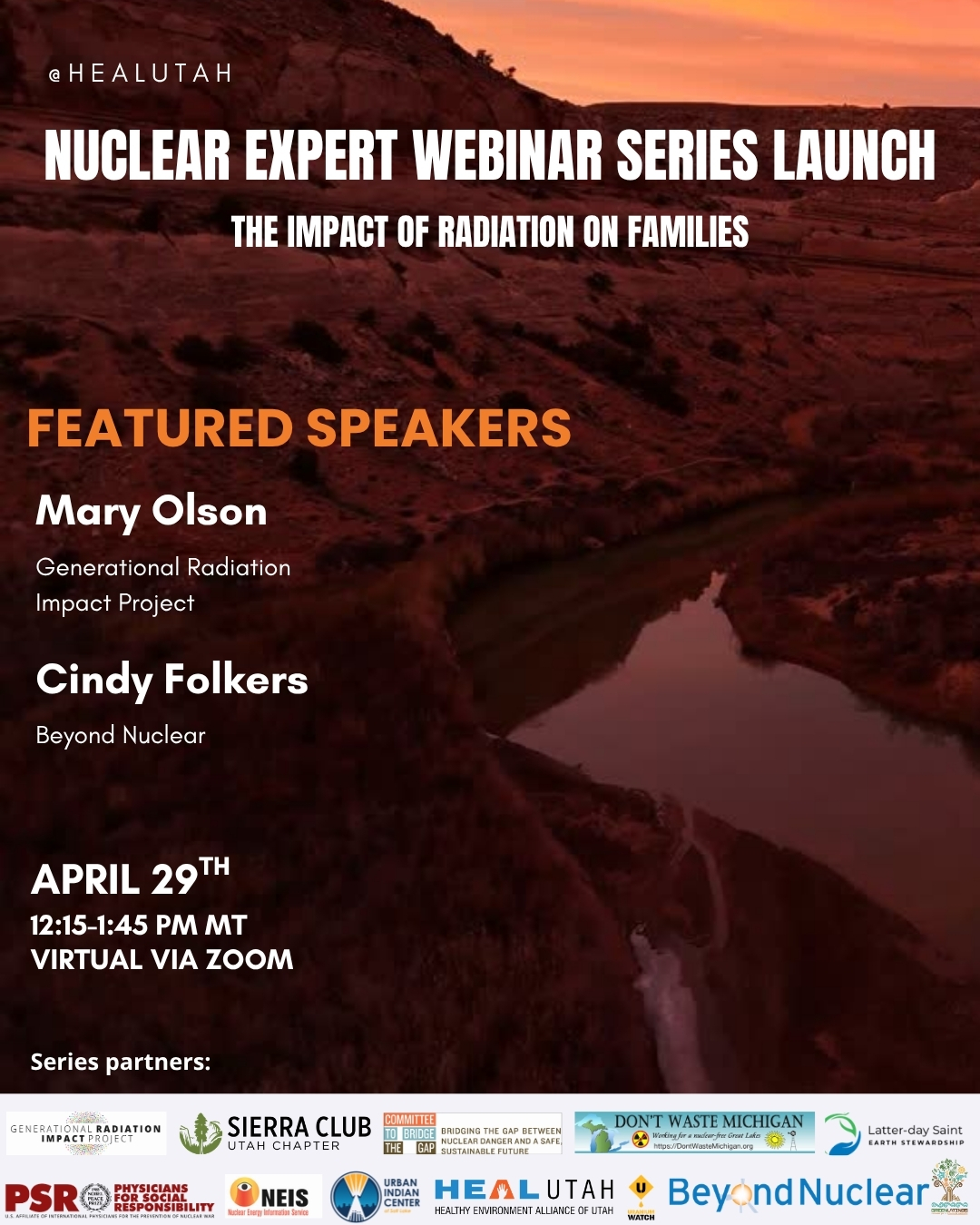
29 April – Nuclear Expert Webinar #1 – Radiation Impacts on Families with Mary Olson and Cindy Folkers
- 12:15 PM MT – 1:45 PM MT
- Location: Virtual – REGISTER TODAY

4 May -West Suburban Peace Coalition to discuss Iran war at May Educational Forum
Monday, May 4, 7:00 – 8:00 PM Central Standard Time
Title: : How Trump’s Narrative Tries to Shape the Reality of the War on Iran.
Contact Walt Zlotow, zlotow@hotmail.com 630 442 3045 for further information
14 May – online event From Bombs to Data Centres: the Face of Nuclear Colonialism

Pine Ridge Uranium is the real threat, not Tehran- Tell Burgum: Stop the Extraction.
Chernobyl: The Lost Tapes – A good documentary on Chernobyl on SBS available On Demand for the next 3 weeks– https://www.sbs.com.au/ondemand/tv-program/chernobyl-the-lost-tapes/2352741955560
To see nuclear-related stories in greater depth and intensity – go to https://nuclearinformation.wordpress.com
-
Archives
- April 2026 (288)
- March 2026 (251)
- February 2026 (268)
- January 2026 (308)
- December 2025 (358)
- November 2025 (359)
- October 2025 (376)
- September 2025 (257)
- August 2025 (319)
- July 2025 (230)
- June 2025 (348)
- May 2025 (261)
-
Categories
- 1
- 1 NUCLEAR ISSUES
- business and costs
- climate change
- culture and arts
- ENERGY
- environment
- health
- history
- indigenous issues
- Legal
- marketing of nuclear
- media
- opposition to nuclear
- PERSONAL STORIES
- politics
- politics international
- Religion and ethics
- safety
- secrets,lies and civil liberties
- spinbuster
- technology
- Uranium
- wastes
- weapons and war
- Women
- 2 WORLD
- ACTION
- AFRICA
- Atrocities
- AUSTRALIA
- Christina's notes
- Christina's themes
- culture and arts
- Events
- Fuk 2022
- Fuk 2023
- Fukushima 2017
- Fukushima 2018
- fukushima 2019
- Fukushima 2020
- Fukushima 2021
- general
- global warming
- Humour (God we need it)
- Nuclear
- RARE EARTHS
- Reference
- resources – print
- Resources -audiovicual
- Weekly Newsletter
- World
- World Nuclear
- YouTube
-
RSS
Entries RSS
Comments RSS
 nuclear-news