Death of the Pebble Bed Nuclear Reactor
economic realities make any tangible future Pebble Bed as a major source of new energy largely imaginary.
(South Africa) Another feeble-headed nuke drops dead Harvey Wasserman September 24, 2010
For years “expert” reactor backers have touted the “Pebble Bed” design as an “inherently safe” alternative to traditional domed light water models. Now its South African developers say they’re done pouring money into it.
The Pebble Bed’s big idea was to create a critical mass of uranium particles coated with silicon carbide and encased in graphite. These intensely radioactive “pebbles” would seethe in a passive container, cooled by helium. Without the need for a containment dome, the super-heated mass would produce both heat and electricity. Touted as needing no back-up emergency systems to prevent a major disaster, the plan was to mass-produce these “smaller, simpler” reactors for use throughout the industrial world.
Pebble Bed technology originated in Germany. But it was adopted and developed by the government of South Africa. For some it was a source of pride that a “developing” nation had become a significant player in the so-called nuclear renaissance.
But the South African government has now cut off funding for the project. Public Enterprises Minister Barbara Hogan has told the National Assembly that “sobering realities” included the lack of working demonstration model, the lack of customers, the lack of a major investment partner and the impending demand for $4.2 billion in new investment capital. As deadlines consistently slipped, Westinghouse withdrew from the project in May.
South African officials say the US and China are still working on the technology. But economic realities make any tangible future Pebble Bed as a major source of new energy largely imaginary. Critics also worry that without a containment dome, the pebble beds would be vulnerable to small groups of terrorists with simple shell-lobbing mortars. And that critical metal components would not perform as needed under the intense stresses of heat and radiation.
1 Comment »
Leave a comment
1 This Month


No Nuclear in Cwm Llynfi! Stop the nuclear power station near Maesteg.


4 August – WEBINAR – Hiroshima & Nagasaki: Nuclear Bombs Never Again
Tuesday, Aug. 4 at 5 pm PT / 8 pm ET.
Aug 5, 2026 10:00 AM in Australia/Melbourne
Join the Nuclear Bombs Never Again webinar on August 4th at 5pm Pacific Time / 8pm Eastern Time / 9am Japan Standard Time.
Cross generational voices at the intersection of Japan-Korea-US policy and militarization will share their lived experiences, nuclear impacts in these contexts, anti-war strategies, and actions you can take to advocate for a world with Nuclear Bombs Never Again. This 75-minute event is co-hosted by WILPF US and Korea Peace Now.
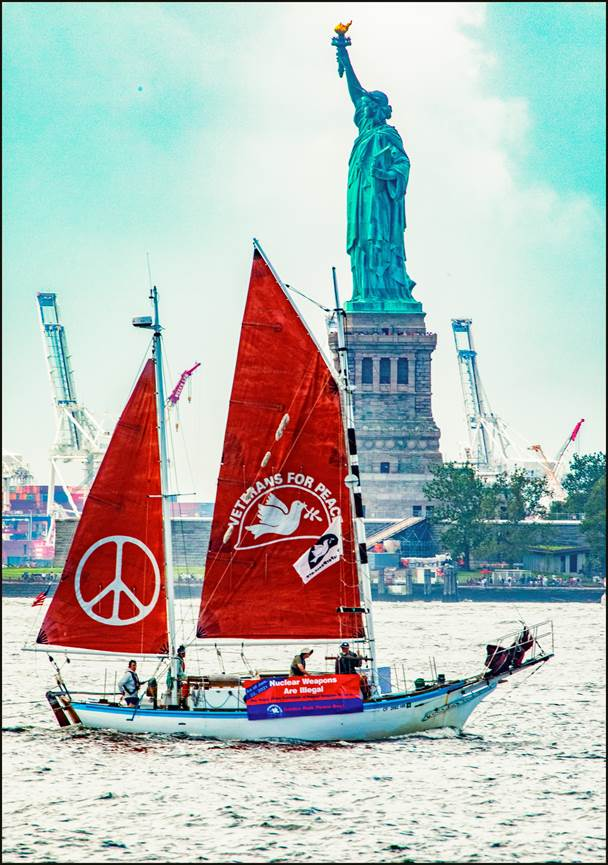
22,000+ miles voyaging for nuclear disarmament
and a radiation-free environment https://vfpgoldenruleproject.org/
To see nuclear-related stories in greater depth and intensity – go to https://nuclearinformation.wordpress.com
-
Archives
- August 2026 (10)
- July 2026 (356)
- June 2026 (287)
- May 2026 (306)
- April 2026 (356)
- March 2026 (251)
- February 2026 (267)
- January 2026 (308)
- December 2025 (358)
- November 2025 (359)
- October 2025 (375)
- September 2025 (257)
-
Categories
- 1
- 1 NUCLEAR ISSUES
- business and costs
- climate change
- culture and arts
- ENERGY
- environment
- health
- history
- indigenous issues
- Legal
- marketing of nuclear
- media
- opposition to nuclear
- PERSONAL STORIES
- politics
- politics international
- Religion and ethics
- safety
- secrets,lies and civil liberties
- spinbuster
- technology
- Uranium
- wastes
- weapons and war
- Women
- 2 WORLD
- ACTION
- AFRICA
- Atrocities
- AUSTRALIA
- Christina's notes
- Christina's themes
- culture and arts
- Events
- Fuk 2022
- Fuk 2023
- Fukushima 2017
- Fukushima 2018
- fukushima 2019
- Fukushima 2020
- Fukushima 2021
- general
- global warming
- Humour (God we need it)
- Nuclear
- RARE EARTHS
- Reference
- resources – print
- Resources -audiovicual
- Weekly Newsletter
- World
- World Nuclear
- YouTube
-
RSS
Entries RSS
Comments RSS
 nuclear-news
[…] Other small nuclear reactor plans in India and South Africa have foundered. […]
Pingback by Strange timing to suggest a LEGO nuclear future for Australia | noelwauchope | April 20, 2014 |