Mr. Hiroshi Watanabe, a plaintiff in the Ehime lawsuit against the victims of the nuclear power plant accident, says, “The court’s decision will give hope to young people”.

June 15, 2022
◆Evacuation, Divorce…Families are falling apart
Fukushima-san, Fukushima-san. Hiroshi Watanabe, 43, who evacuated to Ehime Prefecture from Minamisoma City, Fukushima Prefecture, is sometimes called this by people he met in Ehime. Eleven years after the accident at the Fukushima Daiichi Nuclear Power Plant, he continues to be an “evacuee. And discrimination has not disappeared.
Only 22 people have evacuated from Fukushima to Ehime (as of April, according to the Reconstruction Agency). Because the number of evacuees is so small, “evacuees stand out and are easily discriminated against. Some evacuees continue to hide the fact that they came from Fukushima from their neighbors, even after purchasing a house.
Before the accident, he lived with his wife and two daughters in Odaka Ward, Minamisoma City, about 12 km north of the plant, and was a full-time farmer. He left the town under a government evacuation order, and a month after the accident, he evacuated to Ehime, where he spent his college years.
He divorced his wife in 2019 after a prolonged evacuation in a faraway place, which caused him and his wife to clash with each other more and more. Mr. Watanabe and his second daughter (13) remained behind, while his eldest daughter (17) moved with his ex-wife to Sukagawa City, Fukushima Prefecture. The reality that his family has been torn apart has left him with an unforgettable feeling: “If only the nuclear accident had never happened…”.
◆The ruthless attitude of the country was shown to me.
What triggered the lawsuit against the government and TEPCO was a social gathering of evacuees that started immediately after the accident at the urging of a Buddhist priest in Matsuyama City. When the group met once a month, one after another, they voiced their plight, saying, “We are suffering financially. They could not forgive the government for leaving compensation to TEPCO and providing inadequate support for the evacuees.
We went door to door to explain to the evacuees participating in the exchange meeting and recruited plaintiffs. Many of the evacuees were of child-rearing age, and eight plaintiffs, or 30%, were under 20 years old at the time of the accident.
In January 2003, at the first oral argument at the Matsuyama District Court, they were confronted with the ruthless attitude of the government. When the plaintiffs attempted to state their opinions in court about the hardships of evacuation life, the government’s representative refused to listen to them, saying, “It is unnecessary because it is not evidence (for the trial). After that, the scientific debate continued endlessly, and I wondered in the audience. I wondered in the audience, “Is there any place for evacuees in this trial?
◆”I wanted a school for evacuees.”
Still, if they did not speak out, their suffering would be pretended to have never happened. In May, I visited the plaintiffs in an effort to convey the feelings of the evacuees in the Supreme Court.
Among them was a brother who had been bullied and had stopped attending school. The 22-year-old brother said that he wished that evacuee schools had been established throughout Japan so that evacuees could go to school with other evacuees, and that if the government had been honest enough to apologize, the accident would never have happened in the first place. If the government had been honest and apologetic, the accident would never have happened in the first place,” he said angrily.
Mr. Watanabe’s second daughter, who is in her second year of junior high school, said, “My classmates don’t know much about the nuclear accident. If they don’t know about it, it will cause another accident, so I hope that when the verdict comes out, it will be written in textbooks that the accident was caused by the government’s policy.
Hearing the voices of the young plaintiffs, Ms. Watanabe thinks, “Young people will continue to live with the accident. I hope that the court will issue a verdict that will give hope to the young people who will have to live with the accident in the future.
Ehime Lawsuit Residents who evacuated from Fukushima Prefecture to Ehime Prefecture due to the accident at TEPCO’s Fukushima Daiichi Nuclear Power Plant filed lawsuits one after another since March 2014, and two lawsuits were filed in Ehime Prefecture. Five people have filed lawsuits against the government and TEPCO, demanding compensation. On March 26, 2007, the Matsuyama District Court of the first instance (Judge Keiko Kuboi) ordered the government and TEPCO to pay a total of 27.43 million yen. On September 29, 2009, the Takamatsu High Court (Ryuichi Kamiyama, presiding judge), the court of second instance, also ordered TEPCO to pay a total of ¥2,743,000. The second trial court, Takamatsu High Court (Judge Ryuichi Kamiyama), on September 29, 2009, also found the government liable and ordered TEPCO to pay a total of 46.21 million yen, saying that the government’s failure to take tsunami countermeasures “deviated from acceptable limits and was extremely unreasonable. TEPCO’s liability was confirmed by the Supreme Court’s Second Petty Bench (Hiroyuki Kanno, Chief Justice) on March 30, 2010, rejecting TEPCO’s appeal.
https://www.tokyo-np.co.jp/article/183388?fbclid=IwAR2EfW4MVn87SSkDINOkofLDs2dIjjic2zddRor_oH4gNikPc8hTNIeAHJ8
The Supreme Court will make its first ruling on the government’s liability for the nuclear power plant accident on June 17

June 14, 2022
On May 17, the Supreme Court of Japan will make its first ruling on whether the government is liable for damages in four lawsuits brought by Fukushima Prefecture residents who evacuated from their homes following the accident at TEPCO’s Fukushima No.1 nuclear power plant (a total of 3,700 plaintiffs). The plaintiffs have been pursuing legal responsibility on the grounds that the government spread the myth of nuclear power plant safety before the accident, but after the accident, the government has been evading the issue, claiming that the accident was “unforeseen. The decision of the judiciary’s “last resort” will attract a great deal of attention because it will affect similar lawsuits that are currently being heard in the first and second courts.
The peasants of Fukushima are finished,” said his father, who took his own life.
The farmers of Fukushima are finished. The farmers of Fukushima are finished. On March 12, 2011, a hydrogen explosion occurred at a nuclear power plant that had been inundated by the massive tsunami triggered by the Great East Japan Earthquake. Kazuya Tarukawa, 46, a farmer in Sukagawa City, Fukushima Prefecture, still vividly remembers the words of his father Hisashi as he watched the TV news broadcast footage of the explosion. Twelve days later, Hisashi took his own life at the age of 64.
Hisashi was the seventh generation of the family to protect the 4.5 hectares of fields. His second son, Kazuya, took over at the age of 30 and worked hard growing rice and other crops while watching Hisashi’s back. Sukagawa City is located approximately 65 km southwest of the nuclear power plant, and although the government did not issue an evacuation order, radiation levels rose at the time due to the spread of radioactive materials.
Mr. Kushi focused on cabbage production, and his commitment to organic cultivation was highly praised, and the cabbage was adopted as a food ingredient for local school lunches. However, the day before his death, a fax arrived at his home from a local agricultural organization informing him that cabbage shipments had been suspended due to the nuclear accident. At the time of his death, there were approximately 7,500 cabbage plants in the field, fresh and waiting to be harvested. I made a mistake by letting you take over the farm,” Hisashi told Kazuya. Those were Hisashi’s last words to Kazuya.
In accordance with the government’s compensation guidelines, TEPCO has compensated the farmers to a certain extent for the damage caused by harmful rumors and other factors related to the nuclear accident. TEPCO also acknowledged the causal relationship between the nuclear accident and Kushi’s death and paid him a settlement. However, the government has not acknowledged its legal responsibility and is proceeding with the restart of nuclear power plants. No settlement has been reached,” Kazuya said. Kazuya became a member of the plaintiffs’ group that filed a lawsuit for damages with the Fukushima District Court in March 2001, hoping to clarify the government’s responsibility.
In the lawsuit, the government claimed that it “could not have prevented the accident caused by the tsunami. Kazuya was furious, saying, “If no advance countermeasures can be taken, the nuclear power plant should never have been allowed to operate. In October 2005, the district court ruled that both the government and TEPCO were responsible for the accident, and in September 2008, the second trial court, the Sendai High Court, increased the amount of compensation, sternly condemning the government for “acquiescing to TEPCO’s report and not fulfilling the role expected of a regulatory authority.
Kazuya was unable to hear the Supreme Court’s ruling on September 17 due to his busy farming season, but he said, “There is no such thing as absolute safety, but the government made the power company operate the nuclear power plant. It is impossible for the government not to be responsible. If my father were still alive, he would have become a plaintiff with the same feelings. I look forward to a verdict that will give us a good report,” he says.
Focus is on the government’s “failure to exercise its regulatory authority
There are about 30 class action lawsuits filed by evacuees over the nuclear power plant accident in Japan (more than 12,000 plaintiffs), including four cases in which the Supreme Court will issue a ruling on March 17. Twenty-three judgments have been issued so far, with 12 of the 23 cases finding the government liable and the remaining 11 cases refusing to do so. The Supreme Court’s decision will set the direction for future decisions by the first and second instance courts.
The focus will be on whether the government’s exercise of its regulatory authority over TEPCO was appropriate. The Supreme Court has ruled in past pollution lawsuits that the government is liable for compensation when the government’s failure to exercise its regulatory authority “deviates from the permissible limits and is extremely unreasonable. In determining “reasonableness,” the first and second courts in this case focused on two points: (1) whether a giant tsunami could have been foreseen, and (2) whether the accident could have been avoided. The Supreme Court is expected to follow the same approach in reaching its conclusion.
The plaintiffs claim that the government could have foreseen the tsunami based on the “long-term assessment” of earthquake forecasts released by a government research institute in 2002, and the government argues that the long-term assessment was unreliable. As for the possibility of avoiding the accident, the plaintiffs claim that the accident could have been avoided if a seawall had been built and the buildings had been “watertight,” which would have prevented water from entering the buildings. The government, on the other hand, claims that the actual tsunami could not have been prevented even if a seawall had been built based on the assumptions at the time and that the method of “watertight” had not been established.
https://mainichi.jp/articles/20220614/k00/00m/040/146000c?fbclid=IwAR0pQ2Xy0aAv7Q736vK3zdkznorMdbyF5NI7b9gPa_rRrNcUHM_Syhbb5yk
Evacuees from nuclear disaster await Supreme Court ruling

June 14, 2022
Tetsuya Omaru initially thought he could return to his home in Fukushima Prefecture “in a week” after the 2011 accident at the Fukushima No. 1 nuclear power plant forced him to flee.
However, the 92-year-old former farmer is still far from home 11 years after the nuclear disaster.
His home in Namie, a small town in Fukushima Prefecture, is located about 11 kilometers from the plant, nestled in the mountains.
Omaru was born to a farming family dating back to more than 300 years. He used to grow rice and raised silkworms before he was displaced.
He knew all the people in his community of about 30 households. They were close and worked together to stage traditional festivals.
Omaru’s life, however, has been uprooted and upended since the triple meltdown in March 2011.
The nuclear disaster occurred when the plant lost power and thus could not cool its reactors after the Great East Japan Earthquake struck and a tsunami swamped the plant.
Omaru is now awaiting a weighty decision from the country’s top court, due on June 17, regarding a lawsuit he and other plaintiffs filed at the Chiba District Court.
They are demanding the plant operator, Tokyo Electric Power Co. (TEPCO), and the government answer for the triple meltdown.
“TEPCO and the government had asserted over the years that nuclear power plants are safe,” Omaru said. “I strongly hope the Supreme Court will recognize the government’s responsibility for redress.”
The Supreme Court’s ruling will be applied to three other similar lawsuits.
In handing down the ruling, the top court will look at whether the government carried out appropriate regulatory oversight on the nuclear industry.
One focus was whether a 2002 government report on potential earthquakes in the future was credible enough to foresee a possible tsunami resulting from a powerful earthquake.
Another focus is whether TEPCO could have avoided the disaster if appropriate measures had been taken to safeguard against tsunami.
The lawsuits are among the first to be filed by victims of the nuclear disaster and part of about 30 legal actions being taken across the nation. The top court’s decision is likely to influence the course of the other court battles.
The top court handed down in March a verdict ordering TEPCO to pay a combined 1.4 billion yen ($10.4 million) to the plaintiffs of the four lawsuits.
NO LONGER ABLE TO FARM
After moving around in Fukushima Prefecture, Omaru initially took refuge in his oldest daughter’s house in Chiba Prefecture.
But it was impossible for him to work in the field, his passion, under such circumstances. He suffered a stroke in 2012.
He is now living with his second daughter in Yokohama. He had surgery for esophageal cancer in 2021.
Omaru decided to join a group of victims suing TEPCO and the government out of resentment that he has been deprived of his livelihood and hometown.
In its 2017 decision, the Chiba District Court denied the government’s responsibility.
The Tokyo High Court overturned it in 2021, however.
The high court’s decision came after three judges and other court officials traveled to inspect Omaru’s home in the so-called “difficult-to-return” zone due to radiation levels estimated at more than 50 millisieverts a year.
His house was ruined by wild boars and overgrown grass.
“If possible, I want to go back to my home in Namie to live while I am still alive,” Omaru said. “It is where I was born and grew up.”
That appears to be unlikely, however, as the government does not plan on cleaning up the area encompassing his community.
TEARS FROM THE VICTIMS
Among others awaiting the top court ruling are Sugie Tanji and her husband, Mikio, who brought their case to the Maebashi District Court in Gunma Prefecture.
The couple fled from Iwaki, Fukushima Prefecture, though their home, about 40 km from the plant, was not covered by the government’s evacuation order for communities with an estimated annual reading of 20 millisieverts.
Though the district court recognized the government’s responsibility in a ruling in 2017, it was overturned by the Tokyo High Court in 2021.
In hearings at the high court, the government defended its policy of not providing redress to so-called “voluntary evacuees” such as the Tanji family.
Giving them compensation, said the government, “would amount to offending the feelings of residents who stayed, and it would be an inappropriate assessment of the nation’s land.”
Tanji, 65, said she was appalled by the statement, describing it as an attempt to divide victims.
“It is TEPCO and the government that polluted the land,” she said. “But they are trying to pass the buck.”
Tanji and her husband were running a shop repairing word processors in Iwaki when the nuclear accident unfolded.
They temporarily evacuated to an acquaintance’s house in the prefecture.
When they returned to the shop a half month later, they found piles of faxes from their customers.
Most contained kind words offering encouragement, but a few were negative messages, such as one that read: “You do not have to return my machine as I fear it is contaminated with radiation.”
“When we read them, we felt we could no longer run our shop there,” Tanji said of their decision to leave Iwaki for good.
They moved to Maebashi in July 2011–a city they picked after drawing circles on a map of Japan to see what places were outside a 100-km radius of every nuclear facility across the country. Maebashi was one they considered to be far enough away.
But the tragedies continued. Mikio’s mother, who stayed in Fukushima, died without being reunited with the couple after the accident. A woman who was close to the couple committed suicide.
Tanji strongly hopes the court finalizes the government’s responsibility, to prevent another nuclear disaster.
“Tears that victims have shed, as well as the lives and livelihoods lost due to the disaster, should never be wasted,” she said.
Plaintiffs in court gather at the National Diet to seek relief for damage caused by the nuclear power plant accident.

June 13, 2022
The Supreme Court will render its decision on June 17 in four class-action lawsuits seeking to hold the government legally liable for causing the nuclear accident. On May 31, a total of about 50 plaintiffs and lawyers gathered at the Diet Members’ Building. On May 31, a total of about 50 plaintiffs and lawyers gathered at the Diet Members’ Building and visited more than 150 Diet members in separate groups, handing them letters of request for relief from the damage caused by the nuclear power plant accident.
Victory in the case is assured. We walked around the Diet Members’ Building with the people who have suffered from the nuclear accident for 11 years. (We will surely win.)
We will win.
We will surely win at the Supreme Court. We will surely win, and when we do, we will need the help of all the members of the Diet!
Takashi Nakajima, leader of the plaintiffs in the Ikigyo lawsuit, spoke strongly to the secretary of a ruling party Diet member and handed him a letter of request that he had prepared.
The letter of request.
 The government has taken the position that it is socially responsible for the nuclear power plant accident, without legal responsibility. If the Supreme Court of Japan recognizes the legal responsibility of the government, the government will be required to reevaluate its past stance and take measures in accordance with its legal responsibility. We are confident that the Supreme Court will issue a ruling in our case, and we request the following
1Please attend the debriefing meeting after the Supreme Court decision and encourage the plaintiffs.
2. The National Liaison Group for Nuclear Power Plant Victims' Litigation is compiling joint demands and working to realize them. We look forward to your cooperation.
Plaintiffs Gathered from Across Japan
Nagata-cho, Chiyoda-ku, Tokyo. Across the street from the Diet is the Prime Minister’s official residence and the Diet Members’ Hall, which is used by members of the Diet from both the House of Representatives and the House of Councillors. Two high-rise buildings will be built for members of the House of Representatives and one for the House of Councillors. On May 31, just before the Supreme Court ruling, the plaintiffs in the nuclear accident lawsuit spent the day walking around the Diet members’ building.
The group that made the request was the National Liaison Group for Nuclear Power Plant Victims’ Lawsuits. In addition to the Ikigyo lawsuit, plaintiffs and defense lawyers who have filed lawsuits in various parts of Japan have joined the group. On this day, in addition to the four cases (Ikigyo, Gunma, Chiba, Ehime) for which judgments will be handed down on the 17th, plaintiffs from Kanagawa, Kyushu, Tokyo, Aichi/Gifu, and Iwaki also participated. Give us back our hometown! The plaintiffs from the Tsushima lawsuit also participated in the meeting. Including the lawyers, a total of more than 50 people made up the “large request group.
On the morning of the day of the meeting, the conference room prepared as the meeting place was in a state of flux with all the preparations. Everyone, please listen carefully! Listen up! Gentaro Managi, attorney at law for the Ikigyo Litigation Defense Group, who was in charge of the entire request activity, shouted loudly, “Please listen carefully!
The group was divided into 15 groups and was to visit more than 150 Diet members in a single day. Visiting the rooms of Diet members is a complicated process. In addition to making an appointment in advance, the participants had to go through a baggage check at the entrance to the Diet members’ chambers and hand in a piece of paper at the reception desk explaining the reason for their visit. Some of the plaintiffs who had gathered at the Diet members’ chambers said that this was their first visit to the building. Mr. Managi and Mr. Takashi Hattori, Deputy Secretary General of the plaintiffs’ group for the Ikigyo lawsuit, explained the procedure for the day.
They explained the procedure for the day: “All right, everyone,” they said. The head of each group has the list of places to visit. Many of the people in each group will be meeting for the first time. Please introduce yourselves before you leave.
I know the council members and secretaries are busy. Some secretaries may say yes, yes, yes, and try to turn you away after a minute or so. Please think of it as a game from there. ‘Don’t you need to take notes?’ and persist for three or five minutes.
Then, as soon as the groups have finished their preparations, please depart!

Dedicatedly Going Around to Council Members
The three members of Team 7 that accompanied the author were Takashi Nakajima, leader of the plaintiffs in the Ikigyo lawsuit (Soma City, Fukushima Prefecture), a man who is also a plaintiff in the Ikigyo lawsuit (Date City), and Makoto Seo of the Chiba lawsuit.
Let’s see, we’ll start with the fourth floor,” said Nakajima, looking over a list of places to visit. Nakajima looked over the list of places to visit. Each group is supposed to visit a dozen or so members of the House of Representatives. The House of Representatives has 465 members. The House of Councillors has 245 members (including three vacancies). Naturally, it is not possible to visit all of them. In addition to the executives of each political party, the list was narrowed down to those members who belong to committees related to the nuclear power plant issue. The targets were the Special Committee on Investigation of Nuclear Power Issues, the Special Committee on Reconstruction following the Great East Japan Earthquake, and the Budget Committee.
The Diet members’ private rooms are lined up in the Diet Members’ Building like university laboratories. When I ring the intercom and say, “Sorry, please come in,” the legislator’s secretary opens the door. There, I inform them of the purpose of my visit and tell them that I would like to see the council member himself if possible. In reality, the council member himself was rarely in the room, and his secretary would often receive the request form on his behalf. Some secretaries of ruling party lawmakers refused to receive the documents, saying, “I think this will be difficult,” upon hearing the words “lawsuit over the nuclear power plant accident.
The six Diet members’ rooms we visited in the morning were all unresponsive. In some cases, there were no secretaries, and they simply dropped the documents in the mailboxes. I guess they don’t listen to us after all. ……
However, the steady footwork gradually yielded results in the afternoon.
In the room of one ruling party lawmaker, the secretary who greeted him showed great interest in Nakajima’s story, and they talked for about 20 minutes.
The secretary said, “There is a part of the Diet members that as long as the trial is still going on, they cannot bypass it. In that sense, I think the Supreme Court decision is a great opportunity.”
Nakajima: “Thank you very much. We at the All-United Nations are confident that we will win the case. We are confident that we will win the case, and we are making a joint demand as something we will seek after the ruling. We would like to ask for the help of the members of the Diet in this regard, as it will require legislation.
The secretary said, “Understood. I will let him know. There are members of the ruling party who have various ideas about nuclear power, but I believe that it is the role of politics to help those in need.
In the room of a former cabinet member, while he was talking persistently with his secretary, the Diet member himself came out from the back of the room.
Nakajima: “Whoa, well, well! Actually, there is a Supreme Court ruling on the 17th.”
Councilor “I see. I understand. I’m sorry. I don’t have time right now, but …… (to the secretary) make sure you listen to it properly!
Of the dozen or so Diet members that Team 7 visited, only one member of the opposition party took the time to meet directly with the Diet member himself.
What is the outcome of the request?
3:00 pm. After completing their requests, all 15 groups returned to the conference room for a debriefing session. Each group reported the results of the day and their impressions.
One person expressed his frustration, saying, “The secretary of Senator ●● refused to even meet with me!” One person expressed his frustration.
‘Many of the secretaries seemed to back away a bit when we started talking to them. ……
They didn’t even know that the verdict was on the 17th. It was very disappointing.”
It was a debriefing session that showed that all the groups, though struggling, ran around trying to appeal to the legislators on the issue of the nuclear power plant accident.
Those who stood and tried to listen were generally not interested in hearing what we had to say. But they let me in when there were about four council members, and I was allowed to talk in the parlor.”
‘Where I could talk, I expressed my thoughts. The Congressman himself came out to see me!”
Finally, Gentaro Managi, attorney for the Ikigyo lawsuit, said, “The senator’s request is not something that can be finished in a day. We have to continue the request even after the ruling. We need to continue the request two or three times from now on,” he summed up the day’s activities.
Joint Demand” by Plaintiffs’ Groups Nationwide
On May 16, about two weeks before the action, the National Liaison Committee of Plaintiffs in Lawsuits Against Nuclear Power Plant Victims created a “Joint Demand” of 22 organizations.
The "Joint Demand for Relief of Victims of the Nuclear Power Plant Accident
1. The government and TEPCO must accept and deeply reflect on their negligent safety measures, which were declared illegal by the Supreme Court decision. Based on this self-reflection, the government and TEPCO must sincerely apologize to all victims, regardless of whether they are inside or outside Fukushima Prefecture, inside or outside the evacuation zone, or have chosen to live in, evacuate from, or return to their homes.
The demand goes on to nine items. The demands include: “adequate compensation for the actual damage,” “free health checkups and medical care based on the dangers of radiation exposure,” “investigation and disclosure of the actual state of soil contamination,” and “no discharge of contaminated water into the ocean without the public’s understanding.
The term “victims of the nuclear power plant accident” is used in a single sentence, but each person’s damage and situation are different. In some lawsuits, most of the plaintiffs remain in Fukushima Prefecture, while in other lawsuits, evacuees play a central role. The plaintiffs are in different positions, and they have discussed and developed a joint demand, according to the people involved.
The court decision will not walk away and change politics and society on its own. We have no choice but to take action ourselves. The plaintiffs from all over Japan are continuing their efforts.
Ms. Sugie Tanji, a plaintiff in the Gunma lawsuit against the victims of the nuclear power plant accident, said, “I couldn’t give up because I was frustrated”

June 12, 2022
◆The opportunity to prevent the accident “was there time and time again.”
Before 6:00 p.m. on June 10, Tanji Sugie, 65, was holding a microphone in front of JR Maebashi Station.
I want to clarify the cause of the accident, and I don’t want to see anyone shed tears the same way again.”
This is the 483rd time for the campaign to call for nuclear power plant phase-out, which started every Friday since November 2012. She will not stand in front of the station on the 17th, the next time. On that day, the final verdict in her own trial will be handed down by the Supreme Court.
As one of the evacuees from Fukushima Prefecture to Gunma Prefecture following the accident at TEPCO’s Fukushima Daiichi Nuclear Power Plant, she filed a lawsuit in September 2001. She wanted the Supreme Court to recognize that not only TEPCO but also the national government was responsible for the accident, which was one of the worst in the world.
She argued that the government could not have prevented the accident even if it had taken countermeasures, even though it had many, many opportunities to prevent the severe accident. It was most upsetting to me that they didn’t even try and it was all for naught.”
She went to every court hearing and traveled to various locations to support the lawsuits of other evacuees. She was not paid for her transportation or time off work. At home, she has piles of books and other materials related to the nuclear power plant that she has read.
I studied, listened to others, and communicated. I have never had such intense days. I have no regrets. But I wonder if this is the life I wanted.
◆word like abuse I cried and shouted alone.
If the accident had not occurred that day, she would be living with her husband Mikio, 68, in Okinawa. They were on their honeymoon in Okinawa, where Mikio continues to work as a home appliance repairman and a tourist guide. They used to talk about the future together, but now they only think about the past, “Those were the days….
Mikio’s business was going well as he repaired word processors sent by customers all over Japan when the nuclear power plant accident occurred. In July 2011, Mikio moved from his home in northern Iwaki City, 35 km from the Fukushima Daiichi Nuclear Power Plant, to Maebashi City. It was a “voluntary evacuation” from outside the government’s evacuation zone. About half of the plaintiffs are also voluntary evacuees.
They were forced to evacuate for their own reasons, such as fears about radiation and not being able to raise their children safely. Despite this, the voluntary evacuees were labeled as “having fled without permission.
At one point, I was even heckled with the comment, “The trial is hindering the reconstruction of Fukushima. I cried and screamed alone in the car many times,” she said. Even so, she continued to lead the group of plaintiffs. Four of the plaintiffs have died, and some are suffering from terminal cancer. I didn’t give up because I was frustrated.
◆There is still work to be done even after the trial is over.
The Supreme Court’s unified decision on the government’s responsibility will have a tremendous impact on about 30 other lawsuits. I’m scared. I can’t sleep when I think about it. I can’t sleep when I think about it,” she said. I can’t sleep thinking about it. But I want them to accept responsibility.
We need to create many measures so that the victims of the nuclear accident can live in peace. It is our responsibility as adults living after the nuclear accident”. Even after the trial is over, there is still work to be done. It will be a while before I can discuss the future with Mikio. (Shinichi Ogawa)
Gunma Lawsuit On September 11, 2013, 137 residents and their families who evacuated from Fukushima Prefecture to Gunma Prefecture due to the accident at TEPCO’s Fukushima Daiichi Nuclear Power Station filed a lawsuit against the government and TEPCO, seeking compensation. The court ordered TEPCO and the government to pay a total of 3.855 million yen. However, on January 21, 2009, the Tokyo High Court (Presiding Judge Satoshi Adachi) reversed itself and denied the government’s responsibility. It ordered TEPCO alone to pay a total of 119.72 million yen. TEPCO’s liability was confirmed on March 2, 2010, when the Supreme Court’s Second Petty Bench (Hiroyuki Kanno, Chief Justice) rejected TEPCO’s appeal.
https://www.tokyo-np.co.jp/article/182959?fbclid=IwAR2lFCcz8dlFlOHQVvjT_d8jI_AIHaT3iRleQ8EcBXTz7tYMV1Xv8i_TwIE
I will not run away even if people say I am a “walking rumor mill”.

June 11, 2022
I think I might have to close down the store.
In December 2012, when asked by Guntaro Managi, 46, a lawyer visiting from Tokyo, to become a plaintiff leader, Takashi Nakajima, 66, who runs a local fish supermarket in Soma City, Fukushima Prefecture, could not give an immediate answer. I might have to close down the store,” he said.
Immediately after the Great East Japan Earthquake, supermarkets were packed with people every day in search of water and food. They cooked rice from stores they had left over, negotiated to buy fish from frozen warehouses at markets, and carried water in bleached kettles. Some people came from far away by bicycle or on foot due to lack of gasoline. 1,500 people a day formed a long line. While stores in the area were closed, they worked desperately to secure foodstuffs so as not to let the local people starve to death.
After the accident at TEPCO’s Fukushima Daiichi nuclear power plant, the fishing industry in Fukushima was forced to suspend operations. Both the fish brokers and the retailers’ association, of which Mr. Nakajima is the president, were in dire straits because they could not get local fish. We have no choice but to hang ourselves,” he said. Such voices came in on a daily basis. With the help of a lawyer, he filed a direct claim for damages with Tokyo Electric Power Company (TEPCO), but the company was slow to take action.
Sales down 30%, living on a pension with his wife without pay
It was then that he was asked to become the leader of the plaintiffs’ group in a lawsuit seeking compensation from TEPCO and the central government. His wife Kazumi, 66, told him, “Everyone is going to hang themselves. My son will teach you how to cut fish. I’ll teach my son how to cut fish, and we’ll take care of the restaurant. The fact that the lawyers had told him, “We are prepared to win even if it costs us our own money,” also crossed his mind. We can’t just run away.
Meetings of the plaintiffs’ group, lawsuits, negotiations with the government and TEPCO…. He began to leave the restaurant frequently. Due in part to the nuclear accident, sales have dropped by 30% at best, and now he and his wife live on a pension without pay.
As the head of the plaintiffs’ group, he was prepared to face criticism from those around him for continuing to complain about the damage. I was very angry when I was told by neighbors that I was a “walking rumor mill. However, his determination to have TEPCO and the national government admit responsibility for the nuclear accident and apologize, and to help victims other than the plaintiffs, was unwavering.
The government’s efforts to restart the nuclear power plants will not end with the court’s decision.
More than 11 years have passed since the accident, and more than 100 plaintiffs have died. Mr. Nakashima cannot forget Mitsuo Takagi, then 71, a ramen shop owner in Minamisoma, Fukushima Prefecture, who committed suicide in 2003. In court, he said, “I was happy when my children came to the store with their families. Now that the area has been designated as an evacuation zone, I can’t even open that store. Do you understand my frustration? There was no suicide note.
There was no suicide note,” Nakajima said. I believe that the Supreme Court’s decision will recognize the government’s responsibility. I wanted my friends who passed away to hear this. The government is now trying to restart the nuclear reactors. The ruling is not the end of the matter. The plaintiffs’ group will not disband and will continue to fight until we hand over to the next generation a society in which nuclear accidents will never happen again.
Fukushima lawsuit: “Give back our livelihood, give back our community! The lawsuit was filed on March 11, 2013 under the slogan “Give back our livelihoods, give back our community! The lawsuit was filed on March 11, 2013 under the slogan “Give back our livelihood, give back our community! The Fukushima District Court (Kanazawa Hideki, presiding judge) in the first trial held the government liable for one-half of TEPCO’s damages, but the Sendai High Court (Ueda Satoshi, presiding judge) in the second trial found the government’s liability equal to that of TEPCO and doubled the amount of damages to 1.01 billion yen. The high court decision expands the area covered by the “loss of hometown” compensation, which was only allowed in the difficult-to-return zone under the government’s “Interim Guidelines” for compensation standards. The court also approved compensation for victims in the Fukushima and Aizu regions and parts of Tochigi and Miyagi prefectures that are outside the evacuation zone.
On April 17, the Supreme Court’s Second Petty Bench will issue a unified decision on whether the government is liable for damages in four lawsuits filed by victims of the nuclear power plant accident in Fukushima, Gunma, Chiba, and Ehime prefectures against TEPCO and the government. Ahead of the ruling, which could have a tremendous impact on the approximately 30 class action lawsuits filed nationwide, we asked the plaintiffs in the four lawsuits about the past 11 years and what the future holds.
https://www.tokyo-np.co.jp/article/182747?rct=national&fbclid=IwAR2NuOz8_wblQXnJ4Ol7SryV1nCGWAXlBlKwKSg6TBCEwWnQiC-S7s9ASio
Lawsuit by evacuees from nuclear power plant accident: Supreme Court to rule on June 17 for the first time on the government’s responsibility

May 19, 2022
The Supreme Court has decided to hand down its verdict on four class action lawsuits that have been appealed, demanding compensation from the government and Tokyo Electric Power Company (TEPCO) by people who evacuated to various locations due to the accident at the Fukushima Daiichi Nuclear Power Plant on June 17. The Supreme Court is expected to issue a unified judgment on the government’s responsibility for the nuclear accident for the first time.
The ruling will be handed down in four of the class action lawsuits filed against the government and TEPCO by people who evacuated to various locations after the nuclear power plant accident, including Fukushima, Gunma, Chiba, and Ehime.
In the four lawsuits, the two courts were divided on the responsibility of the government, and the Supreme Court was hearing the cases.
In arguments held last month and this month, the residents said, “The government should have instructed tsunami countermeasures based on the government’s ‘long-term assessment’ of earthquakes, but neglected to do so. The accident could have been prevented if they had been given measures against flooding.
In response, the government denied responsibility, saying that the “long-term assessment” was unreliable and that the actual tsunami was completely different from the one estimated based on the assessment, and that the accident could not have been prevented even if tsunami countermeasures were ordered.
In the four lawsuits, TEPCO’s responsibility and the amount of compensation have already been determined.
The amount of compensation awarded in each of the four lawsuits exceeds the government’s standard for compensation for nuclear accidents, including damages for changes in the basis of daily life and loss of “hometowns.
It will be interesting to see what kind of unified judgment the Supreme Court will render on the responsibility of the government in the ruling to be handed down on the 17th of next month.
https://www3.nhk.or.jp/news/html/20220519/k10013634001000.html?fbclid=IwAR1jvMLiIaufwrDbmhaQHR_KjCNj7RKHSXsamJslG9ocGVuM-8plLMH96yw
Translated with http://www.DeepL.com/Translator (free version)
Supreme Court Arguments in Fukushima Nuclear Power Plant and Livelihood Lawsuits Plaintiffs: “Our Lives Have Been Changed” Ruling in June

April 26, 2022
Residents who lived in Fukushima Prefecture and neighboring prefectures at the time of the accident at TEPCO’s Fukushima Daiichi Nuclear Power Plant have filed a class action lawsuit, “Give us back our community, give us back our livelihood! Fukushima Nuclear Power Plant Lawsuit (Livelihood Lawsuit)” was held on April 25 at the Second Petty Bench of the Supreme Court.
Since the Second Petty Bench of the Supreme Court has already rejected TEPCO’s appeal in March 2022, the only remaining point of contention is the responsibility of the national government.
The Supreme Court has already rejected TEPCO’s appeal in March 2022, so the only remaining point of contention is the responsibility of the government. In the Ikigyo lawsuit, the Sendai High Court in the second trial accepted the government’s responsibility, saying that the accident could have been prevented if measures had been taken.
The plaintiffs, referring to the reliability of the “long-term assessment” that the government agency was supposed to have warned about earthquakes, claimed that the Nuclear and Industrial Safety Agency (NISA) and TEPCO failed to take tsunami countermeasures despite warnings in 2002 that a tsunami was coming, and that the government, which has regulatory authority, is responsible for this.
The government, on the other hand, argued that the long-term assessment (issued by the government) was unreliable, and that even if it had ordered countermeasures, the accident could not have been prevented. The trial concluded with a request that the plaintiffs’ claims be dismissed.
At a press conference held after the hearing, Takashi Nakajima, the leader of the plaintiffs in the Ikigyo lawsuit, said, “The government has shown absolutely no remorse, so it will repeat the damage, as evidenced, for example, by its policy of discharging tritium-contaminated water into the ocean. If it is not condemned, it will continue to do so,” he said, harshly criticizing the government’s stance. (Chia Yoshida, writer)
- We have had our lives changed.

On the day of the argument, five buses from Fukushima Prefecture, one from Soso in Hamadori, one from Fukushima (northern part of the prefecture), one from Koriyama (central part of the prefecture), one from Shirakawa (southern part of the prefecture), and one from the National Federation of Peasant Movements (Fukushima), headed for the Supreme Court. 350 people gathered from Fukushima Prefecture and beyond, and many banners and banners were raised in front of the Supreme Court.
One of the plaintiffs, a woman who said she left by bus from Fukushima City at 6:00 a.m. that day, spoke her mind along the roadside in front of the Supreme Court, “At the time of the nuclear accident, I had two elementary school children, and I did not allow them to participate in marathons and other events held outside because of concerns about radiation.
The nuclear accident increased radiation levels in their living environment, and many parents made the decision to stop their children from outdoor activities as much as possible in order to prevent them from being exposed to radiation.
I feel sorry for them now because they don’t have the same memories as everyone else,” she said. The children didn’t say anything at the time, but recently they told me, ‘We wanted to do it with everyone. Our lives have been changed. There is no such thing as the government not being responsible. I want my life back to the way it was before.
Another plaintiff, who was standing next to me, added, “If you talk to each and every one of the victims, they all have their own story of the nuclear accident.
●“I moved 11 times in 11 years” after the nuclear accident.
Keiko Fukaya, who lived in Tomioka Town, Fukushima Prefecture, was the one who presented her argument that day. At the press conference, she said, “I have moved 11 times in the past 11 years. How hard it has been for me. I wanted the presiding judge to understand that,” she said.
Ms. Fukaya opened a beauty salon in her home at the age of 60 after working for 40 years as a hair stylist in stores in Namie Town and Tomioka Town while raising her children. Welcoming customers from the community, eating vegetables from her own garden together, and chatting happily with them were the things that made her life worth living.
When the nuclear accident occurred, he was at work and evacuated with almost nothing. Since then, he has moved 11 times, but no matter where he went, he never felt at ease. He turned 70 during the evacuation and did not have the energy to build a house or store in a new place.
I want them to give me back my life itself, which the nuclear accident took away from me,” he said. If that is not possible, I joined the trial because I want them to clarify how the accident happened and who is responsible,” said Fukaya.
At the appeal hearing three years ago, a judge from the Sendai High Court came to see Mr. Fukaya’s home and store. That judge ruled in the appeal trial that not only TEPCO was negligent, but also that the national government was responsible.
●”The trial is a major stepping stone, but it is not the end.

In their arguments on this day, the plaintiffs referred to the reliability of the “long-term assessment” that the government agency was supposed to have warned about the earthquake.
They argued that the Nuclear and Industrial Safety Agency (NISA) (the national government) and TEPCO, which has regulatory authority, are responsible for not taking tsunami countermeasures, even though there were warnings in 2002 that a tsunami was coming and could not be ignored.
Attorney Guntaro Managi, who represents the plaintiffs, said, “The government is responsible for not exercising its regulatory authority properly because it has been entrusted with the authority to prevent accidents from happening, even if they should happen, because of the enormous damage that could occur to people’s lives and health.
The government, on the other hand, argues that the long-term evaluation (issued by the government) was unreliable and that the accident could not have been prevented even if countermeasures had been ordered.
Mr. Nakajima, the leader of the plaintiffs’ group, said at a press conference after the argument date, “The government has shown absolutely no remorse, so it will repeat the damage, as evidenced, for example, by its policy of discharging tritium-contaminated water into the ocean. If it is not absolved, it will continue to do so,” he said, criticizing the government’s refusal to accept responsibility.
He continued, “I believe that our trial is required to make the government admit its illegality, and at the same time, to make the government change its attitude through public opinion, not only that of the plaintiffs. The trial is a major stepping stone, but I don’t think it will be the end of the story,” said Nakajima.
In addition to the Ikigyo lawsuits, three other cases in Chiba, Gunma, and Ehime are being argued before the Supreme Court. The Ikigyo lawsuit is the third case to be argued before the Supreme Court, and the Ehime nuclear power plant lawsuit is scheduled to be argued on May 16 before the ruling in June.
Chia Yoshida: Freelance writer. After the Fukushima Daiichi nuclear power plant accident, she has continued to cover victims and evacuees. She is the author of “Reporto: Mother and Child Evacuation” (Iwanami Shinsho), “Sotoko no Fukushima: Nukei no Koto o Koto wo Ikiru Hitobito” (After Fukushima: People Living After the Nuclear Accident) (Jinbunshoin), “Korunin Futaba-gun Firefighters’ 3/11” (Iwanami Shoten), and co-author of “Nukei Hakusho” (White Paper on Nuclear Evacuation) (Jinbunshoin).
https://www.bengo4.com/c_18/n_14414/?fbclid=IwAR0tC3Wv4waE-11sRewA_DCDDB6AbL_NwHW8gSbtHRze0koA5jgMVQ-inL4
First Supreme Court Argument in Class Action Lawsuit by Evacuees from Nuclear Power Plant Accident: about Accepting the State’s Responsibility.

April 15, 2022
On March 15, the Supreme Court Second Petty Bench (Chief Justice Hiroyuki Kanno) heard arguments in a lawsuit filed by residents who evacuated from Fukushima Prefecture to Chiba Prefecture following the accident at TEPCO’s Fukushima Daiichi Nuclear Power Plant, seeking damages from the government and TEPCO. The Supreme Court is expected to render a unified judgment on the state’s responsibility by this summer. The Supreme Court is expected to render a unified judgment on the state’s responsibility this summer. The date of the judgment will be set at a later date.
This is the first time for the Supreme Court to hear arguments in class action lawsuits of the same type filed in various regions. The others are scheduled for May 22 in Gunma, May 25 in Fukushima, and May 16 in Ehime. At the high court stage, the court decisions in Chiba, Fukushima, and Ehime recognized the government’s responsibility, while Gunma denied it, leading to a split conclusion.
On May 15, the plaintiffs also made statements. Tetsuya Komaru, 92, who evacuated from Namie Town, Fukushima Prefecture, to Chiba Prefecture and now lives in Yokohama, said, “My ancestral home, my house, fields, and forests were contaminated, and I lost everything I had built up over my life. I want the Supreme Court to clearly recognize the government’s responsibility without being beholden to the government.
In their arguments, the government argued that the government’s “long-term evaluation” of earthquake forecasts, which was a point of contention in the first and second trials, “was not considered a view that should be incorporated into nuclear power regulations at the time. As for tsunami countermeasures, the government argued that “even if countermeasures had been taken, the accident could not have been prevented because the tsunami was completely different from what had been anticipated.
The residents pointed out that “the long-term assessment is scientific knowledge with a rational basis. If the government, which has regulatory authority, had instructed TEPCO to take countermeasures and had constructed seawalls and made the reactor buildings watertight, the accident would likely have been avoided, they said.
Last month, the Supreme Court upheld a second trial ruling that ordered TEPCO to pay compensation in an amount that exceeded the “interim guidelines,” the government’s standard for compensation for all cases. A total of 1.43 billion yen was ordered to be paid to approximately 3,700 plaintiffs. (Keiichi Ozawa)
https://www.tokyo-np.co.jp/article/172043?fbclid=IwAR3SE8_GtEhXvlNpdcY5pfTGgP8C40qKOoRrToZqDhzOb5UunY2gXLLzM8s
Ruling pressures Japan to set proper damages for Fukushima nuclear disaster

March 19, 2022 (Mainichi Japan)
The amount of compensation has been finalized in a series of class-action lawsuits brought by people affected by the disaster at the Fukushima Daiichi Nuclear Power Station managed by Tokyo Electric Power Co. Holdings (TEPCO). The Supreme Court rejected appeals filed by TEPCO in six cases.
It is a message from the judiciary that relief for victims of the unprecedented nuclear disaster is insufficient. In each of the cases, the amounts awarded exceeded the compensation standards set by the Japanese government. The administration should seriously take the judicial decision to heart, and the standards should be revised immediately.
According to the government’s standards, people who lived in what are now called “difficult-to-return” zones are entitled to 14.5 million yen (about $121,600) in compensation, while those who evacuated voluntarily are entitled to damages of 80,000 yen (about $670). The amount was determined with reference to liability insurance for traffic accidents.
However, those who were forced to evacuate or otherwise relocate were deprived of their lives in their hometowns and local community ties. And people who continued to live in those areas were unable to engage in agriculture, fishing or other such lines of work.
In six high court cases, the courts increased the amounts of compensation to several million yen above the government’s standards and expanded the areas eligible for compensation, among other measures. They judged that the government standards did not set compensation high enough for people who had lost the basis for their livelihoods and had seen their hometowns utterly transformed.
In particular, in a ruling on one case with about 3,600 plaintiffs, the court set compensation amounts by evacuation zone and area. There is accordingly room for those who did not take part in the suit to file for compensation in the future.
To advance relief in line with the actual situations of victims, there is an urgent need to raise the government’s standards and expand the areas eligible for redress. Local bodies in affected areas are also calling for reviews.
Meanwhile, TEPCO’s response is being questioned anew.
In court, TEPCO maintained that it could not accept compensation that exceeded the standards. It even went as far as to claim that the current standards were too high.
The nuclear disaster compensation system is not premised on a presumption of negligence by TEPCO. Yet there have been rulings pointing out inadequate safety measures. The company’s responsibility is extremely heavy.
TEPCO’s three pledges for compensation are: 1) Be sure every eligible person receives payment; 2) Be sure that compensation is given promptly and accurately; 3) Defer to the proposals of mediators on settlements. It should faithfully carry these pledges out.
Eleven years have passed since the outbreak of the nuclear disaster, and many people still have no option but to stay where they have evacuated to. A significant number have decided to relocate permanently to other areas. The government and TEPCO have a responsibility to compensate the people who suffered damage in good faith.
https://mainichi.jp/english/articles/20220319/p2a/00m/0op/007000c
Supreme Court orders damages for Fukushima victims in landmark decision
A victory sure, but $3,290 for 10 years of misery and a devastated life it is cheaply paid…

March 4, 2022
The Supreme Court upheld an order for utility Tokyo Electric Power Company Holdings Inc. to pay damages of ¥1.4 billion ($12 million) to about 3,700 people whose lives were devastated by the Fukushima nuclear disaster, the first decision of its kind.
NHK said the average payout was about ¥380,000 ($3,290) for each plaintiff in three class-action lawsuits, among more than 30 against the utility. The three suits are the first to be finalized.
A massive tsunami unleashed by an earthquake of magnitude 9.0 off Japan’s northeastern coast struck Tepco’s Fukushima No. 1 power plant in March 2011, leading to the world’s worst nuclear disaster since Chernobyl.
About 470,000 people were forced to evacuate in the days after the disaster and tens of thousands have still not been able to return.
Friday’s decision came as the court rejected an appeal by Tepco and ruled it negligent for not taking preventive measures against a tsunami of that size, the broadcaster said.
The court withheld a verdict on the role of the government, which is also a defendant in the lawsuits, and will hold a hearing next month to rule on its culpability, NHK added.
Lower courts have been split over the extent of the government’s responsibility to foresee the disaster and order steps by Tepco to prevent it.
Japan’s top court orders damages for Fukushima victims in landmark decision -NHK

TOKYO, March 4 (Reuters) – Japan’s Supreme Court upheld an order for utility Tokyo Electric Power (Tepco) to pay damages of 1.4 billion yen ($12 million) to about 3,700 people whose lives were devastated by the Fukushima nuclear disaster, the first decision of its kind.
Public broadcaster NHK said the average payout of about 380,000 yen ($3,290) for each plaintiff covered three class-action lawsuits, among more than 30 against the utility, which are the first to be finalised.
A massive tsunami unleashed by an earthquake of magnitude 9.0 off Japan’s northeastern coast, struck Tepco’s Fukushima Daiichi power plant in March 2011, to cause the worst nuclear disaster since Chernobyl.
About 470,000 people were forced to evacuate in the first few days, and tens of thousands have not yet been able to return.
Friday’s decision came as the court rejected an appeal by Tepco and ruled it negligent in taking preventive measures against a tsunami of that size, the broadcaster said.
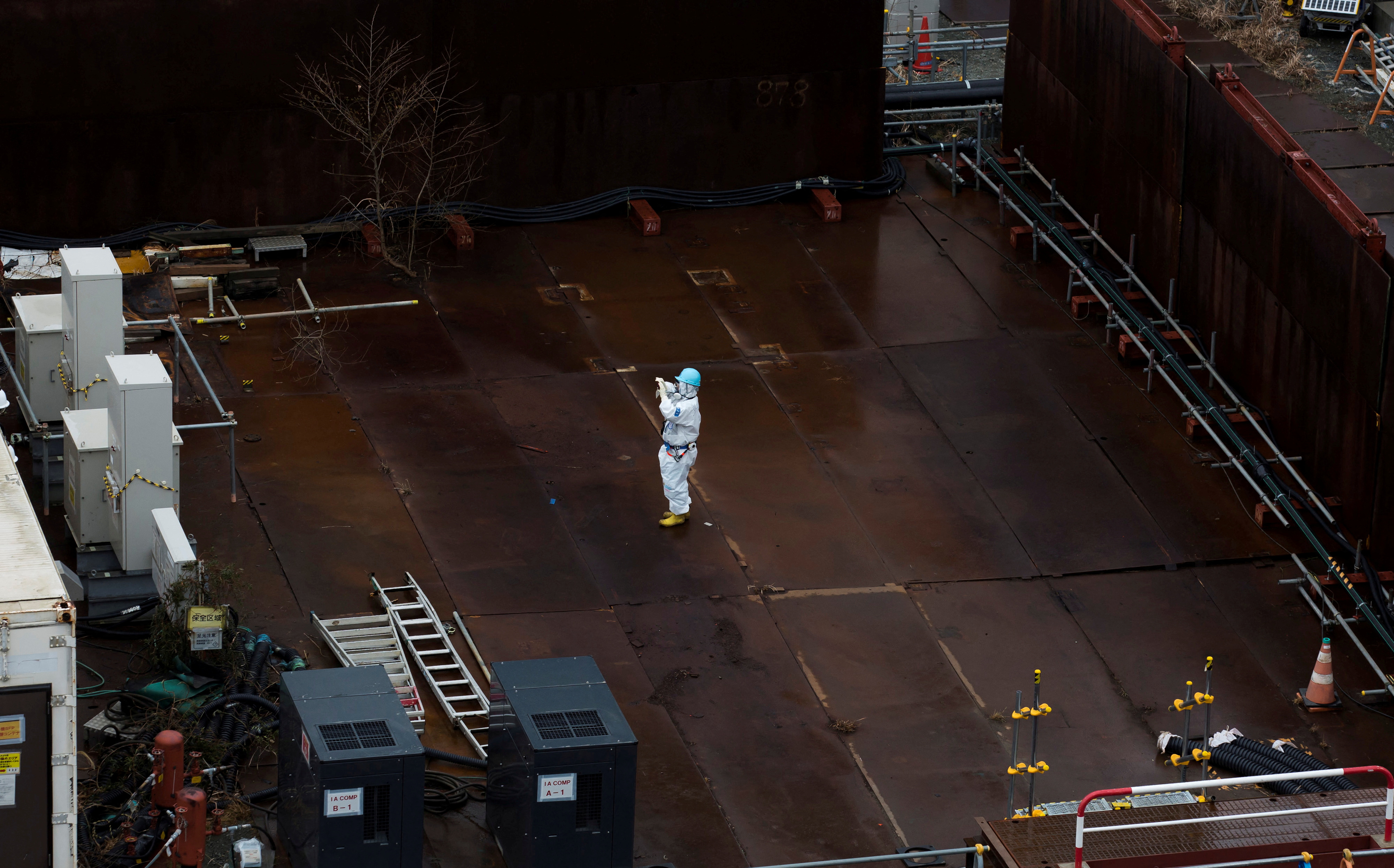
TOKYO, March 4 (Reuters) – Japan’s Supreme Court upheld an order for utility Tokyo Electric Power (Tepco) to pay damages of 1.4 billion yen ($12 million) to about 3,700 people whose lives were devastated by the Fukushima nuclear disaster, the first decision of its kind.
Public broadcaster NHK said the average payout of about 380,000 yen ($3,290) for each plaintiff covered three class-action lawsuits, among more than 30 against the utility, which are the first to be finalised.
A massive tsunami unleashed by an earthquake of magnitude 9.0 off Japan’s northeastern coast, struck Tepco’s Fukushima Daiichi power plant in March 2011, to cause the worst nuclear disaster since Chernobyl.
About 470,000 people were forced to evacuate in the first few days, and tens of thousands have not yet been able to return.
Friday’s decision came as the court rejected an appeal by Tepco and ruled it negligent in taking preventive measures against a tsunami of that size, the broadcaster said.
The court withheld a verdict on the role of the government, which is also a defendant in the lawsuits, and will hold a hearing next month to rule on its culpability, NHK added.
Lower courts have split over the extent of the government’s responsibility in foreseeing the disaster and ordering steps by Tepco to prevent it.
Top court orders TEPCO to pay compensation for voluntary evacuation from Fukushima

1 This Month

of the week – Shut Down Drone Warfare!


Tell the Ukrainian Government to Drop Prosecution of Peace Activist Yurii Sheliazhenko

Petition to revoke the licensing of the Near Surface Nuclear Disposal Facility (NSDF) at Chalk River. https://www.ourcommons.ca/petitions/en/Petition/Details?Petition=e-7247
To see nuclear-related stories in greater depth and intensity – go to https://nuclearinformation.wordpress.com
-
Archives
- March 2026 (251)
- February 2026 (268)
- January 2026 (308)
- December 2025 (358)
- November 2025 (359)
- October 2025 (376)
- September 2025 (257)
- August 2025 (319)
- July 2025 (230)
- June 2025 (348)
- May 2025 (261)
- April 2025 (305)
-
Categories
- 1
- 1 NUCLEAR ISSUES
- business and costs
- climate change
- culture and arts
- ENERGY
- environment
- health
- history
- indigenous issues
- Legal
- marketing of nuclear
- media
- opposition to nuclear
- PERSONAL STORIES
- politics
- politics international
- Religion and ethics
- safety
- secrets,lies and civil liberties
- spinbuster
- technology
- Uranium
- wastes
- weapons and war
- Women
- 2 WORLD
- ACTION
- AFRICA
- Atrocities
- AUSTRALIA
- Christina's notes
- Christina's themes
- culture and arts
- Events
- Fuk 2022
- Fuk 2023
- Fukushima 2017
- Fukushima 2018
- fukushima 2019
- Fukushima 2020
- Fukushima 2021
- general
- global warming
- Humour (God we need it)
- Nuclear
- RARE EARTHS
- Reference
- resources – print
- Resources -audiovicual
- Weekly Newsletter
- World
- World Nuclear
- YouTube
-
RSS
Entries RSS
Comments RSS
 nuclear-news