My respect to South Korea: the one and only country to protect its population from Japanese radiation contaminated products and to protest against japan’s plan to dump all the Fukushima radioactive water into our Pacific ocean. I would like to hear the countries protesting and our elected politicians have at heart to defend as well the health of their citizens!
South Korea to increase radiation testing of Japanese food
SEOUL (Reuters) – South Korea said on Wednesday it will double the radiation testing of some Japanese food exports due to potential contamination from the tsunami-damaged Fukushima nuclear plant.
Relations between the two U.S. allies are at their worst in years, with a trade row rooted in a decades-old dispute over compensation for South Koreans forced to work during Japan’s wartime occupation of the Korean Peninsula.
South Korea has stepped up demands this month for a Japanese response to concerns food produced in the Fukushima area and nearby sea could be contaminated by radiation from the Fukushima Daiichi nuclear power plant that was severely damaged by the 2011 tsunami.
South Korea’s Ministry of Food and Drug Safety (MFDS) said on Wednesday that it will double the frequency of testing of any food products with a history of being returned in the past five years after trace amounts of radiation were detected.
“As public concerns about radioactive contamination have been rising recently, we are planning a more thorough inspection starting August 23,” said Lee Seoung-yong, director-general at MFDS.
The affected food imports from Japan will be relatively minimal, as only about two tonnes are returned out of about 190,000 tonnes of total Japanese food imports annually, Lee said.
An official at Japan’s Ministry of Agriculture, Forestry and Fisheries said Japanese food products were safe and the increased radiation testing was unnecessary.
“Safety of Japanese food items has been secured and no additional restrictions are necessary. Many countries have agreed with this and got rid of import restrictions completely … It is very regrettable that these additional measures will be implemented,” the official told Reuters.
The 2020 Tokyo Olympics organizers said on Tuesday that South Korea’s National Olympic Committee had sent a letter expressing concern at the possibility of produce grown in Fukushima prefecture being served to athletes in the Olympic village.
South Korea’s Ministry of Foreign Affairs on Monday summoned the economy minister from the Japanese embassy in Seoul over media reports and international environmental groups’ claims that Japan plans to release contaminated water from the Fukushima plant into the ocean.
In April, South Korea won the bulk of its appeal in a dispute at the World Trade Organization over import bans and testing requirements it had imposed on Japanese seafood in the wake of the 2011 Fukushima disaster.
S.Korea to tighten checks on food from Japan
The South Korean government says it will tighten radiation checks on food products imported from Japan.
Following the Fukushima Daiichi nuclear plant accident in March 2011, South Korea banned imports of marine products from eight Japanese prefectures and farm products from 14 prefectures. Other food items are tested for radiation upon arrival in South Korea.
South Korea’s Food and Drug Safety Ministry announced on Wednesday that 17 food products that have tested positive for even minute amounts of radiation in the past will be screened twice, starting on Friday. The items include processed seafood, blueberries, tea and coffee.
South Korea’s government announced earlier this month that it is stepping up radiation checks on coal ash and three types of recyclable imports from Japan.
On Monday, South Korea’s Foreign Ministry summoned a senior Japanese Embassy official for an explanation of Japan’s plan to release into the ocean water containing radioactive substances generated at the Fukushima Daiichi plant.
August 22, 2019
Posted by dunrenard |
fukushima 2019 | Contaminated Products, Fukushima Daiichi, Fukushima Radiation, Japan Exports, Radioactive Water, Sea Dumping, South Korea |
Leave a comment
Radiation alert: Japan must not discharge water

By Mitch Shin
August 20, 2019
The relationship between Seoul and Tokyo has deteriorated rapidly since Japanese Prime Minister Shinzo Abe announced an economic retaliation against South Korea on July 1. Seoul has been responding to the Japanese government’s actions, and the South Korean people have been boycotting Japanese products as a countermeasure in the diplomatic war with Japan. However, there have been media reports recently that could strain the relationship even further. Outlets reported that there was a possibility that the Japanese government could discharge contaminated water from the Fukushima nuclear power plant into the Pacific Ocean.
If the Japanese government discharges 1.1 million metric tons of highly toxic radioactive water from the Fukushima nuclear power plant into the Pacific Ocean, it could flow into the East Sea – which the Japanese call the Sea of Japan – within a year. The South Korean government vowed to respond and a Foreign Ministry spokesman said it would ask Japan for information about the status of the polluted water at the Fukushima plant.
The Ministry of Foreign Affairs summoned a Japanese Embassy official on Monday and asked for a formal response from Tokyo regarding the Fukushima-contaminated water discharge plan. The Korean government should respond with finality to this issue. Just as the government has fundamentally prevented the import of Fukushima seafood by filing a complaint with the World Trade Organization, the government should take a hard line on this issue.
Shaun Burnie, a nuclear specialist at the Greenpeace Germany office who wrote a column in The Economist on the issue, says the Japanese government should put Fukushima’s polluted water in long-term storage. Burnie also emphasized that it should not be discharged into the Pacific Ocean. He highlighted the vulnerability of South Korea if Japan discharges polluted war into the Pacific Ocean. According to the UN Convention on Maritime Law, Seoul has the right to request explanations and information on the potential impact of the Fukushima crisis on its environment. Seoul is expected to demand answers at the Joint Conference of the International Maritime Organization’s London Convention and Protocol next month.
According to Greenpeace and Korean media reports, the Japanese government has stored about 110,000 tons of high-level radioactive contaminated water in storage tanks at Fukushima Daiichi Nuclear Power Plant since 2011. By temporarily storing contaminated water in tanks, the Japanese government is minimizing the possibility of damage caused by Fukushima’s contaminated water. However, groundwater introduced into the three reactors creates 1,497 tons of high-level radioactive contaminated water each week. An even more serious concern is the contaminated water in the reactor, which is 100 million times higher than the contaminated water stored in the tank after treatment. As of July, there are 18,000 tons of radioactive water in the reactor. The Japanese government has set a goal of reducing the polluted water in the reactor to 6,000 tons by 2021, but Burnie said it was a difficult goal to achieve.
Greenpeace researchers also found that the East Sea was contaminated when water containing cesium was discharged into the Pacific Ocean during the 2011 Fukushima nuclear accident. Pollution in the East Sea increased between 2012 and 2016, peaking in 2015. Knowing this, if the Japanese government releases polluted water into the Pacific Ocean ahead of the Tokyo Olympics, the Korean government should condemn its actions in every way possible. In addition, the international community should recognize the seriousness of this issue and seek cooperation from countries that may be affected by Fukushima’s contaminated water.
The Japanese government is expected to decide how to best treat Fukushima’s contaminated water, which will likely reach storage limits shortly before the Tokyo Olympics in August 2020. However, it only provides the international community with a fundamental answer to the problem but does not disclose specific solutions. It also announced that it would include ingredients from Fukushima in the Olympic team’s diet during the Tokyo Olympics. However, according to reports by JTBC, a South Korean broadcaster, radiation levels still reach dangerous levels throughout some Fukushima regions.
Recently, right-wing politicians in the Japanese government have made negative remarks about Korea indiscriminately in an effort to fuel the economic war with Japan. In recent months, the biggest issue in South Korea has been the Japanese government’s economic retaliation against trade regulations, not North Korea’s missile launch. And as the press reported that the possibility that the Fukushima contaminated water could cause affect Korea, the Korean people are once again preparing to address the Japanese government’s vicious behavior. It may be common sense to get along with neighboring countries, but one cannot expect the Korean people to be diplomatic under the circumstances. The Japanese government has certainly crossed the line.
Is it common sense that the Tokyo Olympics baseball games should be held at a venue where there is a high risk of exposure to radiation (one of the baseball fields is located near Fukushima)? During the 2011 earthquake in Japan, Korean people raised funds to support reconstruction. Is the Japanese government repaying the goodwill of the Korean people like this? Abe should consider how Germany asked forgiveness from other nations after World War II.
Enough is enough.
Mitch Shin is a student at the University of Utah Asia Campus, major in the Department of Communication. Shin is also a correspondent for The Daily Utah Chronicle, which is an independent student voice of the University of Utah.
https://www.asiatimes.com/2019/08/opinion/radiation-alert-japan-must-not-discharge-water/
August 22, 2019
Posted by dunrenard |
fukushima 2019 | Fukushima Daiichi, Radioactive Water, Sea Dumping, South Korea |
Leave a comment
 The Fukushima Daiichi nuclear power plant in Okuma, Fukushima prefecture.
20 août 2019
Radiation from the crippled Fukushima nuclear plant is becoming the latest source of tension between Japan and South Korea, potentially undercutting Tokyo’s effort to promote the 2020 Olympics.
In recent days, South Korean officials have summoned a Japanese diplomat to express concern about a planned release of treated radioactive water into the ocean by Tepco, the plant’s owner. They’re also pushing for independent radiation checks at Olympic venues and proposing a separate cafeteria for their athletes, citing concerns about contaminated food.
The radiation dispute is threatening to prolong tensions between the two U.S. allies, who have spent much of the summer trading economic sanctions and diplomatic threats in a tit-for-tat dispute. The feud has exposed lingering mistrust and disagreements over Japan’s colonial rule on the Korean Peninsula.
South Korea’s radiation concerns contrast with signs of softening attitudes last week on the anniversary of Japan’s World War II surrender. Japan has also taken steps to show that its recent export controls won’t prevent legitimate sales to its neighbor. JSR Corp., one of the materials makers subject to the restrictions, received an export permit this week, according to a person familiar with the matter.
No Backing Down
“It’s gone so far that neither side can back down,” said Hiroyuki Kishi, a former trade official turned professor at Keio University in Yokohama, adding that the dispute would probably continue “or get worse.” “I’m concerned that Japan may respond emotionally, because the Olympics are seen as very important.”
South Korea is also mulling whether to maintain an agreement on sharing military information with Japan, and may announce its decision as soon as Thursday, Yonhap News reported. Japanese Foreign Minister Taro Kono told reporters in Beijing following a meeting with his South Korean counterpart Kang Kyung-wha that the pact was important and should be maintained.
‘Under Control’
The issue of radiation at the Fukushima Daiichi nuclear plant, which was damaged in the March 11, 2011, earthquake and tsunami, has loomed over Tokyo’s Olympic bid from the start. Japanese Prime Minister Shinzo Abe threw his weight behind the campaign, assuring the International Olympic Committee in a 2013 speech that the plant was “under control” and would have no impact on the capital.
Now, Tokyo Electric Power Co. Holdings Inc. is preparing a release from on-site storage tanks, which are expected to fill up by 2022 with water treated to remove most radioactive elements. An adviser for the company has recommended a controlled release into the Western Pacific — a common practice at other reactors around the world — while the environmental group Greenpeace has urged keeping the water in storage.
South Korea summoned a Japanese diplomat on Monday, with the Foreign Ministry urging Tokyo to look into international organizations’ views on the matter and be more transparent about its plans.
Separately, the Korea Sport & Olympic Committee is set to make an official request that international organizations such as Greenpeace monitor radiation at Tokyo Olympic venues, the committee’s press officer, Lee Mi-jin, said. South Korean officials have also drawn up a plan to run a separate cafeteria exclusively for South Korean athletes, to ensure they don’t eat food from Fukushima, Lee said.
The South Korean Food Ministry also announced Wednesday it would step up radiation checks on 17 items imported from Japan, including tea and chocolate.
Produce from Fukushima is screened before shipment and is widely available in Japanese supermarkets. Recent data from volunteer organization Safecast shows that radiation levels in Tokyo are somewhat lower than those in Seoul.
The Tokyo 2020 Organising Committee declined to comment on requests from other countries’ organizing committees.
https://www.bloomberg.com/news/articles/2019-08-20/fukushima-radiation-becomes-latest-japan-south-korea-sore-point?utm_medium=social&utm_campaign=socialflow-organic&cmpid=socialflow-twitter-business&utm_source=twitter&utm_content=business&fbclid=IwAR3zRTuoeDEynETpydD9GgIALFyuIJWqIHnHNpUW_hjQAS7nv7xSO9WvT9s
August 22, 2019
Posted by dunrenard |
fukushima 2019 | Fukushima Radiation, South Korea |
Leave a comment
 A police officer stands guard near Japan and South Korea national flags at a hotel, where the South Korean embassy in Japan is.
August 20, 2019
SEOUL/TOKYO (Reuters) – South Korea and Japan have toned down the rhetoric but show little sign of compromise in a bitter political and economic dispute as their foreign ministers prepare to meet in China this week.
Relations between the two U.S. allies are at their worst in years, with a trade row rooted in a decades-old dispute over compensation for Koreans forced to work during Japan’s wartime occupation of South Korea.
Foreign ministers Kang Kyung-wha of South Korea, Taro Kono of Japan and Wang Yi of China will have trilateral meetings in Beijing from Tuesday evening to Thursday.
“We will have to actively express our position, but I am leaving with a heavy heart because the situation is very difficult,” Kang said before departing for China where a one-on-one meeting with Kono is set for Wednesday.
Their August meeting in Bangkok, where cameras captured the unsmiling pair making perfunctory handshakes, achieved little. A day later, Japan cut South Korea from a white list of favored trade partners, drawing retaliatory measures from Seoul.
“We expect to exchange views on various issues between Japan and the ROK, such as the issue of former civilian workers from the Korean Peninsula,” Japan’s Ministry of Foreign Affairs said in a statement, using the initials of South Korea’s official name, the Republic of Korea.
The Beijing talks would reaffirm Japan’s “close bilateral cooperation” with South Korea, as well as trilateral ties with the United States, the ministry said.
Since the Bangkok meeting, Seoul has urged a “cooling off period” and Japan approved shipments of a high-tech material to South Korea for the second time since imposing export curbs in July.
Nevertheless, the dispute is far from over.
South Korea warned this month it may consider revoking a military intelligence sharing pact with Japan, though an official at the presidential Blue House said on Tuesday no decision had been taken.
Seoul has also raised concerns about Japan’s handling of contaminated water from the Fukushima nuclear plant, a South Korea official said, though it may not bring it up in Beijing.
South Korea and other countries have restrictions on imports of produce from areas around the Fukushima site where three reactors melted down after an earthquake and tsunami in 2011.
NOT SO NICE FACE
While both sides have moderated their public statements, observers do not expect any major breakthroughs this week.
“I don’t think Japan is going to show a nice face to Seoul this time,” said one former Japanese diplomat familiar with the government’s position.
Japan believes South Korea’s economy is hurting more in the trade row, and “doesn’t mind waiting for further concessions from Seoul,” said the ex-diplomat.
Citing national security, Japan in July restricted exports of some key materials used in chips and displays made by South Korea firms, threatening to disrupt the global supply chain.
Later this month a decision to remove South Korea from Japan’s list of trading partners with fast-track access to a number of materials is scheduled to go into effect.
South Korea has responded by removing Japan from its own trade white list, and South Korean consumers are boycotting Japanese products and avoiding travel to Japan.
There also has been no progress in resolving the issue that triggered the latest chill in relations – a series of South Korean court rulings that ordered Japanese firms to compensate South Koreans forced to work for Japanese occupiers.
“I don’t think we can expect a big change in the situation as a result of tomorrow’s meeting because the forced labor issue is at the root of the deterioration in ties and there hasn’t been any new development regarding that,” said Kyungjoo Kim, a professor at Tokai University in Tokyo.
https://kdal610.com/news/articles/2019/aug/20/less-bluster-but-no-compromise-seen-as-south-korean-japan-ministers-meet-in-china/929015/?refer-section=world
August 22, 2019
Posted by dunrenard |
fukushima 2019 | Contaminated Products, Fukushima Radiation, Japan Exports, South Korea |
Leave a comment
No mistake, the Korean media, the Korea Times, calls it “the Fukushima radioactive water”, while the Japanese media, the Asahi Shimbun, calls it “the tainted water”…. The euphemism used by the Asahi Shimbun might be nicely poetic but it does not truthfully reflect the real dangerosity of that water for marine life!
Activists in Seoul protest in front of the Japanese Embassy in Seoul, Aug. 16, condemning the Japanese government for pushing ahead with promoting the 2020 Tokyo Summer Olympics while not clearly addressing the growing concerns over its possible plan to discharge contaminated water from Fukushima’s tsunami-devastated nuclear power plant into the Pacific Ocean.
Tokyo urged to address concerns over Fukushima radioactive water
Less than a year ahead of the 2020 Tokyo Summer Olympics scheduled to open July 24 next year, the Japanese government is faced with the challenge of dealing with growing concerns ― raised by international bodies and neighboring countries ― over contaminated water from Fukushima’s disabled nuclear power plant.
A recent announcement by the Fukushima nuclear plant utility operator Tokyo Electric Power that it would run out of space to store radioactive water with the current tanks expected to be full by the summer of 2022, has reignited public concerns. Greenpeace claimed that Tokyo is considering discharging 1.15 million tons of contaminated water into the Pacific Ocean.
Appearing at the foreign ministry headquarters on Monday, Tomofumi Nishinaga, a minister for economic affairs from the Japanese Embassy in Seoul told South Korean officials that such claims were different from his government’s official position. But concerns linger over Japan’s handling of the matter.
The Japanese government is being urged to give its official statement on the issue in the near future. Tokyo has been promoting next year’s Olympics as the “recovery Olympics” to convince the international community that Japan has fully overcome the impact of the 2011 disaster of Fukushima Daiichi nuclear meltdown.
Environmental activists have pointed out that radioactive contamination has still remained in the area as the Japanese government’s decontamination process was not about permanently getting rid of the pollutants but rather about moving the radioactive pollutants elsewhere.
For example, putting contaminated soil or debris into black plastic bags eventually meant scattering the pollutants back into the environment, because the vinyl bags have started to collapse with the gas of the rotten soil building up while plants also have grown inside the bags, tearing them open. This was mentioned in a March report by Maxime Polleri, a MacArthur Nuclear Security Pre-doctoral Fellow at the Center for International Security and Cooperation in Stanford University.
Polleri also said the atmospheric level of radiation in Fukushima prefecture stated in official documents by the Japanese government’s Reconstruction Agency was listed at about the same level as other major overseas cities like New York or Shanghai, but these figures of state-sponsored monitoring were highly misguided.
“The levels of radioactivity in places like New York are mostly the result of background radiation, which is naturally occurring radiation from the soil or sun. These are rays that pass through the body and leave. Fukushima, on the other hand, is dealing with the release of radionuclides, which are fission products from nuclear power plants. These radionuclides are not rays, but dust-like particles that can stick to the body and be inhaled or ingested,” he said.
Activists have called on the Japanese government to acknowledge the situation and make transparent announcements dealing with the matter, which would otherwise only lead to increased public fear.
Seoul demands answers over tainted water at Fukushima plant
SEOUL–South Korea wants to know what Japan plans to do about the enormous volume of processed but still contaminated water at the crippled Fukushima No. 1 nuclear power plant.
The country’s Foreign Ministry on Aug. 19 called for an official reply from Japan by summoning a Japanese diplomat.
The ministry handed a statement to Tomofumi Nishinaga, a minister at the Japanese Embassy in Seoul, urging Tokyo to confirm whether news reports, as well as claims by international environmental groups, were accurate regarding a plan to release treated water containing tritium, a radioactive substance, into the sea.
Nishinaga was also asked about the Japanese government’s plans for disposing of the massive amount of radioactive water stored at the nuclear complex, which suffered a triple meltdown in the Great East Japan Earthquake and tsunami in March 2011.
The statement read that Seoul “takes seriously the issue of polluted water, as it concerns the health and safety of the two countries and effects countries linked by the sea.”
It also said Seoul seeks to cooperate with Tokyo to limit adverse affects of the tainted water.
President Moon Jae-in’s Democratic Party and other parties are pushing for the question of the contaminated water at the Fukushima plant as a step to counter Japan’s recent strengthening of restrictions on exports to South Korea.
The same day, lawmakers with the opposition Party for Democracy and Peace announced that radioactive material had been detected on 35 occasions from about 17 tons of processed food imported from eight Japanese prefectures over the past five years, citing data from authorities overseeing food safety.
South Korea continues to prohibit imports of seafood from those prefectures, including Fukushima, Ibaraki and Chiba, on the grounds that they were severely affected by the Fukushima nuclear disaster.
The legislators called for an immediate ban on imports of processed food from these prefectures out of concern for the safety of people in South Korea.
The ministry’s inquiries follow reports earlier this month that Tokyo Electric Power Co., the operator of the Fukushima plant, estimates there will be no more room at the plant to house tanks storing the processed water by next summer.
The Japanese government believes that releasing some of the water after it is diluted is one possible option.
August 22, 2019
Posted by dunrenard |
fukushima 2019 | Fukushima Daiichi, Radioactive Water, Sea Dumping, South Korea |
Leave a comment
I am glad that some politician do feel his duty is to protect the health of his countrymen, I just wish there were more like him…
South Korea should restrict imports of processed foods from Japan’s Fukushima region as radiation has been found in shipments, an opposition lawmaker said Monday.
South Korea banned all seafood imports from eight Japanese prefectures near Fukushima in 2013 on concerns over their radiation levels in the wake of the 2011 Fukushima nuclear power plant meltdown. But no import restrictions have been put on processed foods from the areas.
Citing data from the Ministry of Food and Drug Safety, Rep. Kim Kwang-soo of the minor opposition Party for Democracy and Peace said radiation has been discovered in 16.8 tons of processed foods imported from the eight prefectures, or 35 shipments, over the past five years.
The figures were 10 tons (11 shipments) in 2014, 0.1 ton (six) in 2015, one ton (six) in 2016, 0.3 ton (four) in 2017, 0.4 ton (six) in 2018 and 5 tons (two) for the first half of this year.
South Korea imported 29,985 tons of processed foods from the Japanese prefectures between 2014 and June this year. Imports, which came to 3,803 tons in 2014, increased to 7,259 tons last year. In the January-June period of this year, imports reached 3,338 tons.
“It is urgent for the government to take necessary action against processed foods from the eight Japanese areas since they pose a serious risk to public health,” the lawmaker said.
No import restrictions have been imposed on the processed foods, though a recent ruling by the World Trade Organization (WTO) has allowed Seoul to retain the import ban on 28 kinds of fish caught in the eight prefectures, he said.
In response to a complaint from Tokyo, the WTO ruled in April this year that Seoul’s measures do not amount to unfair trade restrictions or arbitrary discrimination.
Meanwhile, the Ministry of Food and Drug Safety said it sees no problem with imports of processed foods from the eight Japanese prefectures because the Japanese government submits inspection certificates and thorough checks are conducted at local quarantine offices. (Yonhap)
August 22, 2019
Posted by dunrenard |
fukushima 2019 | Contaminated Products, Fukushima Radiation, Radiation Protection, South Korea |
Leave a comment
Tomofumi Nishinaga, a minister for economic affairs from the Japanese Embassy in Seoul, appears at the Ministry of Foreign Affairs building in central Seoul, Monday, summoned over Tokyo’s plan to deal with the contaminated water from Fukushima’s tsunami-devastated nuclear power plant.
S. Korea calls in Japanese diplomat amid fears over possible Fukushima plant water discharge
SEOUL, Aug. 19 (Yonhap) — South Korea called in a Japanese diplomat on Monday to demand Tokyo address growing public concern over its reported plan to release into the Pacific Ocean contaminated water from the 2011 Fukushima nuclear power plant meltdown.
The move came amid Seoul’s push to stop Tokyo’s recent export curbs through bilateral dialogue and pressure. Seoul sees the curbs as political retaliation for last year’s South Korean Supreme Court rulings against Japanese firms over wartime forced labor.
Last week, Seoul vowed to “actively” deal with the radioactive water issue as fears are growing that Tokyo could discharge it into the Pacific Ocean as storage space at the Fukushima plant is expected to run out around 2022.
After learning last August of Tokyo’s move to discharge the water, South Korea delivered to Japan in October a document detailing its concerns and related requests. It has since called for Tokyo to elucidate its handling of the issue during bilateral and multilateral forums.
Japan is reportedly exploring various options to dispose of the Fukushima plant water, including evaporating it and putting it deep underground. But discharging the treated water into the ocean is seen as the cheapest and quickest — thus tempting — disposal method.
Environmental groups and activists, such as Greenpeace, have opposed the discharge of the water containing radioactive tritium. In a January report, Greenpeace said that a Japanese government task force proposed the discharge plan and ignored alternative options that would avoid further contamination of the ocean.
S. Korea calls in Japanese diplomat over plans for Fukushima water
SEOUL (Kyodo) — South Korea’s Foreign Ministry on Monday summoned the economy minister from the Japanese embassy in Seoul to discuss a reported plan that would see water contaminated from the 2011 Fukushima nuclear power plant meltdown discharged into the Pacific Ocean.
Kwon Se Jung, the director general in charge of climate change and environmental affairs at the ministry, called in Tomofumi Nishinaga, a minister for economic affairs from the Japanese Embassy in Seoul, to address growing public concern over the plan.
In addition to the delivery of a note verbale, Kwon requested Japan’s official stance on how it plans to dispose of the water, the ministry said in a statement released after their meeting.
Nishinaga, in response, said he would deliver South Korea’s stance to Japan, and that his nation will give a transparent explanation on how the water discharge plan will be processed, not only to South Korea but also the international community.
Environmental groups and activists, such as Greenpeace, have warned about the danger posed by any discharge of the Fukushima water contaminated with tritium into the Pacific Ocean, underscoring the effect it would have on South Korea.
Last week, South Korea’s Foreign Ministry spokesman Kim In Cheol, in his regular briefing with reporters, said that the ministry would take active measures regarding the discharge plan.
Seoul summons Japanese diplomat over plans for Fukushima radioactive water
Seoul’s Ministry of Foreign Affairs summoned a Japanese diplomat on Monday to request Tokyo’s official answer for its possible plan to release the contaminated water from Fukushima’s tsunami-devastated nuclear power plant into the Pacific Ocean.
In the meantime, South Korea’s Foreign Minister Kang Kyung-wha and her Japanese counterpart Taro Kono will hold a meeting in Beijing, Wednesday, on the sidelines of the trilateral minister-level talks among South Korea, Japan and China, sources familiar with the issue said.
Kwon Sei-joong, the director-general for Climate Change, Energy, Environmental and Scientific Affairs at the Ministry of Foreign Affairs, met the economic minister Tomofumi Nishinaga from the Japanese embassy in Seoul to address growing public concerns over the radioactive water.
“Director Kwon proposed (to Minister Nishinaga) that South Korea and Japan should seek ways to treat the Fukushima nuclear-contaminated water so as not to affect citizens and the ecosystem of the neighboring countries,” the foreign ministry’s statement read.
Nishinaga said in reply that he would report back to Tokyo and the Japanese government would announce plans over the radioactive water to South Korea and the international community.
The Japanese government was mulling over the plan of controlled release of the radioactive water into the Pacific Ocean after the utility company Tokyo Electric Power which has been operating the Fukushima nuclear power plant said it would run out of space to store the contaminated water around 2022.
As international groups and activists including Greenpeace have warned of the side-effects that would also affect South Korea if the radioactive water is released into the Pacific Ocean, South Korea’s foreign ministry last week vowed to “actively” deal with the issue.
The issue of radioactive water came amid the ongoing trade row between Seoul and Tokyo.
Seoul has been making diplomatic efforts to bring Tokyo back to the negotiating table after President Moon Jae-in said Seoul will “gladly join hands” if Tokyo cooperates to resolve the friction through dialogue, delivering a speech last Thursday to mark the 74th anniversary of the Korean Peninsula’s liberation from Japanese colonial rule.
August 22, 2019
Posted by dunrenard |
fukushima 2019 | Fukushima Daiichi, Radioactive Water, Sea Dumping, South Korea |
Leave a comment
The treatment of radioactive water stored in tanks in Fukushima has become the subject of intense international concern in recent months, including in South Korea, as reports say the Japanese government is considering releasing it into the Pacific Ocean.
And now, South Korea — one of Japan’s closest neighbors — says it will seek ways to deal with Tokyo’s planned discharge.
“We will work closely with institutions and countries in the Pacific Rim that will be affected and actively respond to any potential water discharge from the Fukushima plant.”
Tokyo Electric Power Corporation, which manages the storage of the toxic water, says it will run out of space in three years.
Greenpeace warned in a report earlier this year that South Korea will be among the nations most affected by any discharge.
And with the IAEA General Conference to be held in Vienna in September, and the South Korea-China-Japan Top Regulators’ Meeting on Nuclear Safety taking place in China in November, Seoul plans to raise the issue, and consider other concrete actions.
Asked about the possibility of South Korea boycotting the 2020 Tokyo Olympics over the matter, Seoul’s foreign affairs ministry did not provide a direct answer.
Citing the same problem, a number of U.S. media outlets, including the Washington Post, have raised concerns over the safety of American athletes heading to Tokyo next summer.
Since 2013, South Korea has blocked all seafood imports from eight Japanese prefectures near Fukushima after it was found that contaminated water was leaking into the ocean.
While Tokyo sought to challenge Seoul’s decision by lodging a complaint at the World Trade Organization, the WTO in April ruled in Seoul’s favor, saying the measures do not amount to unfair trade restrictions or arbitrary discrimination.
Lee Seung-jae, Arirang News.
August 16, 2019
Posted by dunrenard |
fukushima 2019 | Fukushima Daiichi, Radioactive Water, Sea Dumping, South Korea |
Leave a comment
“The idea of releasing the contaminated water before it has been entirely treated for radioactivity is completely unacceptable. For the Japanese government to make a unilateral decision about a multilateral matter that endangers the health of not only its own citizens but also the citizens of its neighbors is both irresponsible and immoral.”
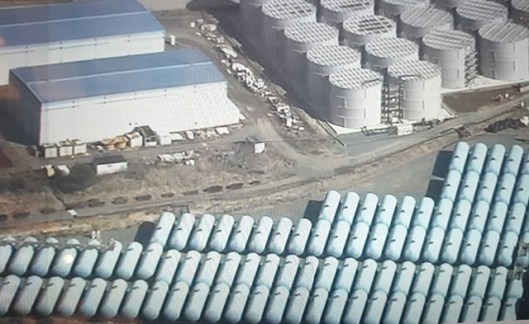
The storage tanks for contaminated water from the 2011 Fukushima nuclear reactor meltdown
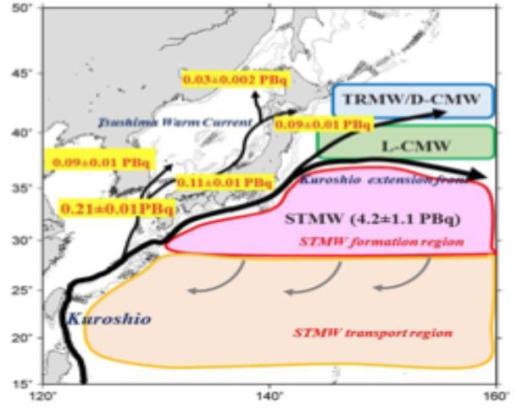
If Japan releases 1.1 million tons of water contaminated with high-level radioactivity from storage tanks at the Fukushima nuclear plant into the Pacific Ocean, that water could reach the east shore of South Korea within a year. That was the bottom line of a press conference held in South Korea on Aug. 14 by Shaun Burnie, a senior nuclear specialist with Greenpeace Germany.
The problem is that discharging the contaminated water isn’t some vague possibility, but the option favored by the Japanese government. Last October, Japan’s nuclear regulator said it would allow the water to be released, provided that it’s diluted first.
The idea of releasing the contaminated water before it has been entirely treated for radioactivity is completely unacceptable. For the Japanese government to make a unilateral decision about a multilateral matter that endangers the health of not only its own citizens but also the citizens of its neighbors is both irresponsible and immoral.
Shaun Burnie, a senior nuclear specialist with Greenpeace Germany, talks about the dangers of Japan’s decision to release radioactively contaminated water from the 2011 Fukushima disaster during a press conference in Seoul on Aug. 14.
It’s obvious that the contaminated water will be carried by sea currents to the East Sea, with harmful effect. A study has found that the levels of radiation in the East Sea more than doubled during the five years after contaminated water was released for a brief time in 2011, during the Fukushima nuclear disaster.
The main reason the Japanese government hopes to discharge the contaminated water is cost. The massive amount of radioactive water produced since the 2011 accident at Fukushima is being stored in the reactor’s water tanks; at the current rate, they will overflow by March 2021. Attempting to skimp on the cost of building more tanks by releasing the contaminated water is the worst possible option, as it would trigger another catastrophe. According to Shaun Burnie, the only option is to build more water tanks while focusing on developing techniques for treating the radioactive particles.
The route by which contaminated water discharged by Japan would eventually reach the eastern shores of Korea.
With the Tokyo Olympics just one year away, the Japanese government is working overtime to promote the claim that it’s moved beyond the Fukushima disaster. First it announced that dishes for athletes will be prepared with crops grown at Fukushima, and then it selected a spot just 20km away from the accident as the starting point for the Olympic torch. That has prompted not only leading global media outlets but even domestic ones to run multiple stories concluding that the Fukushima area isn’t safe from radioactive materials. Japan needs to call off this rash marketing campaign, which jeopardizes the safety of Olympic athletes and audiences.
The South Korean government has announced that it will respond proactively to the issue of contaminated water at Fukushima. Some see this as another way to pressure Japan in the two countries’ ongoing economic dispute. But the two are separate issues. We hope the government will deal with this issue with a firm, and consistent, attitude.
August 16, 2019
Posted by dunrenard |
fukushima 2019 | Fukushima Daiichi, Radioactive Water, Sea Dumping, South Korea |
1 Comment
This photo, provided by Kyodo news agency on March 8, 2019, shows the storage tanks keeping radioactive water from the Fukushima meltdown, in Fukushima, Japan.
SEOUL, Aug. 13 (Yonhap) — South Korea will actively seek ways to deal with Japan’s planned discharge of water contaminated as a result of the 2011 Fukushima nuclear power plant meltdown, Seoul’s foreign ministry said Tuesday, amid concern storage space will soon run out.
The treatment of radioactive water stored in tanks in Fukushima has drawn international concern in recent months following reports that the Japanese government is considering releasing the water into the Pacific Ocean.
Tokyo Electric Power Co., the utility company managing the storage, has said it will run out of space to store the toxic water in three years. Greenpeace warned in a report early this year that South Korea will be among countries particularly affected by the discharge into the sea.
“Our government puts top priority on the health and safety of our citizens, and we plan to actively ask Japan to disclose information and to provide us with a concrete stance on the current management system and disposal plans,” ministry spokesman Kim In-chul told a regular press briefing.
Seoul has proposed that Tokyo hold bilateral and multilateral talks over the matter since the government became aware in August 2018 of a plan to discharge the water, Kim added.
Two months later, the government sent Tokyo an official statement detailing national concerns and requests in relation to the matter, and continued negotiations over the issue at various levels, bilaterally as well as through multilateral channels, according to the ministry.
The ministry said Japan has only maintained that the final decision for disposal of the radioactive water is still under review and that it will announce it to the international community when it’s ready.
“If it’s deemed necessary, we will also closely cooperate with our neighbors in the Pacific that are also feared to be affected, so as to actively cope with the problem of the discharge of contaminated water,” Kim said.
In that regard, the government is mulling over other concrete actions such as raising the matter at the IAEA General Conference to be held in Vienna next month and the South Korea-China-Japan Top Regulators’ Meeting on Nuclear Safety, which is to take place in China in November.
While there’s no other country yet to formally take issue with Japan’s reported move to release contaminated water, the environmental authorities of many Pacific nations are apparently keeping a close eye on it, a ministry official said later on background.
International environmental groups including Greenpeace are voicing concern about the issue as well, the official added.
Asked about the possibility of South Korea boycotting the 2020 Tokyo Olympics in connection with the matter, the ministry spokesman avoided a direct answer.
Seoul and Tokyo are locked in an escalating economic and political row stemming from the longstanding issue of compensation for wartime forced labor.
Since 2013, South Korea has banned all seafood imports from eight Japanese prefectures near Fukushima, after Japan announced a leak of contaminated water.
Tokyo sought to challenge Seoul’s decision by lodging a complaint at the World Trade Organization (WTO). In April this year, the WTO finalized the ruling in favor of Seoul, saying the measures do not amount to unfair trade restrictions or arbitrary discrimination. (Yonhap)
August 16, 2019
Posted by dunrenard |
fukushima 2019 | Fukushima Daiichi, Radioactive Water, Sea Dumping, South Korea |
Leave a comment
Storage tanks for radioactive water are seen at Tokyo Electric Power Co’s (TEPCO) tsunami-crippled Fukushima Daiichi nuclear power plant in Okuma town, Fukushima prefecture, Japan, in this picture taken on Feb. 18.
Greenpeace warns Korea of Japan’s radioactive water discharge
An international environment organization has said that Japan plans to discharge radioactive waste into the Pacific Ocean in the near future and Korea will fall particularly vulnerable.
Greenpeace Korea, the global NGO’s branch in Seoul, reposted on Facebook, Wednesday, a column by its nuclear specialist Shaun Burnie published in The Economist, saying Japan is planning to discharge more than 1 billion liters of contaminated water stored at the Fukushima nuclear plant since the massive earthquake and nuclear disaster of 2011.
Burnie wrote in his article that the Japanese government has decided recently to take the “cheapest and fastest” way to dispose wastewater, which is to discharge it into the Pacific Ocean.
The scientist added neighboring countries will be exposed to radiation as a result and Korea, in particular, will suffer the most from it.
He claimed that if 1 million tons of radioactive water is discharged into the ocean, it will take 17 years and 770 million tons of water to dilute it, adding it is impossible not to discharge it without contaminating the ocean, and countries in the Pacific region will be exposed to radiation.
Burnie continued that Tokyo Electric Power Company Holdings has tried to find ways to handle the contaminated water for the last eight years but failed. He pointed out that the Shinzo Abe administration never speaks about the risks of radioactive pollutant, and ignores unfavorable reports when they are released.
Chang Mari, a climate and energy campaigner at Greenpeace Korea, said the environmental organization has been watching the status of the nuclear plant in Fukushima, which was damaged by a massive earthquake and tsunami in March 2011.
“Japan’s Ministry of Economy, Trade and Industry has been conducting technical evaluations to discharge or manage the contaminated water between 2013 and 2016. The affiliated taskforce team dealing with titrated water under the ministry proposed five ways to dispose of the wastewater and it recommended discharging it into the ocean,” Chang told The Korea Times, Thursday.
“We have been issuing warnings to the Japanese government of possible consequences that could follow the pollutant discharge, but they all have been disregarded.”
The Korean government has been requesting the Japanese government share information on radioactivity levels in Fukushima for years but the latter has refused to do so, according to relevant Korean ministries.
“We have been holding meetings with Japan’s Ministry of Land, Infrastructure, Transport and Tourism every year and we asked them to share data on how Japan has been dealing with contaminated water, but they have kept avoiding answering,” an official at the Ministry of Oceans and Fisheries said.
“The radiation levels in the coastal areas here have shown no big changes so far since 2015.”
Gov’t Says It Will Closely Monitor Fukushima’s Radioactive Wastewater
South Korea’s Oceans Ministry said that it is closely watching how Japan will deal with radioactive wastewater from the Fukushima nuclear plant that melted down earlier this decade.
Following claims by global environmental watchdog Greenpeace that Japan plans to release more than one million tons of radioactive water into the ocean, a ministry official told KBS on Thursday that the government has been demanding that Tokyo disclose how it plans to deal with the problem.
According to the official, Seoul has in the past demanded Tokyo explain how it plans to deal with the contaminated water, but Tokyo has continuously stonewalled.
The ministry has been examining water near South Korea’s shores on a quarterly basis since 2015, and there has been no significant change so far, according to the official.
August 12, 2019
Posted by dunrenard |
fukushima 2019 | Fukushima Daiichi, Radioactive Water, Sea Dumping, South Korea |
2 Comments
A protester at an anti-Japan rally stand next to a banner mocking the Japanese Foreign Ministers Taro Kono’s promotional remarks on Fukushima’s food safety
August 4, 2019 By Do Je-hae
The Moon Jae-in administration will tighten its import quota on fishery and agricultural products from Fukushima in Japan in response to Tokyo’s decision to remove Korea from its whitelist of Group A countries that receive preferential trade processing.
A presidential aide said Sunday that if the Japanese Cabinet’s decision to remove Korea from the list takes effect Aug. 28, South Korea will reduce its quota for imports of seafood from Fukushima, which was affected by a nuclear power plant disaster in 2011.
“The Korean government has started to look into controlling the import quota of products from Fukushima,” the aide said asking for anonymity citing the sensitivity of the issue.
The new quota would strengthen control of imports of seafood from Fukushima and the surrounding region, which were introduced by Seoul in the wake of the nuclear disaster due to concerns about radioactive contamination.
The reinforcing of non-tariff measures in response to Japan’s trade offensive is gaining ground after Deputy Prime Minister and Economy and Finance Minister Hong Nam-ki stressed that the government would impose measures to protect the “people’s safety.”
This was seen as targeting Japanese food imports from Fukushima following a massive earthquake and tsunami that destroyed the nuclear power plant there.
“Regarding Japan’s latest action, the biggest priority in relation to public safety are the tourism, food and waste sectors. We will announce specific follow-up measures for these after carefully reviewing them,” Hong said.
Observers say that using non-tariff measures can be useful for Seoul in gaining international support in the trade row with Japan, given that the World Trade Organization (WTO) took its side regarding the import of seafood from Fukushima in a ruling in April after a three-year battle.
The ruling in favor of Korea was a blow to the Japanese government, which exerted all-out efforts amid concerns about the safety of Fukushima fishery products. Prime Minister Shinzo Abe plans to promote that it is safe to eat food from Fukushima at the 2020 Tokyo Olympics, by pledging to use the area’s food products at the athletes’ village. This campaign has sparked a call among some Korean lawmakers for a boycott of the Tokyo Games.
Other measures being considered by Seoul include removing Japan from its whitelist and tightening controls on exports to Japan. Currently there are 29 countries on Korea’s list of trusted trading partners, including Japan. Seoul is also planning to take Tokyo’s trade restrictions to the WTO.
In addition, Foreign Minister Kang Kyung-wha, and second deputy director of the presidential National Security Office Kim Hyun-chong have hinted at the possibility of repealing a military information-sharing pact with Japan, the General Security of Military Information Agreement (GSOMIA).
“We will sternly carry out corresponding measures against the unfair economic retaliation. If Japan attempts to damage our economy, we will also take reciprocal responses and will strengthen them step-by-step,” President Moon Jae-in said in a rare live televised emergency Cabinet meeting over the weekend.
August 12, 2019
Posted by dunrenard |
fukushima 2019 | Fukushima imports, South Korea |
Leave a comment
A retail outlet posts a notice stating that it is neither selling nor buying Japanese products amid signs of the spreading of a boycott campaign, in Seoul, South Korea.
July 25 (UPI) — Japanese beer company Asahi is at the center of a growing controversy in South Korea, following Asahi’s decision to sell beer using ingredients from Fukushima.
Regional newspaper Fukushima Minpo and other news services reported Thursday Asahi’s plant in Fukushima launched a limited edition beer, made from rice in the area not far from the nuclear disaster zone.
Asahi’s new beer began to be available on shelves on Tuesday in grocery chains and convenience stores in Fukushima Prefecture, and are being marketed as “Asahi Super Dry Fukushima Factory Limited Edition” beer, according to reports. Product labels reportedly read, “Pride of Fukushima.”
The beer launch comes at a time when Japan and South Korea are locked in a trade dispute, following a Japanese decision to restrict exports of key chemicals used in manufacturing South Korean tech products.
South Korean activists have called for the boycott of Japanese beverages, including beer.
News of Asahi’s limited beer drew public criticism in Korea, the Korea Times reported Thursday.
Online South Korean commenters derided the product launch, calling it “radiation marketing.” Others raised fears of contamination at the beer plant.
Tokyo Electric Power has previously struggled to contain the growing volume of contaminated water from damaged nuclear reactors at the Fukushima site.
In 2017, about 100 to 400 tons of contaminated water was being generated daily because of continued flow of groundwater from outside the site. Radioactive contamination may have been leaking from Japan’s paralyzed nuclear plant in Fukushima, and the water could have been seeping out for months.
Clean up work remains unfinished in the region.
The Yomiuri Shimbun reported Thursday the Japanese government has decided to begin the removal of nuclear debris at reactor No. 2 in Fukushima, but work won’t begin until 2021.
July 27, 2019
Posted by dunrenard |
fukushima 2019 | Fukushima beer, South Korea |
Leave a comment
An intermediate wholesaler at the Toyosu fish market provides a wide range of seafood products.
In what even some government officials admit is a retaliatory move, the health ministry will tighten screening of seafood imports from South Korea starting in June.
Ministry officials, in announcing the new measure, said it was aimed at preventing food poisoning during the summer. However, some in the prime minister’s office admitted the measure was to hit back for South Korea’s continued ban on imports of Japanese seafood harvested in waters in eastern Japan.
Seoul has raised concerns about the safety of such seafood in the wake of the 2011 triple meltdown at the Fukushima No. 1 nuclear power plant.
Chief Cabinet Secretary Yoshihide Suga said the latest measure was intended to protect the public’s health and was not meant as a retaliatory measure.
The seafood to be covered are farm-raised flounder, “akagai” ark clams, “tairagigai” pen shellfish, “torigai” Japanese cockle and sea urchin roe.
The percentage of that seafood to be inspected at quarantine stations will be raised from 20 percent to 40 percent of reported imports for flounder and from 10 percent to 20 percent for the other items.
Except for sea urchin roe, most of the other seafood items covered by the new measure come mainly from South Korea.
While the tougher measures for flounder will continue until the end of March, the steps for the other seafood items will at first be implemented for about a month.
A health ministry official explained that last year cases of food poisoning caused by the parasite kudoa septempunctata and the bacteria vibrio parahaemolyticus were found. The parasite and bacteria were found in imported flounder and sea urchin roe.
The three other types of shellfish are refrigerated when shipped much like sea urchin roe so ministry officials judged there was also the risk of those shellfish being contaminated with vibrio parahaemolyticus.
Food poisoning from the parasite and bacteria can lead to vomiting and diarrhea, but normally the symptoms are not severe.
Ministry officials said if levels of the parasite and bacteria are found beyond established standards, all produce shipped out from the same farm where the fish was raised and the same plant the other seafood was processed would be stopped at the quarantine station until the seafood passed inspection.
That would lead to a decline in the freshness of the seafood and would make it more difficult to import those items to Japan.
According to health ministry officials, about 9,000 tons of flounder sold annually in Japan is raised domestically with about 2,000 tons coming from South Korea.
The ministry official said imports would be allowed to continue as long as no problems emerged at the quarantine station.
An official with the South Korean Foreign Ministry only said necessary measures would be considered after carefully observing the developments that emerge from the tougher inspection.
Lawmakers from the ruling Liberal Democratic Party had called for tougher retaliatory measures against South Korea after a World Trade Organization panel upheld Seoul’s ban on Japanese seafood imports because of the Fukushima nuclear disaster.
The timing of the latest measure is somewhat unusual because normally tougher quarantine inspections are announced after products are found to have exceeded safety standards.
So far, there have been no new cases of imported flounder from South Korea found with unacceptable levels of parasites or bacteria.
June 10, 2019
Posted by dunrenard |
Japan | Seafood imports, South Korea |
1 Comment

SEJONG, May 7 (Yonhap) — South Korea’s new ocean minister vowed Tuesday to ensure that potentially dangerous seafood will not reach South Korean tables.
“There should never be anything that could compromise public health” and food safety, Moon Seong-hyeok, minister of oceans and fisheries, said in a meeting with reporters ahead of his planned meeting with the top Japanese envoy.
Moon is set to meet with Japan’s Ambassador to South Korea Yasumasa Nakamine in Sejong, an administrative hub located 130 kilometers southeast of Seoul, on Wednesday at Nakamine’s request.
Moon plans to stress that South Korea’s import restrictions on Japanese seafood are a legitimate measure meant to protect public health.
South Korea banned all seafood imports from eight Japanese prefectures near Fukushima in 2013. The move came after Japan announced the leak of contaminated water following the 2011 meltdown of the Fukushima nuclear power plant.
In April, the World Trade Organization finalized its ruling in favor of South Korea’s import restrictions on Japanese seafood.
Moon also plans to call for a quick conclusion to South Korea-Japan fisheries negotiations, according to the ministry.
The last bilateral fisheries agreement expired in June 2016. South Korea and Japan have since failed to narrow their differences on fishing quotas and other issues.
Last month, Moon sent a letter to Japan calling for fisheries talks, though there has been no response from Japan.
https://en.yna.co.kr/view/AEN20190507008000320?fbclid=IwAR2lhWxIqnXaIibyjYLtE8bqJp03sBCNpYms0v52KSkj_F2UDCzvbiCO47s
May 8, 2019
Posted by dunrenard |
fukushima 2019 | Contaminated Foods, Fukushima Radiation, Japan Exports, South Korea |
Leave a comment









 nuclear-news