Korean Ministry calls for IAEA efforts to ensure Japan’s transparent handling of Fukushima treated water
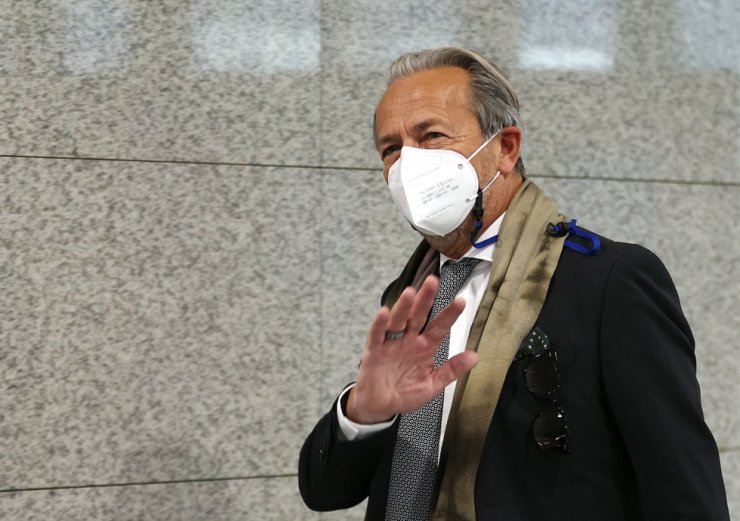
Head of the International Atomic Energy Agency’s department of safeguard Massimo Aparo waves his hand as he walks into the conference hall in the Ministry of Foreign Affairs’s building in Seoul, Tuesday.
November 5, 2020
Korea called Tuesday for the U.N. nuclear watchdog to play an “active” role in ensuring Japan’s transparent and safe handling of contaminated water from its crippled Fukushima nuclear power plant, the foreign ministry said.
Ham Sang-wook, deputy foreign minister for multilateral and global affairs, made the call during an annual policy consultation with Massimo Aparo, the head of the International Atomic Energy Agency (IAEA)’s department of safeguards.
“On the occasion of this consultation, our side stressed the contaminated water issue is a crucial matter that can affect the safety and environment of Japan’s neighboring countries and of the entire international community,” the ministry said in a press release.
“It asked the IAEA to play an active role in terms of securing transparency and verifying the safety in all processes of the Japanese government crafting measures to dispose of the water and disposing of it,” it added.
Amid public concerns over Japan’s possible discharge of the radioactive water into the sea, Seoul has repeatedly called for Tokyo to transparently share related information and stressed its “foremost priority” on the safety of citizens.
Last month, Tokyo was expected to finalize its plan to dispose of the tritium-laced water. But it apparently postponed an announcement on its decision amid strong protests.
At Tuesday’s talks, the ministry and the U.N. agency also discussed cooperation in strengthening readiness to monitor and verify North Korea’s nuclear activity. (Yonhap)
https://www.koreatimes.co.kr/www/nation/2020/11/356_298715.html
‘South Korea Considers Joining IAEA Monitoring of Fukushima Discharge Plan’
November 4, 2020
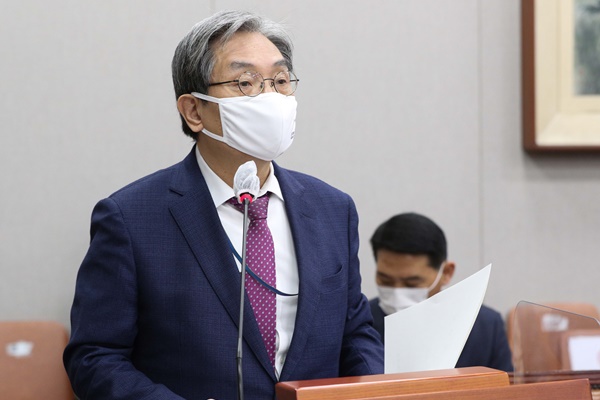
Presidential chief of staff Noh Young-min said South Korea is considering joining the International Atomic Energy Agency (IAEA)’s monitoring of Japan’s reported plan to release radioactive water from the Fukushima nuclear power plant into the sea.
In a parliamentary audit Wednesday, Noh said Japan is expected to request reliable international agencies such as the IAEA to play a role in securing global trust in the process.
He said the Seoul government has consistently asked Japan to transparently disclose information and maintain sufficient communication and consultations with the international community.
He said a task force set up within the presidential office continues to monitor the issue and discuss countermeasures.
Meanwhile the chief of staff said the top office was cooperating with calls to submit records related to the prosecution’s investigation into hedge fund fraud scandals involving Lime and Optimus asset management, adding that some records have already been submitted.
South Korea’s ‘serious concern’ about Japan’s dumping of Fukushima radioactive water
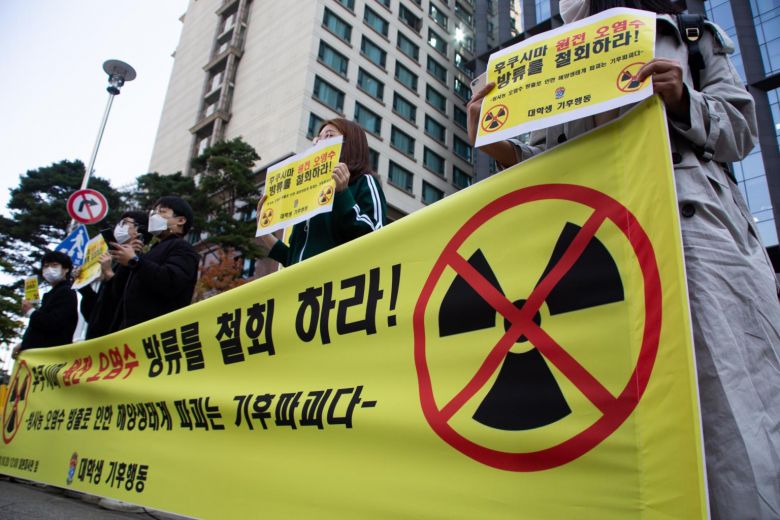
Students protest against Japan’s disposal of radioactive water, outside the Japanese Embassy in Seoul on Oct 20, 2020
South Korea expresses ‘serious concern’ over Japan plan to dump radioactive water from Fukushima
October 29, 2020
SEOUL (REUTERS) – South Korea expressed alarm on Thursday (Oct 29) about the possibility that Japan will dump more than one million tonnes of contaminated water from the tsunami-damaged Fukushima nuclear power plant into the sea.
South Korea’s “serious concern” about the contaminated water was conveyed when senior officials from the uneasy neighbours met for talks in Seoul for the first time since Japan’s new prime minister, Mr Yoshihide Suga, took office last month.
“Director-general Kim highlighted our grave awareness and serious concern about the issue of the Fukushima reactor contaminated water,” the South Korean foreign ministry said in a statement, referring to Mr Kim Jung-han, director-general for Asia and Pacific affairs, who led the South Korean team.
Media has reported that Japanese authorities have decided to discharge some one million tonnes of radioactive water into the sea nearly a decade after an earthquake triggered a tsunami that slammed into the Fukushima nuclear plant north of Tokyo, causing extensive damage.
The Japanese government has said no decision has been made on the disposal of the water from the damaged plant.
Among other issues the two sides discussed were an annual trilateral summit with China and a diplomatic and trade dispute over the issue of South Koreans forced to work at Japanese companies during 1910-45 colonial rule, which has seriously strained ties between the two US allies over the past year.
Mr Kim said Japan needed to show a “more sincere attitude” to resolve the row, urging it to lift trade restrictions imposed on South Korea, the South Korean ministry said.
S Korea expresses concern over any Japanese radioactive water dump
October 30, 2020
SEOUL – South Korea expressed alarm on Thursday about the possibility that Japan will dump more than one million tons of contaminated water from the tsunami-damaged Fukushima Daiichi nuclear power plant into the sea.
South Korea’s “serious concern” about the contaminated water was conveyed when senior officials from the uneasy neighbors met for talks in Seoul for their first time since Japan’s new prime minister, Yoshihide Suga, took office last month.
“Director-general Kim highlighted our grave awareness and serious concern about the issue of the Fukushima reactor contaminated water,” the South Korean foreign ministry said in a statement, referring to Kim Jung-han, director-general for Asia and Pacific affairs, who led the South Korean team.
Media has reported that Japanese authorities have decided to discharge some one million tons of radioactive water into the sea nearly a decade after an earthquake triggered a tsunami that slammed into the Fukushima nuclear plant north of Tokyo, causing extensive damage.
The Japanese government has said no decision has been made on the disposal of the water from the damaged plant.
Among other issues the two sides discussed were an annual trilateral summit with China and a diplomatic and trade dispute over the issue of South Koreans forced to work at Japanese companies during 1910-45 colonial rule, which has seriously strained ties between the two U.S. allies over the past year.
Kim said Japan needed to show a “more sincere attitude” to resolve the row, urging it to lift trade restrictions imposed on South Korea, the South Korean ministry said.
S. Korean demonstrators ramp up protests against Japan’s plans to dump radioactive water into the ocean

October 19, 2020
On Oct. 16, Japanese media outlets reported that the Japanese government will decide on whether or not to dump radioactive water from the Fukushima Daiichi Nuclear Power Plant into the Pacific Ocean. On Oct. 19, demonstrators organized in front of the former Japanese Embassy in Seoul to voice their vehement opposition to the ocean release. The demonstrators held up placards reading “Is the ocean a dump site for radioactive waste?” and “Complete opposition to the ocean release of radioactive water from Fukushima!” and demanded that the Japanese government withdraw its plans for getting rid of its radioactive water. They also demanded that the South Korean government move to proactively oppose and prevent the ocean release.

Demonstrators protest the Japanese government’s plan to dump radioactive water into the ocean in front of the old Japanese Embassy in Seoul on Oct. 16.

Demonstrators demand that the Japanese government withdraw its plans for the ocean release.

A demonstrator mocks Japanese Prime Minister Yoshihide Suga.
By Kim Hye-yun, staff photographer (all photos by Kim Hye-yun)
http://www.hani.co.kr/arti/english_edition/e_national/966364.html
S. Korea reiterates priority on citizens’ health in handling Fukushima water issue
Where are all the other countries governments protesting against the radioactive contamination by Japan of our Pacific ocean?
I can only hear South Korean government’s voice, where are all the others? Their absence of any protest is equivalent to consent!!!

October 16, 2020
South Korea’s foreign ministry reiterated its “foremost priority” to protect its citizens’ health and safety Friday in dealing with Japan’s potential discharge of contaminated water from its crippled Fukushima nuclear plant.
The ministry also said the government has been handling the issue under a vice-ministerial inter-agency dialogue platform, amid public safety concerns over Japanese media reports that Tokyo has decided to release it into the sea with an official announcement likely to come as early as this month.
“Our government has continued to stress that the Japanese side should share information transparently and maintain communication with the international community regarding the disposal of the Fukushima nuclear plant water,” the ministry said in a statement.
“With the foremost priority placed on the protection of our citizens’ health and safety, the government will continue to pay keen attention to Japan’s activities related to the disposal of the contaminated water and will seek to craft measures in cooperation with the international community,” it added.
The ministry also pointed out that it understands Tokyo has yet to finalize how it will dispose of the tritium-laced water.
Japan has been exploring various options, including evaporating the water and putting it deep underground. Observers said that discharging the treated water into the ocean might be the cheapest, and thus tempting, disposal method. (Yonhap)
S. Korea renews concerns over possible release of tainted Fukushima water
The logo of the Ministry of Science and ICT at its main offices in the central city of Sejong, 130 kilometers south of Seoul, is shown in this undated photo provided by the ministry
September 22, 2020
SEOUL, Sept. 22 (Yonhap) — South Korea on Tuesday reiterated its concerns over Japan’s potential move to release radioactive water from its disabled Fukushima nuclear plant into the sea.
Japan has been mulling over options to discharge the water from the nuclear plant, which was devastated by a tsunami triggered by an earthquake in March 2011.
An estimated 1.1 million tons of tainted water is in temporary storage at the Fukushima plant.
South Korea’s Vice Minister of Science and ICT Jeong Byung-seon renewed concerns over Japan’s potential move in a recorded message at an annual conference of the International Atomic Energy Agency’s (IAEA), according to the science ministry.
The general conference of the U.N. nuclear watchdog was held partially online this year due to the coronavirus pandemic.
Jeong said releasing the tainted water would impact the global marine environment and that its method and long-term environmental risks need careful consideration through cooperation with global agencies, such as the IAEA.
The vice minister also called for an active role of the IAEA to facilitate transparency in the water’s disposal process, adding that Japan’s disposal plans should follow international law, such as the U.N. Convention on the Law of the Sea.
The science ministry said the vice minister will convey South Korea’s concerns to IAEA Director General Rafael Mariano Grossi in a separate meeting Wednesday.
The fallout of the damaged Fukushima nuclear plant has been a source of contention between the two neighboring countries, with South Korea imposing a ban on all seafood imports from eight Japanese prefectures near Fukushima in 2013.
https://en.yna.co.kr/view/AEN20200922007000320?section=national/diplomacy
Japan pushes forward with plans to dump radioactive water into ocean, despite public opposition
Tokyo may dump contaminated water as early as September
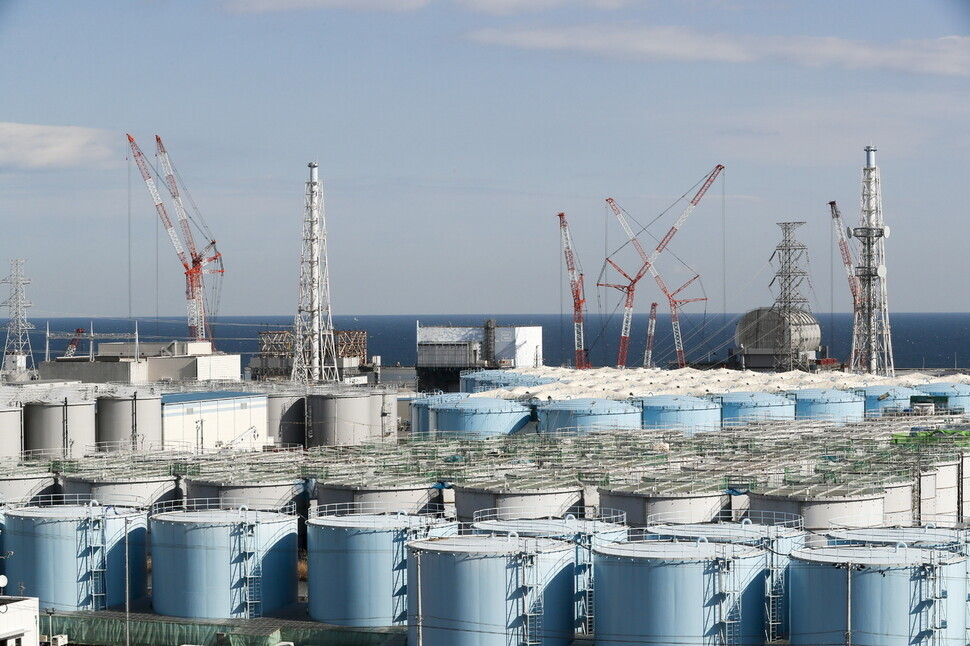 Storage tanks for water contaminated with radioactive matter from the Fukushima Daiichi Nuclear Power Plant.
Aug.17,2020
During the past three months, while the international community was focused on the COVID-19 pandemic, the Japanese government has held five public hearings as it moves forward with its decision to dump radioactive water from the Fukushima nuclear disaster into the ocean. After analyzing the transcripts and videos from the hearings, the Hankyoreh has concluded that the Japanese government will probably decide to dump the water as early as September or October, despite overwhelming public opposition to the plan, even in Japan. Since a study has found that the contaminated water could reach the eastern coast of South Korea within a year of being dumped, international groups focusing on the environment and experts in international law are calling for the South Korean government to take preemptive action in the area of international law.
Following an explosion during the 2011 Tohoku earthquake, the Fukushima Daiichi nuclear power plant was closed and is being decommissioned, a process that has taken nine years so far. But debate continues about how to deal with the growing volume of water contaminated with radioactivity, including the water used to cool the nuclear fuel and rainwater and groundwater that have seeped into the buildings. The contaminated water is currently being stored in tanks, but by the summer of 2022, the Japanese government says, the tanks will run out of space, necessitating the water’s release into the ocean.
The Japanese government, under Prime Minister Shinzo Abe, held video hearings about how to deal with the contaminated water on Apr. 6, Apr. 13, May 11, June 30, and July 17. These hearings were attended not only by representatives from the fishing, agriculture, and hospitality businesses and community leaders from Fukushima Prefecture but also the national tourist council and groups representing businesses and consumers. The government was represented by officials from 10 or so ministries, including the Ministry of Economy, Trade, and Industry, the Ministry of the Environment, and the Ministry of Foreign Affairs.
Radioactive matter detected in water even after decontamination
While reviewing the hearings, the Hankyoreh learned that radioactive matter has been detected even following decontamination efforts, that releasing the water would likely cement Fukushima’s stigma as an area tainted with radioactivity and have a serious impact on the fishing industry, and that there was widespread opposition to the idea among hearing attendees, who argued that the final decision shouldn’t be made until public opinion has been canvassed.
An August 2019 report by international environmental group Greenpeace about the contaminated water at Fukushima found that the water, once released, would flow through the East China Sea and be brought via the Kuroshio Current and the Tsushima Current to South Korea’s eastern shore within a year. Disregarding the concerns of the international community, the Japanese government released a draft of a plan this past March to dump the contaminated water at Fukushima into the ocean over the course of 30 years. Given the plan’s schedule, which involves the construction of a facility to dilute the contaminated water, its decision will likely be made by this October. Abe told the press in an interview in March that he wants to finalize a plan as quickly as possible.
The Japanese government intends to make its final decision after canvassing the opinions of Fukushima residents, related organizations, and ordinary citizens. But even in the Japanese public, there’s fierce opposition to dumping the contaminated water. The Hankyoreh’s analysis of the transcripts and videos from the five hearings show that most of the 37 participants were concerned about the plan to release the water.
“It’s human nature to avoid radioactive materials. It’s a serious problem that there’s still radioactivity even in the decontaminated water, which contradicts what TEPCO [Tokyo Electric Power Company] initially said,” said Hidenori Koito, the director of a trade association for the hospitality industry in Fukushima Prefecture.
80% of water contains radioactive matter beyond permissible levels
TEPCO claimed to have filtered out 62 kinds of radioactive material through the Advanced Liquid Processing System (ALPS) and all that’s left is tritium, which is technically difficult to remove from the contaminated water in the tanks. But a 2018 study found that 80% of the water processed using ALPS still contained more than the permitted level of radioactive matter that is deadly to the human body, including cesium, strontium, and iodine. While TEPCO has emphasized that it would decontaminate the water once more to ensure its safety prior to release, distrust has already surged.
Another criticism is that dumping the water would spoil the nine-year campaign by Fukushima residents to repair the area’s reputation. “If the contaminated water is released into the ocean, people will inevitably think there’s another radiation leak at Fukushima, given the nuclear accident that occurred there,” said Kimio Akimoto, president of a coalition of forestry associations in the prefecture.
Vehement opposition from fishermen
An even sterner stance was taken by fishermen, who depend upon the ocean for their livelihood. “It’s unacceptable for radioactive matter to be deliberately pumped into the ocean,” said Tetsu Nozaki, president of a coalition of fishery cooperatives in Fukushima Prefecture. The national coalition of fishery cooperatives voted on July 23 to “oppose” the planned release of contaminated water.
There are also concerns that the government is rushing the plan. “The Japanese public doesn’t know the details about the contaminated water yet. The final decision shouldn’t be made until people understand what it means to dump contaminated water into the ocean,” said Yuki Urago, secretary-general of a national coalition of consumers’ associations.
“Right now, the Japanese public is focused on COVID-19. It’s doubtful whether the issue of contaminated water at Fukushima can provoke a national debate in this situation,” said Yuko Endo, mayor of Kawauchi, a village in Fukushima Prefecture.
Japan took an unusually long opinion canvassing period
Before deciding on important policies, the Japanese government has a practice of canvassing opinions, a process known as the “public comment” period. The relevant ministry here, the Ministry of Economy, Trade, and Industry, began collecting comments on Apr. 6 and took the unusual step of extending that period three times, only wrapping it up at the end of last month. One reason the government may have extended the comment period is because of the overwhelming opposition to releasing the contaminated water into the ocean.
Last month, the UN Human Rights Council released a statement expressing “deep concerns” about “a report indicating that the Japanese government is accelerating its timeframe for releasing water contaminated with radioactivity at Fukushima.” South Korea, given its proximity to Japan and the ocean, has set up a government-wide task force under the Office of the Prime Minister to keep tabs on the Japanese government’s actions.
“We’re asking Japan to share adequate information while it’s processing the contaminated water at the Fukushima nuclear plant. We’re monitoring the situation from various angles to see what impact this will have on us,” explained an official from South Korea’s Ministry of Foreign Affairs.
By Kim So-youn, staff reporter
http://english.hani.co.kr/arti/english_edition/e_international/958099.html
South Korea Expresses Concern About New Fukushima Water Release Plan
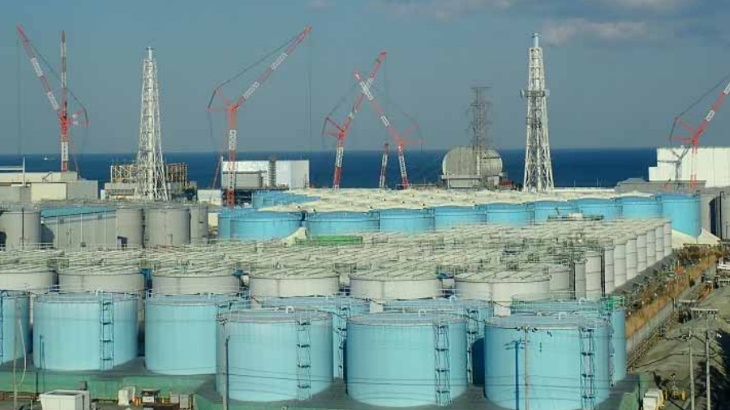
30 Mar 2020 – 08:15 by OOSKAnews Correspondent
SEOUL, South Korea
South Korea has expressed concern about a new draft plan from Japan to release contaminated Fukushima water from its disabled Fukushima nuclear power plant into the sea.
The country’s Office for Government Policy Coordination said March 26 that Japan should ensure that its plan does not affect the health and safety of South Koreans or the maritime ecosystem, while the Ministry of Oceans and Fisheries said that it “cannot support the Japanese government discharging contaminated water from the Fukushima Daiichi Nuclear Power Plant in the sea without discussions with neighbouring countries”.
South Korea’s latest protest came two days after the Tokyo Electric Power Company (TEPCO) issued a more detailed draft plan to release the contaminated water over 30 years.
Currently, treated, but still radioactive water, is accumulating at about 170 tons per day and is being treated to remove most contaminants, following the earthquake and tsunami in March 2011.
TEPCO reports that currently there is 1.19 million cubic meters of contaminated water in storage on site. The concentration of tritium, which cannot be completely removed, is about 730,000 Bq/litre, or a total of 16 grams. Quantities of treated water are increasing constantly and storage capacity is expected to run out in 2021.
The utility’s report discusses the treatment and disposal methods, which have been developed by outside experts, as being “practical options, both of which have precedents in current practice…the radiation impact of both the discharge into the sea and vapor release is notably small, compared to natural radiation exposure,” saying that the government of Japan, not TEPCO, will make the final decision as to release.
The tritium concentration will be lowered as much as possible under the plan: “For vapor release: TEPCO will study dilution of tritium at a rate equivalent to that for discharge into the sea, as against the regulatory concentration limit of tritium in the atmosphere (5 Bq in 1 liter air)…For discharge into the sea: TEPCO will study dilution rates of tritium with reference to operational standards for “groundwater bypass” and “subdrains” (1,500 Bq in 1 liter water), which are well below the regulatory concentration limit for tritium in seawater (60,000 Bq in 1 liter water).” This is against WHO drinking water guideline (10,000 Bq in 1 liter water)”
If any abnormality is detected, the disposal process will stopped under the draft plan. Monitoring will be enhanced by [an] increase in sampling points and frequency; information will be published promptly.
The report is described as being aimed at the general public and other stakeholders who plan to participate in government-organised “opinion hearings”.
‘Fukushima’s radioactive water discharge is important to Koreans’
 Greenpeace nuclear campaigner Shaun Burnie in front of the Fukushima Daiichi nuclear plant, five years after the accident. The environmental organization has launched an underwater investigation into the marine impacts of radioactive contamination on the Pacific Ocean resulting from the 2011 nuclear disaster,
By Bahk Eun-ji
March 13, 2020
Shaun Burnie, a senior nuclear specialist at Greenpeace Germany, has been working in Fukushima since 1997 to stop the operation of the Fukushima Daiichi Nuclear Power Plant, with much of his time based in Japan.
Among a number of nuclear experts around the world who have been condemning the Japanese government’s plan to discharge radioactive water from the destroyed Fukushima power plant into the Pacific Ocean, Burnie claims this issue is clearly important to Koreans as they understand the risks of nuclear energy and care about the environment.
“Fukushima is a defining issue of this time as it continues to pose a threat to the environment not just of Japan but the Asia Pacific region. This is a nuclear disaster with no end and Koreans realize that only by speaking up and opposing bad decisions can the progress be made in protecting our environment,” he said.
The nuclear expert said the opposition in Korea to the Japanese government’s plan to discharge contaminated water from Fukushima is entirely justified and essential, so the opposition should continue here in Korea. At the same time, Koreans also should be supporting the local Japanese communities who are opposed to the discharges.
Burnie also said the discharges of the contaminated water are a direct threat to the marine ecosystem and human health as all radioactivity has the potential to cause harm as technically there is no safe level of exposure. The discharges are more than tritium, which can cause damage to human and non-human DNA, but also many other radionuclides such as strontium that, even if processing of the contaminated water is successful, will still be discharged in enormous quantities.
“None of this can be justified from an environmental perspective when there is a clear alternative ― long term storage and processing to remove radionuclides, including tritium.”
The Japanese government has sought for many years to deny that there are radiation risks in Fukushima, which is a central part of their strategy to support nuclear power. By creating the illusion that Fukushima has recovered from the 2011 disaster, the Japanese government think they can convince people to support the restarting of nuclear reactors although the majority of Japanese people are against it.
“It is one reason why the human rights of tens of thousands of Fukushima citizens, including women and children, as well as tens of thousands of workers are violated consistently by the Japanese government,” he said.
https://www.koreatimes.co.kr/www/nation/2020/03/371_286064.html
S. Korea, US Discuss Fukushima Wastewater, Marine Issues
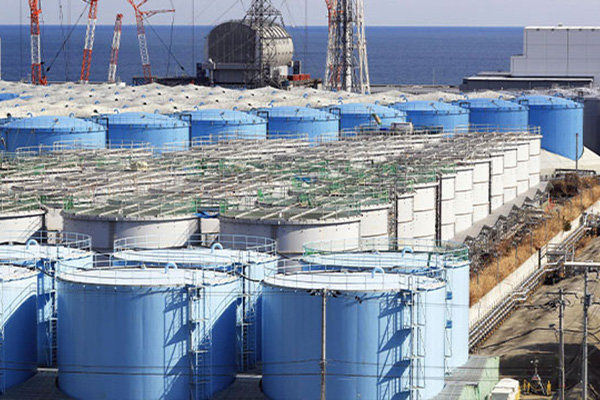
January 17, 2020
South Korea and the U.S. held a director-level meeting on maritime and environment issues in Seoul on Thursday.
According to the Foreign Ministry on Friday, the two sides discussed the possibility of Japan releasing contaminated water from the Fukushima Daiichi nuclear power plant disaster site into the ocean.
They also shared views on ways to preserve marine environments.
The two sides discussed how they plan to reduce marine debris and ways to open the Seventh International Marine Debris Conference in South Korea in 2022.
During the meeting, South Korea called on the U.S. to swiftly take steps to remove South Korea from its preliminary list of countries that engage in illegal, unreported, and unregulated(IUU) fishing.
South Korea was designated as a preliminary IUU fishing country by the U.S. after two South Korean fishing boats violated closed fishing grounds and operated near Antarctica in 2017.
http://world.kbs.co.kr/service/news_view.htm?lang=e&Seq_Code=150721
‘Korea should take leading role in stopping Japan from discharging radioactive water’
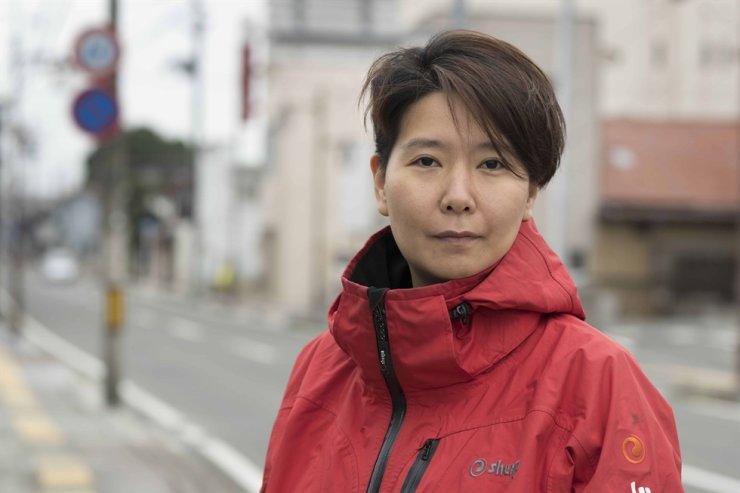
Korean gov’t inactive over Japan’s plan to discharge radioactive water into Pacific

OLYMPICS/ S. Korea to bring food, check for radiation at Tokyo Games
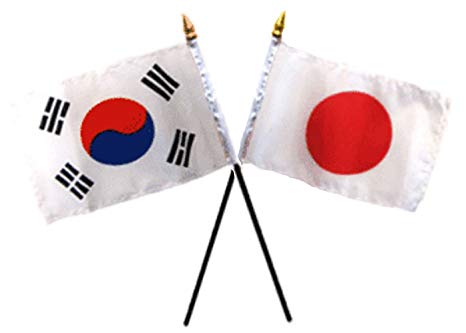
December 4, 2019
SEOUL–South Korea’s Olympic committee plans to buy radiation detectors and ship homegrown ingredients to Japan for its athletes at the Tokyo Games because of worries local food may be contaminated by the 2011 Fukushima nuclear disaster.
Japan has posted data to show the country is safe from Fukushima radiation and many countries have lifted Fukushima-related food restrictions.
The Korea Sports & Olympic Committee (KSOC) plans to ship red pepper paste, a key ingredient in Korean dishes, and other foods, and check for radiation in meat and vegetables that can only be sourced locally due to stringent quarantine rules, a KSOC meals plan report shows.
“Apparently, ingredients and food will be transported from South Korea as much as possible, possibly including canned food,” Shin Dong-keun, a ruling Democratic Party member of the parliamentary sports committee who was recently briefed by KSOC, told Reuters in an interview.
“For this Olympic games, food is our team’s main focus so they can provide safe meals for the athletes to erase radiation worries, as opposed to in the past, food was meant to play the supplementary role of helping with their morale.”
KSOC plans to arrange local Korean restaurants to prepare meals for baseball and softball players competing in Fukushima, as shipping boxed lunches from Tokyo is not feasible, it said in the “2020 Tokyo Summer Olympics Meals Support Center Plan.”
“These Korean restaurants should only handle food confirmed as radiation free,”
The Fukushima No. 1 nuclear power plant, located about 220 kilometers northeast of Tokyo, was rocked by a magnitude 9.0 earthquake and subsequent tsunami in March 2011, sparking three reactor meltdowns.
More than 160,000 residents fled nearby towns in the aftermath as radiation from the reactors contaminated water, food and air.
RADIATION HOT SPOTS
Greenpeace said on Wednesday that radiation hot spots have been found at the J-Village sports facility in Fukushima where the Tokyo 2020 Olympic torch relay will begin.
South Korea has stepped up demands for a Japanese response to concerns food produced in the Fukushima area and nearby sea could be contaminated by radiation from the Fukushima plant.
Japan is having trouble removing more than 1 million tons of contaminated water from the crippled plant.
When it finalizes menus around April, the KSOC will consider asking Tokyo to ease its stringent quarantine ban on South Korean produce, an official at the committee said.
The official said South Korea was preparing a separate meals plan due to concerns from the public and politicians over food safety, unlike the United States and Australia whose athletes will mainly eat food provided by the host country, Japan.
The official requested anonymity due to the sensitivity of the matter.
South Korea’s concerns about possible contamination from the nuclear disaster has become a thorn in already contentious ties with Japan.
Seoul has banned imports of seafood from Japan’s Fukushima region since the nuclear disaster, prompting Tokyo to launch a World Trade Organization complaint. Japan has said many nations such as the United States and Australia had lifted or eased Fukushima-related restrictions.
Japanese officials use international events to promote the recovery of areas hit by the 2011 tsunami and nuclear disaster to show produce from Fukushima Prefecture is safe.
Mineral water from Fukushima was served on tables at the last month’s Group of 20 foreign ministers meeting it hosted in Nagoya.
The South Korean Olympic committee plan to purchase radiation detecting equipment by February and station an inspector at its own cafeteria in Tokyo during the games to check contamination levels, according to the KSOC report.
The budget for the Tokyo Olympics meals service is earmarked at 1.7 billion won ($1.44 million or 155 million yen), which includes twice the amount of money for buying and shipping ingredients than previous games, according to the committee.
South Korea nuclear regulator wants information on radioactive Fukushima water release
 A geiger counter measures a radiation level of 54.0 microsievert per hour near the No.2 and No.3 reactor buildings at Tokyo Electric Power Co’s (TEPCO) tsunami-crippled Fukushima Daiichi nuclear power plant in Okuma town, Fukushima prefecture, Japan February 18, 2019
November 20, 2019
SEOUL (Reuters) – Japan’s reluctance to disclose information about the release of radioactive water from its damaged Fukushima nuclear plant is hampering neighboring countries’ efforts to minimize the impact, the head of South Korea’s nuclear safety agency said on Wednesday.
Since the 2011 earthquake and tsunami caused a meltdown at some of the reactors the Fukushima plant, owner Tokyo Electric Power Co (Tepco) has been storing radioactive water in tanks at the site from the cooling pipes used to keep the fuel cores from melting. The utility will run out of space for the water in 2022.
Japan has not yet decided how to deal with the contaminated water, but its environment minister said in September that radioactive water would have to be released from the site into the Pacific Ocean.
“We have been raising Japan’s radioactive water issue to the international community to minimize the impact … but as Japan hasn’t disclosed any specific plan and process we would need more details to run simulations and study,” Uhm Jae-sik, chairman of the Nuclear Safety and Security Commission, told Reuters.
In addition to the Fukushima crisis, safety concerns about nuclear energy have increased in South Korea following a 2012 scandal over the supply of faulty reactors parts with forged documents, prompting a series of shutdowns of nuclear reactors.
South Korea, the world’s fifth-largest user of nuclear power, targets a long-term phase out of atomic power to allay public concerns.
“Regardless of the government’s energy policy change, our primary goal is ensuring the safety of nuclear power,” Uhm said.
South Korea operates 25 nuclear reactors, which generate about a third of the country’s total electricity. Of the 25 reactors, 10 are offline for maintenance, according to the website of Korea Hydro & Nuclear Power.
(This story corrects the word “specific” to clarify meaning in translated quote in paragraph 4)
S. Korea, Russia agree to put radiation detectors on ferries

1 This Month

of the week – Shut Down Drone Warfare!


Tell the Ukrainian Government to Drop Prosecution of Peace Activist Yurii Sheliazhenko

Petition to revoke the licensing of the Near Surface Nuclear Disposal Facility (NSDF) at Chalk River. https://www.ourcommons.ca/petitions/en/Petition/Details?Petition=e-7247
To see nuclear-related stories in greater depth and intensity – go to https://nuclearinformation.wordpress.com
-
Archives
- March 2026 (244)
- February 2026 (268)
- January 2026 (308)
- December 2025 (358)
- November 2025 (359)
- October 2025 (376)
- September 2025 (257)
- August 2025 (319)
- July 2025 (230)
- June 2025 (348)
- May 2025 (261)
- April 2025 (305)
-
Categories
- 1
- 1 NUCLEAR ISSUES
- business and costs
- climate change
- culture and arts
- ENERGY
- environment
- health
- history
- indigenous issues
- Legal
- marketing of nuclear
- media
- opposition to nuclear
- PERSONAL STORIES
- politics
- politics international
- Religion and ethics
- safety
- secrets,lies and civil liberties
- spinbuster
- technology
- Uranium
- wastes
- weapons and war
- Women
- 2 WORLD
- ACTION
- AFRICA
- Atrocities
- AUSTRALIA
- Christina's notes
- Christina's themes
- culture and arts
- Events
- Fuk 2022
- Fuk 2023
- Fukushima 2017
- Fukushima 2018
- fukushima 2019
- Fukushima 2020
- Fukushima 2021
- general
- global warming
- Humour (God we need it)
- Nuclear
- RARE EARTHS
- Reference
- resources – print
- Resources -audiovicual
- Weekly Newsletter
- World
- World Nuclear
- YouTube
-
RSS
Entries RSS
Comments RSS
 nuclear-news