TEPCO announces method for measuring concentration of radioactive materials to be discharged into the ocean, targeting 31 species to be discharged from next spring
The radioactive polluting of our Pacific ocean is just a too important issue for us to trust Tepco, a company which has never been honest in the past 10 years with its announced facts and numbers.

November 14, 2022
Tokyo Electric Power Company (TEPCO) announced on April 14 that it will measure the concentrations of 30 types of radioactive materials, including tritium, which cannot be removed by the purification facilities, to determine whether or not to discharge contaminated water from the Fukushima Daiichi Nuclear Power Plant (Okuma and Futaba, Fukushima Prefecture) after purifying and treating it, immediately prior to its discharge into the ocean. The purification system removes 62 types of radioactive materials, but radioactive materials with short half-lives were excluded from the evaluation because they have decayed.
According to TEPCO, radioactive materials that are expected to be reduced by half in less than one year and that were determined to be almost nonexistent in the treated water were excluded from the evaluation. TEPCO will continue to measure the excluded substances before they are discharged.
At a press conference on the same day, Junichi Matsumoto, head of the TEPCO’s Fukushima Daiichi Decommissioning Promotion Company, explained that the reason for reducing the number of substances to be evaluated compared to the radioactive substances to be removed by the ALPS is “to prevent unrealistic evaluations under excessively strict conditions. The measurement details will be submitted to the Nuclear Regulation Commission, and the Commission will review whether they are appropriate or not.
The evaluation targets include radioactive cesium and strontium. It was confirmed that the total concentration of 30 types of radioactive substances other than tritium was below the government’s standard for release. Then, a large amount of seawater will be mixed with the treated water, which still contains tritium, to dilute the tritium concentration to less than 1/40th of the standard level, and the water will be discharged from the seafloor about 1 km offshore.
TEPCO is now digging undersea tunnels with the aim of starting tritium discharge in or after next spring.
https://www.tokyo-np.co.jp/article/213918?fbclid=IwAR29ZLfidwVblCHKcRUglDDyMiz9hp5WvZFb8wjHb-n3nh6c9lChLxRor6k
China Urges Japan to Safely Dispose of Nuclear Water

11 November 2022
The International Atomic Energy Agency will continue a comprehensive safety review of the Fukushima Daiichi nuclear power station.
On Friday, Chinese Foreign Affairs Ministry spokesperson Zhao Lijian once again urged Japan to respond to the legitimate concerns of all relevant parties and dispose of nuclear-contaminated water in a scientific, open, transparent, and safe way.
The International Atomic Energy Agency (IAEA) announced Wednesday that its technical task force would visit Japan from Nov. 14 to 18 to continue a comprehensive safety review of Japan’s plan to pipe nuclear-contaminated water from the Fukushima Daiichi nuclear power station into the Pacific Ocean.
In response to a related query, Zhao said at a daily press briefing that China supports the work of the IAEA and its technical task force.
He said China hopes that the task force will adhere to the principles of objectivity, fairness, and science, strictly implement the IAEA’s nuclear safety standards, and ensure the absolute safety of the disposal of contaminated water. “Japan should fully cooperate with the review by the IAEA’s technical task force,” said Zhao.

While the IAEA’s working group has not completed the assessment and review, and the international community’s concerns have not been effectively resolved, the Japanese side has nevertheless approved the discharge plan and accelerated the construction of the discharge pipeline, intending to create a fait accompli.
“This undermines the authority of institutions and technical working groups and is highly irresponsible to the international community and the Japanese people,” Zhao said.
China once again urges the Japanese side to face up to the legitimate concerns of all parties, fully consult with stakeholders including its neighbors and relevant international institutions, and dispose of the nuclear-contaminated water in a scientific, open, transparent, and safe manner to protect the marine environment and safeguard the health and food safety of people of all countries.

Bring voices from the coast into the Fukushima treated water debate

October 28, 2022
More than a decade has passed since the accident at the Fukushima Dai’ichi nuclear power plant in Japan—but the most contentious aspect of bringing the site under control is only just beginning. The Japanese Government has approved plant operator TEPCO’s plan to release treated water into the Pacific Ocean. That water is currently being stored onsite and retains some radioactive substances after treatment. The decision to release this water has provoked political contention and societal concern. South Korea, China, and Taiwan, as well as international environmental nongovernmental organizations, have expressed strong concern; and fisheries cooperatives in Japan remain opposed to the releases for fear of possible reputational impacts on Fukushima seafood. TEPCO are confirming specific details of the release process, and an International Atomic Energy Agency (IAEA) task force has made multiple visits to the Fukushima Dai’ichi site at the behest of the Japanese Government and TEPCO. The releases are scheduled to start in 2023 and run for many years.
A technical committee within Japan, formed by the Ministry of Economy, Trade, and Industry, made the recommendation to release the treated water; it’s unlikely that the Japanese Government or TEPCO will revisit their decision. And so, a key role for technical and policy communities, both within Japan and internationally, is to ensure that the concerns of affected stakeholders are identified and addressed as the releases proceed. However, despite significant global science–policy interest in the treated water situation at Fukushima Dai’ichi (1, 2), the concerns of local fishers and coastal communities in Fukushima, key stakeholders living in the shadow of the nuclear site who will live with the consequences of the releases on a daily basis, have had only limited visibility in the science–policy discourse surrounding the aftermath of the Fukushima disaster.
Even if TEPCO and the government minimize environmental impacts through careful management of the process, as some international experts believe possible (3), the indirect socioeconomic impacts of the treated water releases on Fukushima’s coastal fishing communities are likely to be experienced over the long term. Proposals made by the community of researchers and institutions working at the science–policy interface for Fukushima treated water must be informed by a deep understanding of the local community context—and they must be responsive to the concerns of local stakeholders. We believe local community concerns can be more fully incorporated into decision making for treated water at Fukushima Dai’ichi.
Local Influence
Within Japan, the government expert committees advising the management of treated water are dominated largely—albeit not exclusively—by engineering and physical science expertise (4). Despite fisheries cooperatives’ long-standing and vocal opposition to the releases, plant operator TEPCO explained in August 2021 that they had not at that point had direct consultations with fisheries representatives regarding the discharges (5). Formal dialogue between the operator and the fisheries sector in Fukushima on the topic of releases did not start until TEPCO and the Japanese Government had determined most of the technical details. This left little room for the plans to be adjusted in response to any concerns from Fukushima’s fishers or coastal residents.
Decisions over treated water at Fukushima Dai’ichi rest with the Japanese authorities and plant operator. However, the global community of researchers and organizations working at the interface of science and policy can influence local community engagement at Fukushima in at least three ways. The first is participation as experts in intergovernmental forums, such as the IAEA and United Nations Scientific Committee on the Effects of Atomic Radiation (UNSCEAR), which provide actors such as the Japanese Government with evidence-based guidelines and oversight on the management of environmental radioactivity. The second is peer-reviewed research into the marine environment in Fukushima and potential impacts of treated water releases (e.g., 6, 7), which often contains policy recommendations and forms part of the scientific record that’s drawn on to justify decisions taken about management of treated water. The third is reports and opinion pieces, grounded in scholarly evidence, on an individual or organizational basis with the intention of influencing government actions within Japan or initiating broader civil society action towards specific outcomes for the management of treated water (e.g., 8).
Both within Japan and internationally, Fukushima’s fishers and coastal residents, although not completely absent, have received limited consideration as stakeholders. Fishers and residents tend to be caricatured as being concerned over rumors and reputational damage to Fukushima seafood owing to the treated water releases (9, 10)—or as harboring “irrational” safety fears over the relatively small amounts of radioactivity from pollutants such as tritium that are contained in the tanks currently storing treated water onsite (e.g., 3). Many suggest that fishers and coastal residents can eventually be appeased with the right compensation strategies along with judicious use of language. This, they argue, would promote a precise understanding of the science behind the releases and avoid potentially stigmatizing or misleading language around radioactivity.
Missing Local Context
The Japanese Government is unlikely to reverse their decision to release treated water. Even so, it’s important to recognize that fishing is both an economic activity and the subject of deep emotional investment on the Fukushima coast. When issues of value are at stake, the social sciences have long argued (11) that providing “more and better” technical information or economic compensation alone is unlikely to be an effective risk governance approach. The resilience of Fukushima’s fishing communities during the treated water releases depends on careful engagement with and deep understanding of fishers’ and residents’ concerns.
One aspect is the significant effort that has gone into revitalizing fisheries to date and concerns over these revitalization efforts being jeopardized by the treated water releases. Trial fishing operations commenced off the Fukushima coast in 2012, with the aim of restarting fisheries on a smaller-scale basis (about 10% of pre-disaster levels) once government fisheries scientists failed to detect radioactive cesium in different species.
In spring 2021, the trial phase ended and coastal fisheries moved to a new “expansion” phase, with an aspiration to return to pre-disaster capacity. Fishers have responded positively to the gradual recovery and expansion of fisheries in Fukushima, citing factors such as renewed opportunity for interaction with and mutual support from their peers, a chance to reduce down time spent in the family home with associated tensions, and the return of a sense of pride and purpose in being out fishing and doing “their” work (12).
The revitalization of fisheries has hence brought significant benefit to the Fukushima coast, both for sales of seafood and also fishers’ wellbeing, which cannot be offset through economic compensation alone. Moreover, the amount of effort that has gone into this revitalization, through re-engaging fishers and building trust with consumers and brokers, should not be underestimated, nor should the time taken to reach a stage where local seafood is once again part of daily life (13). When viewed through this lens, any actions that may jeopardize this recovery—such as releases of water perceived as “tainted” into the marine environment—are likely to be met with concern or opposition.
A second aspect receiving little explicit attention in the debates over Fukushima treated water centers around the social and cultural significance of fisheries to the Fukushima coast. The distinctive environmental characteristics of Fukushima waters—where the warm Kuroshio and cold Oyashio currents meet—have led to particular pride in the uniqueness and quality of Fukushima’s fish (14). Consumers and Fukushima residents have responded positively to the return of Fukushima seafood to menus and supermarket shelves, with events celebrating locally landed and seasonally caught fish. If Fukushima’s waters are again perceived as being degraded, fishers’ and residents’ attitudes towards the releases may stem at least in part from concerns over the implications for their livelihoods and sense of belonging and identity—it’s not simply about their incomes.
There are actions that can be taken to more fully understand coastal communities’ concerns and hence mitigate societal impacts in Fukushima. These action have implications both within Japan and internationally.
We recommend the establishment of a body to independently evaluate the effects of treated water releases on the marine environment and fish stocks. Right now, there are good indications that the Japanese public questions the competence of government and regulatory agencies to manage radioactive waste (15). To ensure that claims of Fukushima seafood remain credible, we must create institutions viewed as trustworthy and independent assessors of marine environmental quality.
A good model may be the Environmental Evaluation Group established to monitor the Waste Isolation Pilot Plant in New Mexico from 1978 to 2004. The group was federally funded, but the state did not control the issues the group researched, the staff it hired, or the reports it published (16). There are already independent groups in Fukushima that invite citizens to collaborate with researchers to assess marine and land-based environmental quality. It’s important that such groups receive long-term core funding to undertake environmental monitoring perceived as independent and trustworthy, while, at the same time, retaining a regulatory firewall to prevent government influence. This will help maintain societal trust in the quality of Fukushima waters and seafood during the releases.
We also recommend that there be a greater diversity of experiences and stakeholders participating in committees responsible for designing and implementing the treated water releases. As outlined earlier, local and experiential knowledge, and to a lesser extent social science and humanities expertise, are under-represented on the technical committees advising the Japanese Government on treated water.
A possible template is the partnership approach adopted as part of low- and intermediate waste management in Belgium in the late 1990s. Sundqvist (17) explains partnerships involving site operators, local governments, and potentially affected stakeholders were established in candidate host communities. The Belgian national waste agency handed the partnerships power to decide on all aspects of the project (with the operator retaining a veto on proposals that were technically unfeasible) and granted budget to commission additional studies or ask for second opinions on proposals. Social science researchers were embedded and tasked with developing ground rules for fair and equitable formation and operation of the partnerships.
Stakeholder engagement exercises can sometimes be more contentious than harmonious, and there is no guarantee that collaborative models of decision making will lead to more satisfactory outcomes. Fukushima represents an extreme case, but also one where there is opportunity for innovation and setting precedents. Fishers, citizens, and local governments could work with marine scientists and plant engineers to decide on timing, locations, and monitoring strategies for releases, by drawing on fishers’ and coastal dwellers’ own knowledge of how fish move around the coastal environment. Partnerships could collate anecdotal and narrative accounts from restaurants, fishmongers, and brokers of how consumers’ perceptions of Fukushima seafood change after the releases, and they can use these accounts in combination with market data to determine compensation levels and additional support requirements for fishing communities. Funding from the national government is needed to sustain these partnerships long-term. Periodic reviews every six months, led by partnership representatives, would give an opportunity for technical details of the releases or communication and compensation strategies to be altered in response to emerging concerns.
However, we need to ensure that committees and partnerships can initiate tangible change rather than “rubber stamping” predetermined recommendations. It is also important that the technical experts who advise on releases have a diversity of opinion among themselves and are able to participate in healthy and constructive disagreement on how the releases ought to proceed. To reduce the risk of “groupthink,” technical committees should also include overseas experts as advisors or observers, individuals who may have relevant experience effectively engaging stakeholders on radioactivity. This could involve government officials who have set up and run stakeholder partnerships for radioactive waste management, scientists who have engaged publics and stakeholders in the aftermath of nuclear accidents such as Chernobyl, or even citizens from other places globally who can share first-hand experience of living with environmental radioactivity.
Last, we believe that international institutions and the science-policy community have an important role to play in informing best practice within Japan. We challenge this community to expand their remits to more explicitly incorporate the societal dimensions of treated water and to engage more fully with local researchers within Japan. At present, social science perspectives have only a marginal role within the IAEA’s work on Fukushima and the sea (18, 19) and indeed lie largely outside the remit of UNSCEAR (20).
From a natural and physical science standpoint, research into the marine environment in the wake of the Fukushima disaster stands as a good example of international collaboration on a complex scientific issue, a collaboration whose activities are meant to inform decision making. This ethos of cooperation in Fukushima’s seas could be further enhanced by more international collaboration with the social sciences, especially with researchers based in Japan who have rich contextual knowledge, spanning research and practice, into how fishers and communities on the Fukushima coast have engaged with the treated water problem (see, e.g., 21, 22).
The treated water issue at Fukushima is a cautionary tale. Investigations into environmental controversies that have international implications and require global scientific cooperation can overlook impacts on local communities. The management of the treated water releases could prove to be an important case study for how local stakeholders, such as fishers, can be embedded into the decision-making for complex marine environmental issues with long-term implications. Yet, for this learning to be realized, local community “on the ground” experiences in Fukushima, related to treated water, need to be better connected to a national and global audience.
References
1 K.O. Buesseler, Opening the floodgates at Fukushima. Science369(6504), 621–622 (2020).
2 D. Normile, Japan plans to release Fukushima’s wastewater into the ocean. Sciencehttps://doi.org/10.1126/SCIENCE.ABI9880 (2021).
3 B. Nogrady, Scientists OK plan to release one million tonnes of waste water from Fukushima. Naturehttps://doi.org/10.1038/D41586-021-01225-2 (2021)
4 METI, Measures against decommissioning, contaminated water, and treated water: Portal site (2021). https://www.meti.go.jp/earthquake/nuclear/hairo_osensui/index.html.
5 Reuters, Tepco to consult fishing communities over water release plan-official (2021, August 26). https://www.reuters.com/business/environment/tepco-consult-fishing-communities-over-water-release-plan-official-2021-08-26/. Accessed 21 October 2022.
6 R. Bezhenar, H. Takata, G. de With, V. Maderich, Planned release of contaminated water from the Fukushima storage tanks into the ocean: Simulation scenarios of radiological impact for aquatic biota and human from seafood consumption. Mar. Pollut. Bull.173 (Pt B), 112969 (2021).
7 Z. Xixi, Q. Tongkun, W. Yecheng, Optimal strategies for stakeholders of Fukushima nuclear waste water discharge in Japan. Mar. Policy135, 104881 (2022).
8 National Bureau of Asian Research, Japan’s role in the Indo-Pacific following the Fukushima nuclear disaster: Through the Pacific Islands’ lens (2022, February 8). https://www.nbr.org/publication/japans-role-in-the-indo-pacific-following-the-fukushima-nuclear-disaster-through-the-pacific-islands-lens/. Accessed 21 October 2022.
9 OECD-NEA, Fukushima Daiichi Nuclear Power Plant Accident, Ten Years On Progress, Lessons and Challenges (OECD-NEA, 2021).
10 R. Rao, Will Fukushima’s Water Dump Set a Risky Precedent? – IEEE Spectrum. IEEE Spectrum. (2021, September 24). https://spectrum.ieee.org/fukushima-wastewater-cleanup-questions#toggle-gdpr.
11 R. Kasperson, Four questions for risk communication. J. Risk Res.17, 1233–1239 (2014).
12 L. Mabon et al., Inherent resilience, major marine environmental change and revitalisation of coastal communities in Soma, Fukushima Prefecture, Japan. Int. J. Disaster Risk Reduct.51, 101852 (2020).
13 T. Morita, D. Ambe, S. Miki, H. Kaeriyama, Y. Shigenobu, “Impacts of the Fukushima Nuclear Accident on Fishery Products and Fishing Industry” in Low-Dose Radiation Effects on Animals and Ecosystems: Long-Term Study on the Fukushima Nuclear Accident, M. Fukumoto, Ed. (Springer Singapore, 2020), pp. 31–41.
14 L. Mabon, M. Kawabe, “Fighting against harmful rumours, or for fisheries? : Evaluating framings and narrations of risk governance in marine radiation after the Fukushima nuclear accident” in Split Waters: The Idea of Water Conflicts, L. Cortesi, K. Joy, Eds. (Routledge India, 2021), pp. 51–68.
15 M. Aoyagi, The impact of the Fukushima accident on nuclear power policy in Japan. Nat. Energy6, 326–328 (2021).
16 Southwest Research and Information Center, Environmental Evaluation Group Archives (2022). http://www.sric.org/nuclear/eeg.php. Accessed 21 October 2022.
17 G. Sundqvist, ‘Heating up’ or ‘cooling down’? Analysing and performing broadened participation in technoscientific conflicts. Environ. Plann. A46, 2065–2079 (2014).
18 IAEA. Review Report: IAEA Follow-up Review of Progress Made on Management of ALPS Treated Water and the Report of the Subcommittee on Handling of ALPS treated water at TEPCO’s Fukushima Daiichi Nuclear Power Station. (IAEA, 2020).
19 IAEA, International Conference on a Decade of Progress after Fukushima-Daiichi: Building on the Lessons Learned to Further Strengthen Nuclear Safety (IAEA, 2021).
20 UNSCEAR. UNSCEAR 2020 Report SCIENTIFIC ANNEX B: Levels and effects of radiation exposure due to the accident at the Fukushima Daiichi Nuclear Power Station: implications of information published since the UNSCEAR 2013 Report (UNSCEAR, 2020).
21 Y. Igarashi, H. Kainuma, Jobancentrism (Kawade, 2015) (in Japanese).
22 Y. Igarashi, Nuclear Accidents and Food: Market, Communication, Discrimination (Chuokoron-Shinsha, 2018) (in Japanese).
PIF objects Japan’s proposal to dispose nuclear treated water

October 17, 2022
The Pacific Island Forum member-countries continue to object Japan’s proposal to dispose nuclear treated water at the Fukushima Daiichi Nuclear Power Station into the Pacific Ocean.
Secretary General Henry Puna reiterated their stance on this proposal, saying that this issue remains as one of the forum’s urgent priorities.
“This is one of the urgent priorities of the forum, because our leaders in July reiterated their objection to what Japan is proposing to do. A lot of our leaders actually spoke strongly on this Fukushima issue, the treated water issue.”
Puna says they have had the opportunity to raise their concern on this issue, with the Japanese Foreign Affairs Minister during his visit earlier this year.
He says they have asked to have an audience with the Prime Minister of Japan, to raise their concern on this issue.
Puna says there are indications that Japan is leaning in favour of this requested engagement, but they are moving in their own pace.
The Secretary-General says there is a possibility that they would be able to meet with the Japanese government, after COP27 – towards the end of November.
Japan’s TEPCO ‘exaggerates’ nuclear wastewater safety with faulty dosimeter

The Fukushima Daiichi nuclear power plant run by TEPCO, Okuma town, northeastern Japan, March 3, 2022
October 9, 2022
The Tokyo Electric Power Company Holdings Inc. (TEPCO) has been exaggerating the safety of treated nuclear wastewater with a dosimeter that fails to detect certain radioactive substances at Japan’s Fukushima Daiichi nuclear power plant, local media has reported.
When demonstrating the safety of treated nuclear wastewater, the company uses a dosimeter that fails to detect radioactive tritium, but only responds to high-concentration cesium emitted by gamma rays, the Tokyo Shimbun reported.
During tours at the plant, TEPCO staff put a dosimeter that detects only gamma rays near a bottle containing treated water, as a demonstration that the treated water is safe, according to the newspaper.
However, the water contained tritium which is about 15 times the amount of the release standard, it reported.
The gamma rays, which may affect the human body due to external exposure, are generated by the radioactive cesium contained in the radiation-tainted water.
Katsumi Shozugawa, assistant professor at the University of Tokyo, said the demonstration was “meaningless scientifically,” noting that even when the amount of cesium in the sample water is dozens of times higher than the release standard, it can not be detected, as the equipment would only respond to gamma rays emitted by highly concentrated cesium.
According to a plan released by TEPCO, nuclear wastewater from cooling core meltdowns of reactors at the Fukushima Daiichi nuclear plant should be treated at least twice before it is discharged into the sea, with the treated water containing tritium that emits weak beta rays. Tritium can not be removed by TEPCO’s treatment facilities.
TEPCO said the demonstration had been shown to about 1,300 organizations and 15,000 visitors since July 2020.
The company claimed that the purpose of the demonstration is to explain that the gamma rays emitted by the treated wastewater are reduced, and admitted that the tritium emitting beta rays exceeds the standard amount, said the newspaper.
Struck by a magnitude-9.0 earthquake and ensuing tsunami that hit Japan’s northeast on March 11, 2011, the No. 1-3 reactors at the Fukushima Daiichi nuclear plant suffered core meltdowns, resulting in a level-7 nuclear accident, the highest on the International Nuclear and Radiological Event Scale.
The plant has been generating a massive amount of radiation-tainted water since the accident happened. TEPCO started construction of facilities that will dump nuclear wastewater into the sea.
Korea urges int’l discussions on Japan’s Fukushima plan at London Convention
October 8, 2022
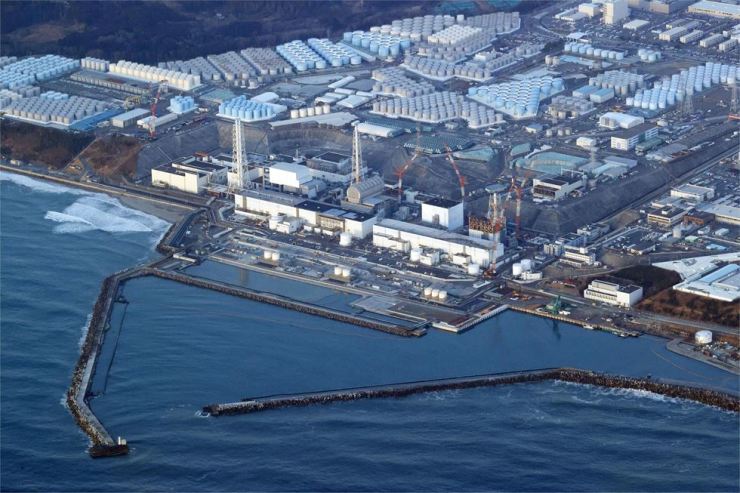
Korea urged the international community to discuss Japan’s plan to discharge radioactive water from its crippled Fukushima nuclear power plant into the ocean at this week’s international maritime gathering, the oceans ministry said Saturday.
The Fukushima nuclear power plant meltdown in 2011 has spread heavy safety concerns among nearby countries.
The Korean Ministry of Oceans and Fisheries said Tokyo’s disposal of radioactive water may have a serious impact on the health, safety and ecosystem of neighboring nations, during the weeklong 44th London Convention and the 17th London Protocol that ended Friday.
The Korean government has brought the Fukushima discharge agenda to London since 2019.
Japan has refuted Seoul’s call, claiming the discharge of radioactive water from nuclear power plants should not be seen as an act of marine dumping.
The London Convention promotes the effective control of all sources of marine pollution and takes steps to prevent marine pollution by human activities. Korea joined the convention in 1993.
The London Protocol calls for banning all dumping, with some exceptions. It has 53 signatories, including Korea which joined it in 2009.
Earlier in August, the United Nations-specialized International Marine Organization (IMO) decided that the Fukushima discharge agenda is appropriate to be discussed in London, with mutual agreement of the members involved.
At the IMO convention, the Korean oceans ministry said the members should discuss ways to safely dispose the contaminated water from the Fukushima power plant, actively exchange information and monitor the situation. (Yonhap)
https://www.koreatimes.co.kr/www/nation/2022/10/120_337530.html
Japanese rally against Fukushima nuclear wastewater discharge
6 oct. 2022
Many #japanese gathered at the offices of #tokyo Electric Power Company to protest the plan to discharge nuclear wastewater into the Pacific Ocean on Wednesday. More than 11 years after the #fukushima nuclear disaster, radioactive waste processing and nuclear-contaminated wastewater treatment are almost at a standstill. In April 2021, the Japanese government decided to discharge the nuclear-contaminated wastewater into the Pacific Ocean, beginning in the spring of 2023.
Rival parties call for govt. response to Japan’s Fukushima water release plan

Oct 6, 2022
Rival parties on Thursday called on the government to come up with measures to respond to Japan’s plan to discharge radioactive water from its crippled Fukushima nuclear power plant into the sea starting next year.
The ruling People Power Party (PPP) and the main opposition Democratic Party (DP) voiced concerns over the plan in unison during an annual parliamentary audit session on the Ministry of Oceans and Fisheries, calling it a “matter of people’s safety.”
In July, Japan’s nuclear regulator, the Nuclear Regulation Authority, formally approved the plan to discharge the radioactive waste water stored in tanks at the Fukushima Daiichi Nuclear Power Plant into the Pacific Ocean. More than 1.2 million tons of tritium-laced water is expected to be released starting in spring next year.
“The government should work to resolve the Fukushima water release issue with all possible measures,” Rep. So Byung-hoon, head of the parliamentary oceans committee, said, adding “the golden time is almost over.”
DP Rep. Wi Seong-gon urged the government to have a clearer position on the matter, saying “uncertain” and “unsafe” substances from the polluted water can be contained in food South Korean people eat and damage the country’s marine environment.
PPP Rep. Choi Chun-sik pointed out the oceans ministry lacks data and reports on Japan’s plan.
Oceans Minister Cho Seung-hwan told the lawmakers his ministry is considering whether to petition an international court over Tokyo’s decision, and the foreign ministry is also looking into the expected damage from the water release with international law experts and scientists. (Ypnhap)
Japanese activists protest the discharge of nuclear waste water

October 6, 2022
Activists gathered outside the Tokyo Electric Power Company Holdings (TEPCO), protesting the decision to proceed with the plan of discharging nuclear wastewater from the wrecked Fukushima Daiichi nuclear power plant into the sea.
The Japanese government said on April 23 last year that they would discharge over one million tons of contaminated water into the Pacific Ocean starting in the spring of 2023.
Protesters of the decision held banners demanding TEPCO to take responsibility for the core meltdown accident at the Fukushima Daiichi nuclear plant in 2011 and compensate victims. The activists also called on withdrawing the nuclear water dumping plan.
Activists say that tritium is easily soluble in water and will enter the human body once discharged into the sea, expressing their concerns over contamination of fish and seaweed, causing harm to citizens.
Waves of public anger and serious concerns over sea pollution have been triggered in and outside Japan. TEPCO’s statement that declares nuclear-contaminated water safe after dilution is met with large-scale skepticism.
Although the Japanese government lifted evacuation orders for all areas in Fukushima Prefecture in August, very few people have applied to return home. The citizens from the area expressed their distrust in TEPCO and the government for modifying safety standards with what they felt to be arbitrary.
Struck by a magnitude 9.0 earthquake and ensuing tsunami that hit Japan’s northeast on March 11, 2011, the No. 1-3 reactors at the Fukushima Daiichi nuclear plant suffered core meltdowns, resulting in a level-7 nuclear accident, the highest on the International Nuclear and Radiological Event Scale.
The nuclear-contaminated waste water accumulated in the plant had exceeded 1.3 million tons so far, while the government and TEPCO’s solution is deeply disturbing to residents.
https://tvpworld.com/63763346/japanese-activists-protest-the-discharge-of-nuclear-waste-water
Fukushima: Novel Fixes Fail, Waste Dumping Threatens Pacific Ocean

September 30, 2022
by John Laforge
During the 11-year-long, estimated $57.4 billion (partial) decontamination efforts at the destroyed Fukushima-Daiichi reactor site in Japan, almost every novel program invented to deal with the complex, unprecedented triple catastrophe has initially failed and then needed to be re-invented. Unworkable schemes instigated to repair, decontaminate, plug-up, or prevent ongoing radioactive contamination, along with cover-ups and corruption by the Tokyo Electric Power Co. which runs the operation, have left the Japanese public wary of the company’s plans and of safety assurances from the government.
Japan’s extensive bull-dozing and mass collection of contaminated topsoil and debris, poisoned by the meltdowns’ radioactive fallout, has filled approximately 20 million one-ton bags. These millions of tons of cesium-contaminated waste are standing outdoors in mountainous stacks scattered across seven states. Some of the heavy bags have been jostled and broken open by torrential rains during typhoons.
Attempts to locate and examine the total of 900 tons of melted reactor fuel (which possibly burned through the wrecked “containments” and foundations of the three units) have failed, because robotic cameras have repeatedly been destroyed by the ferociously hot and radioactive melted wastes. Eleven years after the catastrophe, the condition and location of the melted fuel masses, known as “corium,” is still uncertain because Tepco has yet to develop a robust enough camera.
The reactors’ concrete foundations were so severely broken up by the record 9.0 magnitude earthquake, that groundwater rushes through cracks and broken pipes, pours over the three huge masses of corium and becomes highly contaminated with a mix of at least 62 radioactive materials. Tepco’s installation of an expensive “ice wall” that was dug into the ground behind the wrecked reactors, was intended to divert the groundwater keeping it away from the foundations. This fix has also failed.
Tepco has slowed the direct flow of the contaminated water into the Pacific by filtering it and then collecting it in giant tanks. But the tank farm is plagued by leaks and by the discovery that the filter system has failed. In 2018, Tepco admitted that its “Advanced Liquid Processing System” or ALPS had not removed iodine-129, ruthenium-106 and technetium-99, as well as carbon-14, and 60 other long-lived poisons, putting the lie to its repeated assurances that ALPS would remove everything but tritium. The company then promised that it would re-treat the collected water, before dumping all 1.3 million tons of the waste water into the Pacific.
In July, Japan’s nuclear regulator formally approved Tepco’s plan to dump the water into the ocean beginning in spring 2023 and continuing for 30 years. The reactors produce 140 cubic meters of contaminated water every day, a combination of ground- and rainwater that seeps into the wreckage, and cooling water mechanically poured over the three corium piles. While independent scientists and environmental historians have charged that dumping would constitute the worst premeditated maritime pollution in recorded history, Tepco’s ocean pollution solution has already been okayed by the government in Tokyo and by the International Atomic Energy Agency.
Ocean dumping would violate international law
In August, Tepco announced that it would begin constructing a tunnel to the sea for releasing the waste water. Complaints from scientists, environmental groups and Pacific Rim countries, particularly South Korea and China, have not forced Japan to reconsider the plan.
Certain international treaties forbid such deliberate pollution of the global commons. The “Convention on the Prevention of Marine Pollution by Dumping of Wastes and Other Matter,” or London Convention, prohibits any intentional release of radioactive wastes into the sea. Writing in The Korea Times, environmental attorney Duncan Currie and nuclear specialist Shaun Burnie of Greenpeace Germany noted that ocean dumping would also violate the UN Convention on the Law of the Sea by posing a direct threat to the marine environment and the jurisdictional waters of the Korean peninsula.
Tepco says the tritium concentration in the wastewater will be lowered before dumping by diluting it with seawater. However, dilution is basically a public relations scheme since the total amount of radioactive tritium will remain the same. Greenpeace’s Burnie and Currie and others have warned about tritium’s ability to form organically-bound tritium, and that — if ingested with seafood —the biological power of tritium’s beta radiation can damage human DNA.
John LaForge is a Co-director of Nukewatch, a peace and environmental justice group in Wisconsin, and edits its newsletter.
Seoul asks IAEA for verification of Japan’s plan to discharge treated water from Fukushima plant
September 28, 2022
The South Korean government has asked the IAEA for thorough verification of Japan’s plan to discharge treated water from the Fukushima Number One nuclear power plant into the ocean. Attending the 66th Regular Session of the International Atomic Energy Agency in Vienna on Tuesday, Seoul’s vice minister of science and ICT, Oh Tae-seok, also called for Tokyo to share details of the process with the rest of the international community in a transparent manner. He also asked for unwavering support from IAEA member-states in denuclearizing North Korea, stressing that the regime’s nuclear programs pose a serious threat to international society.
Japan asking world to pay too high a cost
September 26, 2022
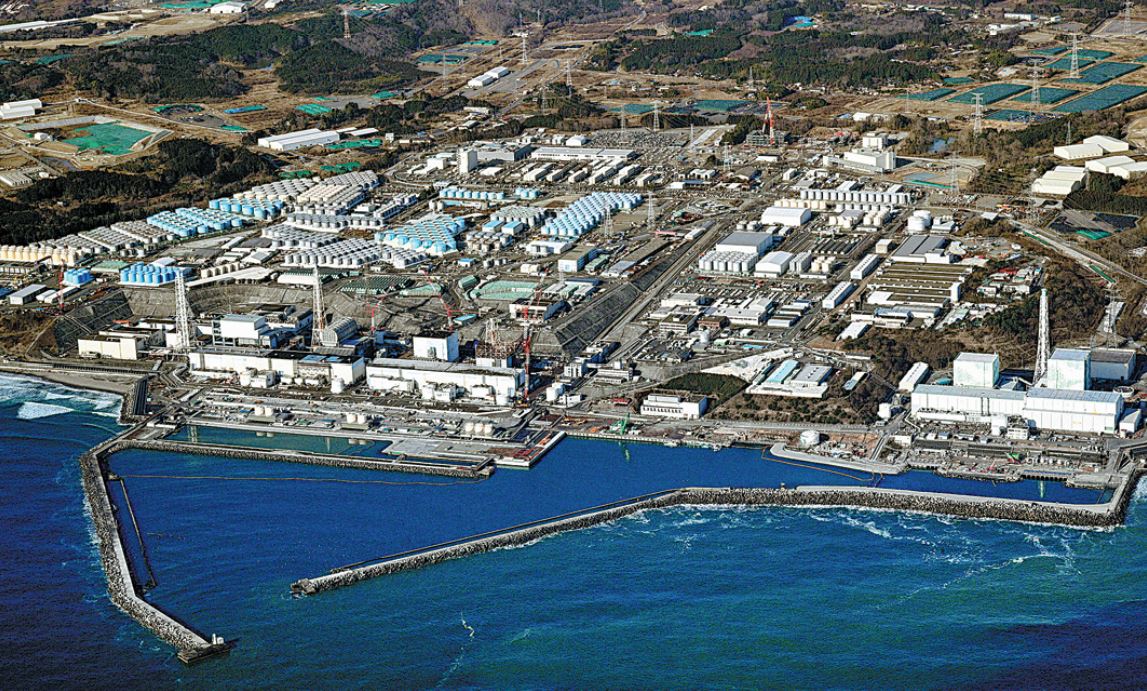
The president of the Pacific island state of Micronesia vehemently denounced Japan’s decision to discharge nuclear-contaminated water from its Fukushima Daiichi Nuclear Power Station into the Pacific Ocean at the United Nations last week. If anyone still believes this a viable option, his words should disabuse them of the notion.
In an address to the UN General Assembly in New York, David Panuelo said Micronesia had the “gravest concern” about Japan’s decision to release the so-called Advanced Liquid Processing System water into the ocean. “We cannot close our eyes to the unimaginable threats of nuclear contamination, marine pollution, and eventual destruction of the Blue Pacific Continent”, he said on Thursday. “The impacts of this decision are both transboundary and intergenerational in nature … I cannot allow for the destruction of our ocean resources that support the livelihood of our people.”
Japan insists that the release of the water used to cool the melted nuclear fuel rods at the three destroyed reactors at Fukushima is safe, as it has been processed to remove almost all radioactive elements and thus these are greatly reduced.
But that is not true. There has been increasing evidence suggesting that the ALPS has consistently failed to eliminate many radioactive elements including iodine, ruthenium, rhodium, cobalt and strontium. In late September 2017, Tokyo Electric Power Company, which runs the nuclear plant, was forced to admit that around 80 percent of the water stored in tanks at the Fukushima site still contains radioactive substances above legal levels. The water amounted to more than 1.3 million metric tons by July, and is still being added to at the rate of about 300 tons a day.
TEPCO and Japanese government officials also say that tritium, which cannot be removed from the water, is not harmful as it already exists in the sea. But what Tokyo doesn’t say is that the concentration of tritium in the water in the holding tanks is about a million times more than in the open sea. Scientists also say the long-term impact on marine life from exposure to such large volumes of radioactive water is unknown.
Dumping hazardous, nuclear-contaminated water is not only illegal under international law, but also unethical as this is not the only option that Tokyo has at its disposal to deal with the waste. For example, the Japanese government can still buy more land and keep on building more holding tanks to allow for radioactive decay to take place and buy more time for scientists to find better ways to deal with the aftermaths of the 2011 Fukushima disaster.
Tokyo should not proceed with its reckless cheapest-option plan to dump the contaminated water into the ocean as the cost it is asking the world to pay is too high.
https://global.chinadaily.com.cn/a/202209/26/WS63319171a310fd2b29e79cee.html
Fukushima radioactive sludge storage container will be full of nuclear wastewater purification may be hindered.
September 26, 2022
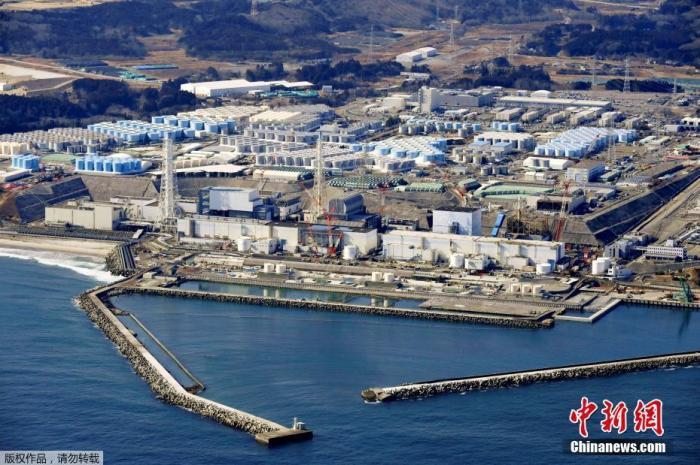
According to Kyodo News on the 25th, Tokyo Electric Power Company (TEPCO) stated that since the container for storing sludge generated during nuclear sewage treatment will be full by the end of April 2023 at the earliest. Work on the treatment of nuclear wastewater at the island’s first nuclear power plant may face obstacles.
A slurry-like mixture of liquids and solids is reported to be produced during the purification of nuclear wastewater from the Fukushima Daiichi Nuclear Power Plant with polynuclide removal equipment (ALPS). This sludge produces strong radiation, so during processing they are placed in special polyethylene containers and kept in radiation-blocking cement boxes.
As of August, the cement boxes in the factory area were 96% full, and if no measures are taken, they will be full by the end of April 2023 at the earliest. At that point, if there is nowhere for the sludge to pile up, the ALPS cannot continue to operate.
According to reports, there are currently 4,192 storage places for storage containers, and TEPCO plans to add 192 more on this basis. But even if the storage space is increased, the filling time can only be delayed by about a year. Therefore, the problem of reducing the amount of sludge generated is still under discussion.
TEPCO expects that storage can be reduced if equipment to extract moisture from sludge is activated. However, due to reasons such as seismic design re-evaluation, it is not yet possible to determine when the equipment will be put into use.
On March 11, 2011, an earthquake with a magnitude of 9.0 occurred in the waters off northeastern Japan and triggered a huge tsunami. Affected by the earthquake and tsunami, a large amount of radioactive material leaked from the Fukushima Daiichi Nuclear Power Plant.
On April 13, 2021, the Japanese government officially decided to discharge the Fukushima nuclear sewage into the sea after filtering and diluting it. However, in the process of nuclear sewage treatment, problems such as filter damage and excessive strontium-90 activity of the radioactive material after treatment were encountered successively. . Japan’s decision to discharge sewage into the sea was also strongly opposed by residents of Fukushima Prefecture and the National Federation of Fisheries Trade Unions in Japan.
Businesses worry about reputational damage from Fukushima water discharge

Sep 26, 2022
The plan to discharge treated water from the Fukushima No. 1 nuclear power plant into the ocean has been met with a wave of opposition, not only from residents of Fukushima Prefecture, but also those living in neighboring Ibaraki Prefecture.
Businesses in Ibaraki are calling for a fostering of public understanding and providing consumers with a sense of security to prevent harmful rumors from spreading.
At the Otsu fishing port in Kitaibaraki, which borders the southern part of Iwaki, Fukushima Prefecture, containers of freshly caught baby sardines are brought into processing plants one after another. The silver-colored fish shine under the late August sunlight and its lingering summer heat.
“We want to offer a taste of fresh, in-season fish,” said fisherman Seiji Suzuki, 31, who was busy landing his catches.
While keeping himself busy in a bustle of the port, Suzuki cannot shake off his anxiety about the future, as the Fukushima No. 1 plant, located about 70 kilometers away, plans to discharge processed water containing radioactive tritium into the ocean as early as next spring.
“The ocean (off the coast of Fukushima and Ibaraki prefectures) is connected. If the water is released, the image of seafood from Ibaraki Prefecture will be tarnished, and sales will be hit again,” Suzuki lamented.
According to the Otsu Fisheries Cooperative, seafood from Ibaraki Prefecture, like that from Fukushima Prefecture, is distributed throughout Japan as “Joban-mono,” referring to the seafood culled from the waters off the coast of both prefectures.
Major species from Ibaraki Prefecture include baby sardine, flounder, and anglerfish. “It’s almost the same as those in Fukushima,” a member of the fisheries cooperative said.
Ibaraki Prefecture’s fisheries output declined by about 30% after the Fukushima meltdown disaster, according to the fisheries ministry. Since 2012, the output has gradually recovered, and in recent years it has exceeded the pre-accident level due to an increase in fish catches.
However, radiation sampling inspections for almost all edible fish species are still being conducted. According to Ibaraki Prefecture, there has not been a discussion about abolishing the inspections. “Many consumers are concerned about the safety of seafood. This is even more so since there are plans to discharge treated water into the ocean,” a prefectural official said.
According to a survey conducted by the Ibaraki Shimbun newspaper of voters in the prefecture at the time of Upper House election this summer, 44.3% of respondents were opposed to the water discharge, more than the 35.5% who were supportive. The remaining 20.2% said that they were not sure or gave no answer. By age and gender, young respondents and women were particularly cautious about the water discharge.
Yoshinori Sakamoto, director of the Otsu Fisheries Cooperative, stresses there is no border between waters off Fukushima and Ibaraki prefectures. “If treated water is released into the ocean, Ibaraki seafood will suffer reputational damages as well,” he said.
The government may disseminate information about the scientific safety of the products, but unless the information is widely shared by consumers and a sense of security is fostered, consumers will be reluctant to buy the products, which will lead to price falls, he said.
Looking back on the many years of suffering from harmful rumors following the Fukushima nuclear accident, Sakamoto said, “We have finally come this far. It is a matter of life and death, and I am opposed to the water release under the current situation, where providing consumers with a sense of security is not guaranteed.”
A third nightmare
This is not the first time Ibaraki Prefecture has faced reputational damage from nuclear incidents. The September 1999 criticality accident at JCO, a nuclear fuel processing company in Tokai, Ibaraki Prefecture, caused extensive damages to residents and businesses in the region.
In the accident at the Tokai Plant of JCO, three workers were heavily exposed to radiation after a nuclear fission chain reaction occurred by accident, and two of them subsequently died. More than 600 residents of the surrounding area were also exposed to radiation, and more than 300,000 residents were forced to evacuate or stay indoors.
According to a report by Ibaraki Prefecture, a wide range of industries were affected, including agriculture, livestock, fisheries, commerce and tourism, with damages totaling more than ¥15 billion.
Businesses affected by the JCO criticality accident and the Fukushima No. 1 meltdown disaster are deeply concerned about a “third nightmare” from the planned discharge of treated water from the Fukushima plant.

Chizuko Suda, 57, who runs a seafood restaurant near the Nakaminato fishing port in Hitachinaka, Ibaraki Prefecture, is one of those who experienced the reputational damage caused by the 1999 incident.
Suda’s restaurant is located about 15 km south of the JCO plant. She remembers that the number of customers dropped to less than half of what it was before the accident, although she does not know the amount of damage because she was not the owner at the time. “It took three years for things to get back to normal,” she recalls.
Twelve years after the JCO accident, the Fukushima No. 1 accident struck. Almost every day, tourists asked if it was safe to visit the area around her restaurant and if the seafood was safe. Each time, she told them that tests for radioactive materials had confirmed that the area was safe to visit. Even so, sales dropped to 20% to 30% of what they were before the accident. Once again, she felt the pain of harmful rumors.
After going through such experiences twice, Suda wonders if there is any way to prevent it from happening again with the release of treated water into the ocean. The key is to foster public understanding, she says. “If it is scientifically safe, that fact should be released nationwide. This would be an opportunity for the public to think about the water discharge issue as their own.”
She has relatives in the coastal areas of Fukushima Prefecture, and she feels that it is “unacceptable to force only the people in Fukushima to bear the burden.”
Meanwhile, the fishing industry is not the only businesses concerned about the impact of water discharge.
Hiroyuki Onizawa, 60, a dried sweet potato processor in Hitachinaka who was affected by both accidents, also urges the government to take a cautious approach. “It would be better not to discharge,” he says, stressing that the image of Ibaraki Prefecture could be worsened.
Yoshihisa Takeshi, 46, who runs an inn in Kitaibaraki that offers Joban-mono anglerfish as its specialty, feels the need to dispose of treated water. “We have no choice but to discharge it,” he said.
On the other hand, he called on the government to provide support for a wide range of businesses in addition to taking measures against harmful rumors. The discharge “will definitely have a negative effect,” he said.
https://www.japantimes.co.jp/news/2022/09/26/national/ibaraki-fukushima-water/
At U.N., Micronesia denounces Japan plan to release Fukushima water into Pacific

September 23, 2022
UNITED NATIONS, Sept 22 (Reuters) – The president of the Pacific island state of Micronesia denounced at the United Nations on Thursday Japan’s decision to discharge what he called nuclear-contaminated water from the Fukushima Daiichi Nuclear Power Station into the Pacific Ocean.
In an address to the U.N. General Assembly in New York, David Panuelo said Micronesia had the “gravest concern” about Japan’s decision to release the so-called Advanced Liquid Processing System (ALPS) water into the ocean.
“We cannot close our eyes to the unimaginable threats of nuclear contamination, marine pollution, and eventual destruction of the Blue Pacific Continent,” he said.
“The impacts of this decision are both transboundary and intergenerational in nature. As Micronesia’s head of state, I cannot allow for the destruction of our Ocean resources that support the livelihood of our people.”
Japan said in July that its nuclear regulators had approved a plan to release into the Pacific ocean water used to cool reactors in the aftermath of the March 2011 Fukushima disaster.
The water has been stored in huge tanks in the plant, and amounted to more than 1.3 million tonnes by July.
Japan’s Foreign Ministry said at that time that regulators deemed it safe to release the water, which will still contain traces of the radioactive isotope tritium after treatment.
Asked about Panuelo’s statement, Yukiko Okano, the ministry’s deputy press secretary, said in reference to Fukushima that Japan would try its best “to gain understanding from the international community about the safety of our activities there.”
The plant operator, Tokyo Power Electric Company (Tepco), plans to filter the contaminated water to remove harmful isotopes apart from tritium, which is hard to remove. Then it will be diluted and released to free up plant space to allow the decommissioning of Fukushima to continue.
The plan has encountered stiff resistance from regional fishing unions which fear its impact on their livelihoods. Japan’s neighbors China, South Korea, and Taiwan have also voiced concern.
Panuelo also highlighted the threat posed by climate change, to which Pacific island states are particularly vulnerable. He called on geopolitical rivals the United States and China to consider it “a non-political and non-competitive issue for cooperation.”
“For the briefest period of time, it seemed as if the Americans, with whom Micronesia shares an Enduring Partnership, and the Chinese, with whom Micronesia shares a Great Friendship, were starting to work together on this issue, despite increases in tension in other areas,” he said. “Now, they are no longer speaking to each other on this important issue.”
China announced in August it was halting bilateral cooperation with the United States in areas including defense, narcotics, transnational crime and climate change in protest against a visit to Taiwan by U.S. House Speaker Nancy Pelosi.
Panuelo’s remarks coincided with a meeting U.S. Secretary of State Antony Blinken hosted of the Partners in the Blue Pacific countries, which include Japan with the aim of better coordinating assistance to the region in the face of competition from China.
1 This Month

of the week – Shut Down Drone Warfare!


Tell the Ukrainian Government to Drop Prosecution of Peace Activist Yurii Sheliazhenko

Petition to revoke the licensing of the Near Surface Nuclear Disposal Facility (NSDF) at Chalk River. https://www.ourcommons.ca/petitions/en/Petition/Details?Petition=e-7247
To see nuclear-related stories in greater depth and intensity – go to https://nuclearinformation.wordpress.com
-
Archives
- March 2026 (244)
- February 2026 (268)
- January 2026 (308)
- December 2025 (358)
- November 2025 (359)
- October 2025 (376)
- September 2025 (257)
- August 2025 (319)
- July 2025 (230)
- June 2025 (348)
- May 2025 (261)
- April 2025 (305)
-
Categories
- 1
- 1 NUCLEAR ISSUES
- business and costs
- climate change
- culture and arts
- ENERGY
- environment
- health
- history
- indigenous issues
- Legal
- marketing of nuclear
- media
- opposition to nuclear
- PERSONAL STORIES
- politics
- politics international
- Religion and ethics
- safety
- secrets,lies and civil liberties
- spinbuster
- technology
- Uranium
- wastes
- weapons and war
- Women
- 2 WORLD
- ACTION
- AFRICA
- Atrocities
- AUSTRALIA
- Christina's notes
- Christina's themes
- culture and arts
- Events
- Fuk 2022
- Fuk 2023
- Fukushima 2017
- Fukushima 2018
- fukushima 2019
- Fukushima 2020
- Fukushima 2021
- general
- global warming
- Humour (God we need it)
- Nuclear
- RARE EARTHS
- Reference
- resources – print
- Resources -audiovicual
- Weekly Newsletter
- World
- World Nuclear
- YouTube
-
RSS
Entries RSS
Comments RSS
 nuclear-news