Japan must work with the Pacific to find a solution to the Fukushima water release issue – otherwise we face disaster Henry Puna
Based on our experience with nuclear contamination, continuing with ocean discharge plans is simply inconceivable
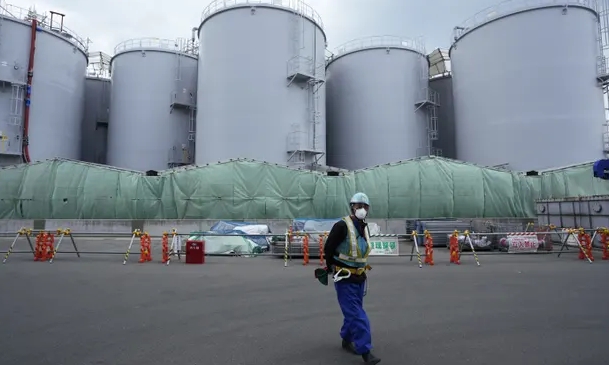
A worker helps direct a truck driver as he stands near tanks used to store treated radioactive water after it was used to cool down melted fuel at the Fukushima Daiichi nuclear power plant
Wed 4 Jan 2023
Over the past 20 months, Pacific Islands Forum (PIF) members have been in dialogue with the government of Japan on its proposed plans to release over a million tonnes of contaminated nuclear wastewater into the Pacific Ocean as announced in April 2021.
I was heartened by the very strong position taken by PIF Members from the outset, that Japan should hold off on any such release until we are certain about the implications of this proposal on the environment and on human health, especially recognising that the majority of our Pacific peoples are coastal peoples, and that the ocean continues to be an integral part of their subsistence living.
We have taken significant steps to work with Japan to understand their position and the rationale underpinning its unilateral decision. As a region, we committed to working with them at the technical level and engaged an independent panel of five scientific experts in key fields such as nuclear power and radiation, high energy physics, marine chemistry, biochemistry, marine biology, and oceanography to provide an independent scientific assessment of the impacts of such a release.
But the discussions this past year have not been encouraging. We have uncovered serious information gaps and grave concerns with the proposed ocean release. Simply put, more data is needed before any ocean release should be permitted. Despite this, Japan is continuing with plans for discharge in the spring of 2023, relying on the next four decades of discharge to figure it out.
Based on our experience with nuclear contamination, continuing with ocean discharge plans at this time is simply inconceivable and we do not have the luxury of time to sit around for four decades in order to “figure it out”.
It is imperative that we work together to ensure a common understanding of the full implications of this activity now, as I fear that, if left unchecked, the region will once again be headed towards a major nuclear contamination disaster at the hands of others. For the sake of present and future generations, now is the time to act to fully understand the impacts of such discharge on the environment and on human health before any decision is made. We owe it to our children and grandchildren to work towards ensuring that their futures are secured and safe. This is our moral and legal obligation.
Together, we must uphold the commitments that we have made through our Treaty of Rarotonga. We are legally bound to keep the region free of environmental pollution by radioactive and nuclear waste and other radioactive matter, and to uphold legal obligations to prevent ocean dumping and any action to assist or encourage dumping by other states.
I am reminded that this conversation is not a new one. Four decades ago, Forum leaders also urged Japan and other shipping states “to store or dump their nuclear waste in their home countries rather than storing or dumping them in the Pacific”. A mere four years after that political statement, in 1985, the Forum welcomed the Japan Prime Minister’s statement that “Japan had no intention of dumping radioactive waste in the Pacific Ocean in disregard of the concern expressed by the communities of the region”.
The decision for any ocean release is not and should not only be a domestic matter for Japan, but a global and transnational issue that should give rise to the need to examine the issue in the context of obligations under international law. Choosing and adopting the appropriate path in terms of international governance is key, and we must pursue every possible avenue including mechanisms available under international law.
We must take the time to closely examine whether current international safety standards are adequate to handle the unprecedented case of the Fukushima Daiichi.
Indeed, the unprecedented nature of this case is of major concern. How we handle this, as a global community, will set a precedent for future actions and responses. , This is particularly important given the climate crisis and growing intensity and scale of natural disasters, which pose significant challenges to the safety of nuclear power plants and infrastructure throughout the world.
Alternative options include safe storage and radioactive decay, bioremediation, and use of treated water to make concrete for special applications.
Before us is a golden opportunity to be proactive and to get it right without waiting for four decades of dumping to unfold. It would be unconscionable for us as a region to once again allow ourselves to be lulled into a false sense of security.
I am not asking that we discontinue the plans to discharge. I am asking that we take the time and work together to ensure scientific rigour in order to receive the assurance of safety needed for people’s health and for sound stewardship of the ocean. I am asking today, what our Pacific people did not have the opportunity to ask decades ago when our region and our ocean was identified as a nuclear test field. I am asking that we take the time to fully consider the implications of these actions on our region before choosing the course of action that is best for all.
Do not disregard us. Work with us. Our collective future and that of our future generations depends on it.
Henry Puna is the Pacific Islands Forum Secretary General
Water, water everywhere
Scientists and Pacific governments are worried by Japan’s plan to dump radioactive wastewater from Fukushima into the Pacific Ocean
“…For panel member Arjun Makhijani, a former nuclear engineer and IEER expert on nuclear safety, the lack of significant data is a crucial problem.
“From a scientific point of view, we as an expert panel felt there was really insufficient information to plan this huge operation,” he tells me. “We perceived early on that because most of the storage tanks had not been sampled, most of the radionuclides are not being sampled, and so there just wasn’t enough information to proceed.”
As time went on, says Dr Makhijani, the panel’s worries about the Japanese plans became stronger. “Do they know what they are doing? Do they have enough information? Have they done the measurements properly? Do they know if the capacity of the filtration system will be enough for the volume of liquids, so the concentration of radionuclides would be low enough? How long will it take if they have to repeatedly filter the liquids? There weren’t any clear answers to these questions.”
As they met with TEPCO and Japanese authorities, the expert panel began to raise a series of concerns: the failure to accurately sample different isotopes in the storage tanks, the level of radioactive contamination in sludge at the bottom of the tanks, and the models used to determine how elements like tritium will disperse and dilute in the vast Pacific Ocean.
For Dr Makhijani, the Japanese authorities have not provided enough information to ascertain what range and amounts of radionuclides will be found in each tank. Only nine of sixty-four radionuclides have been included in the data shared with the Forum.
“The vast majority of radionuclides are not being measured, according to the Japanese authorities themselves,” Dr Makhijani says. “In summary, most of the tanks have never been sampled. The sampling they do is non-representative of the water in the tanks and when they were stored. Are the measurements of what’s in the tanks accurate? The answer to this is no.”
…
The bulk of the radioactivity measured in the wastewater is from two isotopes: tritium and carbon-14. But current data also show a complex mix of other highly radioactive isotopes, including strontium-90, caesium-134, caesium-137, cobalt-60 and even tellurium-127, a fission product with a short half-life of nine hours that shouldn’t be present after years of storage.
The expert panel has noted that some tanks low in tritium are high in strontium-90, and vice versa, concluding that “the assumption that concentrations of the other radionuclides are constant is not correct and a full assessment of all radioisotopes is needed to evaluate the true risk factors.”
Also of concern is the fact that particles in the water may settle to the bottom of the storage tanks over time, creating contaminated sludge. Japanese authorities have confirmed that tanks filled with cooling water in the years immediately after the 2011 accident contain contaminated sediment of this kind.
“The sludges were not sampled then and have not been sampled since that time,” says Dr Makhijani. “How much of these sludges will be stirred up and complicate the filtration system as you pump out the water from the tanks? This issue has not been addressed.”
TEPCO plans to filter out most isotopes but dump vast amounts of tritium into the Pacific, relying on rapid dispersion and dilution. But many scientists are critical of the model used to measure the dilution of tritium in seawater, which is based on models using international standards for how much naturally occurring tritium can be safely ingested in drinking water. Environmental critics of the dumping plan are concerned tritium and other radioactive isotopes will accumulate in ocean sediments, fish and other marine biota.
According to Dr Makhijani, the expert panel was concerned that the proposed drinking water standard for tritium does not apply to ocean ecosystems. “The discharged concentration of tritium will be thousands of times the background level you find naturally or through historical nuclear testing,” he explains, “and then you’re going to discharge it for many decades.”
He believes a full modeling of the impact would include “an ecosystem assessment, both for sediments and for vegetal and animal biota that travel,” which hasn’t been done. “In TEPCO’s environmental impact assessment, they didn’t take account of any bioaccumulation of tritium, which does occur in all organisms. The question of bioconcentration in an ocean environment was totally ignored in the statement.”
In its report to Forum member governments in August, the expert panel concluded that Japan’s assessments of ecological effects and bioconcentration are seriously deficient and don’t provide a sound basis for estimating impact.”
20 December 2022
Early next year Japan plans to begin dumping 1.3 million tonnes of treated radioactive wastewater from the Fukushima nuclear reactor into the Pacific Ocean. Fiercely opposed by local fishermen, seaweed farmers and residents near Fukushima, the plan has also been challenged by China, South Korea and other neighbouring states, as well as by the Pacific Islands Forum.
At their annual summit in July, island leaders appointed an independent five-member expert scientific panel to probe the project’s safety. Forum secretary-general Henry Puna, concerned about harm to the fishing industry in Japan and the wider Pacific region, has reinforced regional concern that the scientific data doesn’t justify the plan.
“Experts have advised a deferment to the impending discharge into the Pacific Ocean by Japan is necessary,” Puna said last month. “Based on that advice, our members encourage consideration for options other than discharge, while the independent panel of experts continue to further assess the safety of the discharge in light of the current data gaps.”
In a confidential report to the Pacific Islands Forum, the expert panel outlined detailed concerns about the project, arguing that any decision to proceed should be postponed. Even though Japan’s Nuclear Regulation Authority has given the go-ahead for construction, a growing number of scientists are warning about the long-term implications of dumping more than a million tonnes of water containing radioactive isotopes into the Pacific.
The waste problem goes back to March 2011, when three nuclear reactors at the Fukushima Daiichi nuclear power plant were flooded after an offshore earthquake. A fourteen-metre tsunami hit the coast, causing massive damage to the reactors’ power supply and cooling systems. The partial meltdown of the reactor cores caused extensive damage as fuel rod assemblies burned through steel containment vessels and into the concrete base of the reactor buildings.
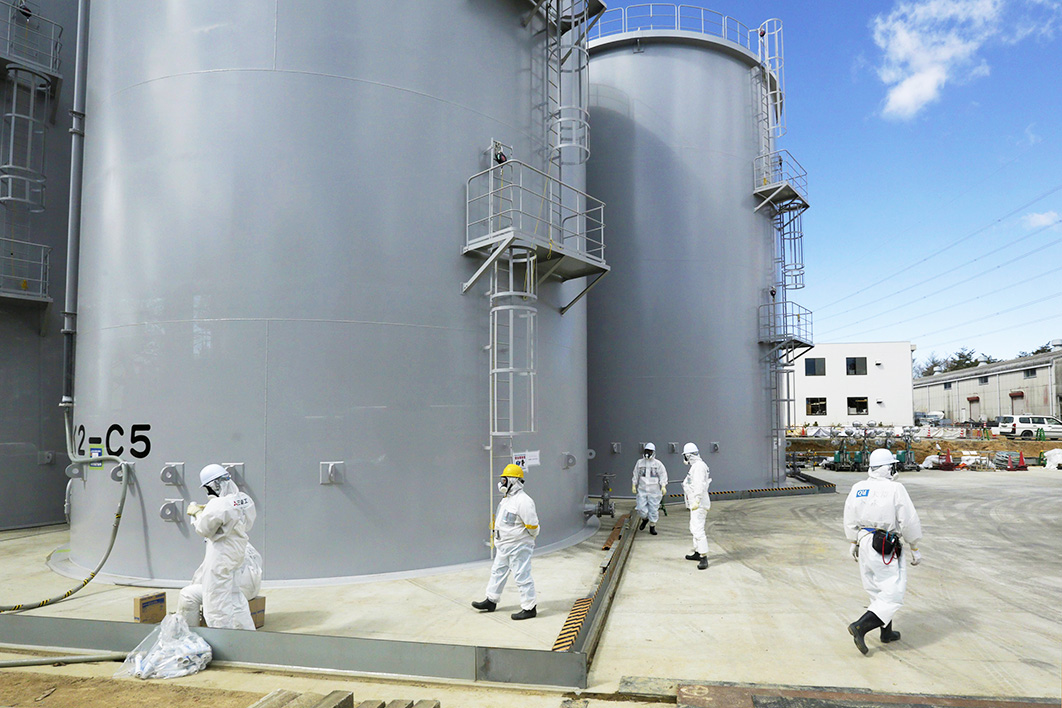
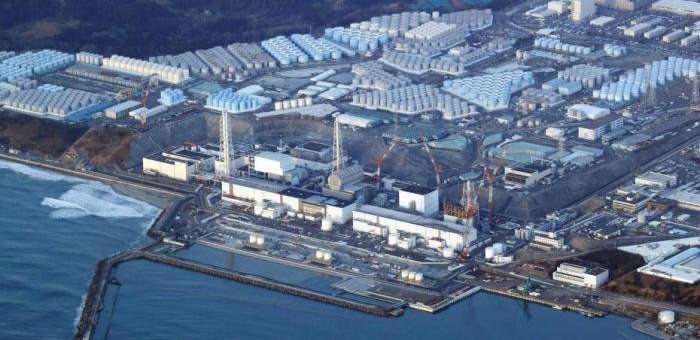
For more than a decade, the Tokyo Electric Power Company, known as TEPCO, has been using water to cool the excess heat still emanating from the melted fuel rods. The highly contaminated cooling water is then stored in more than a thousand tanks at the site. With more than a hundred tonnes of water collected every day, storage space is running out.
Japan proposes to dump this wastewater into the Pacific Ocean after passing it through an Advanced Liquid Processing System designed to remove most radioactive materials.
The cost of decommissioning the stricken Fukushima reactors has put TEPCO — and Japanese taxpayers — under massive pressure. Since 2011, more than ¥12 trillion (A$120 billion) has been spent on cleaning up the plant, decontaminating the site and compensating people affected by the accident. This accounts for half of the amount budgeted for work that must continue for many decades.
The Japanese government has already provided ¥10.2 trillion in no-interest loans to TEPCO. Last month Japan’s Board of Audit revealed that repayment of these loans will be delayed, highlighting TEPCO’s ongoing financial crisis.
Many analysts are concerned TEPCO is looking at ocean waste dumping as the cheapest option to resolve storage costs for the vast amounts of water contaminated with tritium and other radionuclides. As Benshuo Yang and Haojun Xu from the Ocean University of China report, alternatives include underground burial, controlled vapour release, and injection into the geosphere. Japan, they add, “has chosen the most cost-efficient, but most harmful one.”
Work on the ocean dumping plan is rushing ahead, ignoring international concern. In August, TEPCO began building the infrastructure needed to release the treated radioactive water into the sea, including a kilometre-long undersea tunnel and a complex of pipes to transfer the treated water from storage tanks.
Because Japan is a major donor to Pacific Island nations, some island governments are wary of directly condemning the plan. But anti-nuclear sentiment is strong in a region that still suffers from the radioactive legacies of fifty years of cold war–era nuclear testing, and many remember previous Japanese pledges to consult about plans to dump nuclear waste.
The expert panel was appointed to help bolster the islands’ dealings with Japan. Its five members have extensive expertise in the marine environment, nuclear radiation, reactor engineering and oceanography: Ken Buesseler works at the Woods Hole Oceanographic Institution, Antony Hooker is director of the Centre for Radiation Research, Education and Innovation at the University of Adelaide, Ferenc Dalnoki-Veress is with the James Martin Center for Nonproliferation Studies at Monterey, Robert Richmond is director of the Kewalo Marine Laboratory at the University of Hawai‘i at Mānoa, and Arjun Makhijani is president of the Institute for Energy and Environmental Research, or IEER.
TEPCO’s radiological impact assessment, released in November 2021, sidestepped many of the initial concerns raised by critics of the project. Throughout 2022, the expert panel held meetings with TEPCO and Japanese officials, receiving some data on the type of radionuclides held in storage by the company. The International Atomic Energy Agency has also contributed to the debate, with director-general Rafael Grossi visiting the Fukushima Daiichi nuclear power plant in May 2022 and briefing a Forum meeting in July.
For panel member Arjun Makhijani, a former nuclear engineer and IEER expert on nuclear safety, the lack of significant data is a crucial problem.
“From a scientific point of view, we as an expert panel felt there was really insufficient information to plan this huge operation,” he tells me. “We perceived early on that because most of the storage tanks had not been sampled, most of the radionuclides are not being sampled, and so there just wasn’t enough information to proceed.”
As time went on, says Dr Makhijani, the panel’s worries about the Japanese plans became stronger. “Do they know what they are doing? Do they have enough information? Have they done the measurements properly? Do they know if the capacity of the filtration system will be enough for the volume of liquids, so the concentration of radionuclides would be low enough? How long will it take if they have to repeatedly filter the liquids? There weren’t any clear answers to these questions.”
As they met with TEPCO and Japanese authorities, the expert panel began to raise a series of concerns: the failure to accurately sample different isotopes in the storage tanks, the level of radioactive contamination in sludge at the bottom of the tanks, and the models used to determine how elements like tritium will disperse and dilute in the vast Pacific Ocean.
For Dr Makhijani, the Japanese authorities have not provided enough information to ascertain what range and amounts of radionuclides will be found in each tank. Only nine of sixty-four radionuclides have been included in the data shared with the Forum.
“The vast majority of radionuclides are not being measured, according to the Japanese authorities themselves,” Dr Makhijani says. “In summary, most of the tanks have never been sampled. The sampling they do is non-representative of the water in the tanks and when they were stored. Are the measurements of what’s in the tanks accurate? The answer to this is no.”
The bulk of the radioactivity measured in the wastewater is from two isotopes: tritium and carbon-14. But current data also show a complex mix of other highly radioactive isotopes, including strontium-90, caesium-134, caesium-137, cobalt-60 and even tellurium-127, a fission product with a short half-life of nine hours that shouldn’t be present after years of storage.
The expert panel has noted that some tanks low in tritium are high in strontium-90, and vice versa, concluding that “the assumption that concentrations of the other radionuclides are constant is not correct and a full assessment of all radioisotopes is needed to evaluate the true risk factors.”
Also of concern is the fact that particles in the water may settle to the bottom of the storage tanks over time, creating contaminated sludge. Japanese authorities have confirmed that tanks filled with cooling water in the years immediately after the 2011 accident contain contaminated sediment of this kind.
“The sludges were not sampled then and have not been sampled since that time,” says Dr Makhijani. “How much of these sludges will be stirred up and complicate the filtration system as you pump out the water from the tanks? This issue has not been addressed.”
TEPCO plans to filter out most isotopes but dump vast amounts of tritium into the Pacific, relying on rapid dispersion and dilution. But many scientists are critical of the model used to measure the dilution of tritium in seawater, which is based on models using international standards for how much naturally occurring tritium can be safely ingested in drinking water. Environmental critics of the dumping plan are concerned tritium and other radioactive isotopes will accumulate in ocean sediments, fish and other marine biota.
According to Dr Makhijani, the expert panel was concerned that the proposed drinking water standard for tritium does not apply to ocean ecosystems. “The discharged concentration of tritium will be thousands of times the background level you find naturally or through historical nuclear testing,” he explains, “and then you’re going to discharge it for many decades.”
He believes a full modelling of the impact would include “an ecosystem assessment, both for sediments and for vegetal and animal biota that travel,” which hasn’t been done. “In TEPCO’s environmental impact assessment, they didn’t take account of any bioaccumulation of tritium, which does occur in all organisms. The question of bioconcentration in an ocean environment was totally ignored in the statement.”
In its report to Forum member governments in August, the expert panel concluded that Japan’s assessments of ecological effects and bioconcentration are seriously deficient and don’t provide a sound basis for estimating impact. Writing in the Japan Times, the five scientists noted:
The release of contaminated material from the Fukushima No. 1 nuclear power plant would take at least forty years, and decades longer if you include the anticipated accumulation of new water during the process. This would impact not only the interests and reputation of the Japanese fishing community, among others, but also the people and countries of the entire Pacific region. This needs to be considered as a transboundary and transgenerational issue.
Insufficient information is available to assess how environmental and human health would be affected, they argued, and issuing a permit at this time would be premature at best: “Having studied the scientific and ecological aspects of the matter, we have concluded that the decision to release the contaminated water should be indefinitely postponed and other options for the tank water revisited until we have more complete data to evaluate the economic, environmental and human health costs of ocean release.”
The potential for long-term damage to the ocean environment is echoed by expert panel member Robert Richmond from the University of Hawai‘i at Mānoa.
“This is truly a trans-boundary issue,” he says. “Fish don’t respect political lines, and neither do radionuclides or pollutants in the ocean. I really commend the members of the Pacific Islands Forum for recognising this is an issue they need additional information on.”
Soon after the 2011 Fukushima accident, scientists confirmed that Pacific bluefin tuna can transport radionuclides across the northern Pacific Ocean. A 2012 study from Stanford University reported tuna with traces of Fukushima-related contamination had been found on the shores of the United States.
“Pacific bluefin tuna can rapidly transport radionuclides from a point source in Japan to distant ecoregions and demonstrate the importance of migratory animals as transport vectors of radionuclides,” the study reported. “Other large, highly migratory marine animals make extensive use of waters around Japan, and these animals may also be transport vectors of Fukushima-derived radionuclides to distant regions of the North and South Pacific Oceans.”
Will perceptions of radioactive hazards from Japan’s ocean dumping damage the global market for tuna? Many island nations derive vital revenue from the deepwater fishing nations that pay to operate in Pacific Island exclusive economic zones, or EEZs.
Regional organisations have also sought to process and market tuna from the Pacific as another key source of revenue. For nearly a decade, island states have supported Pacifical, a brand that promotes sustainable distribution and marketing of skipjack and yellowfin tuna caught in their EEZs.
Speaking after her recent appointment as executive director of the Western and Central Pacific Fisheries Commission, Rhea Moss-Christian highlighted the potential damage of Japan’s decades-long project: “This is a massive release and a big, big potential disaster if it’s not handled properly.”
Moss-Christian is the first Pacific woman to head the commission, which manages the largest tuna fishery in the world, representing nearly 60 per cent of global production.
“I wish that the Japanese government would take some more time before its release,” she told journalists at December’s commission meeting. “There are a number of outstanding questions that have yet to be fully answered. They have focused a lot on one particular radionuclide, and not very much on others that are also present in the wastewater.”
Moss-Christian is a citizen of the Republic of the Marshall Islands, an island nation living with the consequences of radioactive fallout from sixty-seven US atmospheric nuclear tests on Bikini and Enewetak Atolls. A former chair of the Marshall Islands National Nuclear Commission, she is deeply aware of this radioactive legacy. Her nation struggles to control radionuclides leaching into the marine environment from the Runit Dome, a nuclear waste site on Enewetak Atoll created by the United States in the 1970s.
“We have a lot of experience in the Marshall Islands with lingering radioactive waste,” Moss-Christian said. “We don’t want to find ourselves in another situation, not just in the Marshall Islands, but in general in the region, where we agree to something without knowing what could potentially happen in the future. What are the contingency plans? What are the compensation mechanisms?”
At a time of growing US–China tension, the Japanese government is seeking to boost its role in the islands region. Tokyo is building closer ties with Australia and the United States through increased military operations and joint investments in the islands. In November, for example, Tokyo and Washington agreed to contribute US$100 million to support Australian underwriting of Telstra’s purchase of Digicel, blocking Chinese investment in the Pacific’s key mobile phone network.
Even as the Japanese government seeks to win hearts and minds in the region, community anger about the nuclear threat is growing. Church and civil society groups, including the Pacific Conference of Churches, Pacific Islands Association of Non-Governmental Organisations and Pacific Network on Globalisation, have criticised the proposed wastewater dumping plan.
When Japanese foreign minister Yoshimasa Hayashi visited Fiji last May, these community groups argued the proposed ocean dumping breached international agreements like the London Convention on the Prevention of Marine Pollution. A joint civil society statement concluded, “We believe there is no scenario in which discharging nuclear waste into the Pacific Ocean is justified for the health, wellbeing, and future safety of Pacific peoples and the environment.”
As Japan forges ahead with its plan and Australia works towards acquiring nuclear submarines under the AUKUS agreement, the gulf is growing between the two countries’ geopolitical agenda and the growing antinuclear sentiment across the Blue Pacific. •
Tepco denies radioactive water discharge claims
“For a radionuclide such as Iodine-129, this could be 160 million years.”

19 December 2022
The Tokyo Electric Power Company (Tepco) has denied allegations it plans to discharge radioactive wastewater from Japan’s Fukushima Daiichi nuclear power plant into the Pacific Ocean.
An emerging collective of community members, academics, legal experts, non-governmental organisations and activists from across the Pacific, who met through the Nuclear Connections Across Oceania Conference in Dunedin last month, condemned Tepco last week and called on the company to halt its discharge plans.
Three reactors at the Fukushima facility had meltdowns following a major earthquake on March 11, 2011, and work to clean up the radioactive contamination is continuing.
University of Otago Centre for Sustainability research fellow Dr Karly Burch said many people might be surprised to hear the Japanese government had approved Tepco’s plan to discharge more than 1.3million tonnes of radioactive wastewater into the Pacific Ocean for about 30 years, starting next year.
However, Tepco’s corporate communications office contacted the Otago Daily Times to explain the discharged water would be treated using multiple types of equipment, such as the Advanced Liquid Processing System (ALPS) which would remove multi-nuclides, and then be diluted so that it would meet the Japanese Government’s regulatory standards.
A company spokesman said in addition to complying with legally-based Government regulations, the company would also ensure the water was “safe” and conformed to international law and practices.
“In particular, the water to be discharged will be purified and diluted in two stages.
“During the first stage the water will be purified with ALPS until the concentration of radioactive substances, excluding tritium, falls below regulatory standards for discharge into the environment.
“Water with the sum of ratios of the concentration of each radionuclide other than tritium to the regulatory concentration of each, is less than one.
“And, prior to dilution, the concentration of radioactive substances in ALPS treated water will be measured/assessed and the results confirmed by a third-party.
“During the second stage, we will dilute tritium with a large volume of seawater (more than 100 times), thereby reducing its concentration to less than 1500Bq/l, which is 1/40 of Government regulations for discharge into the environment, as well as approximately 1/7 of the World Health Organisation’s drinking water quality guidelines (10,000 Bq/l).”
The Nuclear Connections Across Oceania Conference collective was not convinced and last week, they also called for the New Zealand Government to “stay true to its dedication to a nuclear-free Pacific” by taking a case to the International Tribunal for the Law of the Sea against Japan’s plans.
Dr Burch said predictive models showed radioactive particles released could spread to the northern Pacific.
“To ensure they do not cause biological or ecological harm, these uranium-derived radionuclide need to be stored securely for the amount of time it takes for them to decay to a more stable state.
“For a radionuclide such as Iodine-129, this could be 160 million years.”
https://www.odt.co.nz/news/dunedin/tepco-denies-radioactive-water-discharge-claims
NZ and Pacific urged to ‘step up’ against Japan’s nuclear plan

An estimated 30,000 anti-nuclear activists attended a rally in Tokyo’s Yoyogi Park, in 2012, to protest against the government’s plan to reopen several of Japan’s nuclear reactors.
Dec 17 2022
Japan’s decision to discharge nuclear wastewater into the Pacific Ocean for the next 30 years has been condemned by a Pacific alliance.
And the group of community members, academics, legal experts, NGOs and activists is calling on New Zealand and the Pacific to act to stop Japan.
Three reactors at the Fukushima Daiichi nuclear power plant had meltdowns after the earthquake and tsunami on March 11, 2011 which left more than 15,000 people dead.
The Japanese government said work to clean up the radioactive contamination would take up to 40 years.
Following the Nuclear Connections Across Oceania Conference at the University of Otago last month, a working group was formed to address the planned discharge.
Dr Karly Burch at the OU’s Centre for Sustainability said many people might be surprised to hear that the Japanese government has instructed Tokyo Electric Power Company (Tepco) to discharge more than 1.3 million tonnes of radioactive wastewater into the ocean from next year.
Burch said they had called on Tepco to halt its discharge plans, and the New Zealand Government to “step up against Japan”.
In June, Prime Minister Jacinda Ardern called for nuclear disarmament during her speech at the Nato Leaders’ Summit in Madrid.

Jacinda Ardern with Pacific Islands Forum secretary-general Henry Puna, left, and forum chair and Fijian PM Frank Bainimarama during the leaders’ summit in Fiji in July.
“New Zealand is a Pacific nation and our region bears the scars of decades of nuclear testing. It was because of these lessons that New Zealand has long declared itself proudly nuclear-free,” Ardern said.
Burch said the Government must “stay true to its dedication to a nuclear-free Pacific” by taking a case to the International Tribunal for the Law of the Sea against Japan.
“This issue is complex and relates to nuclear safety rather than nuclear weapons or nuclear disarmament,” the Ministry of Foreign Affairs and Trade said in a statement on Friday.
“Japan is talking to Pacific partners in light of their concerns about the release of treated water from Fukushima and Aotearoa New Zealand supports the continuation of this dialogue.
“There is also an important role for the global expert authority on nuclear safety issues, the International Atomic Energy Agency (IAEA), which Japan has invited to review and monitor its plans.
“Aotearoa New Zealand is following the reports released by the IAEA Task Force closely and has full confidence in its advice,” MFAT said.
In Onahama, 60km from the power station, fish stocks have dwindled, said Nozaki Tetsu, of the Fukushima Fisheries Co-operative Associations.
“From 25,000 tonnes per year before 2011, only 5000 tonnes of fish are now caught,” he said. “We are against the release of radioactive materials into our waters. What worries us is the negative reputation this creates.”

Storage tanks for radioactive water stand at Tokyo Electric Power Co.’s (Tepco) Fukushima Dai-ichi nuclear power plant on January 29, 2020 in Okuma, Fukushima Prefecture, Japan.
Japan needs nuclear power because its energy grid is not connected to neighbouring countries nor is it able to boost output of domestic fossil fuels, a government official in Tokyo said in a statement.
Japan has kept most of its nuclear plants idled since the 2011 earthquake and tsunami. In September, the government announced it would restart the power plants to develop the country’s next-generation nuclear reactors.
Japan has been decommissioning and decontaminating the Fukushima nuclear power plant.
Now, it must urgently empty its water tanks.
Burch said predictive models showed radioactive particles released would spread to the northern Pacific.

Dr Karly Burch says the New Zealand Government must stay true to its dedication to a nuclear-free Pacific.
“To ensure they do not cause biological or ecological harm, these uranium-derived radionuclides need to be stored securely for the amount of time it takes for them to decay to a more stable state. For a radionuclide such as Iodine-129, this could be 160 million years.”
Burch said Tepco had been using advanced liquid processing system technology to filter uranium-derived radionuclides from the wastewater that had been cooling the damaged reactors since 2011.
Burch said the Japanese government was aware in August 2018 that the treated wastewater contained long-lasting radionuclides such as Iodine-129 in quantities exceeding government regulations.
She has called for clarity from Tokyo, the International Atomic Energy Agency, the Pacific Islands Forum Secretariat, Pacific Oceans Commission, and a Pacific panel of independent global experts on nuclear issues on the outcome of numerous meetings they have had about the discharge.
“We want a transparent and accountable consultation process which would include Japanese civil society groups, Pacific leaders and regional organisations.
“These processes must be directed by impacted communities within Japan and throughout the Pacific to facilitate fair and open public deliberations and rigorous scientific debate,” Burch said.
The Pacific Islands Forum secretary-general, Henry Puna, has been approached for comment.
Discharging treated water from Fukushima Daiichi Nuclear Power Plant “Not just a problem for Japan” International forum online Opposition from around the world

Citizens, lawyers, and scientists from Japan, the U.S., and other countries exchange opinions about the release of contaminated water from TEPCO’s Fukushima Daiichi Nuclear Power Plant after purification and treatment at sea at an online forum.
December 17, 2022
Citizens of Fukushima Prefecture and others have been discussing a plan to discharge contaminated water from TEPCO’s Fukushima Daiichi Nuclear Power Plant into the ocean. Citizens’ Council” held an online international forum on December 17, inviting citizens, scientists, lawyers, and others from countries and regions around the world, including the United States, Australia, and China. The participants commented, “The oceans are connected. It is not just a problem for Japan.” A number of participants expressed opposition to ocean discharge.
One hundred and eighty-eight people participated in the forum. A video was shown by Bedi Rasoulay, a student from the Marshall Islands in the Pacific Ocean, which has been the site of nuclear tests by the United States, Europe, and other nations. In the video, Ms. Lasure touched on the health problems faced by residents who returned to the islands after being told that they were safe to live there, and she said, “The ocean is our life. The Pacific Ocean is neither a nuclear test site nor a place to dump nuclear waste. If we discharge it into the ocean, it will be irreversible. I am against it.
Dr. Arjun McJourney, director of the U.S. Institute for Energy and Environmental Research, analyzed the data released by TEPCO with experts in oceanography, ecology, nuclear physics, and other fields. He said that the amount of sampling and the types of radioactive materials being monitored are too small to make the water safe for discharge, and pointed out that “there is a lack of research on the impact on the ecosystem and that other viable alternatives have not been adequately considered because of the oceanic discharge. He stated, “All options should be considered, and methods to minimize risk should be scientifically verified.”
Environmental groups from China, South Korea, Taiwan, Australia, and other countries sent messages saying that if the waste is discharged into the ocean, pollution will spread and affect not only neighboring countries in the Asia-Pacific region but also other countries in the region, and reported on the opposition movements in their respective regions.
Mr. Forss, an anti-nuclear activist from California, USA, suggested that “we should take action around the world at the same time in order to raise awareness of the issue.
Ruiko Muto, a member of the organizing group and a resident of Miharu-cho, Fukushima Prefecture, said, “We now know that the ocean discharge is a major international problem because it is an environmental pollution of the earth. We want to work together to prevent further environmental pollution by radiation from getting worse. (Natsuko Katayama)
https://www.tokyo-np.co.jp/article/220606?fbclid=IwAR3OcWXBYNTFX0R3Zu23sNPq
Pacific Alliance condemns radioactive discharge from Fukushima Daiichi – calls for NZ action

Panel organiser Dr Karly Burch and panellists discussing TEPCO’s wastewater discharge plan at the Nuclear Connections Across Oceania Conference 2022.
15 December 2022
Plans to discharge tonnes of radioactive wastewater into the Pacific Ocean for around thirty years have been condemned in a statement issued today by a Pacific-wide alliance.
Dr Karly Burch, of Otago’s Centre for Sustainability, says many people will be surprised to hear that the Japanese government has approved Tokyo Electric Power Company (TEPCO) to discharge more than 1.3 million tonnes of radioactive wastewater, starting next year and for approximately 30 years.
Following the Nuclear Connections Across Oceania Conference, held at the University of Otago late last month, a working group was formed to address the planned radioactive wastewater discharge from TEPCO’s Fukushima Daiichi nuclear power plant impacted by the 2011 tsunami.
“We learned at our conference that people in Japan and throughout the Pacific are deeply concerned about the radioactive wastewater discharge,” says Dr Burch.
The emerging collective of community members, academics, legal experts, NGOs and activists from Japan and across the Pacific, who met through the conference, have co‑authored a statement of solidarity calling on TEPCO to halt their discharge plans and for the New Zealand Government to “stay true to its commitment to a nuclear free Pacific” by taking a case to the International Tribunal for the Law of the Sea against Japan’s nuclear waste disposal plans.
Greenpeace Aotearoa Senior Campaigner Steve Abel says: “It’s right that the New Zealand government should stand in solidarity with Pacific neighbours and through international legal action directly oppose the discharge of nuclear waste into the Pacific Ocean.”
Dr Burch says predictive models show that radioactive particles released will spread to the northern Pacific, so secure on-land storage should be used instead.
Most of the radionuclides that will be released in the wastewater discharge have been produced through the nuclear fission of uranium.
“To ensure they do not cause biological or ecological harm, these uranium-derived radionuclides need to be stored securely for the amount of time it takes for them to decay to a more stable state – for a radionuclide such as Iodine-129, this could be 160 million years,” says Dr Burch.
TEPCO is using Advanced Liquid Processing System (ALPS) technology to filter uranium-derived radionuclides from the wastewater that has been cooling damaged reactors at Fukushima Daiichi since the onset of the 2011 nuclear disaster.
“While in Japanese the radioactive wastewater is often referred to as ‘treated water’, this does not automatically mean that the water is free from uranium-derived radionuclides. It simply means the amount of measurable radionuclides are under a designated threshold limit.
“One thing the statement highlights is that the Japanese government has known since at least August 2018 that ALPS-treated wastewater contains long-lasting radionuclides such as Iodine-129 in quantities exceeding government regulations,” Dr Burch shared.
The statement of solidarity calls for the following resolutions:
- We call on TEPCO and the Japanese Government to immediately end its plan to discharge radioactive wastewater from Fukushima Daiichi into the Pacific Ocean.
- We call on the New Zealand government to stay true to its commitment to a nuclear free Pacific, and to support other concerned Pacific governments by playing a leading role in taking a case to the International Tribunal for the Law of the Sea against Japan concerning the proposed radioactive release from TEPCO’s Fukushima Daiichi.
- We seek clarity from the Japanese Government, the International Atomic Energy Agency, Henry Puna (the Secretary General of the Pacific Islands Forum Secretariat and Pacific Ocean Commissioner), and the Pacific Panel of Independent Global Experts on Nuclear Issues on the outcome of numerous meetings they had about the radioactive wastewater discharge.
- We call for a transparent and accountable consultation process as called for by Japanese civil society groups, Pacific leaders, and regional organisations. This consultation would be between the Japanese government and its neighbours throughout the Pacific. These processes must be directed by impacted communities within Japan and throughout the Pacific to facilitate fair and open public deliberations and rigorous scientific debate.
“We invite anyone interested in this topic to read and sign our statement of solidarity,” says Dr Burch.
The full statement can be found on the Nuclear Connections Across Oceania website:
Fukushima: Japan prepares to discharge water from the plant into the sea

13/12/2022
11 years after the Fukushima disaster, Japan is working hard to overcome challenges posed by its water. Since the Tohoku tsunami of 11 March 2011, Japan has been decommissioning and decontaminating the nuclear power plant, which is expected to take 30 to 40 years.
Now, the plant must urgently empty its water tanks.
Euronews spoke to Kimoto Takahiro, the Deputy Site Superintendent at D&D Communication Center, Fukushima Daiichi D&D., Co., Tokyo Electric Power Company (TEPCO) to ask where the water comes from.
“The water that accumulates every day was used to cool the molten fuel”, Kimoto explained. “And there is also water from underground springs or rain that accumulates.”
This water is treated in ALPS, a unit specially designed for Fukushima. It removes almost all the radioactive substances.
The treated water is then stored in a thousand tanks, but they have reached their maximum capacity. Next year, Japan will release the treated water into the sea.
However, a small amount of radioactive substance, called tritium, still remains, as it’s inseparable from the water.
90,000 samples of treated water are analysed in a laboratory each year in preparation for dilution in the sea. After a second treatment in ALPS, the water will be discharged into the sea through a tunnel, which is one kilometre long and built at a depth of 16 metres. The tunnel is set to be completed next spring.

The tunnel, which is one kilometre long and 16 metres deep, is set to be completed next spring
Just before it reaches the Pacific, the water will be diluted one last time in large seawater pools.
In order to find out whether marine life will be affected by the radioactivity, the nuclear power plant is rearing fish in separate pools.
“There are basins of natural seawater on one side, and basins of treated water mixed with seawater on the other”, Kimoto Takahiro told Euronews.
“We are going to discharge water at a much lower level than the drinking water standard set by the WHO”, he added.
But the fishermen of Fukushima are worried about the reputation of their products. In the port of Onahama, 60 kilometres from the power station, their work has already suffered from apprehension among consumers. From 25,000 tonnes per year before 2011, only 5,000 tonnes of fish are now caught, according to the president of the fishermen’s association.
“As a fisherman in Fukushima, I am against the release of radioactive materials into our workplace. What worries us is the negative reputation this creates”, said Nozaki Tetsu, Chairman of the Fukushima Prefectural Federation of Fisheries Cooperative Associations.
However, Nozaki recognised that “in terms of the explanations we’ve had from the government over the last 10 years, they have not been false, so we appreciate their efforts. And therefore, if we can also presume their scientific explanations haven’t been false, we will make an effort to continue fishing while at the same time fostering better consumer understanding, and, by doing this, I think we can limit most of the reputational damage.”
After the daily catch, one fish of each species is analysed in this laboratory in the port. Everything is monitored.
Of the 63 species tested while Euronews was present, not a single one had any trace of radioactivity. That means they are all for sale.
In one year, only once has a fish exceeded the authorised stage. This stage is strictly set at 50 bequerel in Fukushima, whereas the international standard allows 1000 bequerel. The monitoring will continue after the discharge of water.
The authorities repeat that the dose of tritium released will not be dangerous:
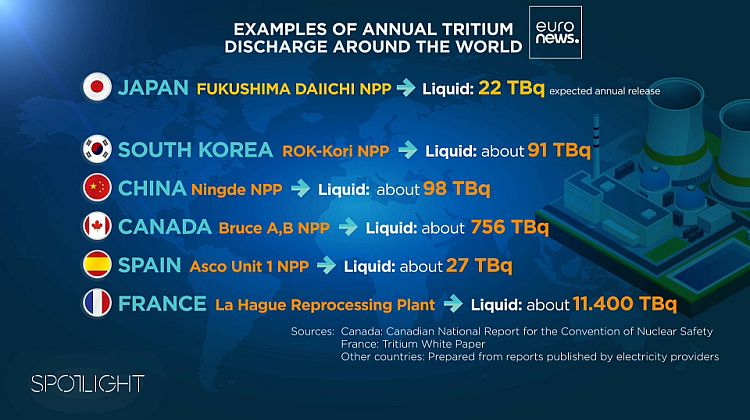
Just 22 terabecquerel will be released each year, which accounts for far less than most power plants in the world.
22 terabecquerel will be released each year — which accounts for far less than most power plants in the world. The waste reprocessing site of La Hague in France releases more than 11,000 terabecquerel annually.
Opponents say tritium from a nuclear accident is more dangerous. But one French scientist who has visited the Fukushima site 30 times insists that that is not true.
“Tritium is a radioactive element that is only slightly dangerous”, explained Jean-Christophe Gariel, the Deputy Director of the Institute of Radiological Protection and Nuclear Safety. “There are no different types of tritium. The characteristics of the tritium that will be released at Fukushima are similar to the characteristics of those released by nuclear power plants around the world”.
The Japanese government is pleased that Great Britain lifted import restrictions on products from the region last June, showing a sign of renewed confidence, after years of effort by Japan.
Tanabe Yuki, the Director for International Issues at the Nuclear Accident Response Office at the Ministry of Economy, Trade and Industry told Euronews that, “so far, we have organised about 700 meetings with stakeholders, including the fishery industry. We have developed concrete projects to combat the bad reputation.”
Indeed, Japan has taken all the necessary precautions on the sensitive issue regarding the discharge of treated water and has asked the International Atomic Energy Agency to supervise the operations.
In May 2022, the Director General of the International Atomic Energy Agency Rafael Grossi visited Fukushima.
The IAEA chief said in a statement that, “the request for IAEA reviews demonstrates Japan’s commitment and will help send a message of transparency and confidence to the people in Japan and beyond”, emphasising the “remarkable progress on decommissioning at Fukushima Daiichi since my last visit two years ago.”
The UN agency has set up a special task force. Last November, Gustavo Caruso, Director of Safety and Security Coordination. Department of Nuclear Safety and Security, and the head of this mission, returned to Fukushima.
“The task force held its third mission to Japan and it was this time composed of experts from Argentina, China, Canada, France, the Republic of Korea, Marshall Islands, the Russian Federation, the United Kingdom, the United States of America, and Vietnam”, he announced.
The objective of the mission was to ensure the safety of the discharge. The UN agency examines the regulatory aspects and carries out analyses in independent laboratories.
“The evaluation report and the conclusions will be released in approximately three months, and the IAEA task force will also carry out another mission in Japan in January before the water discharge begins. The IAEA will issue a comprehensive report containing all the collective findings until now, and our conclusions about this process. All the standards that we apply are representing a high level of safety”, Gustavo Caruso confirmed.
The first discharge should take place next year.
Japan is doing everything possible to make this operation a success and to protect the inhabitants and the environment. It’s the latest step in the reconstruction of a region that believes in its future.
Tim Deere-Jones on the Fukushima Daiichi Radioactive Water Discharge into the Ocean

December 13 2022
The archive video of the zoom conference on 5 November 2022 given by Tim Deere-Jones on the issues of discharging Fukushima Daiichi radioactive water into the ocean, and of seabed dredging — a comparison between Fukushima Daiichi and Hinkley Point, is now available.
With English/Japanese interpretation.
Radioactive materials released in large quantities on the days following the beginning of the TEPCO Fukushima Daiichi Nuclear Power Station accident flew over the Pacific Ocean on the prevailing westerly winds, falling and depositing on the ocean floor.
Radioactive fallout on land also flowed into the sea washed by rain and carried by rivers. Uncontrolled inflow of contaminated water from the Fukushima Daiichi Nuclear Power Plant site into the ocean has also increased the contamination of the seabed.
Such radioactive materials from the accident can be transferred from sea to land by the wind and contaminate the environment, including pastures and crops.
Tim Deere-Jones points out the risks of the wide rediffusion of the contamination mainly towards the south, situated downstream of the ocean current, by the release of the treated radio-contaminated water. This discharge of radioactive water is planned for over a period of 10 years. Further contamination can also be caused by the construction work of the discharge facilities.
Approximate timing of the video
0:06-17:03 Video viewing: Message against the discharge of contaminated water into the sea by Tim Deere-Jones (video created by Yosomono Net).
It can be viewed here separately:
16:58-1:36:50 Talk by Tim Deere-Jones
1:37:34 – 1:42:21 Questions and Answers
Miyagi fisheries industry fears impact of treated radioactive water release
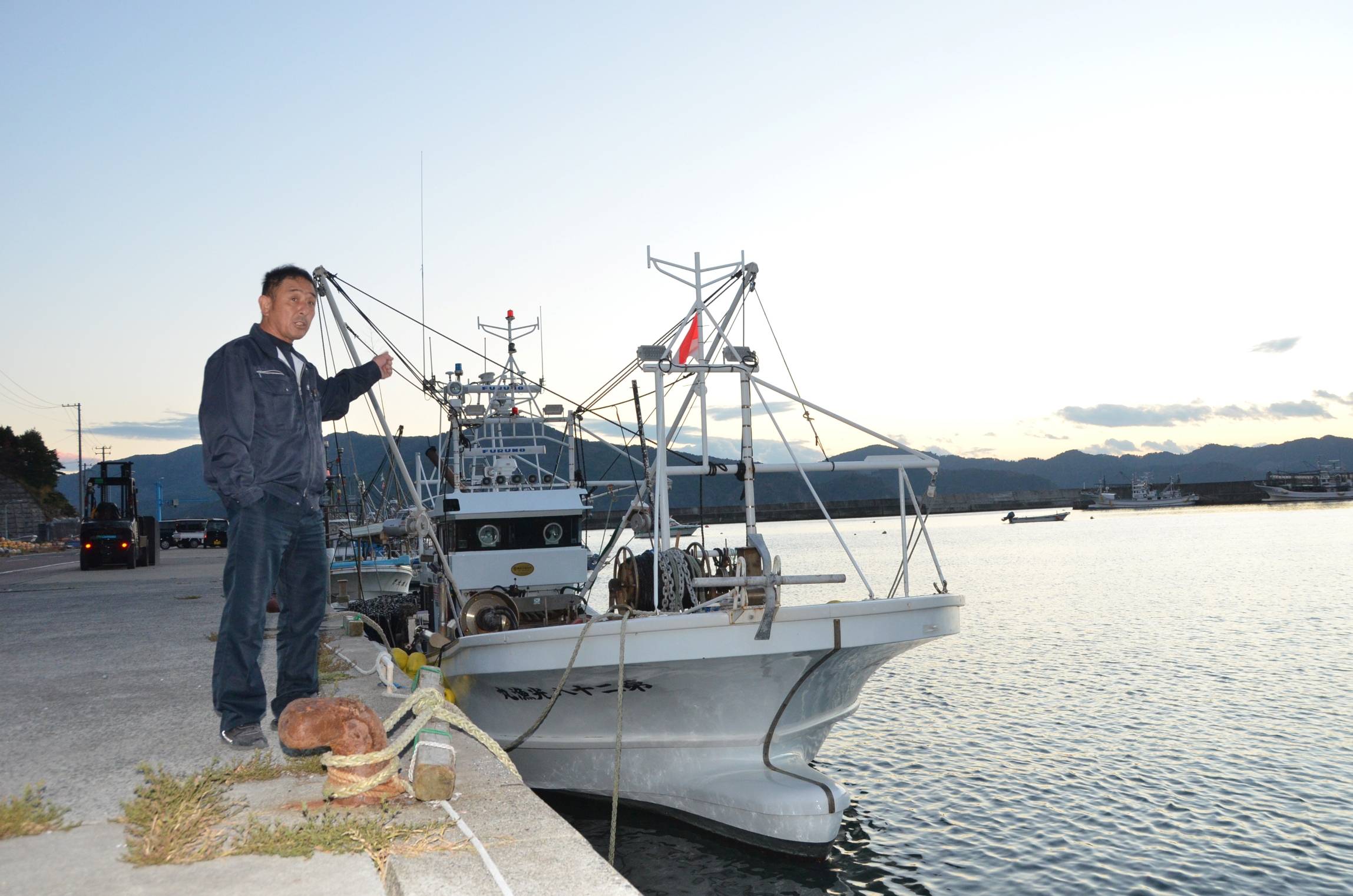
Yoshihiro Watanabe, a breeder of sea squirts, in the Yoriisohama district of Ishinomaki, Miyagi Prefecture
Dec 12, 2022
Yoshihiro Watanabe, 61, is a breeder of sea squirts, the leading product for the aquaculture industry in Miyagi Prefecture.
Looking toward the sea in the Yoriisohama coastal district in the city of Ishinomaki, Watanabe expressed concerns over a plan to release treated radioactive water from the Fukushima No. 1 nuclear power plant. The water, which contains hard-to-remove tritium, is expected to be discharged to the ocean from the nuclear plant, located some 120 kilometers away in neighboring Fukushima Prefecture, as early as next spring.
“We are already on the verge of going out of business,” Watanabe said. “It will be a matter of life and death if the treated water is released into the ocean in such a situation and domestic consumption drops.”
About six weeks earlier, officials from the central government visited Miyagi Prefecture to explain how the issue of treated water is being handled. But a sea squirt producers’ group under the Miyagi Fisheries Cooperative, which Watanabe belongs to, refused to meet them amid feelings of distrust toward the government, which decided on the water release without the consent of the local fisheries industry.
Preparations are moving forward after Fukushima Prefecture and the towns hosting the nuclear plant in August approved a plan by Tokyo Electric Power Company Holdings (Tepco), the plant’s operator, to start building a facility for releasing the water.
“Is this how the water discharge starts?” Watanabe said.
Prior to the 2011 Great East Japan Earthquake and the Fukushima nuclear plant meltdowns, Miyagi Prefecture had been the nation’s No. 2 fisheries producer in terms of volume.
Annual production of sea squirts, also known as sea pineapples, in the prefecture totaled 12,000 tons, of which 7,000 tons were exported to South Korea.
However, South Korea banned imports of the product following the nuclear accident and the sales channel remains suspended to this day.
Sea squirt breeders have been forced to reduce the overall production in the prefecture to prevent oversupply, and the situation is affecting the income of those working in the fisheries industry.
According to the Miyagi Fisheries Cooperative, sea squirts are particularly popular in South Korea and almost all of the sea squirts exported from the prefecture had been shipped there.
The cooperative has sought new buyers in such countries as the United States, but it has not been able to make up for the drastic drop in overseas sales.
In some cases, large amounts of sea squirts had to be disposed of.
The nuclear disaster is having an impact even on shipments to countries and regions that no longer ban imports of Japanese products.
Miyagi Prefecture began exporting marine products to Hong Kong in 2016, but the shipments were suspended after a year. The Miyagi Food Export Promotion Council was told by distributors in Hong Kong that the products were not accepted by consumers there because they came from Miyagi Prefecture and many were left unsold.
Watanabe said that his production and sales of sea squirts dropped to less than half of the level before the nuclear disaster due to South Korea’s import ban.
The number of sea squirt growers in Yoriisohama declined to 60% of the level before the incident.
Watanabe says he can’t trust the words of the government and Tepco, despite assurances that they will do everything they can to deal with harmful rumors. He doesn’t think they’ve succeeded at tamping down rumors about the food products in the wake of the nuclear meltdowns and have yet to show effective measures for gaining understanding at home and abroad about the water release plan.
Some members of the Miyagi Fisheries Cooperative say they feel Miyagi Prefecture has been made light of, because compared with Fukushima Prefecture — which hosts the nuclear plant — there are fewer opportunities for ministers and government officials to visit.
“If treated water is released now, the local industry will be completely destroyed,” Watanabe said. “The government and Tepco should indicate to people in Miyagi engaging in the fisheries business ways to prevent harmful rumors.”
Haruhiko Terasawa, head of the fisheries cooperative, is also unhappy with the plans.
“The reality is much harsher than what the government and Tepco think,” he said. “We want them to take thorough measures so that people in the fisheries business won’t suffer losses through no fault whatsoever of their own.”
The fisheries cooperative plans to urge the government to send out correct information overseas as well as step up diplomatic negotiations and measures to deal with distribution issues.
Terasawa says he can never forget something that happened eight years ago. When a cooperative member carried flounders into a market, a distributor kicked them, saying, “We don’t need stuff like that.”
“It was humiliating,” Terasawa said. “We are worried that something like that might happen again with the release of treated water.”
This section features topics and issues covered by the Fukushima Minpo, the prefecture’s largest newspaper. The original article was published Nov. 17.
https://www.japantimes.co.jp/news/2022/12/12/national/miyagi-nuclear-plant-water/
A group of HT journalists interview Shaun Burnie senior Green-peace specialist on the impact of Fukushima’s controversial plan to dump water into the ocean

December 8, 2022
MADRID, Dec. 8, 2022 /PRNewswire/ — Japanese authorities have described the measure as “totally safe and unavoidable”, member countries of the Indian Ocean Rim Association (ORA), official institutions, non-governmental organizations, environmental associations such as Greenpece, experts and professors in atomic energy, as well as doctors and researchers specialized in diseases related to uncontrolled exposure to atomic substances, denounce this measure as irresponsible, and ask the IAEA (International Atomic Energy Agency) to intervene in this situation.
A group of international journalists led by HT investigates and analyzes the impact of the controversial plan to dump Fukushima water into the sea. The main conclusions are:
- The decision announced in April 2021, assuring that it is a “safe” project, does not convince the scientific community, nor the experts in atomic energy, since of all it is “the cheapest option”.
- It is currently unknown how the long-lived radioactive isotopes contained in the contaminated water will interact with marine biology, this situation is “unprecedented”.
- An independent analysis of the report published by Japan’s Ministry of Economy, Trade and Industry (METI) Subcommittee shows that the company responsible for the Fukushima power plant understood that additional storage of contaminated water beyond 2022 was possible, but ruled it out because it would require “a substantial amount of coordination, time and financial resources.
- Last October 30, a group of experts and professors in atomic energy, as well as doctors and researchers specialized in diseases related to uncontrolled exposure to atomic substances, submitted a letter to the Director General Mr. Rafael Mariano Grossi, asking him to urge the Japanese authorities to stop this measure.
Shaun Burnie, senior nuclear specialist at Greenpeace, confirms “the lack of clarity and scientific inconsistencies” in the Fukushima nuclear power plant decommissioning project, considering it a “fantasy” and that the discharge of contaminated and treated water into the ocean “does not solve the crisis and will generate an unpredictable environmental situation”.
Eleven years after the earthquake and tsunami that caused one of the worst nuclear accidents in history, Greenpeace is issuing a new wake-up call after reviewing multiple documents from different government agencies and industry.
Satoshi Sato, leader of the nuclear fusion and quantum energy neutron source design group at Rokkasho (Japan), states that “decommissioning is not possible in 40 years”. There are many shadows and doubts, the authorities should clarify the progress that has been made so far.
It will have to “live with treated water for decades while a safe solution is found,” the expert said in relation to the discharge of treated water into the Pacific Ocean, a plan planned for 2023 and which the International Atomic Energy Agency (IAEA) recently assessed during a mission to the country.
Shaun Burine and Satoshi Sato, agreed that the IAEA’s position in supporting TEPCO’s (Tokyo Electric Power Company Holdings, Inc.) plans “makes no sense“. They went on to say that “the IAEA’s mission is to develop safety standards and maintain high levels of safety for the protection of human health and the environment against ionizing radiation. As well as to verify that States meet their commitments.”
“TEPCO has no intention of decommissioning the Fukushima nuclear power plant in the next 20 to 30 years. It is a fantasy and a much longer process than we have been told, said Burnie, who stressed the need to inform affected communities and the public in detail.
“You can’t discount the long-term consequences, because this transcends generations and this fact should be crucial to addressing the problem, not the official agenda of the actors involved,” Burnie criticized the roadmap approved by the Japanese government.
Tokyo Electric Power Co. is the world’s fourth-largest utility and the country’s bastion of nuclear power, from which Japan gets 30% of its electricity. Tepco serves one-third of the population. The company that operates the nuclear power plant has contributed to the catastrophe with its management before and after the accident Falsified reviews, concealed information and delayed urgent measures.
The Greenpeace organization recalls that the company’s negligence put the former IAEA management in check on numerous occasions, its spokesman Hidehiko Nishiyama denounced on numerous occasions as “extremely regrettable” the errors in the radioactive water measurements, apparently due to faults in the software used to carry out the measurements. “Tepco is facing a very serious situation and is not meeting people’s expectations”, Nishiyama insisted, in the harshest criticism the company has received.
https://www.yahoo.com/lifestyle/group-ht-journalists-interview-shaun-140000461.html
Japan’s TEPCO will suspend the excavation of the Fukushima nuclear sewage discharge tunnel or postpone it
December 5, 2022
According to Japan’s Kyodo News Agency, Tokyo Electric Power Company will soon suspend the excavation of the submarine tunnel used for the discharge of nuclear sewage from the Fukushima Daiichi Nuclear Power Plant. The start of sea discharge “around next spring” that the Japanese government and TEPCO are competing for is likely to be postponed until after summer.
TEPCO fully launched the nuclear sewage discharge equipment project in August this year. As of December 2, it has excavated about 780 meters on the seabed, and will temporarily suspend work when it reaches about 800 meters.
According to reports, although about 80% of the 1-kilometer tunnel has been excavated, priority needs to be given to projects around the discharge outlet. The time to restart excavation will be around April next year,
During this period, concrete and other reinforcement works will be carried out around the concrete “caisson” installed at the exit of the offshore subsea tunnel. It is expected to take about 4 months, but it may be delayed depending on weather and wave conditions. Taking advantage of the downtime, work on the inner wall of the shaft that injects treated water during discharge will also be carried out earlier.
It is reported that around April next year when the two projects are completed, the excavation of the tunnel will be restarted, and the remaining 200 meters will be completed in 2 to 3 months. On March 11, 2011, a magnitude 9.0 earthquake occurred off the coast of northeastern Japan and triggered a massive tsunami. Affected by both the earthquake and the tsunami, a large amount of radioactive material leaked from the Fukushima Daiichi Nuclear Power Plant. On April 13, 2021, the Japanese government formally decided to filter and dilute the Fukushima nuclear sewage and discharge it into the sea. However, this decision was widely questioned and opposed by the international community, and it also aroused strong concerns in Japan.
A group of journalists from HT investigates the impact of Fukushima’s controversial plan to dump water into the ocean

24 Nov, 2022
MADRID, Nov. 25, 2022 /PRNewswire/ — While the Japanese Primer Minister has described the measure as “totally safe and unavoidable”, member countries of the Indian Ocean Rim Association (ORA), official institutions, non-governmental organizations, environmental associations such as Greenpece, experts and professors in atomic energy, as well as doctors and researchers specialized in diseases related to uncontrolled exposure to atomic substances, denounce this measure as irresponsible, and do not understand the silence of the IAEA (International Atomic Energy Agency) in this situation.
A group of international journalists led by Global Think Agency investigates and analyzes the impact of the controversial plan to discharge water from Fukushima into the sea. The Key findings are:
- The decision announced by the Japanese government in April 2021, announcing it as a “safe” project, the measure does not convince the scientific community, nor the experts in atomic energy, for all is “the cheapest option“.
- It is currently unknown how the long-lived radioactive isotopes contained in the contaminated water will interact with marine biology, this situation is “unprecedented”.
- An independent analysis of the report published by Japan’s Ministry of Economy, Trade and Industry (METI) Subcommittee shows that the company responsible for the Fukushima plant understood that additional storage of contaminated water beyond 2022 was possible, but it was ruled out because it would require “a substantial amount of coordination, time and financial resources.“
- Last October 30, and in view of the IAEA’s silence, a group of experts and professors in atomic energy, as well as doctors and researchers specialized in diseases related to uncontrolled exposure to atomic substances, submitted a letter to the Director General Mr. Rafael Mariano Grossi, requesting him to urge the Japanese authorities to halt this measure, without receiving any reply to date.
Shaun Burnie, senior nuclear specialist with Greenpeace, confirms “the lack of clarity and scientific inconsistencies” in the Fukushima nuclear power plant decommissioning project, considering it “fantasy” and that the discharge of contaminated and treated water into the ocean “does not solve the crisis and will generate an unpredictable environmental situation”.
Eleven years after the earthquake and tsunami that led to one of the worst nuclear accidents in history, Greenpeace is issuing a new wake-up call after reviewing multiple documents from different government agencies and industry.
Satoshi Sato, leader of the nuclear fusion and quantum energy neutron source design group in Rokkasho (Japan), says “decommissioning is not possible in 40 years”. There are many shadows and doubts and the Japanese government should clarify the progress that has been made so far.
It will have to “live with treated water for decades while a safe solution is found”, said the expert in relation to the discharge of treated water into the Pacific Ocean, a plan foreseen for 2023 and which the International Atomic Energy Agency (IAEA) recently evaluated during a mission to the country.
Shaun Burine and Satoshi Sato, agreed, telling us that the IAEA’s position in supporting the plans of the Japanese government and TEPCO (Tokyo Electric Power Company Holdings, Inc.) “does not make sense”. They went on to say that “the mission of this organization is to develop safety standards and maintain high levels of safety for the protection of human health and the environment against ionizing radiation. As well as to verify that States comply with their commitments.”
“TEPCO has no intention of decommissioning the Fukushima nuclear power plant in the next 20 to 30 years. It is a fantasy and a much longer process than we have been told“, said Burnie, who stressed the need to inform affected communities and the public in detail.
“The long-term consequences cannot be dismissed, because this transcends generations and this fact should be crucial in addressing the problem, not the official agenda of the actors involved“, Burnie criticized the roadmap approved by the Japanese government.
Tokyo Electric Power Co. is the world’s fourth-largest utility and the bastion of the nation’s nuclear power, from which Japan draws 30% of its electricity. Tepco serves a third of the population. The company that operates the nuclear power plant has contributed to the disaster with its management before and after the accident It falsified reviews, concealed information and delayed urgent measures
The company is contributing to the scandal, acknowledging that it has falsified safety reports, elevating fleeting inspections to exhaustive examinations. Tepco is also accused of irresponsibly delaying the cooling of the reactors with salt water because it was going to ruin them beyond repair.
The legacy of scandals in the sector in half a century has punished its credibility.
The Greenpeace organization recalls that the company’s negligence brought the former IAEA management to task on numerous occasions, its spokesman Hidehiko Nishiyama denounced on numerous occasions as “extremely regrettable” the errors in the measurements of radioactive water, apparently due to failures in the software used to carry out the measurements. “Tepco is facing a very serious situation and is failing to meet people’s expectations“, Nishiyama insisted, in the harshest criticism the company has ever received.
About HT
HT is a global agency specializing in developing documentary, research and entertainment content. The company boasts a team of experts from different fields such as production, creativity, and journalism, some have over 25 years of experience in major production companies in Spain.
Safety first must be priority for Fukushima water: China Daily editorial

2022-11-23
Since the Japanese government announced its highly controversial plan to release massive amounts of radioactive water from the wrecked Fukushima nuclear plant into the Pacific Ocean in April last year, it has met with opposition and condemnation, not only from Japan’s neighbors, China and the Republic of Korea, but also from Japanese society, residents in Fukushima and the country’s fishery industry in particular.
Although the Japanese government says that apart from tritium, which cannot be removed from the water, all other radionuclides will have been reduced to safe amounts after treatment, it is not known what the environmental consequences will be after it is discharged into the sea.
Marine experts have raised concerns over traces of ruthenium, cobalt, strontium and plutonium isotopes in the wastewater.
The Pacific Ocean does not belong to Japan. It is an ocean shared by dozens of countries and regions. By discharging the water into the ocean, the Japanese government shows little regard for the health and well-being of its own people and those in neighboring countries. As such, the International Atomic Energy Agency, as the world’s nuclear watchdog, should put public health first and do its utmost to see to it that Japan fully complies with all the relevant nuclear safety standards.
The IAEA set up a task force last year to review the safety of Japan’s discharge plan, comprising a group of IAEA specialists and external experts from 11 countries. The task force conducted a field trip to the Fukushima Daiichi Nuclear Power Station last week, and reviewed the updated technical plans for the water discharge by Tokyo Electric Power Company and the equipment and facilities to be used for the discharge. The IAEA said a report of the mission will be made available within three months, and a comprehensive assessment on the safety of the discharge will be issued prior to the planned release in 2023.
Both China and the ROK have urged the agency to strictly adhere to all safety standards in its assessment of the plan.
Chinese Foreign Ministry spokeswoman Mao Ning said on Monday that China hopes the task force will ensure the “absolute safety” of the treatment.
And the Foreign Ministry of the ROK also struck the same tune on Tuesday, stressing that the discharge of the contaminated water should meet objective scientific standards.
Needless to say, Japan should coordinate closely and transparently with the task force so as to ensure the IAEA clearly grasps the whole picture.
China’s support of the IAEA task force’s work should not be interpreted as an approval of Japan’s decision to discharge the contaminated water. It needs to be pointed out that the task force has not evaluated the alternatives to ocean discharge, leaving the IAEA unable to conduct a comprehensive evaluation and find the best way to dispose of nuclear-contaminated water. China still maintains that instead of pushing forward with its discharge plan, Japan should find a safer way to treat the contaminated water.
https://www.chinadaily.com.cn/a/202211/23/WS637e2ecaa31049175432b7ec.html
China supports IAEA review of Fukushima treatment
“Just because China supports the task force’s work does not mean it approves of Japan’s decision to discharge the contaminated water, Mao also said, urging Japan to find an appropriate way to treat the contaminated water, instead of pushing forward with its discharge plan.”

2022-11-21
China supports the International Atomic Energy Agency and its task force in reviewing Japan’s treatment of nuclear contaminated water, and hopes the task force will strictly implement the IAEA’s nuclear safety standards and ensure the “absolute safety” of the treatment, Foreign Ministry spokeswoman Mao Ning said.
Mao made the remarks at a daily news conference on Monday after the task force carried out a new mission last week to review Japan’s plan to discharge treated nuclear-contaminated water from the Fukushima Daiichi Nuclear Power Station.
The IAEA said a report of the mission will be made available within three months.
In response, Mao said a time limit should be avoided to ensure the quality and credibility of the report, and Japan should coordinate closely with the task force.
The IAEA didn’t review other plans of treating contaminated water than discharging it to sea, thus failing to make a full assessment and find the best treatment plan, Mao pointed out.
Just because China supports the task force’s work does not mean it approves of Japan’s decision to discharge the contaminated water, Mao also said, urging Japan to find an appropriate way to treat the contaminated water, instead of pushing forward with its discharge plan.
https://global.chinadaily.com.cn/a/202211/21/WS637b7603a31049175432b07c.html
Report on Fukushima water release plan to ‘provide confidence’: IAEA
The IAEA’s plan to provide confidence in TEPCO’s radioactive water dumping into the Pacific Ocean demands for sure a lot of gullibility on our part….

This Feb. 13, 2021 photo taken from a Mainichi Shimbun helicopter shows the Fukushima Daiichi nuclear power plant in Fukushima Prefecture.
November 18, 2022
TOKYO (Kyodo) — An International Atomic Energy Agency official said Friday that a report to be released early next year on Japan’s plan to discharge treated radioactive water into the sea from the crippled Fukushima Daiichi nuclear power plant “will provide confidence to Japanese society, neighbors, all the (IAEA) member states.”
The report will be an independent and scientific evaluation based on international standards, said Gustavo Caruso, director and coordinator of the IAEA’s Department of Nuclear Safety and Security, at a press conference in Tokyo following the completion of the organization’s second safety review.
During the five-day on-site assessment through Friday, an IAEA task force of experts led by Caruso discussed radioactivity measurements that should be taken when the water is released with plant operator Tokyo Electric Power Company Holdings Inc. and the Ministry of Economy, Trade and Industry.
On Wednesday, the team inspected the Fukushima Daiichi nuclear power plant, crippled by the 2011 earthquake and tsunami.
Tokyo decided in April last year to gradually discharge the water, treated through an advanced liquid processing system that removes radionuclides, except tritium, into the Pacific Ocean after dilution from around spring 2023.
Water that has become contaminated after being pumped in to cool the melted reactor fuel at the plant has been accumulating at the facility, mixing with rainwater and groundwater at the site. Tanks holding the water occupy a large area of the complex and are nearing capacity.
But even if the review by the IAEA finds that some aspects do not comply with international standards, it will be left up to the Japanese government to decide whether to postpone or cancel the water release, according to Caruso.
The IAEA will revisit Japan in January to exchange views with the Nuclear Regulation Authority.
“Before the water discharge begins, the IAEA will issue a comprehensive report on all collected findings until now,” Caruso said.
https://mainichi.jp/english/articles/20221118/p2g/00m/0na/060000c
1 This Month
10 March A LIVE WEBINAR THE REAL EFFECTS OF NUCLEAR POWER
What the Industry Isn’t Telling Us
1:00 PM Mountain, 2 pm Central, 3 pm Eastern. Live on the Keepers of the Water Facebook page



18 March Webinar @ 1 PM EST: An Assessment of SMR Projects: The Case of Canada
register for the zoom:
https://us02web.zoom.us/webinar/register/WN_o8BIIOUvQ2ONJR1nta65DQ#/registration


of the week – STOP SMALL MODULAR REACTORS IN CANADA
To see nuclear-related stories in greater depth and intensity – go to https://nuclearinformation.wordpress.com
-
Archives
- March 2026 (109)
- February 2026 (268)
- January 2026 (308)
- December 2025 (358)
- November 2025 (359)
- October 2025 (376)
- September 2025 (258)
- August 2025 (319)
- July 2025 (230)
- June 2025 (348)
- May 2025 (261)
- April 2025 (305)
-
Categories
- 1
- 1 NUCLEAR ISSUES
- business and costs
- climate change
- culture and arts
- ENERGY
- environment
- health
- history
- indigenous issues
- Legal
- marketing of nuclear
- media
- opposition to nuclear
- PERSONAL STORIES
- politics
- politics international
- Religion and ethics
- safety
- secrets,lies and civil liberties
- spinbuster
- technology
- Uranium
- wastes
- weapons and war
- Women
- 2 WORLD
- ACTION
- AFRICA
- Atrocities
- AUSTRALIA
- Christina's notes
- Christina's themes
- culture and arts
- Events
- Fuk 2022
- Fuk 2023
- Fukushima 2017
- Fukushima 2018
- fukushima 2019
- Fukushima 2020
- Fukushima 2021
- general
- global warming
- Humour (God we need it)
- Nuclear
- RARE EARTHS
- Reference
- resources – print
- Resources -audiovicual
- Weekly Newsletter
- World
- World Nuclear
- YouTube
-
RSS
Entries RSS
Comments RSS
 nuclear-news