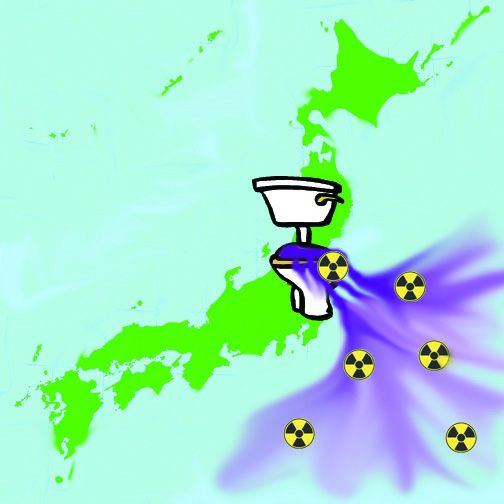
Japan assures diplomats tainted Fukushima water is safe
Feb. 3 (UPI) — The Japanese government said Monday the planned release of tainted water from Fukushima would have no impact on oceans.
During an information session for foreign embassy officials in Tokyo, the Japanese foreign ministry sent signals of reassurance regarding a plan to release tritium-tainted water from the Fukushima No. 1 nuclear power plant, the Mainichi Shimbun and Kyodo News reported.
A total of 28 diplomats representing 23 countries were in attendance, according to reports.
The water comes from Fukushima, where 170 tons of water is contaminated every day at the plant that was severely damaged during a catastrophic earthquake in March 2011. Water has been poured to cool the melted fuel, according to Kyodo.
Japan has been purifying the contaminated water using an advanced liquid processing system, or ALPS. The process does not remove tritium and leaves traces of radioactive elements.
Tokyo has defended its plan to release the water, but neighboring countries, including South Korea, are opposed to the measure.
On Monday, officials from Japan’s ministry of economy, trade and industry said they do not think there would be an impact on surrounding countries.
Japanese fishermen also oppose the measure. Releasing the water into the ocean could affect sales of local seafood, they say.
Japan is planning to release the tritium-tainted water at a time when it is taking stricter measures against travelers from China.
Jiji Press reported Monday Japan turned away five foreign nationals originating from Hubei Province following new restrictions at the border.
Foreigners who have stayed in the Chinese province in the past 14 days or who hold passports issued in the province are banned from entry, according to the report.
Japan has confirmed 20 coronavirus cases since the outbreak in China in December. Japanese airports have built new quarantine stations exclusively for travelers from mainland China, Hong Kong and Macau, according to local press reports.
https://www.upi.com/Top_News/World-News/2020/02/03/Japan-assures-diplomats-tainted-Fukushima-water-is-safe/7381580755235/
Japan tries to explain to embassies merits of releasing Fukushima water into ocean
February 4, 2020
TOKYO – The Japanese government on Monday tried to impress upon embassy officials from nearly two dozen countries the merits of a plan to release radioactive water from the Fukushima Daiichi nuclear power plant into the ocean.
A briefing session was held at the Foreign Ministry in Tokyo to give an update on how more than 1 million tons of water that have been treated and kept in tanks at the crippled complex will be disposed of as storage space is quickly running out.
Both releasing the water into the Pacific Ocean and evaporating it are “feasible methods” as there are precedents for them in and out of Japan, though the former, in particular, could be carried out “with certainty” because it would be easier to monitor radiation levels, the government explained.
It has said the health risks to humans would be “significantly small,” as discharging the water over a year would amount to between just one-1,600th to one-40,000th of the radiation that humans are naturally exposed to.
But the discharge could cause reputational damage to the fishing and farming industries in the surrounding area, raising the need for countermeasures, the government said in the briefing, which came after the Ministry of Economy, Trade and Industry on Friday submitted a draft report on the methods to a subcommittee on the issue.
About 170 tons of water is contaminated at the Fukushima plant every day as it is poured onto the wreckage to cool the melted fuel or as it passes through as groundwater.
The contaminated water is being purified using an advanced liquid processing system, or ALPS, though the process does not remove tritium and has been found to leave small amounts of other radioactive materials.
Tanks used to store the treated water are expected to reach capacity by summer 2022.
Local fishermen have voiced opposition to releasing the water into the ocean out of fears that consumers would stop buying seafood caught nearby. Neighboring countries, including South Korea, which currently bans seafood imports from the area, have also expressed unease.
But no embassy officials voiced such concerns at Monday’s briefing, according to the industry ministry.
The briefing was attended by 28 embassy officials from 23 countries and regions — Afghanistan, Belgium, Benin, Brazil, Britain, Cambodia, Canada, Cyprus, East Timor, France, Germany, Italy, Indonesia, Jordan, Lebanon, Moldova, Panama, Russia, South Korea, Switzerland, Taiwan, Turkey and the European Union.
https://japantoday.com/category/national/japan-tells-embassies-merits-of-releasing-fukushima-water-into-ocean
February 6, 2020
Posted by dunrenard |
Fukushima 2020 | Fukushima Daiichi, Lies & Cover-up, PR campaign, Propaganda, Radioactive Water, Sea release |
Leave a comment
The Japanese government told embassy officials from nearly two dozen countries that releasing the water into the ocean was a “feasible” approach that could be done “with certainty.”
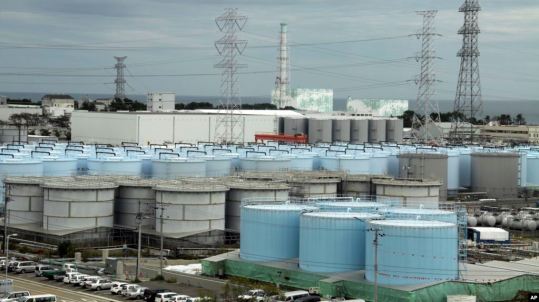
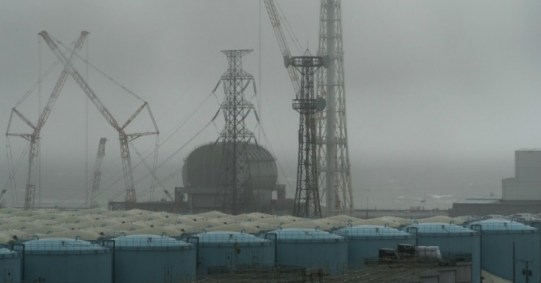 Storage tanks for radioactive water stand at Tokyo Electric Power Co.’s (TEPCO) Fukushima Dai-ichi nuclear power plant on Jan. 29, 2020 in Okuma, Fukushima Prefecture, Japan. Tepco hosted a media tour to the nuclear plant wrecked by an earthquake and tsunami in 2011.
February 03, 2020
As cleanup of the 2011 Fukushima disaster continues, the Japanese government made its case to embassy officials from 23 countries Monday that dumping contaminated water from the nuclear power plant into the ocean is the best course of action.
According to Kyodo News, officials from the Ministry of Economy, Trade, and Industry claimed releasing the water and evaporating it are both “feasible methods” but said the former could be done “with certainty” because radiation levels could be monitored.
There’s more than one million tons of contaminated water already stored at the plant, with 170 tons more added each day. Utility TEPCO says there will be no more capacity for tanks holding contaminated water by 2022.
As Agence France-Presse reported, “The radioactive water comes from several different sources—including water used for cooling at the plant, and groundwater and rain that seeps into the plant daily—and is put through an extensive filtration process.”
That process still leaves tritium in the water and “has been found to leave small amounts of other radioactive materials,” Kyodo added.
The session for embassy officials followed Friday’s recommendation by a Japanese government panel that releasing the water into the ocean was the most feasible plan. As Reuters reported Friday:
The panel under the industry ministry came to the conclusion after narrowing the choice to either releasing the contaminated water into the Pacific Ocean or letting it evaporate—and opted for the former. Based on past practice it is likely the government will accept the recommendation.
Local fishermen oppose the plan and Reuters noted it is “likely to alarm neighboring countries.”
They’re not alone.
Nuclear policy expert Paul Dorfman said Saturday, “Releasing Fukushima radioactive water into ocean is an appalling act of industrial vandalism.”
Greenpeace opposes the plan as well.
Shaun Burnie, a senior nuclear specialist the group’s German office, has previously called on Japanese authorities to “commit to the only environmentally acceptable option for managing this water crisis, which is long-term storage and processing to remove radioactivity, including tritium.”
https://www.commondreams.org/news/2020/02/03/appalling-act-industrial-vandalism-japanese-officials-do-pr-plan-dump-fukushima
February 6, 2020
Posted by dunrenard |
Fukushima 2020 | Fukushima Daiichi, Radioactive Water, Sea release |
Leave a comment
That substance is not ‘water’. It is liquid radioactive waste. It is radioactive water with tritium, radioactive Cesium and Strontium, and other nasty toxic stuff. So better call it ‘waste’ not ‘water’…
Some neighboring countries have also voiced their opposition to the idea of discharging the water into the ocean or atmosphere, citing environmental concerns
A subcommittee under the industry ministry holds a meeting Friday in Tokyo. It recommends releasing treated radioactive water from the crippled Fukushima No. 1 nuclear plant into the ocean.
Japan’s METI recommends releasing Fukushima radioactive water into sea
The industry ministry Friday recommended releasing treated radioactive water from the crippled Fukushima No. 1 nuclear plant into the ocean, saying it would be preferable to releasing it into the atmosphere by boiling it.
The government has been exploring ways to dispose of more than 1 million tons of water used to cool the melted-down cores at the Fukushima No. 1 power plant, including groundwater near the site, as the complex is running out of storage space.
The water is being treated using an advanced liquid processing system, or ALPS, before being stored in tanks at the plant. But this does not remove tritium and has been found to leave small amounts of other radioactive materials.
Local fishermen have voiced strong opposition to releasing the water into the ocean, saying consumers will be afraid to buy seafood caught in the area.
Both methods of releasing the water are “realistic options,” the Economy, Trade and Industry Ministry told a government subcommittee Friday, but noted that dumping the water into the ocean would make it easier to monitor radiation levels.
This method could be carried out “with more certainty,” it said, because the plant’s operator, Tokyo Electric Power Company Holdings Inc., already carried out the process, albeit on a much smaller scale, prior to the powerful earthquake and tsunami that triggered the triple meltdown at the Fukushima plant in March 2011.
The ministry has said the health effects of either approach would be minimal, estimating it would result in between 0.052 and 0.62 microsievert annually for a discharge into the ocean, and 1.3 microsieverts if released into the atmosphere. That compares with the 2,100 microsieverts people are exposed to daily in a normal living environment, according to the ministry.
Other methods the subcommittee has considered include injecting the water deep into the ground, solidifying and burying it, and extracting only the hydrogen and releasing it into the atmosphere.
Meanwhile, the ministry stressed the importance of gaining the understanding of the local community before making a decision, and of preventing the spread of misinformation that would raise undue fears.
The amount of the water is increasing by about 150 tons per day and Tepco is fast running out of tanks to store it in. The utility is looking to expand capacity to 1.37 million tons by the end of 2020, but has no plans beyond then.
An employee of Tokyo Electric Power Company (TEPCO) holds a geiger counter to measure radiation on the top floor of the company’s reactor Number 3 at Fukushima Daiichi nuclear power plant in Okuma, Fukushima prefecture.
Japan panel finds Fukushima nuclear plant water release to sea is best option
A Japanese government panel on Friday roughly accepted a draft proposal for releasing into the sea massive amounts of radioactive water now being stored at the tsunami-wrecked Fukushima nuclear plant.
The economy and industry ministry’s draft proposal said releasing the water gradually into the sea was the safer, more feasible method, though evaporation was also a proven method. The proposal in coming weeks will be submitted to the government for further discussion to decide when and how the water should be released.
Nearly nine years after the 2011 meltdowns of three reactor cores at the Fukushima Daiichi Nuclear Plant, it was a small step toward deciding what to do with the water and follows expert recommendations.
It is meant to solve a growing problem for the plant’s operator stuck between limited storage space for the water and an imminent backlash from the public and possibly neighbouring countries.
A Japanese government panel on Friday said releasing into the sea massive amounts of radioactive water now being stored at the tsunami-wrecked the nuclear plant was the safer, more feasible method.
Fishermen and residents fear possible health effects from releasing the radioactive water as well as harm to the region’s image and fishing and farm industry.
The water has been treated, and the plant operator, Tokyo Electric Power Co. (TEPCO), says all 62 radioactive elements it contains can be removed to levels not harmful to humans, except for tritium. Experts say there is no established method to fully separate tritium from water, but it is not a problem in small amounts. Government officials also say tritium is routinely released from existing nuclear power plants around the world.
In Friday’s proposal, the ministry said the controlled release to the sea is superior because its travelling route is predictable and easier to sample and monitor. The method, however, could immensely impact Fukushima’s still-struggling fishing industry.
The report acknowledges the water releases would harm industries that still face reluctant consumers despite diligent safety checks. It promised to reinforce monitoring of tritium levels and food safety checks in order to address safety concerns.
In 2011, three of Fukushima Dai-ichi’s reactor cores melted down following a tsunami.
TEPCO currently stores about 1.08 million tonnes of radioactive water and only has space to hold up to 1.24 million tonnes, or until the summer of 2022. The water — leakage of cooling water from damaged reactors mixed with contaminated groundwater — has accumulated since the accident.
The report ruled out long-term storage outside the plant — a method favoured by many Fukushima residents. It cited difficulties obtaining permission from landowners and transportation challenges, as well as the risk of leakage from corrosion, a tsunami or other disasters and accidents.
February 1, 2020
Posted by dunrenard |
Fukushima 2020 | Fukushima Daiichi, Radioactive Water, Sea release |
Leave a comment
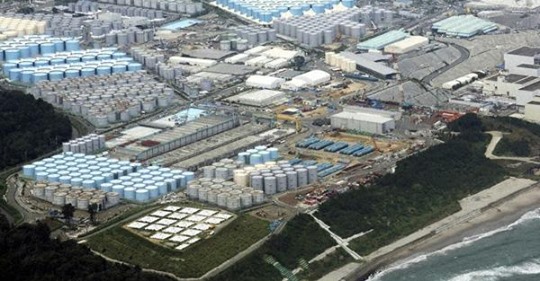
In this Oct. 12, 2017, photo, ever-growing amount of contaminated, treated but still slightly radioactive, water at the wrecked Fukushima Dai-ichi nuclear plant is stored in about 900 huge tanks, including those seen in this photo taken during a plant tour at Fukushima Daiichi
Japanese officials say a decision on how to deal with radioactive water from the Fukushima nuclear plant could come before the Tokyo Olympics begin in July.
The Tokyo Electric Company, or TEPCO, operates Japan’s Fukushima nuclear plant. Three reactors there suffered meltdowns after a 2011 earthquake and tsunami shut the plant’s cooling systems. The accident forced 160,000 people to flee contaminated areas around the plant.
TEPCO officials recently guided a Reuters reporter around the plant, which covers about 3.5 million square meters in northeast Japan. The reporter described large cranes being used to break up major parts of the plant’s structure. The reporter also described operations aimed at removing spent fuel from a reactor.
Overall, about 4,000 people are taking part in the cleanup effort, Reuters reported. Some Olympic events are set to take place within 60 kilometers of the destroyed plant, Reuters said.
One major part of the cleanup has involved treating and storing contaminated water from the area. TEPCO has predicted that Fukushima will run out of all its storage space for water by 2022.
Workers are seen near storage tanks for radioactive water at Tokyo Electric Power Co’s (TEPCO) tsunami-crippled Fukushima Daiichi nuclear power plant in Okuma town, Fukushima prefecture, Japan January 15, 2020. Picture taken January 15, 2020.
A government group studying future storage solutions said last month that it had decided on two main possible solutions. One solution is to treat the water and then control its release into the Pacific Ocean. The other would be to let the water evaporate.
Japanese experts say the government may decide on a solution within the next few months. Either process is expected to take years to complete.
Joji Hara is a Tokyo-based spokesman for the power company. He told Reuters that TEPCO has already been making preparations to inform the public about any developments related to Fukushima.
“The Olympics are coming, so we have to prepare for that, and TEPCO has to disclose all the information – not only to local communities but also to foreign countries and especially to those people coming from abroad,” Hara said.
A Tokyo 2020 banner stands in front of the Azuma Baseball Stadium, a venue for baseball and softball at the Tokyo 2020 Olympics, Saturday, Nov. 30, 2019, in Fukushima, Fukushima prefecture, Japan. The torch relay for the Tokyo Olympics will kick off…
He added that TEPCO had already opened English-language Twitter and Facebook accounts for that purpose. TEPCO is also preparing to put out emergency information in Korean and Chinese, Hara said.
Reuters reported that athletes from at least one country — South Korea — have said they plan to bring their own radiation detectors and food during the Olympics.
Olympic baseball and softball games will be played in Fukushima City, about 60 kilometers from the nuclear plant.
Storage tanks for radioactive water are seen at Tokyo Electric Power Co’s (TEPCO) tsunami-crippled Fukushima Daiichi nuclear power plant in Okuma town, Fukushima prefecture, Japan, Feb. 18, 2019.
The Olympic torch will be carried through a sports center called J-Village. The center served as an operations base for the Fukushima nuclear plant during the first years after the disaster. The torch will then pass through areas near the destroyed power station on its way to Tokyo.
Last month, the environmental group Greenpeace said it found radiation “hotspots” at J-Village, about 18 kilometers south of the plant.
When Tokyo was chosen for the 2020 Summer Olympics, Prime Minister Shinzo Abe declared that Fukushima was “under control” and would not affect activities related to the Games.
February 1, 2020
Posted by dunrenard |
Fukushima 2020 | 2020 Olympics, Fukushima Daiichi, Radioactive Water, Sea release |
Leave a comment
 The dismantling of Fukushima No. 1 nuclear power plant continues in Okuma, Fukushima Prefecture, on Dec. 5, 2019.
January 21, 2020
OKUMA, Fukushima Prefecture—At the wrecked Fukushima No. 1 nuclear power plant north of Tokyo, workers in protective suits are still removing radioactive material from reactors that melted down after an earthquake and tsunami knocked out its power and cooling nearly nine years ago.
On an exclusive tour of the plant, spread over 3.5 million square meters, Reuters witnessed giant remote-controlled cranes dismantling an exhaust tower and other structures in a highly radioactive zone while spent fuel was removed from a reactor.
Officials from Tokyo Electric, which owns the plant, also showed new tanks to hold increasing amounts of contaminated water.
About 4,000 workers are tackling the cleanup, many wearing protective gear, although more than 90 percent of the plant is deemed to have so little radioactivity that no extra precautions are needed. Photography was highly restricted and no conversations were allowed with the workers.
Work to dismantle the plant has taken nearly a decade so far, but with Tokyo due to host the Olympics this summer–including some events less than 60 kilometers from the power station–there has been renewed focus on safeguarding the venues.
“TEPCO tries to disclose all information to the public as soon as possible. If something happens at the site, we let people know by email, for example,” said Kan Nihonyanagi, risk communicator at Fukushima, said in an interview at the site.
The buildup of contaminated water has been a sticking point in the cleanup, which is likely to last decades, and has alarmed neighboring countries. In 2018, TEPCO said it had not been able to remove all dangerous material from the water – and the site is running out of room for storage tanks.
Officials overseeing a panel of experts looking into the contaminated water issue said in December choices on disposal should be narrowed to two: either dilute the water and dump it in the Pacific Ocean, or allow it to evaporate.
The Japanese government may decide within months, and either process would take years to complete, experts say.
“The Olympics are coming, so we have to prepare for that, and TEPCO has to disclose all the information not only to local communities but also to foreign countries and especially to those people coming from abroad,” said Joji Hara, a Tokyo-based spokesman for the power company who accompanied Reuters during the visit.
TEPCO has opened English-language Twitter and Facebook accounts, he said. It is also preparing to put out basic emergency information in Korean and Chinese, he added.
Athletes from at least one country, South Korea, are planning to bring their own radiation detectors and food this summer.
Baseball and softball will be played in Fukushima city, about 60 km from the destroyed nuclear plant. The torch relay will begin at a sports facility called J-Village, an operations base for Fukushima No. 1 in the first few years of the disaster, then pass through areas near the damaged station on its way to Tokyo.
In December, Greenpeace said it found radiation “hotspots” at J-Village, about 18 km south of the plant.
When Tokyo won the bid to host the 2020 Summer Olympics, Prime Minister Shinzo Abe declared that Fukushima was “under control” in his final pitch to the International Olympic Committee.
In 2016, the Japanese government estimated that the total cost of plant dismantlement, decontamination of affected areas, and compensation would be 21.5 trillion yen ($195 billion)–roughly a fifth of the country’s annual budget at the time.
http://www.asahi.com/ajw/articles/AJ202001210037.html
January 21, 2020
Posted by dunrenard |
Fukushima 2020 | 2020 Olympics, Fukushima Radiation, Radioactive Water, Sea release |
Leave a comment

January 17, 2020
South Korea and the U.S. held a director-level meeting on maritime and environment issues in Seoul on Thursday.
According to the Foreign Ministry on Friday, the two sides discussed the possibility of Japan releasing contaminated water from the Fukushima Daiichi nuclear power plant disaster site into the ocean.
They also shared views on ways to preserve marine environments.
The two sides discussed how they plan to reduce marine debris and ways to open the Seventh International Marine Debris Conference in South Korea in 2022.
During the meeting, South Korea called on the U.S. to swiftly take steps to remove South Korea from its preliminary list of countries that engage in illegal, unreported, and unregulated(IUU) fishing.
South Korea was designated as a preliminary IUU fishing country by the U.S. after two South Korean fishing boats violated closed fishing grounds and operated near Antarctica in 2017.
http://world.kbs.co.kr/service/news_view.htm?lang=e&Seq_Code=150721
January 21, 2020
Posted by dunrenard |
Fukushima 2020 | Fukushima Daiichi, Radioactive Water, Sea release, South Korea, U.S. |
Leave a comment
Chang Mari, a Climate and Energy Campaigner at the Greenpeace East Asia Seoul Office, poses for a picture during the inspection in Fukushima, Japan, in October 2019
“Korea should take a leading role in stopping Japan from discharging radioactive water into the Pacific Ocean,” said Chang Mari, a Climate and Energy Campaigner at the Greenpeace East Asia Seoul Office, Tuesday.
The Japanese Ministry of Economy, Trade and Industry revealed last Monday its draft reviewing three ways to dispose of 1.15 million tons of radioactive contaminated water stored in some 980 tanks at power plants in Fukushima. It said Japan can discharge the radioactive water into the ocean, evaporate it into the air or a combination of the two methods.
Chang warned that if Japan really chooses to dump contaminated water into the ocean, it can cause serious damage to marine life and the ecosystems of not only the neighboring countries but the whole world.
“Korea, obviously will be affected the most by the discharge, as Japan’s closest neighbor. However, water flows and it will eventually bring damage to the whole world,” Chang said. “When a tsunami hit nuclear power plants in Fukushima in 2011, a high level of radioactive water leaked into the Pacific Ocean and it traveled around the world for a year to return to the East Sea. We found the level of cesium went up in the water there.
“The world knows this is dangerous but nobody is taking action because Japan has not confirmed its final decision on this issue yet. Tokyo is now observing what other nations have to say about their draft. However, other countries, especially developed countries, cannot protest Japan confidently, because they have had or still are discharging radioactive waste into the environment as well,” Chang said.
According to Chang, the United States, Russia and China are not entitled to complain to Japan about the pollution. Even South Korea has been operating nuclear power plants and has already flown tritium into the sea, so it cannot be innocent.
However, the amount of tritium flowing into the sea at the time of nuclear power generation is much smaller than the amount Japan is reviewing to discharge.
“Korea will suffer an unprecedented and unpredictable level of damage if Japan release radioactive water into the ocean. Therefore, Korea has to take action on the national level and conduct research to set it as a global agenda in solving it,” Chang said.
“Approaching the issue with the international law of the sea, it is Korea that has to take the leading role, because it will be affected the most as a neighboring country,” Chang added.
January 12, 2020
Posted by dunrenard |
Fukushima 2020 | Fukushima Daiichi, Greenpeace, Radioactive Water, Sea release, South Korea |
Leave a comment
After proposing dumping radioactive water from Fukushima reactors into sea, Japan’s government now adds the idea of allowing the treated but still contaminated water to evaporate into the air. Breathe deep
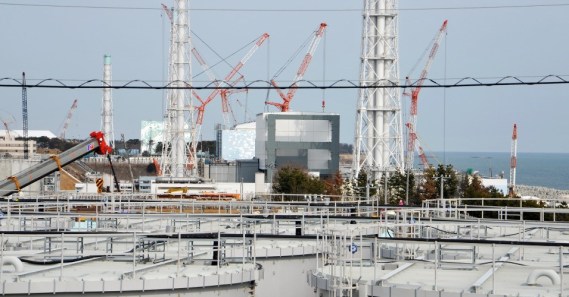 Water tanks holding contaminated water in front of the reactor buildings at Fukushima Daiichi.
December 30, 2019
The delay comes days after Japan’s government proposed releasing contaminated water from the plant into the ocean.
The Japanese government said Friday it would delay for a fourth time the removal of spent fuel from two of the reactors at the Fukushima Daichii nuclear power plant, causing concern that the cleanup of one of the worst nuclear disasters in history is happening at a dangerously slow pace.
The removal of the spent fuel was planned to begin in 2023, but the process was bumped back to 2024 at the earliest for the plant’s No. 1 reactor and 2027 or later for the No. 2 reactor.
According to the Japan Times, the government claims this aspect of the clean-up is being delayed due to safety concerns and that it plans to construct barriers around the reactors to prevent the spread of radioactive dust.
Reporting on the delay comes days after the Ministry of Economy, Trade, and Industry proposed releasing contaminated water from the plant into the ocean or allowing it to evaporate, and weeks after the ministry said the water contained higher levels of radioactive material than previously thought.
The most recent news about the cleanup process—which is under a 30-40 year plan following the 2011 earthquake and tsunami which forced more than 100,000 residents to evacuate the rural Fukushima region to avoid nuclear contamination from the plant—raised alarm among critics of nuclear power.
The Japanese public has reportedly grown increasingly anti-nuclear power since the Fukushima disaster, according to an Al Jazeera report earlier this month.
“Japanese people’s sentiment changed after Fukushima Daiichi and it is continuing until now,” Hajime Matsukubo, secretary-general of the Citizens’ Nuclear Information Center, told Al Jazeera. “They say no.”
In a 2015 poll by the Japan Atomic Energy Relations Organization, only 10 percent of Japanese respondents said the country should maintain its use of nuclear energy.
https://www.commondreams.org/news/2019/12/30/fukushima-reactor-cleanup-delayed-five-years-japanese-public-demands-end-nuclear?fbclid=IwAR0cWj8VpXce8X8kXt4Lzg2YlFL3PBZDeuEMtGCTHWD1jpQnzpYpdPwGP9I
January 12, 2020
Posted by dunrenard |
Fukushima 2020 | Atmospheric Releases, Fukushima Daiichi, Radioactive Water, Sea release |
Leave a comment
The ministry said a controlled release into the sea was the best option because it would “stably dilute and disperse” the waste from the plant using a method endorsed by the United Nations’ Scientific Committee on the Effects of Atomic Radiation. It also would facilitate monitoring of radiation levels in the environment.
…
In the proposal, the ministry noted that evaporation is a method that was tested and proven following the 1979 core meltdown at Three Mile Island, where it took two years to get rid of 87,000 tons of radioactive tritiated water.
The government and the plant operator, Tokyo Electric Power Company Holdings Inc., have been unable to get rid of the more than 1 million tons of radioactive liquid that has been treated and stored, due to opposition from local fishermen and residents fearing further damage to Fukushima’s reputation and recovery.
The utility has managed to cut down the volume of the liquid by pumping up groundwater from upstream before it reaches the plant, and installing a costly underground “ice wall” around the reactor buildings to prevent other water from running into the area. Tepco says it has space to store only up to 1.37 million tons of the waste liquid, and only until the summer of 2022, raising speculation that it may be released after the Tokyo Olympics next summer. Tepco and experts say the tanks get in the way of decommissioning work and that they need to free up the space to build storage for debris removed and other radioactive materials. The tanks also could spill out their contents in the event of a major earthquake, tsunami or flood….

A Tokyo Electric Power Co. (TEPCO) official wearing radiation protective gear stands in front of the Advanced Liquid Processing Systems during a press tour at the Fukushima No. 1 nuclear power plant in Okuma, Fukushima Prefecture, on Nov. 12, 2014.
Japan’s Ministry of Economy, Trade and Industry has proposed gradually releasing or allowing to evaporate massive amounts of treated but still radioactive water at the tsunami-wrecked Fukushima nuclear plant.
The proposal made Monday to a body of experts is the first time the ministry has narrowed down the options available to just releasing the water. It is meant to tackle a huge headache for the plant’s operator as storage space runs out, despite fears of a backlash from the public.
Nearly nine years after the 2011 triple meltdowns at Fukushima No. 1 nuclear power plant, the radioactive water is still accumulating as the water is needed to keep the cores cooled and minimize leaks from the damaged reactors.
For years, a government panel has been discussing ways to handle the crisis and to reassure fishermen and residents who fear potential health impacts from releasing the radioactive water as well as harm to the region’s image.
In Monday’s draft proposal, the ministry suggests a controlled release of the water into the Pacific, allowing the water to evaporate, or a combination of the two methods.
The ministry said a controlled release into the sea was the best option because it would “stably dilute and disperse” the water from the plant using a method endorsed by the United Nations’ Scientific Committee on the Effects of Atomic Radiation. It also would facilitate monitoring of radiation levels in the environment.
Releasing the entire amount of water over one year would only increase radiation levels to thousands of times less than the impact humans usually get from the natural environment.
In the proposal, the ministry noted that evaporation has been a tested and proven method following the 1979 core meltdown at Three Mile Island, where it took two years to get rid of 87,000 tons of tritium water.
The government and the plant operator, Tokyo Electric Power Co., have been unable to get rid of the more than 1 million tons of radioactive water that has been treated and stored due to opposition from local fishermen and residents fearing further damage to Fukushima’s reputation and recovery. The utility has managed to cut down the volume of water by pumping up groundwater from upstream and installing a costly underground “ice wall” around the reactor buildings to keep the water from running into the area.
TEPCO says it has space to store only up to 1.37 million tons and only until the summer of 2022, raising speculation that the water may be released after the Tokyo Olympics next summer. TEPCO and experts say the tanks get in the way of decommissioning work and that they need to free up the space to build storage for debris removed and other radioactive materials. The tanks also could spill out their contents in a major earthquake, tsunami or flood.
Experts, including those at the International Atomic Energy Agency who have inspected the Fukushima plant, say the controlled release of the water into the ocean is the only realistic option, though it will take decades.
A government panel earlier compiled a report that listed five options, including releasing the water into the sea and evaporation. The three others included underground burial and an injection into offshore deep geological layers.
The panel has also discussed possibly storing the radioactive water in large industrial tanks outside the plant, but the ministry proposal ruled that out, citing risks of leakage in case of corrosion, tsunamis or other disasters and accidents, as well as the technical challenge of transporting the water elsewhere.
December 24, 2019
Posted by dunrenard |
fukushima 2019 | Air release, Fukushima Daiichi, Radioactive Water, Sea release |
Leave a comment
The Fukushima Daiichi Nuclear Power Station’s forest of water storage tanks is seen in July 2018 from a Mainichi Shimbun helicopter in Fukushima Prefecture.
July 25, 2019 (Mainichi Japan)
TOKYO — A new estimate claims it will take around 17 years to send treated radioactive water, which is currently stored at the Fukushima Daiichi Nuclear Power Station site as a consequence of the 2011 nuclear disaster, into the sea.
The figures came from calculations by Hiroshi Miyano, visiting professor in nuclear engineering at Hosei University, and head of the investigative committee on the decommissioning of the Fukushima Daiichi Nuclear Power Station at the Atomic Energy Society of Japan.
While the Ministry of Economy, Trade and Industry intends to resume discussions on the methods for disposal of treated water at a subcommittee of experts as early as next month, Miyano called for his estimate to be utilized in calm and quick discussions on the issue.
Miyano drew his attention to auxiliary cooling seawater pumps based on the premises of the nuclear power station, which was severely damaged by the March 2011 earthquakes and tsunamis and the subsequent meltdown they caused.
There are three operational pumps each at the No. 5 and 6 reactors, which are for pumping up seawater to cool apparatus at the nuclear plant. They can individually process 1,800 metric tons of water per hour at the No. 5 reactor, and 2,800 tons of water per hour at the No. 6 reactor.
At nuclear plants across the country, radioactive water containing tritium, which is difficult to remove, is released after being diluted to contain 60,000 becquerels or less of radioactive substances per liter of water, in accordance with criteria set under the Act on the Regulation of Nuclear Source Material, Nuclear Fuel Material and Reactors.
At the Fukushima Daiichi Nuclear Power Station, where decommissioning work is underway, however, stricter standards are being applied, with water such as rainwater accumulated in trenches outside reactor buildings released after being diluted to contain less than 1,500 becquerels of radioactive substances per liter of water.
At present, the nuclear power station site is host to over 950 storage tanks, which together hold more than 1.05 million tons of treated water containing tritium. Were the stricter rules on dilution to be applied, the treated water would amount to some 699 million tons.
The calculations by Miyano were based on the pumps at the No. 5 and 6 reactors working alternately but without interruption for 24 hours a day, 365 days a year. Under such conditions, it is expected that all of the water would be released after about 17 years and 4 months.
The Ministry of Economy, Trade and Industry is investigating a range of potential disposal methods, from releasing the water into the sea, to vaporizing the liquid or storing it for an extended period of time.
In 2016, the ministry came up with an estimate that releasing the water into the sea would take somewhere between 7 years and one month and 7 years and four months, using different preconditions from those employed by Miyano.
Miyano said, “At some point the tanks will deteriorate. This estimate is ultimately just one example, and it could change depending on conditions. But it does show that processing the water is going to take a long time. It’s time to have a calm discussion.”
July 27, 2019
Posted by dunrenard |
fukushima 2019 | Fukushima Daiichi, Radioactive Water, Sea release |
Leave a comment







 nuclear-news