Scientists: Japan’s Plan To Dump Nuclear Waste Into The Pacific Ocean May Not Be Safe

April 25, 2022
A panel of scientists has identified critical gaps in the data supporting the safe discharge of wastewater into the Pacific.
Independent scientists are questioning Japan’s plans to dump just over 1 million tons of nuclear wastewater into the Pacific Ocean, following a review of the available evidence.
The panel of multi-disciplinary scientists, hired by the intergovernmental Pacific Islands Forum, has not found conclusive evidence that the discharge would be entirely safe, and one marine biologist fears contamination could affect the food system.
Last year Japan announced that wastewater from the Fukushima-Daiichi Nuclear Power Plant, destroyed in March 2011 following the Tohoku Earthquake and tsunami, would be dropped into the Pacific in 2023.
The announcement triggered immediate concern from nations and territories in the Asia-Pacific region and led the Pacific Islands Forum to hire a panel of five independent experts to review the plan.
Previously, it was broadly believed that dropping the wastewater into the ocean would be safe, given it had been treated with “advanced liquid processing system” technology, which removes radioactive materials from contaminated water.
But panel scientist Robert Richmond, director of the University of Hawaii Kewalo Marine Laboratory, says the panel unanimously believes that critical gaps in information remain.
Previous discussions over the safety of Japan’s plans emphasized the chemistry of the discharge, but not how it could interact with marine life, he said.
“If the ocean were a sterile glass vessel, that would be one thing,” Richmond said. “But it’s not, you know, there’s lots of biology involved.”
Richmond has been particularly concerned about the potential for tritium – a key compound of concern – being absorbed into the food system because the radioactive isotope can bind to phytoplankton.
Through phytoplankton, Richmond says, the radioactive element could then find its way into the greater food system as the microscopic plants are consumed by mollusks and small fish, which are later consumed by other fish and eventually humans.
“Things like mercury in fish are now of an international concern. Radionuclides will be the same,” Richmond said.
The situation is dynamic too, as climate change affects the temperature of waters and weather patterns change.
“As temperatures go up, many chemicals become more interactive, they become a little bit different in terms of break down,” he said. “So these are all the things we need to consider.”
Confusing The Masses
The Pacific Islands Forum convened its panel of experts – specializing in policy and different scientific disciplines – because of the highly technical nature of Japan’s plan.
The PIF did not respond to a request for an interview for this story.
But Forum Secretary General Henry Puna has said that while Japan was open and frank in several information sessions held with the Forum, it wanted to bring on its own group of experts to look at the data and advise them.
“I just want to note that, for us, the issue is very urgent but also requires very careful thinking,” Puna said in September.
Since Japan announced it would release the treated water into the Pacific, it has been working with the International Atomic Energy Association to ensure its plans are safe. In February the IAEA made its first assessment and recently completed a second assessment at the end of March.
The IAEA is expected to deliver reports from its site visits in the next two months, according to its website, and would release a fully comprehensive report before any water is released.
Richmond said the panel wants to work with Japan and the IAEA to ensure the best outcome.
Nonetheless, the information seen by the panel showed less than 1% of the tanks of wastewater had been treated and less than 20% had been adequately sampled, Richmond says.
“Based on those numbers alone, we’re uncomfortable in making predictions of where things are going to end up,” Richmond said.
The Pacific Perspective
Community groups and environmental organizations were quick to respond to the news last year, raising concerns about the longterm effects to their region, with its legacy of nuclear testing and the fallout. And coastal communities and fishermen in Japan have also raised concerns.
The U.S. expressed its support for the plan in April last year, which has since been criticized by U.S. territories and affiliated states.
Rep. Sheila Babauta of the Commonwealth of Northern Mariana Islands introduced a resolution to CNMI’s House of Representatives opposing any nuclear testing, storage or waste disposal in the Pacific.
It was passed in December, months after the U.S. stated its position and after other Pacific groups and governments condemned the move.
“I’m really disappointed in the lack of engagement, the lack of information and the lack of free, prior and informed consent,” Babauta, who chairs the Natural Resources Committee, said.
The mistrust that is harbored by many in the Pacific stems back to U.S nuclear testing in the Republic of Marshall Islands following World War II, British testing in Kiribati and the French in French Polynesia, which had flow-on effects to the environment and long term health of Pacific people. And in 1979, Japan provoked backlash when it revealed plans to dump 10,000 drums of nuclear waste in the Marianas Trench.
Babauta says she introduced the resolution as a show of solidarity for the rest of the Pacific.
“The ocean is our oldest ancestor. The ocean is our legacy,” Babauta said. “It’s what we’re going to leave for our children.”
Scientists: Japan’s Plan To Dump Nuclear Waste Into The Pacific Ocean May Not Be Safe
Shield machine to dig undersea tunnel to discharge ‘treated water’ has not yet been approved nor has the local government… Preparations are steadily underway at TEPCO’s Fukushima Daiichi Nuclear Power Plant.

April 25, 2022
On April 25, TEPCO installed a “shield machine” at the launch site to dig an undersea tunnel to the discharge port 1 km offshore over plans to discharge contaminated water from the Fukushima Daiichi Nuclear Power Plant (Okuma and Futaba towns, Fukushima Prefecture) into the sea after purification treatment. The plan for the facilities to discharge the contaminated water has not been approved by the Nuclear Regulation Authority, and the local government has not yet given its approval for the start of construction. However, TEPCO explained at a press conference on the same day, “We are preparing for the construction work, and we will move ahead to the extent that there are no problems.
Contaminated water generated when cooling water injected into the reactors of Units 1-3 came into contact with nuclear fuel debris melted down in the accident and mixed with groundwater and rainwater that entered the buildings. Tritium, a radioactive substance that cannot be removed, remains in concentrations exceeding the national discharge standard. The government and TEPCO have been working on a plan to use large amounts of seawater to dilute the tritium concentration to less than 1/40th of the discharge standard and discharge the water into the sea.
TEPCO began preparatory work on the 24th, bringing a shield machine (about 3 meters in diameter and 7 meters in length) to the port of the power plant, and on the 25th, placed it at the bottom of a shaft (16 meters deep) where they will begin digging an undersea tunnel built in the port area. The tunnel is now ready for construction to begin immediately. The tunnel will connect the shaft, which will temporarily store water to be discharged, with the offshore water discharge port.
Preparations for the construction of the water discharge outlet will begin on the 25th, and excavation of the seafloor will begin on the 29th.
Although the regulatory commission has completed its review of the facility plan, TEPCO has yet to submit a revised plan to the regulatory commission based on the content of the review. The approval is expected to come after June, when the public will be invited to comment on the plan. The approval of Fukushima Prefecture and the towns of Okuma and Futaba must also be obtained before tunnel excavation can begin. (Kenta Onozawa)
https://www.tokyo-np.co.jp/article/173859?fbclid=IwAR3gMcpXQMAGSFHMfpukggr2I_RPWcgqZifR2PCYgIdmtSOGRu72k9UYjcQ
Examination of Fukushima Daiichi Nuclear Power Plant for discharge of treated water to be finished; Regulatory Commission to solicit public opinion in May.

April 15, 2022
The Nuclear Regulation Authority (NRA) held a meeting on April 15 to review TEPCO’s application for an implementation plan to discharge contaminated water from the Fukushima Daiichi Nuclear Power Plant into the ocean after purification and treatment, and accepted TEPCO’s explanation. The discussion at the review meeting is over, and the NRA will prepare a draft review document summarizing the details of the review by the end of May, and begin the procedures for approval.
One Year After the Decision to Discharge Treated Water into the Sea, the Gulf Between the Government and Fishermen Remains Unbridgeable, and the Sense of Distrust in TEPCO Has Not Changed
In December of last year, TEPCO applied to the Regulatory Commission for a review of its implementation plan, which outlines the design of the facilities, the method of discharge, and the impact on the environment and people after the discharge. So far, 15 review meetings have been held, and discussions have ended without any major changes to the plan.
After compiling a draft of the review report, the Regulatory Commission will solicit opinions (public comments) from the public for 30 days before deciding whether to approve the plan. Normally, the review of an implementation plan is closed to the public and no public comments are solicited, but the committee took an unusual step.
The approval of Fukushima Prefecture, Okuma Town, and Futaba Town, the three municipalities where the plant is located, is required before TEPCO can begin construction of a new undersea tunnel and other facilities to be built in conjunction with the offshore discharge. TEPCO had indicated that it planned to start construction in June, but there is now a possibility of a delay.
According to TEPCO’s plan, the treated water, which mainly contains radioactive tritium, will be diluted with a large amount of seawater to reduce the tritium concentration to less than 1/40th of the national discharge standard, and then discharged through an undersea tunnel to an area about 1 km offshore. The project is scheduled to begin in the spring of 2023. (Kenta Onozawa)
https://www.tokyo-np.co.jp/article/171995?fbclid=IwAR3Dg8jz8qJM3v9ZmAmupioeZ6Bi3c9emoP4mmp_FApNnuYKfl8h3fDGrgQ
Japan’s nuclear regulator to okay release of treated water from Fukushima plant

April 15, 2022
Japan’s nuclear regulator has largely approved a plan to release treated water from the crippled Fukushima Daiichi nuclear power plant into the ocean.
The plant suffered triple meltdowns in the March 2011 earthquake and tsunami disaster. Water is used to cool molten nuclear fuel. It mixes with rain and groundwater that flows into damaged reactor buildings.
The water is treated to remove most of the radioactive materials, but still contains radioactive tritium.
The Japanese government plans to dilute treated water that continues to accumulate at the plant to levels below national regulations and start releasing it from around spring 2023.
The Nuclear Regulation Authority has been inspecting the plan drawn up by plant operator Tokyo Electric Power Company.
In 13 meetings since December, the NRA discussed the safety of the new facility to be built for the water release and the maximum concentration of radioactive tritium when it is released. It also considered how to respond in natural disasters and other emergencies, and the effect of radiation exposure on the surrounding environment and people.
At Friday’s meeting, an official of the NRA secretariat said there are no issues left that have not been discussed enough.
The NRA plans to put together a draft inspection document as early as next month that effectively indicates the plan’s approval.
TEPCO plans to start construction on a facility for diluting treated water and an undersea tunnel once the NRA approves the plan and the utility obtains consent from Fukushima Prefecture and local communities. TEPCO aims to complete the construction work by mid-April next year.
TEPCO has yet to convince and gain understanding from local fishers who are concerned about reputational damage from the release of treated water into the sea.
Japan severely breaches obligations under international law by persisting in discharge of nuclear-contaminated water into ocean

April 15, 2022
Japan is being extremely selfish and irresponsible by willfully clinging to its decision to release nuclear-contaminated water into the ocean in disregard of the strong opposition of the international community.
Its despicable act constitutes gross infringement of the legitimate rights and interests of its neighboring countries, severe breach of international justice and its obligations under international law, and major threat to the marine environment and the right to health of people around the world.
On April 13, 2021, the Japanese government unilaterally decided to dump a massive amount of nuclear-contaminated water from the crippled Fukushima Daiichi Nuclear Power Plant operated by Tokyo Electric Power Company (TEPCO) into the ocean despite doubts and opposition from home and abroad.
One year has passed since Japan announced the erroneous decision and the country still hasn’t realized how terrible a mistake it is. According to a plan recently released by TEPCO for the disposal of nuclear-contaminated water generated by Fukushima Daiichi Nuclear Power Plant, the country will soon begin official preparations for the release of the contaminated water and plans to begin long-term discharge of radioactive water into the Pacific Ocean in the spring of 2023.
While Japan opted for the discharge of the contaminated water into the ocean, an option with the least economic cost to itself, it posed the biggest environmental health and safety risk to the world. What an act of selfish calculation!
Data from TEPCO showed that the contaminated water from the Fukushima nuclear accident still contains many kinds of radionuclides with a long half-life even after secondary treatment.
Japan plans to release more than one million tons of nuclear-contaminated water over a period of 30 years. The amount it intends to discharge, the duration of the release, the sea area covered, and potential risks that can be generated by the activity are all unprecedented.
The decision has aroused deep concerns and strong opposition from all sectors of society even at home. About 180,000 people in Japan recently signed a petition against the decision to dump nuclear-contaminated water into the ocean. Several organizations in Japan, including the National Federation of Fisheries Cooperative Associations, have reiterated their opposition to the decision.
According to an article published on Fukushima Minpo, a newspaper based in Fukushima prefecture of Japan, the Japanese government should respect the opinions of its citizens, listen to the voices of local residents, and terminate the plan to discharge nuclear-contaminated water into the ocean.
As a signatory to the United Nations Convention on the Law of the Sea, the Convention on Early Notification of a Nuclear Accident, the Convention on Nuclear Safety, and the Joint Convention on the Safety of Spent Fuel Management and the Safety of Radioactive Waste Management, Japan has knowingly breached its obligations under international law.
It didn’t conduct full consultation with its neighboring countries and other stakeholders before announcing its decision to discharge nuclear-contaminated water into the ocean. After its announcement of the decision, many countries, including China, South Korea, Russia, and the Philippines, as well as relevant international institutions, have expressed concerns over the issue and raised doubts and concerns with the Japanese side over the legitimacy of the discharge of the nuclear-contaminated water into the ocean, the rationality of the discharge plan, the credibility of data about the nuclear contaminated water and the reliability of the equipment to purify the nuclear-contaminated water.
However, to this day, Japan has yet to give a full and credible explanation for its decision and serious responses to relevant doubts and concerns.
People in Japan’s neighboring countries and countries on the Pacific Rim have rights to health and life as well as the environment. Japan, on the other hand, wants to make short-term money at the expense of these rights.
The United Nations (UN) Human Rights Council released a report urging that the Japanese government should face up to its responsibility for the disposal of nuclear-contaminated water.
In a joint statement, U.N. human rights experts said that Japan’s decision to release contaminated water from the destroyed Fukushima nuclear plant into the ocean is “particularly disappointing” and “very concerning”.
“The release of one million tons of contaminated water into the marine environment imposes considerable risks to the full enjoyment of human rights of concerned populations in and beyond the borders of Japan,” they said in the joint statement.
The international community has frequently expressed voices of justice, such as “The Pacific is not a dumping ground for radioactive waste water” and “keep our Pacific nuclear-free”. However, Japan has turned a deaf ear to all of them.
In this February, a technical working group of the International Atomic Energy Agency (IAEA) visited Japan for the first time and raised many questions to the Japanese side about its controversial plan to release radioactive water into the Pacific Ocean. Evaluation of the disposal of the nuclear-contaminated water at the Fukushima nuclear power plant is still in progress.
Surprisingly, Japan has not only ignored the concerns of various parties over the discharge of its nuclear-contaminated wastewater, but preset results for the evaluation conducted by the IAEA technical working group. The country repeatedly concealed information and covered up the truth.
When doubts about its decision to dump radioactive water into the ocean poured in, the country made no attempt to reflect on the legitimacy of the decision and correct its mistake, but blamed those who doubted its decision for damaging its reputation.
The Japanese side should know that no matter what it does to whitewash the plan to release the nuclear-contaminated water into the ocean, it would only increase the international community’s concerns.
The disposal of the nuclear-contaminated water is never Japan’s private matter. Instead, it bears on the marine environment and public health of the whole world.
Japan should pay careful attention to and respond to the concerns of its neighboring countries and other members of the international community, stop pushing forward with preparations for the discharge of the nuclear-contaminated water into the ocean, and withdraw its erroneous decision, so as to avoid further damage to its credibility.
(Zhong Sheng is a pen name often used by People’s Daily to express its views on foreign policy and international affairs.)
Japan’s planned release of radioactive wastewater draws concern.
April 14, 2022
It’s been exactly one year since the Japanese government announced its decision to continuously release Fukushima’s radioactive wastewater into the Pacific Ocean. Concerns and protests were heard in #Japan and beyond. #nuclear#environment
Protests in various locations demanding withdrawal of ocean discharge of treated water from TEPCO’s Fukushima Daiichi Nuclear Power Plant.

April 13, 2022
On the 13th, one year after the government decided to discharge treated water from TEPCO’s Fukushima Daiichi Nuclear Power Plant (Okuma and Futaba, Fukushima Prefecture) into the ocean, protests were held in various locations, with participants calling for the withdrawal of the policy.
In front of the House of Representatives building in Nagata-cho, Tokyo, about 40 people participated in response to a call from the “Sayonara NPP 10 Million People Action Executive Committee” and other groups. Holding up banners, they shouted “Don’t pollute the sea in Fukushima” and “Listen to the voices of the people of Fukushima.
The participants made speeches in turn toward the Diet building. Taeko Fujimura, 67, a member of the National Trade Union Liaison Council, criticized the government and TEPCO, saying, “The government and TEPCO promised the Fukushima Prefectural Fisheries Federation that they would not discharge the waste into the ocean without their understanding, but they unilaterally decided on the policy and have not explained it in good faith to the public. No matter how much we dilute it with seawater, it is inevitable that a large amount of radioactive materials will spread into the ocean. There must be something more that can be done, such as finding a way to continue storing the radioactive materials instead of discharging them.
Toshihiro Inoue, 63, a member of the executive committee secretariat, said, “The government has forcibly decided on this policy, and even after a year, it has not withdrawn it in spite of opposition. The global environment must not be further destroyed by radioactive pollution. Let’s continue to raise our voices in opposition.
The executive committee held protests at more than 10 locations in Tokyo and eight prefectures in Saitama, Yamagata, Aichi, Osaka, Okayama, Fukuoka, and Kagoshima.
The environmental group FoE Japan also held an online press conference on the same day, calling for storage of the treated water in large tanks and solidification with cement. Don’t pollute the sea any more!” Chiyo Oda, co-chairperson of the “Citizens’ Council,” said, “Once released, it is irreversible. Artificially spreading radioactive materials will spread the effects of the accident and must not be tolerated. (Kenta Onozawa)
https://www.tokyo-np.co.jp/article/171455?rct=national&fbclid=IwAR3yz25OB-5W85giS7pp3nPYRVtzYjdQOFoIhsB92n7co9wkYzDe0nM8WoQ
Don’t discharge contaminated water into the sea! Nationwide simultaneous standing in Iwaki

April 13, 2022
On April 13, 2021, one year after the government decided on the disposal of contaminated water stored in tanks from the Fukushima Daiichi Nuclear Power Plant accident, in violation of its promise to the fishing industry that no disposal would take place without the understanding of all concerned parties, and ignoring the opposition and cautious opinions of 70% of the local government councils in Fukushima Prefecture and the opposition of many Fukushima residents One year has passed.
On April 13, “April 13 National Simultaneous Standing in Iwaki Against Discharge of Contaminated Water from Nuclear Power Plants into the Sea” was held near the entrance intersection of Aquamarine Fukushima at Onahama Port in Iwaki City.
Since last June, we have been calling for a monthly standing on the 13th of every month, “Don’t pollute the sea any more! Citizens’ Council”, which has been calling for standing on the 13th every month since June last year, started the event after noon with the slogan “Protect our hometown oceans! Protect our fisheries! Protect our children!” From 12:30 p.m., about 20 participants spoke against the discharge of contaminated water into the ocean from their respective standpoints.
Mr. Oda, the co-chairperson of the event, said, “One year has passed since the government’s decision on April 13 to discharge contaminated water into the ocean, so let’s not pollute the sea any more! He reported on the release of the “Appeal” and the citizens’ groups’ online joint press conference, and appealed, “We will continue to raise our voices to protect our precious daily lives. Mr. Yoneyama of the Citizens’ Council also spoke with the Citizens’ Circle to Monitor Nuclear Regulations, FoE Japan, an international environmental NGO, and Don’t Pollute the Sea Anymore! The report was based on the “Submission of a written request and negotiations with TEPCO and the government demanding the cessation of the discharge of contaminated water from the Fukushima Daiichi Nuclear Power Plant” held on March 29 by four organizations: the Citizens’ Council of Japan, the Kansai Liaison Conference for the Evacuation Plan, and the Kansai Liaison Conference for the Evacuation Plan. The speaker appealed to the audience. Prefectural Councilor Furuichi also reported on how the Fukushima Prefectural Assembly continued to review the “petition for a cautious response to the application for prior consent regarding the ALPS process water discharge facility” submitted to the assembly, and stressed the significance of citizens’ continued opposition activities. Mr. Yuzuru Suzuki, professor emeritus at the University of Tokyo and former director of the Fisheries Experiment Station, also spoke about what would happen to fish if tritium and other contaminated water were to be released, saying that they are currently in the process of collecting data before the release of water. He expressed his determination that even if the release of contaminated water were to be forced, he would continue marine research to clarify the effects of radiation and force the cancellation of the project. After this, citizens continued to demonstrate their will by making one appeal after another.
The public comment on the draft review report will be held once the review meeting for the “Application for Approval of Changes to the Implementation Plan” for the basic design of the “ALPS process water” dilution and discharge system and related facilities, which TEPCO applied to the Nuclear Regulation Authority at the end of last year, is completed on March 15. After that, if Fukushima Prefecture, Okuma Town, and Futaba Town give their approval to the “Request for Prior Approval,” construction will begin in June.
The oceans of our hometown, the oceans of Japan, and the oceans of the world must not be further polluted by radiation.
Let’s not allow the construction of the discharge facility to start in June, and let’s spread our voices of opposition and our standing circle across the country and the world like a ripple to a giant wave in order to stop the discharge of radioactive materials one year later.
On May 13, together with standing, we will prepare and call for an action to demand the halt of the start of construction of the discharge facility.
Let us all protect the oceans of our hometown, the oceans of Japan, and the oceans of the world.
One year after the decision to discharge contaminated water into the ocean: Three videos on contaminated water from ALPS treatment released
April 13, 2022
On April 13, 2021, the government decided to release ALPS-treated contaminated water into the ocean.
The water stored in the tanks, once treated by ALPS, contains not only tritium but also residual radioactive materials such as cesium-134, cesium-137, strontium-90, iodine-129, and plutonium, exceeding the standard in about 70% of the cases. TEPCO has stated that it will conduct secondary treatment, but has not clarified which radioactive materials will ultimately remain and how much.
In August 2015, the government and TEPCO promised the Fukushima Prefectural Fisheries Federation that they would not carry out any disposal without the understanding of all concerned. After the decision to discharge the waste into the ocean, TEPCO President Kobayakawa stated, “We have no intention of reneging on our promise. However, despite the opposition of fishermen, consumers, and a wide range of citizens in and outside of Fukushima Prefecture, procedures are steadily underway to release the waste into the ocean.
Against this backdrop, FoE Japan has created a series of short videos to get people to think about the issue of discharging contaminated water from the ALPS process into the ocean. The videos pick up on various issues surrounding ALPS-treated contaminated water. What is contaminated water? What’s in it?” , “What is tritium?” , “What are the alternatives?” and “What do the people have to say?” (to be released) (each is less than 2 minutes and 20 seconds). Please take a look.
1 What is contaminated water? What is contained?
2 What is tritium?
3 What is the alternative?
Fisheries opposed to Fukushima water discharge, trade group tells PM

April 5, 2022
TOKYO (Kyodo) — A major fisheries group in Japan told Prime Minister Fumio Kishida Tuesday it remains firmly opposed to the planned discharge of treated water from the crippled Fukushima nuclear power plant into the sea due to concern over negative impact on the industry.
“I told (Kishida) our position to oppose (the discharge) remains exactly the same,” Hiroshi Kishi, head of the national fisheries cooperatives, told reporters after visiting the prime minister’s office.
It was the first meeting between the head of the national fisheries cooperatives and Japan’s prime minister since April last year when the decision was made to release treated low-level radioactive water into the sea from around the spring of 2023.
Then Prime Minister Yoshihide Suga announced the policy without gaining consent from the fisheries group.
Kishida said the government will be fully responsible for the impact of the discharged treated water and vowed to support fishermen, according to Kishi and officials who attended the meeting.
“Steady progress in the decommissioning (of the Fukushima plant) is a prerequisite for reconstruction (of the affected areas), and we cannot avoid the issue of how to dispose of treated water,” Kishida said. “We will continue to exchange opinions and will make all-out efforts to tackle harmful rumors.”
Earlier in the day, Kishi conveyed similar concern to industry minister Koichi Hagiuda. “We just hope people in the fisheries industry will be able to continue fishing with peace of mind,” he told reporters after seeing Hagiuda in the federation’s office in Tokyo.
During the meeting, Hagiuda handed the group answers in writing to five requests it had submitted.
The government pledged in the document to ensure the safety of treated water as well as take appropriate measures to prevent and tackle reputational damage to food products, among others.
Hagiuda also told the federation it will stick to its promise to the fishermen that the Fukushima plant will not release the water into the sea without their understanding.
The minister told reporters that Kishi “understands the recovery of Fukushima will not complete without disposal of treated water” and expressed hope that the government will “clear anxiety of fishermen by taking appropriate measures.”
The government has already set up a 30 billion yen ($245 million) fund to support the fisheries industry and pledged to buy seafood when demand falls due to harmful rumors.
In the meantime, more than 1 million tons of treated water has accumulated on the premises of the plant operated by Tokyo Electric Power Company Holdings Inc. after a massive earthquake and tsunami triggered a triple meltdown at the Fukushima Daiichi plant in March 2011.
The water, which was contaminated after being pumped in to cool melted reactor fuel, is treated through an advanced liquid processing system that removes radionuclides except for tritium.
Before discharge, it will be diluted with seawater below one 40th of the current regulations, according to the government. It will also be lower than the World Health Organization’s tritium limit in drinking water.
Earlier this year, the International Atomic Energy Agency evaluated the safety of the release of treated water by sending a task force to the Fukushima plant to enhance transparency of the discharge plan and gain international understanding.
In addition to Japan’s local fishing communities, neighboring China and South Korea have also expressed their worries over the water discharge plan.
TEPCO to grow fish at nuclear plant to show water safety
No, it is not for April Fools’ Day only, for Tepco it is Fool’s Day everyday
April 1, 2022
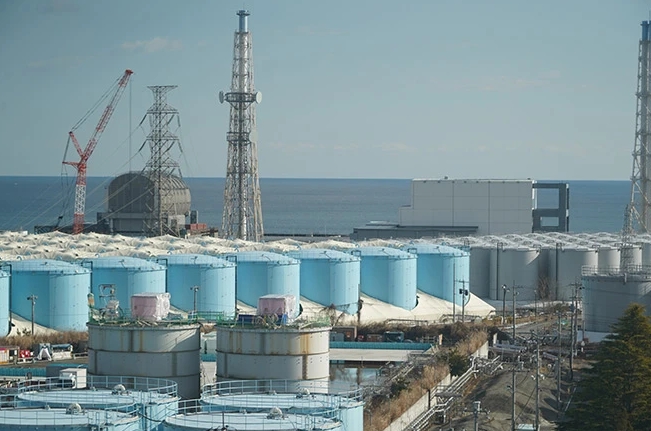
Tokyo Electric Power Co. will raise seafood at its stricken Fukushima No. 1 nuclear power plant in a bid to ease concerns about its plan to release treated radioactive water stored there into the ocean.
“We want to contribute to dispelling the public’s anxiety and reassuring people,” a TEPCO representative said.
The government and TEPCO last year announced the plan to treat and then discharge contaminated water accumulating at the nuclear plant into the ocean starting as early as spring 2023. More than 1 million tons of water have already been stored.
Local residents and fisheries industry officials, worried about reputational damage to marine products caused by the water release, asked the utility to demonstrate the safety of the water that will be discharged instead of just spouting off technical terms.
They suggested that TEPCO keep fish at the plant to show that the processed water will pose no health risk.
The water treatment process removes most radioactive substances, but not tritium. The water will be diluted with seawater to reduce the tritium concentration to less than 1,500 becquerels per liter, one-40th the legal standard.
On experts’ advice, TEPCO decided to culture flatfish and abalone on a trial basis because both species can be caught off Fukushima Prefecture and grown easily.
Preliminary farming started in March in seawater at the plant to gain expertise.
Around September, the utility will begin growing 600 flatfish and 600 abalone. Some will be raised in ordinary seawater while others will be in treated and diluted water containing tritium at the same level of the water that will be discharged.
The concentration of tritium and other substances in the creatures’ bodies will be analyzed, as will their growth rates in the two sets of tanks.
A continuing video of the experiment will be made available on the internet.
TEPCO said it expects the raised fish to have tritium readings similar to those in the water of their farming tanks. So the figure for flatfish raised in the processed water will likely be higher than their seawater-cultivated counterparts.
“We hope to counter negative publicity by showing that fish can grow healthily (in the treated water),” a TEPCO official said.
No Fukushima Nuclear Discharge: Pacific Elders Voice statement
30 March 2022
Pacific Elders oppose the discharge of Fukushima wastewater into the Pacific Ocean saying it is unacceptable and contravenes international and regional agreements
We note, with deep concern, Japan’s decision to release treated radioactive water from the destroyed Fukushima nuclear plant into the Pacific Ocean.
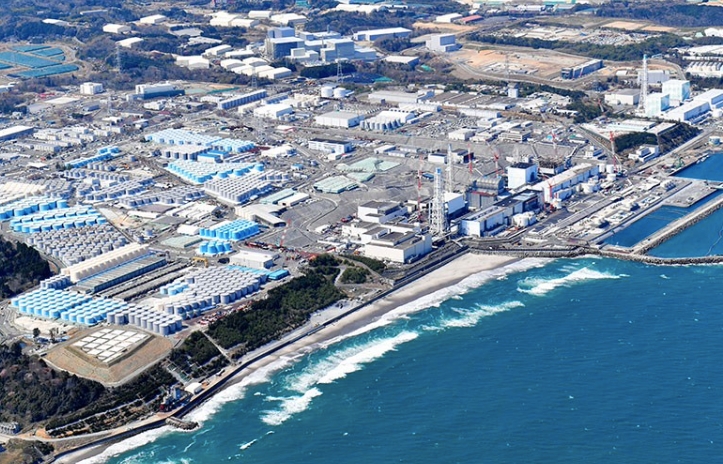
According to reports, the release of more than a million tonnes of water, which has been filtered to reduce radioactivity, could start in 2023.
We reiterate the observation by Secretary-General Henry Puna: “Our ultimate goal is to safeguard the Blue Pacific – our ocean, our environment, and our peoples- from any further nuclear contamination. This is the legacy we must leave for our children”.
Pollution of our ocean, and especially radioactive pollution, is unacceptable and contravenes international and regional agreements including the London Convention on the Prevention of Marine Pollution by Dumping of Wastes and Other Matter, and the South Pacific Nuclear-Free Zone Treaty of Rarotonga.
A principal objective of the London Convention is to protect the marine environment from pollution, including man-made radioactivity. Under the Treaty of Rarotonga, States Parties are obligated to prevent the stationing of any nuclear explosive device; to prevent the testing of any nuclear explosive device; not to dump radioactive wastes and other radioactive matter at sea, anywhere within the South Pacific Nuclear Free Zone, and to prevent the dumping of radioactive wastes and other radioactive matter by anyone in the territorial sea of the States Parties.
We see many strong reasons to oppose the discharge of Fukushima wastewater into the Pacific Ocean. The climate and biodiversity emergencies we currently face are already presenting severe threats to our waters, and so a decision by any government to deliberately contaminate the Pacific with radioactivity because it is the most cost-effective option seems perverse.
Japan has failed to consult with affected coastal countries, especially northern the Pacific Island States and no environmental impact assessment has been conducted. Furthermore, Japan has obligations not to allow pollution from their own waters to pollute international waters or the waters of other countries. When Pacific Islands Forum Leaders met with Japanese Prime Minister Yoshihide at the 9th PALM Meeting in July 2021, they highlighted the priority of ‘ensuring international consultation, international law, and independent and verifiable scientific assessments with regards to Japan’s announcement’.
We feel this constitutes a disregard for the human rights of both Japanese citizens, as well as those in the wider Asia Pacific region, including indigenous peoples, and it is justifiably being challenged, not least by UN Human Rights Special Rapporteurs.
Japan is under an international legal obligation to take all measures possible to avoid transboundary pollution from radioactivity, and develop alternatives to dumping in the Pacific by continued storage and treating the water to remove radioactive, including carbon- 14 and tritium.
We observe that the International Atomic Energy Agency has stated that the discharges will be done safely and in line with international practice. It continues to play the same historical role as set down in its 1957 statute of supporting and promoting the interests of the nuclear industry, not protecting the environment or public health. Radioactivity discharged from a pipeline poses potentially a greater coastal threat to the marine environment than deep-sea dumping from a ship.
We welcome the recent appointment of an independent panel of global experts2 on nuclear issues to support Pacific nations. Their technical advice, based on scientific evidence, will help inform consultations with Japan over its intentions to discharge treated nuclear wastewater.
This story was originally published at Pacific Elders’ Voice on 30 March 2022, reposted via PACNEWS.
No Fukushima Nuclear Discharge: Pacific Elders Voice statement
11 years on, Fukushima radioactive waste still tough challenge for Japan
TOKYO, March 11 (Xinhua) — Eleven years after the quake-induced Fukushima disaster, the aftermath of the nuclear meltdown, not least a large amount of contaminated water, remains a grave challenge for Japan as well as for the rest of the world.
On March 11, 2011, a magnitude-9.0 earthquake struck off the coast of Fukushima Prefecture in Japan. An earthquake-triggered tsunami engulfed the Fukushima Daiichi Nuclear Power Plant, causing core meltdowns in units one to three and leading to the worst nuclear crisis since Chernobyl.
Little progress has been made over the past year on the most pivotal and hardest work of decommissioning the Fukushima Daiichi power plant — how to remove the nuclear residue from the meltdown. Japan’s International Research Institute for Nuclear Decommissioning estimated that the total weight of nuclear waste mix from melted fuel rods and other materials in pressure vessels that melted during the accident could be 880 tons.
Since the end of 2011, No. 1 to No. 3 units have been in a stable state of low temperature cooling, but the internal radiation is still very high, making it difficult for personnel to work in close proximity. Relevant work has to rely on remote tools such as remotely controlled robots and mechanical arms, but not a single piece of nuclear residue has been removed so far. The Tokyo Electric Power Company (TEPCO) said it plans to first try to remove the nuclear residue from unit 2 this year.
Hiroaki Koide, a retired researcher at Kyoto University, said the Japanese government and TEPCO’s 30-40 year “roadmap” for decommissioning the reactors was an “illusion” that could not be achieved because it would be “impossible even in 100 years” to remove the large amount of scattered nuclear debris, which would have to be sealed in a “sarcophagus.”
In April last year, the Japanese government officially decided to discharge the nuclear contaminated water into the sea starting in the spring of 2023. The contaminated water at the Fukushima Daiichi Nuclear Power Plant contains radioactive cesium, strontium, tritium and other radioactive substances.
The Japanese government and TEPCO said the Advanced Liquid Processing System (ALPS), a multi-nuclide removal system, can remove 62 radioactive substances except tritium, which is difficult to remove from water.
Japanese fishing groups strongly oppose the plan to discharge contaminated water into the sea. Opposition parties, including the Constitutional Democratic Party of Japan, also criticized the Japanese government’s plan and demanded its withdrawal.
About 60 percent of the 42 mayors in the disaster-stricken Fukushima, Miyagi and Iwate prefectures opposed the decision. The Japan Federation of Bar Associations submitted a statement opposing the plan to Japanese Prime Minister Fumio Kishida and others, urging the government to consider other measures, such as mixing contaminated water with cement and sand.
At the invitation of Japan, an investigation team of the International Atomic Energy Agency (IAEA) visited Japan on Feb. 14-18 to complete its first field investigation.
Lydie Evrard, deputy director general of the IAEA, said Japan had studied several options for treating the contaminated water, but ultimately chose the option of discharging it into the sea, and the Japanese government invited the IAEA to conduct a safety review, hoping that the agency would give basic policy support to the treatment plan. What she pointed out was that it was up to the host country to decide how to deal with the contaminated water, and that the agency provides only technical assessments, not options.
China is seriously concerned about and firmly opposes Japan’s unilateral decision to discharge the nuclear-contaminated water into the sea and its proceeding with the preparatory work, Chinese Foreign Ministry Spokesperson Zhao Lijian has said.
He stressed that the handling of the nuclear-contaminated water from Fukushima is never Japan’s private matter. Instead, it bears on the marine environment and public health of the whole world.
Japan should heed and respond to the appeals of neighboring countries and the international community, and rescind the wrong decision of dumping the water into the sea. “It mustn’t wantonly start the ocean discharge before reaching consensus with stakeholders and relevant international institutions through full consultations,” Zhao said.
http://www.xinhuanet.com/english/asiapacific/20220312/cb7ee148bd8c4a9cb4f21a16f43d57fc/c.html
Fukushima spill plan goes ahead despite local opposition

March 10, 2022
By Antonio Hermosin Gandul
Tokyo, March 10 (EFE).- Japanese authorities continued with their plan to dump contaminated and processed water from the Fukushima nuclear power plant into the Pacific Ocean in 2023, despite the rejection of local communities suffering the consequences of the nuclear disaster 11 years on.
The Fukushima Daiichi plant, damaged by the March 2011 earthquake and tsunami, faces an uncertain dismantling process that will last beyond 2050, and in which the growing accumulation of radioactive water is the most urgent problem due to sort out.
TEPCO, the plant operator, and the Japanese government approved in April a plan to pour thousands of tons of water into the Pacific Ocean from 2023 after being treated. It’s a measure supervised by the International Atomic Energy Agency that has generated strong opposition from local fishermen’s groups and environmental organizations.
Fukushima Daiichi faces a long list of unprecedented challenges in the history of nuclear energy, among which the removal of highly radioactive fuels from the reactors stands out, or the storage of these and other residues that represent a great risk to human health and the environment.
The most pressing of these headaches is what to do with the water contaminated with radioactive waste after it is used to cool reactors or leak into nuclear facilities, of which some 1.29 million cubic meters are accumulated in drums inside atomic facilities where space has run out.
After analyzing with a scientific panel a series of possible solutions of enormous technical complexity, including methods of evaporation or underground injection, authorities and TEPCO opted to dump all the water into the sea in front of the plant after decontaminating it.
The operator said the water will not represent any danger to human health or the environment, since its level of radioactivity will be “well below” the limits established by both Japan and the World Health Organization.
The water is subjected to a succession of filters that eliminate all radioactive materials considered dangerous with the exception of tritium, an isotope present in nature, although in low concentration.When diluted in seawater, this would generate ‘negligible’ levels of radiation, according to TEPCO and Japan’s government. EFE
Radioactive waste from contaminated water treatment, cleanup postponed. What we saw at the storage site of the Fukushima Daiichi Nuclear Power Plant

March 11, 2022
The contaminated water containing high concentrations of radioactive materials that continues to be generated at TEPCO’s Fukushima Daiichi Nuclear Power Plant (Okuma and Futaba towns, Fukushima Prefecture) is creating contaminated waste in the process of treatment and storage. On April 2, this paper’s team entered the plant premises and visited the storage site. TEPCO and the government plan to discharge the contaminated water into the ocean in the spring of 2023, but the cleanup of the massive amount of radioactive waste has been postponed. (Kenta Onozawa)
◆Enriched liquid waste “To be honest, there is no concrete plan.
We honestly don’t have a concrete plan for how to dispose of the waste,” said a TEPCO spokesperson with a pained expression on his face in a corner of the vast tank area on the west side of Units 1 through 4. In front of us, a covered shed surrounded by concrete walls. A horizontal light blue tank could be seen through a gap in the wall. The dosimeter he had brought with him read around 0.5 microsieverts per hour in the tank area, but the reading jumped to 4 microsieverts per hour near the hut.
The contents of the tank, which emitted intense radiation through the 20-centimeter-thick concrete, were “concentrated liquid waste” generated immediately after the accident. It is the precipitate from the process of desalinating highly contaminated water, which contained salt from the tsunami, and reusing it to cool the nuclear reactors.
The muddy condition makes it difficult to treat, and the high radiation dose makes it inaccessible; when Fukushima Prefecture checked the site in January 2008, the maximum radiation dose inside the wall was 800 microsieverts per hour. This is the annual exposure limit for an average person after spending one hour and 20 minutes at the site.
There are 200 cubic meters of muddy liquid waste and 9,000 tons of supernatant water. The contaminated water treatment process has stabilized and will not increase any further. TEPCO plans to begin experimental treatment in FY2011, but has not even begun to verify the method.
◆Contaminated plastic in “untouchable” reservoirs
To the north of the shed, there is a clearing that rises up like a ring, where the underground reservoir that caused the contaminated water leak in 2001 is buried.
At the time, the storage of contaminated water was on a tightrope. TEPCO, under pressure, dug a hole where a tank could not be built directly under the power lines, covered it with a water shield sheet, and filled it with a total of 24,000 tons of contaminated water, which mainly contained radioactive strontium. However, the water leaked underground and could no longer be used.
Although the contaminated water has been drained out, the plastic materials that were placed in the pond as reinforcement remain heavily contaminated. Standing on the pond, the dosimeter quickly read 3 microsieverts per hour. The spokesperson said in a low voice, “I think we could have removed the contaminated water if we had filled it with purified water, but now that we have filled it with contaminated water, it’s hard to do anything about it.
◆Waste continues to accumulate
The treated water that is planned to be discharged into the ocean is water that has been purified by a multinuclide removal system (ALPS). The treatment process also generates muddy waste, which is stored in a polyethylene container (1.5 meters in diameter, 1.8 meters high, and about 1 centimeter thick) called an HIC.
In the storage area on the south side of the site, the top of the HIC was visible inside the concrete wall. Some of the HICs containing high-dose sludge have already exceeded their useful life, and the number of such HICs will reach 87 at the end of FY2010. There are fears that they may break due to deterioration, and they are under pressure to be transferred to new containers. However, it has taken time to set up measures to protect the workers from radiation exposure, and the replacement of the heavily contaminated containers only began on February 22.
Once the discharge of treated water into the ocean begins, the number of storage tanks, which number approximately 1,000, will gradually decrease. However, there is no plan to eliminate the generation of contaminated water, and the purification process will continue. In the meantime, waste from the treatment process will continue to accumulate, so it is unacceptable to postpone the consideration of a long-term management method.
https://www.tokyo-np.co.jp/article/164886?fbclid=IwAR3Gl8NO1JrwlhjZZdt3dSPjvmgjFUN22ctU96eQF0YstNai6HJsdmgHIWM
1 This Month

of the week – Shut Down Drone Warfare!


Tell the Ukrainian Government to Drop Prosecution of Peace Activist Yurii Sheliazhenko

Petition to revoke the licensing of the Near Surface Nuclear Disposal Facility (NSDF) at Chalk River. https://www.ourcommons.ca/petitions/en/Petition/Details?Petition=e-7247
To see nuclear-related stories in greater depth and intensity – go to https://nuclearinformation.wordpress.com
-
Archives
- March 2026 (251)
- February 2026 (268)
- January 2026 (308)
- December 2025 (358)
- November 2025 (359)
- October 2025 (376)
- September 2025 (257)
- August 2025 (319)
- July 2025 (230)
- June 2025 (348)
- May 2025 (261)
- April 2025 (305)
-
Categories
- 1
- 1 NUCLEAR ISSUES
- business and costs
- climate change
- culture and arts
- ENERGY
- environment
- health
- history
- indigenous issues
- Legal
- marketing of nuclear
- media
- opposition to nuclear
- PERSONAL STORIES
- politics
- politics international
- Religion and ethics
- safety
- secrets,lies and civil liberties
- spinbuster
- technology
- Uranium
- wastes
- weapons and war
- Women
- 2 WORLD
- ACTION
- AFRICA
- Atrocities
- AUSTRALIA
- Christina's notes
- Christina's themes
- culture and arts
- Events
- Fuk 2022
- Fuk 2023
- Fukushima 2017
- Fukushima 2018
- fukushima 2019
- Fukushima 2020
- Fukushima 2021
- general
- global warming
- Humour (God we need it)
- Nuclear
- RARE EARTHS
- Reference
- resources – print
- Resources -audiovicual
- Weekly Newsletter
- World
- World Nuclear
- YouTube
-
RSS
Entries RSS
Comments RSS
 nuclear-news