South Korea Weary of Japan’s Plans to Dump Fukushima Daiichi Radioactive Water into the Pacific

Japan to resume effort to tackle contaminated water problem at Fukushima
Is Fukushima Daiichi’s Continuous Stream of Contaminated Radioactive Water in the Kuroshio Current Causing Strange Disjuncture Between Warming Water and Land Temperatures in Alaska and Bering Sea

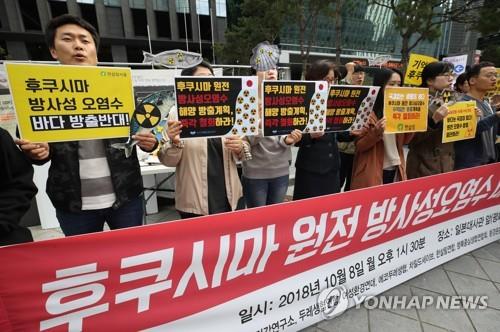
S. Korean activists demand Japan not dump Fukushima’s radioactive water into the sea
Fukushima fishermen fight release of tainted water as tritium standoff continues

On Feb. 25, against a clear sky, fishing boats bearing colorful banners used to signal a rich haul returned to their home port of Ukedo in the town of Namie, Fukushima Prefecture. Cheers erupted as the boats, which had taken refuge in Minamisoma in the wake of the 2011 Great East Japan Earthquake and the nuclear crisis, made their way home for the first time in six years.
The Soma-Futaba fishing cooperative will soon resume fishing for konago (young lancefish), after the heads of fishing co-ops in the prefecture approved the start of experimental fishing operations 10 to 20 km from the meltdown-hit Fukushima No. 1 power plant, run by Tokyo Electric Power Co. Holdings Inc.
Despite the steady recovery moves, however, local fishermen are not optimistic because their industry still faces “concern” that radioactive fish could tarnish their reputation.
Fukushima No. 1 currently has 950,000 tons of radioactive water in storage that has been desalinated and filtered to remove some of the radioactive elements, but the volume is increasing at a pace of 150,000 tons a year.
Of the 950,000 tons, 750,000 were further treated with the Advanced Liquid Processing System, to remove most of the remaining isotopes. But even ALPS cannot remove tritium, and this has the fishing industry concerned that water tainted with tritium could ultimately be released into the ocean.
The debate over what to do about the tainted water has turned into a standoff. The central government set up a committee in September to discuss disposal and studied five options, including ocean release, underground burial and air release. But the committee could not agree on any of them because all had the potential to damage the reputation of Fukushima’s seafood.
Hiroshige Seko, head of the Ministry of Economy, Trade and Industry has jurisdiction over the issue but appears reluctant to bring the debate to a rapid conclusion.
“We have not decided on the schedule, including when to conclude (the debate),” he said in a recent interview with the Fukushima Minpo.
Tritium is a common byproduct of normal nuclear power plant operations. Its release into the ocean is permitted worldwide as long as the concentration doesn’t exceed certain levels. In Japan, the legal threshold for tritium release is 60,000 becquerels per 1 liter.
Shunichi Tanaka, chairman of the Nuclear Regulation Authority, has said “there is no solution than ocean release” for the tritium generated at Fukushima No. 1, noting that if the concentration is within legal limits, the government should go ahead with the release. Officials at related international institutions have expressed similar views.
But the prefectural association of fishing cooperatives remains opposed, worried that an ocean release could further damage the image of Fukushima’s fish and seafood.
A fisherman from Onahama in the city of Iwaki said, “The move could lead to a loss of trust in the prefecture’s seafood, which the fishermen have worked hard to build.”
On the other hand, if the disposal debate goes unresolved, the amount of tainted water at Fukushima No. 1 will continue to rise and delay the decommissioning of the plant.
Tepco has said it “will decide (on the fate of the water) in a responsible manner by watching the government debate and weighing the opinions of local residents.”
The fishery industry is watching how the central government balances the two jobs of revitalizing the industry and handling tritium-tainted water — and how it can thoroughly explain the decision in ways people both in Japan and abroad can understand, without leaving it entirely up to Tepco.

Fukushima Untreated Bypass Groundwater Dumped into the sea

Up to October 14, 2016, Tepco has discarded 137 times Fukushima Daiichi untreated groundwater from the bypass into the sea, all totalling now 222,816 tons (58,861,760 gallons).
That not including the 300+ tons a day of untreated groundwater flowing through the plant and into the ocean 24/7 for 5.6 years now.
http://www.tepco.co.jp/nu/fukushima-np/info/baypassold-j.html
How Can Japan Settle The Issue Of Fukushima Daiichi Tritium? Drink It.

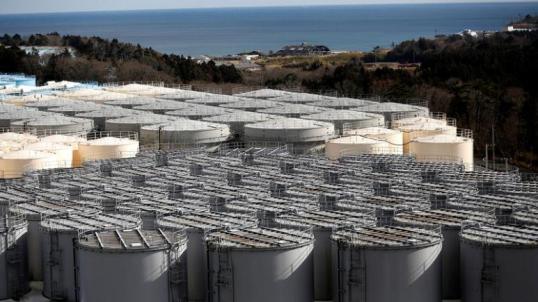
Water tanks crowding the Fukushima Daichi nuclear plant site
Here’s the problem in a nutshell—or rather a thimbleful—facing the Japanese government and Tokyo Electric Power Company (TEPCO), the operator of the crippled Fukushima Daiichi nuclear plant.
There are over 1,100 large steel tanks brimming with filtered water—except for a low contaminant called tritium—clogging both the plant and an expanding area outside the site.
The water is a mix of tons of groundwater flowing into the plant’s basements and tons of contaminated water that have become radiated after draining down there through the three damaged reactors the water was injected into to keep the melted uranium cores cool. This lethal liquid mix is pumped out the basements and decontaminated before it overflows and seeps into the sea; some of it is recycled back as coolant into the reactors while the rest is pumped into the storage tanks.
This process continues hour after hour, day after day, year after year: a cunningly worthy punishment of the gods for the latter-day Sisyphus, TEPCO. Consequently, every week or two a new tank-full of treated water is added to the forest of steel now covering the area like giant alien mushrooms. The total amount of stored water exceeds 800,000 cubic tons and is inexorably heading for one million tons and more without an end in site.
The cost is enormous, and picking up the tab is the Japanese taxpayer—not TEPCO, which is undergoing a ten-year reconstruction since a government bail out saved it from bankruptcy.
So the million-ton-plus dilemma for the government has boiled down to three options: keep on with the endless and expensive tank building and filling; find a way to remove the tritium from the water; or have TEPCO discharge (dump) the water into the ocean.
The latter option is by far the easiest and least expensive method, except that the water is tritiated: that is the water has become radioactive.
Without context, that’s a scary word, until you remember that sunbathing and eating bananas are pleasant radioactive pastimes. The point being that the energy tritium gives off is so low as to be unmeasurable with a dosimeter. And the particles (not rays) tritium expels can be stopped by plastic wrap—as Shunichi Tanaka, head of Japan’s Nuclear Regulatory Authority, told the press recently.
That’s a fact, but it’s not the point, say environmentalist foes of the dumping method. Ingesting tritium is a concern for health they argue. And they have experts to back up such concerns, though they are mostly theoretical. Meanwhile, there are experts on the other side of the debate pooh-poohing such worries and asking to see some solid proof to back up the theory.
Conclusion: Those supportive of nuclear power tend to minimize the health risks of tritium, while those opposing the use of nuclear power tend to exaggerate its risks.
What is not debatable is the negative psychological impact releasing the water into the sea will have on Japan’s nervous neighbors, the suffering people of the northeast, the region’s fishing industry and the Japanese electorate.
Given such concerns and uncertainties, organizations like Greenpeace urge the government to err on the side of caution. The best option, says Greenpeace, is to continue storing the water while exploring all technical options for tritium separation.
On the face of it, that seems reasonable. But then experts opposing this stance, like Lake Barrett, a nuclear industry consultant advising TEPCO, point out that while it may be possible to create a method of separating the tritium, it hasn’t been found yet, despite much effort; and it would likely cost a couple of billion dollars to develop and perfect in any case. It’s no surprise that TEPCO and the government have reached the same conclusion.
“All that money could be better spent on schools, hospitals,” Barrett told me. “And you can’t go on building tanks forever.”
Besides, he adds, “The very low levels of tritium in the stored water are not a meaningful health risk. After verification that the radioactivity levels are within conservative Japanese health risks, I would not hesitate to drink it, bathe in it, or eat fish or shellfish harvested from it.”
Now there’s an idea. If the government is to discharge the tritiated water into the ocean without turning a large portion of the electorate against it, it needs to persuade a majority of citizens that it is safe within reason to do so. This will require a number of carefully thought out steps.
The government will have to clearly explain the pros and cons of its action and the reason for its decision; it must establish a mechanism to compensate the fisherman for the shortfall they will undergo following the release; an international panel of independent, knowledgeable people, including environmentalists of the non-hysterical variety, is required to verify the tritiated water does indeed fall well below internationally accepted standards for release; and the panel members must be granted access to monitor the process at any time they wish.
Then for the coup de grâce, Prime Minister Abe, his cabinet members along with TEPCO executives should visit Fukushima Daiichi, and while standing in front of one the giant tanks each drink a glass of the tritiated water. This won’t sway everyone, of course, but it would give the government the minimum moral authority required to make such a contentious decision.
Fukushima Daiichi drainage system enters operation
The flow of groundwater into the reactor buildings and port area of the damaged Fukushima Daiichi nuclear power plant in Japan should be significantly reduced with the start of use of a new system to pump, treat, test and discharge the water.

The subdrain system is a group of 41 wells installed in the vicinity of the reactor and turbine buildings. Pumped up by the subdrain, the amount of groundwater flowing into the buildings is expected to be significantly reduced. The groundwater flowing into the port area is held back by the coastal impermeable wall and pumped up by another group of wells, the groundwater drain system, installed in the bank protection area.
Tokyo Electric Power Company (Tepco) announced the first pumping up of groundwater by 20 of the wells in the subdrain system had begun at 10.00am today.
The collected groundwater will be temporarily stored to check its quality and then discharged into the port area, with thorough treatment processes.
Tepco said it expects the water pumped up by the subdrain and groundwater drain to be slightly more contaminated than water from the existing groundwater bypass (which intercepts water on the land side of the reactor buildings). However, it said the water will be treated to meet the more stringent quality standards for the subdrain and groundwater drain than for the groundwater bypass. The company noted the water would also be monitored more frequently to verify its quality for discharge.
Once the subdrain and groundwater drain systems are found to be operating stably, the opening that was left in the seaside impermeable wall will be closed to prevent groundwater flowing into the port area, Tepco said. The subdrain and groundwater drain will then work to keep groundwater from accumulating behind the impermeable wall.
Tepco estimates the subdrain will reduce the flow of groundwater into the reactor buildings to 150 cubic meters per day from the current 300 cubic meters. In the longer term, the company said the pumping systems and seaside wall are expected to be joined with the land side impermeable wall (frozen soil wall) currently under construction, “creating a wall around the reactor buildings and further reducing the intrusion of groundwater”.
Tepco sought the approval of prefectural and national fishermen’s associations for use of the system.
Tepco’s chief decommissioning officer Naohiro Masuda said, “The activation of the subdrain system is a major milestone in redirecting fresh water from contaminated area. It also enables the seaside impermeable wall to be closed to further prevent any leakage of contaminated water.”
Source: World Nuclear News
http://www.world-nuclear-news.org/RS-Fukushima-Daiichi-drainage-system-enters-operation-0309155.html
TEPCO pumps up groundwater for release into sea
The operator of the Fukushima Daiichi nuclear plant has begun pumping up groundwater from around reactor buildings with the aim of releasing it into the sea.
Tokyo Electric Power Company, or TEPCO, hopes the move will slow the accumulation of radioactive wastewater in the buildings, which is building up at a rate of 300 tons a day due to the inflow of groundwater.
The utility will target groundwater from wells dug around the No.1 through No.4 reactor buildings. It plans to filter out much of the radioactive material before releasing the water into the ocean.
Workers on Thursday began pumping up groundwater from 20 wells. They plan to remove 200 tons through the afternoon and store it in special tanks.
TEPCO has yet to reach an agreement with local authorities and fishermen about when to release the decontaminated water, but it will likely be later this month.
The utility claims the drainage will cut the amount of wastewater in the reactor buildings by about half.
But local authorities and fishermen worry about what could happen to the environment if something goes wrong.
http://www3.nhk.or.jp/nhkworld/english/news/20150903_17.html
1 This Month

of the week – Shut Down Drone Warfare!


Tell the Ukrainian Government to Drop Prosecution of Peace Activist Yurii Sheliazhenko

Petition to revoke the licensing of the Near Surface Nuclear Disposal Facility (NSDF) at Chalk River. https://www.ourcommons.ca/petitions/en/Petition/Details?Petition=e-7247
To see nuclear-related stories in greater depth and intensity – go to https://nuclearinformation.wordpress.com
-
Archives
- April 2026 (19)
- March 2026 (251)
- February 2026 (268)
- January 2026 (308)
- December 2025 (358)
- November 2025 (359)
- October 2025 (376)
- September 2025 (257)
- August 2025 (319)
- July 2025 (230)
- June 2025 (348)
- May 2025 (261)
-
Categories
- 1
- 1 NUCLEAR ISSUES
- business and costs
- climate change
- culture and arts
- ENERGY
- environment
- health
- history
- indigenous issues
- Legal
- marketing of nuclear
- media
- opposition to nuclear
- PERSONAL STORIES
- politics
- politics international
- Religion and ethics
- safety
- secrets,lies and civil liberties
- spinbuster
- technology
- Uranium
- wastes
- weapons and war
- Women
- 2 WORLD
- ACTION
- AFRICA
- Atrocities
- AUSTRALIA
- Christina's notes
- Christina's themes
- culture and arts
- Events
- Fuk 2022
- Fuk 2023
- Fukushima 2017
- Fukushima 2018
- fukushima 2019
- Fukushima 2020
- Fukushima 2021
- general
- global warming
- Humour (God we need it)
- Nuclear
- RARE EARTHS
- Reference
- resources – print
- Resources -audiovicual
- Weekly Newsletter
- World
- World Nuclear
- YouTube
-
RSS
Entries RSS
Comments RSS
 nuclear-news