Korea brings up Fukushima’s radioactive water disposal issue at WHO

South Korea Brings Fukushima Radioactive Water Sea Dumping Issue at International London Convention and Protocol of Marine Pollution
S. Korea raises issue of Fukushima’s contaminated water dump to international convention
Japan says it will keep international community updated on progress
 Song Myeong-dal, the Ministry of Oceans and Fisheries ocean environment policy officer, represents South Korea during a consultative meeting of contracted parties to the London Convention and London Protocol on Oct. 7.
Oct.11,2019
The South Korean Ministry of Oceans and Fisheries (MOF) raised the danger of Japan’s ocean dump of contaminated water from the Fukushima Nuclear Power Plant as an international issue at a meeting in London concerning an international convention. Japan responded by saying it would keep the international community informed of the progress on an ongoing basis. The developments suggest South Korea was successful in raising international interest in and concern about Japan’s irresponsible approach to the disposal of contaminated water from Fukushima.
On Oct. 10, the MOF reported that the day before, representatives had attended a consultative meeting of contracted parties to the London Convention and Protocol on the Prevention of Marine Pollution by Dumping of Wastes and Other Matter – which opened in London on Oct. 7 – to express concerns to Japan concerning the handling of the contaminated water from Fukushima and request ongoing interest in the issue at the consultative meeting level. The meeting was attended by representatives of 47 contracted parties, as well as international organizations such as the OECD and NGOs including Greenpeace.
“The Japanese government has recently talked several times about the ‘unavoidability’ of an ocean dump as a way of dealing with contaminated water from the Fukushima Nuclear Power Plant,” Song Myeong-dal, MOF ocean environment policy officer and senior South Korean representative at the meeting, said on Oct. 9.
“If [Japan] does release contaminated water from the plant into the ocean, this could have an impact on the global oceanic environment and be in violation of the aims of the London Protocol,” Song warned. Article 2 of the London Convention and Protocol states that contracting parties “shall individually and collectively protect and preserve the marine environment from all sources of pollution and take effective measures [. . . ] to prevent, reduce and where practicable eliminate pollution caused by dumping or incineration at sea of wastes or other matter.”
Song stressed that the Japanese government “needs to be transparent about its means of handling contaminated nuclear power plant water, adequately communicating and discussing important matters such as its handling methods and schedule with neighboring countries and the international community in the future and deciding on a safe and rational approach.”
“In order to find a method of contaminated nuclear power plant water handling that the international community can be confident is safe, I think this matter should be discussed on an ongoing basis by the consultative meeting of contracted parties to the London Convention and Protocol ,” he suggested.
 A consultative meeting of contracted parties to the London Convention and London Protocol on Oct. 7.
In response, a representative of the Japanese government reiterated the position that the matter was “not something to be discussed by the consultative meeting,” adding that there had been “no decision within the Japanese government on how to handle the contaminated nuclear power plant water” and that the international community would be “kept informed about the process.” The representative also presented information on the water’s handling that was previously shared in September with locally stationed diplomats in Japan.
Greenpeace expresses similar concern about ocean dump
The issue of contaminated water had not previously been discussed within the context of the London Protocol at past consultative meetings since the Fukushima Nuclear Power Plant disaster. In addition to South Korea, representatives from China and Chile also expressed concerns at the latest meeting over the possibility of Japan dumping the contaminated water into the sea and suggested that the issue would be the focus of ongoing discussions at the meeting.
The NGO Greenpeace similarly shared concerns about the possibility of an ocean dump in a document at the meeting containing “concerns and questions about the Fukushima Nuclear Power Plant contaminated water release plan.” Contending that the Japanese system for handling contaminated nuclear power plant water is “inefficient,” it proposed that the international community work together on finding a solution.
During a Compliance Group meeting held ahead of the consultative meeting on Oct. 3–4, the South Korean representative strongly emphasized the need to review the ocean release of radioactive waste matter within the context of the London Protocol, insisting that Japan should not be allowed to make a unilateral decision on whether to proceed with the dumping of contaminated nuclear power plant water into the ocean. The Compliance Group meeting was established to discuss whether contracted parties to the protocol are complying with their obligations.
“In bilateral meetings with major countries and through issues raised in the Compliance Group setting, the South Korean government rallied support for the position that this matter should be addressed at the consultative meeting,” said Song Myeong-dal.
“We will continue to make such requests at this meeting and other international meetings going forward so that the Japanese government can find an approach that we can be confident is safe,” he pledged.
http://www.hani.co.kr/arti/english_edition/e_international/912889.html
South Korea Brings Fukushima Wastewater Issue to London Convention Meeting
October 11, 2019
The South Korean Ministry of Oceans and Fisheries (MOF) raised the danger of Japan’s contaminated water from the Fukushima Nuclear Power Plant as an international issue at a meeting to the London Convention.
South Korea’s Ministry of Oceans and Fisheries (MOF) deemed the danger of Japan’s contaminated water from the Fukushima Nuclear Power Plant as an international issue at a meeting to the London Convention.
The London Convention controls pollution of the seas and oceans by dumping and covers the deliberate disposal of wastes and other matter into the world’s waters, according to the U.S. EPA. The discharged water will have a direct influence on the marine life and ecosystem in its territorial waters and eventually the people in Korea, according to the Korea Times.
As of Aug. 22, approximately 1.1 million tons of contaminated water is being stored in 977 tanks at the decommissioned power plant in Fukushima, which was destroyed by the 2011 earthquake and ensuing tsunami.
The Japanese government said recently it will only build more facilities through 2020, which will bring the total stored volume to 1.37 million tons, according to Science Page News. The storage facilities are projected to be filled by August 2020, which suggests that there will be no more tanks to hold the 170 tons of radiation-contaminated water created daily.
“If [Japan] does release contaminated water from the plant into the ocean, this could have an impact on the global oceanic environment and be in violation of the aims of the London Protocol,” said Song Myeong-dal, MOF ocean environment policy officer and senior South Korean representative. “In order to find a method of contaminated nuclear power plant water handling that the international community can be confident is safe, I think this matter should be discussed on an ongoing basis by the consultative meeting of contracted parties to the London Convention and Protocol.”
In response, a representative of the Japanese government said that the matter was not something to be discussed by the consultative meeting and that the international community would be kept informed about the process, reported the Hankyoreh.
“There is another option to deal with radioactive water. Japan can keep it in the tanks until the radiation level becomes low enough. But this takes time and money. It will take about 300 years until it is okay to discharge the water,” said Kim Ik-jung, a former medical professor and member of the Nuclear Safety and Security Commission to the Korea Times.
South Korea plans to continue to raise the wastewater issue to the international community until Japan comes up with a safe and acceptable solution, according to the Hankyoreh.
S. Korea raises worries over Fukushima waste water at global maritime conference

Japanese Report Confirms Hazardous Radioactive Materials Contained in Contaminated Fukushima Water

Seoul-Tokyo feud deepens over radioactive water

South Korea inspects ships traveling from Fukushima for radiation

Japanese citizens nationwide opposed to Pacific Ocean discharge of Fukushima radioactive water support storage and processing – new opinion poll

October 1, 2019, Tokyo… Nearly four times as many Japanese citizens oppose the discharge of highly contaminated water from the Fukushima Daiichi nuclear plant into the Pacific Ocean than support it, according to a Greenpeace commissioned poll
.(1) The polling of 3000 citizens in Fukushima and Niigata prefecture, as well as wider Japan, showed most expressed their support for storage of over 1 million tons of water rather than release to the Pacific Ocean. Only a small percentage approve of Government plans for discharge. Greenpeace commissioned Rakuten Insight, a pioneer in Japanese online market research to conduct the poll which was conducted between 19-24 September 2019.
The results show some slight variation in opinion between those in Fukushima and those in Niigata and wider Japan. Averaging of the poll revealed that 48.6% oppose marine discharge and 12.9% approve. In Fukushima, 15.9% approve of discharge, while 43.3% oppose. Of those who oppose discharge, nationwide 51% stated that their principal concerns were that discharging will have a negative impact, not just in Fukushima and wider Japan, but also internationally. In Fukushima, 52.9% think it will have a negative effect on Fukushima fisheries.
“We deliberately set out to try and understand the level of understanding Japanese citizens have, what they were thinking and why. They show only a small percentage approve of discharging to the Pacific ocean, and by a wider margin, most oppose. The strongest opposition comes from Niigata citizens and wider Japan. One clear message they send to the Abe government is that the opposition to discharge is not limited to Fukushima fisheries (2) and Fukushima prefecture but is nationwide. Most of those polled who are opposed to discharge show both a concern for the international impacts in the Asia/Pacific region any discharge would have and also the impact it would have on Fukushima fisheries,” said Shaun Burnie, senior nuclear specialist with Greenpeace Germany (Tokyo).
A Greenpeace report (3) in January 2019 showed that METI in 2016 deliberately excluded the option to store and process the contaminated water to remove radioactive tritium, despite receiving technical submissions from U.S. nuclear companies, and the U.S. Department of Energy. The myth promoted by the Government and TEPCO ever since is that tritium removal is not possible. The Greenpeace report also provided analysis on the failure of the ALPS processing systems, which means that over 800,000 tons of contaminated water contains dangerous radionuclides such as Strontium-90, tens to thousands of times above regulatory limits. TEPCO has committed to processing this water – but doubts remain as to how effective this will be.
As the Fukushima nuclear disaster has shown, ocean currents will disperse any future radioactive materials released not only into the Pacific, but also the East China Sea, Sea of Japan/East Sea.(4) In recent weeks, the Japanese government plans for discharge have been challenged by the South Korean government at the International Atomic Energy Agency (IAEA), while Greenpeace addressed the issue to diplomats attending the United Nations Human Rights Council in Geneva given Japan’s obligation to prevent citizens from exposure to harmful radioactivity. The issue will also be debated at the International Maritime Organization meeting of parties to the London Convention and London Protocol which opens on 7th October in London.
“The people of Japan are sending a message to the government that they will not accept deliberate radioactive pollution of the marine environment. As the polling shows, the Japanese people are concerned about the international impact of any discharge. This was never just a domestic issue. The international focus on TEPCO’s water crisis is only going to escalate in the coming months – and the Abe government has the means to end this by making the only justifiable decision – commit to no discharge and instead decide on long term storage and processing,” said Burnie.
Greenpeace commissioned the poll to include the views of 1000 Niigata citizens as they are under direct threat, including from marine contamination, from any restart of TEPCO’s Kashiwazaki Kariwa nuclear plant. TEPCO is seeking the restart of reactors 6&7, despite the existence of major seismic fault lines both adjacent and through the site. The nuclear plant is TEPCO’s last hope of remaining a nuclear plant operator.
Notes:
1 – Greenpeace commissioned Rakuten Insight is a member of the JMRA (Japan Marketing Research AssociationJapan Marketing Research Association) and the ESOMAR (Europe Society Opinion and Market Research Association); poll results (in Japanese) – https://storage.googleapis.com/planet4-japan-stateless/2019/09/b3d20ee4-%E6%B1%9A%E6%9F%93%E6%B0%B4%E6%84%8F%E8%AD%98%E8%AA%BF%E6%9F%BB%E7%B5%90%E6%9E%9C.pdf
2 – Fukushima fishermen concerned for future over release of radioactive water, Justin McCurry The Guardian, 16 September 2019, see https://www.theguardian.com/environment/2019/sep/16/fukushima-fisherman-fear-for-future-over-release-of-radioactive-water
3 – Greenpeace Germany, “TEPCO Water Crisis”, 22 January 2019, Shaun Burnie, see https://storage.googleapis.com/planet4-japan-stateless/2019/06/eef0f147-tepco_water_crisis.pdf
4 – Transport of FNPP1-derived radiocaesium from subtropical mode water in the western North Pacific Ocean to the Sea of Japan https://www.ocean-sci.net/14/813/2018/
Taiwan warns Japan over radioactive water release
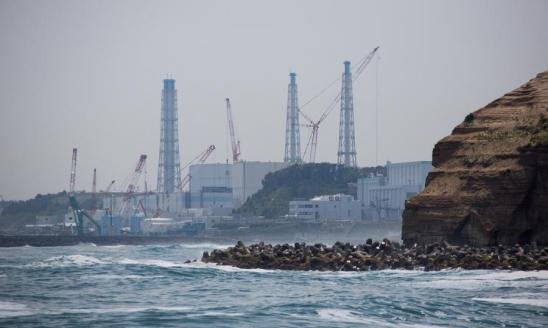
‘It will take 300 years before contaminated water is safe to discharge into sea’

Osaka mayor Ichiro Matsui offers to take in tainted Fukushima water and dump it into Osaka Bay

Fukushima fishermen concerned for future over release of radioactive water
Eight years after the triple disaster, Japan’s local industry faces fresh crisis – the dumping of radioactive water from the power plant
 Last year’s catch was just 16% of pre-crisis levels, partly because of the Japanese public’s reluctance to eat fish caught off Fukushima due to the radioactive water.
September 16, 2019
On the afternoon of 11 March 2011, Tetsu Nozaki watched helplessly as a wall of water crashed into his boats in Onahama, a small fishing port on Japan’s Pacific coast.
Nozaki lost three of his seven vessels in one of the worst tsunami disasters in Japan’s history, part of a triple disaster in which 18,000 people died. But the torment for Nozaki and his fellow fishermen didn’t end there. The resulting triple meltdown at the nearby Fukushima Daiichi nuclear power plant forced the evacuation of more than 150,000 people and sent a plume of radiation into the air and sea.
It also came close to crippling the region’s fishing industry.
Having spent the past eight years rebuilding, the Fukushima fishing fleet is now confronting yet another menace – the increasing likelihood that the nuclear plant’s operator, Tokyo Electric Power (Tepco), will dump huge quantities of radioactive water into the ocean.
“We strongly oppose any plans to discharge the water into the sea,” Nozaki, head of Fukushima prefecture’s federation of fisheries cooperatives, told the Guardian.
Nozaki said local fishermen had “walked through brick walls” to rebuild their industry and confront what they say are harmful rumours about the safety of their seafood. Last year’s catch was just 16% of pre-crisis levels, partly because of the public’s reluctance to eat fish caught off Fukushima.
Currently, just over one million tonnes of contaminated water is held in almost 1,000 tanks at Fukushima Daiichi, but the utility has warned that it will run out of space by the summer of 2022.
Tepco has struggled to deal with the buildup of groundwater, which becomes contaminated when it mixes with water used to prevent the three damaged reactor cores from melting. Although the utility has drastically reduced the amount of wastewater, about 100 tonnes a day still flows into the reactor buildings.
Releasing it into the sea would also anger South Korea, adding to pressure on diplomatic ties already shaken by a trade dispute linked to the countries’ bitter wartime history.
Seoul, which has yet to lift an import ban on Fukushima seafood introduced in 2013, claimed last week that discharging the water would pose a “grave threat” to the marine environment – a charge rejected by Japan.
Fukushima fisheries officials point out that they operate a stringent testing regime that bans the sale of any seafood found to contain more than 50 becquerels of radioactive material per kilogram – a much lower threshold than the standard of 100 becquerels per kilogram observed in the rest of Japan.
At Onahama’s testing centre, just metres from where the catch is unloaded, eight employees conduct tests that last between five and 30 minutes depending on the size of the sample. “Tepco has said that the water can be diluted and safely discharged, but the biggest problem facing us is the spread of harmful rumours,” Hisashi Maeda, a senior Fukushima fisheries official, said as he showed the Guardian around the facility.
Confirming Maeda’s fears, almost a third of consumers outside Fukushima prefecture indicated in a survey that dumping the contaminated water into the sea would make them think twice about buying seafood from the region, compared with 20% who currently avoid the produce.
Tepco’s Advanced Liquid Processing System removes highly radioactive substances, such as strontium and caesium, from the water but the technology does not exist to filer out tritium, a radioactive isotope of hydrogen that coastal nuclear plants commonly dump along with water into the ocean. Tepco admitted last year, however, that the water in its tanks still contained contaminants beside tritium.
Supporters of the discharge option have pointed out that water containing high levels of tritium, which occurs in minute amounts in nature, would not be released until it has been diluted to meet safety standards.
But Shaun Burnie, a senior nuclear specialist with Greenpeace Germany who regularly visits Fukushima, said a proportion of radioactive tritium had the potential to deliver a concentrated dose to cell structures in plants, animals or humans. “Dilution does not avoid this problem,” he said.
Burnie believes the solution is to continue storing the water, possibly in areas outside the power plant site – a move that is likely to encounter opposition from nuclear evacuees whose abandoned villages already host millions of cubic metres of radioactive soil.
“There is no short-term solution to the water problem at Fukushima Daiichi, as groundwater will continue to enter the site and become contaminated,” Burnie said. “A major step would be for the government to start being honest with the Japanese people and admit that the scale of the challenges at the site mean their entire schedule for decommissioning is a fantasy.”
‘No other option’
Government officials say they won’t make a decision until they have received a report from an expert panel, but there are strong indications that dumping is preferred over other options such a vaporising, burying or storing the water indefinitely.
Shinjiro Koizumi, the new environment minister, has not indicated if he shares his predecessor’s belief, voiced last week, that there is “no other option” but to discharge the water into the sea.
The International Atomic Energy Agency has recommended that Japan release the treated water, while Toyoshi Fuketa, the chairman of Japan’s Nuclear Regulation Authority, said a decision on its future must be made soon.
“We are entering a period in which further delays in deciding what measure to implement will no longer be tolerable,” Fuketa said, according to the Asahi Shimbun.
Putting off a decision could delay work to locate and remove melted fuel from the damaged reactors – a process that is already expected to take four decades.
Critics say the government is reluctant to openly support the dumping option for fear of creating a fresh controversy over Fukushima during the Rugby World Cup, which starts this week, and the buildup to the 2020 Tokyo Olympics.
Nozaki said he and other fishermen throughout Fukushima would continue the fight to keep the water out of the ocean. “Releasing the water would send us back to square one,” he said. “It would mean the past eight years have amounted to nothing.”
Radioactive water at Fukushima should be stored not dumped
Murky politics pollute the Pacific
Cooling water is needed at the Fukushima site because, when Units 1, 2 and 3 lost power, they also lost the flow of reactor coolant, causing their cores to overheat. The fuel rods then melted, and molten fuel dripped down and burned through the pressure vessels, pooling in the primary containment vessels. Units 1, 3 and 4 also suffered hydrogen explosions. Each day, about 200 metric tons of cooling water is used to keep the three melted cores cool, lest they once more go critical. Eventually the water becomes too radioactive and thermally hot to be re-used, and must be discarded and stored in the tanks.
As Greenpeace International (GPI) explained in remarks and questions submitted during a consultative meeting held by the International Maritime Organization in August 2019:
“Since 2011, in order to cool the molten cores in the Tokyo Electric Power Company Fukushima Daiichi reactor units 1-3, water is continuously pumped through the damaged Reactor Pressure Vessels (RPVs) and circulated through reactor buildings, turbine buildings, the Process Main Building and the “High Temperature Incinerator Building” and water treatment systems.
“As a result, the past eight years has seen a relentless increase in the volume of radioactive contaminated water accumulating on site. As of 4 July 2019, the total amount of contaminated water held in 939 storage tanks at the Fukushima Daiichi plant (units 1-4) was 1,145,694 m3 (tonnes). The majority of this, 1,041,710 m3, is contaminated processed water. In the year to April 2019, approximately 180 m3/day of water was being circulated into the RPVs of units 1-3.”
In addition to the cooling water, the tanks also house water that has run down from the nearby mountains, at a rate of about 100 tons each day. This water flows onto the site and seeps into the reactor buildings. There, it becomes radioactively contaminated and also must be collected and stored, to prevent it from flowing on down into the sea.
The water tank crisis is just one of multiple and complex problems at the Fukushima Daiichi site, including the eventual need to extract the molten fuel debris from inside the stricken reactors. Decommissioning cannot begin until the water storage tanks are removed.
Tepco has tried to mitigate the radioactive water problem in a number of ways. The infamous $320 million ice wall was an attempt to freeze and block inflow, but has had mixed results and has worked only intermittently. Wells were dug to try to divert the runoff water so it does not pick up contamination. The ice wall has reportedly reduced the flow of groundwater somewhat, but only down from 500 tons a day to about 100 tons.
In anticipation of dumping the tank water into the Pacific Ocean, Tepco has deployed an Advanced Liquid Processing System that the company claims can remove 62 isotopes from the water — all except tritium, which is radioactive hydrogen and therefore cannot be filtered out of water. (Tritium is routinely discharged by operating commercial nuclear power plants).
 Tepco’s “Land-side Impermeable Wall” (Frozen soil wall). (Image: Tepco)
But, like the ice wall, the filtration system has also been plagued by malfunctions. According to GPI, Tepco admitted only last year that the system had “failed to reduce radioactivity to levels below the regulatory limit permissible for ocean disposal” in at least 80% of the tanks’ inventory. Indeed, said GPI, “the levels of Strontium-90 are more than 100 times the regulatory standard according to TEPCO, with levels at 20,000 times above regulations in some tanks.”
The plan to dump the water has raised the ire of South Korea, whose fish stocks would likely also be contaminated. And it has introduced the question of whether such a move is a violation of The Conventions of the Rights of the Child and the Universal Declaration of Human Rights, as was raised in a joint written statement by the International Association of Democratic Lawyers and Greenpeace International, before the UN Human Rights Council currently in session.
So what else could or should Tepco do, if not dump the water offshore and into the ocean? A wide consensus amongst scientific, environmental and human rights groups is that on-site storage for the indefinite future is the only acceptable option, while research must continue into possible ways to extract all of the radioactive content, including tritium.
Meanwhile, a panel of experts says it will examine a number of additional but equally problematic choices, broadly condensed into four options (each with some variations — to dilute or not to dilute etc):
- Ground (geosphere) injection (which could bring the isotopes in contact with groundwater);
- Vapor release (which could infiltrate weather patterns and return as fallout);
- Releasing it as hydrogen (it would still contain tritium gas); and
- Solidification followed by underground burial (for which no safe, permanent storage environment has yet been found, least of all in earthquake-prone Japan).
Arnie Gundersen of Fairewinds, recommends a chemical injection processes (drilling mud) — also used by the oil industry — to stop the flow of water onto the site entirely. But he says Japan has never considered this option. GPI contends that Japan has never seriously researched any of the alternatives, sticking to the ocean dumping plan, the cheapest and fastest “fix.”
All of this mess is of course an inevitable outcome of the choice to use nuclear power in the first place. Even without an accident, no safe, permanent storage solution has been found for the high-level radioactive waste produced through daily operation of commercial nuclear power plants, never mind as the result of an accident.
According to Dr. M.V. Ramana, by far the best solution is to continue to store the radioactive water, even if that means moving some of the storage tanks to other locations to make more room for new ones at the nuclear site. The decision to dump the water, Ramana says, is in line with Abe’s attempts to whitewash the scene before the 2020 Tokyo Olympics and claim, as he has publicly in the past, that everything at Fukushima is “under control.” (Baseball and softball games will be played in Fukushima Prefecture and the torch relay will start there, all in an effort to pretend there are no dangerous nuclear after-effects remaining in the area.)
“The reason that they keep saying they need to release it is because they might have to move some of this offsite and that goes against the Abe government’s interest in creating the perception that Fukushima is a closed chapter,” Ramana wrote in an email. “So it is a political decision rather than a technical one.”
As with all things nuclear, there are diverging views on the likely impact to the marine environment and to human health, from dumping Fukushima’s radioactive water into the ocean. These run the gamut from “a little tritium won’t hurt you” to “the Pacific Ocean is dead thanks to Fukushima” — both of which are wildly untrue. (Tritium can bind organically inside the body, irradiating that person or animal from within. The many problems in the Pacific began long before Fukushima and are likely caused by numerous compounding factors, including warming and pollution, with Fukushima adding to the existing woes.)
 The effect on deep sea creatures of radioactive ocean dumping could be long-lasting.
What is fact, however, is that scientists have found not only the presence of isotopes such as cesium in fish they tested, but also in ocean floor sediment. This latter has the potential to serve as a more long-term source of contamination up the food chain.
But it is also important to remember that if this radioactive water is dumped, it is not an isolated event. Radioactive contamination in our oceans is already widespread, a result of years of atmospheric atomic tests. As was reported earlier this year, scientists studying deep-sea amphipods, retrieved from some of the deepest trenches in the ocean — including the Mariana Trench which reaches 36,000 feet below sea-level and is deeper than Mount Everest is high — detected elevated levels of carbon-14 in these creatures.
“The levels closely matched abundances found near the surface of the ocean, where the amount of carbon-14 is higher than usual thanks to nuclear bomb tests conducted more than half a century ago,” reported Smithsonian Magazine.
Weidong Sun, co-author of the resulting study, told Smithsonian Magazine that “Biologically, [ocean] trenches are taken to be the most pristine habitats on Earth”.
How chilling, then, to realize that our radioactive irresponsibility has reached the lowest depths, affecting creatures far removed from our rash behaviors.
Consequently, the decision by the Japanese government to release yet more radioactive contamination into our oceans must be viewed not as a one-off act of desperation, but as a contribution to cumulative contamination. This, added to the twin tragedies of climate crisis-induced ocean warming and plastics and chemicals pollution, renders it one more crime committed on the oceans, ourselves and all living things. And it reinforces the imperative to neither continue nor increase our reckless use of nuclear power as an electricity source.
For an in-depth look at this issue, read the January 2019 Greenpeace Germany briefing, TEPCO Water Crisis (in English.)
Plan to Release Radioactive Fukushima Wastewater Into Pacific Ocean Panned by Critics
“Another reason to not build nuclear power plants.”
 Greenpeace ship Rainbow Warrior sailing past the destroyed Fukushima Daiichi nuclear plant, five years after the plant’s accident.
Minister says Japan will have to dump radioactive water into Pacific

Fukushima: Japan will have to dump radioactive water into Pacific, minister says
More than a million tonnes of contaminated water lies in storage but power company says it will run out of space by 2022
The operator of the ruined Fukushima Daiichi nuclear power plant will have to dump huge quantities of contaminated water from the site directly into the Pacific Ocean, Japan’s environment minister has said – a move that would enrage local fishermen.
More than 1 million tonnes of contaminated water has accumulated at the plant since it was struck by a tsunami in March 2011, triggering a triple meltdown that forced the evacuation of tens of thousands of residents.
Tokyo Electric Power (Tepco) has struggled to deal with the buildup of groundwater, which becomes contaminated when it mixes with water used to prevent the three damaged reactor cores from melting.
Tepco has attempted to remove most radionuclides from the excess water, but the technology does not exist to rid the water of tritium, a radioactive isotope of hydrogen. Coastal nuclear plants commonly dump water that contains tritium into the ocean. It occurs in minute amounts in nature.
Tepco admitted last year that the water in its tanks still contained contaminants beside tritium.
Currently, more than 1m tonnes of contaminated water is held in almost 1,000 tanks at the Fukushima Daiichi site, but the utility has warned that it will run out of tank space by the summer of 2022.
“The only option will be to drain it into the sea and dilute it,” Yoshiaki Harada told a news briefing in Tokyo on Tuesday. “The whole of the government will discuss this, but I would like to offer my simple opinion.”
No decision on how to dispose of the water will be made until the government has received a report from a panel of experts. Other options include vaporising the liquid or storing it on land for an extended period.
Harada did not say how much water would need to be discharged into the ocean.
One recent study by Hiroshi Miyano, who heads a committee studying the decommissioning of Fukushima Daiichi at the Atomic Energy Society of Japan, said it could take 17 years to discharge the treated water after it has been diluted to reduce radioactive substances to levels that meet the plant’s safety standards.
Any decision to dispose of the waste water into the sea would anger local fishermen, who have spent the past eight years rebuilding their industry.
Nearby South Korea has also voiced concern over the impact it would have on the reputation of its own seafood.
Last month, Seoul summoned a senior Japanese embassy official to explain how Fukushima Daiichi’s waste water would be dealt with.
Ties between the north-east Asian nations are already at a low ebb following a compensation dispute over Koreans forced to work in Japanese factories during the second world war.
The government spent 34.5bn yen (£260m) to build a frozen underground wall to prevent groundwater reaching the three damaged reactor buildings. The wall, however, has succeeded only in reducing the flow of groundwater from about 500 tonnes a day to about 100 tonnes a day.
Japan has come under renewed pressure to address the contaminated water problem before Tokyo hosts the Olympics and Paralympics next summer.
Six years ago during the city’s bid for the games, the prime minister, Shinzo Abe, assured the international community that the situation was “under control”.
Minister calls for dumping Fukushima plant treated water into ocean
September 10, 2019
Japan’s environment minister called Tuesday for water contaminated with low-toxicity radioactive tritium at the crippled Fukushima nuclear plant to be discharged into the Pacific Ocean, potentially provoking controversy with South Korea that has expressed concerns about the idea.
“Although I’m not the minister in charge, I believe there’s no choice but to dump the water (into the ocean) and dilute it,” Environment Minister Yoshiaki Harada told a press conference, a day before Prime Minister Shinzo Abe’s planned Cabinet reshuffle.
Even after being treated, the water, used to cool reactor cores that suffered meltdowns at the plant following the 2011 earthquake and tsunami, remains contaminated with tritium.
But the water, currently stored in tanks at the Fukushima plant, is regarded by the government as relatively harmless to humans.
Seoul has expressed concern over the possibility that the water could be discharged into the ocean. Local fishermen are also opposed to the release of the water into the sea, fearing the potential impact on fish stocks.
The Japanese government has yet to decide on how to dispose of the accumulating water. The tanks storing the water are expected to be full by the summer of 2022, according to Tokyo Electric Power Company Holdings Inc., the operator of the Fukushima plant.
A nuclear expert from the International Atomic Energy Agency said in 2018 that a controlled discharge of such contaminated water “is something which is applied in many nuclear facilities, so it is not something that is new.”
Harada said his view was based on a visit to the Fukushima complex, where he saw a number of tanks storing the water, and the Nuclear Regulation Authority’s support for the water discharge.
In an apparent reference to South Korea, Harada added the most important thing for Japan is to “provide sincere explanations” to countries that may oppose Tokyo’s policy.
The environment minister made the remarks as he looked back on his time in the post since October last year.
In August, a government panel began discussing the possibility of long-term water storage. It has looked at other options such as discharging it into the sea and vaporization.
Toxic water produced by cooling debris and other processes at the Fukushima plant is purified using the Advanced Liquid Processing System, said to be capable of removing almost all radioactive materials except tritium.
Tokyo Officials Still Unsure What to Do With Radioactive Fukushima Water

1 This Month

of the week – Shut Down Drone Warfare!


Tell the Ukrainian Government to Drop Prosecution of Peace Activist Yurii Sheliazhenko

Petition to revoke the licensing of the Near Surface Nuclear Disposal Facility (NSDF) at Chalk River. https://www.ourcommons.ca/petitions/en/Petition/Details?Petition=e-7247
To see nuclear-related stories in greater depth and intensity – go to https://nuclearinformation.wordpress.com
-
Archives
- April 2026 (19)
- March 2026 (251)
- February 2026 (268)
- January 2026 (308)
- December 2025 (358)
- November 2025 (359)
- October 2025 (376)
- September 2025 (257)
- August 2025 (319)
- July 2025 (230)
- June 2025 (348)
- May 2025 (261)
-
Categories
- 1
- 1 NUCLEAR ISSUES
- business and costs
- climate change
- culture and arts
- ENERGY
- environment
- health
- history
- indigenous issues
- Legal
- marketing of nuclear
- media
- opposition to nuclear
- PERSONAL STORIES
- politics
- politics international
- Religion and ethics
- safety
- secrets,lies and civil liberties
- spinbuster
- technology
- Uranium
- wastes
- weapons and war
- Women
- 2 WORLD
- ACTION
- AFRICA
- Atrocities
- AUSTRALIA
- Christina's notes
- Christina's themes
- culture and arts
- Events
- Fuk 2022
- Fuk 2023
- Fukushima 2017
- Fukushima 2018
- fukushima 2019
- Fukushima 2020
- Fukushima 2021
- general
- global warming
- Humour (God we need it)
- Nuclear
- RARE EARTHS
- Reference
- resources – print
- Resources -audiovicual
- Weekly Newsletter
- World
- World Nuclear
- YouTube
-
RSS
Entries RSS
Comments RSS
 nuclear-news