Korean, Japanese bishops oppose discharge from Fukushima plant
Scientists, environmentalists and fishing groups are against the idea of releasing contaminated water into the sea

February 17, 2021
Catholic bishops in South Korea and Japan have issued a joint statement to strongly oppose the Japanese government’s decision to discharge radioactive water from the damaged Fukushima nuclear power plant into the sea.
Following years of debate over the disposal of the liquid which includes water used to cool the Fukushima Daiichi plant that was hit by a massive tsunami and earthquake in 2011, Japanese authorities have decided to release a million tonnes of treated water into the sea.
The initial plan was to start releasing the water from 2022 but a final decision has not been made, according to Japanese media.
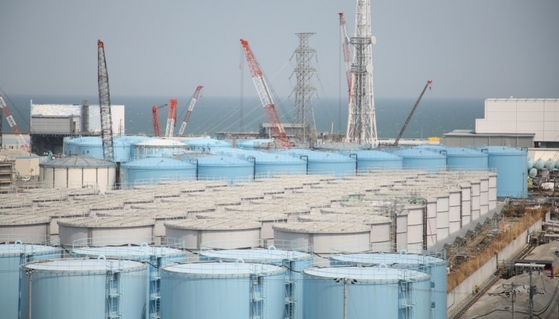
Most of the radioactive isotopes have been removed using a complex filtration process. But one isotope, tritium, cannot be removed, so water has been stored in huge tanks that will fill up by 2022, the BBC reported.
Scientists, environmentalists and fishing groups have opposed the idea of releasing contaminated water into the sea, citing possible risks.
“We oppose the discharge of tritium-containing water, a radioactive material that has been purified and treated, into the ocean,” said a joint statement from the Justice and Peace Commissions of the bishops’ conferences of Korea and Japan, the Korean bishops’ ecological and environmental committee and the Japanese bishops’ subcommittee on nuclear for peace.
The statement has been signed by heads of each organization and concerns have been raised about the direct impact of the contaminated water on public health and marine life.
“The water contains tritium, which is a radioactive material, purified through the contaminated water treatment system of the Fukushima plant. Secondary treatment of radionuclides remaining in the treated water is still in the testing stage, and no definite results have been obtained,” the statement said.
The statement also pointed out that the report from the Japanese government did not mention the effects of the treated water on marine life, the marine environment and human health.
“Once released into the sea, radioactive material cannot be restored to its original state. It will have impacts on humans and nature. It will cause greater anxiety and damage to people around the world.”
In a separate statement, the Korean bishops’ ecological and environmental committee expressed concerns about the recent tritium leak at the Wolseong nuclear power plant in Gyeongju in South Korea.
On Jan. 7, Korean media reported on radioactivity leaking from the plant, prompting Korea Hydro and Nuclear Power Company to investigate. The initial results exposed a wide range of radioactive contamination in the plant and adjacent areas
The Korean Church demanded the government “conduct a thorough and transparent investigation into the leakage and immediate follow-up measures for radioactive leaks in all nuclear power plants.”
Fukushima’s Contaminated Wastewater Could Be Too Risky to Dump in the Ocean
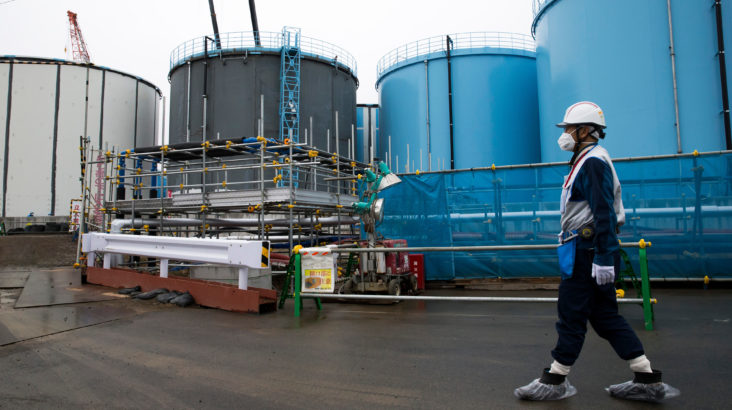 A person walks past storage tanks for contaminated water at the company’s Fukushima Daiichi Nuclear Power Plant
August 7, 2020
Almost a decade ago, the Tohoku-oki earthquake and tsunami triggered an explosion at Japan’s Fukushima Daiichi Nuclear Power Plant, causing the most severe nuclear accident since Chernobyl and releasing an unprecedented amount of radioactive contamination in the ocean. In the years since, there’s been a drawn out cleanup process, and water radiation levels around the plant have fallen to safe levels everywhere except for in the areas closest to the now-closed plant. But as a study from the Woods Hole Oceanographic Institution published in Science on Thursday shows, there’s another growing hazard: contaminated wastewater.
Radioactive cooling water is leaking out of the the melted-down nuclear reactors and mixing with the groundwater there. In order to prevent the groundwater from leaking into the ocean, the water is pumped into more than 1,000 tanks. Using sophisticated cleaning processes, workers have been able to remove some of this contamination and divert groundwater flows, reducing the amount of water that must be collected each day. But those tanks are filling up, and some Japanese officials have suggested that the water should dumped into the ocean to free up space.
The water in the tanks goes through an advanced treatment system to remove many radioactive isotopes. The Japanese utility company TEPCO, which is handling the cleanup processes, claims that these processes remove all radioactive particles from the water except tritium, an isotope of hydrogen which is nearly impossible remove but is considered to be relatively harmless. It decays in about 12 years, which is faster than other isotopes, is not easily absorbed by marine life, and is not as damaging to living tissue as other forms of radiation.
But according to the new study, that’s not the only radioactive contaminant left in the tanks. By examining TEPCO’s own 2018 data, WHOI researcher Ken Buesseler found that other isotopes remain in the treated wastewater, including carbon-14, cobalt-60, and strontium-90. He found these particles all take much longer to decay than tritium, and that fish and marine organisms absorb them comparatively easily.
“[This] means they could be potentially hazardous to humans and the environment for much longer and in more complex ways than tritium,” the study says.
Though TEPCO’s data shows there is far less of these contaminants in the wastewater tanks than tritium, Buesseler notes that their levels vary widely from tank to tank, and that “more than 70% of the tanks would need secondary treatment to reduce concentrations below that required by law for their release.”
The study says we don’t currently have a good idea of how those more dangerous isotopes would behave in the water. We can’t assume they will behave the same way tritium does in the ocean because they have such different properties. And since there are different levels of each isotope in each different tank, each tank will need its own assessment.
“To assess the consequences of the tank releases, a full accounting after any secondary treatments of what isotopes are left in each tank is needed,” the study said.
Buesseler also calls for an analysis of what other contaminants could be in the tanks, such as plutonium. Even though it wasn’t reported in high amounts in the atmosphere in 2011, recent research shows it may have been dispersed when the explosion occurred. Buesseler fears it may also be present in the cooling waters being used at the plant. That points to the need to take a fuller account of the wastewater tanks before anything is done to dump them in the ocean.
“The first step is to clean up those additional radioactive contaminants that remain in the tanks, and then make plans based on what remains,” he said in a statement. “Any option that involves ocean releases would need independent groups keeping track of all of the potential contaminants in seawater, the seafloor, and marine life.”
Many Japanese municipalities have been pushing the government to reconsider its ocean dumping plans and opt to find a long-term storage solution instead, which makes sense, considering exposure to radioactive isotopes can cause myriad health problems to people. It could also hurt marine life, which could have a devastating impact on fishing economies and on ecosystems.
“The health of the ocean — and the livelihoods of countless people — rely on this being done right,” said Buesseler.
Japan’s plans for radioactive discharges violates principles of environmental protection and defies international maritime law
Aug.4,2020
The threat of a million tonnes of highly contaminated water from the Fukushima Daiichi being discharged into the Pacific Ocean includes the potential environmental and human impacts, but also how a decision by the Japanese government relates to international law. What we conclude is that such a decision poses a direct threat to the marine environment, including that of the jurisdictional waters of the Korean peninsula. As such, Japan would be in breach of its obligations as defined under international environmental law, including the United Nations Convention on the Law of the Sea (UNCLOS) that Korea government has rights to oppose the discharging in the legal perspective.
The discharge of radioactivity into the marine environment from Fukushima Daiichi nuclear plant will inevitably increase exposure to marine species. The level of exposure depends on multiple variables. The concentrations are of direct relevance to those who may consume them, including marine species, ultimately, humans. The 1.2 million tons of highly contaminated water in nearly 1000 storage tanks at the Fukushima Daiichi nuclear plant currently has concentrations of radioactive tritium much higher than is permitted under Japanese regulation permissible for discharge into the ocean. Concerns are that the high relative biological effectiveness (RBE) of tritium’s beta radiation, its ability to bind with cell constituents to form organically-bound tritium (OBT) and its short-range beta particle, meaning it can damage DNA.
It is more important to remember that 800,000 tons of this water contains not only tritium but also contains other hazardous radioactive materials, including strontium-90, as a result of the failure of the Advanced Liquid Processing System (ALPS) technology operating during the last 9 years. There are 30,000 megaBecquerels of strontium-90 in the storage now which is absorbed by the body in a similar manner to calcium where it increases the risk of developing leukemia cancer. To give some perspective on this amount of strontium-90, it is what an average Pressurized Water Reactor would discharge in its liquid waste every year if it were to operate for 120,000 years, more than half the number of years humans have inhabited the earth. Even more threatening is that these discharges are only a small fraction of the radioactive inventory of what remains at the site. Most strontium-90 still remains in the molten cores at the site, an amount 17.3 million times more than would be released under the Japanese government’s plans for the contaminated water. And there are many other radionuclides present in the contaminated water with even longer half lives – iodine-129 for example is 13 million years.
For South Korea, the impacts of this radiation exposure is of great importance to the fishing communities, the wider population and the Government. The toxic cocktail of radionuclides from Fukushima Daiichi will rapidly disperse through the strong coastal currents along Japan’s Pacific coast, and would enter the East Sea via the East China Sea, including the waters of the Korean peninsula. We know this as a result of sea water sampling following the March 2011 nuclear disaster.
The South Korean government has rightly challenged the Japanese government over its plans for the Fukushima contaminated water, including at the UN International Maritime Organization (IMO). In November 2019 at the IMO they were joined in their opposition by the People’s Republic of China. While the Japanese government is looking to make a decision later this year the actual discharges would not take place for several more years. It is vitally important that the Korean government continue its efforts to protect the marine environment and the health and livelihoods of its citizens, including fishing communities, by challenging in every way possible the plans of the Japanese government.
 Shaun Burnie
In addition to the requirements under the IMO, Japan is required to comply with international law that prohibits significant transboundary environmental harm, both to the territory of other States and to areas beyond national jurisdiction. Before any discharge into the Pacific Ocean, Japan is required to conduct an Environment Impact Assessment under Article 206 of UNCLOS. International radio-protection principles require that a decision to increase radioactivity in the environment must be justified, and if there is a viable alternative – in this case long term storage – it cannot be justified.
There is a clear alternative to discharging over 1.2 million tons of highly contaminated into the environment. There never was a justification for further deliberate radioactive pollution of the marine environment from Fukushima Daiichi; and, in the interests of protection of that environment as well as public safety, as well a compliance with its international legal obligations, the only acceptable way forward for the Japanese government is to terminate its discharge plans, commit to long term storage and processing.
 Duncan E. J. Currie
By Duncan E. J. Currie and Shaun Burnie
Duncan Currie is a practicing international and environmental lawyer. He has practiced international law and environmental law for nearly thirty years, and over that time has advised NGOs, corporations and governments on a wide range of environmental issues including the law of the sea, nuclear and waste issues.
Shaun Burnie is a senior nuclear specialist with Greenpeace Germany, with much of his time based in Japan. He has worked on nuclear issues in Asia, the former Soviet Union, Europe, North and South America and the Middle East for 35 years. He has worked against the operation of the TEPCO Fukushima Daiichi reactors since 1997.
http://english.hani.co.kr/arti/english_edition/english_editorials/956456.html
Japan needs to halt its plan to dump contaminated water from Fukushima immediately
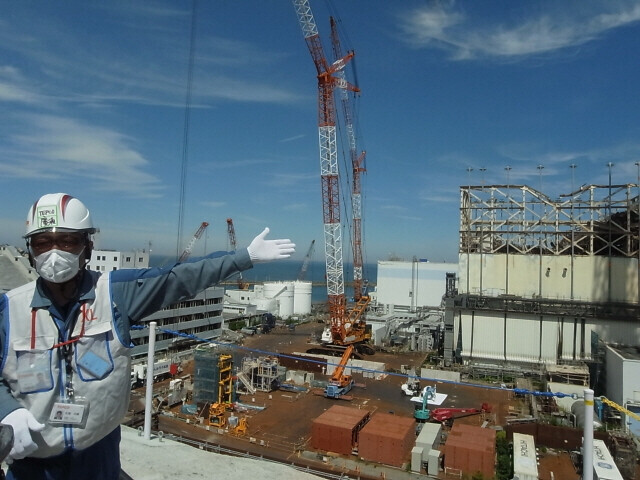 A TEPCO employee tells reporters about the Fukushima Daiichi Nuclear Power Plant in June 2017.
Aug.4,2020
With the world’s attention focused on the COVID-19 pandemic, the Japanese government has been pushing forward with its preparations to dump contaminated water from the Fukushima Daiichi Nuclear Power Plant into the ocean. After first announcing an initial plan last March for discharging the water into the sea over a period of 30 years, the Shinzo Abe administration held five hearings between April and July, with a final decision on the dump reportedly likely to come within the month of October. The Abe administration has disregarded the concerns and opposition of local residents and the international community while pursuing a measure that will cause irreversible contamination to our oceans. It must stop immediately.
In a recent hearing, Fukushima residents and fishermen voiced strong opposition to dumping radioactive water into the ocean, a plan that they labeled “unacceptable.” The position of the Japanese government is that the storage tanks that have held contaminated rainwater and groundwater since the nuclear accident will run out of room in the summer of 2022, forcing an ocean dump. But civic groups have criticized the government for attempting to ram through its dumping plan as the cheapest option, even though more tanks could be safely installed after re-zoning large tracts of land around the Fukushima reactor.
The Tokyo Electric Power Company (TEPCO), the operator of the reactor, argues that all radioactive matter but tritium has been removed from the contaminated water in the tanks through purification based on the Advanced Liquid Processing System (ALPS). TEPCO argues that the tritium that would be released along with the contaminated water is no worse than the tritium that’s already released into the ocean and atmosphere during the operation of nuclear reactors around the world. But the 1.2 million tons of contaminated water that TEPCO claims has been “processed” still contains between 100 and 20,000 times the permitted amount of cancer- and mutation-causing matter, according to international environmental group Greenpeace.
According to Greenpeace’s analysis, contaminated water from the reactor, once released into the ocean, would be carried by ocean currents to South Korea’s east coast within a year. Exposing the east coast to water contaminated with deadly radioactivity for 30 years would present a serious threat to the maritime ecosystem and to public health. The UN Human Rights Council released a statement in June expressing grave concern about reports indicating that the Japanese government is accelerating plans to dump radioactive water from Fukushima.
The Korean government has set up a task force under the Office of the Prime Minister to track the steps taken by the Japanese government, but it needs to ask for more information and work even harder to sound the alarm in the international community. As a neighbor, Korea has every right to raise the issue with the Japanese government. Seoul needs to press the issue, both in Tokyo and in other countries, for the sake of Koreans’ health and the future of East Asia.
http://english.hani.co.kr/arti/english_edition/english_editorials/956441.html
Fukushima localities speak out against dumping radioactive water in sea
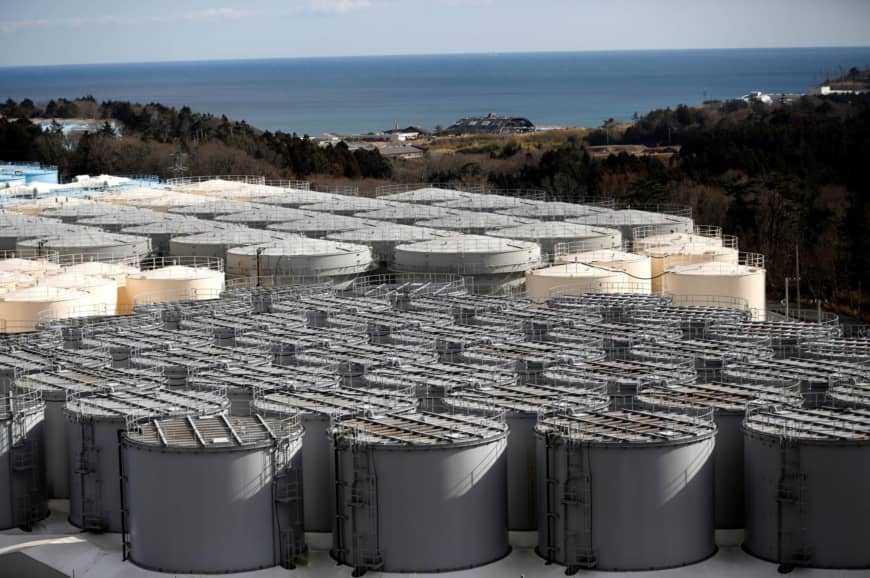
Storage tanks for radioactive water are seen at Tokyo Electric Power Co’s (TEPCO) tsunami-crippled Fukushima Daiichi nuclear power plant in Okuma town, Fukushima prefecture, Japan February 18, 2019. Picture taken February 18, 2019. REUTERS/Issei Kato
Rally opposes proposal for Fukushima radioactive wastewater
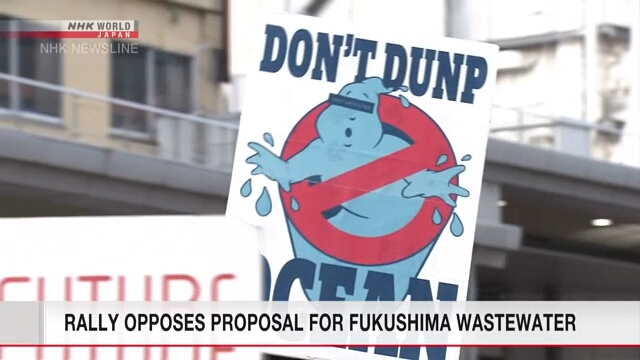
July 12, 2020
Dozens of young people in Japan’s Fukushima Prefecture have rallied against a government panel’s proposal on how to dispose of radioactive wastewater stored at the crippled Daiichi nuclear power plant.
About 50 people, including fisheries workers, marched through Koriyama City on Sunday.
The demonstration was organized by a group of Fukushima residents in their 20s and 30s, who said detrimental rumors about the prefecture may circulate if the wastewater is disposed of improperly.
Group representative Sato Taiga said a survey shows that most respondents do not know about the issue. He added that he hopes the group’s activities will raise awareness among people, including the younger generation.
Water used to cool molten nuclear fuel from the 2011 accident at the plant has most of the radioactive materials removed before being stored in tanks. But the treated water still contains tritium and some other radioactive substances.
The amount stored has reached some 1.2 million tons. The plant’s operator, Tokyo Electric Power Company, expects to reach capacity around the summer of 2022.
In February, a government panel compiled a report that says a realistic solution is releasing the wastewater into the sea or air after diluting it in compliance with environmental and other standards.
The government is in the process of hearing opinions from local governments and relevant organizations before making its final decision on how to dispose of the treated water.
Fukushima nuclear waste decision also a human rights issue
By Baskut Tuncak
July 8, 2020
In a matter of weeks, the government of Japan will have the opportunity to demonstrate to the world how much it values protecting human rights and the environment and to meet its international obligations.
In the aftermath of the Fukushima Daiichi nuclear disaster, myself and other U.N. special rapporteurs consistently raised concerns about the approaches taken by the government of Japan. We have been concerned that raising of “acceptable limits” of radiation exposure to urge resettlement violated the government’s human rights obligations to children.
We have been concerned of the possible exploitation of migrants and the poor for radioactive decontamination work. Our most recent concern is how the government used the COVID-19 crisis to dramatically accelerate its timeline for deciding whether to dump radioactive wastewater accumulating at Fukushima Daiichi in the ocean.
Setting aside the duties incumbent on Japan to consult and protect under international law, it saddens me to think that a country that has suffered the horrors of being the only country on which not one but two nuclear bombs were dropped during war, would continue on a such a path in dealing with the radioactive aftermath of the Fukushima Daiichi disaster.
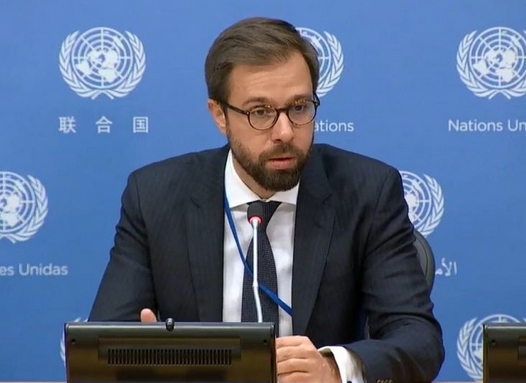 Baskut Tuncak
Releasing the toxic wastewater collected from the Fukushima nuclear plant would be, without question, a terrible blow to the livelihood of local fishermen. Regardless of the health and environmental risks, the reputational damage would be irreparable, an invisible and permanent scar upon local seafood. No amount of money can replace the loss of culture and dignity that accompany this traditional way of life for these communities.
The communities of Fukushima, so devastated by the tragic events of March 11, 2011, have in recent weeks expressed their concerns and opposition to the discharge of the contaminated water into their environment. It is their human right to an environment that allows for living a life in dignity, to enjoy their culture, and to not be exposed deliberately to additional radioactive contamination. Those rights should be fully respected and not be disregarded by the government in Tokyo.
The discharge of nuclear waste to the ocean could damage Japan’s international relations. Neighboring countries are already concerned about the release of large volumes of radioactive tritium and other contaminants in the wastewater.
Japan has a duty under international law to prevent transboundary environmental harm. More specifically, under the London Convention, Japan has an obligation to take precaution with the respect to the dumping of waste in the ocean. Given the scientific uncertainty of the health and environmental impacts of exposure to low-level radiation, the disposal of this wastewater would be completely inconsistent with the spirit, if not the letter, of this law.
Indigenous peoples have an internationally recognized right to free, prior and informed consent. This includes the disposal of waste in their waters and actions that may contaminate their food. No matter how small the Japanese government believes this contamination will be of their water and food, there is an unquestionable obligation to consult with potentially affected indigenous peoples that it has not met.
The Japanese government has not, and cannot, assure itself of meaningful consultations as required under international human rights law during the current pandemic. There is no justification for such a dramatically accelerated timeline for decision making during the covid-19 crisis. Japan has the physical space to store wastewater for many years.
I have reported annually to the U.N. Human Rights Council for the past six years. Whether the topic was on child rights or worker’s rights, in nearly each and every one of those discussion at the United Nations, the situation of Fukushima Daiichi is raised by concerned observers for the world to hear. Intervening organizations have pleaded year-after-year for the Japanese government to extend an invitation to visit so I can offer recommendations to improve the situation. I regret that my mandate is coming to an end without such an opportunity despite my repeated requests to visit and assess the situation.
The disaster of 2011 cannot be undone. However, Japan still has an opportunity to minimize the damage. In my view, there are grave risks to the livelihoods of fishermen in Japan and also to its international reputation. Again, I urge the Japanese government to think twice about its legacy: as a true champion of human rights and the environment, or not.
(Baskut Tuncak has served as U.N. special rapporteur on the implications for human rights of the environmentally sound management and disposal of hazardous substances and wastes since 2014.)
Korean gov’t inactive over Japan’s plan to discharge radioactive water into Pacific

Japan Considering Dumping Toxic Fukushima Water Into Ocean

Japanese Officials Propose Releasing Water From the Fukushima Nuclear Plant Into the Environment

Fukushima’s contaminated water is an issue affecting all of humanity
An ocean dump could lead to a global ecological disaster
 An image of the Fukushima nuclear power plant, including storage tanks for contaminated water, taken by Greenpeace campaigner and Swedish photographer Christian Aslund on Oct. 16, 2018.
December 1, 2019
As the possibility of Japan dumping contaminated water from the Fukushima Nuclear Power Plant into the ocean has been raised, concerns are being voiced on the Korean Peninsula and through various international organizations. Obviously, it is South Korea that is leading the efforts at international coordination in organizations like the International Atomic Energy Agency (IAEA), International Maritime Organization (IMO), and World Health Organization (WHO).
The biggest issue that stands to arise if the contaminated water is dumped into the ocean is the major impact on the marine environment in the Western Pacific and the health of residents in the region, and South Korea is the closest neighbor to Japan.
In a recent piece published in the UK’s The Economist, Shaun Burnie of Greenpeace Germany warned that if Japan dumped the water into the pacific, radioactive material will begin flowing into the East Sea within a year. As Japan’s closest neighbor, South Korea has maintained that it has a right to sufficiently discuss the potential environmental threat and demand related information. During a South Korean parliamentary audit, expressions of concern about the Fukushima water release were coupled with demands for response measures to be put in place.
Unfortunately, these messages and warnings are not being expressed as part of a system of guidance and cooperation to permit a fundamental resolution. Rather, they amount more to a form of pressure within international discourse, which runs the risk of being shrugged off with pro forma logic. The predictions that radioactive material will begin washing into the East Sea within a year could change with the actual amounts and concentrations of water dumped; in the absence of real announced concentrations of inflowing contaminants, it does nothing more than to raise a threat.
More than the fact of the inflows over the year after release, we need to be aware that there are migrating species that could enter the waters near South Korea at any time. Also, what is to be done about the destruction to the marine ecosystem or the marine life that is being fished in the Pacific by the different countries? The result would be a disaster for humankind. We need a more in-depth and scientific examination to identify a disposal plan that allays the concerns of Japan’s neighbors as well as those of Japanese civil society and fishers, who are the ones suffering the ill effects first hand.
Plans for handling marine contaminants fall into five main categories. The first involves controlling the source. The most basic means of resolution is to replace materials and production processes and ban production and consumption to ensure that contaminants are not released in the first place. The second involves recirculation and reuse. This means either re-circulating contaminants through nature or reusing them for other purposes. The third involves storing the contaminants. In cases where no disposal method has yet been developed and reuse is not an option, the approach has been to contain and process them at a safe distance from areas of human activity.
The fourth involves controlling contamination through a regional quota system. This means applying different standards for management depending on the uses of particular waters; in South Korea’s case, marine protected areas and special management areas fall into this category. The last approach is contamination control through taxation. Under such a system, penalties are imposed in cases where contamination is unavoidable; as a rule, the party responsible bears the costs for compensation and restoration.
 Lee Suk-mo, professor of ecological engineering at Pukyong National University
An ocean dump from a nuclear power plant at the current level, without any international regulations in place, would be utterly unacceptable and an affront to environmental justice for humanity today and future generations. Radioactive material decays naturally; if set apart and stored, it goes away naturally over time. But because of issues concerning time and space, this is not an economical approach, and new and effective disposal technology could be developed while it is being stored.
This is why the nuclear power plant water issue is something that should be approached as an issue affecting all of humanity, rather than one restricted to Fukushima and Japan. In particular, neighbors and countries possessing nuclear power plants of their own should make it a priority to cooperate fully in technological and economic terms.
Human disasters may start in one country, but it is through international cooperation that a country’s disaster can be resolved.
By Lee Suk-mo, professor of ecological engineering at Pukyong National University
http://www.hani.co.kr/arti/english_edition/e_international/919137.html
South Korea nuclear regulator wants information on radioactive Fukushima water release
 A geiger counter measures a radiation level of 54.0 microsievert per hour near the No.2 and No.3 reactor buildings at Tokyo Electric Power Co’s (TEPCO) tsunami-crippled Fukushima Daiichi nuclear power plant in Okuma town, Fukushima prefecture, Japan February 18, 2019
November 20, 2019
SEOUL (Reuters) – Japan’s reluctance to disclose information about the release of radioactive water from its damaged Fukushima nuclear plant is hampering neighboring countries’ efforts to minimize the impact, the head of South Korea’s nuclear safety agency said on Wednesday.
Since the 2011 earthquake and tsunami caused a meltdown at some of the reactors the Fukushima plant, owner Tokyo Electric Power Co (Tepco) has been storing radioactive water in tanks at the site from the cooling pipes used to keep the fuel cores from melting. The utility will run out of space for the water in 2022.
Japan has not yet decided how to deal with the contaminated water, but its environment minister said in September that radioactive water would have to be released from the site into the Pacific Ocean.
“We have been raising Japan’s radioactive water issue to the international community to minimize the impact … but as Japan hasn’t disclosed any specific plan and process we would need more details to run simulations and study,” Uhm Jae-sik, chairman of the Nuclear Safety and Security Commission, told Reuters.
In addition to the Fukushima crisis, safety concerns about nuclear energy have increased in South Korea following a 2012 scandal over the supply of faulty reactors parts with forged documents, prompting a series of shutdowns of nuclear reactors.
South Korea, the world’s fifth-largest user of nuclear power, targets a long-term phase out of atomic power to allay public concerns.
“Regardless of the government’s energy policy change, our primary goal is ensuring the safety of nuclear power,” Uhm said.
South Korea operates 25 nuclear reactors, which generate about a third of the country’s total electricity. Of the 25 reactors, 10 are offline for maintenance, according to the website of Korea Hydro & Nuclear Power.
(This story corrects the word “specific” to clarify meaning in translated quote in paragraph 4)
Fukushima operator accused of cover-up over ‘contaminated’ water set to be poured into the Pacific
 Fukushima Dai-ichi operator Tepco said that concerns over security prevented independent testing of the water being stored in vast tanks
Fukushima operator accused of cover-up over ‘contaminated’ water set to be poured into the Pacific
19 November 2019
The Japanese government has been accused of a cover-up after it refused to allow independent testing of water from the Fukushima power plant that is likely to be released into the Pacific Ocean.
Officials at the industry ministry on Monday said the water stored at the crippled nuclear site was “safe” to release into the Pacific Ocean, despite concerns about radioactive material from environmental and citizens’ groups.
Following a recent visit to the plant, the Tokyo Electric Power Co (Tepco) told The Telegraph that concerns over security prevented independent testing.
“Other organisations are not permitted to carry out tests of the water”, Hideki Yagi, a spokesman for Tepco, told The Telegraph.
“If we are going to allow external organisations to test the treated water then we would need to go through very strict procedures and due process because that water is contaminated. If it is taken outside this facility, then there need to be strict regulations”.
Both Greenpeace and the Citizens’ Nuclear Information Centre (Cnic), an anti-nuclear lobbying group, suggested that Tepco may be trying to cover up the true scale of contamination of water stores at the site.
Shaun Burnie, senior nuclear specialist for Greenpeace, says the refusal to permit third-party testing only serves to raise new concerns about plans to discharge the water into the ocean.
“Moving nuclear material always carries risk, but for the purpose of independent analysis it would be justified”, he said. “Tepco has lost trust across society in Japan as well as in the international community, including in South Korea, and providing samples for analysis would be in their best interests – unless they are covering something up.
“There are many questions about the effectiveness of Tepco’s … technology so providing samples that could verify their reports on content would go some way to demonstrating their commitment to transparency”, Mr Burnie added.
“It won’t remove doubts that they are covering up major issues at the site – but would be an improvement on the current situation”.
Hideyuki Ban, co-director of Cnic, said: “There would need to be lots of checks because there is a lot of water, but right now it looks very much to the outside world that they are trying to cover something up – as they have a long history of doing – and it would be very much in their best interests to be transparent on this.
“If they don’t, how will they ever get back any of the public trust that they have lost completely since the accident?” Mr Ban said.
During a recent visit to the plant, Tepco officials told The Telegraph that a decision on how to dispose of the water must be made soon as tanks at the site are already near capacity and there is limited space to construct new storage facilities. The company estimates that capacity will be reached in the summer of 2022.
The industry ministry on Monday told a government committee considering methods to dispose of the more than a million tons of water presently being stored in hundreds of tanks at the site that the risk to humans associated with releasing the water into the ocean would be “small”.
Discharging the water into the Pacific over the course of a year would amount to between just one-1,600th and one-40,000th of the radiation to which humans are naturally exposed, the ministry officials told the committee.
Estimates indicate that annual radiation levels near the release point after a release would be between 0.052 and 0.62 microsieverts at sea, the officials said, and 1.3 microsieverts in the atmosphere. That compares with around 2,100 microsieverts that humans come into contact with each year in everyday life.
The ministry how emphasised that no final decision has been reached on how or when the water will be disposed of.
The water became contaminated with radiation when it was used to cool three of the six reactors at the plant that suffered melt-downs after being damaged in the March 2011 earthquake and tsunami. Ground water is also seeping into the basement levels of the reactor buildings, with an additional 120 tons of water accumulating every day.
Tepco was forced to admit earlier this year that efforts to remove varying amounts of 62 radionuclides – including strontium, iodine, caesium and cobalt – from the water through the ALPS equipment had not been completely successful.
Officials of the company have added that testing of the water is presently carried out by Tokyo Power Technology Ltd, which it claims has advanced analytical skills and “very high” reliability. Tokyo Power Technology is a subsidiary of Tepco that was set up two years after the Fukushima disaster.
Monitoring is also conducted by the government-funded Japan Atomic Energy Agency and the Japan Chemical Analysis Centre.
Azby Brown, lead researcher for Tokyo-based monitoring organisation Safecast Japan, a group that monitors radiation, said the lack of transparency means the risks to marine life of releasing the water are relatively unknown.
“We don’t have enough data to evaluate the impact that any release with those concentrations will have on marine life,” he said.
“The expected doses that they are talking about are quite low and therefore the amount of radiation that is absorbed into marine life and then into humans when they eat fish would also be quite low.
“But that has to be full of caveats because the way that information has been presented is confusing and not transparent so ordinary people do not understand and cannot make informed decisions.”
 Tepco has been accused of shielding up the trusty scale of contamination of water stores at the positioning
Fukushima accused of cover-up over ‘contaminated’ water set to be poured into the Pacific
November 19, 2019
The Eastern authorities has been accused of a quilt up after it refused to enable honest checking out of water from the Fukushima vitality plant that is doubtless to be launched into the Pacific Ocean.
Officers at the industry ministry on Monday said the water saved at the crippled nuclear plan used to be “capable” to release into the Pacific ocean, despite concerns about radioactive cloth from environmental and citizens’ groups.
Following a most modern consult with to the plant, the Tokyo Electrical Energy Co (Tepco) instructed The Telegraph that concerns over security prevented honest checking out.
“Assorted organisations are now not permitted to internet exams of the water”, Hideki Yagi, a spokesman for Tepco, instructed The Telegraph.
“If we’ll enable exterior organisations to take a look at the treated water then we would deserve to struggle thru very strict procedures and due route of because that water is rotten. If it is taken originate air this facility, then there wish to be strict rules”.
The corporate estimates water storage ability will seemingly be reached within the summer season of 2022
Both Greenpeace and the Electorate’ Nuclear Files Centre (Cnic), an anti-nuclear lobbying community, instructed that Tepco might perhaps well perhaps be attempting to quilt up trusty scale of contamination of water stores at the positioning.
Shaun Burnie, senior nuclear specialist for Greenpeace, says the refusal to permit third-internet collectively checking out only serves to fetch unique concerns about plans to discharge the water into the ocean.
“Transferring nuclear cloth repeatedly carries possibility, but for the unbiased of honest diagnosis it might perhaps perhaps truly perhaps be justified”, he said. “TEPCO has misplaced belief across society in Japan moreover within the worldwide community, including in South Korea, and providing samples for diagnosis might perhaps well perhaps be in their most efficient interests – unless they are maintaining something up.
“There are a form of questions regarding the effectiveness of Tepco’s … technology so providing samples that can additionally voice their reports on affirm material would scamper some technique to demonstrating their dedication to transparency”, Mr Burnie added.
“It will additionally now not settle away doubts that they’re maintaining up foremost points at the positioning – but might perhaps well perhaps be an development on the sizzling worry”.
Hideyuki Ban, co-director of Cnic, said: “There would deserve to be tons of assessments because there is a form of water, but decent now it looks to be very powerful to the originate air world that they’re attempting to quilt something up – as they bear a lengthy history of doing – and it might perhaps perhaps truly perhaps be very powerful in their most efficient interests to be clear on this.
“In the occasion that they don’t, how will they ever internet attend any of the general public belief that they bear misplaced fully since the accident?” Mr Ban said.
The tsunami water engulfed the vitality plant
Credit:
AP
During a contemporary consult with to the plant, Tepco officers instructed The Telegraph that a resolution on easy suggestions to internet rid of the water desires to be made rapidly as tanks at the positioning are already advance ability and there’s dinky suppose to create unique storage facilities. The corporate estimates that ability will seemingly be reached within the summer season of 2022.
The industry ministry on Monday instructed a authorities committee brooding about suggestions to internet rid of the higher than 1 million a form of water presently being saved in tons of of tanks at the positioning that the possibility to humans connected to releasing the water into the ocean might perhaps well perhaps be “small”.
Discharging the water into the Pacific over the route of a yr would quantity to between decent one-1,600th and one-40,000th of the radiation to which humans are naturally exposed, the ministry officers instructed the committee.
Estimates conceal that annual radiation phases advance the release level after a release might perhaps well perhaps be between 0.052 and nil.62 microsievert at sea, the officers said, and 1.3 microsieverts within the ambiance. That compares with spherical 2,100 microsieverts that humans reach into contact with each and each yr in everyday lifestyles.
The ministry how emphasised that no final resolution has been reached on how or when the water will seemingly be disposed of.
The water turned rotten with radiation when it used to be used to frosty three of the six reactors at the plant that suffered soften-downs after being broken within the March 2011 earthquake and tsunami. Ground water is additionally seeping into the basement phases of the reactor buildings, with an further 120 a form of water collecting each and on daily basis.
Tepco used to be compelled to admit earlier this yr that efforts to settle away varying quantities of 62 radionuclides – including strontium, iodine, caesium and cobalt – from the water thru the ALPS instruments had now not been fully a hit.
Officers of the corporate bear added that checking out of the water is presently implemented by Tokyo Energy Technology Ltd, which it claims has evolved analytical expertise and “very high” reliability. Tokyo Energy Technology is a subsidiary of Tepco that used to be arrange two years after the Fukushima catastrophe.
The magnitude 9 earthquake caused a large natural catastrophe
Credit:
EPA
Monitoring is additionally performed by the authorities-funded Japan Atomic Energy Agency and the Japan Chemical Prognosis Centre.
Azby Brown, lead researcher for Tokyo-essentially based totally mostly monitoring organisation Safecast Japan, a community that shows radiation, said the dearth of transparency technique the dangers to marine lifetime of releasing the water are quite unknown.
“We blueprint now not bear ample recordsdata to deem the affect that any release with these concentrations might perhaps well perhaps bear on marine lifestyles”, he said..
“The anticipated doses that they’re talking about are fairly low and attributable to this truth the quantity of radiation that is absorbed into marine lifestyles after which into humans after they eat fish would additionally be fairly low
“Nevertheless that must be paunchy of caveats for the reason that technique that recordsdata has been provided is confusing and now not clear so traditional of us carry out now not understand and might perhaps well perhaps now not assemble instructed decisions.”
TEPCO estimates tritium volume for disposal from Fukushima plant

Japan’s METI says it’s ‘safe’ to dump radioactive water from Fukushima nuclear disaster into ocean

1 This Month

of the week – Shut Down Drone Warfare!


Tell the Ukrainian Government to Drop Prosecution of Peace Activist Yurii Sheliazhenko

Petition to revoke the licensing of the Near Surface Nuclear Disposal Facility (NSDF) at Chalk River. https://www.ourcommons.ca/petitions/en/Petition/Details?Petition=e-7247
To see nuclear-related stories in greater depth and intensity – go to https://nuclearinformation.wordpress.com
-
Archives
- April 2026 (7)
- March 2026 (251)
- February 2026 (268)
- January 2026 (308)
- December 2025 (358)
- November 2025 (359)
- October 2025 (376)
- September 2025 (257)
- August 2025 (319)
- July 2025 (230)
- June 2025 (348)
- May 2025 (261)
-
Categories
- 1
- 1 NUCLEAR ISSUES
- business and costs
- climate change
- culture and arts
- ENERGY
- environment
- health
- history
- indigenous issues
- Legal
- marketing of nuclear
- media
- opposition to nuclear
- PERSONAL STORIES
- politics
- politics international
- Religion and ethics
- safety
- secrets,lies and civil liberties
- spinbuster
- technology
- Uranium
- wastes
- weapons and war
- Women
- 2 WORLD
- ACTION
- AFRICA
- Atrocities
- AUSTRALIA
- Christina's notes
- Christina's themes
- culture and arts
- Events
- Fuk 2022
- Fuk 2023
- Fukushima 2017
- Fukushima 2018
- fukushima 2019
- Fukushima 2020
- Fukushima 2021
- general
- global warming
- Humour (God we need it)
- Nuclear
- RARE EARTHS
- Reference
- resources – print
- Resources -audiovicual
- Weekly Newsletter
- World
- World Nuclear
- YouTube
-
RSS
Entries RSS
Comments RSS
 nuclear-news