Storage of treated water “postpones the problem” Construction approval, a nail in the coffin of the municipality where the site is located

Aug. 2, 2022
The Fukushima prefectural government, the town of Okuma, and the town of Futaba have expressed their consent to the construction of an undersea tunnel and other facilities that will be a prerequisite for the offshore discharge of treated water from the TEPCO’s Fukushima Daiichi Nuclear Power Plant. On April 2, Governor Masao Uchibori and others gave their approval to the start of the construction work necessary for the discharge and informed TEPCO of their approval. Why did the local government give its consent?
The Promise to the Fishermen: Ongoing Debate
We take this matter very seriously. Tomoaki Kobayakawa, president of TEPCO Holdings, visited the Fukushima prefectural government office at 5:00 p.m. that day and bowed his head with a mysterious expression on his face after receiving prior approval from the prefectural government and the top officials of Futaba and Okuma towns for the discharge of treated water into the ocean.
According to the prefectural government officials, the three parties agreed that the opinions expressed by the prefecture, Futaba-machi, and Okuma-machi should be implemented at the earliest possible time, without delay. The prefectural government contacted TEPCO after the executive meeting that afternoon. Shiro Izawa, the mayor of Futaba Town, and Atsushi Yoshida, the mayor of Okuma Town, joined the meeting afterwards.
In July, a report was compiled by the Technical Study Group for Ensuring Nuclear Power Plant Safety, formed by the prefectural government and others, on TEPCO’s implementation plan, which was the basis for the decision to give prior consent, stating that “technical safety was confirmed. Governor Masao Uchibori, based on the report, listed conditions such as ensuring the implementation of eight requirements, including the confirmation of radioactive materials, and reporting on the status of the efforts. At the same time, he did not forget to nudge TEPCO to “take all possible reputational measures.
Focus is on fishermen’s understanding of treated water; Governor does not approve of ocean discharge itself

Aug. 2, 2022
Regarding the release into the ocean of treated water that continues to accumulate at TEPCO’s Fukushima Daiichi Nuclear Power Plant, Fukushima Prefecture Governor Masao Uchibori and the mayors of Okuma and Futaba, both located in Fukushima Prefecture, informed TEPCO Holdings President Tomoaki Kobayakawa on August 2 of their intention to give their prior approval for the start of construction necessary for the release. TEPCO had asked the three parties for their approval last December. TEPCO will now begin full-scale construction work, including the installation of an undersea tunnel, to discharge treated water approximately 1 km offshore from the No. 1 nuclear power plant. The offshore discharge is scheduled for the spring of 2023.
The “prior consent” by the prefecture and the two towns is based on an agreement between TEPCO and the municipalities where the Fukushima Daiichi Nuclear Power Plant is located to ensure safety in the decommissioning of the plant. TEPCO is required to obtain the approval of each municipality regarding technical safety when constructing new facilities or decommissioning existing ones. Meanwhile, the government and TEPCO have promised the prefectural federation of fishermen’s associations that “no disposal will take place without the understanding of the concerned parties. One of the focal points will be whether or not they can gain the understanding of the prefectural fishermen’s federation.
When President Kobayakawa visited the prefectural government that day, Governor Uchibori, Okuma Mayor Jun Yoshida, and Futaba Mayor Shiro Izawa responded that they had “confirmed the technical safety” of the implementation plan for the No. 1 nuclear power plant, which includes designs and procedures for facilities to discharge treated water into the sea. The three parties then made requests regarding the control of new generation of highly contaminated water and the appropriate management of secondary wastes such as contaminated soil.

Governor Uchibori commented, “There are various opinions, such as concerns about new rumors, opposition to the offshore discharge, and fears about the impact of land-based storage on reconstruction efforts. It cannot be said that the people of the prefecture and the public have a sufficient understanding of the situation,” he stressed. He called for the government and TEPCO to take responsibility for providing careful and sufficient explanations to deepen the understanding of all concerned parties, and to sincerely listen to their wishes and engage in dialogue with them.
After the meeting, Governor Uchibori explained to reporters, “Based on the safety assurance agreement, we confirmed that the necessary safety measures have been taken for the facilities planned by TEPCO. He emphasized that he did not approve the discharge of treated water into the ocean itself. Meanwhile, President Kobayakawa said, “We will give top priority to safety so that the decommissioning work can proceed with the trust of the local people and the reconstruction of the region can make steady progress.
There has been strong opposition to the offshore discharge, especially from local fishermen who are concerned about harmful rumors. Against this backdrop, TEPCO has been steadily advancing preparatory work since last December, which does not require prior approval. The construction of a shaft that will serve as the entrance to the submarine tunnel and a discharge port that will serve as the exit are underway, and these works are scheduled to be completed in October this year.
The Nuclear Regulation Commission of Japan has already approved the implementation plan for the No. 1 nuclear power plant in July, which includes the installation of an undersea tunnel for discharging treated water. The safety of the plan was discussed by the prefectural government and the local municipalities, and a report stating that “the safety of the surrounding area will be ensured” was submitted to the prefectural government and the two towns. Eina Isogai and Naohiro Hinuma
https://mainichi.jp/articles/20220802/k00/00m/040/310000c?fbclid=IwAR2QP9tp5CD_bjlcQLqGAaKHvNeD9IP93IqGzS6F0wNzNN2AJc4lRSYkL5s
Korea considering taking Japan’s Fukushima plan to int’l tribunal: oceans minister

August 1, 2022
Korea is considering whether to petition an international court over Japan’s decision to discharge radioactive water from its crippled Fukushima nuclear power plant into the sea, the oceans minister said Monday.
Last month, Japan’s nuclear regulator, the Nuclear Regulation Authority, formally approved the plan to discharge the radioactive waste water stored in tanks at the Fukushima Daiichi Nuclear Power Plant into the Pacific Ocean. More than 1.2 million tons of tritium-laced water is expected to be released.
During a parliamentary committee session Monday, Oceans Minister Cho Seung-hwan said that the government-wide task force on the Fukushima plan has reviewed “multiple times” whether to take the issue to the International Tribunal for the Law of the Sea (ITLOS).
Korea has urged Japan to have in-depth discussions with neighboring countries before pushing ahead with the plan, and has been working to garner international support for alternatives.
“The government, primarily, is making constant efforts to prevent Japan from releasing the contaminated water,” Cho said. “The government has raised the issue during multilateral meetings, stressing scientific and objective analysis verifications.”
Some lawmakers and civic groups have criticized the Seoul government for not doing enough to prevent the plan.
“We do not accept the release plan. Our stance is that we also need to think of responses (to its actual release),” Cho added.
Last year, then-President Moon Jae-in ordered officials to explore referring Japan’s Fukushima plan to the international court, including filing for an injunction.
In August 2021, the Seoul government submitted a document to the London Protocol secretariat that suggests the formation of a task force in charge of the Fukushima issue, though Japan has insisted that the matter is not subject to discussions under the Protocol.
The London Protocol calls for banning dumping, with some exceptions. It has 53 signatories, including Korea which joined it in 2009. (Yonhap)
Citizens of Fukushima City protest against discharge of treated wastewater into the ocean.

August 1, 2022
On July 31, a street protest against TEPCO’s plan to discharge treated water from the Fukushima Daiichi Nuclear Power Plant into the ocean was held in front of JR Fukushima Station in Fukushima City, with about 30 citizens holding placards saying “No to ocean discharge” and online participants expressing their opinions.
On July 22, the Nuclear Regulation Authority (NRA) approved a plan to discharge treated water 1 km offshore from the plant. Construction of the discharge facility requires the prior approval of the prefectural government and the towns of Okuma and Futaba, where the plant is located, and the decision of the three parties will be announced in the future.
DAPPE, a citizens’ group made up of people in their teens to 30s in Fukushima Prefecture, organized the street activities. Ryo Kubota, 33, a member of the group, said, “We should seek other disposal methods (other than discharging the waste into the ocean). Fumio Haga, head of the Nakoso Fishing Cooperative, who participated online, said, “They are forcing us to do this even though we oppose it. We can’t even voice our opinions, so what should we do? (Nobuyuki Takiguchi)
https://www.asahi.com/articles/ASQ707QD6Q70UGTB003.html?fbclid=IwAR2Zo4Sqw8dl-nIVFQnyfC9_NRVA6BTATrwX59pVwj-ev8M5Kng1hOtQex8
South Koreans hold protests to condemn Japan’s sewage discharge into the sea

July 27, 2022
South Koreans hold protests against Japan for dumping sewage into the sea
Hangzhou Net Release time: 2022-07-27 12:55
CCTV news client news on the 26th local time, some South Koreans came to the Japanese embassy in South Korea to hold a protest rally, condemning the Japanese nuclear regulator for approving the plan to discharge nuclear polluted water into the sea, and asking the Japanese government to withdraw the relevant decision.
On the same day, protesters held placards and shouted slogans, strongly condemning Japan’s nuclear-polluted water discharge plan. They say the ocean is shared by mankind, not Japan’s own. Japan’s decision to discharge nuclear-contaminated water into the ocean endangers the health of all human beings and must be stopped.
Protester Kim Soo-hyung: The lives and safety of people all over the world will be destroyed. The decision to (nuclearly pollute the water and discharge the sea) is a major crime that may take away the future of mankind.
Protesters also said that the South Korean government must take a tougher stance and resolutely prevent Japan from discharging nuclear-contaminated water into the sea.
South Korean President Yoon Suk-yeol: “Japan should seek neighbors’ consent before releasing Fukushima wastewater”

July 26, 2022
South Korean President Yoon Suk-yeol said on Tuesday that Japan should seek the consent of neighboring countries before moving ahead with its plan to discharge treated radioactive wastewater from the crippled Fukushima nuclear plant into the ocean.
When asked by a reporter about the Japanese government’s recent approval to build discharge facilities during his regular morning press briefing, Yoon said: “Since my presidential campaign, my position has been that (Japan) should provide a transparent explanation about the issue of dealing with contaminated water for neighboring countries and gain consent.” He did not give any further details.
Japan’s nuclear regulator last Friday formally approved a plan to construct an underground water tunnel and other facilities to dump treated radioactive water into the sea — which was proposed by Tokyo Electric Power Company Holdings in December 2021, according to the country’s Foreign Ministry.
The recent approval came after the Japanese government, in 2021, approved a controversial initiative to release irradiated water into the Pacific Ocean starting from around spring 2023 in light of limited storage space.
The massive earthquake and tsunami in 2011 destroyed cooling systems at the Fukushima Daiichi nuclear power station. As of July, more than 1.3 million metric tons of highly radioactive wastewater, which was used to cool three damaged reactor cores, has reportedly been retained in the plant tanks.
President Yoon’s comment came a day after Rep. Kim Min-seok of the main opposition Democratic Party of Korea called for Yoon to swiftly express the government’s official stance on Japan’s decision and propose counter plans.
“When discharge begins, radioactive materials will flow into our waters along ocean currents, and we will not be able to stop seafood exposed to radioactive substances from being served at the table,” Kim said on his Facebook post.
The lawmaker asked if the Yoon government remains silent in view of potential adverse impacts on its plan to resurrect the nuclear energy sector and its initiative to mend diplomatic ties with Japan.
South Korean Minister of the Office for Government Policy Coordination, Bang Moon-kyu, convened an emergency government meeting last Friday in response to Japan’s plan.
The Yoon government pledged to reinforce maritime radiation monitoring and make every effort to protect public health, safety, and the marine environment. Seoul also said it would convey concerns about the ramifications of the treated wastewater discharge and request information needed to examine the safety through bilateral communication channels with Japan.
The South Korean and Japanese foreign ministries have held a series of working-level meetings on the issue since last December. The director-level talks were held virtually for the first time in June with the participation of related ministries, including Tokyo Electric Power Company Holdings and Japan’s Nuclear Regulation Authority, according to South Korea’s Foreign Ministry.
But the Foreign Ministry has not issued any statements on Japan’s plan — which could stir up anti-Japanese sentiment in South Korea — as of Tuesday evening.
In contrast, the decision by Japan’s Nuclear Regulation Authority resulted in an immediate backlash from China’s Foreign Ministry.
“If Japan insists on putting its own interests above the public interest of the international community and insists on taking this dangerous step, it will surely pay the price for irresponsible behavior and leave a stain on history,” Foreign Ministry spokesperson Wang Wenbin said last Friday during a regular briefing.
Fukushima Decommissioning Safety Monitoring Council accepts the draft report as “safe”

July 26, 2022
In response to the Nuclear Regulation Commission’s approval of a plan to discharge treated water from TEPCO’s Fukushima Daiichi Nuclear Power Plant (Okuma and Futaba, Fukushima Prefecture) into the ocean by diluting it with seawater, the prefectural decommissioning safety monitoring council, consisting of prefectural governments and coastal municipalities, held a meeting at the prefectural office on July 26.
The committee approved a draft report by experts that concluded that “the safety of the surrounding areas will be ensured by the measures TEPCO has proposed.
The draft report evaluated that the measurement of radioactive material concentrations in the treated water and the safety measures for the seabed construction work were all properly planned. The report then sets forth eight requirements for TEPCO, including the dissemination of easy-to-understand information on radiation environmental impact assessments. The experts will complete the report by adding drawings, etc.
https://www.tokyo-np.co.jp/article/191904?rct=national&fbclid=IwAR3fpY_7qDRBsbWDd57FXnvI9EDBFA_WTlN7zzHzD_9ldK_hG8AgxSclWDM
High anxiety as Japan takes another step toward releasing wastewater from crippled Fukushima nuclear plant into sea

July 25, 2022
Tokyo — The fishing industry around Japan’s Fukushima coast expressed disappointment and resignation over the weekend as long-expected plans to start releasing treated wastewater into the ocean from the crippled Fukushima Daiichi nuclear power plant moved one step closer to reality. The drastic measure has been adopted as the only practical way out of a dilemma that’s plagued the damaged plant for more than a decade.
Late last week, Japan’s national nuclear regulator formally endorsed the plan to discharge more than 1 million tons of wastewater from the plant into the sea off Japan’s Pacific coast. The water will be filtered first to remove about 60 radioactive isotopes, with the exception of tritium, which can’t be extracted using existing technology.
After inspection and dilution with seawater, the water will be pumped out beyond Japan’s fishing zones through a 0.6-mile-long undersea tunnel, which will be carved through ocean bedrock starting near the Fukushima Daiichi plant’s reactor number 5.
The unprecedented, controversial disposal operation is likely to take decades.
Since the massive 2011 earthquake and tsunami triggered meltdowns in three of the plant’s reactors, operator Tepco has struggled to manage the vast amount of contaminated water — a combination of reactor cooling water, rainwater and groundwater, all irradiated as it flows through the highly-radioactive melted reactor cores – accumulating at the facility.
As a stopgap, the grounds surrounding the damaged reactors have been converted into a giant tank farm, with more than 1,000 storage vessels holding 1,310,000 tons of wastewater.
Tepco has long warned that it will run out of storage space as soon as spring 2023, and that the structures are hampering the technologically challenging work of decommissioning the plant. The temporary storage solution is also highly vulnerable to any future natural disasters.
In an effort to assuage concerns from neighboring countries, Japan sought a review by the International Atomic Energy Agency (IAEA). Last spring, IAEA Director General Rafael Mariano Grossi declared ocean disposal “both technically feasible and in line with international practice.”
He noted that normally functioning nuclear power plants (including in South Korea and China) regularly discharge wastewater into the sea, but he acknowledged “the large amount of water at the Fukushima plant makes it a unique and complex case.“
Before construction of the undersea tunnel can even begin, however, Tepco’s proposal must win backing from the regional government in Fukushima Prefecture and the two affected towns of Okuma and Futaba. A Fukushima fish processing company representative told the Asahi newspaper, “to be honest, even if we oppose this, I don’t feel like we have any chance of overturning the decision.”
After years of painstaking efforts to convince the Japanese public and the rest of the world that their seafood is safe, the local fishing industry fears the ocean release will tarnish their brand anew. Tokyo has promised to buy catches if the industry suffers reputational damage.
Of the 55 countries and regions that imposed restrictions on imported Japanese food after the Fukushima Daiichi catastrophe — including the U.S. — five (China, South Korea, Taiwan, Hong Kong and Macau) still have import bans in place.
Regulators solicited public comment and said they had received more than 1,200 responses, including people voicing concern over whether the undersea tunnel would be earthquake-safe, and what was being done to protect workers.
Tokyo has said levels of tritium — the one isotope that can’t be filtered out — will be diluted to below 1/40th of the allowable level for discharge in Japan, and 1/7th the WHO ceiling for drinking water.
Still, some experts have called for greater transparency, fearing unintended consequences of the operation. There is also concern about whether the discharge of enormous amounts of wastewater could set a bad precedent for dealing with future nuclear accidents.
TEPCO Approves Plan to Discharge Treated Water into Ocean, Focuses on Local Consent to Begin Construction

July 22, 2022
The Nuclear Regulation Authority (NRA) held an extraordinary meeting on July 22 and approved a plan for the offshore discharge of treated water from TEPCO’s Fukushima Daiichi Nuclear Power Plant (Okuma and Futaba, Fukushima Prefecture), finding no safety issues. TEPCO plans to begin full-scale construction of the discharge facilities after obtaining the consent of local authorities. TEPCO aims to begin discharging the water in the spring of next year.

TEPCO applied for the review in December 2021. According to the plan, the concentration of tritium, a radioactive substance, in the treated water will be diluted with a large amount of seawater so that it is less than 1/40th of the national standard, and discharged about 1 km offshore through a newly constructed undersea tunnel.

There is strong opposition to the discharge of treated water into the ocean, mainly from the fishing industry, which is concerned about harmful rumors.
https://www.tokyo-np.co.jp/article/191227?rct=national&fbclid=IwAR0s4gKwWiMVmlLjToo0VuL0vGPtINMOVFCmrO8hYvCHwUpQc6lQly8kgQc
Official approval for ocean discharge of “treated water” from Fukushima nuclear power plant…Undersea tunnel construction to begin next spring
On March 22, the Nuclear Regulatory Authority officially approved TEPCO’s plan to discharge “treated water” from the Fukushima Daiichi nuclear power plant into the sea, on the grounds that there are no safety concerns. Once prior approval from Fukushima Prefecture and the cities of Okuma and Futaba is obtained, TEPCO will begin construction of the facilities for the sea discharge. The government and TEPCO aim to start the discharge next spring.

July 22, 2022
On July 22, the Nuclear Regulation Authority (NRA) officially approved TEPCO’s plan to discharge the ever-increasing amount of “treated water” from TEPCO’s Fukushima Daiichi Nuclear Power Plant into the sea, saying there are no safety issues. TEPCO will now begin full-scale construction of facilities to discharge the water into the ocean after obtaining prior approval from Fukushima Prefecture and the towns of Okuma and Futaba in Fukushima Prefecture, where the plant is located. The government and TEPCO aim to begin the discharge next spring.
According to TEPCO’s plan, an undersea tunnel will be constructed from the plant to about 1 km/meters offshore, and treated water will be discharged from the top of the tunnel. The water will be diluted with seawater before discharge, and the concentration of radioactive tritium (triple hydrogen) will be reduced to less than 1/40th of the national discharge standard and 1/7th of the World Health Organization (WHO) standard for drinking water. The concentration of tritium in the water will be reduced to less than 1/40th of the national discharge standard and 1/7th of the World Health Organization’s drinking water standard.
The time required for the construction of the undersea tunnel and other work was initially estimated to be about 10.5 months, but will be shortened to about 8.5 months so that the discharge can begin next spring.
The treated water is produced by the ALPS (ALPS is a system for removing contaminated water after cooling nuclear fuel that has melted and hardened as a result of the 2011 meltdown accident). The amount of treated water continues to increase, and is currently about half of the total amount of radioactive materials in the plant. The amount of water has been increasing, and currently about 1.31 million tons are stored in more than 1,000 tanks on the plant’s grounds. The capacity of the tanks is expected to be reached by the end of next summer or fall. The tanks are expected to be full by next summer or fall.
Since continued storage would hinder decommissioning work, the government decided in April last year to begin discharging the waste into the ocean in the spring of 2011. It is expected to take several decades to complete the discharge.
The government and TEPCO need to provide more careful information.
The offshore discharge of “treated water” from TEPCO’s Fukushima Daiichi NPP is an unavoidable step to reduce the number of tanks on the plant site as much as possible and to facilitate the decommissioning of the plant. If decommissioning does not proceed steadily, it will hinder the reconstruction of Fukushima.
The treated water is water that has been purified from the contaminated water at the plant and most of the radioactive materials have been removed. Although tritium is technically difficult to remove, it has been scientifically confirmed that tritium has no effect on humans or the environment if it is diluted and its concentration is reduced. Tritium is also generated in the normal operation of nuclear power plants, and its release to the sea is permitted in Japan and other countries.
In April this year, the International Atomic Energy Agency (IAEA), which includes experts from China and South Korea who oppose the release of treated water, released a report on the safety of TEPCO’s plans and purification facilities after studying them. The report found no problems with safety.
Nevertheless, concerns about harmful rumors persist, and local fishermen are opposed to the ocean discharge. In May of this year, after the Regulatory Commission approved a draft review report summarizing the results of its examination, it solicited opinions from the general public. As a result, 1,233 opinions were received, many of them from people who questioned the safety of the plant. The government and TEPCO need to further disseminate information carefully and seek the understanding of the public as a whole. (Makio Hattori, Science Department)
https://www.yomiuri.co.jp/science/20220722-OYT1T50110/?fbclid=IwAR1vstNjc7PCvVofMs-9yAA5GBKitGS0BkJPJw1-x62lwBfAt-0ghm-Ly6A
Regulatory Commission to Approve Plan for Ocean Discharge of Treated Water on 22nd, TEPCO Fukushima Daiichi Nuclear Power Plant

July 20, 2022
The Nuclear Regulation Authority (NRA) announced on July 20 that it will discuss at an extraordinary meeting on July 22 a draft review report on TEPCO’s plan to discharge contaminated water from the Fukushima Daiichi Nuclear Power Plant after purification and treatment, stating that the plan has no safety problems and meets the requirements of government policy. Based on the results of a public comment period, the committee is expected to decide on the review report and approve the plan.
According to the Regulatory Commission, it received approximately 1,200 comments from the public during the period from May 19 to June 17. The Regulatory Commission will also present its views on the opinions at the meeting.
According to the plan, the treated water, which is mainly tritium, will be diluted with a large amount of seawater to less than 1/40th of the national discharge standard, and then discharged through a newly constructed undersea tunnel about 1 km offshore. More than 1.3 million tons of the treated water is stored in tanks on the plant’s premises, and TEPCO plans to finish releasing it over a period of about 30 years starting next spring.
TEPCO is preparing for the construction of the tunnel by installing a shield machine to excavate the tunnel on a site near the seawall of the plant. Tunnel excavation can only begin after receiving approval from the Regulatory Commission and obtaining the consent of Fukushima Prefecture and the two towns of Okuma and Futaba, where the plant is located.
Fishermen and fishermen are strongly opposed to the release of treated water. (Shinichi Ogawa and Kenta Onozawa)
Processed water at the Fukushima Daiichi Nuclear Power Plant Contaminated water generated when cooling water injected into the reactors of Units 1-3 came into contact with nuclear fuel debris that melted down in the accident and mixed with groundwater and rainwater that flowed into the buildings, and was purified by a multinuclide removal system (ALPS). Tritium, a radioactive substance that cannot be removed, remains in concentrations exceeding the national discharge standard. In April 2021, the government decided to discharge the treated water into the ocean by the spring of 2023. TEPCO is proceeding with a plan to use a large amount of seawater to dilute the tritium concentration to less than 1/40th of the discharge standard and discharge the water into the sea.
https://www.tokyo-np.co.jp/article/190829?fbclid=IwAR39Bvgz0pCGmfeTUIeMKiljEVAZgDWOVGRMwAnP2O_mbbKL9LlaUbwt40w
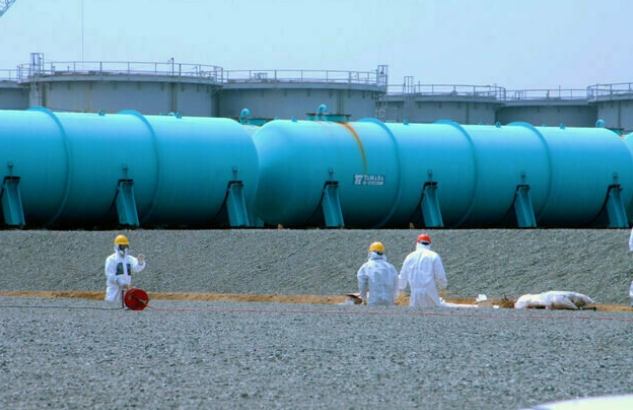
The Pacific faces a radioactive future
11th July 2022
Japan plans to dump radioactive water from Fukushima into the Pacific Ocean, but its effects on Pacific nations are not clear.
When the earthquake and tsunami hit Fukushima, Japan in 2011, it resulted in the tragic death of many people, and severe damage to a nuclear power plant, which required a constant flow of cooling water to prevent further catastrophe. More than 1.3 million tonnes of radionuclide-contaminated water have now been retained on-site. The Fukushima plant operator, Tokyo Electric Power Company (TEPCO), with the approval of the Japanese Government, plans to begin releasing this water into the Pacific Ocean starting next year. But compelling, data-backed reasons to examine alternative approaches to ocean dumping have not been adequately explored.
Claims of safety are not scientifically supported by the available information. The world’s oceans are shared among all people, providing over 50 percent of the oxygen we breathe, and a diversity of resources of economic, ecological and cultural value for present and future generations. Within the Pacific Islands in particular, the ocean is viewed as connecting, rather than separating, widely distributed populations.
Releasing radioactive contaminated water into the Pacific is an irreversible action with transboundary and transgenerational implications. As such, it should not be unilaterally undertaken by any country. The Pacific Islands Forum, which meets on July 12, has had the foresight to ask the relevant questions on how this activity could affect the lives and livelihoods of their peoples now and into the future. It has drawn on a panel of five independent experts to provide it with the critical information it needs to perform its due diligence.
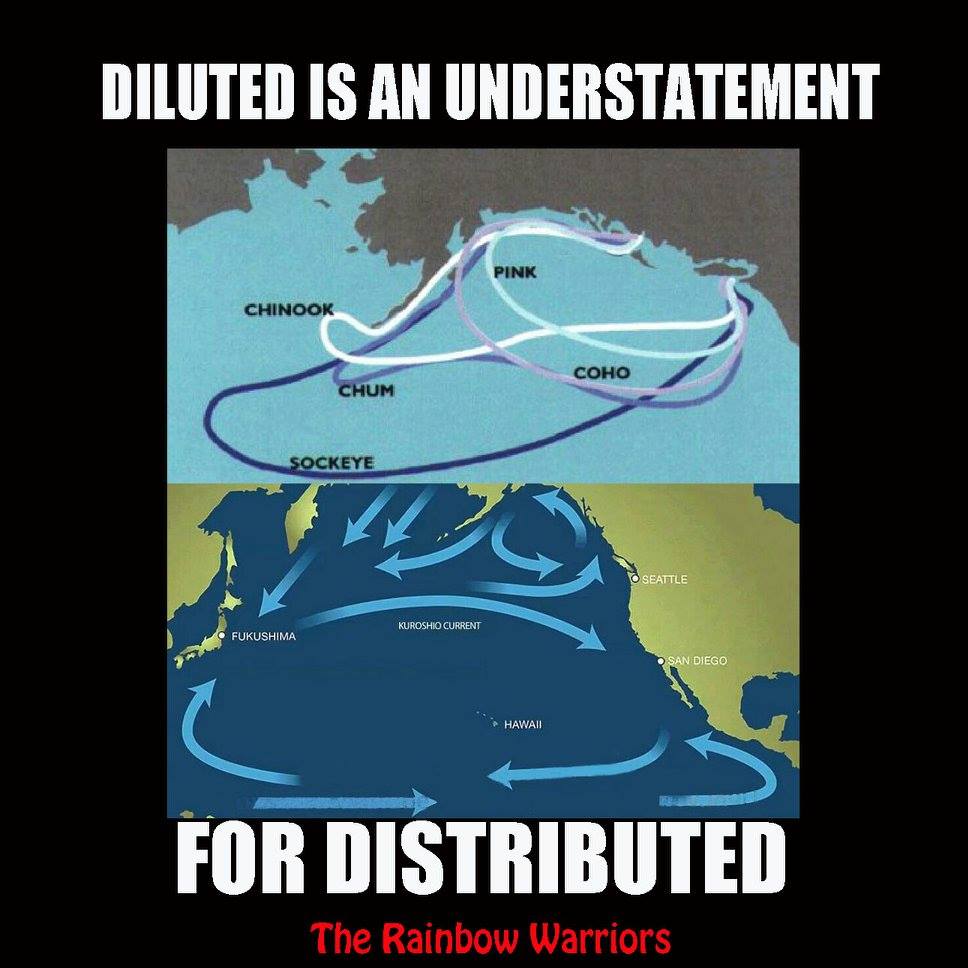
No one is questioning the integrity of the Japanese or International Atomic Energy Agency (IAEA) scientists, but the belief that our oceans’ capacity to receive limitless quantities of pollutants without detrimental effects is demonstrably false. For example, tuna and other large ocean-going fish contain enough mercury from land-based sources to require people, especially pregnant women and young children, to limit their consumption. Tuna have also been found to transport radionuclides from Fukushima across the Pacific to California. Phytoplankton, microscopic plant-like life that floats free in the ocean, can capture and accumulate a variety of radioactive elements found in the Fukushima cooling water, including tritium and carbon-14. Phytoplankton is the base for all marine food webs. When they are eaten, the contaminants would not be broken down, but stay in the cells of organisms, accumulating in a variety of invertebrates, fish, marine mammals, and humans. Marine sediments can also be a repository for radionuclides, and provide a means of transfer to bottom-feeding organisms.
The justification for dumping is primarily based on the chemistry of radionuclides and the modelling of concentrations and ocean circulation based on assumptions that may not be correct. It also largely ignores the biological uptake and accumulation in marine organisms and the associated concern of transfer to people eating affected seafood. Many of the 62-plus radionuclides present in the Fukushima water have long periods over which they can cause harmful effects, called half-lives, of decades to millennia. For example, Cesium-137 has a half-life of 30 years, and Carbon-14, more than 5,700 years. Issues like this really do matter, as once radioactive materials enter the human body, including those that release relatively low-energy radiation (beta particles), they can cause damage and increase the risk of cancers, damage to cells, to the central nervous system and other health problems.
The Fukushima nuclear disaster is not the first such event, and undoubtedly won’t be the last. The challenges of cleaning-up, treating and containing the contaminated cooling water is also an opportunity to find and implement safer and more sensible options and setting a better precedent to deal with future catastrophes. The Pacific region and its people have already suffered from the devastation caused by United States, British and French nuclear testing programmes. Documented problems have led to international agreements to curtail such testing. In this case, the members of the Pacific Islands Forum are key stakeholders that are finding a unified voice against the planned dumping of radionuclides and other pollutants into the ocean that surrounds their homes, and holds their children’s futures.
The world’s oceans are in trouble and experiencing mounting stress from human-induced impacts tied to global climate change, overfishing, and pollution, with consequential cumulative effects on living resources and the people who depend on them. Pollution, particularly from land-based sources, is one of the greatest threats and challenges to ocean resource sustainability and associated elements of human health.
Japan and TEPCO plan to begin dumping radioactively contaminated water into the Pacific Ocean in 2023. A more deliberative and prudent approach would adhere to the precautionary principle – that if we are not sure no harm will be caused, then we should not proceed. The rush to dilute and dump is ill-advised and such actions should be postponed until further due diligence can be performed. Sound science, and a much more careful consideration of the alternatives, and respect for the health and well-being of the peoples of the Pacific region, all demand it. Far better and transparent communications are needed to provide accurate and adequate information for leaders, resource managers and stakeholders to use in their deliberations on the way forward. If the Island nations lead, other nations are sure to follow.
Robert H. Richmond, PhD is a Research Professor and Director of the Kewalo Marine Laboratory, University of Hawaii at Manoa. He is also a Pew Fellow in Marine Conservation, Aldo Leopold Fellow in Environmental Leadership and Fellow of the International Coral Reef Society. He is part of the advisory panel to the Pacific Islands Forum on the Fukushima dumping, who funded this research. He gratefully acknowledges the contributions of the other panel members, Dr Arjun Makhijani, Dr Ken Buesseler, Dr Ferenc Dalnoki Veress, and Dr Tony Hooker.
https://www.bignewsnetwork.com/news/272615799/the-pacific-faces-a-radioactive-future
New Chairman of All Fishermen’s Federation “firmly opposed” to discharge of treated water The person who agreed to an interview at METI was… a retired counselor, not a minister

June 27, 2022
Masanobu Sakamoto, chairman of the National Federation of Fishermen’s Associations (ZENYOREN), visited the Ministry of Economy, Trade and Industry (METI) on June 27 for the first time since becoming chairman, and handed a special resolution to Akira Matsunaga, counselor at METI, stating “firm opposition” to the ocean discharge of water contaminated from the Fukushima Daiichi Nuclear Power Plant (Okuma-cho and Futaba-cho, Fukushima Prefecture), which is mainly radioactive tritium, after purification and treatment.
Sakamoto is the chairman of the Chiba Prefectural Fisheries Federation, and was recently appointed chairman of the All Fisheries Federation at its general meeting on March 23. Meanwhile, Mr. Matsunaga, who responded to the letter, is a former director general of the Japan Patent Office who was involved in post-nuclear power plant reconstruction at the Cabinet Office and the Agency for Natural Resources and Energy, but retired at the end of March this year to become a part-time counselor.
According to METI, the meeting with Minister Koichi Hagiuda did not take place because he could not adjust his schedule in time. Immediately after the interview, the ministry monitor showing Hagiuda’s schedule was marked “meeting.
Sakamoto said at the meeting, “Regardless of the replacement of the chairman, we will remain opposed to the proposal,” and called for the creation of a fund for the continuation of the fishing industry, such as support for fuel costs for fishing boats, in addition to the fund for reputational damage measures and other measures budgeted by the government.
Mr. Matsunaga said, “The entire ministry will work together to present effective and concrete measures.
After the meeting, Mr. Sakamoto responded to media interviews, saying, “Eleven years ago, when the accident occurred in Chiba Prefecture, I myself suffered from severe reputational damage. Based on my own experience, I cannot condone (the release of radioactive materials into the ocean). As for not being able to meet with Mr. Hagiuda, he said, “Naturally, I would like to meet with the minister as soon as possible and convey my thoughts directly to him. (Kenta Onozawa)
Contaminated water generated when cooling water injected into reactors No. 1 through No. 3 at the Fukushima Daiichi Nuclear Power Plant comes into contact with nuclear fuel debris that melted down in the accident and mixes with groundwater and rainwater that has flowed into the buildings. Tritium, a radioactive substance that cannot be removed, remains in concentrations exceeding the national discharge standard. In April 2021, the government decided to discharge the treated water into the ocean by the spring of 2011. TEPCO is proceeding with a plan to use a large amount of seawater to dilute the tritium concentration to less than 1/40th of the discharge standard and discharge the water into the sea.
https://www.tokyo-np.co.jp/article/186025?fbclid=IwAR3Fw9AOVsfvzCZumK6LhzD__csp1hPC0YdUNksj9lPYN5AxPgj6152zM5E
All fishermen’s federation “opposition to discharge will remain unchanged” Special resolution on treated water from nuclear power plant
June 23, 2022
The National Federation of Fishermen’s Associations (ZENYOREN) held an ordinary general meeting in Tokyo on June 23, and unanimously adopted a special resolution stating that it remains “firmly opposed” to the ocean discharge of treated water from TEPCO’s Fukushima Daiichi Nuclear Power Plant. This is the third resolution opposing the ocean discharge.
The resolution pointed out that the government’s April response to a request from the Federation of Fishermen’s Associations at the time of the decision to discharge nuclear fuel into the ocean lacked specific measures to explain the situation to fishermen and the public, or to deal with harmful rumors. He stressed, “We demand that the government provide careful and sincere explanations and effective concrete measures to gain the understanding of the public.
Vice President Masanobu Sakamoto, who was elected as the new president at the general meeting, stated at the press conference that “ocean discharge is a matter of life and death for fishermen.
https://www.chunichi.co.jp/article/494903?fbclid=IwAR2rM7hA8hi4Q9oWxOs8_F6o576aTCeoQh2k-2RelZEJSzi3pTXpqlfzst0
No to Fukushima discharge

1 This Month

of the week – Shut Down Drone Warfare!


Tell the Ukrainian Government to Drop Prosecution of Peace Activist Yurii Sheliazhenko

Petition to revoke the licensing of the Near Surface Nuclear Disposal Facility (NSDF) at Chalk River. https://www.ourcommons.ca/petitions/en/Petition/Details?Petition=e-7247
To see nuclear-related stories in greater depth and intensity – go to https://nuclearinformation.wordpress.com
-
Archives
- April 2026 (19)
- March 2026 (251)
- February 2026 (268)
- January 2026 (308)
- December 2025 (358)
- November 2025 (359)
- October 2025 (376)
- September 2025 (257)
- August 2025 (319)
- July 2025 (230)
- June 2025 (348)
- May 2025 (261)
-
Categories
- 1
- 1 NUCLEAR ISSUES
- business and costs
- climate change
- culture and arts
- ENERGY
- environment
- health
- history
- indigenous issues
- Legal
- marketing of nuclear
- media
- opposition to nuclear
- PERSONAL STORIES
- politics
- politics international
- Religion and ethics
- safety
- secrets,lies and civil liberties
- spinbuster
- technology
- Uranium
- wastes
- weapons and war
- Women
- 2 WORLD
- ACTION
- AFRICA
- Atrocities
- AUSTRALIA
- Christina's notes
- Christina's themes
- culture and arts
- Events
- Fuk 2022
- Fuk 2023
- Fukushima 2017
- Fukushima 2018
- fukushima 2019
- Fukushima 2020
- Fukushima 2021
- general
- global warming
- Humour (God we need it)
- Nuclear
- RARE EARTHS
- Reference
- resources – print
- Resources -audiovicual
- Weekly Newsletter
- World
- World Nuclear
- YouTube
-
RSS
Entries RSS
Comments RSS
 nuclear-news