Fukushima operator accused of cover-up over ‘contaminated’ water set to be poured into the Pacific
 Fukushima Dai-ichi operator Tepco said that concerns over security prevented independent testing of the water being stored in vast tanks
Fukushima operator accused of cover-up over ‘contaminated’ water set to be poured into the Pacific
19 November 2019
The Japanese government has been accused of a cover-up after it refused to allow independent testing of water from the Fukushima power plant that is likely to be released into the Pacific Ocean.
Officials at the industry ministry on Monday said the water stored at the crippled nuclear site was “safe” to release into the Pacific Ocean, despite concerns about radioactive material from environmental and citizens’ groups.
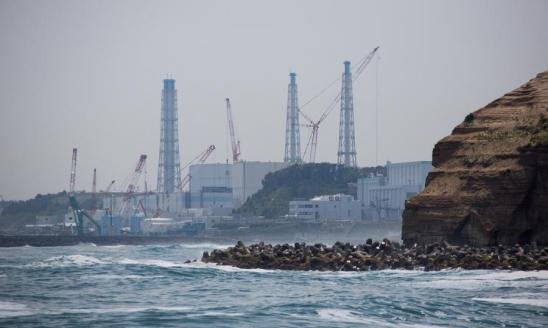
Following a recent visit to the plant, the Tokyo Electric Power Co (Tepco) told The Telegraph that concerns over security prevented independent testing.
“Other organisations are not permitted to carry out tests of the water”, Hideki Yagi, a spokesman for Tepco, told The Telegraph.
“If we are going to allow external organisations to test the treated water then we would need to go through very strict procedures and due process because that water is contaminated. If it is taken outside this facility, then there need to be strict regulations”.
Both Greenpeace and the Citizens’ Nuclear Information Centre (Cnic), an anti-nuclear lobbying group, suggested that Tepco may be trying to cover up the true scale of contamination of water stores at the site.
Shaun Burnie, senior nuclear specialist for Greenpeace, says the refusal to permit third-party testing only serves to raise new concerns about plans to discharge the water into the ocean.
“Moving nuclear material always carries risk, but for the purpose of independent analysis it would be justified”, he said. “Tepco has lost trust across society in Japan as well as in the international community, including in South Korea, and providing samples for analysis would be in their best interests – unless they are covering something up.
“There are many questions about the effectiveness of Tepco’s … technology so providing samples that could verify their reports on content would go some way to demonstrating their commitment to transparency”, Mr Burnie added.
“It won’t remove doubts that they are covering up major issues at the site – but would be an improvement on the current situation”.
Hideyuki Ban, co-director of Cnic, said: “There would need to be lots of checks because there is a lot of water, but right now it looks very much to the outside world that they are trying to cover something up – as they have a long history of doing – and it would be very much in their best interests to be transparent on this.
“If they don’t, how will they ever get back any of the public trust that they have lost completely since the accident?” Mr Ban said.
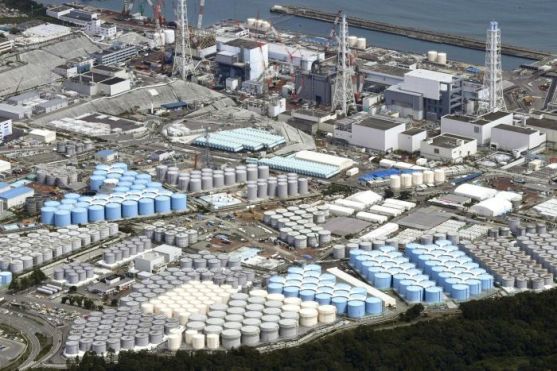
During a recent visit to the plant, Tepco officials told The Telegraph that a decision on how to dispose of the water must be made soon as tanks at the site are already near capacity and there is limited space to construct new storage facilities. The company estimates that capacity will be reached in the summer of 2022.
The industry ministry on Monday told a government committee considering methods to dispose of the more than a million tons of water presently being stored in hundreds of tanks at the site that the risk to humans associated with releasing the water into the ocean would be “small”.
Discharging the water into the Pacific over the course of a year would amount to between just one-1,600th and one-40,000th of the radiation to which humans are naturally exposed, the ministry officials told the committee.
Estimates indicate that annual radiation levels near the release point after a release would be between 0.052 and 0.62 microsieverts at sea, the officials said, and 1.3 microsieverts in the atmosphere. That compares with around 2,100 microsieverts that humans come into contact with each year in everyday life.
The ministry how emphasised that no final decision has been reached on how or when the water will be disposed of.
The water became contaminated with radiation when it was used to cool three of the six reactors at the plant that suffered melt-downs after being damaged in the March 2011 earthquake and tsunami. Ground water is also seeping into the basement levels of the reactor buildings, with an additional 120 tons of water accumulating every day.
Tepco was forced to admit earlier this year that efforts to remove varying amounts of 62 radionuclides – including strontium, iodine, caesium and cobalt – from the water through the ALPS equipment had not been completely successful.
Officials of the company have added that testing of the water is presently carried out by Tokyo Power Technology Ltd, which it claims has advanced analytical skills and “very high” reliability. Tokyo Power Technology is a subsidiary of Tepco that was set up two years after the Fukushima disaster.
Monitoring is also conducted by the government-funded Japan Atomic Energy Agency and the Japan Chemical Analysis Centre.
Azby Brown, lead researcher for Tokyo-based monitoring organisation Safecast Japan, a group that monitors radiation, said the lack of transparency means the risks to marine life of releasing the water are relatively unknown.
“We don’t have enough data to evaluate the impact that any release with those concentrations will have on marine life,” he said.
“The expected doses that they are talking about are quite low and therefore the amount of radiation that is absorbed into marine life and then into humans when they eat fish would also be quite low.
“But that has to be full of caveats because the way that information has been presented is confusing and not transparent so ordinary people do not understand and cannot make informed decisions.”
 Tepco has been accused of shielding up the trusty scale of contamination of water stores at the positioning
Fukushima accused of cover-up over ‘contaminated’ water set to be poured into the Pacific
November 19, 2019
The Eastern authorities has been accused of a quilt up after it refused to enable honest checking out of water from the Fukushima vitality plant that is doubtless to be launched into the Pacific Ocean.
Officers at the industry ministry on Monday said the water saved at the crippled nuclear plan used to be “capable” to release into the Pacific ocean, despite concerns about radioactive cloth from environmental and citizens’ groups.
Following a most modern consult with to the plant, the Tokyo Electrical Energy Co (Tepco) instructed The Telegraph that concerns over security prevented honest checking out.
“Assorted organisations are now not permitted to internet exams of the water”, Hideki Yagi, a spokesman for Tepco, instructed The Telegraph.
“If we’ll enable exterior organisations to take a look at the treated water then we would deserve to struggle thru very strict procedures and due route of because that water is rotten. If it is taken originate air this facility, then there wish to be strict rules”.
The corporate estimates water storage ability will seemingly be reached within the summer season of 2022
Both Greenpeace and the Electorate’ Nuclear Files Centre (Cnic), an anti-nuclear lobbying community, instructed that Tepco might perhaps well perhaps be attempting to quilt up trusty scale of contamination of water stores at the positioning.
Shaun Burnie, senior nuclear specialist for Greenpeace, says the refusal to permit third-internet collectively checking out only serves to fetch unique concerns about plans to discharge the water into the ocean.
“Transferring nuclear cloth repeatedly carries possibility, but for the unbiased of honest diagnosis it might perhaps perhaps truly perhaps be justified”, he said. “TEPCO has misplaced belief across society in Japan moreover within the worldwide community, including in South Korea, and providing samples for diagnosis might perhaps well perhaps be in their most efficient interests – unless they are maintaining something up.
“There are a form of questions regarding the effectiveness of Tepco’s … technology so providing samples that can additionally voice their reports on affirm material would scamper some technique to demonstrating their dedication to transparency”, Mr Burnie added.
“It will additionally now not settle away doubts that they’re maintaining up foremost points at the positioning – but might perhaps well perhaps be an development on the sizzling worry”.
Hideyuki Ban, co-director of Cnic, said: “There would deserve to be tons of assessments because there is a form of water, but decent now it looks to be very powerful to the originate air world that they’re attempting to quilt something up – as they bear a lengthy history of doing – and it might perhaps perhaps truly perhaps be very powerful in their most efficient interests to be clear on this.
“In the occasion that they don’t, how will they ever internet attend any of the general public belief that they bear misplaced fully since the accident?” Mr Ban said.
The tsunami water engulfed the vitality plant
Credit:
AP
During a contemporary consult with to the plant, Tepco officers instructed The Telegraph that a resolution on easy suggestions to internet rid of the water desires to be made rapidly as tanks at the positioning are already advance ability and there’s dinky suppose to create unique storage facilities. The corporate estimates that ability will seemingly be reached within the summer season of 2022.
The industry ministry on Monday instructed a authorities committee brooding about suggestions to internet rid of the higher than 1 million a form of water presently being saved in tons of of tanks at the positioning that the possibility to humans connected to releasing the water into the ocean might perhaps well perhaps be “small”.
Discharging the water into the Pacific over the route of a yr would quantity to between decent one-1,600th and one-40,000th of the radiation to which humans are naturally exposed, the ministry officers instructed the committee.
Estimates conceal that annual radiation phases advance the release level after a release might perhaps well perhaps be between 0.052 and nil.62 microsievert at sea, the officers said, and 1.3 microsieverts within the ambiance. That compares with spherical 2,100 microsieverts that humans reach into contact with each and each yr in everyday lifestyles.
The ministry how emphasised that no final resolution has been reached on how or when the water will seemingly be disposed of.
The water turned rotten with radiation when it used to be used to frosty three of the six reactors at the plant that suffered soften-downs after being broken within the March 2011 earthquake and tsunami. Ground water is additionally seeping into the basement phases of the reactor buildings, with an further 120 a form of water collecting each and on daily basis.
Tepco used to be compelled to admit earlier this yr that efforts to settle away varying quantities of 62 radionuclides – including strontium, iodine, caesium and cobalt – from the water thru the ALPS instruments had now not been fully a hit.
Officers of the corporate bear added that checking out of the water is presently implemented by Tokyo Energy Technology Ltd, which it claims has evolved analytical expertise and “very high” reliability. Tokyo Energy Technology is a subsidiary of Tepco that used to be arrange two years after the Fukushima catastrophe.
The magnitude 9 earthquake caused a large natural catastrophe
Credit:
EPA
Monitoring is additionally performed by the authorities-funded Japan Atomic Energy Agency and the Japan Chemical Prognosis Centre.
Azby Brown, lead researcher for Tokyo-essentially based totally mostly monitoring organisation Safecast Japan, a community that shows radiation, said the dearth of transparency technique the dangers to marine lifetime of releasing the water are quite unknown.
“We blueprint now not bear ample recordsdata to deem the affect that any release with these concentrations might perhaps well perhaps bear on marine lifestyles”, he said..
“The anticipated doses that they’re talking about are fairly low and attributable to this truth the quantity of radiation that is absorbed into marine lifestyles after which into humans after they eat fish would additionally be fairly low
“Nevertheless that must be paunchy of caveats for the reason that technique that recordsdata has been provided is confusing and now not clear so traditional of us carry out now not understand and might perhaps well perhaps now not assemble instructed decisions.”
TEPCO estimates tritium volume for disposal from Fukushima plant

Japan’s METI says it’s ‘safe’ to dump radioactive water from Fukushima nuclear disaster into ocean

Japan accused of trying to justify nuclear dump
Citizens’ Committee on Nuclear Energy proposes long-term storage for treated water from damaged Fukushima Daichi plant

5th October 2019
On October 3, the Citizens’ Committee on Nuclear Energy, whose members include academics, technical experts, and NGOs, made a new proposal to deal with contaminated water from the damaged Fukushima Daiichi Nuclear Plant after the water has been treated. The proposal, submitted to Ministry of Economy, Trade and Industry (METI), the Ministry of the Environment (MOE), and the Nuclear Regulation Authority, is to convert the treated water to solid form by mixing with mortar, and storing it on land. Citizens’Comittee on Nuclear Energy (CCNE)
 Figure 1 (Prepared by Yasuro Kawai, Citizens’ Committee on Nuclear Energy, for October 3, 2019 press conference)
However, Tokyo Electric Power Company (TEPCO) rejected the concept of large-tank storage, claiming that it takes three years to install each tank, that the efficiency of site utilization is not significantly different from that of tanks currently being used, that a floating roof design may result in rainwater mixing with the contents, and that there would be major volume of leakage in the event of damage to the tanks.
Those claims were rebuffed in a presentation by Yasuro Kawai of the Citizens’ Committee on Nuclear Energy (regulations subcommittee) at a press conference on October 3. He said that the installation of large tanks takes 1.5 to 2 years, that they actually improve the efficiency of site utilization, that a dome-shaped design could be used to prevent mixing with rainwater, that large tanks are robust and have a proven track record in oil storage, and that perimeter walls would be needed as a measure to prevent leakage.
Advantages and disadvantages of mortar solidification proposal
The proposal by the Citizens’ Committee on Nuclear Energy is to mix contaminated water with cement and sand to solidify it, then pour the mixture into concrete tanks and store it partially underground. Mr. Kawai described achievements using this approach at the Savannah River nuclear reservation in South Carolina, the United States.
Discussion about land-based storage has finally begun
The Citizens’ Committee on Nuclear Energy has long taken the position that treated water from the so-called Advanced Liquid Processing System (ALPS) should not be released into the ocean. It has been proposing land-based storage using large tanks, an approach that has a proven track record for the storage of oil reserves.
In August 2018, at a hearing held by METI’s ALPS subcommittee, fisheries-related stakeholders and many other participants expressed the view that long-term land-based storage should be used for the treated water. In response, Chairman Kazuyoshi Yamamoto promised to consider the land based storage plan as an option, and the topic finally came up at the 13th sub-committee meeting, held on August 9, 2019.
 Figure 2 (Prepared by Yasuro Kawai, Citizens’ Committee on Nuclear Energy, for October 3, 2019 press conference)
The advantages are that no radioactive substances need to be released into the environment, and the approach works with existing technologies. Disadvantages include low volumetric efficiency and evaporation of moisture due to heat generation.
Local community consent would also be required, because the site would become a permanent disposal site.
Is there really a lack of space for onsite storage?
Media have repeatedly reported claims that onsite storage space will run out by the summer of 2022, but is that really true? According to documents from on September 27, TEPCO explained to the ALPS Subcommittee that the site has about 81,000 square meters reserved for temporary storage facilities for spent fuel and fuel debris.
 Figure 3 (Document 3, 14th subcommittee meeting on handling of ALPS treated water)
TEPCO also claims that in the first half of the 2020s, the site is required for facilities for analysis, mock-up facilities for fuel debris retrieval, equipment and material storage, and research facilities, etc.
 Figure 4 (Document 3, 14th subcommittee meeting on handling of ALPS treated water)
But is it realistic and necessary to attempt to remove fuel debris?
The location and condition of the fuel debris is not precisely known due to high radioactivity. An unreasonable effort to remove it will expose workers to a large amount of radioactivity.
The Citizens’ Committee on Nuclear Energy has proposed a “debris non-removal” option of keeping the debris isolated for 100 years, after which it would be dealt with, as one option that should be seriously considered, in order to avoid technical risks, enormous costs, and radiation exposure of workers.
Is it necessary to construct research facilities on the site?
Furthermore, at METI’s ALPS subcommittee, committee members have asked many questions, for example, about giving consideration to using sites where soil is currently being dumped, and expansion of the current site. In all cases, METI responded that such options were “difficult.” However, there was no evidence of any serious consideration having been made of whether or not the ideas raise were really possible.

METI should immediately consider the land based storage proposal from the Citizens’ Committee on Nuclear Energy by setting up an ALPS subcommittee or a new committee.
By Kanna Mitsuta
Note: The above proposal was covered by Kyodo News, and Kahoko Shimpo news.
・Kahoko Shimpo: “Experts Propose Mortar Solidification for Treated Water from Fukushima Daiichi Nuclear Power Plant” (4-Oct-2019, in Japanese)
・Kyodo News: “Treated water should go into long-term storage and solidification treatment, says citizens’ group opposed to ocean discharge” (3-Oct-2019, in Japanese)
Related posts by FoE Japan (in Japanese unless noted)
・“FoE Japan objects to statement by Japan’s former Environment Minister: He undermined discussions on long-term storage of contaminated water at Fukushima Daiichi nuclear plant”
Japanese: http://www.foejapan.org/energy/library/190911.html
English: http://www.foejapan.org/en/energy/doc/190911.html
・“Big problems at the public hearing on contaminated water: Many speakers oppose ocean discharge”
http://www.foejapan.org/en/energy/doc/191005.html
Korea brings up Fukushima’s radioactive water disposal issue at WHO

South Korea Brings Fukushima Radioactive Water Sea Dumping Issue at International London Convention and Protocol of Marine Pollution
S. Korea raises issue of Fukushima’s contaminated water dump to international convention
Japan says it will keep international community updated on progress
 Song Myeong-dal, the Ministry of Oceans and Fisheries ocean environment policy officer, represents South Korea during a consultative meeting of contracted parties to the London Convention and London Protocol on Oct. 7.
Oct.11,2019
The South Korean Ministry of Oceans and Fisheries (MOF) raised the danger of Japan’s ocean dump of contaminated water from the Fukushima Nuclear Power Plant as an international issue at a meeting in London concerning an international convention. Japan responded by saying it would keep the international community informed of the progress on an ongoing basis. The developments suggest South Korea was successful in raising international interest in and concern about Japan’s irresponsible approach to the disposal of contaminated water from Fukushima.
On Oct. 10, the MOF reported that the day before, representatives had attended a consultative meeting of contracted parties to the London Convention and Protocol on the Prevention of Marine Pollution by Dumping of Wastes and Other Matter – which opened in London on Oct. 7 – to express concerns to Japan concerning the handling of the contaminated water from Fukushima and request ongoing interest in the issue at the consultative meeting level. The meeting was attended by representatives of 47 contracted parties, as well as international organizations such as the OECD and NGOs including Greenpeace.
“The Japanese government has recently talked several times about the ‘unavoidability’ of an ocean dump as a way of dealing with contaminated water from the Fukushima Nuclear Power Plant,” Song Myeong-dal, MOF ocean environment policy officer and senior South Korean representative at the meeting, said on Oct. 9.
“If [Japan] does release contaminated water from the plant into the ocean, this could have an impact on the global oceanic environment and be in violation of the aims of the London Protocol,” Song warned. Article 2 of the London Convention and Protocol states that contracting parties “shall individually and collectively protect and preserve the marine environment from all sources of pollution and take effective measures [. . . ] to prevent, reduce and where practicable eliminate pollution caused by dumping or incineration at sea of wastes or other matter.”
Song stressed that the Japanese government “needs to be transparent about its means of handling contaminated nuclear power plant water, adequately communicating and discussing important matters such as its handling methods and schedule with neighboring countries and the international community in the future and deciding on a safe and rational approach.”
“In order to find a method of contaminated nuclear power plant water handling that the international community can be confident is safe, I think this matter should be discussed on an ongoing basis by the consultative meeting of contracted parties to the London Convention and Protocol ,” he suggested.
 A consultative meeting of contracted parties to the London Convention and London Protocol on Oct. 7.
In response, a representative of the Japanese government reiterated the position that the matter was “not something to be discussed by the consultative meeting,” adding that there had been “no decision within the Japanese government on how to handle the contaminated nuclear power plant water” and that the international community would be “kept informed about the process.” The representative also presented information on the water’s handling that was previously shared in September with locally stationed diplomats in Japan.
Greenpeace expresses similar concern about ocean dump
The issue of contaminated water had not previously been discussed within the context of the London Protocol at past consultative meetings since the Fukushima Nuclear Power Plant disaster. In addition to South Korea, representatives from China and Chile also expressed concerns at the latest meeting over the possibility of Japan dumping the contaminated water into the sea and suggested that the issue would be the focus of ongoing discussions at the meeting.
The NGO Greenpeace similarly shared concerns about the possibility of an ocean dump in a document at the meeting containing “concerns and questions about the Fukushima Nuclear Power Plant contaminated water release plan.” Contending that the Japanese system for handling contaminated nuclear power plant water is “inefficient,” it proposed that the international community work together on finding a solution.
During a Compliance Group meeting held ahead of the consultative meeting on Oct. 3–4, the South Korean representative strongly emphasized the need to review the ocean release of radioactive waste matter within the context of the London Protocol, insisting that Japan should not be allowed to make a unilateral decision on whether to proceed with the dumping of contaminated nuclear power plant water into the ocean. The Compliance Group meeting was established to discuss whether contracted parties to the protocol are complying with their obligations.
“In bilateral meetings with major countries and through issues raised in the Compliance Group setting, the South Korean government rallied support for the position that this matter should be addressed at the consultative meeting,” said Song Myeong-dal.
“We will continue to make such requests at this meeting and other international meetings going forward so that the Japanese government can find an approach that we can be confident is safe,” he pledged.
http://www.hani.co.kr/arti/english_edition/e_international/912889.html
South Korea Brings Fukushima Wastewater Issue to London Convention Meeting
October 11, 2019
The South Korean Ministry of Oceans and Fisheries (MOF) raised the danger of Japan’s contaminated water from the Fukushima Nuclear Power Plant as an international issue at a meeting to the London Convention.
South Korea’s Ministry of Oceans and Fisheries (MOF) deemed the danger of Japan’s contaminated water from the Fukushima Nuclear Power Plant as an international issue at a meeting to the London Convention.
The London Convention controls pollution of the seas and oceans by dumping and covers the deliberate disposal of wastes and other matter into the world’s waters, according to the U.S. EPA. The discharged water will have a direct influence on the marine life and ecosystem in its territorial waters and eventually the people in Korea, according to the Korea Times.
As of Aug. 22, approximately 1.1 million tons of contaminated water is being stored in 977 tanks at the decommissioned power plant in Fukushima, which was destroyed by the 2011 earthquake and ensuing tsunami.
The Japanese government said recently it will only build more facilities through 2020, which will bring the total stored volume to 1.37 million tons, according to Science Page News. The storage facilities are projected to be filled by August 2020, which suggests that there will be no more tanks to hold the 170 tons of radiation-contaminated water created daily.
“If [Japan] does release contaminated water from the plant into the ocean, this could have an impact on the global oceanic environment and be in violation of the aims of the London Protocol,” said Song Myeong-dal, MOF ocean environment policy officer and senior South Korean representative. “In order to find a method of contaminated nuclear power plant water handling that the international community can be confident is safe, I think this matter should be discussed on an ongoing basis by the consultative meeting of contracted parties to the London Convention and Protocol.”
In response, a representative of the Japanese government said that the matter was not something to be discussed by the consultative meeting and that the international community would be kept informed about the process, reported the Hankyoreh.
“There is another option to deal with radioactive water. Japan can keep it in the tanks until the radiation level becomes low enough. But this takes time and money. It will take about 300 years until it is okay to discharge the water,” said Kim Ik-jung, a former medical professor and member of the Nuclear Safety and Security Commission to the Korea Times.
South Korea plans to continue to raise the wastewater issue to the international community until Japan comes up with a safe and acceptable solution, according to the Hankyoreh.
S. Korea raises worries over Fukushima waste water at global maritime conference

At Fukushima plant, a million-tonne headache: Radioactive water
 A Tokyo Electric Power Company researcher shows processed water where tritium remains, at a lab in Fukushima Dai-ichi nuclear plant in Okuma, Fukushima prefecture, Japan, on Oct 2, 2019.
Oct 5, 2019,
FUKUSHIMA (AFP) – In the grounds of the ravaged Fukushima Daiichi nuclear plant sits a million-tonne headache for the plant’s operators and Japan’s government: tank after tank of water contaminated with radioactive elements.
What to do with the enormous amount of water, which grows by around 150 tonnes a day, is a thorny question, with controversy surrounding a longstanding proposal to discharge it into the sea, after extensive decontamination.
The water comes from several different sources: some is used for cooling at the plant, which suffered a meltdown after it was hit by a tsunami triggered by a massive earthquake in March 2011.
Groundwater that seeps into the plant daily, along with rainwater, add to the problem.
A thousand, towering tanks have now replaced many of the cherry trees that once dotted the plant’s ground.
Each can hold 1,200 tonnes, and most of them are already full.
“We will build more on the site until the end of 2020, and we think all the tanks will be full by around the summer of 2022,” said Mr Junichi Matsumoto, an official with the unit of plant operator Tepco in charge of dismantling the site.
Tepco has been struggling with the problem for years, taking various measures to limit the amount of groundwater entering the site.
There is also an extensive pumping and filtration system, that each day brings up tonnes of newly contaminated water and filters out as many of the radioactive elements as possib
HIGHLY RADIOACTIVE
The hangar where the decontamination system runs is designated “Zone Y” – a danger zone requiring special protections.
All those entering must wear elaborate protection: a full body suit, three layers of socks, three layers of gloves, a double cap topped by a helmet, a vest with a pocket carrying a dosimeter, a full-face respirator mask and special shoes.
Most of the outfit has to be burnt after use.
“The machinery filters contain radionuclides, so you have to be very protected here, just like with the buildings where the reactors are,” explained Tepco risk communicator Katsutoshi Oyama.
Tepco has been filtering newly contaminated water for years, but much of it needs to go through the process again because early versions of the filtration process did not fully remove some dangerous radioactive elements, including strontium 90.
The current process is more effective, removing or reducing around 60 radionuclides to levels accepted by the International Atomic Energy Agency (IAEA) for water being discharged.
But there is one that remains, which cannot be removed with the current technology: tritium.
Tritium is naturally present in the environment, and has also been discharged in its artificial form into the environment by the nuclear industry around the world.
There is little evidence that it causes harm to humans except in very high concentrations and the IAEA argues that properly filtered Fukushima water could be diluted with seawater and then safely released into the ocean without causing environmental problems.
‘ABSOLUTELY AGAINST IT’
But those assurances are of little comfort to many in the region, particularly Fukushima’s fishing industry which, like local farmers, has suffered from the outside perception that food from the region is unsafe.
Mr Kyoichi Kamiyama, director of the radioactivity research department at the regional government’s Fisheries and Marine Science Research Centre, points out that local fishermen are still struggling eight years after the disaster.
“Discharging into the ocean? I’m absolutely against it,” he told AFP.
At the national government level, the view is more sanguine.
“We want to study how to minimise the damage (from a potential discharge) to the region’s reputation and Fukushima products,” an Industry Ministry official said.
The government is sensitive to fears that people inside Japan and farther afield will view any discharge as sending radioactive waste into the sea.
No decisions are likely in the near term, with the country sensitive to the international spotlight that will fall on Japan as it hosts the Olympic Games next year.
Environmentalists are also resolutely opposed to any discharge into the sea, and Greenpeace argues that Tepco cannot trusted to properly decontaminate the water.
The solution, said Greenpeace senior nuclear specialist Shaun Burnie, “ultimately can only be long-term storage and processing”.
Japanese Report Confirms Hazardous Radioactive Materials Contained in Contaminated Fukushima Water

Seoul-Tokyo feud deepens over radioactive water

South Korea inspects ships traveling from Fukushima for radiation

Japanese citizens nationwide opposed to Pacific Ocean discharge of Fukushima radioactive water support storage and processing – new opinion poll

October 1, 2019, Tokyo… Nearly four times as many Japanese citizens oppose the discharge of highly contaminated water from the Fukushima Daiichi nuclear plant into the Pacific Ocean than support it, according to a Greenpeace commissioned poll
.(1) The polling of 3000 citizens in Fukushima and Niigata prefecture, as well as wider Japan, showed most expressed their support for storage of over 1 million tons of water rather than release to the Pacific Ocean. Only a small percentage approve of Government plans for discharge. Greenpeace commissioned Rakuten Insight, a pioneer in Japanese online market research to conduct the poll which was conducted between 19-24 September 2019.
The results show some slight variation in opinion between those in Fukushima and those in Niigata and wider Japan. Averaging of the poll revealed that 48.6% oppose marine discharge and 12.9% approve. In Fukushima, 15.9% approve of discharge, while 43.3% oppose. Of those who oppose discharge, nationwide 51% stated that their principal concerns were that discharging will have a negative impact, not just in Fukushima and wider Japan, but also internationally. In Fukushima, 52.9% think it will have a negative effect on Fukushima fisheries.
“We deliberately set out to try and understand the level of understanding Japanese citizens have, what they were thinking and why. They show only a small percentage approve of discharging to the Pacific ocean, and by a wider margin, most oppose. The strongest opposition comes from Niigata citizens and wider Japan. One clear message they send to the Abe government is that the opposition to discharge is not limited to Fukushima fisheries (2) and Fukushima prefecture but is nationwide. Most of those polled who are opposed to discharge show both a concern for the international impacts in the Asia/Pacific region any discharge would have and also the impact it would have on Fukushima fisheries,” said Shaun Burnie, senior nuclear specialist with Greenpeace Germany (Tokyo).
A Greenpeace report (3) in January 2019 showed that METI in 2016 deliberately excluded the option to store and process the contaminated water to remove radioactive tritium, despite receiving technical submissions from U.S. nuclear companies, and the U.S. Department of Energy. The myth promoted by the Government and TEPCO ever since is that tritium removal is not possible. The Greenpeace report also provided analysis on the failure of the ALPS processing systems, which means that over 800,000 tons of contaminated water contains dangerous radionuclides such as Strontium-90, tens to thousands of times above regulatory limits. TEPCO has committed to processing this water – but doubts remain as to how effective this will be.
As the Fukushima nuclear disaster has shown, ocean currents will disperse any future radioactive materials released not only into the Pacific, but also the East China Sea, Sea of Japan/East Sea.(4) In recent weeks, the Japanese government plans for discharge have been challenged by the South Korean government at the International Atomic Energy Agency (IAEA), while Greenpeace addressed the issue to diplomats attending the United Nations Human Rights Council in Geneva given Japan’s obligation to prevent citizens from exposure to harmful radioactivity. The issue will also be debated at the International Maritime Organization meeting of parties to the London Convention and London Protocol which opens on 7th October in London.
“The people of Japan are sending a message to the government that they will not accept deliberate radioactive pollution of the marine environment. As the polling shows, the Japanese people are concerned about the international impact of any discharge. This was never just a domestic issue. The international focus on TEPCO’s water crisis is only going to escalate in the coming months – and the Abe government has the means to end this by making the only justifiable decision – commit to no discharge and instead decide on long term storage and processing,” said Burnie.
Greenpeace commissioned the poll to include the views of 1000 Niigata citizens as they are under direct threat, including from marine contamination, from any restart of TEPCO’s Kashiwazaki Kariwa nuclear plant. TEPCO is seeking the restart of reactors 6&7, despite the existence of major seismic fault lines both adjacent and through the site. The nuclear plant is TEPCO’s last hope of remaining a nuclear plant operator.
Notes:
1 – Greenpeace commissioned Rakuten Insight is a member of the JMRA (Japan Marketing Research AssociationJapan Marketing Research Association) and the ESOMAR (Europe Society Opinion and Market Research Association); poll results (in Japanese) – https://storage.googleapis.com/planet4-japan-stateless/2019/09/b3d20ee4-%E6%B1%9A%E6%9F%93%E6%B0%B4%E6%84%8F%E8%AD%98%E8%AA%BF%E6%9F%BB%E7%B5%90%E6%9E%9C.pdf
2 – Fukushima fishermen concerned for future over release of radioactive water, Justin McCurry The Guardian, 16 September 2019, see https://www.theguardian.com/environment/2019/sep/16/fukushima-fisherman-fear-for-future-over-release-of-radioactive-water
3 – Greenpeace Germany, “TEPCO Water Crisis”, 22 January 2019, Shaun Burnie, see https://storage.googleapis.com/planet4-japan-stateless/2019/06/eef0f147-tepco_water_crisis.pdf
4 – Transport of FNPP1-derived radiocaesium from subtropical mode water in the western North Pacific Ocean to the Sea of Japan https://www.ocean-sci.net/14/813/2018/
Taiwan warns Japan over radioactive water release
‘It will take 300 years before contaminated water is safe to discharge into sea’

1 This Month

of the week – Shut Down Drone Warfare!


Tell the Ukrainian Government to Drop Prosecution of Peace Activist Yurii Sheliazhenko

Petition to revoke the licensing of the Near Surface Nuclear Disposal Facility (NSDF) at Chalk River. https://www.ourcommons.ca/petitions/en/Petition/Details?Petition=e-7247
To see nuclear-related stories in greater depth and intensity – go to https://nuclearinformation.wordpress.com
-
Archives
- April 2026 (68)
- March 2026 (251)
- February 2026 (268)
- January 2026 (308)
- December 2025 (358)
- November 2025 (359)
- October 2025 (376)
- September 2025 (257)
- August 2025 (319)
- July 2025 (230)
- June 2025 (348)
- May 2025 (261)
-
Categories
- 1
- 1 NUCLEAR ISSUES
- business and costs
- climate change
- culture and arts
- ENERGY
- environment
- health
- history
- indigenous issues
- Legal
- marketing of nuclear
- media
- opposition to nuclear
- PERSONAL STORIES
- politics
- politics international
- Religion and ethics
- safety
- secrets,lies and civil liberties
- spinbuster
- technology
- Uranium
- wastes
- weapons and war
- Women
- 2 WORLD
- ACTION
- AFRICA
- Atrocities
- AUSTRALIA
- Christina's notes
- Christina's themes
- culture and arts
- Events
- Fuk 2022
- Fuk 2023
- Fukushima 2017
- Fukushima 2018
- fukushima 2019
- Fukushima 2020
- Fukushima 2021
- general
- global warming
- Humour (God we need it)
- Nuclear
- RARE EARTHS
- Reference
- resources – print
- Resources -audiovicual
- Weekly Newsletter
- World
- World Nuclear
- YouTube
-
RSS
Entries RSS
Comments RSS
 nuclear-news