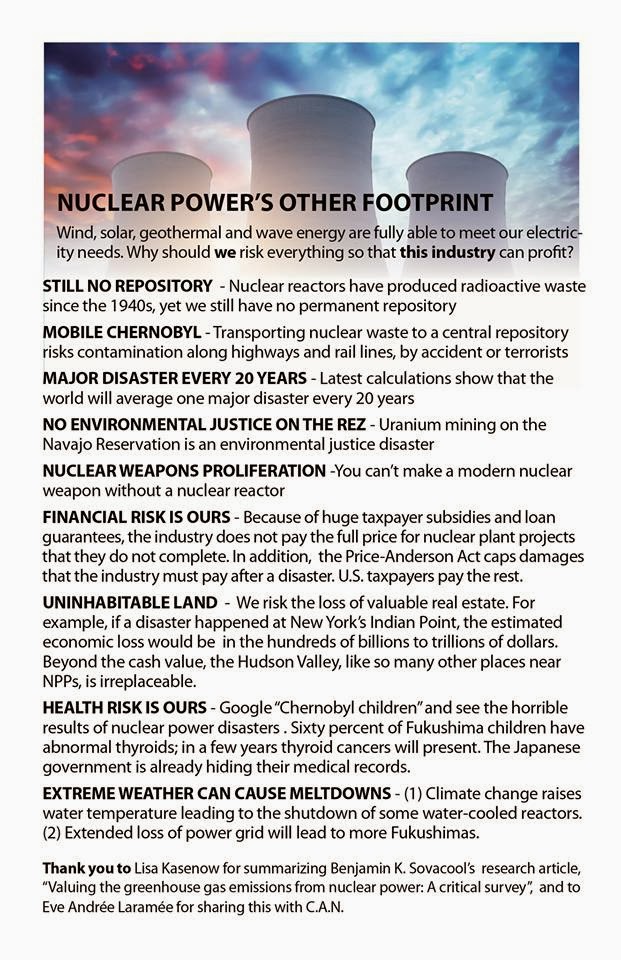
Sendai Nuclear Plant Against All Odds
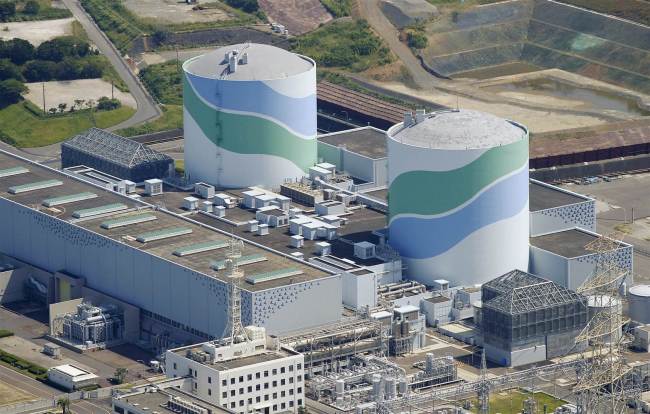
On May 8, 2016 already more than 3 weeks have passed since the start of the earthquakes in Kumamoto and Kumatomoto prefecture, or they are still continuing. Below are the numbers from 14 to 28 April 2016. In just 14 days 1026 earthquakes from various magnitudes.
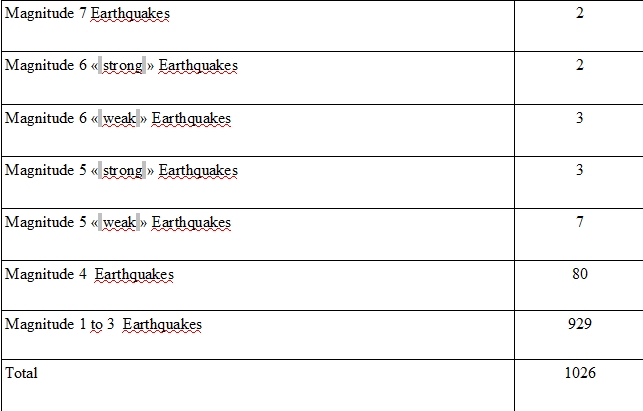
The Sendai nuclear plant in Satsumasendai, Kagoshima prefecture is just 147kms southward from Kumamoto. The whole Kyushu island is earthquake prone due to a main fault.
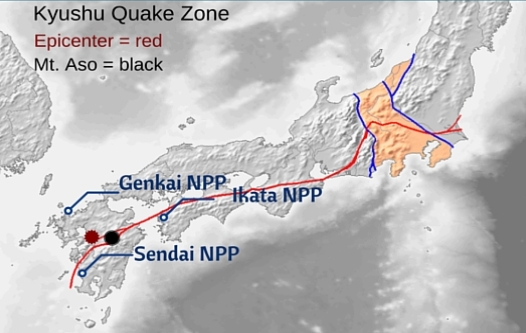
There is also a nice very active volcano in the vicinity, Sakurajima volcano, 72 kms from the Sendai nuclear plant, that is not counting the other eight volcanos on the island.
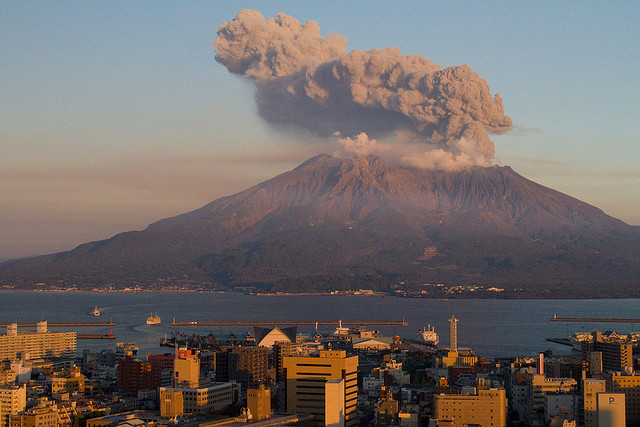
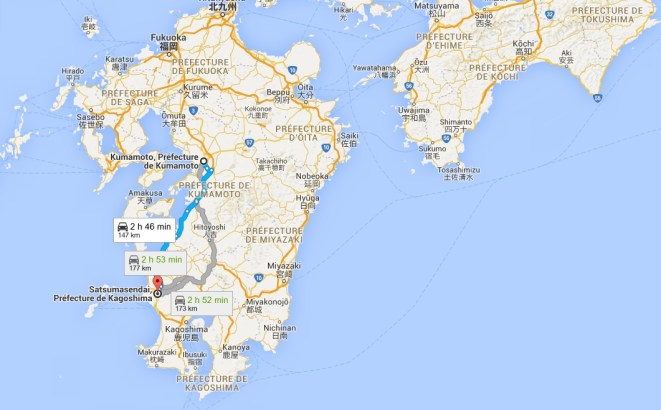
What you think, isn’t it the perfect place to build a nuclear plant?
Source:
Des dommages énormes pour la vie à Kumamoto
http://www.fukushima-blog.com/2016/05/des-dommages-enormes-pour-la-vie-a-kumamoto.html
NHK president rapped over remarks on nuclear power reporting
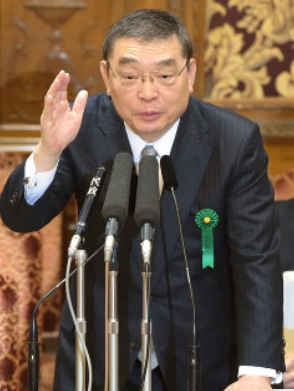
NHK President Katsuto Momii speaks at a House of Councillors budget committee meeting in March 2016.
NHK President Katsuto Momii has come under fire from journalism experts and from within his organization over his recent remarks on how the public broadcaster should report on nuclear power after the Kumamoto earthquakes, in which he was quoted as saying that reports “should be based on official announcements so as not to unnecessarily stir up residents’ anxiety.”
Momii reportedly made the controversial remarks during an April 20 meeting of the public broadcaster’s disaster policy headquarters following the powerful earthquakes in Kumamoto Prefecture.
Asked about the authenticity of his comment during a House of Representatives Internal Affairs and Communications Committee session on April 26, Momii said what he meant by “official announcements” was “basically about figures,” explaining that NHK would report figures measured by radiation monitoring devices set around nuclear plants as well as views presented by the Nuclear Regulation Authority. He added, “It seems a little strange to spread (information that would trigger) concern and anxiety among locals without grounds in terms of avoiding unnecessary confusion.”
In response to Momii’s comment, former Kyodo News reporter and Doshiha University journalism professor Jun Oguro pointed out that official announcements failed to provide information necessary for evacuation to local residents at the time of the Fukushima nuclear disaster following the 2011 Great East Japan Earthquake.
“It is odd to conceal information just because some believe that it could cause panic. Broadcasters should offer various types of information, making clear the sources of their information,” Oguro argued, adding, “Viewers who are on the receiving end of information will sort out what they need. If broadcasters concealed information they had, their journalistic responsibility would be called into question.” He further criticized the NHK president, saying, “His attitude is almost as if he doesn’t trust NHK reporters or viewers.”
In response to the president’s controversial remarks, Masatoshi Nakamura, chairman of NHK’s largest union, the Japan Broadcasting Labor Union, released a comment on the organization’s website on April 25, saying, “As a public broadcaster, its reporting is based on facts uncovered through interviews and research.” He went on to say, “‘The confirmation of ‘facts’ does not come upon announcements or acknowledgment by administrative bodies. The ‘facts’ are unveiled through NHK’s independent research efforts.”
A middle-ranking NHK employee working on the ground told the Mainichi Shimbun, “We have been told by our seniors that those in power do not reveal things that are inconvenient to them. We should deliver objective facts learned from public entities, scientists, private organizations and other sources that we believe are necessary.” The employee added, “It is extremely dangerous to put restrictions on sources at one’s own discretion and depend solely on information provided by the authorities. The NHK president should think about the role of news reporting.”
A NHK producer appeared appalled at Momii’s remarks, saying, “He really doesn’t get what a news organization is.” At the same time, the producer said, “This (kind of situation) is to be expected as long as the system allows NHK’s governors, who are appointed by the prime minister, to pick its president. Unless changes are made to the Broadcast Act (that sets regulations regarding operation of NHK), there will be no fundamental improvement.” The producer stressed the importance of constructive criticism from outside NHK since it is difficult for its employees who are the subject of regulation under the Broadcast Act to voice criticism about the organization.
http://mainichi.jp/english/articles/20160502/p2a/00m/0na/014000c
Unbelievable Censorship of Japan’s Recent Earthquakes

I find it extraordinary that The Wall Street Journal, The New York Times, and The Washington Post have NOT run a single story in their print and online versions respectively of the earthquakes in Japan.
NHK reports that the second earthquake has been measured as a 7.3, with 41 people reported dead, and over 170,000 people evacuated. How can this story not be newsworthy? The airport and port are closed and so are major roads and the bullet train:
Scale of quake damage growing. NHK April 17, 2016,http://www3.nhk.or.jp/nhkworld/en/news/20160416_24/ The major earthquakes continuing to jolt areas in Japan’s southwestern region have so far left a total of 41 people dead.
Early on Saturday, a magnitude 7.3 earthquake hit areas in Kumamoto Prefecture in the Kyushu Region. It registered an intensity of 6-plus in the prefecture on Japan’s seismic scale of 0-to-7…Utility services have been disrupted. Hundreds of thousands of households are without electricity, gas and tap water.
Yesterday, on the front page of the print edition The Wall Street Journal ran a story “Japan’s Subzero Rates Cast Chill Over Markets” (4/15/2016, A1, A7) but there was no mention of the first earthquake anywhere in the print version of the paper.
Today’s WSJ print version has no mention at all of the earthquake in the front section and if there is any mention anywhere else its so buried I cannot find it.
The electronic version of the The New York Times from yesterday and today carry no mention that I can find of the earthquakes in Japan.
Today, The Washington Post has an article on “Why Mr. Obama Should Visit Hiroshima” (editorial) but like the Wall Street Journal and the New York Times, there is NO story on the earthquake that I can find in the electronic version delivered to my email.
I do NOT understand how two significant earthquakes in a geologically active zone with 41 people reported dead, over a hundred thousand evacuated, and an operational nuclear plant in the vicinity are not newsworthy, particularly given the risks are not over:
Seismic activity poses increasing risk. NHK,http://www3.nhk.or.jp/nhkworld/en/news/20160416_16/
Gen Aoki, the head of the agency’s earthquake and tsunami monitoring section, said the buildup in seismic activity means there’s an increased risk that buildings will collapse and mudslides will occur. He called on residents to stay safe.
It is my conclusion that there is a deliberate and concerted effort to help protect Japan’s economy from bad news, even during the occurrence of large earthquakes that pose the potential for catastrophic results.
I really don’t know what else to say. Its really unbelievable.
My thoughts go out to the people of Kyushu region whose tribulations are being disregarded in order to perpetuate myths about the global economy.
http://majiasblog.blogspot.fr/2016/04/unbelievable-censorship-of-japans.html?m=1

Who Decides Level of Risk?
Nuclear power’s popularity has waned significantly in post-Fukushima Japan. Japanese citizens near nuclear power plants have used the court system to challenge efforts by the national government and nuclear industry to resume nuclear power plant operations.
Recently a judge ruled that nuclear power constituted an acceptable level of risk:
Court rejects appeal to halt operations of Sendai reactors April 6, 2016 THE ASAHI SHIMBUN http://www.asahi.com/ajw/articles/AJ201604060045.html
MIYAZAKI–A high court here rejected an appeal by Kyushu residents seeking to shut down the only two nuclear reactors operating in Japan, ruling that it is impossible to secure absolute safety with nuclear energy. Presiding Judge Tomoichiro Nishikawa of the Miyazaki branch of the Fukuoka High Court said April 6 that current science and technology standards cannot reach a level of safety in which no radioactive materials are emitted regardless of the severity of the accident at a nuclear plant.
“A judgment has to be made based on the standard of what level of danger a society would be willing to live with,” Nishikawa said.
The judge’s decision is not necessarily representative of majority public opinion in Japan given polling results conducted by Japan’s mainstream news media.
Japan’s political and legal bureaucracies may give judges the authority to make this type of decision, counter to public will.
This may be legally sound, but still morally inconsistent with democratic ideals, including human rights.
Who decides when the potential consequences of a decision are catastrophic?
This question about who decides is illustrated in another recent news story, wherein we were causally informed that workers at the Daiichi plant’s new exposure level is 1,000 millisieverts, or a full sievert:
Fukushima No. 1 workers who got maximum radiation dose at start of crisis can now return to plant Kyodo Apr 1, 2016 http://www.japantimes.co.jp/news/2016/04/01/national/150-fukushima-no-1-workers-got-maximum-radiation-dose-start-crisis-can-now-return-plant/#.VwFGsnqYJmz
But Tepco said it will not push them to return and said those who wish to go back will be managed under a new exposure regime designed to limit a worker’s lifetime radiation dosage to 1,000 millisieverts in line with recommendations made by the International Commission on Radiological Protection. In 2015, the exposure level had been raised to 250 millisieverts a year. Now its 1000? Who made that decision?
Hiromi Kumia, “Nuclear Watchdog Proposes Raising Maximum Radiation Dose to 250 Millisieverts,” The Asahi Shimbun, July 31, 2015, accessed August 1, 2015, http://ajw.asahi.com/article/0311disaster/fukushima/AJ201507310057.
“Gov’t to Raise Maximum Annual Radiation Exposure Ahead of Restart of Nuclear Reactors,” The Mainichi, June 30, 2015, accessed July1, 2015,
http://mainichi.jp/english/english/newsselect/news/20150630p2a00m0na018000c.html.
Source! Majia’s Blog
http://majiasblog.blogspot.fr/2016/04/who-decides-level-of-risk.html
Fukushima At Five: Reflections on the Crime, the Cover-up and the Future of Nuclear Energy
By Michael Welch and Linda Pentz Gunter
“The Fukushima disaster is not over and will never end.
The radioactive fallout which remains toxic for hundreds to thousands of years covers large swaths of Japan will never be ‘cleaned up’ and will contaminate food, humans and animals virtually forever.” -Dr. Helen Caldicott [1]
Click to Download audio (MP3 Format)
Nuclear expert Arnold Gundersen called it, “the biggest industrial catastrophe in the history of mankind.”[2]
It’s been five years since a tsunami triggered by a magnitude 9.0 earthquake struck the Fukushima Daiichi nuclear facility resulting in three meltdowns and the release of copious amounts of radioactive debris into the atmosphere and the Pacific Ocean.[3]
Mainstream press reports do not seem to reflect the severity of this ongoing disaster. For example, on the eve of the five year anniversary, Canada’s national broadcaster, the CBC, virtually ignored the radiation concerns. The report stated that there were “zero deaths or cases of radiation sickness as a result of radiation exposure” and attributed this low mortality to “the quick-thinking, preventative actions taken by the Japanese government.” [4]
Such reporting is misleading. As Gundersen explained in a June 2011 interview:
“One cigarette doesn’t get you, but over time they do. These [hot particles] can cause cancer, but you can’t measure them with a Geiger counter. Clearly people in Fukushima prefecture have breathed in a large amount of these particles. Clearly the upper West Coast of the US has people being affected. That area got hit pretty heavy in April (2011).” [5]
We know that radioactive Plutonium 239 has escaped into the ocean from Fukushima. According to Dr. Helen Caldicott, a single microgram of this toxic substance can cause leukemia and bone cancers. [6]
Not only has the mainstream media failed to address these environmental perils, it has also failed to adequately report on the extent of the cover-up by Japanese, U.S. and international authorities. In a 2014 article for Counterpunch, State University of New York/College of New York journalism professor Karl Grossman detailed the Japanese government’s efforts to defend the nuclear industry at the expense of the welfare of the public. For instance, the Japanese government increased the maximum allowable radiation exposure level from 1 mSv (millisievert) per year to 20 mSv per year, allowing authorities to reduce the number of required evacuations.
In his free internet e-book, independent journalist Patrick Henry has unveiled an even more comprehensive account of multi-agency involvement in a cover-up of the severity of the situation. Among his discoveries were NOAA tracking of major 60 kilometre mile long plumes of radioactive clouds along the Japanese coast and officials statements acknowledging Spent Fuel Pools #3 and #4 “going dry.”
On the occasion of this anniversary, the Global Research News Hour brings listeners two related interviews on the topic of Fukushima and lessons learned.
The first interview is with Linda Pentz Gunter, international specialist for the environmental advocacy group ‘Beyond Nuclear.’ In this conversation, Gunter addresses the question of whether nuclear is being seriously explored as an alternative to the climate-ravaging fossil fuel industry. She also outlines aspects of the Fukushima cover-up, and why international bodies and media are failing to hold nuclear and government agencies to account.
In the final half hour, Portland-based Mimi German, Earth activist and founder of Radcast.org, speaks more about the cover-up, the nuclear situation in the U.S. and the consequences for society and all life on earth.
Notes:
1) http://www.counterpunch.org/2014/03/03/the-giant-lie-about-fukushima/
2) Dahr Jamail, June 16, 2011, “Fukushima: It’s much worse than you think”, Al Jazeera;http://www.aljazeera.com/indepth/features/2011/06/201161664828302638.html
3) ibid
4) http://www.cbc.ca/news/world/5-years-after-fukushima-by-the-numbers-1.3480914
5) http://www.counterpunch.org/2014/03/03/the-giant-lie-about-fukushima/
6) http://www.globalresearch.ca/the-fukushima-endgame/5420188
Neo-Nuclearism as a Cargo Cult
Forgetting Fukushima, Denying Dai-ichi
By James Heddle
“Everyone is entitled to their own opinion. But everyone is not entitled to their own facts.” – Sen. Daniel Patrick Moynahan
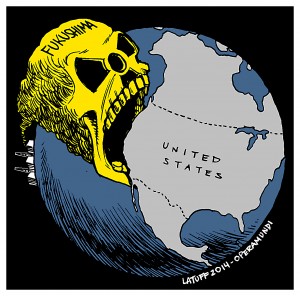
Fallout as Blowback
As the 5-year anniversary rolls around it’s clear to all who care to notice that the Fukushima triple meltdown nuclear disaster is still not ‘under control’ – as Prime Minister Abe claimed to the Olympic Committee in his successful bid to host the coming 2020 Games – but is still on-going, and will be far into the future.
That is to say, radioactive pollution will continue to pour into the oceanic, hemispheric and planetary environment with predictably negative, but unknown, effects on the health and DNA of all life forms in the biosphere.
There’s karmic irony here. The U.S. dropped the first atomic bombs on Japan, then used its political influence and propaganda prowess to sell the country nuclear power. Its corporations supplied the faulty reactors that melted down at Fukushima. Now, it is on the front line of receiving the fallout in the form of ongoing oceanic and atmospheric pollution carried eastward by winds and currents.
Faith-Based Nuclear Policy
Despite the obvious take-home lesson – i.e., that every nuclear facility, wherever its geographic location, constitutes a danger to the entire planet, and should be treated as such by the ‘international community’ – a New Nuclear Weapons race and a New Nuclear Power race are both currently in progress.
He began his presidency with the celebrated April 5, 2009 Prague Speech in which he stated “…clearly and with conviction America’s commitment to seek the peace and security of a world without nuclear weapons….” In practice Obama has embraced an ‘all of the above’ energy policy including heavy investments in new reactor construction and design development.
The recipient of an apparently aspirational Nobel Peace Prize has also committed a projected $1 trillion dollars over the coming decades to upgrading America’s nuclear weapons arsenal. https://www.revealnews.org/article/new-mexico-thrives-on-nuclear-bomb-despite-us-pledge-to-reduce-arsenal/
The program includes new ballistic missiles, a new manned bomber and a fleet of new missile-launching submarines. Termed – with no apparent sense of irony –‘the life-extension program,’ the plans clearly violate U.S. obligations under the Non-Proliferation Treaty (NPT).
In the domain of nuclear weaponry’s Siamese twin nuclear energy, there are those opinion-maker luminaries like James Hansen, James Lovelock, Stewart Brand, Bill Gates and George Monbiot who advocate for nuclear energy as a ‘carbon-free solution to climate change.’ Never mind that – as Stanford scientist Mark Jacobsen and his associates, as well as others, have conclusively shown – the entire nuclear fuel chain from mine to waste dump is more carbon intensive than wind and solar put together. Their work shows a transition to renewables is totally possible…without nuclear energy. http://thesolutionsproject.org/
The Atomic Church of the Last Gasp
Last week, alarmed at the failure of their repeated attempts to go through ‘proper channels,’ seven engineers at America’s Nuclear Regulatory Commission (NRC) – which President Obama himself has dubbed in 2007 ‘a moribund agency’ – filed a petition as private citizens. They stated that they have identified a long-undiscovered electrical flaw common to virtually all U.S. nuclear plants that could prevent cooling and allow a meltdown to occur. Their petition asks that the NRC mandate that plant operators either fix the problem or shut down the reactors. http://commondreams.org/views/2016/03/10/7-top-nrc-experts-break-ranks-warn-critical-danger-aging-nuke-plants
But the New Nuclearists avoid coming to terms with the risks and failures of the existing world fleet of aging, ill-designed reactors. They believe – without operational proof-of-concept – in a pie-in-the-sky, perpetually not-yet-but-soon-to-be-born generation of ‘new, small modular nuclear reactors (SMRs).’ They will consume and eliminate existing nuclear waste and be so ‘inherently safe’ you can bury them in your back yard. Any day now.
The blind faith with which latter-day nuclear advocates approach the issues of human, ecological and economic risk associated with nuclear technologies, reminds one of the Melanesian millenarian movement called ‘cargo cults,’ in which indigenous tribes, following charismatic figures, built wooden aircraft replicas on mountain tops in the vain hopes – despite repeated failures – to lure down the western cargo planes loaded with commodities they saw flying overhead.
Or, if the definition of ‘insanity’ is: ‘persisting in behavior which consistently fails,’ neo-nuclearism is clearly a form of collective insanity – atomic psychosis.
Recovering from Nuclear Delusion
The 20th century ‘nuclear dream’ of global full-spectrum dominance and energy too cheap to meter has become a 21st century nightmare. It is time to wake up. As retired top U.S. energy administrator S. David Freeman puts it in a recent interview, “We have to kill nuclear power before it kills us.” [Video interview here: https://www.youtube.com/watch?v=W1R4jc2wlGs
The facts of the failure of the nuclear dream are there, for any who are not blinded by ideology or self-interest to see: in addition to its history of totalitarianism, incompetence and global disasters, nuclear energy deployment is plagued by public opposition, investor disinterest, consistently mounting cost and schedule over-runs and dependence on dwindling water supplies. Energy consultant Amory Lovins sees nuclear energy “dying a slow death from an overdose of market forces.” Futurist Jeremy Rifkin agrees, “From a business perspective, its dead.”
Then there’s the energy-weapons-waste connection, the real ‘nuclear triad.’ Not only are nuclear energy and weapons production joined at the hip from birth, but they share a dysfunctional excretory system – of which more below.
Nine Realities of which Nuclear Millenarians Dare Not Speak
Those who advocate for nuclear energy as a response to climate change, or for new nuclear weapons in pursuit of ‘national security,’ must ignore or deny an overwhelming burden of facts from the history and legacy of these nuclear technologies so far.
Here are just a few:
Genocidal Impacts on Indigenous Peoples
• Uranium mining and the deadly radioactive wastes left behind continue to have devastating effects on Native Americans and Aboriginal Australians. In the U.S., thousands of abandoned open pit uranium mines contaminate drinking and irrigation water and the air breathed by tribes across the Great Planes and the Four Corners Area.
• Nuclear weapons testing has done lasting genetic and environmental damage to Pacific Islanders in the Marshall Islands and Polynesia.
Nuclear Disasters
The Guardian lists and ranks 33 serious incidents and accidents at nuclear power stations since the first one was recorded in 1952. Of those, six happened in the US, five in Japan and three apiece in the UK and Russia. That’s an average of nearly 5 per decade. http://www.theguardian.com/news/datablog/2011/mar/14/nuclear-power-plant-accidents-list-rank#data
But a report by Cornell University researchers Spencer Wheatley, Benjamin Sovacool, Didier Sornette entitled Of Disasters and Dragon Kings: A Statistical Analysis of Nuclear Power Incidents & Accidents has a database of 174 accidents worldwide since 1946.
They rate the accidents in 2013 dollars and define an accident as “an unintentional incident or event at a nuclear energy facility that led to either one death (or more) or at least $50,000 in property damage.”
They conclude
In fact, the damage of the largest event (Fukushima; March, 2011) is equal to 60 percent of the total damage of all 174 accidents in our database since 1946. In dollar losses we compute a 50% chance that (i) a Fukushima event (or larger) occurs in the next 50 years, (ii) a Chernobyl event (or larger) occurs in the next 27 years and (iii) a TMI event (or larger) occurs in the next 10 years. [emphasis added]
http://arxiv.org/abs/1504.02380
https://www.technologyreview.com/s/536886/the-chances-of-another-chernobyl-before-2050-50-say-safety-specialists/
US Nuclear Meltdowns
There have been 8 nuclear meltdowns so far in the U.S. Contrary to popular belief, the meltdown at Three Mile Island was not the worst. That dubious honor goes to the little-reported July 12, 1959 meltdown at the Santa Susana Field Laboratory located a couple of miles from the city of Simi Valley and only about 30 miles north of Los Angeles. The radioactive contamination of the surrounding communities and environment from that event have yet to be fully acknowledged or dealt with. One of the companies involved was Southern California Edison, the major owner of San Onofre.
Nuclear Weapons Incidents
As part of his research for his book on the nuclear arms race, Command and Control – Nuclear Weapons, the Damascus Accident, and the Illusion of Safety, Eric Schlosser used the Freedom of Information Act to discover that at least 700 “significant” accidents and incidents involving 1,250 nuclear weapons were recorded between 1950 and 1968 alone. The Business Insider has a useful interactive site based on Rudolph Herzog’s A Short History of Nuclear Folly on which you can track 32 nuclear weapons accidents since 1950. http://www.businessinsider.com/list-of-broken-arrow-nuclear-accidents-2013-5
In its Status of World Nuclear Forces, the Federation of American Scientists reports the existence of
approximately 15,350 warheads as of early-2016. Of these, more than 10,000 are in the military stockpiles (the rest are awaiting dismantlement), of which almost 4,200 warheads are deployed with operational forces, of which nearly 1,800 US, Russian, British and French warheads are on high alert, ready for use on short notice.
Approximately 93 percent of all nuclear warheads are owned by Russia and the United States who each have roughly 4,500-4,700 warheads in their military stockpiles. http://fas.org/issues/nuclear-weapons/status-world-nuclear-forces/
Former U.S. Sec. of Defense, William J. Perry says the situation is even worse:
“Today we still have over 20 thousand real world nuclear weapons. Enough to blow up everybody on the planet several times over. Those weapons pose the immediate problem of a danger of terrorism, the immediate problem of the possibility of nuclear war.
“The antagonism between Russia and the United States has reached a point now where I believe we are on the brink of a new nuclear arms race. It breaks my heart.
“Today, the danger of a nuclear catastrophe is actually higher than it was during the cold war. Let me say that again…”
http://www.planetarianperspectives.net/?p=2741
The Documented Human Death Toll From Chernobyl
In 2013, the book Chernobyl: Consequences of the Catastrophe for People and the Environment was published by the New York Academy of Sciences. Its lead author was the celebrated Russian biologist Dr. Alexey Yablokov, former environmental advisor to the Russian president.
Based on some 5,000 health data, radiological surveys and scientific reports in several languages, it concludes based on records now available, 985,000 people died, mainly of cancer, as a result of the 1986 Chernobyl accident between when the accident occurred and 2004. It projects that more deaths will continue follow.
It blows away the specious claim by the International Atomic Energy Agency – whose mission is to promote nuclear energy – that the expected death toll from the Chernobyl accident will be 4,000. The book shows that the IAEA is seriously under-estimating, in the extreme, the casualties of Chernobyl – good reason to doubt its pronouncements on Fukushima. http://www.globalresearch.ca/new-book-concludes-chernobyl-death-toll-985-000-mostly-from-cancer/20908
Health Impacts on U.S. Nuclear Workers
Irradiated, a December, 2015 McClatchy investigative report by Bob Hotakainen, Lindsay Wise, Frank Matt and Samantha Ehlinger, reveals that 70 years of U.S. atomic weaponry production has so far left at least 33,480 Americans dead, with more to come. http://media.mcclatchydc.com/static/features/irradiated/
A recent study by an international team of nine researchers looked at 308,297 workers in the nuclear industry from France, the United Kingdom, and the United States. Of 66,632 known deaths by the end of the study, 17,957 were due to solid cancers. The authors report “the risk per unit of radiation dose for cancer among radiation workers was similar to estimates derived from studies of Japanese atomic bomb survivors.” They conclude that their results “suggest a linear increase in the rate of cancer with increasing radiation exposure.” Translation: There is no ‘safe’ dose of nuclear radiation. http://www.bmj.com/content/351/bmj.h5359
Environmental & Biological Impacts of Nuclear Disasters
For years, evolutionary biologist Dr. Timothy Mousseau of the University of South Carolina, has been studying the impacts of both the Chernobyl and Fukushima disasters on animals and plants in the contaminated regions.
Studies published by Mousseau and Anders Møller of the Université Paris-Sud, and their collaborators detail the effects of ionizing radiation on pine trees and birds and small animals in the Chernobyl Exclusion Zone. “When you look for these effects, you find them,” says Mousseau.
He adds that, mirroring Chernobyl results, “A growing body of empirical results from studies of birds, monkeys, butterflies, and other insects suggests that some species have been significantly impacted by the radioactive releases related to the Fukushima disaster,” Read more at: http://phys.org/news/2014-08-biological-effects-fukushima-insects-animals.html#jCp
http://phys.org/news/2013-08-viewing-fukushima-cold-chernobyl.html#jCp
http://phys.org/news/2013-08-viewing-fukushima-cold-chernobyl.html#nRlv
https://www.youtube.com/watch?v=5xnj5QYBzLs
DNA and Genetic Damage from DU weapons
U.S. wars in Former Yugoslavia, Iraq, Afghanistan, and perhaps in other places as well, have seen the extensive use of so-called ‘depleted uranium’ ammunition -uranium armor penetrators. The super hard metal projectiles, fired from tanks and aircraft, can pierce the armor of tanks and combat vehicles, volatizing into deadly toxic particles that enter the bodies of all combatants and members of the surrounding populations. U.S. and NATO soldiers returning from the wars sicken and contaminate their loved ones. The populations forced to live in permanently contaminated former battle zones suffer chronic health problems and wide-spread genetic deformities that will be passed down through the generations.
http://www.bollyn.com/depleted-uranium/
https://stgvisie.home.xs4all.nl/PentagonPoison.html
Waste Storage From Here to Eternity
An Australian study estimates there are 390,000 tons of high-level nuclear waste in the world, and nearly 10 million cubic meters of intermediate-level waste — all of it produced from nuclear power generation. That amount is growing by approximately 10,000 tons annually. http://www.abc.net.au/news/2016-02-15/sa-nuclear-waste-dump-to-meet-‘global-need’-recommended/7167412
It is produced at every stage of the nuclear fuel chain, from uranium mining and enrichment, to reactor operation and the reprocessing of spent nuclear fuel.
Despite over seven decades of trying, no proven location or method of keeping the waste isolated from the environment has yet been found.
According to the Nuclear Energy Institute, by the middle of 2015, 30 countries worldwide were operating 438 nuclear reactors for electricity generation and 67 new nuclear plants were under construction in 15 countries. http://www.nei.org/Knowledge-Center/Nuclear-Statistics/World-Statistics
The inevitable decommissioning of the aging world reactor fleet will create huge amounts of radioactive wastes. Once they are closed down, most of the world’s nuclear sites will require monitoring and protection for centuries. Wherever and however it is eventually stored, most of the waste will remain hazardous for hundreds of thousands of years – longer than civilization has yet existed.
I rest my case.
Neo-Nuclearists are entitled to their own opinions…but not to their own facts.
Japan Increases Limits on Radiation Exposure Before Nuke Reactors Restart
Amid preparations to restart nuclear reactors shut down following the 2011 Fukushima meltdown, the Japanese government plans to set a new standard for the permissible upper limit of radiation exposure for those in charge of anti-disaster operations.
The list of those affected by the change in standards includes local government officials, police and fire department officials, as well as bus drivers, who would be charged with securing the steady evacuation of local residents in case of a nuclear accident.
The Japanese government plans to set a new standard for the permissible upper limit of radiation exposure for those in charge of anti-disaster operations.
The list of those affected by the change in standards includes local government officials, police and fire department officials, as well as bus drivers, who would be charged with securing the steady evacuation of local residents in case of a nuclear accident.
Currently, the maximum permissible radiation dose is 1 millisievert per year for ordinary residents, 50 millisieverts per year for decontamination workers, and 100 millisieverts per year for nuclear plant workers; the upper limit for police and fire department officials as well as national public servants and other relevant personnel, previously subject to the same standard as that for ordinary local residents, will be raised to 100 millisieverts per year in emergency situations. During the crisis at the Fukushima No. 1 Nuclear Power Plant, a considerable number of necessary people, such as government staff, were not secured for the local task force near the damaged nuclear power complex, which rendered evacuations and the transport of necessary emergency supplies difficult. The new standard is aimed at preventing similar obstacles in future, The Mainichi reported. “As it is possible that local officials and bus drivers will carry out their duty where radiation levels are relatively high, we need a new standard in order to provide effective evacuation guidance as well,” a Cabinet Office official said. Discussion of the new standard by a working group within the Cabinet Office is scheduled for next month.
Source: Sputnik News
Filmmakers Ash and Kamanaka discuss radiation, secrets and lives
Ian Thomas Ash and Hitomi Kamanaka are perhaps the two most widely viewed filmmakers who have produced documentaries about the effects of radioactivity in Fukushima since the March 11, 2011, disaster. Ash’s commitment to the subject arose after the multiple nuclear meltdown. Kamanaka, on the other hand, has been Japan’s designated nuclear documentarian for nearly two decades.
In a number of ways, they are each the other’s mirror image. Ash is a foreign filmmaker who produces films in Japanese. Kamanaka also made her first widely distributed film about radiation exposure by traveling abroad: She went to the Hanford Nuclear Reservation in Washington state and to Iraq, where she documented the effects of depleted uranium on Iraqi citizens after the first Gulf War. She has continued to travel since, making films in Sweden and, most recently, Belarus.
Kamanaka has considered herself an activist filmmaker from nearly the beginning, and her films are consciously critical of the nuclear energy industry. Ash’s films, however, are narrative in nature. His camera stays firmly planted in the lives of his individual subjects.
In this way, as well, the two filmmakers’ careers have converged: Kamanaka’s new film, “Little Voices from Fukushima,” eschews a commentary structure in favor of a larger cast of subjects and a similarly narrative style. The film’s subject matter — the effects of radiation on the thyroid glands of children following nuclear meltdowns — also brings Kamanaka into alignment with Ash, whose two post-Fukushima documentaries address this issue exclusively.
Neither filmmaker is unfamiliar with the polarized nature of public discussion about nuclear energy: Kamanaka has lost government-administered funding for her films as a result of their content, and during a period of particularly heated media debate surrounding Ash’s films, his distributor was dissolved by its parent company in an attempt to avoid involvement in any potential controversies.
We asked the two filmmakers — American and Japanese, storyteller and activist — to discuss their work and their films, and to consider the notion of “being a ‘foreign’ filmmaker.” Below is an edited version of their discussion at the Foreign Correspondents’ Club of Japan. (Dreux Richard)
Ian Thomas Ash: Let’s talk about that now: being a “foreign filmmaker” and how much that affects the work.
I have a few questions about language. I am also a foreign filmmaker. I make films in Japanese in Japan. And you make films in Japan, but you go abroad to make films and you do that in English. You said maybe people feel disarmed by the fact that you are foreign, that it’s a little bit easier for you.
Hitomi Kamanaka: They’re not protective. They become relaxed.
ITA: Your English is not perfect, nor is my Japanese perfect. So I think on some level people sense that they have to speak more straight. They can’t bull—-t, because it won’t work.
HK: In Japanese society, in our culture, we have a sophisticated, indirect way of communicating.
ITA: One of the things in my film “A2-B-C” is “Tadachi ni eikyō wa arimasen to omowaremasu.” It means—
HK: Nothing.
ITA: Yeah: “I believe that at this point in time there will probably be no health effects.” That doesn’t mean anything. You’re just playing with words.
HK: It’s bull—-t.
ITA: Exactly. It’s bull—-t. In 10 years, 20 years, we don’t know. So it’s using language as a weapon — to try to cover things up. But when you are speaking with a foreign person, you can’t do that so much.
HK: (miming confusion) “What? What?”
ITA: I often pretend I don’t understand. People ask me about being a foreign filmmaker, and to be honest, I am not always conscious of the fact that I am foreign. I don’t think all the time, “I’m foreign. I’m foreign.” And how do you feel? When you go abroad, do you always feel like a foreigner? I don’t. Until someone says to me, “Ah, you are a foreigner.”
HK: I think since I was small, I see everyone — American people, Iraqi people or people from any other country — as the same. It’s just a problem of language.
ITA: To prepare for this discussion, I watched “Hibakusha: At the End of the World.” You went to Iraq, and you have been to America. What was that like? Because when you go to Iraq, not only are you foreign, but you are a woman.
HK: I think images about Iraq have been exaggerated and distorted by the mass media, especially the United States mass media — that Iraqis are stubborn people, or narrow-minded. But when I met them, they were warm and kind and full of love for their families. And they were open-minded toward foreign people. Everyone was, from normal citizens to bureaucrats.
ITA: In the movie, there’s a farmer [in Washington state] named Tom, who is leading this group of downwinders who are—
HK: Plaintiffs. In a trial.
ITA: There is a scene in the film where he is making a joke about the fact the government is saying, “It’s all right, it’s all right.” He says, “I’m just a farmer.” He says, “I’m not supposed to say anything. The government says it’s all right, so it must be all right.” You’re in the back of the car, laughing. It’s a really funny moment. He’s saying, “The government says the radiation stops at the barbed wire fence.”
HK: It’s a kind of black joke. He knows everything. But what he’s saying is the reality, how he sees the reality going on around the Hanford area. The farmers are pretending.
ITA: Then Dr. Shuntaro Hida, who is a hibakusha from Hiroshima, at that time he is 85. He talks about compensation only being for people within a 2 km radius. That is true for Fukushima as well, where they had zones. Initially it was 10 km and then it was 20 km, 30 km. If you live outside of 20 km, no compensation.
HK: Society has a different way of facing the truth, I think. Physics says it is impossible to stop radiation, and that anywhere you draw a line, there will be no difference between the two sides. But you must draw the line somewhere. In between, people are trapped.
ITA: In your film “Rokkasho Rhapsody,” there is a woman, Kikukawa-san. Her friend is growing organic foods. I want to read you her quote, because I think it’s important. She says, “There’s no proof that it is OK. But if you don’t like something, you shouldn’t do it. I can’t offer an explanation. It’s only the way I feel. The decision comes down to me, not some university professor.” She, as a farmer, just has this sense.
HK: When I had a press conference and screening for that film, maybe 30 journalists came. I was waiting outside the door [during the screening]. And they came out, and I expected somebody — anybody —to talk about the contents of the film. Everybody was silent. And then they just left. Nobody stopped to talk to me. Nobody.
ITA: I had the same experience with both of my films. I made “In the Grey Zone” in 2012, and it came out one year after the nuclear meltdown. Looking back, I think maybe it was too early. Then I did “A2-B-C,” and again I had a lot of trouble finding a distributor. I decided, “OK, I’m going to show it around the world and then bring it back to Japan,” which is what I did. Now “A2-B-C” is better-known and people say, “Can we see ‘In the Grey Zone?’ Can we see the other film?”
HK: In “A2-B-C” you begin with Yamashita-san. I wondered how you could do that shooting. That is very difficult, to access Yamashita-san. He was so protected.
ITA: Dr. Shunichi Yamashita was an adviser to the government who helped after the nuclear meltdown to create policy. He is from Nagasaki and his parents were hibakusha in Nagasaki. He had been doing research in Chernobyl.
HK: He is a very famous researcher of Chernobyl. Internationally.
ITA: So he came here to the [Foreign Correspondents’ Club of Japan] press club about 12 days after the nuclear meltdown and he gave a press conference. He gave the press conference in English, which I think is very important, because his English is not very good. I have to tell you that Dr. Yamashita’s English is not very good. This is important.
HK: Why did he not have a translator?
ITA: It’s part of his act. He gives this speech, and of course none of the Japanese journalists understand what he is saying. So all of the foreign journalists leave the room and they go write their articles. Only the Japanese reporters remain in the room. He was still at the table. All the Japanese reporters stayed and he gave an off-record press conference in Japanese. But it’s all off-record. I was there. He looks at me and I am the only white person in the room. He thinks I don’t speak Japanese, and I am sitting there recording the whole thing.
HK: That’s how you could do it.
ITA: This goes back to the thing about being a foreign filmmaker. I want to make a connection between Dr. Yamashita, and Dr. [Michael] Fox, who you interviewed, who works at the Hanford nuclear facility. And one of the things he says is—
HK: “Evidence. Scientific evidence.”
ITA: Exactly. “I’m a scientist. I sort things out based on data. Data should decide these issues. Not propaganda. Not fear.” It really reminded me of Dr. Yamashita. This way of thinking: that it is only about numbers, it’s only about data. When you talk about any of these issues — when you talk about Hiroshima, Nagasaki, Iraq, Fukushima — if we only talk about numbers, we forget that each number represents a person. People say things like, “Only one person will become sick.” But to that one person, it’s 100 percent.
HK: That kind of sensitivity is always missing in those kind of scientists. But with Dr. Fox, I made a mistake. I had read the history of Hanford. A whistleblower had said they were doing bad things there. They are polluting the area and people. But [Hanford employees] had pride. They were working for a national purpose, protecting the United States from communism, or something. So they had pride, and then their pride had been broken. They became so protective, and that is why I pushed a kind of button when I—
ITA: I don’t think you made a mistake.
HK: But I made him angry about it.
ITA: I made Dr. Yamashita angry. You have to break through that sometimes. That’s why you’re a good filmmaker. I mean, if you don’t break through that, then we have no film.
HK: When I want to ask something, I ask.
ITA: I think of so many things. One is my own struggle when people refer to me as an activist filmmaker. I have not been able to embrace the word ‘activist’ yet. What I am doing, I hope that it can help people. But I feel like if I am only an activist filmmaker, then only other activists will watch the films.
HK: That’s the problem.
ITA: There are people in America who need to see “Hibakusha: At the End of the World,” but the people who need to see this film are not going to seek it out. The people who do seek it out already know there is a problem. I feel this is true for my films as well.
HK: I’ve been thinking about the same thing for a long time. If people think, “Oh, this is my story” or “He is like me,” it will make people interested in seeing this kind of film. The people who are in my new film are very, very ordinary people. They are not activists. The only thing in their mind is “We need to protect children.”
ITA: In your films, you often go to different places and you make connections. When you edit, you don’t give the audience any chance to adjust: We’re in Iraq and now we’re in Hanford, and in Hanford you’ve brought someone with you from Hiroshima. In your new film, is it only filmed in Fukushima or did you go to other places?
HK: The film [“Little Voices from Fukushima”] is about mothers who want to protect their children from radiation exposure, which has occurred in Fukushima. And the other place is Belarus. So I combined two places in one film. I expect a kind of chemical reaction.
ITA: Among the audience?
HK: Yes. After you watch the film. This is a 25-year delay — 1986 and 2011. Twenty-five years separate Fukushima and Belarus.
ITA: I remember now what I was going to ask you. In this world of documentary film in Japan, and especially films that deal with nuclear issues, you are quite well-known.
HK: Because nobody was making these films.
ITA: How does that affect your ability to make another film? When I went somewhere while I was making “A2-B-C,” for example, people didn’t know who I was. It was easy. Now if I go back to make another film: “Ah, you’re the guy that made ‘A2-B-C’. ” You made “Hibakusha,” you made “Rokkasho Rhapsody.”
HK: For “Rokkasho Rhapsody,” Madarame-san [Haruki Madarame] is in it.
ITA: He’s the geneticist, or the University of Tokyo professor.
HK: And also the head of the [now-defunct] Nuclear [Safety] Committee in Japan. So he doesn’t know me. He just thought I was a small woman bringing a small camera. He could speak freely. But now the [trade ministry]—
ITA: Know who you are.
HK: They hate me.
ITA: Because you got some cultural funding from the Japanese government to make your films.
HK: That’s why they were angry. Later, when my film got famous, then they thought, “This film got a grant from the government? Who gave it?” I guess they were angry with the ministry of culture. Since then, I can’t get this kind of grant. People develop an image about you. It’s difficult.
ITA: Interesting. We were just talking about professor Madarame. He says something like—
HK: “It’s money.”
ITA: Exactly. He says, “Regardless of whether the path we are on is the right one, this is the path that we have chosen. And it all comes down to money.”
HK: Documentary film production in Japan is not easy. Mass media is taking over whole fields and people believe what mass media says, even after March 11. So we are making a smaller type of media. But this media only can tell the things that mass media doesn’t talk about. That’s why I think it’s important.
Ian Thomas Ash is currently touring in Japan and abroad to support his latest film “-1287,” about a late friend’s terminal cancer. He is also in production for two feature documentary films: The first is about a rarely explored niche in Japan’s sex industry; the other is the third installment in his series about Fukushima. More information on his films can be found at www.documentingian.com.
Hitomi Kamanaka’s most recent documentary “Little Voices from Fukushima” is now showing in theaters (www.kamanaka.com/canon). A screening with English subtitles will be at 10:45 a.m. on 20 May at Uplink in Shibuya, Tokyo (www.uplink.co.jp).
Special thanks to Dreux Richard. Your comments and story ideas: community@japantimes.co.jp
Source: Japan Times
http://www.japantimes.co.jp/community/2015/05/13/issues/filmmakers-ash-kamanaka-discuss-radiation-secrets-lives/#.VVTCXJNZNBT
Video on Youtube:
Filmmakers Ash and Kamanaka discuss radiation, secrets and lives
https://www.youtube.com/watch?v=_-MNhsQ8708
Two great charts about Nuclear ☢ that everyone should share!
Two great charts about Nuclear ☢ that everyone should study!
http://4.bp.blogspot.com/-DoEMx-2GXzc/UoF2CfVXqfI/AAAAAAAAHeo/y71numWymTo/s1600/nuclear+power’s+carbon+footprint.jpg …
and
http://4.bp.blogspot.com/-JqrhjgHn48A/UoF2HYSntRI/AAAAAAAAHew/7yjr7E4F-Ic/s1600/nuclear+power’s+other+footprint.jpg …
Medical radiation risks must be explained to patients
CT imaging, though, can produce as much as as 500 times the radiation of an X-ray, and experts have estimated that as many as 20% in Canada are ordered needlessly. U.S. studies suggest the risk of cancer from a single CT scan ranges from one in 2,000 to one in 300, depending on the dose and other factors.

Patients must be told of CT-scan dangers: doctors, Tom Blackwell, National Post , Nov. 26, 2010 As CT scans and similar procedures are ordered increasingly often, doctors should be forced to tell patients about the potential radiation-based cancer risk, two Canadian physicians have urged in a major U.S. medical journal. Continue reading
Germany to extend nuclear power plants, but opposition continues
The opposition Social Democrats said on Friday that they would appeal the decision at Germany’s highest court. They argue that the government’s reasoning that the upper house does not have to give its approval for the bill, is unlawful.
Germany passes law on extending the lifespans of nuclear power plants by Nicole Goebel Deutsche Welle | 26.11.2010 A bill that would see the lifespans of Germany’s 17 nuclear power plants extended by 12 years was approved by the upper house of parliament on Friday despite strong opposition. Continue reading
Facts on the two types of airport Whole Body Imaging
Rafi Sala, an Israeli airport security expert who helped design security at Ben Gurion International Airport: “I don”t know why everybody is running to buy these expensive and useless machines. I can overcome the body scanners with enough explosives to bring down a Boeing 747. … That’s why we haven’t put them in our airport.”
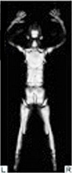
Peek-a-Boo, I C U – Living Lake Country, By Al Neuhauser Nov. 25, 2010 “……….There are two types of Whole Body Imaging (WBI) technologies in place. They are backscatter and millimeter-wave. The first uses low-level X-rays to image the body. This passes through clothing and into you, but a portion reflects off of your skin, or “backscatters”, technically called “Compton scattering.” This radiation does penetrate, but a small amount reflects and is detected by a bank of detectors. Continue reading

Nuclear-capable ballitic missile tested by India
India test-fires nuclear-capable ballistic missile BusinessWeek 26 Nov 10, NEW DELHI India has successfully tested a medium-range version of its most powerful nuclear-capable missile during an army training exercise.Defense Ministry spokesman Sitanshu Kar says the upgraded Agni-1 was fired from a testing range on an island off the eastern state of Orissa.he 12-ton, nuclear-capable missile with a 435-mile (700-kilometer) range has an advanced navigation system and can carry payloads of up to 2,200 pounds (1,000 kilograms)……… India test-fires nuclear-capable ballistic missile – BusinessWeek
Nuclear Regulatory Commission challenged over rubber-stamping nuclear license extensions
he was fired by FPL and other nuclear power companies after complaining about safety issues and is now campaigning against what he terms the “rubber-stamping” of 20-year nuclear power plant license extensions.

Florida activist challenges plan to repair Palo nuclear reactor, By DAVE DeWITTE • Cedar Rapids Gazette • November 26, 2010 Palo, Ia. – A nuclear power activist has asked the Nuclear Regulatory Commission to reject the repair method proposed by the operator of Duane Arnold Energy Center for a potentially serious fault in a nozzle on the plant’s reactor this month. Continue reading
1 This Month

of the week – Shut Down Drone Warfare!


Tell the Ukrainian Government to Drop Prosecution of Peace Activist Yurii Sheliazhenko

Petition to revoke the licensing of the Near Surface Nuclear Disposal Facility (NSDF) at Chalk River. https://www.ourcommons.ca/petitions/en/Petition/Details?Petition=e-7247
To see nuclear-related stories in greater depth and intensity – go to https://nuclearinformation.wordpress.com
-
Archives
- March 2026 (237)
- February 2026 (268)
- January 2026 (308)
- December 2025 (358)
- November 2025 (359)
- October 2025 (376)
- September 2025 (257)
- August 2025 (319)
- July 2025 (230)
- June 2025 (348)
- May 2025 (261)
- April 2025 (305)
-
Categories
- 1
- 1 NUCLEAR ISSUES
- business and costs
- climate change
- culture and arts
- ENERGY
- environment
- health
- history
- indigenous issues
- Legal
- marketing of nuclear
- media
- opposition to nuclear
- PERSONAL STORIES
- politics
- politics international
- Religion and ethics
- safety
- secrets,lies and civil liberties
- spinbuster
- technology
- Uranium
- wastes
- weapons and war
- Women
- 2 WORLD
- ACTION
- AFRICA
- Atrocities
- AUSTRALIA
- Christina's notes
- Christina's themes
- culture and arts
- Events
- Fuk 2022
- Fuk 2023
- Fukushima 2017
- Fukushima 2018
- fukushima 2019
- Fukushima 2020
- Fukushima 2021
- general
- global warming
- Humour (God we need it)
- Nuclear
- RARE EARTHS
- Reference
- resources – print
- Resources -audiovicual
- Weekly Newsletter
- World
- World Nuclear
- YouTube
-
RSS
Entries RSS
Comments RSS
 nuclear-news