One plant illustrates the bleak outlook for the country’s idle reactors

THE Kashiwazaki-Kariwa nuclear plant, the world’s largest, is a hub of activity. Its 6,619 employees dutifully clock on and off every day. Tokyo Electric Power Company (TEPCO), its owner, spent ¥606 billion ($5.8 billion) last year maintaining it and its other nuclear plants. Yet Kashiwazaki-Kariwa has not generated a single watt of electricity since 2011, when it was shut down along with the rest of Japan’s nuclear reactors after the Fukushima Dai-Ichi nuclear accident.
TEPCO has applied to Japan’s Nuclear Regulatory Authority (NRA) to restart two of the plant’s seven reactors. But even if the regulators approve the request, politics may stymie it. On October 16th voters in Niigata, the prefecture in which Kashiwazaki-Kariwa is located, will elect a new governor. The two leading candidates have not been as vocally opposed to the restart as Hirohiko Izumida, the outgoing governor, but public opinion is strongly against
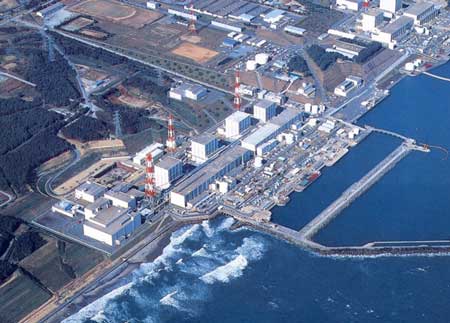
Before the disaster, Japan had 54 working reactors. The six at Fukushima Dai-Ichi (pictured) are to be decommissioned. Of the remaining 48, the NRA has received applications to restart 26. It has approved only eight of them so far, and just two reactors are currently operating (see map). A third is closed for maintenance. Local officials—who have some say over restarts—adverse court rulings and other glitches have held up the others. Meanwhile, an anti-nuclear governor is suing to get one of the two working reactors shut down again.
Before the disaster, Japan got 25% of its electricity from nuclear plants. The government of the day was hoping to raise that to 50% by 2020. The present government hopes nuclear power will supply 20-22% of its electricity by 2030. But the slow progress on restarting mothballed plants is calling its plans into question. Nuclear plants currently supply less than 1% of Japan’s electricity; few see that rising beyond 10% by 2030. “Nuclear’s comeback will be modest and brief,” predicts Robert Feldman of Morgan Stanley, a bank.
Concerns about public safety are understandably acute in one of the world’s most earthquake-prone countries. No deaths have been linked to the Fukushima Dai-Ichi accident (though many fear that cancer rates will increase in future), but at least 150,000 were displaced from the vicinity of the plant, almost all of whom still live in temporary housing. (More than 15,000 people were killed by the earthquake and tsunami that led to the disaster.)

Regulators’ authority has been hugely enhanced since the creation of the NRA in 2012. It has introduced a host of new safety requirements. TEPCO has spent ¥470 billion ($4.6 billion) upgrading Kashiwazaki-Kariwa alone. Employees point to its many fail-safes: a 15-metre-high sea wall to protect it from tsunamis (the main cause of the Fukushima Dai-Ichi meltdown), multiple backup power sources, scores of fire engines and a huge reservoir of cooling water. In one room, instructors watch as trainees respond to simulated emergencies. Today’s involves turbine trouble.
Yet problems remain. Posters at Kashiwazaki-Kariwa encourage workers to adopt a “questioning attitude”—part of an attempt to change a culture of deference to authority. This is “a work in progress”, says Dale Klein, a former head of America’s nuclear regulator who now chairs TEPCO’s safety commission. Mr Izumida argues that evacuation plans for people living close to the plant are inadequate. “It is unclear how we will get the 10,000 buses needed to transport the 440,000 people living in the vicinity of Kashiwazaki-Kariwa,” he says. It doesn’t help that responsibilities in an emergency are not clearly apportioned among the utilities, the central government and municipalities.
Anti-nuclear groups maintain that concerns over the financial health of Japan’s utilities are playing too big a part in the government’s decisions about nuclear power. They maintain that Japan can do without nuclear by boosting the role of renewables. Energy demand is rising only modestly, since the population is shrinking and the country has become far more energy-efficient since the disaster. The American Council for an Energy-Efficient Economy, an NGO, ranks it as the second most frugal country in the world, after Germany.
But the lack of nuclear power leaves Japan heavily dependent on imported energy, points out Jun Arima of the University of Tokyo. Before the disaster, imported fossil fuels accounted for 64% of the electricity it generated; now that share has risen to 82%, one of the highest among rich countries (see chart). Steady imports require good relations with the Middle East, a combustible region. The expense of importing more natural gas, the main substitute for the lost nuclear capacity, has prompted power prices to soar. That is unpopular with the public, and has contributed to a deteriorating trade balance.
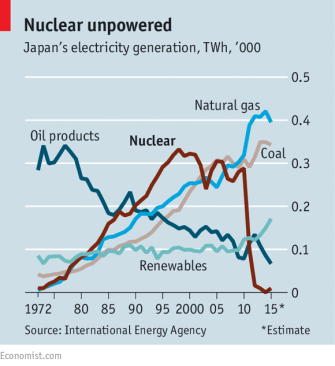
The loss of nuclear generation has environmental consequences, too. Power plants that run on natural gas (and, worse, the old coal-fired plants that have been started up again to make up for the lack of nuclear power) emit far more greenhouse gases. Coal alone accounts for 31% of the country’s total energy mix, compared with 25% in 2010; add in oil and natural gas, and the total contribution of fossil fuels has risen from 61% in 2010 to 85% today. All this makes it highly unlikely that Japan will meet its pledge to cut its carbon-dioxide emissions by 26% by 2030.
Moreover, even if Japan manages to restart a few more of its reactors, many of them are old. If restarting the current fleet is unpopular, building new ones would be toxic to many voters. And then there is the question of what to do with Monju, a fast-breeder reactor (one that generates more fuel than it consumes) which cost $10 billion to build but has generated power for only one hour since its inauguration in 1995 owing to a series of accidents. Even if the government decommissions it, there will be no nuclear-power plants to consume the fuel it has already produced.
Niigata governor candidates must debate nuclear safety in earnest
Kashiwazaki-Kariwa nuclear power plant is the largest nuclear plant in the world, owned by Tepco, Tepco will do anything to get it restarted.
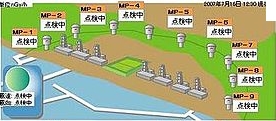
Official campaigning for the upcoming Niigata gubernatorial election started on Sept. 29, setting the stage for debate on the safety of a nuclear power plant in the prefecture.
The issue of the safety of the Kashiwazaki-Kariwa nuclear power plant has gained even more traction as Niigata Governor Hirohiko Izumida, who has been cautious about approving Tokyo Electric Power Co.’s plan to restart the idled plant, has announced he will not seek re-election.
The Nuclear Regulation Authority’s safety inspections of the offline reactors, which the electric utility is seeking to bring back online, are in their final stages.
The election inevitably revolves around whether the new governor should allow TEPCO to proceed with the plan if the NRA gives the green light.
Four independent rookie candidates are running for the poll. But the race is effectively shaping up as a one-on-one battle between Tamio Mori, the former mayor of the city of Nagaoka in the prefecture supported by the ruling Liberal Democratic Party and its junior coalition partner, Komeito, and Ryuichi Yoneyama, a doctor backed by the Japanese Communist Party, the Social Democratic Party and the People’s Life Party & Taro Yamamoto and Friends.
Some 460,000 people live within 30 kilometers of the Kashiwazaki-Kariwa nuclear plant. The candidates should announce their proposals to protect the safety of these residents during campaigning for the Oct. 16 election.
Plans to ensure the safe and smooth evacuations of residents living around nuclear power plants when a serious accident occurs are described as the last safety net for nuclear power plants.
The governors of prefectures where nuclear plants are located, as the chiefs of the local governments, have to take on a huge responsibility for the safety of local residents.
Izumida has insisted that he wouldn’t start discussions on any plan to restart a reactor in his prefecture unless the 2011 disaster at the Fukushima No. 1 nuclear power plant, also operated by TEPCO, is fully reviewed and explained.
He has undertaken his own investigation of the catastrophic accident by setting up an expert committee within the prefectural government.
Izumida has also criticized the fact that the new nuclear safety standards introduced after the 2011 accident don’t require plans for evacuating local residents. He has been calling on the central government to improve the standards.
In 2002, it was revealed that TEPCO had covered up damage at its nuclear power plants including the Kashiwazaki-Kariwa plant. The magnitude-6.8 Niigata Chuetsu-oki offshore earthquake, which rocked Niigata Prefecture in July 2007, triggered a fire and resulted in small leaks of radiation at the plant.
Many people in the prefecture along the Sea of Japan remain deeply concerned about the safety of the nuclear plant and distrustful of TEPCO.
Izumida has responded to the concerns by raising issues about nuclear safety.
In the gubernatorial race, Yoneyama has cast himself as the candidate to carry on Izumida’s legacy.
“I will take over the (nuclear power) policy of Izumida and won’t start discussions on any reactor restart unless the Fukushima disaster is fully reviewed and explained,” he has said.
Mori, who has been critical of Izumida’s political approach, has taken a different stance toward the issue.
“I will put the top priority on the safety of people in the prefecture and rigorously examine the conclusion the NRA reaches (in its safety inspection),” he has said.
The difference in position on the issue between the two candidates is likely to be a key factor for Niigata voters at the polls.
The governors of prefectures hosting nuclear power plants have the “right to consent” to a plan to restart a reactor. But this is only a conventional right based on safety agreements with the electric utilities involved and has no legal basis.
When new Kagoshima Governor Satoshi Mitazono, who took office in July, asked Kyushu Electric Power Co. to suspend the operation of its Sendai nuclear power plant in the prefecture, he was criticized for undermining the central government’s energy policy.
But the criticism is off the mark. When a nuclear accident occurs, the local communities around the plant suffer the most.
To allay anxiety among residents in areas around nuclear plants, the local governments concerned, through negotiations with the operators of the plants, have established systems and rights that allow them to become involved in safety efforts.
The Fukushima disaster has only increased anxiety among residents around nuclear power plants.
The chief of the local government in an area home to a nuclear plant has every right to refuse to entrust the safety of local residents entirely to the utility and the central government.
Niigata Prefecture is not an area where TEPCO supplies power, but it has been bearing the risks involved in the operation of a massive nuclear power plant that generates electricity for the Tokyo metropolitan area.
The gubernatorial election will be a choice that directly affects the central government’s energy policy.
We are eager to see the candidates engaged in meaningful debate on the safety of the nuclear plant based on a national perspective.
http://www.asahi.com/ajw/articles/AJ201610030020.html
1.5 trillion yen spent last year on costs related to reactors
Only three of Japan’s 42 operable reactors are running
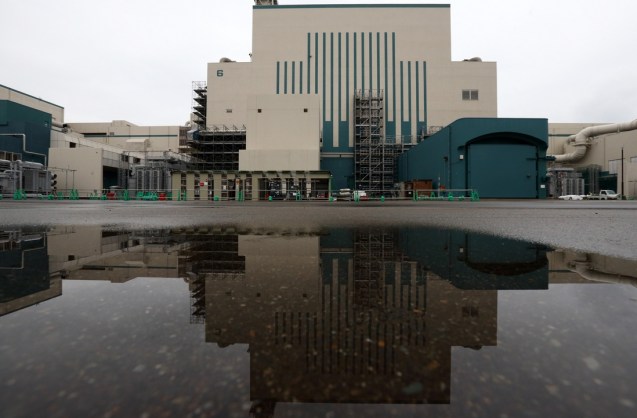
The Unit 6 reactor of the Kashiwazaki Kariwa nuclear plant.
More than 6,000 workers cycle through the world’s biggest nuclear plant every day to operate and maintain a facility that hasn’t sold a kilowatt of electricity in more than four years.
The buzz at Tokyo Electric Power Co. Holdings Inc.’s Kashiwazaki-Kariwa plant plays out daily across Japan, where utilities employ thousands of workers and spend billions of dollars awaiting the green light to restart commercial operations. With only three of the country’s 42 operable reactors running, they’re betting a national government committed to nuclear power will win over local officials and a wary public who don’t believe enough has been done to guarantee safety since the worst meltdown since Chernobyl.
“Even though operating expenses of non-generating reactors remain high, utilities would prefer to keep them open while there is any chance they can restart,” said James Taverner, a Tokyo-based analyst at IHS Markit Ltd. “Utilities have already committed significant expenditure for plants to meet new safety standards, and decommissioning costs are considerable.”
The nine biggest regional utilities spent more than 1.5 trillion yen ($14.6 billion) on their nuclear plants during the year to March, according to Bloomberg calculations based on the latest earnings reports. Over that same period, those plants accounted for just 1.1 percent of the nation’s electricity.
Nuclear-related costs accounted for 9 percent of all operating expenses at the utilities in the previous fiscal year, according to the calculations. That includes personnel and maintenance, as well as waste disposal and contributions to the nation’s nuclear damage compensation system.
The burden of paying for nuclear facilities producing little electricity has been softened by price declines in recent years for coal, natural gas and oil, which are also used as fuels for power generation. Tepco sees itself swinging to a net loss as fossil fuel prices recover, making the restart of Kashiwazaki-Kariwa key to profitability, Naomi Hirose, the company’s president, said in an interview earlier this year.
Emergency Drills
Costs for operating the country’s nuclear facilities were slightly higher before the March 2011 Fukushima disaster, at about 1.7 trillion yen a year, when atomic energy accounted for nearly 30 percent of Japan’s electricity mix. Tokyo Electric, also known as Tepco, estimates that restarting one of the newest reactors at Kashiwazaki-Kariwa — known as KK — would boost net income by as much as 10 billion yen a month.
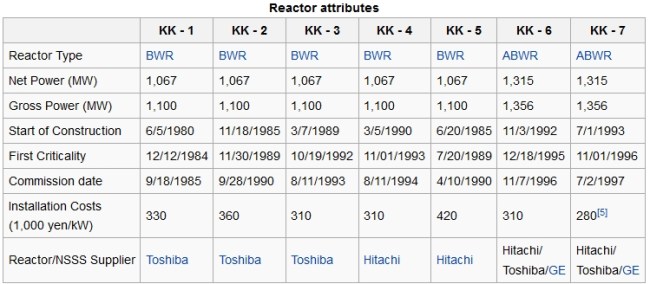
The plant, the world’s biggest with generating capacity of about 8.2 gigawatts, has seven reactors at a facility spread across more than 1,000 acres and located about 135 miles (217 kilometers) northwest of Tokyo in the prefecture of Niigata.
Workers clad in jumpsuits and loaded down with manuals convene daily in a mock-up of the reactor control room, preparing for the restart of the plant under new safety guidelines imposed after the Fukushima meltdown.
“Everyday, this room is full of workers, from fresh employees to old veterans, sharpening their skills,” Noboyuki Suzuki, a deputy manager in the company’s human resources development group, said at the KK plant last month. “Operators at this facility are required to go through training here on a regular schedule.”
About three-fourths of the Tepco employees and contract workers at the plant are from the prefecture housing the facility, making it one of the area’s biggest economic drivers.
The reactor is an economic windfall for the region, employing thousands of local workers and supporting restaurants, shops and even taxi companies, according to Kariwa village official Masayoshi Oota. “If the reactor were to disappear, then so would the economic benefit,” he said.
Japan’s nuclear energy industry employs more than 80,000 engineers, construction workers and operators, according to a report published by the Ministry of Economy, Trade and Industry last year.
To boost confidence in its facility’s safety, Tokyo-based Tepco has spent 470 billion yen on flood barriers, a 15-meter seawall and a reservoir the size of 30 Olympic-sized swimming pools to supply water in the event a reactor pump fails.
Kansai Electric Power Co. may spend 1.26 trillion yen on construction costs related to nuclear safety measures, while Chubu Electric Power Co. is estimated to spend 640 billion yen, according to a Sept. 14 report by Mitsubishi UFJ Morgan Stanley Securities Co.
KK’s restart is far from assured. The plant was forced to shut for 21 months following an earthquake in July 2007. Though some units eventually restarted, all were shuttered again after the March 2011 Fukushima accident for safety checks.
Public Opposition
There is skepticism among the Japanese public. The restart of nuclear reactors is opposed by 53 percent of Japanese and supported by just 30 percent, according to a nationwide poll conducted earlier this year by the Mainichi newspaper.
Local courts and governments have been some of the biggest roadblocks to restarting more reactors, crimping Prime Minister Shinzo Abe’s goal of deriving as much as 22 percent of the nation’s energy needs from nuclear by 2030. Goldman Sachs Group Inc. lowered its price target on six Japanese power utilities this month on risk of delays in restarting operations or renewed shutdowns.
Tepco shares in Tokyo on Thursday closed unchanged at 404 yen, while rivals Kansai Electric declined 3.1 percent and Chubu Electric slipped 0.3 percent. The Topix Electric Power & Gas Index has dropped 25 percent this year, weighed down primarily by Japan’s utilities.
Should KK clear the necessary regulatory, legal and political hurdles and resume operations, Tepco plans to maintain the facility’s workforce at current levels, a reflection of how many workers are needed even during a period called cold-shutdown.
“Right now we are focused on the nation’s regulatory review of the plant,” said Chikashi Shitara, facility chief at KK. “Even though the plant isn’t running, there is still a lot we must do.”
Groups fear no nuclear debate in Niigata governor’s race
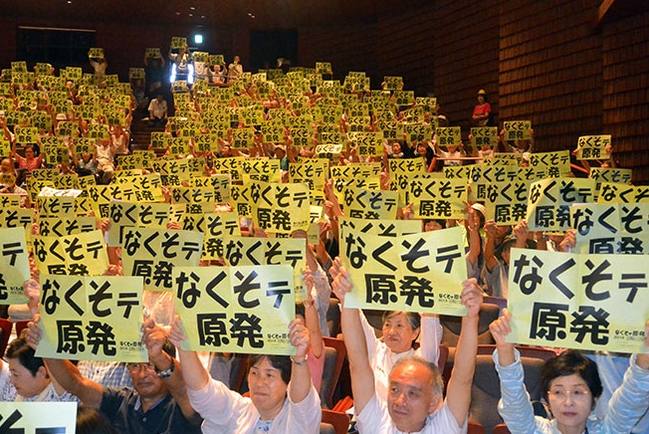
Participants in an anti-nuclear gathering in Kashiwazaki, Niigata Prefecture, raise placards demanding the abolition of nuclear power plants on Sept. 3.
NIIGATA–Anti-nuclear groups are pleading with Niigata Governor Hirohiko Izumida to rescind his decision not to run for re-election, seeing him as the “last bastion” to block the restart of the Kashiwazaki-Kariwa nuclear power plant.
The groups fear that the absence of Izumida in the Oct. 16 Niigata gubernatorial election, whose official campaigning starts on Sept. 29, will cause a dearth in debate among candidates on the safety of the multiple-reactor nuclear plant operated by Tokyo Electric Power Co. in the prefecture.
“Governor (Izumida) is not aware of his value,” said Kunio Ueno, 66, secretary-general of the organizing committee for a gathering of anti-nuclear groups held in Kashiwazaki on Sept. 3.
Eighteen groups, based in and outside Niigata Prefecture, set up the organizing committee for the gathering and demanded the decommissioning of reactors at the plant.
“We will not allow candidates in the gubernatorial election to conceal a point of contention,” their declaration read. “We will make the issue of the nuclear power plant the biggest point of contention.”
Outside the site of the gathering, several citizens groups collected signatures to ask Izumida to run in the election.
On Aug. 30, Izumida, 53, who is in his third term as Niigata governor, announced he will not seek re-election, citing a report in a local newspaper that was not related to the nuclear issue.
The Nuclear Regulation Authority is currently conducting screenings toward the restart of reactors at the Kashiwazaki-Kariwa nuclear power plant.
But Izumida has insisted that the causes of the 2011 disaster at the Fukushima No. 1 nuclear power plant, also operated by TEPCO, must be verified before reactor operations can resume in his prefecture.
As of now, only Tamio Mori, 67, mayor of Nagaoka in Niigata Prefecture, has announced he will run in the governor’s race.
On the issue of whether to restart the Kashiwazaki-Kariwa nuclear plant, Mori has only said, “I will strictly examine it based on protecting the security and safety of people in the prefecture.”
About 1,300 people took part in the Sept. 3 gathering.
Sayaka Sakazume, 32, of Niigata city, said: “It will be a problem for me if there are no candidates I can vote for based on my thoughts against the reactor restarts. I want a political situation in which we can choose a candidate.”
TEPCO has applied to return reactors No. 6 and 7 to production at Kashiwazaki-Kariwa.
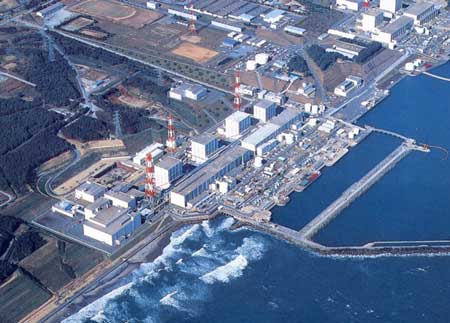
Tokyo Electric Power Co. Holdings Inc.’s (TEPCO) plan to restart the defunct Kashiwazaki-Kariwa nuclear power plant has an increased chance of being implemented after the prefecture governor, who has campaigned against its reopening, decided against running for re-election, according to a new report by Bloomberg.
TEPCO shares rose as much as 12 percent Wednesday morning – the largest price jump since May 2015, presumably in reaction to the announcement.
Niigata prefecture governor Hirohiko Izumida said he would not pursue a bid for a fourth term for the October 16th elections, according to a personal statement posted on his fan page.
The governor has long opposed plans to return the Kashiwazaki-Kariwa nuclear power plant – the largest of its kind in the world – to production. Japanese laws do not require that utility companies obtain the approval of local leaders before commencing operations, but it is the expected practice.
Izumida has previously demanded that TEPCO conduct further investigations into the causes of the triple meltdown at the Fukushima Dai-Ichi plant in 2011 before proposing plans to restart any of the firm’s reactors.
“The next Niigata governor will likely not make as many relentless demands as Izumida,” Japanese analyst Hidetoshi Shioda said.
According to the World Nuclear Association, the 2011 meltdown led to highly radioactive releases over days 4-6 after the incident originally occurred on March 11th.
The organization reports no deaths or cases of radiation sickness from the incident, though 100,000 citizens had been evacuated from the area to ensure minimal health effects.
The New York Times reported on Monday that Japanese government has funded the construction of a $320 million block of man-made permafrost that would continue 100 feet underneath the Dai-Ichi plant to solve “an unrelenting flood of groundwater” that had been headed into the damaged reactors.
The project will stop the leak of radioactive water into the Pacific Ocean, which may be continuing at low levels to this day, The Times said.
TEPCO has applied to return reactors No. 6 and 7 to production at Kashiwazaki-Kariwa. The company expects to boost profits by $97 million a month for each reactor it restarts, TEPCO spokesperson Tatsuhiro Yamagishi said earlier this week.
New Hope For Nuclear Power In Japan: http://oilprice.com/Latest-Energy-News/World-News/New-Hope-For-The-Fukushima-Nuclear-Power-Plant.html
Post-scriptum: A factually incorrect article published at OilPrice.com (Update: they have corrected the erroneous claim about restarting Fukushima Daiichi but left a photo of Fukushima Daiichi on their somewhat corrected story a copy of the original version can be found here) has begun propagating across the internet. TEPCO is NOT trying to restart reactors at Fukushima Daiichi.
Credit to Nancy Foust of Fukuleaks who caught the Oilprice incorrection: http://www.fukuleaks.org/web/?p=15719
Niigata Pref. Nuclear Power Opponent Governor Out of The Way
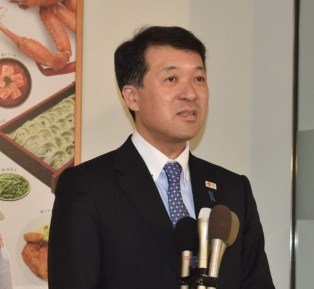
Was he pressured to drop out?
Hirohiko Izumida, governor of Niigata prefecture, said he won’t run for a fourth term and dropped out of the gubernatorial election scheduled for October 16.
The move may affect Tokyo Electric Power Co. Holdings Inc.’s efforts to restart its Kashiwazaki-Kariwa nuclear plant in the prefecture. According to Bloomberg, Tokyo Electric rose as much as 12 percent to 417 yen, the biggest intraday increase since May 2015, and traded at 394 yen at 9:32 a.m. Tokyo time. The Topix index rose as much as 1 percent.
Tepco Rises Most in Year After Governor Opposing Restart Retires
Tokyo Electric Power Co. Holdings Inc., operator of the wrecked Fukushima nuclear power plant, jumped the most in more than a year after a prefecture governor opposing the restart of one of its reactors abandoned his bid for re-election.
Tokyo Electric rose as much as 12 percent to 417 yen, the biggest intraday increase since May 2015, and traded at 394 yen at 9:32 a.m. Tokyo time. The Topix index rose as much as 1 percent.
Hirohiko Izumida, governor of Niigata prefecture, said he won’t run for a fourth term and dropped out of the gubernatorial election scheduled for October 16, according to a personal statement posted on a website of supporters. Izumida opposed Tokyo Electric’s plan to restart its Kashiwazaki-Kariwa nuclear power plant, the world’s largest facility, located in Niigata prefecture. Local government approval is typically sought by Japanese utilities before they restart nuclear reactors, though not required by law.
With Izumida out of the picture, the chance of Kashiwazaki-Kariwa’s reactors restarting has increased, said Hidetoshi Shioda, an analyst at SMBC Nikko Securities, who views the retirement as a positive for Tokyo Electric shares.
Izumida had demanded that Tokyo Electric further investigate the cause of the triple meltdown at its Fukushima Dai-Ichi plant in 2011 before restarting any reactors.
“The next Niigata governor will likely not make as many relentless demands as Izumida,” SMBC’s Shioda said.
Tepco, as the company is known, has applied to restart No. 6 and 7 reactors at Kashiwazaki-Kariwa. Running one reactor boosts Tepco’s profits by as much as 10 billion yen ($97 million) a month, company spokesman Tatsuhiro Yamagishi said Monday.
Niigata Pref. nuclear power opponent governor won’t stand for re-election
NIIGATA — Gov. Hirohiko Izumida has retracted his announcement that he will run in the upcoming gubernatorial election to seek a fourth term.
Since Izumida has adopted a cautious stance toward the restarting of the Kashiwazaki-Kariwa Nuclear Power Plant in Niigata Prefecture, his decision not to run in the election will likely have a huge impact on the issue. All seven reactors at the power station, owned by Tokyo Electric Power Co., have been idle since March 2012 in the wake of the 2011 Great East Japan Earthquake, tsunami and the ensuing crisis at the Fukushima No. 1 nuclear plant.
The campaign for the Oct. 16 Niigata gubernatorial election is to kick off on Sept. 29.
Izumida’s decision not to run in the election is linked to his criticism of a report in the Niigata Nippo regional daily over a dispute involving a subsidiary of a shipping company funded by the prefectural government.
In an interview with news organizations, Izumida said, “It’s important to have prefectural residents know the facts, but I feel my appeal never reached the residents. Even if I requested the newspaper to correct its report, the daily would never do so, which prompted me to abandon running in the race.”
At a prefectural assembly session in February this year, Izumida announced that he would run in the gubernatorial election to seek a fourth four-year term. However, his retraction of his candidacy leaves Nagaoka Mayor Tamio Mori, 67, who heads the Japan Association of City Mayors, as the only person who has announced his candidacy.
It came to light this past July that Japan Shipping Exchange Inc., an arbitration organization, had ordered a shipping company’s subsidiary funded by the prefectural government to pay 160 million yen to a South Korean company following a dispute over the purchase of a ferry.
The Niigata Nippo published a series of articles holding the Niigata Prefectural Government responsible for the case.
In response, the prefectural government has dismissed the accusations saying, “The daily’s coverage is incorrect,” and repeatedly urged the newspaper to correct its reports.
The Niigata Nippo is set to release a statement to express its views on the case.
http://mainichi.jp/english/articles/20160831/p2a/00m/0na/008000c
Two Tepco Kashiwazaki-Kariwa reactors may pass geared-up safety checks by March
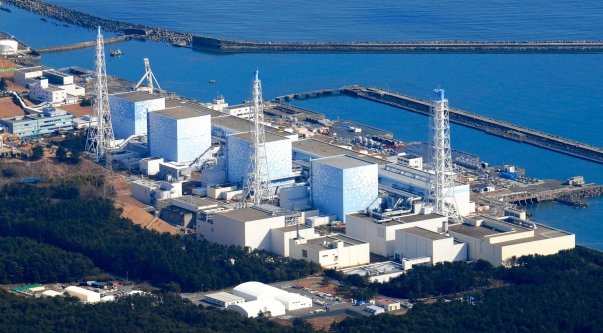
Nuclear regulators have decided to gear up the safety assessment of two reactors operated by Tokyo Electric Power Company Holdings Inc. in central Japan, raising the possibility of finishing the process by next March, sources said Tuesday.
Reactor Nos. 6 and 7 at the Kashiwazaki-Kariwa plant in Niigata Prefecture are boiling water reactors, the same type as the ones that suffered core meltdowns in 2011 at Tepco’s Fukushima No. 1 complex.
All reactors in Japan — either BWRs or pressurized water reactors — are required to meet tougher safety criteria imposed after the Fukushima crisis, but the BWR assessment has been delayed due to the need to install safety equipment that involves extensive work.
If reactors 6 and 7 clear the assessment, they will become the first BWRs technically qualified to resume operation under the post-Fukushima rules.
Facing massive decommissioning costs and compensation payments after the Fukushima disaster, Tepco applied for the safety assessment of the two reactors in September 2013, hoping that restarting the units will help turn around its business.
But it is unclear whether the development will lead to their swift restart because Niigata Gov. Hirohiko Izumida has said he will “not talk about restarting” the reactors unless a study on the Fukushima calamity is sufficiently carried out.
The Kashiwazaki-Kariwa complex on the Sea of Japan coast is one of the world’s largest nuclear power plants in capacity if all of its seven reactors were in operation.
Allowing Tepco to reactivate its reactors can be controversial, as the utility is still struggling to scrap the crippled reactors at the Fukushima plant. Tens of thousands of people who lived nearby also remain displaced evacuees.
The Nuclear Regulation Authority decided last August to prioritize checking the two Kashiwazaki-Kariwa reactors, hoping to make them a model case of the BWR assessment process. But it retracted the decision in March after Tepco failed to offer sufficient explanation on questions raised by the regulators.
But Tepco has come up with the necessary documents and the NRA decided to reinstate the priority status of the Kashiwazaki-Kariwa reactors at least until mid-September. The NRA has conveyed its plan to other utilities whose BWRs are being checked, the sources said.
Under the new safety requirements, BWRs must be equipped with filtered venting systems so that radioactive substances will be reduced when gas and steam need to be released to prevent damage to containment vessels.
The venting facilities are not an immediate requirement for PWRs as they are housed in containers larger than those of BWRs, allowing more time until pressure rises inside the containers.
Currently, two reactors at Kyushu Electric Power Co.’s Sendai plant and another reactor at Shikoku Electric Power Co.’s Ikata plant are operating in Japan after passing the safety checks. They are all BWRs.
TEPCO’s nuclear commercials draw disgust from evacuees

A TV commercial about the Kashiwazaki-Kariwa nuclear power plant (Provided by Tokyo Electric Power Co.)
The narration over uplifting music boasts of repeated safety drills and enhanced capabilities to judge and act in nuclear plant emergencies.
Workers in blue uniforms and hard hats appear, declaring: “We will devote our entire energy to drills so that we can deal with any circumstance.”
This TV commercial in Niigata Prefecture never fails to draw a look of disgust from a 41-year-old woman.
The woman and her two children, then aged 1 and 3, were forced to flee their home in Fukushima Prefecture to Niigata Prefecture after the 2011 triple meltdown at the Fukushima No. 1 nuclear power plant.
The crippled plant is operated by Tokyo Electric Power Co., the producer of that commercial.
“The mess caused by the nuclear accident has yet to be cleaned up,” she said. “There are still evacuees facing hardships because they have no prospects for the future. If TEPCO has money to use for commercials, it should use it to support the evacuees.”
TEPCO, in fact, created six different commercials for an advertising campaign that started in June last year. The commercials have been aired a total of 320 times a month on four private broadcasting stations based in Niigata Prefecture, according to the utility.
By promoting the safety of nuclear power through the commercials, TEPCO hopes to gain support for its plan to resume operations at some of the seven reactors of its now-idle Kashiwazaki-Kariwa nuclear power plant in the prefecture.
The commercials have drawn the opposite reaction from many of about 3,000 evacuees from Fukushima Prefecture who currently live in Niigata Prefecture.
In April this year, residents and evacuees in Niigata Prefecture visited TEPCO’s head office in Tokyo and submitted a letter of protest along with about 1,900 signatures. They demanded the company suspend the commercials and disclose the costs for the campaign.
Complaints have also been directed at Chubu Electric Power Co.’s TV commercials for nuclear power generation in Shizuoka Prefecture.
The company’s first post-3/11 commercial started airing on four private broadcasting stations in 2012, mainly explaining the company’s safety measures.
In July 2015, the utility began to air an eight-part series of commercials, in which employees working at a nuclear power plant appear with the lovely voice of a female vocalist in the background.
“In order to protect this place even at midnight,” and “We will engage in a drill again today” are among the captions shown in one part titled, “Nighttime training.”
After the Fukushima nuclear disaster unfolded, Nagoya-based Chubu Electric Power suspended all reactors at its Hamaoka nuclear power plant in Omaezaki, Shizuoka Prefecture, under the request of the then Democratic Party of Japan-led government headed by Prime Minister Naoto Kan.
The utility is preparing to resume operations at some of the Hamaoka reactors, despite anxieties about the safety of the nuclear plant. The plant has been described as the most dangerous in Japan, given its proximity to a long-expected huge earthquake off the prefecture.
In 2012, a civic group made a request to Shizuoka Governor Heita Kawakatsu to hold a referendum on whether the Hamaoka plant should be restarted.
The group also presented about 165,000 signatures.
“The commercials on nuclear power plants are a unilateral strategy to improve image they project,” Shigeki Nishihara, mayor of Makinohara, located next to Omaezaki, said. “It is necessary for Chubu Electric Power to repeatedly hold dialogue and discussions with the people who have anxieties and doubts about nuclear power plants in order to educate itself.”
Fukushima Daiichi is not Tepco’s first accident
Fukushima is not Tepco’s first big accident. Fukushima was not their first Prom. They had practice only 4 years earlier. And guess what? Even back then Tepco misrepresented the amount that leaked into the ocean.
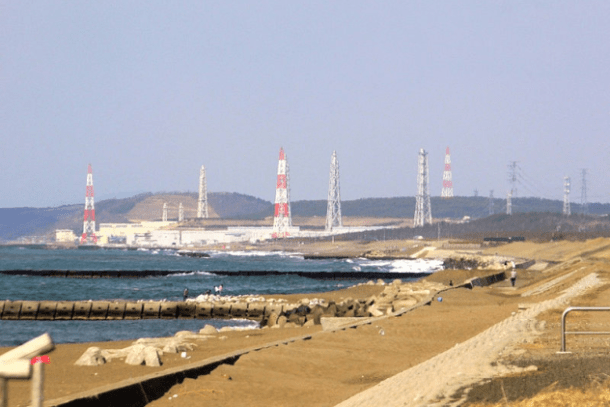
Chuetsu Earthquake
The Kashiwazaki-Kariwa Nuclear Power Plant (KKNPP) in Japan’s Niigata Prefecture can generate more power than any other power plant in the world—when it’s running. Since it became fully operational in 1997, one scandal after another has repeatedly forced it to shut down some or all of its seven reactors. Examples include concealing evidence of stress cracks and covering up the fact that the plant was built near fault lines.
That last bit came to light after the Chuetsu earthquake occurred on July 16, 2007. The magnitude 6.8 quake’s epicenter was only 24 kilometers (15 mi) offshore from the plant. The shaking was greater than the plant was designed to withstand; it was built before Japan updated their earthquake standards in 2006.
The ominous dry run for the later Fukushima Daiichi disaster damaged KKNPP and its reactors. The Tokyo Electric Power Company acknowledged that 1,200 liters of slightly radioactive water leaked into the sea and that dozens of barrels of low-level nuclear waste broke open during the quake. An exhaust pipe leaking radioactive iodine was also reported.
A report issued on July 19 by the Nuclear Information and Resource Service (NIRS) claimed the release of radioactive material to be much worse. According to NIRS, the water that leaked into the sea came from the irradiated fuel pool of one of the reactors. Another reactor had been releasing radioactive steam since the earthquake. The Associated Press also reported large amounts of damage to the plant’s infrastructure, with cracks and leaks seemingly everywhere. Liquefaction (formerly solid ground turning to mud) had occurred under parts of KKNPP.
1 This Month

of the week – Shut Down Drone Warfare!


Tell the Ukrainian Government to Drop Prosecution of Peace Activist Yurii Sheliazhenko

Petition to revoke the licensing of the Near Surface Nuclear Disposal Facility (NSDF) at Chalk River. https://www.ourcommons.ca/petitions/en/Petition/Details?Petition=e-7247
To see nuclear-related stories in greater depth and intensity – go to https://nuclearinformation.wordpress.com
-
Archives
- March 2026 (244)
- February 2026 (268)
- January 2026 (308)
- December 2025 (358)
- November 2025 (359)
- October 2025 (376)
- September 2025 (257)
- August 2025 (319)
- July 2025 (230)
- June 2025 (348)
- May 2025 (261)
- April 2025 (305)
-
Categories
- 1
- 1 NUCLEAR ISSUES
- business and costs
- climate change
- culture and arts
- ENERGY
- environment
- health
- history
- indigenous issues
- Legal
- marketing of nuclear
- media
- opposition to nuclear
- PERSONAL STORIES
- politics
- politics international
- Religion and ethics
- safety
- secrets,lies and civil liberties
- spinbuster
- technology
- Uranium
- wastes
- weapons and war
- Women
- 2 WORLD
- ACTION
- AFRICA
- Atrocities
- AUSTRALIA
- Christina's notes
- Christina's themes
- culture and arts
- Events
- Fuk 2022
- Fuk 2023
- Fukushima 2017
- Fukushima 2018
- fukushima 2019
- Fukushima 2020
- Fukushima 2021
- general
- global warming
- Humour (God we need it)
- Nuclear
- RARE EARTHS
- Reference
- resources – print
- Resources -audiovicual
- Weekly Newsletter
- World
- World Nuclear
- YouTube
-
RSS
Entries RSS
Comments RSS
 nuclear-news