Hokkaido town mayor eyes hosting nuclear waste site
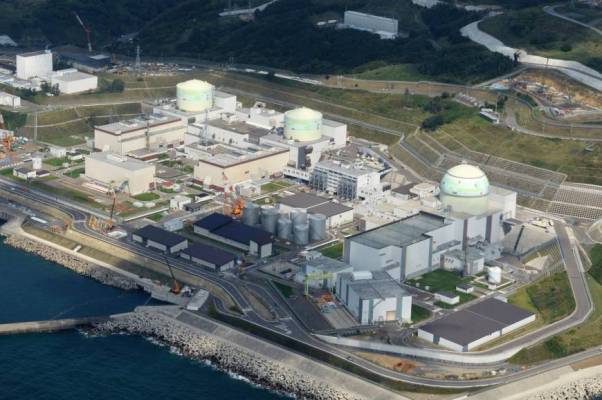
 This facility in Finland is the only one where construction has begun on a final storage site for nuclear waste.
August 14, 2020
The mayor of Suttsu in western Hokkaido is bracing for a backlash after stating that he wants his small town to be considered as a final destination for nuclear waste by the central government.
“When I think about the future of our town, where the population has been shrinking, there is a need for financial resources to promote industry,” said Haruo Kataoka, 71, in an interview with The Asahi Shimbun.
“I am prepared for whatever form of bashing I may encounter.”
Kataoka may be in for a long fight.
Selecting the site for the nation’s final storage of nuclear waste is a three-stage process that can take up to 20 years. At each stage, the central government provides any municipality that has applied with annual grants.
Kataoka said he was considering having Suttsu apply for the first stage in which past records about natural disasters and geological conditions for the area are examined.
This stage normally takes about two years, and the municipality can receive up to 1 billion yen ($9.3 million) a year or a maximum total of 2 billion yen.
The annual budget for the Suttsu town government is 5 billion yen. Its main industries are oyster farming and fishing for Atka mackerel.
As of the end of March, the town’s population was 2,893. The population has decreased by 30 percent over the past two decades.
To encourage municipalities to submit applications, the central government in July 2017 released a map of areas that were considered scientifically appropriate as a site for the final storage of nuclear waste.
Suttsu is the first municipality expressing an interest in applying since that map was released.
But it remains to be seen if local residents will go along with Kataoka’s idea. He will hold a meeting in September to explain his intention and a decision will be made thereafter whether to proceed with the application.
Kataoka has also expressed interest in moving toward the second stage of the selection process in which boring samples are taken from underground. This is part of the four-year process to determine if the area meets general conditions to enable the selection process to move to the third stage, in which a test facility will be constructed underground.
In the second stage, the municipality can receive up to 2 billion yen a year, or a maximum total of 7 billion yen.
A municipal government can decide at any time to withdraw from the selection process and the grants it has received until then do not have to be returned.
Because nuclear waste may take up to 100,000 years for radiation to reach safe levels, any final storage site would have to be constructed at least 300 meters underground.
Suttsu is classified at the highest of four levels of appropriateness, according to the map released by the central government. Its location facing the Sea of Japan makes Suttsu highly suitable for transporting nuclear waste to the storage site.
But in addition to possible local opposition, the town government will also have to take into consideration an ordinance approved by the Hokkaido prefectural government in 2000 regarding nuclear waste that said no such waste should be brought onto the main northern island.
In a statement released on Aug. 13, Hokkaido Governor Naomichi Suzuki said the ordinance, “is an expression of the desire not to allow a final storage site within Hokkaido, and I believe I have no alternative but to abide by the ordinance.”
Kataoka said that the first stage of the selection process was just a study that did not represent a violation of the ordinance.
But at each stage of the selection process, the views of the prefectural governor and municipality mayor are solicited and any opposition will stop the process from proceeding.
Meanwhile, Hiroshi Kajiyama, the industry minister who oversees the process for selecting a final storage site, told reporters on Aug. 13 that a number of municipalities in addition to Suttsu had expressed interest in obtaining information about the selection process.
While Kajiyama acknowledged his awareness of the Hokkaido ordinance, he added that applying for the first stage of the process did not mean the municipality would automatically move to the second stage.
The central government has had to resort to offering annual grants to encourage municipal governments to express an interest in becoming the site for the final storage of nuclear waste.
Commenting on the interest shown by Suttsu, one government source said, “It is a step forward, but if we think about the entire process as a marathon, the race has just started and the runners have not yet even left the stadium (to reach the road).”
Meanwhile, other municipalities that in the past showed some interest in becoming the final storage site have more often than not met with huge local opposition.
In 2007, the mayor of Toyo in Kochi Prefecture on the island of Shikoku expressed interest in applying without first consulting the town assembly. Local opposition was so strong that a candidate opposed to the idea defeated the incumbent in the next election and the application was withdrawn.
There have also been reports of other municipalities expressing an interest in applying, but no formal announcement has been made until now.
Japan now possesses about 19,000 tons of spent nuclear fuel, but no progress has been made in selecting a site for its final storage. Foreign nations have also experienced difficulties in securing a site for such storage.
Finland is the only nation where actual construction of such a facility has begun.
(This article was written by Yasuo Sakuma, Ichiro Matsuo, Rintaro Sakurai and Yu Kotsubo.)
Gov’t, TEPCO ordered to compensate Fukushima evacuees to Hokkaido

March 11, 2020
SAPPORO — A court ordered the government and the operator of the crippled Fukushima nuclear plant Tuesday to pay a combined 52.9 million yen in damages to 89 people who evacuated from their hometowns to Hokkaido after the 2011 nuclear disaster.
The Sapporo District Court ruling marked the seventh case where both the government and Tokyo Electric Power Company Holdings Inc were ordered to pay damages, out of 11 cases brought against the two parties. In the four other cases, only TEPCO was ordered to pay damages.
It was also the 15th decision handed down among around 30 similar damages suits filed across Japan over one of the world’s worst nuclear disasters, triggered by the massive earthquake and tsunami in March 2011.
A total of 257 plaintiffs, 90 percent of whom at the time were living in Fukushima city and other locations outside of areas given evacuation orders, had sought a combined 4.24 billion yen from the utility and the state.
“While (the ruling) is a sign of recognition of the government’s responsibility, it doesn’t reflect the actual lives that those who evacuated to Hokkaido have led,” a lawyer representing the plaintiffs told reporters after the court decision.
Following the ruling, TEPCO offered a “heartfelt apology for causing great trouble and worries” to those affected in Fukushima and other areas and said it will consider how to respond to the court decision after closely examining it.
At the court, the operator had said it had already paid damages to some of the plaintiffs and that the amount was adequate as it was based on the government guidelines. The utility also said it was not obligated to compensate the others as they had voluntarily evacuated.
The government has denied responsibility for the disaster, saying it could not have foreseen the flooding of the nuclear plant due to a tsunami.
The plaintiffs argued that TEPCO neglected to take preventive measures although it could have predicted earthquake and tsunami risks at the plant, and that the government did not enforce adequate safety measures despite approving power generation at the complex.
They also said that the psychological distress they suffered due to fears that radiation exposure had damaged their health, among other concerns, had impacted their ability to lead a normal life following the evacuation.
https://japantoday.com/category/national/gov%27t-tepco-ordered-to-compensate-fukushima-evacuees-to-hokkaido
Japan nuclear plant’s power restored after quake triggers Hokkaido blackout

Hokkaido’s Tomari NPP using emergency generators after powerful M6.7 earthquake
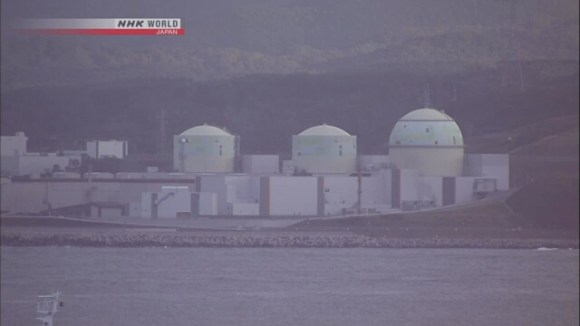
Tomari nuclear plant using emergency generators
Hokkaido nuclear plant on backup power after quake, reviving memories of Fukushima disaster
1 This Month

of the week – Shut Down Drone Warfare!


Tell the Ukrainian Government to Drop Prosecution of Peace Activist Yurii Sheliazhenko

Petition to revoke the licensing of the Near Surface Nuclear Disposal Facility (NSDF) at Chalk River. https://www.ourcommons.ca/petitions/en/Petition/Details?Petition=e-7247
To see nuclear-related stories in greater depth and intensity – go to https://nuclearinformation.wordpress.com
-
Archives
- March 2026 (251)
- February 2026 (268)
- January 2026 (308)
- December 2025 (358)
- November 2025 (359)
- October 2025 (376)
- September 2025 (257)
- August 2025 (319)
- July 2025 (230)
- June 2025 (348)
- May 2025 (261)
- April 2025 (305)
-
Categories
- 1
- 1 NUCLEAR ISSUES
- business and costs
- climate change
- culture and arts
- ENERGY
- environment
- health
- history
- indigenous issues
- Legal
- marketing of nuclear
- media
- opposition to nuclear
- PERSONAL STORIES
- politics
- politics international
- Religion and ethics
- safety
- secrets,lies and civil liberties
- spinbuster
- technology
- Uranium
- wastes
- weapons and war
- Women
- 2 WORLD
- ACTION
- AFRICA
- Atrocities
- AUSTRALIA
- Christina's notes
- Christina's themes
- culture and arts
- Events
- Fuk 2022
- Fuk 2023
- Fukushima 2017
- Fukushima 2018
- fukushima 2019
- Fukushima 2020
- Fukushima 2021
- general
- global warming
- Humour (God we need it)
- Nuclear
- RARE EARTHS
- Reference
- resources – print
- Resources -audiovicual
- Weekly Newsletter
- World
- World Nuclear
- YouTube
-
RSS
Entries RSS
Comments RSS
 nuclear-news