Japan rejects UN call to stop returns to Fukushima
Japan’s government lifted its standard for the acceptable level of radiation to 20 millisieverts per year from 1 millisievert after the Fukushima disaster
Japan’s government on Friday (Oct 26) rejected calls from a UN rights expert to halt the return of women and children to areas affected by the Fukushima nuclear disaster over radiation fears.
UN special rapporteur Baskut Tuncak on Thursday warned that people felt they were “being forced to return to areas that are unsafe, including those with radiation levels above what the government previously considered safe.”
In the wake of the Fukushima disaster, Japan’s government lifted its standard for the acceptable level of radiation to 20 millisieverts per year from 1 millisievert.
It has been urged to revise that level back down again, but has rejected calls to do so, a decision Tuncak called “deeply troubling.”
“Japan has a duty to prevent and minimise childhood exposure to radiation,” he said.
But Japan’s government rejected the criticism, saying Tuncak’s comments were based on “one-sided information and could fan unnecessary fears about Fukushima,” a foreign ministry official told AFP.
Japan’s government has gradually lifted evacuation orders on large parts of the areas affected by the disaster, which occurred when a massive tsunami sent reactors at the Fukushima Daiichi plant into meltdown in March 2011.
But other areas remain under evacuation orders because of continued high levels of radiation.
Japan’s government has pushed hard to return affected areas to normal, but has faced criticism that what it refers to as “safe” radiation levels are not in line with international standards.
Around 12,000 people who fled their homes for fear of radiation have filed dozens of lawsuits against the government and the Tokyo Electric Power Company (TEPCO), the operator of the stricken nuclear plant.
The Fukushima disaster was the worst since Chernobyl in 1986, though there has only been one death linked to it. More than 18,000 people were killed or left missing in the tsunami that prompted the meltdown.
October 27, 2018
Posted by dunrenard |
Fukushima 2018 | Evacuees Forced Return, Fukushima Radiation, Human Rights, United Nations |
Leave a comment
1. International Commission on Radiological Protection (ICRP) has ALWAYS recommended 1 mSv per year to be ‘safe’ for human living conditions.
2. Japan arbitrarily INCREASED this level 20 TIMES to 20 mSv per year AFTER Fukushima Daiichi blew. Science proves this level DANGEROUS for women & children; thus, the UN calling out this human rights abuse.
3. Japan is funding billions of dollars for 2020 Olympic venues & athletes’ housing in Fukushima; BUT ending support for Fukushima évacuées, forcing many to return to dangerous radiation exposure.
Students from Fukushima High School ride a bus and are told by Tokyo Electric Power Co. executive Yoshiyuki Ishizaki, right, about the Fukushima No. 1 Nuclear Power Plant’s No. 1 reactor, which just had a cover removed from its building, in Okuma, Fukushima Prefecture, on Nov. 18, 2016.
Stop sending women & children back to Fukushima fallout zone, UN expert tells Japan
A UN human rights expert has urged Japan to reconsider its policy of returning women and children to areas still high in radiation after they were displaced by the Fukushima meltdown.
Baskut Tuncak, the UN’s special rapporteur on hazardous substances, criticized the Japanese government’s decision to resettle citizens in areas with radiation levels above one millisievert per year, the threshold of health risk to groups particularly sensitive to radiation, including children and women of childbearing age.
“The gradual lifting of evacuation orders has created enormous strains on people whose lives have already been affected by the worst nuclear disaster of this century,” he said.
Tuncak presented his findings to a General Assembly committee meeting in New York. “Many feel they are being forced to return to areas that are unsafe, including those with radiation levels above what the government previously considered safe,” he added in a news release.
The Japanese government dismissed his concerns, blaming one-sided information and expressing concern that the statement could stoke “unnecessary fears” about the site of the March 2011 nuclear disaster.
After the earthquake and subsequent power plant meltdown, the Japanese government raised its acceptable radiation levels to 20 millisieverts. The UN last year issued a recommendation to return the level to pre-meltdown standards, but Japan ignored the request.
Over seven years later, radiation levels around Fukushima remain high, as has the apparent level of denial within the Japanese government. They recently announced plans to release about a million tons of wastewater contaminated with radioactive elements into the Pacific Ocean, claiming high-tech processing had reduced the contaminants to safe levels, but was forced to admit that 80 percent of the water remained contaminated after local residents protested the dumping plans.
The government has been removing evacuation orders gradually and plans to repeal all of them within five years, regardless of the contamination level in the areas. Japan was slow to enact the evacuation orders initially – only residents within a 3km radius of the meltdown were told to evacuate immediately after the accident, and four days later, residents 30km away were still being told to shelter in place. However, it was already allowing resettlement in areas within 20km of the plant by 2014.
Tuncak has clashed with the Japanese government before. In August, he and two other UN human rights experts criticized them for putting at risk the lives of those involved in the Fukushima clean-up. An earlier UN report showed that 167 plant workers had received radiation doses that increased their cancer risk.
Only last month did the Japanese government admit that even a single plant worker had died as a result of radiation exposure. The unnamed man, whose job included measuring radiation levels immediately after the meltdown, was exposed to about 195 millisieverts of radiation and developed lung cancer after leaving his job in 2015.
UN envoy: Halt children’s return to Fukushima
October 26, 2018
A UN envoy has urged Japan to halt the return of children and young women to nuclear accident-hit Fukushima, calling the government’s radiation exposure limit too lax. But the Japanese side is refuting the advice.
Human Rights Council Special Rapporteur Baskut Tuncak on Thursday was speaking to a committee of the UN General Assembly.
The government set the exposure limit at 20 milisieverts per year as a condition for lifting evacuation orders issued for parts of the prefecture after the 2011 Fukushima Daiichi nuclear power plant accident.
Tuncak criticized the government for not taking into account the council’s recommendation that the limit be one milisievert.
A Japanese delegate countered by saying the limit is based on a 2007 recommendation by the International Commission on Radiological Protection.
He also said the government has been consulting Japanese experts on the matter, and that Tuncak’s reports give Fukushima a negative reputation.
But Tuncak said the experts recommend that the annual limit be one milisievert in normal times. He added that risk remains as long as radiation levels exceed this threshold.
Tuncak urged Japan to apply the principle to children and women of reproductive age.
UN rights expert urges Japan to halt returns to Fukushima
GENEVA (Kyodo) — The Japanese government must halt the return of women and children displaced by the March 2011 nuclear disaster back to areas of Fukushima where radiation levels remain high, a U.N. human rights expert said Thursday.
The special rapporteur on hazardous substances, Baskut Tuncak, also criticized in his statement the government’s gradual removal of evacuation orders for most of the irradiated areas as well as its plan to lift all orders within the next five years, even for the most contaminated areas.
“The gradual lifting of evacuation orders has created enormous strains on people whose lives have already been affected by the worst nuclear disaster of this century. Many feel they are being forced to return to areas that are unsafe,” he said.
An official of Japan’s permanent mission to the international organizations in Geneva refuted the statement, saying it is based on extremely one-sided information and could fan unnecessary fears about Fukushima.
Tuncak expressed concerns about people returning to areas with radiation above 1 millisievert per year, a level previously observed by Japan as an annual limit so as to prevent risks to the health of vulnerable people, especially children and women of reproductive age.
“It is disappointing to see Japan appear to all but ignore the 2017 recommendation of the U.N. human rights monitoring mechanism to return back to what it considered an acceptable dose of radiation before the nuclear disaster,” he said.
In the wake of the Fukushima nuclear incident, the Japanese government heightened the annually acceptable level of radiation to 20 millisieverts, raising concerns for the health of residents.
In August, Tuncak and two other U.N. human rights experts jointly criticized the Japanese government for allegedly exploiting and putting at risk the lives of “tens of thousands” of people engaged in cleanup operations at and around the crippled Fukushima Daiichi nuclear plant, a claim Tokyo dismissed.
October 27, 2018
Posted by dunrenard |
Fukushima 2018 | Evacuees Forced Return, Fukushima Radiation, Human Rights, United Nations |
Leave a comment
GENEVA (25 October 2018) – A UN human rights expert has urged the Japanese Government to halt the ongoing relocation of evacuees who are children and women of reproductive age to areas of Fukushima where radiation levels remain higher than what was considered safe or healthy before the nuclear disaster seven years ago.
The UN Special Rapporteur on hazardous substances and wastes, Baskut Tuncak, will present a report to the General Assembly in New York today, highlighting key cases of victims of toxic pollution brought to his attention in recent years that demand global action. The expert said the Japanese Government’s decision to raise by 20 times what it considered to be an acceptable level of radiation exposure was deeply troubling, highlighting in particular the potentially grave impact of excessive radiation on the health and wellbeing of children.
“It is disappointing to see Japan appear to all but ignore the 2017 recommendation of the UN human rights monitoring mechanism (UPR) to return back to what it considered an acceptable dose of radiation before the nuclear disaster,” he said.
Following the nuclear disaster in 2011, which was triggered by a massive earthquake and tsunami, Japan raised the acceptable level of radiation for residents in Fukushima from 1 mSv/year to 20 mSv/year. The recommendation to lower acceptable levels of exposure to back to 1 mSv/yr was proposed by the Government of Germany and the Government of Japan ‘accepted to follow up’ on it, according to the UN database. However, in the expert’s view, the recommendation is not being implemented.
Japan has a duty to prevent and minimise childhood exposure to radiation, added the UN expert referring to his 2016 report on childhood exposure to toxics. The UN Convention on the Rights of the Child, to which Japan is a Party, contains a clear obligation on States to respect, protect and fulfil the right of the child to life, to maximum development and to the highest attainable standard of health, taking their best interests into account. This, the expert said, requires State parties such as Japan to prevent and minimise avoidable exposure to radiation and other hazardous substances.
The Special Rapporteur said Japan should provide full details as to how its policy decisions in relation to the Fukushima Daiichi nuclear accident, including the lifting of evacuation orders and the setting of radiation limits at 20mSv/y, are not in contravention of the guiding principles of the Convention, including the best interests of the chid.
Tuncak has expressed his concerns at the Human Rights Council in recent years, accompanied by explicit requests and pleas by concerned organisations for the Government to invite the mandate to conduct an official visit. The Japanese Government has a standing invitation to all mandate holders but has not to date invited the mandate on hazardous substances and wastes to conduct an official country visit.
Seven years after the nuclear disaster, actions for the reconstruction and revitalisation of Fukushima are in full implementation process, with evacuation orders lifted for most of the areas, and with plans in place for lifting evacuation orders in even the highest contaminated areas during the next five years. In March 2017 housing subsidies reportedly stopped to be provided to self-evacuees, who fled from areas other than the government-designated evacuation zones.
“The combination of the Government’s decision to lift evacuation orders and the prefectural authorities’ decision to cease the provision of housing subsidies, places a large number of self-evacuees under immense pressure to return,” Tuncak said.
“The gradual lifting of evacuation orders has created enormous strains on people whose lives have already been affected by the worst nuclear disaster of this century. Many feel they are being forced to return to areas that are unsafe, including those with radiation levels above what the Government previously considered safe.”
The presentation of the thematic report at the General Assembly today will be live-streamed on the United Nations Web TV.
Mr. Baskut Tuncak is Special Rapporteur on the implications for human rights of the environmentally sound management and disposal of hazardous substances and wastes. As a Special Rapporteur, he is part of what is known as the Special Procedures of the Human Rights Council. Special Procedures, the largest body of independent experts in the UN Human Rights system, is the general name of the Council’s independent fact-finding and monitoring mechanisms that address either specific country situations or thematic issues in all parts of the world. Special Procedures experts work on a voluntary basis; they are not UN staff and do not receive a salary for their work. They are independent from any government or organization and serve in their individual capacity.
For more information and media requests, please contact: Ms Lilit Nikoghosyan (+41 22 9179936 / lnikoghosyan@ohchr.org) or Mr. Alvin Gachie (+41 22 917 997 1/ agachie@ohchr.org) or write to srtoxics@ohchr.org
For media inquiries related to other UN independent experts please contact Mr. Jeremy Laurence, UN Human Rights – Media Unit (+41 22 917 9383 / jlaurence@ohchr.org)
This year is the 70th anniversary of the Universal Declaration of Human Rights, adopted by the UN on 10 December 1948. The Universal Declaration – translated into a world record 500 languages – is rooted in the principle that “all human beings are born free and equal in dignity and rights.” It remains relevant to everyone, every day. In honour of the 70th anniversary of this extraordinarily influential document, and to prevent its vital principles from being eroded, we are urging people everywhere to Stand Up for Human Rights: www.standup4humanrights.org
October 27, 2018
Posted by dunrenard |
Fukushima 2018 | Evacuees Forced Return, Fukushima Radiation, Human Rights, United Nations |
Leave a comment
Hong Kong Chief Executive Carrie Lam
HONG KONG – More time is needed for Hong Kong to lift its ban on food imports from Japan’s Fukushima Prefecture imposed in the wake of the 2011 nuclear disaster there as public confidence remains low, Hong Kong leader Carrie Lam said.
In an interview with Japanese media ahead of her first official working trip to Tokyo since taking office as chief executive in 2017, Lam said that while food safety remains a priority, consumer sentiment is another deciding factor for when the ban should be lifted.
“We will have to continue to monitor the situation and to see when is the right time, especially (for) public acceptance,” Lam said.
She said there’s no point in the government relaxing the ban if the public end up not supporting the move. “They will still not buy the food, so we have to find the right situation with the needed assurance before we change the import restrictions,” she added.
Hong Kong in July lifted the ban on imports of foods including vegetables, fruits, milk, milk beverages and milk formula from the prefectures of Ibaraki, Tochigi, Chiba and Gunma nearby Fukushima.
But the ban on food imports from Fukushima, which hosts the damaged Fukushima Daiichi nuclear power plant, remains in place.
Lam said that since the lifting of the food ban from the four prefectures, individual cases of food imports lacking needed certificates have led to law enforcement activities, which in turn impacted public confidence.
China, which restricted the import of foods and feedstuff produced in 10 of Japan’s 47 prefectures over radiation worries, has informed Japan of its intention to relax the ban through diplomatic channels, it was reported, according to the sources.
Japanese Prime Minister Shinzo Abe is expected to reach a deal when he meets with Chinese Premier Li Keqiang in Beijing on Oct 26.
Defending Hong Kong’s recent moves to outlaw an independence-seeking political party and expel a foreign journalist who hosted a talk by the party’s leader, Lam insisted that the people’s rights and freedoms remain intact.
“I am not suggesting that I should, or the government should put a limit on freedom of speech or freedom of reporting in Hong Kong. I am saying, internationally, there is no absolute freedom per se. If anybody is aggrieved by the executive…they can take us to court,” she said.
Lam said judges from foreign common law jurisdictions, including Britain, Australia and Canada, sitting on the territory’s top court to adjudicate cases is proof that Hong Kong courts are not interfered with or influenced by the Chinese government.
The chief executive will embark on the five-day visit to Japan from Oct 29, a first for a Hong Kong leader since 2010. She is slated to meet with Japanese officials over issues covering government business, trade and investment, education, technology science, tourism and women’s affairs.
October 27, 2018
Posted by dunrenard |
Fukushima 2018 | Contaminated Food, Food Import Ban, Fukushima Radiation, Hong-Kong |
Leave a comment
Prime Minister Shinzo Abe is due to visit Beijing this week, with China’s food import ban on Japan likely to be discussed
China’s import ban on Japanese food introduced following the March 2011 nuclear disaster is likely to be discussed between Japanese and Chinese leaders in upcoming summit talks in Beijing this week, though whether any progress can be made on the discussion is uncertain.
China has taken a cautious approach to relaxing the import regulations due to safety concerns among the public.
China has a ban in place on food imports from 10 prefectures: Fukushima, Miyagi, Ibaraki, Tochigi, Gunma, Saitama, Chiba, Tokyo, Niigata and Nagano. Food products made in other prefectures need to have certificates that confirm they have passed radioactive checks.
China introduced the ban because of concerns over radioactive contamination due to the meltdown at Tokyo Electric Power Company Holdings Inc.’s Fukushima No. 1 power plant.
Japan has been asking Beijing to lift the ban at an early date.
In an effort to make this happen, Tokyo has explained the examination process for food and provided data related to their safety.
But China has stood pat over concerns that lifting the ban could create public backlash. Also behind the inaction were tensions over the Japanese-administered Senkaku Islands in the East China Sea that are claimed by Beijing, informed sources said.
Amid warming bilateral ties and an improvement in the public’s perception of Japanese food, Abe and Chinese Premier Li Keqiang agreed in May this year to start working-level talks for a possible easing of the import regulations.
The focus now is on how much progress can be made at the working level before Abe’s three-day visit to China from Thursday, which comes as the two countries mark the 40th anniversary of the entry into force of their peace and friendship treaty, the sources said.
If the ban is relaxed, Japan is expected to make progress toward its goal of attaining ¥1 trillion in annual exports in the agricultural, forestry and fishery sectors, the sources said.
The nuclear disaster led a total 54 economies to introduce import restrictions or strengthen radioactive checks on Japanese food products.
Of them, 29 had scrapped their restrictions as of August this year and 17 others conditionally resumed imports. China is among the eight that maintain import bans on food made in some prefectures.
October 27, 2018
Posted by dunrenard |
Fukushima 2018 | China, Contaminated Food, Food Import Ban, Fukushima Radiation |
Leave a comment
A Honnoriya staff member displays rice balls at the company’s Tokyo Station outlet. Honnoriya offers rice balls made with the Aizu Koshihikari brand from Fukushima Prefecture.
After 16 years, Fukushima’s Aizu Koshihikari still the brand of choice for popular Tokyo rice ball shop
A popular rice ball shop stands near Tokyo Station’s Yaesu Central Gate, drawing long lines of customers waiting to buy products made with rice from Aizu, Fukushima Prefecture, known for remaining soft with a touch of sweetness even when it gets cold.
As it takes less than a minute to make the rice balls, customers don’t have to wait long at Honnoriya, a rice ball chain operated by JR East Food Business Co.
From actors, athletes and comedians to politicians and culinary maestros, many say they are fans of the rice balls. After it was featured on the popular TBS television show “Matsuko no Shiranai Sekai” (“The World Unknown to Matsuko”), a rush of traffic swarmed Honnoriya’s website, temporarily shutting it down.
Sadafumi Yamagiwa, president of JR East Food, said the secret of the chain’s popularity is the quality of the rice — Koshihikari rice produced in Fukushima’s Aizu region.
“It’s because the rice tastes good. The Aizu Koshihikari rice is chewy, making it different from other rice,” Yamagiwa said.
The firm uses Aizu Koshihikari in all of its 13 outlets located in Tokyo, Kanagawa, Saitama and Chiba. At the main shop in Tokyo, around 7,000 rice balls are sold on busy days. In fiscal 2017, a total of 252 tons of rice were consumed at its 13 stores.
Since Honnoriya opened its first outlet at Tokyo Station in March 2002, it has continued to use Koshihikari brand. Despite having been awarded the top “special A” ranking by the Japan Grain Inspection Association, Aizu Koshihikari is cheap compared with other varieties produced in different regions, Yamagiwa said.
Following the 2011 Great East Japan Earthquake and the ensuing nuclear meltdowns at the Fukushima No. 1 nuclear power plant, many consumers avoided produce from the prefecture. The company also received many inquiries about the safety of the rice, and employee opinions differed over which brand should be used.
But as blanket radiation checks conducted on Fukushima-grown rice found no radioactive material, such concern gradually eased, Yamagiwa said.
He stressed that the company has been using Aizu Koshihikari solely for the reason that it tastes good. “It’s not like we’ve been using the rice to support the disaster-hit regions,” he said.
Each year, the company chooses a rice brand after comparing the tastes of different varieties produced in different parts of the country.
For the past 16 years, there has been no rice that surpassed Koshihikari produced in Aizu, Yamagiwa said, meaning that Aizu Koshihikari has consistently won the internal competition every single year.
This section features topics and issues from Fukushima covered by the Fukushima Minpo, the largest newspaper in Fukushima Prefecture. The original article was published on Sept. 30.
October 17, 2018
Posted by dunrenard |
Fukushima 2018 | Contaminated Food, Fukushima Radiation, Fukushima Rice, Propaganda |
Leave a comment
Each Fukushima municipality has one incinerator ongoing (18 if I remember well), trying to reduce the volume of accumulated contaminated debris and soil by incineration,but through it continuing nanoparticles air dispersion as it is highly unprobable that those incinerators filters fully block their release..
Plaintiffs hold a sign stating their opposition to the burning of radiation-tainted waste as they head to the Sendai District Court to file a lawsuit on Thursday.
SENDAI – Residents in Osaki, Miyagi Prefecture, filed a lawsuit Thursday seeking to prevent a local public association from burning radiation-tainted waste generated by the 2011 Fukushima nuclear crisis.
Osaki, located about 120 kilometers north of the city of Fukushima, has been keeping some 6,000 tons of tainted grass and rice straw containing radioactive substances in excess of state standards, and the association in charge of waste disposal is scheduled to start burning it from Monday.
The residents filed the suit with the Sendai District Court in the hope of suspending the ¥21.6 million budget for the incineration, claiming the association failed to keep an agreement that it would alleviate residents’ concerns.
“The agreement was a strong message that we would protect the environment for future generations,” said 79-year-old Tadaetsu Abe, who is leading the plaintiffs. “The public administration has ignored the residents’ wishes.”
The association, called the Osaki Area Integrated Administration of a Large Region Office Work Association, declined to comment, saying it has not seen the plaintiffs’ claim.
The Fukushima No. 1 power plant, hit by a major earthquake and tsunami on March 11, 2011, suffered three core meltdowns and spewed radioactive material into the air, contaminating wide areas of the prefecture.
The waste stored in Osaki contains radioactive substances of up to 8,000 becquerels per kilogram. Each municipality is responsible for radioactive waste disposal.
Some 170 residents opposed to the incineration requested an audit of the city’s budget on the waste disposal, but it was rejected as of Sept. 13.
October 12, 2018
Posted by dunrenard |
Fukushima 2018 | Fukushima Radiation, Miyagi Prefecture, Waste Incineration |
Leave a comment
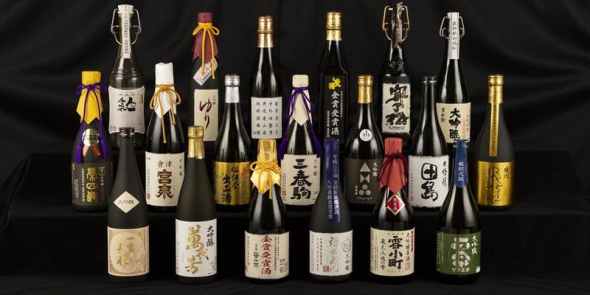
Free Fukushima “sake” tasting events in NYC.
Japan’s No.1 Sake Fukushima
Experience the best sake in Japan, without leaving NYC!!
Most Gold Prizes 6 years in a row in the century-old Japan Sake Awards. “Champion Sake” in 2015 and 2018 at the International Wine Challenge. Unmatched craftsmanship and the finest taste. While famous in Japan, Fukushima sake has remained a mystery to the outside world—until now!
Enjoy a FREE tasting session of premium Fukushima sake with us. Tasting session participants will receive a 20% discount for Fukushima sake purchased during event hours (while supplies last).
More Free Sake Tasting Events
Japan’s No.1 Fukushima’s Sake for Holiday Gift–Free Tasting
Japan’s No.1 Fukushima’s Sake for Valentine’s Day–Free Tasting
Fukushima Trade Promotion Council
Organizer of Japan’s No.1 Fukushima SAKE –Free Tasting
Office: 103 Second Avenue, Suite 2D New York, NY 10003 USA
E-mail: fukushima@bioartsnyc.com
According to the following article (of Dec. 2017), “the United States topped the list of export destinations (of Fukushima sake) with 76.9 kl, accounting for 48% of the total, followed by Canada with 10.6 kl (7%) and Hong Kong with 9.4 kl (6%).” http://www.fukushimaminponews.com/news.html?id=871
October 3, 2018
Posted by dunrenard |
Fukushima 2018 | Contaminated Sake, Fukushima Radiation, Japan Food Exports, US |
1 Comment
Japanese regions struggle to export farm produce to Taiwan as radiation fears politicized

Information boards explain stringent safety measures taken in Chiba Prefecture east of Tokyo during an agricultural expo held in the northwestern Taiwanese city of Taoyuan in May 2018.
TAIPEI, TAOYUAN, Taiwan/BEIJING — Some local governments in Japan are struggling to export their agricultural products to Taiwan as Taipei is expected to conduct a referendum on whether or not to lift a ban on imports from five Japanese prefectures following the 2011 disaster at the Tokyo Electric Power Co.’s Fukushima No. 1 Nuclear Power Plant.
During a recent agricultural exhibition held in the city of Taouyan in northwestern Taiwan, few participants dropped by a booth run by the government of Chiba Prefecture in eastern Japan, which is one of five prefectures hit by the ban. The remaining four prefectures are Fukushima, Ibaraki, Tochigi and Gunma, all north of Tokyo. In contrast, the stall of Miyazaki was inundated by visitors trying to test the juicy beef the southern Japan prefecture is famous for.
Chiba Gov. Kensaku Morita visited Taiwan in November last year and met with Taoyuan Mayor Cheng Wen-tsan. They agreed that local sweets made from peanuts harvested in Chiba should be made available in Taiwan, too. As Chen is said to be close to Taiwan President Tsai Ing-wen, an individual who accompanied the governor told the Mainichi Shimbun that the two leaders had “a fairly in-depth discussion” toward lifting the ban.
However, at the agricultural festival earlier this year in Taoyuan, the Chiba government was not allowed to bring in food samples because of the import ban. Officials only had a video and panels explaining the safety of agricultural products in Chiba. “We want the ban to be lifted as soon as possible,” emphasized an official during the event.
Fukushima also wants to resume exports of peaches to Taiwan, which was the biggest overseas market for the fruit before the nuclear accident. The radioactive fallout from the TEPCO power plant contaminated a large swath of land near the facility. The Ibaraki Prefectural Government also sees Taiwan as a promising market for its agricultural items.
Taiwan ranked fourth among overseas markets for Japanese farm and food products last year, importing 83.8 billion yen out of the 807.1 billion yen total value. Hong Kong is the No. 1 importer, followed by the United States and China.
The Tsai administration is positive about lifting the ban, as most Japanese farm products do not contain detectable levels of radioactive materials under a strict screening system. Administration officials say if Taiwan came after China in resuming the import of Japanese farm products, it would be a blow to its relationship with Japan, which is vital for Taipei, along with its ties with the U.S., to counter Beijing. China regards Taiwan as a renegade province and is trying to bring the island back into its fold eventually.
But people close to the ruling Democratic Progressive Party say Taiwan’s largest opposition party Kuomintang is using the issue to wage a political attack on the ruling party, fanning up public fear toward farm products from the five Japanese prefectures as “nuclear food.” The November referendum is expected to be called after the opposition collected some 470,000 signatures, more than the legally required number, to conduct the vote.
Taiwan is not alone in blocking Japanese agricultural products from entering the domestic market. It wasn’t until July this year that Hong Kong lifted its ban on agricultural items from four Japanese prefectures, but it still keeps its door closed to Fukushima produce.
China also continues to deny the import of agricultural and food items from 10 prefectures in the Tohoku and Kanto regions in the northern and eastern parts of the country, respectively, including Tokyo. The country accepts produce from other Japanese regions only if the goods come with certificates saying they are radiation free.
The Japanese government and business community have repeatedly demanded that Beijing relax the regulations, and Prime Minister Shinzo Abe and Chinese President Xi Jinping agreed in May to set up a joint panel of experts to discuss the removal of the restriction.
The reason behind the intransigence indicated by some Asian countries and regions in denying Japanese farm produce is public concern. A survey of consumers in 10 countries and regions in the United States, Europe and Asia in February last year found that 81 percent of respondents in Taiwan said they were “worried about Fukushima produce.” The ratio stood at 69.3 percent in South Korea, followed by China with 66.3 percent. But a domestic poll in Japan by the Consumer Affairs Agency in February 2018 found that people hesitating to buy products from Fukushima was just 12.7 percent.
According to associate professor Naoya Sekiya of the University of Tokyo, a specialist in disaster information studies who conducted the 10-country/region survey last year, “the negative image caused by the 2011 nuclear accident just stuck, and people are not aware of food safety checks.” Only 10 percent-plus of people in South Korea responded that they knew about the complete radiation checks on all Fukushima rice carried out by the prefectural government. The ratio was just more than 20 percent for Taiwan, while 40 percent of Japanese respondents said yes.
Farmers in areas affected by the nuclear disaster have made efforts to reduce radiation, including the use of potassium to prevent the absorption of radioactive cesium from the fallout. Seventeen prefectures as well as agricultural cooperatives and shipment companies are testing their farm products. During the past three years, more than 99 percent of tested items did not contain detectable levels of radiation. In Fukushima, too, no rice was found to contain radiation above acceptable levels.
“Just telling people how tasty the food items are is not enough,” said Sekiya. “You also have to convey that airborne radiation levels are completely different from those right after the accident, no radioactive materials have been detected in food items, and the checking system functions with no problems.”
October 3, 2018
Posted by dunrenard |
Fukushima 2018 | Contaminated Food, Fukushima Radiation, Japan Food Exports, Taiwan |
Leave a comment
REPOST from February 2014
February 2, 2014 — (TRN) — Insurance Companies in the United States have begun notifying customers they will no longer have ANY coverage whatsoever for anything relating to nuclear energy claims. Fallout, radiation sickness, property damage from radiation – all EXCLUDED. This begs the question: If the nuclear disaster at the Fukushima power plant in Japan is as harmless to Americans as the government and “scientists” are telling us, why are Insurance companies specifically EXCLUDING coverage for nuclear energy related claims? (Hint: The government is lying about the danger.)
TRN has a PDF of one such notice being sent by Traveler’s Insurance Company. You can read it for yourself below.
Letters being sent by U.S. Insurance companies are notifying policy holders of an important change to their coverage. Letter sent by one major insurance company read as follows:
Thank you for choosing Travelers. We are providing advance notice of changes affecting your renewal policy or notification of renewal premium. Please consult Travelers Service Center for guidance in reviewing the information contained in this notice.
Your renewal policy will provide changes in coverage because of underwriting judgment based on an evaluation of your
individual risk exposures and/or loss history.
The following is changed on your renewal:
IL 00 21 09 08 NUCLEAR ENERGY LIABILITY EXCLUSION ENDORSEMENT FORM HAS BEEN ADDED TO YOUR POLICY
The accompanying paperwork gets very specific about what they mean. It says, in part:
1. The insurance does not apply:
A. Under any Liability Coverage, to “bodily injury” or “property damage”:
B. Under any Medical Payments coverage, to expenses incurred with respect to “bodily injury” resulting from the “hazardous properties” of “nuclear material” and arising out of the operation of a “nuclear facility” by any person or organization.
2. As used in this endorsement:
“Hazardous properties” includes radioactive, toxic or explosive properties. “Nuclear material” means “source material”, “special nuclear material” or “by-product material” . . . . Spent fuel . . . . Waste . . . . .
The letters further make clear:
“Property damage” includes all forms of radioactive contamination of property.”
That last item, about radioactive contamination of property, THAT’s the “biggie.” THAT is the issue that will shortly become evident to people who live on the west coast of north America. One day, when folks in places like San Francisco, Los Angeles, and San Diego wake up and hear evacuation orders on radio and TV telling them to run for their lives because the radiation levels from the Pacific Ocean have made their homes uninhabitable, THEN all those folks will understand the implications of this nasty little change in Insurance coverage.
The Turner Radio Network has been warning people about the coming radiation from Fukushima. For months, we have been issuing radiation alerts when local background radiation levels start “spiking.” For months, we have been closely monitoring developments at the Fukushima disaster site and publishing news stories about those developments and the dangers they pose to North America.
Sadly, for months, critics have claimed our coverage was “sensationalism” or “designed to scare people.” That was never the case, but it didn’t stop the critics from claiming such.
So here we are, February, 2014, and Insurance Companies are now specifically EXCLUDING coverage for radioactive contamination of property. Let’s be clear about what this means; if you have to move away from your home because the area is contaminated with lethal levels of radiation, don’t bother calling your insurance company. YOU HAVE NO COVERAGE AT ALL for this type of event. Of course, you still have to pay your mortgage for the house you can no longer live in, but that’s your problem, right?
Now, stop and think for a moment about other types of disasters. Homes in “Tornado Alley” in the USA routinely suffer horrific destruction from tornadoes. Have any insurance companies stopped covering such damage? No. They may charge a higher premium in those geographic areas, but they don’t flat-out EXCLUDE coverage. How about places that routinely suffer wildfires? California, Arizona, New Mexico come to mind. Have you ever heard of any insurance companies specifically EXCLUDING coverage for wildfires for people who live in those area? Nope!
So why, if the government and so-called “experts” are all publicly telling us that the radiation from Fukushima will be diluted by the Pacific Ocean and will not harm us, are Insurance companies beginning to absolutely and specifically EXCLUDE coverage for radiation-related damage, injuries and claims?
Could it be that the radiation from Fukushima, which has been spewing into the Pacific Ocean since March 11, 2011, is not nearly as “diluted” as the government and “experts” would have us believe? Could it be that the Insurance companies know (maybe from their pals in government) that entire STATES on the west coast of North America may have to be evacuated because of the incoming radioactive water in the Pacific? Does this start to make more sense to you now? Such events would utterly wipe out Insurance companies. You know it, the government knows it and the insurance companies darn sure know it. THAT is why insurance companies are excluding coverage; they KNOW what’s coming and they don’t want to be wiped out by it. Can’t blame them, but where does that leave you?
Some advice: If you live on the west coast of north America, sell your house fast and cheap to some illegal aliens. Get whatever you can for the house, take the money, and run like hell.
Whatever you get for the house will be more than you’ll get from your insurance company once the radiation arrives. Oh, about the illegal aliens to whom you sell . . . . well . . . . who cares what happens to them, they shouldn’t be here anyway!
Click
HERE to read a PDF of the actual notice being sent to policy holders by Traveler’s Insurance Company
September 24, 2018
Posted by dunrenard |
Fukushima 2018 | Fukushima Radiation, Radiation Claims, US Insurance Companies |
1 Comment
Tetsuji Sakuma, right, unloads a cow from a truck in the Fukushima Prefecture village of Katsurao on Sept. 13, 2018, as he resumes operations at his dairy farm for the first time since the Fukushima No. 1 Nuclear Power Plant disaster.
KATSURAO, Fukushima — A 42-year-old man resumed operations at his dairy farm on Sept. 13 with the arrival of eight cows at his barn, after an evacuation order for the 2011 nuclear crisis was lifted in most parts of the village here.
Tetsuji Sakuma, who is aiming to ship milk for public sale from the beginning of next year, restarted his business for the first time in 7 1/2 years after the Fukushima No. 1 Nuclear Power Plant disaster. He did not give up hope of resuming his work even after being forced to evacuate and losing all his cattle as a result. “I hope to restore my finances and to lead this area (to recovery),” said the farmer, taking one step toward the reconstruction of his hometown.
Sakuma unloaded the cows from a truck into his barn with the help of his 68-year-old father Shinji. Sakuma laughed bitterly as he suddenly felt old, realizing he had “lost strength after not doing such work for 7 1/2 years,” but flashed a smile as he watched the cattle graze.
Sakuma took over running the ranch when he was just 20 years old. He successfully increased the number of cows and barns, and was raising a total of 129 dairy cattle before the nuclear crisis struck. He grew corn and grass to feed the cows, which he raised from when they were calves, and brought them up in a stress-less environment to produce large quantities of high quality milk. The cows were like members of the family and he used to ship the largest amount of raw milk among farmers in Fukushima Prefecture.
After the deadly quake struck on March 11, 2011, a tanker did not come to collect his milk the next day, forcing him to discard it. Dairy cattle can die if they are not milked and Sakuma thought that “cows sacrifice themselves to produce milk, and throwing it away is like wasting their lives.”
Everyone in the village was advised to evacuate on the night of March 14, 2011. Sakuma let his wife and child evacuate to Gunma Prefecture while he took shelter in the city of Fukushima with his parents. Ten of his cows were found dead when he returned on May 18.
Some 25 of his young cows were sent to a ranch in Hokkaido in June that year and the rest were shipped off to be culled for their meat following inspections. “People can evacuate, but cows have nowhere to escape,” the distressed farmer thought as he apologized to the cows.
Sakuma moved into a temporary housing complex in the town of Miharu in Fukushima Prefecture with his wife and child. He helped his friend’s civil engineering work while serving as a village assembly member, and waited for a chance to start farming again. Restrictions on shipments of milk were lifted in December 2016, half a year after the easing of the nuclear evacuation order. Sakuma rushed to prepare for the reopening of his dairy farm, such as repairing milking machines.
The excited farmer bought eight dairy cattle at an auction in Hokkaido on Sept. 11, exactly 7 1/2 years after the Fukushima disaster. Sakuma will check the level of radiation in the cows’ milk once a week, to accomplish his goal to ship milk for public sale from the beginning of next year. His future dream is to have 300 cows graze on his farm.
His wife gave birth to three more children while they lived as evacuees and this spring, the family moved into a new home he built in the place where their old home used to stand in the town of Katsurao. The father of four feels proud every time his eldest son Ryoji, 13, says he wants to “become a dairy farmer.”
Sakuma never once thought of shutting down his dairy farm. “I don’t want to be perceived as someone who quit in exchange for compensation. If I stop farming, I would feel like I have lost to these circumstances,” he stated. Sakuma has to repay a 100 million yen loan he took out to resume operations at his dairy farm and to work to eliminate damage caused by harmful rumors, as well as face many other challenges. “This is the point of no return,” said Sakuma, as he rolled up his sleeves to start his difficult journey.
(Japanese original by Rikka Teramachi, Fukushima Bureau)
September 24, 2018
Posted by dunrenard |
Fukushima 2018 | Contaminated Food, Dairy, Fukushima Radiation |
Leave a comment
10-Sep-2018 By Pearly Neo
Japan’s hopes that the Taiwan government will lift the current ban on foods from Fukushima and surrounding areas has hit another hurdle after Kuomintang, the largest opposition party in Taiwan, submitted a referendum request on what has been dubbed ‘anti-nuclear food’.
Read more at:
September 10, 2018
Posted by dunrenard |
Fukushima 2018 | Ban, Contaminated Products, Fukushima Radiation, Taiwan |
Leave a comment
Food from Japan to Hong Kong is now being imported under eased and newly effective food safety protocols.
According to the Hong Kong Center for Food Safety (CFS), the 7-year-old order in response to the Fukushima nuclear power plant disaster was recently amended. The CFS is a unit of Government of Hong Kong Special Administrative Region of the People’s Republic of China.
The Fukushima disaster, a 2011 nuclear power plant failure stemming from a massive earthquake and tidal wave, caused Hong Kong to restrict food imports from that area and four other Japanese prefectures: Chiba, Gunma, Ibaraki and Tochigi.
Hong Kong recently completed a review of these risk management restrictions based on recent surveillance results and expert opinion from international organizations.
Based on that work, the new arrangement for import control on Japanese food went into effect on July 24.
In summary, import restrictions on food from Fukushima remain unchanged. Vegetables, fruits, milk, milk beverages, and dried milk from the other four prefectures are allowed to be imported with the condition that they are accompanied by both a radiation certificate and an exporter certificate issued by the Japanese authority.
The radiation certificate shows which of the four prefectures each consignment of products come from and attests that the radiation levels do not exceed standards set by the Codex Alimentarius.
Codex is a collection of internationally recognized standards, codes of practice, guidelines, and other recommendations relating to foods, food production, and food safety
According to the Codex, food is considered safe for human consumption if the radiation levels do not exceed those levels.
The exporter also must hold and produce exporter certificate which certifies the foods exported to Hong Kong by the exporter involved are fit for human consumption as far as radiological protection is concerned and are readily available for sale in Japan implying that the radiation levels do not exceed the Japanese standards which are more stringent than Codex levels.
Two levels of food safety clearance
Two levels of gatekeeping are involved in the current arrangement. At the export level, the Japanese authority that issues the radiation certificates and exporter certificates must ensure that each consignment of those products do not come from Fukushima and attest that the radiation levels of the food products do not exceed the Codex levels as well as the more stringent Japanese levels.
At the import level, the Centre for Food Safety (CFS) will continue to conduct radiation tests on every consignment of food products imported from Japan. Food products can only enter the local market after radiation testing has been performed. The CFS will strengthen inspection and testing on vegetables, fruits, and milk products from the four prefectures. The radiation test results will continue to be updated on the CFS’s website every working day for public access.
Updates by the Center for Food Safety on its radiation testing of food imported have been available since March 16, 2011.
Hong Kong partially lifts food safety restrictions imposed after nuclear disaster
August 22, 2018
Posted by dunrenard |
Fukushima 2018 | Fukushima Radiation, Hong-Kong, Japan Food Exports |
Leave a comment

August 14, 2018
Scientists have for the first time been able to estimate the amount of radioactive cesium-rich microparticles released by the disaster at the Fukushima power plant in 2011. This work, which will have significant health and environmental implications, is presented at the Goldschmidt geochemistry conference in Boston.
The flooding of the Fukushima Daiichi Nuclear Power Plant (FDNPP) after the disastrous earthquake on March 11 2011 caused the release of significant amounts of radioactive material, including cesium (Cs) isotopes 134Cs (half-life, 2 years) and 137Cs (half-life, 30 years). Initially scientists thought that all Cs was released in soluble form. Now however, they have realized that a part of the released Cs was in the form of glassy microparticles, formed at the time of the reactor meltdown; these particles were thrown over a wide area, but until now there has been no reliable estimate of how much radioactive cesium-rich microparticles was deposited in the surrounding area, and how this material was distributed.
Now a group of international scientists, led by Dr. Satoshi Utsunomiya (Associate Professor of Kyushu University, Fukuoka, Japan) has been able to give the first accurate estimates of the amount of the radioactive microparticles in the environment. This work describes the significance of the microparticles to current radiation levels, and provides fundamental data for a future re-evaluation of health risks from the highly radioactive microparticles which remain in the local environment.
“Most of the glassy microparticles are only a few microns in size, and were spread alongside the soluble cesium. The soluble cesium is generally bound to clay minerals after wet deposition, with the clay minerals also forming particles, so it was difficult to distinguish the cesium-rich microparticles from cesium absorbed on clay.” said Dr. Utsunomiya, “However, we realized that the cesium-rich microparticle has an extremely high radioactivity ~1011 Bq/g compared with the much lower radioactivity for cesium-sorbing clay particles, and this can be used to distinguish the two types. So we have established a novel procedure to quantify the cesium-rich microparticles by applying a quantitative autoradiography method”.
Autoradiography exposes a photographic film or detector to a radioactive source, which causes the radiation to show up on the film (medical X-rays is the most common autoradiography technique). The team determined the threshold radioactivity for Cs-rich microparticles in the sieved fraction based on the relation between photostimulated luminescence signal and radioactivity. They applied this method to soil samples from 20 affected areas.
Dr. Utsunomiya continued “In certain areas, these glassy particles are highly concentrated, so they are a major concern. We have found up to 318 of these particles in just 1 gram of soil, near the Fukushima Daiichi power plant. Most of these particles are still in the ambient environments, indicating the high stability.
Since the Fukushima accident we have been gradually coming to understand how the microparticles were distributed, and what this might mean to health and the environment. As you would expect, there are more radioactive particles nearer the reactor: we believe that there was a proportion of cesium released as soluble material, but we have found that the area south of the reactor contains a higher proportion of glassy particles. Our estimate is that around 78% of radioactive cesium was released as glassy particles. Many of the microparticles have been washed down from roofs and from plants, and have now gathered in radioactive hot spots.
Now that we have a better idea of the quantities involved and how the radiation has been distributed, it gives our team a better idea of how to approach the effect on health, which is obviously a major concern. This work does not imply that there is any additional radiation which has been missed—the total amount of cesium released at Fukushima remains the same. However, the glassy particles have concentrated the radiation, which means that there is still much new work to be done to understand how this concentrated radiation might affect health”
Commenting on the work, Dr. Ken Buesseler (Woods Hole Oceanographic Institution) said:
“The idea of microparticles has not been ‘missed’ in the assessment of total cesium levels in soil after Fukushima; it has been included, although this work highlights the fraction found in cesium microparticles. So we shouldn’t think that there is additional radiation to worry about, but nevertheless in this highly concentrated form it may have different health impacts. These researchers have done a fine job of developing new tools to quantify these microparticles, and that is an important story to tell”
More information: Ryohei Ikehara et al. Novel Method of Quantifying Radioactive Cesium-Rich Microparticles (CsMPs) in the Environment from the Fukushima Daiichi Nuclear Power Plant, Environmental Science & Technology (2018). DOI: 10.1021/acs.est.7b06693
Read more at: https://phys.org/news/2018-08-reliable-highly-radioactive-cesium-rich-microparticles.html#jCp
August 17, 2018
Posted by dunrenard |
Fukushima 2018 | Fukushima Radiation, Release |
Leave a comment
When I purchased a commonly available radiation detector right after the Fukushima disaster in 2011 I never would have dreamed how it would impact the way I saw the world. Since then I would periodically test the level of radioactivity around my home here in the Sierra Nevada mountains of California. Nothing was ever out of the ordinary, and my own readings were generally in the 30 to 50 counts per minute (cpm) range. Perfectly safe, or so I thought.
That all changed this Spring, when by chance I happened to remember that testing on an air filter could show the presence of “hot” particles. Since I happened to own two air cleaners with HEPA air filters, I got out my detector and laid it down on one of the HEPA filters. Immediately the detector went into a wild frenzy of clicking punctuated by the flashing of the red light each time it was bombarded by ionizing radiation. Thinking something had to be wrong, I tried again only to have the same result. I tried again on the other air cleaner and found an even higher result of over 800 cpm.
Since I had at that time been working with Akio for about a year, and had been introduced to several of his nuclear experts by email, I reached out to them asking what could possibly be causing this disturbing result. All agreed this was a high result, and the prime suspect was radon gas. Radon gas is common in this area, and can be threat to health. I promptly obtained test kits for my indoor air and well water, sent them in, and within a week I had the results – – all completely negative. At this point, concerned for the health of my family, I began testing everything I could think of to try to determine the source. Floor tiles, countertops and a few other things registered higher than the ambient level, but I was assured that this wouldn’t contribute more than about 30 cpm to the total.
After about a week or so, I remembered reading that many years after the Chernobyl disaster, people living there who heated their homes with wood, like we do, released radiation into the atmosphere once again in the burning process. We have two woodstoves in our home, one large one in the living room and a smaller one in the master bedroom. Since the fine particulate material of the ash might contaminate my detector, I laid down some sheets of paper towels on the ash below the stove in the bedroom, and switched the detector on. Immediately it registered far higher than ambient levels and beyond. Same in the living room. Same at a neighbor’s house. The source apparently was the fire wood – – mostly cut on my own land. Most of my neighbors heat with wood too, at least as a backup. Wood smoke, as I was well-aware, is composed of extremely small particulates that are easily breathed into the body and absorbed.
The implications of this discovery were disturbing. There were radioactive particles in the air that we were all breathing, apparently in large quantities. These particles had apparently been bio-accumulating in the woods around my home for many years, and were re-suspended when burned.
I immediately began monitoring my indoor air regularly, and took a reading on the HEPA filters whenever I could, generally hourly when I was home. Since the level of radiation was much lower without wood smoke indoors, I decided to put one air cleaner outdoors and leave the other indoors. I got out a fresh legal tablet and started a protocol where I would take a reading on each filter, take a picture of the result on my radiation detector with my smartphone, and write down the results. This quickly showed that there was not a much difference between the readings indoors or outdoors.
What I did not know at this point was if this was a localized problem, or whether it was more widespread. With fire season approaching, I abandoned taking two readings, and focused on carefully taking readings outdoors, recording them, and taking a picture of the sky when smoke or clouds were present. Knowing that a fire event was likely going to happen in the upcoming months, I wanted to be ready to see if smoke from wildfires outdoors would result in similar levels of radioactive particles as I had found indoors.
I never could have suspected that the wildfires in California would be as epic as they have been this year. We live in an area vulnerable to fires, and we take them seriously. We had been evacuated in 2014 as a fire approached to within a half mile of our home driven by strong winds, and were only saved by a massive air attack from a virtual fleet of air tankers lined up dropping water and fire retardant. This left a deep impression on us. My stepson has since become a fireman, and has just returned from a deployment to several fires, and after nursing an injury and getting clearance from his doctor, will be back on the fire lines.
As horrific as this season’s fires have been so far, with all the destruction of homes and loss of lives, what disturbs me most is what I have just recorded in my logs, photos and readings. At the peak of the fires and smoke just a few days ago, the readings were significantly higher – – and not by just a little. I recorded a peak reading of 1,333 cpm on the morning of July 31st, and had multiple readings above 1,000 cpm during that period. And, none of the fires is even close to us this time. The likely source of much of the smoke here is a fire near Yosemite National Park, over a hundred miles away. I suspect heavier concentrations of smoke would yield higher results.
Has the vast bulk of the 40 million population of California just been unknowingly exposed to high concentrations of radioactive particles? What are the constituents of these particles? How hazardous are they? It was recently widely reported that radiation from Fukushima, in the form of Cesium-137, was detected in small quantities in California wines. There can be little doubt that Cesium-137 from Fukushima has also been absorbed by all the vegetation here, and when burned, is re-released.
This situation cries out for serious study. I have no experience or academic training in this field. There may well be alternative explanations. I can see from what I have recorded that there are nuances and variances over the course of the day that probably reflect complex processes. All I know is that what we have been breathing shows indications of being contaminated with radioactive particles. It is strongly implied that this radioactivity has been silently concentrating in the plants around us, and is presumably in the food we eat, and in what we drink as well.
If that is correct, this is a situation far worse than we have ever been told. It is likely a global problem, as the exotic and unnatural particles that never existed on this planet previously until the dawning of the nuclear age have now found their way into the air, the oceans, and every living thing. With California on fire, my hope is for all of us to burn away our own complacency, and reignite our own passion to serve life itself in each moment. We can all do something to help according to our abilities, as Akio has selflessly done for many years using his gifts in bringing together international leaders for important common goals. Time is short, and the problem is measured in lifetimes. And potentially for some of us, shortened lifetimes at that.
Gregg Lien is an environmental and land use attorney practicing at Lake Tahoe in California. He is a former prosecutor, and was a former assistant county counsel specializing in land use issues before moving to Lake Tahoe in 1980. He was a participant in the first Presidential Summit on the Environment, hosted by then President Clinton and Vice-President Al Gore, and has been interviewed over the years in various media, including National Public Radio. He has been a frequent participant in regulatory negotiations and battles over resources in the Sierras. He lives with his wife, Heidi, and whichever of their children needs a place to stay now that the youngest has turned 18. He is fascinated by electronics and has a collection of meters and gadgets for his amateur radio and musical hobbies, some of which are actually useful in practical application – – or so he claims.
August 17, 2018
Posted by dunrenard |
Fukushima 2018 | California, Fukushima Radiation, US |
1 Comment


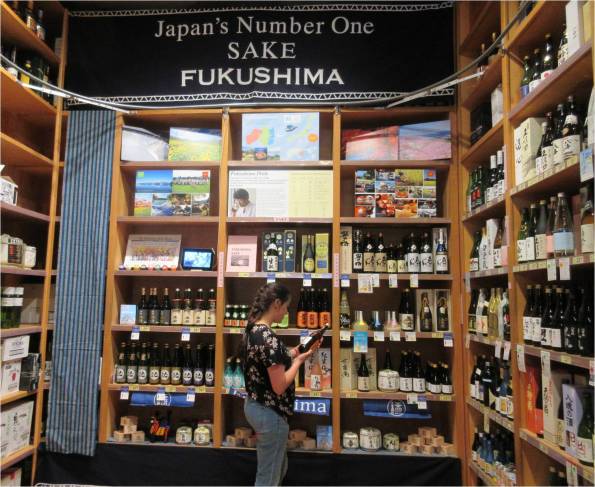

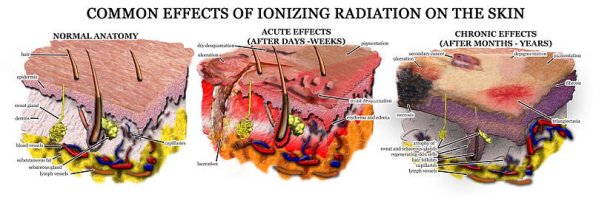


 nuclear-news