24,000 evacuees not counted by Fukushima govt.

NHK has learned that the Fukushima prefectural government’s estimate of the current number of evacuees from the 2011 disaster is about 24,000 less than the figure calculated by local municipalities.
Earlier this month, officials said about 80,000 people were still living in shelters because of the tsunami and nuclear accident.
This includes 17,781 residents of 5 municipalities around the crippled Fukushima Daiichi plant who were evacuated to other parts of the prefecture.
But NHK’s survey found 42,030 people had left these municipalities — about 24,249 more than the prefectural government’s figure.
Officials from the 5 municipalities say their estimate includes all the people who evacuated to other parts of the prefecture, but the Fukushima government’s calculation excludes those who moved into public housing or acquired new homes in other areas of the prefecture.
A visiting associate professor at Fukushima University, Kazuhiko Amano, says many residents still dream of returning to their hometowns even after they have found a place to live.
He says surveys should also cover the type of housing and whether evacuees are living normal lives. He says the prefectural government’s counting method may underestimate the number of people who actually need support.
Fukushima disaster evacuees told to return to abandoned homes
Thousands who fled 2011 disaster must choose between financial hardship or return to homes they believe are unsafe

An evacuee is checked for radiation from the Fukushima Daiichi nuclear power plant after the March 2011 meltdown.
Thousands of people who fled the meltdown at the Fukushima Daiichi nuclear power plant six years ago will soon lose their housing subsidies, forcing some to consider returning despite lingering concerns over radiation in their former neighbourhoods.
The measure, condemned by campaigners as a violation of the evacuees’ right to live in a safe environment, will affect an estimated 27,000 people who were not living inside the mandatory evacuation zone imposed after Fukushima became the scene of the worst nuclear accident in Japanese history.
The meltdown in three reactors occurred after a magnitude-9 earthquake on 11 March 2011 triggered a powerful tsunami that killed almost 19,000 people along Japan’s north-east coast and knocked out the plant’s backup cooling system.
As a “voluntary” evacuee, Noriko Matsumoto is among those who will have their subsidies withdrawn at the end of this month, forcing them to make a near-impossible choice: move back to homes they believe are unsafe, or face financial hardship as they struggle on living in nuclear limbo.
“Many of the other evacuees I know are in the same position,” Matsumoto said at the launch of Unequal Impact, a Greenpeace Japan report on human rights abuses affecting women and children among the 160,000 people who initially fled from areas near the plant. As of last month, almost 80,000 were still displaced.
Matsumoto said: “They would still have to contend with high radiation if they returned, but the government is forcing them to go back by withdrawing housing assistance – that’s tantamount to a crime.”
At the time of the incident, Matsumoto was living with her husband and their two daughters in the city of Koriyama, 43 miles (70km) west of the stricken facility, well outside the area where tens of thousands of people were ordered to leave.
Matsumoto initially stayed put, but three months later, with her youngest daughter, then aged 12, having nosebleeds, stomach ache and diarrhoea, she left her husband behind and took their children to Kanagawa prefecture, more than 150 miles south of Fukushima.
She said: “The government is playing down the effects of radiation exposure … Yet people who don’t return to places like Koriyama after this month will be left to fend for themselves. They will become internally displaced people. We feel like we’ve been abandoned by our government.”
Many of the people who left their homes of their own volition after the triple meltdown were mothers and their young children, who experts say face greater risks to their health from prolonged exposure to relatively low levels of radiation.
The voluntary evacuations have forced families to live apart, while parents struggle to earn enough money to fund their new accommodation and keep up mortgage payments on their abandoned homes.
Kazuko Ito, a lawyer and the secretary general of Tokyo-based NGO Human Rights Now, said: “The government has a responsibility to protect the human rights of evacuees but it doesn’t recognise this obligation. Instead, it downplays the health impact of the accident, especially the dangers associated with long-term radiation exposure.”
In an arrangement repeated among thousands of other Fukushima families, Matsumoto’s husband decided to stay in Koriyama, a city of 330,000 people that was never subject to an evacuation order, and run their restaurant, rather than risk becoming unemployed by joining his wife and children in Kanagawa. The high cost of travel means the family gets together once every two months.
The housing subsidy for households of two or more people from Matsumoto’s neighbourhood is typically 90,000 yen (£640) a month, according to local officials, who say some households will receive smaller sums after the subsidy is withdrawn.
Matsumoto said: “The nuclear accident is to blame for this situation, yet it’s been turned around to make it look like it’s our fault, like we are being selfish.”
Residents who were not living in the mandatory evacuation zone when they fled have been campaigning to retain housing subsidies, in a challenge to the authorities’ attempts to convince more evacuees that some neighbourhoods have been properly decontaminated.
Campaigners have called on the government to declare Fukushima neighbourhoods unfit for human habitation unless atmospheric radiation is brought to below one millisievert (mSv) a year, the maximum public exposure limit recommended by the International Commission on Radiological Protection.
While 1 mSv a year remains the government’s long-term target, it is encouraging people to return to areas where radiation levels are below 20 mSv a year, an annual exposure limit that, internationally, applies to nuclear power plant workers.
Matsumoto said the unprecedented decontamination effort in Fukushima had brought radiation levels in and around her home to below government-set limits, but insisted that children were still at risk from “hotspots” in places such as parks and forests. “Those areas have not been decontaminated,” she said. “It’s true that atmospheric radiation has been lowered, but that’s not the case on the ground and in the soil.”
At the end of this month, evacuation orders will be lifted in four more towns and villages near Fukushima Daiichi, with only those closest to the plant, where radiation is more than 50 mSv a year, still off-limits.
The headline, subheading and first two paragraphs of this article were corrected on 11 March 2017. The evacuees have not been told they must return to their homes if they want to keep their subsidies, as originally suggested. The subsidies are being withdrawn regardless, which will force many to return out of financial necessity.
Kumamoto, Murata & Nakate: “Fukushima Evacuees Face New Hardship Six Years On”
March 9, 2017
Miyako Kumamoto: The Liaison Committee for Organizations of Victims of the Nuclear Disaster / Hiromu Murata: The Liaison Committee for Litigation Plaintiffs of Nuclear Disaster Victims / Seiichi Nakate: Japan Nuclear Evacuee Association for Comprehensive Rights
Fukushima nuclear disaster evacuees ‘pressured’ to return to contaminated homes, says Greenpeace
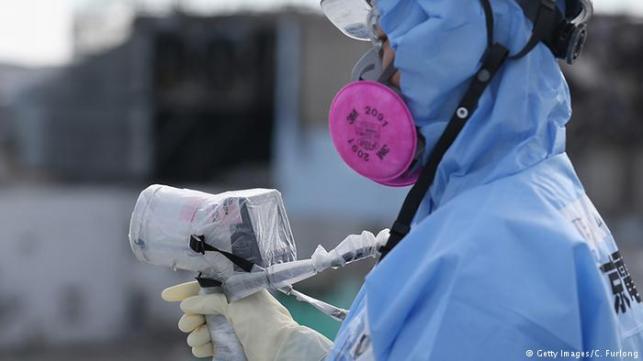
Even though radiation levels in a village near the site of the Fukushima nuclear disaster still exceed international guidelines, its evacuated residents are being coerced to return, according to a Greenpeace report.
Residents from the Japanese ghost village of Iitate will be allowed to return to their former homes at the end of March – the first time since they were forced to flee the Fukushima nuclear disaster in 2011. That’s the date the Japanese government has set to lift evacuation orders.
But according to environmental organization Greenpeace, it’s uncertain whether many will want to. Greenpeace says tests it has carried out on homes in Iitate show that despite decontamination, radiation levels are still dangerously high – but that’s not stopping the Japanese governmenment from pressuring evacuees from returning, under threat of losing financial support.
Those who refuse to go back to their former homes, and are dependent on the Japanese government’s financial help, are faced with a dilemma. After a year from when an area is declared safe again to live in, evacuated residents will see their compensation payments terminated by the government.
Radiation ‘comparable with Chernobyl’
The nuclear disaster led to more than 160,000 people being evacuated and displaced from their homes. Of these, many tens of thousands are still living in temporary accommodation six years on.
The village of Iitate, lying northwest of the destroyed reactors at Fukushima Daiichi power plantand from which 6,000 citizens had to be evacuated, was one of the most heavily contaminated following the nuclear disaster.
Government employees monitor radiation at a day-care center in Iitate in 2011
Around 75 per cent of Iitate is mountainous forest, an integral part of residents’ lives before the nuclear accident.
But according to Greenpeace’s report, published on Tuesday, radiation levels in these woods are “comparable to the current levels within the Chernobyl 30km exclusion zone – an area that more than 30 years after the accident remains formally closed to habitation.”
Put another way, Greenpeace said that in 2017, there clearly remains a radiological emergency within Iitate – defining emergency thus: “If these radiation levels were measured in a nuclear facility, not Iitate, prompt action would be required by the authorities to mitigate serious adverse consequences for human health and safety, property or the environment.”
The environmental organization says decontamination efforts have primarily focused on the areas immediately around peoples’ homes, in agricultural fields and in 20-meter strips along public roads.
But these efforts ended up generating millions of tons of nuclear waste – these now lie at thousands of locations across the prefecture, but they haven’t reduced the level of radiation in Iitate “to levels that are safe,” says Greenpeace.
‘Normalizing’ nuclear disaster?
The organization has accused the Japanese government of trying “to normalize a nuclear disaster, creating the myth that just years after the widespread radioactive contamination caused by the nuclear accident of 11 March 2011, people’s lives and communities can be restored and reclaimed.
“By doing so, it hopes, over time, to overcome public resistance to nuclear power.”
Greenpeace also lambasted the government for leaving unanswered what it calls a critical question for those trying to decide whether to return or not: what radiation dose will they be subjected to, not just in one year but over decades or a lifetime?
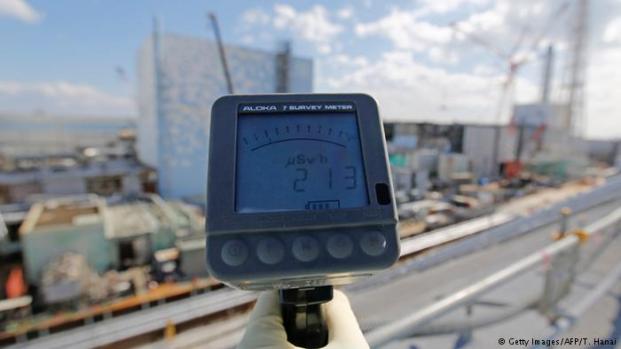
Greenpeace says Japan’s government wants to restore public confidence in nuclear power at the cost of harming residents
“Until now the Japanese government has exclusively focused on annual radiation exposure and not the potential radiation dose rates returning citizens could potentially face over their entire lifetime,” says Greenpeace.
Greenpeace, which has been monitoring Iitate since 2011, carried out its latest survey in November 2016
It found that the average radiation dose range for Iitate beginning from March 2017 over a 70-year lifetime was between 39 millisieverts (mSv) and 183mSv – and that’s not including natural radiation exposure expected over a lifetime, or the exposure received in the days, weeks and months following the March 2011 nuclear disaster.
That exceeds yearly guidelines set by the International Commission on Radiological Protection (ICRP) when added up over a 70-year period – it puts the maximum recommended radiation exposure at 1mSv annually.
Greenpeace says: “The highly complex radiological emergency situation in Iitate, and with a high degree of uncertainty and unknown risks, means that there is no return to normal in Iitate, Fukushima prefecture.”
It has called on the Japanese government to cease its return policy, and to provide full financial support to evacuees, and “allow citizens to decide whether to return or relocate free from duress and financial coercion.”
According to Greenpeace, “for the more than 6,000 citizens of Iitate, this is a time of uncertainty and anxiety.”
Heinz Smital, nuclear physicist and radiation expert at Greenpeace Germany, and part of the team taking measurements at Iitate, told DW the residents were faced with a very difficult situation.
“If you decide to live elsewhere [and not return to Iitate], then you don’t have money, you’re sometimes not welcomed in another area so you are forced to leave, because people say, ‘you’re not going back but you could go back,'” he said. “But for people who go back, they have contaminated land, so how can they use the fields for agriculture?”
He urged the Japanese government to more involve those affected in the decision-making process and not try to give an impression that things are “going back to normal.”
“It’s a violation of human rights to force people into such a situation because they haven’t done anything wrong, it’s the operator of the power plant responsible for the damage it caused,” said Smital.
“It’s very clear that there’s very serious damage to the property and the lifestyle of the people but the government doesn’t care about this.”
They want you to think the Fukushima nuclear disaster is over. But it’s still with us.
Six years ago, over 15,000 people perished and tens of thousands of people’s lives changed forever. Northeastern Japan was hit by a massive earthquake, followed by an enormous tsunami that wiped out coastal towns one after another. Then, in the days that followed came the horrifying news: the Fukushima Daiichi nuclear reactors went into meltdown.

A satellite image shows damage at Fukushima I Nuclear Power Plant
The disaster is still with us.
Nuclear survivors continue to live with fear for their families’ health and with uncertainty about their future. Women are bearing the greatest brunt. They continue to grapple with unanswered questions, unable to relieve a deeply held sense of anger and injustice.
Over the past six years, starting just two weeks after the beginning of this nuclear disaster, Greenpeace conducted radiation surveys in the contaminated region. The latest survey gathered data in and around selected houses in Iitate village, located 30-50 km from the Fukushima Daiichi nuclear power plant [1]. In some homes, residents would receive a radiation dose equivalent to getting a chest x-ray every week. And that’s assuming they stay in the limited decontaminated areas, as 76% of the total area of Iitate has not been touched and remains highly contaminated
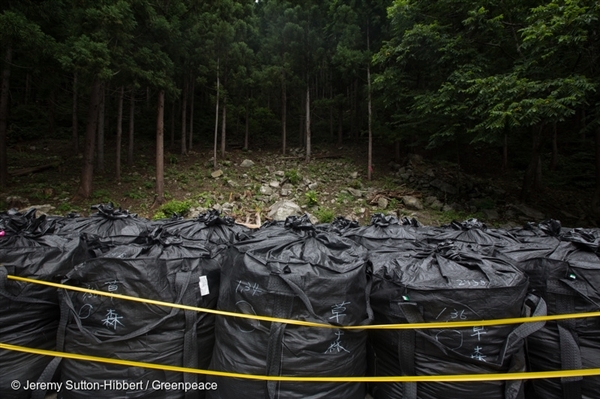
Greenpeace documentation of radioactive decontamination work in Iitate district, Japan.
Despite this, the government, headed by Shinzo Abe, intends to lift evacuation orders from the village and other areas in March and April 2017; and one year later terminate compensation for families from those areas. It will also cancel housing support for those who evacuated outside designated zones. For those dependent on this support, it could mean being forced to return.
Women and children are the hardest hit by the nuclear disaster. They are physically more vulnerable to impacts of the disaster and radiation exposure. Evacuation broke up communities and families, depriving women and children of social networks and sources of support and protection. Together with a yawning wage gap (Japan has the third highest gender income disparity in the most recent OECD ranking), female evacuees – especially single mothers with dependent children – face far higher poverty risk than men.
Despite, or because of the adversity, women are the greatest hope for transformative change. Though women are politically and economically marginalised, they have been at the forefront of demanding change from the government and the nuclear industry.
Mothers from Fukushima and elsewhere are standing up against the paternalistic government policies and decisions, to protect their children and to secure a nuclear-free future for the next generations. They are leading anti-nuclear movements by organising sit-ins in front of the government offices, spearheading legal challenges and testifying in court, and joining together to fight for their rights.
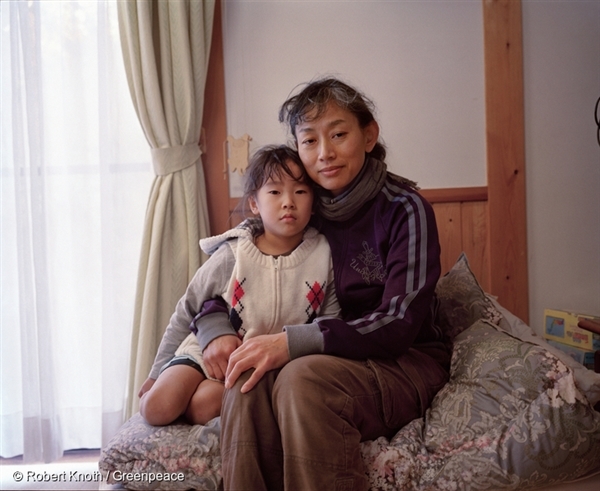
A mother of three, Akiyo Suzuki and her family evacuated to Hokkaido for a month following the 11 March disaster. The family lives in Watari, a district in Fukushima City. When the nuclear disaster occurred she found it hard to find clear information about the dangers from the accident, and discovered great differences on the internet compared with newspapers and television.
Let’s stand up with women at the forefront of anti-nuclear struggle. Let’s fight for their rights and future together.
Yuko Yoneda is the Executive Director of Greenpeace Japan
[1] Amounting to a lifetime exposure of between 39 mSv and 183 mSv over 70 years starting from March 2017. This number excludes the very high doses the people of Iitate received in the immediate aftermath of the disaster as a result of an extremely delayed evacuation. Though Greenpeace had called for evacuation of Iitate on 27 March 2011 due to the very high levels our team found there, the evacuation did not begin until 22 April 2011 and extended into June.
Nearly 50% of Fukushima evacuees felt harassed, the children bullied
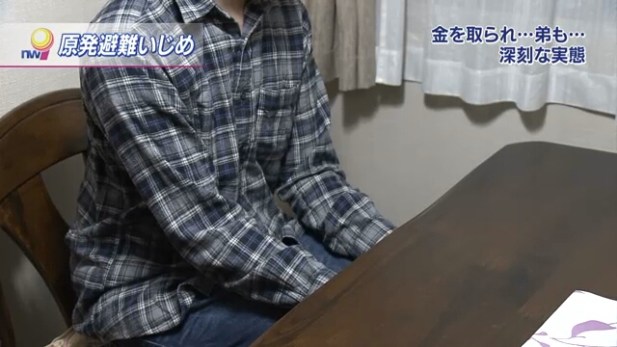
Nearly 50% of Fukushima evacuees felt harassed
A survey has found that nearly half of the former residents of Fukushima who were forced to evacuate their homes following the 2011 nuclear disaster experienced harassment of some sort.
NHK joined hands with Waseda University and others to survey households from four municipalities in the prefecture near the crippled Fukushima Daiichi nuclear power plant.
Of some 741 people who responded, 334 said that they have felt harassed or suffered emotional distress.
In the multiple-choice survey, 274 cited harassment linked to compensation they were entitled to.
In 197 cases, victims felt stressed by those who noted their evacuee status. Another 127 replies were related to the nuclear fallout.
One family was barred from a community event on the grounds they were evacuees. The car of another family was vandalized. Another victim was told he or she didn’t need a wage hike or new qualifications as the family had received compensation.
The survey showed that evacuees from Fukushima were harassed as much as their children due to prejudice and other factors.
A father, whose two children were subject to bullying after fleeing from Fukushima, said he, too, was told he wouldn’t need to work because if he complained to the operator of the plant, he will receive money. He told NHK he no longer tells anyone they are from Fukushima.
Waseda University professor Takuya Tsujiuchi says people have forgotten that compensation is provided to people whose hometowns were rendered uninhabitable in the disaster.
He noted the need for society to realize that victims of the nuclear disaster continue to be penalized.
https://www3.nhk.or.jp/nhkworld/en/news/20170309_06/
Evacuated Fukushima children victims of bullying
An NHK survey of former residents of Fukushima who fled the 2011 nuclear disaster has found that dozens of children were bullied at their new schools.
NHK joined hands with Waseda University and others to survey more than 9,500 households from the four municipalities in the prefecture near the crippled Fukushima Daiichi nuclear power plant.
741 families from the towns of Okuma, Futaba, and Tomioka, as well as Minamisoma City, responded to the questionnaire ahead of the sixth anniversary of the disaster on March 11.
54 replied that their children were bullied at schools and other places because they had evacuated on account of the nuclear disaster. Three were kindergarteners, and 28 were in elementary school. 21 others were either in junior high or senior high school.
In the multiple-choice survey, 32 replied they were verbally harassed. 22 were ostracized, 13 experienced violence, and 5 were told to pay money.
Many of the acts of harassment were linked to the compensation the children’s families received.
In some of the acts of violence, one child was pressed to jump from the fourth floor of a building. Another was threatened with a knife and was told that he or she has no right to live.
As a result, more than 60 percent of the children stopped disclosing they came from Fukushima.
Fukushima University specially appointed Professor Tamaki Honda, who has been advising evacuees, noted that the children are facing more hardship as time goes by. She called for the creation of a system that will watch over the children, who have lost a sense of community after fleeing their hometowns.
Over 123,000 evacuees 6 years after disaster

It’s been almost 6 years since the major earthquake and massive tsunami hit northeastern Japan.
The disaster on March 11th, 2011, left more than 18,000 people dead or missing.
According to the Reconstruction Agency, more than 123,000 people are still evacuees, many of them in temporary housing as of mid-February. The number is down about 30 percent from a year ago, but many continue to live with inconvenience and discomfort.
After the 1995 earthquake that killed more than 6,400 people in and around Kobe, western Japan, all evacuees left temporary housing within 5 years.
In the hardest-hit prefectures of Iwate, Miyagi and Fukushima, more than 35,000 people still live in prefabricated temporary houses. A factor behind the situation is a delay in building public housing and work to elevate residential land.
In Fukushima Prefecture, no-entry zones remain around the damaged nuclear plant, with radiation levels higher than the safety standard and no clear idea about when residents can return.
The government recognized the deaths of more than 3,500 people as related to stress and fatigue caused by living as evacuees. Ninety-six percent of the deaths occurred within 3 years after the disaster, but the unprecedentedly prolonged evacuation is seriously affecting evacuees’ health.
Fukushima resettlement policy violates international human rights commitments & Japanese law

Tokyo, 7 March 2017 – Japan’s policy to resettle residents to heavily contaminated areas in Fukushima is in contravention of Japanese law and multiple international human rights treaties. Greenpeace Japan and Human Rights Now detailed today numerous human rights violations resulting from the Japanese government’s response over the past six years to the 2011 Fukushima Daiichi nuclear disaster.
“If there is anything the nuclear industry learned from Chernobyl, it’s that a large exclusion zone is bad for business. It’s a constant reminder that a nuclear disaster is irreversible, and it’s women and children who are bearing the brunt,” said Kendra Ulrich, Senior Global Energy Campaigner with Greenpeace Japan.
“Cutting off housing support for self-evacuees threatens more than 10,000 households, potentially forcing many people back to contaminated areas against their will. Compensation payments will end in a year for people from areas where the evacuation order is being lifted, even though radiation levels far exceed the long-term targets in many areas. This amounts to economic coercion and is a deliberate violation of the law and survivors’ human rights.”
Released a day before International Women’s Day, Greenpeace Japan’s report reveals the greater impact on women and children due to both social disadvantages and increased risks to radiation exposure. [1] Greenpeace Japan, Human Rights Now and Fukushima survivor Noriko Matsumoto are calling on the Abe government to comply with Japanese law and address some of the most serious violations.
A recent Greenpeace Japan led survey team found radiation dose rates at houses in the village of Iitate well above long-term government targets, with annual and lifetime exposure levels posing a long-term risk to citizens who may return. At some homes in Iitate, the dose of radiation is equivalent to one chest X-ray every week. Only 24 percent of the total area of Iitate has been ‘decontaminated’, despite a government website [2] stating that 100% of the decontamination in Iitate is completed.
Evacuation orders will be lifted in many areas of Iitate no later than 31 March 2017, to be followed one year later by the termination of compensation payments. [3] In 2013, the UN Special Rapporteur Anand Grover called on the Japanese government to rectify numerous issues that violated this fundamental right for Fukushima survivors.
“Japan is obligated under multiple human rights treaties to uphold citizens’ right to health. Instead of acting on the UN’s recommendations, the government has instead enshrined the violation of human rights into formal policy,” said Kazuko Ito, Secretary General of Human Rights Now.
The resettlement policy contravenes the ‘Nuclear Disaster Victims Support Act’ of June 2012 which defines the government’s responsibilities to nuclear survivors. Multiple human rights treaties that Japan is party to also obligate it to uphold citizens’ rights to “the highest attainable standard of physical and mental health”, which includes the right to information and the right to make informed choices regarding their health.
Greenpeace Japan and several Japanese civil society organisations (Human Rights Now, Friends of the Earth Japan, and Green Action Japan), recently sent a letter to the UN Human Rights Council (UNHRC) Special Rapporteurs asking that they assess the ongoing human rights issues faced by nuclear survivors. [4] Greenpeace will also be submitting comments to the UNHRC as a part of the current Universal Periodic Review of Japan on the plight of Fukushima evacuees.
Notes to editors:
Photos: http://media.greenpeace.org/shoot/27MZIFJJGP9YV
[2] Of the 23,013 hectares in Iitate, 5,600 hectares have been decontaminated, much of it ineffectively – MOE: Environmental Remediation – Decontamination
[3] No return to Normal: Feb. 2017 – Greenpeace Iitate Case Studies
[4] Joint NGO Letter to the United Nations Human Rights Council Special Rapporteurs International Greenpeace Petition for Survivors’ Rights
http://m.greenpeace.org/japan/ja/high/news/press/2017/pr201703071/
Six years after Fukushima nuclear disaster, residents trickle back to deserted towns

Tamotsu Baba, mayor of Namie town, speaks during an interview with Reuters at his office in the town’s temporary town office in Nihonmatsu, Fukushima prefecture, Japan, February 27, 2017.
NAMIE, Fukushima Workers repair a damaged home nearby, and about 60 employees busily prepare for the return of former residents in the largely untouched town hall. Not far away, two wild boars stick their snouts in someone’s yard, snuffling for food.
Signs of life are returning nearly six years after panicked residents fled radiation spewed by the nearby Fukushima Daiichi nuclear power plant, when it was struck by an earthquake and tsunami.
Still, only several hundred of the original 21,500 residents plan to return in the first wave, estimates Hidezo Sato, a former seed merchant who helped draw up a blueprint to rebuild the town.
“As a person who used to sell seeds for a living, I believe now is a time to sow seeds” for rebuilding, said Sato, 71. “Harvesting is far away. But I hope I can manage to help bring about fruition.”
For a graphic on Fukushima returnees, click here tmsnrt.rs/2lv77E6

Since November, people who registered have been allowed to spend nights in the town, but residents will not need permission to stay round the clock after Japan lifts evacuation orders for parts of Namie and three other towns at the end of March.
Just 4 km (2.5 miles) away from the wrecked plant, Namie is the closest area cleared for the return of residents since the disaster of March 11, 2011.
But the town will never be the same, as radiation contamination has left a big area off limits. And it may never be inhabitable.
More than half – 53 percent – of former residents have decided not to return, a government poll showed last September. They cited concerns over radiation and the safety of the nuclear plant, which is being dismantled in an arduous, 40-year effort.
More than three-quarters of those aged 29 or less do not intend to return, which means old people could form the bulk of the town’s population in a future largely devoid of children.
“Young people will not go back,” said Yasuo Fujita, a former Namie resident who runs a restaurant in Tokyo, the capital. “There will neither be jobs nor education for children.”
Fujita said he did not want to live near a possible storage site for contaminated soil, now being systematically removed.
Radiation levels at Namie town hall stood at 0.07 microsieverts per hour on Feb. 28, little different from the rest of Japan.
But in the nearby town of Tomioka, a dosimeter read 1.48 microsieverts an hour, nearly 30 times higher than in downtown Tokyo, underscoring lingering radiation hotspots.
For the towns’ evacuation orders to be lifted, radiation must fall below 20 millisieverts per year. They must also have functioning utilities and telecoms systems, besides basic health, elderly care and postal services.
Namie, which used to have six grade schools and three middle schools, plans to eventually open a joint elementary-junior high school. So children will need to commute to schools elsewhere initially.
A hospital opens later this month, staffed with one full-time and several part-time doctors.
Reconstruction efforts may create some jobs. The town’s mayor, Tamotsu Baba, hopes to draw research and robotics firms.
Prospects for business are not exactly bright in the short term, but lumber company president Munehiro Asada said he restarted his factory in the town to help drive its recovery.
“Sales barely reach a tenth of what they used to be,” he said. “But running the factory is my priority. If no one returns, the town will just disappear.”
Shoichiro Sakamoto, 69, has an unusual job: hunting wild boars encroaching on residential areas in nearby Tomioka. His 13-man squad catches the animals in a trap before finishing them off with air rifles.
“Wild boars in this town are not scared of people these days,” he said. “They stare squarely at us as if saying, ‘What in the world are you doing?’ It’s like our town has fallen under wild boars’ control.”
Some former Namie residents say the evacuation orders should remain until radiation levels recede and the dismantling of the ruined nuclear plant has advanced.
But it is now or never for his town, Mayor Baba believes.
“Six long years have passed. If the evacuation is prolonged further, people’s hearts will snap,” he said. “The town could go completely out of existence.”
http://www.reuters.com/article/us-japan-fukushima-returnees-idUSKBN16F083
Financial crunch time looms for Fukushima’s ‘voluntary evacuees’

People march through the city of Fukushima in December to protest the impending end of housing subsidies for those who fled the nuclear disaster from areas other than the government-designated evacuation zones.
This month, housing subsidies run out for those who fled the Fukushima nuclear disaster from areas other than the government-designated evacuation zones, and as the clock ticks down, evacuees have had to decide whether to return or move once again.
Many of these so-called voluntary evacuees are mothers seeking to avoid risking their children’s health while their husbands remain in radiation-hit Fukushima Prefecture, according to freelance journalist Chia Yoshida.
This is why the term “voluntary evacuee” is misleading, as it gives the impression that they fled Fukushima for selfish reasons, Yoshida told a news conference in January in Tokyo.
At the same news conference, another journalist proposed using the term “domestic refugee” to describe them.
The Fukushima Prefectural Government has been paying the cost of public and private housing for voluntary evacuees under the Disaster Relief Act since the reactors melted down at the Fukushima No. 1 nuclear plant after the March 2011 earthquake and tsunami.
The number of evacuees from the disaster, including those from mandatory evacuation areas, peaked at 164,865 as of May 2012, according to the prefectural government.
Its latest tally, conducted earlier this year, shows that 11,321 out of the 12,239 voluntary evacuee households had already decided where to live after April, while 250 had not.
It was back in June 2015 when Fukushima announced the plan to end the rent subsidy this month, saying that decontamination work in the prefecture had advanced and food safety had been achieved.
Still, the central government’s evacuation orders have not been lifted in “difficult-to-return zones,” which include the towns of Futaba and Okuma, home to the crippled nuclear facility.
Those no-entry areas are subject to radiation of over 50 millisieverts per year, compared with the government’s long-term annual target of less than 1 millisievert after decontamination work.
Rika Mashiko, 46, is a voluntary evacuee living in Tokyo. She has decided to rent a house near the Fukushima-paid apartment where she and her daughter, now in elementary school, are currently living so that her daughter will not miss her friends.
Mashiko and her daughter fled Fukushima about two months after the nuclear crisis started, leaving behind her husband in their house in Miharu, located in the center of the prefecture.
Mashiko said many women evacuated from Fukushima with their children, compelled by their instinct as mothers to avoid danger.
“Maybe nothing might have happened, but if it had, it would have been too late,” she said.
Mashiko, who first moved to a house in Higashiyamato in eastern Tokyo that was leased for free, said mothers like her who fled the nuclear disaster feel they shouldn’t have to pay their housing costs and are angry at being “victims of the state’s nuclear policy.”
Many voluntary evacuees are financially struggling as they have to cover the double living costs in their hometowns, where typically the fathers remain, and the new places where the mothers and children moved.
In that sense, the free housing has been a “lifeline” for them, particularly in the Tokyo metropolitan area where housing costs are high, according to journalist Yoshida.
In an attempt to extend support to those families, Makoto Yamada, a veteran pediatrician in Tokyo, established a fund with ¥3 million out of his own pocket to help them rent new houses, for example by covering the deposit.
The initiative was the latest example of the support he has been providing to evacuees. Three months after the disaster, he held a counseling session in the city of Fukushima that attracted some 400 people concerned about radiation exposure. He has continued to hold similar sessions in Tokyo.
Yamada, 75, says poor understanding of the plight of voluntary evacuees has also played a role in bullying cases involving evacuee children that have been reported across Japan since last year.
In one high-profile case, a first-year junior high school student in Yokohama was called a “germ” at school, in reference to his supposed exposure to radiation.
Society appears to generally feel that voluntary evacuees have received a lot of money on top of the one-time compensation payment made by Tokyo Electric Power Company Holdings Inc., the operator of Fukushima No. 1.
Yamada says if people understood that voluntary evacuees had no wish to leave but felt they had to, such bullying would disappear.
The first financial support from Yamada’s fund went to 10 mothers and their children on Jan. 15. He was surprised to see the recipients shed tears of joy upon receiving ¥200,000 or ¥300,000 each.
Yamada said the government has tried to reduce the number of evacuees from Fukushima in order to claim that their ranks have decreased and that the disaster has been overcome.
Yoshida echoed that view, describing the voluntary evacuees as “people who will be eliminated from history as the government seeks to trivialize the damage from radiation contamination and say their evacuation was unnecessary.”
As long as there are evacuees living outside Fukushima, they will remain a symbol showing the situation has yet to be solved, Yamada said.
“If you say ‘we will not forget about Fukushima,’ you should never forget the terror of radiation, bearing in mind that people will not live in safety as long as nuclear plants exist in the world,” he said. “So, I want to continue to think about the evacuees.”
Survey: Fewer evacuees want to return to Fukushima
A Japanese government survey shows that fewer people who fled the 2011 nuclear accident want to return to their hometowns in Fukushima Prefecture. Many younger people are reluctant to go back.
The Reconstruction Agency and other institutions conduct an annual survey of the residents of areas where an evacuation order remains in place. The fiscal 2016 survey covered 5 municipalities — the towns of Tomioka, Futaba, Namie and Kawamata, and Iitate Village.
Compared with the fiscal 2014 survey, the number of people who do not wish to return increased in all 5 municipalities.
In Futaba, the number rose 6.6 percentage points to 62.3 percent. Tomioka saw an 8.2-point increase at 57.6 percent. The figure for Namie was up 4.2 points, or 52.6 percent. Kawamata saw an increase of 8.5 points, or 31.1 percent. In Iitate, the figure rose 4.3 points, or 30.8 percent.
More than 50 percent of people under the age of 40 in these municipalities said they do not want to go back. Some said they have concerns about the quality of health care services in their hometowns. They also think their lives would be less convenient. Some said they have already settled elsewhere.
The Reconstruction Agency says it will provide a good living environment and create jobs in these areas.
Bullying cases targeting young Fukushima evacuees spread to Tokyo

Fresh cases of bullying targeting children who evacuated from Fukushima Prefecture following the 2011 nuclear disaster have emerged in Tokyo.
According to Tokyo Saigai Shien Netto (Tossnet), a group of lawyers supporting Fukushima evacuees, three schoolchildren who moved to Tokyo in the wake of the triple core meltdowns at the Fukushima No. 1 nuclear power plant were subjected to bullying at an elementary school in Chiyoda Ward between 2011 and 2015.
According to the group, one elementary school student and two others who are now in junior high school were called names repeatedly, with classmates shunning them by saying they could spread radiation. One of the children recalled being called kin (germ).
The group on Monday reported the incidents as cases of bullying to the board of education in Chiyoda Ward. The board said it had not been aware of the incidents and will look into the matter.
Chiyoda Ward is also investigating a separate case in which another student from Fukushima at a junior high school was allegedly forced to buy snacks for three other students.
The revelation comes in the wake of a bullying case in Yokohama, where a 13-year-old boy had been forced to pay ¥1.5 million to classmates at an elementary school he transferred to following the disaster.
After initially denying the claim, on Feb. 13 the Yokohama Board of Education acknowledged the payments made by the boy to classmates in the school were the result of bullying.
The boy entered the elementary school in Yokohama as a second-grader in August 2011, but after being called kin he began missing school in the third grade, according to a report released by the board.
The boy’s parents told the school in May 2014 that their son was a victim of bullying and told the police in July that he was involved in money trouble with his classmates.
SIX YEARS AFTER: 60 percent say Fukushima evacuees bullied

A man living outside Fukushima Prefecture writes, “When I said that I came from Fukushima, I was told, ‘You are an evacuee, aren’t you?’ I cannot forget that.”
More than 60 percent of current or former evacuees from the Fukushima nuclear crisis said they were victims of bullying or discrimination in areas they evacuated to or witnessed or heard of such incidents, according to a new survey.
The survey, released Feb. 26, was conducted jointly by The Asahi Shimbun and Akira Imai, professor of local governments’ policies at Fukushima University, in January and February.
“It is probably the first time that the actual conditions of ‘bullying evacuees’ became clear in large quantities and concretely,” Imai said. “The recognition that evacuees are victims of the nuclear accident is not shared in society. That is leading to the bullying.”
The series of surveys started in June 2011, three months after an accident occurred at the Fukushima No. 1 nuclear power plant due to the Great East Japan Earthquake and tsunami.
In the latest survey, the sixth, The Asahi Shimbun and Imai sent a questionnaire in late January to 348 people who had replied to the series of surveys.
Of these, 184 people of 18 prefectures, including Fukushima Prefecture, gave valid responses. Of the 184, 147 were still evacuees.
The latest survey asked for the first time whether they were bullied or discriminated due to the fact that they evacuated because of the nuclear accident. Thirty-three of the 184, or 18 percent, said that they or their family members became victims of bullying or discrimination.
In addition, 81 of the 184, or 44 percent, replied that they saw or heard of those actions around them.
In a section in which respondents can freely describe their experiences or opinions, a 35-year-old woman wrote, “I was told, ‘Why do you work despite the fact that you have money. I felt sad, wondering whether I have no right to work.”
A 59-year-old man wrote, “When I bought in bulk, I was told, ‘Oh! An evacuee.’”
Meanwhile, 60 of the 184 respondents, or 33 percent, responded that they have neither been victims of bullying or discrimination nor have they seen or heard of any acts.
A 48-year-old woman wrote, “Superiors or colleagues in my workplace in the area where I have evacuated have treated me normally. I have been able to encounter good people.”
The survey also asked the 147 respondents, who are still evacuees, whether they think they are unwilling to tell people around them the fact that they are evacuating. Sixty-one, or 41 percent, replied that they think so.
In the free description section, a 49-year-old woman wrote, “I have the anxiety that talking (with other people) will lead to discussing compensation money.” A 31-year-old woman wrote, “I have a concern that my children could be bullied.”
Meanwhile, 50 of the 147 respondents, or 34 percent, replied that they don’t have that anxiety about telling people. In addition, 26 of the 147 people, or 18 percent, answered that they don’t know whether they think so or not.
A 56-year-old man wrote, “I dare not tell people who do not know that I am evacuating. I cannot move my life forward if I continue to say that I am an evacuee.”
Currently, about 80,000 people are living in and outside Fukushima Prefecture as evacuees.
http://www.asahi.com/ajw/articles/AJ201702260027.html
A man living outside Fukushima Prefecture writes, “When I said that I came from Fukushima, I was told, ‘You are an evacuee, aren’t you?’ I cannot forget that.”
SIX YEARS AFTER: Fukushima port welcomes fishing boats back for 1st time since 2011
Kurumi Sugita:
“This is too cruel.
Why play with local people’s strong desire to believe in the back-to-normal dream?
This desire is in the heart of all the people who love their hometown and want to recover the ordinary life before the nuclear accident.
If you mention the contamination, you are regarded almost as an enemy to the back-to-normal reconstruction efforts. This is how you destroy the solidarity, and it has been going on since 6 years. People’s heart bleed in this cruel situation and contradictions.”

Fishing boats return to Ukedo fishing port in Namie, Fukushima Prefecture, on Feb. 25.
NAMIE, Fukushima Prefecture–Fishing boats returned to their home port on Feb. 25 for the first time in six years since the Great East Japan Earthquake, tsunami and accident at the Fukushima No. 1 nuclear power plant wreaked havoc here.
The Ukedo fishing port, located seven kilometers north of the nuclear plant, was destroyed by the tsunami caused by the powerful earthquake in March 2011. In addition, nearby areas of the sea were contaminated by radioactive substances discharged from the crippled plant.
Since then, the reconstruction of the port has started and the work is ongoing.
On Feb. 25, 26 fishing boats entered the port to prepare for the start of the fishing season of “kounago,” or young fish of “ikanago” (Japanese sand lance), in mid-March. Fishing is scheduled to resume in waters that are more than 10 km from the nuclear plant.
“This is the first step to return to my life as a fisherman,” said a smiling Ichiro Takano, 69, a third-generation fisherman.
Fukushima nuclear disaster evacuees ‘pressured’ to return to contaminated homes, says Greenpeace
Even though radiation levels in a village near the site of the Fukushima nuclear disaster still exceed international guidelines, its evacuated residents are being coerced to return, according to a Greenpeace report.

Residents from the Japanese ghost village of Iitate will be allowed to return to their former homes at the end of March – the first time since they were forced to flee the Fukushima nuclear disaster in 2011. That’s the date the Japanese government has set to lift evacuation orders.
But according to environmental organization Greenpeace, it’s uncertain whether many will want to. Greenpeace says tests it has carried out on homes in Iitate show that despite decontamination, radiation levels are still dangerously high – but that’s not stopping the Japanese governmenment from pressuring evacuees from returning, under threat of losing financial support.
Those who refuse to go back to their former homes, and are dependent on the Japanese government’s financial help, are faced with a dilemma. After a year from when an area is declared safe again to live in, evacuated residents will see their compensation payments terminated by the government.
Radiation ‘comparable with Chernobyl’
The nuclear disaster led to more than 160,000 people being evacuated and displaced from their homes. Of these, many tens of thousands are still living in temporary accommodation six years on.
The village of Iitate, lying northwest of the destroyed reactors at Fukushima Daiichi power plantand from which 6,000 citizens had to be evacuated, was one of the most heavily contaminated following the nuclear disaster.

Government employees monitor radiation at a day-care center in Iitate in 2011
Around 75 per cent of Iitate is mountainous forest, an integral part of residents’ lives before the nuclear accident.
But according to Greenpeace’s report, published on Tuesday, radiation levels in these woods are “comparable to the current levels within the Chernobyl 30km exclusion zone – an area that more than 30 years after the accident remains formally closed to habitation.”
Put another way, Greenpeace said that in 2017, there clearly remains a radiological emergency within Iitate – defining emergency thus: “If these radiation levels were measured in a nuclear facility, not Iitate, prompt action would be required by the authorities to mitigate serious adverse consequences for human health and safety, property or the environment.”
The environmental organization says decontamination efforts have primarily focused on the areas immediately around peoples’ homes, in agricultural fields and in 20-meter strips along public roads.
But these efforts ended up generating millions of tons of nuclear waste – these now lie at thousands of locations across the prefecture, but they haven’t reduced the level of radiation in Iitate “to levels that are safe,” says Greenpeace.
‘Normalizing’ nuclear disaster?
The organization has accused the Japanese government of trying “to normalize a nuclear disaster, creating the myth that just years after the widespread radioactive contamination caused by the nuclear accident of 11 March 2011, people’s lives and communities can be restored and reclaimed.
“By doing so, it hopes, over time, to overcome public resistance to nuclear power.”
Greenpeace also lambasted the government for leaving unanswered what it calls a critical question for those trying to decide whether to return or not: what radiation dose will they be subjected to, not just in one year but over decades or a lifetime?

Greenpeace says Japan’s government wants to restore public confidence in nuclear power at the cost of harming residents
“Until now the Japanese government has exclusively focused on annual radiation exposure and not the potential radiation dose rates returning citizens could potentially face over their entire lifetime,” says Greenpeace.
Greenpeace, which has been monitoring Iitate since 2011, carried out its latest survey in November 2016
It found that the average radiation dose range for Iitate beginning from March 2017 over a 70-year lifetime was between 39 millisieverts (mSv) and 183mSv – and that’s not including natural radiation exposure expected over a lifetime, or the exposure received in the days, weeks and months following the March 2011 nuclear disaster.
That exceeds yearly guidelines set by the International Commission on Radiological Protection (ICRP) when added up over a 70-year period – it puts the maximum recommended radiation exposure at 1mSv annually.
Greenpeace says: “The highly complex radiological emergency situation in Iitate, and with a high degree of uncertainty and unknown risks, means that there is no return to normal in Iitate, Fukushima prefecture.”
It has called on the Japanese government to cease its return policy, and to provide full financial support to evacuees, and “allow citizens to decide whether to return or relocate free from duress and financial coercion.”
According to Greenpeace, “for the more than 6,000 citizens of Iitate, this is a time of uncertainty and anxiety.”
Heinz Smital, nuclear physicist and radiation expert at Greenpeace Germany, and part of the team taking measurements at Iitate, told DW the residents were faced with a very difficult situation.
“If you decide to live elsewhere [and not return to Iitate], then you don’t have money, you’re sometimes not welcomed in another area so you are forced to leave, because people say, ‘you’re not going back but you could go back,'” he said. “But for people who go back, they have contaminated land, so how can they use the fields for agriculture?”
He urged the Japanese government to more involve those affected in the decision-making process and not try to give an impression that things are “going back to normal.”
“It’s a violation of human rights to force people into such a situation because they haven’t done anything wrong, it’s the operator of the power plant responsible for the damage it caused,” said Smital.
“It’s very clear that there’s very serious damage to the property and the lifestyle of the people but the government doesn’t care about this.”
1 This Month

of the week – Shut Down Drone Warfare!


Tell the Ukrainian Government to Drop Prosecution of Peace Activist Yurii Sheliazhenko

Petition to revoke the licensing of the Near Surface Nuclear Disposal Facility (NSDF) at Chalk River. https://www.ourcommons.ca/petitions/en/Petition/Details?Petition=e-7247
To see nuclear-related stories in greater depth and intensity – go to https://nuclearinformation.wordpress.com
-
Archives
- March 2026 (244)
- February 2026 (268)
- January 2026 (308)
- December 2025 (358)
- November 2025 (359)
- October 2025 (376)
- September 2025 (257)
- August 2025 (319)
- July 2025 (230)
- June 2025 (348)
- May 2025 (261)
- April 2025 (305)
-
Categories
- 1
- 1 NUCLEAR ISSUES
- business and costs
- climate change
- culture and arts
- ENERGY
- environment
- health
- history
- indigenous issues
- Legal
- marketing of nuclear
- media
- opposition to nuclear
- PERSONAL STORIES
- politics
- politics international
- Religion and ethics
- safety
- secrets,lies and civil liberties
- spinbuster
- technology
- Uranium
- wastes
- weapons and war
- Women
- 2 WORLD
- ACTION
- AFRICA
- Atrocities
- AUSTRALIA
- Christina's notes
- Christina's themes
- culture and arts
- Events
- Fuk 2022
- Fuk 2023
- Fukushima 2017
- Fukushima 2018
- fukushima 2019
- Fukushima 2020
- Fukushima 2021
- general
- global warming
- Humour (God we need it)
- Nuclear
- RARE EARTHS
- Reference
- resources – print
- Resources -audiovicual
- Weekly Newsletter
- World
- World Nuclear
- YouTube
-
RSS
Entries RSS
Comments RSS
 nuclear-news