The Fukushima disaster ruined their lives.

Posted on by beyondnuclearinternational
They campaigned for justice, but the nuclear accident killed them anyway
By Linda Pentz Gunter
Kenichi Hasegawa was a dairy farmer in Fukushima Prefecture at the time of the March 11, 2011 Fukushima Daiichi nuclear disaster, living in a family of eight in Itate village with his parents, wife, children and grandchildren.
Itate is approximately 50 kilometers away from the nuclear site, but quickly became one of the most radioactively contaminated places as a result of the Fukushima disaster. Yet, residents were told little and it took more than a month for an evacuation order to be issued for Itate. Many did not leave until late June.
Mr. Hasegawa himself stayed on in Itate for five months after the disaster, tending to his cows until all of them were put down. Meanwhile, he kept a visual record of conditions there, taking more than ten thousand photos and 180 videos (in Japanese).
On October 22, 2021 Hasegawa died of thyroid cancer at just 68, almost certainly caused by his prolonged exposure to radioactive iodine released by the Fukushima Daiichi nuclear catastrophe.
Before the nuclear disaster, Hasegawa owned 50 dairy cows and farmed vegetables. He was also a political leader, serving as mayor of his local ward. But the Fukushima accident changed everything.
With a high concentration of radioactive substances now found in dairy milk, his business was ruined. Angered by the cover-up by authorities of the true extent of radioactive contamination, he became a co-representative along with Ms. Ruiko Muto, of the Nuclear Accident Victims Group Liaison Committee, established in 2015.
By then, he had already authored the 2012 book, Fukushima’s Stolen Lives: A Dairy Farmer’s Story, in which he delivered an eyewitness account of the aftermath of the nuclear disaster, “as he suffered with the knowledge that his children and grandchildren had been exposed to radiation, as he lost all of his cattle (who were considered part of the family, not simply the source of their livelihood), and as he endured the suicide of a fellow dairy farmer and friend.”
That friend wrote his final words on a wall before he died: “If only there were no nuclear power plants.”
Hasegawa returned to Itate in 2018, once the evacuation order had been lifted, and began growing buckwheat, largely to prevent his pastures from turning into wasteland. Although radiation levels in the buckwheat registered below what is considered dangerous, Hasegawa could not sell the crop.
In a 2020 interview with his Committee colleague, Ms. Muto, a resident of Miharu town, Hasegawa said: “The nuclear plant robbed us of everything. We still can’t go into the forests. Families with children used to go into the forest to gather wild plants and teach many things. That was a common practice, taken for granted. But today we can’t do anything like that. We can no longer eat anything foraged from the forest.
“In Japan, a community like ours affected by radiation is seen as an inconvenience,” Hasegawa told Muto. “They would like us to disappear and be forgotten.”
Family life was shattered by the Fukushima accident, including Hasegawa’s. His children and grandchildren vowed not to return the village and its contaminated land. In the Maeda neighborhood, where Hasegawa served as mayor, the population is now largely comprised of the elderly.
Worse still, Hasegawa said TEPCO’s approach was to blame the victims, rather than take responsibility for the devastation its nuclear power plant had caused.
“TEPCO eventually said that it’s really the village’s fault that people were exposed to radiation, because they did not evacuate,” Hasegawa recalled to Muto. “But we couldn’t evacuate because we had livestock or other things holding us back. They are saying everything was our own responsibility. Of course I protested loudly. How dare they blame us!”
Hasegawa is sadly, and unsurprisingly, not the only person who has succumbed to a premature death owing to radiation exposure caused by the Fukushima Daiichi nuclear catastrophe. By 2021, friends and colleagues involved with the aftermath of the Fukushima Daiichi disaster could count numerous people who had died.
Yet, even immediately after the still on-going nuclear disaster began, Japan’s Chief Cabinet Secretary said repeatedly: “There is no immediate effect on the human body or health”. The phrase was all too reminiscent of the ironic and prescient warning give to us by radiation researcher, Rosalie Bertell, in her 1985 book, “No Immediate Danger”.
One of those also lost in 2021 was Ms Yayoi Hitomi. She was only 60 years old when she died of ovarian cancer on September 28. Already an anti-nuclear activist well before the Fukushima Daiichi disaster, she was living in Koriyama city, situated just 60km from the stricken plant. Although Koriyama was categorized as outside of the mandatory evacuation zone, it was full of radiation hotspots.

Hitomi was a member of Women of Fukushima Against Nuclear Power. She worked as a journalist and web writer, and was one of the most efficient organizers of the Fukushima Nuclear Criminal Litigation Support Group. After Hitomi’s death, Muto, the head of the plaintiffs’ group, said that it was as if she had lost one of her arms.
Hitomi went to Europe in March 2016, and spoke in several countries on the situation in Fukushima. She was full of energy, and looked no older than 40. However, in the fall of 2016, a cancer was discovered and she passed away five years later. Her death tells us that even if you live outside of the mandatory exclusion zone, you aren’t always protected against potentially lethal radiation health hazards.
These coming losses had been predicted in a March 2020 interview (in Japanese), when Hasegawa and his wife had observed that people in their 50s and 60s were dying like flies.
All of this of course gives the lie to — and makes especially insensitive and abhorrent — claims made by nuclear power boosters, and even lazy journalists, that “no one died because of the Fukushima nuclear accident”.
Kurumi Sugita also contributed to this article.
Headline photo of Kenichi Hasegawa speaking in Australia, by MAPW Australia/Creative Commons
Why a Nuclear Power Plant in Fukushima? An animated film with a connection to Hiroshima


February 27, 2022
Why was it necessary to build a nuclear power plant in Fukushima? Mr. Hidenobu Fukumoto, 65, a Hiroshima resident who works as a picture-story show artist named Teppei Ikumasa, has created a 57-minute animation titled “Fukushima Nuclear Power Plant: The Beginning of the Story ‘Toge'” that traces the historical background of the nuclear power plant from the perspective of a disaster victim, including an unexpected connection to Hiroshima, where the atomic bomb was dropped. The work asks, “What do the repeated disasters caused by radiation appeal to us? This work asks the question.
High economic growth and the ongoing debate on nuclear power
The protagonist of the story is a man in his 60s who was forced to leave his hometown and live as an evacuee due to the accident at the Fukushima Daiichi Nuclear Power Plant caused by the Great East Japan Earthquake. He was born in 1949 in the town of Okuma, where a nuclear power plant was later built. He entered a university in Tokyo during the period of rapid economic growth, when Japan was emerging from postwar poverty and becoming prosperous, and enjoyed his student life.
The story, however, brings to light the major changes that are occurring in Japan with regard to nuclear power while the country is enjoying affluence.
The story depicts U.S. President Eisenhower’s speech to the United Nations in 1953, in which he called for the peaceful use of nuclear energy, the subsequent exposition on the peaceful use of nuclear energy held in Hiroshima and other cities, the radiation exposure of the Daigo Fukuryu Maru in 1954 due to a U.S. hydrogen bomb test, and the investigation of the location of a nuclear power plant in Fukushima Prefecture in 1960.
In the scene of the A-bomb hospital in Hiroshima, a young girl asks her mother, lying in bed, to “get well and take me to the Nuclear Peace Expo. When the man, now a university student, returns home, the huge buildings of the nuclear power plant are already towering over him, and he is speechless. Then, the images travel back in time to 2011.
At the end of the story, while living in an evacuation shelter, the man speaks. In the name of the peaceful use of nuclear energy, nuclear power plants spread in a global wave, taking in even the damage caused by the atomic bombing of Hiroshima. I guess there was nothing we ordinary people could do about it.
The story of the nuclear power plant in Hiroshima: the inspiration for the animation
Mr. Fukumoto wrote the script and drew the animation based on interviews with people in Fukushima and published materials. The impetus for the production of the animation came from an unbelievable story he heard from a victim of the disaster: “I heard that there was talk of building a nuclear power plant in Hiroshima.
Mr. Fukumoto is from the city of Hiroshima…
(This article is for paid members only. You can read more by becoming a paid member)
Shadow of Hiroshima” at Fukushima nuclear power plant: Animation depicts history of nuclear power

February 20, 2022
In the history of nuclear power plants, the “shadow of Hiroshima” is hidden. A Hiroshima-based citizens group that supports victims of the Great East Japan Earthquake and the accident at the Fukushima No. 1 (Daiichi) nuclear power plant of the Tokyo Electric Power Company (TEPCO) has produced an animated film titledThe Story of the Beginning of the Fukushima Nuclear Power Plant. The work traces the history of the atomic bombing of Hiroshima by the U.S. military and the nuclear accident, and depicts the social movements and people’s thoughts regarding nuclear power.
Hidenobu Fukumoto, a member of the Machi Monogatari Production Committee, has been visiting the disaster-stricken areas in Tohoku and has been creating picture story shows based on local folklore and disaster experiences. Last year, he started an initiative to convert the picture story shows into animated films and donate them to public facilities.
It depicts the life of a man born and raised in Okuma Town, Fukushima Prefecture, and shows the connection between the atomic bombing and nuclear power plants one after another.
I just wanted to live a normal life – Akiko Morimatsu
February 15, 2022
It will soon be 11 years since the accident at TEPCO’s Fukushima Daiichi Nuclear Power Plant.
It is estimated that 27,000 people have evacuated from Fukushima Prefecture and 39,000 people have evacuated to 915 cities, towns, and villages in 47 prefectures across Japan (all figures as of January 12, 2022, compiled by the Reconstruction Agency). (As of January 12, 2022, according to the Reconstruction Agency.) However, the exact number of evacuees is still unknown due to discrepancies between the totals of Fukushima Prefecture and those of municipalities, as well as cases where the government has mistakenly deleted evacuee registrations.
The accident is still ongoing.
We would like to share with you some of the stories we have heard from the evacuees.
This time, we would like to introduce Ms. Akiko Morimatsu, who gave a speech with Greenpeace at the UN Human Rights Council on the current situation of the victims.
(All information in this article is current as of 2018)
Akiko Morimatsu’s eldest daughter, who was a newborn infant at the time of the accident at TEPCO’s Fukushima Daiichi Nuclear Power Plant, is now in elementary school. In the seven years since she left Fukushima Prefecture, she has never lived with her father.
Her eldest son, who was three years old, is a father’s child. Whenever his father came to see his evacuated family once a month, he would return to Fukushima Prefecture, and I could not tell you how many times I wet my pillow with tears of loneliness and sadness.
In March of this year, Ms. Morimatsu made up her mind to stand on the stage of the United Nations Human Rights Council in Geneva, Switzerland.
Ms. Morimatsu is a so-called “voluntary evacuee. Housing support, which was the only support for “voluntary evacuees” from outside the evacuation zone, has been cut off, and now there are even eviction lawsuits against “voluntary evacuees” who cannot pay their rent.
In the fall of 2017, Greenpeace, together with the victims of the nuclear accident, appealed to the member countries of the United Nations Human Rights Council about these human rights violations that the victims continue to suffer. Many people who supported us with signatures and donations supported this project.
Subsequently, recommendations for correction were issued by Germany, Austria, Portugal, and Mexico. Greenpeace is calling on the Japanese government to accept these recommendations.
We hope that as many people as possible will know why Mr. Morimatsu decided to speak directly with Greenpeace about the current situation in front of the representatives of each country at the time when the decision to accept the recommendations will be announced.

In the midst of impatience, anxiety, and unpredictable fear
It was during the Golden Week holidays, two months after the disaster, that Ms. Morimatsu decided to evacuate.
Until then, she had been trying to rebuild her life in Fukushima Prefecture.
However, even though no evacuation order had been issued for the area called Nakadori, where he was living at the time, the kindergarten distributed disposable masks to all the children and instructed them to wear long sleeves and long pants. Elementary and junior high school students in the neighborhood drive their own cars to school, even if it is within walking distance. They are not allowed to go outside without permission, and of course they are not allowed to play outside either at the kindergarten or around their homes.
On weekends, the whole family travels to Yamagata and Niigata prefectures on the highway to take the children out to play. Radioactive materials have been detected in tap water and fresh food. We could not hang our laundry or futons outdoors.
No matter what we did, we had to first think about the possible effects of radiation on our children and pay close attention to everything.
No one can tell us what is the right thing to do.
I don’t even know if I should continue to live here. I feel impatient, anxious, and unpredictable.
One by one, families in the neighborhood and kindergartens were leaving Fukushima Prefecture, and it was the fathers of the children who first suggested to Ms. Morimatsu that she take the children to the Kansai region, where she had spent her school days, as they were planning to use the holidays to reorganize their living environment.
What she saw there was a media report about the danger of radioactive contamination, which had not been reported at all in Fukushima Prefecture.
What can we do to protect the future of children who are highly sensitive to radiation?
Only I, as a parent, could protect them.
It was time to make a decision.

I separated the children from their father.
With the encouragement of relatives and friends in the Kansai region, and with the agreement of her husband, who continues to work in Fukushima Prefecture, Morimatsu decided to evacuate with her children.
No evacuation order was issued for the area where the Morimatsu family was living. They had to pay separate rents and utility bills for the rental house they rented to replace their house that was damaged in the earthquake, and for the house they rented to house their mother and child in Osaka (*Housing support for voluntary evacuees ended in March 2017. Because Ms. Morimatsu had left public housing early, which had a short move-in period, she was not provided with housing after that and is not counted in the number of evacuees, forcing her to continue living as an evacuee completely on her own).
Even for fathers to come to see their young children, the high cost of transportation is prohibitive.
What kind of impact will not being able to see their fathers most of the time have on the children’s mental development?
How do fathers feel when they can’t watch their adorable children grow up?
Was the evacuation really the right thing to do, forcing families to live apart?
Mr. Morimatsu was in agony, but he decided to find a job in the evacuation area so that he could see his father and children as often as possible.
However, there was no way to take care of her oldest daughter, who was only one year old at the time, at the evacuation site.
Because of the risk of not receiving information from the local government regarding public support and health surveys for children, victims who are voluntarily evacuating cannot inadvertently report their departure. As a result, they were not able to receive services such as day-care centers smoothly in their evacuation areas.
As a result, although she was able to be placed on a waiting list for childcare, her childcare fees were also determined based on her household income, so her own income, which she had begun to work to supplement her double life, was added to her household income, which was quite high. Since she is not a widow, she is not eligible to receive subsidies for single-mother households.

The Best Choice in the Worst Situation
The number of people like Ms. Morimatsu who evacuated from areas where evacuation orders were not issued is a small minority compared to the total number of victims of the nuclear accident. She said that she felt guilty and conflicted about evacuating from a place where even temporary housing could be built for victims from areas where evacuation orders had been issued.
But no one would willingly abandon their current life to evacuate.
Ms. Morimatsu’s husband chose to continue working in Fukushima Prefecture even if it meant leaving his family.
Whether to evacuate or not, each victim’s decision should be respected as the best choice under the worst circumstances.
Voicing one’s anxiety or pointing out what one feels is wrong should not be denied.
But we are practically forced to close our eyes, keep our mouths shut, and pretend to forget about it.
The biggest victims are “children”.
Seven years have passed since the accident, and yet the “right to health” of children, who are the most vulnerable to radiation exposure, has not been given equally to everyone’s children?
I just want to live a normal life together with my child.
I want my children to live a long and healthy life, even if it’s just for a minute or a second.
It is a natural wish for parents to long for this.
The current situation is such that even this desire is being ignored.

Protecting the Human Rights of Victims of the Nuclear Accident
The right to avoid radiation exposure and protect one’s health continues to be violated regardless of whether one evacuates or not.
Is the right to avoid radiation exposure, in other words, the right to evacuate, equally recognized for those who want to evacuate?
The policy of not recognizing the right to evacuate, discontinuing the provision of housing without medical support or information, and effectively forcing victims to return home through economic pressure is a violation of human rights for the Morimatsu family and other victims of the nuclear accident.
If the same thing happened to you, what would you protect?
What would you value the most?
The right to life and health is a fundamental human right given to every individual, from the newborn baby to the elderly person whose life will end tomorrow.
Mr. Morimatsu is still evacuating with his children.
Greenpeace’s activities are based on scientific evidence derived from the results of radiation surveys conducted in the area immediately after the accident.
We will continue our research activities and human rights protection activities for the people affected by the accident.
Kenichi Hasegawa, former dairy farmer who continued to tell the truth about the nuclear accident in Fukushima, passes away.

Immediately after the accident, I pressed the village mayor to disclose information.
He also shared the voice of a dairy farmer friend who committed suicide.
Mr. Kenichi Hasegawa, a former dairy farmer who continued to appeal about the current situation in Iitate Village contaminated by radiation after the Fukushima Daiichi Nuclear Power Plant accident in 2011, died of thyroid cancer on October 22, 2011 at the age of 68. He was 68 years old. He was the co-chairman of Hidanren, a group of victims of the nuclear power plant accident, and the head of the group of Iitate villagers who filed for alternative dispute resolution (ADR). Since 2005, he has been focusing on growing buckwheat noodles in the village, while criticizing what the government and administration call “reconstruction projects” and “reconstruction Olympics. In February and March of this year, he was diagnosed with cancer and fell ill. Many people are saddened by the death of Mr. Hasegawa, who continued to communicate the issues of the nuclear accident both inside and outside Japan.

On January 13, 2012, prior to the Global Conference for a Nuclear Power Free World held in Yokohama, NGO officials and journalists from overseas visited Fukushima and Mr. Hasegawa conveyed the current situation of the Iitate villagers. He said, “I wish there were no nuclear power plants. He said, “I wish we didn’t have nuclear power plants, and I hope the remaining dairy farmers will do their best not to be defeated by nuclear power plants. He left a message that said, ‘I have lost the will to work.
Our government has been promoting nuclear power plants as a national policy, so I thought they would take proper measures when an accident occurred. But the government did not take any action. I may return to my village, but I can’t bring my grandchildren back. If we go back and end our lives, that will be the end of the village.
Paul Saoke, a Kenyan public health specialist and then secretary general of the Kenya chapter of the International Council for the Prevention of Nuclear War, recorded Hasegawa’s lecture on his iPad. Mr. Saoke said, “In Kenya, the Fukushima nuclear accident is almost unknown. When I return to Japan, I would like to have the media watch the video of my lecture and let them know what kind of damage is being done by the residents. Mr. Hasegawa’s appeal was posted on the Internet and quickly spread around the world.
In 2012, he gave a speech at the European Parliament.
The film “My Legacy: If Only There Were No Nuclear Power Plants
In 2012, Mr. Hasegawa gave a lecture at the European Parliament in Belgium on the one-year anniversary of the Fukushima nuclear accident. Mr. Hasegawa visited Europe with his wife Hanako, and together with Eisaku Sato, former Governor of Fukushima Prefecture, conveyed the current situation in Fukushima.

Our Iitate village was a beautiful village,” said Mr. Hasegawa. “Our Iitate village was a beautiful village,” Mr. Hasegawa began. While explaining how the government experts who came to the village kept saying that the village was safe, he said, “The villagers were exposed to radiation while the mayor and the people in the village administration clung to the village. We dairy farmers were told not to raise cows in the planned evacuation zone, and with no follow-up from the government, prefecture, or village, we made the decision to quit dairy farming on our own. Finally, I conveyed the regret of my friend who committed suicide, leaving behind a note saying, “If only there were no nuclear power plants.

Photo: Hideaki Takamatsu
In 2002, Naomi Toyoda’s film “The Last Will and Testament: If Only There Were No Nuclear Power Plants” was completed, and Mr. Hasegawa’s words and the events of his friend who committed suicide were further disseminated to society. Yasuhiro Abe, manager of the Forum Fukushima movie theater, said, “At the time, various debates were boiling in the local community, and despite the length of the film, it was fully booked for three days. Mr. Hasegawa’s words about Iitate were very human, and he had a different level of strength that no one else had.
Through his activities in Japan and abroad, Mr. Hasegawa has connected and interacted with a wide range of people.
Mr. Toshiyuki Takeuchi, the president of Fukushima Global Citizen’s Information Center (FUKUDEN), who has been informing people in Japan and abroad about Mr. Hasegawa’s activities, said, “Mr. Hasegawa is a person who has been affected by pollution. Mr. Hasegawa has been active as an anti-nuclear and anti-radiation activist, criticizing the government, the administration (village authorities), and TEPCO for failing to take appropriate measures that put the health of the residents of the contaminated area first. At the same time, he has a strong attachment to the Maeda area and his life there, and has returned to the area to start making soba noodles and rebuild his life. The complexity of his feelings (“irrationality”) was sometimes difficult to convey to people overseas.
As I listened to Mr. Hasegawa’s story, there were many moments when I felt that “everything was there in Iitate Village and Maeda area before the earthquake, and it was the center of the world and life. “Complex irrationality” is probably a cross-section of the tragedy of everything being taken away on its own.
Solidarity with the Nuclear Weapons Abolition Movement
Bringing together people from all walks of life
In 2007, after the International Campaign to Abolish Nuclear Weapons (ICAN) was awarded the Nobel Peace Prize, ICAN Co-Chairman Tilman Ruff (Australia) and ICAN International Steering Committee member and Peace Boat Co-Chairman Satoshi Kawasaki visited Mr. Hasegawa’s house in Iitate Village with medals.

Mr. Ruff said. He refused to be cowed or silenced, and continued to speak the truth about the nuclear disaster in Fukushima, stressing the need for rights, dignity, health, and recognition of the people and land that the government and TEPCO unreasonably put in harm’s way. I am honored to have known Kenichi and to have been able to work for a common cause.”
Mr. Kawasaki also mourns his death. Mr. Kawasaki also mourned his passing. “We were together on many occasions, including the European Parliament in Belgium in 2012, the round trip to Australia in 2013, and the Peace Boat trip. I remember the way he spoke straight from the bottom of his heart about the damage he had suffered as a dairy farmer and the anger and frustration of the people of Fukushima, strongly conveying his message to people even though they spoke different languages. I believe that Ms. Hanako, who has always accompanied us and talked about the damage caused by nuclear power plants from her own perspective, will continue to play a role as a sender.
Ms. Riko Mutoh (Funehiki), who is also a co-chair of Hidanren, said, “Ms. Hasegawa was a big presence. His words were powerful and persuasive. After returning to Iitate Village, she was busy with local activities. He was a person who brought people together, both inside and outside of the village, within and outside of the prefecture, those who had evacuated and those who were living there.
(Text and photo by Hiroko Aihara)
Tokyo High Court rejects some of the evidence used in the second appeal against the former management of TEPCO

Feb. 9, 2022
A trial to hold the former management of Tokyo Electric Power Company (TEPCO) criminally liable. In the second appeal hearing, the court rejected the witness examination and on-site inspection at the Fukushima Daiichi nuclear power plant that the designated lawyer acting as the prosecutor had requested.
Tsunehisa Katsumata, former chairman of TEPCO, who was the top management of TEPCO at the time of the nuclear accident, and three other members of the former management team, were charged with manslaughter and forced to stand trial for allegedly failing to take countermeasures against the tsunami at the Fukushima Daiichi Nuclear Power Plant and causing the death of a patient at a nearby hospital due to evacuation.
The Tokyo District Court in the first trial acquitted them, saying that they could not have foreseen the tsunami, and the designated lawyer acting as the prosecutor appealed.
In the first trial of the appeal held last November, the court’s decision was closely watched, as the court demanded the adoption of documents and witness interviews of experts to support the reliability of the government’s earthquake assessment.
Ms. Riko Muto, head of the Fukushima Nuclear Power Plant Appeal Team, said, “I trust the conscience of the court to find out why the nuclear accident occurred, why it could not have been prevented, and who is responsible for this.
The second trial was held on the 9th. The presiding judge of the Tokyo High Court, Keisuke Hosoda, adopted as evidence the documents submitted by the designated lawyer acting as the prosecutor.
On the other hand, he dismissed as “unnecessary” the questioning of three witnesses, including experts involved in the formulation of the government’s earthquake assessment, and refused to conduct on-site inspections at the Fukushima Daiichi Nuclear Power Plant and other facilities.
Hiroyuki Kawai, lawyer for the Fukushima Nuclear Power Plant Lawsuit Group: “I feel disappointed. I didn’t see the slightest sign of a desire to determine the responsibility of the defendants for causing the biggest pollution incident in Japan’s history.
Criminal case of the three TEPCO former executives in appeal

A trial in which three former executives of Tokyo Electric Power Company (TEPCO) were forcibly prosecuted by a resolution of the Public Prosecutors Examination Council for failing to prevent the accident at the Fukushima Daiichi Nuclear Power Plant.
This is a detailed record of the second trial.
The second trial of TEPCO’s forced prosecution began, with the former management once again claiming innocence.
The second trial of the three former executives of Tokyo Electric Power Company (TEPCO), who were forcibly prosecuted over the accident at the Fukushima Daiichi Nuclear Power Plant and acquitted in the first trial, began, with the former executives once again claiming their innocence.
Tsunehisa Katsumata, 81, former chairman of TEPCO, Ichiro Takekuro, 75, former vice president of TEPCO, and Sakae Mutoh, 71, former vice president of TEPCO, were indicted for involuntary manslaughter by a resolution of the Public Prosecutors Examination Council for causing the deaths of 44 people, including hospitalized patients in Fukushima Prefecture, during the evacuation process from the nuclear power plant accident.
The Tokyo District Court in the first trial acquitted all three defendants in September 2019, saying that there was no way they could have foreseen the huge tsunami.
The second trial began at the Tokyo High Court on April 2, 2021, and the designated lawyer stated that the first trial decision was wrong because it forcibly denied the reliability of the “long-term assessment,” which is the basic premise of the national government’s view on tsunamis, and argued that the three had a duty to build a seawall and take measures to prevent flooding of buildings.
On the other hand, the lawyer for the former management team reiterated their not guilty plea, saying, “The measures to prevent a huge tsunami were massive and took a long time, and even if they had started before the nuclear accident, they would not have been ready in time.
The next hearing will be held in February 2022, and it will be decided whether or not the judge will conduct an on-site inspection of the plant, as requested by the designated lawyer.
A representative of the victims and their families said, “The focus is on whether the court will conduct an on-site inspection of the plant.
Yuichi Kaito, a lawyer who represented the victims and their families at the hearing, held a press conference and said, “The biggest focus of the second trial is whether the court will conduct an on-site inspection of the plant. Although the court did not make a decision today, I hope that this is an indication of the court’s attitude that it wants to carefully consider the issue. If they do, I think it will increase the possibility that the not guilty verdict of the first trial will be reviewed.
Survivors: “Not guilty is impossible
The father of Hisao Sato, 62, of Fukushima Prefecture, was unable to evacuate from Futaba Hospital in Okuma Town, where he had been hospitalized, after the nuclear accident, and remained there with medical staff and died three days later.
Regarding the fact that the three former executives of TEPCO have once again claimed their innocence, Mr. Sato said, “I couldn’t go and pick up the people who were left behind even if I wanted to because the nuclear power plant exploded. There were tears around the eyes of his father, and I believe he suffered and died. Tokyo Electric Power Company (TEPCO) is absolutely responsible, and there is no way they are innocent.
https://www3.nhk.or.jp/news/special/toudensaiban/?fbclid=IwAR19G_iZOeA8x_1s-x6bDhzeGxz3jsDC-Y90iDjpB0zPEoaIT8QCPahEP-0
Criminal trial of Fukushima nuclear power plant to reach climax at high court on Feb. 9; adoption or rejection of on-site inspection and other measures key
Feb. 7, 2022
The trial to hold former executives of Tokyo Electric Power Company (TEPCO) criminally responsible for the accident at the Fukushima Daiichi Nuclear Power Plant is reaching a climax in the appeals court. The second trial, to be held at the Tokyo High Court on February 9 at 2:00 p.m., is expected to determine the future course of the trial, according to the designated lawyer acting as the prosecutor and a criminal litigation support group. The reason is that the presiding judge, Keisuke Hosoda, will decide whether to accept or reject (1) the on-site inspection at the nuclear power plant site and (2) the examination of three experts.

Since mid-January, a group of residents who have sued and accused TEPCO executives, criminal lawsuit supporters, and lawyers have held a series of press conferences and meetings to explain the current status of the trial, and on January 21, they submitted a list of signatures in front of the Tokyo High Court demanding a fair trial.
There are about 30 class-action lawsuits across the country seeking damages from TEPCO and the government as civil liability for the Fukushima nuclear accident, with more than 12,000 plaintiffs in total. The total number of plaintiffs is over 12,000. Including individual lawsuits, there are more than 400 cases, but this is the only case in which criminal liability has been sought.
In June 2012, the Fukushima Nuclear Power Plant Complaint Group filed a complaint against TEPCO executives and government officials. In June 2012, a group of Fukushima nuclear power plant complainants filed a complaint against TEPCO executives and government officials, and prosecutors repeatedly dropped the case. After the prosecutors’ panel twice voted that the case was worth prosecuting, former TEPCO chairman Tsunehisa Katsumata and former vice presidents Ichiro Takekuro and Sakae Mutoh were indicted for manslaughter, and their trial has been ongoing since June 2005. The prosecution alleged that the defendants failed to take protective measures and shut down the reactors when they could have foreseen the possibility of flooding of the buildings, loss of power supply, and explosion due to a tsunami exceeding 10 meters in height, which is the height of the site of the plant.
The Tokyo District Court (presiding Judge Kenichi Nagabuchi) acquitted all three defendants in September 2007, but Yuichi Kaito, a lawyer with the Criminal Litigation Support Lawyers Association, and others pointed out the “biggest and most fundamental error” in the original verdict. The lawyers for the criminal case, including Yuichi Kaido, claimed that the “biggest and most fundamental error” in the original ruling was that the government’s Headquarters for Earthquake Research Promotion (SUIBON) stated that “there was no foreseeable possibility of a tsunami exceeding 10 meters” without properly judging the reliability of the “long-term assessment” released in July 2002. In response to the long-term assessment, which predicted that a tsunami earthquake of magnitude 8.2 could occur anywhere along the Japan Trench from off the coast of Sanriku to off the coast of Boso, the court only ruled whether the plant should be shut down, and did not examine the “foreseeability appropriate for imposing the obligation to avoid the consequences of building seawalls and making facilities watertight. The report criticizes the government for not examining the “foreseeability that is appropriate for imposing the obligation to avoid the consequences of building seawalls and making facilities watertight.
The designated attorneys reiterated the necessity of on-site inspections in the appeals court. It is obvious at the site that the facilities of the Fukushima Daiichi Nuclear Power Plant were built on the ground where a high quay was dug into the sea, and it is easy to understand where a tsunami barrier should have been installed and where watertight construction should have been carried out. It should be.
Three witnesses have been called: Atsuo Watanabe, a former nuclear power plant design engineer at Toshiba Corporation, to provide additional evidence on the specifics of the measures taken to avoid the consequences of submerging the facility and their feasibility; Nobuo Hamada, a former director of the Earthquake and Volcano Division at the Japan Meteorological Agency, and Kunihiko Shimazaki, chairman of the Long-Term Assessment Department at SUIMOTO, to prove the reliability of the long-term assessment.
Takashi Soeda, a science journalist, said, “There are many things that would have been buried in the dark without the criminal trial. (1) Based on surveys of past tsunami deposits, it was possible to predict a tsunami as large as the 869 Teikan earthquake, and Tohoku Electric Power Co. and other companies besides TEPCO had been working on tsunami countermeasures. (2) TEPCO and its employees agreed that a 15.7-meter tsunami was inevitable, but senior management prioritized avoiding management risk over avoiding accident risk and delayed tsunami countermeasures (3) In order to delay countermeasures, Sakae Muto asked the Japan Society of Civil Engineers (3) Mr. Sakae Muto had instructed the Japan Society of Civil Engineers to delay the countermeasures by stalling for time and laying the groundwork for experts to discuss the matter.
One of the victims, Ruiko Muto, a resident of Tamura City, Fukushima Prefecture, said, “If the district court’s decision is confirmed as it is, it would be extremely unjust. Ten years have passed since the accident, and in Fukushima there is no justice at all. We must not leave this kind of society to future generations. I hope the court will show justice.
http://www.kinyobi.co.jp/kinyobinews/2022/02/07/antena-1067/?fbclid=IwAR1x4Hq2ILZ432ZlOn6MVRjkDvOKbjq7QFw9PGIB48Jcg6PlB8X_wTHfyGA
Fukushima governor refutes ex-PMs’ anti-nuclear letter to EU

February 3, 2022
The governor of Fukushima has sent a written protest to five former Japanese prime ministers for saying that many children in the prefecture are suffering from thyroid cancer as a result of the 2011 nuclear accident.
Governor Uchibori Masao has taken issue with a letter the ex-leaders sent to the European Union last month calling on the bloc to pursue a nuclear-free society.
He wrote to the leaders on Wednesday, saying they should present objective information based on scientific evidence.
The letter dated January 27 and signed by Koizumi Junichiro, Hosokawa Morihiro, Kan Naoto, Hatoyama Yukio and Murayama Tomiichi, was a reaction to the EU’s plan to label some nuclear power plants as green investments.
Koizumi is an advisor to a private organization that promotes zero nuclear power and renewable energy.
The letter refers to the accident at the Fukushima Daiichi Nuclear Power Plant that was triggered by the 2011 quake and tsunami. The leaders say, “What we have witnessed in Fukushima over the last decade is an indescribable tragedy and contamination on an unprecedented scale.” They add, “many children are suffering from thyroid cancer.”
In Fukushima Prefecture, a survey has found 266 cases of confirmed or suspected thyroid cancer in people aged 18 years or younger at the time of the nuclear accident.
But a panel of experts commissioned by the prefecture says that no links have been established so far between the thyroid cancer cases and radiation exposure.
In his complaint to the ex-leaders, Governor Uchibori says providing accurate information based on scientific knowledge is crucial for the rebuilding of Fukushima.
He urged that when they refer to the current state of the prefecture, they should use objective information that is based on the prefecture’s views and reports by international scientific organizations.
Speaking at a Diet committee on Wednesday, Japanese Prime Minister Kishida Fumio called the letter by his predecessors inappropriate. Kishida said the letter spreads incorrect information that children in Fukushima are suffering health damage from radiation. He said it also raises concerns of promoting unreasonable discrimination and prejudice.
Last month, six people who were 6 to 16 years old and living in Fukushima at the time of the nuclear accident filed a lawsuit demanding that the plant operator pay damages for their thyroid cancer.
Their lawyers say this is the first time a group of residents has filed a lawsuit against Tokyo Electric Power Company over health problems they claim were caused by radiation from the nuclear accident.
The lawyers say the plaintiffs have had all or parts of their thyroid glands removed and some need lifetime hormonal treatment.
Open letter from five former Prime Ministers of Japan to the EU on nuclear power

February 2, 2022
Five former prime ministers of Japan wrote an open letter on 27 January to European Commission President Ursula von der Leyen asking her to review the proposal to consider nuclear energy as a possible alternative to fossil fuels.
The reasons for this demand lie in the consideration that nuclear energy is dangerous and uncontrollable, as the Three Mile Island disaster in the United States, Chernobyl in the former Soviet Union and the TEPCO plant in Fukushima have dramatically demonstrated.
This taxonomy also promotes the misconception that nuclear energy is a possible alternative to climate-altering sources when in fact the unresolved problem of nuclear waste and the danger inherent in nuclear power plants poses a risk to the environment and the very survival of mankind.
In the same letter, the German government’s decision to abandon nuclear energy, motivated in part by the Fukushima disaster itself, is considered courageous, and the European Union is urged to show the same courage by favouring only renewable sources among its energy conversion choices.
Open letter from five former Prime Ministers of Japan to the EU on nuclear power
Kishida says statement by five former prime ministers ‘inappropriate’: Thyroid cancer caused by Fukushima nuclear accident

February 2, 2022
Prime Minister Fumio Kishida criticized a statement issued by five former prime ministers, including Junichiro Koizumi and Morihiro Hosokawa, at the House of Representatives Budget Committee on Wednesday, saying that the statement was inappropriate because it included the suggestion that many children are suffering from thyroid cancer due to the accident at the Tokyo Electric Power Company’s Fukushima No. 1 nuclear power plant.
He was responding to a question from Yasushi Adachi of the Japan Restoration Association. The prime minister cited the fact that there is an assessment by experts that “at this point it is difficult to believe that this is an effect of radiation.
The other five former prime ministers are Naoto Kan, Yukio Hatoyama, and Tomiichi Murayama. The statement, dated Jan. 27 and addressed to European Union (EU) Commission President VONDE ALAEN, objected to moves within the EU to promote nuclear power. The statement objected to moves in the EU to promote nuclear power generation, saying that “many children are suffering from thyroid cancer and an enormous amount of national wealth has disappeared” due to the accident at the Fukushima No. 1 nuclear power plant.
https://www.jiji.com/jc/article?k=2022020201055&g=pol&fbclid=IwAR1dNKXb5JHqZI8EFYNLRgL6dizGQxmRL3EGc4v3m-4Ze6rCUlrH-mttOc4
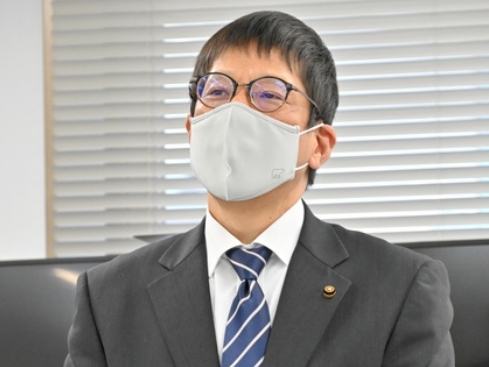
Father continues to suffer in court over Fukushima nuclear accident: “I exposed my son to radiation.
January 28, 2022
On January 28, the Sapporo High Court heard oral arguments in an appeal by evacuees from Fukushima and other prefectures who sought compensation of approximately 1.36 billion yen from the government and TEPCO in the wake of the 2011 accident at TEPCO’s Fukushima Daiichi Nuclear Power Plant. The plaintiffs, who are evacuees, gave statements and expressed their anguish that has not healed even 11 years after the accident.
If it hadn’t been for the nuclear accident, my eldest son probably wouldn’t have gotten this disease.
Akihiro Suzuki, 61, a current member of the Akahira City Council in Hokkaido, made this appeal in court. Akihiro Suzuki, 61, a current member of the Akahira City Council in Hokkaido, told the court that his eldest son, 26, was diagnosed with malignant lymphoma last March and is currently undergoing hospital treatment in Sapporo. I have been blaming myself every day for the impact on my health caused by the delay in evacuating, and I spend my days hoping that my eldest son will be released from his suffering and recover his health,” he said.
According to Mr. Suzuki, at the time of the accident, he learned about the nuclear accident on the radio from his home in Fukushima City, where the power was out. He was most concerned about the health of his sons, who were in their second year of high school and eighth year of junior high school at the time.
I thought about evacuating immediately, but gasoline was not available, so I was able to temporarily evacuate to Niigata about two weeks after the disaster. In September 2011, she and her second son evacuated to Hakodate, Hokkaido, where her eldest son had moved to school earlier.
In 2004, they moved to Akabira City. Her eldest son found a job at an IT company in Osaka, and her second son started working at a directly managed farm of a food company in Hokkaido. 19 years later, she ran for the Akadaira City Council, hoping to “bring in some fresh air,” and was elected.
Although he and his wife, who works at a high school in the Tokachi region of Hokkaido, were not expected to live together, he began to think that they had achieved a soft landing in the face of the many hardships faced by evacuees. It was just then that my eldest son became ill.
After the onset of his illness, he underwent anticancer drug treatment for six months and recovered to the point where he could be said to be in remission. However, in December, he found out that the disease had recurred. Seeing her eldest son suffer from hair loss and nausea due to the side effects of the medication “tore my heart to pieces,” she said.
I have always thought that I exposed my sons to radiation while I was still in Fukushima City. He was reluctant to stand up in court, but decided to give his opinion, saying, “Eleven years have passed since the accident, and I don’t want the world to forget the voices of the evacuees.
In an interview after the court session, Mr. Suzuki said, “Will I be stuck in the disaster of the nuclear accident forever? In a world where the memory of the accident is fading, I want people to understand that the accident is by no means over,” he said quietly.
The majority of the plaintiffs who have appealed to the court are “voluntary evacuees” who were not subject to the government’s evacuation order. As a result, only a little less than 40% of the 253 plaintiffs were eligible to receive compensation, and the amount was only about 53 million yen. (Shigeto Nakazawa)
https://www.asahi.com/articles/ASQ1X6DW7Q1XIIPE016.html?fbclid=IwAR32FJaQ6qV_mXA59wiXprtFm_ftNCHDUbQN9ujZbLyvH24tDqEmoB4Q_y0
6 people to sue TEPCO over thyroid cancer after Fukushima nuclear disaster
How may Tepco use now the word “sincerely” when they have shown the whole world their dishonesty and their lack of sincerity repeatedly for the past 10 years?
January 21, 2022 (Mainichi Japan)
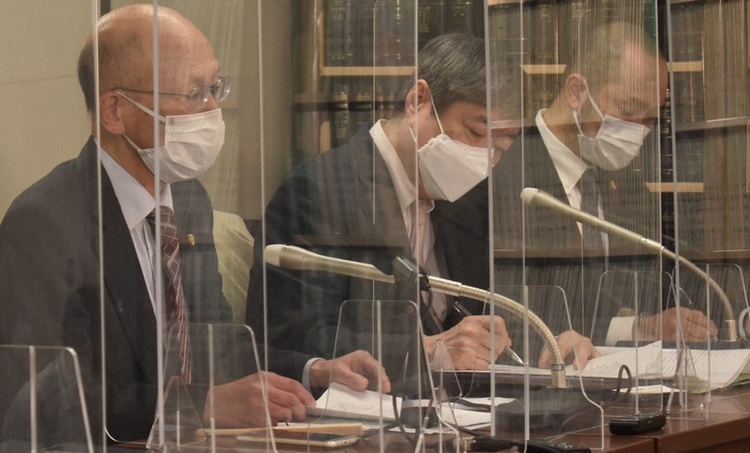
TOKYO — A group of six young men and women is set to file a class action suit against Tokyo Electric Power Company Holdings Inc. (TEPCO) claiming that they developed thyroid cancer due to exposure to radiation emanating from the Fukushima nuclear disaster, and demand the utility pay a total of 616 million yen (about $5.4 million) in compensation.
It will be the first group lawsuit in Japan by those who were minors at the time of the 2011 nuclear disaster and have since been diagnosed with thyroid cancer.
The plaintiffs, now aged between 17 and 27, were living in Fukushima Prefecture when the nuclear meltdowns occurred at the Fukushima Daiichi Nuclear Power Station in March 2011, and developed thyroid cancer after the disaster. They are filing the damages suit with the Tokyo District Court on Jan. 27, according to the legal counsel for the plaintiffs who revealed the plan at a press conference on Jan. 19.
An expert investigation committee set up by the Fukushima Prefectural Government has not recognized the causal relationship between radiation exposure from the Fukushima disaster and thyroid cancer, and whether there is such a correlation could be the focal issue in the lawsuit.
The six plaintiffs were aged between 6 and 16 at the time of the nuclear disaster. They were diagnosed with thyroid cancer between 2012 and 2018. Two of them had one side of their thyroid removed, while the other four had their thyroid fully extracted and need to take hormonal drugs for the rest of their lives. One of the patients had cancer spread to their lungs. Some of them currently reside in Tokyo and Kanagawa Prefecture.
The Fukushima Prefectural Government has conducted a survey on thyroid glands covering some 380,000 people aged 18 or younger who were living in Fukushima Prefecture at the time of the nuclear catastrophe. As of June 2021, 266 people had been diagnosed with thyroid cancer or suspected thyroid cancer. According to the legal team for the plaintiffs, five of the six complainants had their cancer detected in the prefectural survey. The remaining plaintiff found out about their cancer through testing at a hospital they voluntarily underwent.
According to the legal counsel, the cancer discovery rate in the Fukushima Prefecture survey stands several tens of times higher than usual. While the prefectural government points to the possibility of “overdiagnosis” through which many cancer cases requiring no treatment have been found, the plaintiffs’ cancer has actually progressed, the legal team asserted. The lawyers argue that none of the six plaintiffs’ cancer is hereditary, and that it is extremely highly likely that they developed their conditions due to the nuclear disaster.
In past pollution lawsuits including those over Minamata disease, there is a court precedent in which the company responsible for the pollution was ruled liable for compensation unless it could prove there was no causal relationship between the contamination and the plaintiffs’ diseases. The attorneys for the upcoming lawsuit claim that this decision could also be applied to nuclear plant accidents and that TEPCO should bear the burden of proving the absence of a causal link between radiation exposure and thyroid cancer.
Kenichi Ido, head of the legal counsel, commented, “Some plaintiffs have had difficulties advancing to higher education and finding jobs, and even given up on their dreams for their future.”
TEPCO released a comment saying, “We will respond to the case sincerely after hearing the content of their claims and their arguments in detail.”
(Japanese original by Kazuhiro Toyama, Tokyo City News Department)
https://mainichi.jp/english/articles/20220121/p2a/00m/0na/018000c
Tepco sued over thyroid cancer cases – 6 people aged 6-16 at time of Fukushima nuclear accident – Tokyo District Court
“Kenichi Ido, a former judge and head of the legal team, pointed out that “the Japanese government is assuming that there is no health damage caused by the accident. Hiroyuki Kawai, a lawyer, said, “There is strong social pressure to believe that cancer is not caused by the accident, and it took a lot of courage for the six people to file the lawsuit, which is why the time has come.“
January 19, 2022
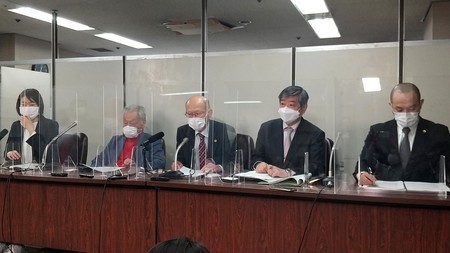
Six people who were between the ages of 6 and 16 years old at the time of the accident at the Fukushima No. 1 Nuclear Power Plant of Tokyo Electric Power Co. On April 19, it was learned that six people, aged 6-16 at the time of the accident and living in Fukushima Prefecture, will file a lawsuit against TEPCO in the Tokyo District Court, seeking a total of 616 million yen in damages. This is believed to be the first lawsuit in which residents are suing for damage caused by the nuclear accident on the grounds that they have developed thyroid cancer.
The legal team representing the six revealed this at a press conference on the same day. The lawsuit is scheduled to be filed on the 27th.
According to the lawyers, the six are currently residing in Tokyo, Kanagawa, and Fukushima prefectures. Four of them have had their thyroid glands surgically removed, and some have undergone multiple surgeries because of metastasis or recurrence.
The Fukushima Prefectural Health Survey, which covers about 380,000 people who were under the age of 18 at the time of the accident, revealed 266 cases of cancer or suspected cancer in its report last October. In October last year, it was revealed that 266 people had cancer or suspected cancer. Some experts have pointed out the possibility of “over-diagnosis,” in which cancers that do not require treatment are found, but the lawyers are claiming that all six of the cases required surgery, and that this was due to the accident.
On the other hand, the review committee for the prefectural health survey has stated that radiation is unlikely to be a factor in the development of thyroid cancer.
Kenichi Ido, a former judge and head of the legal team, pointed out that “the Japanese government is assuming that there is no health damage caused by the accident. Hiroyuki Kawai, a lawyer, said, “There is strong social pressure to believe that cancer is not caused by the accident, and it took a lot of courage for the six people to file the lawsuit, which is why the time has come.
TEPCO commented, “If the complaint is served, we will respond in good faith.
https://www.jiji.com/jc/article?k=2022011900881&g=soc&fbclid=IwAR0jA-AAx_XojY5Yngsp4n7eU8UrPgEU8A66AiSEXanInMIleC49saU_MWE
Signatures submitted to Tokyo High Court for site inspection, totaling 10,195
Jan. 21, 2022
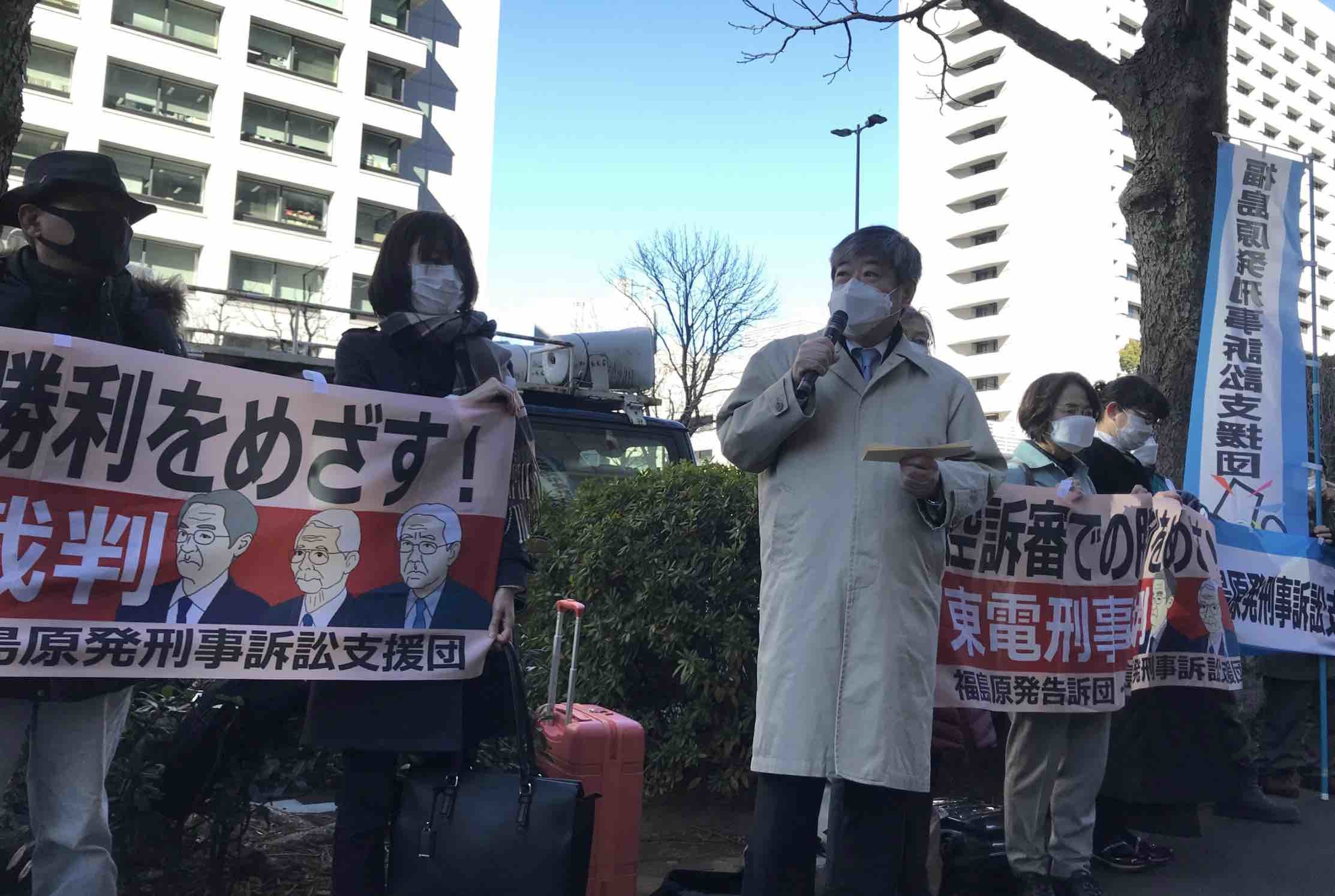
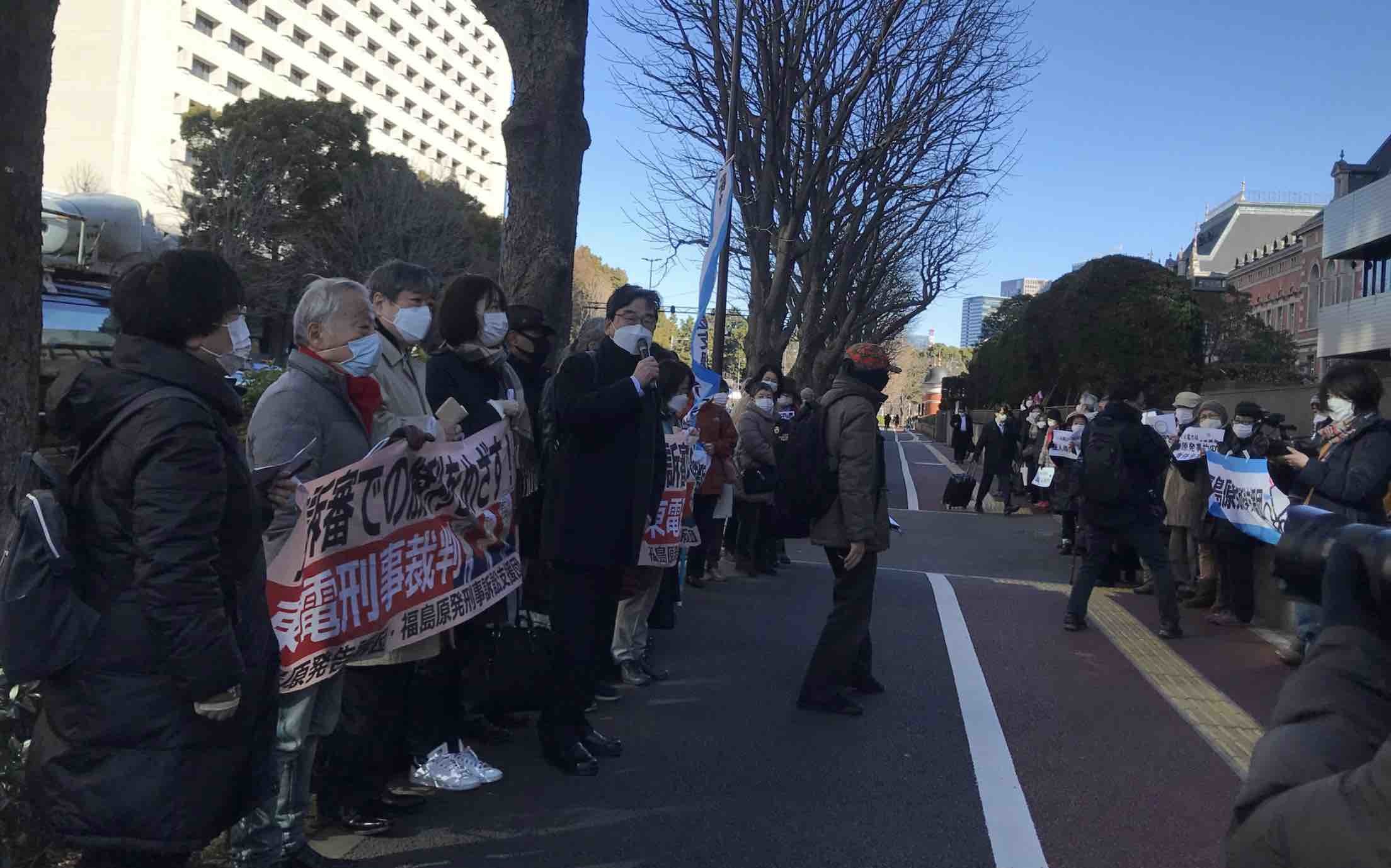
On the morning of January 21, in the cold wind, the Fukushima Nuclear Power Plant Criminal Litigation Support Group submitted the third round of signatures to the Tokyo High Court to demand that the presiding judge of the 10th Criminal Division of the Tokyo High Court, Keisuke Hosoda, decide on the on-site inspection and examination of witnesses.
In the criminal trial of the three former TEPCO executives who were forcibly indicted, the appeal trial at the Tokyo High Court started in November last year, and the key is to realize the on-site verification by the judges who were not employed in the first trial.
At the second trial on February 9 at 2:00 p.m., the decision on whether or not to hold the on-site inspection and witness examination will be made, and this will be a major turning point in the appeal trial.
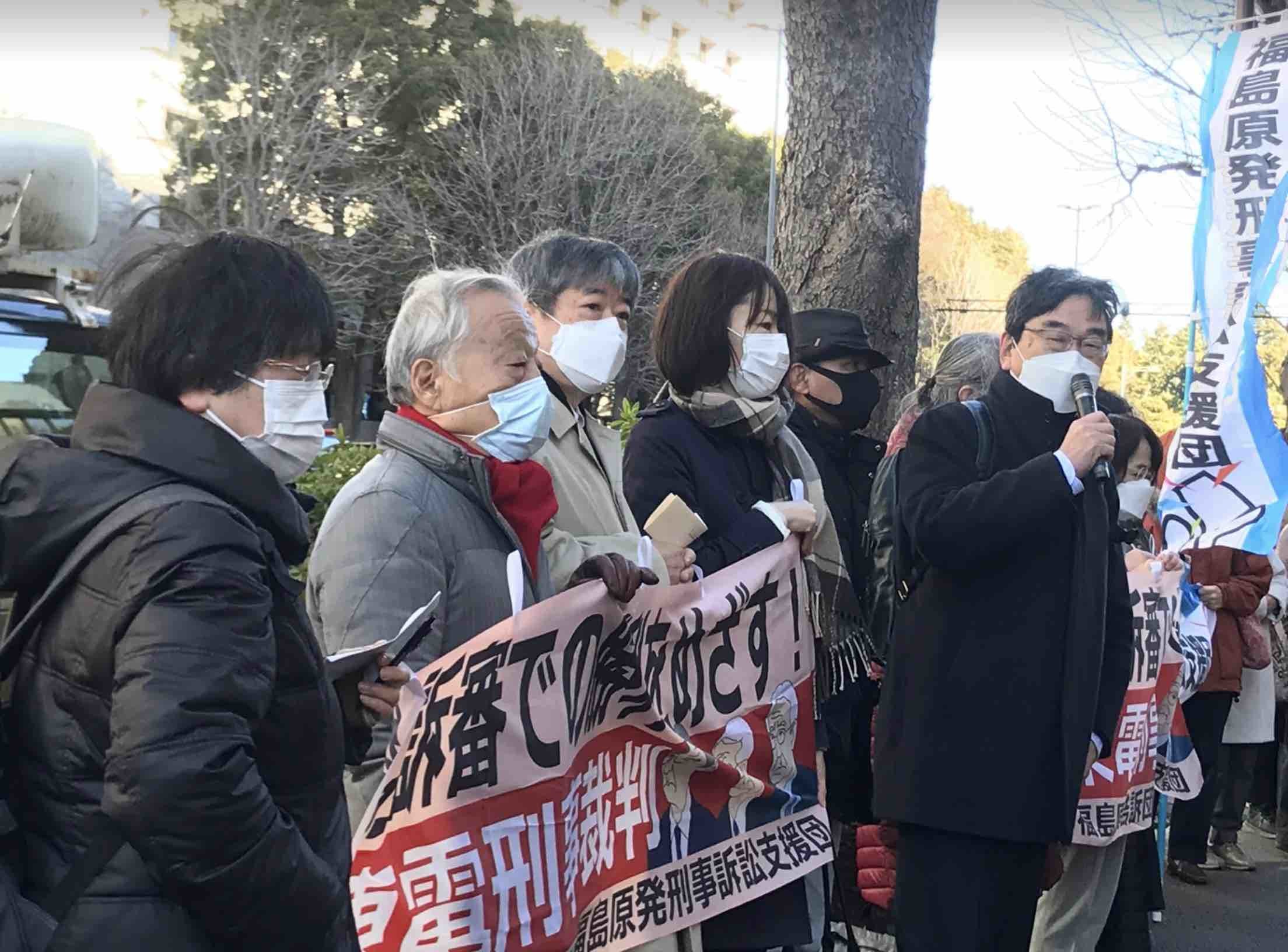
At 10:30 a.m. on the morning of the 21st, more than 100 citizens gathered in front of the Tokyo High Court, despite the bitter cold, and the leader of the support group and lawyers representing the victims, Kaito and Okawa, appealed to the Tokyo High Court to conduct on-site inspection and questioning of witnesses.
A little after 11:00 a.m., the leader of the support group and other representatives of the group, including attorneys Kaito and Okawa, submitted their signatures to the Criminal Division 10 of the Tokyo High Court. A total of 10,195 signatures were submitted so far, including 2,151 for the third round.
While taking measures against coronary infection, the participants once again confirmed that they would rally for the second trial on February 9 at 2:00 p.m., aiming for victory in the appeal trial of the Fukushima nuclear power plant criminal trial to hold TEPCO responsible for the Fukushima Daiichi nuclear power plant accident.
1 This Month

of the week – Shut Down Drone Warfare!


Tell the Ukrainian Government to Drop Prosecution of Peace Activist Yurii Sheliazhenko

Petition to revoke the licensing of the Near Surface Nuclear Disposal Facility (NSDF) at Chalk River. https://www.ourcommons.ca/petitions/en/Petition/Details?Petition=e-7247
To see nuclear-related stories in greater depth and intensity – go to https://nuclearinformation.wordpress.com
-
Archives
- March 2026 (251)
- February 2026 (268)
- January 2026 (308)
- December 2025 (358)
- November 2025 (359)
- October 2025 (376)
- September 2025 (257)
- August 2025 (319)
- July 2025 (230)
- June 2025 (348)
- May 2025 (261)
- April 2025 (305)
-
Categories
- 1
- 1 NUCLEAR ISSUES
- business and costs
- climate change
- culture and arts
- ENERGY
- environment
- health
- history
- indigenous issues
- Legal
- marketing of nuclear
- media
- opposition to nuclear
- PERSONAL STORIES
- politics
- politics international
- Religion and ethics
- safety
- secrets,lies and civil liberties
- spinbuster
- technology
- Uranium
- wastes
- weapons and war
- Women
- 2 WORLD
- ACTION
- AFRICA
- Atrocities
- AUSTRALIA
- Christina's notes
- Christina's themes
- culture and arts
- Events
- Fuk 2022
- Fuk 2023
- Fukushima 2017
- Fukushima 2018
- fukushima 2019
- Fukushima 2020
- Fukushima 2021
- general
- global warming
- Humour (God we need it)
- Nuclear
- RARE EARTHS
- Reference
- resources – print
- Resources -audiovicual
- Weekly Newsletter
- World
- World Nuclear
- YouTube
-
RSS
Entries RSS
Comments RSS
 nuclear-news