Shame on TEPCO For Taking Kids into Fukushima Exclusion Zone for Damage Control Campaign
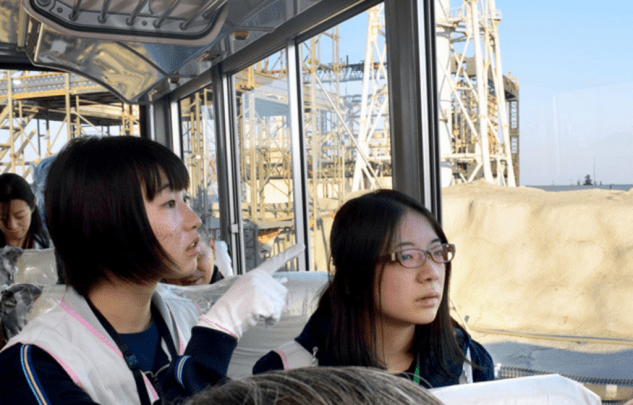
On November 18, 2016, Tokyo Electric Power Company, a.k.a. TECPCO, took a group of 13 students wearing dosimeters from Fukushima High School into the exclusion zone around the hobbled Fukushima Daiichi Power Plant for an educational tour. It is the opinion of the EnviroNews World News Editorial Board that this is unacceptable, and should not happen again until all radiation is cleaned up at the site.
The Asahi Shimbun reported, “It was the first tour by youngsters since the disaster as plant operator Tokyo Electric Power Co. had deemed the radiation risk was too high.”
To be clear, epidemiology and medical science have firmly established there is no “safe” amount of radiation to be exposed to — period — end of story. With each subsequent exposure, no matter how small, the bombarded organism experiences an increase in cancer risk.
Knowing that science has firmly established that there is no “safe” limit of radiation to be exposed to, it is the opinion of the EnviroNews World News Editorial Board that TEPCO should be ashamed of itself for taking a class of high school students into the still radioactive exclusion zone around the crippled power plant as part of what has been a continuous damage control campaign since the accident’s inception. Furthermore, TEPCO should apologize to the families, and commit publicly to not take any more children into the exclusion zone until all radioactivity has been removed.
FUKUSHIMA’S EXCLUSION ZONE: STILL A VERY DANGEROUS PLACE
The exclusion zone around the demolished Fukushima Daiichi power plant is a dangerous place. But when a person goes there, the invisible dangers that lurk don’t threaten to kill or maim right away — the hazardous radioactive rays and particles around Fukushima threaten to kill or harm them at some point years down the road — and those same radioactive exposures can also predispose and mutate their unborn children and grandchildren with birth defects, disease and cancer.
The gestation period of cancers from radiation ranges from as low as four years, to as high as fifty years or more. If an 80-year-old person is exposed to radioactivity, it is likely that other causes, either natural or unnatural, will lead to their demise before maladies caused by radiation will. However, for a very young person subjected to radioactivity, this is not the case, and for this reason, again, TEPCO should be ashamed of itself for taking children who may want to later have children themselves, into the exclusion zone for a publicity stunt. A physical trip to the location is not necessary to educate youth about the Fukushima accident, or nuclear power in general. To make a physical trip to the site with children is highly irresponsible. Less risky means of education must be used instead.
TEPCO AND JAPAN’S CONTINUOUS DAMAGE CONTROL CAMPAIGN
To suggest that TEPCO has been engaging in a continuous campaign of damage control and coverup is not a stretch at all. Earlier this year, TEPCO finally confessed publicly that it lied to the press and the entire world immediately following the meltdowns, downplaying the severity, and not admitting full meltdowns had occurred until several months later, when in fact, the company knew within hours that meltdowns were underway. This blatant lie put many thousands at risk and hampered evacuation strategies. Shortly after the company’s admission, former TEPCO Chairman Tsunehisa Katsumata, and two former Vice Presidents, Sakae Muto and Ichiro Takekuro were indicted for “professional negligence resulting in deaths and injury.”
Japan as a country, also has a serious PR problem with the ongoing Fukushima crisis — and that PR issue translates into economic problems, hence, Japan has done anything possible to slap a happy face on the disaster from the get-go.
Though it’s possible to display many examples of this, the country’s fervent and costly effort to host the 2020 Olympics, despite many concerns about Fukushima from the international community, may be the grandest. Japan has done much to stifle and stymie the voices of anti-nuclear protestors, while maintaining everything is “under control” at the rubbled plant. Nothing could be further from the truth.
It is the opinion of the EnviroNews World News Editorial Board that TEPCO, and the Japanese government, should come fully clean, relinquish their pridefulness, and engage the international community for help in the cleanup effort.
FUKUSHIMA: A SPEWING NUCLEAR DRAGON STILL ON THE LOOSE
To be clear on another point: the crisis at Fukushima Daiichi is in no way under control — quite the opposite. It is still out of control in many regards. For example, the radioactive waste water pileup problem at Fukushima is beyond critical, as over 1,100 massive storage tanks have engulfed nearly the entire area, filling the crumpled nuke site to the brim with deadly radioactive water. The operator has on multiple occasions had to discharge large amounts of tainted H2O out to sea. Secondly on this point is the fact that deadly uranium and plutonium contaminated water have been leaching into the ocean from under the reactor buildings on a continuous basis due to groundwater seepage.
Japan is a country that has been torn to shreds by radiation poisoning, possibly more than any other. Furthermore, Japan is one of only a couple dozen or so nations on earth suffering population decline, but scarily, Japan’s population is starting to contract at an alarming speed due to a low birth rate. The last thing organizations need to be doing is risking the genetic integrity and fertility of Japan’s youths by taking them to nuclear meltdown ground zeros. TEPCO should hang its head in front of the media, apologize, and agree to engage in no further publicity stunts that endanger the country’s children.
NUCLEAR COMPANIES SHOULD BE LIMITED, OR KEPT OUT OF SCHOOL-BASED NUCLEAR EDUCATION ENTIRELY
On another relevant topic, EnviroNews has long taken issue with nuclear companies being invited to participate in the educational process on nuclear issues, as our research has shown that children’s opinions are easily swayed when “educated” on the topic by nuclear companies. Many of the campaigns we’ve seen represent borderline indoctrination on the pros of nuclear power, while typically failing to mention catastrophes and the practically boundless risks and uncleaned waste sites still plaguing the planet today. Teachers and administrators should use more discretion on a topic as controversial as nuclear, and recognize that the industry’s propaganda campaigns know no boundaries.
One of many examples of these industry-driven “nukewashing” campaigns was witnessed by EnviroNews when EnergySolutions, a nuclear waste disposal company stationed in Utah, “educated” a class of students in Salt Lake City about the “benefits” of radiation. Before the event around three-quarters of the class was opposed to nuclear energy, but when surveyed again after EnergySolutions was finished, around three-quarters of the students had changed their stance to a pro-nuclear position. Naturally, the teacher failed to bring in an educator from any anti-nuclear groups who would paint a different picture entirely. Sadly, the U.S. Government, via the Department of Energy (DOE), has also gotten involved in the nukewashing with a curriculum based program called, the Harnessed Atom.
With that stated, it is the further opinion of the EnviroNews World News Editorial Board that nuclear companies should be kept out of the educational process on nuclear issues entirely — or at least limited to situations where anti-nuke organizations are allowed to present opposing views on the dangers and downsides of nuclear simultaneously.
“The tour made me realize that we should arm ourselves with accurate information if we want to change people’s perceptions of Fukushima as a scary place,” said Keika Kobiyama, a first-year student in the Fukushima High School tour group. Sadly Keika, the leaking radioactive nightmare at Fukushima Daiichi is still a very “scary place,” and should be recognized as such — and if TEPCO told you otherwise, the company is, well, full of radioactive crap.
Radioactive Waste from Fukushima Plant Water Piling Up with No Final Destination

FUKUSHIMA — While contaminated water continues to accumulate at the crippled Fukushima No. 1 Nuclear Power Plant, radioactive waste retrieved from that water during purification work is becoming a serious concern for the nuclear facility.
Since there is currently no way of dealing with the waste, plant operator Tokyo Electric Power Co. (TEPCO) has stored it onsite as a temporary measure. But there are fears in Fukushima Prefecture that it may be left there for good.
Contaminated water builds up every day at the Fukushima No. 1 plant as groundwater flows into the reactor buildings where melted fuel from the Fukushima nuclear disaster lies. Since this contaminated water could flow into the sea, TEPCO processes it with several types of purification equipment, and reuses it to cool the No. 1 to 3 reactors.
Tainted water in the reactor buildings is pumped into the U.S. cesium absorption apparatus Kurion and Toshiba Corp.’s Simplified Active Water Retrieve and Recovery System (SARRY) to remove radioactive cesium and other materials. The water is then desalinated and sent through the Advanced Liquid Processing System (ALPS), which can remove 62 different types of radioactive substances.
This process, however, does not eliminate the radioactive materials themselves; they are soaked up by absorbents, such as minerals. Radioactive materials build up in these absorbents, which remain as waste emitting high levels of radiation. This type of waste is stored in metal containers that isolate the radiation. As of Nov. 10, there were 178 such containers at the SARRY processing area, 758 at Kurio and 2,179 at ALPS. The size of the containers differs depending on the area, but overall, it amounts to some 11,000 cubic meters — which would fill around 30 25-meter swimming pools. These containers of waste stand in a temporary storage area on the south side of the plant’s No. 4 reactor.
Isao Yamagishi, a group leader at the Japan Atomic Energy Agency, warns, “Waste produced during water purification work is highly radioactive, and so is the risk of just keeping it in storage.” This is because even if the tainted water goes through a desalination process, salt can remain in the waste. There is a risk of the waste containers exploding if the concentration of hydrogen in them — produced due to the effects of radiation on water — reaches a certain level. Such a phenomenon was seen at the No. 1 and 3 reactor buildings of the Fukushima No. 1 plant, which exploded due to an accumulation of hydrogen soon after the outbreak of the disaster.
Yamagishi says that salt content has a tendency to aid hydrogen production, and it is necessary to release a sufficient amount of hydrogen from the containers. It is also possible that salt could corrode the metal containers. There do not seem to be any problems with hydrogen concentration or corrosion at this stage, but Yamagishi says, “We need to research over the long term what’s going on inside the containers.”
There is additional nuclear waste at the plant, too. Soon after the outbreak of the nuclear disaster, a decontamination system provided by France’s Areva SA was put into operation, and approximately 597 cubic meters of radioactive waste produced during the water purification process with this system remains stored at the plant.
The Nuclear Regulation Authority says that if the Fukushima plant is hit by another major tsunami, this waste could end up outside the plant. It therefore needs to be dealt with quickly, but there is nowhere for it to go.
Contaminated water also poses a problem. The ALPS system cannot remove radioactive tritium from the water, so tritium-tainted water is stored in tanks. There are about 1,000 tanks holding this type of water, whose total weight amounts to some 900,000 metric tons. And as work to decommission the plant’s reactors increases, both the amount of nuclear waste and the amount of contaminated water will increase.
Shigeaki Tsunoyama, former president of the University of Aizu in Fukushima and head of the Fukushima Prefectural Center for Environmental Creation, who is familiar with the field of nuclear safety engineering, comments, “Locals are concerned that nuclear waste will be left there as it is.”
In the future, work will begin to remove melted fuel at the Fukushima No. 1 plant, but its destination remains undecided. Some locals fear that if no destination for waste designated as being in “temporary storage” at the plant is decided, then Fukushima will become the final disposal site for melted fuel in the future. Tsunoyama is calling on officials to provide a map for the future.
“I want them to analyze the long-term risks, and provide an outlook for the storage and disposal of waste,” he says.
http://mainichi.jp/english/articles/20161126/p2a/00m/0na/004000c

Fukushima Radiation is not safe
A repost of a December 2011 video from Goddard’s Journal
Studies cited in order presented:
National Academy of Sciences Low-Dose Radiation Report
http://www.nap.edu/openbook.php?record_id=11340&page=R1
Data tables used, 12D-1 and 12D-2:
http://www.nap.edu/openbook.php?record_id=11340&page=311
http://www.nap.edu/openbook/030909156X/gifmid/311.gif
How to scale that data to unique exposure scenarios, Annex 12D, Example 1:
http://www.nap.edu/openbook.php?record_id=11340&page=310
15-country study of nuclear-worker cancer risk
http://www.ncbi.nlm.nih.gov/pubmed/17388693
Table 5 shown is from Part II of the study
http://www.ncbi.nlm.nih.gov/pubmed/17388694
http://iangoddard.com/15countries_Part2_Table5.png
Jacob et al. (2009) meta-analysis of nuclear-worker studies
http://oem.bmj.com/content/66/12/789.full.pdf
Editorial on Jacob et al. quoted
http://oem.bmj.com/content/66/12/785.extract
Chromosomal translocations are associated with cancer
http://www.ncbi.nlm.nih.gov/pmc/articles/PMC3152359/
Boffetta et al. (2007) more chromoHarm entails more cancer
http://www.ncbi.nlm.nih.gov/pubmed/17071846
Bhatti et al. (2010) meta-analysis of chromosomal damage
http://www.ncbi.nlm.nih.gov/pmc/articles/PMC3075914/
# Addendum #
Since I posted this video, the ‘Bulletin of the Atomic Scientists’ published a special edition on low-dose radiation, the lead article of which matches and thereby corroborates the case I present in this video. It also covers additional research and nuclear-industry efforts to derail scientific investigation of radiation risks http://bos.sagepub.com/content/68/3/10.full.pdf
Some friends created PDF files of this video available here
In English
https://docs.google.com/file/d/0B5qUOl0_hAfneW9rWmJ0akNMZEk/edit
In Japanese
Crisis averted, but is N-plant operator Tepco prepared for a bigger quake?

An aerial view of the Fukushima Daiichi nuclear power plant after a strong earthquake hit off the coast of Fukushima on Tuesday. The operator of the plant said there were no abnormalities observed at the plant.
TOKYO — There was no avoiding fearful memories of the Japanese nuclear disaster of 2011 on Tuesday morning after a powerful earthquake off the coast of Fukushima caused a cooling system in a nuclear plant to stop, leaving more than 2,500 spent uranium fuel rods at risk of overheating.
But this time, the Tokyo Electric Power Company (Tepco), the utility that operates three nuclear plants, restored the cooling pump at the Fukushima Daini plant in about 90 minutes. The Daini plant is about 11km south of Fukushima Daiichi, the ruined plant where three reactors melted down five years ago after tsunami waves inundated the power station and knocked out backup generators.
Tepco reported that it never lost power at either the Daini plant or its neighbour to the north after the Tuesday quake, which had a magnitude of 7.4, according to the Japanese weather service.
“We took the regular actions that we should take when handling troubles,” Mr Yuichi Okamura, acting general manager of the nuclear power division at Tepco, said at a news conference on Tuesday.
The company was prepared for big tsunamis, having built sea walls rising to almost 15m at the Fukushima plants and enclosing backup generators in waterproof facilities, Mr Okamura said.
Critics of Tepco, which struggled to keep on top of a crisis that followed the 2011 calamity, said they were relieved that there had been no immediate damage. However, they remained sceptical that the company had done enough to prepare for a disaster on the scale of the earthquake five years ago.
That quake, which had a magnitude of 8.9, set off tsunami waves as high as 40m in some places. In contrast, the highest waves on Tuesday reached only about 1.4m.
“It looks like the right things have been done,” said Mr Azby Brown, director of the Future Design Institute at the Kanazawa Institute of Technology and a volunteer researcher with SafeCast, an independent radiation-monitoring group.
“But you never know until something happens. As far as this morning goes, they did a decent job, but mainly because it wasn’t that big of an earthquake or that big of a tsunami.”
Building higher sea walls, for example, “is all good, but that is like fighting the last war”, Mr Brown said.
“It remains to be seen how well prepared they would be for some other unusual combination of disasters.”
Compared to five years ago, Tepco has improved its communication with the public, reporting information about the cooling pump at Daini almost as it happened on Tuesday morning.
The company also quickly said that it had suspended the treatment and transfer of contaminated water from the Daiichi plant, where an extensive clean-up and decommissioning process is underway. By the evening, those operations had been restored.
“What I can say is today’s response was decent and they seemed to be confident,” said Mr Tatsujiro Suzuki, director of the Research Center for Nuclear Weapons Abolition at Nagasaki University. However, it would be difficult to independently verify Tepco’s claims because the Japanese Nuclear Regulation Authority depends on the company to release information.
He added that he was not convinced that Tepco was being fully transparent about its decisions, particularly about the clean-up at the Daiichi plant.
“We should be informed fully whether this operation is reasonably done with cost-effectiveness and safety and making sure that the best technology is being used,” Mr Suzuki said.
Mr Daisuke Maeda, a spokesman for the Nuclear Regulation Authority, said the agency had offices on the sites of the nuclear plants and worked with Tepco and other utility companies on Tuesday to confirm that the power stations were safe after the earthquake.
Regarding the longer-term situation, nuclear experts expressed concern about the safety of the clean-up operation at the Daiichi plant. The melted cores of three reactors have yet to be removed as they are still too radioactive for workers to approach.
Since the 2011 disaster, groundwater seeps into the reactors daily. The water, contaminated by the melted fuel rods, needs to be treated and stored on site. So far, Tepco has built more than 880 tanks of about 1,000 tonnes each.
The tanks are inspected four times a day to confirm that they do not leak, said Mr Okamura of Tepco.
And in an effort to halt the flood of groundwater into the damaged buildings, the company has built an underground wall of frozen dirt nearly 1.6km long encircling the reactors. The wall is not yet fully frozen, though, and groundwater continues to flow into the reactors.
Critics worry that the sea walls or storage tanks might not withstand a more powerful earthquake or tsunami. And Tuesday’s incident at the Daini reactor showed that quakes can set off problems even at plants that are not operating.
Most of the country’s 54 plants remain closed since the 2011 disaster, but the administration of Prime Minister Shinzo Abe wants to restart most of them.
A majority of the Japanese public is opposed to such a move. Candidates for governor who ran campaigns opposed to the revival have won elections in recent months in two prefectures that host nuclear plants.
According to Japanese daily Nikkei Shimbun, Mr Fumio Sudo, the chairman of Tepco, and Mr Naomi Hirose, the company’s president, were planning to meet on Tuesday with one of those governors, Ryuichi Yoneyama of Niigata, to try to persuade him to support a restart of the Kashiwazaki-Kariwa plant there.
Mr Sudo and Mr Hirose returned to Tokyo after the earthquake.
Mr Kiyoshi Kurokawa, who oversaw an independent investigation of the Fukushima nuclear accident for the Japanese Parliament, said that building walls and storage tanks failed to solve the underlying problem of an earthquake-prone country relying on nuclear power. Instead, he said, both the government and utility companies should invest in developing alternative sources of power like solar or wind technology.
“I think we expect more of such readjusting plate movements and that has been reasonably predicted, and many volcanic activity and earthquakes have been rampant over the last five years,” said Mr Kurokawa, an adjunct professor at the National Graduate Institute for Policy Studies. “So why are we continuing to restart nuclear plants?”
http://www.todayonline.com/world/asia/crisis-averted-n-plant-operator-tepco-prepared-bigger-quake
An aerial view of the Fukushima Daiichi nuclear power plant after a strong earthquake hit off the coast of Fukushima on Tuesday. The operator of the plant said there were no abnormalities observed at the plant.
Tepco’s Nov. 22 Post-Earthquake Information Release

Tepco released some post-earthquake informations about the situation of the Fukushima Daiichi Nuclear Power Station after the earthquake off the coast of Fukushima Prefecture that occurred around 5:59 am today, November 22.
“At Fukushima Daiichi Nuclear Power Station, at 6:06 am after the earthquake occurred. As a precaution, contaminated water transfer from the reactor building basements was stopped after the quake. It was restarted at 3:19pm.
Similarly, the Reverse Osmosis desalination system was stopped at 6:17 am, and restarted at 3:44 pm. The cesium adsorption system was stopped at 6:23 am, and restarted at 4:47 pm. Other water treatment systems were stopped at 6:12 am and restarted at 4:20 pm.
Since we confirmed that there was no abnormality after the earthquake, we resumed operation.
Also, we patrolled each Unit 1 to 6 equipments, our patrol was completed by 4:06 pm and we confirmed the following troubles:
– Damages to the south side silt fences of Units 1 to 4 and the north side silt fences of 5 and 6 units on the port, these are used to try to keep small radioactive debris from leaving the port.
– A puddle (about 2 m × 3 m) was found near the common spent fuel pool, thought to be caused by sloshing of the pool during the quake.
We will carry out the restoration work as soon as preparations are completed.”
Tepco did not mention anything about the storage tanks up on the hill. Those aging bolt together tanks, still partially in use, containing contaminated water, are a major concern, being the most vulnerable to be damaged by an earthquake.
According to JMA (Japan Meteorological Agency), they observed over 85 aftershocks by 11:00 AM (JST) of 11/23/2016, out of which 7 quakes of seismic intensity over 3. They warn the same level of the earthquake (M7.4) may happen again this week, with possible Tsunami.
Sources:
Tepco 2016年11月22日地震情報(福島第一・福島第二原子力発電所関連) (続報5)
http://www.jma.go.jp/en/quake/quake_local_index.html
http://2ch-news.co/newsplus/1479879660/
Ice Wall at Fukushima Plant Examined

A Natural Resources and Energy Agency official explains the state of the ice wall meant to surround the reactor buildings at the Fukushima No. 1 Nuclear Power Plant, on Nov, 21, 2016.
Ice wall at Fukushima plant examined
Government officials have examined an underground ice wall built around Japan’s crippled Fukushima Daiichi nuclear plant to confirm whether the soil has frozen.
Work is ongoing to build a 1.5 kilometer barrier of frozen soil encircling reactor buildings. The goal is to prevent underground water from seeping into the plant premises, resulting in more tainted water.
Coolants are being circulated from pipes buried around the reactor site.
Work to build an ice wall began in March, and is almost completed.
State minister for industry, Yosuke Takagi and others on Monday looked at an exposed section of the ice wall.
They said the ice wall had hardened enough to withstand being hit with a hammer.
Officials say prior to construction of the ice wall, workers collected some 350 tons of underground water on a daily basis. The amount has shrunk to about 200 tons.
Japan’s nuclear regulator is also planning to assess the effectiveness of the ice wall installment.
http://www3.nhk.or.jp/nhkworld/en/news/20161121_22/
Ice wall at Fukushima nuclear plant revealed for first time
FUKUSHIMA — The Economy, Trade and Industry Ministry on Nov. 21 showed the media for the first time the visual inspections conducted on the condition of the subterranean ice wall around the nuclear reactors at the stricken Fukushima No. 1 Nuclear Power Plant to block groundwater from flowing into the plant buildings.
The ice wall project calls for freezing the soil around the No. 1 to No. 4 reactor buildings that stretches some 1.5 kilometers to a depth of about 30 meters to create a solid barrier by hammering in equidistant cooling pipes and circulating coolant chilled to minus 30 degrees Celsius.
The industry ministry on Nov. 21 dug a part of the ice wall to approximately 1.2 meters in depth on the mountain side of the No. 4 reactor building. The soil temperature around the cooling pipes 40 centimeters deep was about minus 10.3 degrees, while an area of 1.5 meters in radius around the cooling pipes was frozen at a depth of 1.2 meters.
While plant operator Tokyo Electric Power Co. claims that the ice wall could reduce the amount of groundwater flowing into the reactor buildings from some 400 metric tons a day to 100 tons or less, the Nuclear Regulation Authority cast doubt on the project during an August meeting, with a member saying that the plan was a failure.
http://mainichi.jp/english/articles/20161122/p2a/00m/0na/014000c
Leaks Unlikely, “presumes” Tepco
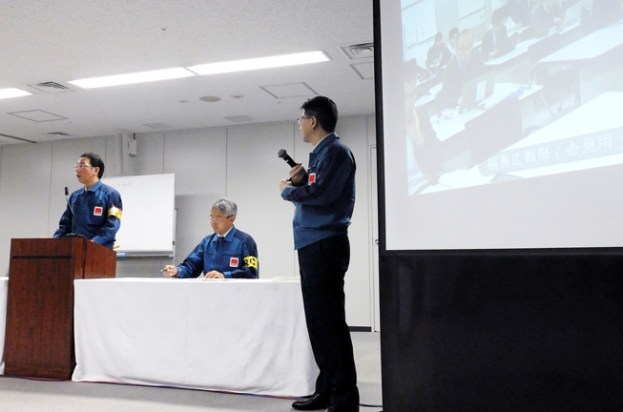
Naohiro Masuda, left, president of Fukushima Daiichi Decontamination & Decommissioning Engineering Co., speaks at the podium in a news conference at the Tokyo Electric Power Co.’s head office on Nov. 22.
Tokyo Electric Power Co. said radioactive water likely did not leak from its stricken Fukushima No. 1 nuclear plant following the morning earthquake that spawned a tsunami on Nov. 22. TEPCO declared that everything was ok at Fukushima Daiichi before even to be able to go inspect the facilities.
TEPCO officials said the company manually shut down equipment that was transferring contaminated water from reactor buildings after the magnitude-7.4 earthquake struck off the coast of Fukushima Prefecture. The measure was taken because water being transferred could have spilled out if a pipe in the system was fractured in the quake, and because they would be unable to check the system for leaks.
Naohiro Masuda, president of Fukushima Daiichi Decontamination & Decommissioning Engineering Co., TEPCO’s in-house organization, explained during a news conference at the utility’s head office in Tokyo why the company halted operations of the water transfer facility: “The biggest risk is a tsunami causing contaminated water that has accumulated (in the reactor buildings) to leak and pollute the environment.”
After the Japan Meteorological Agency issued a tsunami warning at 6:02 a.m., the company ordered workers in lower areas of the plant to evacuate to higher ground. The workers stayed out of the lower areas as the tsunami warning lasted for hours. They have been unable to check for possible leaks around the reactor buildings and the turbine buildings near the sea.
“It is a bit inappropriate that we’ve been unable to do so,” Masuda said. “That’s why we suspended the transfer facility. We think that no water will leak now.”
Groundwater mixing with contaminated water in damaged reactor buildings has been a serious problem at the plant since the nuclear disaster unfolded in 2011.
TEPCO also reported that pumps to cool water in the spent nuclear fuel pool at the No. 3 reactor building of the Fukushima No. 2 nuclear power plant shut down after the quake. The company said this was an automatic mechanism that kicked in after the water level changed in the tank that adjusts water conditions in the pool. “It is a result of the fact that the automatic suspension device worked normally,” Masuda said. The pumps were later restarted.
In the evening of 11/22/2016, Tepco announced the radiation monitoring post in the sea has been suspended due to the quake. The post is situated at the end of the breakwater of Fukushima plant port. They cannot monitor the radioactive substance spreading to the Pacific with this monitoring post out of order.
TEPCO declared “everything is safe” soon after the quake. They may have visually confirmed nothing large and significant happened such as a vent tower collapsing or larger building damage, but they were unable to go in to inspect to actually confirm nothing was damaged, to check for damage in more detail and to check every system now in place at the plant could easily take an entire day.
TEPCO’s prompt claim of no damage after the earthquake at the disaster site, as always was not done after inspections would have confirmed no damage.
465 suspected of working illegally at Fukushima nuke plant in 2015
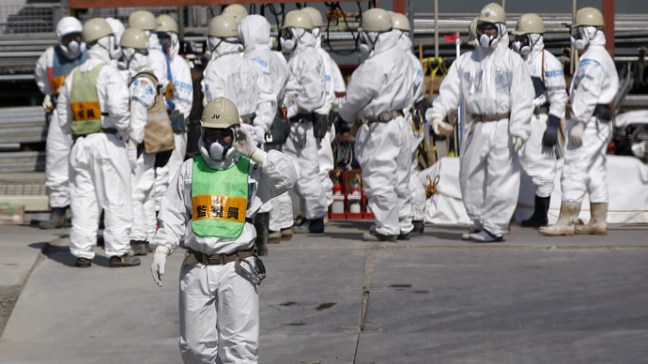
A total of 465 workers at the disaster-stricken Fukushima No. 1 nuclear plant may have been employed under “disguised contracts,” according to the results of a 2015 Tokyo Electric Power Co. (TEPCO) questionnaire.
Under a “disguised contract,” people are given work without official employment or are made to work under the instruction of parties other than those who place the original orders, obscuring the party responsible for their safety. The revelation comes after the Mainichi Shimbun reported that seven foreign nationals worked at the plant in 2014 under suspected illegal contracts. TEPCO had subsequently concluded that it had identified no problems over the issue based on its questionnaires.
The utility recognized that 118 of the 465 workers — whose employers TEPCO says it could identify and whom it checked with by way of the original contractors — were “all in appropriate employment statuses.”
In response to the TEPCO announcement, however, a former Japanese worker at the plant testified to the Mainichi that he “couldn’t write about the truth” in those surveys. Furthermore, at least one subcontractor related to work at the plant has admitted to the existence of disguised contract work.
The Employment Security Act and other regulations ban “disguised contract work” in which workers receive instructions from companies other than those they have employment or business contracts with as it obscures the party responsible for safety management. The seven foreign nationals — mostly Japanese-Brazilians — who worked at the Fukushima No. 1 nuclear plant in 2014 received work instructions from a subcontractor, but they were in fact sole proprietors with business contracts.
TEPCO started handing out surveys in fiscal 2011 to all non-regular workers engaged in the decommissioning of reactors at the plant in a bid to improve their work environment. The utility has released the results of the past surveys on its website.
A questionnaire conducted between August and October last year, whose results were recently released, received responses from 86.4 percent of all workers at the Fukushima No. 1 plant, or 6,527 individuals, most of whom are believed to be Japanese. Among them, 465 workers (14.2 percent) of 3,268 workers (excluding supervisors and managers) answered that “the company that gives me work instructions and the one that pays me are different.” Of them, TEPCO asked the original contractors to conduct a survey on 118 workers and concluded that their employment statuses were appropriate based on their reports.
A former male Japanese worker for a second-tier subcontractor that undertook work to build storage tanks for radiation contaminated water at the plant between 2014 and 2015 revealed to the Mainichi that when he responded to a TEPCO survey, he enclosed his answer sheet in an envelope and handed it over to a first-tier subcontractor without sealing it. The answer sheets submitted by workers were ultimately collected by the original contractor before being submitted to TEPCO.
“Although the surveys were anonymous, they could tell who wrote the answers by the handwriting. I couldn’t write about working under harsh conditions, in which many people collapsed due to heatstroke. The way the surveys are conducted now wouldn’t lead to uncovering the realities at the job sites,” he said.
The president of a construction company in Fukushima Prefecture that undertakes decommissioning work at the Fukushima No. 1 plant told the Mainichi in February that the company was making workers dispatched by another firm work at the plant by disguising them as its own regular employees. “I’m aware it constitutes disguised contract work, which is illegal. But it’s a common practice.”
Meanwhile, TEPCO’s public relations section, when asked whether its questionnaires can uncover the realities of work conditions for those engaged in decommissioning work at the plant, said, “We see no problems with them.”
http://mainichi.jp/english/articles/20161122/p2a/00m/0na/012000c
Fuel removal unlikely by March 2018
566 fuel assemblies, 514 spent fuel assemblies and 52 unused ones, Tepco has always said so. But since the fuel pool was cleaned up, Tepco only released partial photos of the fuel pool, never any photo of the whole fuel pool. So as of now it is just impossible to verify Tepco’s claim by counting the assemblies. Since the fuel pool also exploded some fuel assemblies must be missing. How many are gone how many remain is still a non answered question, especially as Tepco is not well known for being straightforward.
Will Tepco dare to start decommissioning the reactor 3 fuel pool before the 2020 Tokyo Olympics? I doubt so. In my opinion, Tepco will keep postponing it for after the Olympics, to avoid difficulties and critics

Fuel removal unlikely by March 2018
A government official has suggested that fuel removal from a reactor at the crippled Fukushima Daiichi nuclear plant will not start by March 2018, as planned.
566 nuclear fuel units remain in the No. 3 reactor’s fuel pool. To reach their target period, plant operator Tokyo Electric Power Company must begin placing a cover over the damaged reactor building by this April.
It’s now expected the cover installation will not start until January next year or later. It was determined that stronger measures are needed to protect workers from radiation exposure.
An official with the industry ministry overseeing reactor decommissioning inspected the plant on Monday. He said starting fuel removal within the next fiscal year is difficult.
Tokyo Electric says the cover installation has been slow, but the company will continue decommissioning work with safety as their highest priority.
Ice wall at Fukushima plant examined
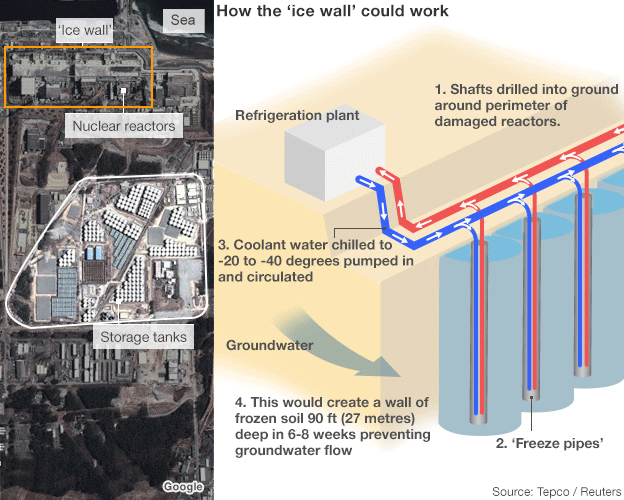
Government officials have examined an underground ice wall built around Japan’s crippled Fukushima Daiichi nuclear plant to confirm whether the soil has frozen.
Work is ongoing to build a 1.5 kilometer barrier of frozen soil encircling reactor buildings. The goal is to prevent underground water from seeping into the plant premises, resulting in more tainted water.
Coolants are being circulated from pipes buried around the reactor site.
Work to build an ice wall began in March, and is almost completed.
State minister for industry, Yosuke Takagi and others on Monday looked at an exposed section of the ice wall.
They said the ice wall had hardened enough to withstand being hit with a hammer.
Officials say prior to construction of the ice wall, workers collected some 350 tons of underground water on a daily basis. The amount has shrunk to about 200 tons.
Japan’s nuclear regulator is also planning to assess the effectiveness of the ice wall installment.
Fuel Removal from Fukushima Reactor 3 Likely to Be Put Off Again
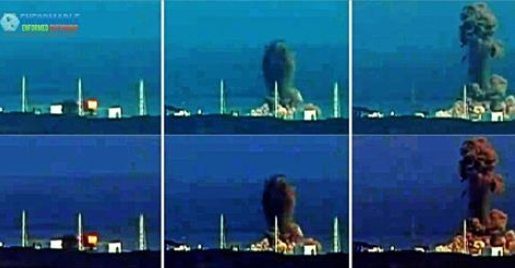
Tokyo, Nov. 18 (Jiji Press)–Tokyo Electric Power Co. Holdings Inc. <9501> is expected to face a further delay in the start of work to remove fuel from the storage pool at the No. 3 reactor of its disaster-stricken Fukushima No. 1 nuclear power station, it was learned Friday.
It now appears difficult to begin the work in January 2018, as currently targeted by the company, the sources said. The expected postponement is due to a delay in preparations necessary for the removal work.
All six reactors at the power station in Fukushima Prefecture, northeastern Japan, are set to be decommissioned, after the plant was knocked out by the March 2011 earthquake and tsunami. Three of the six reactors suffered core meltdowns in the accident.
The fuel removal from the No. 3 reactor pool was initially planned to begin during April-September 2015.
The No. 3 reactor building was heavily damaged by a hydrogen explosion soon after the March 11 disaster. As part of the preparations, TEPCO plans to install a cover and relevant equipment at the reactor.
http://jen.jiji.com/jc/eng?g=eco&k=2016111800715
13 Fukushima High School Students Visited Fukushima Daiichi
Propaganda to downplay the chaos & the effects of the disaster goes on at full throttle. Is it happening because Japanese are so recklessly brave and immune to radiation? Are school teachers and TEPCO officials sane enough? How could a university professor take them around at the damaged NPP without be concerned about the effect of radiation on young people?
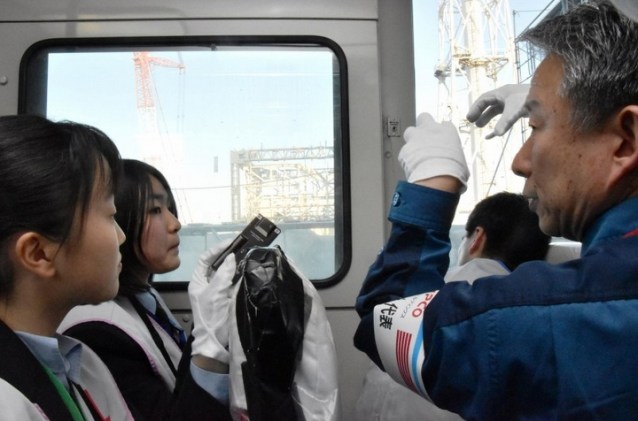
Fukushima students see crippled nuclear plant firsthand
OKUMA, Fukushima Prefecture–It was no ordinary outing for the 13 students from Fukushima High School.
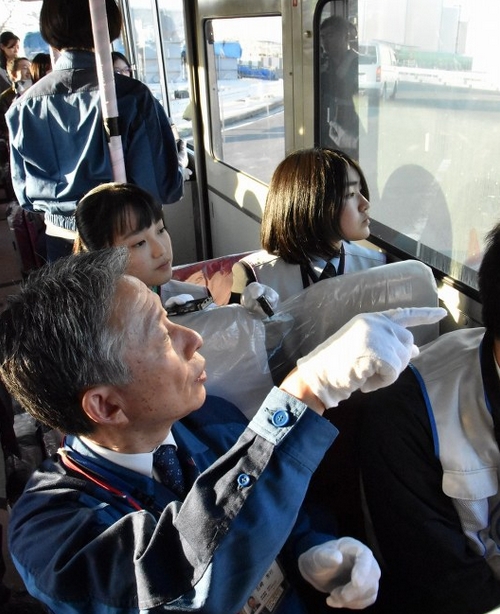
The teenagers toured the site of the crippled Fukushima No. 1 nuclear power plant by bus on Nov. 18 to get a firsthand look at work to decommission the reactors following the triple meltdown in 2011.
It was the first tour by youngsters since the disaster as plant operator Tokyo Electric Power Co. had deemed the radiation risk was too high.
Through bus windows, the students observed the damaged reactor buildings, rows of storage tanks holding contaminated water and other facilities on the sprawling nuclear complex.
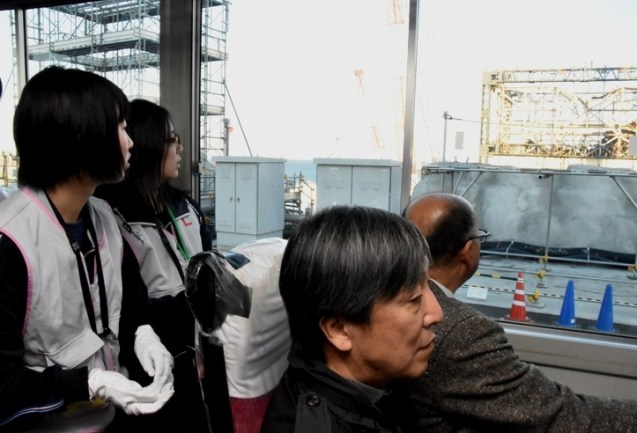
“The tour made me realize that we should arm ourselves with accurate information if we want to change people’s perceptions of Fukushima as a scary place,” said Keika Kobiyama, a first-year student in the group. “For starters, I want to tell my fellow high school students ‘We went to the plant to see for ourselves what was going on there.’”
TEPCO had previously refused to allow tours by those under the age of 18.
But the company gave the green light to this request as an exception on grounds that radiation levels had dropped significantly.
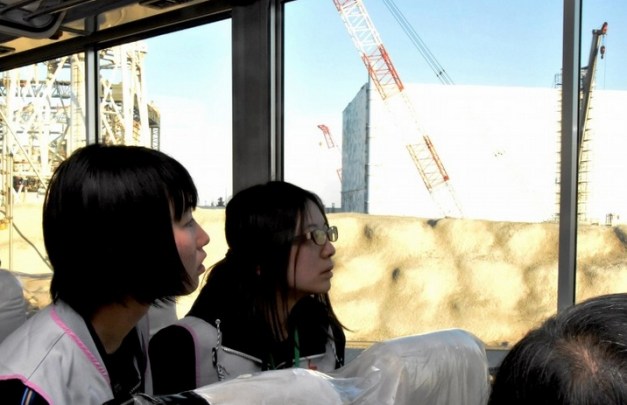
The students were each given a dosimeter as they boarded the bus for the two-hour tour. The trip was held after their parents agreed to the visit.
The students themselves had been releasing updates on the disaster for Japanese and foreign audiences by monitoring radiation levels in the prefecture and studying the decommissioning process.
TEPCO may struggle to find partners due to Fukushima decommissioning costs
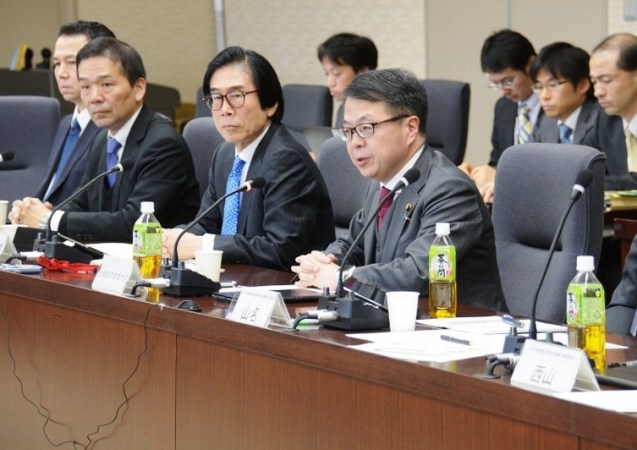
Economy, Trade and Industry Minister Hiroshige Seko, right front, speaks at a meeting of the ministry’s expert panel on reform of TEPCO and issues related to the crippled Fukushima No. 1 nuclear power plant on Nov. 15, 2016.
Naomi Hirose, president of Tokyo Electric Power Company Holdings Inc. (TEPCO), presented a proposal to reform the operator of the crippled Fukushima No. 1 Nuclear Power Plant to the Economy, Trade and Industry Ministry’s expert panel on Nov. 15.
Under the proposal submitted by Hirose on the reform of TEPCO and issues related to the crippled Fukushima nuclear power plant, TEPCO is to collaborate with other power companies in the areas of nuclear power generation and energy transmission and distribution in an effort to boost its earning power. But if other major utilities were to work with TEPCO on a nuclear power project, questions would be raised about how to split risks such as decommissioning costs for the crippled Fukushima plant among companies concerned. Such being the case, TEPCO will likely have difficulty finding partners.
Hirose attended the closed-door expert committee meeting as an observer. Committee chairman Kunio Ito (specially-appointed professor at Hitotsubashi University) and a senior industry ministry official revealed the details of Hirose’s reform proposal at a news conference after the panel meeting.
According to details revealed at the news conference, Hirose proposed to step up TEPCO’s cooperation with other power companies on its nuclear power business including the areas of safety measures, joint technological development and overseas business operations. The industry ministry had already proposed at an expert panel meeting that TEPCO spin off its nuclear business into a subsidiary and collaborate with other utilities, among other moves. TEPCO is expected to incorporate these plans into the “New Comprehensive Special Business Plan” that is set to be revised early next year in line with discussions at expert panel meetings.
Under the current New Comprehensive Special Business Plan, TEPCO assumes reactivation of its Kashiwazaki-Kariwa Nuclear Power Plant as a source of earnings to be used to rebuild itself. But there are no prospects of the power plant being reactivated as the governor of Niigata Prefecture, which hosts the nuclear facility, is taking a cautious stance toward reactivation. The industry ministry wants to secure understanding of a plan to reactivate the nuclear power plant by improving the creditworthiness of TEPCO’s nuclear business through collaboration with other utilities. But because there is a possibility of other power companies being forced to shoulder the costs of decommissioning the crippled Fukushima plant, it remains unclear whether TEPCO will be able to cooperate with those utilities as envisioned.
A member of the expert panel was quoted as saying at the meeting, “A proper alliance cannot be formed unless ways of shutting off the risks (for possible alliance partners) are considered. Hirose also proposed that TEPCO work with other firms in the area of power generation and transmission, as well as jointly procure materials with other firms.
As for the costs of decommissioning the Fukushima No. 1 nuclear plant, which are expected to exceed the initial estimate by several trillion yen, and expenses for paying compensation to nuclear disaster victims, the expert panel confirmed plans for TEPCO to minimize financial burdens on the public through management efforts. An expert panel member was quoted as saying at the Nov. 15 meeting, “If TEPCO’s liability is defined as limited, the general public will see the move as relief measures for TEPCO. We should carefully consider public opinion.”
http://mainichi.jp/english/articles/20161116/p2a/00m/0na/008000c
Fukushima Reactor 1 Now Fully Exposed
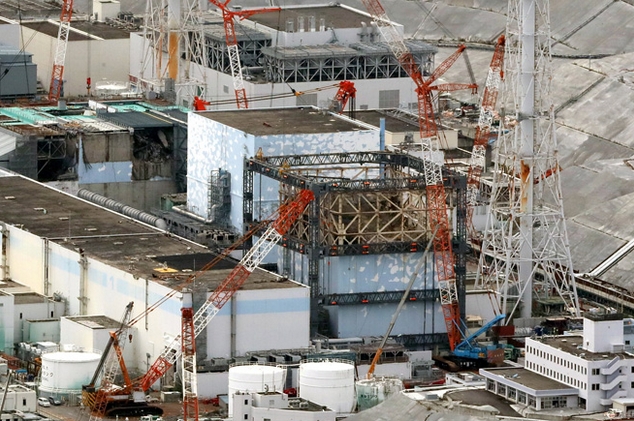
The No. 1 reactor building at the crippled Fukushima No. 1 nuclear power plant is completely exposed after the last of 18 temporary protective covers was removed on Nov. 10.
Crippled Fukushima Reactor Fully Exposed for the First Time Since 2011 Disaster
The last cover was removed from the Fukushima-1 Nuclear Plant reactor No. 1, local media reported on November 10. Now all the temporary protective constructions have been demolished, and the reactor is completely exposed for the first time since 2011’s nuclear catastrophe.
Demolition works conducted by the plant’s operator Tokyo Electric Power Co (TEPCO) have been ongoing for two years. Today a large crane lifted off a 20-ton cover, the last of the 18 panels installed after the event.
The next step is the removal of 392 fuel assemblies from the spent fuel pool and melted nuclear fuel from inside the building, Japanese daily Asahi Shimbun reported
According to Japanese national broadcaster NHK, the fuel extraction will only start in four years. TEPCO is currently installing the necessary equipment and assessing the state of the reactor building’s interior in efforts to remove debris from the collapsed roof over the spent nuclear fuel pool. TEPCO has to be sure to avoid stirring the radioactive dust while shrouding the reactor building with tarpaulins.
The covers were installed in October 2011 as a temporary measure against the spread of radioactive substances after the triple meltdown of the plant.
The tragedy at the Fukushima-1 plant happened on March 11, 2011 after a devastating earthquake and tsunami struck the northeast coast of Japan, leading to the leakage of radioactive material from the plant into the surrounding environment. The nuclear accident is the largest one since the Chernobyl catastrophe in 1986. It is expected to take about 40 years to entirely clean up the area.
https://sputniknews.com/asia/201611101047289568-fukushima-covers-demolition/
Last cover removed from crippled reactor in Fukushima
The No. 1 reactor at the Fukushima No. 1 nuclear power plant is completely exposed for the first time in five years after the last of the temporary protective covers for the crippled structure was removed Nov. 10.
The next step will be to extract nuclear fuel inside the reactor building, which was wrecked by a hydrogen explosion in the early stages of the March 2011 nuclear disaster.
The covers were installed the following October as a temporary measure against the spread of radioactive substances after the triple meltdown triggered by the Great East Japan Earthquake and tsunami.
A large crane lifted off the 20-ton cover, the last of the 18 panels installed, around 6 a.m. on Nov. 10.
Plant operator Tokyo Electric Power Co. began removing the covers one by one in September.
The 392 fuel assemblies are stored in the spent nuclear fuel pool inside the building. Melted fuel also remains inside the reactor.
TEPCO will assess the state of the reactor building’s interior in efforts to remove debris from the collapse of a roof over the spent nuclear fuel pool.
It will take precautions to prevent dust containing radioactive substances from being stirred up by shrouding the reactor building with tarpaulins.
http://www.asahi.com/ajw/articles/AJ201611100041.html
Swelling Decommissioning Costs, Who’s Gonna Pay
The 2016 road report points to inflated decommissioning costs.
Three reactor meltdowns to be decommissioned, an unprecedented task in the world.
It’s a long journey, to continue to record the series “The road to decommissioning”.
Five years and half years have passed since the disaster at the Tepco’s Fukushima Daiichi nuclear power plant, among the many technical difficulties, the removal of nuclear fuel remains a challenge.
As the disaster costs keep on rising more than expected, it is becoming extremely difficult to to finance them under the current system.
Not just the increase in labor costs and technology development costs, and the cost of decontamination to enable the residents return, but also the compensation costs, all are significant. Therefore the current « system » to finance those costs has hit a wall.
TEPCO recently complained of the severity of the burden, it seeked from the country a policy to provide additional support. Who is to pay.
God only knows how much those costs will swell, and whose burden will they be.
The overall picture of the disaster costs is already hard to visualize, the sustainable “road to decommissioning” even more.
1 This Month

of the week – Shut Down Drone Warfare!


Tell the Ukrainian Government to Drop Prosecution of Peace Activist Yurii Sheliazhenko

Petition to revoke the licensing of the Near Surface Nuclear Disposal Facility (NSDF) at Chalk River. https://www.ourcommons.ca/petitions/en/Petition/Details?Petition=e-7247
To see nuclear-related stories in greater depth and intensity – go to https://nuclearinformation.wordpress.com
-
Archives
- April 2026 (114)
- March 2026 (251)
- February 2026 (268)
- January 2026 (308)
- December 2025 (358)
- November 2025 (359)
- October 2025 (376)
- September 2025 (257)
- August 2025 (319)
- July 2025 (230)
- June 2025 (348)
- May 2025 (261)
-
Categories
- 1
- 1 NUCLEAR ISSUES
- business and costs
- climate change
- culture and arts
- ENERGY
- environment
- health
- history
- indigenous issues
- Legal
- marketing of nuclear
- media
- opposition to nuclear
- PERSONAL STORIES
- politics
- politics international
- Religion and ethics
- safety
- secrets,lies and civil liberties
- spinbuster
- technology
- Uranium
- wastes
- weapons and war
- Women
- 2 WORLD
- ACTION
- AFRICA
- Atrocities
- AUSTRALIA
- Christina's notes
- Christina's themes
- culture and arts
- Events
- Fuk 2022
- Fuk 2023
- Fukushima 2017
- Fukushima 2018
- fukushima 2019
- Fukushima 2020
- Fukushima 2021
- general
- global warming
- Humour (God we need it)
- Nuclear
- RARE EARTHS
- Reference
- resources – print
- Resources -audiovicual
- Weekly Newsletter
- World
- World Nuclear
- YouTube
-
RSS
Entries RSS
Comments RSS
 nuclear-news
