Fukushima News Live:Japan Plans To Release Water From Destroyed Nuclear Plant
January 13, 2023
Japan said that it will dispose a million tonnes of water into the sea from the destroyed Fukushima nuclear plant this year. Despite the International Atomic Energy Agency calling the process safe, concerns have been raised by the neighbouring countries
Japan Eyes Delay of Fukushima Plant Water Release
The plan to released treated radioactive wastewater has been fiercely opposed by local residents and Japan’s neighbors, including China and South Korea.

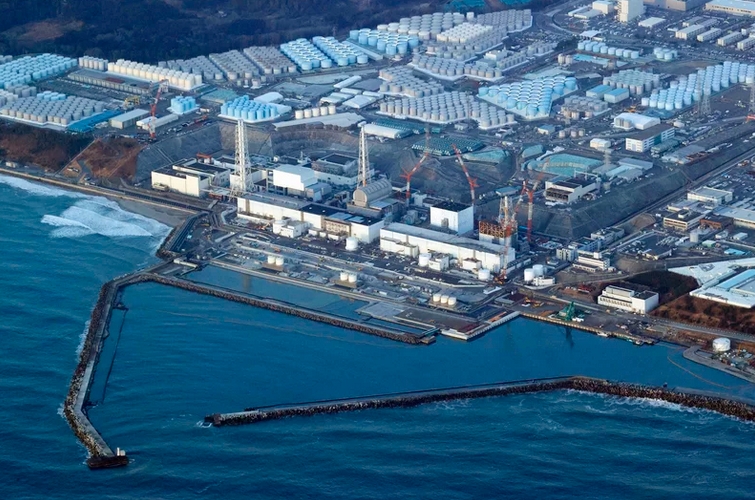
This aerial photo shows the Fukushima Daiichi nuclear power plant in Okuma town, Fukushima prefecture, north of Tokyo, on March 17, 2022.
By Mari Yamaguchi
January 14, 2023
Japan has revised the timing of a planned release to the sea of treated but still radioactive wastewater at the Fukushima nuclear power plant to “around spring or summer,” indicating a delay from the initial target of this spring, after factoring in the progress of a release tunnel and the need to gain public support.
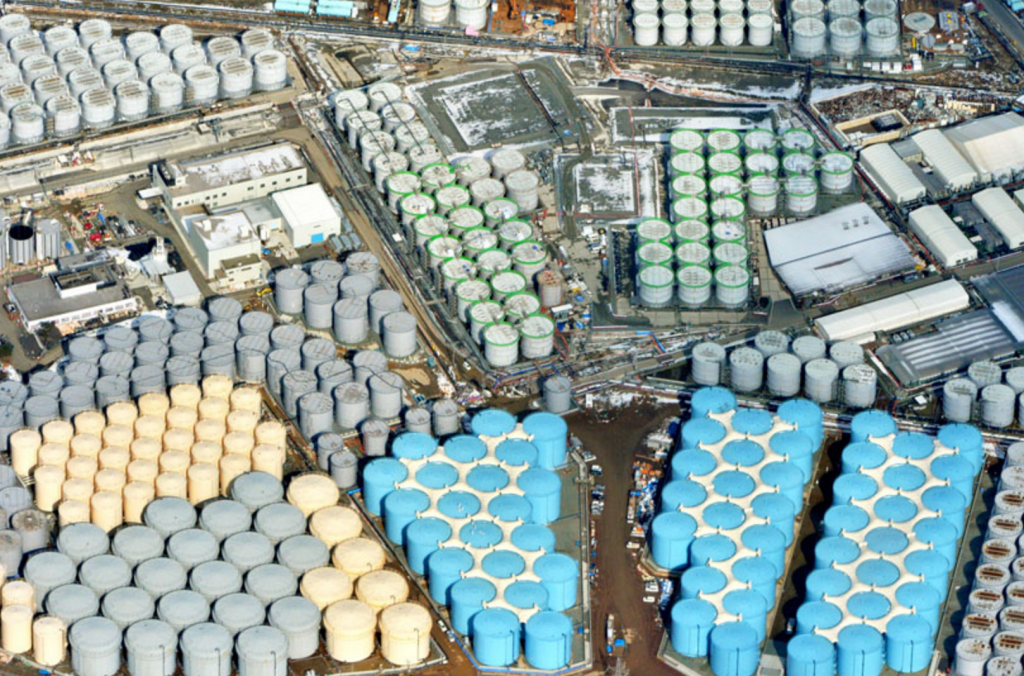
The government and the plant operator, Tokyo Electric Power Company Holdings, announced in April 2021 a plan to begin releasing the treated wastewater into the sea starting in spring 2023. They say more than 1 million tons of water stored in about 1,000 tanks at the plant are hampering its decommissioning and risk leaking in the event of a major earthquake or tsunami.
Under the current plan, TEPCO will transport the treated water through a pipeline from the tanks to a coastal facility, where it will be diluted with seawater and sent through an undersea tunnel, currently under construction, to an offshore outlet. The company has acknowledged the possibility of rough winter weather and sea conditions delaying the tunnel progress.
Chief Cabinet Secretary Matsuno Hirokazu told reporters Friday the government has adopted a revised action plan, which includes enhanced efforts to ensure safety and measures to financially support the local fishing industry and a new release target of “around spring or summer this year.”
TEPCO President Kobayakawa Tomoaki said that despite the government’s new timing for the wastewater release, his company still aims to have the facility ready by the spring. He also acknowledged a lack of local understanding about the release and pledged to continue efforts to ease safety concerns.
A massive earthquake and tsunami in 2011 destroyed the Fukushima plant’s cooling systems, causing three reactors to melt and release large amounts of radiation. Water used to cool the damaged reactor cores, which remain highly radioactive, has since leaked into the basements of the reactor buildings and has been collected, treated and stored in tanks.
The release plan has been fiercely opposed by fishermen, local residents, and Japan’s neighbors, including China and South Korea. Fukushima residents worry the reputation of their agricultural and fishing products will be further damaged.
Most of the radioactivity is removed from the water during treatment, but tritium cannot be removed and low levels of some other radionuclides also remain. The government and TEPCO say the environmental and health impacts will be negligible as the water will be slowly released after further treatment and dilution by large amounts of seawater.
Some scientists say the impact of long-term, low-dose exposure to tritium and other radionuclides on the environment and humans is still unknown and the release plan should be delayed. They say tritium affects humans more when it is consumed in fish.
Japan is cooperating with the International Atomic Energy Agency to increase the safety, transparency, and understanding of the water discharge plan. An IAEA team that visited Japan a number of times for talks and plant inspections last year will visit again in January to meet with nuclear regulators and will release a final report before the planned release begins.
https://thediplomat.com/2023/01/japan-eyes-delay-of-fukushima-plant-water-release/
Fukushima water to be released into ocean in next few months, says Japan
Authorities to begin release of a million tonnes of water from stricken nuclear plant after treatment to remove most radioactive material

A worker stands near tanks used to store treated radioactive water used to cool the Fukushima Daiichi nuclear power plant. The water is soon to be released into the ocean.
January 13, 2023
The controversial release of more than a million tonnes of water from the wrecked Fukushima Daiichi nuclear plant will begin in the northern spring or summer, Japan’s government has said – a move that has sparked anger among local fishing communities and countries in the region.
The decision comes more than two years after the government approved the release of the water, which will be treated to remove most radioactive materials but will still contain tritium, a naturally occurring radioactive form of hydrogen that is technically difficult to separate from water.
Japanese officials insist the “treated” water will not pose a threat to human health or the marine environment, but the plans face opposition from fishermen who say it risks destroying their livelihoods, almost 12 years after a magnitude-9.0 earthquake triggered a huge tsunami that killed more than 18,000 people along Japan’s north-east coast.
Tsunami waves crashed into Fukushima Daiichi, knocking out its backup electricity supply, triggering meltdowns in three of its reactors and sending large quantities of radiation into the atmosphere in the most serious nuclear accident since Chornobyl a quarter of a century earlier.
The wastewater in Fukushima is being stored in more than 1,000 tanks that officials say need to be removed so the plant can be decommissioned – a process expected to take 30 to 40 years.
Japan’s foreign ministry said in July that regulators had deemed it safe to release the water, which will be gradually discharged into the Pacific ocean via a tunnel after being treated and diluted.
The plan’s operator, Tokyo Electric Power (Tepco), has said its water treatment technology – known as Alps – can remove all radioactive materials from water except tritium, which it says is harmless in small amounts.
The International Atomic Energy Agency (IAEA) has also pointed out that nuclear plants around the world use a similar process to dispose of wastewater containing low-level concentrations of tritium and other radionuclides.
South Korea and China have voiced concern about the discharge, while the Pacific Islands Forum said recently it had “grave concerns” about the proposed release.
Writing in the Guardian, the forum’s secretary general, Henry Puna, said Japan “should hold off on any such release until we are certain about the implications of this proposal on the environment and on human health, especially recognising that the majority of our Pacific peoples are coastal peoples, and that the ocean continues to be an integral part of their subsistence living”.
The South Korean government, which has yet to lift its ban on Fukushima seafood, has said that releasing the water would pose a “grave threat” to marine life. Fishing unions in the area oppose the release, warning it would cause alarm among consumers and derail more than a decade of efforts to reassure the public that Fukushima seafood is safe to eat.
Under the plan approved by Japan’s cabinet on Friday, fishermen who fear that the release will impact their livelihoods will be able to access a new ¥50bn ($385m) fund, the Kyodo news agency said.
“We would like to thoroughly explain these measures to fishing communities and other relevant parties while listening to their concerns,” the chief cabinet secretary, Hirokazu Matsuno, said at the meeting, according to Kyodo.
The liquid, which Japanese officials claim is “treated” rather than “contaminated”, comprises water used to cool the damaged reactors, and rain and groundwater that seeps into the area.
Kyodo said the IAEA had conducted several safety reviews of the plan and would issue a report based on its findings, as well as providing support before, during and after the discharge.
Fishermen are angry and give up on the policy of discharging treated wastewater into the ocean

January 14, 2023
On January 13, people involved in the fishing industry in Fukushima Prefecture and the surrounding area voiced their anger and resignation over the government’s plan to begin discharging treated water from TEPCO’s Fukushima Daiichi Nuclear Power Plant into the ocean “around this spring or summer.
In the afternoon of the same day, the fishing port of Kakedo (Namie-cho, Fukushima Prefecture), located about 6 km north of the Fukushima Daiichi Nuclear Power Plant, was deserted after the landing had already finished, but several fishermen were working on their fishing nets and boats.
A young fisherman who had started fishing for baby sardines looked resigned: “The government will force me to release the treated water even if I scream,” he said. But I am still afraid of the reputational damage it will cause.
In Fukushima Prefecture, a test fishery that has been in operation since the nuclear accident ended in March 2021. The catch is about one-fifth of what it was before the accident, but it is gradually recovering. The owner of a fresh fish store in Minamisoma City, which mainly handles fish from the Hiketo fishing port, said angrily, “The fishing season is finally picking up, but if the fish are affected by the release, it will be the end of the season.
◆The government and TEPCO “have done nothing but lie…keep your promises.
The fishermen’s wish is to continue the fishing industry. Satoshi Nozaki, chairman of the Fukushima Prefectural Fisheries Federation, has appealed to the government and TEPCO, saying, “We want to continue fishing in Fukushima so that we can hand on to our successors” and “We cannot consent to the discharge into the ocean. The prefectural fisheries federation said it has not been contacted by the government and cannot make any formal comment, but a representative stressed, “We will remain resolutely opposed to this.
We want them to stop discharging into the ocean. I am just disappointed,” said Tsuneko Nemoto, 66, who runs a trawl fishing business based in the Nakaminato fishing port in Hitachinaka City, Ibaraki Prefecture. She is mindful of the government’s and TEPCO’s promise not to discharge the waste into the ocean without the understanding of those involved. “I don’t trust them because they have lied to us so many times, but they must keep their promise,” she said.
A representative of the Miyagi Prefectural Fisheries Federation also stated clearly that they were opposed to ocean discharge. He also said that he doubted whether the government’s dissemination of information about the treated water was reassuring to consumers. (Takeshi Yamakawa, Natsuko Katayama, Nozomi Masui, Nagasaki University of Technology)
Fukushima nuclear disaster: Japan to release radioactive water into sea this year

January 13, 2023
Japan says it will release more than a million tonnes of water into the sea from the destroyed Fukushima nuclear power plant this year.
After treatment the levels of most radioactive particles meet the national standard, the operator said.
The International Atomic Energy Agency (IAEA) says the proposal is safe, but neighbouring countries have voiced concern.
The 2011 Fukushima disaster was the worst nuclear accident since Chernobyl.
Decommissioning has already started but could take four decades.
“We expect the timing of the release would be sometime during this spring or summer,” said chief cabinet secretary Hirokazu Matsuno on Friday, adding that the government will wait for a “comprehensive report” from IAEA before the release.
Every day, the plant produces 100 cubic metres of contaminated water, which is a mixture of groundwater, seawater and water used to keep the reactors cool. It is then filtered and stored in tanks.
With more than 1.3 million cubic metres on site, space is running out.
The water is filtered for most radioactive isotopes, but the level of tritium is above the national standard, operator Tepco said. Experts say tritium is very difficult to remove from water and is only harmful to humans in large doses.
However, neighbouring countries and local fishermen oppose the proposal, which was approved by the Japanese government in 2021.
The Pacific Islands Forum has criticised Japan for the lack of transparency.
“Pacific peoples are coastal peoples, and the ocean continues to be an integral part of their subsistence living,” Forum Secretary General Henry Puna told news website Stuff.
“Japan is breaking the commitment that their leaders have arrived at when we held our high level summit in 2021.
“It was agreed that we would have access to all independent scientific and verifiable scientific evidence before this discharge takes place. Unfortunately, Japan has not been co-operating.”
North-eastern Japan was rocked by a magnitude 9.0 earthquake on 11 March 2011, which then triggered a giant tsunami.
The waves hit the Fukushima Daiichi Nuclear Power Plant, flooding three reactors and sparking a major disaster.
Authorities set up an exclusion zone which grew larger and larger as radiation leaked from the plant, forcing more than 150,000 people to evacuate from the area. The zone remains in place.
“Treated water” from Fukushima Daiichi Nuclear Power Plant to be discharged into the ocean around this spring or summer

January 13, 2023
The government has decided to discharge “treated water” from the TEPCO’s Fukushima Daiichi Nuclear Power Plant into the ocean in spring or summer of this year.
At a recently held cabinet meeting, the government decided to begin discharging “treated water” from the Fukushima Daiichi Nuclear Power Plant into the ocean “in the spring or summer of this year” after the completion of construction of discharge facilities and inspections by the Nuclear Regulation Authority.
In April of last year, the government decided on a basic policy of starting ocean discharge “in about two years,” and this decision is a more concrete formulation of that timing.
The government has also included a new 50 billion yen fund to be used to assist fishermen throughout Japan who are concerned about reputational damage caused by the discharge of treated wastewater, including the cost of developing new fishing grounds and fuel costs.
Mr. Kobayakawa, president of TEPCO Holdings, said, “For us, risk and safety are our top priorities, and we will carry out our role with the utmost care. (Regarding the understanding of local residents) I don’t think we are in a situation where the understanding of local residents has progressed well yet, so we would like to make every effort to address the various concerns and anxieties of people in various positions, explain them in detail, and foster the understanding of as many people as possible. We will do our best to explain the situation to as many people as possible and to foster their understanding.
Pacific Island Forum could sideline Japan over nuclear waste plan

The Tokyo Electric Power Company’s Fukushima Daiichi nuclear power plant is seen from Futaba Town, Fukushima prefecture on March 11, 2020.
12 January 2023
Japan is at risk of losing its status as a Pacific Islands Forum Dialogue Partner over Tokyo’s nuclear waste dumping plan.
Japan is due to start dumping one million tonnes of nuclear waste from the damaged Fukushima Daiichi nuclear power plant into the Pacific Ocean in only a few months.
According to Japan’s government, the wastewater is to be treated by an Advanced Liquid Processing System, which will remove nuclides from the water.
It says the water to be discharged into the ocean is not contaminated.
Last year, the Pacific Islands Forum demanded Japan share pivotal information about the plan.
Secretary General Henry Puna said this month that, in order to keep its status, Japan needs to ramp up communication and transparency over the issue.
The message to Japan is, “hey look, has there been a change in your attitude to the Pacific?” he told RNZ Pacific.
“It’s a bit daunting, talking to a big sovereign country like Japan, and also a good, long-standing friend of the Pacific,” Puna said.
The “preferred course of action” is to engage in a “friendly manner” with Japan.
“We’re long-standing friends, and Japan is a very important partner for us in the Pacific,” he said.
“This issue strikes at the very heart of our being as Pacific people. We will not let it go.
“In fact, we are very serious and we will take all options to get Japan to at least cooperate with us by releasing the information that our technical experts are asking of them.
“Because all we want is to be in a position where our experts can say, ‘okay, look, the release is harmless, you can go ahead’, or ‘there are some issues that we need further discussion and further scientific research with Japan’,” he said.
Anger at lack of cooperation
“They’re breaking the commitment that their Prime Minister and our leaders have arrived at when we had our high level summit in 2021,” Puna said.
“It was agreed during that summit that we would have access to all independent scientific and verifiable scientific evidence before this discharge can take place.
“So far, unfortunately, Japan has not been cooperating,” Puna said.
His last conversation with Tokyo was just before Christmas with their ambassador in Suva.
“Japan has come back since then, to indicate that they are amenable to a meeting with our panel of experts in Tokyo sometime early next month.
“But it’s important for us to avoid the frustrations that have been happening to date.
“I have made it clear to Japan that we will not agree to such a meeting unless Japan gives us an undertaking now or before the meeting that they will provide all information that our experts will request of them and provide them in a timely manner because time is of the essence,” Puna said.
What is a ‘Forum Dialogue Partner’?
There are 21 partners, with Japan joining in 1989.
The purpose of the Forum Dialogue Partner mechanism (formally known as the Post Forum Dialogue mechanism), established by Forum Leaders in 1989, is to invite selected countries outside of the Pacific Islands region with significant cooperation and engagement and political or economic interests, to participate in a dialogue with Forum Leaders, according to the Forum website
Other partners include the United States, China, the UK, France, and the European Union.
There are six criteria which must be met to maintain the status.
When questioned on whether or not the government of Japan meets all of them, Puna provided some insight into where Forum leaders are sitting.
Q. Would you say Japan’s actions so far throughout this nuclear issue, and the conversations that have been happening, show that they have dedicated support for the sustainable and resilient development of the Pacific region?
A. One could say that what they’re proposing to do is at total odds with that commitment, or undertaking.
Q. Is Japan’s position on the release date of treated nuclear waste a shared interest and common position that supports foreign priorities?
A. You’re asking some very difficult questions. That really is a decision that our leaders take, we can only advise leaders, but any ultimate decision is to be made at the leaders level.
Q. Is Japan on the brink of being pushed off the table?
A. Of course, you know, that is an option that’s open to the leaders to take. It has happened before, for example, France was continuing with their nuclear testing in Mururoa atoll, they were actually suspended as dialogue partners. But let me emphasise again, that that is a decision that only our leaders can take.
Q. What must Japan do to keep their seat, to give the leaders confidence?
A. This is a good test of Japan’s sincerity and commitment to the Pacific. We’re not stopping, we’re not asking for the discharge not to take place. All we’re asking is for it to be deferred until such time as all relevant information and data is provided to our panel of experts. So they can be in a position to advise our leaders that the discharge is safe or not safe. And if it’s not safe, then also to pull it out and identify areas where it’s not safe, so that we can work with Japan, you know, to resolve those issues.
Q. Is this issue going to be raised at the next Pacific Islands Forum meeting?
A. Well, depending on how it plays out over the next couple of months, it will definitely be raised.
Tokyo Electric Power Company has confirmed it will speak with RNZ Pacific on January 18.

Hiroshima survivor Toshiko Tanaka and her daughter Reiko Tashiro at the ‘Nuclear Connections Across Oceania’ conference.
US marine laboratories opposed to Japan’s plan.
The US National Association of Marine Laboratories, an organisation of more than 100 member laboratories, expressed its opposition in a new paper.
They say there is a lack of adequate and accurate scientific data supporting Japan’s assertion of safety, and an abundance of data demonstrating serious concerns about releasing radioactively contaminated water.
They called on the Government of Japan and International Atomic Energy Agency scientists to more fully and adequately consider the options recommended by the Pacific Islands Forum’s Expert Panel.
‘Please stop’ – Pacific pleads with Japan over nuclear waste release

Pacific Islands Forum Secretary-General Henry Puna says Japan is breaking its commitment to people of the Blue Continent and the world.
Jan 12 2023
Japan must work with the Pacific to find a solution to its nuclear waste plan or we face disaster, the Pacific Islands Forum has warned. In a few months, Japan will start dumping one million tonnes of treated wastewater from the damaged Fukushima Daiichi power plant into the Pacific Ocean. Forum Secretary-General Henry Puna said Tokyo has failed to communicate and be transparent over the release. He said they were concerned because the matter “strikes at the very heart of our Pacific people, and we will not let it go”
This treated water was used to clean up the Fukushima plant after the nuclear accident that followed the earthquake and tsunami on March 11, 2011.
Puna said that over the past 20 months, forum members have been in dialogue with the Japanese government over its April 2021 decision to release the contaminated nuclear wastewater into the Pacific from this year.
“PIF members took the strong position from the outset that Japan should hold off on any such release until we are certain about the implications on the environment and on human health,” Puna told Stuff.
“Pacific peoples are coastal peoples, and the ocean continues to be an integral part of their subsistence living.”
Puna said while Japan is a Forum Dialogue Partner, it risks losing this status over the discharge plan.
Other dialogue partners include the United States, China, United Kingdom, France and the European Union who have significant co-operation, engagement and political or economic interests to participate in a dialogue with Pacific Forum leaders, Puna said.
“Japan is breaking the commitment that their leaders have arrived at when we held our high level summit in 2021,” Puna said.
“It was agreed that we would have access to all independent scientific and verifiable scientific evidence before this discharge takes place. Unfortunately, Japan has not been co-operating.”
Japan said the wastewater was treated by an Advanced Liquid Processing System, which could remove nuclides from the water.
In a statement, a government official maintained the water to be discharged into the ocean was not contaminated.
“This is a good test of Japan’s sincerity and commitment to the Pacific,” Puna said. “Just stop and listen to us. Hear what we have to say.
“All we’re asking is for the release to be deferred until all relevant information and data is provided to our panel of experts, so they can be in a position to advise our leaders that the discharge is safe or not safe.
“If it’s not safe, pull it out and identify areas that are unsafe.”

Storage tanks for radioactive water at Tokyo Electric Power Co’s (Tepco) Fukushima Dai-ichi nuclear power plant
Puna said the decision for any ocean release should not be a domestic matter for Japan, but a global and transnational one.
“It should give rise to the need to examine the issue in the context of obligations under international law.”
The US National Association of Marine Laboratories said there was a lack of adequate and accurate scientific data supporting Japan’s assertion of safety.
In a statement, the organisation of more than 100-member laboratories said there was an abundance of data showing serious concerns about releasing radioactively contaminated water.
The group called on Japan and the International Atomic Energy Agency (IAEA) to consider the options recommended by the Pacific forum’s expert panel.
The IAEA’s third report on the Fukushima water treatment was published on December 29, urging Japan to adopt an open, transparent, science-based and safe approach in disposing the water, under strict supervision by the IAEA.
The IAEA Task Force visited Japan in February and March last year and released inconclusive reports on their findings.
In July last year, the Tokyo Electric Power Company was given the green light by the government to carry out the discharge expected to start in April.
The company has been approached for comment.
Pacific states entitled to claims against Japan for discharge of radioactive nuclear wastewater

2023-01-06
“We must remind Japan that if the radioactive nuclear wastewater is safe, just dump it in Tokyo, test it in Paris and store it in Washington, but keep our Pacific nuclear-free.” Vanuatu’s famous politician Motarilavoa Hilda Lini spoke for all people living in the Pacific region when making this statement.
The Japanese government announced in April 2021 that it will begin dumping the nuclear wastewater stored at Fukushima into the ocean from the spring of 2023. As that day is approaching, the international community is voicing waves of objection, and people living in the Pacific region have consistently expressed their strong protest. Analysts said if Japan did discharge the wastewater into the Pacific Ocean as planned, the Pacific countries would have the right to claim damages.
Japan decided to just dump the wastewater into the ocean in order to save trouble and money, at the price of transferring nuclear contamination to the whole world, which is extremely irresponsible and selfish. South Pacific countries have suffered enough from nuclear contamination. From 1946 to 1958, the US conducted 67 nuclear weapon tests on the Marshall Islands, the aftermaths of which are still haunting the local residents in the form of radioactive poisoning, contamination of marine species, and leak from radwaste landfill.
The Fukushima nuclear station had the highest-level nuclear accident that produced an enormous amount of nuclear wastewater – more than 1.3 million tons in storage right now. Even though Japanese politicians claimed that the wastewater is safe enough for drinking after being treated with the Advanced Liquid Processing System (ALPS), that’s simply not true.
A Japanese NGO recently released an article saying that treated nuclear wastewater still contains 64 kinds of radioactive substances, including tritium, which, once released into the ocean, will contaminate the marine environment and spread through the food chain, till eventually taking a toll on human health and the ecological environment. A report released by Greenpeace, an international environmental protection organization, showed that the technology currently adopted by Japan cannot get rid of the Sr90 and C14 in the wastewater, which are even more damaging than tritium with their half-life of 50 years and 5,730 years respectively.
It’s foreseeable that dumping Fukushima’s more than 1.3 million tons of nuclear wastewater into the ocean is a murderous move for people living along the ocean and will put the marine ecology at stake with irreversible outcomes. A renowned environmental protection organization of Pacific island countries said that such an irresponsible move of transboundary pollution is no different from waging a nuclear war against the people and the islands in the Pacific region.
As a contracting party to the United Nations Convention on the Law of the Sea, the Convention on Early Notification of a Nuclear Accident, and the Convention on Nuclear Safety, Japan has knowingly violated them all by making such a dangerous decision. Without exhausting all safe means of disposal, disclosing all information, or fully consulting with surrounding countries and international organizations, the Japanese government went ahead and unilaterally decided to dump its wastewater into the ocean in a flagrant attempt to pass on the disastrous consequences to other Pacific countries. Those countries have every right to defend their rights and interests through legal means.
In fact, there are already precedents for claims of this kind. For instance, the International Arbitration Tribunal ruled in 1938 and 1941 that Canada’s Trail Smelter should compensate America’s State of Washington for the damages caused by the SO2 it emitted. The “Trail Smelter case” is generally considered the basis for holding countries committing transboundary pollution accountable. Countries along the Pacific Ocean can totally refer to it and pursue claims against Japan after scientifically measuring the damages imposed upon them.
The ocean is the common wealth and symbiotic home for humanity. Dumping nuclear wastewater into it is not Japan’s internal affair. Right now the IAEA is still conducting a comprehensive evaluation of the wastewater at Fukushima, and Japan’s pushing for the dumping plan reveals its intention to make it a fait accompli regardless of the concerns of other parties. Japan’s egregious atrocities in history have already caused horrendous miseries to the surrounding countries. Does it plan to add another entry to its infamous track record now?
Editor’s note: Originally published on news.cri.cn, this article is translated from Chinese into English and edited by the China Military Online.
http://eng.chinamil.com.cn/view/2023-01/06/content_10210311.htm
Japan urged to take calls from intl community seriously over its dumping of nuclear-contaminated water

Chinese Foreign Ministry spokesperson Mao Ning
Jan 04, 2023
The dumping of nuclear-contaminated water is not Japan’s own business, and China is urging Japan to take seriously the just calls from the international community, consult on related issues with stakeholders including its neighbors and Pacific Island countries, deal with the contaminated water in a transparent, scientific and safe way, and accept supervision from the International Atomic Energy Agency (IAEA).
Mao Ning, a spokesperson from China’s Ministry of Foreign Affairs, made the remarks in response to a question about the IAEA’s review of Japan’s discharge plan at Wednesday’s routine press briefing.
An IAEA task force established to review the safety of Japan’s plans to discharge the water treated by the ALPS (Advanced Liquid Processing System) at the Fukushima Daiichi nuclear power station into the sea has recently released its third report.
The report sets out how the task force is conducting its independent checks of key data related to the monitoring of the safety of the treated water before, during and after its discharge.
But Mao stressed the report did not come to a conclusion on key questions such as authenticity, accuracy and whether data was collected in accordance with standards, which are issues of concern.
The report once again shows that the international community is completely reasonable in harboring concerns over data accuracy, effectiveness of treatment equipment, and the uncertainty of its environmental impact.
It is reckless and irresponsible for Japan to approve the plan to discharge the nuclear-contaminated water into the sea and forcibly advance preparations for the discharge when the IAEA technical task force is still working and has not drawn any conclusions, Mao said.
According to Japan’s plan, it will start to dump the nuclear-contaminated water from the spring of 2023 despite anger and strong opposition from South Pacific countries.
Adding to their skepticism is the bad record of Tokyo Electric Power Company (TEPCO) which operates the Fukushima plant. The company indicated that the vast majority of the wastewater had already been treated until 2018, when it acknowledged that only a fifth had been treated sufficiently.
Japan slammed for ‘reckless decision’ on release of nuclear-contaminated water
Jan 5, 2023
China on Wednesday slammed Japan for its “reckless and irresponsible” move to push forward a plan to release nuclear-contaminated water from the Fukushima Daiichi nuclear power plant into the sea, urging Tokyo to fully consult with stakeholders and relevant international institutions.
In response to the International Atomic Energy Agency’s third report on Fukushima water treatment published on Dec 29, Foreign Ministry spokeswoman Mao Ning said at a regular news conference that the ocean discharge plan for the contaminated water is “by no means” Japan’s domestic affair.
But as the work of the IAEA’s technical working group is still underway and no conclusion has been reached, Mao described Japan’s moves to push ahead with discharge preparations as “reckless and irresponsible”.
“China once again urges Japan to pay attention to the legitimate and justifiable concerns of the international community and fully consult with stakeholders, including its neighboring countries and Pacific Island countries, as well as relevant international institutions,” Mao said.
Japan should adopt an open, transparent, science-based and safe approach in disposing the water, and accept strict supervision by the IAEA, she added.
Mao said the report focuses on the disposal of nuclear-contaminated water and its environmental impact, and proposes methods and plans for the assessment and review of relevant data.
She noted that no conclusion has been reached yet on issues of great concern by all parties, such as the authenticity and accuracy of data and whether the data collection methods meet safety standards.
The IAEA report has once again demonstrated that the international community’s concerns over the accuracy of data on nuclear-contaminated water, the efficacy of the treatment system and the uncertainty of environmental impact are well-founded, Mao added.
In July, Japan’s Nuclear Regulation Authority officially approved Tokyo Electric Power Company’s discharge plan, which will be implemented from spring 2023.The endorsement provoked concerns from local fishermen and objections from Asian neighbors.
The IAEA Task Force’s review mission visited Japan in February and March last year and released relevant reports without any conclusive opinions.
http://eng.chinamil.com.cn/view/2023-01/05/content_10209946.htm
Fukushima: Japan takes all necessary precautions ahead of plans to discharge treated water
Twisted facts in this pro-nuc spinned propaganda.
- The contaminated water is treated in ALPS, the unit that removes virtually all radioactive substances: VIRTUALLY: untrue. Both filtering systems failed to remove all the 64 radionuclides in the contaminated water. They are removed only partially.
- But the storage tanks have reached their maximum capacity, meaning they have to be emptied into the sea: Yes but there is sufficient land space beside the nuclear plant to build more.
- However, one radioactive substance remains in small quantities: tritium: untrue. After filtering several radionuclides in small quantities still are present in that contaminated water.
- Tritium which is inseparable from the water: untrue. Tritium can be separated from water. The technology exists but it is expensive, so Tepco prefers to ignore that solution.
- As for the french scientist, it won’t be the first nor the last shill on the nuclear lobby payroll.

19/12/2022
11 years after the Fukushima disaster, Japan is facing a new challenge: the discharge of treated water into the sea. Since the tsunami of 11 March 2011, Japan has been continuing the decommissioning and the decontamination of the site, which should last 30 to 40 years.
But today the priority, explains one official of TEPCO, the operator of the plant, is water.
“The water that accumulates every day has been used to cool the molten fuel. And there is also water from underground springs or rainfall that accumulates”, explained TEPCO’s Kimoto Takahiro.
The contaminated water is treated in ALPS, the unit that removes virtually all radioactive substances. But the storage tanks have reached their maximum capacity, meaning they have to be emptied into the sea.
However, one radioactive substance remains in small quantities: tritium, which is inseparable from the water.
After a new treatment, the water will be released into the sea through a tunnel, which is one kilometer long and built at a depth of 16 meters. It will be completed in the spring.
Marine life
In the plant, fish are raised to analyse the impact on marine fauna. Opponents say tritium from a nuclear accident is more dangerous. But Jean-Cristophe Gariel, Deputy Director of the Institute of Radiological Protection and Nuclear Safety told Euronews that that isn’t true.
“Tritium is a radioactive element with a low hazard”, explained the French scientist. “The characteristics of tritium that will be released at Fukushima are similar to the characteristics of those released from nuclear power plants around the world.”
Nevertheless, the first concerned — the fishermen of Fukushima — are worried about the reputation of their products.
“What worries us the most is the negative reputation this creates”, said Nozaki Tetsu, Chairman of the Fukushima Prefectural Federation of Fisheries Cooperative Associations. “In terms of the explanations that we’ve had from the government over the last 10 years, their explanations have not been false – so we appreciate their efforts.”
Japan’s Ministry of Economy, Trade and Industry is pleased that Britain lifted import restrictions on products from the region last June — a sign of returning confidence.
Tanabe Yuki, Director for International Issues at the Ministry of Economy, Trade, and Industry’s Nuclear Accident Response Office told Euronews, “So far we have held about 700 meetings with stakeholders, including the fisheries industry, to listen to their opinions. We have developed concrete projects to combat the negative reputation.”
‘Remarkable progress’
Japan has taken all the necessary precautions on this sensitive issue of the discharge of treated water and has asked the International Atomic Energy Agency (IAEA) to supervise the operations.
In May 2022, Rafael Grossi, the director of the IAEA, visited Fukushima, and praised the “remarkable progress on decommissioning at Fukushima Daiichi since his last visit two years ago.”
The UN agency has set up a special task force. Last November, Gustavo Caruso, the head of this mission, returned to Fukushima Daiichi.
“Before the water discharge begins, the IAEA will issue a comprehensive report containing all collective findings until now, our conclusions about all this process. All the standards we apply are representing a high level of safety”, Caruso confirmed.
The first discharges are expected to begin next year, in what will be the new step in the reconstruction of a region that believes in its future.
Take Japan to court for nuclear water dumping
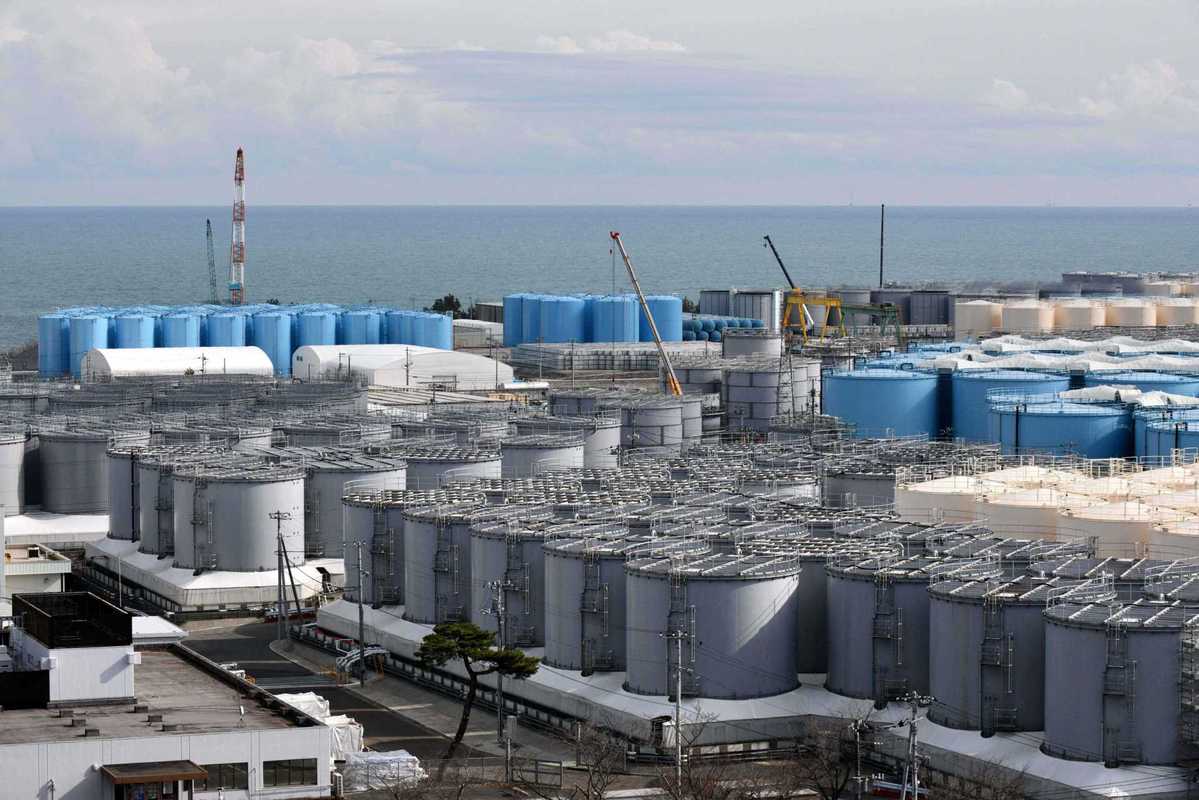
This file photo taken on February 3, 2020 shows storage tanks for contaminated water at the Tokyo Electric Power Company’s Fukushima Daiichi nuclear power plant in Okuma, Fukushima prefecture.
By Zhang Zhouxiang | China Daily | Updated: 2023-01-05
The Japanese government had announced in April 2020 that it plans to dump nuclear waste water from its wrecked Fukushima nuclear plant into the ocean from the spring of 2023.
As the date approaches, and given Japan’s record, it will not be surprising if Japan starts dumping the water any time soon without giving other countries advance notice.
While the action will save the Japanese government and the Tokyo Electric Power Company money and trouble, it will also shift the trouble and cost onto other nations, the Pacific ones in particular. There is a precedent here. Years after the United States carried out nuclear tests on the Bikini Atoll, also in the Pacific, from 1946 to 1958, radiation levels there were considered too high to allow resettlement in 1998.
Fishermen from China, the Republic of Korea and other Southeast Asian countries, including from Japan, depend on the waters in the region to make a living. No wonder, Japanese fishermen were protesting the move to dump nuclear waste into the waters.
The US, which Japan always looks up to, has supported Japan’s plan despite studies showing that the region most polluted by the discharge will be the US’ west coast in two years.
One can imagine the scale of disaster if over 1.3 million metric tons of nuclear waste is dumped into the ocean. As some environmentalists in the Pacific have said, that’s like waging a “nuclear war” on the Pacific people.
Senior Japanese officials, despite bowing politely at news conferences, have shown no sincerity in negotiating with their Pacific neighbors. When they announced the decision to dump the water into the ocean, they did not ask for understanding from any side except the US.
There is the UN Convention on the Law of the Sea and multiple nuclear safety conventions to which Japan is a signatory, but it has helped little. It is time for all sides involved to sue the Japanese government in international courts. Japan cannot do this evil deed and just walk away unpunished.
https://global.chinadaily.com.cn/a/202301/05/WS63b613aba31057c47eba7bd1.html
Ocean discharge of contaminated water from Fukushima nuclear power plant may be delayed from this spring to July
January 4, 2023
The Yomiuri Shimbun reported on the 4th that the start of ocean discharge of treated water from TEPCO’s Fukushima Daiichi Nuclear Power Plant is expected to be delayed from the original target of around April this year.
This delay in treated water is due to delays in installation of the discharge port attached to the tip of the undersea tunnel, etc., and TEPCO expects the completion of the discharge facility at the end of June this year, and the discharge of treated water will begin after July, after pre-use inspection. It is likely to become, the media added.
The Japanese government decided at a related ministerial meeting in April 2021 to set the time to start discharging treated water about two years later (from April 2021). Accordingly, TEPCO has set the goal of completing the discharge facility in August 2021 as April 2023.
The plan was to dig an undersea tunnel about 1km off the coast of the Fukushima nuclear power plant, and discharge treated water from the discharge port of the fleet into the sea. TEPCO started full-scale construction of the discharge facility on August 4 last year.
However, the installation of the outlet, which was scheduled for August, was delayed by about three months due to deteriorating weather conditions such as high waves, and was delayed to November 18th. Currently, it is said that the construction of filling the area around the discharge hole with concrete is in progress. TEPCO estimates that this construction alone will take about four months.
About 800m of the total length of the undersea tunnel was completed, and the remaining 200m will be excavated over 2 to 3 months after the completion of the concrete work. According to TEPCO, completion of the discharge facility is expected by the end of June this year.
According to Yomiuri, Japan’s Ministry of Economy, Trade and Industry is requesting that the construction be carried out so that emission can start as planned, but TEPCO says, “We want to shorten the construction period as much as possible with safety as the top priority.”
‘Treatment water’ is water from which most of the radioactive materials have been removed by purifying the contaminated water after cooling the melted and hardened nuclear fuel in the meltdown accident in 2011. Currently, about 1.32 million tons are stored in more than 1,000 tanks on the site of the nuclear power plant.
During the 3/11 Great East Japan Earthquake in 2011, contaminated water was generated as rain and groundwater flowed into the reactor building, where the core nuclear fuel (debris) of the decommissioned reactor melted in the Fukushima Daiichi Nuclear Power Plant accident remained.
Japan calls this contaminated water ‘treated water’ by filtering it through ALPS, but it is said that it is impossible to remove radioactive substances such as tritium (tritium) even after purification.
Source: Donga https://newsrebeat.com/world-news/132431.html
Japan must work with the Pacific to find a solution to the Fukushima water release issue – otherwise we face disaster Henry Puna
Based on our experience with nuclear contamination, continuing with ocean discharge plans is simply inconceivable
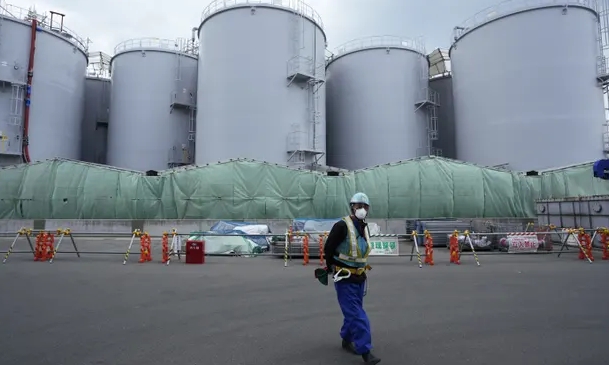
A worker helps direct a truck driver as he stands near tanks used to store treated radioactive water after it was used to cool down melted fuel at the Fukushima Daiichi nuclear power plant
Wed 4 Jan 2023
Over the past 20 months, Pacific Islands Forum (PIF) members have been in dialogue with the government of Japan on its proposed plans to release over a million tonnes of contaminated nuclear wastewater into the Pacific Ocean as announced in April 2021.
I was heartened by the very strong position taken by PIF Members from the outset, that Japan should hold off on any such release until we are certain about the implications of this proposal on the environment and on human health, especially recognising that the majority of our Pacific peoples are coastal peoples, and that the ocean continues to be an integral part of their subsistence living.
We have taken significant steps to work with Japan to understand their position and the rationale underpinning its unilateral decision. As a region, we committed to working with them at the technical level and engaged an independent panel of five scientific experts in key fields such as nuclear power and radiation, high energy physics, marine chemistry, biochemistry, marine biology, and oceanography to provide an independent scientific assessment of the impacts of such a release.
But the discussions this past year have not been encouraging. We have uncovered serious information gaps and grave concerns with the proposed ocean release. Simply put, more data is needed before any ocean release should be permitted. Despite this, Japan is continuing with plans for discharge in the spring of 2023, relying on the next four decades of discharge to figure it out.
Based on our experience with nuclear contamination, continuing with ocean discharge plans at this time is simply inconceivable and we do not have the luxury of time to sit around for four decades in order to “figure it out”.
It is imperative that we work together to ensure a common understanding of the full implications of this activity now, as I fear that, if left unchecked, the region will once again be headed towards a major nuclear contamination disaster at the hands of others. For the sake of present and future generations, now is the time to act to fully understand the impacts of such discharge on the environment and on human health before any decision is made. We owe it to our children and grandchildren to work towards ensuring that their futures are secured and safe. This is our moral and legal obligation.
Together, we must uphold the commitments that we have made through our Treaty of Rarotonga. We are legally bound to keep the region free of environmental pollution by radioactive and nuclear waste and other radioactive matter, and to uphold legal obligations to prevent ocean dumping and any action to assist or encourage dumping by other states.
I am reminded that this conversation is not a new one. Four decades ago, Forum leaders also urged Japan and other shipping states “to store or dump their nuclear waste in their home countries rather than storing or dumping them in the Pacific”. A mere four years after that political statement, in 1985, the Forum welcomed the Japan Prime Minister’s statement that “Japan had no intention of dumping radioactive waste in the Pacific Ocean in disregard of the concern expressed by the communities of the region”.
The decision for any ocean release is not and should not only be a domestic matter for Japan, but a global and transnational issue that should give rise to the need to examine the issue in the context of obligations under international law. Choosing and adopting the appropriate path in terms of international governance is key, and we must pursue every possible avenue including mechanisms available under international law.
We must take the time to closely examine whether current international safety standards are adequate to handle the unprecedented case of the Fukushima Daiichi.
Indeed, the unprecedented nature of this case is of major concern. How we handle this, as a global community, will set a precedent for future actions and responses. , This is particularly important given the climate crisis and growing intensity and scale of natural disasters, which pose significant challenges to the safety of nuclear power plants and infrastructure throughout the world.
Alternative options include safe storage and radioactive decay, bioremediation, and use of treated water to make concrete for special applications.
Before us is a golden opportunity to be proactive and to get it right without waiting for four decades of dumping to unfold. It would be unconscionable for us as a region to once again allow ourselves to be lulled into a false sense of security.
I am not asking that we discontinue the plans to discharge. I am asking that we take the time and work together to ensure scientific rigour in order to receive the assurance of safety needed for people’s health and for sound stewardship of the ocean. I am asking today, what our Pacific people did not have the opportunity to ask decades ago when our region and our ocean was identified as a nuclear test field. I am asking that we take the time to fully consider the implications of these actions on our region before choosing the course of action that is best for all.
Do not disregard us. Work with us. Our collective future and that of our future generations depends on it.
Henry Puna is the Pacific Islands Forum Secretary General
1 This Month

of the week – Shut Down Drone Warfare!


Tell the Ukrainian Government to Drop Prosecution of Peace Activist Yurii Sheliazhenko

Petition to revoke the licensing of the Near Surface Nuclear Disposal Facility (NSDF) at Chalk River. https://www.ourcommons.ca/petitions/en/Petition/Details?Petition=e-7247
To see nuclear-related stories in greater depth and intensity – go to https://nuclearinformation.wordpress.com
-
Archives
- April 2026 (19)
- March 2026 (251)
- February 2026 (268)
- January 2026 (308)
- December 2025 (358)
- November 2025 (359)
- October 2025 (376)
- September 2025 (257)
- August 2025 (319)
- July 2025 (230)
- June 2025 (348)
- May 2025 (261)
-
Categories
- 1
- 1 NUCLEAR ISSUES
- business and costs
- climate change
- culture and arts
- ENERGY
- environment
- health
- history
- indigenous issues
- Legal
- marketing of nuclear
- media
- opposition to nuclear
- PERSONAL STORIES
- politics
- politics international
- Religion and ethics
- safety
- secrets,lies and civil liberties
- spinbuster
- technology
- Uranium
- wastes
- weapons and war
- Women
- 2 WORLD
- ACTION
- AFRICA
- Atrocities
- AUSTRALIA
- Christina's notes
- Christina's themes
- culture and arts
- Events
- Fuk 2022
- Fuk 2023
- Fukushima 2017
- Fukushima 2018
- fukushima 2019
- Fukushima 2020
- Fukushima 2021
- general
- global warming
- Humour (God we need it)
- Nuclear
- RARE EARTHS
- Reference
- resources – print
- Resources -audiovicual
- Weekly Newsletter
- World
- World Nuclear
- YouTube
-
RSS
Entries RSS
Comments RSS
 nuclear-news