Fukushima Daiichi’s radioactive water discharge pipe construction
December 22, 2021
TEPCO’s long-term plan to dump contaminated water into the Pacific has progressed closer to reality. Regulators have given initial approvals and with those, TEPCO has moved quickly to start this project.
Today TEPCO filed for official approval of the water discharge pipe construction.
In mid-December boring tests to examine the geologic status of the sea bed began. These were preceded by magnetic ground surveys. This work is needed to design and construct the discharge pipe TEPCO plans to use to dump contaminated water into the sea. TEPCO plans to have this discharge pipe completed by 2023.
TEPCO has insisted this water is safe and “clean” but admits it still contains some radioactive contamination. The plan has received plenty of criticism including local fishing and environmental groups, international environmental groups, and nearby countries who have all lodged formal complaints with the Japanese government.


Some concerns about this siting exist. The port has been concreted over twice and had some other work done to attempt to reduce or isolate radioactive contamination that leaked into the port in the early years of the disaster. Digging through this to install the discharge pipe could resuspend these contaminants and fuel microparticles, releasing new environmental contamination to the sea.
Original TEPCO document in Japanese
Fukushima fishermen worry about Japan’s plan of releasing nuclear wastewater

December 25, 2021
People in Japan are strongly opposing and greatly concerned as the government moves forward with a plan to dump approximately 1.3 million tons of nuclear wastewater into the sea from the crippled Fukushima plant starting from the spring of 2023.
The fishery in Fukushima was heavily hit after the nuclear plant was destroyed. Dumping contaminated water into the sea will undoubtedly result in another strike on the local fishing industry.
China opposes Japanese decision to release nuclear-contaminated water into ocean

December 22, 2021
BEIJING, Dec. 22 (Xinhua) — China is seriously concerned about and firmly opposes Japan’s unilateral decision to discharge the nuclear-contaminated water into the sea and its proceeding with the preparatory work, a Chinese Foreign Ministry spokesperson said Wednesday.
Zhao Lijian made the remarks when asked to comment on a media report that Tokyo Electric Power Company has submitted an application to Japan’s Nuclear Regulation Authority with a detailed plan of discharging nuclear-contaminated water from the Fukushima Daiichi nuclear power plant into the sea.
Since April this year, the international community has raised concerns to the Japanese side over the legitimacy of the discharge into the sea, the rationality of the discharge plan, the credibility of the data about the nuclear contaminated water and the reliability of the equipment to purify the nuclear-contaminated water, Zhao said.
The work of the IAEA technical working group on the handling of the nuclear-contaminated water from Fukushima is still undergoing, he added.
“In total disregard of the legitimate and reasonable concerns of the international community, the Japanese side only continues to proceed with the preparations for the discharge both policy-wise and technology-wise,” Zhao said.
“Obviously, it wants to impose its wrong decision on the entire international community, and it is all the littoral countries of the Pacific Ocean that will have to take the risk for such move. The Japanese side is extremely irresponsible in doing so.”
He said that over the past eight months, Japan has constantly tried to defend the decision to discharge the nuclear-contaminated water into the sea, claiming the discharge is safe.
“However, many countries and international environment groups have questioned that if the water is truly harmless, why doesn’t the Japanese side discharge it into lakes or use it for civil purposes instead of releasing it into the ocean? To say the least, why doesn’t it try to build more storage tanks for the water at home? How can the international community trust Japan’s own words regarding whether the water to be discharged is safe or not? The Japanese side should give responsible answers to all these fundamental questions,” Zhao said.
He stressed that the handling of the nuclear-contaminated water from Fukushima is never Japan’s private matter. Instead, it bears on the marine environment and public health of the whole world.
Japan should heed and respond to the appeals of neighboring countries and the international community, and rescind the wrong decision of dumping the water into the sea.
“It mustn’t wantonly start the ocean discharge before reaching consensus with stakeholders and relevant international institutions through full consultations,” Zhao said.
http://www.xinhuanet.com/english/asiapacific/20211015/C9A4AEDD72B00001F26810B030601260/c.html
Fukushima operators to use tunnels and pumps to release contaminated water into the sea

22 December 2021
The operator of Japan’s destroyed Fukushima nuclear power plant, Tokyo Electric Power (Tepco), has submitted plans to the country’s nuclear regulators to release contaminated water from the site into the sea.
According to Reuters, Tepco proposes to discharge the water via pumps and and underwater tunnels to a location about 1km offshore.
Tepco will process the water first to remove radioactive contamination, except for tritium, which cannot be removed.
Nearly 1.3 million tonnes of contaminated water have accumulated at the site – enough to fill 500 Olympic swimming pools.
The water has built up over the past ten years, after the site was ravaged by an earthquake and tsunami – causing the world’s worst nuclear disaster since Chernobyl.
Currently, the water is stored in huge tanks at an annual cost of around $880m, and space is running out.
Although international authorities support the water discharge effort, the plans do have raised concern from neighbours China and South Korea and worried both local farmers and the fishing industry.
The operator will continue to discuss the issue with residents and others before construction, set to start in the middle of next year.
Fukushima nuclear power plant plans seabed tunnel to discharge treated radioactive water into ocean
22 déc. 2021
The operator of Japan’s crippled Fukushima Daiichi nuclear power plant has unveiled plans to build an underwater tunnel to release treated radioactive water into the sea. The Tokyo Electric Power (Tepco) submitted detailed plans on December 21, 2021, to the nuclear regulation authority for approval. In 2011, a devastating earthquake and tsunami sparked a nuclear disaster on Japan’s northeastern coast. Nearly 1.3 million tonnes of contaminated water has to be processed to eliminate radioactive contamination, except for tritium, which cannot be removed. Japan’s plans to dump the treated water in the ocean have raised concerns among neighbouring China and South Korea, as well as farmers and fisherfolk.
Japan’s Tepco to build underwater tunnel for Fukushima water release

December 21, 2021
The operator of Japan’s crippled Fukushima nuclear power plant intends to build an underwater tunnel to release water from the plant into the sea, it said on Tuesday (Dec 21), as part of a project to treat and dispose of contaminated water.
A decade after a massive earthquake and tsunami ravaged the north-eastern coast, disabling the plant and causing the world’s worst nuclear disaster since Chernobyl, nearly 1.3 million tonnes of contaminated water have accumulated at the site.
The water, enough to fill about 500 Olympic-sized swimming pools, is stored in huge tanks at an annual cost of about 100 billion yen (S$1.2 billion), and space is running out.
This year, Tokyo Electric Power Company (Tepco) outlined plans to discharge more than one million tonnes of the water, after treatment and dilution, from a point about 1km offshore from the power station.
Tepco submitted detailed plans on Tuesday to the nuclear regulation authority for approval, company official Junichi Matsumoto told reporters.
Pumps would move the treated water from the tanks to the seashore and through a seabed tunnel to release it at a depth of 12m, and about 1km out at sea, the firm said.
Although the international authorities support the water discharge effort, it has provoked concern from neighbours China and South Korea and worried local farmers and fisherfolk.
Wrecked Fukushima Nuclear Plant One Step Closer to Releasing Radioactive Water Into Pacific

December 21, 2021
The operator of the damaged Fukushima nuclear plant is one step closer to releasing treated radioactive water into the Pacific ocean after applying for approval Tuesday to create a tunnel to the Pacific ocean to dispose of the water safely.
The nuclear power plant was severely damaged in 2011 after a massive earthquake triggered a tsunami that caused contamination of their cooling water, which then began leaking. The 1,000 tanks storing the contaminated water will reach capacity next year, the plant’s operator, Tokyo Electric Power Company Holdings (TEPCO), said.
TEPCO plans to create the sea tunnel so they can release a massive amount of treated radioactive water into the ocean. The Nuclear Regulation Authority needs to approve the plan, including the tunnel’s design, equipment needed to dilute the water and other materials.
The contaminated water will be treated with seawater to reduce the levels of radioactive material to reach a safe level that won’t harm the environment. The water will be released about half a mile from the plant and about 40 feet below the ocean’s surface, according to TEPCO’s plan.
TEPCO wants to start construction in June so they can begin to release the radioactive water by April 2023.
The contaminated water is to be diluted to reduce the concentration of radioactive materials below allowable limits.
About 1,000 storage tanks filled with the radioactive water need to be removed to make room for facilities necessary for the plant’s decommissioning, TEPCO says.
Increasing amounts of radioactive water have been stored at the plant. The plant says the storage tanks currently hold about 1.29 million tons of water and will reach their capacity of 1.37 million tons by early 2023.
An official in charge of the water discharge project, Junichi Matsumoto, said TEPCO will construct the undersea tunnel by drilling through bedrock in the seabed.
The government in April approved the decision to start discharging the water into the Pacific Ocean under safety standards set by regulators, calling it the most realistic option. The idea has been fiercely opposed by fishermen, residents and neighboring countries including China and South Korea.
S. Korea holds emergency meeting over Japan’s Fukushima water release plans
21 déc. 2021
Earlier this year… Japan announced plans to discharge treated radioactive water from Fukushima nuclear power plant. Neighboring countries expressed concerns. As Tokyo submit a request for an approval… Seoul reiterated its opposition to the idea.
Kim Do-yeon has the details. South Korea has expressed deep concern to Japan after its electrical company Tepco on Tuesday requested regulatory approval to release treated radioactive water from Fukushima nuclear power plant into the sea.
South Korea held an emergency Vice Ministerial meeting… and the country’s nuclear safety chiefl affirmed their stance on the matter.
“To share the main points of the letter, we’ve requested that during the process of collecting opinions, in addition to Japan, other countries’ opinions should be taken into account as well as…. while cooperating with the international community. In addition, we requested that relevant information should be transparent, and Japan be cooperative and prompt to South Korea’s request to confirm the release is safe.”
This was the second time South Korea used its nuclear safety commission as a means to send a message to Japan.
The first time was earlier this year when Japan said it had decided to push for the discharge of more than 1 million tons of the water into the ocean.
Tepco’s appeal for regulatory approval this time around… was around 500 pages long… detailing how the water will be released as well as the extent of the dilution process. The firm said… pumps would move the treated water from the tanks to the seashore and through a seabed tunnel before releasing it at a depth of 12 meters, and about 1 kilometer out at sea.
South Korean authorities plan on examining the appeal thoroughly and will request additional information. They will also strengthen its watch over the level of radioactivity in the sea. Currently… it has 32 spots in coastal waters to check for levels of tritium and cesium, and it is planning to add 2 more spots with more frequent checks being carried out.
Kim Do-yeon, Arirang News.
Release of treated water from Fukushima Daiichi: TEPCO applies for implementation plan to the Regulatory Commission

December 21, 2021
The Tokyo Electric Power Company (TEPCO) has announced its plan for the release of treated water containing tritium and other radioactive substances that continues to accumulate at the Fukushima Daiichi Nuclear Power Plant into the sea.
Tokyo Electric Power Company (TEPCO) held a press conference on April 21 and announced that it has applied to the Nuclear Regulation Authority for an implementation plan in line with the government’s policy that the treated water that continues to accumulate at the Fukushima Daiichi Nuclear Power Plant will be discharged into the sea in the spring of the next year after being diluted to a concentration below the standard.
The plan describes the procedure for diluting the treated water with seawater and the design of an undersea tunnel to be constructed to release the diluted water from 1 km offshore.
After receiving approval from the regulatory board and gaining the understanding of the local community and other related parties, the company plans to start construction of the equipment to dilute the treated water with seawater and the undersea tunnel around June next year, aiming to complete the work around the middle of April next year in accordance with the national policy.
Junichi Matsumoto, the executive officer of TEPCO who is in charge of the plan, said, “Based on the government’s policy, we would like to explain the plan to the local community and many related parties in parallel with the regulatory committee’s examination, and study specific designs and operations to ensure safety.
With regard to the release of treated water being promoted by the government and TEPCO, there are deep-rooted concerns about harmful rumors, especially among local residents, and the issues that remain to be addressed are how to gain the understanding of those concerned and how to take effective measures to deal with the rumors.
What is “treated water”?
At the TEPCO’s Fukushima Daiichi Nuclear Power Plant, so-called “contaminated water” is being generated at a rate of 140 tons per day, including water used to cool the nuclear fuel in Units 1-3 that melted down in the accident 10 years ago, as well as groundwater that flows into the buildings.
The contaminated water is treated in a special purification system to remove most of the radioactive materials, but the water containing tritium, a radioactive material that is difficult to remove, or “treated water,” remains and is stored on the plant grounds.
According to the current plan, 1.37 million tons of water can be stored in a large tank on the site, but more than 90% of the tank is already filled with treated water, and it is expected to be full after next fall.
Therefore, the government has decided to dilute the treated water to less than 1/40th of the standard by adding seawater and discharge it into the sea around the spring of 2023, as it is unlikely to affect human health if the concentration is reduced below the standard.
What is the outlook for the future?
The implementation plan applied for by TEPCO will be reviewed by the Nuclear Regulation Authority.
The Nuclear Regulatory Commission will examine the plan, which includes the following: (1) measures against natural disasters, such as equipment to dilute the treated water with seawater and an undersea tunnel, and (2) a function to stop the release of water in case of abnormalities.
Toyoshi Sarada, chairman of the regulatory board, said, “There are no major technical difficulties in diluting and checking the concentration of the treated water, and it will not take a long time.
On the other hand, there are deep-rooted concerns about the release of treated water, especially in the local community, and Mr. Sarada pointed out that “the understanding of the local community and other related parties is extremely important, and even if the plan is approved, the period until the start of construction is unpredictable.
On April 20, TEPCO submitted a “Request for Prior Approval,” which is required for the construction of new facilities and expansion of facilities, to Fukushima Prefecture and the municipalities of Futaba and Okuma.
In addition, the construction work is expected to take about a year, so the government’s goal of releasing treated water in the spring of 2023 is still uncertain.
After TEPCO reported to fishermen in Iwaki that it had applied to the Nuclear Regulation Authority for a plan to release treated water, Tetsu Nozaki, chairman of the Fukushima Prefectural Federation of Fishermen’s Associations, said, “It’s unfortunate and frustrating that we have been opposed to the release of treated water into the ocean, but we are moving forward without hesitation. We want them to think of other ways. We have no choice but to send out the message that fishermen are against it.
https://www3.nhk.or.jp/lnews/fukushima/20211221/6050016725.html?fbclid=IwAR3VlVNSI0PxYOuA9Kxpr1i7Eg836xnjIAzsC57-aWsok-fK0ep5RkYzSLU
TEPCO starts offshore drilling to release Fukushima water

14-Dec-2021
Tokyo Electric Power Company (TEPCO) began offshore drilling operations on Monday for the undersea tunnel that will implement its plan to release radioactive water from the Fukushima nuclear plant into the Pacific Ocean, local media has reported.
TEPCO is scheduled to initiate the release in the spring of 2023.
The Japanese operator of the Fukushima Daiichi nuclear plant has decided to release treated wastewater from the ruined facility in an area roughly 1 kilometer offshore from the site, reported Nikkei.
Tokyo Electric Power Co. Holdings plans to discharge the wastewater through a pipeline, which will be contained in a tunnel to be drilled within the seafloor, said the report.
Greenpeace: TEPCO assessment of Fukushima water dumping lacks analysis of impact on S. Korea
The international environmental organization called TEPCO’s radiological impact assessment “highly selective” in its use of IAEA guidelines

Dec.18,2021
The international environmental group Greenpeace sent an opinion to the Tokyo Electric Power Company (TEPCO) on Thursday stating that the company’s radiological impact assessment of contaminated water from the Fukushima Nuclear Power Plant made convenient use of International Atomic Energy Agency (IAEA) guidelines without considering the potential damages to residents of neighboring countries such as South Korea.
The opinion from Greenpeace was based on its review of the draft version of a contaminated water radiological impact assessment report released by TEPCO last month.
In that draft report, TEPCO claimed that the release of contaminated water into the ocean would have a “very limited” impact on the marine environment. The company has announced that it plans to issue a final report Saturday after gathering outside opinions on the draft.
Commenting on the report, Greenpeace East Asia senior nuclear specialist Shaun Burnie called it a piecemeal radiological assessment that was intended to legitimize the discharge of radioactive water into the ocean.
He also said that TEPCO failed to give an adequate scientific basis for its conclusion that the discharge would not cause damage to the waters or marine ecosystem beyond a range of 10 square kilometers.
In its release of the report, TEPCO said it had been drafted in compliance with IAEA guidelines.
But Greenpeace said that an examination showed that TEPCO not only set a “far too narrow” scope of radiological impact assessment targets, but also that it is “highly selective” in its use of IAEA guidelines.
“Ultimately, the potential damages to residents in South Korea and other neighboring countries were not considered in the scope of the current radiological impact assessment,” it explained.
The IAEA General Safety Guide No. GSG-9 document states that radiological impact assessments should take into account the effects of natural radioactivity, nuclear weapons testing, and nuclear power plant accidents, with measurements of radioactivity concentrations in various environmental areas such as water, soil, plants, and grains around the nuclear power plant site.
Greenpeace explained that TEPCO did not perform the kind of comprehensive environmental impact assessment stipulated in the guidelines, nor did it explain about the long-term radiation damage to the maritime ecosystem as the contaminated water is released over a period of at least 30 years.
“It is deliberately vague,” Greenpeace wrote of Japan’s draft. “It does not conclude there will not be adverse effects on species, on the marine environment, on biodiversity or on fish or fisheries or tourism.”
The organization also criticized the report’s omission of the radioactivity contamination pathways identified to date, including study results published by Japan’s Central Research Institute of Electric Power Industry (CRIEPI) last March.
This indicates that TEPCO did not follow the IAEA’s recommendation to reflect the discovery of new contamination pathways for radioactive substances in its assessment, the organization said. Cesium-bearing particles were detected in all seven samples taken by CRIEPI from sediment along the Fukushima coast.
Greenpeace further said that the report did not offer an explanation on why the ocean discharge of contaminated water was unavoidable, nor did it deal at all with the effect that decommissioning the Fukushima Daiichi site would have on the contaminated water.
“The TEPCO radiological impact assessment presumes only that the secondary purification of contaminated water will undoubtedly be successful, which is far from the reality,” said Chang Ma-ri, an anti-nuclear power campaigner with Greenpeace.
“For years now, the ALPS multi-nuclide removal equipment has been failing to fully process highly toxic radioactive substances. Korea and the rest of the international community need to demand that TEPCO examine whether the release of the contaminated water into the ocean is actually unavoidable in scientific and technical terms,” she said.
Japan urged to revoke decision to dump nuclear wastewater after study finds Fukushima radioactive material reaches Arctic Ocean

Dec 15, 2021
Research shows that radioactive substances that flowed into the ocean due to the Fukushima nuclear accident in 2011 have reached the Arctic Ocean and a Chinese expert warned against the danger of the spread of the radioactive substances in the ocean and called on Chinese authorities to collect data on radioactive substances as evidence to defend its maritime interests while the Chinese Foreign Ministry urged Japan to revoke its decision to release contaminated water from the Fukushima nuclear plant.
According to the latest study of Yuichiro Kumamoto, a senior researcher from the Japan Agency for Marine-Earth Science and Technology, radioactive Cesium-134 has reached the Arctic Ocean eight years after it leaked into the ocean due to the Fukushima nuclear accident in 2011, Kyodo News reported on Tuesday. Cesium-137 also arrived in the Arctic Ocean, according to the researcher.
A small amount of the radiocesium was detected and Yuichiro speculated that it had spread to the center of the Arctic Ocean.
The tritium in the contaminated water that Tokyo Electric Power Company plans to discharge will likely follow the same path, Kyodo News said.
Zhang Yancang, director of the Yellow Sea and Bohai Sea Research Institute of Dalian Maritime University told the Global Times that the possibility exists that the radioactive material was brought through the ballast water in ships, which would be horrible.
Zhang explained that the ballast water in ships needs to be replaced regularly. If the ship takes in new ballast water in a port near Japan, it might carry water with radioactive material and release it somewhere around the world, which is unpredictable.
Zhang who didn’t expect the radioactive material to reach the Arctic Ocean so quickly said that it remains to be seen if the ocean current could speed up the spread of the radioactive material.
China should start collecting data of the amount of radioactive substances before and after Japan dumps the radioactive water in 2033 as evidence to help defend its maritime interests, he said.
“This is not the first report that confirmed that radioactive substance from the Fukushima nuclear accident had been detected in the Arctic Ocean. The research results of researchers at Tsukuba University released in November also found that Cesium-137, a radioactive substance that flowed into the sea in the Fukushima nuclear accident, was detected in the Arctic Ocean,” Zhao Lijian, spokesperson of the Chinese Foreign Ministry, said at Wednesday’s media briefing.
These findings of Japanese scholars clearly illustrate the fact that the radioactive substances leaked from the accident at the Fukushima nuclear power plant have spread to the Pacific Ocean and the Arctic Ocean and may affect waters around the globe, he said.
“If the more than 1.2 million tonnes of nuclear contaminated water is discharged into the Pacific Ocean as planned by Japan, it will have an impact on the marine environment in the whole region and even the world. Is this the kind of consequence that can be born by Japan alone?” Zhao said, urging Japan to take a responsible attitude toward the marine environment and humanity’s health, revoke its wrong decision of ocean release and stop the preparatory work for the discharge.
Japan’s Fukushima water set to be dumped as critics attack ‘flawed’ Tepco report
. Fukushima Dai-ichi nuclear plant’s operator says its move to dispose some 1.23 million tons of treated radioactive water will have ‘minimal’ impact on public health
. But Greenpeace says Tepco’s scientific analysis is lacking in multiple areas, including an assessment of how the water will affect the wider Asia-Pacific region

16 Dec, 2021
The operator of the crippled Fukushima Dai-ichi nuclear power plant has this week commenced test drilling for pipes to release more than 1.23 million tons of treated radioactive water into the Pacific Ocean, the work coinciding with a study by an environmental group accusing Tokyo Electric Power Co (Tepco) of using “flawed” scientific analysis to justify the release.
Tepco on Tuesday started a boring survey at the nuclear plant, which was destroyed in the March 2011 earthquake and the massive tsunami it triggered, causing the meltdown of three of the six reactors at the site and the second-worst nuclear disaster in history.
With the backing of the government, Tepco intends to lay a pipeline to a location about 700 metres offshore and start to release treated water into the ocean from the spring of 2023.

The company claims that virtually all trace of the 64 radionuclides will be eliminated before the release of the water, which is used to keep the damaged reactors cool, but critics point out that no independent organisations had been permitted to test radiation levels in the water in the more than 10 years since the disaster.
Tepco on November 17 released a study that concluded the effects of the release of the water “on the public and the environment is minimal as calculated doses were significantly less than the dose limits, dose targets and the values specified by international organisations”.
On Thursday, Greenpeace released a study that took issue with the findings in Tepco’s report, saying its own radiological impact assessment “found many flaws in the approach and with their conclusions”.
The firm “does not apply the basic principles of radiation protection, which requires even low-level increases in radiation risks to be justified and demonstrate net benefits to society”, Greenpeace’s report said, while Tepco had also failed to take into account the existing radiation exposure of the local population as a result of the original disaster in its conclusions.
Tepco also ignored cumulative effects of exposure to elevated levels of radiation, as well as the long-term effects on marine ecology, species and food chains, the Greenpeace study found.
The Tepco report also failed to take into account future hazards at the plant due to “its fundamentally flawed decommissioning plan”, while the assessment of the impact of the radiation was “extremely limited” and failed to include the impact on the wider east coast of Japan or further afield in the Pacific.
The plan to discharge the water violates the United Nations Convention on the Law of the Sea, Greenpeace said, adding that Tepco continued to ignore alternative solutions to the problem of contaminated water at the site, including long-term storage.
“The Tepco document is flawed in its scientific analysis and disregard for basic international norms of radiation protection,” said Shaun Burnie, senior nuclear specialist with Greenpeace East Asia.
“It is wholly inadequate, legally takes no account of wider impacts, including to the Asia-Pacific region, and in no way provides justification to deliberately discharge radioactivity into the Pacific Ocean over at least 30 years,” he said. “Opposition, including by small Pacific island nations, continues. Tepco’s discharge plans can be stopped.”
In a statement, a Tepco official declined to comment directly on the Greenpeace report, but said the company would continue to seek the approval of the Nuclear Regulation Authority for the planned release of the water.
Tepco says an additional 210 tons of water builds up at the site every day and argues it is running out of space close to the reactors, and that another natural disaster could rupture the hundreds of tanks containing the contaminated water, causing a new environmental crisis.
The plant operator is pushing ahead with the plan in spite of criticism from home and abroad.
Fishermen and farmers in eastern Japan have expressed their anger, claiming it will further damage the reputation of their industries and ruin their livelihoods, while people living in coastal areas are similarly concerned at the possible impact on their health.
The work is taking place at the same time the Japanese government is calling on countries around the world to lift restrictions on imports of foodstuffs from northeast Japan as there is no evidence they pose any danger to the health of consumers.
A number of governments in the region, including Hong Kong, South Korea and China, have also expressed deep reservations about the proposal to dump the contaminated water into the Pacific. South Korea has already indicated it is planning to take legal action against the move and the case may be joined by other nations.
Japan’s Upcoming Nuclear Waste Dump
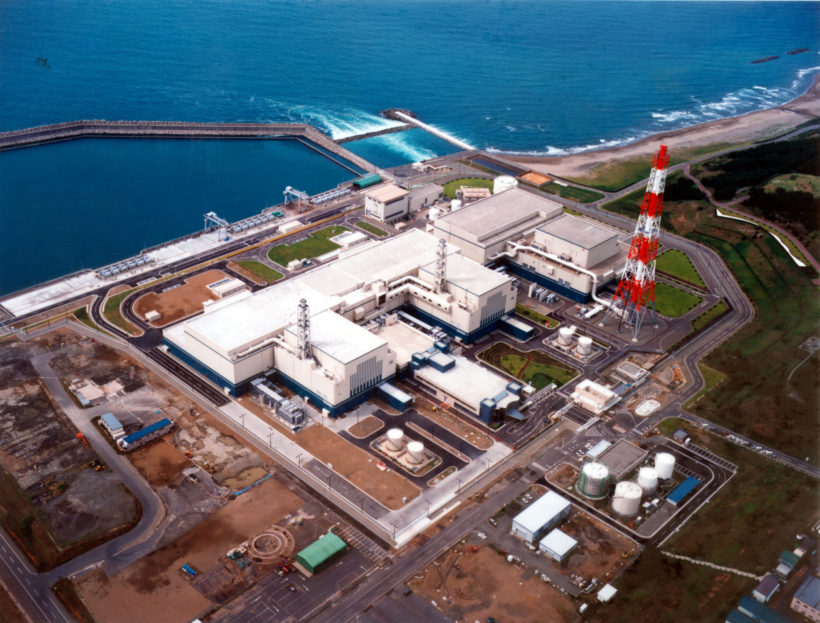
07.12.21 – Los Angeles, USA – Robert Hunziker
Nuclear waste is an interminable curse that eternally haunts the future of civilization for hundreds/thousands of years.
“The challenge of making nuclear power safer doesn’t end after the power has been generated. Nuclear fuel remains dangerously radioactive for thousands of years after it is no longer useful in a commercial reactor.” (Source: Nuclear Waste, Union of Concerned Scientists, April 22, 2016)
There are 440 nuclear power plants in the world, all of which use nuclear fission, prompting one simple question: Is the process of generating heat via nuclear fission with a byproduct of extremely toxic radioactive waste lasting hundreds, or more, years for purposes of simply “boiling water” the epitome of human stupidity?
In April 2021, the Japanese government announced its decision to discharge nuclear waste from Fukushima Daiichi Power Plant into the Pacific Ocean via a sub-seabed pipeline. At least 1.2 million tons of tritium-laced toxic water will be discharged.
As it happens, nuclear powers of the world regularly dump nuclear waste into the ocean in violation of the London Convention (1972) and the London Protocol (1996), which are the two principal international agreements against dumping nuclear waste into the oceans. But, they get around the rules by dumping under the cover of “detailed environmental impact assessments.”
The last known “deliberate nuclear waste dumping into the ocean,” outside of the “good graces” of what the industry refers to as “detailed environmental impact assessments” that somehow (questionably, mysteriously, are you kidding me!) seem to justify dumping toxic nuclear waste was October 1993 when the Russian navy illegally dumped 900 tons of nuclear waste into international waters off the coast of Vladivostok near Japan and Korea. Moscow claimed they were running out of storage space and that “radioactive waste is not hazardous and the dumping would be according to international norms.” Sound familiar?
In 1993 Japan called the Russian dumping “extremely regrettable.” Yet, at the time, Tokyo Electric Power Company was itself discharging radioactivity into the ocean. At the time, Japanese power stations were allowed to dump nuclear waste into the ocean-based upon “detailed environmental impact assessments.” (OMG is this real?) (Source: Nuclear Dumping at Sea Goads Japan Into Action, NewScientist, November 6, 1993)
“Jinzaburo Takagi, a physicist working with the Citizens’ Nuclear Information Centre in Tokyo, says: ‘If the Russians had done an impact assessment for their dumping, it would have proved safer than the Japanese power plants.’ He says local authorities in Japan have measured elevated levels of radionuclides in shellfish and seaweed near the nuclear plants. If the Japanese criticize Russian dumping, says Takagi, ‘then they will have to abandon the option of dumping nuclear waste,” Ibid.
The abovementioned series of conflicting events surrounding the disposal of nuclear waste brings to mind the complexity and hypocrisy that runs throughout the nuclear industry. It stems from the hideous fact that the industry does not know what to do with radioactive waste, which is the most toxic material on the face of the planet; they do make up weird excuses and protocols to actually dump the toxic material into international waters. Not only that but, as mentioned in the quoted article above, “local authorities in Japan have measured elevated levels of radionuclides in shellfish and seaweed near the nuclear plants.” That’s a prime example of human insanity at work. And, that was 30 years ago, but it’s a safe bet that it’s the same today.
The bitter truth is that the citizens of the world are stuck with nuclear power and its offbeat craziness and its horrific potential destructiveness because the major powers have it and want to keep it.
Greenpeace has experts with “boots-on-the-ground” at Fukushima since the beginning. Here’s Greenpeace’s take on the situation, as of recent: “There are many technical and radiological reasons to be opposed to discharging Fukushima wastewater into the Pacific Ocean. And Greenpeace East Asia has reported on these and continues to investigate. But the decision also affects you on a fundamental level. It should rightly trigger an outrage. In the 21st century, when the world’s oceans are already under the most severe threats including climate and biodiversity emergencies, a decision by any government to deliberately contaminate the Pacific with radioactivity because it’s the least cost/cheapest option when there are clear alternatives seems so perverse. That it is Japan, given its historical role in securing the prohibition on nuclear dumping in the London Convention and London Protocol, makes it all the more tragic.” (Shaun Burnie, The Japanese Government and the Fukushima Nuclear Disaster – History Repeating Itself? Greenpeace, November 17, 2021)
Further to the point of the future impact of dumping toxic radioactive water from TEPCO’s storage water tanks into the Pacific Ocean: Tsinghua University analyzed the diffusion process of the treated Fukushima contaminated water to be discharged into the ocean from 2023 onward. The results show that the tritium, which is the main pollutant, will spread to the whole of the North Pacific in 1200 days. (Source: Tracking Contaminated Water From The Fukushima Nuclear Accident, Phys.org, December 2, 2021)
The Tsinghua University analysis went on to discuss the risks, stating: “Large amounts of radionuclides can affect marine biological chains and adversely influence marine fisheries and human health. The global effects of Fukushima discharge, which will last 30 to 40 years, remain unknown.”
As stated by Tsinghua, the pollutants will reach as far as the coast of North America to the east and as far as Australia to the south. Eventually, the South Pacific Ocean and the Indian Ocean (2400 days) will be affected. On day 3600 the pollutants will cover almost the entire Pacific Ocean.
According to a UN news release d/d April 2021: “Three independent UN human rights experts expressed deep regret on Thursday over Japan’s decision to discharge potentially still radioactive Fukushima nuclear plant water into the ocean, warning that it could impact millions across the Pacific region.”
The experts call the decision by Japan “very concerning,”
Moreover, according to the UN: “While Japan said that the tritium levels are very low and do not pose a threat to human health, scientists warn that in the water, the isotope organically binds to other molecules, moving up the food chain affecting plants and fish and humans.”
“Moreover, they say the radioactive hazards of tritium have been underestimated and could pose risks to humans and the environment for over 100 years.”
Japan’s Upcoming Nuclear Waste Dump
Upcoming Inspection of Fukushima Unit 1

November 25, 2021
TEPCO announced that the next phase of containment inspections inside unit 1 will finally take place in early 2022. This next phase of inspections had been delayed due to technical challenges, concerns of radioactive dust releases, then due to the pandemic.
Some of the explanatory materials provide new insight into the true situation inside unit 1. It has been speculated since 2011 that melted fuel (aka corium) flowed out of the pedestal of unit 1, across the containment floor, and burned through the thin connection edge of the containment structure. Diagrams included in this most recent report show that the entities tasked with decommissioning the damaged reactors think so too. Diagrams originally from NDF, the decommissioning authority, and IRID, the main agency tasked with research, show the same.
The graphic below shows a significant pile of melted fuel in the pedestal and along the outer edge of the containment structure. The right side graphic shows melted fuel a significant way up to the lower edge of the downcomer tubes that route into the torus tube. Evidence of fuel debris inside the torus tube was found in earlier inspections along with our early findings that appeared to show fuel debris under the water in the torus room outside of containment.

This side view of the same area shows what IRID and TEPCO assume to be the situation inside unit 1’s containment as they prepare for the upcoming inspections.The red color is solidified previously melted fuel, The brown layer is the sediment layer and the blue layer is standing water inside containment. The sediment layer on the right side where inspections have already taken place is significantly lower than the sediment bed directly adjacent to the assumed location of the fuel debris. The depth difference appears to be 3 times as much adjacent to the melted fuel locations.

The debris bed on the shallow right side was roughly 4-10 inches deep based on TEPCO estimates in 2017. If the left side adjacent to the solidified fuel is 3 times the depth, it would be 12-30 inches in depth. What exactly this debris bed is and how it developed had caused head-scratching for years. A TEPCO report in 2017 showed it contained stainless steel, materials related to shielding, cabling, and some low levels of reactor-based radioactive isotopes. If this material contained additional substances or not was a bit ambiguous. There had been some initial assumptions this was pulverized concrete. There may have been some involvement of the concrete structures into this debris pile through mechanical destruction or molten corium concrete interaction, but TEPCO provides insufficient data to confirm or rule this out.
Another 2017 report gave some rough estimates of the depth of the known parts of the debris bed. The known parts from an earlier set of inspections would be the general area marked by the A in the above graphic. This area is roughly 4 – 10 inches in depth. The left side adjacent to the solidified fuel would then be about 12 – 30 inches in depth. The deposits closer to the pedestal opening were close to 1 meter deep on a 2017 inspection. TEPCO could not determine if there was any solidified fuel beneath. They assumed the debris bed was providing extensive shielding that would prevent the detection of any layer of solidified fuel. This debris bed appears to reside 1/3 of the way up the downcomer cover. It is likely some amount of it has entered the torus tube and potentially the torus room.
Upcoming Inspections:
The upcoming inspections include a total of 6 ROV units. The remote operational vehicles are not true robots as each one has a control tether. The biggest concern with these units is having one become stranded, preventing the introduction of future ROV units to continue inspections. Each ROV unit has an assigned task. Due to internal equipment inside containment, a series of rings will be placed by the first ROV to help guide the ROV units and prevent entanglement.
ROV-A

ROV-A will attempt to traverse the south direction to the pedestal doorway.

ROV-A2 will attempt to enter the pedestal to capture imagery of the conditions and potential fuel location.

ROV units B to E each have similar tasks tied to characterizing the fuel debris and sediments.
Each ROV has about an 80-hour high radiation tolerance. They will be introduced by the level of risk with ROV-A2 going into the pedestal last due to the high risk. Preparation work begins in January. The entire series of inspections are currently scheduled to take 10 months to complete.
1 This Month

of the week – Shut Down Drone Warfare!


Tell the Ukrainian Government to Drop Prosecution of Peace Activist Yurii Sheliazhenko

Petition to revoke the licensing of the Near Surface Nuclear Disposal Facility (NSDF) at Chalk River. https://www.ourcommons.ca/petitions/en/Petition/Details?Petition=e-7247
To see nuclear-related stories in greater depth and intensity – go to https://nuclearinformation.wordpress.com
-
Archives
- April 2026 (34)
- March 2026 (251)
- February 2026 (268)
- January 2026 (308)
- December 2025 (358)
- November 2025 (359)
- October 2025 (376)
- September 2025 (257)
- August 2025 (319)
- July 2025 (230)
- June 2025 (348)
- May 2025 (261)
-
Categories
- 1
- 1 NUCLEAR ISSUES
- business and costs
- climate change
- culture and arts
- ENERGY
- environment
- health
- history
- indigenous issues
- Legal
- marketing of nuclear
- media
- opposition to nuclear
- PERSONAL STORIES
- politics
- politics international
- Religion and ethics
- safety
- secrets,lies and civil liberties
- spinbuster
- technology
- Uranium
- wastes
- weapons and war
- Women
- 2 WORLD
- ACTION
- AFRICA
- Atrocities
- AUSTRALIA
- Christina's notes
- Christina's themes
- culture and arts
- Events
- Fuk 2022
- Fuk 2023
- Fukushima 2017
- Fukushima 2018
- fukushima 2019
- Fukushima 2020
- Fukushima 2021
- general
- global warming
- Humour (God we need it)
- Nuclear
- RARE EARTHS
- Reference
- resources – print
- Resources -audiovicual
- Weekly Newsletter
- World
- World Nuclear
- YouTube
-
RSS
Entries RSS
Comments RSS
 nuclear-news