Containers toppled over, tanks shifted sideways Increasing radioactive waste poses risk due to earthquake at TEPCO’s Fukushima Daiichi Nuclear Power Plant
March 18, 2022
The water level in the spent nuclear fuel pool in Unit 2 of TEPCO’s Fukushima Daiichi Nuclear Power Plant (Okuma and Futaba, Fukushima Prefecture) dropped on March 17 after an earthquake measuring 6 on the Japanese seismic scale struck off the coast of Fukushima Prefecture, causing TEPCO to temporarily halt cooling of the pool. The number of waste materials continues to increase, and there is a risk that these materials could interfere with the work in the event of an earthquake.

According to TEPCO, 615 pieces of nuclear fuel are stored in the Unit 2 pool.
In the Unit 5 pool, where 1,542 pieces of nuclear fuel are stored, cooling automatically stopped and was restored in four and a half hours. Fire alarms were activated at three locations on the second floor of the turbine building of the same unit, but no abnormalities were found.
In Unit 4, a steel frame (approximately 5.6 meters long and weighing approximately 200 kg), believed to be part of a beam, fell from a large cover placed over the top of the building to remove spent nuclear fuel. No one was injured, but a bolt securing the steel frame was broken.
Of the approximately 1,000 tanks that store treated water, 85 were found to have shifted sideways, and some of them contained water in the process of purification, which has a relatively high level of radioactivity. The tanks are not secured to the ground to prevent damage, and while the displacement is to be expected, there is a risk of leakage if the piping connecting the tanks is damaged. Many of the tanks shifted during the earthquake in February of last year, and leaks were found at several locations this time.
Containers containing radioactive waste stacked in the open on the site also toppled over one after another. At least six of them toppled over, exposing used protective clothing and scrap iron. There are approximately 85,000 containers, many of which were stacked without a plan. The workers were also exposed to radiation during inspections of these containers and the recovery of their contents.
In Unit 1, a remote-controlled robot has entered the containment vessel to inspect the condition of debris, including melted-down nuclear fuel. The concentration of radioactive materials in the reactor buildings temporarily increased after the earthquake. Although the level did not reach the level that would have set off an alarm, the investigation was suspended.
Work was also halted on removing highly contaminated pipes between Units 1 and 2. The site was the highest radiation level outdoors and inaccessible to humans. The crane that hoists the remote-controlled cutting device weighs 800 tons and reaches a height of more than 100 meters. There are a total of three such cranes in the vicinity. Although the effects of the earthquake have not been confirmed, heavy machinery and temporary structures are crammed into the harsh environment under high radiation doses, and if they were to collapse, they would cause extensive damage.
The earthquake also caused the cooling of the pool at the decommissioned Onagawa Unit 1 of Tohoku Electric Power Company’s Onagawa Nuclear Power Plant (Miyagi Prefecture) to stop, but it was restored around midnight on March 17. No abnormalities were found at Tohoku Electric’s Higashidori Nuclear Power Plant (Aomori Prefecture) and the Tokai No. 2 Nuclear Power Plant of the Japan Atomic Power Company (Ibaraki Prefecture), both of which are not in operation. (Kenta Onozawa)
Tsunami advisory lifted for northeastern Japan

March 16, 2022,
Japan’s meteorological agency has lifted a tsunami advisory it issued for the northeastern parts of the country following an earthquake off the Pacific coast.
The magnitude 7.4 earthquake struck at around 11:30 p.m. on Wednesday.
It had a maximum intensity of 6-plus on Japan’s seismic scale of zero to 7. The depth of the focus was estimated at 57 kilometers. Tremors were felt across much of eastern Japan.
Waves up to 30 centimeters were reported at Ishinomaki Port in Miyagi Prefecture.
Hundreds of people living along the coast in Fukushima and Miyagi evacuated to shelters.
Two deaths were reported, and more than 120 people were injured across the affected area.
There were also reports of structural damage and fires. The quake triggered blackouts for more than 2 million households and disrupted train services.
East Japan Railway says a Tohoku Shinkansen bullet train derailed between Fukushima and Shiroishizao stations.
None of the 75 passengers and three crewmembers aboard were injured. The company says 16 of the 17 cars are off the track.
Tokyo Electric Power Company says there have been no major problems or abnormalities at the Fukushima Daiichi nuclear power plant, which was crippled by the 2011 disaster.
The utility says water pumps in spent fuel storage pools at two reactor buildings at the Fukushima Daini plant temporarily stopped working. No change was reported in radiation levels.
Fate of Fukushima reactor cleanup uncertain after 11 years

March 13, 2022
OKUMA, Japan—Eleven years after the Fukushima Daiichi nuclear power plant was ravaged by a meltdown following a massive earthquake and tsunami, the plant now looks like a sprawling construction site. Most of the radioactive debris blasted by the hydrogen explosions has been cleared and the torn buildings have been fixed.
During a recent visit by journalists from The Associated Press to see firsthand the cleanup of one of the world’s worst nuclear meltdowns, helmeted men wore regular work clothes and surgical masks, instead of previously required hazmat coveralls and full-face masks, as they dug near a recently reinforced oceanside seawall.
Workers were preparing for the planned construction of an Olympic pool-sized shaft for use in a highly controversial plan set to begin in the spring of 2023 to gradually get rid of treated radioactive water—now exceeding 1.3 million tons stored in 1,000 tanks—so officials can make room for other facilities needed for the plant‘s decommissioning.
Despite the progress, massive amounts of radioactive melted fuel remain inside of the reactors. There‘s worry about the fuel because so much about its condition is still unknown, even to officials in charge of the cleanup.
Nearly 900 tons of melted nuclear fuel remain inside the three damaged reactors, and its removal is an unprecedented challenge involving 10 times the amount of damaged fuel removed in the Three Mile Island cleanup following its 1979 partial core melt.
The government has set a decommissioning roadmap aiming for completion in 29 years.
The challenge of removing melted fuel from the reactors is so daunting that some experts now say that setting a completion target is impossible, especially as officials still don‘t have any idea about where to store the waste.
Nuclear Regulation Authority Chairman Toyoshi Fuketa said recently that extra time would be needed to determine where and how the highly radioactive waste removed from the reactors should be stored.
Japan has no final storage plans even for the highly radioactive waste that comes out of normal reactors.
Twenty-four of the country‘s 60 reactors are designated for decommissioning, mostly because of the high cost needed to meet safety standards set up in the wake of the Fukushima disaster.
On March 11, 2011, a magnitude 9.0 earthquake caused a tsunami 17 meters (56 feet) high that slammed into the coastal plant, destroying its power supply and cooling systems, causing reactors No. 1, 2 and 3 to melt and spewing massive amounts of radiation.
Three other reactors were offline and survived, though a fourth building suffered hydrogen explosions.
The spreading radiation caused some 160,000 residents to evacuate. Parts of the surrounding neighborhood are still uninhabitable.
The melted cores in Units 1, 2 and 3 largely fell to the bottom of their primary containment vessels, together with control rods and other equipment, some possibly penetrating or mixing with the concrete foundation, making the cleanup extremely difficult.
Probes of the melted fuel must rely on remote-controlled robots carrying equipment such as cameras and dosimeters—which measure radiation—because radiation levels in those areas are still fatally high for humans.
In February, a remote-operated submersible robot entered the Unit 1 primary containment vessel, its first internal probe since a failed 2017 attempt. It captured limited images of what are believed to be mounds of melted fuel rising from the concrete floor.
Probes have moved ahead at Unit 2, where Tokyo Electric Power Co. (Tepco) plans to send in an extendable robotic arm later this year to collect melted fuel samples.
Tepco Chief Decommissioning Officer Akira Ono said in a recent online interview that robotic probes at Unit 1 and 2 this year are a major “step forward” in the decades-long cleanup.
Fukushima Workers Tell The Harrowing Story Of How They Tamed One Of The World’s Worst Nuclear Disasters
When the Fukushima Daiichi Nuclear Power Plant overheated in March 2011, these heroic workers stepped in. To this day, most people are unaware of their achievements.
03/12/2022
This story, by Fukushima Central Television, Co., Ltd., was published in partnership with HuffPost Japan and is translated from the original Japanese footage.
In 2011, three nuclear reactors melted down, provoking a series of hydrogen explosions and resulting in the world’s most severe nuclear accident. It happened in Japan, which had been long celebrated as a technology powerhouse.
At the time of the accident, the site became a veritable death trap, with extremely high levels of radioactivity and chunks of concrete from the explosion raining down on workers. And yet, there were some who remained on the ground to try and bring the overheating nuclear power plant to a halt.
“I just couldn’t run away when my country was about to sink,” one of the workers said. If this story can be told at all, it is precisely thanks to those who faced one of the world’s worst nuclear disasters out of a sense of pride in their country’s technology, attachment to the community and loyalty to their jobs.
The magnitude 9 Great East Japan Earthquake struck at 2:46 p.m. local time on March 11, 2011. Soon after, a large tsunami hit the ground level of the Fukushima Daiichi Nuclear Power Plant, which consisted of six nuclear reactors.
Satoru Umematsu, a veteran electrical engineer who had taken part in building the ground floor, was there when it happened. Umematsu was 60 at the time, and fast approaching retirement age.
When the nuclear power plant’s power transmission tower was knocked down by the force of the earthquake, causing the loss of external power supply, emergency generators kicked in, ensuring that cooling pumps could continue to function.
When the tsunami struck, however, the emergency generators of reactors 1 through 4, located about 33 feet (10 meters) above sea level, were flooded and stopped working.
When Umematsu rushed to the plant’s earthquake-proof building, about 115 feet (35 meters) above sea level, where the emergency response room was set up, it was packed with people. Inside, ashen-faced power plant executives were bustling around in a frenzy.
A Strategy Forms
As Umematsu and the others realized that the reactors could no longer be cooled down, they moved to secure a vehicle-mounted generator and power cables in order to generate electricity and restore the power supply.
“It was unimaginable that a nuclear power plant would lose all power. So, when it did actually happen, we were overcome by a tremendous sense of urgency,” he said.
For Umematsu, who had experienced all kinds of situations at different job sites in the course of his career, this crisis was an absolute first.
After graduating from junior high school and acquiring engineering skills at a vocational training center, Umematsu had accumulated over 40 years of experience in electrical construction sites, including power generation dams and nuclear power plants. He was familiar with most electrical systems in nuclear power plants. He was proud of the technological capabilities Japan had acquired after World War II and would proudly tell his relatives of his work at the nuclear power plant. He was relied upon by subordinates and colleagues, who respectfully referred to him as “Ume-san.”
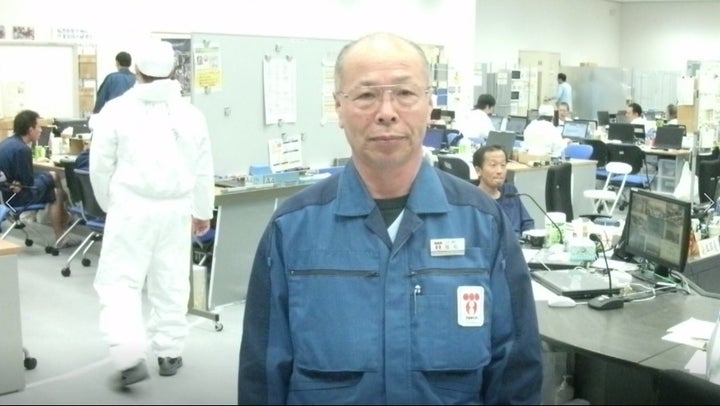
In order to complete their task in the shortest possible time, Umematsu and his crew devised a simple strategy. To restore the power supply, they would park the vehicle-mounted generator next to the reactor building and link it to the nuclear power plant by connecting the power cables.
Opening A Path For The Truck-Mounted Generator
However, even the task of moving the truck-mounted generator closer to the reactor building was a daunting one. All kinds of debris and rubble brought by the tsunami littered the area around the reactor building, obstructing the passage of vehicles.
It wasn’t the power plant staff, the Self-Defense Forces, the fire department, nor the police who tackled this problem — it was a local resident.
Yoshishige Tochimoto was the managing director of a local company with about 10 employees. He was 51 at the time. When the earthquake struck, he witnessed the destruction of the nuclear power plant’s critical equipment.

“When the power transmission tower on the slope was brought down by the earthquake, it generated huge sparks. They were pink in color. Between 10 to 20 meters in length,” he said.

Tochimoto was on the premises as a subcontractor, doing seismic retrofitting work on the nuclear power plant. As he felt the ground shaking, he said he was unable to stand on his feet.
His own car was washed away by the tsunami that followed the earthquake. Luckily, his company’s excavator had suffered virtually no damage and only the caterpillar tracks had been submerged.
Wary of being exposed to radiation, Tochimoto had not actively sought out nuclear-related work in the past. But now he accidentally found himself on the scene of a nuclear disaster.
“This could be really bad, I thought,” he said.
‘I Won’t Be Gone For Long’
Workers from Tochimoto’s business and other local companies assembled in the parking lot in front of the earthquake-proof building.
They took a roll call to ensure everyone was safe. Then, the prime contractor company instructed them to “disband,” as it was feared that some of the workers would have lost some family members, or their homes would have been damaged. Tochimoto remembered what the other workers were talking about at the time.
“There was talk of opening a vent hole to prevent a hydrogen explosion,” he said.
A hydrogen explosion. He was unfamiliar with that word. The matter, however, seemed completely unrelated to him.

Worried about his wife and children, he decided to go back to his home, approximately 8 miles (13 kilometers) away. Since his car at the nuclear power plant had been washed away by the tsunami, he asked an acquaintance for a ride home.
What would normally be a 30-minute ride ended up taking them two hours, as the road was heavily congested with people evacuating. After getting home and making sure that everyone in his family was safe, he got a call from the prime contractor company.
“Will you help us fix the nuclear power plant?”

The roads inside the nuclear power plant were impassable by vehicles as they were covered in rubble and fissures in the asphalt had caused uneven gaps. Tochimoto thought that, if it was only a matter of fixing the road, it would not take long and he would be back home soon.
“I won’t be gone for long,” he told his family as he headed toward the Daiichi power plant. The time was around 7:30 pm.
Restoring Power, Fighting Against Fear
It took until nighttime to prepare the equipment needed to restore power. With preparations over, Umematsu gathered some young workers from the power plant and explained to them how to handle the power cables and how to route them.
The cables in question were special high-voltage cables called “Triplex,” which could suffer damage if dragged over the ground. The workers would have to connect the heavy cables, each 1-meter section weighing about 13 pounds (6 kilograms), from the truck-mounted generator parked outside the building to the power panel inside. Due to the building’s complex structure, they would have to lay the cable over a distance of about 130 meters. Many of the team’s members had no previous experience in handling that kind of equipment.
“As graduates of Japan’s most prestigious universities, they knew the theory, but had never actually connected a high-voltage cable. I was the only one who could tell them how to go about it.”

TEPCO employees recording data in the central control room of Fukushima Daiichi Nuclear Power Station Units 1 and 2 (provided by NISA)
However, at around 11:00 p.m., radiation levels several tens of times higher than usual were detected inside the building of the Unit 1 reactor. The pressure on the steel “containment vessel” enclosing the reactor holding the nuclear fuel was about to exceed the permissible values. The director of the power plant immediately forbade anyone from entering the Unit 1 building. The signs were unmistakable that the feared meltdown had begun.
If the workers did not complete the operation swiftly, they too could have been exposed to lethal doses of radiation. If only the power supply could be restored, the looming crisis could be averted. It was up to Umematsu to make it possible.
“I’m pretty sure we were all scared. Extremely scared,” he said. “But being scared is different from being hesitant. Some were actually hesitant and did not want to go. We were certainly scared. Incredibly scared. After all, we were going to an unknown site. However, while being scared, we behaved normally.”

Since Umematsu was not a regular power plant employee, normally he would have been advised to go home. Instead, the power plant managers, relying on his skills, asked him to stay. Umematsu could have walked away while he still did not know how much radiation he would be exposed to. Instead, he chose to listen to his heart.
“I knew my skills were about to be put to the test,” he said. “I was glad my know-how could be of help in such a situation. When your country is as likely to stay afloat as it is to sink, you can’t quit just because you’re scared or because radiation levels are high.”
At that point, he still hadn’t been able to contact his wife and children. Nonetheless, as an engineer, he decided to throw himself into the task and went to work near the reactor building.
An Unsung Achievement
The truck-mounted generator, however, was still a long way away from being able to approach the reactor building. The road had yet to be repaired in order to make that possible. Fissures in the road caused height differences as much as a meter high. Tochimoto’s team studied the situation and considered what to do.
A proposal was made to bring in gravel from a nearby quarry to fill in the gaps, but was abandoned because it would have taken too long. Tochimoto thought that, as long as vehicles could pass, anything would do.
When he tried to turn the key to his company’s excavator, the engine came to life. Using the tip of the excavator’s bucket, he began to strip the asphalt coating in the parts of the road where the gaps were. He then proceeded to remove the gravel from under the paved surface and to press the surface down so as to create a gently sloping incline, at which point it looked as if a car might just be able to go through.

“While I was trying to open a road with the excavator, most of the people were actually watching me,” he said.
It seems that it was only thanks to Tochimoto and his excavator that the road was fixed. In just three hours, working by himself, he managed to repair the road inside the nuclear power plant so that vehicles could reach the reactor building.
Had Tochimoto not been there, it wouldn’t have been possible for the truck-mounted generator to approach the building to restore power, nor for fire engines to reach the same building and try to cool down the reactor.
To this day, most people are unaware of his achievement.
Because the road was fixed quickly, vehicles were able to reach the area around the reactor building by midnight. In the following hours, Tochimoto joined forces with workers from other companies to remove the rubble scattered around the reactor building.
A week after the accident, when a Hyper Rescue Team from the Tokyo Fire Department entered the area to cool off the fuel, one of its leaders said: “We were utterly surprised to see how the area surrounding the power plant had been cleared of debris to the point that not a single stone was visible, and our vehicles were able to approach without a hitch.”

The Real Risky Work Begins
Around midnight, a movable generator and a truck loaded with high-voltage cables smashed the nuclear protection gate and headed toward the reactor building.
Directing operations was Umematsu, the veteran engineer. He was hoping that, by connecting the movable generator to the power supply point near the Unit 1 reactor building, power could be restored, and the cooling pumps could start functioning once again.
The power cable was laid out near the reactor building, where radiation levels kept rising. The riskiest part of the work was about to begin.

Their efforts, however, had to be repeatedly interrupted as magnitude 4 and 5 aftershocks followed one after another. After a tsunami of such enormity, it was only natural that the area would have to be evacuated every time a tremor hit. Umematsu was getting impatient.
“We could have restored the power supply in five or six hours. However, we had to stop working and leave every time an aftershock struck, so things hardly moved at all. We went at it all night long, but most of the time we were sitting on our hands,” he said.
Radiation Levels 30,000 Times Higher Than Normal
A few hours have passed. At a press conference at 3 a.m. on March 12, Yukio Edano, chief cabinet secretary at the time, announced that he instructed workers to open a vent to release the pressure accumulated inside the Unit 1 reactor. Unless internal pressure is lowered in the reactor, he explained, the entire steel pressure vessel enclosing the nuclear fuel will explode. If that were to happen, huge amounts of radioactive material would be scattered across the surrounding area.
However, opening the required valve to ventilate the reactor building was an extremely difficult operation. The power plant operators assembled a “suicide squad” that rushed to where the valve was located, but radiation levels were so high that they had to turn back.

Around 6 a.m., just outside the building, Umematsu’s crew began full-scale operations to connect the power cable. Umematsu used a phone to report on progress to the emergency response office. As reception was poor, he kept moving around looking for a place where it would be easier to talk.
Without realizing it, he ended up nearby the exhaust tower through which steam exited the vent. At exactly the same time, efforts to open the valve from the outside finally succeeded.
Steam containing huge amounts of radioactive particles instantly rushed out of the exhaust tower, thoroughly irradiating Umematsu. “When I was near the exhaust tower, the dosimeter, which had been unresponsive for a while, suddenly came back to life with a loud BEEEEP. While cursing my luck, I had no choice but to continue working,” he said.
Japanese law sets maximum exposure levels for the general public at less than 1 millisievert per year (approximately 0.0027 millisieverts per day). Umematsu, on the other hand, was exposed to over 80 millisieverts in just one day.
Just As The Cable Was Connected …
The release vent is believed to have been successfully opened around 2:30 p.m. on March 12. Immediately after, efforts to connect the power cables, which had continued throughout the night, came to a successful completion.
It was now simply a matter of turning on the movable generator to restore power. Umematsu’s crew, in order to exchange places with the group that would operate the movable generator, had to leave the area and temporarily adjourn to the emergency response office in the earthquake-proof building.
“I believe it’s the same in power plants everywhere. Before moving on to the next job, you must let everyone know and get permission. You can’t proceed solely on your own judgment,” he said. “I would always let machine operators know that I finished this task, that I performed that check, and so on, then I would clear things with my superior, and only then would I proceed to the next task.”

It all happened exactly at moment Umematsu and his crew arrived at the emergency response office.
“It wasn’t a ‘whump,’ or a ‘thud,’ it was more like a popping sound,” he said.
At 3:36 p.m. on March 12, a hydrogen explosion shook the Unit 1 reactor.
For an unknown reason, the hydrogen that had filled the reactor building suddenly caught on fire and exploded. Concrete chunks from the gutted building flew across the entire area of the nuclear reactor at tremendous speeds.
“Find an empty car!”
Umematsu was shouting at the nearby workers at the top of his lungs. Radioactive rubble and insulation material was falling from the sky. He sensed that he would be exposed to considerable amounts of radiation just by touching it.

A fire engine happened to be parked nearby. The workers squeezed into the front and back seats one after another. Over 10 people crammed into a space normally meant for six. They kept the door closed for about 10 minutes. Holding their breath, they waited for the pollutants to pass by.
“‘There’s no going back now. The unthinkable has happened,’ I thought to myself. At that point I felt courage sweep over me. If you are on the scene of a Chernobyl-like disaster, it makes no difference anymore whether you’re inside or outside the reactor,” Umematsu said.
The hydrogen explosion shredded the power cables.
The surrounding area was once again littered with rubble. The repair work being carried out at reactors 2 and 3 had to start anew, which led to the following crisis.
The hydrogen explosion in the Unit 1 reactor could have been averted if only power could have been immediately supplied through the cable Umematsu’s crew had connected … The future could have been different. The expression on Umematsu’s face as his thoughts wandered back to those days, betrayed a deep anguish.
“Back then, if someone could have been with me at the site to issue instructions, if someone had said to me, ‘Leave things with me here and get ready to run power through the cables the instant they are connected,’ we could have done it,” he said.

“I immensely regret that we all went up to the office, even though the cables had been connected and we were ready to go. Looking back now, I feel we may have been too complacent,” he said.
Umematsu continued to work to connect the power supply into the following day, but from March 14, his radiation exposure had been so high that he was no longer allowed to work on-site. On the 15th, he had to evacuate the area and move outside of the nuclear power plant site.
It was then that, for the first time since the earthquake, he was finally able to talk on the phone to his eldest son.
Umematsu said: “We’re really in a dire situation, but we’re not panicking yet, so don’t worry!”
One week later, Umematsu returned to the Daiichi power plant.

While he was not allowed to work on-site, he could still help out by preparing food and drinks for those working on-site in a contaminated environment.
“If it hadn’t been for them, the emergency wouldn’t be over, you know.”
Stronger Than Fear, An Obligation To Help
At the time of the Unit 1 reactor explosion, Tochimoto, who had been working on repairing the road and removing rubble, was taking a break in the earthquake-proof building.
“‘What the hell is this!’ I thought. It came as a huge shock,” he said.
He waited for a few minutes and when he went outside, concrete and heat-insulating materials were scattered everywhere. Realizing that unless the area was again cleared of debris, vehicles wouldn’t be able to pass, he resumed working next to the reactor building.
“There was definitely radioactivity in the air, but I hadn’t been given a dosimeter so I had no way to tell,” he said.

Around him, some workers were scared of going to the work area, fearing that another explosion might follow. After all, who wouldn’t be afraid of working at a site rife with radiation as chunks of concrete rained down?
As for Tochimoto, however, another thought had begun to take hold in him. “Stronger than fear was the awareness that I had to do something about it. I felt I had to do everything in my power to help with the situation, even more so since I was a local,” he said.
Tochimoto was born and raised in Fukushima’s Futaba district, where the Daiichi power plant is located. Up until the time the nuclear power plant was built, the area was jokingly referred to as “the Fukushima boondocks,” because of how poor it was.
During the off-season for farmers, Tochimoto’s father would go look for work in big cities like Tokyo. In order to make ends meet and put food on the table, that’s what a lot of families had to do. As his father would only come home once a month, and sometimes not even then, Tochimoto says they never really had time together as a family.
After years of working hard away from home, his father learned how to operate a dump truck and eventually established the family’s heavy machinery company.

In the following years, the building of the nuclear power plant brought jobs and employment to the area, and the Tochimotos had a family life for the first time. They lived a quiet life, and the sight of his father playing with his grandchildren brought a smile to Tochimoto’s face.
“After things calmed down, my dad used to play a lot with his grandchildren. He would give them rides on his machines and play in many different ways with them. They were so cute,” he said.
The daily lives of local families, the foundation for which had been laid by his father’s generation, had prospered and continued to this day. Tochimoto recounted that while he faced extreme danger at the plant, as a local man, these memories were very strong in his mind.
To Leave Or To Go Back To The Nuclear Power Plant?
Tochimoto was once again opening a road through the rubble so vehicles could pass through. Unaware of how radioactive the scattered debris really was, he worked in close proximity to them, removing them one by one with the excavator.
At some point, the power plant’s female employees tried to evacuate from the area by minibus.
“They were already in the bus, but they couldn’t find a driver. When they asked if anybody could drive them, everyone fell quiet. Knowing that someone had to volunteer, I told them I’d do it. I felt I had to help in any way I could,” he said.

Driving the evacuation bus meant he would have to drive it back to the nuclear power plant so that more people could be evacuated again. Those being evacuated, on the other hand, would not return to the plant. He got at the wheel of the bus carrying the evacuees and headed to a junior high school outside the nuclear power plant premises. The thought of joining the evacuees himself crossed Tochimoto’s mind.
But eventually he made his way back to the nuclear power plant.
“A part of me didn’t want to go back, but there were still people working at the nuclear power plant. I headed back to the Fukushima Daiichi Nuclear Power Plant while thinking all the time I really should be heading home,” he said.
A ‘Local Guy’ Fighting Alongside Special Forces
After returning to the nuclear power plant, Tochimoto, in addition to removing rubble, also took part in efforts to secure water to cool the reactor. They would go around the site in search of water accumulated in the facilities and transport it to the fire engine.
The system for directly cooling down the reactor was out of order at the time. They were therefore trying to cool it by connecting the fire hoses to pipes that would directly inject water into the reactor.

On March 14, the Ground Self-Defense Forces arrived at the site where Tochimoto was working. It was the Central Nuclear Biological Chemical Weapon Defense Unit, which was qualified to deal with chemical weapons, including radioactive materials.
After filling the water truck of the Self-Defense Forces with water from the pressure filter tank near the reactor building, six people, including Colonel Shinji Iwakuma, who led the unit, headed to the Unit 3 Reactor. Tochimoto and his crew were also busy pouring water from the same tank into a sprinkler truck.
“I heard a ‘BOOM!’ I looked up and I saw what resembled a mushroom cloud,” he said.
At 11:01 a.m. on March 14, a hydrogen explosion occurred in the Unit 3 reactor.
Once again, countless chunks of concrete fell down from the sky. The members of the Self-Defense Forces were directly below. Four out of six were seriously injured. One of them was bleeding and had to be urgently transported to a specialized medical center by helicopter due to the risk of internal radiation exposure. Tochimoto immediately jumped into a car and left the scene

Fukushima Central Television/TEPCO
Tochimoto’s crew, in spite of witnessing two hydrogen explosions, resumed their work of removing the scattered rubble shortly after.
“I was told they were having problems at the power plant, so I was asked to help out. I couldn’t just say no. I thought I had no choice but work together with them. We had to assume we could turn things around,” he said.
Radiation levels within the nuclear power plant suddenly soared, and on the night of the 14th, Tochimoto too was finally ordered to evacuate. “Take it from here,” he said to the power plant staff, handing them the excavator’s key.
In spite of never having been closely associated with the nuclear power plant, he fought at the risk of his life until the very the last minute.
Like Umematsu, Tochimoto would later return to the Daiichi power plant. During the two weeks he was away, he learned how to remotely operate a concrete pump for injecting water into the reactor’s spent fuel pool and remained at the forefront of the efforts to resolve the emergency.
Eleven Years Later, ‘One Step At A Time, I Think Progress Is Being Made’
Following the successive meltdowns and hydrogen explosions, during a brief period of comparative calm, a system for cooling the reactor and the nuclear power plant began to be put in place. While Umematsu and Tochimoto were away, the Self-Defense Forces, the National Police Agency, the Tokyo Fire Department and the power plant’s own response team entered the site and began to work to restore power.
Thanks to them, it was finally possible to bring the overheating nuclear power plant to a halt at the last minute.
The worst-case scenario envisioned by the Japanese government, in which half of Japan would be destroyed and Tokyo itself would become uninhabitable, was thus averted by efforts on all sides.
The power plan at the center of this disaster continues to pose great risks. The nuclear fuel debris resulting from the meltdowns remains underground inside the plant. It is estimated to total about 880 tons and it continues to emit lethal doses of radiation, making it impossible for workers to approach it.
The Japanese government has joined forces with the power plant and Japanese companies like Toshiba, Hitachi and many others to tackle the removal of the debris, a difficult project and the world’s first of this kind. The only way to remove the debris is by remotely operated robots.
Eleven years after the accident, veteran engineer Umematsu returned to the site for an inspection.
He wanted to see once again the scene of the nuclear accident that had shattered Japan’s pride in the technological capabilities that had supported its postwar reconstruction, and which may still yield the opportunity for regaining that pride.
Robots small enough to navigate even the narrowest spaces inside this highly radioactive area were removing the rubble from inside the nuclear power plant piece by piece, while sending back images. All the workers operating the robots were young and are allowed to work only after months of training and simulations.
“Even a single piece of rubble is highly radioactive and dangerous. Even the smallest mistake can cause a huge accident, so we cannot afford to make any mistakes,” an engineer said.
Umematsu stared in silence at the young engineer who had said these words. And standing, for the first time since that day, at the site where he had supervised efforts to restore power, he said: “I really think we gave our very best at that time, and yet we didn’t succeed. Power was not restored. But I don’t think it was all in vain.”
“Oftentimes you must suffer multiple failures in order to attain a single result,” he added. “That’s how you move forward. From the perspective of removing the nuclear debris, I think advances are almost insignificant. And yet, one step at a time, I think progress is being made.”
Even though 11 years have passed since the accident, the removal of fuel debris has yet to start. Nonetheless, Umematsu thinks that “nothing is ever in vain.” And the simple fact that he can say these words is proof that the biggest problems have been overcome.
https://www.huffpost.com/entry/fukushima-daiichi-nuclear-disaster-workers_n_62261510e4b012a2628e2128
11 years later, Fukushima still faces a long road to full recovery

March 11, 2022
Eleven years after a broad swath of the northeastern Tohoku region was devastated by the Great East Japan Earthquake and tsunami, the government is stressing the progress made in the recovery and reconstruction of disaster-hit areas.
It points out, for example, that its plan to relocate 18,000 houses to areas of high ground for residential land development has been achieved. It also says 98 percent of the local seafood processing facilities have resumed operations in an encouraging sign of recovery of one of the mainstay industries in the region.
But the actual picture is less sunny with the process of recovery and reconstruction only halfway through for most local industries and people’s livelihoods. Local fish hauls are still around 70-80 percent of the pre-disaster levels in Miyagi and Iwate prefectures.
A survey by the Tohoku Bureau of Economy, Trade and Industry found that about 45 percent of affected companies have yet to return to the staffing levels before that day 11 years ago.
DISTRUST OVER FUKUSHIMA CONTAMINATED WATER
In particular, Fukushima Prefecture, where the catastrophic accident broke out at Tokyo Electric Power Co.’s Fukushima No. 1 nuclear power plant, is struggling to recover what it lost in the disaster.
Coastal fishing catches last year were only 20 percent of pre-disaster figures. Fukushima’s hardships will be further compounded by the scheduled start in spring next year of TEPCO’s plans to release treated radioactive water from the crippled nuclear plant into the Pacific Ocean.
Underground water that keeps flowing into the melted reactors is generating a steadily increasing volume of “treated water,” or water currently stored in tanks installed within the compound after being treated with special equipment to eliminate most of the highly radioactive materials.
The government emphasizes that it decided to discharge the water into the sea after explaining meticulously to local communities that scientifically the water poses no health hazard. But the fisheries associations in both Miyagi and Ibaraki prefectures as well as in Fukushima have voiced opposition to the step.
“The decision was made in Tokyo and has been imposed on us,” fumes Ayanori Sato, 31, a Sakhalin surf clam fisherman in the Yotsukura district of Iwaki, a city in Fukushima Prefecture.
In Yotsukura, local fishermen restarted Sakhalin surf clam fishing three years after the nuclear disaster. Since four years ago, the district has been holding Sakhalin surf clam festivals once or twice a month as part of its efforts to dispel unfounded negative rumors about the safety of locally caught clams.
The government and TEPCO have pledged to provide proper compensation if the release of treated water breeds rumors that damage local industries.
A recent Supreme Court ruling on a damages lawsuit filed by people forced to evacuate from their homes due to the Fukushima disaster has increased the distrust of the government and the utility among victims.
The ruling confirmed that the compensation standards set by the government’s interim guidelines are not sufficient. For Sato, who thinks of fishing as his lifelong job, money is not enough to compensate for what he has lost.
The release of treated water is expected to continue for 30 years or so. The government and TEPCO should establish a system to monitor the effects on the environment and locally caught seafood during the period.
There can be no real progress on this matter unless the government and the utility actively disclose information to win the understanding of local communities.
NO PROSPECT FOR MANY EVACUEES TO RETURN HOME
In Fukushima Prefecture, there remains some 340 square kilometers of land where the evacuation order is still in place, areas near the crippled plant with high levels of radiation, known as “kitaku konnan kuiki” (difficult-to-return zone).
The order is set to be lifted this spring in certain parts of the zone designated as reconstruction priority areas eligible for preferential policy support to help improve the living environment, such as intensive decontamination and infrastructure development efforts.
In the town of Futaba, home to the stricken plant and the only municipality in the prefecture that is still covered entirely by the evacuation order, local residents will be allowed to return home for the first time since the accident, possibly in June.
On March 4, a group of 12 workers, including TEPCO group company employees, were carrying 20 tatami mats, chests of drawers and other items placed on them out of the house of Kiyotaka Iwamoto, 74, located close to Futaba Station.
Although the household goods seemed to be still usable, they had to be replaced to lower the radiation levels in the room.
Iwamoto is hoping that the work to repair his home will be completed by summer. But he is expecting to have to shuttle between his home in Futaba and his evacuation site in the city of Nasushiobara in Tochigi Prefecture for the time being.
By the end of February, some 20 local households applied for permission to stay in special facilities within the town to prepare for returning to their homes.
There is no family preparing to return near Iwamoto’s home. He is also concerned about the fact that there is no facility within the town that offers rehabilitation programs for his 71-year-old wife, who suffered a subarachnoid hemorrhage after the disaster.
These reconstruction priority areas constitute only 8 percent of the difficult-to-return zone. The government has repeatedly said it will decontaminate the land and houses of local residents who want to return to their homes so that the order can be lifted for the entire zone by the end of the 2020s. But it has yet to offer any specific plan to achieve this goal, keeping the outlook uncertain.
Despite all these problems plaguing affected areas, the government has tried to paint a rosy picture of Fukushima’s future in its “Fukushima Innovation Coast Framework,” a policy initiative to nurture new high-tech industries in such areas as robotics and hydrogen energy.
Goals are important for efforts to rebuild disaster-hit areas. But promoting such an unrealistic dream does not lead to any progress in key goals. The first step in rebuilding ravaged communities in Fukushima should be mapping out down-to-earth visions for the future of the communities based on tough-minded assessments of the reality of Fukushima.
DEVELOP CONVINCING PLANS TO DECOMMISSION THE REACTORS
At the end of January, a robot arm designed to remove melted nuclear fuel debris at the bottoms of ruined reactors at the plant arrived in Fukushima. A trial run of the machine has started for use at the No. 2 reactor.
This is, however, only a small step in the long and complicated clean-up process. There are an estimated 880 tons of radioactive debris at the bottoms of the Nos. 1-3 reactors. Nobody knows, however, how the debris is scattered about and in what form.
The government has already dropped the goal of removing the debris in 20-25 years, included in the road map for decommissioning the reactors published in December 2011. But the goal of completing the decommissioning process in 30-40 years has been kept unchanged.
One big challenge is finding a location for the final disposal of contaminated soil and waste temporarily stored in Futaba and Okuma, where the plant is located. The completion of the work to deal with the consequences of the accident, which is far more difficult than the ordinary decommissioning process and requires different approaches, is vital for progress in the reconstruction of ravaged communities.
But the government has not offered any clear image of this future nor any reliable estimate of the total cost. While the government has estimated the total cost at 22 trillion yen ($189.15 billion), including the compensation to be paid to victims, one research institute has pegged it at 35 trillion to 80 trillion yen.
The government needs to lay out clear and concrete visions for the ultimate state of the Fukushima No. 1 plant and the process of achieving that state while subjecting the visions to Diet scrutiny. Without such visions, it will remain difficult to clear up the dark cloud of uncertainty hanging over Fukushima’s future.
It is, of course, impossible to find a quick solution to the challenge. The long road to Fukushima reconstruction is strewn with obstacles that have to be overcome one by one.
Fukushima spill plan goes ahead despite local opposition

March 10, 2022
By Antonio Hermosin Gandul
Tokyo, March 10 (EFE).- Japanese authorities continued with their plan to dump contaminated and processed water from the Fukushima nuclear power plant into the Pacific Ocean in 2023, despite the rejection of local communities suffering the consequences of the nuclear disaster 11 years on.
The Fukushima Daiichi plant, damaged by the March 2011 earthquake and tsunami, faces an uncertain dismantling process that will last beyond 2050, and in which the growing accumulation of radioactive water is the most urgent problem due to sort out.
TEPCO, the plant operator, and the Japanese government approved in April a plan to pour thousands of tons of water into the Pacific Ocean from 2023 after being treated. It’s a measure supervised by the International Atomic Energy Agency that has generated strong opposition from local fishermen’s groups and environmental organizations.
Fukushima Daiichi faces a long list of unprecedented challenges in the history of nuclear energy, among which the removal of highly radioactive fuels from the reactors stands out, or the storage of these and other residues that represent a great risk to human health and the environment.
The most pressing of these headaches is what to do with the water contaminated with radioactive waste after it is used to cool reactors or leak into nuclear facilities, of which some 1.29 million cubic meters are accumulated in drums inside atomic facilities where space has run out.
After analyzing with a scientific panel a series of possible solutions of enormous technical complexity, including methods of evaporation or underground injection, authorities and TEPCO opted to dump all the water into the sea in front of the plant after decontaminating it.
The operator said the water will not represent any danger to human health or the environment, since its level of radioactivity will be “well below” the limits established by both Japan and the World Health Organization.
The water is subjected to a succession of filters that eliminate all radioactive materials considered dangerous with the exception of tritium, an isotope present in nature, although in low concentration.When diluted in seawater, this would generate ‘negligible’ levels of radiation, according to TEPCO and Japan’s government. EFE
Radioactive waste from contaminated water treatment, cleanup postponed. What we saw at the storage site of the Fukushima Daiichi Nuclear Power Plant

March 11, 2022
The contaminated water containing high concentrations of radioactive materials that continues to be generated at TEPCO’s Fukushima Daiichi Nuclear Power Plant (Okuma and Futaba towns, Fukushima Prefecture) is creating contaminated waste in the process of treatment and storage. On April 2, this paper’s team entered the plant premises and visited the storage site. TEPCO and the government plan to discharge the contaminated water into the ocean in the spring of 2023, but the cleanup of the massive amount of radioactive waste has been postponed. (Kenta Onozawa)
◆Enriched liquid waste “To be honest, there is no concrete plan.
We honestly don’t have a concrete plan for how to dispose of the waste,” said a TEPCO spokesperson with a pained expression on his face in a corner of the vast tank area on the west side of Units 1 through 4. In front of us, a covered shed surrounded by concrete walls. A horizontal light blue tank could be seen through a gap in the wall. The dosimeter he had brought with him read around 0.5 microsieverts per hour in the tank area, but the reading jumped to 4 microsieverts per hour near the hut.
The contents of the tank, which emitted intense radiation through the 20-centimeter-thick concrete, were “concentrated liquid waste” generated immediately after the accident. It is the precipitate from the process of desalinating highly contaminated water, which contained salt from the tsunami, and reusing it to cool the nuclear reactors.
The muddy condition makes it difficult to treat, and the high radiation dose makes it inaccessible; when Fukushima Prefecture checked the site in January 2008, the maximum radiation dose inside the wall was 800 microsieverts per hour. This is the annual exposure limit for an average person after spending one hour and 20 minutes at the site.
There are 200 cubic meters of muddy liquid waste and 9,000 tons of supernatant water. The contaminated water treatment process has stabilized and will not increase any further. TEPCO plans to begin experimental treatment in FY2011, but has not even begun to verify the method.
◆Contaminated plastic in “untouchable” reservoirs
To the north of the shed, there is a clearing that rises up like a ring, where the underground reservoir that caused the contaminated water leak in 2001 is buried.
At the time, the storage of contaminated water was on a tightrope. TEPCO, under pressure, dug a hole where a tank could not be built directly under the power lines, covered it with a water shield sheet, and filled it with a total of 24,000 tons of contaminated water, which mainly contained radioactive strontium. However, the water leaked underground and could no longer be used.
Although the contaminated water has been drained out, the plastic materials that were placed in the pond as reinforcement remain heavily contaminated. Standing on the pond, the dosimeter quickly read 3 microsieverts per hour. The spokesperson said in a low voice, “I think we could have removed the contaminated water if we had filled it with purified water, but now that we have filled it with contaminated water, it’s hard to do anything about it.
◆Waste continues to accumulate
The treated water that is planned to be discharged into the ocean is water that has been purified by a multinuclide removal system (ALPS). The treatment process also generates muddy waste, which is stored in a polyethylene container (1.5 meters in diameter, 1.8 meters high, and about 1 centimeter thick) called an HIC.
In the storage area on the south side of the site, the top of the HIC was visible inside the concrete wall. Some of the HICs containing high-dose sludge have already exceeded their useful life, and the number of such HICs will reach 87 at the end of FY2010. There are fears that they may break due to deterioration, and they are under pressure to be transferred to new containers. However, it has taken time to set up measures to protect the workers from radiation exposure, and the replacement of the heavily contaminated containers only began on February 22.
Once the discharge of treated water into the ocean begins, the number of storage tanks, which number approximately 1,000, will gradually decrease. However, there is no plan to eliminate the generation of contaminated water, and the purification process will continue. In the meantime, waste from the treatment process will continue to accumulate, so it is unacceptable to postpone the consideration of a long-term management method.
https://www.tokyo-np.co.jp/article/164886?fbclid=IwAR3Gl8NO1JrwlhjZZdt3dSPjvmgjFUN22ctU96eQF0YstNai6HJsdmgHIWM
Booklets touting Fukushima plant water discharge angers schools

March 7, 2022
Complaints from educators have prompted some municipalities in coastal areas of the Tohoku region to stop schools from handing out government fliers to students or retrieve distributed ones that tout the safety of releasing treated water from a crippled nuclear plant into the ocean.
The government sent a total of 2.3 million booklets directly to elementary, junior and senior high schools across the nation in December in an effort to prevent reputational damage caused by the planned water discharge.
The school staffers say the leaflets are unilaterally imposing the central government’s views on children.
“There are both arguments for and against the processed water discharge program, but the materials impose the thought that it is safe on naive children in a one-sided manner,” said a principal of an elementary school in Miyagi Prefecture who described the fliers as “totally unacceptable” in the disaster-ravaged region.
The processed water at the Fukushima No. 1 nuclear power plant is scheduled to be released into the sea in spring next year, but the plan is facing strong local opposition.
One of the two booklets in question targets elementary school students with the aim of promoting recovery from the nuclear crisis by instructing them on the disaster triggered by the 2011 Great East Japan Earthquake and tsunami.
It was developed by the economy ministry’s Agency for Natural Resources and Energy.
The other was worked out by the Reconstruction Agency to educate junior and senior high school students on the three topics over contaminated water treated with the Advanced Liquid Processing System (ALPS).
They arrived directly in schools along with supplementary textbooks of the education ministry on radiation.
The handbook for elementary school pupils describes the processed water as “so safe that people’s eating or drinking it would pose no health problems.”
Referring to a radioactive substance called tritium in the treated water, the leaflet for high schools states there “would be no health effects” and that kind of water “has already been discharged in oceans all over the world.”
A representative of the Reconstruction Agency said its material was distributed as “supplementary data to provide scientific explanations to prevent the spread of groundless rumors that cause reputational damage.”
Mitsunori Fukuda, a senior economy ministry official, said the leaflets are aimed at providing accurate information about the water discharge based on scientific evidence to minimize possible reputational damage.
“The ministry has no intention of requiring using the leaflets (at schools) and it is up to local governments to decide how to use them,” said Fukuda, director of the Nuclear Accident Response Office.
The central government in April last year announced a plan to release water contaminated in the Fukushima nuclear crisis into the sea in spring 2023 after removing most radioactive substances in it and diluting it with seawater.
Suffering negative effects of groundless rumors of contaminated products in the aftermath of the 2011 tremor, local fisheries associations are resolutely opposing the program. Miyagi Prefecture in November demanded the state “research disposal options other than oceanic discharge.”
On Feb. 21, four opposition parliamentary groups in the prefectural assembly submitted a request to the prefecture’s educational board to stop the fliers from reaching students.
“Though the issue is still being discussed, the materials convey information directly to children while presupposing the sea release,” said Miyuki Yusa, chair of the Constitutional Democratic Party of Japan’s caucus in the assembly.
Yusa insisted that concerns about the safety of treated contaminated water have yet to be dispelled.
Akiyo Ito, head of the secretariat of the prefectural education board, said the board is not planning to retrieve all the distributed leaflets, but acknowledged that the documents have been “sent directly to schools and have resulted in a mess, posing a problem.”
Many municipalities are embarrassed about the booklets.
In Miyako, Iwate Prefecture, the city education board instructed 23 elementary and junior high schools, except for two schools, to refrain from distributing the leaflets and keep them at the schools. The two schools had already handed out the fliers to students.
An education board official said the leaflets include contents sensitive to the city where the fisheries industry is essential to the local economy.
“We need more time to deliberate on how to deal with the issue,” the official said.
Kamaishi and Ofunato cities in the same prefecture issued similar instructions.
In Okuma, which co-hosts the Fukushima No. 1 plant in Fukushima Prefecture, officials distributed the fliers at junior high schools but decided not to do so in elementary schools.
In Iwaki in the same prefecture, the city education board sent a written notice to all elementary and junior high schools on Feb. 4, calling on them to refrain from using them in classes and store them at schools.
A junior high school teacher said the timing was inappropriate.
“It is important for children to know the actual situation but it is too early to distribute the leaflets when there are strong criticisms about the planned water discharge,” the teacher said.
Ishinomaki city in Miyagi Prefecture called on school operators to “cease handing the leaflets to students” because it has not examined the contents thoroughly.
As many people in the fisheries circle in Shichigahama are worried about the water release plan, the town has decided to retrieve booklets already distributed to first-graders at elementary and junior high schools.
“The materials were distributed at a significantly insensitive time in a terribly thoughtless manner,” said a member of the town’s education board. “It can’t be helped that people suspect they were sent out behind the backs of municipalities.”
Nobuo Takizawa, head of the secretariat for Natori city’s education board, pointed out the central government should have notified municipalities in advance.
“The documents were distributed to schools without the education boards being notified,” said Takizawa.
Yoshinori Hakui, a senior education ministry official, showed signs of remorse about the direct distribution of the leaflets to schools during a session of the Lower House Committee on Education, Culture, Sports, Science and Technology on March 2.
“We regret that we delivered the leaflets in a manner that was not careful enough. We could have made better coordination with the economy ministry and others,” said Hakui, director-general of the Elementary and Secondary Education Bureau.
Chain cutting device breaks off this time, and no progress in removing contaminated piping at TEPCO’s Fukushima Daiichi Nuclear Power Plant

March 3, 2022
TEPCO announced on February 3 that its cutting equipment failed for the second day in a row in cutting pipes contaminated with highly radioactive materials between Units 1 and 2 at the Fukushima Daiichi Nuclear Power Plant (Okuma and Futaba, Fukushima Pref.) One week after work began on February 24, the cutting of 26 separate sections has not progressed at all, and the procedure will be reviewed.
The radiation level at the site is extremely high due to the contaminated pipes being near the ground, and people continue to be unable to approach the site. TEPCO planned to remove the pipes because they would be an obstacle to the planned work to cover the Unit 1 reactor building with a cover.
The work was carried out by remotely operating a cutting device attached to a large crane, and on the 1st, one of the two chain-like cutting devices came off, and on the 2nd, the same device broke.
According to TEPCO, before the failure on the 1st, an alarm was triggered indicating an increase in the concentration of radioactive materials contained in the chips from the cut section of the pipe, and on the 2nd, the alarm sounded again, so the speed of the cutting device was reduced to prevent the production of many chips, but the device broke after cutting about one third of the pipe. The cause is believed to be premature wear of the device.
The pipes, each about 30 centimeters in diameter and measuring about 65 meters on the Unit 1 side and about 70 meters on the Unit 2 side, were cut into 26 sections and removed. (The plant was used to vent contaminated steam from inside the reactor to prevent the containment vessel from rupturing in March 2011.)
https://www.tokyo-np.co.jp/article/163463?fbclid=IwAR0W4Rv8sxOLCLhbCzOqq6x8OgRxXGMIjDyAYH0BpNXIf9x2p4HZf4Xaac8
Greenpeace says Fukushima dismantling, dumping not credible.

March 3, 2022
Tokyo, Mar 3 (EFE).- Greenpeace denounced Thursday the lack of clarity and “inconsistencies” in the dismantling project of the Fukushima Daiichi nuclear power plant, calling it a “fantasy” and saying the discharge of the water contaminated and treated to the ocean “does not solve the crisis.
Eleven years after the earthquake and tsunami that led to one of the worst nuclear accidents in history, the environmental organization makes a new call for attention after reviewing multiple documents from different government agencies and industry.
“Decommissioning is not possible in 40 years. The government should announce how much progress has been made. We are still in the shadows,” nuclear engineering expert Satoshi Sato told media.
“We will have to deal with treated water for decades,” said the expert in relation to the discharge of treated water into the Pacific Ocean, a plan planned for the year 2023 and that the International Atomic Energy Agency recently evaluated in a mission to the country.
The expert spoke about the serious problems detected in the dismantling plan. These included the poor condition of the buildings and their continuous degradation, the challenges and “not very credible” plans for extracting the fuel, the high levels of radiation present, the exposure of workers and the amount of highly radioactive waste generated.
The extraction of fuel from the four reactors of the Daiichi plant “will lead to more contaminated water and the water will be dumped back into the ocean. The current roadmap is minimizing the human and environmental impact and dumping is not the solution,” Greenpeace nuclear specialist Shaun Burnie said.
“TEPCO has no intention of dismantling the Fukushima nuclear power plant in the next 20 or 30 years. It is a fantasy and a much longer process than what they have explained to us,” said Burnie, stressing the need to inform affected communities in detail.
“The long-term consequences cannot be dismissed, because this transcends generations and this fact should be crucial when addressing the problem, and not the official agenda of the actors involved,” Burnie criticized the roadmap approved by the Japanese government.
Fukushima Daiichi Nuclear Power Plant Decommissioning: “It is Impossible to Foresee the End Date” says the Nuclear Regulation Commission
March 2, 2022
Nuclear Regulatory Commission Chairman Toyoshi Sarada said he believes it is impossible to predict when the decommissioning of the Fukushima Daiichi Nuclear Power Plant will be completed.
Nuclear Regulation Authority Chairman Toyoshi Sarada: “I think it is technically impossible to determine a realistic number of years that we can promise to various parties, for example.
At the press conference, Chairman Saroda stated that he believes it is virtually impossible to set a time limit on when the fuel debris in Fukushima Daiichi reactors Nos. 1 through 3 can be cleaned up.
He also recognized that it is technically impossible to give the people of Fukushima and other prefectures a fixed number of years until the plant is decommissioned.
The government and TEPCO are still aiming for a maximum of 29 years to decommission the reactors amidst difficulties in removing debris and other issues.
There was no wind… but the cutting equipment came off and stopped. Removal of contaminated pipes at TEPCO’s Fukushima Daiichi Nuclear Power Plant
March 1, 2022
On January 1, TEPCO began cutting pipes contaminated with highly radioactive materials between Units 1 and 2 at the Fukushima Daiichi Nuclear Power Plant (Okuma and Futaba, Fukushima Prefecture), but stopped shortly after starting due to a problem with the cutting equipment.

The site was inaccessible due to high radiation levels, and the work was performed by remote control of a cutting device that was suspended from a large crane. According to TEPCO, around noon on January 1, they began cutting pipes near ground level on the Unit 2 side, but were unable to continue after 15 minutes. A part of a chain-like cutting device called a wire saw came off.
The work to remove the pipes began on February 24, but the cutting equipment, which had been hung by a crane, was blown away by strong winds, preventing the work from getting underway.
The pipes are about 30 cm in diameter and measure about 65 meters on the Unit 1 side and about 70 meters on the Unit 2 side. The plan is to cut the pipes into 26 sections, which were used for venting contaminated steam inside the reactor to prevent the containment vessel from rupturing at the time of the accident in March 2011. Remove it.
Removal of the crane was originally scheduled to begin in October of last year and be completed in March of this year, but has been delayed significantly due to a series of crane failures. (Kenta Onozawa)
TEPCO begins removal of pipes contaminated at the time of the Fukushima Daiichi Nuclear Power Plant accident.

March 1, 2022
On January 1, TEPCO began removing pipes in Units 1 and 2 of the Fukushima Daiichi Nuclear Power Plant that were contaminated with radioactive materials when they were vented to prevent damage to the plant. After the pipes are disconnected, TEPCO plans to investigate the situation with the Nuclear Regulation Commission.
The pipes to be removed are called “SGTS pipes” and are used to filter out gases in the reactor building during an accident.
TEPCO has begun removing the piping from the portion of the piping that goes outdoors because it will interfere with the installation of a large cover to cover the entire Unit 1 reactor building, which experienced a hydrogen explosion.
The pipes to be removed are approximately 65 meters long on the Unit 1 side and 70 meters long on the Unit 2 side. At the time of the accident 11 years ago, the containment vessel covering the reactor was contaminated when it was vented to release gases containing radioactive materials to prevent it from being damaged by the internal pressure.

Radiation levels of up to 160 millisieverts per hour were observed in the pipes when they were surveyed last May.
TEPCO and the Nuclear Regulation Authority (NRA) plan to examine the severed pipes to determine the effects of the “vent” on the pipes’ contamination and other factors.
The removal work is scheduled to last until the end of this month, but according to TEPCO, the work was suspended for one day due to a malfunction of the shredding equipment, and the cause is being investigated.
https://www3.nhk.or.jp/news/html/20220301/k10013507101000.html?fbclid=IwAR0yB_LUsoi0sKIPR0-jh-R6u7KmMGo93QQ7OjxMCbIp-WKesxtLvm_nIh8
Reconstruction Agency Distributes “Treated Water Fliers,” Causing Puzzled Voices from the Education Sector

February 25, 2022
The Reconstruction Agency has distributed flyers to schools across Japan asking for their understanding of the increasing release of treated water containing tritium and other radioactive materials from the Fukushima Daiichi Nuclear Power Plant.
From December to January of last year, the Reconstruction Agency distributed flyers to junior high schools and high schools across the country explaining about the treated water containing tritium and other radioactive materials.
The fliers stated that “tritium is all around us” and “there is no concern about the effects on your health”, etc. The government distributed the fliers in the hope that people would have a correct understanding based on scientific evidence and not be misled by false information.
However, while there are deep-rooted voices against the release of tritium and other treated water into the ocean, such as those from the fishing industry, there are many confused voices from the educational field.
The principal of a junior high school in Hamadori said, “To be honest, I was puzzled by the handling of the flyers. Treated water is a delicate issue, and since Hamadori is the site itself, we have to be more sensitive to it,” he said, and decided not to distribute the flyers to students.
In addition, some school boards around the country have voiced their discomfort with the contents of the flyer, saying, “We would like to carefully judge whether it is appropriate to use this flyer in radiation education,” and “The government should check the contents more before distributing it.
Mr. Nishimei, the Minister of Reconstruction, said, “We did not anticipate that there would be confusion when we distributed the leaflets. I had no idea that something like this would happen in the field.
On the other hand, Shinobu Goto, an associate professor at Fukushima University’s Graduate School of Symbiotic Systems Science and Engineering, who is an expert on radiation education, said, “In the field of education, it is especially important to enable discussion from multiple perspectives. It is necessary to discuss together with those who oppose the release of radiation, including the reasons why they oppose it,” he said, pointing out the importance of providing opportunities to learn about diverse opinions in the field of education.
https://www3.nhk.or.jp/lnews/fukushima/20220225/6050017355.html?fbclid=IwAR33ufbih6A7hS5nn5L-AWmIkrYitrgetG1D8usDX8UXvmyjon0W8DHitE4
Some local governments have stopped distributing flyers directly to schools saying that treated water from nuclear power plants is safe

February 22, 2022
A government flyer emphasizing the safety of treated water from Tokyo Electric Power Company’s Fukushima Daiichi Nuclear Power Plant has been distributed to educational facilities in Miyagi Prefecture, causing a stir. Some schools have stopped distributing the leaflets amid deep-rooted opposition to the planned release of treated water into the ocean next spring. There is criticism that the government is unilaterally not imposing safety.
There are two types of flyers: one for elementary school students, “The push for reconstruction starts with knowing” (Ministry of Economy, Trade and Industry, Agency for Natural Resources and Energy), and another for junior and senior high school students, “Three things you should know about ALPS treated water” (Reconstruction Agency). These were sent directly to each school in December last year, enclosed in a supplementary reader on radiation prepared by the Ministry of Education, Culture, Sports, Science and Technology. Approximately 2.3 million copies were distributed nationwide to elementary, junior high, and high schools.
In the flyer for elementary school students, the treated water is introduced as “safe for human consumption and drinking. For junior and senior high school students, the flyers said that tritium, a radioactive substance contained in the treated water, “does not pose a health risk” and “is already being discharged into the ocean around the world.
A representative of the Reconstruction Agency said, “We sent the letter as supplementary material to provide scientific explanations to prevent harmful rumors from spreading.
https://news.yahoo.co.jp/articles/4e90162f416b1dc1d88618a136371e2a296d24be?fbclid=IwAR2cZSiMyy0u5ZRy3dNF8eupT9T9bgpR4E2Z3b7DPISHfk2ouBcGebhrpnc
1 This Month


18 March Webinar @ 1 PM EST: An Assessment of SMR Projects: The Case of Canada
register for the zoom:
https://us02web.zoom.us/webinar/register/WN_o8BIIOUvQ2ONJR1nta65DQ#/registration


of the week – STOP SMALL MODULAR REACTORS IN CANADA
To see nuclear-related stories in greater depth and intensity – go to https://nuclearinformation.wordpress.com
-
Archives
- March 2026 (138)
- February 2026 (268)
- January 2026 (308)
- December 2025 (358)
- November 2025 (359)
- October 2025 (376)
- September 2025 (258)
- August 2025 (319)
- July 2025 (230)
- June 2025 (348)
- May 2025 (261)
- April 2025 (305)
-
Categories
- 1
- 1 NUCLEAR ISSUES
- business and costs
- climate change
- culture and arts
- ENERGY
- environment
- health
- history
- indigenous issues
- Legal
- marketing of nuclear
- media
- opposition to nuclear
- PERSONAL STORIES
- politics
- politics international
- Religion and ethics
- safety
- secrets,lies and civil liberties
- spinbuster
- technology
- Uranium
- wastes
- weapons and war
- Women
- 2 WORLD
- ACTION
- AFRICA
- Atrocities
- AUSTRALIA
- Christina's notes
- Christina's themes
- culture and arts
- Events
- Fuk 2022
- Fuk 2023
- Fukushima 2017
- Fukushima 2018
- fukushima 2019
- Fukushima 2020
- Fukushima 2021
- general
- global warming
- Humour (God we need it)
- Nuclear
- RARE EARTHS
- Reference
- resources – print
- Resources -audiovicual
- Weekly Newsletter
- World
- World Nuclear
- YouTube
-
RSS
Entries RSS
Comments RSS
 nuclear-news