Plutonium levels 10,000,000 times normal in water below Fukushima reactors
Plutonium levels 10,000,000 times normal in water below Fukushima reactors — Plutonium hit record high off coast in 2014 — “Has been transported relatively long distances” – Every sample taken from rivers flowing into Pacific had Pu-239, Pu-240, Pu-241,and Pu-242 from plant
Scientists from Japan’s National Institute of Radiological Sciences, Hirosaki University, and Peking University (pdf), May 2015 (emphasis added): Pu Distribution in Seawater in the Near Coastal Area off Fukushima… the amount of Pu isotopes directly released into the marine environment remains unknown. In the high level radioactive accumulated water collected at the FDNPP after the accident, high level radioactivities of Pu isotopes (ca. 10-3 Bq/mL) were detected. These values were 6 to 7 orders of magnitudes [1,000,000 – 10,000,000 times] higher than that of the seawater in the western North Pacific. In addition, a new study on Pu isotopes… suggested there was a potential sediment-borne Pu supply from Fukushima coastal rivers to the Pacific Ocean. Thus more attention should be paid to the contamination situation of Pu isotopes in the marine environment off Fukushima since the FDNPP accident… Pu isotopes in seawater… needs to be routinely investigated… There are two sampling sites close to the FDNP… 239+240Pu concentrations in seawater were reported in 2012-2014 and the range was from detection limit to 14 mBq/m3 except 31 mBq/m3 observed at T-2-1 site on 10 April 2014.
Scientists from Japan, Belgium, and French gov’t (pdf), 2015: Tracing the dispersion of contaminated sediment with plutonium isotope measurements in coastal catchments of Fukushima Prefecture — The Fukushima Dai-ichi Nuclear Power Plant (FDNPP) accident led to important releases of radionuclides into the environment, and trace levels of plutonium (Pu) were detected in northeastern Japan… In this study, we measured Pu isotopic ratios in recently deposited sediments along rivers draining the most contaminated part of the inland radioactive plume… Results showed that the entire range of measured Pu isotopes (i.e. 239Pu, 240Pu, 241Pu, and 242Pu) were detected in all samples, although in extremely low concentrations. The 241Pu/239Pu atom ratios measured in sediment deposits (0.0017 – 0.0884) were significantly higher than the corresponding values attributed to the global fallout (0.00113 – 0.00008 on average in the Northern Hemisphere between 31-71 N)… These results demonstrate that this radionuclide has been transported relatively long distances… and deposited in rivers representing a potential source of Pu to the ocean.

Sellafield workers join Fukushima clean-up operation
Sellafield workers are helping clean up the destroyed #Fukushima nuclear plant A group of Sellafield Ltd workers have spent five days at the tsunami-stricken Fukushima plant in Japan, which is in the process of “being decommissioned” after being devastated in 2011.
The trip is part of Sellafield Ltd’s ongoing commitment to support Tepco FDEC (Fukushima Daiichi Decontamination and Decommissioning Engineering Company), the company charged with the task of cleaning up the site.
During the most recent visit, Sellafield Ltd experts toured the facility and surrounding area, seeing first hand a decontamination effort of unprecedented scale, while providing advice and technical expertise on environmental management and radiation protection.
This was a follow-up to a successful trip to west Cumbria last year by their Japanese counterparts, who are already implementing some of the environmental practices used at the Sellafield site.
Members of the leadership team, including the recently appointed Managing Director, Paul Foster, also toured the plant to see the progress being made and provide a more long-term, strategic insight into decommissioning programme.
“My first impression of Fukushima was something I will never forget,” said Mr Foster.
“We’ve probably all seen the news footage of the reactor buildings which were severely damaged by the explosions, but to actually be there and see it first hand was a humbling experience.
“We’re keen to help them as much as we can and the fact that they are so keen to access the skills and expertise that exists in west Cumbria is something of which I am extremely proud.”
Although there is much more work to be done, the progress at Fukushima to date indicates that the benefits of the arrangement are already being realised, with experts from west Cumbria actively contributing to the clean-up.
Mr Foster added: “During the visit we shared our approach to managing large, complex programmes as well as some of our technical and tactical issues. They want to learn from us and, in time, we will learn much from them.”
“Seeing the sheer scale of the task at Fukushima highlights why we must continue to share experience and technical expertise amongst the global nuclear family, and this now resonates with me more strongly than ever.
“This was always the intention of the agreement and the benefits already emerging prove that it is happening in reality, making us both better equipped to deliver our respective missions.”
This mutual commitment between Sellafield Ltd and Tepco FDEC was formalised in a co-operation agreement, signed by the two companies in 2014, which would see them exchange knowledge, experience and skills on an on-going basis to ultimately help “decommission both plants as quickly and safely as possible.”
Source: News and Star
Atomproekt to construct demonstration tritium removal plant at Fukushima Daiichi
 The contaminated water crisis at the Fukushima Daiichi nuclear power plant remains very complex. Every day more and more contaminated water is generated and requires storage and processing.
The Russian company Atomproekt has announced that in 2016 it will construct a treatment plant at the Fukushima Daiichi nuclear power plant to demonstrate their ability to process contaminated water and remove tritium.
The tritium processing demonstration facility will have a capacity of only 400 cubic meters per day.

The project was first announced in February 2015, when RosRAO commissioned Atomproekt to design the water treatment plant and test with 48 cubic meters of simulated solution.
RosRAO and Atomproekt are subsidiaries of Rosatom, the Russian state nuclear corporation.
RosRAO is the national manager of spent fuel and radioactive waste in Russia.
Atomproekt is formerly known as VNIPIET (All-Russia Science Research and Design Institute of Power Engineering Technology), and designs nuclear projects, processing plants, and waste facilities.
Source: Enformable
Significant level of I-131 detected from dry sludge of Fukushima sewage plant after rain in May

Funny I was just mentioning about this on our Facebook group Rainbow Warriors in some comments a couple of days ago, that Iodine-131 had been repeatedly found in 2011, 2012, 2013, 2014, and possibly as well in 2015, proving that there is still something constantly fissioning there unstopped since March 2011, and of course this something is not releasing only Iodine-131 into the air but also Cesium-134 and other radionuclides as well….
Significant density of I-131 was detected from dry sludge of Fukushima sewage plant this May. Cs-134 was also detected.
According to Fukushima sewage public corporation, 2 days after rain (26.5 mm) observed on 5/19/2015, Iodine-131 level started jumping up along with Cs-134/137 density.
It kept on being detected until the end of May. The highest reading was 794.4 Bq/Kg (5/23/2015). 113 Bq/Kg of Cesium-134/137 was also measured this day.
It is assumed that the rain carried I-131 from somewhere to the sewage plant, however Fukushima prefectural government has announced no analysis on this.
The data on June is not published yet.
http://www.pref.fukushima.lg.jp/uploaded/attachment/119348.pdf
Source: Fukushima Daiichi
Significant level of I-131 detected from dry sludge of Fukushima sewage plant after rain in May
TEPCO: Radioactive water removed from tunnels
Tepco says it has finished removing highly radioactive water from underground tunnels connected to one of the facility’s reactor buildings.
Tepco said on Tuesday that workers removed about 4,500 tons of the water from the tunnels linked to the No. 2 reactor building.
Underground space of the building is filled with highly contaminated water that had contact with melted nuclear fuel, raising concerns that the water could flow out to the nearby sea through the tunnels.
Since November, workers had been filling in the tunnels with cement to remove the water.
Officials say they hope to finish similar work at underground tunnels connected to the plant’s No. 3 reactor in July.
The company estimates that more than 10,000 tons of such water has flowed into underground tunnels of both reactors.
In April last year, Tepco tried to create ice walls just outside the reactor buildings to keep tainted water out of the tunnels. But the plan did not work, and the utility decided to fill them with cement.
Tepco and the government say “they attach the highest priority to removing contaminated water from the tunnels, to avoid polluting the sea.”
Source: NHK
http://www3.nhk.or.jp/nhkworld/english/news/20150630_29.html
1.2 Sv/h measured on unidentified substance overflowing of Reactor 2 / Two parts concealed on Tepco’s source
 The picture captured by “PackBot”. Black substance is overflowing from the lid connected to Reactor 2 vessel. The composition is not announced. The radiation level was overscale.
On 6/29/2015, Tepco announced they detected 1197 mSv/h near unidentified substance overflowing from PCV 2 (Primary Containment Vessel of Reactor 2). Because the highest detectable level of the used dosimeter was 1000 mSv/h, the actual radiation level can be higher than 1197 mSv/h.
In order to collect image data of the inside of PCV 2, Tepco was investigating the access hole on the wall.
The substance was found overflown from the lid of the hole by a remote control robot called “PackBot”.
The second highest reading was 1150 mSv/h. The composition of the substance has not been announced.
Additionally, on Tepco’s source to indicate the location of the issued hole, there are two parts concealed. (Blue circled on the photo attached below)
It is not known what they tried to hide from the press release.


http://photo.tepco.co.jp/date/2015/201506-j/150629-01j.html
http://www.tepco.co.jp/nu/fukushima-np/handouts/2015/images/handouts_150629_05-j.pdf
Source: Fukushima Diary
Toshiba’s ‘scorpion’ robot will look into Fukushima reactor
 A robot developed by Toshiba Corp. is demonstrated at its laboratory in Yokohama, near Tokyo, Tuesday, June 30, 2015. As Japan struggles in the early stages of decades-long cleanup of the Fukushima nuclear crisis, Toshiba has developed the robot that raises its tail like a scorpion and collects data, and hopefully locate some of melted debris. The “scorpion” robot, which is 54 centimeters (21 inches) long when extended, has two cameras, LED lighting and a dosimeter, will be sent into the Unit 2 reactor in August to look.
YOKOHAMA, Japan (AP) — A new robot that raises its tail like a scorpion is scheduled to look at melted nuclear fuel inside one of the three wrecked Fukushima reactors in Japan.
Toshiba Corp., co-developer of the “scorpion” crawler that was demonstrated Tuesday, said the robot will venture into the Unit 2 reactor’s primary containment vessel in August after a month of training for its handlers.
Officials hope the robot can see the fuel in the pressure vessel in the middle of the reactor. The fuel hasn’t been located exactly and studied because of the high radiation levels.
The difficult work of decommissioning the Fukushima plant damaged by the 2011 earthquake and tsunami will take decades.
The scorpion robot is the second to enter a primary containment vessel, after “snake” robots were sent in April inside the worst-hit Unit 1. One of the two robots used in that reactor became stuck and had to be left behind, and neither was able to spot the melted fuel debris.
This time, the scorpion crawler, which is 54 centimeters (21 inches) long when it is extended, will enter through a duct designed as a passageway for fuel rods. Toshiba has no back up machine.
During the demonstration at a Toshiba lab near Tokyo, the robot slid down a railing as it stretched out like a bar, with a head-mounted LED showing its way. After crawling over a slight gap and landing on a metal platform, the robot lifted its tail, as if looking up at the bottom of the control rod drive, a structure above the platform where some melted nuclear fuel might be left.
Toshiba officials said they hope the robot can capture images of deeper areas of the vessel, though the primary focus is the platform area, so they can design suitable robots that can go deeper into the vessel.
The scorpion also demonstrated it can roll back upright if it hits an obstacle and rolls over. The ability comes from a tail joint in the middle that bends.
One operator controls the robot with a joystick, and another monitors a video feed from the robot and other data. At the Fukushima plant, the robot will be operated remotely from a command center in a separate building.
The work is planned for a full day. The robot is designed with radiation tolerance allowing it to stay more than 10 hours inside the Unit 2 reactor. Protecting plant workers and engineers from radiation exposure is crucial in the decades-long cleanup.
The robot’s entry is just the beginning of the reactor investigation required before the most challenging task of removing the melted fuel.
Source: San Diego Union Tribune
Tokyo Electric Power : TEPCO to pay part of decontamination costs it refused to cover
Tepco now plans on paying part of the 76.1 billion yen ($619.4 million) spent so far on radiation decontamination work conducted by municipalities.
Tepco had effectively refused to cover the costs and only paid around 1.7 billion yen, or 2 percent of the total amount so far, saying it had yet to confirm whether it was legally liable for such payments.
However, Tepco has now conveyed to the Environment Ministry its intention of paying around 43 billion yen, or nearly 60% percent of the costs that the ministry had asked it to cover, in response to the ministry’s repeated calls. The utility is also considering whether to pay the remainder, the sources said.
A law enacted following the triple reactor meltdowns in March 2011 stipulates that Tepco bears the responsibility of paying for all decontamination work, such as removal of radioactive soil and other waste. Under the current program, the central government first shoulders the cost of cleanup work conducted by municipalities and Tepco later reimburses the expenses.
The utility’s planned reimbursement will concern cleanup work conducted by municipalities in Fukushima, Miyagi, Iwate and several other prefectures.
Tepco has paid more than 90 percent of the around 128.5 billion yen spent on decontamination work conducted directly by the central government in heavily contaminated areas close to the Fukushima Daiichi power station.
Source: 4 Traders
Is Fukushima Getting Worse?
The Fukushima multiple nuclear disasters continue spewing out hot stuff like there’s no tomorrow. By all appearances, it is getting worse, out-of-control nuclear meltdowns.
On June 19th TEPCO reported the highest-ever readings of strontium-90 outside of the Fukushima plant ports. The readings were 1,000,000 Bq/m3 of strontium-90 at two locations near water intakes for Reactors 3 and 4. TEPCO has not been able to explain the spike up in readings. The prior highest readings were 700,000 Bq/m3.
Strontium-90 is a byproduct of nuclear reactors or during the explosion of nuclear weapons; e.g., it is considered the most dangerous component of radioactive fallout from a nuclear weapon.1 It is a cancer-causing substance because it damages genetic material (DNA) in cells. Strontium-90 is not found in nature. It’s a byproduct of the nuclear world of today; e.g., strontium-90 was only recently discovered, as of August 2014, for the first time ever, by the Vermont Health Department in ground water at the Vermont Yankee Nuclear Power Station. Coincidentally, Vermont Yankee, as of December 29, 2014, is being shut down.
When a fission chain reaction of uranium-235 or plutonium-239 is active in a nuclear power station containment vessel, it produces a vast array of deadly radioactive isotopes. Strontium-90 is but one of those. So, somewhere in Fukushima Dai-ichih a lot of atoms are splitting like crazy (meanwhile Einstein e=mc2 turns over in his grave) and ergo, a lot of strontium-90 pops out and hangs around for decades upon decades. This is not a small problem.
Which may be why Einstein famously said, “Nuclear power is one hell of a way to boil water.”
For example, a large amount of strontium-90 erupted into the atmosphere from the Chernobyl nuclear explosion (1986), spread over the old Soviet Republics and parts of Europe. Thereby, strontium-90, along with other radioactive isotopes, kills and maims people, a lot of people, to this day, more on this later.
Farming in Fukushima
Because of the Fukushima nuclear meltdown, farmers in the greater area have had a tough go of it. For example, on June 6, 2013 Japanese farmers met with TEPCO and government officials, including the official in charge of Ministry of Economy, Trade and Industry (Translated and Edited by World Network for Saving Children from Radiation).
The 13-minute video of the farmers’ meeting with officials shows farmers testifying about contaminated food that, “We won’t eat ourselves, but we sell it… I know there is radiation in what we grow. I feel guilty about growing and selling them to consumers.”
Well, sure enough, officials from New Taipei City’s Department of Health (Taipei, Taiwan), and other law-enforcement authorities, seized mislabeled products from Japan. It seems that “more than 283 Japanese food products imported from the radiation-stricken areas near the Fukushima Dai-ichi nuclear disaster were found to be relabeled as having come from other areas of Japan and sold to local customers.”2
Meanwhile, within a couple of months of the illicit underhanded devious mislabeling incident, Taiwan draws a line in the sand for Japanese foodstuff.3
Not only that but on the heels of Taiwan’s discovery of the mislabeling gimmick, and only three months later, this past week, Japanese authorities are asking China to remove the restrictions.4 Previously, China banned food imports from ten prefectures in Japan, including Miyagi, Nagano, and Fukushima.
Japan would be wise to suggest China first consult with the United States because confidently, audaciously, imperturbably Secretary of State Hillary Clinton allegedly signed a secret pact with Japan within one month of the meltdown for the U.S. to continue importing Japanese foodstuff, no questions asked.5
Meantime, Chancellor Merkel (PhD, physics) ordered a shutdown of nuclear power plants throughout Germany. Hmm.
Fukushima and Our Radioactive Ocean
According to the Woods Hole Oceanographic Institute, Video- March 2015:
When Fukushima exploded, radioactive gases and particles escaped into the atmosphere. Most fell nearby on land and in the ocean. A smaller amount remained in the air, and within days, circled the globe… in the ocean close to Fukushima, levels of cesium-137 and 134, two of the most abundant radioactive materials released, peaked at more than 50,000,000 times above background levels.
Nevertheless, according to Woods Hole Oceanographic Institute:
Scientists who have modeled the plume predict that radioactivity along the West Coast of North America will increase, but will remain at levels that are not a threat to humans or marine life.
To date, based upon actual testing of water and marine life in the Pacific Ocean by Woods Hole, radioactive levels along the North American West Coast remain low, not a threat to humans, not a threat to marine life, so far.
Fukushima and its Ocean Impact
According to Dr. Ken Buesseler, Senior Scientist, Woods Hole Oceanographic Institute, March 11, 2015, cesium uptake in the marine food web is diluted, for example, when Bluefin tuna swim across the Pacific, they lose, via excretion, about one-half of the cesium intake that is ingested in Japanese waters.
Expectantly, there are no commercial fisheries open in the Fukushima-affected areas of Japan. On a continual monitoring basis, no fishing is allowed in contaminated areas off the coastlines.
When contamination levels of fish in Japan are compared to fish along the coast of North America, the levels of radiation are relatively low in Canada and in the U.S. As a result, according to studies by Woods Hole, eating fish from the U.S. Pacific region is okay.
Not only that, but rather than categorical acceptance of U.S. government statements about safety from radiation in ocean currents, Dr. Buesseler established a citizen’s network called “How Radioactive is Our Ocean?” where individuals contribute by voluntarily taking samples. Every sample from the West Coast had cesium-137, but the numbers are low and at levels harmless to humans, thus far.
But, on a cautionary note, Dr. Buesseler is the first one to admit the situation requires constant monitoring.
Woods Hole Oceanographic Institute’s findings are not sufficient to dismiss health concerns for many reasons, among of which Fukushima is white hot with radioactivity, tenuously hanging by a thread, extremely vulnerable to another earthquake or even an internally generated disruption. Who knows? It is totally out of control!
The California Coastal Commission issued a report that agrees with the low levels of Fukushima-derived radionuclides detected in air, drinking water, food, seawater, and marine life in California; however, “it should be noted that the long-term effects of low-level radiation in the environment remain incompletely understood….”6
The risk of long-term exposure to low-level radiation is unclear. Studies of radiotherapy patients and others indicate that there is a significant increase in cancer risk if lifetime exposure exceeds 100,000 microsieverts, according to the World Health Organization. A person exposed daily to radiation at the high end of the levels now seen at Miyakoji [a village in Fukushima Prefecture] would reach that lifetime exposure level in fewer than 23 years.7
Current Status of Fukushima Nuclear Site
According to Dr. Ken Buesseler of Woods Hole Oceanographic Institution, who travels to Japan to measure radiation levels: The site continues to leak radioactive materials. In fact, release of strontium-90 has grown by a factor of 100 when compared to 2011 levels. In other words, the situation is worsening. One hundred times anything is very big, especially when it is radiation.
Strontium-90 is acutely dangerous, and as it happens, highly radioactive water continuing to spew out of the Fukushima Dai-ichih facilities is seemingly an endless, relentless problem. The mere fact that strontium-90 has increased by a factor of 100 since the disaster occurred is cause for decisive sober reflection. Furthermore, nobody on the face of the planet knows what is happening within the nuclear containment vessels, but apparently, it’s not good. More likely, it’s real bad.
According to Dr. Helen Caldicott:
There is no way they can get to those cores, men die, robots get fried. Fukushima will never be solved. Meanwhile, people are still living in highly radioactive areas.8
Comparison analysis of Three Mile Island (1979), Chernobyl (1986), and Fukushima (2011)
The world’s three most recent nuclear disasters are dissimilar in many respects. However, all three are subject to the same adage: “an accident is something that is not planned.” Thus, by definition, in the final analysis, the risk factor with nuclear power is indeterminate. Fukushima is proof.
Three Mile Island’s containment vessel, in large measure, fulfilled its purpose by containing most of the radiation so there was minimal radiation released. As such, Three Mile Island is the least harmful of the three incidents.
By way of contrast, Chernobyl did not have an adequate containment vessel and as a result, the explosion sent a gigantic plume of radioactive material blasting into the atmosphere, contaminating a 70 square kilometer (approximately 30 sq. mi.) region, a “dead zone” that is permanently uninhabitable, forever unlivable.
To this day, tens of thousands of people affected by Chernobyl continue to suffer, and die, begging the question of whether Fukushima could be worse. After all, the incubation period for radiation in the body is 5-to-40 years (Caldicott). As, for example, it took 5 years for Chernobyl children to develop cancer (Caldicott), and Fukushima occurred in 2011.
“Fukushima is not Chernobyl, but it is potentially worse. It is a multiple reactor catastrophe happening within 150 miles of a metropolis of 30 million people,” claims John Vidal. Whereas, Chernobyl was only one reactor in an area of 7 million people.
John Vidal, environmental editor, The Guardian newspaper (UK), traveled to Chernobyl:
Five years ago I visited the still highly contaminated areas of Ukraine and the Belarus border where much of the radioactive plume from Chernobyl descended on 26 April 1986. I challenge chief scientist John Beddington and environmentalists like George Monbiot or any of the pundits now downplaying the risks of radiation to talk to the doctors, the scientists, the mothers, children and villagers who have been left with the consequences of a major nuclear accident. It was grim. We went from hospital to hospital and from one contaminated village to another. We found deformed and genetically mutated babies in the wards; pitifully sick children in the homes; adolescents with stunted growth and dwarf torsos; fetuses without thighs or fingers and villagers who told us every member of their family was sick. This was 20 years after the accident, but we heard of many unusual clusters of people with rare bone cancers… Villagers testified that ‘the Chernobyl necklace’ – thyroid cancer – was so common as to be unremarkable.9
There’s more.
Konstantin Tatuyan, one of the ‘liquidators’ who had helped clean up the plant [Chernobyl], told us that nearly all his colleagues had died or had cancers of one sort or another, but that no one had ever asked him for evidence. There was burning resentment at the way the UN, the industry and ill-informed pundits had played down the catastrophe.10
And still more yet:
Alexy Yablokov, member of the Russian Academy of Sciences, and adviser to President Gorbachev at the time of Chernobyl: ‘When you hear no immediate danger [from nuclear radiation] then you should run away as far and as fast as you can’… At the end of 2006, Yablokov and two colleagues, factoring in the worldwide drop in births and increase in cancers seen after the accident, estimated in a study published in the annals of the New York Academy of Sciences that 985,000 people had so far died and the environment had been devastated. Their findings were met with almost complete silence by the World Health Organisation and the industry.11
The environment is devastated and almost one million dead. Is nuclear power worth the risks? Chancellor Merkel doesn’t seem to think so.
Of the three major nuclear disasters, Fukushima has its own uniqueness. The seriousness of the problem is immense, far-reaching, and daunting as its containment vessels are leaking radioactivity every day, every hour, every minute. How to stop it is not known, which is likely the definition of a nuclear meltdown!
The primary containment vessels at Fukushima may have prevented a Chernobyl-type massive release of radioactivity into the atmosphere in one enormous explosion. Even though, Fukushima did have four hydrogen explosions in the secondary containment structures, and as previously mentioned, according to Woods Hole Oceanographic Institute:
When Fukushima exploded… levels of cesium-137 and 134, two of the most abundant radioactive materials released, peaked at more than 50,000,000 times above background levels.
But, more significant, troublesome, and menacing the primary containment vessels themselves are an afflictive problem of unknown dimension, unknown timing, unknown levels of destruction, as the nuclear meltdown left 100 tons of white-hot radioactive lava somewhere, but where?
“Hell is empty and all the devils are here,” William Shakespeare The Tempest.
Postscript: Quietly into Disaster is an alluring, exquisite, handsome full-length film that examines the consequences of nuclear fission, Produced by: Holger Strohm, Directed by Marcin El.
Source: Dissident Voice
Dismantling of Contaminated Water Tanks in Fukushima Daiichi
TEPCO explains how they will go about taking down the many bolt together tanks at the disaster site, to be replaced with welded tanks in what is becoming a crowded patch of land on the plant grounds.
 Example drawing of the tank preparation process including an air filtration system
and the spraying of dust inhibitor s prior to disassembly

Interior of a drained tank with sprayer installed

Tank with plastic tarp roof

Partially disassembled tank portion

Tank before final sludge draining

Drained tank before removal

Building where tank sections will be cut down

Transport of tank sections for cutting

Band saws for cutting down tank sections

Inside saw system

HEPA dust system installed on the saw.
Tepco says the remaining scrap will be loaded into steel containers and will be stored on site.
Source: Tepco
Old problems and new problems plague Fukushima
As June wanes we find more delays, more problems and new admissions about the extent of the disaster.
TEPCO introduced a new roadmap plan. At the same time they announced that spent fuel removal work for units 1-3 would be delayed again. Currently they are attempting to remove the cover on unit 1 but this process has not actually begun based on visual evidence at the plant. Work at unit 3 had been underway in early spring to remove parts of the crane that fell into the fuel pool. An oil leak was found as they attempted to remove a portion of the crane. Around the same time they discovered damage to the metal gate that connects the spent fuel pool to the reactor well. After this discovery, removal work at unit 3 appeared to cease.
Newer reports also showed that the earlier concept of flooding the reactor containments to remove damaged fuel debris is being phased out. This will require research to be focused on ways to remove fuel without doing so under water. Something that has not been done is to drill under the reactor buildings to check for fuel debris that may have burned through the basement of the reactor buildings. At this point the melted fuel at units 1-3 has not been located. Delays in investigation efforts and denial of the potential extent of the damage will only drive up costs and create years of additional delay.
Bags of contaminated soil stored at sites around Japan and in Fukushima prefecture have began to fail. It was not mentioned how they would remediate the damaged bags or what precautions would be used to prevent bags from failing during the transportation process. Contaminated soil is to be moved to two new storage facilities near Fukushima Daiichi.
The government has decided to allow businesses back into the evacuation zone. Nahara is also a location where reactor debris was discovered. A group of shareholders seeking to hold TEPCO accountable for the nuclear disaster uncovered a 2008 document where TEPCO admits the tsunami risk and that something must be done. Somehow after that 2008 report was discussed by TEPCO executives they managed to bury the document and do nothing to prevent what happened in 2011.
In a recent Mainichi interview, new details of the chaotic evacuations during the nuclear disaster were revealed. Officials raised the contamination level where they would attempt to decontaminate someone from 13,000 CPM to 100,000 CPM. All parties acknowledged that removing people from the unsafe areas was a larger priority than decontaminating them.
Sources :
Fukushima finds 16 new cases of thyroid cancer in young people
http://ajw.asahi.com/article/0311disaster/fukushima/AJ201505190041
Fukushima Thyroid Examination May 2015: 103 Thyroid Cancer Cases Confirmed, 5 in the Second-Round Screening
http://fukushimavoice-eng2.blogspot.fr/2015/05/fukushima-thyroid-examination-may-2015.html
EDITORIAL: No more half-baked plans for decommissioning Fukushima reactors
http://ajw.asahi.com/article/views/editorial/AJ201506170050
Bags of contaminated soil damaged at storage sites
http://www3.nhk.or.jp/nhkworld/english/news/20150617_06.html
Govt. to allow businesses in evacuation zones
http://www.fukushima-is-still-news.com/2015/06/business-in-evacuation-zones.html
Document shows TEPCO recognized risk of huge tsunami at Fukushima plant in 2008
http://ajw.asahi.com/article/0311disaster/fukushima/AJ201506180062
Protecting nuclear disaster evacuees from radiation still a concern
http://mainichi.jp/english/english/newsselect/news/20150621p2a00m0na010000c.html
TEPCO finds problems with hoses at Daiichi plant
The operator of the disabled Fukushima Daiichi nuclear plant says most of the facility’s other hoses like the one that developed a leak last month need repair or replacement.
The leak from a cracked hose in late May sent highly contaminated water into the plant’s port, sending radioactivity in the seawater there to the highest level since observations began 2 years ago.
Plant operator Tokyo Electric Power Company believes the crack in the hose was caused by stress from excessive bending. It has checked 159 hoses of the same type at the site, and found that 139 — or nearly 90 percent — are also being used in an incorrect manner.
Some are similarly bent beyond the permissible level set by the maker, or have not been coated with material to protect them from damage.
TEPCO says all the hoses that need improvement carry relatively low-level radioactive water, including rainwater tainted at the site. The utility plans to speed up work to replace the hoses with a more durable type. It will also shorten the length of hoses used to carry contaminated water to reduce the risk of leakage.
Source: NHK
http://www3.nhk.or.jp/nhkworld/english/news/20150623_21.html

Fukushima Offshore Earthquake Reminder – M 4.3 & M 4.5; F. Nuclear Reactors Still Spewing Radiation into Air and Water
Update: A second earthquake occurred in the same area, after this post was published.


Unknown quantities of radioactive waste water are being dumped into the Pacific, even while lots is being stored on site as can be seen in images further down.
TEPCO admits to still be spewing radioactive materials into the air, over four years on. If you multiply the amount of Cesium which they admit to releasing per hour into the air for April 2015 times 24 hours and times 12 months it is 56,334 times more Cesium than the US’s largest single nuclear reactor, Grand Gulf, emits into the air in one year, and 59.6 times what the notorious Sellafield emits into the air in one year. TEPCO has released at a higher rate per hour and is allowed to release at a still much higher rate into the air. It was, indeed, TEPCO and others, saying how many tonnes of radioactive water that TEPCO could legally dump, which taught us that there was such a thing as legally dumping radioactive materials into the air and water by all nuclear power stations-facilities. North America is downwind…


TEPCO investigating water leak at Fukushima plant
Officials in charge of the Fukushima Daiichi nuclear power plant say around 20 liters of highly radioactive water leaked from equipment used to treat tainted rainwater. But they say the incident poses no danger to the outside environment.
Tokyo Electric Power Company officials say the leak came to light when an alarm went off around 9 AM on Saturday. Workers found water was coming out of a joint in a pipe.
TEPCO says all of the water fell into a receptacle below the equipment.
The utility says the water contained about 24,000 becquerels per liter of beta-ray emitting substances, a very high amount.
TEPCO officials say a valve that should have been open was closed, and they believe this raised pressure in the pipes and caused the leak.
The utility is investigating to see if there was any error on the part of workers.
Source: NHK
http://www3.nhk.or.jp/nhkworld/english/news/20150621_01.html
1 This Month
19 May – Webinar No To Nuclear: Why Nuclear Power Destroys Lives, Derails Climate Progress and Provokes War

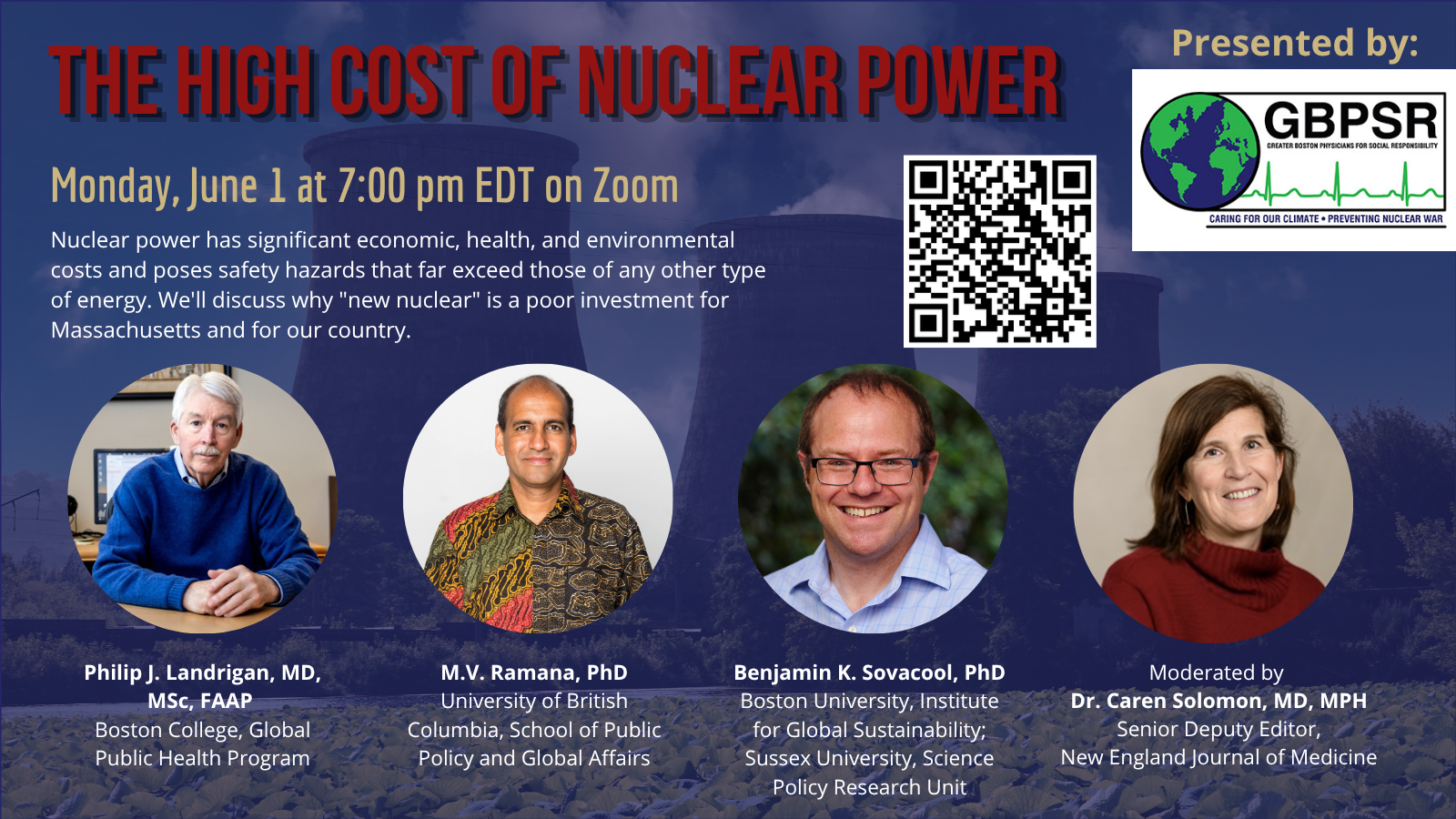
1 June Webinar – The High Cost of Nuclear Power – Register


of the week– Nuclear Reactor Information Task Force
To see nuclear-related stories in greater depth and intensity – go to https://nuclearinformation.wordpress.com
-
Archives
- May 2026 (199)
- April 2026 (356)
- March 2026 (251)
- February 2026 (268)
- January 2026 (308)
- December 2025 (358)
- November 2025 (359)
- October 2025 (376)
- September 2025 (257)
- August 2025 (319)
- July 2025 (230)
- June 2025 (348)
-
Categories
- 1
- 1 NUCLEAR ISSUES
- business and costs
- climate change
- culture and arts
- ENERGY
- environment
- health
- history
- indigenous issues
- Legal
- marketing of nuclear
- media
- opposition to nuclear
- PERSONAL STORIES
- politics
- politics international
- Religion and ethics
- safety
- secrets,lies and civil liberties
- spinbuster
- technology
- Uranium
- wastes
- weapons and war
- Women
- 2 WORLD
- ACTION
- AFRICA
- Atrocities
- AUSTRALIA
- Christina's notes
- Christina's themes
- culture and arts
- Events
- Fuk 2022
- Fuk 2023
- Fukushima 2017
- Fukushima 2018
- fukushima 2019
- Fukushima 2020
- Fukushima 2021
- general
- global warming
- Humour (God we need it)
- Nuclear
- RARE EARTHS
- Reference
- resources – print
- Resources -audiovicual
- Weekly Newsletter
- World
- World Nuclear
- YouTube
-
RSS
Entries RSS
Comments RSS
 nuclear-news


