Hokkaido’s Tomari NPP using emergency generators after powerful M6.7 earthquake
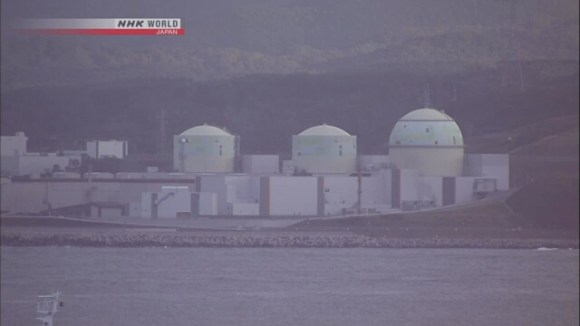
Tomari nuclear plant using emergency generators
Hokkaido nuclear plant on backup power after quake, reviving memories of Fukushima disaster
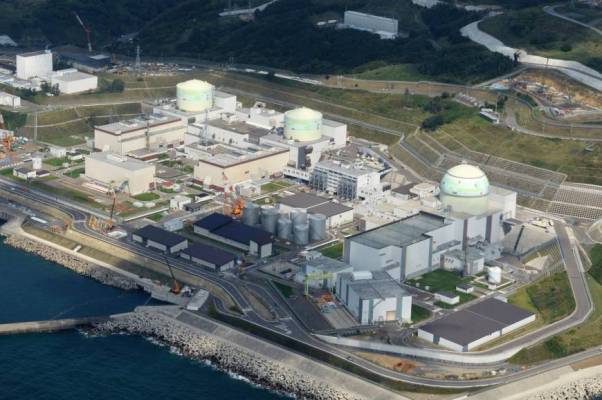
Strong earthquake shakes Osaka: Officials in neighboring Fukui Prefecture say all 15 nuclear reactors are still functioning
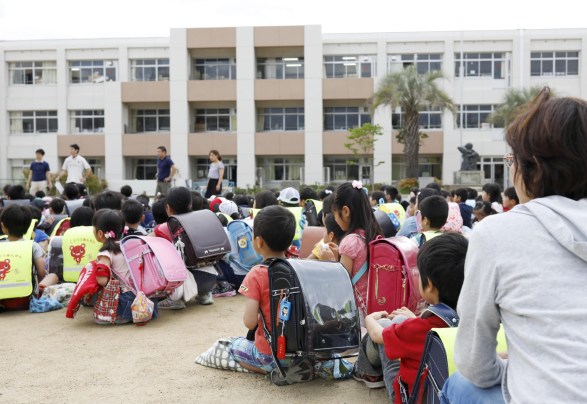

5.8-Magnitude Quake Strikes Off Coast of Japan’s Fukushima Prefecture, Near Ongoing Fukushima Nuclear Disaster Site


Puddles Found in Reactor Buildings at Fukushima Daini Plant

Fukushima Daini
Following a powerful quake that hit northeastern Japan in the early morning on Nov. 22, 2016. The utility said Nov. 24 that puddles in three of the four reactor buildings at the idled Fukushima Daini nuclear power plant may have formed from water that splashed out of spent-fuel pools during the quake.
http://english.kyodonews.jp/photos/2016/11/445699.html
Tsunami Evacuation Hindered by Traffic in Iwaki
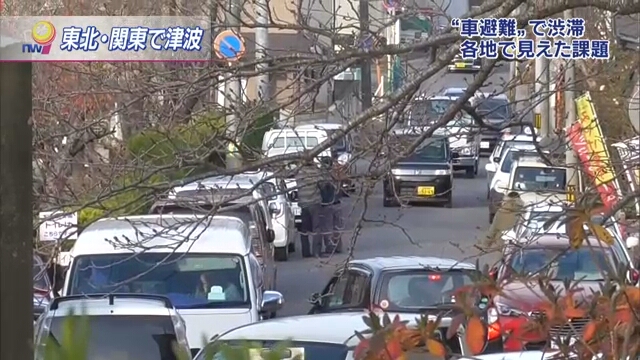
Some residents who attempted to drive to higher ground after tsunami warnings in northeastern Japan early Tuesday found themselves caught in traffic.
An official of Iwaki City, Fukushima Prefecture, says a main road from the coastal district to inland areas was filled with cars apparently trying to evacuate.
The official says he saw many cars carrying entire families and that the traffic congestion was unusual for that time of day. He says the atmosphere was tense, as the residents were apparently reminded of the March 2011 tsunami.
He called on residents not to use their cars if they are able to evacuate on foot, as part of the road is designated as an area that could be submerged in the event of a tsunami.
In Ishinomaki City, Miyagi Prefecture, more than 100 people evacuated to a park on higher ground.
But a narrow road leading to the park soon became jammed.
Some drivers parked their cars on the roadside, hindering others from getting by. Traffic was backed up for a long way as a result.
The city has been asking residents to evacuate on foot in principle.
Leaks Unlikely, “presumes” Tepco
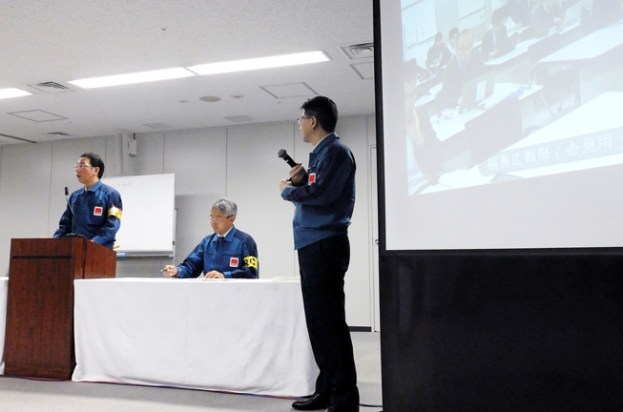
Naohiro Masuda, left, president of Fukushima Daiichi Decontamination & Decommissioning Engineering Co., speaks at the podium in a news conference at the Tokyo Electric Power Co.’s head office on Nov. 22.
Tokyo Electric Power Co. said radioactive water likely did not leak from its stricken Fukushima No. 1 nuclear plant following the morning earthquake that spawned a tsunami on Nov. 22. TEPCO declared that everything was ok at Fukushima Daiichi before even to be able to go inspect the facilities.
TEPCO officials said the company manually shut down equipment that was transferring contaminated water from reactor buildings after the magnitude-7.4 earthquake struck off the coast of Fukushima Prefecture. The measure was taken because water being transferred could have spilled out if a pipe in the system was fractured in the quake, and because they would be unable to check the system for leaks.
Naohiro Masuda, president of Fukushima Daiichi Decontamination & Decommissioning Engineering Co., TEPCO’s in-house organization, explained during a news conference at the utility’s head office in Tokyo why the company halted operations of the water transfer facility: “The biggest risk is a tsunami causing contaminated water that has accumulated (in the reactor buildings) to leak and pollute the environment.”
After the Japan Meteorological Agency issued a tsunami warning at 6:02 a.m., the company ordered workers in lower areas of the plant to evacuate to higher ground. The workers stayed out of the lower areas as the tsunami warning lasted for hours. They have been unable to check for possible leaks around the reactor buildings and the turbine buildings near the sea.
“It is a bit inappropriate that we’ve been unable to do so,” Masuda said. “That’s why we suspended the transfer facility. We think that no water will leak now.”
Groundwater mixing with contaminated water in damaged reactor buildings has been a serious problem at the plant since the nuclear disaster unfolded in 2011.
TEPCO also reported that pumps to cool water in the spent nuclear fuel pool at the No. 3 reactor building of the Fukushima No. 2 nuclear power plant shut down after the quake. The company said this was an automatic mechanism that kicked in after the water level changed in the tank that adjusts water conditions in the pool. “It is a result of the fact that the automatic suspension device worked normally,” Masuda said. The pumps were later restarted.
In the evening of 11/22/2016, Tepco announced the radiation monitoring post in the sea has been suspended due to the quake. The post is situated at the end of the breakwater of Fukushima plant port. They cannot monitor the radioactive substance spreading to the Pacific with this monitoring post out of order.
TEPCO declared “everything is safe” soon after the quake. They may have visually confirmed nothing large and significant happened such as a vent tower collapsing or larger building damage, but they were unable to go in to inspect to actually confirm nothing was damaged, to check for damage in more detail and to check every system now in place at the plant could easily take an entire day.
TEPCO’s prompt claim of no damage after the earthquake at the disaster site, as always was not done after inspections would have confirmed no damage.
Fukushima Radiation Measuring on Nov. 22, After the 6.9 Magnitude Earthquake

Following the November 22, 2016 earthquake striking at 5:59am, the Tarachine Mothers’ Radiation Lab in Iwaki city Fukushima kept measuring ambiant radiation every hour for the sake of precaution.
According to TEPCO, cooling to the spent nuclear fuel pool for the No. 3 reactor at the Fukushima Daini nuclear plant resumed at 7:47 am. It had stopped after the earthquakes this morning.
Radiation measurement 6:30 am on November 22nd, Izumigaoka, Iwaki city, Fukushima Prefecture, Japan, indoor 0.05µSv/h measured by PA-1000 Environmental Radiation Monitor Radi.
Radiation measurement 7:00 am on November 22nd, Izumigaoka, Iwaki city, Fukushima Prefecture, Japan, indoor 0.05µSv/h measured by PA-1000 Environmental Radiation Monitor Radi.
Radiation measurement 7:30 am on November 22nd, Izumigaoka, Iwaki city, Fukushima Prefecture, Japan, indoor 0.05µSv/h measured by PA-1000 Environmental Radiation Monitor Radi.
Radiation measurement 8:00 am on November 22nd, Izumigaoka, Iwaki City, Fukushima Prefecture, Japan, indoor 0.05 μSv/h, outdoor 0.08μSv/h measured by PA-1000 Environmental Radiation Monitor Radi.
Radiation measurement 8:30 am on November 22nd, Izumigaoka, Iwaki City, Fukushima Prefecture, Japan, indoor 0.05 μSv/h, outdoor 0.09μSv/h measured by PA-1000 Environmental Radiation Monitor Radi.
Radiation measurement 9:00 am on November 22nd, Izumigaoka, Iwaki City, Fukushima Prefecture, Japan, indoor 0.05 μSv/h, outdoor 0.09μSv/h measured by PA-1000 Environmental Radiation Monitor Radi.
Radiation measurement 10:00 am on November 22nd, Hanabatake-cho,Onahama, Iwaki City, Fukushima Prefecture, Japan, indoor 0.06 μSv/h, outdoor 0.08μSv/h measured by ALOKA γSURVEY METER TCS-172
Radiation measurement 11:00am on November 22nd, Hanabatake-cho,Onahama, Iwaki City, Fukushima Prefecture, Japan, indoor 0.06 μSv/h, outdoor 0.08μSv/h measured by ALOKA γSURVEY METER TCS-172
Radiation measurement 12:00am on November 22nd, Hanabatake-cho,Onahama, Iwaki City, Fukushima Prefecture, Japan, indoor 0.06 μSv/h, outdoor 0.08μSv/h measured by ALOKA γSURVEY METER TCS-172
Radiation measurement 15:00am on November 22nd, Hanabatake-cho,Onahama, Iwaki City, Fukushima Prefecture, Japan, indoor 0.06 μSv/h, outdoor 0.07μSv/h measured by ALOKA γSURVEY METER TCS-172
Radiation measurement 23:15pm on November 22nd, Izumigaoka, Iwaki City, Fukushima Prefecture, Japan, indoor 0.05 μSv/h measured by PA-1000 Environmental Radiation Monitor Radi.
Source : Tarachine, Mothers’ Radiation Lab, Iwaki city, Fukushima Prefecture
Magnitude 6.9 Earthquake Strikes Off Japanese Coast, Tsunami Warning

An earthquake with a preliminary magnitude of 7.3 hit northern Japan on Tuesday, the Japan Meteorological Agency said, generating a tsunami that hit the nation’s northern Pacific coast.
The U.S. Geological Survey initially put Tuesday’s quake at a magnitude of 7.3 but down graded it to 6.9.
The earthquake, which was felt in Tokyo, was centered off the coast of Fukushima prefecture at a depth of about 10 km (6 miles) and struck at 5:59 a.m. (2059 GMT) the agency said.
USGS said that it was a shallow quake, at about 10 kilometers, which tended to cause more shaking damage and had greater potential to cause a tsunami.
“The good news here is that the direction the fault was moving is a slight lateral slip. When the faults move laterally they do not create the vertical movement associated with large tsunamis,” the U.S. agency said.
A 60 cm (2 foot) tsunami had been observed at Iwaki city’s Onahama Port and a 90 cm (3 foot) tsunami at Soma Port soon after, public broadcaster NHK said. The region is the same that was devastated by a tsunami following a massive earthquake in 2011. A tsunami warning of up to 3 meters (10 feet) has been issued.

Japan’s chief government spokesman Yoshihide Suga said that a government taskforce had been established to deal with the quake and tsunami, and called on people in affected areas to evacuate, according to media outlet NHK.
NHK also reported that water could be seen moving bath and forth in Onahama Port and that tide levels were rising in some areas on Japan’s eastern coast. Television footage showed ships moving out to sea from Fukushima harbors as tsunami warning signals wailed.
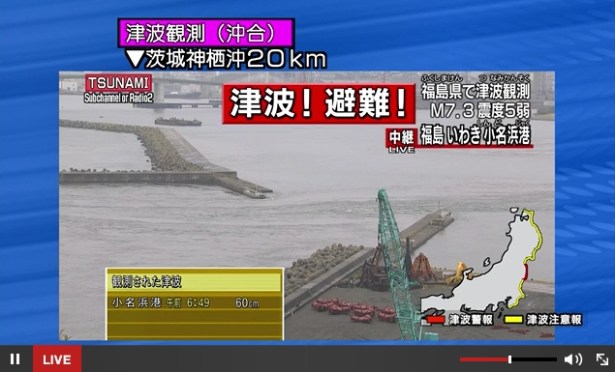
Tokyo Electric Power, known as Tepco, said on its website that no damage from the quake has been confirmed at any of its power plants, although there have been blackouts in some areas. Tepco’s Fukushima Daiichi nuclear plant caused Japan’s worst nuclear disaster when it was knocked out by the 2011 tsunami.
Tohoku Electric Power said there was no damage to its Onagawa nuclear plant, while the Kyodo news agency reported there were no irregularities at the Tokai Daini nuclear plant in Ibaraki Prefecture.
Earthquakes are common in Japan, one of the world’s most seismically active areas. Japan accounts for about 20 percent of the world’s earthquakes of magnitude 6 or greater.
The March 11, 2011, quake was magnitude 9, the strongest quake in Japan on record. The massive tsunami it triggered caused world’s worst nuclear crisis since Chernobyl a quarter of a century earlier.
An Iwaki city fire dept official said there was smoke or fire at Kureha’s research center in a petrochemical complex in Iwaki city at 6:17 a.m., but it was extinguished at 6:40 a.m. Other details were not clear, he said, adding that no other major damage in the city has been reported at the moment.
One hotel in Ofunato, badly hit by the 2011 quake, told guests to stay in the facility, which is on high ground.
All nuclear plants on the coast threatened by the tsunami are shut down in the wake of the 2011 Fukushima disaster. Only two reactors are operating in Japan, both in the southwest of the country. Even when in shutdown nuclear plants need cooling systems operating to keep spent fuel cool.
At Fukushima Daiichi, the plant workers are reporting they felt shaken even in the seismic isolation building. Most of the workers have not come to the plant for today yet. The situation is still under investigation. No further information yet.
At Fukushima Daini, Tepco said that its water-cooling system for spent fuel at reactor 3 had stopped working at 6:10AM but that there was enough water in the pool to keep the fuel cool, posing no immediate danger. Tepco rebooted the coolant system of SFP 3 of Fukushima DAINI at 7:47AM (JST).
http://www.jma.go.jp/en/quake/20161122061144495-220559.html
http://www.cnbc.com/2016/11/21/magnitude-73-earthquake-hits-japan-usgs-says.html
https://twitter.com/nhk_seikatsu/status/800825947507212288
https://www.pref.fukushima.lg.jp/sec/16025c/genan10.html
http://www3.nhk.or.jp/news/html/20161122/k10010779181000.html
Strong quake rattles Tohoku region
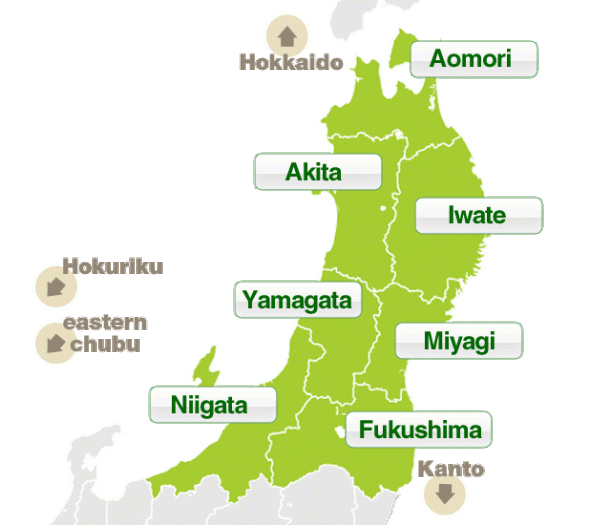
Tohoku region
An earthquake with a preliminary magnitude of 5.3 jolted northeastern Japan on Sunday, the Meteorological Agency agency said. No tsunami warning was issued.
There were no immediate reports of casualties or damage from the 4:37 p.m. quake. The focus of the quake was about 20 km (12 miles) underground in the Pacific Ocean off Miyagi Prefecture, the agency said.
Tohoku Electric Power Co. reported no abnormalities at the Onagawa nuclear power plant in Miyagi Prefecture.
The quake measured 4 on the Japanese seismic intensity scale of 7 in some areas of Miyagi, including the city of Ishinomaki, and a 3 in areas including neighboring Iwate and Yamagata prefectures.
http://www.japantimes.co.jp/news/2016/10/16/national/strong-quake-rattles-tohoku-region/
1 This Month
10 March A LIVE WEBINAR THE REAL EFFECTS OF NUCLEAR POWER
What the Industry Isn’t Telling Us
1:00 PM Mountain, 2 pm Central, 3 pm Eastern. Live on the Keepers of the Water Facebook page



18 March Webinar @ 1 PM EST: An Assessment of SMR Projects: The Case of Canada
register for the zoom:
https://us02web.zoom.us/webinar/register/WN_o8BIIOUvQ2ONJR1nta65DQ#/registration


of the week – STOP SMALL MODULAR REACTORS IN CANADA
To see nuclear-related stories in greater depth and intensity – go to https://nuclearinformation.wordpress.com
-
Archives
- March 2026 (109)
- February 2026 (268)
- January 2026 (308)
- December 2025 (358)
- November 2025 (359)
- October 2025 (376)
- September 2025 (258)
- August 2025 (319)
- July 2025 (230)
- June 2025 (348)
- May 2025 (261)
- April 2025 (305)
-
Categories
- 1
- 1 NUCLEAR ISSUES
- business and costs
- climate change
- culture and arts
- ENERGY
- environment
- health
- history
- indigenous issues
- Legal
- marketing of nuclear
- media
- opposition to nuclear
- PERSONAL STORIES
- politics
- politics international
- Religion and ethics
- safety
- secrets,lies and civil liberties
- spinbuster
- technology
- Uranium
- wastes
- weapons and war
- Women
- 2 WORLD
- ACTION
- AFRICA
- Atrocities
- AUSTRALIA
- Christina's notes
- Christina's themes
- culture and arts
- Events
- Fuk 2022
- Fuk 2023
- Fukushima 2017
- Fukushima 2018
- fukushima 2019
- Fukushima 2020
- Fukushima 2021
- general
- global warming
- Humour (God we need it)
- Nuclear
- RARE EARTHS
- Reference
- resources – print
- Resources -audiovicual
- Weekly Newsletter
- World
- World Nuclear
- YouTube
-
RSS
Entries RSS
Comments RSS
 nuclear-news