High Court’s TEPCO Fukushima Ruling Could Be Bellwether for Other Cases

From left: Tsunehisa Katsumata, Ichiro Takekuro and Sakae Muto
January 16, 2023
Could the meltdown at the Fukushima No. 1 nuclear power plant have been prevented? The Tokyo High Court is looking into a criminal case and will soon rule on whether the unprecedented accident could have been prevented by expecting such a massive tsunami. Civil court rulings on the same issue have been split, so all eyes are on the high court to see how it will rule.
The Tokyo High Court will on Wednesday hand down its ruling on whether three former executives of what was then Tokyo Electric Power Co. are responsible for the accident in 2011. The three had been acquitted by the Tokyo District Court of charges of professional negligence resulting in death.
The lower court’s ruling in September 2019 acquitted former TEPCO Chairman Tsunehisa Katsumata and former Executive Vice Presidents Ichiro Takekuro and Sakae Muto, who were in charge of the nuclear power plant.
During closing arguments of the appeal at the Tokyo High Court on June 6, 2022, court-appointed lawyers for the prosecution criticized the lower court decision.
“Denying that the defendants had responsibility is unjust,” one said, demanding the district court ruling be overturned.
The three defendants were handed mandatory indictment on charges related to causing the nuclear accident by failing to take measures even though they could expect such a huge tsunami, resulting in the deaths of 44 people who were evacuated from Futaba Hospital in Okuma, Fukushima Prefecture.
The two main points of contention in the trial of the three men are whether the massive tsunami could have been expected and whether the accident could have been prevented by taking measures.
In the district court, the judges ruled that “the only way to prevent the accident was to stop the operation of the plant.”
As for expectations of a natural disaster, the government had released in 2002 a long-term assessment that presents the possibility of a massive earthquake and tsunami hitting off places such as Fukushima Prefecture. The district court ruled that such an assessment was unreliable and deemed that the defendants could not be held criminally liable because they “could not expect a massive tsunami in concrete terms and were under no legal obligation to stop the operation of the plant.”
The district court limited the possible measures to prevent the accident to the “shutdown of the plant,” a measure that is not readily practiced.
During the appeal, the appointed lawyers for the prosecution emphasized that a shutdown of a plant is the last resort, and the accident could have been prevented through basic measures such as building higher seawalls and making the plant facilities watertight. The defense reiterated that there were no errors in the judgment of the lower court.
Split decisions
The appeal began in November 2021 and concluded after three hearings at the Tokyo High Court. The appointed lawyers requested the examination of witnesses, including former Japan Meteorological Agency officials who participated in the compilation of the assessment, as well as an on-site inspection by judges. But these requests were turned down.
During a civil trial at the Tokyo High Court in February 2021, however, the ruling adopted the long-term assessment as “reliable” evidence.
At the Supreme Court, an appeal of this civil suit was heard and ruled upon in June 2022. The top court did not clearly express the reliability of the assessment nor the predictability of a massive tsunami, but ruled that the central government, the defendant, was not responsible for the accident.
“The size of the tsunami was larger than expected, and the accident could not have been prevented,” the Supreme Court said.
Shortly after this trial, however, the Tokyo District Court in July recognized the reliability of the assessment in a shareholder derivative lawsuit filed by shareholders of Tokyo Electric Power Company Holdings. The court, in saying that “the tsunami was predictable and the accident could have been prevented,” ordered the abovenamed former TEPCO executives and former TEPCO President Masataka Shimizu to pay about ¥13 trillion in compensation. This case adopted almost the same evidence as the current criminal trial, but the conclusion was the opposite of the one reached by the same court in the criminal trial.
Chuo University Assistant Prof. Satoshi Tanii, who specializes in the theory of criminal negligence, said that the hurdle for finding liability in a criminal trial where an individual faces punishment can be higher than that for a civil trial.
“In addition to the reliability of the long-term assessment, whether the measures to prevent accidents are limited to a shutdown or include more practical moves such as watertight measures will become one of the points that will determine the guilt or innocence of the defendants,” he said.
Source: https://japannews.yomiuri.co.jp/society/crime-courts/20230116-84274/
Taiwan to End Nuclear Power Generation in 2025
A very wise decision, we wish that other governments also would be wise enough to do the same. Congratulations to you Taiwan!
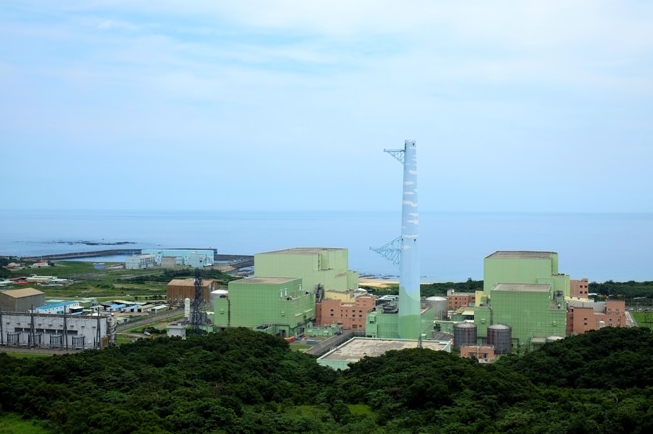
Taiwan’s fourth nuclear power plant in New Taipei City in the northern part of the island. Its construction has been suspended due to an anti-nuclear movement that has intensified since the Fukushima nuclear disaster.
TAIPEI–In a rare move for power-hungry Asia, the Taiwanese government has decided to abolish nuclear power generation by 2025 to meet the public’s demand for a nuclear-free society following the Fukushima nuclear disaster.
Taiwan’s Executive Yuan, equivalent to the Cabinet in Japan, approved revisions to the electricity business law, which aim to promote the private-sector’s participation in renewable energy projects, on Oct. 20.
“Revising the law shows our determination to promote the move toward the abolition of nuclear power generation and change the ratios of electricity sources,” said President Tsai Ing-wen.
The government plans to start deliberations on the revised bill in the Legislative Yuan, or the parliament, in the near future, with the goal of passing it within this year.
Movements toward a nuclear-free society are active in Europe. For example, Germany has decided to abolish nuclear power generation by 2022.
On the other hand, China and India are increasing nuclear power generation to meet the growing demand for electricity. In Taiwan, nuclear power accounted for 14.1 percent of all the electricity generated in 2015. At present, three nuclear power plants are operating.
However, the March 2011 accident at the Fukushima No. 1 nuclear power plant heightened public opinion against nuclear power generation. In response to the sentiment, Tsai, who assumed the presidency in May with a vow of establishing a nuclear-free society, led the government’s effort to abolish nuclear power.
Like Japan, Taiwan is hit by many earthquakes. The three nuclear power plants currently in operation will reach their service lives of 40 years by 2025. The revised bill will clearly stipulate that operations of all the nuclear plants will be suspended by that year. The stipulation will close the possible extension of their operations.
The government is looking to solar power and wind power as the pillars of renewable energies. It aims to increase their total ratio among all electricity sources from the current 4 percent to 20 percent in 2025.
However, meeting the goal assumes that electricity generated by solar power will increase 24-fold in 10 years. Because of that, some people harbor doubts on the viability of the plan.
“A hurdle to overcome to achieve the goal is very high,” said an electric power industry source.
1 This Month

of the week – Shut Down Drone Warfare!


Tell the Ukrainian Government to Drop Prosecution of Peace Activist Yurii Sheliazhenko

Petition to revoke the licensing of the Near Surface Nuclear Disposal Facility (NSDF) at Chalk River. https://www.ourcommons.ca/petitions/en/Petition/Details?Petition=e-7247
To see nuclear-related stories in greater depth and intensity – go to https://nuclearinformation.wordpress.com
-
Archives
- March 2026 (244)
- February 2026 (268)
- January 2026 (308)
- December 2025 (358)
- November 2025 (359)
- October 2025 (376)
- September 2025 (257)
- August 2025 (319)
- July 2025 (230)
- June 2025 (348)
- May 2025 (261)
- April 2025 (305)
-
Categories
- 1
- 1 NUCLEAR ISSUES
- business and costs
- climate change
- culture and arts
- ENERGY
- environment
- health
- history
- indigenous issues
- Legal
- marketing of nuclear
- media
- opposition to nuclear
- PERSONAL STORIES
- politics
- politics international
- Religion and ethics
- safety
- secrets,lies and civil liberties
- spinbuster
- technology
- Uranium
- wastes
- weapons and war
- Women
- 2 WORLD
- ACTION
- AFRICA
- Atrocities
- AUSTRALIA
- Christina's notes
- Christina's themes
- culture and arts
- Events
- Fuk 2022
- Fuk 2023
- Fukushima 2017
- Fukushima 2018
- fukushima 2019
- Fukushima 2020
- Fukushima 2021
- general
- global warming
- Humour (God we need it)
- Nuclear
- RARE EARTHS
- Reference
- resources – print
- Resources -audiovicual
- Weekly Newsletter
- World
- World Nuclear
- YouTube
-
RSS
Entries RSS
Comments RSS
 nuclear-news