Focus is on fishermen’s understanding of treated water; Governor does not approve of ocean discharge itself

Aug. 2, 2022
Regarding the release into the ocean of treated water that continues to accumulate at TEPCO’s Fukushima Daiichi Nuclear Power Plant, Fukushima Prefecture Governor Masao Uchibori and the mayors of Okuma and Futaba, both located in Fukushima Prefecture, informed TEPCO Holdings President Tomoaki Kobayakawa on August 2 of their intention to give their prior approval for the start of construction necessary for the release. TEPCO had asked the three parties for their approval last December. TEPCO will now begin full-scale construction work, including the installation of an undersea tunnel, to discharge treated water approximately 1 km offshore from the No. 1 nuclear power plant. The offshore discharge is scheduled for the spring of 2023.
The “prior consent” by the prefecture and the two towns is based on an agreement between TEPCO and the municipalities where the Fukushima Daiichi Nuclear Power Plant is located to ensure safety in the decommissioning of the plant. TEPCO is required to obtain the approval of each municipality regarding technical safety when constructing new facilities or decommissioning existing ones. Meanwhile, the government and TEPCO have promised the prefectural federation of fishermen’s associations that “no disposal will take place without the understanding of the concerned parties. One of the focal points will be whether or not they can gain the understanding of the prefectural fishermen’s federation.
When President Kobayakawa visited the prefectural government that day, Governor Uchibori, Okuma Mayor Jun Yoshida, and Futaba Mayor Shiro Izawa responded that they had “confirmed the technical safety” of the implementation plan for the No. 1 nuclear power plant, which includes designs and procedures for facilities to discharge treated water into the sea. The three parties then made requests regarding the control of new generation of highly contaminated water and the appropriate management of secondary wastes such as contaminated soil.

Governor Uchibori commented, “There are various opinions, such as concerns about new rumors, opposition to the offshore discharge, and fears about the impact of land-based storage on reconstruction efforts. It cannot be said that the people of the prefecture and the public have a sufficient understanding of the situation,” he stressed. He called for the government and TEPCO to take responsibility for providing careful and sufficient explanations to deepen the understanding of all concerned parties, and to sincerely listen to their wishes and engage in dialogue with them.
After the meeting, Governor Uchibori explained to reporters, “Based on the safety assurance agreement, we confirmed that the necessary safety measures have been taken for the facilities planned by TEPCO. He emphasized that he did not approve the discharge of treated water into the ocean itself. Meanwhile, President Kobayakawa said, “We will give top priority to safety so that the decommissioning work can proceed with the trust of the local people and the reconstruction of the region can make steady progress.
There has been strong opposition to the offshore discharge, especially from local fishermen who are concerned about harmful rumors. Against this backdrop, TEPCO has been steadily advancing preparatory work since last December, which does not require prior approval. The construction of a shaft that will serve as the entrance to the submarine tunnel and a discharge port that will serve as the exit are underway, and these works are scheduled to be completed in October this year.
The Nuclear Regulation Commission of Japan has already approved the implementation plan for the No. 1 nuclear power plant in July, which includes the installation of an undersea tunnel for discharging treated water. The safety of the plan was discussed by the prefectural government and the local municipalities, and a report stating that “the safety of the surrounding area will be ensured” was submitted to the prefectural government and the two towns. Eina Isogai and Naohiro Hinuma
https://mainichi.jp/articles/20220802/k00/00m/040/310000c?fbclid=IwAR2QP9tp5CD_bjlcQLqGAaKHvNeD9IP93IqGzS6F0wNzNN2AJc4lRSYkL5s
Official approval for ocean discharge of “treated water” from Fukushima nuclear power plant…Undersea tunnel construction to begin next spring
On March 22, the Nuclear Regulatory Authority officially approved TEPCO’s plan to discharge “treated water” from the Fukushima Daiichi nuclear power plant into the sea, on the grounds that there are no safety concerns. Once prior approval from Fukushima Prefecture and the cities of Okuma and Futaba is obtained, TEPCO will begin construction of the facilities for the sea discharge. The government and TEPCO aim to start the discharge next spring.

July 22, 2022
On July 22, the Nuclear Regulation Authority (NRA) officially approved TEPCO’s plan to discharge the ever-increasing amount of “treated water” from TEPCO’s Fukushima Daiichi Nuclear Power Plant into the sea, saying there are no safety issues. TEPCO will now begin full-scale construction of facilities to discharge the water into the ocean after obtaining prior approval from Fukushima Prefecture and the towns of Okuma and Futaba in Fukushima Prefecture, where the plant is located. The government and TEPCO aim to begin the discharge next spring.
According to TEPCO’s plan, an undersea tunnel will be constructed from the plant to about 1 km/meters offshore, and treated water will be discharged from the top of the tunnel. The water will be diluted with seawater before discharge, and the concentration of radioactive tritium (triple hydrogen) will be reduced to less than 1/40th of the national discharge standard and 1/7th of the World Health Organization (WHO) standard for drinking water. The concentration of tritium in the water will be reduced to less than 1/40th of the national discharge standard and 1/7th of the World Health Organization’s drinking water standard.
The time required for the construction of the undersea tunnel and other work was initially estimated to be about 10.5 months, but will be shortened to about 8.5 months so that the discharge can begin next spring.
The treated water is produced by the ALPS (ALPS is a system for removing contaminated water after cooling nuclear fuel that has melted and hardened as a result of the 2011 meltdown accident). The amount of treated water continues to increase, and is currently about half of the total amount of radioactive materials in the plant. The amount of water has been increasing, and currently about 1.31 million tons are stored in more than 1,000 tanks on the plant’s grounds. The capacity of the tanks is expected to be reached by the end of next summer or fall. The tanks are expected to be full by next summer or fall.
Since continued storage would hinder decommissioning work, the government decided in April last year to begin discharging the waste into the ocean in the spring of 2011. It is expected to take several decades to complete the discharge.
The government and TEPCO need to provide more careful information.
The offshore discharge of “treated water” from TEPCO’s Fukushima Daiichi NPP is an unavoidable step to reduce the number of tanks on the plant site as much as possible and to facilitate the decommissioning of the plant. If decommissioning does not proceed steadily, it will hinder the reconstruction of Fukushima.
The treated water is water that has been purified from the contaminated water at the plant and most of the radioactive materials have been removed. Although tritium is technically difficult to remove, it has been scientifically confirmed that tritium has no effect on humans or the environment if it is diluted and its concentration is reduced. Tritium is also generated in the normal operation of nuclear power plants, and its release to the sea is permitted in Japan and other countries.
In April this year, the International Atomic Energy Agency (IAEA), which includes experts from China and South Korea who oppose the release of treated water, released a report on the safety of TEPCO’s plans and purification facilities after studying them. The report found no problems with safety.
Nevertheless, concerns about harmful rumors persist, and local fishermen are opposed to the ocean discharge. In May of this year, after the Regulatory Commission approved a draft review report summarizing the results of its examination, it solicited opinions from the general public. As a result, 1,233 opinions were received, many of them from people who questioned the safety of the plant. The government and TEPCO need to further disseminate information carefully and seek the understanding of the public as a whole. (Makio Hattori, Science Department)
https://www.yomiuri.co.jp/science/20220722-OYT1T50110/?fbclid=IwAR1vstNjc7PCvVofMs-9yAA5GBKitGS0BkJPJw1-x62lwBfAt-0ghm-Ly6A
Regulatory Commission to Approve Plan for Ocean Discharge of Treated Water on 22nd, TEPCO Fukushima Daiichi Nuclear Power Plant

July 20, 2022
The Nuclear Regulation Authority (NRA) announced on July 20 that it will discuss at an extraordinary meeting on July 22 a draft review report on TEPCO’s plan to discharge contaminated water from the Fukushima Daiichi Nuclear Power Plant after purification and treatment, stating that the plan has no safety problems and meets the requirements of government policy. Based on the results of a public comment period, the committee is expected to decide on the review report and approve the plan.
According to the Regulatory Commission, it received approximately 1,200 comments from the public during the period from May 19 to June 17. The Regulatory Commission will also present its views on the opinions at the meeting.
According to the plan, the treated water, which is mainly tritium, will be diluted with a large amount of seawater to less than 1/40th of the national discharge standard, and then discharged through a newly constructed undersea tunnel about 1 km offshore. More than 1.3 million tons of the treated water is stored in tanks on the plant’s premises, and TEPCO plans to finish releasing it over a period of about 30 years starting next spring.
TEPCO is preparing for the construction of the tunnel by installing a shield machine to excavate the tunnel on a site near the seawall of the plant. Tunnel excavation can only begin after receiving approval from the Regulatory Commission and obtaining the consent of Fukushima Prefecture and the two towns of Okuma and Futaba, where the plant is located.
Fishermen and fishermen are strongly opposed to the release of treated water. (Shinichi Ogawa and Kenta Onozawa)
Processed water at the Fukushima Daiichi Nuclear Power Plant Contaminated water generated when cooling water injected into the reactors of Units 1-3 came into contact with nuclear fuel debris that melted down in the accident and mixed with groundwater and rainwater that flowed into the buildings, and was purified by a multinuclide removal system (ALPS). Tritium, a radioactive substance that cannot be removed, remains in concentrations exceeding the national discharge standard. In April 2021, the government decided to discharge the treated water into the ocean by the spring of 2023. TEPCO is proceeding with a plan to use a large amount of seawater to dilute the tritium concentration to less than 1/40th of the discharge standard and discharge the water into the sea.
https://www.tokyo-np.co.jp/article/190829?fbclid=IwAR39Bvgz0pCGmfeTUIeMKiljEVAZgDWOVGRMwAnP2O_mbbKL9LlaUbwt40w
Kagoshima governor under fire after effectively accepting restart of nuclear reactor

Kagoshima Governor Satoshi Mitazono on Nov. 28 explains to the prefectural assembly why he has requested a budget to form a committee of experts on nuclear power generation.
Governor under fire as Sendai nuclear reactor likely to restart
KAGOSHIMA—Anti-nuclear activists are castigating Governor Satoshi Mitazono, saying the politician has retreated from his campaign promises regarding the planned restart of a nuclear reactor in the prefecture.
Despite stressing that he would take a hard look at safety issues, Mitazono’s actions on Nov. 28 indicate that Kyushu Electric Power Co. will be allowed to restart the No. 1 reactor at its Sendai plant on Dec. 8 as was expected.
“What he had done over the past months now appears to be a mere publicity stunt,” said Yukio Taira, chief of a confederation of labor unions in Kagoshima Prefecture.
Taira withdrew his candidacy in the governor’s race in July after he and Mitazono agreed on many policy measures toward a temporary halt of operations at the nuclear plant in Satsuma-Sendai.
Mitazono on Nov. 28 submitted to the prefectural assembly a budget proposal for establishing an expert panel on nuclear power generation–a centerpiece of his campaign pledges.
“I will make a comprehensive judgment on how to respond when the panel releases its findings of the utility’s reports on ‘special checks,’” Mitazono told the assembly session, referring to the reactor restart plan.
However, given that a governor does not have the legal authority to order a halt, the No. 1 reactor will probably already be running by the time those findings are released.
The assembly is expected to vote on the budget request for the panel on Dec. 16. Kyushu Electric is scheduled to release the outcome of its special checks in early January.
The utility agreed to carry out the additional checks in response to the new governor’s concerns. These inspections, including checking bolts fastened on barrels containing nuclear waste, are nothing new and have been done in the past, according to Kyushu Electric.
Two reactors at the Sendai plant were the first in the nation to go online under new nuclear safety regulations set up after the 2011 nuclear disaster in Fukushima Prefecture.
The No. 1 reactor has been shut down for maintenance since October. The No. 2 reactor is scheduled to be taken offline in December for a routine inspection.
Mitazono, a former TV journalist, was elected on campaign promises to take a “strong response regarding a reactor restart if the envisaged committee deems the plant unsafe.”
Concerns over the safety of the nuclear complex arose when roads and other infrastructure were damaged in a series of powerful quakes that began rattling neighboring Kumamoto Prefecture in April.
After gaining support from anti-nuclear groups, Mitazono won the race against the incumbent, who was seen as friendlier toward nuclear power generation.
But after he took office, Mitazono appeared to back off from his campaign promises.
He did request an “immediate halt” of plant operations to Michiaki Uriu, president of Kyushu Electric, in late August and early September.
After the company refused the governor’s requests, Mitazono decided not to pursue the issue, saying a governor does not have the legal authority to demand a halt to operations.
He tried to assuage public concerns about the safety of the plant, citing the extra special checks the utility promised to conduct.
Taira said Mitazono has rejected repeated requests for a meeting with him and other anti-nuclear activists. They have asked Mitazono to quickly establish the expert panel for possible action to counter Kyushu Electric’s reactor restart plans. But the governor did not reply.
Mitazono also did not submit a budget request for the expert panel in the September session.
When asked by reporters, Mitazono merely kept saying he would establish the panel “as soon as possible.”
“He is breaking the campaign promise if he allows the resumption of the plant without obtaining the conclusion of the panel,” Taira said.
According to one source, the governor told an informal gathering of members of the Liberal Democratic Party, the largest group in the assembly, that he shares the LDP’s direction in nuclear power policy.
http://www.asahi.com/ajw/articles/AJ201611290066.html
Kagoshima Governor Satoshi Mitazono on Nov. 28 explains to the prefectural assembly why he has requested a budget to form a committee of experts on nuclear power generation,
Kagoshima governor effectively accepts restart of nuclear reactor
KAGOSHIMA — Gov. Satoshi Mitazono on Nov. 28 effectively expressed his approval for the restart of the No. 1 reactor at the Sendai Nuclear Power Plant in Satsumasendai, which is undergoing inspections.
The governor said that he will draw a conclusion on operation of the No. 1 reactor after the completion of special checks that are concurrently being performed by the plant’s operator, Kyushu Electric Power Co. Since the special checks include items that are to be completed after the reactor is scheduled to resume operation on Dec. 8, the governor’s comments indicate that he accepts reactivation of the reactor.
In a prefectural assembly meeting on Nov. 28, the governor presented a supplementary budget draft for December that earmarked 3 million yen to set up an inspection committee to probe the safety of the Sendai Nuclear Power Plant and the appropriateness of evacuation plans. In explaining this, he stated, “We will have the inspection committee verify and confirm a report on the result of the special check to be submitted by Kyushu Electric Power Co. and make a comprehensive decision based on its conclusions.
http://mainichi.jp/english/articles/20161129/p2a/00m/0na/008000c
Fukushima aftershock renews public concern about restarting Kansai’s aging nuclear reactors
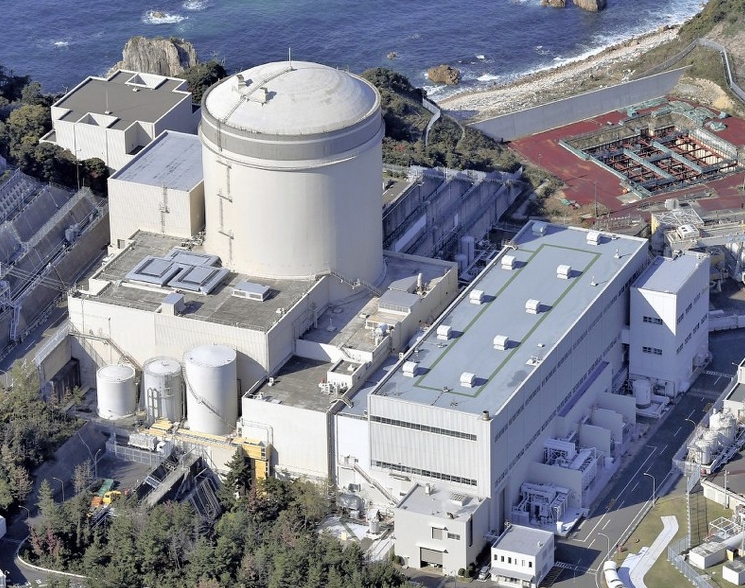
KYOTO – The magnitude-7.4 aftershock that rocked Fukushima Prefecture and its vicinity last week, more than five years after the mega-quake and tsunami of March 2011, triggered fresh nuclear concerns in the Kansai region, which hosts Kansai Electric Power Co.’s Mihama plant in Fukui Prefecture.
The aftershock came as the Nuclear Regulation Authority approved a two-decade extension for Mihama’s No. 3 reactor on Nov. 16, allowing it and two others that have already been approved to run for as long as 60 years to provide electricity to the Kansai region.
Residents need to live with the fact that they are close to the Fukui reactors, which are at least 40 years old. Despite reassurances by Kepco, its operator, and the nuclear watchdog, worries remain over what would happen if an earthquake similar to the one in 2011, or even last week, hit the Kansai region.
Kyoto lies about 60 km and Osaka about 110 km from the old Fukui plants. Lake Biwa, which provides water to about 13 million people, is less than 60 km away.
In addition to Kepco’s 40-year-old Mihama No. 3, reactors 1 and 2 at the Takahama nuclear power plant in Fukui are 42 and 41 years old, respectively.
In the event of an accident, evacuation procedures for about 253,000 residents of Fukui, Shiga, and Kyoto prefectures who are within 30 km of the plants would go into effect.
But how effective might they be?
The majority does not live in Fukui. Just over half, or 128,500, live in neighboring Kyoto, especially in and around the port city of Maizuru, home to a Self-Defense Forces base. Another 67,000 live in four towns in Fukui and about 58,000 live in northern Shiga Prefecture.
Plans call for Fukui and Kyoto prefecture residents to evacuate to 29 cities and 12 towns in Hyogo Prefecture and, if facilities there are overwhelmed, to Tokushima Prefecture in Shikoku. Those in Shiga are supposed to evacuate to cities and towns in Osaka Prefecture.
In a scenario put together by Kyoto Prefecture three years ago, it was predicted that tens of thousands of people would take to available roads in the event of an nuclear accident. A 100 percent evacuation of everyone within 30 km of a stricken Fukui plant was estimated to take between 15 and 29 hours, depending on how much damage there was to the transportation infrastructure.
But Kansai-based anti-nuclear activists have criticized local evacuation plans as being unrealistic for several reasons.
First, they note that the region around the plants gets a lot of snow in the winter, which could render roads, even if still intact after a quake or other disaster, much more difficult to navigate, slowing evacuations even further.
Second is the radiation screening process that has been announced in official local plans drawn up by Kyoto and Hyogo prefectures.
While automobiles would be stopped at various checkpoints along the roads leading out of Fukui and given radiation tests, those inside would not be tested if the vehicle itself has radiation levels below the standard.
If the radiation is above standard, one person, a “representative” of everyone in the car, would be checked and, if approved, the car would be allowed to continue on its way under the assumption that the others had also been exposed to levels below standard. This policy stands even if those levels might be more dangerous to children than adults.
Finally, there is the question of whether bus drivers would cooperate by going in and out of radioactive zones to help those who lack quick access to a car, especially senior citizens in need of assistance.
None of the concerns about the evacuation plans is new, and most have been pointed out by safety experts, medical professionals and anti-nuclear groups.
But with the NRA having approved restarts for three Kansai-area reactors that are over 40 years old, Kansai leaders are responding more cautiously to efforts to restart Mihama No. 3 in particular.
“It is absolutely crucial that local understanding for Mihama’s restart be obtained,” said pro-nuclear Fukui Gov. Issei Nishikawa in July, after a local newspaper survey showed that only about 37 percent of Fukui residents agree with the decision to restart old reactors.
Shiga Gov. Taizo Mikazuki, who is generally against nuclear power, was even more critical of the NRA’s decision to restart Mihama.
“There are major doubts about the law that regulates the use of nuclear reactors more than 40 years old. The central government and Kepco need to explain safety countermeasures to residents who are uneasy. People are extremely uneasy about continuing to run old reactors,” the governor said earlier this month.
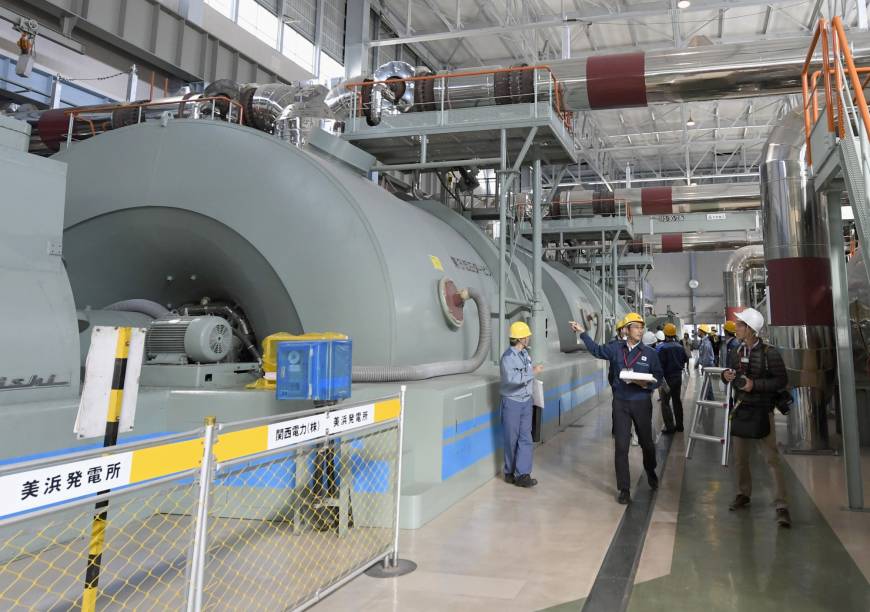
A turbine at the No. 3 reactor of Kansai Electric Power Co.’s Mihama plant in Fukui Prefecture is seen on Nov. 16.
1 This Month

of the week – Shut Down Drone Warfare!


Tell the Ukrainian Government to Drop Prosecution of Peace Activist Yurii Sheliazhenko

Petition to revoke the licensing of the Near Surface Nuclear Disposal Facility (NSDF) at Chalk River. https://www.ourcommons.ca/petitions/en/Petition/Details?Petition=e-7247
To see nuclear-related stories in greater depth and intensity – go to https://nuclearinformation.wordpress.com
-
Archives
- March 2026 (251)
- February 2026 (268)
- January 2026 (308)
- December 2025 (358)
- November 2025 (359)
- October 2025 (376)
- September 2025 (257)
- August 2025 (319)
- July 2025 (230)
- June 2025 (348)
- May 2025 (261)
- April 2025 (305)
-
Categories
- 1
- 1 NUCLEAR ISSUES
- business and costs
- climate change
- culture and arts
- ENERGY
- environment
- health
- history
- indigenous issues
- Legal
- marketing of nuclear
- media
- opposition to nuclear
- PERSONAL STORIES
- politics
- politics international
- Religion and ethics
- safety
- secrets,lies and civil liberties
- spinbuster
- technology
- Uranium
- wastes
- weapons and war
- Women
- 2 WORLD
- ACTION
- AFRICA
- Atrocities
- AUSTRALIA
- Christina's notes
- Christina's themes
- culture and arts
- Events
- Fuk 2022
- Fuk 2023
- Fukushima 2017
- Fukushima 2018
- fukushima 2019
- Fukushima 2020
- Fukushima 2021
- general
- global warming
- Humour (God we need it)
- Nuclear
- RARE EARTHS
- Reference
- resources – print
- Resources -audiovicual
- Weekly Newsletter
- World
- World Nuclear
- YouTube
-
RSS
Entries RSS
Comments RSS
 nuclear-news