Former DEA Nuclear Security Official Says Wyoming Reactor Not Safe

the sodium reactor planned for Kemmerer has a high degree of potential for explosive accidents and proliferation of nuclear weapons material.
Sodium reacts with water and air, which Tallen said poses a huge risk for accidents.
Cowboy State Daily, By Kevin Killough, State Energy Reporter
Kevin@CowboyStateDaily.com January 25, 2023January 25, 2023
When TerraPower and PacifiCorp announced in November 2021 that they had selected Kemmerer as the location of its Natrium reactor demonstration project, many welcomed the opportunity as a path to a diverse energy economy for Wyoming.
In the next few months, TerraPower plans to break ground on a sodium testing project for the larger demonstration project. If the reactor design is proven, it would provide lots of carbon-free energy and provide a viable replacement for retiring coal plants in the state, TerraPower said.
Wapiti resident Bill Tallen had a 20-year career with the Department of Energy that was focused on the threat posed by terrorists who sought ways to create improvised nuclear devices.
Tallen argues that the sodium reactor planned for Kemmerer has a high degree of potential for explosive accidents and proliferation of nuclear weapons material. Henry Sokoloski, executive director of the Nonproliferation Policy Education Center (NPEC), which is based in Washington D.C., has a lot of the same concerns.
Jeff Navin, director of external affairs with TerraPower, says these concerns have been considered and addressed as much as reasonably possible in the project’s design and development.
Not Opposed To Nuclear
Tallen said he’s not ideologically opposed to nuclear power. He said he rubbed elbows with that crowd years ago, but it’s not where he stands today.
“The distrust of nuclear power is one of the major ideological tenets of left-wing, anti-establishment politics,” Tallen said. “I had to say to them, I can’t agree with you on many of your basic assumptions. I’m just saying that this particular [Natrium] technology pursued the way it is right now – I don’t think it’s a good idea.”
Reaction Risk
The Natrium reactor being built in Kemmerer uses sodium instead of water as a heat sink for the reactor core. That heat will then be transferred to water, which will produce steam to turn turbines.
Sodium reacts with water and air, which Tallen said poses a huge risk for accidents.
“There’s never been a sodium reactor that has actually met its promises. They’ve all had leaks and fires and explosions and toxic releases,” Tallen said. “Granted, in America we haven’t had big problems, but the past is not always prologue. The risk is still there.” ……………………
Plutonium And Proliferation
Sokolski with NPEC said these reactors produce plutonium during the fission process.
“The plutonium produced in these machines isn’t just weapons usable. It isn’t even weapons grade. It’s super weapons grade,” Sokolski said.
The Natrium reactors run on high-assay low-enriched uranium, known commonly as HALEU. It’s currently produced only in Russia, and due to the invasion of Ukraine, supplies of the material are scarce. This has led to a delay in the Kemmerer project.
Tallen said that as these reactors grow and more HALEU is produced, it’s just inviting a nation like Iran to find sources of the material, which can be enriched to weapons-grade with the right facilities.
“These are parties that do in fact have, or can construct, enrichment capabilities and will not be concerned by U.S. export restrictions,” Tallen said. ……………………….. https://cowboystatedaily.com/2023/01/25/former-dea-nuclear-security-official-says-wyoming-reactor-not-safe/
The Nightmare of NATO Equipment Being Sent to Ukraine
By Scott Ritter, Consortium News 24 Jan 23“…………………………………………………………………………… What the West is Giving
Operational training, no matter how competently delivered and absorbed, does not paint an accurate picture of the true combat capability being turned over to Ukraine by the West. The reality is most of this equipment won’t last a month under combat conditions; even if the Russians don’t destroy them, maintenance issues will.
Take, for instance, the 59 M-2 Bradley vehicles being supplied by the United States. According to anecdotal information obtained from Reddit, the Bradley is, to quote, “a maintenance NIGHTMARE.”
“I can’t even begin to commiserate how f***ing awful maintenance on a Bradley is,” the author, a self-described U.S. Army veteran who served in a Bradley unit in Iraq, declared.
“Two experienced crews MIGHT be able to change one Brad’s track in 3 or 4 hours, if nothing goes wrong (something always goes wrong). Then you got the track adjuster arms, the shock arms, the roadwheels, the sprocket itself, that all need maintained and replaced as needed. I haven’t even started talking about the engine/transmission pack yet. When you do services on that, it’s not like you just raise the engine deck lid. You got to take the armor OFF the Bradley so an M88 Wrecker vehicle can use its crane to LIFT the engine/tranny out of the hull.”
The Stryker isn’t any better. According to a recent article in Responsible Statecraft, U.S. soldiers who used the vehicle in both Iraq and Afghanistan called the Stryker “a very good combat vehicle, so long as it traveled on roads, it wasn’t raining — and didn’t have to fight.”
The Stryker is also a difficult system to maintain properly. One of the critical features of the Stryker is the “height management system,” or HMS. In short, it is what keeps the hull from riding on the tires. A failure to constantly maintain and monitor the HMS system will result in the hull rubbing up against the tires, causing tire failure and a non-operable vehicle.
The HMS is complex, and a failure to maintain or operate one component will result in the failure of the entire system. The likelihood of the future Ukrainian operators of the Stryker properly maintaining the HMS under combat conditions is near-zero — they will lack the training as well as the “logistical support” necessary (such as spare parts).
The German Marder IFV appears to represent a similar maintenance headache for the Ukrainians: according to a 2021 article in The National Interest, “The vehicle was considered unreliable from the outset: Tracks rapidly wore out, transmissions often failed, and soldiers could not easily remove the vehicle’s engine for field maintenance.”
While Germany is preparing to invest a significant amount of money to upgrade the Marder, this hasn’t yet been done. Ukraine is inheriting an old weapons system that brings with it a considerable maintenance problem Ukraine is not prepared to properly handle.
The Swedish CV 90 saw some limited combat in Afghanistan when deployed with the Norwegian Army. While there is not enough publicly available data about the maintainability of this system, one only needs to note that even if the SV 90 proves easy to maintain, it represents a completely different maintenance problem from that of the Bradly, Stryker, or Marder.
In short, to properly operate the five battalion-equivalents of infantry fighting vehicles being supplied their NATO partners, Ukraine will need to train its maintenance troops on four completely different systems, each with its own unique set of problems and separate logistical/spare part support requirements.
It is, literally, a logistical nightmare that will ultimately prove to be the Achilles heel of the Ramstein tranche of heavy equipment.
But even here, neither NATO nor Ukraine seems able to see the forest for the trees. Rather than acknowledging that the material being provided is inadequate to the task of empowering Ukraine to carry out large-scale offensive operations against Russia, the two sides began haranguing each other over the issue of tanks, namely the failure of Germany to step up to the plate in Ramstein and clear the way for the provision to Ukraine of hundreds of modern Leopard 2 main battle tanks.
German History & Optics
The Ramstein meeting was hampered by concern within the German Parliament over the optics associated with Germany providing tanks which would be used to fight Russians in Ukraine……………………………………………………………………….
The Consequences for Ukraine
The reality is, however, that the consequences of the Ramstein Contact Group’s work will be far more detrimental to Ukraine than Russia.
The reality is, however, that the consequences of the Ramstein Contact Group’s work will be far more detrimental to Ukraine than Russia.
Under pressure from the West to carry out a major offensive designed to expel Russian forces from the territories captured last year, General Zaluzhnyi will be compelled to sacrifice whatever reserves he would be able to assemble in the aftermath of Ramstein for the purpose of engaging in fruitless attacks against a Russian opponent that is far different from the one Ukraine faced in September and October of last year……………….
Today, Russia’s military presence in Ukraine is a far cry from what it was in the autumn of 2022. In the aftermath of Putin’s September 2022 decision to mobilize 300,000 reservists, Russia has not only consolidated the frontline in eastern Ukraine, assuming a more defensible posture, but also reinforced its forces with some 80,000 mobilized troops, allowing for Russia to sustain offensive operations in the Donetsk regions while solidifying its defenses in Kherson and Lugansk.
……….. Moving forward, Russia will be waging war by the book. Defensive positions will be laid in a manner designed to defeat concerted NATO attack, both in terms of troop density along the frontline, but also in depth………………………………………………..
While the modern-day soldiers of the 8th Guards Army may not be mounting a new generation of tanks on display in the Berlin Tiergarten, rest assured they know fully well their historical legacy and what is expected of them.
This, more than anything else, is the true expression of the Ramstein effect, a cause-effect relationship that the West does not seem either able or willing to discern before it is too late for the tens of thousands of Ukrainian soldiers whose lives are about to be sacrificed on an altar of national hubris and ignorance.
Scott Ritter is a former U.S. Marine Corps intelligence officer who served in the former Soviet Union implementing arms control treaties, in the Persian Gulf during Operation Desert Storm and in Iraq overseeing the disarmament of WMD. His most recent book is Disarmament in the Time of Perestroika, published by Clarity Press. https://consortiumnews.com/2023/01/24/scott-ritter-the-nightmare-of-nato-equipment-being-sent-to-ukraine/
Doomsday Clock set to 90 seconds to midnight, here’s the plan – ICAN

Doomsday Clock set to 90 seconds to midnight, here’s the plan. ICAN has
a roadmap for ridding the world of nuclear weapons in four steps:
prohibition, stigmatisation, negotiation, elimination.
ICAN 24th Jan 2023
https://www.icanw.org/doomsday_clock_no_more_excuses_the_plan
WikiLeaks cables reveal NATO intended to cross all Russian red lines
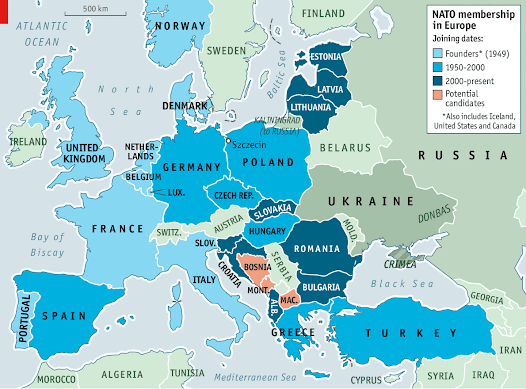
“Ukraine was the line of last resort that would complete Russia’s encirclement”
the political West invested hundreds of billions of dollars in turning Ukraine into a fervently Russophobic country, effectively becoming a giant military springboard aimed against Moscow.
http://space4peace.blogspot.com/2023/01/wikileaks-cables-reveal-nato-intended.html By Drago Bosnic (Independent geopolitical and military analyst) , SouthFront 25 Jan 23
For nearly a year, the massive Western propaganda machine has been manipulating its audience into believing the “Russia’s unprovoked aggression in Ukraine” narrative. The “reporting” can be crudely boiled down to the following: “On February 24, bloodthirsty Kremlin dictator Putin got up on the wrong side of the bed and decided to attack the nascent beacon of freedom and democracy in Kiev.” This is mandatory in virtually all Western mainstream media and any attempt to even think of questioning it results in immediate “cancellation”. Propagandists posing as “pundits” flooded political talk shows with the task of presenting decades of unrelenting NATO expansion as irrelevant to Russia’s reaction.
However, WikiLeaks, an organization the United States has been trying to shut down for well over a decade, including through the horrendous treatment of its founder Julian Assange, published secret cables showing this narrative couldn’t possibly be further from reality. Data indicates that American officials weren’t only aware of the frustration NATO expansion caused in Moscow, but were even directly told it would result in Russia’s response. And while the US often insists that the current crisis is a result of Vladimir Putin’s alleged desire to “rebuild the Russian Empire”, WikiLeaks reveals that even his predecessor Boris Yeltsin, infamous for his suicidal subservience to Washington DC, warned against NATO expansion.
For approximately three decades, consecutive US administrations were explicitly warned that Ukraine’s NATO membership would be the last straw for Moscow. Numerous Russian officials kept cautioning this would destabilize the deeply divided post-Soviet country. These warnings were made both in public and private, and were reiterated by other NATO members, geopolitical experts, Russian opposition leaders and even some American diplomats, including a US ambassador in Moscow. Yeltsin once told former president Bill Clinton that NATO expansion was “nothing but humiliation for Russia if you proceed”. Clinton, infamous for his aggression on Yugoslavia, ignored the warning and by 1999, less than a decade after the “not an inch to the east” promise was made, most of Eastern Europe was in NATO.
Despite this encroachment, Vladimir Putin still tried to establish closer ties with the political West, ratified START II and even offered to join NATO. America responded with unilateral withdrawal from key arms control treaties and color revolutions in Moscow’s geopolitical backyard. By the mid-2000s, Russia was flanked by two hostile US-backed regimes on its southern and western borders (Georgia and Ukraine). Major NATO members, such as Germany and France, warned this would lead to an inevitable response from Moscow. A WikiLeaks cable dated September 2005 reads:
“[French presidential advisor Maurice] Gourdault-Montagne warned that the question of Ukrainian accession to NATO remained extremely sensitive for Moscow, and concluded that if there remained one potential cause for war in Europe, it was Ukraine. Some in the Russian administration felt we were doing too much in their core zone of interest, and one could wonder whether the Russians might launch a move similar to Prague in 1968, to see what the West would do.”
WikiLeaks further reveals that German officials reiterated similar concerns about Russia’s reaction to NATO expansion into Georgia and Ukraine, particularly the latter, with diplomat Rolf Nikel stating: “While Georgia was ‘just a bug on the skin of the bear,’ Ukraine was inseparably identified with Russia, going back to Vladimir of Kiev in 988.” Another cable dated January 2008 says that “Italy is a strong advocate” for NATO enlargement, “but is concerned about provoking Russia through hurried Georgian integration.” Norwegian Prime Minister Jonas Gahr Stoere made similar remarks, an April 2008 cable indicates. Despite believing Russia shouldn’t have a saying in NATO, he said that “he understands Russia’s objections to NATO enlargement and that the alliance needs to work to normalize the relationship with Russia.”
n the US, even some high-level government officials made nearly identical assessments. WikiLeaks reveals that these warnings were presented to Washington DC by none other than William Burns himself, former US Ambassador to Russia and the current CIA chief. According to a cable dated March 2007, Burns said: “NATO enlargement and US missile defense deployments in Europe play to the classic Russian fear of encirclement.” Months later, he stated: “Ukraine’s and Georgia’s entry represents an ‘unthinkable’ predicament for Russia and Moscow would cause enough trouble in Georgia and continued political disarray in Ukraine to halt it.” Interestingly, Burns also assessed that closer ties between Russia and China were largely the “by-product of ‘bad’ US policies” and were unsustainable “unless continued NATO enlargement pushed Russia and China even closer together.”
In February 2008, Burns wrote: “Experts tell us that Russia is particularly worried that the strong divisions in Ukraine over NATO membership, with much of the ethnic-Russian community against membership, could lead to a major split, involving violence or at worst, civil war. Russia would then have to decide whether to intervene; a decision Russia does not want to have to face.”
Another cable dated March 2008 stated that “opposing NATO’s enlargement to Ukraine and Georgia, was one of the few security areas where there is almost complete consensus among Russian policymakers, experts and the informed population.” One defense expert stated that “Ukraine was the line of last resort that would complete Russia’s encirclement” and that “its entry into NATO was universally viewed by the Russian political elite as an unfriendly act.” Dozens of other cables make nearly identical assessments of radical changes in Russia’s foreign policy if NATO encroachment were to continue.
However, the vast majority of US officials, regardless of the administration, simply dismissed all warnings, repeatedly describing them as “oft-heard, old, nothing new, largely predictable, familiar litany and rehashing that provided little new substance.” Astonishingly, even the aforementioned Norway’s understanding of Moscow’s objections was labeled as “parroting Russia’s line”. While many German officials warned that the east-west split within Ukraine made the idea of NATO membership “risky” and that it could “break up the country”, US officials insisted this was only temporary and that it would change over time.
And indeed, the political West invested hundreds of billions of dollars in turning Ukraine into a fervently Russophobic country, effectively becoming a giant military springboard aimed against Moscow. NATO regularly conducted exercises, maintained an extensive presence, and even planned to make it permanent with at least several land and naval bases under construction in the country at the time when Russia launched its counteroffensive. In 2019, RAND Corporation, a well-known think tank funded by the Pentagon, published a report which focused on devising strategies for overextending Russia. Part of it reads:
“The Kremlin’s anxieties over a direct military attack on Russia were very real and could drive its leaders to make rash, self-defeating decisions… …Providing more US military equipment and advice to Ukraine could lead Moscow to respond by mounting a new offensive and seizing more Ukrainian territory.”
It’s quite hard to dismiss Moscow’s claims that the Ukrainian crisis is a segment of the comprehensive aggression against Russia when the very institutions funded by the political West itself openly admit that the current events were planned years or even decades ago. And even if the impossible happened and the Eurasian giant decided to surrender and succumb to Western pressure, where does the US-led aggression against the world stop? Or worse yet, how long before a disaster of cataclysmic proportions puts an end to it?
Ukraine: Germany spearheads delivery of 90 tanks from NATO allies, partners — Anti-bellum
Interfax-UkraineJanuary 25, 2023 German authorities, their allies intend to transfer almost 90 tanks to Ukraine – Scholz The German authorities are aiming to transfer two tank battalions with Leopard 2 to Ukraine, but they will do it not alone, and together with partners, German Chancellor Olaf Scholz has said. “Our goal is to transfer tanks […]
Ukraine: Germany spearheads delivery of 90 tanks from NATO allies, partners — Anti-bellum
90 Sec. to Doomsday ! 世界終末まで90秒!!! — limitless life

The Doomsday Clock moves to 90 seconds to midnight, signaling more peril than ever Facebook Twitter Flipboard Email January 24, 202310:56 AM ET BILL CHAPPELL Twitter The Bulletin of the Atomic Scientists announced that it has moved the minute hand of the Doomsday Clock to 90 seconds to midnight. From left,, Siegfried Hecker, Daniel Holz, […]
90 Sec. to Doomsday ! 世界終末まで90秒!!! — limitless life
The Ohio nuclear scandal: Davis-Besse and Perry power plants in northern Ohio couldn’t cover costs, let alone make a profit.
An arm of FirstEnergy Corp. was “bleeding cash” as it explored options
for the two aging nuclear plants eventually rescued by Ohio House
legislation that federal prosecutors say former Speaker Larry Householder
championed in exchange for corporate bribes, a utility executive testified
Tuesday.
Steven Staub, the company’s vice president and treasurer, told
jurors on the second day of Householder’s corruption trial that power
prices had gotten so low in the years leading up to the bill’s passage in
2019 that the Davis-Besse and Perry power plants in northern Ohio couldn’t
cover costs, let alone make a profit.
Independent 24th Jan 2023
Geopolitics’ New Frontier in Space

1969 : “Here men from the planet Earth first set foot upon the Moon July 1969, A.D. We came in peace for all mankind.”
Now : any future competition between the US and China to return humans to the moon’s surface should be treated not as an act of simple exploration, but rather of conquest.
Energy Intelligence, Jan 23, 2023 Scott Ritter, Washington
A recent statement by National Aeronautics and Space Administration (NASA) head Bill Nelson that the US was in a space race with China, when combined with recent moves by both the US and China to militarize space, could send the US on a policy trajectory that transforms established policy regarding space-based activities as being exclusively exploration-driven in nature, to one where conquest and domination become the dominating factors.
Such a move would be a sharp departure from past practice and inconsistent with existing treaty obligations banning such conduct. However, the current level of anti-Chinese rhetoric in the US and an historical willingness to walk away from treaty vehicles that fall foul of US interests, could combine and result in Bill Nelson’s self-declared “space race,” becoming the foundation of future US declaratory policy — especially once billions of dollars are allocated by the US Congress premised on such a notion.
‘Space, the Final Frontier’
Most individuals, when hearing this phrase, will conjure up visions of Capt. James Kirk and the voyages of the Starship Enterprise, both having become household names thanks to the television show Star Trek and a series of movie spin-offs. The purpose of Kirk’s five-year mission was to “explore strange new worlds, to seek out new life and new civilizations — to boldly go where no man has gone before”.
Such is the world of fiction. Enter reality: According to statements made during an interview with Politico, published on Jan. 1, 2023, NASA’s Nelson, a former congressman and senator from Florida, declared that the US was in a “space race” with China that could see the Chinese make territorial claims to parts of the moon. “It is a fact,” said Nelson, who in 1986, while serving in Congress, flew onboard the space shuttle Columbia. “We’re in a space race. And it is true that we better watch out that they don’t get to a place on the moon under the guise of scientific research. And it is not beyond the realm of possibility that they say, ‘Keep out, we’re here, this is our territory.’”
So much for exploration — the idyllic mission of the Starship Enterprise and its crew appears to have been replaced by a competition that increasingly sounds more like a race for territorial acquisition. And while Nelson’s assessment has not been echoed by anyone in the Biden administration, it does come on the heels of recent moves by both the US and China to militarize space, which when seen in that light, could reflect a changing mindset within the US government that any future competition between the US and China to return humans to the moon’s surface should be treated not as an act of simple exploration, but rather of conquest.
……………………………… when Neil Armstrong and Buzz Aldrin became the first men to set foot on the moon, on Jul. 20, 1969, they deployed a plaque containing the following statement: “Here men from the planet Earth first set foot upon the Moon July 1969, A.D. We came in peace for all mankind.”
There was no mention of a US-Soviet space race, or even of the US. The statement “We came in peace for all mankind” was in fact derived from the 1958 National Aeronautics and Space Act’s declaration of policy and purpose “that activities in space should be devoted to peaceful purposes for the benefit of all mankind.”
Militarization of Space
NASA is currently engaged an active program to return US astronauts to the moon, perhaps as early as 2024. The area of interest on the moon is the lunar south pole, where concentrations of valuable minerals, water and geographical features conducive to sustaining 24-hour solar power generation combine to create the ideal conditions for the creation of a moon colony.
But NASA isn’t the only party interested in putting a man back on the moon. China has been conducting exploratory missions to the moon, with the intent to establish a robotic research station on the lunar surface prior to setting up its own full-time base in the vicinity of the lunar south pole, something US intelligence assesses could occur as early as 2026……………………………………………
Given that both the US and China have recently declared space to be a “military domain,” it is possible, if not probable, that any future commercial exploration and exploitation interest by either party on the lunar surface would be treated as a national security priority, and therefore subject to military protection — especially after both parties have invested so much of their respective treasury and prestige into putting their citizens on the moon. The interests “of all mankind,” it seems, is no longer the driving factor behind lunar exploration, instead replaced by the kind of national chauvinism space exploration was supposed to supersede. https://www.energyintel.com/00000185-de20-dba7-a19f-fe6340480001
Canada: Federal gifts for the nuclear and mining industries
The government needs a more transparent and evidence-based approach to decision-making when assessing choices for decarbonization.
Policy Options, by Mark Winfield, January 25, 2023
Canada’s nuclear industry got an important pre-Christmas gift from the federal government in the form of the announcement of its decision not to conduct an assessment under the 2019 Impact Assessment Act of a proposed small modular nuclear reactor (SMR) at the Point Lepreau site in New Brunswick.
The Lepreau SMR proposal has been highly controversial, given its reliance on technologies where the performance, costs and risks are essentially unknown. Moreover, serious questions have even been raised about whether the project, intended to reprocess fuel from the Lepreau CANDU reactors, would violate the Treaty on the Non-Proliferation of Nuclear Weapons. It would have seemed precisely the kind of situation where a very thorough, public review is needed before a project can proceed. The federal government has chosen otherwise.
The Lepreau decision capped a string of federal decisions and multi-billion-dollar announcements around technologies claimed to be essential to decarbonizing Canada’s economy. There was the $970-million investment through the Canada Infrastructure Bank in another SMR project at Ontario Power Generation’s Darlington facility. A “critical minerals strategy,” also released in December, reads like a mining industry wish list. Billions had already been committed to “critical minerals” projects and infrastructures. A tax credit for carbon capture, utilization and storage (CCUS), with a value in the range of $1.5 billion per year, was introduced in the March 2022 budget. Hundreds of millions more have gone into fossil-fuel-based “blue hydrogen-related” technologies…………………………………………………………………
The SMR component of the federal government’s approach to “clean” electricity, for its part, carries high trade-off risks, ranging from direct impacts to questions of geopolitical security. At the same time, the technology remains immature and unlikely to make any contribution to the achievement of Canadian or global emission-reduction targets for 2030 or even by mid-century. Rather, it may represent a “dead-end” pathway – albeit one with very significant risks of major legacy costs and impacts………… more https://policyoptions.irpp.org/magazines/january-2023/federal-gifts-for-the-nuclear-and-mining-industries/
New documentary film ‘Downwind’ explores why testing, using nuclear weapons are deadly mistakes
St George News, by Stephanie DeGraw, January 25, 2023
PARK CITY — The tragedies of nuclear testing are not over, advocates and directors with the world premiere of the film “Downwind” told the audience at the Slamdance Film Festival in Park City Monday evening.
“Subsequent generations may suffer more than the original exposed generation,” Dr. Brian Moench, founder and president of the Utah Physicians for a Healthy Environment, said. “The faces behind the statistics we’ve heard are real human beings, but there will be more who you don’t see because they haven’t been born yet.”
The Slamdance Spotlight documentary film is still relevant today, locally and globally. The film exposes an often-forgotten chapter of U.S. history and the ongoing health consequences for Americans living downwind.
Some 928 nuclear detonations took place from 1951 to 1992 near Las Vegas, Nevada. These included the 100 atmospheric tests residents of Southern Utah could watch. Research shows St. George has above-average rates of radioactivity compared with the nationwide average.
The West Shoshone is also profoundly affected by the government’s testing. Ian Zabarte, principal man of the West Bands of the Shoshone Nation, said their sacred land continues to be cordoned off as a nuclear test site.
For 40 years, large-scale atomic weapons obliterated the landscape. It exposed people, the environment, livestock and agriculture across the country to deadly fallout. Zabarte said despite a moratorium on testing, the Nevada Test Site remains operational with the possibility of resumed testing.
“The film ‘Downwind’ is important because it provides us with an understanding of the past,” Zabarte said. “Awareness is key. If we’re going to protect future generations, we need to know what happened in the past and not repeat those mistakes.
“Testing, developing and using nuclear weapons is a mistake. America is the only nation that’s ever killed people with nuclear weapons.”
Zabarte said that atomic weapons are illegal under the new international law, the Treaty on the Prohibition of Nuclear Weapons, which was enacted on Jan. 22, 2021.
“We can protect our environment, our Mother Earth, by ending our obsession with nuclear weapons of mass destruction,” Zabarte said. “We can join the Treaty on Prohibition of Nuclear Weapons,.”………………………………………………………………………….. more https://www.stgeorgeutah.com/news/archive/2023/01/25/sdw-new-documentary-film-downwind-explores-why-testing-using-nuclear-weapons-are-deadly-mistakes/#.Y9I1onZBy5c
Cost Estimate for Plutonium Pit Project at Savannah River Site Hits $16.5 Billion, $5 Billion above Current Estimate
“Given the myriad of cost and schedule threats facing the SRS pit facility, it’s simply not acceptable that DOE will for four years hide updated costs estimate and technical updates for this daunting project,”
“The shocking cost jumps and continuous delays underscore questions about the need for the redundant SRS pit plant,
NEWS PROVIDED BY Savannah River Site Watch, January 25, 2023,
Public Interest Group Obtains and Releases DOE Assessment of the SRS Plutonium Processing Facility, to make Plutonium Pits for Provocative New Nuclear Warheads
Given the myriad of cost and schedule threats facing the SRS pit facility, it’s simply not acceptable that DOE is hiding updated cost estimates and technical information for this daunting project.”
— Tom Clements, Director, Savannah River Site Watch
COLUMBIA, SC, US, January 25, 2023 /EINPresswire.com/ — A key U.S. Department of Energy document assessing the progress of planning for the proposed plutonium pit project at the Savannah River Site reveals a cost range billions of dollars higher than what has been previously known. DOE has not made the document public and it is only now being released by a non-profit organization tracking the costly project.
The document prepared in 2021 by the DOE’s National Nuclear Security Administration (NNSA) – the nuclear weapons agency inside DOE – estimates that the controversial project to fabricate plutonium pits (cores) for new nuclear warheads could range from $8.7 billion to $16.5 billion, far higher than the currently known cost range of $6.9 billion to $11.1 billion.
The cost estimate for the SRS Plutonium Processing Facility (SRPPF) – also known as the SRS Plutonium Bomb Plant (SRS) PBP) – is presented in a report by a NNSA team that analyzed the SRS pit project in March 2021, three months before the current cost estimate was released and the project given the go-ahead. The review of the documentation to move ahead with the pit project is titled “Critical Decision (CD)-1 Independent Project Review (IPR) – Savanah River Plutonium Processing Facility (SRPPF).” [Correct spelling is “Savannah.”]
The SRS pit “project review,” requested by the acting administrator of the NNSA, was obtained on January 9, 2023 by the public interest organization Savannah River Site Watch via a Freedom of Information Act (FOIA) request. (Key documents are linked here, in SRS Watch news release.)
The document affirms that the congressionally mandated 2030 date to fabricate 50 or more plutonium pits at SRS, in the shell of the partially finished plutonium fuel (MOX) building, cannot be met and makes the startling revelation that the facility would not produce pits until February 2036, a full 2 years after the anticipated 2034 approval to operate, in so-called Critical Decsion-4.
That 2036 start date for the SRS nuclear bomb facility is beyond the 2032-2035 start date presented in congressional testimony by NNSA. The Critical Decision-1 go-ahead decision and rough cost estimate came in June 2021 but a more refined cost estimate might not be available for four years, when Critical Decision-2 is reached in mid-2025, with a new project cost baseline and a supposed 90% design completion. The just-revealed cost estimate includes CD-1 costs.
“Given the myriad of cost and schedule threats facing the SRS pit facility, it’s simply not acceptable that DOE will for four years hide updated costs estimate and technical updates for this daunting project,” said Tom Clements, director of SRS Watch, in Columbia, SC. “The shocking cost jumps and continuous delays underscore questions about the need for the redundant SRS pit plant, which is being pursued at SRS to fill the funding hole when the MOX boondoggle was terminated in 2018,” added Clements.
This significantly higher cost estimate of the program to make new plutonium pits for questionable new nuclear warheads is actually higher as “it does not include Fee or NNSA Other Direct Cost (ODC), both of which are still being developed, typically they are 4% and 2% respectively.”
SRS Watch is a non-profit, public-interest organization working on sound policies and projects by the U.S. Department of Energy, with a focus on the Savannah River Site in South Carolina.
Abandoned plutonium fuel (MOX) building at DOE’s Savannah River Site in South Carolina, coutersy High Flyer to SRS Watch; DOE aims to turn the building into the SRS Plutonium Bomb Plant.
Diagram of nuclear warhead, with plutonium pit. Image by South Carolina Environmental Law Project (SCELP).
Public Interest Group Obtains and Releases DOE Assessment of the SRS Plutonium Processing Facility, to make Plutonium Pits for Provocative New Nuclear Warheads
Given the myriad of cost and schedule threats facing the SRS pit facility, it’s simply not acceptable that DOE is hiding updated cost estimates and technical information for this daunting project.”
— Tom Clements, Director, Savannah River Site Watch
COLUMBIA, SC, US, January 25, 2023 /EINPresswire.com/ — A key U.S. Department of Energy document assessing the progress of planning for the proposed plutonium pit project at the Savannah River Site reveals a cost range billions of dollars higher than what has been previously known. DOE has not made the document public and it is only now being released by a non-profit organization tracking the costly project.
The document prepared in 2021 by the DOE’s National Nuclear Security Administration (NNSA) – the nuclear weapons agency inside DOE – estimates that the controversial project to fabricate plutonium pits (cores) for new nuclear warheads could range from $8.7 billion to $16.5 billion, far higher than the currently known cost range of $6.9 billion to $11.1 billion.
The cost estimate for the SRS Plutonium Processing Facility (SRPPF) – also known as the SRS Plutonium Bomb Plant (SRS PBP) – is presented in a report by a NNSA team that analyzed the SRS pit project in March 2021, three months before the current cost estimate was released and the project given the go-ahead. The review of the documentation to move ahead with the pit project is titled “Critical Decision (CD)-1 Independent Project Review (IPR) – Savanah River Plutonium Processing Facility (SRPPF).” [Correct spelling is “Savannah.”]
The SRS pit “project review,” requested by the acting administrator of the NNSA, was obtained on January 9, 2023 by the public interest organization Savannah River Site Watch via a Freedom of Information Act (FOIA) request. (Key documents are linked here, in SRS Watch news release.)
The document affirms that the congressionally mandated 2030 date to fabricate 50 or more plutonium pits at SRS, in the shell of the partially finished plutonium fuel (MOX) building, cannot be met and makes the startling revelation that the facility would not produce pits until February 2036, a full 2 years after the anticipated 2034 approval to operate, in so-called Critical Decsion-4.
That 2036 start date for the SRS nuclear bomb facility is beyond the 2032-2035 start date presented in congressional testimony by NNSA. The Critical Decision-1 go-ahead decision and rough cost estimate came in June 2021 but a more refined cost estimate might not be available for four years, when Critical Decision-2 is reached in mid-2025, with a new project cost baseline and a supposed 90% design completion. The just-revealed cost estimate includes CD-1 costs.
“Given the myriad of cost and schedule threats facing the SRS pit facility, it’s simply not acceptable that DOE will for four years hide updated costs estimate and technical updates for this daunting project,” said Tom Clements, director of SRS Watch, in Columbia, SC. “The shocking cost jumps and continuous delays underscore questions about the need for the redundant SRS pit plant, which is being pursued at SRS to fill the funding hole when the MOX boondoggle was terminated in 2018,” added Clements.
This significantly higher cost estimate of the program to make new plutonium pits for questionable new nuclear warheads is actually higher as “it does not include Fee or NNSA Other Direct Cost (ODC), both of which are still being developed, typically they are 4% and 2% respectively.”
The document is mentioned in a footnote (on page 3) in a report issued on January 13, 2023 by the Governmental Accountability Office – “NNSA Does Not Have a Comprehensive Schedule or Cost Estimate for Pit Production Capability” (https://www.gao.gov/products/gao-23-104661) but the cost information in the just-released NNSA report was not mentioned or analyzed by the GAO. Rather, GAO reported the NNSA’s cost figures from the Fiscal Year 2023 budget justification – $6.9 billion to $11.1 billion. – and cited NNSA’s “concerns that publicizing preliminary or uncertain information would lead to misinterpretation over increasing costs if preliminary numbers rise.”
The GAO also said that “using NNSA’s fiscal year 2023 budget justification GAO identified at least $18 billion to $24 billion in potential costs for the 80-pit-per-year” pit production construction costs at the Savannah River Site and the Los Alamos National Lab (LANL), where NNSA is aiming for production of 30 or more pits per year………………………………..
The just-revealed $8.7 billion to $16.5 billion SRS pit plant cost could increase the range of the cost of the two pit facilities to a staggering $19.8 billion to $29.4 billion. ………………………………..
“NNSA must immediately implement transparency about the challenging SRS pit project and regularly release cost and technical information but it appears they are choosing the path of needless secrecy and obfuscation, a sure sign the project isn’t healthy,” said Clements. “The clock is ticking on this project and it sadly looks like we could have another MOX debacle in the making by an inflexible bureaucracy that urgently needs an education in openness,” added Clements. https://www.einnews.com/pr_news/613279071/cost-estimate-for-plutonium-pit-project-at-savannah-river-site-hits-16-5-billion-5-billion-above-current-estimate
Nuclear power in Ukraine: what would happen if Zaporizhzhia was hit?

The most likely risk scenario is a breach of spent fuel held in canisters or cooling ponds outside of the reactor core containment structure. This spent fuel is still highly radioactive and vulnerable to missiles, shells and rocket strikes which could spread radiation directly or start fires spreading radiation. An impact by an aircraft is also a significant risk due to the highly inflammable aircraft fuel onboard.
Scientists for Global Responsibility, Dr Philip Webber, 22 Jan 23
The Zaporizhzhia region in south eastern Ukraine houses the largest nuclear power station in Europe – the Zaporizhzhia NPP – one of the ten largest such plants in the world. It is currently in an intensely fought war zone. Dr Philip Webber, SGR, explains some of the risks of radiation releases that this poses, both nationally and internationally.
Article from Responsible Science journal, no.5; advance online publication: 15 December 2022
About the Zaporizhzhia site
The Zaporizhzhia nuclear plant [1] is part of a huge industrial complex some 8km square. It houses six large (1 gigawatt or GW) VVER-1000 Russian designed and built nuclear power reactors, [2] three thermal (coal- and gas-powered) power stations, and the purpose-built city of Enerhodar, which was built in 1970 to house 11,000 power plant workers and a total population of around 53,000. [3] Before the war, the nuclear plant supplied about 20% of Ukraine’s electricity – widely used for heating in large apartment blocks. The reactors’ containment structures [4] house the nuclear core and used or ‘spent’ nuclear fuel in cooling pools. After five years, this spent fuel is transferred to dry storage casks nearby, which are air-cooled. In addition, huge external cooling ponds – which are continuously sprayed with water – store many older used nuclear fuel rods. The three thermal plants were shut down in May 2022 having run out of fuel due to the Russian invasion.
The Zaporizhzhia power site is much larger than the biggest UK nuclear sites such as Sellafield or Hinkley Point – either of these would fit within just the area of the cooling ponds at Zaporizhzhia. The entire complex is situated on a flat promontory on the south-east bank of the Dnipro River which is 5km wide at that point. [5] The site is 50km south west of the city of Zaporizhzhia, also on the south bank of the Dnipro. Kherson is about 150km to the south west – but on the other bank of the river.
Under occupation
The reactor site has been occupied by Russian military forces since March 2022 – with Ukrainian forces in control of the opposite river bank. The original Ukrainian Energoatom plant operators are being forced to keep working there under conditions of extreme stress. These stresses include excessively long shifts, extreme concerns about family safety, and even the arrest of the plant chief. Various parts of the site have been hit by artillery shells and warheads from rocket-launched missiles over several months. Photographs show cratering and rocket tubes embedded in the ground. Both sides accuse the other of deliberately targeting and hitting the plant site. As a result of major safety concerns, the International Atomic Energy Agency (IAEA) has placed monitoring teams at the site and nearby, but sourcing reliable information remains extremely difficult. [6]
The local electricity grid is very extensive and extremely vulnerable. Before the war, several high voltage (HV) power lines extended east from the nuclear and thermal plants to what is now Russian-occupied Ukraine via extensive electricity sub-stations, whilst one large HV line connected directly across the Dnipro to the opposite bank – under the control of Ukraine – via Marhanets just 15km away. Artillery shells can easily be fired over 40km whilst rocket launchers can reach even further, so the entire area is within range of both Russian and Ukrainian forces. Perhaps unsurprisingly, the IAEA continue to report that connections to the electricity grid keep being destroyed by artillery shelling which are then intermittently repaired. Repairs are very difficult owing to a severe shortage of supplies such as power transformers, insulators, cabling and HV circuit breakers. So far, neither the containment buildings for the reactors, nor the spent fuel assemblies in canisters, nor the large cooling ponds appear to have been seriously breached, but there is no guarantee this will continue to be the case.
The plants remain in a highly contested conflict area. The IAEA and UN have called for the plants to be placed in a demilitarised safety zone. No such zone has yet been set up. It is perhaps worth saying that any such demilitarised zone would have to include the city of Enerhodar because of its intimate connection and proximity to the nuclear power plants and power lines that traverse the entire area. Creating such an exclusion zone at the centre of a high intensity war zone is extremely difficult and has been rarely achieved in other conflicts.
Emergency shutdown
It is extremely difficult to secure a reliable picture of what is actually going on at the Zaporizhzhia power generation site……………………………
What if the cooling fails?
Any nuclear reactor, for safe operation, needs to be connected to an electricity supply to provide a reliable source of emergency core cooling power. Without such active cooling from pumped water, the reactor core will eventually overheat to dangerous levels. Outside the reactor cores, radioactive decay in spent fuel continues, releasing heat inside the reactor containment structure, the dry storage casks, and the external ponds. Any failures of, or threats to, electricity supplies create serious emergency situations. Because of this danger, each reactor has emergency diesel-fired electricity generators with around 10 days of fuel. [8] Ultimately, without active cooling powered by the grid, and once back-up diesel generators run out of fuel, core temperatures would rise uncontrollably. This would lead first to hydrogen gas release, then explosions, and ultimately, runaway core meltdowns breaching the core containment.
This is what happened at the Fukushima nuclear plant in Japan in 2011 [9] – when the cores in three reactors could not be cooled, large volumes of hydrogen gas were released into the containment structures, which then exploded, releasing highly radioactive materials into the environment – mainly as gases and vapours. After a few days, the reactor cores reached the melting points of the nuclear fuels and these highly radioactive molten materials burned down through the lower regions of the reactor vessels. This situation also has similarities with the 1986 Chernobyl disaster – the site of which is now part of Ukraine (and was occupied briefly by Russian troops early during the invasion).
In a reactor core of 1GW size, as those at Zaporizhzhia, if the cooling system breaks down, hydrogen explosions would occur after 8 to 12 hours. After about two days, the reactor core would become hot enough to burn through the base of the reactor vessel. [10]
Cooling for the reactor cores and spent fuel storage relies on several factors: a reliable supply of water; a reliable supply of power for the cooling pumps; working pumps; and staff to conduct any repairs and maintain the cooling systems. Without a reliable connection to the electricity grid, the only source of power for the pumps are, as mentioned, the back-up generators. With all of these factors now under threat, the risk of a reactor containment breach due to cooling failure is high. [11]
Other risks result from the ongoing conflict. Whilst an artillery shell or conventional cruise missile strike is unlikely to breach the reactor core containment directly, the threat is much greater to the integrity of over 3,000 spent fuel assemblies stored locally in concrete containers. Artillery, or a cruise missile could easily breach any of these containers releasing highly radioactive materials. This in turn could make part of the site – for example, cooling circuitry or fuel supplies – too dangerous to manage, which would lead to an even more serious core failure.
The possible effects of a nuclear disaster
There are a wide range of possible disaster scenarios.
Firstly, considering a meltdown of one or more reactor cores, the most comparable reactor accident so far has been the Fukushima plant radiation releases following the Great East Japan Earthquake and its subsequent tsunami in 2011. This led to an initial obligatory exclusion zone of 20km radius around the plant with 30km radius stay-at-home and no-fly zones and finally a larger zone extending 40km to the north west. Within a year, some people were permitted to return home within the 20km zone, whilst others with higher radiation levels were restricted for five years after the disaster, and a 30-year clean up period was envisaged. The Fukushima experience however does not give one high confidence that future nuclear disasters may be better managed……………………….
A further difficulty arising from the conflict is that emergency responses such as evacuation of population, distribution of iodine tablets or provision of emergency medical treatment would be very difficult to coordinate, especially as no one authority would be able to take charge of the situation………….
The most likely risk scenario is a breach of spent fuel held in canisters or cooling ponds outside of the reactor core containment structure. This spent fuel is still highly radioactive and vulnerable to missiles, shells and rocket strikes which could spread radiation directly or start fires spreading radiation. An impact by an aircraft is also a significant risk due to the highly inflammable aircraft fuel onboard.
What if a nuclear weapon were used?
The worst possible scenario is nuclear strike on a reactor. A direct strike by even the smallest nuclear warhead, for example, a 10 kilotonne (kT) ‘tactical’ nuclear warhead – smaller than that dropped on Hiroshima in World War II – would breach the core containment and spread the highly radioactive materials inside. A strike missing the core containment would spread the large amounts of spent fuel stored nearby. A 10kT nuclear blast and fireball would create a 1km radius zone of major destruction, a crater 25m deep and carry radioactive materials into a cloud of 8km altitude and 3km across depositing them underneath and downwind as fallout.
The reactor waste products contain long-lasting radioactive isotopes such as caesium and strontium which are readily absorbed into the body or into crops contaminating farmland. This would create a major radiation problem tens to hundreds of times worse and much longer-lasting than the nuclear weapon alone. [13]
At Zaporizhzhia, the large amounts of spent fuel storage make this risk even worse. Fallout would create a lethal radiation risk across the entire plant site and city of Enerhodar. …………………… a completely unmanageable evacuation requirement in peacetime let alone in the middle of an intense war. Depending on the dose rates, some areas may need to be avoided for years to decades………………………………….
Impacts in a war zone
Both the risk of a nuclear disaster and the consequences of it are multiplied in a war zone. In Ukraine, the population are already suffering intense pressure, strain and casualties due to direct impacts such as widespread Russian bombardment with artillery and missiles…………………………….
The only conclusion that can be drawn is that the existence of nuclear plants in any war zone creates a whole new range of risks and dangers ………………….. The other three Ukraine reactor sites are also at high risk due to damage to the electricity grid and have already been subject to emergency shutdown due to such damage…………..more https://www.sgr.org.uk/resources/nuclear-power-ukraine-what-would-happen-if-zaporizhzhia-was-hit
New NASA Nuclear Rocket Plan Aims to Get to Mars in Just 45 Days
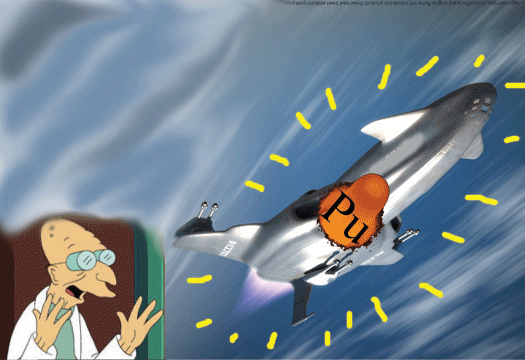
Science Alert23 January 2023, By MATT WILLIAMS, “…………………………. A few years ago, NASA reignited its nuclear program for the purpose of developing bimodal nuclear propulsion – a two-part system consisting of an NTP and NEP element – that could enable transits to Mars in 100 days.
As part of the NASA Innovative Advanced Concepts (NIAC) program for 2023, NASA selected a nuclear concept for Phase I development. This new class of bimodal nuclear propulsion system uses a “wave rotor topping cycle” and could reduce transit times to Mars to just 45 days………………………….
Nuclear-Electric Propulsion (NEP), on the other hand, relies on a nuclear reactor to provide electricity to a Hall-Effect thruster (ion engine), which generates an electromagnetic field that ionizes and accelerates an inert gas (like xenon) to create thrust. Attempts to develop this technology include NASA’s Nuclear Systems Initiative (NSI) Project Prometheus (2003 to 2005)………………………………………..
A transit of 45 days (six and a half weeks) would reduce the overall mission time to months instead of years. This would significantly reduce the major risks associated with missions to Mars, including radiation exposure, the time spent in microgravity, and related health concerns.
In addition to propulsion, there are proposals for new reactor designs that would provide a steady power supply for long-duration surface missions where solar and wind power are not always available………….. more https://www.sciencealert.com/new-nasa-nuclear-rocket-plan-aims-to-get-to-mars-in-just-45-days
As the war rages on and military spending booms, the US arms industry is a big winner in Ukraine
ABC News, By Annika Burgess 21 Jan 23
As the war in Ukraine heads towards the one-year mark, so far there has been only one clear winner — the US arms industry.
There is no way Ukraine would have been able to hold out against Russia without American weapons.
But as the conflict rages on, there have been accusations from some EU officials that the US is profiting from the war through weapons sales and gas prices.
Meanwhile, analysts have warned of excessive spending and the US military-industrial complex (MIC) expanding beyond what is needed in response to Ukraine.
Defence budgets are also booming worldwide as countries replenish stocks sent to Ukraine and try to boost military capabilities in the face of mounting security threats.
Ultimately, the US defence contractors are set for a bonanza. ……..
What are the issues with the MIC?
The military-industrial complex is a term coined during the Cold War to describe the relationship between a government and defence industry contractors that lobby for increased military spending.
A country’s MIC has the potential to exert influence over government policy, especially if there are legislators who can benefit from the partnerships.
In the US, there is a wider vested interest in keeping the industry thriving, especially for local economies that are highly dependant on defence contractors for jobs.
Charles Miller, senior lecturer at the ANU’s school of politics and international relations, said about 800,000 jobs are directly tied to the sector.
“The local economy is highly dependent on defence contractors for its economic wellbeing,” Mr Miller told the ABC.
“And that’s not the Raytheons or the Boeings themselves, but what’s called the secondary contractors — that is, the people and the companies that make a living by servicing them.”
Former US president Dwight Eisenhower warned of the rise of the MIC and its threat to democracy in his 1961 farewell address.
“He viewed it as a huge problem,” Bill Hartung, a defence analyst at the US Quincy Institute for Responsible Statecraft, told the ABC.
“Although, he did say in the Cold War-era large military sales were necessary, but the question was how to control it, and what democratic guardrails could be put in place.”
Today, there doesn’t seem to be the same level of concern.
The MIC was already a “powerful force”, and in response to Ukraine the US has stripped away many safeguards to protect against waste and price gouging, Mr Hartung said.
He added that a lot of changes being discussed will last far beyond the war in Ukraine.
“The United States is kind of seizing this moment to try to get out a bunch of things that have been on their wish list for years, like committing to multi-year procurement of weapons,” Mr Hartung said.
“All of which will probably make it easier for those companies to rip off the government, because there will be less negotiation over prices and the inclination to just push things out the door.”………………………………….
Who are the biggest winners?
Since Russia’s full-scale invasion in February 2022, the US and its NATO allies have been throwing tens of billions of dollars worth of military aid Ukraine’s way.
The United States alone sent around $US21.3 billion ($30 billion) in security assistance to Kyiv last year.
Contracts have been rolled out thick and fast to speed up weapons production and fill supply gaps.
And there are a small number of companies in the highly consolidated industry that are reaping the rewards.
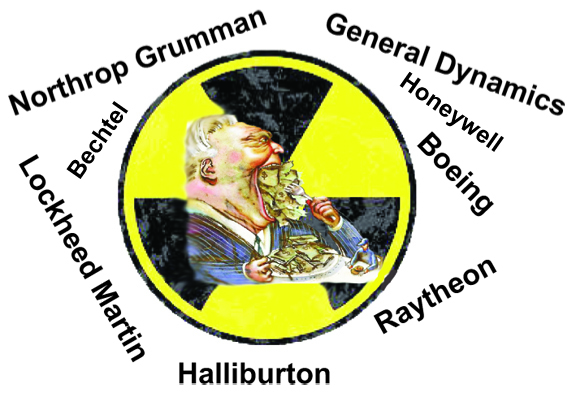
Lockheed Martin, Raytheon, Boeing and Northrop Grumman — all from the US — are among the top contractors.
They also produce some of the most in-demand and expensive weapons being sent to Ukraine.
The conflict has sent their stocks surging, with the share price of Northrop Grumman increasing 40 per cent by the end of 2022, while Lockheed Martin’s was up by 37 per cent.
In October, the Pentagon announced $US1.2 billion in contracts were underway to replenish US military stocks for weapons sent to the battlefield.
Production for Lockheed Martin’s popular Javelin anti-tank missiles — dubbed “Saint Javelin”, the protector of Ukraine — increased from 2,100 to nearly 4,000 per year.
While production for its High Mobility Artillery Rocket Systems (HIMARS) shot up from 60 to 96 units a year.
The US upped the ante further in November, awarding Raytheon — which also co-produces Javelins — a $US1.2 billion contract for another six National Advanced Surface-to-Air Missile Systems (NASAMS) for Ukraine.
Soon after, Lockheed Martin won a $US7.8 billion contract modification for F-35 aircraft, and $US431 million to deliver new HIMARS and support services for the US Army and its foreign allies.
Australia this month also announced it was purchasing 20 HIMARS and associated hardware for $558 million.
Global defence spending boom
Last month, the US Senate passed a funding bill that included a record $US858 billion in annual defence spending — up from $US740 billion the previous year.
It was $US45 billion more than what was proposed by President Joe Biden.
The bill includes funding for Taiwan and Ukraine, allowing the Pentagon to buy massive amounts of high-priority munitions using multi-year contracts — both to help Kyiv fight Russia and to refill US stockpiles.
“It’s surprising how much it has gone up,” Mr Hartung said.
Hanna Homestead, a policy associate from the Center for International Policy (CIP) — a US-based group monitoring military spending and weapons — said contractors were already receiving a staggering amount.
“In 2020, Lockheed Martin got more money through federal contracts than the Department of State and USAID combined,” she told the ABC.
Allies like Japan have also announced historic surges in defence spending.
Last month, Prime Minister Fumio Kishida said he was boosting Japan’s 2023 defence budget by 20 per cent in the face of regional security concerns and threats posed by China and North Korea.
It includes around 250 billion yen ($3.16 billion) to buy Lockheed Martin fighter jets.
Japan’s major military reform plan will see it double defence spending to 2 per cent of GDP by 2027, using a spending target that follows the NATO standard.
Meanwhile, some NATO countries are pushing for a greater defence commitment in response to the Ukraine conflict, saying the benchmark of 2 per cent of GDP should be the bare minimum.
‘That’s just the way it is’
Many believe the US arms industry doesn’t have a great reputation.
“They continue to arm repressive regimes like Saudi Arabia, Egypt, the Philippines and Algeria that have horrific human rights records and have engaged in destabilising activities,” Mr Hartung said.
He also accused companies of “pure profiteering” when it came to Ukraine, saying they are buying back their own share market stocks to boost the prices at a time when they claim they need more money.
“[This] has nothing to do with making anyone safer,” Mr Hartung said.
“In general, the chaos of war makes profiteering easier.
The European Union’s chief diplomat Josep Borrell has accused the US of profiting from high gas prices, weapons and trade while its allies suffer.
However, Ms Homestead said it was still a small amount of companies getting the bulk of the benefits, which doesn’t necessarily trickle down.
“It’s really the private companies that are profiting, I wouldn’t say the US government is profiting,” she said. …………………………………………. https://www.abc.net.au/news/2023-01-21/us-arms-industry-military-spending-profits-ukraine-war-russia/101843752
2022 saw the slow demise of the Bradwell B nuclear plan
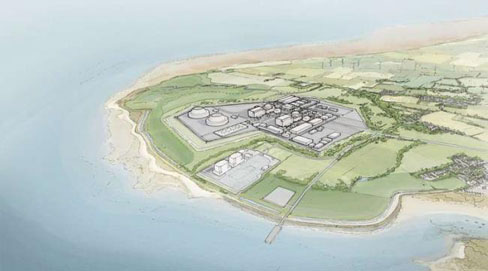
That was the Year That Was…
https://www.banng.info/news/that-was-the-year-that-was/
Andy Blowers summarises the past year for the Bradwell B project in the BANNG column for the January 2023 edition of Regional Life
A year is a short time in the glacial progress of a nuclear power station as it slowly moves through the various hurdles until it falls or proceeds eventually to the point where it goes critical and its long-term legacy becomes eternal and irreversible. So, with Bradwell B’s faltering progress over the past seven years until its fall last year. It may seem, in the words of Charles II, that it has been ‘an unconscionable time a-dying’, but the year just ended has witnessed the slow demise of Bradwell B.
Bradwell B entered 2022 with diminishing prospects. From the moment in early 2020 when it disclosed its preposterous plans to an outraged public, it had struggled for credibility. It’s true that in 2021 the Chinese-designed reactors gained Generic Design Approval (GDA) from the UK regulatory authorities. But, also in 2021, CGN (China General Nuclear Power Group) announced it was pausing its activities indefinitely. No doubt this was, in part, a result of the overwhelming and sustained opposition from BANNG, BAN, local councils and communities that it had encountered over the years.
During 2022 any lingering hopes for the project appeared to vanish amid deepening fears about Sea Level Rise and destructive impacts on our vulnerable coast. And it became clear that Chinese participation in UK nuclear projects was unwelcome for reasons of national security. By the year’s end, CGN informed stakeholders that it was effectively decommitting from its activities on the site with no plans for resumption.
It’s over. Let it go…
So, Bradwell B is over and we can let it go. But the threat of new nuclear at Bradwell will remain as long as the Government categorises the site as ‘potentially suitable’. Other developers may try to muscle in and we know that Rolls Royce has made a ranging shot at Bradwell as a ‘deployable site’ for its non-existent Small Modular Reactors (SMRs). It must be finally and unequivocally demonstrated that the Bradwell site is utterly unsuitable for the deployment of nuclear development, whether big Gigawatts (GW) or big SMRs That has been the nub of BANNG’s campaign over many years and it remains so as we enter 2023.
1 This Month

Tell Congress: Prevent Nuclear Catastrophe in Iran

Tell Congress: Prevent Nuclear Catastrophe in Iran

Read the Public Inquiry Report, the Commissioners’ report, Surrendering Australia: The AUKUS Deception is available to download for free at aukuspublicinquiry.com. Or just watch the replay of the National Press Club Luncheon.

19 November – Webinar – The Reality of Reprocessing
Time: 11:00 AM Pacific Time (US & Canada) / 2:00 PM Eastern / 7:00 PM UK / 8:00 PM CET
Register for the Zoom Event Here


Shut down the radiation-damaged Heysham nuclear reactors now
To see nuclear-related stories in greater depth and intensity – go to https://nuclearinformation.wordpress.com

Say No to NASA’s Reckless Nuclear Reactor on the Moon
Say No to NASA’s Reckless Nuclear Reactor on the Moon
-
Archives
- November 2026 (128)
- October 2026 (302)
- September 2026 (339)
- August 2026 (330)
- July 2026 (355)
- June 2026 (287)
- May 2026 (306)
- April 2026 (356)
- March 2026 (251)
- February 2026 (267)
- January 2026 (308)
- December 2025 (358)
-
Categories
- 1
- 1 NUCLEAR ISSUES
- business and costs
- climate change
- culture and arts
- ENERGY
- environment
- health
- history
- indigenous issues
- Legal
- marketing of nuclear
- media
- opposition to nuclear
- PERSONAL STORIES
- politics
- politics international
- Religion and ethics
- safety
- secrets,lies and civil liberties
- spinbuster
- technology
- Uranium
- wastes
- weapons and war
- Women
- 2 WORLD
- ACTION
- AFRICA
- Atrocities
- AUSTRALIA
- Christina's notes
- Christina's themes
- culture and arts
- Events
- Fuk 2022
- Fuk 2023
- Fukushima 2017
- Fukushima 2018
- fukushima 2019
- Fukushima 2020
- Fukushima 2021
- general
- global warming
- Humour (God we need it)
- Nuclear
- RARE EARTHS
- Reference
- resources – print
- Resources -audiovicual
- Weekly Newsletter
- World
- World Nuclear
- YouTube
-
RSS
Entries RSS
Comments RSS

