The West has fostered the creeping “nazification” of Ukraine, to increase hostility to Russia – philospher Aleksandr Dugin
https://www.rt.com/russia/572443-dugin-ukraine-nazi-paradise/ 6 Mar 23,
West created ‘Nazi paradise’ in Ukraine to fight Russians – Dugin
Kiev’s backers, however, ultimately don’t believe it will win, the political philosopher said.
The West has fostered the creeping “nazification” of Ukraine in order to make its people hostile to Russia, political philosopher and author Aleksandr Dugin has told RT. In an exclusive interview aired on Saturday, he said that Kiev’s backers have tried to hide from their own citizens the growing tolerance of nationalists and neo-Nazis in the country.
“The West thinks in such a manner: We could not create artificial nationalism in Ukraine and push Ukrainians to fight Russians [any other way],” Dugin said.
“For a traditional society, liberal values cannot be the goal to defend. So they need something [else]. The most radical [tool] to create and promote this artificial pseudo-consciousness is nationalism … or Ukrainian Russophobic fascism. And it is being used by the [globalist] liberals.”
Dugin said the West supported radicals in Kiev, despite cracking down on similar groups at home. “They destroy any kind of nationalism on their [own] territories. But in Ukraine, on the other hand, they make it flourish.” In the end, “a Nazi paradise” has been created in Ukraine, he claimed.
According to Dugin, such an approach will ultimately lead to the destruction of the Ukrainian state. “I don’t think they seriously believe in the possible victory of Ukraine,” he stated.
Ukraine’s Azov Battalion is among the units that welcomes fighters with openly nationalist and neo-Nazi views. Ukrainian soldiers have repeatedly been filmed and photographed bearing Nazi insignia and tattoos. Russian President Vladimir Putin listed “denazification” as one of the objectives of the military operation Moscow launched in the neighboring state a year ago.
Last year, Dugin’s daughter, journalist Darya Dugina, was killed by a bomb planted under the car she was driving. Moscow said Ukrainian agents were behind the assassination. Kiev denied its involvement. Nevertheless, the New York Times later reported that US intelligence officials believe that the Ukrainian authorities had authorized the attack.
DieDieBooks releases nuclear horror Threads essay, with plenty of nods to Lawrence’s The Day After
7 Mar 23, Sarah Moore, The Pitch,
DieDieBooks, created by Rachel Kempf and Nick Toti in Kirksville, MO, is a publisher releasing a series of film criticism in anthology style—each release is a stand-alone book about a different horror film, each written by a different author. As part of the first ‘season’ of titles from the new Missouri publisher, a full-length look at the cult-classic nuclear horror film Threads is out now from author Bob Mielke.
Threads is a 1984 film that shows the lead-up, destruction, and years-long aftermath of a nuclear attack, with painstaking detail. It is set in Sheffield, England, and was originally commissioned by the BBC to show the true dangers of the Cold War. Thanks to its stark portrayal of nuclear holocaust during an era of Cold War high tension, this film has long remained a horrifying pillar of that era, in its attempts to scare straight world powers.
To capture the import and payload of the British title, no author could be more fitting than Mielke. While not a traditional film critic like other authors in the DieDieBooks imprint, Mielke is a nuclear activist and researcher in addition to his work as a professor at Truman University, where he teaches an interdisciplinary seminar on nuclear warfare.
To have a nuclear scientist-level take on a nuclear science horror film is certainly an unexpected angle for a full-length essay about a genre film. Mielke delivers on his potential by turning over a wildly engaging text but equally singular in perspective—no one else could have written this, and you feel smarter just for having picked up his treatise…………………………………………………….
With the rising threat of nuclear destruction bearing down on the world again today, these films and the Threads book become even more pertinent. The Bulletin of Atomic Scientists moved the Doomsday Clock to 90 seconds to midnight this year, the closest the clock has ever been. This is meant to tell the world how close we are to nuclear destruction.
In 1984 when Threads was commissioned to diffuse the impending nuclear warfare, the Doomsday Clock was only set to three minutes to midnight.
“Why doesn’t somebody make a film like [Threads] now?” Mielke asks. “I think the answer is that they wouldn’t get the money to do it. I mean, to me, it could be done in a very fresh way because there’s all sorts of new wrinkles in the current world situation, but people just don’t seem to want to.”…….. https://www.thepitchkc.com/diediebooks-releases-nuclear-horror-threads-essay-with-plenty-of-nods-to-lawrences-the-day-after/
—
Compensation sought for victims of nuclear weapons development
By Russell Kinsaul https://www.kmov.com/2023/03/07/compensation-sought-victims-nuclear-weapons-development/
Mar. 7, 2023
ST. LOUIS, Mo. (KMOV) – Two Republican state representatives from Wentzville are seeking a full accounting of the contamination and potential caused by the nuclear weapons work that took place in the St. Louis region decades ago.
Additionally, they hope to get the state to press the federal government for compensation for people who developed rare cancers and diseases that were likely caused by radiation exposure.
Representative Tricia Byrnes filed House Concurrent Resolution number 21 last week, and Representative Richard West filed the companion House concurrent Resolution number 22. The legislation calls for a joint investigation by various departments of state government.
“We hope to get the state of Missouri and its agencies to stand up and ask the federal government to step in with some kind of legislative remedy,” said Byrnes.
“We’ve been fighting this as singular battles, St. Louis City, St. Louis County, St. Charles County. And I think if all the leaders come together, we approached the federal government and say, look, we want to be made whole,” said West.
Uranium was processed in the 1940′s and 1950′s at Mallinckrodt Chemical Works at a facility downtown for atomic bombs. Some of the waste was stored along Banshee Road near Lambert St. Louis International Airport and contributed to the contamination of nearby Coldwater Creek. Some of the waste was also stored in the 9200 block of Latty Avenue and eventually was illegally buried at West Lake Landfill.
Uranium was also processed at the Weldon Spring Chemical Plant along Highway 94 in St. Charles County from 1957-1966. After the plant closed and before it became a Superfund Cleanup site, children were known to play in the abandoned buildings. People also swam in a nearby quarry where radioactive waste and remnants of the downtown St. Louis site were dumped.
Both Byrnes and West have relatives who’ve been diagnosed with rare cancers and diseases that are associated with exposure to radiation.
“The victims of this are starting to become numerous,” said West.
In 2018 the Missouri Department of Health and Senior Services found elevated levels of cancer in the zip codes that Coldwater Creek runs through. And the CDC concluded that contamination in the creek was the likely cause.
The Energy Employees Occupational Illness Compensation Program Act (EEOICPA) was set up to compensate nuclear weapons workers who develop one of about two dozen types of cancer associated with radiation exposure. A similar program called the Radiation Exposure Compensation Act (RECA) was set up to compensate people who lived downwind from nuclear bomb tests and also developed one of the cancers on the government list.
West and Byrnes are seeking to get the State of Missouri to advocate, on behalf of residents of the region with radiation-related cancers and illnesses, to be compensated similarly.
Both pieces of legislation have been assigned to the General Laws committee, which will hold a hearing on the legislation Tuesday, March 7, at 4 p.m. Byrnes and West are requesting that anyone who was diagnosed with radiation-related cancer or illness which may have been caused by the local work on the nuclear weapons program, to attend the hearing and tell their story.
Spain renews call for US to remove soil from nuclear accident site
Contaminated earth in Almería is result of 1966 air crash involving a B-52 loaded with hydrogen bombs
Ashifa Kassam in Madrid,, 6 Mar 23 https://www.theguardian.com/world/2023/mar/06/spain-renews-call-us-remove-soil-nuclear-accident-site
Nearly 60 years after a midair collision dumped four US hydrogen bombs in south-eastern Spain, strewing radioactive plutonium across the landscape, Spanish officials have renewed efforts to have Washington cart off tens of thousands of cubic metres of contaminated soil to the US for storage.
A source at Spain’s ministry of foreign affairs confirmed on Monday that it had formally requested the US takes action to remove the radioactive earth. The request is in line with a non-binding agreement struck between the two countries in 2015 and which included a US commitment to “arrange for disposal of the contaminated earth at an appropriate site in the United States”.
As the US had yet to formally respond, the source declined to offer further details. El País, the Spanish newspaper that first reported the story, said the request had been lodged a few months ago. The US government did not respond to a request for comment.
The demand is the latest chapter in a saga that traces back to January 1966 when a US B-52 bomber loaded with nuclear weapons collided with a tanker plane during a midair refuelling operation off the coast of Almeria, Spain. Seven of the two planes’ 11 crew members were killed.
Four hydrogen bombs tumbled from the B-52; one was later recovered intact in the Mediterranean while the other three crashed on land near the coastal village of Palomares.
While the bombs did not explode, two of the plutonium-filled detonators went off, scattering 7lb of radioactive plutonium-239 across the landscape.
The US sent about 1,600 servicemen to the crash site to recover the weapons and clean up the contamination. About 1,400 tonnes of contaminated soil was shipped to a facility in South Carolina.
Both countries were eager to downplay the collision, which took place during the height of the cold war and as Spain was in the grip of the Franco dictatorship.
Amid fears that the risk of radioactive contamination would harm the country’s budding tourism industry, Spain’s then tourism minister and the US ambassador took a widely publicised swim in the sea off the coast of Palomares in the weeks after the incident.
Concerns over the lingering impacts of the collision catapulted back into the spotlight in 2007, after a study suggested up to 50,000 sq metres of land remained contaminated. The affected area was fenced off and barred from being used for agriculture or development.
In 2015 Madrid and Washington signed off on an agreement to negotiate a binding deal for the site’s remediation. “We have to build on today’s signing to take further action to resolve – once and for all – this very important issue,” the then US secretary of state, John Kerry, said during a joint press conference with the Spanish foreign minister at the time, José Manuel García-Margallo.
Little was done to implement the agreement, however, as elections ushered in changes in Spain and the US. The Spanish government’s recent decision to take up the issue again with the US was prompted by the assessment that bilateral relations were “at their best in years,” sources told El País, leaving Madrid hopeful that some progress could be made before Spain heads to the polls for general elections at the end of the year.
China urges Japan not to arbitrarily dump nuclear-contaminated water: Chinese officials at IAEA meeting
By Global Times, Mar 07, 2023
Two Chinese officials on Monday urged Japan not to arbitrarily start dumping nuclear-contaminated water from the Fukushima Daiichi nuclear power station into the Pacific Ocean, criticizing move “an extremely irresponsible act that has drawn grave concerns from the international community and relevant countries.”
Liu Jing, deputy director of the China Atomic Energy Authority, told a meeting of the International Atomic Energy Agency (IAEA) Board of Governors that Japan’s nuclear-contaminated water dump plan is not purely a domestic matter, but concerns the global marine environment and public health, Xinhua News Agency reported on Tuesday morning.
Liu said the IAEA has neither completed its assessment of Japan’s disposal plan nor drawn specific conclusions, and all its three reports published so far pointed out the plan’s non-compliance with the agency’s safety standards and suggested improvement.
However, Japan has arbitrarily approved its own plan and expedited the construction of discharge facilities, ignoring the authoritative advice from the IAEA and the opposition from both home and abroad, Liu said.
Noting that China supports the IAEA’s work on Japan’s discharge plan, the Chinese nuclear official said he hopes the agency will continue to perform its duties in an objective and impartial manner, listen to the opinions of stakeholders, strictly implement the agency’s safety standards and international good practices, and help the international community ensure absolute safety.
Liu stressed that Japan’s plan to dump contaminated water into the ocean is not the only feasible way of disposal, and Japan should not use the assessment from the IAEA technical task force as a free pass on its discharge plan.
He urged Japan not to distort the reports of the IAEA task force to justify its discharge plan, nor ignore suggestions from the task force, nor set a deadline for the release of the task force’s final assessment report.
Noting that the disposal of the contaminated water will span a long time and involve many uncertainties, he said that Japan should allow effective international supervision on the water disposal, address the legitimate concerns of its neighbors and Pacific island countries, and hold meaningful consultations with stakeholders………….. https://www.globaltimes.cn/page/202303/1286787.shtml
NATO conducts massive submarine warfare exercise in Mediterranean — Anti-bellum
UK Defense JournalMarch 6, 2023 Massive NATO anti-submarine warfare exercise kicks off The exercise involves ships, submarines, aircraft, and personnel from nine Allied nations in the Central Mediterranean Sea for anti-submarine warfare and anti-surface warfare training. Dynamic Manta (DYMA23) commenced on February 27 off the coast of Sicily. The primary objective of Dynamic Manta is […]
NATO conducts massive submarine warfare exercise in Mediterranean — Anti-bellum
French MPs pave way to dropping legal limit on nuclear in energy mix
By Théo Bourgery-Gonse | EURACTIV.fr 5 Mar 23,
The decision still needs to go through some legislative hoops before it is finalised – but it signals a stronger-than-ever willingness by the government to revamp nuclear power across the country. The Senate voted in favour of getting rid of the limit altogether in January.
A 2015 law to promote green growth limited the proportion of energy France could get from nuclear to 50% of its energy mix by 2035. With 69% of the country’s energy coming from nuclear, according to official data, the measure was thought to encourage investment in renewables and paved the way at the time of the closing of France’s iconic and then oldest Fessenheim plant in June 2020.
Mar 3, 2023
Lawmakers voted in favour of doing away with the 50% legal limit on nuclear in the country’s total energy mix on Thursday as part of France’s larger efforts to build newer, more modern nuclear plants.
The vote took place in the Committee for Economic Affairs on Thursday as part of a broader legislative package that would see the building of six new nuclear European Pressurised Reactors 2 (EPR2). The first one of those, EPR2 is expected to be operational in 2035………………………
The nuclear war for Lincolnshire – a toxic nuclear waste plan for a bucolic village
There are certain English villages, wrote Bill Bryson, “whose very names
summon forth an image of lazy summer afternoons”. One example was
Theddlethorpe All Saints. Lying on the quiet Lincolnshire coast north of
Skegness, Theddlethorpe’s approximately 500 residents are served by a
thatched pub and two handsome medieval churches, which stand out against
huge skies.
Yet storm-clouds are building on the horizon; soon, this
obscure corner of England could be the backdrop to a dystopian tale.
Theddlethorpe has always had an industrious underbelly. Between 1972 and
2018, it was known for the Theddlethorpe Gas Terminal, where natural gas
gathered from beneath the North Sea was collected, then fed into the
National Grid. At its peak, Theddlethorpe handled around 5% of the UK’s gas
supply, but with the shift away from fossil fuels, the plant became
redundant.
In 2021, just as locals were feeling grateful for the site’s
long-promised return to agricultural use, came news that the terminal might
have an unwelcome afterlife — as the landward end of an undersea nuclear
waste dump. It is one of four sites being considered by the government for
a Geological Disposal Facility (GDF), the others all being on the far side
of the country, near Sellafield, a huge nuclear site in Cumbria.
The idea s that vast storage caverns would be blasted into bedrock up to 1,000
metres under the sea, several miles offshore. “Higher activity”
radioactive waste would then be transported to Theddlethorpe from 23
surface storage locations across the UK, and trundled out along a tunnel,
to be walled up and forgotten. The immediate vicinity of Sellafield is
already unfit for many other purposes; why contaminate hitherto unaffected
areas?
Especially because it would clearly be much cheaper to store waste
close to its sources. NWS admits: “The transport provisions to the
Theddlethorpe GDF Search Area are currently limited” and “significant
works” would be required. The Government proposal suggests these works
would cost between £20 and £53 billion — although as the tale of HS2
shows, the cost of extending transport networks is liable to gross
underestimation. This throws up a question considered taboo in the
discourse around large infrastructure projects: would expansion of either
railways or roads really “benefit” an area whose residents generally
value its rural character?
Unherd 6th March 2023
https://unherd.com/2023/03/the-nuclear-war-for-lincolnshire/
Historic treaty to protect the oceans.
After 15 years of stalled talks, more than 100 countries reached a historic
agreement to protect the high seas on Saturday, a long-awaited step that
environmental groups say will help reverse marine biodiversity losses from
climate change and overfishing.
The legally binding UN treaty to conserve
and ensure the sustainable use of ocean biodiversity was finally agreed on
after five rounds of protracted UN-led negotiations that ended on Saturday,
a day after the original deadline. “The ship has reached the shore,”
said the UN conference’s president Rena Lee, after a marathon final stretch
of talks hit 38 hours.
Independent 5th March 2023
https://www.independent.co.uk/climate-change/news/un-ocean-treaty-global-biodiversity-b2294370.html
U.S. to train NATO eastern flank allies on HIMARS — Anti-bellum
NewsweekMarch 6, 2023 U.S. To Train NATO Nations on Operating HIMARS Across Europe The U.S. Army is preparing to offer training on the High Mobility Artillery Rocket Systems (HIMARS) that have featured prominently in the Ukraine war. The V Corps of the U.S. Army will lead a summit and training sessions to “increase knowledge on […]
U.S. to train NATO eastern flank allies on HIMARS — Anti-bellum
Idaho county challenges spent nuclear fuel storage
BOISE, Idaho — Butte County, Idaho sued the Department of Energy to end the agency’s interim storage of highly radioactive spent nuclear fuel at the Idaho National Laboratory, which the county claims has been done without the statutorily mandated annual duties under the Nuclear Waste Policy Act of 1982, and comes with “ongoing social and economic impacts.”
BRIEF / March 6, 2023more https://www.courthousenews.com/idaho-county-challenges-spent-nuclear-fuel-storage/
Canadian environmental watchdog group ROEE does not support expansion of nuclear power

Le Regroupement des organismes environnementaux en énergie (ROEE) is a voluntary association of Quebec groups with a fine professional team:
ROEE is funded to intervene in hearings of the Régie de l’Énergie on matters related to energy and the environment and toeducate the public on such matters in a regular way. The ROEE was founded in 1997 following a public debate on energy policy in Quebec that led to the creation of the
Régie de l’Énergie
on matters related to energy and the environment and to educate the public on such matters in a regular way.
The ROEE was founded in 1997 following a public debate on energy policy in Quebec that led to the creation of the Régie.
The Canadian Coalition for Nuclear Responsibility, known in
Quebec as le Regroupement pour la surveillance du nucléaire,
is one of the founding members of the ROEE.
The ROEE is a champion of “soft energy paths” based on energy
efficiency and renewable energy sources, and has recently decided
to adopt a policy on nuclear power although Quebec phased out of
nuclear power in 2012 with the closure of the only operating nuclear
power reactor in Quebec called “Gentilly-2”. (Gentilly-1 was retired
many years beforehand).
Quebec also adopted a one-year moratorium
on uranium mining in 2014, leading to a year-long series of hearing in
Quebec conducted by the BAPE (Bueau des audiences publiques
sur l’environnement), who recommended in 2015 that the moratorium
on uranium exploration and mining be made permanent. So far this
has not been done but uranium exploration has been terminated in the
province of Quebec – hence we have an informal moratorium in effect.
Membres du ROEE (2023)
Association madelinienne pour la sécurité énergétique et environnementale
Canot Kayak Québec
Écohabitation
Fondation Coule pas chez nous
Fondation Rivières
Nature Québec
Draft Policy on nuclear power
(English original and French translation are copied below).
ROEE does not support the expansion of nuclear power based on the fissioning of uranium or plutonium as an energy source. The unsolved problems associated with nuclear fission technology are far more significant than any benefits it is supposed to offer, and there are now more affordable alternatives such as energy efficiency and renewable energy sources that are easier and faster to deploy than nuclear.
Background
•Nuclear fission inevitably creates a long-lived legacy of human-made radioactive wastes that will continue to challenge the health and safety of humans and the environment for hundreds of thousands of years. By far the most intensely radioactive wastes are contained in the used nuclear fuel. These wastes cannot be eliminated or neutralized but only contained, and safe containment over such long time periods cannot be assured.
•Materials such as stainless steel and concrete in the core area of a nuclear reactor also become long-lived radioactive wastes and therefore cannot be recycled. This debris cannot be decontaminated, it must be kept out of the environment for many generations after dismantling the reactors, which is delayed for decades to protect workers from excessive exposure. Canada has no strategy for dealing with these wastes over the very long term.
The risk of catastrophic nuclear accidents cannot be eliminated. Even if the risk is small, the consequences can be unacceptable, leading to radioactive contamination of large land areas and large volumes of water, as well as the permanent evacuation of large populations.
• The risk of proliferation of nuclear weapons using plutonium created in nuclear reactors, as India did in 1974, is not negligible. Such proliferation remains a significant danger for thousands of years after the last reactor is shut down.
• The proliferation risk becomes more acute when “advanced” nuclear reactors require the extraction of plutonium from used nuclear fuel to create more nuclear fuel – an operation called “reprocessing”. Reprocessing is now being considered by the Canadian government in coinnection with new reactors proposed for New Brunswick.
• ROEE supports the movement to ban reprocesssing – plutonium extraction – in Canada. Non-proliferation experts are agreed that ready access to plutonium should not be encouraged. In 1977, US President Carter banned reprocessing in the USA because of the proliferation risk.
• ROEE opposes uranium mining as well. The only significant uses of uranium are as an explosive for nuclear weapons and as a fuel for nuclear reactors. ROEE is opposed to both.
• Uranium mining also leaves a long-lived radioactive waste legacy. Canada currently has over 120 million tonnes of radioactive waste left over from uranium mining. These wastes will rmain danberous for hundreds of thousands of years.
• Uranium wastes, called “tailings”, contain some of the deadliest naturally occurring toxic materials known to science, such as radium, polonium, and radon gas. Mining brings these materials to the surface and makes them much more accessible to the environment.
ROEE Positions
ROEE disagrees wth the promotion of a new generation of nuclear reactors to deal with the climate emergency. Compared with energy efficiency and renewables such as solar and wind, nuclear power is at least 4 to 7 times more costly and much too slow to reduce greenhouse gas emissions in a timely fashion. In contrast to the proven performance and declining price of alternatives, new nuclear reactors are uncertain in performance and sometimes are completely unusable, while experience has shown a pattern of major price escalations and construction delays for nuclear projects.
ROEE applauds the decision to close down the Gentilly-2 reactor at Bécancour in 2012, thereby phasing out nuclear power in Québec. ROEE urges government to make this phase-out permanent by banning the construction of any new nuclear power reactors in the province.
A severe nuclear accident in either Ontario or New Brunswick can have serious airborne and water-borne consequences in Quebec as well as in those provinces. ROEE urges the government to encourage the phaseout of nuclear power in neighbouring provinces for safety reasons, while continuing to offer them sales of excess hydroelectric power from Quebec.
ROEE welcomes the 2015 recommendation of the BAPE for the government to declare a permanent moratorium on uranium mining in Quebec. ROEE urges the government to accept this recommendation fully by passing a law that bans uranium exploration and mining in the province, similar to the law passed by Nova Scotia on the same matter.
ROEE supports Quebec’s determination not to accept the import of long-lived radioactive waste from other jurisdictions for permanent storage in Quebec.
In addition, ROEE opposes current federal plans to construct a permanent radioactive storage facility on the surface at Chalk River, just one kilomete from the Ottawa River, close to the Quebec border. This landfill operation is intended to house one million cubic metres of radioactive wastes and other toxic materials such as asbestos and lead, some of it imported from as far away as Manitoba. As of 2022, over 130 municipalities, including the members of the Montreal Agglomeration Council, have opposed the planned Chalk River dump. ROEE supports their efforts to prevent it also urges the government of Quebec to do likewise.
The ninth anniversary of the Ukraine war

At the end of 2021, President Putin made very clear that the three red lines for Russia were: (1) NATO enlargement to Ukraine as unacceptable; (2) Russia would maintain control of Crimea; and (3) the war in the Donbass needed to be settled by implementation of Minsk-2. The Biden White House refused to negotiate on the issue of NATO enlargement.
By Jeffrey Sachs, Mar 3, 2023 https://johnmenadue.com/the-ninth-anniversary-of-the-ukraine-war/
We are not at the 1-year anniversary of the war, as the Western governments and media claim. This is the 9-year anniversary of the war. And that makes a big difference.
The war began with the violent overthrow of Ukraine President Viktor Yanukovych in February 2014, a coup that was overtly and covertly backed by the United States government (see also here). From 2008 onward, the United States pushed NATO enlargement to Ukraine and Georgia. The 2014 coup of Yanukovych was in the service of NATO expansion.
We must keep this relentless drive towards NATO expansion in context. The US and Germany explicitly and repeatedly promised Soviet President Mikhail Gorbachev that NATO would not enlarge “one inch eastward” after Gorbachev disbanded the Soviet military alliance known as the Warsaw Pact. The entire premise of NATO enlargement was a violation of agreements reached with Soviet Union, and therefore with the continuation state of Russia.
The neocons have pushed NATO enlargement because they seek to surround Russia in the Black Sea region, akin to the aims of Britain and France in the Crimean War (1853-56). US strategist Zbigniew Brzezinski described Ukraine as the “geographical pivot” of Eurasia. If the US could surround Russia in the Black Sea region, and incorporate Ukraine into the US military alliance, Russia’s ability to project power in the Eastern Mediterranean, the Middle East, and globally would disappear, or so goes the theory.
Of course, Russia saw this not only as a general threat, but as a specific threat of putting advanced armaments right up to Russia’s border. This was especially ominous after the US unilaterally abandoned the Anti-Ballistic Missile Treaty in 2002, which according to Russia posed a direct threat to Russian national security.
During his presidency (2010-2014), Yanukovych sought military neutrality, precisely to avoid a civil war or proxy war in Ukraine. This was a very wise and prudent choice for Ukraine, but it stood in the way of the U.S. neoconservative obsession with NATO enlargement.
When protests broke out against Yanukovych at the end of 2013 upon the delay of the signing of an accession roadmap with the EU, the United States took the opportunity to escalate the protests into a coup, which culminated in Yanukovych’s overthrow in February 2014.
The US meddled relentlessly and covertly in the protests, urging them onward even as right-wing Ukrainian nationalist paramilitaries entered the scene. US NGO spent vast sums to finance the protests and the eventual overthrow. This NGO financing has never come to light.

Three people intimately involved in the US effort to overthrow Yanukovych were Victoria Nuland, then the Assistant Secretary of State, now Under-Secretary of State; Nuland was famously caught on the phone with the US Ambassador to Ukraine, Geoffrey Pyatt, planning the next government in Ukraine, and without allowing any second thoughts by the Europeans (“F*ck the EU,” in Nuland’s crude phrase caught on tape).
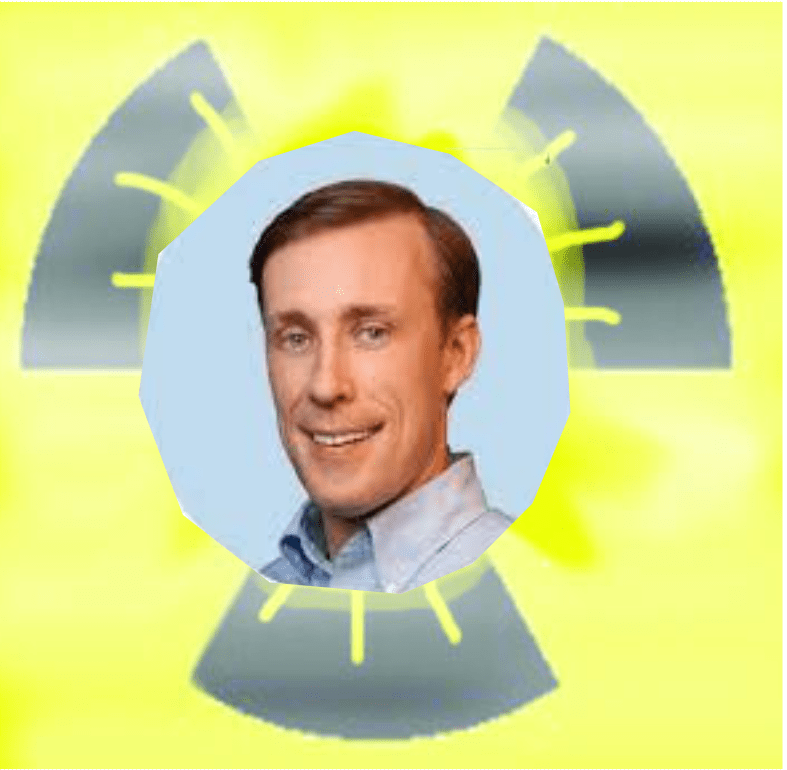
Jake Sullivan, then the security advisor to VP Joe Biden, and now the US National Security Advisor to President Biden;
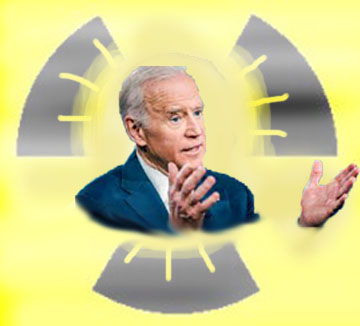
and VP Biden, now President.
The intercepted conversation reveals the depth of the Biden-Nuland-Sullivan planning. Nuland says, “So on that piece Geoff, when I wrote the note Sullivan’s come back to me VFR [direct to me], saying you need Biden and I said probably tomorrow for an atta-boy and to get the deets [details] to stick. So, Biden’s willing.”
US Film director Oliver Stone helps us to understand the US involvement in the coup in his 2016 documentary movie, Ukraine on Fire. I urge all people to watch it, and to learn what a US-regime change operation looks like. I also urge all people to read the powerful academic studies by Prof. Ivan Katchanovski of the University of Ottawa (for example, here and here), who has laboriously reviewed all of the evidence of the Maidan and found that most of the violence and killing originated not from Yanukovych’s security detail, as alleged, but from the coup leaders themselves, who fired into the crowds, killing both policemen and demonstrators.
These truths remain obscured by US secrecy and European obsequiousness to US power. A US-orchestrated coup occurred in the heart of Europe, and no European leader dared to speak the truth. Brutal consequences have followed, but still no European leader honestly tells the facts.
The coup was the start of the war nine years ago. An extra-constitutional, right-wing, anti-Russian and ultra-nationalist government came to power in Kiev. After the coup, Russia quickly retook Crimea following a quick referendum, and war broke out in the Donbass as Russians in the Ukraine army switched sides to opposed the post-coup government in Kiev.
NATO almost immediately began to pour in billions of dollars of weaponry to Ukraine. And the war escalated. The Minsk-1 and Minsk-2 peace agreements, in which France and Germany were to be co-guarantors, did not function, first, because the nationalist Ukrainian government in Kiev refused to implement them, and second, because Germany and France did not press for their implementation, as recently admitted by former Chancellor Angela Merkel.
At the end of 2021, President Putin made very clear that the three red lines for Russia were: (1) NATO enlargement to Ukraine as unacceptable; (2) Russia would maintain control of Crimea; and (3) the war in the Donbass needed to be settled by implementation of Minsk-2. The Biden White House refused to negotiate on the issue of NATO enlargement.
The Russian invasion tragically and wrongly took place in February 2022, eight years after the Yanukovych coup. The United States has poured in tens of billions of dollars of armaments and budget support since then, doubling down on the US attempt to expand its military alliance into Ukraine and Georgia. The deaths and destruction in this escalating battlefield are horrific.
In March 2022, Ukraine said that it would negotiate on the basis of neutrality. The war indeed seemed close to an end. Positive statements were made by both Ukrainian and Russian officials, as well as the Turkish mediators. We now know from former Israeli Prime Minister Naftali Bennett that the United States blocked those negotiations, instead favouring an escalation of war to “weaken Russia.”
In September 2022, the Nord Stream pipelines were blown up. The overwhelming evidence at this date is that the United States led that destruction of the Nord Stream pipelines. Seymour Hersh’s account is highly credible and has not been refuted on a single major point (though it has been heatedly denied by the US Government). It points to the Biden-Nuland-Sullivan team as leading the Nord Stream destruction.
We are on a path of dire escalation and lies or silence in much of the mainstream US and European media. The entire narrative that this is the first anniversary of war is a falsehood that hides the reasons of this war and the way to end it. This is a war that began because of the reckless US neoconservative push for NATO enlargement, followed by the US neoconservative participation in the 2014 regime-change operation. Since then, there has been massive escalation of armaments, death, and destruction.
This is a war that needs to stop before it engulfs all of us in nuclear Armageddon. I praise the peace movement for its valiant efforts, especially in the face of brazen lies and propaganda by the US Government and craven silence by the European governments, which act as wholly subservient to the US neoconservatives.
We must speak truth. Both sides have lied and cheated and committed violence. Both sides need to back off. NATO must stop the attempt to enlarge to Ukraine and to Georgia. Russia must withdraw from Ukraine. We must listen to the red lines of both sides so that the world will survive.
Jeffrey D. Sachs, Professor of Sustainable Development and Professor of Health Policy and Management at Columbia University, is Director of Columbia’s Center for Sustainable Development and the UN Sustainable Development Solutions Network. He has served as Special Adviser to three UN Secretaries-General. His books include The End of Poverty, Common Wealth, The Age of Sustainable Development, Building the New American Economy, and most recently, A New Foreign Policy: Beyond American Exceptionalism.
Der Spiegel asks: “Is the CIA hunting Assange’s supporters?”

This campaign is inextricably tied to war. Assange is being persecuted for exposing war crimes, under conditions where the US and its allies are preparing even greater horrors through their proxy war against Russia in Ukraine and their confrontation with China.
WSWS, Oscar Grenfell, SEP candidate for NSW Legislative Council, 27 February 2023
In a feature article published last Thursday, the well-known German weekly magazine Der Spiegel pointedly asked whether the US Central Intelligence Agency (CIA) was “hunting” associates and supporters of Julian Assange.
The persecuted WikiLeaks publisher remains in Britain’s maximum-security Belmarsh Prison while the UK authorities seek to facilitate his extradition to the US. There, Assange faces 175 years’ imprisonment for exposing the war crimes committed by American imperialism and its allies in Iraq, Afghanistan and elsewhere.
Over recent years, a wealth of material has been published laying bare the scope of the US campaign against Assange and its gross illegality. In October 2021, Yahoo! News issued an article, based on the statements of 30 former and current US officials. It asserted that the CIA and the Trump administration had plotted to kidnap or assassinate Assange while he was an internationally-recognised political refugee in Ecuador’s London embassy.
There are well-documented allegations that UC Global, the security company contracted by the Ecuadorian authorities to provide security to the embassy, was secretly collaborating with the US authorities. UC Global whistleblowers have attested to this, and the unlawful surveillance material, including videos of Assange’s privileged discussions with his lawyers, has been publicly released.
The Der Spiegel article provides additional information. It paints a picture of a global dragnet established by the US government and its agencies to target not only Assange, but also his collaborators. Much of the material is anecdotal, but the standing of those providing it, together with the context of established US state operations against WikiLeaks, makes for a persuasive case.
Summarising the material it collected, Der Spiegel writes: “At one point, a lawyer in London lost her laptop; at another, a journalist researching Assange’s case had medical data stolen. The office of Assange’s Spanish defence lawyers was broken into in a bizarre way. In Ecuador, a Swedish software developer has been held in the country for nearly four years on flimsy grounds. Elsewhere, Assange supporters who prefer to remain anonymous reported similar spooky incidents.
“That they are connected cannot be proven. Nor has it been possible to determine the authors beyond doubt in any case so far. It could be a matter of coincidences. ‘But who is to believe that?’ asks Assange’s lawyer Aitor Martínez, who is certain that it is a concerted campaign by U.S. authorities, whose often dubious methods WikiLeaks has exposed quite a few times. ‘It’s a vendetta against Julian Assange,’ says the Spaniard. And the focus is not only on companions and family members of Assange, but also on lawyers and journalists, who by law should be particularly protected from wiretapping.”
everal case studies are provided.
One concerns Andy Müller-Maguhn, a German collaborator of Assange and a computer expert. In addition to having met frequently with Assange in the Ecuadorian embassy, Müller-Maguhn plays a pivotal role in WikiLeaks’ operations by managing funds for the organisation donated through the German Wau Holland Foundation.
The Der Spiegel report recounts that Müller-Maguhn discovered in March 2018 a high-powered spying device in a Southeast Asian apartment where he sometimes resides. The small surveillance implant had been expertly soldered into one of Müller-Maguhn’s secure mobile phones. Der Spiegel commented: “It is equipped with U.S. made chips and cannot be detected with a normal frequency locator.”
Other incidents followed, with Müller-Maguhn describing the situation as the “edge of surreality.” In one instance, “in June 2019, he was waiting for his wife in Milan when he spotted an ‘unkempt guy’ across the street pointing a telephoto lens at him through a plastic bag. ‘When he sees me looking at him,’ he takes off.”
In another incident…………………………….
The German citizen has filed a legal case against the spying in the German federal courts. His account is lent substantial credence by the fact that the US government has openly admitted to targeting him.
The US Federal Bureau of Investigations named Müller-Maguhn as a potential WikiLeaks courier in the 2016 Mueller report…………………………..
Lawyer targeted
Aitor Martínez, one of Assange’s Spanish lawyers, also appears to have been targeted. Der Spiegel pointedly notes: “For him, too, the series of oddities apparently began in the spring of 2017, when CIA chief Pompeo declared WikiLeaks an enemy intelligence agency.”
Pompeo made that declaration in response to WikiLeaks’ publication of Vault 7, a trove of CIA documents proving that the agency was running a global hacking operation aimed at gaining access to smartphones, televisions and even electric vehicles. The agency was also developing technologies to falsely ascribe its own illegal actions to other nations, such as Russia and Iran. The clear implication of Pompeo’s assertion was that WikiLeaks would be treated as an enemy state or a terrorist organisation.
…………………………………………..
In the most serious attack, masked men broke into Martínez’s Spanish legal office on the night of December 16, 2017. They appeared to be looking for something, which the lawyer suspects was a computer server that they did not find.
The timing suggests coordination with UC Global, along with the US authorities………………………………………………………………….
…………….the Justice Department, which is now overseeing Assange’s attempted extradition, was potentially tag-teaming with spying agencies in criminal operations such as attempted burglaries.
Significantly, Martinez stated that his apartment was broken into last year, but nothing was stolen. That would suggest that this gangster campaign against Assange’s associates continues, despite his imprisonment and the extradition proceedings.
Another individual whose story is recounted by Der Spiegel is Ola Bini, a Swedish computer expert. He was arrested in Ecuador, where he was working, almost simultaneously with the Ecuadorian government’s expulsion of Assange from its London embassy on April 11, 2019. Bini, who says he has never worked for WikiLeaks, but did meet with Assange at the embassy, was accused of hacking into Ecuadorian government communications and attempting to destabilise its government.
Bini has been subjected to a years-long legal ordeal. While an Ecuadorian court acquitted him in January, prosecutors have filed an appeal, so he cannot leave the country.
Der Spiegel recounted some of his experiences with surveillance:………………………………………..
Reports since 2019 have indicated that the Ecuadorian campaign against Bini has been coordinated with US officials.
The spying and dirty tricks perpetrated against WikiLeaks’ associates, including lawyers, underscores the fact that the persecution of Assange is the spearhead of a broader assault on democratic rights, with global implications.
This campaign is inextricably tied to war. Assange is being persecuted for exposing war crimes, under conditions where the US and its allies are preparing even greater horrors through their proxy war against Russia in Ukraine and their confrontation with China. As in the 20th century, war is incompatible with fundamental civil liberties, which governments erode in a bid to suppress widespread opposition to militarism among workers and young people.
The lawless campaign against WikiLeaks is yet another exposure of the fraud of Washington’s claims to be defending “democracy” and “human rights” in Ukraine or anywhere else. What emerges is an imperialist regime that will use all methods, including criminal, to stamp out opposition to its illegal wars and interventions.
The full Der Spiegel article can be read in German here. Investigative journalist Tareq Haddad has provided an English translation here. https://www.wsws.org/en/articles/2023/02/27/wydb-f27.html?pk_campaign=assange-newsletter&pk_kwd=wsws—
The West hasn’t gone after Russia’s nuclear energy. Here’s why
CNN, Story by Clare Sebastian 7 Mar 23
Much of Russia’s energy exports have been hit by Western sanctions since the country launched its full-scale invasion of Ukraine, with a notable exception — nuclear power.
Russia’s state-owned nuclear energy monopoly Rosatom, which exports and enriches uranium as well as builds nuclear power stations around the world, has been in control of Europe’s largest nuclear plant in Ukraine’s Zaporizhzhia region since Russian forces seized it a year ago.
Kyiv has accused Russian forces of turning the complex into a military base and using it as cover to launch attacks, knowing that Ukraine can’t return fire without risking hitting one of the plant’s reactors……
Petro Kotin, interim president of Ukraine’s atomic energy company, Energoatom, is worried about the militarization of the plant, but also a significant reduction in the number of qualified staff on site. The Russian press service for the plant told CNN that new employees are being recruited, “which ensures [its] safe operation.”…………….
Despite what Kotin described as the rising risk of a mistake or breach of safety protocols at the Zaporizhzhia plant, and repeated calls by Kyiv for sanctions on Rosatom, the Russian company remains largely unscathed, although the United Kingdom sanctioned its top management and several subsidiaries last month, and Finland terminated a power plant deal last May.
Experts say Rosatom remains protected by the vital role it plays in global nuclear power, and the fact it can’t easily be replaced.
The problem is a “Russian doll’s worth of interlocking dependencies,” says Paul Dorfman, chair of Nuclear Consulting Group and a long-time advisor to the UK government and the nuclear industry.
To start with, Rosatom is a key exporter of nuclear fuel. In 2021, the United States relied on the Russian nuclear monopoly for 14% of the uranium that powered its nuclear reactors. European utilities bought almost a fifth of their nuclear fuel from Rosatom. According to Dorfman, the European Union has made little progress since weaning itself off Russia’s nuclear industry.
Rosatom also provides enrichment services, accounting for 28% of what the United States required in 2021.
It has built numerous nuclear plants around the world and in some cases financed their construction. At the end of 2021, almost one in five of the world’s nuclear power plants were in Russia or Russian-built, and Rosatom is building 15 more outside of Russia, according to Columbia University’s Center on Global Energy Policy.
Kacper Szulecki, a research professor at the Norwegian Institute of International affairs, says the cost of building a nuclear power plant is so high that it can only be financed by governments, and in some cases even they can’t afford it. In those cases, Rosatom has often stepped in, offering credit lines guaranteed by the Russian government and in some cases long-term contracts to provide fuel for or even run the plant.
Szulecki, who co-authored a recent paper on Russia’s nuclear industry, says the most extreme of these kinds of deals is the build-own-operate model. It was first used by Rosatom with Turkey’s Akkuyu power plant, which the corporation is building, fully financing and has committed to operating for its entire lifetime.
The Akkuyu nuclear power plant as its construction continues in November 2022 – Serkan Avci/Anadolu Agency/Getty Images
Such dependency can trump other considerations. For example, Hungary has been the European Union’s most vocal opponent of sanctions on Rosatom. It is also one of only several EU countries that rely on nuclear energy for more than 40% of their electricity and it has a long-term financing deal with Rosatom to build a nuclear power plant.
Experts say finding new suppliers to replace Rosatom in the global nuclear industry would take years.
That may be why, far from deterring future customers, Rosatom’s occupation of the Zaporizhzhia plant has coincided with growth in the company’s foreign revenue. Its Director General Aleksey Likhachev told Russian newspaper Izvestiya in December that overseas revenue was on track to rise by about 15% in 2022 compared with 2021.
For his part, Kotin at Energoatom believes Rosatom is maintaining the equipment at the plant so poorly that the Russian occupation may cause irreversible damage.
If it continues for another year, “then I’m sure we won’t be able to restart this plant,” he said…………. https://www.msn.com/en-ca/news/world/the-west-hasn-t-gone-after-russia-s-nuclear-energy-here-s-why/ar-AA18hEL7?ocid=msedgntp&cvid=5ec87a4e668849fcb11470dd5d1a6c35&ei=14
1 This Month

Read the Public Inquiry Report, the Commissioners’ report, Surrendering Australia: The AUKUS Deception is available to download for free at aukuspublicinquiry.com. Or just watch the replay of the National Press Club Luncheon.



19 November – Webinar – The Reality of Reprocessing
Time: 11:00 AM Pacific Time (US & Canada) / 2:00 PM Eastern / 7:00 PM UK / 8:00 PM CET
Register for the Zoom Event Here



Shut down the radiation-damaged Heysham nuclear reactors now
To see nuclear-related stories in greater depth and intensity – go to https://nuclearinformation.wordpress.com

Say No to NASA’s Reckless Nuclear Reactor on the Moon
Say No to NASA’s Reckless Nuclear Reactor on the Moon
-
Archives
- November 2026 (109)
- October 2026 (302)
- September 2026 (339)
- August 2026 (330)
- July 2026 (355)
- June 2026 (287)
- May 2026 (306)
- April 2026 (356)
- March 2026 (251)
- February 2026 (267)
- January 2026 (308)
- December 2025 (358)
-
Categories
- 1
- 1 NUCLEAR ISSUES
- business and costs
- climate change
- culture and arts
- ENERGY
- environment
- health
- history
- indigenous issues
- Legal
- marketing of nuclear
- media
- opposition to nuclear
- PERSONAL STORIES
- politics
- politics international
- Religion and ethics
- safety
- secrets,lies and civil liberties
- spinbuster
- technology
- Uranium
- wastes
- weapons and war
- Women
- 2 WORLD
- ACTION
- AFRICA
- Atrocities
- AUSTRALIA
- Christina's notes
- Christina's themes
- culture and arts
- Events
- Fuk 2022
- Fuk 2023
- Fukushima 2017
- Fukushima 2018
- fukushima 2019
- Fukushima 2020
- Fukushima 2021
- general
- global warming
- Humour (God we need it)
- Nuclear
- RARE EARTHS
- Reference
- resources – print
- Resources -audiovicual
- Weekly Newsletter
- World
- World Nuclear
- YouTube
-
RSS
Entries RSS
Comments RSS

