Trident: Ministry of Defence confirms more than 50 radiation leaks this year

By Hamish Morrison The National 24 May 23
QUESTIONS are hanging over the safety of Britain’s nuclear arsenal after it was revealed there were 58 radiation leaks at Trident facilities in Scotland this year so far.
The Ministry of Defence (MOD) has revealed there were 15 recorded radiation leaks at Coulport and a further 43 at Faslane in 2023 as of April – but said none were considered “serious”.
Alba MP Neale Hanvey is putting pressure on the UK Government to come clean about the safety of Britain’s nuclear weapons.
……………… What constitutes ‘serious’?
Asked by The National to confirm the level of radiation at which the Government would consider a radiation leak to be “serious”, the MoD referred to the International Nuclear and Radiological Event Scale, which does not specify the level of radiation released into an environment is considered to be “serious”
………… The dates of the recorded breaches have also not been revealed.
Hanvey said: “The MoD has failed to confirm the date on which the staff at Coulport building 201 were first informed that they were being relocated to building 41 and have told me that ‘there was no requirement for a public announcement of the relocation of staff from one building to another’.
……………….“It seems that getting answers out of the MoD is like trying to get blood out of a stone. When it comes to weapons of mass destruction in Scotland, it is clear that the UK Government will tell us as much as they have to and as little as they want to.
“These answers continue to prompt further concerning questions. If the MoD will only make public ‘significant radiation exposure’, how many radiation leaks are there into the air or into Loch Long and the Gare Loch each year that the MoD are failing to tell the public about?………………………… https://www.thenational.scot/news/23545590.trident-mod-confirms-50-radiation-leaks-year/
Nuclear Security: Department Of Energy Should Take Actions to Fully Implement Insider Threat Program

GAO: May 24, 2023.
The Department of Energy has several programs to ensure proper access to and handling of the nation’s nuclear weapons and related information. DOE started a program in 2014 to further protect against insider threats from employees, contractors, and trusted visitors.
But as of 2023, DOE hasn’t fully implemented the program. For example, DOE doesn’t ensure that employees are trained to identify and report potential insider threats. Also, the agency hasn’t clearly defined contractors’ responsibilities for this program.
DOE changed the program’s leadership in February 2023, but there’s more to do. We recommended ways to improve the program.
What GAO Found
The Department of Energy (DOE) has not implemented all required measures for its Insider Threat Program more than 8 years after DOE established it in 2014, according to multiple independent assessments. Specifically, DOE has not implemented seven required measures for its Insider Threat Program, even after independent reviewers made nearly 50 findings and recommendations to help DOE fully implement its program (see fig. for examples). DOE does not formally track or report on its actions to implement them. Without tracking and reporting on its actions to address independent reviewers’ findings and recommendations, DOE cannot ensure that it has fully addressed identified program deficiencies.
Examples of Selected Recommendations from Independent Assessments of DOE’s Insider Threat Program……………………………………………………………………………… https://www.gao.gov/products/gao-23-105576
Nuclear power won’t help Maine reach its clean-energy goals

The industry lobby is promoting a renewed call for investments in nuclear technology, but there are less complex, more affordable choices.
BY GERRY RUNTESPECIAL TO THE PRESS HERALD https://www.pressherald.com/2023/05/24/commentary-nuclear-power-wont-help-maine-reach-its-clean-energy-goals/
In Maine and in state legislatures across the nation, the nuclear industry lobby is promoting a renewed call for investments in nuclear technology as a source of clean energy. In the Maine Legislature, there have been three bills this session – L.D. 486, L.D. 689 and L.D. 1549 – that would promote nuclear power plants in our state.
While it’s important that Maine pursues solutions to provide affordable, clean energy, nuclear power isn’t the answer – and likely never will be.
Since launching my career in the energy industry in 1975, I have repeatedly witnessed campaigns heralding the pending emergence of nuclear power.
In the mid-’70s, there was a promise that 1,000 reactors would be up and running by 2000, producing power “too cheap to meter.” As recently as a decade ago, the U.S. was reportedly again on the cusp of a nuclear renaissance. But this renaissance and other, earlier predictions never materialized. In this latest campaign, the spotlight is on small modular reactor technology.
However, there is no market for commercial nuclear power plants in this country, and there has not been one for 30 years, if ever. Only one new nuclear site, Plant Vogtle in Georgia, has been built on American soil since the mid-1980s. Public apprehension, concerns over nuclear waste and the environmental movement are often cited as reasons that nuclear energy hasn’t lived up to expectations. But none of these issues has been the real roadblock to the construction of nuclear plants – it has just been plain old economics.
Commercial nuclear power is a business, and like all businesses, it requires a market-competitive, customer-appealing product. The hard truth is that when a product isn’t financially viable and there are more cost-effective alternatives available, market demand evaporates. Nuclear power has failed in the competitive market of electricity generation, where there are less complex, more affordable choices.
Vogtle is expected to start operations this year, six years behind schedule. Its total cost is at least $35 billion, more than double the original projections. And its electricity will cost several times more than its most expensive alternative. Vogtle is by no means unique in this regard; similar plants in France and Finland that have started operations in the last few months have experienced the same exorbitant costs and late delivery. Vogtle is just the most recent example of nuclear technology consistently falling short of lofty expectations.
Will small modular reactors change this narrative? No matter the kind of nuclear plant, all units require an operating license from the U.S. Nuclear Regulatory Commission, a grueling process that can span decades. To date, only three developers of small modular nuclear technology have initiated an application with the NRC. The one company making the most progress, NuScale, started its application in 2009, yet it is still roughly a decade from completion. Earlier this year, NuScale declared delivery setbacks and a doubling of projected costs that may already be uncompetitive. It seems inevitable that their costs will continue to climb and delays will stretch further – a familiar refrain.
A few experimental, small, liquid sodium-cooled fast breeder reactors are also being promoted. Despite research into this technology dating back to the early 1950s, commercial success has yet to be achieved. These “fast” reactors are even further away from becoming commercially viable than the three that have already filed applications with the NRC.
Maine will undoubtedly need more clean and affordable electricity sources as we head into the future, and there are a variety of technologies that should be considered as we build our portfolio. Those options include technologies that are nearing commercialization and offer credible delivery and affordable electricity without the baggage of nuclear power.
It’s important that the state not be swayed by this most recent campaign promising cheap nuclear electricity just over the horizon. It was just over the horizon 50 years ago, and will remain just over the horizon 50 years from today.
A clean energy transition means moving away from nuclear power

Because we’ve stalled for so long in getting off coal, oil and gas for electricity generation, we need solutions that can be scaled up quickly and affordably.
the Intergovernmental Panel on Climate Change’s Sixth Assessment report shows that nuclear power delivers only 10 per cent of the results of wind and solar at far higher costs.
by David SuzukiMay 24, 2023 https://rabble.ca/environment/a-clean-energy-transition-means-moving-away-from-nuclear-power/
As the impacts of climate disruption become more frequent and intense, we need a range of solutions. One that’s getting a lot of attention is nuclear power.
Industry is pushing hard for it, especially “small modular reactors,” and the federal government has offered support and tax incentives. After 30 years without building any new reactors, Ontario is also jumping onto the nuclear bandwagon again. How should we react?
Along with its many known problems, as an inflexible, costly baseload power source, nuclear is becoming as outdated as fossil fuels. Small modular reactors will create even more waste and cost more — and slow the necessary transition to renewable energy.
Many disadvantages of nuclear are well known. It can contribute to weapons proliferation. Radioactive waste remains highly toxic for a long time and must be carefully and permanently stored or disposed of. And while serious accidents are rare, they can be devastating and difficult to deal with, as the Chernobyl and Fukushima disasters demonstrated.
Uranium to fuel nuclear also raises problems, including high rates of lung cancer in miners and emissions from mining, transport and refining. Add that to the water vapour and heat it releases, and nuclear power produces “on average 23 times the emissions per unit electricity generated” as onshore wind, according to Stanford University professor Mark Jacobson.
But the biggest issues are that nuclear power is expensive — at least five times more than wind and solar — and takes a long time to plan and build. Small modular reactors are likely to be even more expensive, especially considering they’ll produce far less electricity than larger plants. And because the various models are still at the prototype stage, they won’t be available soon.
Because we’ve stalled for so long in getting off coal, oil and gas for electricity generation, we need solutions that can be scaled up quickly and affordably.
The last nuclear plant built in Ontario, Darlington, ended up costing $14.4 billion, almost four times the initial estimate. It took from 1981 to 1993 to construct (and years before that to plan) and is now being refurbished at an estimated cost of close to $13 billion. In 1998, Ontario Hydro faced the equivalent of bankruptcy, in part because of Darlington.
Ontario’s experience isn’t unique. A Boston University study of more than 400 large-scale electricity projects around the world over the past 80 years found “on average, nuclear plants cost more than double their original budgets and took 64 per cent longer to build than projected,” the Toronto Star reports. “Wind and solar, by contrast, had average cost overruns of 7.7 per cent and 1.3 per cent, respectively.”
China has been building more nuclear power plants than any other country — 50 over the past 20 years. But in half that time, it has added 13 times more wind and solar capacity.
As renewable energy, energy efficiency and storage technologies continue to rapidly improve and come down in price, costs for nuclear are rising. As we recently noted, the Intergovernmental Panel on Climate Change’s Sixth Assessment report shows that nuclear power delivers only 10 per cent of the results of wind and solar at far higher costs. In the time it takes to plan and build nuclear, including small modular reactors, and for much less money, we could be putting far more wind, solar and geothermal online, and developing and increasing storage capacity, grid flexibility and energy efficiency.
The amount it will cost to build out sufficient nuclear power — some of which must come in the form of taxpayer subsidies — could be better put to more quickly improving energy efficiency and developing renewable energy such as wind, solar and geothermal.
Putting money and resources into nuclear appears to be an attempt to stall renewable electricity uptake and grid modernization. Small modular reactors are likely to cost even more than large plants for the electricity they generate. And, because more will be required, they pose increased safety issues.
David Suzuki Foundation research shows how Canada could get 100 per cent reliable, affordable, emissions-free electricity by 2035 — without resorting to expensive and potentially dangerous (and, in the case of small modular reactors, untested) technologies like nuclear.
What we know about the federal government’s ongoing nuclear waste plans in New Mexico
Adrian Hedden, Carlsbad Current-Argus https://www.currentargus.com/story/news/2023/05/24/what-we-know-about-federal-nuclear-waste-plans-in-new-mexico-waste-isolation-pilot-plant-wipp/70242952007/
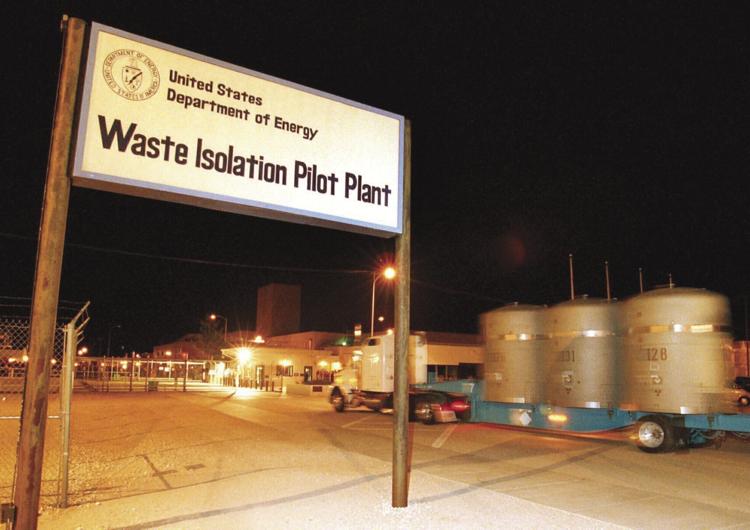
Southeast New Mexico is home to the nation’s only repository for nuclear waste at the Waste Isolation Pilot Plant about 30 miles east of Carlsbad.
At WIPP, transuranic (TRU) nuclear waste from across the country is trucked in and buried in a salt deposit about 2,000 feet underground.
The waste comes from national laboratories and other facilities owned by the U.S. Department of Energy and WIPP is managed by the DOE’s Office of Environmental Management to clean up waste left at generator sites and new waste produced through the agency’s ongoing nuclear activities.
Here are the key takeaways from the federal government’s recent accomplishments and plans for WIPP future.
Air system at WIPP hoped to finish construction
Two projects were underway at WIPP intended to rebuild its underground ventilation system and improve airflows for workers in the underground.
After an accidental radiological release in 2014 air was restricted at the site, limiting personnel in the underground, and slowing progress in emplacing waste for disposal and mining new areas of the facility.
The Safety Significant Confinement Ventilation System (SSCVS) project along with a new utility shaft to act as an air intake were expected to increase available air at WIPP from 170,000 cubic feet per minute (cfm) to 540,000 cfm.
In 2023, the DOE said it hoped the primary construction of the SSCVS – a series of building and filters that will clean the air at WIPP before exhausting it at the surface- would be finished in 2023
In 2022, the DOE reported it partially completed constructing the SSCVS’ new filter building.
WIPP’s utility shaft finished this year
Meanwhile, the DOE planned to finish sinking the utility shaft to its planned depth of 2,150 feet underground.
The agency also reported it was 50 percent complete in mining a west access drift for the new shaft as of 2022.
Goal set for 400 shipments of nuclear waste to WIPP in 2023
The DOE said it hoped to send about 400 shipments of TRU waste to WIPP from its generator sites in 2023.
This would be the most shipped to WIPP since the 2014 incident, and subsequent three-year shutdown of WIPP’s underground operations.
Included in this listed priority was also ensuring no backlog of waste at Los Alamos National Laboratory (LANL) in northern New Mexico, in response to pressure from the State of New Mexico that instate facilities be prioritized by the DOE for cleanup.
The DOE estimated it was taking in about two shipments a week from Los Alamos, contending they were sent to WIPP as soon as the drums were ready for transport.
Since opening in 1999, WIPP accepted 1,608 shipments from LANL, about 12 percent of WIPP’s total of 13,460 shipments, according to DOE records.
The DOE completed its 2022 goal, read the report, of 30 LANL shipments.
Where else does WIPP get its waste from?
Other major shippers include Idaho National Laboratory – WIPP’s biggest shipper – with 6,880 shipments sent to the repository opened, about 51 percent of WIPP’s total.
The second-biggest active shipper was the Savannah River site in South Carolina, which sent 1,714 shipments in total during WIPP’s lifetime, records show.
The decommissioned Rocky Flats Environmental Technology Site near Denver was the second-biggest overall shipper to WIPP with 2,045 shipments of nuclear waste to the repository.
Nuclear waste retrieved from Texas site could go to WIPP
Buoying the DOE’s priorities at LANL was a goal for this year to retrieve drums of Los Alamos waste from the Waste Control Specialists (WCS) facility in Andrews, Texas and likely prepare them for disposal at WIPP.
The DOE reported after last year it “partially completed” a goal to install equipment needed for this work.
The DOE was originally slated, via an agreement with the Texas Commission on Environmental Quality (TCEQ), to remove the 74 waste boxes from LANL stored at WCS in 2014 temporarily amid WIPP’s closure as it resumed operations in 2017.
The TCEQ “extended the deadline multiple times” for the waste’s removal from WCS, read a May 2022 letter from the agency to the DOE, or the State of Texas would take “additional enforcement actions.”
Adrian Heddencan be reached at 575-628-5516,achedden@currentargus.com or@AdrianHedden on Twitter.
Director General Grossi Highlights China as Indispensable IAEA Partner, Leader in Nuclear Energy

IAEA Joanne Liou, IAEA Office of Public Information and Communication, 24 May 23
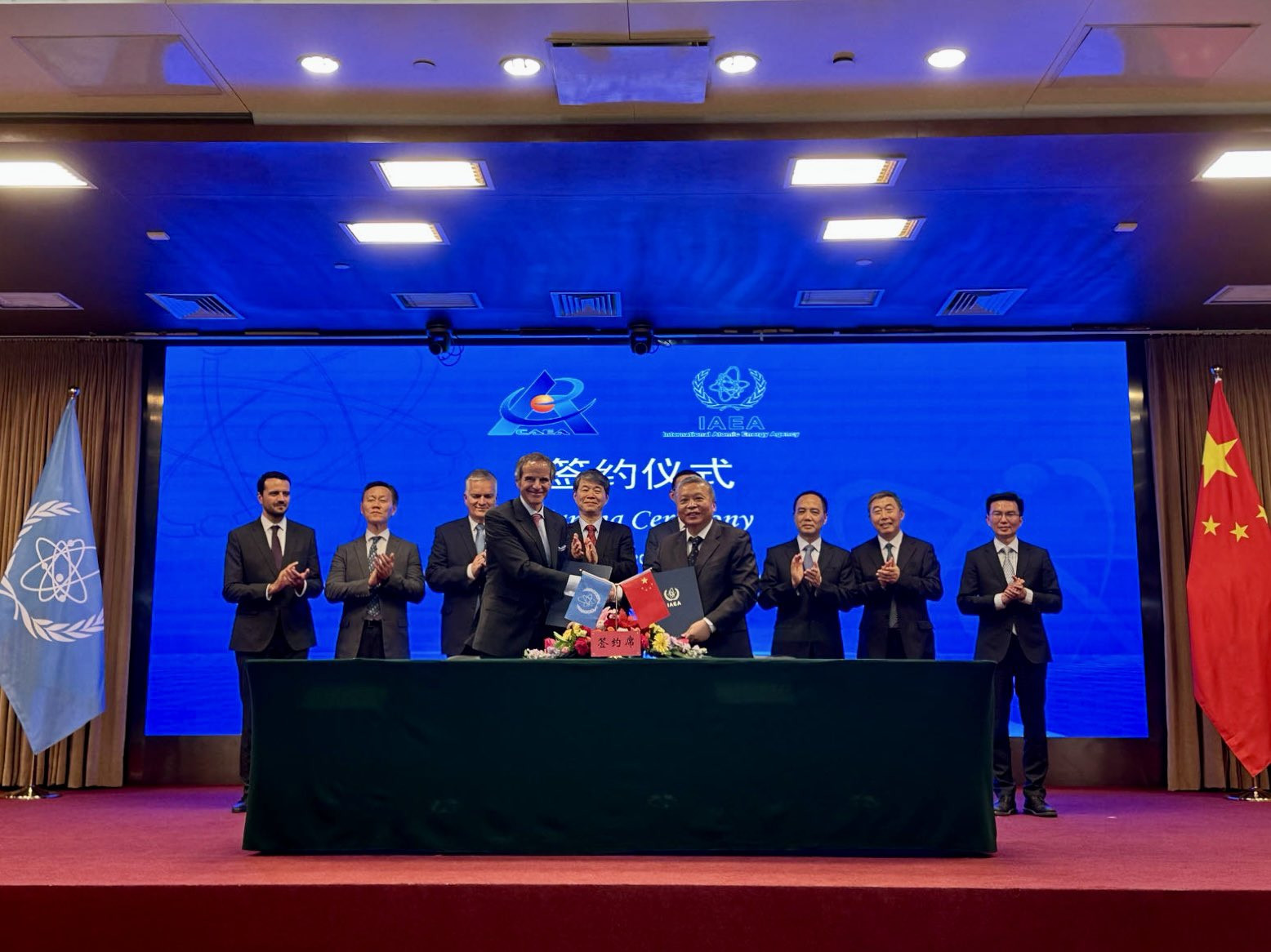
As the IAEA supports efforts to accelerate the contribution of atomic energy to peace, health and prosperity around the world, China is an indispensable partner in this endeavour, said Rafael Mariano Grossi, IAEA Director General, at the start of a week-long visit to China. Mr Grossi is meeting with several high-level officials and visiting nuclear facilities and institutions in Beijing, Shanghai and Shandong, during his first official visit to the country.
“China is one of the IAEA’s most important partners and a global leader in nuclear energy,” Mr Grossi said. “This week’s agenda will cover the remarkable progress of China’s nuclear energy programme, cooperation in nuclear applications and indispensable exchanges on non-proliferation and nuclear safety.” China has more than 50 operational nuclear power units and 24 are under construction. By 2035, China’s nuclear power generation will account for 10 per cent of the country’s electricity generation, according to the latest Blue Book of China Nuclear Energy Development Report.
On Monday, Mr Grossi and other IAEA officials signed several agreements at the China Atomic Energy Authority (CAEA), which reflect the diverse scope of work between the IAEA and China. The agreements will strengthen cooperation on small modular reactors, nuclear fusion, and nuclear data, fuel cycle and waste management, as well as communication activities……………………………………………. more https://www.iaea.org/newscenter/news/director-general-grossi-highlights-china-as-indispensable-iaea-partner-leader-in-nuclear-energy
Iran Builds an Underground and Possibly Unreachable Nuclear Facility
U.S. airstrikes would likely not be able to reach an underground Iranian
nuclear facility being built near the Zagros Mountains in central Iran,
according to experts and satellite imagery analyzed by the Associated
Press.
Photos and videos from Planet Labs PBC, a satellite-imagery
provider, reveal the construction of a new underground facility at Iran’s
pre-existing Natanz nuclear site, which has been sabotaged by repeated
attacks by Western powers because of its atomic program. I
n 2021, an
Iranian official said that thousands of nuclear-material-refinement
machines were damaged in an act of “nuclear terrorism” that it blamed
on Israel. Iran warned that it would replace affected centrifuges, which
refine or enrich uranium for nuclear usage, with more advanced ones. U.S.
intelligence officials had told the New York Times that an explosion
destroyed the site’s internal power system, necessary to supply the
centrifuges in the underground facility, estimating that enrichment
activities would need nine months to be restored. In 2020, explosives
hidden inside a table were also used to attack Natanz.
National Review 23rd May 2023
G7 has descended into an ‘anti-China workshop’
By Global TimesThe Group of Seven (G7) Hiroshima summit concluded on May 21, and unlike the usual practice, the G7 communiqué was released a day before the closing. Some Japanese media said that it was due to the fear that Ukrainian President Volodymyr Zelensky’s visit to Hiroshima on the same day would steal the attention from the communiqué. However, even so, this G7 communiqué of dozens of pages still seems to draw little interest from the outside world, except for the part that targets China. According to the Financial Times, the G7 has issued its strongest condemnation of China, and most of the other international mainstream media also highlight that it “amps up pressure on China.” It seems that the only way for the G7 to catch people’s attention and show its sense of presence is to speculate on the issues related to China. May 22, 2023………………………………………………………………………………………………. more https://www.globaltimes.cn/page/202305/1291111.shtml
G7 Leaders Falter Over Nuclear Disarmament in Hiroshima

“Was the G7 Vision on Nuclear Disarmament blind arrogance? “
While condemning Russia’s decision to “undermine the New START Treaty”, not one word was uttered about how the US walked out of the ABM Treaty with Russia as well as the INF Treaty, and has not returned to the nuclear deal that (former US President Barack) Obama negotiated with Iran, Slater pointed out
“The US leads the way in dishonoring its Non-Proliferation Treaty obligation for “good faith efforts” for nuclear disarmament and has never acted in “good faith”.
By Thalif Deen, UNITED NATIONS, 22 May 2023 (IDN) — When leaders of the Group of 7 (G7) countries met in Hiroshima May 19-21, one of the issues on the agenda was nuclear disarmament.
The venue of the summit was symbolically stark because the US atomic bombings in 1945 killed over 226,000 people in the twin Japanese cities of Hiroshima and Nagasaki, with the heaviest toll in Hiroshima.
But the seven leaders—from Canada, France, Germany, Italy, Japan, the United Kingdom and the United States, plus the European Union (EU)—failed to produce anything singularly significant towards “a world without nuclear weapons”.
The failure was even more disappointing because three of the G7 countries—France, UK and US—are not only major nuclear powers (along with Russia and China) but also permanent members of the UN Security Council.
Asked at a press briefing in Hiroshima May 21, about the G7 “Hiroshima Vision on Nuclear Disarmament”, which implicitly justified nuclear weapons for defensive purposes, UN Secretary-General António Guterres said: “Well, I’m not a commentator of documents. (But) I think it’s important to say what I believe should be done. I don’t think we can give up on our main objective, which is to have a world free of nuclear weapons.”
“And one thing that disturbs me is that disarmament that was moving forward quite positively during the last decades of the 20th century has completely stopped. And we are even seeing a new race to armaments,” he noted.
“I think it is absolutely essential to re-introduce disarmament discussions about nuclear weapons, and I think it is (also) absolutely necessary that countries that own nuclear weapons commit not to do the first use of those weapons—and I would say commit not to use them in any circumstance.”
“And so, I think we need to be ambitious in relation to the capacity of one day, I hope still in my lifetime, to see this world without nuclear weapons,” Guterres declared.
In a statement released May 19, G7 leaders laid out their “Hiroshima Vision on Nuclear Disarmament”. Excerpts:
“We, the Leaders of the G7, met at a historical juncture in Hiroshima, which together with Nagasaki offers a reminder of the unprecedented devastation and immense human suffering the people of Hiroshima and Nagasaki experienced as a result of the atomic bombings of 1945. In a solemn and reflective moment, we reaffirm, in this first G7 Leaders’ document with a particular focus on nuclear disarmament, our commitment to achieving a world without nuclear weapons with undiminished security for all.”
“We underscore the importance of the 77-year record of non-use of nuclear weapons. Russia’s irresponsible nuclear rhetoric, undermining of arms control regimes, and stated intent to deploy nuclear weapons in Belarus are dangerous and unacceptable. We recall the statement in Bali of all G20 leaders, including Russia.”
“In this context, we reiterate our position that threats by Russia of nuclear weapon use, let alone any use of nuclear weapons by Russia, in the context of its aggression against Ukraine are inadmissible.”
“We recall the Joint Statement of the Leaders of the Five Nuclear-Weapon States issued on January 3, 2022, on Preventing Nuclear War and Avoiding Arms Races, and affirm that a nuclear war cannot be won and must never be fought.”
“We call on Russia to recommit—in words and deeds—to the principles enshrined in that Statement. Our security policies are based on the understanding that nuclear weapons, for as long as they exist, should serve defensive purposes, deter aggression and prevent war and coercion.”
Alice Slater, Board Member, World Beyond War, posed the question: “Was the G7 Vision on Nuclear Disarmament blind arrogance? “
She told IDN that in the shadows of the bombing of Hiroshima, nuclear-armed and nuclear “umbrella” states, relying on the US to use its nuclear weapons on their behalf, met at the Hiroshima Memorial Park, heard the painful testimony of the Hibakusha, survivors of that catastrophic day, August 6, 1945.
“And they delivered the most tone-deaf remarks, hypocritically espousing the awful nature of nuclear weapons and how Russia was endangering the whole planet with its nuclear threats, tossing in North Korea as well, and calling merely for transparency going forward, as if by merely revealing our terrifying arsenals and activities related to rebuilding, refurbishing redesigning and testing would prevent a nuclear cataclysm.”
While condemning Russia’s decision to “undermine the New START Treaty”, not one word was uttered about how the US walked out of the ABM Treaty with Russia as well as the INF Treaty, and has not returned to the nuclear deal that (former US President Barack) Obama negotiated with Iran, Slater pointed out.
She said the US also rejected requests, many times, from Russia and China, it’s latest target for war, to negotiate treaties to ban weapons in space and cyberwar, which would have created the conditions for “strategic stability” called for by Russia to negotiate for the abolition of nuclear weapons.
“US allies in nuclear crime, include five NATO countries with US nuclear bombs on their territory—Germany, Netherlands, Belgium, Italy, Turkey—and Japan of all nations, ironically, under its nuclear umbrella which is abandoning its Peace Constitution under US pressure and will become a NATO affiliate instead of urging that all the G7 nations join the new Treaty for the Prohibition of Nuclear Weapons which they have all boycotted and rejected,” she said.
“The US leads the way in dishonoring its Non-Proliferation Treaty obligation for “good faith efforts” for nuclear disarmament and has never acted in “good faith”. From the time Truman rejected Stalin’s plea to put the bomb under the UN’s control, newly established to end the scourge of war—its first resolution for nuclear disarmament—to Obama’s commitment to a trillion-dollar program over 30 years for two new bomb factories, warheads, missiles, planes and submarines to deliver them, the US has been the leading nuclear offender and proliferator.”
The latest hypocritical language messaging in a pretense of trying to eliminate nuclear weapons is taking “steps”. “We have been taking endless steps to nowhere under the rubric of “arms control”, she noted.
The G7 meeting was just another futile step to nowhere and resembles M. C. Escher’s drawing, Ascending and Descending, where grim men march endlessly up and down a staircase in circles and never arrive at the top, said Slater. [https://www.sartle.com/artwork/ascending-and-descending-m.-c.-escher]
Daniel Högsta, interim Executive Director, International Campaign to Abolish Nuclear Weapons (ICAN), said: “This is more than a missed moment. With the world facing the stark risk nuclear weapons could be used for the first time since Hiroshima and Nagasaki were bombed, this is a gross failure of global leadership.”
“Simply pointing fingers at Russia, China and North Korea is insufficient. We need the G7 countries, which all either possess, host or endorse the use of nuclear weapons, to step up and engage the other nuclear powers in disarmament talks if we are to reach their professed goal of a world without nuclear weapons,” he declared…………………………………. more https://www.indepthnews.net/index.php/armaments/nuclear-weapons/6189-g7-leaders-falter-over-nuclear-disarmament-in-hiroshima
Hiroshima Survivor Slams G7 Leaders for Embracing War & Rejecting Nuclear Disarmament
Democracy Now, MAY 22, 2023
The G7 summit wrapped up Sunday in Hiroshima, where much of the summit focused on the war in Ukraine and China. While in Japan, President Biden and other world leaders paid tribute to the victims of the world’s first nuclear attack — the U.S. bombing of Hiroshima on August 6, 1945 — laying wreaths at the Hiroshima Peace Memorial and planting a tree.
But President Biden did not issue an apology for the attack, which killed an estimated 140,000 people and seriously injured another 100,000. For more, we speak with Setsuko Thurlow, who survived the U.S. bombing of Hiroshima in 1945 and devoted her life to nuclear disarmament. In 2017, she was chosen to accept the Nobel Peace Prize on behalf of the International Campaign to Abolish Nuclear Weapons.
Media Options
This is viewer supported news. Please do your part today.
TOPICS
GUESTS
- Setsuko Thurlowsurvivor of the atomic bombing of Hiroshima in 1945 and nuclear disarmament activist.
LINKS
The G7 summit wrapped up Sunday in Hiroshima, where much of the summit focused on the war in Ukraine and China. While in Japan, President Biden and other world leaders paid tribute to the victims of the world’s first nuclear attack — the U.S. bombing of Hiroshima on August 6, 1945 — laying wreaths at the Hiroshima Peace Memorial and planting a tree. But President Biden did not issue an apology for the attack, which killed an estimated 140,000 people and seriously injured another 100,000. For more, we speak with Setsuko Thurlow, who survived the U.S. bombing of Hiroshima in 1945 and devoted her life to nuclear disarmament. In 2017, she was chosen to accept the Nobel Peace Prize on behalf of the International Campaign to Abolish Nuclear Weapons.
Transcript
………………………………………………………………………………………………………………………. SETSUKO THURLOW: Well, I came to Hiroshima from Canada, where I live. I wanted to be part of this whole excitement that the world leaders are coming to Hiroshima and to discuss the nuclear disarmament. And the people here were so excited, so happy to have the opportunity to give them the — to give the leaders the opportunity to be with us, to be in the center of the calamity and catastrophe, and to have a profound encounter themselves with the meaning of the dawn of the nuclear age. And people had a great anticipation and excitement. They’ve prepared for this with all kinds of recommendations to the leaders.
But somehow their wishes were not fully listened. To put it bluntly, for us survivors, who want nothing less than the total disarmament, total abolishment of nuclear weapons, and the majority of the citizens of Japan who support survivors’ idea, to us, it was nothing but a disaster. We are feeling more than frustration. It’s a fury, anger and a total disappointment, because we —
Media Options
This is viewer supported news. Please do your part today.
TOPICS
GUESTS
- Setsuko Thurlowsurvivor of the atomic bombing of Hiroshima in 1945 and nuclear disarmament activist.
LINKS
The G7 summit wrapped up Sunday in Hiroshima, where much of the summit focused on the war in Ukraine and China. While in Japan, President Biden and other world leaders paid tribute to the victims of the world’s first nuclear attack — the U.S. bombing of Hiroshima on August 6, 1945 — laying wreaths at the Hiroshima Peace Memorial and planting a tree. But President Biden did not issue an apology for the attack, which killed an estimated 140,000 people and seriously injured another 100,000. For more, we speak with Setsuko Thurlow, who survived the U.S. bombing of Hiroshima in 1945 and devoted her life to nuclear disarmament. In 2017, she was chosen to accept the Nobel Peace Prize on behalf of the International Campaign to Abolish Nuclear Weapons.
Transcript
This is a rush transcript. Copy may not be in its final form.
AMY GOODMAN: The G7 summit wrapped up Sunday in Hiroshima, Japan. Much of the summit focused on two issues: the war in Ukraine and China. President Biden announced $375 million more in military aid for Ukraine. He also pledged to begin training Ukrainian forces on flying U.S.-made F-16 fighter jets. Biden did not offer to send any F-16s, but the U.S. has lifted its opposition to allies supplying the warplanes to Ukraine. Britain and the Netherlands have announced plans to work together to help provide Ukraine F-16s. President Biden spoke Sunday.
PRESIDENT JOE BIDEN: You know, in my private meeting with President Zelensky after the G7 meeting, and with his staff, I told — the United States, together with our allies and partners, is going to begin training Ukrainian pilots in fourth-generation fighter aircraft, including F-16s, to strengthen Ukraine’s air force as part of a long-term commitment to Ukraine’s ability to defend itself. … I have a flat assurance from the — from Zelensky that they will not — they will not use it to go on and move into Russian geographic territory. But wherever Russian troops are within Ukraine in the area, they would be able to do that.
AMY GOODMAN: Ukrainian President Volodymyr Zelensky, who attended the G7 in Hiroshima, thanked Biden for his support.
PRESIDENT VOLODYMYR ZELENSKY: We are very thankful. I think it will give us more strong positions on the battlefield. So, we are very thankful that that is a new package. I really didn’t know the details, but I know that you gave us very big package during this year. It’s more than $37 billion. My appreciations. We will never forget. Thank you.
AMY GOODMAN: While in Hiroshima, President Biden and other world leaders paid tribute to the victims of the world’s first nuclear attack — the U.S. bombing of Hiroshima on August 6, 1945 — laying wreaths at the Hiroshima Peace Memorial and planting a tree. But President Biden did not issue an apology for the attack. A group of anti-nuclear activists rallied on the streets.
PROTESTER 1: [translated] Japan and the United States are trying to conduct a war of aggression on China. I am protesting because I absolutely cannot accept the fact that they are in Hiroshima, a place where an atomic bomb was dropped, trying to hold a meeting to start a nuclear war.
PROTESTER 2: [translated] I’m absolutely against the war. I’m against using nuclear weapons. That is why I’m here. This summit is being held to prepare for a nuclear war, so we, the union, need to do whatever we can to protest against it.
AMY GOODMAN: We go now to Hiroshima, where we’re joined by Setsuko Thurlow, who survived the U.S. bombing of Hiroshima in 1945 that killed about 140,000 people. She’s devoted her life to nuclear disarmament and the ban treaty process. In 2017, she was chosen to accept the Nobel Peace Prize on behalf of the International Campaign to Abolish Nuclear Weapons, or ICAN. She’s joining us on the phone from Hiroshima.
It’s great to have you back with us, Setsuko Thurlow. If you can respond to the G7 meeting and the outcome this weekend, held in Hiroshima, where you are?
SETSUKO THURLOW: Well, I came to Hiroshima from Canada, where I live. I wanted to be part of this whole excitement that the world leaders are coming to Hiroshima and to discuss the nuclear disarmament. And the people here were so excited, so happy to have the opportunity to give them the — to give the leaders the opportunity to be with us, to be in the center of the calamity and catastrophe, and to have a profound encounter themselves with the meaning of the dawn of the nuclear age. And people had a great anticipation and excitement. They’ve prepared for this with all kinds of recommendations to the leaders.
But somehow their wishes were not fully listened. To put it bluntly, for us survivors, who want nothing less than the total disarmament, total abolishment of nuclear weapons, and the majority of the citizens of Japan who support survivors’ idea, to us, it was nothing but a disaster. We are feeling more than frustration. It’s a fury, anger and a total disappointment, because we —
AMY GOODMAN: Setsuko Thurlow, how do you think the war can end, the war in Ukraine can end?
SETSUKO THURLOW: Well, to me, personally, you know, why we keep hearing about more military aid, the support for war, than hearing about the efforts being made for a peaceful ceasefire at the earliest possible time? Every day, many, many lives have been killed. Certainly, something must be going on, some — quietly, some effort must be being paid for ceasefire. But we don’t hear about them. Are they really making that effort? Do they really feel they can win this out? I don’t know what’s their thoughts. All I can say is it has to stop at the earliest possible chance, no matter what.
AMY GOODMAN: President Biden did not apologize for the U.S. dropping the atomic bomb on Hiroshima, then three three days later on Nagasaki. Your thoughts?
SETSUKO THURLOW: Well, it’s unfortunate. He had the opportunity, but he didn’t. This time, too, in the joint statement or communiqué, he kept criticizing the Russians, the Chinese or North Korea. And why do they fail to look at themselves with a critical eye, and we don’t hear anything evil which is being committed by the West? I mean, of course, as far as the war in Ukraine is concerned, I think Putin should get a total condemnation. I do condemn. No matter what the reason is, to be willing to kill so many human lives, that’s not acceptable. That must stop.
But your question was whether the president should have — well, my opinion, yes, the United States has committed the crime against humanity. The United States has never acknowledged any guilt. And, well, this truth, old saying, the victims — victors write the history. The U.S. has been condemning —………………………………………………… more https://www.democracynow.org/2023/5/22/g7_meeting_hiroshima_nuclear_weapons
Ukraine: Power loss at nuclear plant underscores ‘highly vulnerable’ safety situation
Peace and Security https://news.un.org/en/story/2023/05/1136932
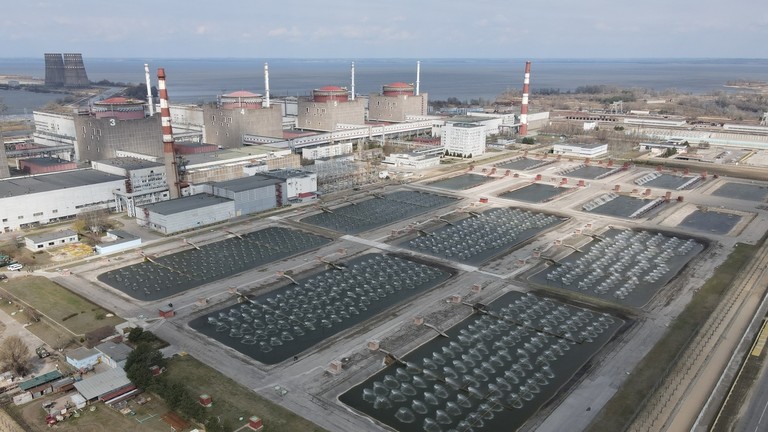
The Zaporizhzhya Nuclear Power Plant (ZNPP) in Ukraine lost all external power for several hours on Monday morning, highlighting the urgent need to protect the facility and prevent an accident, the Director General of the International Atomic Energy Agency (IAEA) said in a statement.
This marked the seventh time that Europe’s largest nuclear power plant had been completely disconnected from the national electricity grid since the start of the full-scale Russian invasion 15 months ago, the agency said, noting that the facility was forced to run on emergency diesel generators once again.
The plant’s only remaining external 750 kilovolt power line had been cut around 5:30am, local time, and re-connected after more than five hours, according to IAEA experts located at the facility.
‘We’re playing with fire’
Agency chief Rafael Mariano Grossi said the situation demonstrated “the highly vulnerable nuclear safety and security situation” at the plant, which has come under shelling during the conflict.
“As I’ve said repeatedly, this simply can’t go on. We’re playing with fire. We must act now to avoid the very real danger of a nuclear accident in Europe, with its associated consequences for the public and the environment.”
The ZNPP was occupied by Russian forces in the early days of the war and is still being operated by Ukrainian personnel.
Most staff live in the nearby town of Enerhodar. On Friday, the IAEA reported that a location close to the town came under artillery fire earlier that day.
Intense negotiations continue
Mr. Grossi said he continues to engage in intense negotiations with all parties to secure the protection of the nuclear plant, stressing that “I will not stop until this has been achieved.”
He explained that the ZNPP does not have any operational back-up power lines since the last one functioning had been damaged in March, which has still not been repaired.
“For more than two and a half months, this major nuclear power plant has only had one functioning external power line. This is an unprecedented and uniquely risky situation. Defence-in-depth – which is fundamental to nuclear safety – has been severely undermined at the ZNPP,” he said.
Still awaiting access
He called for greater efforts to restore the back-up power lines, while also reiterating the need for the IAEA team on site to gain access to the Zaporizhzhya Thermal Power Plant (ZTPP), located nearby.
The ZTPP has an open switchyard through which back-up power has been provided to the nuclear plant in the past. Access has yet to be granted despite reassurances by the Russian state nuclear company, Rosatom.
Following the off-site power cut on Monday, all the nuclear plant’s 20 diesel generators started operating. However, 12 were later switched off, leaving eight running, which is sufficient to operate all systems safely.
The IAEA said its experts at the site were informed that there is enough diesel fuel for 23 days, adding that after the 750 kilovolt line was restored, the diesel generators were gradually turned off.
New Zealand won’t give up its nuclear-free stance, says Prime Minister Chris Hipkins
Mark Quinlivan, 23 May 23, https://www.newshub.co.nz/home/politics/2023/05/new-zealand-won-t-give-up-its-nuclear-free-stance-says-prime-minister-chris-hipkins.html
“New Zealand’s nuclear-free position is long-standing and it’s not going to change.”
Chris Hipkins is refusing to budge on New Zealand’s nuclear-free status and says there are still no plans for Aotearoa to join a non-nuclear arm of a US-led defence alliance.
The Prime Minister appeared on AM on Tuesday, having just returned from a trip to Papua New Guinea to meet with US Secretary of State Antony Blinken and Pacific leaders.
“I was pretty clear [with Blinken]; New Zealand’s nuclear-free position is long-standing and it’s not going to change,” he told host Ryan Bridge.
Hipkins noted that position would prevent New Zealand from “ever” being directly involved in a defence alliance between Australia, the UK and the US – known as AUKUS.
“The US is still committed to a security relationship with New Zealand regardless of our nuclear-free status – I think that’s a good thing.”
Hipkins would not be drawn on even considering the possibility of allowing US nuclear submarines into New Zealand waters.
“We don’t allow those in New Zealand waters and that’s not going to change,” he said. “Many other Pacific nations have similar concerns.”
Bridge asked Hipkins what New Zealand’s specific concerns were.
The Prime Minister said New Zealand was “concerned about nuclear energy… because of the environmental impact of it, and the potential for environmental disaster”.
As for New Zealand joining a second, nuclear-free tier of AUKUS, Hipkins reiterated it remained unclear how that would work.
It comes after Defence Minister Andrew Little earlier this year confirmed Washington had raised the possibility of New Zealand becoming a non-nuclear partner of the alliance.
Russia evacuates nuclear munitions due to incursion from Ukraine into Belgorodoblast-Ukraine’s Intel
https://euromaidanpress.com/2023/05/22/russia-evacuates-nuclear-munitions-due-to-incursion-from-ukraine-into-belgorod-oblast-ukraines-intel-spox/ Russian authorities have urgently evacuated a nuclear munitions storage facility in the Belgorod oblast (western Russia) following the incursion of the Legion “Freedom for Russia” and RDK (Russian Volunteer Corps) from Ukraine into the Belgorod region, Ukraine’s Intelligence spox Andrii Yusov said.
On 22 May 2023, in the morning, a Russian border crossing in the Belgorod oblast was reportedly destroyed by artillery shelling from the territory of Ukraine. After that, the incursion of troops supported by armored vehicles from Ukraine into the Belgorod oblast began.
The Russian military unit no. 25624, located in the Grayvoron district of the Belgorod oblast, is a part of Russia’s Strategic Missile Forces. It is an “Object C,” which is the conventional name for Russia’s central nuclear weapons storage base, Ukrainska Pravda reported.
The Legion “Freedom for Russia” and RDK (Russian Volunteer Corps), which allegedly comprise Russian citizens who decided to fight on the side of Ukraine and joined the International Legion of Ukraine’s Armed Forces, claimed its fighters crossed the Russo-Ukrainian border and entered the Belgorod oblast from the territory of Ukraine.
The Legion “Freedom for Russia” and RDK announced on their official Telegram channels that their troops advanced deep into the Russian territory and engaged with Russia’s forces in several towns in Belgorod oblast, namely Kozinka, Gora-Podol, and Grayvoron (the latter being around ten kilometers from the Russo-Ukrainian border), and called on residents of the Russian border regions to stay at home and “not resist.” Shortly after this, locals in Grayvoron started to report gunfire in their town.
France holds up EU energy agreement over nuclear power

Paris withdraws support for renewable targets law as it seeks inclusion of hydrogen produced with atomic power
Ft.com Alice Hancock in Brussels and Sarah White in Paris MAY 18 2023
France is leading a coalition of countries holding up agreement on EU-wide targets for renewable energy, as it makes a fresh drive for better treatment of its nuclear industry. The move comes amid a broader pushback against the bloc’s climate agenda as the realities of what is required for the green transition become increasingly apparent.
The EU’s 27 member states were due to agree an overall target of 42.5 per cent of renewable power in the bloc’s energy mix by 2030 on Wednesday.
But France, which relies on nuclear power for the majority of its electricity, signalled that it would not support the text, citing concerns that “low-carbon” hydrogen generated with electricity from atomic power plants would not be counted as part of the targets.
…………….. The vote, which was pulled from the agenda of an ambassadors’ meeting at 11.30pm on Tuesday, would have paved the way for the targets to become EU law following their approval in the European parliament……………………………………..
French officials have in the past rejected criticism that they are promoting the interests of its nuclear industry by arguing that EU rules allow countries to choose their own energy sources. Its fleet of nuclear power plants already give it lower greenhouse gas emissions per unit of GDP than many of its neighbours, although it has missed EU targets for building renewables.
Six pro-nuclear countries, including the Czech Republic, Bulgaria and Hungary, followed Paris’s lead on Wednesday and withheld support for the directive. Meanwhile, anti-nuclear governments, including in Germany and Austria, have been strongly opposed to recognising nuclear power as a clean fuel……………………………… https://www.ft.com/content/b0d3e7e3-a8ae-457b-9482-3282d32973be
Romania to be a guinea pig for NuScam’s small nuclear reactor folly

Romania’s NuScale SMR plan gets USD275 million boost WNN 22 May 2023
Funding of up to USD275 million to advance the deployment of a NuScale Power Corporation VOYGR small modular reactor (SMR) plant in Romania was announced at the G7 leaders’ summit by the USA and “multinational public-private partners” from Japan, South Korea and the United Arab Emirates.
……………… EXIM and the US International Development Finance Corporation also issued Letters of Interest for “potential financial support of up to USD3 billion and USD1 billion, respectively, for project deployment”. The announcement was part of the G7 Leaders’ plan to “mobilise USD600 billion in infrastructure investments under the Partnership for Global Infrastructure and Investment”.

……………………… John Hopkins, NuScale Power president and CEO, said: “Support from the Biden Administration and international partners is a signal to energy markets around the world that NuScale SMRs are an important new technology solution to global decarbonisation and that Romania has the capabilities and experience to support its deployment … we are thrilled public-private partnerships are helping deploy our leading SMR technology as soon as 2029.”……………….. https://www.world-nuclear-news.org/Articles/NuScale-s-Romanian-SMR-plan-gets-USD275-million-bo
1 This Month
23-25 October – on Zoom – World BEYOND War’s annual global conferenc


Shut down the radiation-damaged Heysham nuclear reactors now
To see nuclear-related stories in greater depth and intensity – go to https://nuclearinformation.wordpress.com

Say No to NASA’s Reckless Nuclear Reactor on the Moon
Say No to NASA’s Reckless Nuclear Reactor on the Moon
-
Archives
- October 2026 (170)
- September 2026 (339)
- August 2026 (330)
- July 2026 (355)
- June 2026 (287)
- May 2026 (306)
- April 2026 (356)
- March 2026 (251)
- February 2026 (267)
- January 2026 (308)
- December 2025 (358)
- November 2025 (359)
-
Categories
- 1
- 1 NUCLEAR ISSUES
- business and costs
- climate change
- culture and arts
- ENERGY
- environment
- health
- history
- indigenous issues
- Legal
- marketing of nuclear
- media
- opposition to nuclear
- PERSONAL STORIES
- politics
- politics international
- Religion and ethics
- safety
- secrets,lies and civil liberties
- spinbuster
- technology
- Uranium
- wastes
- weapons and war
- Women
- 2 WORLD
- ACTION
- AFRICA
- Atrocities
- AUSTRALIA
- Christina's notes
- Christina's themes
- culture and arts
- Events
- Fuk 2022
- Fuk 2023
- Fukushima 2017
- Fukushima 2018
- fukushima 2019
- Fukushima 2020
- Fukushima 2021
- general
- global warming
- Humour (God we need it)
- Nuclear
- RARE EARTHS
- Reference
- resources – print
- Resources -audiovicual
- Weekly Newsletter
- World
- World Nuclear
- YouTube
-
RSS
Entries RSS
Comments RSS