The UK Government Knows How Extreme the Online Safety Bill Is

SCHEERPOST, By Joe Mullin / Electronic Frontier Foundation (EFF)
The U.K.’s Online Safety Bill (OSB) has passed a critical final stage in the House of Lords, and envisions a potentially vast scheme to surveil internet users.
The bill would empower the U.K. government, in certain situations, to demand that online platforms use government-approved software to search through all users’ photos, files, and messages, scanning for illegal content. Online services that don’t comply can be subject to extreme penalties, including criminal penalties.
Such a backdoor scanning system can and will be exploited by bad actors. It will also produce false positives, leading to false accusations of child abuse that will have to be resolved. That’s why the OSB is incompatible with end-to-end encryption—and human rights. EFF has strongly opposed this bill from the start.
Now, with the bill on the verge of becoming U.K. law, the U.K. government has sheepishly acknowledged that it may not be able to make use of some aspects of this law. During a final debate over the bill, a representative of the government said that orders to scan user files “can be issued only where technically feasible,” as determined by Ofcom, the U.K.’s telecom regulatory agency. He also said any such order must be compatible with U.K. and European human rights law. ……………………………………………………………………………
People Need Privacy, Not Weak Promises
Let’s be clear: weak statements by government ministers, such as the hedging from Lord Parkinson during this week’s debate, are no substitute for real privacy rights.
Nothing in the law’s text has changed. The OSB gives the U.K. government the right to order message and photo-scanning, and that will harm the privacy and security of internet users worldwide. These powers, enshrined in Clause 122 of the OSB, are now set to become law. After that, the regulator in charge of enforcing the law, Ofcom, will have to devise and publish a set of regulations regarding how the law will be enforced.
Several companies that provide end-to-end encrypted services have said they will withdraw from the U.K. if Ofcom actually takes the extreme choice of requiring examination of currently encrypted messages. Those companies include Meta-owned WhatsApp, Signal, and U.K.-based Element, among others. ……………………….
Finally, lawmakers in other jurisdictions, including the United States, should take heed of the embarrassing result of passing a law that is not just deceptive, but unhinged from computational reality. The U.K. government has insisted that through software “magic,” a system in which they can examine or scan everything will also somehow be a privacy-protecting system. Faced with the reality of this contradiction, the government has turned to an 11th hour campaign to assure people that the powers it has demanded simply won’t be used. https://scheerpost.com/2023/09/15/the-uk-government-knows-how-extreme-the-online-safety-bill-is/
JULIAN ASSANGE AND THE END OF AMERICAN DEMOCRACY
The revival of the Espionage Act in the persecution of Assange is destroying the very foundation of democracy
The US government has hounded Julian Assange since WikiLeaks first revealed the extent of US war crimes in 2010. In the process of persecuting Assange, the federal government has used every tool at its disposal and even pushed beyond the boundaries that supposedly restrict state power in defense of civil liberties. One of the most insidious tactics is the use of the Espionage Act, which had not been used for against whistleblowers and journalists for almost a century before Assange’s case. In the first part of a two-part conversation, lawyer and human rights defender Stella Assange, spouse of Julian Assange, joins Chris Hedges for a look at the vast and vicious campaign by the US to silence Julian Assange, and what it all portends for our democracy.
…..one of the things that’s disturbed me from the start is how all of the international bodies and the legal entities that have gone after Julian, have broken their own rules and it’s so blatant. That’s what I find kind of incomprehensible because it’s public. It’s not a secret. I mean, there is many secret stuff they’ve done, too, of course. But, you know, revoking political asylum, allowing British police to go in on sovereign territory, charging him under the Espionage Act when he’s not an American citizen, recording his meeting with his attorneys. I mean, any one of these things in a normal legal procedure, would have seen the case dismissed and yet they keep doing it and doing it.
…………. if they eviscerate the rule of law, it’s not just going to be for Julian. They set those kinds of precedents and if they’re allowed to get away with it with anyone, it’s dangerous. That’s what, for me, is just so frustrating.
STELLA
But don’t you think they’re deliberately dismantling the system? They want to show that they are dismantling it.
CHRIS
Yes, of course, they are. But they’re dismantling it right in front of us and we’re just watching. I’m talking about the broader public and not reacting.
Yes, of course, that is the goal.
And so in a way, that passivity makes us complicit in what is ultimately our own enslavement. I mean, this is all, of course, even beyond Julian as a person and as a journalist. And that’s what, you know, having followed this case for several years and as you know, I was very close friends with Michael Ratner, which is how I met Julian, because I would come to London with Michael. I’m just kind of mystified at how people can’t see where this is going to lead………………………………………………………….
CHRIS
……… I think reading the CIA, which is a state within a state, it’s not even accountable within the Congress. And there was a few years ago, Feinstein, after the torture was exposed, tried to do a congressional report and there was this really revealing moment. I’m no fan of Feinstein, but she was, at that moment, trying to do the right thing.And she came out and she was just ashen. And I can’t remember the exact words, but it’s something like, “we can’t take on these people…”, because they had bugged all the computers in the congressional office, they destroyed information.
And I think it was that moment where she personally realised that we can’t control, there’s no regulation, there’s no oversight, there’s no control. And unlike the Church and the Pike committees that in the middle 70s, had exposed the crimes. That was it. That moment is gone. And I think that Vault 7, because of this kind of imperial attitude on the part of the CIA where they can do anything, because the CIA, we have 17 intelligence communities in the United States. I mean, the CIA as an intelligence organization is kind of redundant.
And what it has done is transformed itself into a paramilitary, especially after 9/11. And it’s completely in the dark. It has its own drones and special forces units. Having had friends who served in Afghanistan and Iraq, these people create more problems than they solve because they’ll go on extraction and night raids and anger an entire village and then the next day the Rangers will go through the village and they open fire on…I mean, they’re counterproductive. And I think that what happened with Vault 7 is that you now have an incredibly powerful organisation that is, in essence, a paramilitary organisation with huge resources and that exposure of Vault 7, they’re not used to being monitored, exposed in any way. I think the anger, I think it was more visceral. I think the anger within the CIA was ran really deep. And, you know, again, I haven’t spoken to anyone in the CIA, but my guess is that at that point, they laid down the law. We’re getting Julian. That’s my my guess.
I think it’s all being, because Biden, no matter who’s in the office, Obama, you can’t, at this point they talk about the Dark State. I mean, these are the, you know, figures like Biden are the puppets. In the military, you know, the US military has not been audited for a decade. I read somewhere we spend more on military bands than we do on the State Department. I mean, again, it’s like ancient Rome. I mean, it’s its own entity, almost severed from the government.
But that’s how I read what happened after Vault 7.
…………………………………………………………………………………………………………………………………….. there is no investigative journalism now within the government, with the inner workings of government, because everyone’s too frightened to talk, because they they’re they can immediately be traced.
So the last readout of any kind of exposure of the the the crimes, the criminal activity of power comes through people who are like Chelsea manning or Snowden, who have access to documents and will leak them,……………………………………………………………….
It means there is no power is in no way accountable. There’s no transparency, and we know history has taught us that when that kind of secrecy is imposed on autocratic power, it just in abuse grows upon abuse grows upon abuse. And that is why they’re just determined to crucify Julian.
That’s the crisis that we’re in.
We’ve lost the ability to know what power is doing.
STELLA
I have this feeling that in order to establish the baseline, you would have to give a history lesson.
Because, for example, the use of the Espionage Act, you have to understand that it wasn’t used for almost 100 years against whistleblowers and journalists. There was a shift with Obama that opened the doors to maybe one day the Espionage Act being used against publishers in the same way now being used against whistleblowers. And the way it was being used against whistleblowers was as if they were spies to begin with. So, there was a progressive shift. And that’s why Julian was surprised when Michael Ratner told him that he tought the US would try him under the Espionage Act after he had published. Because it was unprecedented, because the First Amendment is clear. And the First Amendment is really a revolutionary instrument, and it is the gold standard in the world…………………………………………………………..
And then, with what’s been done to Julian, because it’s been so protracted, we’re in a completely different information and security environment, as in the powers of the security state are far greater and have eroded all these other rights that came.
…………………………………since the surveillance state has become so powerful, there’s been an ability to control communication in such an aggressive and invisible manner.
In the 12 or 13 years since WikiLeaks published this, we’re in a completely different environment……………………………………………………………………………………………………………………. more https://therealnews.com/julian-assange-and-the-end-of-american-democracy
Kings Bay nuclear submarine hub dodged a bullet named Hurricane Idalia
By Jamie Kwong | September 15, 2023
Last month, Hurricane Idalia slammed parts of Florida, Georgia, and the Carolinas. It also threatened to devastate one of only two US bases that host nuclear-powered ballistic missile submarines.
Located in Camden County, Georgia—just north of the Florida border—Naval Submarine Base Kings Bay is the Atlantic hub of the US nuclear submarine fleet. It’s tasked with maintaining and servicing these billion dollar systems and their nuclear missiles, which the United States relies on to assure its capacity to launch a nuclear strike “anywhere, anytime.”
Hurricane Idalia put this key nuclear mission at risk………………………………………………………………………………………
Kings Bay seems to have dodged the worst. Reports indicate the installation experienced minimal damage and resumed normal operations the morning after the storm passed.
But the base may not be so lucky next time. Hurricanes are only expected to get worse as global temperatures rise. A warmer ocean and atmosphere fuel the evaporation-condensation cycle that powers hurricanes, causing more rain, stronger winds, and so, more powerful storms. Idalia’s rapid intensification amid unseasonably warm ocean temperatures in the Gulf suggest this phenomenon may well already be underway………………………………….more https://thebulletin.org/2023/09/kings-bay-nuclear-submarine-hub-dodged-a-bullet-named-hurricane-idalia/
Radioactive discharge from Fukushima nuclear plant raising concerns on California coast.

CBS News, BY ANNE MAKOVEC, MOLLY MCCREA, SEPTEMBER 14, 2023
A controversial plan to release more than one million tons of treated radioactive water into the sea is now underway in Japan, giving scientists here in the Bay Area pause as well as those who seek escape on the open water.
Near Fort Cronkhite in the Marin Headlands recently, surfer Jason Gittens contemplated what is means to be able to enjoy the open oceans. For him, the Pacific Ocean is a treasure………………..
……………………………………………………………….. Recently, protestors have gathered in Tokyo and in parts of South Korea. They oppose Japan’s release of more than a million tons of treated radioactive water into the Pacific Ocean which started on August 24.
Soon after, China announced a ban on all imported Japanese fish because of the release.
That prompted the U.S. ambassador to Japan, Rahm Emanuel, to go shopping for Fukushima fish in a supermarket and to chow down sushi to show support for Japan in front of the news media……………………………………………
The damaged reactors are still hot. There is a massive amount of melted nuclear fuel and fuel debris inside them and they require constant cooling.
‘Water was used to cool the reactors and it is still needed to cool the reactors,” explained UC Berkeley nuclear engineering professor Dr. Kal Vetter. The water used for cooling turns radioactive. …………………
The water is cooling the molten cores of the Fukushima reactors from the time of the accident,” said Dr. Arjun Makhijani. “It’s coming into direct contact with highly radioactive fission products and plutonium. So that’s why the water gets extremely radioactive.”
Makhijani is a nuclear fusion expert and president of the Institute for Energy and Environmental Research (IEER).
In addition to the cooling water that is pumped inside, groundwater has seeped into the site, and rainwater has fallen on the damaged reactors and turbines. All this water is now contaminated with radioactivity. The tainted water is collected, filtered, and stored on-site in specially prepared tanks.
……………………………….The discharging of the radioactive waters will take at least 30 years and will be controlled and monitored not just by Japanese officials, but by the International Atomic Energy Agency (IAEA). “The monitoring remains critical,” advised Vetter,…………………………………
Makhijani and Dalnoki-Veress remain concerned. Both belong to a panel of experts representing the Pacific Islands Forum. The panel consulted with Japan over its intentions to release treated nuclear wastewater into the Pacific Ocean and found the decision to release “regrettable.”
“There’s a lot of things that can go wrong,” said Dalnoki-Veress.
Tritiated water remains a concern for the panel. Makhijani recently wrote the book “Exploring Tritium’s Danger,” which challenges many long-held beliefs about the radioactive substance. He maintains that the impacts of tritium on human health, especially when taken into the body, warrant much more attention.
Makhijani told CBS News Bay Area that in addition to the discharges, we all must pay more attention to what else we’re putting into the oceans.
“Because it’s not just this dumping,’ he said. “The oceans are under extreme stress. They’re under heat stress. They’re under acid stress, they’re under plastic stress.”
The oceans cover 72% of the earth and supplies half its oxygen. They also absorb 50 times more carbon dioxide than the atmosphere.
A recent poll conducted by the National Marine Sanctuary Foundation and Consortium on the Ocean’s Role in Climate found Americans care deeply about the ocean and that the majority worry about how climate change is impacting the ocean’s health.
………………………………”We used to think in the old days, “Out of sight, out of mind.” And they just dump stuff in the ocean,” said Gittens. “Well, now it’s not so out-of-sight, and going forward, I worry about my kids. Are they going to enjoy the ocean as much as I do?” https://www.cbsnews.com/sanfrancisco/news/radioactive-discharge-from-fukushima-nuclear-plant-raising-concerns-on-california-coast/
Two years after AUKUS announcement, American politicians are divided on delivery of submarines to Australia
ABC By North America bureau chief Jade Macmillan in Washington DC, 16 Sept 23
A Republican senator has renewed calls for the US to step up its production of nuclear-powered submarines before selling them as part of AUKUS, arguing America is as “unprepared” as it was ahead of the Pearl Harbor attack.
The US is set to transfer at least three Virginia-class submarines to Australia from the early 2030s under the AUKUS agreement.
However, the top Republican on the Senate Armed Services committee, Roger Wicker, told a hearing in Washington this week that the US was failing to meet its own shipbuilding targets.
“We should be producing somewhere between 2.3 and 2.5 attack submarines a year to fulfil our own requirements as we implement AUKUS,” he said………….
Senator Wicker insists he supports the AUKUS agreement but has refused to back legislation in congress authorising the transfer of the submarines, arguing substantial new investments are needed in America’s shipbuilding capacity first.
In a letter to the president last month, he and 24 other Republicans argued selling submarines to Australia without a clear plan to replace them would “unacceptably weaken” the US fleet at the same time that China expands its military power.
Push for speed amid prospect of another Trump term
The AUKUS agreement will see Australia obtain up to five Virginia-class submarines from the US before eventually building its own nuclear-powered boats.
But two years after the deal was first announced, the US Congress still needs to sign off on several legislative proposals to progress it.
They include legislation to approve the sale of the subs, to allow Australia to make a promised $3 billion contribution to US shipyards, and to facilitate the sharing of sensitive technology………………………………………………………………………………………………
The political debate in the United States comes amid ongoing questions in Australia about the merits and the cost of AUKUS, which could have a price tag of up to $386 billion…………………………
Tensions within the Labor Party were exposed at its recent national conference, while former prime minister Paul Keating has described the agreement as the “worst deal in all history”.

Australian Defence Minister Richard Marles also previously expressed confidence in the level of bipartisan support for the agreement in the US………………………………
Fossil fuel industries have captured global UN negotiations on climate change

Former US vice-president and climate campaigner Al Gore has hit out at the
fossil fuel industry’s “capture” of global UN negotiations on climate
change “to a disturbing degree”.
It was “time to abandon the mistaken
assumption” that oil and gas companies and petrostates were “good faith
participants” during the UN process that culminates in a summit to be
held in the United Arab Emirates this year.
Most in the sector wanted to
“block and delay and prevent anything that would reduce the sale and
burning of fossil fuels”, Gore added. “It’s simply not realistic to
believe that they are going to take the lead in solving this crisis,” he
said, ahead of a new report on sustainable investing by Generation
Investment Management, where he is co-founder and chair.
FT 14th Sept 2023
https://www.ft.com/content/65423811-7c7e-4ae5-876d-ffbed29cefcf
Solar energy boost for France
CNR is leading a consortium in the development of “Ombrières
PHotovoltaïquE grand LIneAire”, a solar shading project along the
ViaRhôna cycling route in southern France’s Caderousse department,
alongside the Rhône River.
The pilot project aims to evaluate the
integration of a PV facility into the landscape and assess its energy
performance. The project partners include French cable supplier Nexans,
Schneider Electric, railway operator SNCF, and the SuperGrid Institute.
The PV system will span 900 meters in length and have an installed capacity of
900 kW. It will consist of 30 shaded structures with west-east oriented
solar panels. The consortium will conduct tests on the system’s overall
architecture and the equipment needed for transporting medium voltage
direct current (MVDC) electricity to the delivery point. Construction and
testing are scheduled for the 2025-28 period, following a three-year phase
of engineering studies, research and development (R&D), and prototyping.
PV Magazine 13th Sept 2023
https://www.pv-magazine.com/2023/09/13/french-consortium-plans-900-kw-solar-cycling-path/
In Australia, big batteries and solar push new boundaries on the grid
The rapid evolution of Australia’s energy system continues apace as the
mild weather of spring and new production benchmarks give voice to the new
capacity that has been added over the past 12 months. As noted earlier this
week, spring is the season for new records because of the good conditions
and moderate demand.
In South Australia on Sunday, solar set a new record
of 120 per cent of local demand in the state (the excess was exported to
Victoria) and on Wednesday and Thursday it was the turn of wind and battery
storage. Wind hit a peak of 141.4 per cent of local demand at 4.35am on
Thursday morning. That wasn’t a record in itself, but the big share of
wind and later solar during the daytime was accompanied by a record amount
of activity from the state’s growing fleet of big batteries.
Renew Economy 14th Sept 2023
Cracks at V.C. Summer nuclear plant raise concern from federal regulators
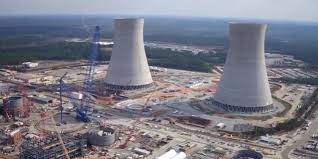
A pattern of cracks and leaks, some dating back two decades, has recently come to light, prompting concerns over the safety of the 40-year-old facility.
News 19 Becky Budds, September 15, 2023
JENKINSVILLE, S.C. — Federal regulators have raised alarms about the integrity of the emergency backup systems at the V.C. Summer nuclear plant.
A pattern of cracks and leaks, some dating back two decades, has recently come to light, prompting concerns over the safety of the 40-year-old facility.
During a routine equipment test last year, plant workers discovered a minor oil leak in a critical section of the piping connected to the diesel generator system.
Subsequently, the Nuclear Regulatory Commission (NRC) inspected the plant, uncovering a disconcerting series of cracks and leaks in the emergency generator system dating back twenty years.
Emergency diesel generators are an essential safety component at nuclear power plants, serving as a backup power source for the nuclear reactor. The NRC cautions that these cracks could potentially hinder the generator’s functionality………………………………………………..more https://www.wltx.com/article/news/local/nuclear-regulatory-comission-concerns-cracks-vc-summer-nuclear-plant/101-1e4f01d0-c8a0-4386-886e-24fc13f5877a
G20 Announces Plan To Impose Digital Currencies And IDs Worldwide
Zero Hedge, BY TYLER DURDEN, Authored by Bryan Jung via The Epoch Times 14 Sept 23
The Group of 20 leaders have agreed to a plan to eventually impose digital currencies and digital IDs on their respective populations, despite fears that governments will use them to monitor their peoples’ spending and crush dissent.
The G20, which is currently under India’s presidency, adopted a final declaration on the subject over the weekend in New Delhi.
The meeting, which included the world’s leading economies, announced last week that they had agreed to build the necessary infrastructure to implement digital currencies and IDs.
The group said that discussions were already underway to create international regulations for cryptocurrencies, but claimed that there was “no talk of banning cryptocurrency” at the summit.
Many critics are concerned that governments and central banks will eventually regulate cryptocurrencies and then immediately replace them with central bank digital currencies (CBDCs), which lack similar privacy and security………………………………..
The top items discussed at the New Delhi summit included “building Digital Public Infrastructure, Digital Economy, Cryptoassets, [Central Bank Digital Currencies].”……………………………….
The European Union is currently trying to introduce a bloc-wide “digital identity” app that would consolidate various personal information, including passports, driver’s licenses, and medical history………………………………………………………………………………………………………………. https://www.zerohedge.com/political/g20-announces-plan-impose-digital-currencies-and-ids-worldwide
Pakistan has 170 nuclear warheads, and may increase it to 200 by 2025, say American atomic scientists
LiveMint. 15 Sep 2023
Top American nuclear scientists have estimated that Pakistan currently possesses roughly 170 nuclear warheads, and this number could potentially increase to approximately 200 by the year 2025, based on the current rate of expansion.
As reported by PTI citing the Nuclear Notebook column published in the Bulletin of the Atomic Scientists on September 11, “We estimate that Pakistan now has a nuclear weapons stockpile of approximately 170 warheads. The US Defense Intelligence Agency projected in 1999 that Pakistan would have 60 to 80 warheads by 2020, but several new weapon systems have been fielded and developed since then, which leads us to a higher estimate.”……………………………………………………………………………………………………………………
Even when the document listed fissile materials production and inventory from available sources in the public domain, the scientists put out a disclaimer: “Calculating stockpile size based solely on fissile material inventory is an incomplete methodology that tends to overestimate the likely number of nuclear warheads.”
“We estimate that Pakistan currently is producing sufficient fissile material to build 14 to 27 new warheads per year, although we estimate that the actual warhead increase in the stockpile probably averages around 5 to 10 warheads per year,” they further said………………………………………………………………………
Commenting on the 2017’s medium-range ballistic missile called Ababeel that Pakistan said is “capable of carrying multiple warheads, using multiple independent reentry vehicle (MIRV) technology,” the Nuclear Notebook observed, “Development of multiple-warhead capability appears to be intended as a countermeasure against India’s planned ballistic missile defense system. Its status remains unclear as of July 2023.”
Pointing out that the total number and location of Pakistan’s nuclear-capable missile bases and facilities remains unknown, the document said, “Analysis of commercial satellite imagery suggests that Pakistan maintains at least five missile bases that could serve a role in Pakistan’s nuclear forces.”………………………………….
Admitting that little is publicly known about warhead production, the scientists said: “But experts have suspected for many years that the Pakistan Ordnance Factories near Wah, northwest of Islamabad, serve a role. One of the Wah factories is located near a unique facility with six earth-covered bunkers (igloos) inside a multi-layered safety perimeter with armed guards.” https://www.livemint.com/news/world/pakistan-has-170-nuclear-warheads-and-may-increase-it-to-200-by-2025-says-american-atomic-scientists-11694753125105.html
TODAY. Digital confusion

Yes, it’s a confusing and scary picture isn’t it ? (from What is the Digital Prison?)
Well, today I’m finding quite a few articles about money – how cash will become obsolete, and every financial transaction will be done digitally. And I took a 6 year-old child to the zoo, where you can’t even give a child some money to buy an orange drink, or anything – every purchase must be made digitally, by card.
I thought that this transfer away from cash would take ages, and perhaps not happen at all. But now I’m not so sure.
We love to hate China. China keeps surveillance on every individual, on every aspect of their lives. But the West is now going the same way.
The cashless thing is just one part of it. G20 Announces Plan To Impose Digital Currencies And IDs Worldwide. Elon Musk’s X venture – leading us into a digital prison?
It is indeed a scary thing.
But what complicates it for me, and adds to the confusion, – is considering the sources of my information.
I mean, I had comfortable consistent ideas about whom to take seriously, and whom not. That meant, for example, – Democrats good, Republicans bad. Twitter good, Elon Musk’s X bad. Left wing better than Right wing.
But it’s not like that any more. Social media of all kinds is suspect – with many biases, and no fact-checking. And the motive of every platform seems to be the encouragement of profit-making. Of course Artificial Intelligence is adding to the murk.

Oh well, we can’t give up . Just have to keep on reading stuff, with a critical eye – does it make sense to me? do those facts sound reliable? is the language too inflammatory? Is this source likely to be reliable, or not?
Public Need Versus the Business of War
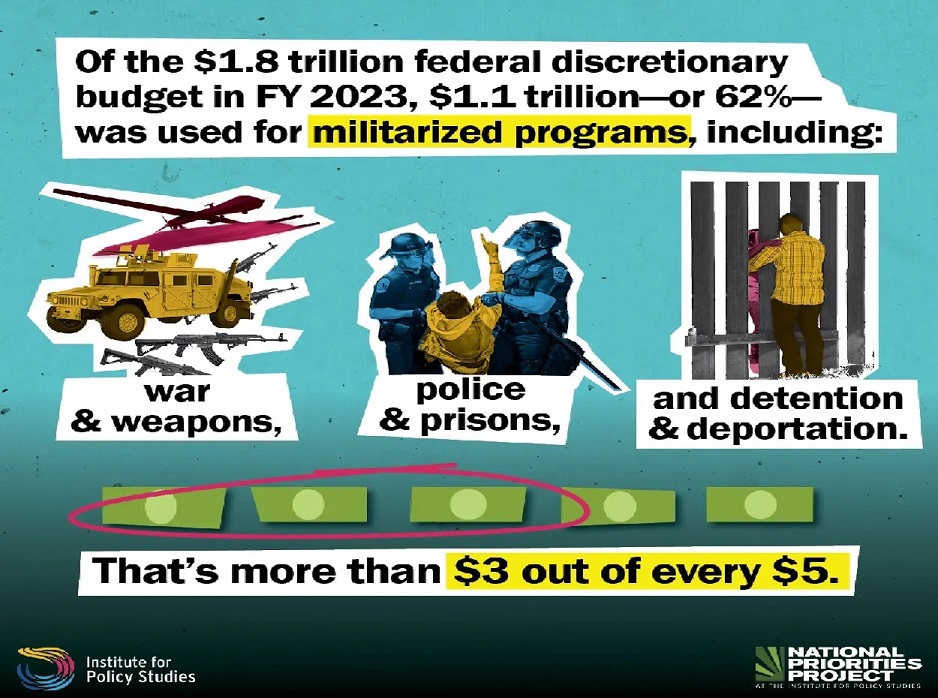
What does military contracting tell us about the priorities of the U.S. ruling class?
CHRISTIAN, SEP 16, 2023 Christian’s Substack
The American public is hurting. The bare necessities—clean water, nutritious food, and affordable housing—are hard to come by.
Tap water is contaminated with lead, PFAS, and other pollutants. The water systems that serve cities and towns suffer additional stressors, including drought, overuse, and a failure to incorporate greywater systems. And, like many necessities, you have to pay for it in the United States: Water utility prices continue to go up and up.
Hunger is a severe problem. ……………………………………
Housing is prohibitively expensive. …………………………………..
What is U.S. Congress doing as the public suffers?
Water Is Not a Priority
Every year, U.S. Congress appropriates money for two federal water funds. The Environmental Protection Agency gives this money to states in the form of grants. The Washington Post recently reported, “Since 2022, the federal allocation has totaled roughly $5.5 billion, amounting to a literal and figurative drop in the bucket for a nation with an estimated $625 billion backlog in projects just to provide cleaner, reliable drinking water.”
In other words, Congress has allocated 0.88 percent of the funding needed to establish infrastructure that dependably provides potable water.
It gets worse. Members of Congress skim funds off the top……………………………………
Food is Not a Priority
Stephen Semler, co-founder of the Security Policy Reform Institute, recently showed that annual U.S. military spending increased during the Trump administration by 20 percent in nominal terms and then increased during the first two years of the Biden administration by 15 percent in real terms. The military budget is now a record $858 billion for fiscal 2023, a bipartisan feat.
Food insecurity “climbed 18 percent during the same stretch,” Semler explained. “Something’s wrong when either military spending or food insecurity spikes over a two-year period. When they soar in tandem, it’s an abomination…”
There is plenty of money available to make sure people don’t go hungry. For example, the amount of money to be spent over several years on new land-based nuclear weapons ($263.9 billion) could instead build 52.5 million community gardens ($2,750 each) across the country, with more than enough money left over ($119.52 billion) to cover a year of food stamps. Tax dollars, we see, could be used to nourish instead of accidentally or deliberately eliminating human life on Earth.
The Housing Crisis……………………………………
Support the Troops
Evidence suggests that the federal government doesn’t even prioritize the troops’ water, food, and housing…………………………………………………………………………………
A State of Permanent Warfare
Military and intelligence personnel don’t deploy themselves. The U.S. ruling class deploys them.
When “successful,” military or intelligence operations open up an economy to multinational corporations, enriching the ruling class. Examples spanning the three main eras of the military-industrial complex (the first Cold War, the “global war on terror”, and today’s “strategic competition”) illustrate this success:……………………………………………………………………………………….
Moreover, U.S. military activity itself is extremely profitable for Wall Street and top corporate executives, as the U.S. military doesn’t shoot, move, or communicate—let alone eat, refuel, fly, or spy—without corporate goods and services. Corporations absorb more than half of the U.S. military budget. Many regularly price gouge the military.
The ruling class is organized and relentless in its pursuit of profit. The three branches of government (legislative, judicial, executive) largely respond to the needs of this class. Some of the richest and/or most influential members of U.S. government, such as a coal baron or a person who has profited from the provision of healthcare, even come from that class.
The Front Burner
A military aircraft, the F-35 Joint Strike Fighter, embodies the priorities of the ruling class. With a lifetime cost expected to top $1.7 trillion, the F-35 is on track to becoming the most expensive weapon of all time………………………………………………………………………………………………………………
One-Two Punch
The military-industrial complex is a one-two punch to the public………………………………………………………………………………… more https://thebusinessofwar.substack.com/p/public-need-versus-the-business-of?utm_source=post-email-title&publication_id=1769284&post_id=137081544&utm_campaign=email-post-title&isFreemail=true&r=c9zhh&utm_medium=email
Hyping Ukraine Counteroffensive, US Press Chose Propaganda Over Journalism

The fact that US officials pushed for a Ukrainian counteroffensive that all but expected would fail raises an important question: Why would they do this? Sending thousands of young people to be maimed and killed does nothing to advance Ukrainian territorial integrity, and actively hinders the war effort.
Even as Ukraine and Russia sat at the negotiation table early in the war, the US made it clear that it wanted the war to continue and escalate. The US’s objective was, in the words of Raytheon board member–turned–Defense Secretary Lloyd Austin, “to see Russia weakened.”
The consensus among policymakers in Washington is to push for endless conflict, no matter how many Ukrainians die in the process. As long as Russia loses men and material, the effect on Ukraine is irrelevant. Ukrainian victory was never the goal.
BRYCE GREENE, FAIR, 15 Sept 23
It has been clear for some time that US corporate news media have explicitly taken a side on the Ukraine War. This role includes suppressing relevant history of the lead-up to the war (FAIR.org, 3/4/22), attacking people who bring up that history as “conspiracy theorists” (FAIR.org, 5/18/22), accepting official government pronouncements at face value (FAIR.org, 12/2/22) and promoting an overly rosy picture of the conflict in order to boost morale.
For most of the war, most of the US coverage has been as pro-Ukrainian as Ukraine’s own media, now consolidated under the Zelenskyy government (FAIR.org, 5/9/23). Dire predictions sporadically appeared, but were drowned out by drumbeat coverage portraying a Ukrainian army on the cusp of victory, and the Russian army as incompetent and on the verge of collapse.
Triumphalist rhetoric soared in early 2023, as optimistic talk of a game-changing “spring offensive” dominated Ukraine coverage. Apparently delayed, the Ukrainian counteroffensive launched in June. While even US officials did not believe that it would amount to much, US media papered over these doubts in the runup to the campaign.
Over the last three months, it has become clear that the Ukrainian military operation will not be the game-changer it was sold as; namely, it will not significantly roll back the Russian occupation and obviate the need for a negotiated settlement. Only after this became undeniable did media report on the true costs of war to the Ukrainian people.
Overwhelming optimism
In the runup to the counteroffensive, US media were full of excited conversation about how it would reshape the nature of the conflict. NATO Secretary General Jens Stoltenberg told Radio Free Europe (4/21/23) he was “confident Ukraine will be successful.” Sen. Lindsey Graham assured Politico (5/30/23), “In the coming days, you’re going to see a pretty impressive display of power by the Ukrainians.” Asked for his predictions about Ukraine’s plans, retired Lt. Gen. Ben Hodges told NPR (5/12/23), “I actually expect…they will be quite successful.”
Former CIA Director David Patraeus, author of the overhyped “surge” strategy in Iraq, told CNN (5/23/23):
I personally think that this is going to be really quite successful…. And [the Russians] are going to have to withdraw under pressure of this Ukrainian offensive, the most difficult possible tactical maneuver, and I don’t think they’re going to do well at that.
The Washington Post’s David Ignatius (4/15/23) acknowledged that “hope is not a strategy,” but still insisted that “Ukraine’s will to win—its determination to expel Russian invaders from its territory at whatever cost—might be the X-factor in the decisive season of conflict ahead.”
The New York Times (6/2/23) ran a story praising recruits who signed up for the Ukrainian pushback, even though it “promises to be deadly.” Times columnist Paul Krugman (6/5/23) declared we were witnessing “the moral equivalent of D-Day.” CNN (5/30/23) reported that Ukrainians were “unfazed” as they “gear up for a counteroffensive.”
Cable news was replete with buzz about how the counteroffensive, couched with modifiers like “long-awaited” or “highly anticipated,” could turn the tide in the war. Nightly news shows (e.g., NBC, 6/15/23, 6/16/23) presented audiences with optimistic statements from Ukrainian President Volodymyr Zelenskyy and other figures talking about the imminent success.
Downplaying reality
Despite the soaring rhetoric presented to audiences, Western officials understood that the counteroffensive was all but doomed to fail. This had been known long before the above comments were reported, but media failed to include that fact as prominently as the predictions for success………………………………………………………………..
Too ‘casualty-averse’?
……………………………………………………………… A mid-July New York Times article (7/14/23) reported that US officials were privately frustrated that Ukraine had become too afraid of dying to fight effectively. The officials worried that Ukrainian commanders “fear[ed] casualties among their ranks,” and had “reverted to old habits” rather than “pressing harder.” A later Times article (8/18/23) repeated Washington’s worries that Ukrainians were too “casualty-averse.”
Acknowledging failure
After it became undeniable that Ukraine’s military action was going nowhere, a Wall Street Journal report (7/23/23) raised some of the doubts that had been invisible in the press on the offensive’s eve…………………………………………………………………………………………………..
Rather than dwelling on the stalled campaign, the New York Times and other outlets focused on the drone war against Russia, even while acknowledging that the remote strikes were largely an exercise in public relations. The Times (8/25/23) declared that the strikes had “little significant damage to Russia’s overall military might” and were primarily “a message for [Ukraine’s] own people,” citing US officials who noted that they “intended to demonstrate to the Ukrainian public that Kyiv can still strike back.” Looking at the quantity of Times coverage (8/30/23, 8/30/23, 8/23/23, 8/22/23, 8/22/23, 8/21/23, 8/18/23), the drone strikes were apparently aimed at an increasingly war-weary US public as well.
War as desirable outcome
The fact that US officials pushed for a Ukrainian counteroffensive that all but expected would fail raises an important question: Why would they do this? Sending thousands of young people to be maimed and killed does nothing to advance Ukrainian territorial integrity, and actively hinders the war effort.
The answer has been clear since before the war. Despite the high-minded rhetoric about support for democracy, this has never been the goal of pushing for war in Ukraine. Though it often goes unacknowledged in the US press, policymakers saw a war in Ukraine as a desirable outcome. One 2019 study from the RAND Corporation—a think tank with close ties to the Pentagon—suggested that an effective way to overextend and unbalance Russia would be to increase military support for Ukraine, arguing that this could lead to a Russian invasion.
In December 2021, as Russian President Vladimir Putin began to mass troops at Ukraine’s border while demanding negotiations, John Deni of the Atlantic Council published an op-ed in the Wall Street Journal (12/22/21) headlined “The Strategic Case for Risking War in Ukraine,” which laid out the US logic explicitly: Provoking a war would allow the US to impose sanctions and fight a proxy war that would grind Russia down. Additionally, the anti-Russian sentiment that resulted from a war would strengthen NATO’s resolve.
All of this came to pass as Washington’s stance of non-negotiation successfully provoked a Russian invasion. Even as Ukraine and Russia sat at the negotiation table early in the war, the US made it clear that it wanted the war to continue and escalate. The US’s objective was, in the words of Raytheon boardmember–turned–Defense Secretary Lloyd Austin, “to see Russia weakened.” Despite stated commitments to Ukrainian democracy, US policies have instead severely damaged it.
NATO’s ‘strategic windfall’
In the wake of the stalled counteroffensive, the US interest in sacrificing Ukraine to bleed Russia was put on display again. In July, the Post‘s Ignatius declared that the West shouldn’t be so “gloomy” about Ukraine, since the war had been a “strategic windfall” for NATO and its allies. Echoing two of Deni’s objectives, Ignatius asserted that “the West’s most reckless antagonist has been rocked,” and “NATO has grown much stronger with the additions of Sweden and Finland.”
In the starkest demonstration of the lack of concern for Ukraine or its people, he also wrote that these strategic successes came “at relatively low cost,” adding, in a parenthetical aside, “(other than for the Ukrainians).”
Ignatius is far from alone. Hawkish Sen. Mitt Romney (R–Utah) explained why US funding for the proxy war was “about the best national defense spending I think we’ve ever done”: “We’re losing no lives in Ukraine, and the Ukrainians, they’re fighting heroically against Russia.”
The consensus among policymakers in Washington is to push for endless conflict, no matter how many Ukrainians die in the process. As long as Russia loses men and material, the effect on Ukraine is irrelevant. Ukrainian victory was never the goal.
‘Fears of peace talks’
Polls show that support for increased US involvement in Ukraine is rapidly declining………………..
The failure of the counteroffensive has not caused Washington to rethink its strategy of attempting to bleed Russia. The flow of US military hardware to Ukraine is likely to continue so long as this remains the goal.
The Hill (9/5/23) gave the game away about NATO’s commitment to escalation with a piece titled “Fears of Peace Talks With Putin Rise Amid US Squabbling.”

But even within the Biden administration, the Pentagon appears to be at odds with the State Department and National Security Council over the Ukraine conflict. Contrary to what may be expected, the civilian officials like Jake Sullivan, Victoria Nuland and Antony Blinken are taking a harder line on perpetuating this conflict than the professional soldiers in the Pentagon. The media’s sharp change of tone may both signify and fuel the doubts gaining traction within the US political class. https://fair.org/home/hyping-ukraine-counteroffensive-us-press-chose-propaganda-over-journalism/
—
Uranium Mining Protections Needed Across the West
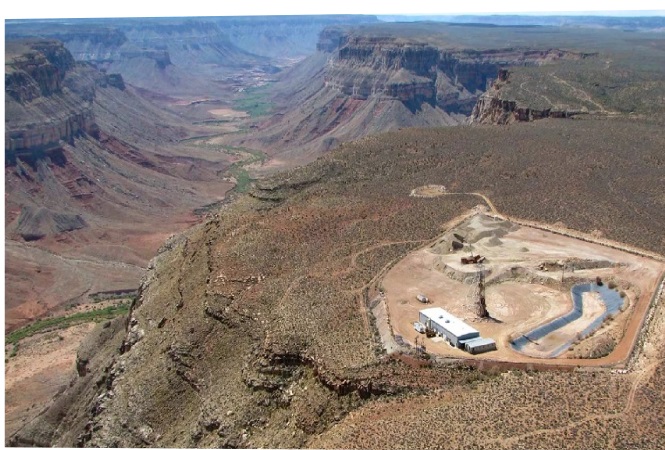
The Biden administration needs to protect communities and water supplies across the West from the dangers of uranium mining.
Geoffrey H. Fettus Senior Attorney, Nuclear, Climate & Clean Energy Program
President Biden’s designation of the Baaj Nwaavjo I’tah Kukveni—Ancestral Footprints of the Grand Canyon National Monument will go far in protecting the rich cultural and ecological value of this majestic landscape. It will safeguard some of the most iconic public lands in the American West from the ravages of destructive mining and destructive waste. This protection has been a top priority for tribes in the area, and the designation is long overdue.
“That’s our aboriginal homelands,” Dianna Sue Uqualla, a Havasupai tribal council member, told the Bureau of Land Management at a public meeting according to Bloomberg Law. The monument will “keep at bay these mining people that are coming in,” and will protect the Grand Canyon from companies that are “desecrating, raping the Mother Earth.”
This is wonderful news, but there is much more to be done about uranium mining across the American West. And there’s also a lot of misinformation out there that muddies what should be a clear path forward to protecting all the people and watersheds of the West from unchecked uranium mining.
Uranium mining contaminated tribal lands for decades
The uranium mining industry has left a dreadful history of contamination and harm across vast swathes of the American West, but especially with respect to the Indigenous People who call this area home. It’s a complicated history that intertwines with the Manhattan Project and the Cold War, and it’s a legacy that has yet to be addressed.
On Navajo land alone, nearly four million tons of uranium ore were extracted from 1944 to 1986. The industry and the U.S. government left behind hundreds of abandoned uranium mines, four inactive uranium milling sites, a former dump site, and the widespread contamination of land and water; this includes the 1979 collapse of a tailings dam in Church Rock, New Mexico, that deposited 93 million gallons of radioactive and chemically contaminated liquid and 1,100 tons of solid radioactive tailings into the Rio Puerco, contaminating the river for more than 60 miles downstream. After decades of pressure, the government has finally started to assess and mitigate this contamination.
Much is left to be done: More than 500 abandoned uranium mines remain on Navajo land.
We need new standards
Back in 2016, the Obama administration was poised to take action on uranium mining standards, but then Donald Trump was elected president. It will come as no surprise that the U.S. Environmental Protection Agency (EPA) under the Trump administration cast aside the Obama EPA’s long-overdue protective environmental standards. In an about-face, the Trump EPA and Nuclear Regulatory Commission (NRC) moved to weaken uranium mining rules.
Once Biden took office in 2021, NRDC had hoped for a new approach. So far, however, we haven’t heard anything from either the EPA or NRC, despite repeated requests by NRDC and other major environmental groups, tribal representatives, and regional groups across the West.
It is time for the EPA to clear the obstacles and move forward on the uranium protections it drew up years ago.
The Biden administration can begin to protect the communities and water resources that have been negatively affected by uranium mining for decades by taking two steps: (1) dissolving a 2020 memorandum of understanding between the EPA and NRC that undercuts the EPA’s ability to enact standards; and (2) issuing protective uranium in situ mining standards that have been sitting on a shelf for years. ……………………………………………………………….
-
Archives
- October 2026 (112)
- September 2026 (339)
- August 2026 (330)
- July 2026 (355)
- June 2026 (287)
- May 2026 (306)
- April 2026 (356)
- March 2026 (251)
- February 2026 (267)
- January 2026 (308)
- December 2025 (358)
- November 2025 (359)
-
Categories
- 1
- 1 NUCLEAR ISSUES
- business and costs
- climate change
- culture and arts
- ENERGY
- environment
- health
- history
- indigenous issues
- Legal
- marketing of nuclear
- media
- opposition to nuclear
- PERSONAL STORIES
- politics
- politics international
- Religion and ethics
- safety
- secrets,lies and civil liberties
- spinbuster
- technology
- Uranium
- wastes
- weapons and war
- Women
- 2 WORLD
- ACTION
- AFRICA
- Atrocities
- AUSTRALIA
- Christina's notes
- Christina's themes
- culture and arts
- Events
- Fuk 2022
- Fuk 2023
- Fukushima 2017
- Fukushima 2018
- fukushima 2019
- Fukushima 2020
- Fukushima 2021
- general
- global warming
- Humour (God we need it)
- Nuclear
- RARE EARTHS
- Reference
- resources – print
- Resources -audiovicual
- Weekly Newsletter
- World
- World Nuclear
- YouTube
-
RSS
Entries RSS
Comments RSS

