Ex-Ukrainian president pictured wearing Nazi symbol (PHOTOS)

https://www.rt.com/russia/583014-poroshenko-nazi-patch-ukraine/
https://www.rt.com/russia/583014-poroshenko-nazi-patch-ukraine/ 17 Sept 23
Pyotr Poroshenko, the former president of Ukraine, was photographed wearing a symbol on his military fatigues that was created by the Nazis, during a meeting with Ukrainian troops last week.
The politician often showcases supplies such as quadcopter drones, household equipment, or even armored vehicles in his social media and PR, to emphasize his personal contribution to the war effort against Russia.
The images posted on his social media accounts last Saturday show him wearing a military patch with the so-called Black Sun, or ‘Sonnenrad.’ The symbol originates from Nazi Germany and is extensively used by various neo-Nazi groups around the world to denote their political leanings.
The infamous Ukrainian military unit, the Azov Batallion, for example, featured the Sonnenrad in its original insignia but later removed it as it attempted to downplay its association with far-right ideologies.
The controversial patch appears to come from the 36th Marine Brigade of the Ukrainian Armed Forces. An earlier photo of the ex-president showed him clasping hands with Valery Prozapas, a member of Poroshenko’s European Solidarity party and a captain serving in the 36th Brigade, who wore an identical emblem.
The 10th Mountain Assault Brigade, which Poroshenko was visiting while sporting the patch on his jacket shoulder, is called ‘Edelweiss’ after Zelensky formally assigned the designation to the unit in February.
The Ukrainian military denies that the name has anything to do with the Nazi-era 1st Mountain Division of the Wehrmacht, which is notorious for war crimes committed by its troops on the Eastern front, and used the Edelweiss as an insignia.
The prevalence of neo-Nazi sympathizers among Ukrainian troops after the 2014 coup in Kiev has been thoroughly documented by researchers and the international press. However, this has been largely ignored by the Western media since the hostilities between Russia and Ukraine broke out last year.
In June, the New York Times contended that the widespread use of Nazi iconography in Ukraine was a “thorny issue,” emphasizing it does not reflect the true ideology of those displaying them.
Moscow, on the other hand, has called the empowerment of far-right nationalists in modern Ukraine one of the key reasons for the ongoing conflict.
Nuclear news this week – (miles too long)

Some bits of good news. Why tackling biodiversity loss could solve the climate crisis. A believed-extinct butterfly flitted back to the Scottish hills
TOP STORIES. Chris Hedges: Craig Murray on the ‘Slow Motion Execution’ of Assange. https://www.youtube.com/watch?v=6x9Bltb7ZYE
Nuclear submarines challenge trains 10 year old children for war. The Discharge of Fukushima’s Radioactive Water could be a Precedent for Similar Actions.
Hyping Ukraine Counteroffensive, US Press Chose Propaganda Over Journalism.
What is the Digital Prison?
Climate. Global stocktake UN urges radical changes in climate policy plans at Cop28. Fossil fuel industries have captured global UN negotiations on climate change. Antarctic sea-ice at ‘mind-blowing’ low alarms experts.
Christina notes. Blatant hypocrisy and lies from Rafael Grossi and the International Atomic Energy Agency. Digital confusion.
ART and CULTURE. Nuclear Free Local Authorities back councillor’s call to preserve bunker as museum to folly of nuclear war.
CLIMATE. Don’t underestimate ravages of climate crisis when storing nuclear waste. Kings Bay nuclear submarine hub dodged a bullet named Hurricane Idalia.
ECONOMICS. A new French fairy tale: “Cheap” nuclear electricity in France is not what it appears. Marketing. Top candidate for head of European Investment Bank cautions about defense, nuclear investments. USA can’t get investors for Small Nuclear Reactors: no problem – flog them off to Ghana! ‘War Is Good for Business,’ Declares Executive at London’s Global Arms Fair.
EDUCATION. The normalisation of nuclear power and militarism in our schools.
EMPLOYMENT. 1000 Sellafield Ltd. contractors to be balloted for strike by Unite.
ENERGY. Ukraine plans up to 1GW wind farm in Chernobyl nuclear disaster zone. Endless energy use needed for endless data storage – so, small nuclear reactors for Sweden. Windfarm bid withdrawn after Ministry of Defence raises nuclear testing station concerns. Solar energy boost for France. Renewables boost in Germany: turning the corner after a bad year?
ENVIRONMENT. Earth ‘well outside safe operating space for humanity’, scientists find. Radioactive discharge from Fukushima nuclear plant raising concerns on California coast. Eating the three-eyed fish: where is Australia on nuclear wastewater in the Pacific?
ETHICS and Religion If The US Really Was What It Pretends To Be. “A world free from nuclear weapons is possible”. The US Air Force Is Clearing Out Jungles In The Pacific To Prepare For War With China.
HUMAN RIGHTS. JULIAN ASSANGE AND THE END OF AMERICAN DEMOCRACY.
INDIGENOUS ISSUES. British activists join Nuclear Free Local Authorities in supporting Swedish Sami against uranium mining. Uranium Mining Protections Needed Across the West. Forced removal of Chagos islanders gave the US a nuclear base and the UK a deal on nuclear weapons.
LEGAL. French nuclear cartel fined €31m. Small island nations take high-emitting countries to court to protect the ocean.
MEDIA. Fukushima’s nuclear waste: Stigmatising Russia, approving Japan.
NUCLEAR TECHNOLOGY. Small modular nuclear reactors for Ukraine (safe?)
OPPOSITION to NUCLEAR . Peace boat’s message is clear: Golden Rule mission urges support for nuclear ban treaty. Activists want California nuclear reactor closed over safety concerns
POLITICS.
- The U.K.’s Goldilocks Moment For Nuclear Power. Huge nuclear lobbying aimed at British Parliament . Sunak gives China green light to build UK nuclear plants despite nation being ‘threat to our way of life’. Nuclear Free Local Authorities’ plea to new Energy Secretary: ‘Don’t make Sizewell C Suffolk’s nightmare.’
- Germany advises against nuclear power in Uganda.
- Israel’s nuclear commission head refuses to side by High Court – in the case of a constitutional crisis
- Public Need Versus the Business of War.
- 50 US Lawmakers Reintroduce ‘CBDC Anti-Surveillance State Act’ to Protect ‘the American Way of Life’.
POLITICS INTERNATIONAL and DIPLOMACY.
- Germany’s Scholz: Fresh nuclear disarmament talks should include China.
- Guam residents inch closer to compensation for US nuclear testing.
- How the ‘nuclear football’ remains a potent symbol of the unthinkable.
- US incapable of negotiating – Russian diplomat. Ukraine joining NATO ‘would not promote peace’ – ex-French president. Zelensky Implies Ukrainian Refugees in Europe Will Resort to Terrorism If West Curtails Aid.
- Congress should seek ‘poison pills’ for any US-Saudi nuclear agreement.
PUBLIC OPINION. A push-back against Western influence is reportedly prompting countries to reject the pro-Ukraine agenda.
RELIGION. Kiev orders closure of Christian churches
SAFETY.
- Why this Ukrainian nuclear plant is now on brink of a ‘Fukushima’ disaster.
- Safety fears : the problem of Britain’s ageing nuclear submarines. Nuclear Free Local Authorities concerned over safety risks regarding nuclear-armed U.S. base planned for RAF Lakenheath, Suffolk.
- Are They Already Cutting Corners on Worker Protection at DOE’s New Plutonium Processing Plant? Environmental groups urge regulators to shut down California reactor over safety, testing concerns. Cracks at V.C. Summer nuclear plant raise concern from federal regulators.
- Risk assessment and the nuclear cultists.
- UN Nuclear Watchdog Risks Running Out of Money on US, China Standoff. UN nuclear agency slams Iran for barring inspectors from monitoring program.
- A nuclear bomb is still missing after it was dropped off the Georgia coastline 65 years ago.
- Japan to start old nuclear reactor checks in October. Incidents. Radioactive material leaks detected at Japan’s plutonium nuclear fuel research facility’.
SECRETS and LIES.
- Blinken, Assange, And The 20th Anniversary Of The Palestine Hotel Bombing.
- SNC Lavalin changing its name to AtkinsRéalis in effort to shed parts of its past. From the archives: Crooked Canadian company Lavalin trying to sell ?zombie nuclear technology to China and UK.
- IAEA sees no problem with depleted uranium weaponry – Grossi.
- Antony Blinken mouths complacent lies: “very confident in Ukraine’s ultimate success”.
- The UK Government Knows How Extreme the Online Safety Bill Is. G20 Announces Plan To Impose Digital Currencies And IDs Worldwide. Elon Musk’s X venture – leading us into a digital prison?
- Ex-Ukrainian president pictured wearing Nazi symbol (PHOTOS). Ukrainians blame Zelensky for corruption – poll.
SPACE. EXPLORATION, WEAPONS. Pentagon’s new plan to counter China includes swarms of smart satellites. 7 October – 14 October KEEP SPACE FOR PEACE WEEK.
SPINBUSTER. Blinken: US Does Not Oppose Ukrainian Attacks Inside Russia With US-Supplied Missiles.
WASTES. Decommissioning. September 14, 2023: Dounreay decommissioning end date that proved to be unachievable.
WAR and CONFLICT. NATO’s Steadfast Defender Drills Near Russia Signal Bloc’s Shift to ‘War Footing’, Pentagon blames Russian e-warfare for failed Ukraine counteroffensive.
WEAPONS and WEAPONS SALES.
- Banish Nuclear Weapons ‘to History Books, Once and for All’, Urges Secretary-General, Marking International Day.
- With long-range missiles for Ukraine, US crosses own red line.
- Pakistan nuclear weapons, 2023. Pakistan has 170 nuclear warheads, and may increase it to 200 by 2025, say American atomic scientists.
- Zelensky Issues Veiled Threat To Destabilize Europe If Weapons Flow Curtailed.
- Making Britain a target for nuclear retaliation.
- US to Shift Some Military Aid from Egypt to Taiwan.
WOMEN. Women with medical education to be banned from leaving Ukraine and forced to sign up for military service – Kyiv Post.
‘War Is Good for Business,’ Declares Executive at London’s Global Arms Fair

16 Sept 23 By Brett Wilkins / Common Dreams
“Deals done at DSEI will cause misery across the world, causing global instability, and devastate people’s lives,” one peace activist lamented.
Military-industrial complex players big and small gathered in London this week, hawking everything from long-range missiles to gold-plated pistols to arms fair attendees—including representatives of horrific human rights violators—as weapon-makers and other merchants of the machinery of death reap record profits.
“War is good for business,” one defense executive attending the biennial Defense and Security Equipment International (DSEI) conference at ExCel London flat-out told Reuters. “We are extremely busy,” Michael Elmore, head of sales at the U.K.-based armored steelmaker MTL Advanced, told the media agency.
Russia’s ongoing invasion of Ukraine and the West’s scramble to arm Ukrainian homeland defenders have been a bonanza for arms-makers.
“Ukraine is a very interesting combination of First and Second World War technologies and very modern technology,” Kuldar Vaarsi, CEO of the Estonian unmanned ground vehicle firm MILREM, told Reuters.
Saber-rattling and fearmongering by government, media, and business figures amid rising tensions between the U.S. and its allies on one side, and a fast-rising China on the other, have also spurred military spending, including Japan’s $320 billion buildup announced last December.
“We think this is a longer-term essentially ‘sea change’ in national defense strategy for the U.S. and for our Western allies,” Jim Taiclet, CEO of U.S. arms giant Lockheed Martin, told investors during a call earlier this summer announcing higher-than-expected sales and profit outlooks.
According to the Stockholm International Peace Research Institute, the United States, Russia, France, China, and Germany were the world’s top arms exporters from 2018-22, with the five nations accounting for 76% of all weapons exports during that period. The U.S. accounted for nearly 40% of such exports during those five years, while increasing its dominance in the arms trade. The U.S. also remains by far the world’s biggest military spender.
In addition to major corporations, middlemen like Marc Morales have also been profiting handsomely from wars in countries including Ukraine. Morales happened to have a warehouse full of ammunition in Bulgaria that the Pentagon originally intended for Afghanistan when Russia invaded its neighbor, and he has been richly rewarded as the U.S. spends tens of billions of dollars arming Ukrainian forces. He named his new $10 million yacht Trigger Happy.
Outside the sprawling ExCel convention center in London’s Docklands, anti-war protesters rallied against the global arms trade and the death and destruction it fuels. The Guardianreported that at least a dozen demonstrators were arrested during the course of the conference, including nine on Thursday for blocking a road outside the venue.
Sam Perlo-Freeman, a researcher at the Campaign Against Arms Trade (CAAT), told The Guardian that “a lot of countries that are being talked about as new arms export markets are ones we would be concerned about.”…………………………………
“Deals done at DSEI will cause misery across the world, causing global instability, and devastate people’s lives,” Apple added.
Inside ExCel, it was business as usual. Pressed by Declassified U.K. chief reporter Phil Miller on why Britain’s right-wing government supports “selling arms to the Saudi dictatorship that sentences someone to death for tweeting,” Minister of State for the Armed Forces James Heappey deflected.
Private sector leaders, however, have been more forthcoming. As Raytheon CEO Greg Hayes opined during a 2021 investor call touting the company’s “solid” growth: “Peace is not going to break out in the Middle East anytime soon.” https://scheerpost.com/2023/09/16/war-is-good-for-business-declares-executive-at-londons-global-arms-fair/
Forced removal of Chagos islanders gave the US a nuclear base and the UK a deal on nuclear weapons
Bartered for a nuclear discount – Beyond Nuclear International , by Linda Pentz Gunter 17 Sept 23 https://beyondnuclearinternational.org/2023/09/17/bartered-for-a-nuclear-discount/
In order to “compensate” the government of the United Kingdom for the expense it incurred in forcing a mass deportation of the Indigenous people of the Chagos Archipelago, the United States gave the UK a discount on the purchase of American nuclear weapons.
This was among one of many horrifying details that emerged from a report issued by Human Rights Watch earlier this year detailing how, “About 60 years ago, the United Kingdom government secretly planned, with the United States, to force an entire Indigenous people, the Chagossians” into exile.
The purpose of the deportation was a secret deal struck between the UK and the US to create a US military base on Diego Garcia, the largest of the Chagos islands. The Chagos Archipelago consists of a series of islands and atolls in the Indian Ocean. But first, the inhabitants of those islands had to be removed.
To carry out what was effectively a racially-motivated deportation, the UK split the Chagos Archipelago from Mauritius, a UK colony, created a new colony, the British Indian Ocean Territory, and then lied to the United Nations that there were no permanent residents on the Chagos Islands.
“The reality was that a community had lived on Chagos for centuries,” said the Human Rights Watch report, entitled “That’s When the Nightmare Started” UK and US Forced Displacement of the Chagossians and Ongoing Colonial Crime.
The Chagossians are predominately descendants of people enslaved by the British and French, forced from their homelands in Africa and Madagascar and brought to the then uninhabited Chagos Islands to work coconut plantations. In time, they created their own cultural identity, becoming a distinct peoples.
But between 1965 and 1973, the entire population of the Chagos Archipelago was deported to Mauritius and the Seychelles where, according to the report, they lived in squalid conditions of abject poverty, with all promises of housing and jobs broken. There was nothing there for them and they were offered neither choice nor compensation.
Meanwhile, the UK received a $14 million discount from the US for its purchase of American Polaris nuclear-armed submarine-launched ballistic missiles.
This was among the details revealed as more documents come to light exposing what the HRW report described as “not only the plans, but the blatant racism of UK officials toward the Chagossians that highlights the discriminatory nature of their treatment.”
In a document dated 30 December 1966, the US Ambassador to London at the time, David K. E. Bruce, wrote to the British secretary of state for foreign affairs, George Brown:
“Since the United Kingdom is assuming the costs of the administrative detachment of the Indian Ocean islands and of the acquisition of the lands thereon, the United States will forego the R&D surcharge to the extent of $14 million, or one half of the foregoing Indian Ocean islands costs incurred by the United Kingdom, whichever is the less.”
Thus, the Indigenous people of Chagos were bartered away for their homeland from which, still today, the United States stages its nuclear submarine force.
The Chagossians, meanwhile, have fought for years not only for reparation, but for the right to return home. This has been denied to them by both the US and UK governments, even as the US continues to benefit from its occupation of the militarily strategic Diego Garcia base, a place so secret that only military personnel are allowed there; their families cannot accompany them.
Mauritius has also asked for the return of the islands, a discussion the UK government officially opened last November but one HRW views with skepticism.
“There is, currently, little transparency about the negotiations and no clear declaration that the Chagossian people will be effectively and meaningfully consulted in this decision that will affect them profoundly, and that their right to reparations, including the right to return, will be fully and effectively centered in the negotiations and guaranteed in the outcome,” said the report’s summary.
The story of the Chagossians of course has an eerily familiar ring. During the years of atomic testing in the Pacific, the United States forced the removal of Marshall Islanders in order to bomb their atolls into smithereens. Then they seized another of their islands — Enewetok — from which to stage the futile and largely ineffective Strategic Defense Initiative, also known as Star Wars, in order to conduct missile interception tests.
Today, the island of Ebeye, where most Marshall Islanders were moved to, consists of crowded slums with inadequate services. The conditions were described by photographer, Vlad Sokhin, in an essay we published on Beyond Nuclear International in November 2018:
“The tiny island of Ebeye in Kwajalein Atoll, Marshall Islands, has a total area of 0.36 square kilometres and is home to over 15,000 people, most of whom were moved there from nearby islands because of a US Army missile range-testing program that was launched in the late 1940s. Overcrowding, poverty, outbreaks of infectious diseases and a high level of unemployment has led some to refer to Ebeye as the ‘ghetto of the Pacific’”
The racist abuse the Marshall Islanders suffered at the time of the atomic tests and subsequently, when they were treated like nuclear guinea-pigs, and described by one US officials as “more like us than mice”, was unforgettably told in the Adam Jonas Horowitz documentary, Nuclear Savage.
The Marshall Islanders have received some minimal compensation from the US government, including the right to live in the US. There is a deep irony here, given it is the appalling conditions the US itself forced on Marshall Islanders that may prompt them to leave their once beloved homeland. (Never mind that over-consumptive carbon emitters like the US, one of the chief perpetrators of the current climate crisis, are now inflicting a second agony on Marshall Islanders as they watch sea-level rise slowly consume them.)
Likewise, some Chagossians who were forcibly moved to Mauritius received a tiny amount of compensation. Those exiled to the Seychelles did not. In 2003, the British government offered citizenship to displaced Chagossians, but with restrictions, including the need to have been born on the islands. This meant that younger generations within some families could legally emigrate to the UK, whereas their parents and grandparents could not. Once again, families were split apart.
The right to return remains the central fight for the exiled Chagossians. After winning a court case in the UK that allowed Chagossians to return to selected islands, but without any financial report, the UK later reversed the policy. Today, there is no right of return.
This colonial racism is repeated across the nuclear spectrum, most notably in the realm of uranium mining where Indigenous people are exploited as the workforce under slave labor conditions, whether in Australia, Africa or North America, then effectively abandoned to the toxic legacy and lethal health effects.
If the Chagossians eventually receive monetary compensation, it won’t heal the double wounds inflicted on them — torn first from their African birthplace and then from an island paradise to which they had adapted and now call home.
And the story of the Chagossians is just one chapter in a long list of colonial human rights abuses, too many of which seem to have a nuclear component as well.
Linda Pentz Gunter is the international specialist at Beyond Nuclear and writes for and curates Beyond Nuclear International.
Antarctic sea-ice at ‘mind-blowing’ low alarms experts

2
The sea-ice surrounding Antarctica is well below any previous recorded
winter level, satellite data shows, a worrying new benchmark for a region
that once seemed resistant to global warming. “It’s so far outside anything
we’ve seen, it’s almost mind-blowing,” says Walter Meier, who monitors
sea-ice with the National Snow and Ice Data Center. An unstable Antarctica
could have far-reaching consequences, polar experts warn. Antarctica’s huge
ice expanse regulates the planet’s temperature, as the white surface
reflects the Sun’s energy back into the atmosphere and also cools the water
beneath and near it. Without its ice cooling the planet, Antarctica could
transform from Earth’s refrigerator to a radiator, experts say.
BBC 17th Sept 2023
Israel’s nuclear commission head refuses to side by High Court – in the case of a constitutional crisis
Brig.-Gen. (res.) Moshe Edri, unofficially affiliated with the ruling Likud party, has not committed to siding with the court in case of a constitutional crisis.
By JERUSALEM POST STAFF SEPTEMBER 17, 2023 https://www.jpost.com/breaking-news/article-759427
The head of Israel’s Atomic Energy Commission (IAEC) as of Sunday has yet to address a request by other members of the commission to adhere to the High Court of Justice in the case that the government refuses to respect any of its rulings, N12 reported on September 17.
Brig.-Gen. (res.) Moshe Edri, unofficially affiliated with the ruling Likud party, was asked by his fellow IAEC members to announce along with other Israeli security establishment heads to “choose the kingdom over the king,” if Prime Minister Benjamin Netanyahu’s government does not respect a potential High Court ruling on the reasonableness standard amendment to Basic Law: The Judiciary.
Edri, who formerly headed the Defense Ministry’s Special Measures Division, has been acting as IAEC director-general since July 2022.
Nuclear scientists are against Israel’s judicial reform
Senior nuclear scientists in the Israel Atomic Energy Commission are considering resigning in protest against the government’s judicial reform plan, Channel 13 reported two months ago.
The groups of scientists, dozens as per the report, are still discussing whether or not to resign.
These scientists are reportedly targeted across the globe due to the nature of their occupation and have had security detail attached following Iranian threats on their lives.
The report continues, adding that any decision is unlikely to be taken as a united group, but rather as individuals.
Why this Ukrainian nuclear plant is now on brink of a ‘Fukushima’ disaster.
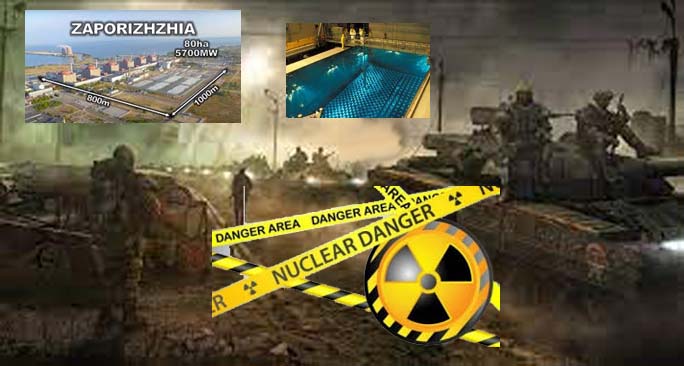
The chance of a serious disaster at the Russian-occupied nuclear power
plant in Ukraine has risen to one in five, a leading engineer at the
Soviet-era facility has warned. A recent exodus of top staff and the power
station’s use as a military base by Chechen troops are among the reasons
why a “Fukushima scenario” could happen at any time, according to one
of the ten most senior engineers at the plant near Zaporizhzhia, which had
a prewar workforce of 11,000.
The shortage of expertise is so acute that
janitors, secretaries and “blue-collar” workers are posing as engineers
in lab coats to dupe international observers into believing that the
Russians have the necessary staff to avert disaster, according to sources
with knowledge of conditions inside the facility. The Zaporizhzhia plant is
the largest in Europe. Before Russian soldiers arrived last year, only 160
senior staff members were licensed to supervise its six reactors. Of these,
about 30 agreed to collaborate with the Russians, while the remaining 80
per cent stayed in the adjoining occupied town of Enerhodar, ready to work
in an emergency. But a brutal crackdown over the summer against any
residents yet to obtain Russian passports forced 100 of those engineers to
take the perilous journey to escape.
Times 16th Sept 2023
September 14, 2023: Dounreay decommissioning end date that proved to be unachievable

By Alan Hendry – alan.hendry@hnmedia.co.uk, 14 September 2023
The end of an era for Caithness… the last chapter in a pioneering
industrial story that began in the black-and-white world of the 1950s… a
final farewell to our great atomic age… Or at least, it would have been
if a prediction made 11 years ago had proved to be accurate.
It was in May 2012 that Roger Hardy, then managing director of Dounreay Site Restoration
Ltd (DSRL), announced a target for the demolition of the nuclear site that
had transformed the county’s socio-economic landscape over the course of
six decades. Dounreay’s operators were setting a specific end date of
September 14, 2023.
That was when all redundant facilities needed to be
flattened and the waste sorted, segregated and made safe for the long term,
according to Mr Hardy. It was a big ask, he acknowledged at the time, but
staff were responding to the challenge: “No-one seems hugely surprised by
what we think is achievable.”
It was destined not to be achievable after
all. The current deadline for the clean-up is 2033, a full decade beyond
that 2012 forecast – although questions have been raised as to whether
even this revised schedule is a realistic one. Earlier this year,
ex-councillor Roger Saxon, a former chairman of Dounreay Stakeholder Group,
expressed the view that 2033 would be unachievable. He was concerned that
momentum had been lost on the decommissioning programme.
John O’Groat Journal 14th Sept 2023
The U.K.’s Goldilocks Moment For Nuclear Power

Christine Ro. Forbes, 17 Sept 23
You hear it up and down the U.K.: the future of nuclear energy will be small and flexible. Of course, people have been claiming for years now that small modular reactors (SMRs) are just about ready. As with so many technological breakthroughs, the reality has lagged behind the optimism.
Scale is not just a matter of technical preference, as the heated debates over the Sizewell C proposal indicate.
Alison Downes is a campaigner with Stop Sizewell C, an organization attempting to put the brakes on a nuclear mega-project on the eastern coast of England. Like the also-contested Hinkley Point C nuclear plant, Sizewell C would be a two-reactor, 3.2-gigawatt power station. It would be located near the smaller Sizewell B plant currently in operation. According to the operator, EDF, Sizewell C would produce enough electricity for around 6 million homes. EDF expects it to be operational in 2034, but construction has already lagged behind expectations.
Stop Sizewell C has a number of reasons for opposing the proposed Sizewell C plant. First, the project is expensive. The estimated price tag is £20 to 30 billion, and the projected expenses have continued to tick up.
Then there are the ecological concerns. The plant would be sited in a picturesque conservation area next to a bird reserve. Some are worried about coastal erosion. There are also uncertainties about the exact source of the water that will be critical to the plant’s operations, which has led to legal challenges.
Compared to large-scale nuclear in an ecologically delicate area, Downes argues that “there are alternative ways of making progress on our climate objectives”. She’s in favour of cheaper, quicker investments in renewable energy………………………………………….
Downes also believes that the massive Sizewell C project is politically popular partly because of its size. “Any big infrastructure project creates jobs,” as she points out.
The U.K. government is supporting nuclear in both big and small forms. At the launch of the Net Zero Nuclear initiative on September 7, Andrew Bowie, the U.K.’s minister for nuclear and networks, said, “We have launched a nuclear power revival in the UK, with projects like Hinkley and Sizewell C, but also with Great British Nuclear supporting the latest cutting-edge technologies like small modular reactors.”

Great British Nuclear is not an energy-focused reality show, but a young government unit that has kicked off its work with a technical selection process for SMRs. The hope is that these will be operational in the mid-2030s. In other words, the earliest SMRs could come online around the same time as Sizewell C, which complicates discussions of which would be developed faster.
Once they become viable, SMRs would be cheaper and faster to build, while using less fuel and generating less waste (although this is contested). Nuclear waste remains a prime concern for nuclear skeptics like Downes, given the almost inconceivably long timescales and uncertainty about what to actually do with the stuff.
Of course, the trade-off is that SMRs would generate less electricity – about 1/3 of the capacity of conventional big nuclear reactors. The sheer amount of energy supply is of course important. Yet conversations about the scale of nuclear energy production have tended to lack parallel discussion of energy consumption, and how to encourage energy conservation………………………………………………
For the time being, the U.K. is hedging its bets by investing in both big (controversial) and small (nonexistent) nuclear reactors. Other countries are looking to this corner of Europe for clues as to whether they too should be scaling up or down their nuclear prospects.
It’s not an either/or situation, of course, as the U.K.’s diversified nuclear options suggest. But there are limits to both budgets and political room for maneuver, as well as limited time to get the energy mix right as the climate transforms for the worse……………………………….. https://www.forbes.com/sites/christinero/2023/09/17/the-uks-goldilocks-moment-for-nuclear-power/?sh=794417ee39a3
A nuclear bomb is still missing after it was dropped off the Georgia coastline 65 years ago
Since 1950, the US military has been involved in 32 “broken arrow” incidents, where they lost or dropped nuclear weapons or other issues, like fires, were involved.
In his book “Command and Control,” Eric Schlosser wrote that in 1957 Air Force planes unintentionally dropped a nuclear weapon once every 320 flights. Coupled with the high rate of B-52 bomber crashes, there was the potential for about 19 incidents involving nuclear weapons each year.
Jenny McGrath Sep 16, 2023, Business Insider
- In 1958, two Air Force jets collided over Georgia, and one was carrying a nuclear weapon.
- The plane dropped the bomb off the coast of Tybee Island and landed safely.
- Several searches have failed to find the weapon in the decades since.
Every once in a while, a high reading of radioactivity off the coast of Tybee Island, Georgia, sends the US government scrambling to look for a nuclear weapon that’s likely hidden 13 to 55 feet below the ocean and sand, buried in the seafloor.
On February 5, 1958, two Air Force jets collided in mid-air during a training mission. The B-47 strategic bomber carried a Mark 15 thermonuclear bomb.
For over two months, the Air Force and Navy divers searched a 24-square-mile area in the Wassaw Sound, a bay of the Atlantic Ocean near Savannah. They never found the nuclear bomb.
Forty years later, a retired Air Force officer who remembered newspaper stories about the lost bomb from his childhood started a search for it.
“It’s this legacy of the Cold War,” said Stephen Schwartz, author of “Atomic Audit: The Costs and Consequences of US Nuclear Weapons Since 1940.” “This is kind of hanging out there as a reminder of how untidy things were and how dangerous things were.”
But some experts say that even if someone finds the bomb, it may be better to leave it buried.
An armed training mission
At the time of the collision, it was “common practice” for the Air Force pilots on training missions to carry bombs on board, according to a 2001 report about the Tybee accident.
The purpose of the training mission was to simulate a nuclear attack on the Soviet Union. They practiced flying over different US cities and towns to see whether the electronic beam would reach its target…………………………………………………………………………………………………………………………………
In 2004, Richardson told CBS News he regretted dropping the bomb because of all the trouble it caused.
“What I should be remembered for is landing that plane safely,” he said. “I guess this bomb is what I’m going to be remembered for.”
The question of the plutonium capsule………………………………………………………………
The US government and military have repeatedly said the Tybee weapon didn’t contain a plutonium capsule when Richardson jettisoned it. A receipt for the bomb that Richardson signed at the time said he wouldn’t allow the insertion of an “active capsule” into the weapon.
A 1966 letter declassified in 1994 complicated the picture. It referred to then-Assistant Defense Secretary Jack Howard’s testimony before a congressional committee calling the Tybee bomb a complete nuclear weapon, with plutonium included. In 2001, a military spokesman told The Atlantic that they had recently spoken with Howard, and “he agreed that his memo was in error.”……………………………………………………………………………………………………………………….
One mishap among many
Less than a month after Richardson jettisoned the Tybee bomb, another B-47 accidentally dropped a nuclear weapon on South Carolina. It didn’t contain plutonium but left a 50-foot crater in a family’s yard. A few family members had minor injuries but everyone survived.
Since 1950, the US military has been involved in 32 “broken arrow” incidents, where they lost or dropped nuclear weapons or other issues, like fires, were involved.
In his book “Command and Control,” Eric Schlosser wrote that in 1957 Air Force planes unintentionally dropped a nuclear weapon once every 320 flights. Coupled with the high rate of B-52 bomber crashes, there was the potential for about 19 incidents involving nuclear weapons each year.
Between 1960 and 1968, the US military kept jets armed with nuclear weapons at the ready in case of a surprise nuclear attack. A series of near misses and serious accidents with nuclear weapons caused the Air Force to end the program.
“I don’t think we’re going to go back to the bad old days of putting our nuclear weapons on aircraft,” Schwartz said…………………………. https://www.businessinsider.com/missing-nuclear-bomb-georgia-coast-still-not-found-2023-9
—
Zelensky Implies Ukrainian Refugees in Europe Will Resort to Terrorism If West Curtails Aid

Despite Ukraine’s faltering counteroffensive, the Ukrainian leader said he was preparing for a long war and rejected the idea of diplomacy with Russian President Vladimir Putin.
He told The Economist it would not be a ‘good story’ for Europe if it were to ‘drive these people into a corner’
By Dave DeCamp / Antiwar.com September 16, 2023 https://scheerpost.com/2023/09/16/zelensky-implies-ukrainian-refugees-in-europe-will-resort-to-terrorism-if-west-curtails-aid/
Ukrainian President Volodymyr Zelensky implied in an interview with The Economist that Ukrainian refugees in Europe might resort to terrorism if Western aid to Ukraine is curtailed.
The Economist report reads: “Curtailing aid to Ukraine will only prolong the war, Mr Zelensky argues. And it would create risks for the West in its own backyard. There is no way of predicting how the millions of Ukrainian refugees in European countries would react to their country being abandoned. Ukrainians have generally ‘behaved well’ and are ‘very grateful’ to those who sheltered them. They will not forget that generosity. But it would not be a ‘good story’ for Europe if it were to ‘drive these people into a corner.’”
Zelensky also said in the interview, published on September 10, that anyone who is not supporting Ukraine is with Russia. “If you are not with Ukraine, you are with Russia, and if you are not with Russia, you are with Ukraine. And if partners do not help us, it means they will help Russia to win. That is it,” he said.
Despite Ukraine’s faltering counteroffensive, the Ukrainian leader said he was preparing for a long war and rejected the idea of diplomacy with Russian President Vladimir Putin. The report reads: “Tapping loudly on the table, Mr. Zelensky rejects outright the idea of compromise with Vladimir Putin. War will continue for ‘as long as Russia remains on Ukrainian territory,’ he says.”
While worried about sustaining support from the West for the long-term, Zelensky said he does not expect to lose US backing if former President Trump is elected in 2024. He said Trump would “never” support Putin. “That isn’t what strong Americans do,” he added.
The Biden administration seems happy to support an open-ended conflict and is looking to tie the hands of a future president by negotiating a deal with Ukraine for long-term military support. The US and other G7 nations vowed at the recent NATO summit in Vilnius to negotiate their own bilateral security deals with Ukraine.
Risk assessment and the nuclear cultists

Damian Meagher From Facebook page Nuclear Fuel Cycle Watch 17 Sept 23
Risk assessment is a complex subject, but nuclear cultist would have you believe it is a simple straightforward matter. There are at least two aspects of risk that they always ignore.
The first is the issue of risk consent.
Some risks in life are ones that consenting adults decide to take. For example, they might go rock climbing or skydiving, or some other adventure sport. Or they might smoke, drink to excess or have an unhealthy diet.
These are examples of risks that they have decided to take.
There is another type of risk though. Risks that are imposed on a person.
Your neighbour might bring home an ill trained guard dog and allow it to roam the streets without supervision. A food manufacturer may include dangerous ingredients in their product and not disclose this fact. A person might drink and drive and cause an injury to another person.
These are examples of risks that exist, but that are imposed on a person who has NOT consented to that risk.
All risks can be analysed both as to the probability of the risk as well as what consequences the risk poses. The risk of being involved in a minor car accident at some point in your life is rather high, but the likely consequences are minimal.
Proper risk management assesses BOTH the likelihood of a risk AND the potential consequences.Poor nuclear cultists don’t use this method, as it immediately highlights a significant problem that nuclear faces.While the likelihood of an accident is low, the consequences can be catastrophic. The victims of such an accident did not consent to this risk. It is imposed on them.
Chernobyl (an accident that cultists like Goronwy Price prefer to ignore) had impacts both health and economic, right across the northern hemisphere. The victims had the risk imposed upon them. This is fundamentally unjust. N-Cultists are happy to put other people at risk regardless.
US to Shift Some Military Aid from Egypt to Taiwan
By Dave DeCamp / Antiwar.com https://scheerpost.com/2023/09/17/us-to-shift-some-military-aid-from-egypt-to-taiwan/
The US will withhold $85 million in annual military aid to Egypt and redirect some of the funds to Taiwan, The Wall Street Journal reported on Wednesday.
The $85 million the US is withholding over human rights abuses is just a small portion of the $1.3 billion in military aid Egypt receives from the US each year.
The $85 million is in the form of Foreign Military Financing, a State Department program that gives foreign governments money to purchase US arms. According to CNN, Egypt receives $1 billion in FMF annually, and $320 million of those funds is conditional and tied to human rights issues.
Some members of Congress want President Biden to withhold the full $320 million, but for now, the administration has only announced its intention to transfer $85 million. Of that amount, $55 million will be redirected to Taiwan, and $30 million will go to Lebanon.
The US began providing Taiwan with military aid this year, an unprecedented form of support in the era of normalized US-China relations. Since Washington severed diplomatic relations with Taipei in 1979 to open up with Beijing, the US has sold weapons to Taiwan but never financed the purchases or provided arms free of charge until this year.
Last month, the US approved the first-ever FMF military aid package for Taiwan worth $80 million. In July, the Biden administration provided Taiwan with a weapons package using the Presidential Drawdown Authority (PDA) for the first time.
PDA allows President Biden to send weapons directly from US military stockpiles and is the primary way he’s been arming Ukraine. The PDA package for Taiwan was worth $345 million. The contents of the military aid packages for Taiwan have not been disclosed.
The US military aid for Taiwan has enraged China as Beijing opposes all forms of US military support for the island, especially new kinds of assistance. The US is arming Taiwan in the name of deterrence, but the policy is making war more likely as China has responded to the growing diplomatic and military ties between Washington and Taipei by putting the island under increasing military pressure.
Making Britain a target for nuclear retaliation
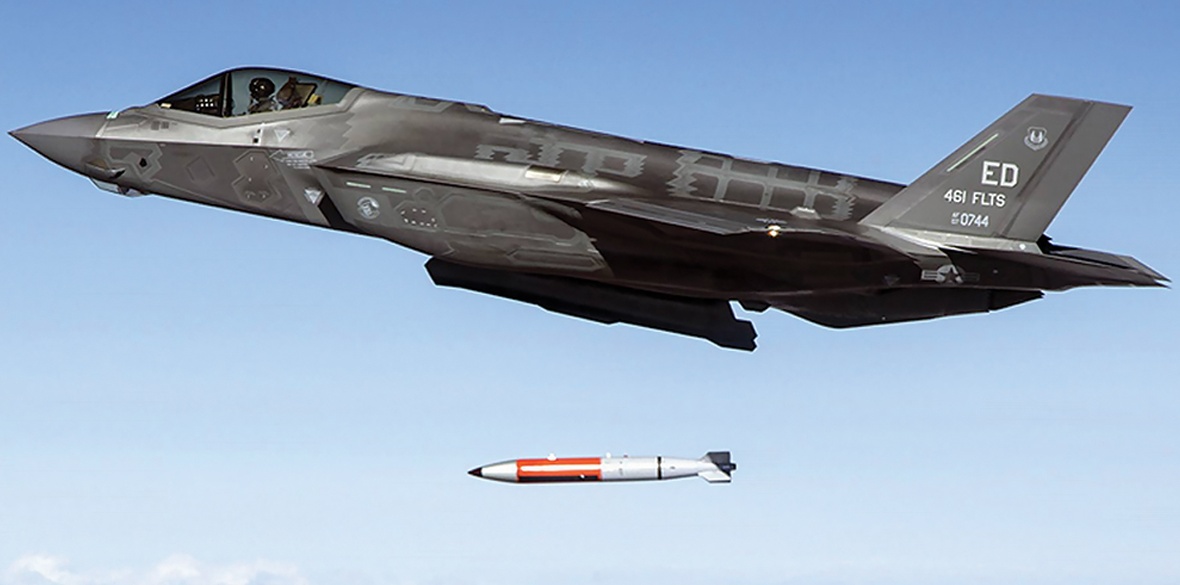
The new bomb will also be located in five other European countries and assigned to Nato. The presence of these US nuclear weapons in Europe has already been used by Putin to justify his recent movement of Russian nukes to Belarus. Their return to Britain has led to promises of Russian countermeasures.
It’s beyond irresponsible that the UK government is allowing the deployment of the US new B61-12 guided nuclear bomb, writes KATE HUDSON
16 Sept 23 https://morningstaronline.co.uk/article/f/making-britain-a-target-for-nuclear-retaliation—
ABOUT £9 billion of this year’s massive expansion in military spending is earmarked for nuclear weapons — that’s on top of over £205bn already being shelled out on replacing Britain’s Trident nuclear weapons system.
The deployment of the new B61-12 to Europe undermines prospects for global peace and ensures Britain will be a target in a nuclear conflict between the US/Nato and Russia.
Everyone needs to know that this is not a local or regional problem confined to East Anglia. In the event of a war, certainly Lakenheath will be targeted. But so will Britain’s other nuclear facilities, as well as major cities. The fact is, we are all at greater risk than ever if these weapons come back to Britain.
And no doubt there’ll be plenty extra spent on increasing the nuclear arsenal, announced in 2021, in spite of it being a breach of international law.
So you’d think there was already enough nuclear weaponry in Britain. But no. We’re having US nuclear weapons foisted on us too, without any public or parliamentary discussion.
As Diane Abbott wrote in these pages last weekend, the United States Congress has been informed of this development, but no such information has been provided to the British Parliament.
Repeated questions put in the House of Commons usually result in the non-information that “the Ministry of Defence is unable to comment on US spending decisions and capabilities, which are a matter for the US government. It remains long-standing UK and Nato policy to neither confirm nor deny the presence of nuclear weapons at a given location.”
Is this obfuscation, or can the US really put nuclear weapons here without our government’s say-so? Is this the much-vaunted “special relationship” — that the US can make us a nuclear target without our government even being allowed to comment?
One thing’s for certain: next year when the US-UK Mutual Defence Agreement comes up for renewal in Parliament, we can’t allow it to be the same old rubber stamp. It’s time to put paid to UK subordination to US nuclear, military and foreign policy.
But Lakenheath is our most immediate challenge. There’s been clear evidence for over a year that the US is planning to return its nuclear weapons to the base in Suffolk — a base often dubbed USAF Lakenheath because it is, in fact, wholly run and controlled by the US.
It’s time for our government to rethink its supine position, because even if it thinks that’s OK, the majority of the population doesn’t: 59 per cent of respondents to a recent Yougov poll opposed US nukes coming back to Britain, with only 23 per cent supporting.
CND has been active in protesting to stop the weapons coming here since the news first emerged last year. Despite the huge risks that are now facing all of us as a result of these weapons, getting widespread coverage of this issue has not been easy. The honourable exception has, of course, been the Morning Star.
But the tide has now turned. With the latest news from the Federation of American Scientists, we have managed to break through into the mainstream, with coverage on major national broadcasting and most national newspapers, not to mention a good range of local coverage.
The next step in our protests is coming up next weekend, with a “Stop US nukes coming to Britain” national day of action on Saturday September 23.
Events are happening across the country, and at Lakenheath itself, CND will visit to conduct a citizens’ weapons Inspection.
If the government refuses to confirm or deny the presence of nuclear weapons at the base, then citizens need to take matters into their own hands to ensure we have the information we need. And if we are going to be on the nuclear front line, then we certainly need to know that!
So far, the information we have is that US Air Force documents dated March this year strongly indicate that Washington is in the process of re-establishing its nuclear weapons presence in Britain, with the new B61-12 guided nuclear bomb.
Massive building works are under way at Lakenheath, including construction work on new facilities to house the anticipated influx of air crew. The work is expected to last from June 2024 to February 2026.
The new bomb will also be located in five other European countries and assigned to Nato. The presence of these US nuclear weapons in Europe has already been used by Putin to justify his recent movement of Russian nukes to Belarus. Their return to Britain has led to promises of Russian countermeasures.
It’s clear that Lakenheath is once again a vital cog in Washington’s overseas nuclear machine — despite refusals from the British government to acknowledge this reality.
It’s beyond irresponsible that the UK government is allowing this deployment. It’s time for us to step up our mobilisation. Over the decades, from Lakenheath to Greenham Common, persistent popular protest has been vital in getting US nuclear weapons removed from Britain. Now we must stop them coming back.
Kate Hudson is general secretary of the Campaign for Nuclear Disarmament.
The UK Government Knows How Extreme the Online Safety Bill Is

SCHEERPOST, By Joe Mullin / Electronic Frontier Foundation (EFF)
The U.K.’s Online Safety Bill (OSB) has passed a critical final stage in the House of Lords, and envisions a potentially vast scheme to surveil internet users.
The bill would empower the U.K. government, in certain situations, to demand that online platforms use government-approved software to search through all users’ photos, files, and messages, scanning for illegal content. Online services that don’t comply can be subject to extreme penalties, including criminal penalties.
Such a backdoor scanning system can and will be exploited by bad actors. It will also produce false positives, leading to false accusations of child abuse that will have to be resolved. That’s why the OSB is incompatible with end-to-end encryption—and human rights. EFF has strongly opposed this bill from the start.
Now, with the bill on the verge of becoming U.K. law, the U.K. government has sheepishly acknowledged that it may not be able to make use of some aspects of this law. During a final debate over the bill, a representative of the government said that orders to scan user files “can be issued only where technically feasible,” as determined by Ofcom, the U.K.’s telecom regulatory agency. He also said any such order must be compatible with U.K. and European human rights law. ……………………………………………………………………………
People Need Privacy, Not Weak Promises
Let’s be clear: weak statements by government ministers, such as the hedging from Lord Parkinson during this week’s debate, are no substitute for real privacy rights.
Nothing in the law’s text has changed. The OSB gives the U.K. government the right to order message and photo-scanning, and that will harm the privacy and security of internet users worldwide. These powers, enshrined in Clause 122 of the OSB, are now set to become law. After that, the regulator in charge of enforcing the law, Ofcom, will have to devise and publish a set of regulations regarding how the law will be enforced.
Several companies that provide end-to-end encrypted services have said they will withdraw from the U.K. if Ofcom actually takes the extreme choice of requiring examination of currently encrypted messages. Those companies include Meta-owned WhatsApp, Signal, and U.K.-based Element, among others. ……………………….
Finally, lawmakers in other jurisdictions, including the United States, should take heed of the embarrassing result of passing a law that is not just deceptive, but unhinged from computational reality. The U.K. government has insisted that through software “magic,” a system in which they can examine or scan everything will also somehow be a privacy-protecting system. Faced with the reality of this contradiction, the government has turned to an 11th hour campaign to assure people that the powers it has demanded simply won’t be used. https://scheerpost.com/2023/09/15/the-uk-government-knows-how-extreme-the-online-safety-bill-is/
-
Archives
- October 2026 (111)
- September 2026 (339)
- August 2026 (330)
- July 2026 (355)
- June 2026 (287)
- May 2026 (306)
- April 2026 (356)
- March 2026 (251)
- February 2026 (267)
- January 2026 (308)
- December 2025 (358)
- November 2025 (359)
-
Categories
- 1
- 1 NUCLEAR ISSUES
- business and costs
- climate change
- culture and arts
- ENERGY
- environment
- health
- history
- indigenous issues
- Legal
- marketing of nuclear
- media
- opposition to nuclear
- PERSONAL STORIES
- politics
- politics international
- Religion and ethics
- safety
- secrets,lies and civil liberties
- spinbuster
- technology
- Uranium
- wastes
- weapons and war
- Women
- 2 WORLD
- ACTION
- AFRICA
- Atrocities
- AUSTRALIA
- Christina's notes
- Christina's themes
- culture and arts
- Events
- Fuk 2022
- Fuk 2023
- Fukushima 2017
- Fukushima 2018
- fukushima 2019
- Fukushima 2020
- Fukushima 2021
- general
- global warming
- Humour (God we need it)
- Nuclear
- RARE EARTHS
- Reference
- resources – print
- Resources -audiovicual
- Weekly Newsletter
- World
- World Nuclear
- YouTube
-
RSS
Entries RSS
Comments RSS

