Second Meeting of State Parties to Treaty on Prohibition of Nuclear Weapons to Be Held at Headquarters, 27 November–1 December
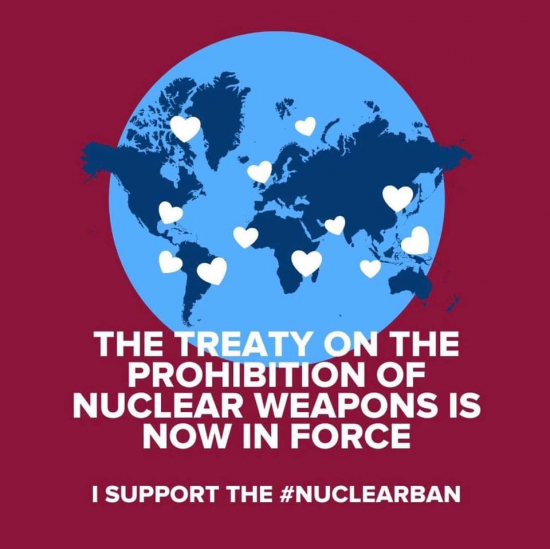
NEW YORK, 24 November (Office for Disarmament Affairs) — The second Meeting of States Parties to the Treaty on the Prohibition of Nuclear Weapons will be held at the United Nations Headquarters from 27 November-1 December 2023. Juan Ramón de la Fuente (Mexico) was elected as President of the Meeting.
The Treaty, the first multilateral nuclear disarmament treaty to be negotiated in more than two decades, was adopted on 7 July 2017 at the United Nations and entered into force on 22 January 2021. United Nations Secretary-General António Guterres has called the Treaty “an important step towards the goal of a world free of nuclear weapons and a strong demonstration of support for multilateral approaches to nuclear disarmament.”
The second Meeting of States Parties is expected to hold a thematic debate on the humanitarian impact of nuclear weapons. States parties will also consider the status and operation of the Treaty, addressing issues that include universality; the total elimination of nuclear weapons; and victim assistance, environmental remediation and international cooperation and assistance. Other topics will include scientific and technical advice for the effective implementation of the Treaty, the complementarity of the Treaty with the existing nuclear disarmament and non-proliferation regime and implementing the gender provisions of the Treaty.
The Meeting is expected to adopt a political declaration. The period since the conclusion of the first Meeting of States Parties in April 2022 saw the appointment of a Scientific Advisory Group, which will present its initial reports at the second Meeting of States Parties. Since the first Meeting of States Parties, seven States signed the Treaty, three ratified it and one acceded to it.
The Treaty contains, inter alia, a comprehensive set of prohibitions on participating in any nuclear-weapon-related activities. This includes undertakings not to develop, test, produce, acquire, possess, stockpile, use or threaten to use nuclear weapons. The Treaty also prohibits the deployment of nuclear weapons on national territory as well as the provision of assistance to any State in the conduct of prohibited activities.
The Treaty requires States parties to assist individuals affected by the use or testing of nuclear weapons, as well as to take environmental remediation measures in areas under their jurisdiction or control that have been contaminated due to the testing or use of nuclear weapons. States parties are required to cooperate with one another to facilitate the Treaty’s implementation.
To date, 69 States have ratified or acceded to the Treaty and 93 have signed it.
Media contacts for the second Meeting of States Parties to the Treaty on the Prohibition of Nuclear Weapons: Suzanne Oosterwijk, United Nations Office for Disarmament Affairs, UN Secretariat, S-30FW, telephone: +1 917-367-2556, email: suzanne.oosterwijk@un.org.
Gaza: a pause before the storm
The US and its allies will continue backing Israel’s war on Gaza after a brief truce. But as the case for ‘genocide’ grows stronger, the new multipolar powers will have to confront the old hegemons and their Rules-Based Chaos.
The Cradle, Pepe Escobar, NOV 23, 2023
While the world cries “Israeli genocide,” the Biden White House is gushing over the upcoming Gaza truce it helped broker, as though it’s actually “on the verge” of its “biggest diplomatic victory.”
Behind the self-congratulatory narratives, the US administration is not remotely “wary about Netanyahu’s endgame,” it fully endorses it – genocide included – as agreed at the White House less than three weeks before Al-Aqsa Flood, in a 20 September meeting between Israeli President Benjamin Netanyahu and Joe “The Mummy” Biden’s handlers.
The US/Qatar-brokered “truce,” which is supposed to go into effect this week, is not a ceasefire. It is a PR move to soften Israel’s genocide and boost its morale by securing the release of a few dozen captives. Moreover, the record shows that Israel never respects ceasefires.
Predictably, what really worries the US administration is the “unintended consequence” of the truce, which will “allow journalists broader access to Gaza and the opportunity to further illuminate the devastation there and turn public opinion on Israel.”
Real journalists have been working in Gaza 24/7 since October 7 – dozens of whom have been killed by the Israeli military machine in what Reporters Sans Frontieres calls “one of the deadliest tolls in a century.”
These journalists have spared no effort to go all the way to “illuminate the devastation,” a euphemism for the ongoing genocide, shown in all its gruesome detail for the entire world to see.
Even the UN Relief and Works Agency for Palestine (UNRWA), itself relentlessly attacked by Israel, revealed – somewhat meekly – that this has been “the largest displacement since 1948,” an “exodus” of the Palestinian population, with the younger generation “forced to live through traumas of ancestors or parents.”
As for public opinion all across the Global South/Global Majority, it “turned” long ago on Zionist extremism. But now the Global Minority – populations of the collective west – are watching raptly, horrified, and bitter that in just six weeks, social media has exposed them to what mainstream media hid for decades. There will be no turning back now that this penny has dropped.
A former Apartheid state leads the way
The South African government has paved the path, globally, for the proper reaction to an unfolding genocide: parliament voted to shutter the Israeli embassy, expel the Israeli ambassador, and cut diplomatic ties with Tel Aviv. South Africans do know a thing or two about apartheid.
They, like other critics of Israel, better be extra wary moving forward. Anything can be expected: an outbreak of foreign intel-conducted “terra terra terra” false flags, artificially induced weather calamities, fake “human rights abuse” charges, the collapse of the national currency, the rand, instances of lawfare, assorted Atlanticist apoplexy, sabotage of energy infrastructure. And more.
Several nations should have by now invoked the Genocide Convention – given that Israeli politicians and officials have been bragging, on the record, about razing Gaza and besieging, starving, killing, and mass-transferring its Palestinian population. No geopolitical actor has dared thus far.
South Africa, for its part, had the courage to go where few Muslim and Arab states have ventured. As matters stand, when it comes to much of the Arab world – particularly the US client states – they are still in Rhetorical Swamp territory.
The Qatar-brokered “truce” came at precisely the right time for Washington. It stole the spotlight from the delegation of Islamic/Arab foreign ministers touring selected capitals to promote their plan for a complete Gaza ceasefire in Gaza – plus negotiations for an independent Palestinian state.
This Gaza Contact Group, uniting Saudi Arabia, Egypt, Jordan, Turkey, Indonesia, Nigeria, and Palestine, made their first stop in Beijing, meeting with Chinese Foreign Minister Wang Yi, and then on to Moscow, meeting with Foreign Minister Sergei Lavrov. That was definitely an instance of BRICS 11 already in action – even before they started business on January 1st, 2024, under the Russian presidency.
The meeting with Lavrov in Moscow was held simultaneously with an extraordinary online BRICS session on Palestine, called by the current South African presidency. Iran’s President Ebrahim Raisi, whose country leads the region’s Axis of Resistance and refuses any relations with Israel, supported the South African initiatives and called for BRICS member states to use every political and economic tool available to pressure Tel Aviv.
It was also important to hear from Chinese President Xi Jinping himself that “there can be no security in the Middle East without a just solution to the question of Palestine.”
Xi stressed once again the need for “a two-state solution,” the “restoration of the legitimate national rights of Palestine,” and “the establishment of an independent state of Palestine.” This should all start via an international conference.
None of this is enough at this stage – not this temporary truce, not the promise of a future negotiation. The US administration, itself struggling with an unexpected global backlash, at best, arm-wrestled Tel Aviv to enact a short “pause” in the genocide. This means the carnage continues after a few days. ………………………………………………………..
No mainstream media narrative, no PR move to soften the genocide, no containment of “public opinion turning on Israel” can ever cover the serial war crimes perpetrated by Israel and its allies in Gaza. Perhaps this is just what the Doctor – metaphysical and otherwise – ordered for mankind: an imperative global tragedy, to be witnessed by all, that will also transform us all. https://new.thecradle.co/articles/gaza-a-pause-before-the-storm
UK GOVERNMENT BLOCKS MP QUESTIONS ABOUT GAZA-RELATED ACTIVITY AT ITS CYPRUS BASE

Ministry of Defence takes extraordinary step of censoring all requests for information by MPs about RAF Akrotiri on Cyprus, which Declassified has reported is facilitating arms supplies to Israel’s war on Gaza.
MATT KENNARD AND MARK CURTIS, 20 NOVEMBER 2023 https://www.declassifieduk.org/uk-government-blocks-mp-questions-about-gaza-related-activity-at-its-cyprus-base/
- MP whose questions were blocked tells Declassified: “This is totally unacceptable in a democracy”
- RAF sent A400M military transport aircraft from Cyprus base to Tel Aviv this morning
- Britain’s Cyprus base has secretly become international military hub supporting Israel’s bombing of Gaza
The British government has blocked MPs asking any questions about activity at RAF Akrotiri, its vast air base on Cyprus, Declassified can reveal.
Blocking all parliamentary questions from MPs is a highly unusual move.
Government departments routinely refuse to answer specific questions about military operations for reasons of “national security”, but blocking all questions by elected parliamentarians goes far beyond the usual level of Whitehall secrecy.
It comes after Declassified revealed the RAF has made over 30 military transport flights to Tel Aviv since Israel began bombing Gaza. The Ministry of Defence refused to provide us any detail of the cargo or personnel on the flights.
Just this morning an A400M Atlas military transport aircraft operated by the RAF landed in Tel Aviv from Akrotiri. The aircraft can carry 116 soldiers, a Chinook helicopter or a payload of 37 tonnes.
RAF Akrotiri sits 180 miles from Tel Aviv with a flight time of 40 minutes.
Declassified has also reported that the US is moving arms to Israel using RAF Akrotiri, which has become an international military hub supporting Israel’s bombing campaign in Gaza. Half of US planes flying from British Cyprus are said to be carrying weapons for Israel.
Kenny MacAskill, Alba MP for East Lothian, told Declassified he put down a number of parliamentary questions concerning what military support the UK is providing to Israel and the role of RAF Akrotiri in the supply of military equipment.
“Your question has been queried because it is subject to a block by Government,” he was told in an email. “The Department [Ministry of Defence] has stated that it will not comment on operational matters at this base.”
MacAskill, a former Scottish justice secretary, told Declassified: “This is totally unacceptable in a democracy. Genocide is being perpetrated in Gaza and we have a right to know what our Government is doing about it.”
MacAskill said he had never experienced such a ‘block’ on asking parliamentary questions before.
He added: “The failure to call for an immediate ceasefire is bad enough but any complicity raises issues of participating in war crimes. We need openness and transparency by our government. This is not in our name.”
Secrecy
The UK military-run Defence and Security Media Advisory (DSMA) Committee – better known as the ‘D-Notice’ committee – has also sent out an ‘advisory’ to all British media to suppress reporting on UK special forces’ activity related to Gaza. The SAS was previously reported to have deployed a force to Cyprus.
No British mainstream media outlets have reported on Declassified’s recent findings about RAF Akrotiri and Gaza despite the President of Cyprus Nikos Christodoulides having to defend his government from accusations of complicity in Israel’s bombing of Gaza.
In answer to questions about the use of RAF Akrotiri by Cypriot journalists over the weekend, Christodoulides said: “There is no such information, our country cannot be used as a base for war operations”.
However, RAF Akrotiri has long been the staging post for British bombing campaigns across the Middle East. Declassified also recently revealed that 129 US airmen are also permanently deployed at the base.
The censorship of information requests from MPs makes it all but certain that RAF Akrotiri is being used for covert military purposes that the government does not want the public to know about.
It is likely the UK is sending material military aid to Israel during its bombing of Gaza, which has now killed over 12,000 Palestinians, although it previously told Declassified it was not providing “lethal aid”.
The Members of This Reservation Learned They Live with Nuclear Weapons. Can Their Reality Ever Be the Same?
The Mandan, Hidatsa and Arikara peoples are learning more about the missiles siloed on their lands, and that knowledge has put the preservation of their culture and heritage in even starker relief.
Scientific American. By Ella Weber on November 24, 2023
“………………Ella Weber: I met Jayli Fimbres at the recently opened MHA Nation Interpretive Center in New Town, North Dakota, the most populous town on the Fort Berthold reservation. While she says she doesn’t know much about nuclear weapons, she’s been dreaming about nuclear war.
Fimbres: I think I’ve, even within those dreams, I had dreams of surviving those things as well. But there was, like, radioactive damage and stuff. And we were, like, mutating, but we, like, learned to get through it.
Weber: You are listening to Scientific American’s podcast series, The Missiles on Our Rez. I’m Ella Weber, a member of the Mandan, Hidatsa and Arikara Nation, a Princeton student, and a journalist. This is Episode 5: “What Happens Now?”
Weber: This is the last episode of our series. Throughout the first four episodes, we learned about how nuclear missiles arrived on our reservation. We also learned how the Air Force failed to appropriately describe the human and environmental consequences associated with its plans to modernize existing nuclear missile silos.
Those plans included placing new missiles on our land for the next 60 years.
We discussed the risks associated with living with these weapons for the tribe — and what it really meant for our members—including my family—to live in a national nuclear sacrifice zone.
In this final episode, I’m returning to my tribe, the MHA Nation, to share what I found.
Weber: I met with my grandma, Debra Malnourie, to find out when she first learned about the missile silos. She grew up on the reservation and currently resides there.
Debra Malnourie: Then, like I said, I was driving around, and I was like, “What are these places?” And then I don’t even remember who told me that they were missile sites, that missiles [are] down in there, and I was like, “How do you know?” And I knew nothing about it. It wasn’t even in my radar, actually. Probably still isn’t right now.
Weber: Debra didn’t know much about this.
Malnourie: But I always thought if there was a big war, we’d all end up going. And truthfully, I would not want to be one of the ones that didn’t go. Because what [are] you going to do? I don’t know.
Debra Malnourie: Then, like I said, I was driving around, and I was like, “What are these places?” And then I don’t even remember who told me that they were missile sites, that missiles [are] down in there, and I was like, “How do you know?” And I knew nothing about it. It wasn’t even in my radar, actually. Probably still isn’t right now.
Weber: Debra didn’t know much about this.
Malnourie: But I always thought if there was a big war, we’d all end up going. And truthfully, I would not want to be one of the ones that didn’t go. Because what [are] you going to do? I don’t know………………………………………………………………………………………………………………………………………………………….
Weber: As we mentioned in the last episode, Edmund would later find out from our Nuclear Princeton research team, and Princeton researcher Sébastien Philippe, that the entire 3,000-page environmental impact statement, or EIS package–first published in June 2022 in draft form–didn’t actually go into a great amount of detail about the ramifications of potential nuclear strikes on the silos and the surrounding community.
……………………….
As I mentioned in Episode 2, the Garrison Dam, constructed in 1947 by the Army Corps of Engineers, was built adjacent to our land — and against our will. There’s a famous picture of chairman George Gillette crying as he signed the agreement in 1948.
When the dam flooded in 1953, countless tribal families were displaced, and our homes were destroyed. It separated our remaining reservation into five areas—another assault on our language and culture.
It turns out there’s actually a link between the historical destruction of our community by the U.S. government and the loss of our language. People such as Jayli Fimbres—who you first heard in the beginning of this episode—are trying to bring our language back………………………………
As I mentioned in Episode 2, the Garrison Dam, constructed in 1947 by the Army Corps of Engineers, was built adjacent to our land — and against our will. There’s a famous picture of chairman George Gillette crying as he signed the agreement in 1948.
When the dam flooded in 1953, countless tribal families were displaced, and our homes were destroyed. It separated our remaining reservation into five areas—another assault on our language and culture.
It turns out there’s actually a link between the historical destruction of our community by the U.S. government and the loss of our language. People such as Jayli Fimbres—who you first heard in the beginning of this episode—are trying to bring our language back…………………………………………………….
Despite the negative effects associated with the nuclear modernization program that the Air Force listed in the environmental impact statement, I found that the impacts are much farther reaching than what is described in the scope of the document.
Baker: What’s the purpose of a nuclear warhead? Depends on who you talk to. “They defend freedom.” No, they’re meant to kill. They’re meant to destroy. That was never in part of our land, intentional land spirit.
Weber: That’s Edmund Baker who says that not only do warheads go against our land spirit—but they also go against the core concepts in our Hidatsa language……………………………………………………………………………..
Weber: Throughout this project, I came to understand how the story of the U.S. government’s land theft and attempts at destroying our culture are directly related to the history of how the missile silos got here. And our community has been fighting to survive for as long as we’ve been around. This is just another test………………………………………………..
Moniz: So, in closing, should something go wrong, should something happen with all these warheads that are on our tribal nation, our children, our future generations, what we’re working to reclaim and reconnect and revitalize will all—could be diminished. It could be diminished.
Thinking about that and thinking about what could go wrong–what could happen–really puts things into perspective, and in closing I would urge…not encourage, but welcome more folks to the work. And let’s keep going and let’s get this out there. People need to know what’s happening. Our people need to know what’s happening.
Baker: For the future, to keep our people, our land, intact, what’s left of it–our unity…to try to give some space to work on our values, and re-remember who we are… it would make it this much easier if you just get these silos out of here. You know, you’d help that way, if you really care about us, federal government……………………………………………………………………………………………..
Weber: Will things continue as they are but with people now being aware of what the missile silos mean for us?
Could the silos be removed from the reservation?
Could communities in North Dakota, Native and not, work together towards a different future—with no missiles in the state?
I don’t know. What makes me hopeful, though, is the new generation of people willing to continue the fight for our tribe, our land, our rights, our culture, and our futures…………………………………………………… more https://www.scientificamerican.com/podcast/episode/the-members-of-this-reservation-learned-they-live-with-nuclear-weapons-can-their-reality-ever-be-the-same/
US providing Israel with satellite data of aid facilities in Gaza, which Tel Aviv later bombs
SOTT, Erin Banco, Politico, Wed, 22 Nov 2023
The Biden administration has been providing Israel with the location of humanitarian groups in Gaza for weeks to prevent strikes against their facilities. But Israel has continued to hit such sites.
The information included GPS coordinates of a number of medical facilities and information on movements of aid groups in Gaza to the Israeli government for at least a month, according to three people familiar with the communications. All were granted anonymity because they feared speaking publicly would make it more difficult for aid groups to operate in Gaza.
Still, Israel has launched operations against Hamas in or near aid sites, including hospitals, leading to the destruction of buildings and the blocking of fuel and other critical supplies.
………………………………… State Dept.: Hostage deal would ‘unlock’ potential for more Gaza aid
In public statements, U.S. officials have stressed that aid groups are struggling to operate in the Gaza Strip because of Hamas, noting the militant group uses civilians as human shields and operates tunnels underneath hospitals.
But Israel’s continued bombardment of these humanitarian facilities raises more questions about whether Washington has the political sway many in the administration want with Israel. And the divide is particularly stark given that the goal is protecting aid workers — one of the most fundamental tenets of international humanitarian law…………………………………………………………………………………………………. more https://www.sott.net/article/486230-US-providing-Israel-with-satellite-data-of-aid-facilities-in-Gaza-which-Tel-Aviv-later-bombs
Putin Was Declared A War Criminal For *Relocating* The Same Number Of Children Israel Just *Killed*
CAITLIN JOHNSTONE, NOV 24, 2023
It’s probably worth noting at this point in history that the total number of children killed in Gaza has just surpassed the number of children the International Criminal Court indicted Russian president Vladimir Putin for relocating out of a war zone.
A recent estimate by Gaza authorities puts the number of Palestinian children killed by Israel’s bombing campaign over the last seven weeks at just above the six thousand mark. This number comes from the Gaza Media Office, which is only able to make unconfirmed estimates since the Gaza Health Ministry who normally reports such numbers has lost the ability to count the dead effectively due to communications collapse caused by the bombing.
In March of this year — ironically on the 20th anniversary of the US invasion of Iraq — ICC judges issued an arrest warrant charging Putin with war crimes in Ukraine. The allegations? The “unlawful deportation” of some six thousand Ukrainian children to a network of “re-education” camps inside Russia.
As The Grayzone documented at the time, the ICC charges were based on a Yale HRL report which is rife with contradictions, plot holes, and the fairly significant conflict of interest of being funded by the US State Department. The report itself acknowledges that it found “no documentation of child mistreatment,” and that nearly all of the children were returned to their families in a timely manner.
But even if these points were all false and Vladimir Putin did just illegally kidnap six thousand Ukrainian kids to turn them into Russians, would that be worse than murdering them by dropping powerful military explosives on areas known to be packed full of children? Why is one a war crime and the other apparently fine? Russia is no more a party to the ICC’s Rome Statute than Israel is, after all.
A recent United Nations report says that “Since 7 October, when Hamas fighters attacked Israel, 67 per cent of the more than 14,000 people killed in Gaza are estimated to be women and children.” If we assume it’s an even 14,000 and make the obscenely generous assumption that every single one of the men killed by Israel were Hamas combatants, 67 percent puts the total number of civilians killed at 9,380 in just seven weeks of bombing.
In the 21 months of the war in Ukraine, the UN estimates the number of civilians killed at around ten thousand. The total number of children killed? Around 560.
The numbers show that Israel is plainly behaving in a way that is far, far more murderous and criminal in Gaza than Russia is in Ukraine, but we good and faithful members of the international community are meant to desire only the Russian leader’s prosecution at The Hague………………………………….more https://www.caitlinjohnst.one/p/putin-was-declared-a-war-criminal?utm_source=post-email-title&publication_id=82124&post_id=139127737&utm_campaign=email-post-title&isFreemail=true&r=1ise1&utm_medium=email
South Texans are publicly fighting SpaceX after second Starship launch
Starship’s second launch brought more outcry from local organizations.
Chron, By Andrea Guzmán, Nov 22, 2023
SpaceX’s second launch attempt of its Starship rocket on Saturday has been commended for its improvement from the first launch, which ended with the rocket exploding after reaching 24 miles into the air.
But for some South Texas residents, SpaceX’s operations are not a cause for celebration.
In a press release after Saturday’s launch, South Texas organizations said that local residents again experienced their homes shaking and debris falling on the community.
“Musk and his pet vanity project continue to pollute and destroy our beautiful beach, coastline, and wildlife. SpaceX, an unnecessary, private money grab that only serves the wealthy, refuses to follow safety regulations, environmental regulations, and the wishes of local communities and the original people of the land,” said Christopher Basaldú with South Texas Environmental Justice Network.
Meanwhile, grassroots collaborative Another Gulf Is Possible, which has members from Brownsville, Texas, to Pensacola, Florida, has invited the public to a documentary screening in Brownsville about community objection to SpaceX on Dec. 1. The film will explore how Brownsville residents and the Carrizo/Comecrudo Tribe of Texas have battled “the encroachment of SpaceX on pristine lands,” an event invitation says. The documentary will also look at how South Texans have fought against two proposed LNG projects. ……………………………………………………………………………………… Next Friday’s documentary screening will be held at Brownsville’s Rio Bravo Office Space from 6 p.m. to 9 p.m.
more https://www.chron.com/culture/article/texas-starship-second-launch-18508949.php—
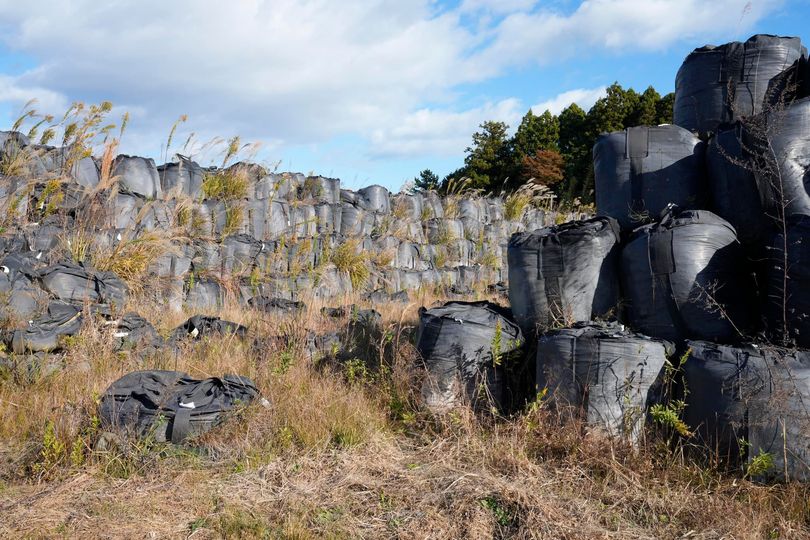
Nuclear waste bags Fukushima – slowly falling apart
“Contaminated soil bags in Fukushima prefecture. The life span of these bags is about 5 years. No government plan to do anything with these so they are slowly falling apart.”
Arkadiusz Podniesinski was in Fukushima Prefecture.
What Would It Mean to ‘Absorb’ a Nuclear Attack?- nuclear missile silos as a “sponge”

Scientific American , By Ella Weber on November 22, 2023
The missiles on the Fort Berthold Reservation in North Dakota make it a potential target for a nuclear attack. And that doesn’t come close to describing what the reality would be for those on the ground.
This podcast is Part 4 of a five-part series. Listen to Part 1 here, Part 2 here, and Part 3 here. The podcast series is a part of “The New Nuclear Age,” a special report on a $1.5-trillion effort to remake the American nuclear arsenal.…..
Ella Weber: Members of my tribe live with nuclear missiles on the Fort Berthold Reservation. The weapons sit in underground concrete silos that are surrounded by antennas in small, fenced-off areas. The missiles are armed and ready to launch in 60 seconds. This is one reason they are called Minutemen missiles…………………………….
Weber: After learning that the Air Force had not explained to my tribe what the new nuclear missiles were for–which the Air Force intended to deploy for another 60 years on our reservation–I decided to dig deeper.
I wanted to know what role the missiles and their silos play today in U.S. nuclear strategy and what the risks for the tribe were in hosting them—something that the tribe never agreed to in the first place………………….
I wasn’t really clear on what Secretary Jim Mattis meant by the ICBM force providing a “cost-imposing strategy,” so I talked to Leonor Tomero to get some clarity. She used to serve as deputy assistant secretary of defense for nuclear and missile defense policy in the Biden administration in 2021…………
Weber: Leonor explained to me that should the U.S. face a potential nuclear attack, the president would have two choices with regards to the ICBMs: launch them preventively before the missiles possibly got destroyed, or decide to absorb the attack and retaliate later.
Weber (tape): What do you mean by absorbing an attack?
Tomero: I think, you know, it’s, you know, they’re considered a sponge.
Weber (tape): So it’s kind of like making these ICBMs, like, a target ….
Tomero: Yes…
Weber (tape): …. rather than, like, these other major cities or other places…
Tomero: Right.
Weber: In case you don’t know — the role of the ICBM is to force an adversary to use many nuclear weapons if they decided to attack the U.S. The silos are basically meant to divert and absorb the incoming nuclear missiles from important and critical areas in the country, like cities.
But what would that mean for the Fort Berthold reservation?……………………………………………………………………
Frank Von Hippel: Basically the secretary of defense had come in and testified to Congress. When one of the senators asked how many people would such an attack kill, he estimated 15,000 to 25,000. And he said, ‘Well, that would be terrible, but it would be not what you would expect from a major nuclear attack.’
That seemed low to, actually, the senator from New Jersey [Clifford Case]. And he asked for a peer review of the Defense Department calculations, and, and I was then asked to be an unpaid consultant to look into that. And, in fact, I went over to the Pentagon to talk to the people who have done the calculations.
Weber: Frank found something unexpectedly horrifying.
Von Hippel: The Defense Department had assumed that explosions of the warheads over the ICBM silos would be so high that they would not cause fallout. They pointed out they would also not damage the silos.
Weber: Basically, the Department of Defense hadn’t calculated properly. The DOD had made incorrect assumptions about the altitude of nuclear explosions aimed at destroying the silos. Initially, it had thought the nuclear explosions would need to be at an altitude. But–they actually needed to be at ground level.
Von Hippel: The DoD was forced to go back and do new calculations reflecting these points, and they came out about 1,000 times higher: 20 million—on the order of 20 million people killed.
Weber (tape): Wow.
…………………………………. Von Hippel: Well, you know, the, I don’t know who coined this term about the silos being a nuclear sponge, but the local….I think there would be annihilation of the local population around the silos. Wouldn’t just be the fallout—would also be the, the blast effects, and so on. So they would be the worst affected.
Weber (tape): My grandma only lives two and a half miles away from an ICBM silo. What would happen to her and her place?
Von Hippel: I think she would be within the blast radius … and the fire radius…. I don’t know how flammable… her house would be presumably burned after being knocked flat. And then there would be the fallout. These explosions would have to be low enough to hit the set of silos with sufficient overpressure to destroy the missiles inside. It would have to be low enough for, for the dirt to be and debris to be sucked up into the cloud. And then that would bring down some of the radioactivity in a very intense patch around the silo. So … multiple ways in which she might die. I’m sorry.
Weber (tape): I mean, she didn’t make the decision to have them there. So …
Von Hippel: Yeah, I know
Weber: Being treated as expendable isn’t new to Indigenous communities. As far as I could tell, members of the Mandan, Hidatsa and Arikara Nation don’t see themselves as living in a sacrifice zone.
This designation treats certain areas and people as acceptable losses; they bear the brunt of the risks and consequences associated with nuclear weapons and decisions made by others. Maybe if members of the tribe had a better understanding of what the risks were, they could challenge the deployment of these silos on our land…………………………….
Sébastien Philippe: Now I’m going to put the whole image of the entire areas that can be impacted by the fallout, and I can walk you through the color coding, but that’s basically the worst case possible for every single person on the map.
Edmund Baker: Okay. Holy crap. Even Disneyland’s not immune. Disney World’s out. New York—there’s no safe place.
So that batch there, North Dakota, the white sort of color…?
Philippe: Yeah.
Baker: That’s 100 percent fatality in that zone?
Philippe: Times 10. Yeah, ten times what you would need to die—and that’s just from the radioactivity.
Baker: Okay, so that’s not in the EIS, I figure, or is it?
Philippe: Uh, no.
Weber: By the way, Edmund’s talking about an environmental impact statement, or EIS—a two-volume report released by the U.S. Air Force that is meant to analyze, “the potential effects on the human and natural environments from the deployment of the Sentinel intercontinental ballistic missile system.”
This was the report that the Air Force had presented to my reservation—in a different place than it had initially advertised. And in the entire 3,000 pages of the report and its appendices— which cost $33 million to write, by the way — Sébastien had found that the consequences of a nuclear war that could impact my tribe were kind of glossed over.
The EIS mentioned the “casualties” and “grave implications” of such a war but they didn’t really go beyond that.
Here’s Frank again, speaking about the military’s attitudes toward the consequences of war in general.
Von Hippel: They talk about people like your grandmother as being collateral damage. I mean…, they try to desensitize themselves to what the consequences are, what they’re talking about—and, in fact, I remember when I first went over to the Pentagon to talk to people, I learned—the first time I heard this word called “collateral damage,” that is—“We, you know, we didn’t intend to kill your grandmother…. She’s, unfortunately, collateral damage.”…………………………………………………………………………………………………………………………………………….
Weber: If anyone could advise the U.S. on resilience and survivability, it would be us: the MHA Nation. And I have a feeling that keeping ICBM silos operating across our land may not be part of our preferred strategy.
In the next and final episode, I go back to the rez and report what I found to my family and members of the tribe. We sit down and discuss: What happens now?
This show was reported by me, Ella Weber, produced by Sébastien Philippe and Tulika Bose. Script editing by Tulika Bose. Post-production design and mixing by Jeff DelViscio. Thanks to special advisor Ryo Morimoto and Jessica Lambert. Music by Epidemic Sound.
I’m Ella Weber, and this was The Missiles on Our Rez, a special podcast collaboration from Scientific American, Princeton University’s Program on Science and Global Security, Nuclear Princeton, and Columbia Journalism School. https://www.scientificamerican.com/podcast/episode/what-would-it-mean-to-absorb-a-nuclear-attack/
Nuclear Power: UK’s Financial Challenge Unveiled

the actual cost might reach as high as £10 billion per reactor, resulting in an astonishing cumulative expense for the decommissioning process. …
this substantial cost could ultimately fall on taxpayers, raising concerns about the financial burden on the public.
Dev X Noah Nguyen, November 21, 2023
The UK’s Commitment to Nuclear Power and Financial Challenges
The United Kingdom’s dedication to nuclear power is becoming a financially challenging commitment as the dismantling expenses for its nuclear generating facilities continue to escalate. These costs have been advantageous for businesses involved in the dismantling process but a noteworthy expenditure for UK taxpayers
Regardless of the substantial costs associated with the new nuclear reactors at Hinkley Site C and the rising price of clean-up initiatives, the nation’s government remains committed to nuclear technology. This unwavering commitment is driven by the belief that nuclear power is crucial for achieving the UK’s long-term energy security and climate change goals. However, critics argue that increased investment in renewable energy sources could provide similar benefits, without the high financial burden and safety concerns associated with nuclear power……………………………………………………
Concerns Regarding Decommissioning Costs and Life Expectancy of Reactors
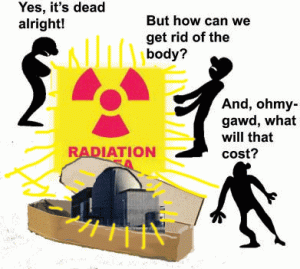
Nearly all of the remaining functional reactors are scheduled for closure by 2028, except Sizewell B, anticipated to stay in operation until 2035. With a life expectancy of roughly 40 years—considerably shorter than the 60 to 80 years frequently claimed by the sector—questions emerge about the demolition costs for the existing 23 reactors and the two under construction at Hinkley Point C.
As these reactors reach the end of their life cycle, it is crucial to plan and allocate resources effectively for their dismantling and waste disposal. The cost of decommissioning and managing nuclear facilities can significantly impact the overall economic feasibility of the energy generated, emphasizing the need for accurate cost estimations and environmentally responsible strategies.
Projected Costs of Dismantling and Importance of Effective Management
By the end of 2022, the UK’s Nuclear Decommissioning Authority (NDA) projected a total dismantling cost of £149 billion. If this figure encompasses Hinkley Site C, it would equate to about £6 billion per reactor. This substantial financial investment highlights the importance of thoroughly managing the decommissioning process to ensure effective resource allocation. With the growing push towards renewable energy sources, proper management and safe dismantling of nuclear reactors have become increasingly significant for the country’s transition towards sustainable energy.
Higher Potential Costs and the Financial Burden on Taxpayers
However, Professor Stephen Thomas from the University of Greenwich’s energy policy department posits that the actual cost might reach as high as £10 billion per reactor, resulting in an astonishing cumulative expense for the decommissioning process. He further elaborates that this substantial cost could ultimately fall on taxpayers, raising concerns about the financial burden on the public. To mitigate such consequences, proper planning and establishing an adequate funding source must be undertaken for a feasible and efficient decommissioning process…………………………………………………………………………………….
What are the concerns regarding the decommissioning costs and life expectancy of nuclear reactors in the UK?
With functional reactors scheduled for closure and shorter life expectancies than often claimed, there are concerns about the demolition costs for the existing reactors and effective management of resources for dismantling and waste disposal. The cost of decommissioning can significantly impact the overall economic feasibility of nuclear-generated energy and necessitates accurate cost estimations and environmentally responsible strategies………….. https://www.devx.com/news/nuclear-power-uks-financial-challenge-unveiled/
Failed U.S. Nuclear Project Raises Cost Concerns for Canadian SMR Development

The Energy Mix November 10, 2023, Primary Author: Mitchell Beer
The abrupt failure of the leading small modular nuclear reactor (SMR) project in the United States is shining a light on public subsidies that might keep similar technology under development in Canada, even if it’s prone to the same cost overruns that scuttled NuScale Power Corporation’s Carbon Free Power Project (CFPP) in Utah.
NuScale and its customer, Utah Associated Municipal Power Systems (UAMPS), announced they were cancelling the project earlier this week, after its anticipated cost increased 53% over earlier estimates, Bloomberg reports. “The decision to terminate the project underscores the hurdles the industry faces to place the first so-called small modular reactor into commercial service in the country.”
But a clear-eyed assessment of the project’s potential was really made possible by a level of accountability that doesn’t exist in Canada, said Gordon Edwards, president of the Canadian Coalition for Nuclear Responsibility.
“Private investors in Utah forced NuScale to divulge financial information regarding the cost of electricity from its proposed nuclear plant,” and “cost became the deal-breaker,” Edwards told The Energy Mix in an email. “Publicly-owned utilities in Canada are not similarly accountable. The public has little opportunity to ‘hold their feet to the fire’ and determine just how much electricity is going to cost, coming from these first-of-a-kind new nuclear reactors.”
In the U.S., the business case started to fall apart last November, when NuScale blamed higher steel costs and rising interest rates for driving the cost of the project up from US$58 to $90 or $100 per megawatt-hour of electricity. The new cost projection factored in billions of dollars in tax credits the project would receive under the Biden administration’s Inflation Reduction Act, amounting to a 30% saving.
At the time, the Institute for Energy Economics and Financial Analysis (IEEFA) estimated the total subsidy at $1.4 billion. This week, Bloomberg said NuScale had received $232 million of that total so far.
The cost increase meant that UAMPS “will not hit certain engineering, procurement, and construction benchmarks, allowing participants to renegotiate the price they pay or abandon the project,” Utility Dive wrote……………………………….
In Canada, “the massively expensive SMR projects in Canada will eventually face the same reckoning,” predicted Susan O’Donnell, an adjunct research professor at St. Thomas University and member of the Coalition for Responsible Energy Development in New Brunswick. While the Canadian Energy Regulator’s modelling assumes SMRs could be built at a cost of C$9,262 per kilowatt in 2020, falling to $8,348 per kilowatt by 2030 and $6,519 by 2050, the latest cost estimate from NuScale exceeded $26,000 per kilowatt in Canadian dollars, O’Donnell said—and the technology had been in development since 2007.
“Too bad our leaders have chosen to pursue an energy strategy which is too expensive, too slow, and too costly in comparison with the alternatives of energy efficiency and renewables—the fastest, cheapest, and least speculative strategies,” Edwards wrote. He added that waste disposal and management challenges and costs for SMRs will be very different from what Canadian regulators have had to confront with conventional Candu nuclear reactors.
The news from NuScale landed just days after civil society groups in the European Union warned that SMR development won’t help the continent reach its climate goals. Citing prolonged project delays and cost overruns, the long time frame to develop unproven technologies, and the risks associated with radioactive waste disposal and proliferation of nuclear materials, they urged EU governments to focus on renewable energy, power grid development, and energy storage.
“Nuclear energy is being pushed by powerful lobbies and geostrategic interests,” with several EU states relying on Russian state nuclear company Rosatom for their uranium supplies, the groups said. “To quickly decarbonize, we must choose cheap technologies, easy to deploy at scale, like solar panels and windmills.”………….https://www.theenergymix.com/2023/11/10/failed-u-s-nuclear-project-raises-cost-concerns-for-canadian-smr-development/
Hospitals in northern Gaza completely out of service: Health official
Gaza’s health ministry spokesperson says occupancy rate in hospitals in the enclave’s north has reached 190 percent as they overflow with the wounded.
By Al Jazeera Staff, 21 Nov 2023 https://www.aljazeera.com/news/2023/11/21/hospitals-in-northern-gaza-completely-out-of-service-health-official?fbclid=IwAR3EbNh45V_EgxeeXyvfMv2C1pEtPxc0I3YRxbC9IozAKulinJIGjYn8LBU
Hospitals in northern Gaza are now completely out of service, according to the besieged enclave’s Ministry of Health. Ashraf al-Qudra, Gaza’s health ministry spokesperson, said in an interview with Al Jazeera on Tuesday that the occupancy rate in hospitals in Gaza’s north has reached 190 percent.
Israel bombed and destroyed parts of al-Shifa Hospital, the largest in Gaza, where more than 700 people are still held captive under a siege by the Israeli army, according to al-Qudra.
Last week, Israeli forces seized the hospital to search for what they said was a Hamas tunnel network and command centre built underneath the complex. Hamas has denied the allegations.
A group of 28 premature babies were evacuated from the al-Shifa Hospital to Egypt to receive treatment on Monday, according to the Palestinian authorities and the World Health Organization (WHO).
‘Circle of death’
Al-Qudra also said that about 120 people were evacuated from northern Gaza’s Indonesian Hospital to Nasser Medical Complex in the south of the Strip.
There are still more than 400 injured people inside the Indonesian Hospital, in addition to about 200 medical staff and more than 2,000 others taking refuge, he added.
The Israeli army has put those inside the hospital in a “circle of death”, targeting anybody who moves around the hospital or inside it, al-Qudra said.
The WHO said on the same day that the Indonesian Hospital was only able to provide basic services, with the lives of those with severe injuries and other medical emergencies being at immediate risk.
Al-Qudra also said that Israeli air strikes targeted the house of Gaza’s deputy undersecretary of the health ministry on Tuesday morning, adding that there were 56 of his relatives in the house who had been displaced from different areas of Gaza.
Rescue teams managed to find 17 bodies while the rest are still under the rubble, according to the spokesperson.
Dire conditions
Hospitals in northern Gaza and Gaza City have faced power outages due to a lack of fuel and Israeli attacks.
They have also faced severe shortages of water, essential medicines and supplies as Israel continues its ground operations and air strikes on the enclave.
The WHO says it has recorded 335 attacks on health complexes in the occupied Palestinian territory since October 7, the beginning of the Gaza war, including 164 attacks in the Gaza Strip and 171 attacks in the West Bank.
These attacks have resulted in forced mass evacuations from hospitals, and multiple fatalities and casualties among patients, their companions, and displaced people taking refuge there, according to the WHO.
At least 13,000 Palestinians – about 5,600 of them children and 3,500 women – have been killed in Gaza since Israel launched its air and ground assault on Gaza after the October 7 attacks by Hamas targeting Israel, according to the enclave’s health ministry.
Hamas and allied groups took about 240 captives during their incursion into southern Israel that killed about 1,200 people, according to Israeli authorities.
New Brunswick Premier Higgs says Canada’s federal government should give funding for small nuclear reactor projects.
NB Telegraph Journal , Adam Huras, Nov 22, 2023
Premier Blaine Higgs says current federal support for new nuclear power isn’t enough, fearing a piecemeal approach to pursuing small modular reactor technology could see New Brunswick and the country fall behind in a global race.
Higgs made the comments on Wednesday to Brunswick News in reaction to the federal government’s fall economic statement………………………………
“At the end of the day we’re going to have to get to a situation like back in the CANDU reactor days when the federal government played a major role in nuclear development,” Higgs said.
“These are hugely costly items, both the research and then construction.
“I see a real need to get a whole pan-Canadian approach. And we’ll need serious financial support from the federal government to do that.”
Both the feds and two successive New Brunswick governments have already poured millions into the two companies that have set up in the province, while the feds have also contributed to others elsewhere in the country.
Now over two years ago, the federal government spent more than $50 million to subsidize Moltex’s work in developing its stable salt reactor technology in New Brunswick.
The Higgs government spent $20 million to support ARC around the same time.
The feds then announced another $7 million for ARC last month, specifically earmarked for “pre-development work” at Point Lepreau, where a first small modular reactor is slated to come online near the end of the decade.
But the money to date is not nearly enough.
After appearing before a legislative committee earlier this year, Moltex CEO Rory O’Sullivan said it’s still seeking more than $250 million from governments or the public utility over the next seven years in order to build its SMR technology.
ARC executives appeared before the same legislative committee for what they said is a $1.1-billion project.
Higgs is now suggesting a pooled focus on finding a technology that works and can be deployed across the country and sold abroad…………………………………….
Green bonds are designed to raise funds to invest in environmental or climate change mitigation projects. Investors purchase bonds and receive periodic interest payments and the repayment of their initial investment at a future date in exchange for upfront cash.
But nuclear projects weren’t originally considered “green” under the initial criteria………………………
https://tj.news/new-brunswick/higgs-says-federal-support-for-new-nuclear-power-isnt-enough—
NFLA Policy Briefing 281: Latest on RAF Lakenheath: nuclear weapons
A summary of correspondence sent and replies received in connection with
NFLA concerns over the relocation of US nuclear weapons to ‘RAF’
(actually USAF) Lakenheath.
NFLA 21st Nov 2023
US Official Says Gaza Death Toll Likely Higher Than Being Reported
President Biden previously cast doubt on the numbers coming from Gaza’s Health Ministry.
By Dave DeCamp / Antiwar.com, https://scheerpost.com/2023/11/11/us-official-says-gaza-death-toll-likely-higher-than-being-reported/
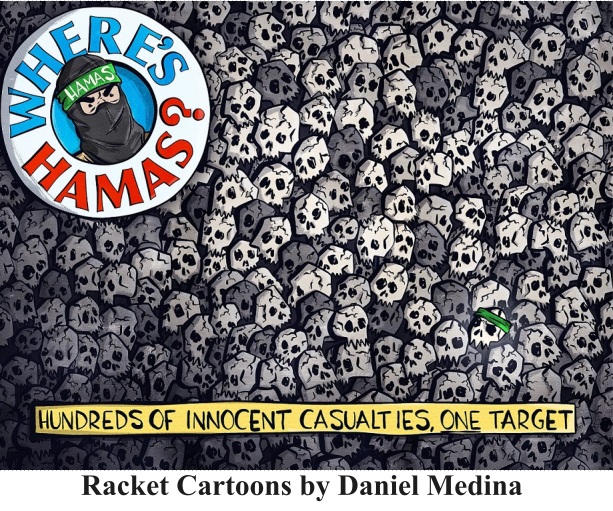
A senior US official said that the death toll caused by Israel’s assault on Gaza is likely far higher than the over 10,000 number being reported by Gaza’s Health Ministry, The Hill reported on Thursday.
The comments were made by Barbara Leaf, assistant secretary of State for Near Eastern Affairs, and break from President Biden’s claim that the numbers from Gaza’s Health Ministry can’t be trusted.
“In this period of conflict and conditions of war, it is very difficult for any of us to assess what the rate of casualties are,” Leaf told the House Foreign Affairs Committee. “We think they’re very high, frankly, and it could be that they’re even higher than are being cited.”
“We’ll know only after the guns fall silent. We take in sourcing from a variety of folks who are on the ground,” she added. “I can’t stipulate to one figure or another, it’s very possible they’re even higher than is being reported.”
Gaza’s Health Ministry reported on Thursday that at least 10,569 Palestinians have been killed in Gaza since October 7. The total includes 4,324 children. Thousands of Palestinians are also missing and presumed to be under the rubble.
After Biden accused the Palestinians of lying about the death toll, the UN and aid groups that have experience in Gaza backed the numbers coming from Gaza’s Health Ministry, saying they’re reliable. An Israeli security source told the Israeli newspaper Yediot Ahronot that Israel has killed around 20,000 Palestinians, but the number has not been backed up by another source.
While casting doubt on the death toll, the White House has also acknowledged there is a massive civilian casualty rate in the US-backed onslaught. White House National Security Council spokesman John Kirby acknowledged on Monday that the Israeli bombardment has killed “many, many thousands of innocent people.” The US is still providing Israel with unconditional military support, including near-daily weapons shipments.
1 This Month
Tell Congress: Prevent Nuclear Catastrophe in Iran

Tell Congress: Prevent Nuclear Catastrophe in Iran

Read the Public Inquiry Report, the Commissioners’ report, Surrendering Australia: The AUKUS Deception is available to download for free at aukuspublicinquiry.com. Or just watch the replay of the National Press Club Luncheon.


Shut down the radiation-damaged Heysham nuclear reactors now
To see nuclear-related stories in greater depth and intensity – go to https://nuclearinformation.wordpress.com

Say No to NASA’s Reckless Nuclear Reactor on the Moon
Say No to NASA’s Reckless Nuclear Reactor on the Moon
-
Archives
- November 2026 (238)
- October 2026 (302)
- September 2026 (339)
- August 2026 (330)
- July 2026 (355)
- June 2026 (287)
- May 2026 (306)
- April 2026 (356)
- March 2026 (251)
- February 2026 (267)
- January 2026 (308)
- December 2025 (358)
-
Categories
- 1
- 1 NUCLEAR ISSUES
- business and costs
- climate change
- culture and arts
- ENERGY
- environment
- health
- history
- indigenous issues
- Legal
- marketing of nuclear
- media
- opposition to nuclear
- PERSONAL STORIES
- politics
- politics international
- Religion and ethics
- safety
- secrets,lies and civil liberties
- spinbuster
- technology
- Uranium
- wastes
- weapons and war
- Women
- 2 WORLD
- ACTION
- AFRICA
- Atrocities
- AUSTRALIA
- Christina's notes
- Christina's themes
- culture and arts
- Events
- Fuk 2022
- Fuk 2023
- Fukushima 2017
- Fukushima 2018
- fukushima 2019
- Fukushima 2020
- Fukushima 2021
- general
- global warming
- Humour (God we need it)
- Nuclear
- RARE EARTHS
- Reference
- resources – print
- Resources -audiovicual
- Weekly Newsletter
- World
- World Nuclear
- YouTube
-
RSS
Entries RSS
Comments RSS

