ASEAN continues commitment to maintaining nuclear-weapon-free Southeast Asia
October 14, 2023 https://vietnamnews.vn/politics-laws/1595191/asean-continues-commitment-to-maintaining-nuclear-weapon-free-southeast-asia.html
NEW YORK – Ambassador Đặng Hoàng Giang, Permanent Representative of Việt Nam to the United Nations (UN), has reaffirmed ASEAN’s support for efforts of the international community for a world without nuclear weapons.
“The complete elimination of nuclear weapons is the only solution to guarantee against their use and threat of use,” Ambassador Giang, on behalf of ASEAN, said at a thematic debate on nuclear weapons of the UN General Assembly’s First Committee (Disarmament and International Security) on October 13.
ASEAN upholds the importance of the Treaty on the Non-Proliferation of Nuclear Weapons (NPT) in the global mechanism on disarmament, non-proliferation of nuclear weapons. It calls on nuclear-weapon countries to fulfil their disarmament obligations and commitments with specific roadmaps and actions, and highlights the Treaty on the Prohibition of Nuclear Weapons (TPNW) as a historic agreement that contributes to this objective. Until nuclear weapons are completely eliminated, countries need to continue signing and ratifying the Comprehensive Nuclear-Test-Ban Treaty (CTBT) so that it soon comes into effect.
Ambassador Giang said ASEAN was committed to maintaining Southeast Asia free of nuclear weapons, while emphasising the bloc’s commitment to the work of the First Committee to completely eliminate nuclear weapons for peace, security and sustainable development.VNA/VNS #nuclear #antinuclear #NuclearFree #NoNukes #NuclearPlants
US diplomats told to avoid calls for Gaza ‘ceasefire’
Rt.com 14 Oct 23
A memo to officials suggests Washington will not urge Israel to restrain its military action in the Palestinian enclave
The US State Department has advised diplomats to avoid calling for “de-escalation” or a “ceasefire” in Gaza amid continued fighting between Israel and Palestinian militants, multiple media outlets have reported. US officials have voiced loud support for the Jewish state’s right to “self-defense” in the wake of a deadly Hamas raid last week.
In an email addressed to a small group of officials on Friday, the State Department said US press materials should steer clear of phrases such as “restoring calm,” “end to violence/bloodshed,” or “de-escalation/ceasefire,” unnamed administration officials told NBC News and other outlets.
The Huffington Post, which obtained a copy of the email, called the missive a “stunning signal” and an indication of the White House’s “reluctance to push for Israeli restraint.” The email was sent amid a new round of airstrikes on Gaza in response to a Hamas-led terrorist attack last Saturday.
Asked about the directive, an unnamed State Department official told HuffPo that they would not comment on internal communications…………………………………. https://www.rt.com/news/584883-diplomats-avoid-gaza-ceasefire/
Ex-CIA analyst ‘100% sure’ Hamas using US-supplied weapons
https://www.rt.com/news/584665-hamas-weapons-ukraine-israel-johnson/ 16 Oct 23
Washington is expected to prioritize aid to Israel and put conditions on continued funding to Ukraine
Hamas is using US-supplied weapons to attack Israel even as Washington prepares to step up military aid to West Jerusalem, former CIA analyst Larry Johnson told RT on Monday.
“It’s probably 100% sure that the weapons were supplied by the United States,” Johnson opined, explaining that the only question was whether the Palestinian militant group’s weapons had come from US supplies diverted from Ukraine, Afghanistan, or the Palestinian Authority in the West Bank.
Noting there were “no effective controls” on the billions of dollars in arms and military financing funneled from the US to Ukraine in the last two years, Johnson observed that even weapons supplied by Israel to Ukraine might have made it back to Hamas via the black market, suggesting the war unfolding in Gaza “will tell us how extensive some of those weapons supplies have been
The burgeoning conflict will also force a reevaluation of Washington’s blank check to Ukraine, the ex-analyst predicted. “Congress is going to insist that Israel gets put at the front of the line and that Ukraine’s going to go to the back of the line. It’s also going to embolden and make happen inspections and accounting … in order to deliver, to allow Ukraine to have any more weapons.”
Noting that “Ukraine’s losing on the ground,” he predicted “this is going to be portrayed in the media in the coming weeks as the fate of Israel” if the US fails to supply sufficient weapons and cash to its Middle Eastern ally.
SOS – The San Onofre Syndrome: Nuclear Power’s Legacy.
A crucial warning
that nuclear power plants’ intensely radioactive waste is putting
communities at grave risk. SOS is an urgent call to action. Will we rally
to implement this lifeline in time?
Filmed over 12 years, this film
dramatically chronicles how Southern California residents came together to
force the shutdown of an aging nuclear power plant only to be confronted by
an alarming reality: tons of nuclear waste left near a popular beach, only
100 feet from the rising sea, that — with radioactivity lasting millions
of years—menaces present and future generations. Film screening on 16th
Oct.
Entertainment Oxygen (accessed) 15th Oct 2023
https://app.entertainmentoxygen.com/feed/e42963ea-7477-4952-a073-31b60e4e280d #nuclear #antinuclear #NuclearFree #NoNukes #NuclearPlants
The nuclear dispute driving a wedge between France and Germany
The two nations have opposing ideas about atomic energy, threatening the EU’s transition
away from fossil fuels. France and Germany’s split over nuclear power is a
tale of diverging mindsets fashioned over decades, including since the
Chernobyl disaster in USSR-era Ukraine.
But it has now become a major
faultline in a touchy relationship between Europe’s two biggest economies.
Their stand-off over how to treat nuclear in a series of EU reforms has
consequences for how Europe plans to advance towards cleaner energy. It
will also affect how the bloc secures power supplies as the region weans
itself off Russian gas, and how it provides its industry with affordable
energy to compete with the US and China.
France, which produces two-thirds
of its power from nuclear plants and has plans for more reactors, is
fighting for nuclear technology to be factored into its targets for
reducing emissions and for leeway to use state subsidies to fund the
sector.
For Germany, which closed its last nuclear plants this year and has
been particularly shaken by its former reliance on Russian gas, there’s
concern that a nuclear drive will detract from renewable energy advances.
Berlin is wary that Paris would benefit more than its neighbours if it ends
up being able to guarantee low power prices from its large nuclear output
as a result of new EU rules on electricity markets, people close to talks
between the two countries say.
FT 15th Oct 2023
https://www.ft.com/content/b1dbd7b4-d8b9-45eb-bd18-4976f7c9af5e #nuclear #antinuclear #NuclearFree #NoNukes #NuclearPlants
Fresh stock of iodine tablets for Swiss living near nuclear plants
People living within a 50km radius of Swiss nuclear power plants will receive a fresh stock of iodine tablets over the coming weeks and until next April.
October 13, 2023
The government has purchased 12 million packs of iodine tablets. The budget for the iodine distribution campaign is CHF34 million of which CHF11 million will be financed by the nuclear power plant operators, who will pay CHF 1.22 million a year into government’s general fund from 2021 to 20……………………………………………………. more https://www.swissinfo.ch/eng/business/fresh-stock-of-iodine-tablets-for-swiss-living-near-nuclear-plants/48887374
#nuclear #antinuclear #NuclearFree #NoNukes #NuclearPlants
Palestinians Speak Out
#Israel #Palestine
Question from Jamaica: are we being the world’s guinea pig for SMR nuclear power?
Oct 15, 2023 Dennis A Minott, PhD, is a physicist and energy specialist. https://www.jamaicaobserver.com/columns/are-we-being-the-worlds-guinea-pig-for-smr-nuclear-power/
Hard Question #1:
If a small modular nuclear reactor (SMR) in the Caribbean goes wrong, who can physically, or by financial means, stop it before it causes widespread harm in our relatively small archipelagic crescent of geographical space?
This question is hard because it forces us to confront the reality of nuclear incidents and accidents, which can be catastrophic and irreversible. Even if we or the owner can summarily replace the top managers of an SMR plant with more “experienced experts”, it may not be enough or in time to avert a disaster. SMRs are a new and unproven technology, and there is no guarantee that they will be safe or that the new hires know anything appropriate to do since the technology would be absolutely novel to them.
How do you fix something like a getaway hazardous process that you do not quite understand when, even at your quickest and brightest, you have no time to learn because “things” are so immediate?
In the event of a nuclear accident the consequences could be devastating for the Caribbean. The islands are densely populated and rely heavily on tourism, which would be severely disrupted by even a hint of a nuclear disaster. The region is also certainly vulnerable to earthquakes, hurricanes, and other natural disasters, which could make it difficult to contain a nuclear accident. Jamaican and all Caribbean people deserve a serious and honest assessment of the risks and benefits of SMRs. They need to know that if something goes wrong, there may be no way to stop it.
Hard Question #2: How can we ensure that SMRs are safely designed, built, and operated in the Caribbean?
Hard Question #3: What are the long-term risks of nuclear waste disposal in the region?
Hard Question #4: What are the economic and social costs of nuclear accidents?
Hard Question #5: Are there better proven and practically risk-free green alternatives to SMRs for meeting the Caribbean’s energy needs?
Hard Question #6: Can any Caribbean terrorist gang/insurgents or group of enemy combatants gain the capacity to hold citizens or any governing authority to ransom by occupying or targeting an SMR from 200 Ukraine-like kilometres?
These are just six of the hard questions that need to be answered before any decision is made about whether to deploy SMRs in the Caribbean.
As I recall, Jamaica is still within the Caribbean where even a little 5.0-magnitude shaker near Hope Bay vibrated The Turks & Caicos, Cuba, Florida, and Hispaniola. Within exactly three minutes of 7:31 pm that Thursday, one of my friends in America was calling to know if I was OK.
I hate to break it this way: My friend understands geophysics. My daughter is a Yale teaching fellow geophysics specialist, and my late wife was an ODPEM senior director who understood these matters very well as she taught the stuff at university level for many years, up to months before she died of cancer. As a physicist who communicates with my tribe I would be dishonest if I pretended ignorance of the true reason for my friend’s call. Here it is:
The Enriquillo-Plantain Garden fault zone is a major fault system that extends through Haiti and the Dominican Republic into Jamaica. It is a strike-slip fault where the motion is primarily horizontal, with the Caribbean plate moving eastward relative to the Gonâve microplate. This fault has been associated with significant earthquakes in the past, including the devastating 2010 Haiti earthquake which laid claim to 0.25 million human lives in minutes.
Both Jamaica and Haiti are located in seismically active regions, and understanding the fault lines and tectonic activity in these areas is crucial for assessing and mitigating seismic risks to even the best-designed SMR touted by our wealthiest citizens who know money movements but, respectfully, not the deadly movements of neighbourhood tectonic plates. My learned friend in America does, and called me immediately.
Flow’s cables remained unbroken — one more time. #nuclear #antinuclear #NuclearFree #NoNukes #NuclearPlants
Fukui governor accepts utility’s nuclear fuel plan, comes under fire
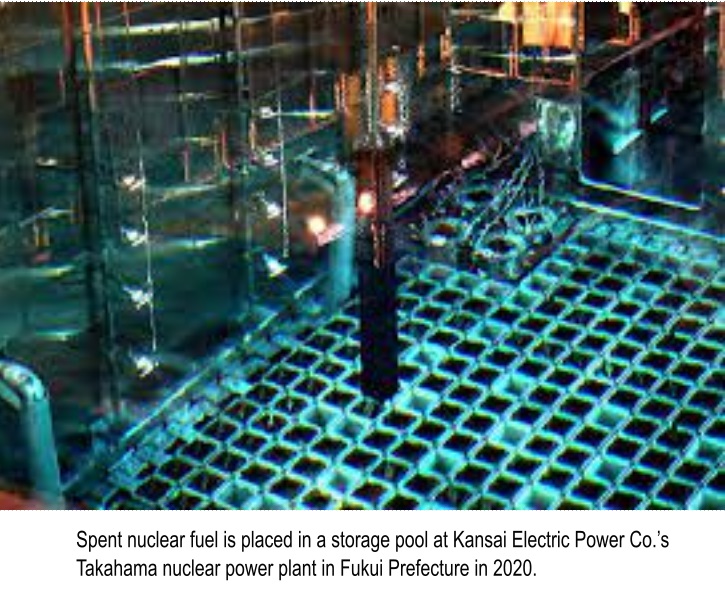
THE ASAHI SHIMBUN, October 13, 2023 https://www.asahi.com/ajw/articles/15028320
FUKUI–Fukui Governor Tatsuji Sugimoto on Oct. 13 approved Kansai Electric Power Co.’s revised plan on storing spent nuclear fuel, drawing outrage from prefectural assembly members.
The governor’s approval means that three aging reactors operated by the utility in the prefecture can continue to run.
The continued operation of the old reactors was contingent on Kansai Electric finding a site outside Fukui Prefecture to store the spent fuel from its nuclear plants.
Sugimoto, who met with industry minister Yasutoshi Nishimura and Kansai Electric President Nozomu Mori on Oct. 13, approved the plan even though the utility has not picked a storage site.
“The plan is a pie in the sky as no candidate site for the interim storage facility has been presented,” a prefectural assembly member said.
Under the approved plan, operations will start at an interim storage facility outside the prefecture around 2030 for spent nuclear fuel accumulating at Kansai Electric’s nuclear power plants in Fukui Prefecture.
The spent fuel will remain there until it can be transferred to a reprocessing plant.
But that brings up another problem.
The central government has long been promoting a nuclear fuel recycling program that reprocesses spent nuclear fuel.
However, the reprocessing plant in the village of Rokkasho in Aomori Prefecture, the key facility in the recycling program, has suffered a series of problems, and its completion has been delayed for more than 25 years.
Spent nuclear fuel is currently placed in storage pools at the nuclear plants in Fukui Prefecture.
The prefectural government has been urging Kansai Electric to build an interim storage facility outside the prefecture because space is running out for the fuel.
The utility had promised to find a candidate site for the storage facility by the end of this year.
It said if it could not find a site, it would halt the No. 1 and No. 2 reactors at the Takahama nuclear plant and the No. 3 reactor at the Mihama nuclear plant. These three reactors have each been in operation for more than 40 years.
In June, Kansai Electric presented a plan to ship about 200 tons of spent nuclear fuel from the Takahama nuclear power plant to France, claiming “we fulfilled our promise.”
But the prefectural government opposed this plan, saying that volume was only a fraction of the total amount.
On Oct. 10, the utility proposed a revised plan, including increasing the amount to be shipped to France and setting up dry storage facilities within the compounds of nuclear plants in Fukui Prefecture that are separate from the existing storage pools.
Kansai Electric also said the storage capacity within the nuclear plants would not increase, in principle.
Another prefectural assembly member criticized this plan.
“Since no duration was specified for the dry storage facilities, they might end up effectively serving as the final disposal site,” the assembly member said.
(This article was written by Kenji Oda and Tsunetaka Sato.) #nuclear #antinuclear #NuclearFree #NoNukes #NuclearPlants
It’s Not The ‘Israel-Hamas War’, It’s The Israel-Gaza Massacre
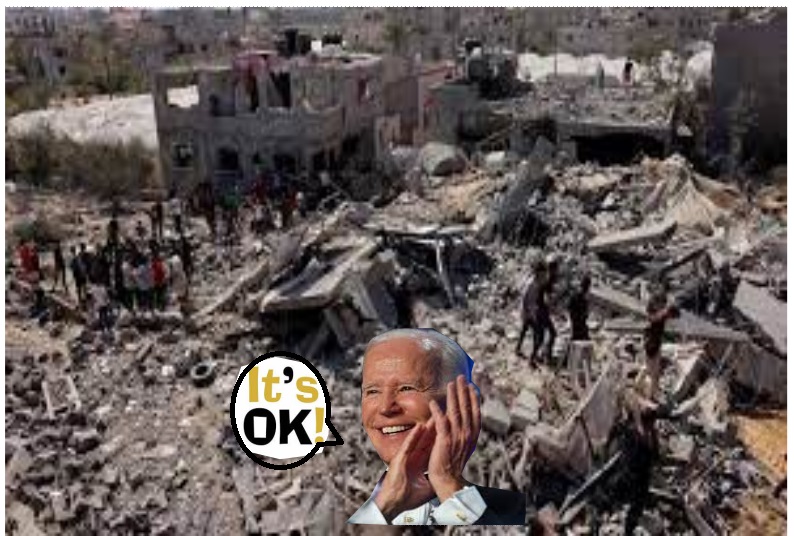
I used to think all genocidal massacres are bad but then some really smart Israel apologists explained to me that this genocidal massacre is completely different because this genocidal massacre’s perpetrators believe they are doing the right thing for a good reason.
CAITLIN JOHNSTONE, OCT 15, 2023
Stop calling it the “Israel-Hamas war”. It’s the Israel-Gaza massacre. Calling it the Israel-Hamas war creates the false impression that this is a war that is directed exclusively at Hamas when it’s really an ethnic purge that’s directed at all Palestinians in Gaza.
The child body count alone makes it clear that this isn’t a war against Hamas; I saw an anonymous account point out on Twitter that the number of children killed in this onslaught after one week already exceeds the total number of children killed after a year and a half of fighting in Ukraine, per the United Nations.
Laying complete siege to a civilian population and bombing anything that stands would be an extraordinary abomination in any war. And this is not a war, it’s an enclosed shooting range with military explosives and human targets.
Americans should probably worry about the rapid legitimization of this idea that civilians who have a government that kills people are all legitimate targets………………………………………………
Israel has been struggling with a rapidly worsening PR crisis ever since Palestinians started getting internet access and smartphones with video cameras and exposing Israeli apartheid abuses. So if you’re wondering why they cut off Gaza’s internet and electricity, that’s why.
Israel was 100% aware that cutting off power and internet to Gaza would prevent Palestinians from recording and publishing footage of its coming war crimes. They struck a fatal blow to citizen journalism in Gaza, thereby blinding the whole world to what’s happening there.
The mass media asked you to believe the Hamas attack was “unprovoked”. Then they asked you to believe blatant babies-on-bayonets atrocity propaganda. Now they’re asking you to believe Jewish kids were in school before dawn on a Saturday morning in Israel. Western journalism, folks.
The only reason so many Israel apologists scrambled to circulate unverified stories about beheaded babies and mass rapes instead of waiting for evidence was to make the real atrocities Israel is perpetrating and will continue to perpetrate in Gaza look reasonable and appropriate.
❖
After this current crisis is over I’m probably going to think a lot about the fact that MSNBC suspended three Muslim reporters during Israel’s Gaza assault because it didn’t want Muslims reporting on it.
I used to think all genocidal massacres are bad but then some really smart Israel apologists explained to me that this genocidal massacre is completely different because this genocidal massacre’s perpetrators believe they are doing the right thing for a good reason…………………………………………………………………………………..
The greatest trick white anti-semites ever pulled was getting Jews to leave western society in droves and move to a far away country to spend their lives beating up Muslims. https://www.caitlinjohnst.one/p/its-not-the-israel-hamas-war-its?utm_source=post-email-title&publication_id=82124&post_id=137970619&utm_campaign=email-post-title&isFreemail=true&r=1ise1&utm_medium=email #Israel #Palestine
Deadly radioactive dust
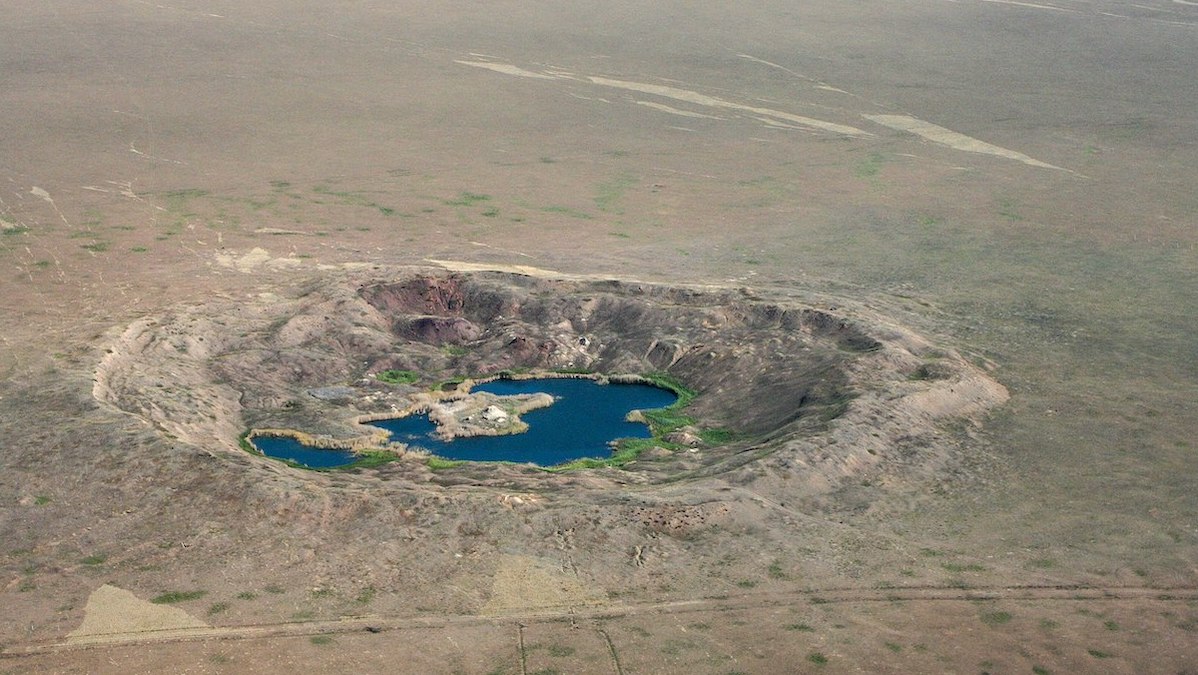
In the case of Semipalatinsk, the former Soviet Union’s nuclear testing grounds, the exposure was due to the passage of radioactive clouds. The area and the people were exposed gradually not only during the passage of the cloud but also from the subsequent contamination of the area.
by beyondnuclearinternational https://beyondnuclearinternational.org/2023/10/15/deadly-dust/
A look at the studies of professor Masaharu Hoshi. From Impact
The risks of radiation exposure are better understood today thanks to researchers dedicated to working with the victims of exposure, understanding their symptoms, identifying treatments and developing safety protocols. This article looks at the work of one such researcher, Dr. Masaharu Hoshi.
Harnessing atomic particles and radiation led to powerful and world changing technologies. The field of medical imaging has saved countless lives and continues to push the boundaries of medical interventions and research, which would have been impossible without the first x-ray machines. Unfortunately, not all inventions have been so altruistic.
The advent of nuclear weapons showed the world the destructive potential possible via scientific inquiry. While the dangerous effects of radiation exposure were documented from the inception of this technology, catastrophic events like the bombing of Hiroshima and Nagasaki and nuclear disasters at Chernobyl, Semipalatinsk or Fukushima provide a real-time glimpse into the long-term effects of exposure.
Investigating the causes of this exposure in order to prevent future accidents is essential, but so too is cataloguing the rates and types of exposure among the victims. With this information, correlations between exposure and health effects, both short- and long-term, can be assessed. This data is crucial for understanding the mechanisms behind radiation effects on living creatures and in assessing risks, safety protocols and treatment. Since the 1980s, Dr Masaharu Hoshi, Professor Emeritus at Hiroshima University, has been traveling around the world, visiting the sites of nuclear disasters in an effort to fully comprehend the risks. In doing so he is also revealing that there is still much we need to learn regarding the effects of radiation exposure.
Quantifying the risks
“I started my research with the people exposed to radiation in Hiroshima and Nagasaki in the year 1980,” says Hoshi. “Before that I completed my dissertation on nuclear physics with a specialty in radiation measurement.” This graduate training positioned him to become an expert on the effects of radiation.
The work that commenced in Hiroshima and Nagasaki right after the blast showed that with higher doses of radiation, the greater the effect on the human body, in the form of symptoms like carcinogenesis. The ratio between exposure and effects is termed risk. This measure of risk is useful in treating people exposed to radiation and it can quantify how much risk individuals face depending on the dose of exposure.
Quantifying the risks
“I started my research with the people exposed to radiation in Hiroshima and Nagasaki in the year 1980,” says Hoshi. “Before that I completed my dissertation on nuclear physics with a specialty in radiation measurement.” This graduate training positioned him to become an expert on the effects of radiation.
The work that commenced in Hiroshima and Nagasaki right after the blast showed that with higher doses of radiation, the greater the effect on the human body, in the form of symptoms like carcinogenesis. The ratio between exposure and effects is termed risk. This measure of risk is useful in treating people exposed to radiation and it can quantify how much risk individuals face depending on the dose of exposure.
“This work can inform us whether a medical check-up is required every two years depending on the degree of exposure, or if hospitalization is necessary if there has been too much exposure,” explains Hoshi.
He says that the work done in Japan has informed laws regarding radiation exposure safety and protocols in countries around the world, but this is only one scenario in which a person can come into contact with the deadly rays.
“The people exposed to radiation in Hiroshima and Nagasaki from the atomic bomb were exposed to gamma rays, including a few neutrons, in a short instant,” outlines Hoshi. “From 1 microsecond to about 1 minute which is quite different from the gradual exposure of actual workers in the radiation industry.”
In the case of Semipalatinsk, the former Soviet Union’s nuclear testing grounds, the exposure was due to the passage of radioactive clouds. The area and the people were exposed gradually not only during the passage of the cloud but also from the subsequent contamination of the area. “Therefore, the risk is considered to be different from that of the atomic bomb survivors of Hiroshima and Nagasaki,” confirms Hoshi.
“Because of that, we started our study on the radiation dose and the health effects occurring in Semipalatinsk, which has been going on since 1994.”
Over the course of these studies over decades he has worked with colleagues to amass databases of over 300,000 cases of exposure and long-term follow-up. It was among these cases, spread out in different locations, that a pattern emerged, revealing yet another variable to consider during an exposure event, being radioactive microparticles.
Radiation detectives
Initially in Japan, research started on people who came to the area right after the explosion to help their families and were not the direct victims of the bombing. For these individuals the calculated radiation exposure dose was less than 10 mSv which, according to Hoshi, is usually not a problem.
“Using the Hiroshima University database of people who were exposed to the bombing incident, we found that the mortality rate was higher for those who came to the vicinity directly after the explosion and the cause for this was unknown,” he states.
Furthermore, Hoshi began to see a similar pattern of exposure and symptoms in other places. In Semipalatinsk it was called Kainal Syndrome and again there was no explanation. Many of the survivors of Chernobyl, Gulf War and Hiroshima Nagasaki who entered after the bombing also suffered from hair loss, severe malaise, which can lead to an inability to work, bleeding, diarrhea and more.
“It was then that I understood I would have to use epidemiological ideas to uncover what all of these victims had in common,” he says. Eventually, he realised that commonality was radioactive dust.
Hoshi and his team began investigating the potential for radioactive microparticles to cause internal exposure in all organs of the rats, especially in the lung. They found the effects are 20 times more dangerous than usual external exposure according to the animal experiments.
“With regards to the effects of radioactive particles, some experts have previously pointed it out,” says Hoshi. “However, since there was no supporting research, it has been ignored by public institutions.”
The effects of radiation exposure are the same for every person on the planet, no one country or group of people are immune. Furthermore, when disaster strikes it is usually not contained to one spot. Contamination of air and water can spread over vast distances, bringing with them their deadly side effects. Hoshi and his collaborators are acutely aware of this and are working hard to share their data as far and as wide as possible.
Furthermore, Hoshi stresses that due to the need for a variety of expertise, collaboration is absolutely essential.
“For example, these results are not possible without the input from reactor physicists, radiation and medical physicists, epidemiologists, thyroid specialists, pathologists, medical doctors, as well as statistics and computer database experts,” he highlights.
Hoshi is grateful for all of the hard work this diverse group has done and will continue to do for the benefit of victims and potential victims. Along with further research on progressive treatment and protection, Hoshi plans to continually develop this field. Their work will carry on studying the effects of radioactive dust and ways to protect against it as well as tackling the big problem of evaluating dose exposure from radioactive dust.
This article first appeared on impact.pub whose content is available under a creative commons license.
Dr Masaharu Hoshi is Professor Emeritus at Hiroshima University’s Peace Center. You can read his studies here and here. #nuclear #antinuclear #NuclearFree #NoNukes #NuclearPlants #radiation
UK’s old nuclear submarines, dead for over 40 years, and a new plan for turning them into “tin cans and razor blades”.
BABCOCK International want to build a new industrial building at Rosyth
Dockyard for the dismantling of old nuclear submarines. If approved, and a
planning application has gone into Fife Council, the metal waste disposal
facility will go up at the corner of Wood Road and Caledonia Road.
Seven old nuclear subs have been laid up at the yard for decades, Dreadnought has
been there since 1980, longer than it was in service, and last year
councillors were told of a UK Government pledge to “de-nuclearise Rosyth”
by 2035. They were also informed of a world first in removing the most
radioactive waste and the overall aim of cutting up the vessels and turning
them into “tin cans and razor blades”.
Blyth and Blyth, of Edinburgh, have
been appointed by Babcock as civil and structural engineering consultants
for the Rosyth Submarine Dismantling Project and are agents for the
application. The plans say the building would be around 200 square metres
in size and the council are expected to make a decision next month.
Dunfermline Press 16th Oct 2023
https://www.dunfermlinepress.com/news/23853192.rosyth-babcock-plans-new-metal-waste-disposal-building/ #nuclear #antinuclear #NuclearFree #NoNukes #NuclearPlants
Israel’s nuclear weapons and their history
Does Israel Possess Nuclear Weapons?
Greek Reporter By Philip Chrysopoulos, October 14, 2023
Israel is generally understood to possess nuclear weapons, yet the country has never officially denied or admitted it has a nuclear arsenal.
Instead, Israel has maintained a policy of deliberate ambiguity on the issue throughout decades. Nevertheless, experts estimate that the country’s stockpile ranges between 90 and 400 warheads………….
Furthermore, the middle-eastern country is able to deliver nuclear missiles by aircraft, as submarine-launched cruise missiles, and via the Jericho series of intermediate to intercontinental range ballistic missiles.
According to the Center for Arms Control and Non-Proliferation Israel has 90 plutonium-based nuclear warheads and has produced enough plutonium for 100-200 weapons…………….
The History of Israel’s Nuclear Weapons
Israel’s interest in nuclear weapons has started in the end of the 1940s. The country’s first Prime Minister David Ben-Gurion spoke of the urgent need for obtaining nuclear weapons to prevent the Holocaust from reoccurring.
In 1948, even before the Israeli-Arab War, Israel began recruiting Jewish nuclear scientists and forming scientific institutes in order to create a nuclear arsenal.
Ben-Gurion had stated, “What Einstein, Oppenheimer, and Teller, the three of them are Jews, made for the United States, could also be done by scientists in Israel, for their own people”.
………………………………………….. Nuclear Weapons Production
It is believed that Israel began full-scale production of nuclear weapons following the 1967 Six-Day War, although it had built its first operational nuclear weapon by December 1966.
In 1969, U.S. President Richard Nixon in a meeting with Israeli Prime Minister Golda Meir pressed Israel to “make no visible introduction of nuclear weapons or undertake a nuclear test program”, so maintaining a policy of nuclear ambiguity.
……………………………….. In the 1980s the CIA estimated that Israel had 100-200 nuclear weapons. In 1991, after the Soviet Union dissolved, nearly 20 top Jewish Soviet scientists reportedly emigrated to Israel.
By the mid 2000s estimates of Israel’s arsenal ranged from 75 to 400 nuclear warheads. https://greekreporter.com/2023/10/14/israel-nuclear-weapons/ #nuclear #antinuclear #NuclearFree #NoNukes #NuclearPlants
What the media forgets to tell you about Israel and Gaza
Ignore the fake news. Israel isn’t defending itself. It’s enforcing its right to continue ethnically cleansing Palestinians
JONATHAN COOK, OCT 16, 2023 https://jonathancook.substack.com/p/what-the-media-forgets-to-tell-you?utm_source=post-email-title&publication_id=476450&post_id=137987299&utm_campaign=email-post-title&isFreemail=true&r=ln98x&utm_medium=email
The missing context for what’s happening in Gaza is that Israel has been working night and day to ethnically cleanse the Palestinian people from their homeland since even before Israel become a state – when it was known as the Zionist movement.
Israel didn’t just cleanse Palestinians in 1948, when it was founded as a Western colonial project, and again under cover of a regional war in 1967. It also worked to ethnically cleanse Palestinians every day between those dates and afterwards. The aim was to move them off their historic lands, and either expel them beyond Israel’s new, expanded borders or concentrate them into small ghettoes inside those borders – as a holding measure until they could be expelled outside the borders.
The ‘settler’ project, as we call it, is a misnomer. It’s really Israel’s ethnic cleansing programme. Israel even has a special word for it in Hebrew: ‘Judaisation’, or making the land Jewish. It is official government policy.
Gaza was the largest of the Palestinian reservations created by Israel’s ethnic cleansing programme, and the most overcrowded. To stop the inhabitants spilling out, Israel built a fence-barrier in the early 1990s to pen them in. Then when policing became too hard from within the prison, Israel pulled back in 2005 to the outer perimeter barrier.
New technology allowed Israel to besiege Gaza remotely by land, sea and air in 2007, limiting the entry of food and vital items like medicine and cement for construction. Automated gun towers shot anyone who came near the fence. The navy patrolled the sea, stopping boats straying more than a kilometre or two off shore. And drones watched 24 hours a day from the sky.
The people of Gaza were sealed in and largely forgotten, except when they lobbed a few rockets over the fence – to international indignation. If they fired too many rockets, Israel bombed them mercilessly and occasionally launched a ground invasion. The rocket threat was increasingly neutralised by a rocket interception system, paid for by the US, called Iron Dome.
Palestinians tried to be more inventive in finding ways to break out of their prison. They built tunnels. But Israel found ways to identify those that ran close to the fence and destroyed them.
Palestinians tried to get attention by protesting en masse at the fence. Israeli snipers were ordered to shoot them in the legs, leading to thousands of amputees.
The ‘deterrence’ seemed to work. Israel could once again sit back and let the Palestinians rot in Gaza. ‘Quiet’ had been restored.
Until, that is, last weekend when Hamas broke out briefly and ran amok, killing civilians and soldiers alike.
So Israel now needs a new policy. It looks like the ethnic cleansing programme is being applied to Gaza anew. The half of the population in the enclave’s north is being herded south, where there are not the resources to cope with them. And even if there were, Israel has cut off food, water and power to everyone in Gaza.
The enclave is quickly becoming a pressure cooker. The pressure is meant to build on Egypt to allow the Palestinians entry into Sinai on ‘humanitarian’ grounds.
Whatever the media are telling you, the ‘conflict’ – that is, Israel’s ethnic cleansing programme – started long before Hamas appeared on the scene. In fact, Hamas emerged very late, as the predictable response to Israel’s violent colonisation project.
And no turning point was reached a week ago. This has all been playing out in slow motion for more than 100 years.
Ignore the fake news. Israel isn’t defending itself. It’s enforcing its right to continue ethnically cleansing Palestinians.
Time to implement UN decisions on Palestine – Lavrov
Rt.com 16 Oct 23
When the current Israel-Palestine hostilities end, progress should be made towards a two-state solution, the Russian foreign minister as said.
The escalation of violence in the Middle East should provide an impetus for implementing a two-state solution to the Israeli-Palestinian conflict, Russian Foreign Minister Sergey Lavrov has said.
Speaking to journalists on Thursday, the top diplomat reiterated a call for a swift resolution of the crisis. After that, hopefully “everyone would take responsibility for implementing the decisions of the UN Security Council on the creation of a Palestinian state under the principles that the UN has approved.”
Lavrov spoke to the media in Bishkek, Kyrgyzstan, after meeting his counterparts from the Commonwealth of Independent States (CIS), a regional intergovernmental organization composed of former parts of the Soviet Union.
“All of us had the same opinion… that this confrontation must be stopped immediately, that parties should respect international humanitarian law, prevent any terrorist actions and indiscriminate use of force,” Lavrov said.
He stressed that civilians from both sides were suffering en masse and that the failure to create a viable Palestinian state was the root of continued tensions in the region……………………………………………… more https://www.rt.com/russia/584744-lavrov-state-palestine-un/ #Israel #Palestine
-
Archives
- October 2026 (91)
- September 2026 (339)
- August 2026 (330)
- July 2026 (355)
- June 2026 (287)
- May 2026 (306)
- April 2026 (356)
- March 2026 (251)
- February 2026 (267)
- January 2026 (308)
- December 2025 (358)
- November 2025 (359)
-
Categories
- 1
- 1 NUCLEAR ISSUES
- business and costs
- climate change
- culture and arts
- ENERGY
- environment
- health
- history
- indigenous issues
- Legal
- marketing of nuclear
- media
- opposition to nuclear
- PERSONAL STORIES
- politics
- politics international
- Religion and ethics
- safety
- secrets,lies and civil liberties
- spinbuster
- technology
- Uranium
- wastes
- weapons and war
- Women
- 2 WORLD
- ACTION
- AFRICA
- Atrocities
- AUSTRALIA
- Christina's notes
- Christina's themes
- culture and arts
- Events
- Fuk 2022
- Fuk 2023
- Fukushima 2017
- Fukushima 2018
- fukushima 2019
- Fukushima 2020
- Fukushima 2021
- general
- global warming
- Humour (God we need it)
- Nuclear
- RARE EARTHS
- Reference
- resources – print
- Resources -audiovicual
- Weekly Newsletter
- World
- World Nuclear
- YouTube
-
RSS
Entries RSS
Comments RSS

