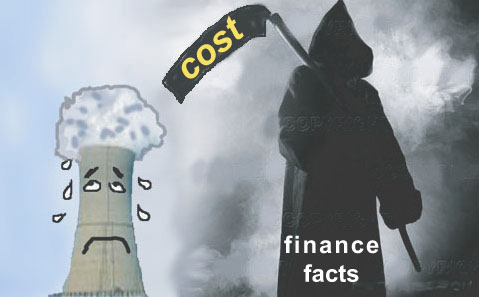
UK nuclear plant hit by new multiyear delay and could cost up to £46bn.
Britain’s flagship Hinkley Point C nuclear plant has been delayed until
2029 at the earliest, with the cost spiralling to as much as £46bn, in the
latest blow to a project at the heart of the country’s long-term energy
plans.
The surging bill and slipping schedule, announced on Tuesday by the
French state-owned operator and constructor EDF, will put pressure on the
UK government to provide extra financial support for the project.
EDF, which has also experienced long delays on recent parallel projects in
Finland and France that use the same reactor technology, blamed the latest
problems at Hinkley in Somerset on the complexity of installing
electromechanical systems and intricate piping. Hinkley was previously
delayed due to construction disruption during Covid pandemic.
Under EDF’s latest scenario, one of the two planned reactors at Hinkley Point C could
be ready in 2029, a two-year hold-up compared with the company’s previous
estimate of 2027. But it could be further delayed to 2031 in adverse
conditions, EDF said. It did not give an estimate for the second reactor.
EDF said the cost would now be between £31bn-£35bn based on 2015 prices,
depending on when Hinkley Point C was completed.
In today’s prices, the cost would balloon to as much as £46bn. The initial budget was £18bn, with a scheduled completion date of 2025. Alison Downes of Stop Sizewell C, a
campaign group opposed to the planned Suffolk nuclear plant, said EDF was
an “unmitigated disaster”. She added the UK government should cancel
Sizewell C, saying state funding for the project could be better spent on
“renewables, energy efficiency or, in this election year, schools and
hospitals”.
FT 23rd Jan 2024
https://www.ft.com/content/1157591c-d514-4520-aa17-158349203abd
EDF’s UK Hinkley Nuclear Costs Balloon as Plant Delayed Again

Francois de Beaupuy, Bloomberg News, Jan 23, 2024
(Bloomberg) — Electricite de France SA’s nuclear project at Hinkley Point in the UK will cost as much as £10 billion ($13 billion) extra to build and take several years longer than planned, the latest in a series of setbacks for the budget and timetable of the country’s largest energy project.
EDF now expects the two reactors it’s building in southwest England to cost between £31 billion and £35 billion in 2015 terms, the French energy company said in a statement on Tuesday. That’s up from an estimate of £25 billion to £26 billion in 2022, and is the fifth budget increase in eight years. At today’s prices, the project would cost as much as £46 billion, according to the Bank of England’s inflation calculator. …………………
The UK is struggling to get its huge nuclear program off the ground. The government is aiming for as much as 24 gigawatts of capacity by 2050 and will have to accelerate rapidly to achieve that. Hinkley Point will be the first new atomic station to start generating in Britain since 1995. Construction of complex nuclear plants is notoriously slow, and the cost overruns and delays at Hinkley may damp investor enthusiasm for the sector…………………………………..
The setback comes just one day after the UK government pledged to invest an additional £1.3 billion in EDF’s second UK project at Sizewell C. Ministers are hoping the commitment will attract enough private capital to make a final investment decision this year and make progress toward its ambitious 2050 target.
EDF was already struggling with the budget for Hinkley after China General Nuclear Power Corp, its partner in the project, stopped funding, potentially leaving the French company to foot the bill until it is completed. The government-owned French company will also have to spend tens of billions of euros on new atomic plants at home in the coming decades.
Hinkley Point C is not a French government project and so any additional costs or schedule overruns are the responsibility of EDF and its partners and will in no way fall on taxpayers, said a spokesperson for the UK Department for Energy Security and Net Zero.
…….. EDF’s current fleet of five nuclear plants is scheduled to shrink to just three by the end of 2026. Last year, output slumped to the lowest in more than four decades.
While rising costs of metals, cement and labor are affecting industries including large offshore wind projects, the revised plan may revive a controversy over how expensive the technology is and whether further delays are inevitable. Still, the UK government said this month that the country will build another large-scale nuclear power plant, beyond current projects led by EDF.
t’s not the first time Hinkley has ballooned beyond its budget. EDF increased its estimates in 2017, 2019, 2021, and 2022 from an initial estimate of £18 billion when the contract was signed with the UK in 2016.
At the start of the project, the French utility expected the first unit to start by the end of 2025. However, Brexit, the Covid pandemic and the war in Ukraine have disrupted supply chains and boosted the cost of labor and essential materials like steel and cement.
“Going first to restart the nuclear construction industry in Britain after a 20-year pause has been hard,” said Stuart Crooks, Managing Director for Hinkley Point C. https://www.bnnbloomberg.ca/edf-s-uk-hinkley-nuclear-costs-balloon-as-plant-delayed-again-1.2025542
CAMPAIGNERS opposing the development of nuclear power in Bradwell-on-Sea say they believe ‘new nuclear’ in the area “remains dead in the water”.
Blackwater Against New Nuclear Group (BANNG) has been fighting its cause for 15 years.
On January 11, the Government released its Civil Nuclear: Roadmap to 2050.
BANNG claims it means the original eight government-listed coastal sites, including Bradwell, are no longer the only sites earmarked for nuclear deployment.
They say new nuclear power stations will only be sited in “suitable locations” identified by developers based on a set of criteria.
BANNG chairman Professor Andy Blowers said: “This new approach to siting effectively rules Bradwell out of any further consideration.
“As we have strenuously demonstrated over the last 15 years, Bradwell is a most unsuitable site and the Blackwater communities are overwhelmingly opposed to nuclear development in such a fragile location, increasingly vulnerable to the impacts of climate change.”
He added: “BANNG welcomes the effective delisting of the Bradwell site. Delisting is something we have insisted on since the list was first compiled more than a decade ago.
“We are at a loss to understand what ‘certain advantages’ can conceivably be attributed to the site.
“Rather as the myriad evidence accumulated and published over the years shows, Bradwell is a wholly unsuitable and unsatisfactory site for the development of nuclear power at whatever scale and capacity.”
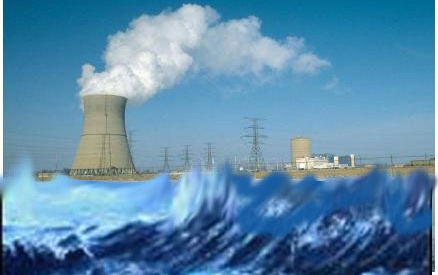
A BANNG spokesman said: “A major problem is the vulnerability of the site to flooding, and to storm surges and coastal processes that are intensifying as the impacts of climate change begin to take hold on this fragile coastline
They added: “There are other significant reasons why Bradwell should be off the Nuclear Road Map.
“The Blackwater area has precious environments in land, sea and sky which are protected, conserved and significant.
“The intrusion of a mega power station or a cluster of smaller reactors would prove intrusive, polluting and detrimental to habitats and to human wellbeing.
“Further, there would be dangerous highly radioactive wastes stored on the site for future generations to cope with, along with all the other problems of climate change.
“Above all, the communities around the Blackwater have over the years overwhelmingly declared against new nuclear development at the Bradwell site.
“New nuclear is not welcome here.”
Sizewell C opponents appeal to Supreme Court

Energy Live News, 24 Jan 24
1Opponents of the Sizewell C nuclear power plant, dismissed by the Court of Appeal, seek Supreme Court appeal as the government commits an extra £1.3 billion for project construction in Suffolk.
he government’s recent announcement of an extra £1.3 billion support for the project has prompted a renewed legal bid from the opponents, citing concerns about the project’s viability, sea defences, climate change and infrastructure sustainability.
Opponents of the Sizewell C nuclear power plant include campaign groups Together Against Sizewell C, Stop Sizewell C and Suffolk Coastal Friends of the Earth……..
https://www.energylivenews.com/2024/01/24/sizewell-c-opponents-appeal-to-supreme-court/—
UK Government’s nuclear power plans a roadmap to a dead-end – CND

“The debate and investment into trying to develop new nuclear energy projects divert funds and political motivation away from further developing truly renewable energy sources, which is the real solution.”
Sara Medi Jones, Campaign for Nuclear Disarmament (CND), assesses the government’s latest nuclear power announcement m https://labouroutlook.org/2024/01/23/governments-nuclear-power-plans-a-roadmap-to-a-dead-end-cnd/
It’s only mid-January and we have already had two major nuclear power announcements in 2024. A long-awaited “roadmap” of nuclear power expansion was unveiled earlier this month, with the government promising to accelerate new nuclear projects. And this week we’ve just heard that construction of the Sizewell C nuclear station in Suffolk should be a step closer.
But the problem is – nuclear is a dead-end technology that is not the answer to our climate or energy needs.
Plans for eight new nuclear sites laid out in 2011 have largely stalled, with the only two projects to have got off the ground – Hinkley Point C and Sizewell C – beset with problems. Costs at Hinkley Point have spiralled by 30% to £33 billion, and the start date has repeatedly been pushed back. Sizewell C is struggling to attract private financing, and despite building permission finally being granted now, there are still many hurdles to clear.
The nuclear roadmap’s main aims are to “explore” another nuclear site, develop small modular reactors, secure more investment, and engage the private sector more
But we are unlikely to see any meaningful progress because nuclear power in its very essence is a dangerous and economically unsustainable technology. It burdens future generations with a potential human and environmental disaster that is not compensated for by the expensive electricity provided.
Any new nuclear projects would take decades to build. But we need an answer to our cost of living struggle and to climate change now. Even if nuclear power capacity was doubled worldwide by 2050 (a hugely ambitious ask in itself), it would only result in a 4% reduction in emissions.
The debate and investment into trying to develop new nuclear energy projects divert funds and political motivation away from further developing truly renewable energy sources, which is the real solution.
We must also bear in mind the main reason this government is so in favour of nuclear power: it helps to ensure the infrastructure and skilled personnel is in place to maintain and manufacture Britain’s nuclear weapons system, Trident. During this time of global instability and increased nuclear risk, Britain would do well to forget about propping up their weapons of mass destruction and instead focus on delivering the things that people in this country need, including a functioning and sustainable energy system.
Rare nuclear bunker hits the market as America’s wealthiest people prepare for the worst
Real Estate Brendan Casey, Property Journalist and Editor, 23 Jan 2024, News Corp Australia Network
A rare bunker with roots in the Cold War era has found its way into the real estate market, carrying an asking price of $1.88m (US$1.24m).
Nestled in the city of Sprague in Washington state, this property, constructed in 1959, once safeguarded some of America’s most critical nuclear weapons during the tumultuous time, which spanned from 1945 to 1991, The Post reports.
The Cold War was marked by a strategic standoff between the United States and the Soviet Union, defined by political rivalries and the looming threat of nuclear warfare.
The intense global tension finally subsided in 1991 when Soviet president Mikhail Gorbachev and US president George H. W. Bush inked a historic treaty, putting an end to the conflict………………………………………………………………………………………………………………………………………
In recent years, bunkers have experienced a surge in popularity, reflecting a growing demand for doomsday shelters in the USA.
According to Post sources, the scarcity of such shelters has led to a significant spike in prices.
Some of America’s wealthiest individuals, including Mark Zuckerberg and Peter Thiel, are investing in bunkers for their own doomsday preparations.
Zuckerberg, the Facebook founder and CEO of Meta Platforms, is building a $100m compound in Hawaii, complete with an underground bunker and self-sustaining resources.
Financier Peter Thiel is awaiting approval for a bunker project in New Zealand, joining the ranks of other notable figures such as Sam Altman of OpenAI, and Larry Ellison of Oracle, who are also constructing their own ‘end-of-days retreats’. https://www.realestate.com.au/news/rare-nuclear-bunker-hits-the-market-as-americas-wealthiest-people-prepare-for-the-worst/?campaignType=external&campaignChannel=syndication&campaignName=ncacont&campaignContent=&campaignSource=herald_sun&campaignPlacement=spa
NOWHERE TO HIDE – How a nuclear war would kill you — and almost everyone else.

Bulletin of the Atomic Scientists OCTOBER 20, 2022, By François Diaz-Maurin
This summer, the New York City Emergency Management department released a new public service announcement on nuclear preparedness, instructing New Yorkers about what to do during a nuclear attack. The 90-second video starts with a woman nonchalantly announcing the catastrophic news: “So there’s been a nuclear attack. Don’t ask me how or why, just know that the big one has hit.” Then the PSA video advises New Yorkers on what to do in case of a nuclear attack: Get inside, stay inside, and stay tuned to media and governmental updates.
But nuclear preparedness works better if you are not in the blast radius of a nuclear attack. Otherwise, there’s no going into your house and closing your doors because the house will be gone. Now imagine there have been hundreds of those “big ones.” That’s what even a “small” nuclear war would include. If you are lucky not to be within the blast radius of one of those, it may not ruin your day, but soon enough, it will ruin your whole life.
Effects of a single nuclear explosion
Any nuclear explosion creates radiation, heat, and blast effects that will result in many quick fatalities.
Direct radiation is the most immediate effect of the detonation of a nuclear weapon. It is produced by the nuclear reactions inside the bomb and comes mainly in the form of gamma rays and neutrons.
Direct radiation lasts less than a second, but its lethal level can extend over a mile in all directions from the detonation point of a modern-day nuclear weapon with an explosive yield equal to the effect of several hundred kilotons of TNT.
Microseconds into the explosion of a nuclear weapon, energy released in the form of X-rays heats the surrounding environment, forming a fireball of superheated air. Inside the fireball, the temperature and pressure are so extreme that all matter is rendered into a hot plasma of bare nuclei and subatomic particles, as is the case in the Sun’s multi-million-degree core.
The fireball following the airburst explosion of a 300-kiloton nuclear weapon—like the W87 thermonuclear warhead deployed on the Minuteman III missiles currently in service in the US nuclear arsenal—can grow to more than 600 meters (2,000 feet) in diameter and stays blindingly luminous for several seconds, before its surface cools.
The light radiated by the fireball’s heat—accounting for more than one-third of the thermonuclear weapon’s explosive energy—will be so intense that it ignites fires and causes severe burns at great distances. The thermal flash from a 300-kiloton nuclear weapon could cause first-degree burns as far as 13 kilometers (8 miles) from ground zero.
Then comes the blast wave.
The blast wave—which accounts for about half the bomb’s explosive energy—travels initially faster than the speed of sound but slows rapidly as it loses energy by passing through the atmosphere
Because the radiation superheats the atmosphere around the fireball, air in the surroundings expands and is pushed rapidly outward, creating a shockwave that pushes against anything along its path and has great destructive power.
The destructive power of the blast wave depends on the weapon’s explosive yield and the burst altitude.
An airburst of a 300-kiloton explosion would produce a blast with an overpressure of over 5 pounds per square inch (or 0.3 atmospheres) up to 4.7 kilometers (2.9 miles) from the target. This is enough pressure to destroy most houses, gut skyscrapers, and cause widespread fatalities less than 10 seconds after the explosion.
Radioactive fallout
Shortly after the nuclear detonation has released most of its energy in the direct radiation, heat, and blast, the fireball begins to cool and rise, becoming the head of the familiar mushroom cloud. Within it is a highly-radioactive brew of split atoms, which will eventually begin to drop out of the cloud as it is blown by the wind. Radioactive fallout, a form of delayed radioactivity, will expose post-war survivors to near-lethal doses of ionizing radiation.
As for the blast, the severity of the fallout contamination depends on the fission yield of the bomb and its height of burst. For weapons in the hundreds of kilotons, the area of immediate danger can encompass thousands of square kilometers downwind of the detonation site. Radiation levels will be initially dominated by isotopes of short half-lives, which are the most energetic and so most dangerous to biological systems. The acutely lethal effects from the fallout will last from days to weeks, which is why authorities recommend staying inside for at least 48 hours, to allow radiation levels to decrease.
Because its effects are relatively delayed, estimating casualties from the fallout is difficult; the number of deaths and injuries will depend very much on what actions people take after an explosion. But in the vicinity of an explosion, buildings will be completely collapsed, and survivors will not be able to shelter. Survivors finding themselves less than 460 meters (1,500 feet) from a 300-kiloton nuclear explosion will receive an ionizing radiation dose of 500 Roentgen equivalent man (rem). “It is generally believed that humans exposed to about 500 rem of radiation all at once will likely die without medical treatment,” the US Nuclear Regulatory Commission says.
But at a distance so close to ground zero, a 300-kiloton nuclear explosion would almost certainly burn and crush to death any human being. The higher the nuclear weapon’s yield, the smaller the acute radiation zone is relative to its other immediate effects.
One detonation of a modern-day, 300-kiloton nuclear warhead—that is, a warhead nearly 10 times the power of the atomic bombs detonated at Hiroshima and Nagasaki combined—on a city like New York would lead to over one million people dead and about twice as many people with serious injuries in the first 24 hours after the explosion. There would be almost no survivors within a radius of several kilometers from the explosion site.
1,000,000 deaths after 24 hours
Immediate effects of nuclear war
In a nuclear war, hundreds or thousands of detonations would occur within minutes of each other.
Regional nuclear war between India and Pakistan that involved about 100 15-kiloton nuclear weapons launched at urban areas would result in 27 million direct deaths.
27,000,000 deaths from regional war
A global all-out nuclear war between the United States and Russia with over four thousand 100-kiloton nuclear warheads would lead, at minimum, to 360 million quick deaths.* That’s about 30 million people more than the entire US population.
360,000,000 deaths from global war
This estimate is based on a scenario of an all-out nuclear war between Russia and the United States involving 4,400 100-kiloton weapons under the 2002 Strategic Offensive Reductions Treaty (SORT) limits, where each country can deploy up to 2,200 strategic warheads. The 2010 New START Treaty further limits the US- and Russian-deployed long-range nuclear forces down to 1,550 warheads. But as the average yield of today’s strategic nuclear forces of Russia and the United States far exceeds 100 kilotons, a full nuclear exchange between the two countries involving around 3,000 weapons likely would result in similar direct casualties and soot emissions.
In an all-out nuclear war between Russia and the United States, the two countries would not limit to shooting nuclear missiles at each other’s homeland but would target some of their weapons at other countries, including ones with nuclear weapons. These countries could launch some or all their weapons in retaliation.
Together, the United Kingdom, China, France, Israel, India, Pakistan, and North Korea currently have an estimated total of over 1,200 nuclear warheads.
As horrific as those statistics are, the tens to hundreds of millions of people dead and injured within the first few days of a nuclear conflict would only be the beginnings of a catastrophe that eventually will encompass the whole world.
Global climatic changes, widespread radioactive contamination, and societal collapse virtually everywhere could be the reality that survivors of a nuclear war would contend with for many decades.
Two years after any nuclear war—small or large—famine alone could be more than 10 times as deadly as the hundreds of bomb blasts involved in the war itself…………………………………….more https://thebulletin.org/2022/10/nowhere-to-hide-how-a-nuclear-war-would-kill-you-and-almost-everyone-else/#post-heading
URANIUM FILM FESTIVAL MARATHON ACROSS THE USA

EIN Presswire Oct 28, 2023, https://fox5sandiego.com/business/press-releases/ein-presswire/664773439/uranium-film-festival-marathon-across-the-usa/
The International Uranium Film Festival will embark on a marathon tour of the United States next year, including Vancouver in Canada.LOS ANGELES, CA, USA, October 28, 2023 /EINPresswire.com/ — The schedule for the American edition of the International Uranium Film Festival is almost set. From March 2nd to May 10th, 2024, the world’s only film festival on nuclear dangers will embark on a marathon tour across the USA and take place in 10 states and more than 12 cities including Vancouver in Canada – www.uraniumfilmfestival.org.
“We will be showing important, eye-opening films about risks and consequences of uranium mining, the use nuclear power, nuclear arms and uranium weapons,” says festival’s director and co-founder Norbert G. Suchanek. The IUFF will start in March in Albuquerque and Window Rock, the capital of the Navajo (Diné) Nation. From there, the festival will go on its marathon like round tour. Cities already included with fixed dates are Tucson, Santa Fe, Ashville (NC), Seattle, Portland, Salem, Irvine, Santa Barbara and Las Vegas.
One highlight shall be Washington DC. Here the International Uranium Film Festival (IUFF) will focus on documentaries about the use of Depleted Uranium (DU) Weapons. “It will be the first International Gathering to stop Depleted Uranium Weapons use in Washington DC held in conjunction with the International Coalition to Ban Uranium Weapons (ICBUW),” says Damacio A. Lopez, the IUFF director of the American Southwest.
In California, the festival will be held in several cities with the participation of Libbe HaLevy, Ambassador of the IUFF to the USA. Libbe is producer of the weekly radio show Nuclear Hotseat – www.nuclearhotseat.com.
Last May this year, the 12th IUFF of Rio de Janeiro at the famous Modern Art Museum Cinematheque showed 15 atomic films from around the globe including the new US productions “Radioactive: The Women of Three Mile Island” by Heidi Hutner and “Downwind” by Mark Shapiro and Douglas Brian Miller. Heidi Hutner’s film received the Best Investigative Documentary Award and “Downwind” the Best Documentary Feature Award of the festival in Rio.
In addition Students of the State School FAETEC Adolpho Bloch presented at MAM Rio a special Dance performance remembering the terrible accident with blue shining highly radioactive Cesium 137 in Goiânia in 1987: “The blue shine of death”.
Libbe HaLevy: “For the dance, about 30 students, dressed all in white, presented themselves miming normal actions – brushing hair, putting on make-up, talking, hugging in friendship. I have never thought of how dance might address nuclear issues. So to see this was both shocking and deeply moving. It challenged me, and all the audience. The cheers at the end went on for several minutes.“
“We wish we could take the FAETEC dance group with us on the tour of the USA. But for that we would need a lot more donations and sponsors,” says FAETEC teacher and IUFF executive director Márcia Gomes de Oliveira. The Uranium Film Festival depends mainly on hard and a lot of voluntary work and donations from individuals. Márcia: “We thank all volunteers and festival partners Anna Rondon from the New Mexico Social Justice Equity Institute (NMSJEI) and the Navajo Nation, Veterans for Peace in Santa Fe and Albuquerque, Jesse Andrewartha from the Atomic Photographers Guild (APG) and Cineworks Independent Filmmakers Society in Vancouver, Jad Baaklini from Washington Physicians for Social Responsibility (WPSR) in Seattle, PSR Oregon in Portland, Principal Man Ian Zabarte from the Western Bands of the Shoshone Nation in Las Vegas, Leslie Poplawski from WNC-PSR in Ashville and Kathy Altman from PSR-Az in Tucson just to name a few.“
NNSA Issues Final Surplus Plutonium Environmental Impact Statement

The Department of Energy’s National Nuclear Security Administration (NNSA) published a Notice of Availability (NOA) in the Federal Register on Jan. 19, 2024, announcing the availability of the final Surplus Plutonium Disposition Program (SPDP) Environmental Impact Statement (EIS). The SPDP would employ the dilute and dispose strategy to safely and securely dispose of up to 34 metric tons of plutonium surplus to the Nation’s defense needs, using new, modified, or existing facilities at sites across the Nation.
The EIS satisfies NNSA’s obligations under the National Environmental Policy Act (NEPA) as the agency seeks to fulfill two important goals:
- Reduce the threat of nuclear weapons proliferation worldwide by dispositioning surplus plutonium in the United States in a safe and secure manner.
- Meet NNSA’s domestic and international legal obligations.
The 34 metric tons of surplus plutonium covered in the EIS was previously intended for use in fabricating mixed oxide (MOX) fuel. After irradiation in commercial power reactors, the fuel would have been stored pending disposal in a deep geologic repository for spent nuclear fuel. DOE cancelled the MOX project in 2018.
NNSA’s preferred alternative, the dilute and dispose strategy, also known as “plutonium downblending,” includes converting pit and non-pit plutonium to oxide, blending the oxidized plutonium with an adulterant, compressing it, encasing it in two containers, then overpacking and disposing of the resulting contact-handled transuranic (CH-TRU) waste underground in the Waste Isolation Pilot Plant (WIPP) facility in New Mexico. The approach would require new, modified, or existing capabilities at the Savannah River Site (SRS) in South Carolina, Los Alamos National Laboratory (LANL) in New Mexico, the Pantex Plant in Texas, and WIPP.
Under the No Action Alternative, up to 7.1 metric tons of non-pit plutonium would be processed at either LANL or SRS. If the processing occurs at LANL, then the resulting plutonium oxide would be transported to SRS. If it occurs at SRS, then the resulting material would remain there. In both cases the processed material would be diluted, characterized, packaged, and transported as CH-TRU defense waste to the WIPP facility for disposal.
The final SPDP EIS is posted on the NNSA NEPA reading room web page. NNSA will publish a Record of Decision (ROD) for the program after Feb. 20, 2024. The ROD will be published in the Federal Register and posted on the DOE NEPA and NNSA NEPA Reading Room websites.
NNSA announced its intent on Dec. 16, 2020, to prepare an EIS to evaluate the environmental impacts of the dilute and dispose strategy. It released the draft EIS for public comment on Dec. 16, 2022. It conducted three in-person public hearings and one virtual public hearing in January 2023. NNSA has incorporated public comments and developed the final SPDP EIS and is committed to complying with all appropriate and applicable environmental and regulatory requirements.
Fijian youths condemn Japan’s discharge of radioactive water
Global Stringer, 22-Jan-2024, https://news.cgtn.com/news/2024-01-22/We-Talk-Fijian-youths-condemn-Japan-s-discharge-of-radioactive-water-1qz4wGtqnkc/p.html
The fourth round of discharge of nuclear-contaminated water from the Fukushima Daiichi nuclear power plant will begin in late February 2024, with a total release of 7,800 tonnes, local media reported on December 18. Japan has so far completed three rounds of nuclear discharge, sending more than 23,000 tonnes of nuclear wastewater into the Pacific Ocean in less than three months.
CGTN Stringer took to the streets of Fiji and asked many local college students for their opinions on this matter. The students expressed their strong opposition, noting that the islanders depend on the sea for a living. The discharge of nuclear-contaminated water into the sea will pollute the Pacific Ocean and destroy coral groups. It will seriously affect the living resources of the islanders, endanger the health of the people of the island country, and cause immeasurable damage to ecosystems.
Italy’s Foreign Minister reveals country ceased arms shipments to Israel starting October 7 over ‘war crime’ concerns
The Times of Israel, Mon, 22 Jan 2024, https://www.sott.net/article/488099-Italys-FM-reveals-country-ceased-arms-shipments-to-Israel-starting-October-7-over-war-crime-concerns
Italian Foreign Minister and Deputy Prime Minister Antonio Tajani told local media Saturday that his country had halted all arms shipments to Israel since Hamas’s brutal October 7 onslaught.
The minister’s comments, made in an interview with Italian newspapers Nazione, Giorno, and Resto del Carlino, were a response to a demand by opposition leader Elly Schlein that the Italian government stop weapons exports to the Middle East. Tajani accused her of being “misinformed.”
“Since October 7, we have decided not to send any more arms to Israel, so there is no need to discuss this point,” said Tajani, according to a report from Italian news agency ANSA.
Speaking at a Friday meeting of the center-left Democratic Party, which she heads, Schlein said that “we must face the issue of avoiding fueling these conflicts, of avoiding sending arms and exporting arms to conflicts, to the conflict in the Middle East, in this case particularly to Israel,” according to ANSA.
“We cannot risk weapons being used to commit what could be construed as war crimes,” added the opposition lawmaker.
According to Israeli news site Walla, some five percent of Israeli arms purchases over the past decade have come from Italy, which include helicopters and naval artillery.
Comment: At irregular intervals over the past few years Italy’s dockworkers and border staff have protested and taken strike action against supplying Israel with arms.
In separate news, Tajani said in an interview with Italian radio Friday that his country would be willing to send troops to a peacekeeping mission in Gaza, ANSA reported.
On Sunday, following Prime Minister Benjamin Netanyahu’s stated refusal to accept a two-state formula for peace, Tajani told reporters that President Isaac Herzog is nonetheless open to such a solution, according to a report in Italian daily Il Tempo.
Tajani, a former air force officer who has led the conservative Forza Italia party since the death of its chairman Silvio Berlusconi in July, made an early solidarity visit to Israel at the start of the war on Hamas, and in November reaffirmed with other G7 nations his belief in Israel’s right to defend itself, within the bounds of international law, against Hamas aggression.
Comment: Key point: within the bounds of international law; although numerous experts have pointed out that, as an occupying force, Israel isn’t ‘defending itself’, these are acts of aggression, and criminal.
By December, the Italian foreign minister struck a more critical tone, condemning Israel for shooting inside a Gaza church. In January, as president of the G7, Tajani explored with other foreign ministers in the group the possibility of applying pressure on Israel to bring the war to a “rapid” end.
On the subject of South Africa’s ongoing claim at the International Court of Justice that Israel is committing “genocide” against Gazans, Tajani has said that although Israel has hit civilians in Gaza, it is not committing genocide.
Berlusconi, the erstwhile leader of Tajani’s party, and a colorful, scandal-ridden, media mogul who served as Italy’s prime minister for a cumulative nine years, was known to be a strong supporter of Israel, even raising the possibility that the Jewish state join the European Union. It was under Berlusconi that Italy sold 30 jet trainers to Israel, in a billion-dollar deal. Though critical of Israel’s West Bank settlements, Berlusconi at one time stated that the West should support Israel in the Israeli-Palestinian conflict.
Comment: Notably Italy, and Spain, despite pressure from the US, refused to send support to the US-UK for their naval campaign against Yemen: Iran warns it could cut off Mediterranean Sea as France, Spain and Italy pull out of Red Sea Op – Israeli vessel hit off India’s coast
Netanyahu Rebuffs Biden, Says Israel ‘Will Not Compromise on Full Israeli Control’ Over Gaza
The Israeli PM’s statement contradicts messaging from President Joe Biden and the White House
01/21/24 Zachary Rogers, https://themessenger.com/news/netanyahu-rebuffs-biden-says-israel-will-not-compromise-full-israeli-control-gaza
sraeli Prime Minister Benjamin Netanyahu said Saturday that he “will not compromise on full Israeli control” over Gaza and that “this is contrary to a Palestinian state.”
Netanyahu released the statement in a social media post. The statement comes just a day after President Joe Biden spoke with Netanyahu for the first time in nearly a month and directly contradicts messaging from the White House that creative solutions could bridge wide gaps between the leaders’ views on Palestinian statehood.
“The President discussed Israel’s responsibility even as it maintains military pressure on Hamas and its leaders to reduce civilian harm and protect the innocent,” the White House said of the conversation between national leaders.
“The President also discussed his vision for a more durable peace and security for Israel fully integrated within the region and a two-state solution with Israel’s security guaranteed,” it added.
The conflicting messaging is a sign of the pressures Netanyahu’s government faces at home. Thousands of Israelis have been protesting in Tel Aviv calling for new elections and for their nation to ensure the safe return of the remaining hostages of Hamas, but Netanyahu is also under heat to appease members of his right-wing ruling coalition by intensifying the conflict.
Netanyahu has said Israel must fight until it achieves “complete victory” and Hamas no longer poses a threat but has not outlined how this will be accomplished.
But a member of Israel’s War Cabinet, former Israeli army chief Gadi Eisenkot, has called a cease-fire the only way to secure the hostages’ release, a comment that implied criticism of Israel’s current strategy.
Israeli HQ ordered troops to shoot Israeli captives on 7 October
Asa Winstanley Rights and Accountability 20 January 2024
At midday on 7 October Israel’s supreme military command ordered all units to prevent the capture of Israeli citizens “at any cost” – even by firing on them.
The military “instructed all its fighting units to perform the Hannibal Directive in practice, although it did so without stating that name explicitly,” Israeli journalists revealed last weekend.
The revelations came in a new investigative article by Ronen Bergman and Yoav Zitun, two journalists with extensive sources inside Israel’s military and intelligence establishment.
They also revealed that “some 70 vehicles” driven by Palestinian fighters returning to Gaza were blown up by Israeli helicopter gunships, drones or tanks.
Many of these vehicles contained Israeli captives.
The journalists wrote that “it is not clear at this stage how many of the captives were killed due to the operation of this order” to the air force that they should prevent return to Gaza at all costs.
“At least in some of the cases, everyone in the vehicle was killed,” the journalists explain.
The Hebrew piece has not been translated into English by its publisher, Yedioth Ahronoth, a newspaper which translates many of its articles. You can read The Electronic Intifada’s full English version, translated by Dena Shunra, below.
The secretive “Hannibal” doctrine is named after an ancient Carthaginian general who poisoned himself rather than be captured alive by the Roman Empire.
The order aims at stopping Israelis from being taken captive by resistance fighters who could later use them as leverage in prisoner swap deals.
“Overpowered”
The latest revelations confirm The Electronic Intifada’s reporting since 7 October that many – if not most – of the Israeli civilians killed that day were killed by Israel itself, not Palestinian fighters.
Initial claims stated that 1,400 Israelis were killed by Hamas in the Palestinian assault that began on 7 October. But Israel has repeatedly revised this figure downwards, so that it now stands at “over 1,000.”
It was also clear from the outset that hundreds of the dead were in fact Israeli soldiers.
Hamas maintains that they targeted military bases and outposts, and that their aim was to capture rather than kill Israeli civilians, and to kill or capture Israeli soldiers.
Based on interviews with those present, the new article says that top officers at Israel’s underground military headquarters in Tel Aviv on 7 October declared in shock that “the Gaza Division was overpowered.”
THE ELECTRONIC INTIFADA
You are here
Israeli HQ ordered troops to shoot Israeli captives on 7 October
Asa Winstanley Rights and Accountability 20 January 2024

At midday on 7 October Israel’s supreme military command ordered all units to prevent the capture of Israeli citizens “at any cost” – even by firing on them.
The military “instructed all its fighting units to perform the Hannibal Directive in practice, although it did so without stating that name explicitly,” Israeli journalists revealed last weekend.
The revelations came in a new investigative article by Ronen Bergman and Yoav Zitun, two journalists with extensive sources inside Israel’s military and intelligence establishment.
They also revealed that “some 70 vehicles” driven by Palestinian fighters returning to Gaza were blown up by Israeli helicopter gunships, drones or tanks.
Many of these vehicles contained Israeli captives.
The journalists wrote that “it is not clear at this stage how many of the captives were killed due to the operation of this order” to the air force that they should prevent return to Gaza at all costs.
“At least in some of the cases, everyone in the vehicle was killed,” the journalists explain.
The Hebrew piece has not been translated into English by its publisher, Yedioth Ahronoth, a newspaper which translates many of its articles. You can read The Electronic Intifada’s full English version, translated by Dena Shunra, below.
The secretive “Hannibal” doctrine is named after an ancient Carthaginian general who poisoned himself rather than be captured alive by the Roman Empire.
The order aims at stopping Israelis from being taken captive by resistance fighters who could later use them as leverage in prisoner swap deals.
“Overpowered”
The latest revelations confirm The Electronic Intifada’s reporting since 7 October that many – if not most – of the Israeli civilians killed that day were killed by Israel itself, not Palestinian fighters.
Initial claims stated that 1,400 Israelis were killed by Hamas in the Palestinian assault that began on 7 October. But Israel has repeatedly revised this figure downwards, so that it now stands at “over 1,000.”
It was also clear from the outset that hundreds of the dead were in fact Israeli soldiers.
Hamas maintains that they targeted military bases and outposts, and that their aim was to capture rather than kill Israeli civilians, and to kill or capture Israeli soldiers.
Based on interviews with those present, the new article says that top officers at Israel’s underground military headquarters in Tel Aviv on 7 October declared in shock that “the Gaza Division was overpowered.”
https://www.youtube.com/embed/G8PWUAtGIBo?feature=oembed&One person present that day – referring back to earlier Israeli shocks such as the surprise counterattack by Egypt and Syria in October 1973 – told the journalists that,”We thought that this could never happen again, and this will remain a scar burnt into our flesh forever.”
As well as what they claim was “heroism,” Bergman and Zitun’s investigation reveals what they describe as “a long series of failures, mishaps and chaos in the army,” including “a command chain that failed almost entirely.”
Palestinian resistance fighters successfully targeted the communications infrastructure, they write, destroying 40 percent of communication sites around the Gaza frontier, including towers and relay antennas.
For hours, therefore, Israel’s top brass were in the dark as to the scale of the assault.
To make up for this, “they turned to television and to social media feeds, primarily to Telegram, to Israeli channels, but primarily to Hamas channels.”………………………………………………………………………………………………………………………. more https://electronicintifada.net/blogs/asa-winstanley/israeli-hq-ordered-troops-shoot-israeli-captives-7-october
Are Nuclear-Armed Nations Entering a New Arms Race in 2024? Experts Weigh In.
Experts worry about a possible nuclear arms race as global instability and the threat of mass destruction loom large., By Jon Letman , TRUTHOUT.22 Jan 24
ike waking up with a bad hangover, 2024 began with geopolitical headaches and pains from the previous year’s conflicts, chaos and instability. Multiple wars in Africa, Europe and the Middle East; human-caused climate and environmental crises; and concerns about democratic backsliding, economic stress and social unrest marked the beginning of the new year.
In 2024, a record number of national and parliamentary elections portends a consequential, but uncertain year. Amidst compounding crises, the existential threat of nuclear weapons hangs over humanity, like a silent, menacing smog that won’t go away. Currently, five nuclear-armed nations (Russia, Israel, Pakistan, the United Kingdom and the United States) are actively involved in military hostilities with another country.
Today the world’s nine nuclear-armed nations have roughly 12,500 nuclear weapons (including those awaiting dismantlement) and while the overall number has been cut sharply since peaking at more than 70,000 warheads in the mid-1980s, all nine nations are upgrading or modernizing their arsenals. In 2022, they spent nearly $83 billion on nuclear weapons.
As the arsenals of nuclear-armed nations age, if they aren’t being retired and dismantled, they are being replaced, redesigned or otherwise modernized to remain usable. The United States is poised to spend possibly as much as $2 trillion in the next 30 years to modernize its nuclear triad (bombers, submarines, long-range ballistic missiles). All nine nuclear-armed nations are currently expanding or modernizing their arsenal.
With roughly 500 warheads, China’s nuclear stockpile, while still a fraction of the United States or Russia’s, is rapidly growing. Meanwhile, ongoing tensions between nuclear neighbors India and Pakistan, North Korea and South Korea, and China and Taiwan underscore the risk of a nuclear confrontation.
Despite this, John Erath, senior policy director for the Center for Arms Control and Non-Proliferation, says “the possibility of nuclear war is very small,” but hastened to add that the catastrophic dangers and potential consequences of even “limited use” of nuclear weapons cannot be ignored………………………………………………………………………………………………………………..
Beyond these challenges, Kimball says there’s growing concern about the ways in which artificial intelligence (AI) is being applied to military technology and how it could affect nuclear command and control. Kimball told Truthout that AI algorithms are likely to play a growing role in providing information that could influence nuclear decisions made by military and political leaders to assess multiple events and data inputs during a crisis. Kimball says it’s important that the U.S., Russia and China discuss the potential consequences of AI before a crisis emerges.
As concerned nations take preliminary steps toward UN negotiations on the question of a legally binding instrument to regulate AI to ensure humans remain in control of decisions regarding the use of lethal force, discussions have begun in a limited forum called the P5 Process, as the issue grows in importance in the year ahead.
Deterrence Deters Disarmament
Amid an international security environment rife with conflict and uncertainty, Seth Shelden, UN liaison for the International Campaign to Abolish Nuclear Weapons, told Truthout that in an atmosphere of deteriorating multilateralism and strained cooperation, the UN Treaty on the Prohibition of Nuclear Weapons (TPNW) stands out as a bright spot in which countries around the world are committed to building something that can reduce the risks of nuclear weapons.
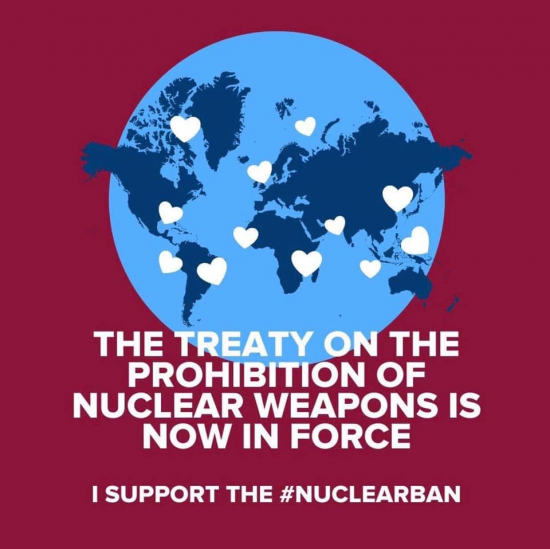
With widespread disappointment in recent Nuclear Non-Proliferation Treaty (NPT) conferences which failed to produce the customary summary or outcome document, the TPNW (also called the “ban treaty”) has gained widespread support from the majority of nonnuclear countries. Entering into force in January 2021, the TPNW prohibits all aspects of development, testing, production, possession, transfer, use or threat to use nuclear weapons. To date, 70 countries have ratified the treaty, including South Africa, Austria, Thailand, New Zealand, Ireland, Fiji, Kazakhstan, Mexico and the Philippines. Additionally, Indonesia, Brazil, and more than 20 other nations around the world are in the process of ratifying the treaty.
In late 2023, at the Second Meeting of States Parties to the TPNW, nonnuclear states challenged the theory of nuclear deterrence, rejecting the framing of security policies based on the threat to destroy humanity. Nuclear-armed nations and their client states dismiss this idea, arguing that the TPNW is counter to their security interests. In response, Shelden said ban treaty proponents ask, “What about our security interests?”
Shelden says the vast majority of the world does not believe that nuclear weapons ensure security, and that wars in Ukraine, Gaza, and elsewhere actually demonstrate that the notion of nuclear weapons preventing conflict is a “fallacious idea.” Rather, they embolden nuclear armed states to proceed with conflicts and violence, said Shelden. “The only thing that deterrence really deters is disarmament.”…………………………………………………………………… more https://truthout.org/articles/are-nuclear-armed-nations-entering-a-new-arms-race-in-2024-experts-weigh-in/
Documentary ‘Downwind’ shows deadly consequences of nuclear testing on tribal lands
OPB, By Lillian Karabaic (OPB) and Winston Szeto (OPB), Jan. 22, 2024
Western Shoshone Principal Man Ian Zabarte, who lost his family members to diseases caused by radiation exposure, says it amounts to racism against Native Americans that the U.S. government detonated more than 900 atomic bombs on his ancestors’ land in secret from 1951 to 1992.
On Jan. 7, the film “Oppenheimer” snagged five Golden Globe awards. It’s a blockbuster directed by Christopher Nolan about the atomic bombs dropped on Hiroshima and Nagasaki in Japan in 1945.
But flying under the radar is a documentary called “Downwind,” another movie about nuclear weapons.
Mark Shapiro is the co-director of “Downwind,” he lives in Portland.
Ian Zabarte from Las Vegas is the Principal Man of the Western Bands of the Shoshone Nation of Indians, and is featured in the documentary.
They joined OPB’s “Weekend Edition” host, Lillian Karabaic, to discuss “Downwind” and the tragedy that inspired the documentary.
TRANSCRIPT.
Mark Shapiro: So we came across a pretty remarkable story. We found out that during the Cold War and into the nineties, from 1951 to 1992, the United States detonated 928 nuclear weapons at the Nevada Test Site, which is about an hour from Las Vegas. And we found that to be remarkable, and the radiation from all those tests impacted communities downwind.
Lillian Karabaic: You co-produced this documentary with Douglas Brian Miller. The documentary came out last summer around the same time as “Oppenheimer.” Can you tell me how you both came up with the idea to make the film and explore that connection?
Shapiro: Both of our families had cancer in our families and were impacted deeply by cancer. And, we felt like this shouldn’t be breaking news, that people should really know that for 40 years in one location, they tested a hundred nuclear weapons larger than Hiroshima and Nagasaki combined in some cases, and then over 800 underground weapons tests that also vent into the communities. And I think the biggest thing that surprised us, too, was this giant swath of land the size of Rhode Island, 1,350 square miles, is deeded Shoshone land. So that was another topic that we thought the government really took part in an unforgivable era, and we wanted to expose that.
Karabaic: Ian, one of the things that Mark just mentioned was that the Nevada Test Site sits right on your ancestors’ land, and the U.S. government launched more than 900 tests there. How could that happen?
Ian Zabarte: Well, the United States entered into treaty relationships with the Western Shoshone, the Western bands of Shoshone Nation of Indians in 1863. And that was a time when America’s need was great. So we all ourselves with the union, with the North, to help prosecute the war against the South, our lands, and our resources continue to make this nation the great land it is. Our lands bind this nation together, not just Shoshone, but all tribes and the treaties we entered into.
So, what happened was the United States came into our country in secret. They developed the US nuclear facilities, and they came to our country to test the bombs that they built, and they did this in secret. They didn’t ask our consent. They didn’t tell us what was happening, and we didn’t know the problem. That secrecy is counter to democracy, and we’re all not just the Shoshone; we’re all downwinders, and we’re all living with the burden of the adverse health effects that are known to be plausible from exposure to radiation, in this case, from radioactive fallout……………………………………………………………………………………………….. more https://www.opb.org/article/2024/01/21/documentary-downwind-nuclear-test-site-nevada-mark-shapiro-shoshone-nation-ian-zabarte/
1 This Month
23-25 October – on Zoom – World BEYOND War’s annual global conferenc


Shut down the radiation-damaged Heysham nuclear reactors now
To see nuclear-related stories in greater depth and intensity – go to https://nuclearinformation.wordpress.com

Say No to NASA’s Reckless Nuclear Reactor on the Moon
Say No to NASA’s Reckless Nuclear Reactor on the Moon

-
Archives
- October 2026 (231)
- September 2026 (339)
- August 2026 (330)
- July 2026 (355)
- June 2026 (287)
- May 2026 (306)
- April 2026 (356)
- March 2026 (251)
- February 2026 (267)
- January 2026 (308)
- December 2025 (358)
- November 2025 (359)
-
Categories
- 1
- 1 NUCLEAR ISSUES
- business and costs
- climate change
- culture and arts
- ENERGY
- environment
- health
- history
- indigenous issues
- Legal
- marketing of nuclear
- media
- opposition to nuclear
- PERSONAL STORIES
- politics
- politics international
- Religion and ethics
- safety
- secrets,lies and civil liberties
- spinbuster
- technology
- Uranium
- wastes
- weapons and war
- Women
- 2 WORLD
- ACTION
- AFRICA
- Atrocities
- AUSTRALIA
- Christina's notes
- Christina's themes
- culture and arts
- Events
- Fuk 2022
- Fuk 2023
- Fukushima 2017
- Fukushima 2018
- fukushima 2019
- Fukushima 2020
- Fukushima 2021
- general
- global warming
- Humour (God we need it)
- Nuclear
- RARE EARTHS
- Reference
- resources – print
- Resources -audiovicual
- Weekly Newsletter
- World
- World Nuclear
- YouTube
-
RSS
Entries RSS
Comments RSS

