What Does Amazon Want With Nuclear?
Microsoft signed a deal with Constellation to supply power to data centers in Virginiaand hired an official from the Tennessee Valley Authority to be its director of nuclear and energy innovations, while Microsoft founder Bill Gates and Sam Altman, the head of Microsoft-backed OpenAI have both invested in nuclear startups, as has Google.
The tech giant’s $650 million deal with Talen Energy has a lot to unpack.
Heat Map MATTHEW ZEITLIN•, MARCH 13, 2024
When Talen Energy, which owns a 90% interest in the Susquehanna nuclear power plant in Northeastern Pennsylvania, announced it was selling a data center site adjacent to its power plant to Amazon Web Services, it raised some eyebrows in the energy world. The surprise was not because a large tech company made a big deal with a carbon-free power provider, or even that a tech company made a deal to buy power generated by a nuclear power plant. It was because Amazon was making this deal.
Amazon is a massive buyer of renewable power — it claims to be the world’s largest and says it’s responsible for 28 gigawatts of clean energy capacity — signing contracts with new wind and solar projects all over the world.
But a divide has opened up among tech giants when it comes to energy, with Amazon on one side and Alphabet and Microsoft on the other. The difference hinges on how much it matters where and when the new carbon-free power a company buys in order to match its electricity use.
What’s odd about the Talen deal is that it fits awkwardly into either approach, especially Amazon’s. Amazon does not count nuclear towards its renewable power goals, and in any case, it’s not a “new” source of carbon-free power. Instead, it allows Amazon to siphon somewhere between 480 and 960 megawatts of capacity from the 2,500 megawatt plant.
“Amazon needs power, they’re getting it at cheap rates. They don’t even want to talk about it like a climate thing,” Mark Nelson, the founder of Radiant Energy Group, told me.
In the past decade or so, technology companies have gone on a clean-power buying spree, funding new wind and solar projects all over the world. But there has been a divergence in what is thought to be the best way to go about it.
In 2019, Amazon announced a goal to add enough renewable power to the grid to match its own emissions by 2030 (since moved up to 2025) and to reach net zero by 2040.
Google has been 100% renewable in terms of buying clean power in the same amounts that it consumes since 2017. So in 2020, it set a new goal: to “run on 24/7 carbon-free energy on every grid where we operate by 2030.” This would mean not just matching total renewable purchases with total emissions, as Amazon is seeking to do, but also trying to get every hour ofdata center operation “matched” with an hour of renewable generation on the same grid.
Microsoft has a similar goal, and as a result, both companies have shown much more interest in nuclear power of late than is typical in the technology world……
Microsoft signed a deal with Constellation to supply power to data centers in Virginiaand hired an official from the Tennessee Valley Authority to be its director of nuclear and energy innovations, while Microsoft founder Bill Gates and Sam Altman, the head of Microsoft-backed OpenAI have both invested in nuclear startups, as has Google.
Amazon’s approach — which it shares with several other large companies, including Meta — is not to match 24 hours of its operations with clean power bought locally, but rather to develop and purchase new wind and solar at the same scale of the power it consumes, especially in areas with dirty grids, thus matching the emissions from its consumption with the emissions reductions of new renewables projects. While a 24/7 matching approach may be naturally complementary with nuclear power, Amazon’s strategy doesn’t require it.
“We believe a focus on emissions is the fastest, most cost-effective and scalable way to leverage corporate clean energy procurement to help decarbonize global power grids at the fastest pace,” an Amazon spokesperson told me. “This includes procuring renewable energy in locations and countries that still rely heavily on fossil fuels to power their grids, and where energy projects can have the biggest impact on carbon reduction.”
Contracting out new renewable energy projects can have more bang for your buck in dirty grids, according to proponents of the Amazon philosophy, known as carbon matching. The hypothesis is that a renewable project in a fossil fuel-heavy grid will displace more dirty power than one that’s located near a datacenter in an already relatively clean grid like California or Washington State……………… https://heatmap.news/technology/amazon-nuclear-talen-energy—
TODAY. AUKUS nuclear pact – a lame duck?


What is AUKUS? It’s a weird nuclear pact – loftily described as a trilateral security pact for the Indo-Pacific region.
In reality it’s an agreement made without the knowledge of the Australian people, without discussion in Parliament , to make Australia pay close to $400 billion for second-hand nuclear attack submarines, including their radioactive trash.
How did this agreement come about?

In 2021, Australia’s then Prime Minister, Scott Morrison was a Trump-like figure, basically incompetent, but willing to do anything to get his face on the international media. He organised this extraordinary agreement, much to the joy of the nuclear lobby and Western war-hawks in general.
Morrison caused an international incident, in breaking Australia’s contract with France for non-nuclear submarines, (which would be much better suited for Australia’s coastal security monitoring”)
Is there opposition in Australia to this costly boondoggle?
Yes, but not enough. With the media about 70% owned by Murdoch outlets, the Australian public was fed a steady diet of what a threat China is to us, and how the AUKUS nuclear submarine will save us and blah blah.
And then, we got a new Prime Minister – Labor’s Anthony Albanese, (who has a history of opposition to nuclear). It was a national sigh of relief to get rid of the narcissistic and unpredictable Morrison. But ’twas too much to hope that Albanese would have the guts to stand up to the USA, or indeed to appear “weak” to the Australian public.
What is the present situation with AUKUS?
Well, apart from the misgivings of Australia’s near neighbours, like Indonesia, and the Nuclear-Free Zone, now there’s even trouble in the USA camp. On 12 March came the Tuesday release of the Biden administration’s 2025 defence budget request, – with reduced funding, well below the production rate of 2.33 subs a year the US says is necessary to sell any submarines to Australia. They got cold feet about the deal, as the USA is struggling to build the nuclear submarines that it needs for itself.
Meanwhile the American opposition, whatever you think of Donald Trump, is at the moment less keen on the idea of waging war against China. I mean – they probably do want to, – but they don’t like spending the money on making military stuff for another country.
There are, of course, other problems with the AUKUS nuclear submarine plan. Like the fact these subs will almost certainly be obsolete before they ever get under the water. China, with its shallow coastal waters, is making lots of small drones , that could detect and destroy these nuclear submarines. The AUKUS sub and its peers are intended for surveillance only. but they could be fitted with nuclear warheads. Perhaps that’s the plan. Who knows?
Meanwhile – is there a chance that Australia could avoid this costly boondoggle? And actually have the money to meet some real needs?

Why the US is trying to imprison Assange: Report from inside the Court

But even if what the United States is saying were true, these documents were not published first by Assange. John Young, the owner of a website called cryptome.org testified to the court that he was the one who published the documents first, and the United States never prosecuted him or asked him to take them down.
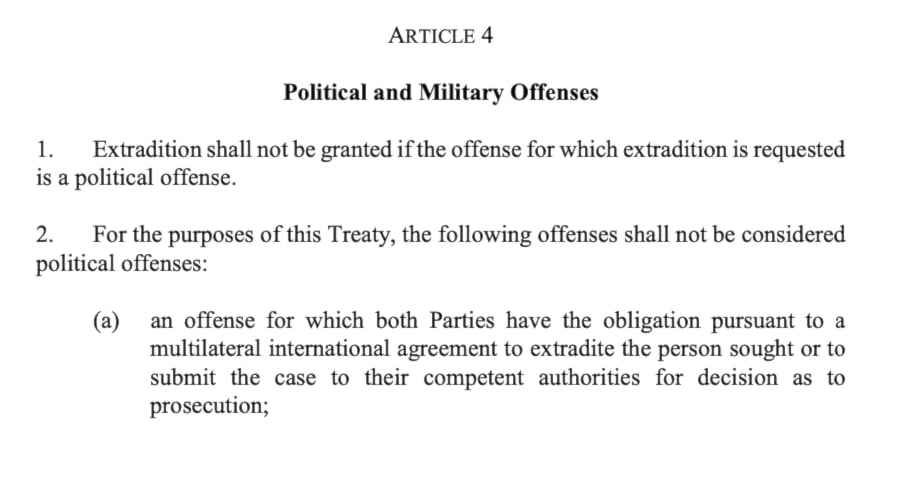
Extraditions for political offenses are forbidden under Article 4 of the US-UK Extradition Treaty 2003
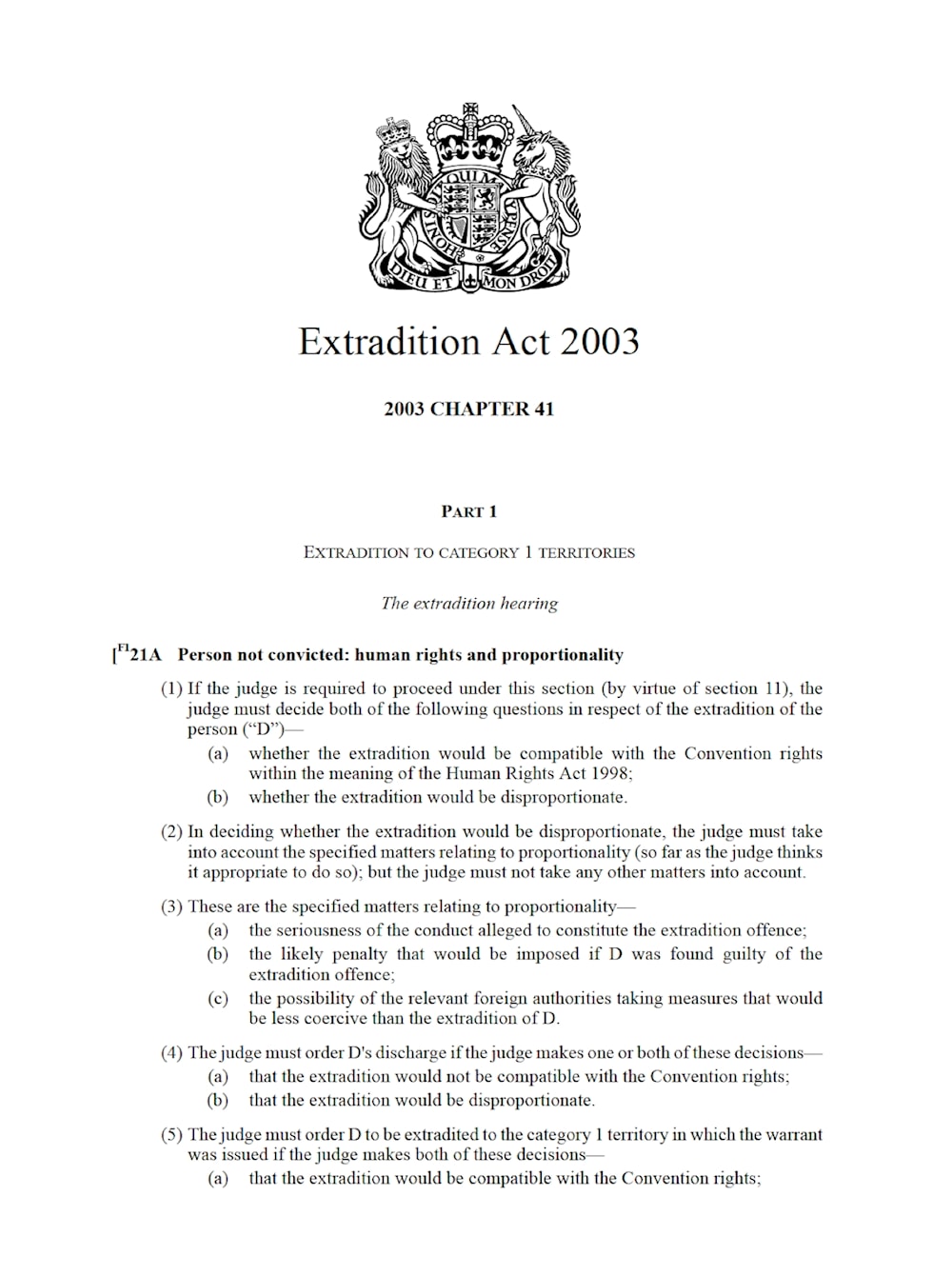
The Extradition Act, which is the implementation of the US-UK treaty inside British law, is missing this section. This is likely due to the fact it was passed at the height of the “War on Terror” in 2003, giving the Americans carte blanche to snatch people, drag them to the US and throw them in dungeons
Richard Medhurst Al Mayadeen English, 7 Mar 2024, https://english.almayadeen.net/articles/analysis/why-the-us-is-trying-to-imprison-assange–report-from-inside
Richard Medhurst is a British journalist who has covered Julian Assange’s extradition case from inside the court since 2020. In this article, he explains what took place in the latest hearings, why the United States is trying to extradite the WikiLeaks founder, and why everyone should care.
Julian Assange is an Australian journalist in the United Kingdom, and the founder of WikiLeaks. He published documents that were given to him by a US soldier called Chelsea Manning, which showed US war crimes in Iraq, Afghanistan, and much more.
The United States want to extradite Assange from the UK to America, and put him on trial for publishing these classified documents. They are threatening him with 175 years in prison.
The reason this case is so serious is because it essentially makes journalism illegal.
The United States claims Assange asked Manning for classified documents and that this is a crime. It’s not.
The US alleges that Assange having classified documents in his possession and publishing them is a crime. It’s not.
Asking for classified documents; protecting sources, these are things journalists do every single day around the world.
But because these files were so embarrassing to the United States and exposed the brutality of their war crimes, they are threatening Assange with almost two centuries in prison; and to do it, they are accusing him of being a “spy” and a “hacker”, charging him with 17 counts under the “Espionage Act”, and with one count of “Conspiracy to Commit Computer Intrusion”.
The goal of this indictment is to make an example out of Assange, and make other journalists afraid to publish things that the public has a right to know.
If extradited, Assange would be placed in the worst prison conditions imaginable, “Special Administrative Measures” (or SAMs): A strict regime of solitary confinement, no contact with other prisoners allowed, and barely any contact with your family. SAMs are internationally recognized as torture. Julian would be sent to the worst prison in America, ADX Florence, a super-maximum security facility in Colorado.
On January 4, 2021, British judge Vanessa Baraitser blocked Assange’s extradition because US prison conditions would be so oppressive in his current state as to drive him to suicide.
Nevertheless, despite blocking the extradition on health grounds, she agreed with all the political and trumped-up charges.
I have attended all of Assange’s court hearings and saw the smears against him debunked by dozens of expert witnesses. But the judge still chose to side with the United States. She chose to essentially criminalize journalism, even drawing dangerous equivalences between the US Espionage Act and Britain’s Official Secrets Act (OSA).
After this, the United States went to the English High Court to appeal her ruling and won by providing empty promises that they would supposedly treat Assange well– even though the United States has a history of violating extradition assurances. I exposed this when I published classified documents from David Mendoza’s extradition from Spain to the US, a case previously cited in court by Julian’s lawyers.
After the US succeeded in overturning the lower court’s ruling in Dec 2021, there was only one thing left: A signature from the Home Secretary, who allowed the extradition to go ahead.
The above is everything that took place between 2020 and 2024, which brings us to the latest hearings at the Royal Courts of Justice in February 2024.
Point 1: To appeal the ruling of the lower court from Jan 4, 2021.
Assange’s lawyers argued that the judge was correct to block Assange’s extradition on health grounds, but she was wrong to agree with all the political charges (equating him with a “hacker” and a “spy”).
They’re saying very plainly: This case is undemocratic, it criminalizes journalism, and doesn’t take into account the fact that the documents Assange published expose enormous US war crimes that the public had the right to know about.
(See for example the “Collateral Murder” video published by Julian Assange’s WikiLeaks: Footage from a US gunship crew laughing as they slaughter Iraqi civilians, among them children and reporters).
Another claim made by the United States is that Assange “harmed informants” by publishing unredacted cables. Ironically, this was proven false by the United States’ own military when they court-martialed Chelsea Manning (the soldier that gave the files to Assange). The US military couldn’t find a single example of anyone having been harmed by the disclosures.
The assertion by the United States that Julian Assange simply published all these documents without censoring or redacting names simply isn’t true: I listened to many journalists tell the court how they spent countless hours meticulously redacting names with Assange.
Assange’s lawyers are also arguing that the judge in the lower court failed to undertake a balancing act. She blindly accepted the United States’ premise that the lives of informants– who weren’t even harmed– are more important than the people killed and tortured by the United States. This is tantamount to saying: The United States should be allowed to continue committing these war crimes in secret; that it’s somehow okay for them to butcher people in Iraq and Afghanistan, and the public have no right to know.
But even if what the United States is saying were true, these documents were not published first by Assange. John Young, the owner of a website called cryptome.org testified to the court that he was the one who published the documents first, and the United States never prosecuted him or asked him to take them down.
This demonstrates that the whole case against Assange is selective, political, and has nothing to do with the law.
Assange’s lawyers are also arguing that the judge in the lower court failed to undertake a balancing act. She blindly accepted the United States’ premise that the lives of informants– who weren’t even harmed– are more important than the people killed and tortured by the United States. This is tantamount to saying: The United States should be allowed to continue committing these war crimes in secret; that it’s somehow okay for them to butcher people in Iraq and Afghanistan, and the public have no right to know.
But even if what the United States is saying were true, these documents were not published first by Assange. John Young, the owner of a website called cryptome.org testified to the court that he was the one who published the documents first, and the United States never prosecuted him or asked him to take them down.
This demonstrates that the whole case against Assange is selective, political, and has nothing to do with the law.
The Espionage Act that Assange is being charged under was created during World War I, in 1917. It has always been used as a political tool against dissidents such as Eugene Debs, or whistleblowers like Daniel Ellsberg and Edward Snowden, who exposed the true extent of the US war in Vietnam, and NSA mass surveillance.
If you’re charged under the Espionage Act, you’re also forbidden from arguing a public interest defense. This means that even if you expose colossal government crimes, you still go to prison.
Point 2: The Home Secretary was wrong to allow the extradition
This constitutes the second part of Assange’s appeal: It is illegal in Britain to extradite someone to another country, knowing they could face the death penalty.
If the Home Secretary, who has the final say on extraditions, is aware of such a risk, they are compelled to bar the extradition.
It is inconceivable that Priti Patel was unaware of who Julian Assange is, and the likelihood he would be killed in the United States. Once in US jurisdiction, the US could pile on additional charges, or simply execute him, as espionage is a capital offense.
Even without a specific death sentence, at 52 years old, even a 30-year bid is akin to a death sentence.
The hollow assurances given by the United States do not preclude the death penalty. And on top of that, the Home Secretary didn’t even bother asking for assurances that would.
So how could the Home Secretary agree to send Assange to a foreign country that so clearly wants to see him dead?
Mike Pompeo, who back then was head of the CIA, and then-president Donald Trump, launched this legal case against Julian Assange. In the past, Donald Trump had called for Assange to be given the death penalty, while Mike Pompeo proclaimed Assange “has no First Amendment rights”. After WikiLeaks published a trove of CIA documents, dubbed the Vault 7 files, Mike Pompeo declared war on WikiLeaks by publicly labeling it a “non-state hostile intelligence service”
All these political denunciations of WikiLeaks and Assange were then followed up with threats against him and his family. As we heard in court in 2020 from protected witnesses, the CIA had drawn up plans to potentially kidnap or assassinate Julian.
The United States is accusing Julian Assange of “espionage”. Normally, this is where the case should be thrown out, because espionage is considered a textbook political offense. And it is forbidden to extradite someone for a political offense under the US-UK Extradition Treaty, Art 4.
Customary extradition treaties have always forbidden extradition for political offenses such as “espionage” and “treason”. And this line of defense has been used before in court to successfully block extraditions.
- Extraditions for political offenses are forbidden under Article 4 of the US-UK Extradition Treaty 2003
Here is where the problem arises:
The Extradition Act, which is the implementation of the US-UK treaty inside British law, is missing this section. This is likely due to the fact it was passed at the height of the “War on Terror” in 2003, giving the Americans carte blanche to snatch people, drag them to the US and throw them in dungeons.
At the time of its passage, many criticized the Extradition Treaty as being extremely one-sided in favor of the United States.
No matter how you look at Assange’s case, it is unfair and illegal.
The United States wants to prosecute Julian Assange under US law, but at the same time deny him any protections under US law, such as free speech. If Assange has no First Amendment rights as a foreign national, then how can he be punished as a foreign national – who is not even in the US? This is such a flagrant double standard, and selective application of the law.
The European Convention on Human Rights (ECHR) is incorporated into British law through the Human Rights Act. Upon examination, it is clear that Julian’s rights are being flagrantly violated
Article 5 protects one from arbitrary detention.
Because this is a political case, it would be a violation of the Extradition Treaty to send Julian to America. Therefore, he has no reason to be in prison right now, and is therefore being arbitrarily detained in violation of his Article 5 rights.
Article 6 guarantees the right to a fair trial.
We know the United States spied on Assange’s conversations with his lawyers when he was inside the Ecuadorian embassy; stole his electronic devices; and collected medical and legal records.
In 2020, I sat in court with Fidel Narvaez, the former Consul to the Ecuadorian embassy in London. We listened to the submissions of two protected witnesses who confirmed they had spied on Assange because the security company they worked for, UC Global, had been contracted by the CIA to do so. They also discussed plans to potentially kidnap and poison Julian Assange and harvest DNA from his baby.
To spy on someone’s privileged conversations with their lawyers, and to use tainted evidence in court is scandalous beyond words, and violates the fundamentals of due process in any jurisdiction. Any judge would have thrown this case out from day one.
We also know Assange will not get a fair trial in America because the jury will be selected from a pool of people who work for the CIA, NSA, or have friends and family working in the intelligence community. These are the very same people whose crimes Julian Assange exposed.
The court in Virginia that issued the charges and would hold this trial is used specifically for this reason; because the jury is biased and the government knows it can’t lose. It is already 100% guaranteed that he will get convicted and go to prison.
Additionally, the United States could use secret evidence against Julian Assange, that he wouldn’t even be allowed to view due to it being “classified”.
Article 7 protects one from being punished retroactively. The case against Julian Assange is unprecedented: No publisher in America has ever been prosecuted, let alone convicted for publishing classified documents.
This case criminalizes journalism, and therefore violates Article 10, which guarantees freedom of expression.
Assange’s lawyers went over the ECHR repeatedly because it is incorporated into British law, meaning the court is obliged to follow it. Not only that, but this was their way of hinting to the judges: If you don’t give us permission to appeal, we will go to the European Court of Human Rights (ECtHR) in Strasbourg, and that court will look upon your decision unfavorably.
(The United Kingdom is a founding and current member of the European Council, which is separate from the European Union).
Assange’s lawyer, Mark Summers, argued very clearly: The Strasbourg court will see that a) these US war crimes were real; b) they were happening on the ground at the time, and; c) by publishing these documents Assange altered the United States’ behavior: The helicopter massacres like in the “Collateral Murder” video stopped, and the Iraq war came to an end.
Assange’s team put together a very compelling defense during this week’s hearing.
Continue readingMOLTEX nuclear reactors: The whole thing is a scam, wasting tax payer money again.
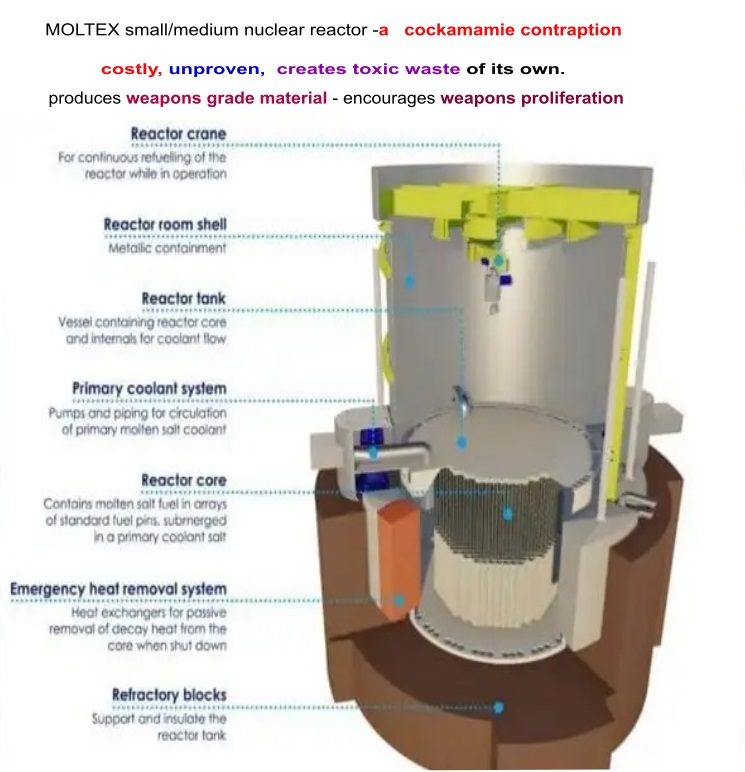

14 Mar 24
Why this pyro-reprocessing? Vitrification is the proven and researched method for reprocessed nuclear fuel waste. The U.S. NUCLEAR WASTE TECHNICAL REVIEW BOARD states, ” HLW is vitrified by mixing it with a combination of silica sand and other glass-forming chemicals, heating the mixture to very high temperatures [approximately 1,150°C (2,100°F)] until it melts, and pouring the molten material into stainless steel canisters where it cools to form a glass. Vitrification is used in several countries to immobilize HLW because it has advantages over other modes of treatment. It is a well-demonstrated technology resulting from more than 40 years of industrial experience, it can be used for a wide range of HLW compositions, it is a continuous process that can be applied to large volumes of HLW, and the resulting glass product is chemically durable in many geologic disposal environments.” https://www.nwtrb.gov/docs/default-source/facts-sheets/vitrified_hlw.pdf?sfvrsn=18
A soluble corrosive salt from pyro-reprocessing is not an acceptable wasteform.
It is important to realize even with glass vitrification there will still be an off gas waste stream containing the volatiles such as Tc99, I131 and C14, the major contributors to dose in the Seaborn EIS. There needs to be extensive research done on immobilization on the volatile off gas reprocessed waste stream.
Why is it that for reprocessed waste disposal the volatile, mobile, major contributors to dose consequence are ignored?
In fact the cost and feasibility of waste disposal and decommissioning in general is never properly accounted for in the development of nuclear reactors. New reactors are not designed to make decommissioning feasible without huge cost and extensive worker radiation exposure. This is short sighted madness that the nuclear industry is allowed to get away with.
Guess what? There is no nuclear waste, no nuclear proliferation and no possible nuclear meltdown from the much cheaper solar wind and deep geothermal power options. Is this not obvious? Yet government money (our money) is poured into nuclear energy. Did the public have a say in this? No expenditure without representation? Can we dump the reactors into Boston harbour?
Conditions inside Fukushima’s melted nuclear reactors still unclear 13 years after disaster struck
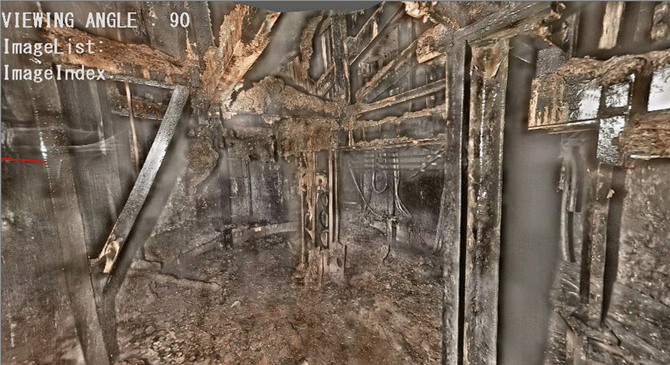
The contents of the three reactors is still largely a mystery. Little is known, for instance, about the melted fuel’s condition or exactly where it’s located in the reactors. Not even a spoonful of the fuel has been removed
About 880 tons of melted nuclear fuel remain inside the three damaged reactors, and Japanese officials say removing it would take 30-40 years. Experts call that timeline overly optimistic. The amount of melted fuel is 10 times that removed from Three Mile Island following its 1979 partial core melt.
MARI YAMAGUCHI, TOKYO, THE ASSOCIATED PRESS, March 11, 2024, https://www.theglobeandmail.com/world/article-conditions-inside-fukushimas-melted-nuclear-reactors-still-unclear-13/—
Japan on Monday marked 13 years since a massive earthquake and tsunami hit the country’s northern coasts. Nearly 20,000 people died, whole towns were wiped out and the Fukushima Daiichi nuclear power plant was destroyed, creating deep fears of radiation that linger today. As the nation observes the anniversary, the AP explains what is happening now at the plant and in neighboring areas.
What happened 13 years ago?
A magnitude 9.0 earthquake struck on March 11, 2011, causing a tsunami that battered northern coastal towns in Iwate, Miyagi and Fukushima prefectures. The tsunami, which topped 15 meters (50 feet) in some areas, slammed into the nuclear plant, destroying its power supply and fuel cooling systems, and causing meltdowns at reactors No. 1, 2 and 3.
Hydrogen explosions caused massive radiation leaks and contamination in the area.
The operator, Tokyo Electric Power Company Holdings, says that the tsunami couldn’t have been anticipated. Government and independent investigations and some court decisions have said the accident was the result of human error, safety negligence, lax oversight by regulators and collusion.
Japan has since introduced stricter safety standards and at one point shifted to a nuclear energy phaseout. Prime Minister Fumio Kishida’s government reversed that policy and has accelerated restarts of workable reactors to maintain nuclear power as a main source of Japan’s power supply.
A deadly Jan. 1 earthquake in Japan’s northcentral region destroyed many homes and roads but didn’t damage an idled nuclear power plant. Even so, it caused worry that current evacuation plans that solely focus on radiation leaks could be unworkable.
The nation marked a moment of silence at 2:46 p.m. Monday, with Kishida attending a memorial in Fukushima.
What happened to people in the area?
About 20,000 of more than 160,000 evacuated residents across Fukushima still haven’t returned home.
Decontamination work before the Tokyo Olympics meant to showcase Fukushima’s recovery led to the elimination of some no-go zones, but they remain in seven of 12 towns that had been fully or partially off-limits.
In Futaba, the hardest-hit town and a co-host of the Fukushima Daiichi plant, a small area was opened in 2022. About 100 people, or 1.5% percent of the pre-disaster population, have returned to live. The other host town, Okuma, which along with Futaba sacrificed part of its land to build an interim storage site for nuclear waste gathered from the decontamination, has seen 6% of its former residents return.
Annual surveys show the majority of evacuees have no intention of returning home, citing lack of jobs, schools and lost communities, as well as radiation concerns.
Residents who have raised radiation worries or linked it to their health problems have come under attack for hurting Fukushima’s reputation.
The disaster-hit towns, including those in Iwate and Miyagi prefectures, have seen sharp population drops.
Fukushima Gov. Masao Uchibori said on NHK TV that a growing number of young people want to move to Fukushima to open businesses or help in the reconstruction, and he expressed hope that more residents will return.
What about treated radioactive water discharges?
Last August, Fukushima Daiichi began discharging treated water into the sea, and is currently releasing a fourth 7,800-ton batch of treated water. So far, daily seawater sampling results have met safety standards. The plan has faced protests from local fishers and neighboring countries, especially China, which has banned Japanese seafood imports.
Fukushima Daiichi has struggled to handle the contaminated water since the 2011 meltdowns. TEPCO says the start of the process is a milestone and removing the tanks is crucial to make space for facilities needed as decommissioning progresses.
The contaminated cooling water is pumped up, treated and stored in about 1,000 tanks. The government and TEPCO say the water is diluted with massive seawater before release, making it safer than international standards.
What about local fishing?
Despite earlier fears that the water discharge would further hurt Fukushima’s hard-hit fishing industry, they have not damaged its reputation domestically. China’s ban on Japanese seafood, which mostly hit scallop exporters in Hokkaido, apparently prompted Japanese consumers to eat more Fukushima seafood.
Sampling and monitoring by the International Atomic Energy Agency have also boosted confidence in local fish.
Fukushima fishing returned to normal operations in 2021, and the local catch is now about one-fifth of its pre-disaster level because of a decline in the fishing population and smaller catch sizes.
The government has earmarked 10 billion yen ($680 million) to support Fukushima fisheries.
Any progress removing melted fuel?
The contents of the three reactors is still largely a mystery. Little is known, for instance, about the melted fuel’s condition or exactly where it’s located in the reactors. Not even a spoonful of the fuel has been removed.
About 880 tons of melted nuclear fuel remain inside the three damaged reactors, and Japanese officials say removing it would take 30-40 years. Experts call that timeline overly optimistic. The amount of melted fuel is 10 times that removed from Three Mile Island following its 1979 partial core melt.
Robotic probes have glimpsed inside the three reactors, but their investigation has been hampered by technical glitches, high radiation and other complications.
It’s crucial for officials to understand the data from melted debris so they can make a plan to remove it safely. TEPCO aims to get the first sample out later this year from the least-damaged No. 2 reactor.
TEPCO has been trying to get the sample by using a robotic arm. Officials have struggled to get the robot past the wreckage, and hope that by October they can use a simpler device that looks like a fishing rod.
The fuel in the worst-damaged No. 1 reactor mostly fell from the core to the bottom of its primary containment vessel. Some of it penetrated and mixed with the concrete foundation, making removal extremely difficult.
In February, the plant made its first drone flight into the primary containment vessel to investigate the melted debris and examine how the fuel initially fell from the core. But a second day of exploration was canceled because a data transmission robot failed.
Is a 2051 completion possible?
The government has stuck to its initial target for a completed decommissioning by 2051, but it hasn’t defined what that means.
The lack of data, technology and plans on what to do with the radioactive melted fuel and other nuclear waste makes it difficult to understand what’s in store for the plant and surrounding areas when the cleanup ends, according to TEPCO’s decommissioning company chief, Akira Ono.
An overly ambitious schedule could result in unnecessary radiation exposure for plant workers and excess environmental damage, experts say.
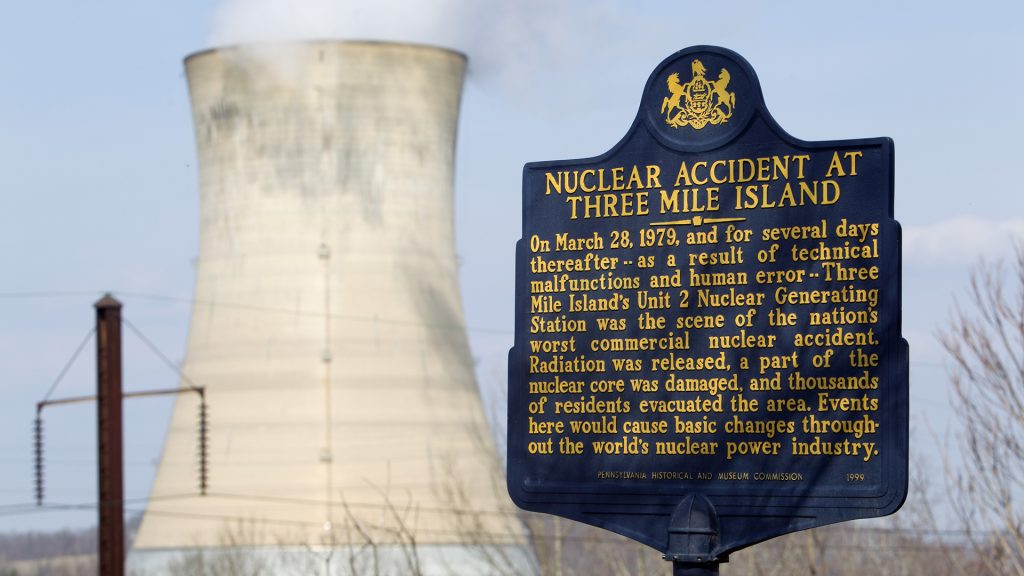
Observing the 45th Anniversary of the Worst U.S. Commercial Nuclear Power Plant Accident.
March 13th, 2024, https://nuclearactive.org/
Thursday, March 28th marks the 45th anniversary of the Three Mile Island nuclear power plant accident in Pennsylvania. A new documentary, “RADIOACTIVE: The Women of Three Mile Island,” tells the harrowing story of the 1979 accident involving the release of radioactive and toxic materials into the air, soils, water and into bodies young and old. As official evacuation orders were delayed, people received much larger radioactive doses than if the evacuation orders were issued immediately.
Forty-five years later four women continue to challenge what the company and government say about the accident.
One review explained how the documentary “uncovers the never-before-told stories of four intrepid homemakers who take their local community’s case against the plant operator all the way to the [U.S.] Supreme Court –- and a young female journalist who’s caught in the radioactive crossfire.”
It also breaks the story of a “radical new health study that may finally expose the truth of the meltdown. For over forty years, the nuclear industry has done everything in their power to cover up their criminal actions, claiming, as they always do, ‘No one was harmed and nothing significant happened.’”
The director of the outstanding documentary is Heidi Hutner. She is a professor of Literature, Sustainability, Women’s and Gender Studies at Stony Brook University New York, and a scholar of nuclear and environmental history, literature, film, and ecofeminism. Hutner chaired the Sustainability Studies Program for six years.
Beginning on March 12th, the documentary is being streamed on Apple + and Amazon Prime for $3.99. Search for The Women of Three Mile Island.
After you watch the film, be sure to register for the historic webinar coming up on Thursday, March 28th at 6 pm Mountain Time with the director Heidi Hutner and her team: Anna Rondon, who is Diné and founder of the New Mexico Social Justice and Equity Institute; Krystal Curley, who is Diné and director of Indigenous Life Ways; Mary Olson, founder of the Gender and Radiation Impact Project; and Professor Mark Jacobson, Stanford University. Cindy Folkers, of Beyond Nuclear, will moderate. The Sierra Club and Beyond Nuclear host the webinar.
In March and April, seven in-person screenings will be held in the U.S. and Canada. CCNS saw the film last weekend at the International Uranium Film Festival in Window Rock, Arizona. It received the Best Investigation Documentary award. We highly recommend watching this story about how the nuclear industry operates and covers up the truth.
EVENTS:……………………………………………….
Nuclear industry wants Canada to lift ban on reprocessing plutonium, despite proliferation risks

The CANDU Owners Group is far from neutral or independent…………… First, Canadian Nuclear Laboratories is a private company owned by a consortium of multi-national companies: AtkinsRéalis (formerly SNC Lavalin), Fluor, and Jacobs. ……...has overseas members, including utilities from China, Pakistan, India, South Korea, Argentina, and Romania. The first three countries are nuclear weapons states that either possess reprocessing plants for military purposes (India and Pakistan) or reportedly divert plutonium extracted from commercial spent fuel for military purposes (China), while South Korea and Argentina have for decades flirted with the idea of reprocessing.
Bulletin, By Gordon Edwards, Susan O’Donnell | March 11, 2024
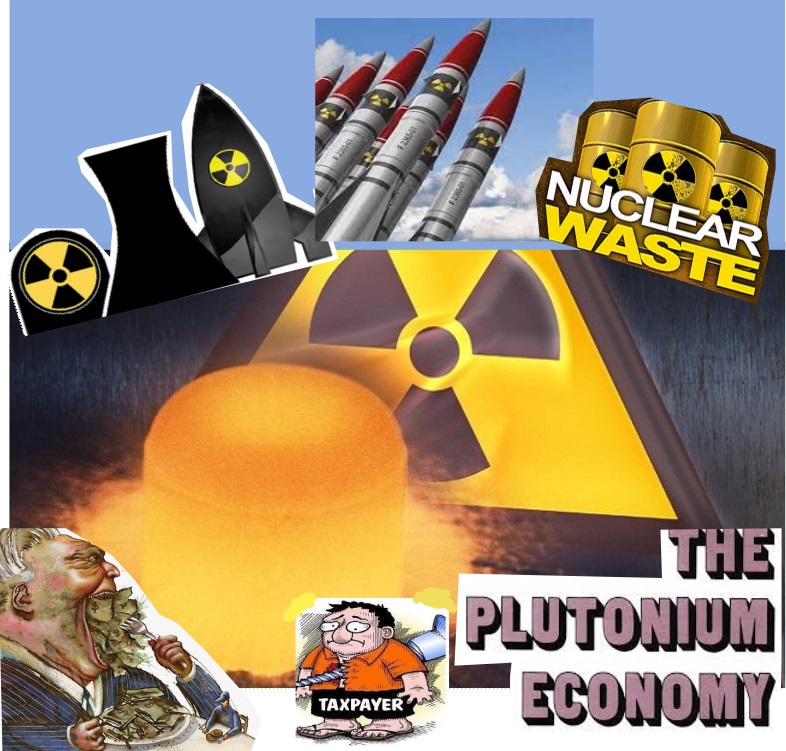
Plutonium is “the stuff out of which atomic bombs are made.” Plutonium can also be used as a nuclear fuel. Reprocessing is any technology that extracts plutonium from used nuclear fuel. In Canada, the nuclear industry seems determined to close the nuclear fuel cycle by pushing for a policy to permit reprocessing—thereby seeking to lift a 45-year-old ban.
In 1977, Canada tacitly banned commercial reprocessing of used nuclear fuel, following the lead of the Carter administration, which explicitly opposed reprocessing because of the possibility it could lead to increased proliferation of nuclear weapons around the world.[1] That unwritten policy in Canada has held sway ever since.[2] New documents obtained through Canada’s Access to Information Act reveal that, behind closed doors, the nuclear industry has been crafting a policy framework that, if adopted, would overturn the ban and legitimize the extraction of plutonium from Canada’s used commercial nuclear fuel.
For over two years, documents show that the Canadian government has held a series of private meetings with industry representatives on this subject, keeping such activities secret from the public and from parliament. This raises questions about the extent to which nuclear promoters may be unduly influencing public policymaking on such sensitive nuclear issues as reprocessing in Canada.[3] But, given the stakes for the whole society and even the entire planet, the public must have a say about nuclear policy decisions…………………………………………………………………………………………………………………………………………………..
Before the ban. Dreams of a plutonium-fueled economy were spawned in 1943-44 by British, French, and Canadian scientists working at a secret wartime laboratory in Montreal, which was part of the Anglo-American Project to build the first atomic bombs. Canada’s first heavy-water reactors were designed by the Montreal team, in part, to produce plutonium for weapons. The team also had hopes that after the war, plutonium might become a dream fuel for the future. They envisioned a “breeder reactor” that could produce more plutonium than it uses, thereby extending nuclear fuel supplies.
For 20 years after the war, Canada sold uranium and plutonium for US bombs. Two reprocessing plants were operated at Chalk River Nuclear Laboratories in Ontario. In addition, all the pilot work on plutonium separation needed to design Britain’s Windscale reprocessing plant was carried out at Chalk River.
After the ban. Although the 1977 ban scuppered AECL’s hopes for commercial reprocessing, plutonium remained the holy grail. In the decades that followed, AECL researchers studying the geologic disposal of high-level radioactive waste clandestinely carried out reprocessing experiments at the Whiteshell Nuclear Research Establishment in Manitoba. Instead of burying used nuclear fuel bundles, the scientists anticipated burying solidified post-reprocessing waste. Meanwhile, AECL scientists at Chalk River fabricated three tonnes of mixed-oxide fuel (MOX) in glove boxes, using plutonium obtained from CANDU fuel reprocessed overseas. In 1996, Prime Minister Jean Chrétien volunteered to import weapons-grade plutonium from dismantled US and Soviet warheads to fuel CANDU reactors. Facing fierce public opposition in Canada, the project never came to pass.
But the dream of a plutonium economy remained. In 2011, a sprawling mural on three walls of the Saskatoon Airport depicted the nuclear fuel chain, from mining uranium to the reprocessing of used fuel to recover “potential energy” before disposing of the leftovers. Although the word plutonium appeared nowhere, reprocessing was presented as the inevitable final step in this vision of a virtuous nuclear fuel cycle. The mural was commissioned by Cameco, the giant Canadian multi-national corporation that helped make the central Canadian province of Saskatchewan into the “Saudi Arabia of uranium.” At the time, Cameco co-owned the largest operating nuclear power station in the world, the eight-reactor Bruce complex beside Lake Huron bordering the United States.
Despite such hopes, it became fashionable to publicly downplay reprocessing as expensive and therefore economically unlikely.[5] But the technology stayed on the books as a possibility, especially in case future generations would want to extract plutonium from used nuclear fuel for re-use before disposing of the remaining radioactive waste.
Back to the future? New Brunswick has one 660-megawatt-electric CANDU reactor at Point Lepreau on the Bay of Fundy in eastern Canada. The plant has been operating for over 40 years. In March 2018, two start-up companies—UK-based Moltex Energy and US-based ARC Clean Technology—offered to build “advanced” (fast) reactors on the same site.
The Moltex design is a 300-megawatt-electric molten salt reactor called “Stable Salt Wasteburner.” It is to be fueled with plutonium and other transuranic elements extracted from CANDU used fuel already stored on that site. Accordingly, the Moltex proposal requires a reprocessing plant in tandem with the reactor. The ARC design is a 100-megawatt-electric liquid sodium-cooled reactor, inspired by the second Experimental Breeder Reactor (EBR-2) operated by the Argonne National Laboratory in Idaho between 1964 and 1994. Although the ARC-100 does not require reprocessing at the outset, its optimal performance requires that the used fuel be recycled, likely through reprocessing.
From the beginning, Moltex claimed its proposed molten salt reactor would “recycle” CANDU used fuel and “burn” it in its molten salt reactor. Moltex claims that this would virtually eliminate the need for a deep geologic repository by turning a million-year disposal problem into a roughly 300-year storage problem. This claim has been flatly rebuffed.[6] Only later did the public learn that the Moltex technology requires reprocessing CANDU used fuel to extract plutonium using an innovative process called “pyroprocessing.” (In pyroprocessing, used fuel is converted to a metal and immersed in molten salt, then the plutonium and other transuranic elements are recovered by passing a current through the salt and collecting the desired products on electrodes.)

ARC Clean Technology maintains that its reactor design is proven by the 30-year operating experience of the EBR-2 reactor, despite differences in size and fuel enrichment.[7] The company, however, says nothing about the intimate connection between breeder reactors and plutonium, nor does it mention the chequered history of liquid sodium-cooled reactors globally—including the Fermi Unit 1 reactor’s partial meltdown near Detroit, the commercial failure of France’s Superphénix, the conversion of a German breeder reactor into an amusement park, or the dismal performance of Japan’s Monju reactor.
For either of the proposed New Brunswick reactors to operate as intended, Canada would need to lift its 45-year-old ban on commercial reprocessing of used nuclear fuel.
Testing the limits. The first sign that Canada’s reprocessing ban might be lifted came in 2019, when the federal government’s Impact Assessment Act exempted specified projects from environmental assessment. The exemption included any reprocessing plant with a production capacity of up to 100 metric tons (of used nuclear fuel) annually—just above the reprocessing capacity required for the Moltex project.[8]
Public calls to explicitly ban reprocessing started shortly after March 2021, when the federal government gave 50.5 million Canadian dollars in funding for Moltex’s project. This project clearly requires reprocessing: Without the plutonium produced by CANDU reactors to fuel its proposed molten salt reactor, the Moltex project can go nowhere.
In addition, Moltex hopes to eventually export the technology or the fuel, or both. Many Canadians are alarmed at the prospect of normalizing the use of recycled plutonium as a nuclear fuel in Canada and abroad.
In 2021, in response to a recommendation by the International Atomic Energy Agency, the Canadian government conducted public consultations to develop a modernized policy on commercial radioactive waste management and decommissioning. Over 100 citizens groups participated, and many called for an explicit ban on reprocessing.
Public attention to the issue of reprocessing grew after nine US nonproliferation experts sent an open letter to Prime Minister Justin Trudeau in May 2021. The letter expressed concern that by funding a spent fuel reprocessing and plutonium extraction project, Canada would “undermine the global nuclear weapons nonproliferation regime that Canada has done so much to strengthen.” …………………..
A second letter sent to Trudeau in July 2021 refuted “misleading claims” that Moltex posted on-line in rebuttal to the first letter. Moltex’s rebuttal claims were quickly taken down. And a third letter authored by one of the US nonproliferation experts was sent in November 2021. None of the government responses to these three letters addressed the core issue, which is the request for an independent review of the proliferation implications of Canada’s funding of reprocessing.
The federal government released its draft policy for radioactive waste management and decommissioning in March 2022, hinting that reprocessing might be permitted in the future. Public interest groups made their opposition to that suggestion very clear. A national steering group coordinated by Nuclear Waste Watch, a Canada-based network of public interest organizations, released an alternative policy proposal that explicitly banned reprocessing. The Council of Canadians, a national advocacy group, sent out an action alert that generated 7,400 letters calling for the explicit prohibition of reprocessing.
The Canadian Nuclear Safety Commission, tasked with the job of licensing Moltex’s proposed reactor, declared that a policy framework for reprocessing is necessary and that such a policy must come from the federal government.[9] Moltex’s Chief Executive Officer, Rory O’Sullivan, observed that Canada was chosen by Moltex because the country had no explicit policy on reprocessing: “Moltex would likely not have come to Canada if a reprocessing policy had been mandated at the time.”
In November 2021, Canada’s Ministry of Natural Resources—the lead federal department on nuclear issues—issued an internal memo entitled “Policy Development on Reprocessing” that refers to a series of planned meetings on reprocessing with industry representatives starting December 1, 2021.[10] The CANDU Owners Group—a nonprofit corporation assembling utilities operating CANDU reactors, Canadian Nuclear Laboratories, and nuclear suppliers—was singled out by the ministry to prepare a policy paper on reprocessing.[11]
The CANDU Owners Group is far from neutral or independent.
First, Canadian Nuclear Laboratories is a private company owned by a consortium of multi-national companies: AtkinsRéalis (formerly SNC Lavalin), Fluor, and Jacobs. The company is currently constructing a government-funded facility with hot cells at Chalk River to conduct research, including on reprocessing and plutonium extraction. Canadian Nuclear Laboratories operates under a “government-owned contractor operated” agreement with Atomic Energy of Canada Limited, the same publicly owned corporation that pushed for commercial reprocessing in the late 1970s.
The CANDU Owners Group also has overseas members, including utilities from China, Pakistan, India, South Korea, Argentina, and Romania. The first three countries are nuclear weapons states that either possess reprocessing plants for military purposes (India and Pakistan) or reportedly divert plutonium extracted from commercial spent fuel for military purposes (China), while South Korea and Argentina have for decades flirted with the idea of reprocessing.
By all evidence, the government of Canada is currently enlisting private entities that favor reprocessing to assist in the development of an industry-friendly policy on reprocessing. And the government does this without involving the public, parliament, or outside experts—all of whom have expressed a keen interest—and repeatedly asked to participate—in plutonium policy discussions. In the process, misleading information about reprocessing is being forwarded to government officials with no other voices to correct the record.[12]
In the most recent move, a dozen US nonproliferation experts wrote again to Prime Minister Trudeau on September 22, 2023, after the release of documents obtained through an access to information request. In their letter, the experts reiterated their concerns that the Canadian government is funding a project that would lead to increase the availability—and therefore potential proliferation—of weapons-usable plutonium for civilian purposes in Canada and beyond.
Democratic deficit. Despite all these developments, there has been no public discussion or parliamentary deliberation about the implications of introducing civilian reprocessing into Canada’s nuclear fuel cycle. Absence of transparency and public debate means the democratic process is being ignored. Yet, the issue is of great public importance because of the taxpayer money invested, proliferation risks involved, and the long-term societal implications of the security measures needed to safeguard nuclear weapons usable materials.
This makes one wonder why it took a group of concerned citizens and an access to information request to find out that, behind closed doors, the nuclear industry has been drafting its own policy to permit commercial reprocessing, expecting its adoption by the government of Canada against all objective criteria of democracy.
n 1976, British nuclear physicist Brian Flowers authored a Royal Commission report to the UK parliament. He wrote: “We regard the future implications of a plutonium economy as so serious that we should not wish to become committed to this course unless it is clear that the issues have been fully appreciated and weighed; in view of their nature we believe this can be assured only in the light of wide public understanding.”
The same precept should apply to nuclear policy in today’s Canada.
Notes…………………………………………………………………. https://thebulletin.org/2024/03/nuclear-industry-wants-canada-to-lift-ban-on-reprocessing-plutonium-despite-proliferation-risks/
Japan’s Nuclear Energy Policy Disaster
The yawning gap between vision and policy reality jeopardizes Japan’s important energy security goals and efforts to decarbonize the energy supply.
By Florentine Koppenborg, March 08, 2024, https://thediplomat.com/2024/03/japans-nuclear-energy-policy-disaster/
The Japanese government is chasing a nuclear mirage 13 years after the Fukushima Daiichi nuclear disaster in March 2011. Government statements in support of nuclear power, such as the recent declaration at COP28 that Japan will triple nuclear energy by 2050, receive much attention. Away from the public spotlight, however, Japan is facing a nuclear energy policy disaster as it struggles to actually return to nuclear energy after the Fukushima nuclear accident.
As the Japanese government pursues a nuclear revival to no avail, the yawning gap between vision and policy reality jeopardizes important energy policy goals such as energy security and decarbonizing energy supply.
The share of nuclear power in Japan’s electricity mix has stagnated between 5 and 8 percent since 2018, and the goal to generate 20–22 percent of electricity from nuclear by 2030 has become elusive. Japan’s fleet of commercial nuclear reactors, once the third largest in the world at 54 units, has diminished to 33 plus two units currently under construction. Restarting these 35 reactors would barely be enough to meet the government’s 2030 targets. However, only 27 reactors are undergoing the safety reviews required for a restart permit. If successful, they can provide about 14 percent of Japan’s electricity mix by 2030, far from the government’s goals.
Actual restart progress is even more bleak, with only 12 reactors back on the grid by early 2024. Plans to start using the Onagawa plant’s reactor number two for electricity generation in May 2024 had to be postponed to September due to delays in additional safety construction work. For the Tokai reactor number two, work on safety measures is scheduled to conclude in September 2024, but it remains to be seen whether construction will finish on time. With the restart process riddled with setbacks and uncertainties, the total number of reactors actually generating electricity looks to increase only marginally over the next few years.
One potential solution to this problem, constructing new reactors, takes at least a decade and risks public backlash as safety concerns linger. The recent Noto earthquake was a reminder of safety risks as the earthquake partly exceeded assumptions made in safety checks and led to questions about the adequacy of emergency evacuation plans. Removing the official 40-year lifespan limit on nuclear reactors – introduced as a major safety lesson after the 2011 nuclear disaster – as part of Japan’s so-called GX (green transformation) strategy that will guide the country’s decarbonization appears as a rather desperate and potentially risky measure. The next generation of modular reactors stressed in the COP28 declaration on nuclear and the GX strategy are not even market-ready technology at the moment.
Japan’s nuclear energy revival is supposed to increase energy security and drive decarbonization. Chasing unattainable goals, however, has the exact opposite effect as the yawning implementation gap is continuously filled with fossil fuel imports.
It is time to embrace the solution at hand: expanding renewable energy capacity.
Increasing energy security has been a major goal of Japan’s energy policy ever since the oil shock in the 1970s. Dependence on fossil fuel imports, already high at 81 percent in 2010, shot up once all of the nuclear power plants were shut down following the Fukushima accident. What brought it down again to about 83 percent in 2021 was not nuclear restarts, but rather an increasing share of renewable energy. Nuclear power and renewable energy have essentially switched places in Japan’s energy mix as renewables increased from 4 percent in 2010 to 11 percent in 2021 and nuclear decreased from 10 percent in 2010 to 3 percent in 2021.
Additional coal and gas imports to fill the nuclear power gap not only keep Japan’s import dependence high, but also have a substantial impact on its greenhouse gas emissions. Aside from a small share of nuclear energy, low-carbon electricity mainly comes from renewables, which have seen an impressive annual growth at about 16 percent since 2012. The remaining 72 percent come from fossil fuels. Once a climate leader in the 1990s, the current nuclear energy disaster solidifies Japan as a fossil fuel champion rather than a decarbonization leader.
In 2024, the Japanese government has an opportunity to turn things around. Japan’s Strategic Energy Plan, revised every three years, is due again. This presents an opportunity for the government to increase its renewable energy target, ideally in line with the international commitment made at COP28 to triple renewable energy capacity by 2050, and to reduce its nuclear power target accordingly. This would be the best way to alleviate Japan’s current nuclear energy policy disaster and to put the country back on track in its pursuit of energy security and decarbonization.
Film poses moral questions about 2011 Fukushima disaster displacement

Japan Times, BY MIE SAKAMOTO, KYODO 12 Mar 24
A new documentary that questions whether it is right to sacrifice a community’s way of life for the betterment of the wider public has revealed the turmoil and hardships faced by those who were displaced in the wake of the 2011 Fukushima nuclear power plant disaster.
“Tsushima: Fukushima Speaks Part 2,” directed by freelance journalist Toshikuni Doi, features the testimonies of people seeking the return of their hometown, which was deemed uninhabitable for a century after the world’s worst nuclear accident since the 1986 Chernobyl meltdown.
The documentary explores the story of a minority group that must endure suffering for the happiness and convenience of others, a theme of global resonance, with Doi, 71, explaining that the film focuses on the impact the accident had on the daily lives of people forced to leave their homes.
Their hometown — Tsushima district in Namie, Fukushima Prefecture — is some 30 kilometers from the Fukushima No. 1 nuclear power plant, which was crippled by the massive earthquake and tsunami on March 11, 2011. Most of its 1,400 former residents remain unable to return due to the contamination left behind by radioactive materials.
The 187-minute film, whose version with English subtitles will be available online for one week from March 11 for audiences outside Japan, delves into people’s memories of their hometown, with many expressing deep affection for their tight-knit rural community, where residents were close to each other.
“Many people don’t care much about nuclear issues,” Doi said in an interview. “But if the film can show the impact the accident had on people’s lives and what they thought about being driven away and losing their hometown, the audience will be drawn to it, even if they are not deeply interested in such issues.”
Many of the film’s 18 interviewees — who took part in Doi’s project of preserving disaster victims’ testimonies for future generations — have special feelings for their hometown. Some shed tears as they spoke about their personal histories and how their lives were changed irrevocably following the disaster.
The film begins with Yoshito Konno, who was among those told by officials of the plant’s operator, Tokyo Electric Power Company Holdings Inc. (Tepco), and the central government in the fall of 2011 that people from Tsushima would likely be unable to return “for the next 100 years.”
“People were speechless,” Konno, 79, says in the film, continuing to say that it made him think there would be “no one left after 100 years,”
which prompted him to start compiling records on the histories of families who had lived in the area.
Kano Sudo, 72, lived in poverty with three children after she divorced her estranged husband. She worked hard at local factories to support her children, but even buying daily rice was a struggle.
“I had even thought about (suicide) with my three children,” she admits in the film, adding that she was only able to get through those times “because of the help of those around us.”
Her neighbors, she says, would routinely feed her kids and watch over them, to prevent them from being led astray as they grew up………………………………………………………………………………………..
“From an economic utility standpoint, the best policy would be to transfer us to another place and set up a compensation system so that we can make a living,” rather than spending massive amounts of the state’s budget so that some hundreds of Tsushima residents can return home, Konno says.
But he goes on to argue that it is wrong to sever the local residents’ ties to their former community while denying their basic rights to joy and fulfillment as human beings — in effect, turning a blind eye to the damage done to each individual whose life was upended.
“It is not only about Tsushima,” Konno says. “This issue should be common to all of Japan and the whole world.”
The film was released in Tokyo on March 2, which will be followed by screenings in other major cities, including in the prefectures of Osaka and Aichi. https://www.japantimes.co.jp/news/2024/03/12/japan/society/japan-fukushima-displacement/
Bridgwater activists shine light on nuclear power in UK
Elizabeth Birt 13th March24, more https://www.bridgwatermercury.co.uk/news/24179056.bridgwater-activists-shine-light-nuclear-power-uk/
There was a lively meeting in Bridgwater discussing the future of US nuclear weapons on British soil.
The Bridgwater Peace Group met at the Bridgwater Railway Club on Tuesday, March 5.
Dr Rowland Dye, a Bristol-based nuclear physicist, provided a comprehensive overview of nuclear power and weaponry in the UK.
He highlighted how the country’s atom bomb production from 1952-63 was more about weapon production than producing ‘clean’ electricity via the Magnox program.
Dr Dye also shone a light on how serious nuclear power accidents, such as Windscale’s 1957 incident and Chernobyl disaster of 1986, have far-reaching and long-term effects unlike conventional electricity generation.
Dr Dye, who formerly worked in a hospital, said he was alarmed when he realised government press reports described the radioactive waste dumped in our oceans as medical waste.
Consequently, he left medicine and pursued activism.
Williton resident Lyn Barlow also delivered a speech that illustrated her personal journey of activism, leading to numerous encounters with the police and prison.
Ms Barlow now utilises art as her form of protest.
Following the speeches, attendees were able to ask questions and network.
Interested parties concerned about conflict and nuclear weaponry in the UK may join future meetings or contact Glen at 07423 786599 for more information.
Shelling continues near Zaporizhzhia Nuclear Power Station
12 March 2024. Modern Power Systems
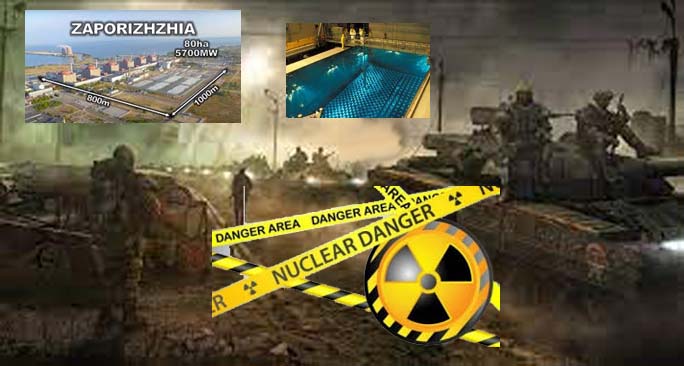
Director general of the International Atomic Energy Agency, Rafael Mariano Grossi, in his 8 March statement Update 215 concerning the situation in Ukraine, reported his meeting with Russian president Vladimir Putin as part of the IAEA’s continuing efforts to help prevent a nuclear or radiological accident during the present conflict.
Mr Grossi said the meeting, on 6 March, was “professional and frank”, with the discussions focused on the paramount importance of reducing the still significant nuclear safety and security risks at the Zaporizhzhya Nuclear Power Plant in southern Ukraine, under Russian control for the past two years.
It was their second meeting, following one in Saint Petersburg in October 2022, and it took place a month after Mr Grossi on 7 February crossed the frontline to travel to the ZNPP for the fourth time during the war. On the way to the plant, he met with Ukrainian President Volodymyr Zelensky in Kyiv……………………………
Military activity
IAEA experts stationed at the ZNPP site have continued to hear explosions and other indications of military activity not far away from the facility. Three times during the week of 4 March they reported hearing several successive explosions within a few minutes, as well as one explosion on 7 march and multiple explosions on 8 March, possibly indicating the use of heavy weapons from an area close by.
On 1 March, the IAEA experts heard an explosion some distance away from the ZNPP. The following morning, the team was informed by the plant that there had been shelling in parkland a few hundred metres away from the city hall administrative building of the town of Enerhodar, where many plant staff live.
Further underlining the fragile nuclear safety and security situation at the ZNPP, the plant remains without back-up external power after the only remaining 330 kV line was disconnected on 20 February. As a result, the ZNPP remains dependent on its only functioning 750 kV power line, out of four such lines available before the war. The IAEA team has informed that the 330 kV line is not expected to be reconnected before 15 March. https://www.modernpowersystems.com/news/newsshelling-continues-near-znpp-11594597
In pre-election messaging, Putin less strident on nuclear war
Japan Times, 14 Mar 24
President Vladimir Putin of Russia took a less strident tone on the possibility of nuclear war in an interview released Wednesday, an apparent attempt to bolster his domestic image as a guarantor of stability before the Russian presidential election this weekend.
In a lengthy interview released by Russian state television, Putin struck a softer tone than in his state-of-the-nation address last month, when he said that the West risked causing the “destruction of civilization” if it intervened more directly in Ukraine. In the interview, Putin described the United States as seeking to avoid such a conflict, even as he warned that Russia was prepared to use nuclear weapons if its “sovereignty and independence” were threatened.
“I don’t think that everything is rushing head-on here,” Putin said when asked whether Washington and Moscow were headed for a showdown. He added that even though the United States was modernizing its nuclear force, “this doesn’t mean, in my view, that they are ready to start this nuclear war tomorrow.”…………………………………………………………………………………………
Asked in the interview released Wednesday whether he had considered using “tactical” nuclear weapons at that point, Putin said that “there was never such a need.”………………………. more https://www.japantimes.co.jp/news/2024/03/14/world/politics/putin-softer-nuclear-tone/
TODAY. Julian Assange, atrocities, nuclear war, AI, “Oppenheimer”, and the whole damn thing.
Julian Assange languishes in his solitary confinement cell for 23 hours a day in a British dungeon. He awaits the decision of the High Court on whether to let him appeal against extradition to the USA., for trial on the trumped up charges of espionage. Doesn’t really matter – even if he wins this one- then his appeal won’t be heard for months. Either way, the USA is killing this man – dragging out the whole abusive process.
It’s an atrocity against an individual. But the, the USA, especially under the Biden administration, (and I’m sure, under a Trump one) – is cool with atrocities.
Indeed – that’s why they’re persecuting Assange – because he exposed the USA’s military atrocities to the world. That is investigative journalism. The USA MUST kill Assange (probably slowly and “respectably”) so that the world will accept that no-one is to call the USA to account for military atrocities.
It’s almost comic – right now the USA is sending aid to starving Gazans with one hand, and with the other hand, sending to Israel weapons and money for the mass killing of Gazans.

America is participating in this atrocity –
and doing the profitable business that it loves most – selling killing machines to the world. I was fascinated to find the USA Naval Institute enthusiastically welcome a new murder toy a “transnational coalition kill chain”, for war against China.
America’s military-industrial-nuclear-complex is ecstatic with this system, already used , in the Navy’s own word in the “kill chain architecture leveraged against Russia”. Now they’re selling it to Taiwan – Link 16 – a system for kinetic warfare which will allow the Taiwan/ROC military to integrate and coordinate all its warfighting platforms with US, NATO, Japanese, Korean, Australian militaries in combined arms warfare. – sea, air, and land forces linked for lethal effect. All to be linked with low-earth orbit satellites and other Space Force assets. Taiwan can lead a multinational war offensive against China.

This war could involve a nuclear first strike. “The United States should consider nuclear first use if conventional forces cannot stop a Chinese invasion force from reaching Taiwan.“
If we’re talking about atrocities, I think that for the USA to make a nuclear strike on China – would be an atrocity. Deputy Secretary of State Kurt Campbell sees Ukraine as a “unified field” of war with China. He revels in the possibility of a “magnificent symphony of death” in Asia.
With Julian Assange dead – what journalist would dare investigate and expose these plans and events?
Now, what about AI? New military AI technology is being developed in the name of national security. “The U.S. has stated a very active interest in integrating AI across all warfighting functions,” said Benjamin Boudreaux, a policy researcher at the RAND Corporation. It’s a bit of a worry. Previous near-nuclear-attacks were prevented by the instinctive actions of individuals like Stanislav Petrov. Is AI going to be intelligent in that way?
The film “Oppenheimer” swept seven Academy Awards. Certainly a great film, but now being used by the nuclear lobby in this case The Nuclear Threat Initiative, to promote nuclear power, pretending that this industry has nothing to do with nuclear weapons. By the way, “Barbie’s $1.4 billion gross far exceeds Oppenheimer’s $950 million gross. But then “Barbie” was the story of Barbie finding the real world to be dominated by men (not perhaps the message to appeal to the men who run things like the Oscars, and just about everything else)
What do do about all this? Just let it all happen?
Well, there are millions of people who don’t want this insane militaristic system- so we all should be able stop the madness controlled by a relatively small phalanx world-wide. But how?
Cold turkeys: The demise of nuclear power

Jim Green, Mar 12, 2024, https://reneweconomy.com.au/cold-turkeys-the-demise-of-nuclear-power-in-australias-aukus-partner-countries/
When announcing the AUKUS agreement in 2021, then Prime Minister (and secret energy minister) Scott Morrison said: “Let me be clear: Australia is not seeking to establish … a civil nuclear capability.” He also said that “a civil nuclear energy industry is not a requirement for us to go through the submarine program.”
However, Coalition Senators argued in a report last year that Australia’s “national security” would be put at risk by retaining federal legislation banning nuclear power and that the “decision to purchase nuclear submarines makes it imperative for Australia to drop its ban on nuclear energy.”
So, let’s see how nuclear power is faring in our AUKUS partners, the UK and the US.

This is a story about conventional, large reactors. All that needs to be said about ‘small modular reactors’ in the UK and the US is that none exist and none are under construction.
This is a story about conventional, large reactors. All that needs to be said about ‘small modular reactors’ in the UK and the US is that none exist and none are under construction.
The UK

The last power reactor start-up in the UK was 29 years ago — Sizewell B in 1995.
Over the past decade, several proposed new nuclear power plants have been abandoned (Moorside, Wylfa, Oldbury) and the only project to reach the construction stage is Hinkley Point C, comprising two French-designed EPR reactors.
In the late 2000s, the estimated construction cost for one EPR reactor in the UK was £2 billion (A$3.9 billion). When construction of two EPR reactors at Hinkley Point commenced in 2018 and 2019, the cost estimate for the two reactors was £19.6 billion.
The current cost estimate for the two reactors has ballooned to £46 billion (A$89 billion) or £23 billion (A$44.5 billion) per reactor. That is 11.5 times higher than the estimate in the late 2000s. Further cost overruns are certain. This is an example of the Golden Rule of Nuclear Economics: Add a Zero to Nuclear Industry Estimates.
The UK National Audit Office estimates that taxpayer subsidies for Hinkley Point — primarily in the form of a guaranteed payment of £92.50 (A$180) per megawatt-hour (2012 prices), indexed for inflation, for 35 years — could amount to £30 billion (A$58 billion) while other credible estimates put the figure as high as £48.3 billion (A$94 billion).
Delays

The delays associated with Hinkley Point have been as shocking as the cost overruns. In 2007, French utility EDF boasted that Britons would be using electricity from an EPR reactor at Hinkley Point to cook their Christmas turkeys in 2017. In 2008, the UK government said the reactors would be complete “well before 2020”.
But construction of the two reactors didn’t even begin until 2018 and 2019, respectively, at which time completion was expected in 2026. Now, completion is expected in 2030 or 2031.
Undoubtedly there will be further delays and if the reactors are completed, it will be more than a quarter of a century after the 2007 EDF boast that Britons would finally be using electricity from Hinkley Point to cook their Christmas turkeys.
Construction will take well over 10 years; planning and construction over 25 years. Yet in Australia, the Coalition argues that Australians could be cooking Christmas turkeys with nuclear power 10 years from now.
‘Something of a crisis’
Nuclear industry lobbyist Tim Yeo said in 2017 that the UK’s nuclear power program faced “something of a crisis”. The following year, Toshiba abandoned the planned Moorside nuclear power project near Sellafield despite generous offers of government support — a “crushing blow” according to Yeo.
Then in 2019, Hitachi abandoned the planned Wylfa reactor project in Wales after the estimated cost of the twin-reactor project had risen by 50 percent.
Hitachi abandoned the project despite an offer from the UK government to take a one-third equity stake in the project; to consider providing all of the required debt financing; and to consider providing a guarantee of a generous minimum payment per unit of electricity.
Long gone was the 2006 assertion from then UK industry secretary Alistair Darling that the private sector would have to “initiate, fund, construct and operate” nuclear power plants.
The UK Nuclear Free Local Authorities noted that Hitachi joined a growing list of companies and utilities backing out of the UK nuclear new-build program:
“Let’s not forget that Hitachi are not the first energy utility to come to the conclusion that new nuclear build in the UK is not a particularly viable prospect. The German utilities RWE Npower and E-on previously tried to develop the site before they sold it on Hitachi in order to protect their own vulnerable energy market share in the UK and Germany.
“British Gas owner Centrica pulled out of supporting Hinkley Point C, as did GDF Suez and Iberdrola at Moorside, before Toshiba almost collapsed after unwise new nuclear investments in the United States forced it to pull out of the Sellafield Moorside development just a couple of months ago.”
Sizewell C

The UK government hopes to progress the Sizewell C project in Suffolk, comprising two EPR reactors, and is once again offering very generous support including taking an equity stake in the project and using a ‘regulated asset base‘ model which foists financial risks onto taxpayers and could result in taxpayers paying billions for failed projects — as it has in the US.
If recent experience is any guide, the government will struggle to find corporations or utilities willing to invest in Sizewell regardless of generous government support.
(The same could be said for plans for small modular reactors or mid-sized reactors envisaged by Rolls-Royce — it is doubtful whether private finance can be secured despite generous taxpayer subsidies.)
Many reactors have been permanently shut down in the UK: the IAEA lists 36 such reactors. Since the Sizewell B reactor startup in 1995, there have been 24 permanent reactors shut-downs and zero startups.
Repeat: since the last reactor startup in the UK, there have been 24 shut-downs!
The capacity of the nine remaining reactors (5.9 gigawatts — GW) is less than half of the peak of 13 GW in the late 1990s. Nuclear power’s contribution to electricity supply has fallen from 22 percent in the early 2000s to 14.2 percent.
Meanwhile, the UK government reports that renewable power sources accounted for 44.5 percent of total UK generation in the third quarter of 2023, a higher share than fossil fuels and around three times more than nuclear’s share.
What to make of the conservative UK government’s goal of quadrupling nuclear capacity to 24 GW by 2050? It is deeply implausible. The facts speak for themselves. Two dozen reactor shutdowns and zero startups since 1995.
The Hinkley Point project has been extremely slow and extremely expensive. The Sizewell C project is uncertain. Other proposals — including proposals for small modular reactors — are even more uncertain and distant.
Unsurprisingly, the extraordinary cost overruns and delays associated with Hinkley Point have complicated plans to advance the proposed Sizewell C project.
In 2010, the UK government announced that Sizewell was one of the locations slated for new reactors. Fourteen years later, construction is some years away and it remains uncertain if the project will reach the construction stage. EDF and the UK government are seeking to raise a further £20 billion from new investors. All reasonable offers considered.
France

The Sizewell C project is equally complicated across the channel due to EDF’s massive debts and its plan to replace the EPR design with an EPR2 design, about which little is known except that safety will be sacrificed on the altar of economics. EDF’s debt as of early 2023 was €64.5 billion (A$107 billion) and it was fully nationalised later in 2023 due to its crushing debts.
In addition to its adventures across the channel, EDF has a “colossal maintenance and investment programme to fund” in France as the Financial Times noted in October 2021.
As in the UK, there has not been a single reactor startup in France since the last millennium. The only current reactor construction project is one EPR reactor under construction at Flamanville. The current cost estimate of €19.1 billion (A$31.6 billion) is nearly six times higher than the original estimate of €3.3 billion (A$5.5 billion).
Construction of the Flamanville reactor began in 2007 and it remains incomplete 17 years later. Planning plus construction have taken over a quarter of a century. Yet the Coalition argues that Australians could be cooking Christmas turkeys with nuclear power 10 years from now.
France’s nuclear industry was in its “worst situation ever“, a former EDF director said in 2016 — and the situation has worsened since then. Another former EDF director said in early 2024 that the French nuclear industry is “on a slow descent to hell” and he has “fierce doubts about EDF’s ability to build more reactors.”
The US

The V.C. Summer project in South Carolina (two AP1000 reactors) was abandoned in 2017 after the expenditure of around US$9 billion (A$13.6 billion). Construction began in 2013 and the project was abandoned in 2017.
The project was initially estimated to cost US$11.5 billion; when it was abandoned, the estimate was US$25 billion (A$38 billion).
Largely as a result of the V.C. Summer disaster, Westinghouse filed for bankruptcy in 2017 and its parent company Toshiba only avoided bankruptcy by selling its most profitable assets. Both companies decided that they would no longer take on the huge risks associated with reactor construction projects. A year earlier, Westinghouse said its goal was to win overseas orders for at least 45 AP1000 reactors by 2030.
Criminal investigations and prosecutions related to the V.C. Summer project are ongoing: the fiasco is known as the ‘nukegate’ scandal.
Vogtle

With the abandonment of the V.C. Summer project in South Carolina, the only remaining reactor construction project in the US was the Vogtle project in Georgia (two AP1000 reactors).
Construction of the Vogtle reactors began in 2013 and the expected completion dates of 2016 and 2017 were pushed back seven years to 2023 and 2024. In 2014, Westinghouse claimed a three-year construction schedule for AP1000 reactors but the Vogtle reactors took 10 and 11 years to complete.
The first licence application for the Vogtle project was submitted in 2006 so planning and construction took 17 years in addition to the time spent before the 2006 application.
The latest cost estimate for the Vogtle project is $34 billion (A$51 billion), more than twice the estimate when construction began (US$14–15.5 billion). The project only survived because of multi-billion-dollar taxpayer bailouts.
In 2006, Westinghouse said it could build an AP1000 reactor for as little as US$1.4 billion (A$2.1 billion) — 12 times lower than the latest Vogtle estimate of US$17 billion (A$25.5 billion) per reactor. Another example of the Golden Rule of Nuclear Economics: Add a Zero to Nuclear Industry Estimates.
Corruption scandals

In 2005, the US Nuclear Energy Institute claimed that Westinghouse’s estimate of US$1,365 per kilowatt “has a solid analytical basis, has been peer-reviewed, and reflects a rigorous design, engineering and constructability assessment.”
In fact, the estimate was out by an order of magnitude and the Institute’s involvement in a raft of corruption scandals has been exposed. No doubt the Dutton Coalition would happily parrot whatever lies the Institute chose to feed them, and no doubt the Murdoch/Sky/AFR echo-chamber would happily amplify those lies.
During the ill-fated ‘nuclear renaissance’, the US Nuclear Regulatory Commission received applications to build 31 reactors, but only the Vogtle and V.C. Summer projects reached the construction stage and only the twin-reactor Vogtle project was completed. Two out of 31 ain’t bad. Well it is, actually.
Thirteen reactors have been permanently shut down since 2013 with many more closures in the pipeline. The US has one of the oldest reactor fleets in the world with a mean age of 42.1 years. The mean age of the 29 reactors closed worldwide from 2018‒2022 was 43.5 years.
Around 20 unprofitable, ageing reactors have been saved by nuclear bailout funding but their future is precarious. In addition to the V.C. Summer corruption scandal, nuclear bailout programs are mired in corruption scandals (see here, here, here and here and if you’re still not convinced see here, here, and here).
Dr. Jim Green is the national nuclear campaigner with Friends of the Earth Australia and a member of the Nuclear Consulting Group.
U.S. Congress about to fund revival of nuclear waste recycling to be led by private start-ups.
Jimmy Carter Killed This Technology 50 Years Ago. Congress Is About To
Fund Its Revival. The spending bill the House just passed contains $10
million for recycling nuclear waste. The nuclear waste sitting at power
plants across the United States contains enough energy to power the country
for more than 100 years.
But recycling spent uranium fuel was banned in
1977 because President Jimmy Carter feared that nuclear reprocessing could
lead to more production of atomic weapons. In the last 47 years, China,
France, Japan, Russia and the United Kingdom have all developed the tools
to recycle nuclear waste.
The U.S., by contrast, made a plan to bury that
spent fuel underground and even built a facility — but then abandoned the
strategy without any clear alternative. The short-term spending bill passed
this week in the U.S. House to avert a government shutdown contains the
first major funding for commercializing technology to recycle nuclear
waste. The legislation earmarks $10 million for a cost-sharing program to
help private nuclear startups pay for the expensive federal licensing
process ― and for the first time explicitly makes waste-recycling
companies eligible.
Huffington Post 8th March 2024
1 This Month
23-25 October – on Zoom – World BEYOND War’s annual global conferenc


Shut down the radiation-damaged Heysham nuclear reactors now
To see nuclear-related stories in greater depth and intensity – go to https://nuclearinformation.wordpress.com

Say No to NASA’s Reckless Nuclear Reactor on the Moon
Say No to NASA’s Reckless Nuclear Reactor on the Moon

-
Archives
- October 2026 (209)
- September 2026 (339)
- August 2026 (330)
- July 2026 (355)
- June 2026 (287)
- May 2026 (306)
- April 2026 (356)
- March 2026 (251)
- February 2026 (267)
- January 2026 (308)
- December 2025 (358)
- November 2025 (359)
-
Categories
- 1
- 1 NUCLEAR ISSUES
- business and costs
- climate change
- culture and arts
- ENERGY
- environment
- health
- history
- indigenous issues
- Legal
- marketing of nuclear
- media
- opposition to nuclear
- PERSONAL STORIES
- politics
- politics international
- Religion and ethics
- safety
- secrets,lies and civil liberties
- spinbuster
- technology
- Uranium
- wastes
- weapons and war
- Women
- 2 WORLD
- ACTION
- AFRICA
- Atrocities
- AUSTRALIA
- Christina's notes
- Christina's themes
- culture and arts
- Events
- Fuk 2022
- Fuk 2023
- Fukushima 2017
- Fukushima 2018
- fukushima 2019
- Fukushima 2020
- Fukushima 2021
- general
- global warming
- Humour (God we need it)
- Nuclear
- RARE EARTHS
- Reference
- resources – print
- Resources -audiovicual
- Weekly Newsletter
- World
- World Nuclear
- YouTube
-
RSS
Entries RSS
Comments RSS