The First Annual Plutonium Trail Caravan is on Saturday April 6th – Join Us!
March 29th, 2024, https://nuclearactive.org/
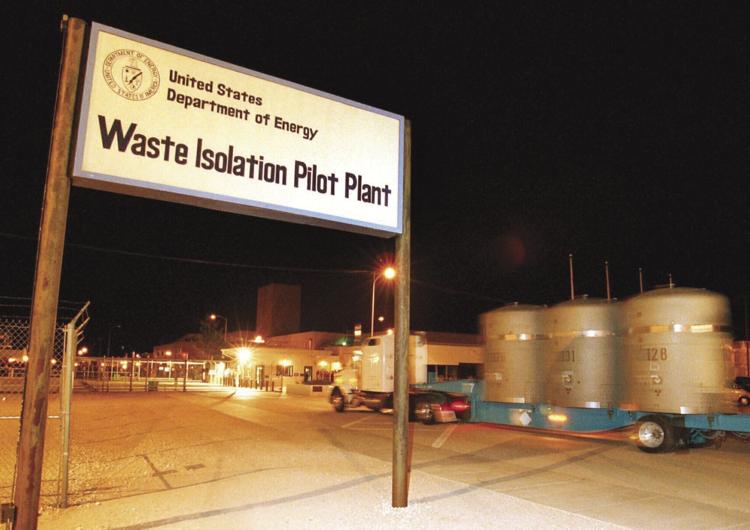
Did you know that the Waste Isolation Pilot Plant (WIPP) was supposed to complete its 25-year waste disposal mission and begin closing on Tuesday, March 26th? You may know about it because WIPP officials had a party. https://www.rdrnews.com/news/state/new-mexico-regulators-worry-about-us-plans-to-ship-radioactive-waste-back-from-texas/article_00e04fb6-ed72-5ec6-aabb-cc35a01d12f0.html
But for those living downwind and downstream of Los Alamos National Laboratory (LANL) and along the WIPP transportation routes, the risk of the federal Department of Energy (DOE) operations at both facilities will continue to threaten us, and if DOE has its way, for decades to come.
DOE, which owns both facilities, is not planning to close either site. LANL is to continue to generate plutonium-contaminated wastes by fabricating the triggers, or pits, for new nuclear weapons. DOE hopes to leave some of that waste at LANL forever. Some waste would be shipped to WIPP, a journey of 315 miles, for disposal.
Rather than closing WIPP, DOE has no plans for any other repository, so the world’s only operating deep underground facility would also operate forever.
But many New Mexicans oppose “Forever WIPP.” https://stopforeverwipp.org/
On Saturday, April 6th, the first annual Plutonium Trail Caravan will travel along the WIPP transportation route. It will begin at Camel Rock and end with a press conference at the Lamy Train Station. The purpose is to highlight some of the dangers of WIPP and waste transportation and encourage people to join in the effort to Stop Forever WIPP.
The caravan will have literature about WIPP and items for sale. The participants can answer questions about present and future activities. More information is available at https://stopforeverwipp.org/
The caravan will gather at 9:30 am at the Camel Rock geologic formation on the frontage road to U.S. 84/285 in Tesuque for a blessing, a safety briefing, and a group photo.
There will be four stops along the WIPP waste transportation route– in the Tesuque Village, the Solano Shopping Center in Santa Fe, the intersection of Airport Road and the 599 By-pass around Santa Fe, and the Agora Shopping Center in El Dorado.
After the four stops, a press conference will be held at the Lamy Train Station at 3:15 pm. Speakers include Hank Hughes, Santa Fe County Commission Chair; Myrriah Gómez, author of Nuclear Nuevo México; Destiny Ray, of Youth United for Climate Crisis Action, or YUCCA; and Ashley Schannauer, an activist and concerned citizen. They will speak about their concerns and suggest ideas for working together to oppose Forever WIPP. Please join us!
Starvation in Gaza: The World Court’s Latest Intervention

March 30, 2024, by: Dr Binoy Kampmark, https://theaimn.com/starvation-in-gaza-the-world-courts-latest-intervention/
Rarely has the International Court of Justice been so constantly exercised by one topic during a short span of time. On January 26, the World Court, considering a filing made the previous December by South Africa, accepted Pretoria’s argument that the Convention on the Prevention and Punishment of the Crime of Genocide was applicable to the conflict in so far as Israel was bound to observe it in its military operations against Hamas in Gaza. (The judges will determine, in due course, whether Israel’s actions in Gaza meet the genocidal threshold.) By 15-2, the judges noted that “the catastrophic humanitarian situation in the Gaza Strip is at serious risk of deteriorating further before the Court renders its final judgment.”
At that point 26,000 Palestinians had perished, much of Gaza pummelled into oblivion, and 85% of its 2.3 million residents expelled from their homes. Measures were therefore required to prevent “real and imminent risk that irreparable prejudice will be caused to the rights found by the Court to be plausible, before it gives its final decision.”
Israel was duly ordered to take all possible measures to prevent the commission of acts under Article II of the Genocide Convention; prevent and punish “the direct and public incitement to genocide” against the Gaza populace; permit basic services and humanitarian assistance to the Gaza Strip; ensure the preservation of, and prevent destruction of, evidence related to acts committed against Gaza’s Palestinians within Articles II and III of the Convention; and report to the ICJ on how Israel was abiding by such provisional measures within a month. The balance sheet on that score has been uneven at best.
Since then, the slaughter has continued, with the Palestinian death toll now standing at 32,300. The Israelis have refused to open more land crossings into Gaza, and continue to hamper aid going into the strip, even as they accuse aid agencies and providers of being tardy and dishonest. Their surly defiance of the United States has seen air drops of uneven, negligible success (the use of air to deliver aid has always been a perilous exercise). When executed, these have even been lethal to the unsuspecting recipients, with reported cases of parachutes failing to open.
On March 25, the UN Security Council, after three previous failed attempts, passed Resolution 2728, thereby calling for an immediate ceasefire for the month of Ramadan “leading to a lasting sustainable” halt to hostilities, the “immediate and unconditional release of all hostages”, “ensuring humanitarian access to address their medical and other humanitarian needs” and “demands that the parties comply with their obligations under international law in relation to all persons they detain.”
Emphasis was also placed on “the urgent need to expand the flow of humanitarian assistance to and reinforce the protection of civilians in the entire Gaza Strip.” The resolution further demands that all barriers regarding the provision of humanitarian assistance, in accordance with international humanitarian law be lifted.
Since January, South Africa has been relentless in its efforts to curb Israel’s Gaza enterprise in The Hague. It called upon the ICJ on February 14, referring to “the developing circumstances in Rafah”, to urgently exercise powers under Article 75 of the Rules of Court. Israel responded on February 15. The next day, the ICJ’s Registrar transmitted to the parties the view of the Court that the “perilous situation” in the Gaza Strip, but notably in Rafah, “demands immediate and effective implementation of the provisional measures indicated by the Court in its Order of 26 January 2024.”
Throughout the following month, more legal jostling and communication took place, with Pretoria requesting on March 6 that the ICJ “indicate further provisional measures and/or to modify” those ordered on January 26.
The application was prompted by the “horrific deaths from starvation of Palestinian children, including babies, brought about by Israel’s deliberate acts and omissions … including Israel’s concerted attempts since 26 January 2024 to ensure the defunding of [the United Nations Relief and Works Agency (UNRWA) and Israel’s attacks on starving Palestinians seeking to access what extremely limited humanitarian assistance Israel permits into Northern Gaza, in particular.”
Israel responded on March 15 to the South African communication, rejecting the claims of starvation arising from deliberate acts and omissions
“in the strongest terms.” The logic of the sketchy rebuttal from Israel was that matters had not materially altered since January 26 to warrant a reconsideration: “the difficult and tragic situation in the Gaza Strip in the last weeks could not be said to materially change the considerations upon which the Court based its original decision concerning provisional measures.”
On March 28, the Court issued a unanimous order modifying the January interim order. Combing through the ghoulish evidence, the judges noted an updated report from March 18 on food insecurity from the Integrated Food Security Phase Classification Global Initiative (IPC Global Initiative) stating that “conditions necessary to prevent Famine have not been met and the latest evidence confirms that Famine is imminent in the northern governorates and projected to occur anytime between mid-March and May 2024.” The UN Children’s Fund had also reported that 31 per cent of children under 2 years of age in the northern Gaza Strip were enduring conditions of “acute malnutrition”.
In the face of this Himalaya of devastation, the Court could only observe “that Palestinians in Gaza are no longer facing a risk of famine, as noted in the Order of 26 January 2024, but that famine is setting in, with at least 31 people, including 27 children, having already died of malnutrition and dehydration.” There were “unprecedented levels of food insecurity experienced by Palestinians in the Gaza strip over recent weeks, as well as the increasing risks of epidemics.”
Such “grave” conditions granted the Court jurisdiction to modify the January 26 order which no longer fully addressed “the consequences arising from the changes in the situation.” In view of the “worsening conditions of life faced by Palestinians in Gaza, in particular the spread of famine and starvation”, Israel should take “all necessary and effective measures to ensure, without delay, in full cooperation with the United Nations, the unhindered provision at scale by all concerned of urgently needed basic services and humanitarian assistance.”
The list of what is needed is also enumerated: food, water, electricity, fuel, shelter, clothing, hygiene, sanitation requirements, and “medical supplies and medical care to Palestinians throughout Gaza, including by increasing the capacity and number of land crossing points and maintaining them open for as long as necessary.”
A less reported aspect of the March 28 order, passed by fifteen votes to one, was that Israel’s military refrain from committing “acts which constitute a violation of any rights of the Palestinians in Gaza as a protected group” under the Genocide Convention “including by preventing, through any action, the delivery of urgently needed humanitarian assistance.”
In this, the Court points to the possible, and increasingly plausible nexus, between starvation, famine and deprivation of necessaries as state policies with the intent to injure and kill members of a protected group. It is no doubt something that will weigh heavily on the minds of the judges as they continue mulling over the nature of the war in Gaza, which South Africa continues to insist is genocidal in scope and nature.
U.S, government to give $1.52 billion loan guarantee to Holtec to resuscitate Palisades Nuclear Plant.

Biden-Harris Administration Announces $1.5 Billion Conditional Commitment to Holtec Palisades to Support Recommission of Michigan Nuclear Power Plant
ENERG.GOV, MARCH 27, 2024
COVERT TOWNSHIP, MI — As part of President Biden’s Investing in America agenda, the U.S. Department of Energy (DOE) through its Loan Programs Office (LPO) today announced the offer of a conditional commitment of up to $1.52 billion for a loan guarantee to Holtec Palisades to finance the restoration and resumption of service of an 800-MW electric nuclear generating station in Covert Township, Michigan. The project aims to bring back online the Palisades Nuclear Plant, which ceased operations in May 2022, and upgrade it to produce baseload clean power until at least 2051, subject to U.S. Nuclear Regulatory Commission (NRC) licensing approvals. …………………………………………………

While this conditional commitment demonstrates the Department’s intent to finance the project, the company must satisfy certain technical, legal, environmental, and financial conditions before the Department enters into definitive financing documents and funds the loan. ………………….. https://www.energy.gov/articles/biden-harris-administration-announces-15-billion-conditional-commitment-holtec-palisades
The Office for Nuclear Regulation (ONR) will prosecute Sellafield Ltd on charges of security offences
The Office for Nuclear Regulation (ONR) has notified Sellafield Ltd that
it will be prosecuted under the Nuclear Industries Security Regulations
2003. These charges relate to alleged information technology security
offences during a four year period between 2019 and early 2023. There is no
suggestion that public safety has been compromised as a result of these
issues. The decision to begin legal proceedings follows an investigation by
ONR, the UK’s independent nuclear regulator. Details of the first court
hearing will be announced when available. Given that some matters are now
subject to legal proceedings, we are unable to comment further.
ONR 28th March 2024
https://onr.org.uk/news/all-news/2024/03/onr-notifies-sellafield-ltd-of-intention-to-prosecute
TODAY. Sellafield scandals – a case study in why the nuclear industry must be shut down.
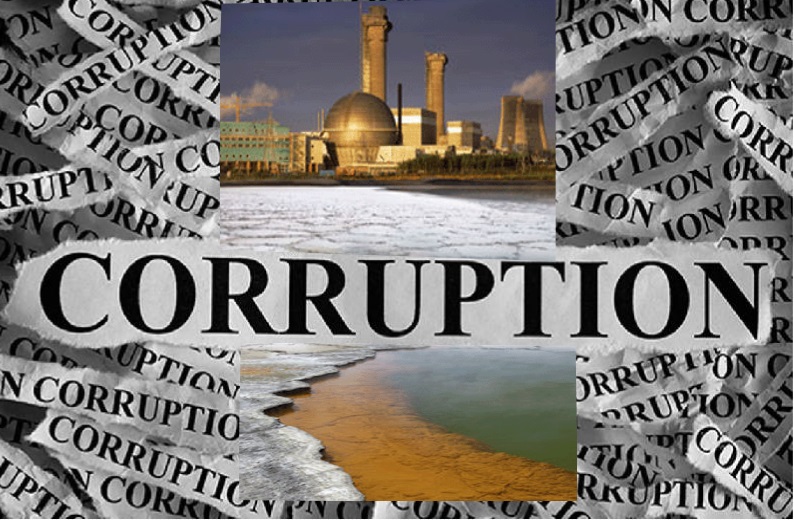
If you had any illusions about the nuclear industry being “clean” and “safe” and “honest”, the latest bit of news in the tawdry saga of UK’s Sellafield nuclear waste dump might cause you to stop and think.
It doesn’t seem that much – “prosecution for alleged cybersecurity offences” and “no suggestion that public safety has been compromised”.
But if you bother to do your homework on this sprawling rubbish dump, the world’s most complex nuclear site, with the world’s largest stockpile of plutonium – you will find a litany of alarming nuclear stories:
- Sellafield: ‘bottomless pit of hell, money and despair’ at Europe’s most toxic nuclear site
- secrecy valued more than public safety.
- Cracks in ponds holding highly radioactive fuel rods. wastes pumped into the seas. Irish Sea contaminated with plutonium.
- US, Norway and Ireland anxious over risk of a devastating accident.
- sudden changes in security leadership.
- Office for Budget Responsibility – site poses a “material source of fiscal risk” to the country.
- a toxic workplace culture.
- site hacked by groups linked to Russia and China. Dishonesty:
- British authorities knew it was wrong to proceed with the thermal oxide reprocessing plant (Thorp) at Sellafield.
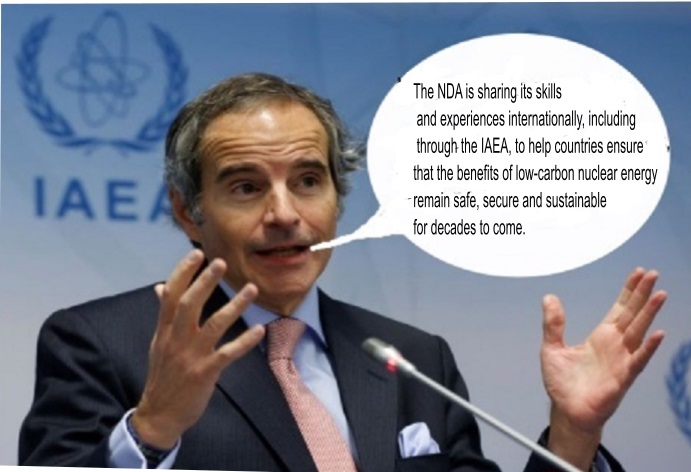
And what does the world nuclear authority, the International Atomic Energy Agency (IAEA) have to say about all this? –
“World nuclear chief praises Sellafield progress”
Wake up world!
I’m sorry to have to say this, – but you can’t depend on the world leaders and the nuclear authorities to tell you the truth about this ghastly industry. So many depend on it for their livelihood, for their local economy – etc etc. But the truth must be told.

The political and business leaders are waiting till after their retirement – hoping that the shit won’t hit the fan while they might cop the blame. Like the security bosses at Sellafield, they might have to get out in time. I wonder how long Rafael Grossi can last, can keep up the pretense.
Sellafield is arguably the worst case of nuclear danger and corruption. But then there are the horrors of the Russian nuclear industry, including City 40. Then there’s Japan, with its eternal Fukushima calamity, and its many nuclear reactors close to earthquake zones.
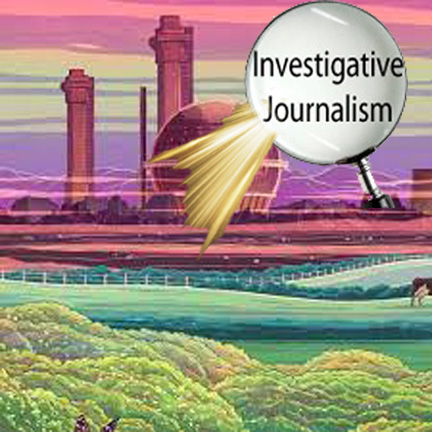
It’s really only thanks to Anna Isaac and Alex Lawson, of the Guardian, that we get to find out about Sellafield.

And to others, like Kate Brown. revealing the reality of the nuclear waste-plutonium disaster endangering the planet
And I wonder, as the USA prepares to lock up Julian Assange forever, how long will the powerful allow these intrepid writers to spill the beans on nuclear scandals?
Sellafield nuclear waste dump to be prosecuted for alleged cybersecurity offences

Charges relate to four-year period between 2019 and early 2023, and follow Guardian investigation
Alex Lawson and Anna Isaac, Fri 29 Mar 2024 , https://www.theguardian.com/business/2024/mar/28/sellafield-nuclear-waste-dump-to-be-prosecuted-for-alleged-it-security-offences
The Sellafield nuclear waste dump is to be prosecuted for alleged information technology security offences, the industry watchdog has said.
The Office for Nuclear Regulation (ONR) said on Thursday that it had notified the state-owned Cumbrian nuclear company that it would be prosecuted under industry security regulations.
The prosecution follows the Guardian’s revelations last year of multiple cyber failings at the vast site, part of a year-long investigation into cyber hacking, radioactive contamination and an unhealthy workplace culture at Sellafield.
The ONR said: “These charges relate to alleged information technology security offences during a four-year period between 2019 and early 2023. There is no suggestion that public safety has been compromised as a result of these issues. The decision to begin legal proceedings follows an investigation by ONR, the UK’s independent nuclear regulator.”
Sellafield, which has more than 11,000 staff, was placed into a form of “special measures” for consistent failings on cybersecurity in 2022, according to sources at the ONR and the security services.
Among the Guardian’s revelations in December were that groups linked to Russia and China had penetrated its computer networks, embedding sleeper malware that could lurk and be used to spy or attack systems. At the time Sellafield said it did not have evidence of a successful cyber-attack.
The site has the largest store of plutonium in the world and is a sprawling rubbish dump for nuclear waste from weapons programmes and decades of atomic power generation.
Other findings in the Guardian’s Nuclear Leaks investigation included concerns about external contractors being able to plug memory sticks into its computer system while unsupervised.
The Guardian also revealed that cyber problems have been known by senior figures at the nuclear site for at least a decade, according to a report dated from 2012, which warned there were “critical security vulnerabilities” that needed to be addressed urgently.
Sellafield’s computer servers were deemed so insecure that the problem was nicknamed Voldemort after the Harry Potter villain, according to a government official familiar with the ONR investigation and IT failings at the site, because it was so sensitive and dangerous.
At the time, Sellafield said that “all of our systems and servers have multiple layers of protection”. “Critical networks that enable us to operate safely are isolated from our general IT network, meaning an attack on our IT system would not penetrate these,” it said.
This week, the Guardian revealed that Richard Meal, Sellafield’s chief information security officer, is to leave the site after more than a decade. He will be the second senior leader to leave this year, after the top director responsible for safety and security, Mark Neate, announced in January that he planned to leave.
In January, Sellafield appointed Graeme Slater as its chief digital information officer, responsible for cybersecurity.
The ONR said details of the first court hearing would be announced “when available”.
Britain’s public spending watchdog, the National Audit Office, last month launched an investigation into risks and costs at Sellafield.
A spokesperson at the Department for Energy Security and Net Zero, which funds Sellafield, said: “Safety and security at our former nuclear sites is paramount and we fully support the Office for Nuclear Regulation in its independent role as regulator.
“The regulator has made clear that there is no suggestion that public safety has been compromised at Sellafield. Since the period of this prosecution, we have seen a change of leadership at Sellafield and the ONR has noted a clear commitment to address its concerns.”
Sellafield said: “The Office for Nuclear Regulation’s Civil Nuclear Security and Safeguards has notified us of its intention to prosecute the company relating to alleged past nuclear industry security regulations compliance.
“As the issue is now the subject of active court proceedings, we are unable to comment further.”
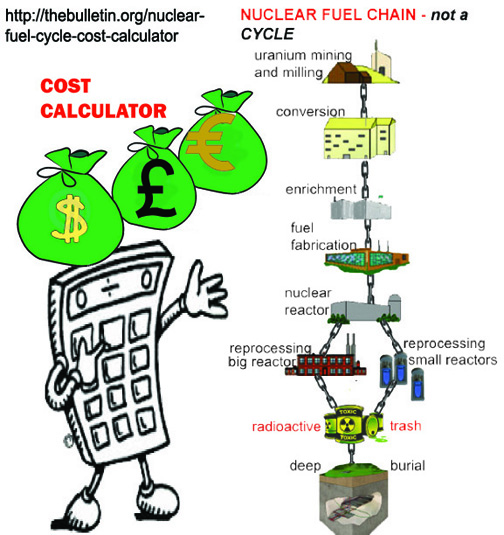
Nuclear energy everywhere costs an arm and a leg
By Jean-François Julliard, Mar 30, 2024, https://johnmenadue.com/nuclear-energy-everywhere-costs-an-arm-and-a-leg/
The contribution of nuclear power to electricity generation is the lowest for thirty years and its price twice that of renewables.
It crackles like a Geiger counter in a uranium mine: in 2023, Emmanuel Macron announced plans for six additional EPR [European Pressurised Reactor] nuclear power plants. Hang on, no, perhaps fourteen in the long term.
In reviving nuclear in the name of the struggle against global warming, the European Union has followed suit. Japan is promising new developments on the nuclear front. The US is experimenting with miniature reactors. China is building with gusto … All these ‘ionising’ projects seem to indicate that fission-based nuclear power is in full swing.
In fact, it is to the contrary. A report of experts published in December 2023, the World Nuclear Industry Status Report 2023 [549pp!], using data supplied by the International Atomic Energy Agency and national states, provides the evidence. The part of electricity generation due to nuclear power is the lowest in 30 years (9.2 percent), compared to near double that figure in the 1990s.
Over twenty years, the cost of a nuclear kilowatt hour has increased slightly, whereas the cost of solar and wind has plummeted (‘melted’), these days coming in at roughly half that of nuclear. In 2022, the report highlights, €35 billion has been invested in nuclear globally, compared to … €455 billion in renewables.
France is still trying to recover from an annus horribilis in 2022. In addition to higher costs associated with the war in Ukraine, reactor shutdowns have multiplied. In August 2023, 60 % of France’s 56 reactors were dysfunctional. During 2023, production has augmented, but it has stayed at the level of … 1995.
Showcases of French savoir-faire, the EPR reactors are not ‘making sparks’, accumulating shutdowns, delays (twelve years for Flamanville, on the English Channel, and thirteen years for Olkiluoto, in Finland) as well as cost blowouts (the bill multiplied by 1.7 [for now] at Hinkley Point, in Great Britain, by 3 at Olkiluoto and by 6 at Flamanville!).
During this time, plutonium (for which every gram is of fearsome toxicity), an essential fuel for these ‘toys’, piles up. The accumulated stock for France has reached an unprecedented level of 92 tonnes.
Small problem: how can EDF [Électricité de France], which has acquired a debt of €65 billion, finance the announced projects? This question doesn’t stop Brussels from supporting them – in spite of the industrial disaster on course. No matter that, for several years, within the EU, renewable energy (hydraulic, wind and solar) has generated the most electricity, ahead of nuclear, followed by gas and coal.
South Korea was formerly one of the principal international competitors of EDF for conquering foreign markets. These days South Korea shows itself more reluctant, especially after a calamitous 2022. Kepco, the national electrician, has lost more than €22 billion, adding to a debt of €131 billion – a record. Nuclear contributes 29.6 % to production, currently less than coal. But the promises – within ten years coal’s contribution is supposed to be cut in half and that of renewables tripled. As for nuclear, it will grow by … 5 %.
Japan only starts to pick up with the atom after the closure of several reactors following Fukushima. To the subsequent shortage of electricity add the financial dimension of the catastrophe: in 2021, the government estimated it at more than €200 billion. Thirteen years after the event, the Prime Minister, Fumio Kishida, wants to rekindle nuclear (‘accelerate the particles’) but furnishes no details on new reactors.
Last year, production in Japan was at its lowest level (equivalent to that of the 1970s), and only 6 % of electricity was of nuclear origin. In spite of announcements, distrust persists, especially since the discovery of misrepresentations (modification of results of chemical analyses, falsification of measures of resistance of materials) of Japan Steel Works, manufacturer of components for reactors, selling them worldwide and notably to France.
China is the country the most committed to the atom. On 58 reactors currently under construction globally, 23 (40 %) are in the Middle Kingdom. However, if nuclear trots, renewables gallop, flat out. Nuclear represents 5 % of electricity, whereas wind and solar furnish 15 %, progressing more quickly than coal, which remains far and away the main ‘source of the juice’. Other vexation: Beijing exports little of its savoir-faire. This because the US, among others, which have blacklisted Chinese enterprises, accused of having siphoned American technology for its military ambitions. Slanderous!
The United States remains the champion of nuclear energy but its brainpower has not kept pace (‘their neutrons are not very quick’). In 2022, the contribution of nuclear to electricity generation has fallen to 18.2 % – the lowest rate since 1987 – less than coal and renewables, the latter passed for the first time to pole position. American reactors are on average the oldest in the world (42 years), and only two reactors have been brought into service in the last twenty-five years.
And what a debut! The AP1000 (variation of the EPR) of Vogtle (Georgia) began operation in March 2023, eight years later than planned and, above all, at an estimated cost of €28.5 billion, more than double the initial estimate. Les Echos [French business newspaper] (25/1/22) has kindly described the feat as a local ‘Flamanville’. This financial debacle has much contributed to the failure of Westinghouse, giant of nuclear reactor manufacture. The event has also provoked the shutdown of the construction site (nine years work) of two other AP1000s in South Carolina. Living fossils!
As a consequence, the US is paying more attention to mini reactors, or SMR [small modular reactors]. Save that NuScale, the champion of the type, last November, cancelled a vast construction program of six of these miniatures, for which the budget had almost tripled …
Russia is the veritable world champion of the ‘civil atom’. That said, however, it produces only 20 % of the country’s electricity. Rosatom, the Russian EDF, foreshadows a small increase to 25 %, but in … 2045. It is overseas where business is booming. Russia, a nation at war, is building reactors in countries as peaceful as Iran, Egypt, India or Turkey. Without forgetting China, one of Russia’s best customers.
Russia’s commercial secret? Its discounted prices, its turnkey packages and, above all, its control of the indispensable enriched uranium. Russia furnishes much of the latter to Europe but also to the US, 31 % of its supplies coming from Russia. All this while imposing sanctions on Putin’s country, which toys with the nuclear threat, going so far as to bomb the vicinity of Ukraine’s nuclear reactor at Zaporizhzhia – the largest such in Europe.
Court Allows Ageing Japanese Nuclear Plants to Continue Operations
By Tsvetana Paraskova – Mar 29, 2024, https://oilprice.com/Latest-Energy-News/World-News/Court-Allows-Ageing-Japanese-Nuclear-Plants-to-Continue-Operations.html
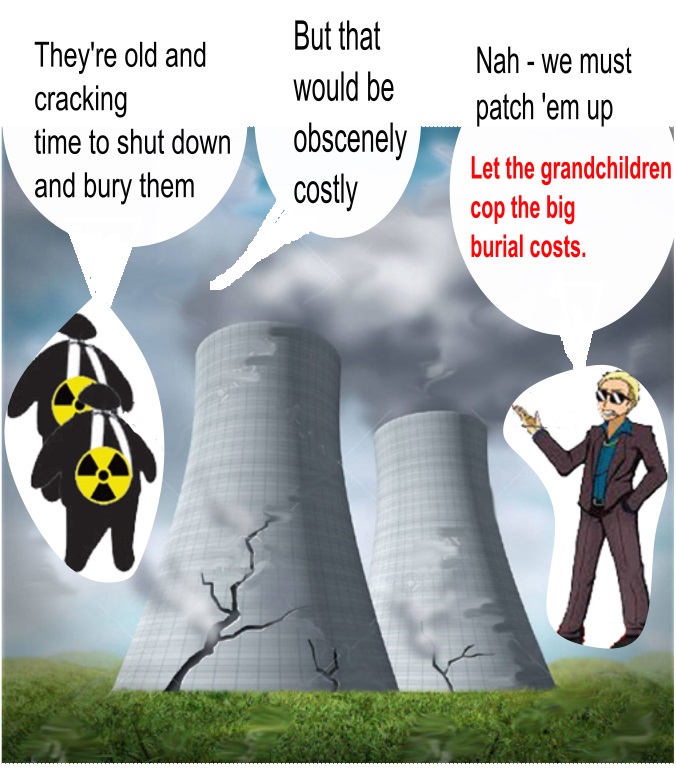
A Japanese district court on Friday rejected petitions from residents and allowed five ageing nuclear reactors in central Japan to continue operations.
The five reactors at the plants, operated by Kansai Electric Power Co in the Fukui Prefecture on the Sea of Japan coast, began commercial operations between the mid-1970s and mid-1980s.
Local residents had asked the Fukui District Court to grant injunctions for the operations of one reactor at the Mihama nuclear plant and four reactors at the Takahama power plant, citing inadequate safety measures.
The court, however, denied the injunctions, thus allowing the five reactors to continue operations.
More than a decade after the Fukushima disaster, public opinion continues to be generally negative toward an en masse return to nuclear power, but Japanese authorities are keen to avoid energy crises and are betting on re-opening more nuclear power plants.
Following the Fukushima disaster in 2011, Japan closed all of its nuclear power plants for rigorous safety checks and inspections. The country has been returning reactors in service in recent years.
Japan is bringing back nuclear power as a key energy source, looking to protect its energy security in the wake of the energy crisis that led to surging fossil fuel prices. The resource-poor country which needs to import about 90% of its energy requirements, made a U-turn in its nuclear energy policy at the end of 2022, as its energy import bill soared amid the energy crisis and surging costs to import LNG at record-high prices.
The Japanese government confirmed in December 2022 a new policy for nuclear energy, which the country had mostly abandoned since the Fukushima disaster. A panel of experts under the Japanese Ministry of Industry has also decided that Japan would allow the development of new nuclear reactors and allow available reactors to operate after the current limit of 60 years.
Sellafield’s head of information security to step down

Richard Meal is second senior leader to depart following Guardian investigation into failings at UK nuclear waste site
Guardian Alex Lawson and Anna Isaac, 28 Mar 24
A former Royal Air Force officer who has led Sellafield’s information security for more than a decade is to leave the vast nuclear waste site in north-west England, it can be revealed.
Richard Meal, who is chief information security officer at the Cumbrian site, is to leave later this year.
Meal will be the second senior leader to depart the organisation this year, after the top director responsible for safety and security – Mark Neate – announced in January that he planned to leave.
His imminent departure follows several safety and cybersecurity failings, as well as claims of a “toxic” working culture, that were revealed in Nuclear Leaks, a year-long Guardian investigation into Sellafield, late last year. Sellafield said no staff departures were linked to the revelations.
ellafield, which has more than 11,000 staff, was placed into a form of “special measures” in 2022 for consistent failings on cybersecurity, according to sources at the Office for Nuclear Regulation (ONR) and the security services.
Sellafield said it did not have evidence of a successful cyber-attack after the Guardian revealed that groups linked to Russia and China had penetrated its networks.
……………………………….. In response to the Guardian’s investigation, the energy secretary, Claire Coutinho, said the reports were “deeply concerning” and wrote to the Nuclear Decommissioning Authority (NDA), the state-owned body that ultimately runs Sellafield, demanding a “full explanation”.
In his response, the NDA’s chief executive, David Peattie, said there had been “necessary changes to the leadership, governance, and risk management of cyber” and responsibility for its cyber function had been moved. A new head of cybersecurity took up the role in January. Sellafield declined to name the new appointee.
On announcing his departure, Neate said that he had decided last year “that 2024 was the right time for me to move on”. He will be replaced this week by the current head of the site’s “spent fuel management value stream”, James Millington, on an interim basis.
Separately, Nic Westcott, the former Openreach and Severn Trent executive, was seconded from Nuclear Waste Services in January as interim chief people officer.
In its latest annual report, the ONR stated that “improvements are required” from Sellafield and other sites in order to address cybersecurity risks. It also confirmed that the site was in “significantly enhanced attention” for this activity……………………………
Britain’s public spending watchdog, the National Audit Office, last month launched an investigation into risks and costs at Sellafield.
The Nuclear Leaks series detailed concerns over cracks in the concrete and asphalt skin of a toxic point known as the First Generation Magnox storage pond or informally as “Dirty 30”. This week, Sellafield said that the building had been “prioritised for cleanup” by the NDA and that the first “zeolite skip” – containers used to absorb radiation in the 1970s and 1980s – had been removed and placed in a shielded box.
Separately, Sellafield released its gender pay report for the year to 5 April 2023, which showed the median gender pay gap had risen to 13.7% from 11.3% a year earlier. The proportion of women in the upper quartile of its pay scale was static, at 18%………………… https://www.theguardian.com/business/2024/mar/27/sellafields-head-of-information-security-to-step-down
New NATO member Finland admits US pact ‘restricts sovereignty’
The DCA gives the American military access to 15 bases in Finland and allows the deployment of military equipment and supplies on Finnish territory, as well as the free movement of US aircraft, ships, and vehicles. Members of the US military and the facilities they use would also get special legal protections.
29 Mar 2024 https://www.sott.net/article/490230-New-NATO-member-admits-US-pact-restricts-sovereignty
A military agreement with Washington comes at a cost, Helsinki has acknowledged
A new military cooperation deal agreed with Washington will limit Helsinki’s sovereignty, the Finnish Foreign Ministry said on Thursday, advising that its ratification will therefore require a two-thirds majority in the parliament.
Finland joined NATO in April 2023, abandoning a decades-long policy of neutrality. It began negotiating a Defense Cooperation Agreement (DCA) with the US almost immediately, and signed it last December.
A working group led by the Foreign Ministry was set up to draft the ratification protocols which were formally sent to the country’s parliament for comments on Thursday, the ministry announced.
“The working group concludes that the DCA would restrict Finland’s sovereignty, which is why Parliament’s acceptance of the agreement would require a two-thirds majority of the votes cast,” the ministry press release said. The parliament has until May 12 to comment on the draft proposal.
The DCA gives the American military access to 15 bases in Finland and allows the deployment of military equipment and supplies on Finnish territory, as well as the free movement of US aircraft, ships, and vehicles. Members of the US military and the facilities they use would also get special legal protections.
When the DCA was signed, Finnish Defense Minister Antti Hakkanen said it was “a guarantee from the world’s largest military power that they will defend us.”
Russian President Vladimir Putin responded by saying that Helsinki previously enjoyed cordial relations with Moscow and had no disputes, territorial or otherwise, but chose to side with the US-led bloc anyway.
“There was no trouble. Now there will be,” Putin said in December. “We will now create the Leningrad Military District and concentrate certain military units there.”
Comment: As has happened before, the step from EU to NATO was a matter of time. The Finnish government managed to sell the concept of joining NATO, next is to improve on the level of subjugation, let the US do more of what it wants within Finland, thus moving from being a mere vassal to becoming a more fully occupied state. Finland is not alone, somewhat similar agreements have been concluded between the US and the other Nordic countries.
Trump more blatant about supporting Israeli genocide in Gaza than Biden
Walt Zlotow , 29 Mar 24, https://heartlandprogressive.blogspot.com/2024/03/trump-more-blatant-about-supporting.html
Trump more blatant about supporting Israeli genocide in Gaza than Biden
When it comes Israeli genocide in Gaza, President Biden speaks mutely…but wields a genocidal stick. Fully aware he’s enabling the genocide of 2,300,000 Palestinians there, he conducts his endless support with weapons, vetoes or abstentions of UN ceasefire resolutions by pretending all he’s doing is defending a ‘great ally.’
But no such reticence from Trump. He glories in cheering on the Israeli slaughter there. He boasted he’d have done the same thing as Israel but chides Israel: “You (Israel) gotta get it done. And, I am sure you will do that. And we gotta get to peace, we can’t have this going on. And I will say, Israel has to be very careful, because you’re losing a lot of the world, you’re losing a lot of support, you have to finish up, you have to get the job done”
For Trump, the ongoing US enabled genocide in Gaza boils down to a PR problem. If only Israel finishes off the Palestinians, they will stop losing worldwide support.
Good grief. We have the incumbent presidential candidate quietly enabling genocide in Gaza. We have the challenger publically demanding Israel “get the job (genocide) done.”
Israel Lies About Being A Victim So That It Can Victimize
CAITLIN JOHNSTONE, MAR 30, 2024, https://www.caitlinjohnst.one/p/israel-lies-about-being-a-victim?utm_source=post-email-title&publication_id=82124&post_id=143090068&utm_campaign=email-post-title&isFreemail=true&r=ln98x&triedRedirect=true&utm_medium=email
The Washington Post reports that in recent days the Biden administration has quietly signed off on sending Israel billions of dollars worth of fighter jets and the 2,000-pound bombs that have been causing so much death and destruction in Gaza, even as Israel prepares to launch a bloody assault on the strip’s densely-populated southernmost point.
Literally just completely ignore every single thing US officials say about the need to protect civilians and how Biden’s feelings are privately “frustrated” with Netanyahu. Just ignore their entire narrative about what their goals are in Gaza. Their actions make it clear.
Protesters from Palestine Action have forced Israel-based arms dealer Elbit Systems to permanently close one of its factories in the UK as demonstrators have made it too difficult for the factory to operate. We’ll never vote the empire away, but we might someday be able to direct action it away.
Video footage has surfaced of IDF troops murdering two unarmed Palestinians in cold blood and then burying their bodies with bulldozers to conceal their crime. This is surely not anywhere close to the first time such a thing has happened in Gaza, and is yet another sign that the death toll from this onslaught is probably a massive undercount.
Israel’s assault on Gaza features heavy earth-moving equipment more extensively than any other military operation anyone’s ever seen. One reason is because it’s a great way to destroy Palestinian homes. Another reason is because it’s a great way to hide dead Palestinian bodies.
An IDF commander has told Israeli media that on October 7 he made the decision to fire on vehicles he knew could have Israelis in them because “it’s better to stop the abduction and that they not be taken,” adding more weight to the mountain of evidence that Israeli troops fired on Israelis on October 7 to prevent them from being taken hostage. Israeli bombs and blockades have been picking off the remaining hostages ever since, with Israel now estimating that only 60 to 70 of the 134 hostages are still alive.
Whenever you run into an Israel apologist who is defending against criticisms of Israel’s actions in Gaza by saying “Hamas just needs to release the hostages and this all ends,” maybe go ahead and remind them of this.
ADL chief Jonathan Greenblatt just went on MSNBC’s Morning Joe and compared wearing a Palestinian keffiyeh to wearing a Nazi armband. The mass media keep having this lunatic on as an expert analyst and he keeps saying the most bat shit insane things imaginable. Any screaming schizophrenic off the street would be just as qualified as Greenblatt.
❖
A former ranking IDF officer has told Haaretz that Israel is conducting “a war of cruel rich people” which is causing many times more destruction than necessary to accomplish its stated objectives against Hamas.
“In principle, it would be possible to arrive at similar achievements with 10 percent of the destruction we have caused,” the unnamed source told Haaretz.
Ten percent. Israel is causing ten times more damage than it needs to to achieve its stated objectives because its stated objectives are false — Israel’s real goal is not to defeat Hamas, it’s to grab a bunch of land from a Palestinian territory.
Of all the pants-on-head idiotic things Israel and its apologists ask us to believe, “The UN just hates Israel for no good reason so all its claims should be dismissed” is definitely among the dumbest.
Israel apologists constantly claiming the UN is antisemitic and treats Israel unfairly remind you of a boy who never does any homework and keeps saying his bad grades are because his teacher hates him. The UN talks about Israel a lot because Israel is a murderous criminal regime.
❖
If you still have any doubt that we live in a profoundly sick dystopia as deranged as anything that’s ever been imagined in fiction, take note of the fact that the most powerful empire in history is currently trying to propagandize you into thinking an obvious genocide is fine.
They lied about decapitated babies so that they could kill babies.
They lied about rape so that they could rape.
They lied about Hamas using civilians as human shields so that they could use civilians as human targets.
They lie about being victims so that they can victimize.
Special nuclear flights between the US and UK: the dangers involved
CND, March 24
Despite claiming to have an independent nuclear weapons system, for more than sixty years Britain and the United States have been transferring and sharing technical
information, nuclear materials, and warhead components for use in each other’s nuclear weapons programmes.
One important way in which transfers of nuclear materials and technology are carried out between Britain and the US is through special flights into and out of Royal Air Force (RAF) Brize Norton, near Carterton in Oxfordshire. Read more about these special nuclear flights in this briefing, written in association with Nukewatch. https://cnduk.org/wp-content/uploads/2024/03/Special-nuclear-flights-between-the-US-and-UK-1.pdf
UN expert says she faces threats after Israel-Gaza genocide report
Francesca Albanese had stated there were clear indications Israel has violated three acts in the UN Genocide Convention.
A United Nations expert who published a report saying there were reasonable grounds to believe Israel has committed genocide in its war on Gaza says she has received threats throughout her mandate.
Francesca Albanese, the special rapporteur on the human rights situation in the occupied Palestinian territories, presented a report entitled “Anatomy of a Genocide” to the UN Human Rights Council on Tuesday, which Israel said it “utterly rejects
In the report, Albanese said there are clear indications that Israel has violated three of the five acts listed under the UN Genocide Convention in its war on Gaza.
Asked whether her work on the report had caused her to receive threats, Albanese said: “Yes, I do receive threats. Nothing that so far I considered needing extra precautions. Pressure? Yes, and it doesn’t change either my commitment or the results of my work.”
Albanese, who has held the position since 2022, did not elaborate on the nature of the threats, nor did she say who had issued them.
“It’s been a difficult time,” she said. “I’ve always been attacked since the very beginning of my mandate.”
27:55
Israel has criticised Albanese, saying she was “delegitimising the very creation and existence of the State of Israel”. Albanese denied the accusation.
Albanese said one of her key findings was that Israel’s executive and military leadership and soldiers have intentionally “subverted their protection functions in an attempt to legitimise genocidal violence against the Palestinian people”.
“The only reasonable inference that can be drawn from the unveiling of this policy is an Israeli state policy of genocidal violence toward the Palestinian people in Gaza,” she said, adding that it was a “long-standing settler colonial process of erasure”.
She called for the “ongoing Nakba” to stop, referring to the ethnic cleansing of Palestine in 1948.
Israel’s diplomatic mission in Geneva said the use of the word genocide was “outrageous” and said the war was against Hamas and not Palestinian civilians.
Albanese, an Italian lawyer and academic, is one of dozens of independent human rights experts mandated by the United Nations to report on specific themes and crises.
The views expressed by special rapporteurs do not reflect those of the global body as a whole.
‘Nuclear Dinosaurs’ Roam New Brunswick, Ontario as ‘Jurassic’ Partnership Looms

how would this serve the interests of Ontario ratepayers and taxpayers? OPG’s nuclear liabilities are ultimately underwritten by Ontario taxpayers. Could Ontario end up on the hook for NB Power’s nuclear debts and liabilities as a result of OPG’s extra-provincial activities?
March 29, 2024, Susan O’Donnell and Mark Winfield , ore https://www.theenergymix.com/nuclear-dinosaurs-roam-new-brunswick-ontario-as-jurassic-partnership-looms/
Two lonely nuclear dinosaurs finding each other in the Jurassic forest: perhaps an appropriate image for a planned partnership between NB Power and Ontario Power Generation (OPG).
Each is stuck in the past, the only two utilities left in Canada operating nuclear power reactors. Both have rejected modern, efficient, decentralized, nimble, distributed energy systems powered by low-cost renewable energy in favour of keeping their aging CANDU reactors alive. Together, the two lumbering public utilities plan to bring forth a revitalized New Brunswick Point Lepreau reactor, hoping their new progeny will reverse its previous ailing fortunes.
From NB Power’s perspective, it’s a pairing made in uranium heaven. The utility is carrying a C$3.6 billion nuclear debt from the original 1975-1983 Lepreau reactor build that cost triple the original estimate, then the 2008-2012 refurbishment that was a billion dollars over budget. Both projects ran years behind schedule.
Since the refurbishment, the poor performance of the Lepreau reactor has been the primary reason NB Power loses money almost every year. By shedding the reactor off to a new entity co-owned with OPG, NB Power can move its debts and potential future losses off its books, and onto those of OPG and NB Power’s new creation.
OPG has already established a three-year, $2 million-per-year contract to supply staff to manage the Lepreau facility. This is an expensive arrangement for NB Power, at double the cost of the American manager OPG has replaced. Presumably this is a loss leader for NB Power to help cement its budding relationship with OPG.
What would then happen with the Lepreau reactor’s debt, representing about three-quarters of NB Power’s liabilities? Maybe the new partnership would use Ontario’s approach to making the nuclear debt disappear. More than 25 years ago, the effectively bankrupt provincial utility Ontario Hydro was split up (ch. 5 and 6). A new Crown corporation, OPG, inherited Ontario Hydro’s hydropower, coal, and nuclear plants. With them would have come $20 billion in stranded debt, largely left over from the nuclear construction program that was instrumental to Ontario Hydro’s demise. But servicing that debt would have left OPG economically unviable, so the $20 billion was hived off to Ontario taxpayers and then electricity ratepayers via a “debt retirement charge” on their bills.
Between 2002 and 2016, OPG’s rates rose by 60%, largely to pay for the refurbishment of two reactors at the Pickering A plant (two other attempted refurbishments at the plant were write-offs), contributing to a political crisis over electricity rates that ultimately led to the defeat of Kathleen Wynne’s Liberal government in 2018. New Brunswick’s much smaller population with a lower average household income is likely to be even less accepting of increased rates to service OPG’s nuclear ambitions.
Why would OPG, whose mandate to undertake out-of-province business activities is at best unclear, and which is deeply engaged in its own reactor refurbishment megaprojects at the Darlington and Pickering B nuclear plants, want to take on a money loser like the Lepreau reactor in the long term?
The refurbishments of the eight reactors at Darlington and Pickering B, both on the Lake Ontario shoreline just east of Toronto, will cost more than $25 billion. Along with the $25-billion refurbishment of six reactors at the Bruce facility on Lake Huron, these projects will stretch the industry’s capacity to the limit. Why take on another reactor needing an expensive rebuild on the Bay of Fundy?
Perhaps the partnership with NB Power simply offers the Ontario utility the promise of new horizons, expanding from its dominant position in Ontario to another province. But how would this serve the interests of Ontario ratepayers and taxpayers? OPG’s nuclear liabilities are ultimately underwritten by Ontario taxpayers. Could Ontario end up on the hook for NB Power’s nuclear debts and liabilities as a result of OPG’s extra-provincial activities?

OPG may have its eyes on another prize—an opportunity to expand its ambition to develop small modular nuclear reactors (SMRs). OPG has plans for four such reactors at Darlington. So far, the Canada Infrastructure Bank is the only investor in the project, which has yet to receive any regulatory approvals and whose technical and economic viability has been the subject of many serious questions. Undeterred, OPG is heavily promoting the concept to potential customers across Canada and in Europe. NB Power has backed two different small reactor designs, but both have failed to secure adequate financing for development after six years of trying. OPG may see New Brunswick as a potential demonstrator host for its small reactor ambitions.
In both provinces, the lumbering provincial utilities have ignored developments aggressively pursued by other jurisdictions in North America and around the world: converging and mutually reinforcing technological revolutions in energy efficiency and productivity, demand management and response; renewable energy and energy storage; distributed energy resources; and electricity grid management and integration (smart grids). These innovations offer the potential for lower-cost, lower-risk, faster, and more flexible pathways for providing decarbonized electricity than large, centralized nuclear systems.
Instead of pursuing these options, the new NB Power and OPG partnership would be doubling down on approaches to energy supply and planning stuck decades into the past. Ratepayers and taxpayers in both provinces would do well to ask hard questions about their looming Jurassic-scale coupling, and its implications for their futures.
Susan O’Donnell is Adjunct Research Professor in the Environment and Society Program and lead researcher of the CEDAR project at St. Thomas University in Fredericton. Mark Winfield is Professor in the Faculty of Environmental and Urban Change and co-chair of the Faculty’s Sustainable Energy Initiative at York University in Toronto.
1 This Month
23-25 October – on Zoom – World BEYOND War’s annual global conferenc


Shut down the radiation-damaged Heysham nuclear reactors now
To see nuclear-related stories in greater depth and intensity – go to https://nuclearinformation.wordpress.com

Say No to NASA’s Reckless Nuclear Reactor on the Moon
Say No to NASA’s Reckless Nuclear Reactor on the Moon

-
Archives
- October 2026 (209)
- September 2026 (339)
- August 2026 (330)
- July 2026 (355)
- June 2026 (287)
- May 2026 (306)
- April 2026 (356)
- March 2026 (251)
- February 2026 (267)
- January 2026 (308)
- December 2025 (358)
- November 2025 (359)
-
Categories
- 1
- 1 NUCLEAR ISSUES
- business and costs
- climate change
- culture and arts
- ENERGY
- environment
- health
- history
- indigenous issues
- Legal
- marketing of nuclear
- media
- opposition to nuclear
- PERSONAL STORIES
- politics
- politics international
- Religion and ethics
- safety
- secrets,lies and civil liberties
- spinbuster
- technology
- Uranium
- wastes
- weapons and war
- Women
- 2 WORLD
- ACTION
- AFRICA
- Atrocities
- AUSTRALIA
- Christina's notes
- Christina's themes
- culture and arts
- Events
- Fuk 2022
- Fuk 2023
- Fukushima 2017
- Fukushima 2018
- fukushima 2019
- Fukushima 2020
- Fukushima 2021
- general
- global warming
- Humour (God we need it)
- Nuclear
- RARE EARTHS
- Reference
- resources – print
- Resources -audiovicual
- Weekly Newsletter
- World
- World Nuclear
- YouTube
-
RSS
Entries RSS
Comments RSS

