The Assange case – a win for journalism? Sort of.

Sort of – because his guilty plea leaves all journalists at risk. Because this freedom at last for Julian Assange means that the U.S. government can now claim that they’ve secured a conviction against a journalist under the Espionage Act. Assange’s impending legal case appealing against extradition did not take place – then what happens if another non-USA journalist reveals U.S. military atrocities?
The mainstream media can be relied on to snidely smear Julian Assange from now on.
However, 17 federal charges against Assange were dropped. He pled guilty to a felony charge of conspiracy to obtain and disclose national defence information. It could have been a lot worse. And Julian Assange, after all these years, now gets the opportunity for a decent life in Australia. with his family.
We’ve been here before. A courageous Australian journalist – a man of integrity reveals the horrors of American military atrocities. Wilfred Burchett was the first journalist to expose the truth about the devastating after-effects of the atom bomb -going to Hiroshima and defying the USA military’s ban on journalists going to Hiroshima.
The USA made sure that Burchett was smeared as a traitor, and the Australian government comfortably complied with that view – conservative Prime Minister Robert Menzies banned Burchett, and his children, from Australia – a ban that lasted 17 years.
A different case was that of Christopher Boyce, an American, who with a friend in 1977 was sentenced to 40 years in prison, mostly solitary confinement , for acquiring classified U.S. documents and selling them to Russia. Boyce claimed that the CIA was planning to remove Australia’s Prime Minister Whitlam from office, because Whitlam opposed the huge USA secret military base Pine Gap, in central Australia. Boyce seemed to care about Australia’s loss of sovereignty to the USA military. However, unlike Burchett and Assange – Boyce went on to a colourful career in a prison escape and bank robberies. Finally released from prison in 2002, Boyce settled down, but will never speak about his revelations of CIA intrigue in the 1970s.
Well, the USA government didn’t agree to Assange’s plea deal out of the goodness of their hearts. In this tense election year for the U.S. Democratic administration – Assange’s cruel incarceration in the U.K. Belmore prison was becoming an embarrassment. And what if Assange were to win his legal appeal against extradition to he USA? A damaging precedent?
And, above all – there was the unified pressure, from Assange’s wife, his family, his legal team, and thousands of people in the UK, Europe, USA, and Australia. The Australian government was no help, early on – but Australian politicians, and dignitaries like Kevin Rudd, gradually came on board. The whole thing was becoming awkward for the USA and the UK governments.
To some extent, this legal plea deal from an innocent journalist has been a success – for people power.
Congress’s Nuclear Addiction

“Facing its biggest crisis in 25 years, the U.S. nuclear power industry can count on plenty of Democratic and Republican friends in both high and low places,”……… “During the past election cycle alone, the Nuclear Energy Institute and more than a dozen companies with big nuclear portfolios have spent tens of millions of dollars on lobbying and campaign contributions to lawmakers in key leadership slots and across influential state delegations.”
CounterPunch, BY KARL GROSSMAN, 26 June 24
The “ADVANCE Act,” a bill to promote nuclear power, was passed 88-to-2 by the U.S. Senate last week. The ADVANCE stands for “Accelerating Deployment of Versatile, Advanced Nuclear for Clean Energy.” The only senators voting against it were Edward Markey of Massachusetts and Bernie Sanders of Vermont.
It was approved in the House of Representatives in May, also by a lopsided margin: 393-13. And it now has gone to President Joe Biden,
Among the many points in the bill are the speeding up of the federal licensing process for new nuclear power plants notably those described as “advanced,” reducing licensing fees, allow ownership of nuclear facilities in the U.S. by foreign nations, and establishing in the U.S. Nuclear Regulatory Commission an Office of International Programs “to carry out the international nuclear export and innovation activities.”
The action by Congress comes amid what Kevin Kamps of the organization Beyond Nuclear says is “the biggest push for nuclear power that I’ve experienced in 32 years of anti-nuclear power activities.”

The nuclear industry, he says, is “trying to use the climate crisis” by claiming nuclear energy is carbon-free. “It’s not true. It’s not carbon-free by any means,” he says, and “not even low carbon when you compare it to genuinely low carbon sources of electricity, renewables like wind and solar.” But the nuclear industry is involved in a “propaganda campaign” attempting to validate itself by citing climate change, he says, and many in government having “fallen for this ploy.”
Diane D’Arrigo of the group Nuclear Information and Resource Service commented: “Nuclear power makes climate worse—stealing resources from climate solutions and districting us from real solutions—and this bill is putting our already threatened democracy at even greater risk.”
“Clearly, the U.S. Congress doesn’t understand or care about the dangers of radiation that will result,” said D’Arrigo in an interview. “The nuclear Advance Act, passed by nearly the whole U.S. House and Senate, hitched a ride on a must-pass bill fire-fighting bill as wildfire season is taking off during an election year.” The act of more than 90 pages was inserted into a three-page Fire Grants and Safety measure.
“The nuclear industry,” she said, “has been investing in Congress to get massive subsidies for operating and proposed new nuclear power reactors and those huge investments paid off billions in the Inflation Reduction Act and Bipartisan Infrastructure laws, possibly more for nuclear and carbon capture than renewables and efficiency. Now the 118th Congress is again attempting to kickstart nuclear by bending the already-skewed rules making it harder for impacted communities to protect themselves.”
“Possibly most dangerous,” said D’Arrigo, “is the boost to a plutonium economy with accompanying police state. The ‘advanced’ fuel encouraged in this bill is nearly bomb-grade uranium and the bill provides for exporting it to other countries as well as using it in reactors all over this country. It’s a dismal moment in environmental, economic and human history. But one we must continue to challenge.”
Applauding the Senate’s passage of the ADVANCED Act was John Starkey, director of public policy at the American Nuclear Society. “It’s monumental,” said Starkey in an article on HuffPost. His society describes itself as “the premier organization for those that embrace the nuclear sciences and technologies.” Starkey further said: “This has been a long time coming.”
The HuffPost piece by Alexander C. Kaufman on passage of the ADVANCE Act says Biden “is all but certain to sign it into law.” However, his article adds: “Yet it’s only a first step.”
“The full legislation depends on Congress increasing funding to the NRC” and “help the agency staff up for an expected influx of applications” for new nuclear power plants, it says.
The HuffPost article was headlined: “Congress Just Passed The Biggest Clean-Energy Bill Since Biden’s Climate Law. It’s all on nuclear.”
Edwin Lyman, nuclear power safety director of the Union of Concerned Scientists, declared: “Make no mistake. This is not about making the reactor licensing process more efficient, but about weakening safety and security oversight across the board, a longstanding industry goal. The change to the NRC’s mission effectively directs the agency to enforce only the bare minimum level of regulation at every facility it oversees across the United States.”
“Passage of this legislation will only increase the danger to people already living downwind of nuclear facilities from a severe accident or terrorist attack,” said Lyman, “and it will make it even more difficult for communities to prevent risky, experimental reactors from being sited in their midst.”
Lyman, co-author of the book Fukushima: The Story of a Nuclear Disaster, also spoke about it being “extremely disappointing that without any meaningful debate” Congress was “changing the NRC’s mission to not only protect public health and safety but also to protect the financial health of the industry and its investors. Just as lax regulations by the FAA [Federal Aviation Administration]—an agency already burdened by conflicts of interests—can lead to a catastrophic failure of an aircraft, a compromised NRC could lead to a catastrophic reactor meltdown impacting an entire region for a generation.”
Harvey Wasserman, author of the book Solartopia! Our Green-Powered Earth and co-author of Killing Our Own: The Disaster of America’s Experience with Atomic Radiation, said:
“The ADVANCE Act is another death rattle for history’s most expensive techno-failure.”
In contrast to nuclear power, “Solar-generated electricity is now ‘too cheap to meter’ in California,” he said. And “every day now California goes 100% renewable for hours at a time.” In Texas, he noted, wind turbines are now producing so much electricity that it’s being distributed “for free” at night.
“Of the four big U.S. reactors ordered in the 21st century, two are stillborn in South Carolina at $9 billion,” said Wasserman in an interview. And the two new Vogtle nuclear power plants built in Georgia “are a $35 billion fiasco.”
“For the first time since 1954, zero big new U.S. nukes are under construction,” said Wasserman. As for what the nuclear industry calls “small modular reactors” that it is promoting, the “small mythological reactors are already soaring in price and crashing in production schedules, light years behind renewables in time and price.”
“The attempt to revive shut-down reactors will never work,” he said.
Also, he says the electricity generated by the two Diablo Canyon nuclear plants in California, slated for closure but now scheduled to keep running, “would $8-12 billion over market” price for electricity through 2030.
“The ADVANCE act aims to bail out a boat whose bottom has fallen out,” said Wasserman. And, “Solartopia’s day has dawned.”…………………………………………………………………………………..
Markey continued: “It’s also shortsighted to me to make such a herculean effort to promote new nuclear technologies when we’re yet to solve the longstanding problems resulting from our existing nuclear fleet. To this day, the Navajo nation is dealing with the legacy of uranium contamination, including more than 500 abandoned uranium mines and homes and water sources polluted with elevated levels of radiation.”
Michel Lee, chair of the Council on Intelligent Energy & Conservation Policy, calls “the passage of the ADVANCE Act the legislative equivalent of detonation of a nuclear weapon in our regulatory system.”…………………………………………………………………………………….
Among many other groups opposing the ADVANCE Act have been: Climate Justice Alliance, Environment America, Friends of the Earth, Institute for Policy Studies, Indigenous Environmental Network, Science and Environmental Health Network, U.S. Public Interest Research Group, Waterspirit, 350 New Orleans, Earth Action, Inc., Endangered Species Coalition, Long Island Progressive Coalition and Methane Action.
In regard to the “follow the money,” that element of Congressional support of the ADVANCE Act was certainly also a factor. Politico in 2011 ran an article headlined: “Nuclear lobbyists clout felt on Hill.”
“Facing its biggest crisis in 25 years, the U.S. nuclear power industry can count on plenty of Democratic and Republican friends in both high and low places,” began the piece by Darren Samuelsohn. “During the past election cycle alone, the Nuclear Energy Institute and more than a dozen companies with big nuclear portfolios have spent tens of millions of dollars on lobbying and campaign contributions to lawmakers in key leadership slots and across influential state delegations.”
The Nuclear Energy Institute, “the industry’s biggest voice in Washington, for example, spent $3.76 million to lobby the federal government and an additional $323,000 through its political action committee on a bipartisan congressional slate, inclu2ding 134 House and 30 Senate candidates…”
“Nearly all of the investor-owned power companies that operate U.S. nuclear reactors play in the donation game,” said the article.
That was last decade, but times on this issue don’t change
Karl Grossman, professor of journalism at State University of New York/College at Old Westbury, and is the author of the book, The Wrong Stuff: The Space’s Program’s Nuclear Threat to Our Planet, and the Beyond Nuclear handbook, The U.S. Space Force and the dangers of nuclear power and nuclear war in space. Grossman is an associate of the media watch group Fairness and Accuracy in Reporting (FAIR). He is a contributor to Hopeless: Barack Obama and the Politics of Illusion. https://www.counterpunch.org/2024/06/26/congresss-nuclear-addiction/
Julian Assange: Free at last, but guilty of practicing journalism
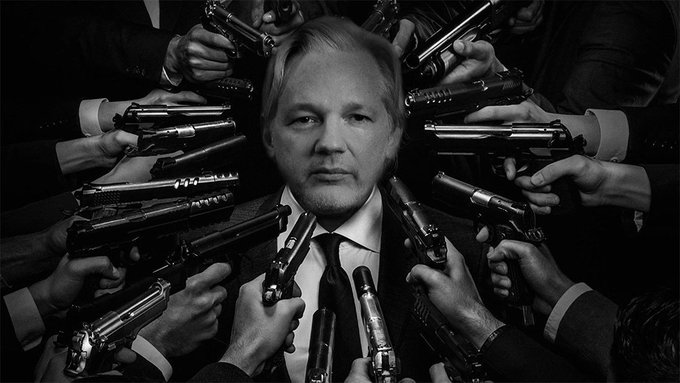
Pepe Escobar, Strategic Culture Foundation, Wed, 26 Jun 2024, https://www.sott.net/article/492585-Julian-Assange-Free-at-last-but-guilty-of-practicing-journalism
The United States Government (USG) – under the “rules-based international order” – has de facto ruled that Julian Assange is guilty of practicing journalism.
Edward Snowden had already noted that “when exposing a crime is treated as committing a crime, you are being ruled by criminals.”
Criminals such as Mike “We Lie, We Cheat, We Steal” Pompeo, former Trump Secretary of State, who had planned to kidnap and kill Julian when he was head of the CIA.
The indomitable Jennifer Robinson and Julian’s U.S. lawyer Barry Pollack sum it all up: the United States has “pursued journalism as a crime”.
Julian was forced to suffer an unspeakably vicious Via Crucis because he dared to expose USG war crimes; the inner workings of the U.S. military in their rolling thunder War Of Terror (italics mine) in Afghanistan and Iraq; and – Holy of Holies – he dared to release emails showing the Democratic National Committee (DNC) colluded with the notorious warmongering Harpy Hillary Clinton.
Julian was subjected to relentless psychological torture, and nearly crucified for publishing facts that should always remain invisible to public opinion. That’s what top-notch journalism is all about.
The whole drama teaches the whole planet everything one needs to know about the absolute control of the Hegemon over pathetic UK and EU.
And that bring us to the kabuki that may – and the operative word is “may” – be closing the case. Title of the twisted morality play: ‘Plead Guilty or Die in Jail’.
The final twist in the plot line of the morality play runs like this: the combo behind the cadaver in the White House realized that torturing an Australian journalist and publisher in a maximum security U.S. prison in an electoral year was not exactly good for business.
At the same time the British establishment was begging to be excluded from the plot – as its “justice” system was forced by the Hegemon to keep an innocent man and family father hostage for 5 years, in abysmal conditions, in the name of protecting a basket of Anglo-American intel secrets.
In the end, the British establishment quietly applied all the pressure it could muster to run towards the exit – in full knowledge of what the Americans were planning for Julian.
Life in prison was “fair and reasonable”
Cue to the kabuki this Wednesday in Saipan, the largest of the Northern Mariana Islands, unincorporated Pacific land administered by the Hegemon.
Free at last – maybe, but with conditionalities that remain quite murky.
Julian was ordered by this U.S. Court in the Pacific to instruct WikiLeaks to destroy information as a condition of the deal.
Julian had to tell U.S. judge Ramona Manglona that he was not bribed or coerced to plead guilty to the crucial charge of “conspiring to unlawfully obtain and disseminate classified information relating to the national defense of the United States”.
Well, his lawyers told him he had to follow the ‘Plead Guilty or Die in Jail’ script. Otherwise, no deal.
Judge Manglona – in an astonishing brush aside of those 5 years of psychological torture – said, “it appears that your 62 months in prison was fair and reasonable and proportionate.”
So now the – oh, so benign and “fair” – USG will take the necessary steps to immediately erase remaining charges against Julian in the notoriously harsh Eastern District of Virginia.
Julian was always adamant: he stressed over and over again that he would never plead guilty to an espionage charge. He didn’t; he pleaded guilty to a hazy felony/conspiracy charge; was given time served; was set free; and that’s a wrap.
Or is it?
Australia is a Hegemon vassal state, intel included, and with less than zero capability to protect its civilian population.
Moving from the UK to Australia may not be exactly an upgrade – even with freedom included. A real upgrade would be a move to a True Sovereign. Like Russia. Yet Julian will need U.S. authorization to travel and leave Australia.Moscow inevitably will be a sanctioned, off-limits destination.
There’s hardly any question Julian will be back at the helm of WikiLeaks. Whistleblowers may be even lining up as we speak to tell their stories – supported by official documents.
Yet the stark, ominous message remains fully imprinted in the collective unconscious: the ruthless, all-powerful U.S. Intel Apparatus will go no holds barred and take no prisoners to punish anyone, anywhere, who dares to expose imperial crimes. A new global epic starts now: The Fight against Criminalized Journalism.
The persecution of Wilfred Burchett and Julian Assange.

Julian Assange’s “crime” was, in 2010, to expose military abuses committed by the USA .

Assange is not a USA citizen – he’s Australian. Yet his own national government is apparently abandoning him to the cruel vindictive revenge of a foreign government – the USA.
But hey – this is nothing new! While the world remembers the atomic bombing of Hiroshima and Nagasaki, it conveniently forgets that other Australian journalist, Wilfred Burchett, who, in 1945 revealed the horrors of that bombing.
In the 1930s, Burchett took many personal risks to help rescue Jews from Hitler’s Germany.
In August 1945, in defiance of the US army’s ban on journalists, he made his way to the devastated Japanese city of Hiroshima . He was the first journalist to expose the truth about the devastating after-effects of the atom bomb.The US military had wanted to keep radioactive contamination an official secret, concealing the death and suffering it caused for hundreds of thousands of Japanese civilians.
US officials accused Burchett of being under the sway of Japanese propaganda.[Burchett lost his press accreditation and he was ordered to leave Japan. His camera, containing photos of Hiroshima, was confiscated while he was documenting persistent illness at a Tokyo hospital. The film was sent to Washington and classified secret .
For daring to out these and later, many other important truths, Burchett was marked by Western intelligence services.
Burchett dedicated the rest of his life to exposing the lies told by Western governments.
Australian conservatives branded him a traitor and communist. the Australian Robert Menzies government illegally refused to replace his passport. He was barred from re-entering Australia, despite his citizenship. His children were also denied Australian passports. The Australian national security department, which became ASIO in 1949, opened a file on the whole Burchett family in the 1940s.
the Australian government investigated the possibility of charging Burchett with treason. ASIO agents were despatched to Japan and Korea to collect evidence, but their investigations uncovered little. Burchett was subjected to government-backed smear campaigns and barred from Australia.
In 1969, Australian authorities refused Burchett entry to attend his father’s funeral. Only in 1972 — after 17 years of exile — was Burchett finally given an Australian passport by the incoming Whitlam government.
I guess that Australia will never again be allowed by the USA to have a government like that of Gough Whltlam. Liberal or Labor, the Australian government is determined to toe the USA line – which is to persecute any journalist who tells the truth about USA war atrocities.
Julian Assange is finally free, but no thanks to the media

The establishment media acted as a willing tool in the demonising narrative the US and British governments carefully crafted against Assange.
The smears might not have stuck so well had they been thrown only by the rightwing tabloids. But life was breathed into these claims from their endless repetition by journalists supposedly on the other side of the aisle, particularly at the Guardian.
In this case, it was Assange. But the same media machine was rolled out against former Labour leader Jeremy Corbyn, another thorn in the establishment’s side. And as with Assange, the Guardian and the BBC were the two outlets that were most useful in making the smears stick.
JONATHAN COOK, 26 JUNE 2024 DeClassified UK
It was the media, led by the Guardian, that kept Assange behind bars. Their villainy will soon be erased because they write the script about what’s going on in the world.
“………………………………………………………………….Everything Assange had warned the US wanted to do to him was proved correct over the next five years, [from 2017] as he languished in Belmarsh entirely cut off from the outside world.
No one in our political or media class appeared to notice, or could afford to admit, that events were playing out exactly as the founder of Wikileaks had for so many years predicted they would – and for which he was, at the time, so roundly ridiculed.
Nor was that same political-media class prepared to factor in other vital context showing that the US was not trying to enforce some kind of legal process, but that the extradition case against Assange was entirely about wreaking vengeance – and making an example of the Wikileaks founder to deter others from following him in shedding light on US state crimes.
That included revelations that, true to form, the CIA, which was exposed as a rogue foreign intelligence agency in 250,000 embassy cables published by Wikileaks in 2010, had variously plotted to assassinate him or kidnap him off the streets of London.
Other evidence came to light that the CIA had been carrying out extensive spying operations on the embassy, recording Assange’s every move, including his meetings with his doctors and lawyers.
That fact alone should have seen the US case thrown out by the British courts. But the UK judiciary was looking over its shoulder, towards Washington, far more than it was abiding by its own statute books.
Media no watchdog
Western governments, politicians, the judiciary, and the media all failed Assange. Or rather, they did what they are actually there to do: keep the rabble – that is, you and me – from knowing what they are really up to.
Their job is to build narratives suggesting that they know best, that we must trust them, that their crimes, such as those they are supporting right now in Gaza, are actually not what they look like, but are, in fact, efforts in very difficult circumstances to uphold the moral order, to protect civilisation.
For this reason, there is a special need to identify the critical role played by the media in keeping Assange locked up for so long.
The truth is, with a properly adversarial media playing the role it declares for itself, as a watchdog on power, Assange could never have been disappeared for so long. He would have been freed years ago. It was the media that kept him behind bars.
The establishment media acted as a willing tool in the demonising narrative the US and British governments carefully crafted against Assange.
Even now, as he is reunited with his family, the BBC and others are peddling the same long-discredited lies.
Those include the constantly repeated claim by journalists that he faced “rape charges” in Sweden that were supposedly dropped. Here is the BBC making this error once again in its reporting this week.
In fact, Assange never faced more than a “preliminary investigation”, one the Swedish prosecutors repeatedly dropped for lack of evidence. The investigation, we now know, was revived and sustained for so long not because of Sweden but chiefly because the UK’s Crown Prosecution Service, then led by Sir Keir Starmer (now the leader of the Labour party), insisted on it dragging on.
Starmer made repeated trips to Washington during this period, when the US was trying to find a pretext to lock Assange away for political crimes, not sexual ones. But as happened so often in the Assange case, all the records of those meetings were destroyed by the British authorities.
The media’s other favourite deception – still being promoted – is the claim that Wikileaks’ releases put US informants in danger.
That is utter nonsense, as any journalist who has spent even a cursory amount of time studying the background to the case knows.
More than a decade ago, the Pentagon set up a review to identify any US agents killed or harmed as a result of the leaks. They did so precisely to help soften up public opinion against Assange.
And yet a team of 120 counter-intelligence officers could not find a single such case, as the head of the team, Brigadier-General Robert Carr, conceded in court in 2013.
Despite having a newsroom stuffed with hundreds of correspondents, including those claiming to specialise in defence, security and disinformation, the BBC still cannot get this basic fact about the case right.
That’s not an accident. It’s what happens when journalists allow themselves to be spoon-fed information from those they are supposedly watching over. That is what happens when journalists and intelligence officials live in a permanent, incestuous relationship.
Character assassination
But it is not just these glaring reporting failures that kept Assange confined to his small cell in Belmarsh. It was that the entire media acted in concert in his character assassination, making it not only acceptable but respectable to hate him.
It was impossible to post on social media about the Assange case without dozens of interlocutors popping up to tell you how deeply unpleasant he was, how much of a narcissist, how he had abused his cat or smeared his walls in the embassy with faeces. None of these individuals, of course, had ever met him.
It also never occurred to such people that, even were all of this true, it would still not have excused stripping Assange of his basic legal rights, as all too clearly happened. And even more so, it could not possibly justify eroding the public-interest duty of journalists to expose state crimes.
What was ultimately at stake in the protracted extradition hearings was the US government’s determination to equate investigative national-security journalism with “espionage”. Whether Assange was a narcissist had precisely no bearing on that matter.
Why were so many people persuaded Assange’s supposed character flaws were crucially important to the case? Because the establishment media – our supposed arbiters of truth – were agreed on the matter.
The smears might not have stuck so well had they been thrown only by the rightwing tabloids. But life was breathed into these claims from their endless repetition by journalists supposedly on the other side of the aisle, particularly at the Guardian.
Liberals and left-wingers were exposed to a steady flow of articles and tweets belittling Assange and his desperate, lonely struggle against the world’s sole superpower for the right not to be locked away for the rest of his life for doing journalism.
The Guardian – which had benefited by initially allying with Wikileaks in publishing its revelations – showed him precisely zero solidarity when the US establishment came knocking, determined to destroy the Wikileaks platform, and its founder, for making those revelations possible.
For the record, so we do not forget how Assange was kept confined for so long, these are a few examples of how the Guardian made him – and not the law-breaking US security state – the villain.
Marina Hyde in the Guardian in February 2016 – four years into his captivity in the embassy – casually dismissed as “gullible” the concerns of a United Nations panel of world-renowned legal experts that Assange was being “arbitrarily detained” because Washington had refused to issue guarantees that it would not seek his extradition for political crimes.
Long-time BBC legal affairs correspondent Joshua Rozenberg was given space in the Guardian on the same day to get it so wrong in claiming Assange was simply “hiding away” in the embassy, under no threat of extradition (Note: Though his analytic grasp of the case has proven feeble, the BBC allowed him to opine further this week on the Assange case).
Two years later, the Guardian was still peddling the same line that, despite the UK spending many millions ringing the embassy with police officers to prevent Assange from “fleeing justice”, it was only “pride” that kept him detained in the embassy.
Or how about this one from Hadley Freeman, published by the Guardian in 2019, just as Assange was being disappeared for the next five years into the nearest Britain has to a gulag, on the “intense happiness” she presumed the embassy’s cleaning staff must be feeling.
Anyone who didn’t understand quite how personally hostile so many Guardian writers were to Assange needs to examine their tweets, where they felt freer to take the gloves off. Hyde described him as “possibly even the biggest arsehole in Knightsbridge” while Suzanne Moore said he was “the most massive turd.”
The constant demeaning of Assange and the sneering at his plight was not confined to the Guardian’s opinion pages. The paper even colluded in a false report – presumably supplied by the intelligence services, but easily disproved – designed to antagonise the paper’s readers by smearing him as a stooge of Donald Trump and the Russians.
This notorious news hoax – falsely claiming that in 2018 Assange repeatedly met with a Trump aide and “unnamed Russians”, unrecorded by any of the dozens of CCTV cameras surveilling ever approach to the embassy – is still on the Guardian’s website.
This campaign of demonisation smoothed the path to Assange being dragged by British police out of the embassy in early 2019.
It also, helpfully, kept the Guardian out of the spotlight. For it was errors made by the newspaper, not Assange, that led to the supposed “crime” at the heart of the US extradition case – that Wikileaks had hurriedly released a cache of files unredacted – as I have explained in detail before.
Too little too late
The establishment media that collaborated with Assange 14 years ago in publishing the revelations of US and UK state crimes only began to tentatively change its tune in late 2022 – more than a decade too late.
That was when five of his former media partners issued a joint letter to the Biden administration saying that it should “end its prosecution of Julian Assange for publishing secrets”.
But even as he was released this week, the BBC was still continuing the drip-drip of character assassination. A proper BBC headline, were it not simply a stenographer for the British government, might read: “Tony Blair: Multi-millionaire or war criminal?”
For while the establishment media has busily fixed our gaze on the supposed character flaws of Assange, it has kept our attention away from the true villains, those who committed the crimes he exposed: Blair, George W Bush, Dick Cheney and many more.
We need to recognise a pattern here. When the facts cannot be disputed, the establishment has to shoot the messenger.
In this case, it was Assange. But the same media machine was rolled out against former Labour leader Jeremy Corbyn, another thorn in the establishment’s side. And as with Assange, the Guardian and the BBC were the two outlets that were most useful in making the smears stick.
Sadly, to secure his freedom, Assange was compelled to make a deal pleading guilty to one of the charges levelled against him under the Espionage Act.
Highlighting the enduring bad faith of the Guardian, the same paper that so readily ridiculed Assange’s years of detention to avoid being locked away in a US super-max jail, ran an article this week, as Assange was released, stressing the “dangerous precedent” for journalism set by his plea deal.
Washington’s treatment of Assange was always designed to send a chilling message to investigative journalists that, while it is fine to expose the crimes of Official Enemies, the same standards must never be applied to the US empire itself.
How is it possible that the Guardian is learning that only now, after failing to grasp that lesson earlier, when it mattered, during Assange’s long years of political persecution?
The even sadder truth is that the media’s villainous role in keeping Assange locked up will soon be erased from the record. That is because the media are the ones writing the script we tell ourselves about what is going on in the world.
They will quickly paint themselves as saints, not sinners, in this episode. And, without more Assanges to open our eyes, we will most likely believe them. https://www.declassifieduk.org/julian-assange-freedom-this-time-no-thanks-to-the-media/
UK government hires scandal-ridden Fujitsu company to account and track its nuclear waste!

Government Hires Fujitsu to Account and Track Dangerous Nuclear Wastes from Dounreay – Are they Laughing at Us?
At the same time folk at Glastonbury Festival are saying No to New Nuclear Wastes and the Post Office Inquiry is Live , Government have hired the company at the centre of the Post Office scandal to account for and track the UK’s most dangerous nuclear wastes. The £306K Fujitsu contract has been awarded by Nuclear Restoration Services (former Magnox) for Fujitsu’s ATOM application: “A contract has been awarded by NRS
Dounreay as a result of a direct award through the Crown Commercial Services
RM6194 Back Office Software Framework, for the provision and support of ATOM Application.”
Dounreay was the test site of the UK’s experimental Fast Breeder nuclear reactors. “EARLY in the morning of Tuesday 10 May 1977 there was a loud explosion at the Dounreay nuclear plant on the north coast of Scotland. The UK Atomic Energy Authority, which runs the plant, had dumped at least 2 kilograms of sodium and potassium down a 65-metre shaft packed with radioactive waste and flooded with seawater.”
Fujitsu’s ATOM stands for Accountancy and Tracking Of Material – “a comprehensive track and trace application, specifically designed for the processing, movement and reporting of nuclear and radioactive materials throughout the supply chain right up to nuclear decommissioning”. According to the United Kingdom Atomic Energy Authority in 2008 Fujitsu’s ATOM employed over ” 2,000 people • Manages over 115,000 radioactive item records in the UK.” In 2008 Dik Third, Nuclear Materials Advisor, UKAEA, worked closely with Fujitsu and said “…one of the problems with radioactive materials is that they have properties that computer-based logistics packages don’t handle. Unlike tins of beans, radioactive materials with short half-lives can transform into another isotope entirely.”
Fujitsu are now in control of the accounting and tracking of radioactive materials ie of nuclear wastes from the UKs failed fast breeder reactor at Dounreay. They will be allocating wastes to the nuclear “waste hierarchy’ that means sorting wastes to go landfill, to incineration, to the Low Level Waste Repository at Drigg, to Cyclife (radioactive scrap metal plant) and to Sellafield. The nuclear waste hierarchy has been criticised for reducing the levels at which waste can be designated for “free release” and other “disposal” routes which increasingly mean dumping into the public domain. There is a precedent for radioactive material ending up in the wrong place even without the services of Fujitsu.
READ FULL ARTICLE HERE
Deaths mount as Pakistan swelters in heatwave

As the temperatures rose in southern Pakistan, so did the body count. The
Edhi ambulance service says it usually takes around 30 to 40 people to the
Karachi city morgue daily. But over the last six days, it has collected
some 568 bodies – 141 of them on Tuesday alone. It is too early to say
exactly what the cause of death was in every case. However, the rising
numbers of dead came as temperatures in Karachi soared above 40C (104F),
with the high humidity making it feel as hot as 49C, reports said. People
have been heading to hospitals seeking help.
BBC 27th June 2024
Japan starts 7th discharge of Fukushima nuclear-contaminated wastewater despite opposition

https://news.cgtn.com/news/2024-06-28/news-1uNrsTbwBm8/p.html
Japan on Friday started the seventh round of release of nuclear-contaminated wastewater from the crippled Fukushima Daiichi Nuclear Power Plant into the Pacific Ocean.
Despite opposition from local fishermen, and residents as well as backlash from the international community, Tokyo Electric Power Company (TEPCO), the plant’s operator, started releasing the radioactive wastewater in the morning, the third round in fiscal 2024.
Just like the previous rounds, about 7,800 tonnes of wastewater will be discharged from about a kilometer off the coast of Fukushima Prefecture via an underwater tunnel until July 16.
According to TEPCO, the company will begin dismantling empty storage tanks after the wastewater has been discharged around January next year.
There are approximately 1,000 storage tanks at the Fukushima plant because of its continued production of wastewater. TEPCO plans to dismantle 21 of these tanks over about one year starting next January, which will free up 2,400 square meters of space.
There is still uncertainty when it comes to the decommissioning schedule of the Fukushima plant and the measures to deal with contaminated wastewater, Masahide Kimura, a member of a Japanese anti-nuclear campaign group, told Xinhua.
The collapse of houses, the destruction of roads and the ground uplift along the coast caused by the recent Noto Peninsula Earthquake have warned us that nuclear power plants should not be operated in Japan, an archipelago prone to earthquakes, Kimura said.
Hit by a 9.0-magnitude earthquake and an ensuing tsunami on March 11, 2011, the Fukushima nuclear plant suffered core meltdowns that released radiation, resulting in a level-7 nuclear accident, the highest on the International Nuclear and Radiological Event Scale.
The plant has been generating a massive amount of water tainted with radioactive substances from cooling down the nuclear fuel in the reactor buildings. The contaminated water is now being stored in tanks at the nuclear plant.
Despite furious opposition both at home and abroad, the ocean discharge of the Fukushima nuclear-contaminated water began in August 2023.
Complete BS from the IAEA about the non-existent “global consensus” on nuclear power.

The latest (today) International Atomic Energy Agency newsletter includes this BS info about a fantasy “global consensus” on nuclear power.
The World Bank and other MDBs currently do not contribute financing to nuclear power new build projects, although some MDBs have provided lending for upgrades to existing nuclear power reactors or their decommissioning. Mr Grossi said that financing nuclear power would better align MDBs with the “new global consensus” forged at last year at COP28 in Dubai, where the world called for accelerating the deployment of nuclear power along with other zero emission energy technologies to achieve deep and rapid decarbonization.
Dozens of countries have also signed on to a pledge made at COP28 to work towards tripling global nuclear power capacity to achieve net zero by 2050. The pledge also called on the World Bank, regional development banks and international financial institutions to include nuclear in their lending. That call was echoed by scores of countries at the first-ever Nuclear Energy Summit organized by the IAEA and Government of Belgium in March.
**
The statement supporting nuclear power was made at a private media event at COP 28 and was not part of the official COP proceedings. Canada’s nuclear industry booster NRCan has it on its website but it is not on the site of Environment Canada, which is responsible for COP declarations.
There is no “global consensus” on nuclear energy. Here’s the full IAEA statement:
How I read this: the nuclear industry is desperate. If you read the full item above, you will see a desperate plea for the World Bank and others that do not currently fund nuclear projects to begin doing it. What’s not here is why the private sector is not funding nuclear projects but rather putting their money into solar and wind development, which is that nuclear is a terrible investment and renewables are a good investment.
Israel’s leaked plan for annexing the West Bank, explained
Israeli Finance Minister Bezalel Smotrich’s plan to annex the West Bank would see over 60% of the territory becoming a part of Israel. But Palestinian experts say it is “already happening.”
BY QASSAM MUADDI Mondoweiss
The issue of Israel’s creeping annexation of the West Bank has resurfaced in recent days after a leaked recording of Israel’s finance minister Bezalel Smotrich revealed a “dramatic” plan to impose permanent Israeli control over the West Bank “without the government being accused of annexing it,” as Smotrich was recorded saying.
Smotrich’s statements, recorded by the Peace Now Israeli NGO and published by CNN and the New York Times, were made during a speech he gave to settler leaders earlier in June. Smotrich was recorded saying that he had elaborated a plan in the past year and a half and exposed it to Israel’s Prime Minister Netanyahu, who was “fully onboard.”
The plan centers around transferring administrative authorities in the West Bank from the Israeli army to the civil authorities of the Israeli government. Smotrich said that he oversaw the creation of an entire administrative body directly linked to the government and that members of this body were already embedded in the Israeli army’s Civil Administration.
In 1967, Israel began administering the West Bank and Gaza under a military administrative body, the Military Government, and in 1981, the Civil Administration was established in its place. Following Netanyahu’s formation of the most right-wing government in Israel’s history in 2022, Smotrich was put in charge of the Civil Administration. Since October 7, Smotrich’s hardline policies pushing for settlement expansion have reached new heights, with the recently leaked annexation plan raising fears about the intentions of the self-described fascist toward the Palestinians living in the West Bank.
According to Smotrich, the administrative changes he wishes to implement represent a “dramatic change” equivalent to “changing the DNA of the system.”
Smotrich said that large budgets were allocated to infrastructure projects for settlement expansion and for “security measures” for the settlements, adding that the aim of such a plan is “to avoid the West Bank from becoming part of a Palestinian state.”
Smotrich plan ‘already happening’………………………………..more https://mondoweiss.net/2024/06/israels-leaked-plan-for-annexing-the-west-bank-explained/
Israeli Officials Hiding Data About Forced Starvation of Gaza Prisoners: Report
Former detainees say the Israel Prison Service “has significantly reduced their food rations, to the point of starvation, causing them to shed dozens of kilograms.”
BRETT WILKINS, Jun 27, 2024, Common Dreams,
Israeli prison officials are concealing information about reductions in food rations for Palestinians held in the Gaza Strip, where detainees—who have also reported horrific abuse including alleged rape and deadly torture—have been deliberately driven “to the point of starvation,” according to a report published Thursday.
Security sources told the Israeli newspaper Haaretz that the Israel Prison Service (IPS) is intentionally cutting Palestinian prisoners’ caloric intake, a move confirmed by Israeli National Security Minister Itamar Ben-Gvir, who called the policy a “deterrent.”
“The Palestinian detainees will receive the minimum rights and the minimum food, and I will ensure that this policy is implemented,” Ben-Gvir, who leads the far-right Otzma Yehudit (Jewish Power) party, said Thursday in response to a query from Israel’s Supreme Court…………………………………………………………………………………………….. https://www.commondreams.org/news/israel-starving-prisoners
CEO, staff suddenly depart New Brunswick reactor developer ARC Clean Technology
“reactor developers would not normally terminate staff after hitting a regulatory milestone.
“If they were going to move forward, basically, they would be hiring people,”
MATTHEW MCCLEARN 26 June 24, https://www.theglobeandmail.com/business/article-ceo-staff-depart-new-brunswick-reactor-developer-arc-clean-technology/
ARC Clean Technology Canada, a developer of small modular reactors in New Brunswick, has revealed the sudden departure of its Canadian chief executive, raising questions about its future.
Alongside Tuesday’s announcement of CEO William Labbe’s exit, other ARC employees also received layoff notices, according to a report from the Telegraph Journal, a Saint John, N.B., newspaper. The company did not respond to questions from The Globe about those reported departures, or how many staffers remain with the company.
In a statement, ARC spokesperson Sandra Donnelly said the company had nearly completed a phase of a pre-licensing process with the Canadian Nuclear Safety Commission, and was “realigning personnel and resources to strengthen our strategic partnerships and rationalize operations to best prepare for the next phase of our deployment.”
Ms. Donnelly said ARC Canada will be led by Bob Braun, chief operating officer of its Washington-based parent ARC Clean Technology Inc., and two vice presidents, Lance Clarke and Jill Doucet.
The company’s staff changes follow the resignation of New Brunswick energy minister Mike Holland, announced June 20. Mr. Holland had been an advocate for the province’s SMR program, but had previously announced he would not stand for re-election.
ARC set up offices in Saint John several years ago, as part of an initiative to build SMRs at the province’s only nuclear power plant, Point Lepreau Nuclear Generating Station. The plant’s owner, NB Power, has promoted plans for demonstration units of two different reactors built there by 2030. The second reactor would be designed by another startup, Moltex Energy, which would include a nuclear fuel reprocessing plant.
ARC is one of several vendors jockeying to sell SMRs to Canadian utilities. All existing commercial power reactors in Canada – including the existing one at Point Lepreau – are of the homegrown Candu design. (The newest, at Ontario’s Darlington Nuclear Generating Station, was completed in the early 1990s.)
The company is in the early stages of designing a reactor known as the ARC-100, a next-generation reactor that would use sodium as coolant – a striking departure from Candus and nearly all other commercial power reactors used today, which are water-cooled. The ARC-100 is also marketed as having the ability to consume reprocessed spent fuel, something that has not been done historically in Canada.
As ARC rationalizes its work force, some of its better-established competitors are staffing up. U.S.-based GE-Hitachi and Ontario Power Generation are preparing a site at Darlington for potential construction of a BWRX-300 small modular reactor. Westinghouse, which is marketing several reactors including its AP-1000 large reactor and eVinci microreactor, announced a new 13,000-square-foot office in Kitchener, Ont., this month along with plans to hire 100 engineers to staff it by next year.
Last year, Mr. Labbe said developing the ARC-100 would cost around $500-million. But so far, the company has raised only a small fraction of that. In 2022, it announced it had raised $30-million from the provincial government and the private sector. In October, the federal government awarded it another $7-million. Its partner, NB Power, has not contributed any funding.
ARC submitted an application to the Canadian Nuclear Safety Commission in 2023 for a license to prepare a site at Point Lepreau for its demonstration unit. At an industry conference in April, Mr. Labbe said ARC was also preparing to apply for a license to construct the reactor, which it planned to issue within the next year.
“We’ve been at this for about seven years,” he told the audience. “And we really have another six, seven years until we get that commercial deployment.”
Mr. Labbe became ARC Canada’s CEO in May, 2021. His predecessor, Norm Sawyer, is now president of ION Nuclear Consulting Ltd., an adviser to investors, energy companies and First Nations. Mr. Sawyer said that, while he had no inside information on the company, reactor developers would not normally terminate staff after hitting a regulatory milestone.
“If they were going to move forward, basically, they would be hiring people,” he said.
“If you’re on hold and you’re thinking that you’re going to move forward in a short time period, you maintain your staffing levels.”
Susan O’Donnell, a researcher at St. Thomas University who studies energy technologies, said that, while ARC has managed to attract some private funding, it has remained almost wholly dependent on government money. She added that the federal government is unlikely to provide the billions of dollars required to build new reactors at Point Lepreau.
“I just don’t see how this is going to work, where the money’s going to come from,” she said. “And I think this is why we’re seeing this with ARC today.
“They can’t afford to have that number of staff.”
As recently as November, NB Power chief executive officer Lori Clark had said SMRs were “a key part” of the utility’s plans to phase out coal by 2030. On Tuesday, NB Power said it will continue to provide technical expertise to ARC and Moltex, and that it regards SMRs as a “potential option” to achieve net zero emissions electricity production by 2035.
“We continue to work toward the goal of having an SMR on the grid by the early 2030s,” spokesperson Dominique Couture wrote in an e-mail.
With a report from Emma Graney
Greenpeace activist climbs on top of Conservative election campaign bus
Earlier this afternoon, a Greenpeace UK activist climbed onto the top of the Conservative party election campaign ‘battle bus’ using a telescopic ladder as it was parked in an industrial estate near Ollerton, in Nottinghamshire, during the Conservative’s election campaign trail. The activist unfurled a handheld banner reading ‘Clean Power Not Paddy Power’, in reference to the Conservative election date betting scandal.
Greenpeace is protesting against the Conservative party’s persistent failure to tackle the climate and nature crises while in government [1], which was repeated in their election manifesto.
An analysis of political party election manifestos, published this week by Greenpeace UK and Friends of the Earth, put the Conservatives rock bottom, scoring just 5 points out of a possible 40 for its plans for climate and nature – four times worse than Labour’s plans.
The Conservatives’ divisive manifesto doubles down on trying to make climate and nature a wedge issue by committing to licence new fossil fuels on an annual basis, ban measures to clean up toxic air, and spark a bonfire of ‘red tape’ when it comes to protecting the environment.
The campaigners are urging the British public to use the upcoming general election to vote for a government that will bring in policies that would deliver clean energy, lower bills, more energy security, and economic prosperity.
Amy Rugg-Easey, the Greenpeace activist who climbed onto the roof of the bus, said:
“We’ve had enough of this government lurching from one scandal to the next, while gambling with our future. We need clean power, not Paddy Power.
“Fourteen years of Conservative governments has left this country broken. Sunak has gone backwards on climate action, ditching key pledges and promising to ‘max out’ the climate-wrecking oil and gas that are the cause of the cost of living crisis and our unaffordable bills. Our rivers are awash with sewage, and our economy, NHS and public services are on their knees.
“Enough is enough. We’ve climbed onto Sunak’s battle bus today to remind the British public that it is the Conservative government’s consistent failure to deliver greener, fairer policies that has created the mess we’re in. Don’t back the wrong horse – a vote for the climate is a vote for a better future.”………………………………………more https://www.greenpeace.org.uk/news/breaking-greenpeace-activist-climbs-on-top-of-conservative-election-campaign-bus/
Post Election: A Different Kind of Nuclear Bomb

The Nuclear Legacy
The Government has accidentally left behind an unexploded bomb for an incoming Labour Government. Should it go off, it will be early evidence for the argument that Starmer can’t be trusted. The bomb in question is whether or not to go ahead with building another large French nuclear power station at Sizewell in Suffolk.
Our current experience with building large French nuclear power stations is no
Tom Burke on how an incoming Labour Government will have to deal with the unexploded political bomb of nuclear left behind by the Conservatives
BYLINE SUPPLEMENT, JUN 26, 2024, https://www.bylinesupplement.com/p/post-election-a-different-kind-of
You know something is changing in British politics when our better-known political commentators start turning up at Green Party events. They have not found it easy to make much sense of what such a heterodox coalition offers voters. But there is no doubting that their presence signals an old order in transition.
The Financial Times publishes a general election poll tracker. The picture it shows has not changed significantly for eighteen months. A consistent 20 point gap between Labour and the Conservatives is now barely worth a comment. Much less noticed, however, has been another equally consistent pattern.
Adding together support for the insurgent parties – Reform at 11.5%, Lib-Dems at 9.2% and the Greens at 6.3% – may not tell you much about the balance of power in the next Parliament but it does tell you something significant about Britain’s electorate. Voter support for the three minor parties totals 27%, almost 4% higher than that for the ruling Conservatives.
Put another way, more than 70% of British voters want anyone other than the current Conservative Government to run the country. Apart from being a clear demonstration of the wisdom of crowds, this is another dagger at the heart of our archaic and increasingly dysfunctional first past the post voting system. The political complexities of the 21st Century cannot easily be tackled as a tidy battle between labour and capital. Voters have already recognised this. It is time that our political leaders did too.
No issue makes this more apparent than that of climate change. The Conservatives’ choice of this issue as a key battleground on which to fight an electoral culture war was entirely voluntary. There was no great grassroots pressure from within the Party itself. Nor was there any groundswell of public opinion although there was a noisy, if evidence-free, torrent of editorial ink from the Rothermere, Murdoch, Barclay press.
The Uxbridge by-election last July paused a string of Conservative losses. Victory was put down to a voter rebellion against too-expensive climate change policies. The Government then seized on climate as a wedge issue for the forthcoming election and began a systematic winding back of climate action.
In doing so it was copying an election strategy first adopted by the Australian National Party. Since our Prime Minister’s election strategist is the Australian Isaac Levido – a protégé of another, better known, Australian political strategist, Lynton Crosby, this should not have surprised anyone.
What is less explicable is why anyone should have thought that a strategy that failed in Australia would work here. Labour’s victory in the 2022 Australian election was aided by a break-away group of candidates standing as ‘Teals’ – blue-green Conservatives. Exactly the constituency David Cameron had wooed for the Tories here in 2010.
As things currently stand, Labour looks like being helped into Downing Street by an ill-chosen culture war that climate change won. This will have its own challenges for Labour. No-one doubts their good intentions on the climate. But their clumsy handling of, and subsequent back pedalling on, their £28 billion a year green prosperity pledge has left a legacy of doubt in voters’ minds. It risks being punished by increasingly volatile voters if it cannot quickly resolve those doubts.
The Nuclear Legacy
The Government has accidentally left behind an unexploded bomb for an incoming Labour Government. Should it go off, it will be early evidence for the argument that Starmer can’t be trusted. The bomb in question is whether or not to go ahead with building another large French nuclear power station at Sizewell in Suffolk.
Our current experience with building large French nuclear power stations is not encouraging. Although, unusually, we are not alone in this respect. No-one else, including the French themselves, has been able to do so either. Indeed, France has now decided not to even try to build any more of the type of reactors intended for Sizewell as they are too expensive and difficult to build. They will build a different design instead.
The French reactor we are currently building at Hinkley Point was promised to cost £5.6 billion in 2008 and be producing the electricity to cook turkeys on by 2017. In today’s money it will cost nearer to £46 billion and not be producing electricity before 2030. To get EDF to invest, the then Labour Government promised EDF an index linked price for its electricity.
This means that, were it available now, electricity from Hinkley Point would cost £130/MWh. Since National Grid will sell you electricity today for about £80/MWh why would anyone buy more expensive nuclear electricity? To get EDF to build Hinkley Point a Conservative Government bought 35 years’ worth of electricity in advance at a fixed price. To pay for the difference between what EDF can get from the wholesale market there will be tax on everyone’s electricity bill.
It is beyond my understanding why any sane person would want to repeat this experience. Yet that is just what the Conservative Government, with Labour support, was planning to do. It is often argued that building a second station using the same reactors will be cheaper. If that were so, someone needs to explain why the French have already decided not to build any more. Is there something they know that we don’t?
Labour now face a particular difficulty on Sizewell. Since their wind-back of the green prosperity plan, they have doubled down on their promise to deliver carbon-free electricity by 2030. So let us, for argument’s sake, put aside any reservation about whether this is practical. We, and our children, will all certainly be better off if they can deliver carbon-free, secure and affordable electricity to consumers by 2030.
But construction of Sizewell cannot start until after 2030. What then, is the case for forcing homeowners and businesses to pay a tax on their energy bills to finance an unnecessary nuclear power station? And what would this do to the scale and speed of investment in the energy efficiency and renewables which are cheaper and faster ways to get both bills and carbon emissions down?
Assange Is Free, But US Spite Will Chill Reporting for Years
ARI PAUL, 26 June 24 https://fair.org/home/assange-is-free-but-us-spite-will-chill-reporting-for-years/
In some ways, the nightmare for WikiLeaks founder Julian Assange is coming to an end. After taking refuge at the Ecuadorian embassy in London in 2012, he was arrested in 2019 by Britain, who have since been trying to extradite him to the United States on charges that by publishing official secrets he violated the Espionage Act (FAIR.org, 12/13/20; BBC, 6/25/24). Once he enters a guilty plea, he will be sentenced to time served and walk away a free man (CBS, 6/25/24).
Assange’s case has attracted the attention of critics of US foreign policy, and those who value free speech and a free press. His family has rightly contended that his treatment in prison was atrocious (France24, 11/1/19; Independent, 2/20/24). A group of doctors said he was a victim of “torture” tactics (Lancet, 6/25/20). In 2017, Yahoo! News (9/26/21) reported that the “CIA plotted to kidnap the WikiLeaks founder, spurring heated debate among Trump administration officials over the legality and practicality of such an operation” and that CIA and Trump administration insiders “even discussed killing Assange, going so far as to request ‘sketches’ or ‘options’ for how to assassinate him.”
His supporters noted that the charges against him came after he harmed the US imperial project, particularly by leaking a video showing US troops killing Reuters journalists in Iraq (New York Times, 4/5/10). Under his watch, WikiLeaks also leaked a trove of diplomatic cables that the New York Times (11/28/10) described as an “unprecedented look at back-room bargaining by embassies around the world, brutally candid views of foreign leaders, and frank assessments of nuclear and terrorist threats.”
Press freedom and human rights groups like the International Federation of Journalists and Amnesty International had long called for his release. Several major news outlets from the US and Europe—the New York Times, Guardian, Le Monde, Der Spiegel and El País—signed a letter calling for his release (New York Times, 11/28/22). They said his “indictment sets a dangerous precedent and threatens to undermine America’s First Amendment and the freedom of the press.
Hostility toward press freedom
Assange’s loved ones and supporters are certainly glad to see him come home (Guardian, 6/25/24). But let’s be perfectly clear-eyed: The entire ordeal and his plea deal are proof of a hostile climate toward a free press in the United States and the wider world, and its chilling effect on investigative journalism could substantially worsen.
Assange’s deal has echoes of the end of the West Memphis Three case, where three Arkansas men were wrongfully convicted as teenagers of a heinous triple homicide in 1993 (Innocence Project, 8/19/11). The three re-entered guilty pleas in exchange for time served. They won their freedom, but their names were still attached to a terrible crime, and the state of Arkansas was able to close the case, ensuring the real killer or killers would never be held accountable. It was an imperfect resolution, but no one could blame the victims of a gross injustice for taking the freedom grudgingly offered.
Something similar is happening with Assange. It compounds the persecution already inflicted on him to force him to declare that exposing US government misdeeds was itself a high crime.
“On a human level, we’re thrilled that he’s out of prison, including the time in the embassy,” said Chuck Zlatkin, a founding member of NYC Free Assange, a group that has held regular protests calling for his release. “We’re thrilled for him personally.”
But the deal shows how eager the US government is to both save face and remain a threatening force against investigative reporters.
‘Criminalization of routine journalistic conduct’
As Seth Stern, the director of advocacy at the Freedom of the Press Foundation (6/24/24), said in a statement:
It’s good news that the DoJ is putting an end to this embarrassing saga. But it’s alarming that the Biden administration felt the need to extract a guilty plea for the purported crime of obtaining and publishing government secrets. That’s what investigative journalists do every day.
The plea deal won’t have the precedential effect of a court ruling, but it will still hang over the heads of national security reporters for years to come. The deal doesn’t add any more prison time or punishment for Assange. It’s purely symbolic. The administration could’ve easily just dropped the case, but chose to instead legitimize the criminalization of routine journalistic conduct and encourage future administrations to follow suit. And they made that choice knowing that Donald Trump would love nothing more than to find a way to throw journalists in jail.
And that is all happening while threats against leakers and journalists remain. Edward Snowden, the source in the Guardian’s investigation (6/11/13) into National Security Agency surveillance, still resides in Russia in order to evade arrest. I recently wrote about the excessive sentencing of the man who leaked tax documents to ProPublica and the New York Times showing how lopsided the tax system is in favor of the rich (FAIR.org, 2/2/24). NSA contractor Reality Winner was sentenced to five years in prison for leaking documents to the Intercept on the issue of Russian interference in the 2016 US election (Vanity Fair, 10/12/23)
Laura Poitras, one of the journalists who brought Snowden’s revelations about NSA surveillance to light, said that Assange’s conviction could silence reporters doing investigative reporting on the US government (New York Times, 12/21/20). Chelsea Manning, Assange’s source for these investigations, spent only seven years in prison out of the 35 years of her sentence thanks to presidential clemency, but that is still a harrowing experience (NPR, 5/17/17).
‘Not transparency’ but ‘sabotage’
Worse, some in the so-called free press have rallied behind the government. The Wall Street Journal editorial board (4/11/19) cheered the legal crusade against Assange, arguing that the leaks harmed national security. “Assange has never been a hero of transparency or democratic accountability,” the Murdoch-owned broadsheet proclaimed.
The neoconservative journal Commentary (4/12/19) dismissed the free press defenders of Assange, saying of Wikileaks’ investigations into US power: “This was not transparency. It was sabotage.”
And the British Economist (4/17/19) said, in support of Assange’s extradition to the US:
WikiLeaks did some good in its early years, exposing political corruption, financial malfeasance and military wrongdoing. But the decision to publish over 250,000 diplomatic cables in 2010 was malicious. The vast majority of messages revealed no illegality or misdeeds. Mr. Assange’s reckless publication of the unredacted versions of those cables the following year harmed America’s interests by putting its diplomatic sources at risk of reprisals, persecution or worse.
Unsurprisingly, Murdoch outlets gave the plea deal a thumbs down. “Don’t fall for the idea that Mr. Assange, the founder of WikiLeaks, is a persecuted ‘publisher,’” the Wall Street Journal editorial board (6/25/24) warned.
The New York Post editorial board (6/25/24) disparaged Assange’s motives, saying he “wasn’t interested in justice or exposing true abuse; he simply relished obtaining and releasing any secret government or political material, particularly if US-based.” Alleging that the documents he published were sensitive, the paper argued in favor of government secrecy: “Uncle Sam needs to keep some critical secrets, especially when lives are on the line.”
In reality, US intelligence and military officials have never been able to trace any deaths to WikiLeaks‘ revelations (BBC, 12/1/10; Guardian, 7/31/13; NPR, 4/12/19)—and certainly have never identified any damage anywhere nearly as serious as the very real harms it exposed. (NPR did quote a former State Department lawyer who complained that WikiLeaks‘ exposes “can really chill the ability of those American personnel to build those sorts of relationships and have frank conversations with their contacts.”) Alas, some publications side with state power even if journalistic freedom is at stake (FAIR.org, 4/18/19).
‘Punished for telling the truth’
Assange’s case is over, but he walks away a battered man as a result of the legal struggle. And that serves as a warning to other journalists who rely on brave people in high levels of power to disclose injustices. Stern is right: Another Trump administration would be horrendous for journalists. But the current situation with the Democratic administration is already chilling.
“All he was being punished for was telling the truth about war crimes committed by this country,” Zlatkin told FAIR.
And without a real change in how the Espionage Act is used against journalists, the ability to tell the truth to the rest of the world is at risk.
“We’re still not in a situation where we as a general population are getting the truth of what’s being done in our name,” Zlatkin said. “So the struggle continues.”
1 This Month
23-25 October – on Zoom – World BEYOND War’s annual global conferenc


Shut down the radiation-damaged Heysham nuclear reactors now
To see nuclear-related stories in greater depth and intensity – go to https://nuclearinformation.wordpress.com

Say No to NASA’s Reckless Nuclear Reactor on the Moon
Say No to NASA’s Reckless Nuclear Reactor on the Moon
-
Archives
- October 2026 (180)
- September 2026 (339)
- August 2026 (330)
- July 2026 (355)
- June 2026 (287)
- May 2026 (306)
- April 2026 (356)
- March 2026 (251)
- February 2026 (267)
- January 2026 (308)
- December 2025 (358)
- November 2025 (359)
-
Categories
- 1
- 1 NUCLEAR ISSUES
- business and costs
- climate change
- culture and arts
- ENERGY
- environment
- health
- history
- indigenous issues
- Legal
- marketing of nuclear
- media
- opposition to nuclear
- PERSONAL STORIES
- politics
- politics international
- Religion and ethics
- safety
- secrets,lies and civil liberties
- spinbuster
- technology
- Uranium
- wastes
- weapons and war
- Women
- 2 WORLD
- ACTION
- AFRICA
- Atrocities
- AUSTRALIA
- Christina's notes
- Christina's themes
- culture and arts
- Events
- Fuk 2022
- Fuk 2023
- Fukushima 2017
- Fukushima 2018
- fukushima 2019
- Fukushima 2020
- Fukushima 2021
- general
- global warming
- Humour (God we need it)
- Nuclear
- RARE EARTHS
- Reference
- resources – print
- Resources -audiovicual
- Weekly Newsletter
- World
- World Nuclear
- YouTube
-
RSS
Entries RSS
Comments RSS

