The Lancet study estimates death toll in Gaza 186,000 or even more

Maktoob Staff, 8 July 24, https://maktoobmedia.com/gaza-genocide/the-lancet-study-estimates-death-toll-in-gaza-186000-or-even-more/
Applying a conservative estimate of four indirect deaths per one direct death reported in Gaza, a new study published respected medical journal The Lancet said it is “not implausible” to estimate that up to 186,000 or even more deaths could be attributable to the genocidal war in Gaza.
The paper titled ‘Counting the dead in Gaza: difficult but essential’, published on 05 July, stated that using the 2022 Gaza Strip population estimate of 2,375,259, the estimated death toll would translate to 7·9% of the total population in the besieged enclave.
On Sunday, the Palestinian health ministry said that at least 38,153 Palestinians have been killed by Israel in Gaza since October 07 while more than 87,828 have been wounded in the besieged enclave. 15,983 of them are children.
The study by Rasha Khatib, Martin McKee and Salim Yusuf, used the data from June 19, with the official death toll of 37, 396. The official record maintained by the Gaza Health Ministry doesn’t include over 10,000 people missing or buried under the rubbles.
“The Ministry has had to augment its usual reporting, based on people dying in its hospitals or brought in dead, with information from reliable media sources and first responders. This change has inevitably degraded the detailed data recorded previously. Consequently, the Gaza Health Ministry now reports separately the number of unidentified bodies among the total death toll. As of May 10, 2024, 30% of the 35,091 deaths were unidentified,” observed the paper.
It also pointed out that armed conflicts have “indirect health implications beyond the direct harm from violence”.
“Even if the conflict ends immediately, there will continue to be many indirect deaths in the coming months and years from causes such as reproductive, communicable, and non-communicable diseases,” the paper read.
A report from Feb 7, 2024, at the time when the direct death toll was 28,000, estimated that without a ceasefire there would be between 58260 deaths (without an epidemic or escalation) and 85750 deaths (if both occurred) by Aug 6, 2024.
The interim measures set out by the International Court of Justice in January, require Israel to “take effective measures to prevent the destruction and ensure the preservation of evidence related to allegations of acts within the scope of … the Genocide Convention”.
“An immediate and urgent ceasefire in the Gaza Strip is essential, accompanied by measures to enable the distribution of medical supplies, food, clean water, and other resources for basic human needs,” the paper read.
Gaza deal must allow Israel to keep fighting – Netanyahu

https://www.sott.net/article/492916-Gaza-deal-must-allow-Israel-to-keep-fighting-Netanyahu 8 July 24
The Israeli prime minister’s statement comes after Hamas accepted a key part of a ceasefire proposal
Any potential ceasefire deal in Gaza must allow Israel to resume fighting until all of its war objectives are met, Prime Minister Benjamin Netanyahu said on Sunday. One of the main goals repeatedly voiced by the PM is the complete elimination of the Hamas militant group.
Netanyahu’s statement comes after Hamas approved a US proposal for a phased ceasefire deal, dropping a key demand for Israel to first commit to a permanent ceasefire before signing the deal, according to a Reuters source.
Hamas expects to end hostilities through talks during the first six-week phase of the deal aimed at settling the conflict in Gaza, the outlet said.
However, the Palestinian militant group wants written guarantees from international mediators that Israel will continue to negotiate a permanent ceasefire when the first phase of the deal comes into effect. The hostage issue will also be addressed after the first phase is implemented.
Hamas officials have said they are awaiting Israel’s response to the latest proposal. Netanyahu insisted on Sunday, however, that any deal must “allow Israel to go back to fighting until all the goals of the war are achieved.”
According to media reports, Netanyahu was scheduled to hold consultations on the next steps, but his latest statement has hindered the deal’s momentum.
“The plan that has been agreed-to by Israel and which has been welcomed by President Biden will allow Israel to return hostages without infringing on the other objectives of the war,” Netanyahu insisted.
Talks mediated by Qatar, Egypt and the US have so far failed to secure a truce in Gaza or the release of hostages since a weeklong ceasefire in November resulting in the freeing of 105 hostages from Gaza and 240 Palestinian prisoners.
Israel began its operation in Gaza in response to a cross-border incursion by Hamas last October in which at least 1,200 people were killed and 250 taken hostage. Some 116 captives are believed to be still held in Gaza.
Over 38,000 people have been killed so far and more than 87,000 others have been wounded in Israeli attacks on the Palestinian enclave, according to Gaza’s health ministry.
Comment: What kind of ceasefire is this if it must “allow Israel to go back to fighting until all the goals of the war are achieved.”?!
See also: Best of the Web: The Lancet study estimates death toll in Gaza 186,000 or even more and the reflections in SOTT Focus: The Burqa Ban Question
With global race to decarbonize electricity sector, demand for skilled nuclear workers heats up.

COMMENT. Most (or all?) of the funds available to these companies to hire “skilled workers” is coming directly from the public (taxpayers) through direct subsidies, contracts or tax refunds. For example, the story mentions that AtkinsRéalis is one of the top hiring firms. A few weeks back was another story stating that the AtkinsRéalis nuclear division got a $750M contract for work on a CANDU reactor in Romania. A few months before that was another story that Canada had signed a $3 BILLION “export development deal” with Romania (i.e. a gift) to build its CANDU reactor, and that most of the funds would be spent on Canadian jobs. This all comes back to the nuclear industry’s current core problem: its products (new nuclear reactors) are hulking dinosaurs that suck up funds at an alarming rate and no private investor doing due diligence wants to be part of this costly scheme.
Globe and Mail, MATTHEW MCCLEARN, 8 July 24
Last month, U.S.-based nuclear reactor vendor Westinghouse opened a 13,000-square-foot engineering office in Kitchener, Ont. The company wants to sell its products, including its flagship AP1000 reactor, in Canada while also serving international customers.
Having hired most of its 250 Canadian staff in the last three years, it now seeks to hire 100 more engineers. It’s recruiting at a moment when, after a decades-long lull, skilled nuclear workers find themselves in high demand.
China and Russia have long dominated construction activity, while Western countries stagnated; Canada’s newest power reactor was completed in the early 1990s. But efforts to decarbonize the electricity sector have coalesced into support for designing and building new reactors, even as aging facilities are overhauled – leading to a proliferation of announced nuclear projects.
Whether there’s enough engineering talent to execute them all, however, is a question vigorously debated within the nuclear industry, here and abroad.
According to a survey the Canadian Nuclear Association conducted five years ago, the industry directly employs 33,000 people – up from 30,000 in 2012. Large employers include Ontario Power Generation and Bruce Power, which operate large nuclear plants, as well as uranium mining giant Cameco Corp. and Canadian Nuclear Laboratories, which operates the Chalk River research facility.
That survey is now being updated, and while results have not been finalized, employment appears to have grown another 10 to 15 per cent during the past five years. But the sheer volume of announced projects implies more rapid growth.
OPG recently began early work to refurbish four reactors at its Pickering station. The eight-reactor Bruce station, already one of the world’s largest, is in the early stages of a planned expansion that could add four new large reactors.
AtkinsRéalis, steward of Canada’s homegrown Candu technology, is racing to develop a modernized 1,000-megawatt reactor it calls the Monark. It’s among the most active hirers on Nuclear Jobs Canada, an industry job board.
Canadian Nuclear Laboratories is hiring at its Chalk River facilities, a Second World War-era facility that has been extensively modernized in recent years. It’s looking to populate its new laboratories and replace retiring workers.
“Nuclear was a little bit quiet for a while, and now it’s coming back,” said Janet Tosh, CNL’s vice-president of human resources.
“So we are having to build up that talent pipeline. But it’s not just science and technology people we’re looking for. We’re looking for technicians, machinists, certified trade workers.”
And then there’s relative newcomers to Canada, such as Westinghouse. Another U.S.-based reactor vendor, GE-Hitachi Nuclear Energy, has partnered with OPG to build up to four small modular reactors at Darlington station.
The picture is similar in other Western countries, including the U.S. and Britain, both of which have seen limited reactor construction for decades. Reports abound that nuclear employers, desperate for talent, have lured long-retired professionals back into the work force.
Last year, the U.S. National Academy of Engineering published a 250-page report examining the potential barriers to a major build-out of new “advanced” reactors. It identifies labour availability as a key constraint.
“Utilities have generally not retained the talent on their staff to execute these large projects given the limited deployment of nuclear technology in the past 30 years in the United States,” the report says.
“This shortfall in talent could become equally limiting across the supply chain, operations, and regulatory organizations that must support any large-scale growth in nuclear deployment.”
Akira Tokuhiro, a professor at Ontario Tech University, which has one of the largest nuclear engineering programs in North America, has noticed major nuclear employers pledging to hire hundreds of workers apiece on LinkedIn.
“And I thought, how can that be?” he recalled during an interview. “Because we’re producing 50 graduates a year.”
Prof. Tokuhiro added up the output from other programs across the continent, and determined that fewer than 1,000 people graduate with a degree in radiation science or nuclear engineering in North America. (He figures that for every such graduate, nuclear employers hire 10 times as many mechanical, chemical and other engineers who’ve not studied nuclear directly.)
He compares that against likely retirement rates for workers at major nuclear employers, as well as the many announced nuclear projects.
“We don’t have enough new graduates,” Prof. Tokuhiro concluded. “There’s a disconnect between what the industry needs, and what the universities are producing.”
Luca Oriani, Westinghouse’s global chief engineering services officer, disagrees. The reactor vendor almost exclusively hires graduates with little or no industry experience, he said, and then trains and retains them as long as possible, typically decades. The company has found the supply of engineering talent abundant, in Canada and elsewhere.
That’s not to say competition isn’t fierce. Westinghouse used to visit campuses a week ahead of job fairs for coming graduates to recruit before they met with competitors; now it’s offering them jobs as early as a year before graduation.
“I have over 2,000 engineers working for me,” Mr. Oriani said. “I still spend at least a week month just going to different universities and discussing with students, and trying to see how do we get them to come to us before they go somewhere else.”
In an interview earlier this year, OPG chief executive officer Ken Hartwick divided the industry’s labour into two groups: engineering and project management on one side; and trades, such as boilermakers and electricians, on the other. Availability of the first group, he said, has not been a problem, an aging work force notwithstanding.
“I’m less worried about the older person losing some of the experience, because the younger people coming through our universities are brilliant,” Mr. Hartwick said.
Tradespeople were another matter. OPG competes for them not just with other nuclear utilities such as Bruce Power, but with many other construction projects, including hospitals and roads.
“Can we ramp up our trades programs fast enough? That’s the biggest challenge.”
Some in Canada’s nuclear industry say talent isn’t as scarce here as it is in the U.S. and Britain, thanks to major multi-reactor reactor refurbishments at Ontario’s Darlington and Bruce stations over the past decade. They’re major capital projects in their own right, requiring significant manpower to execute.
That’s kept a lot of building trades very engaged, and it’s kept the regular work force [of utilities] engaged,” said Bob Walker, national director of the Canadian Nuclear Workers’ Council, an umbrella organization of nuclear sector unions.
He confirmed that retirees are re-entering the work force, but added that most nuclear employers offer generous pension plans, allowing workers to retire relatively early.
“That’s been a running joke for as long as I can remember: No one ever retires, they just change positions,” Mr. Walker said. “The industry plans on people coming back, and people plan on retiring and coming back.”……………….. https://www.theglobeandmail.com/business/article-after-decades-of-dormancy-competition-for-nuclear-engineering-talent/
Masoud Pezeshkian: Iranian reformer who wants to end Tehran’s nuclear stand-off
Heart surgeon turned president pledges reform of system millions of his compatriots believe cannot be changed
Ft.com Najmeh Bozorgmehr in Tehran, 7 July 24
Only four months ago it was unclear whether reformist Masoud Pezeshkian would even be allowed to run for Iran’s parliament: hardliners controlled all the centres of power, with other factions consigned to the political wilderness.
But now Pezeshkian is set to become the Islamic republic’s first reformist president in two decades, after pulling off an unexpected victory in Friday’s election run-off. The 69-year-old defeated his hardliner rival, Saeed Jalili, with promises of change to Tehran’s domestic and foreign policies.
Pezeshkian’s electoral success has rejuvenated the marginalised reformist camp, which was initially amazed that the leadership approved his candidacy following a string of elections in which other reformers were barred………………………………………………….
During the campaign, Pezeshkian vowed to re-engage with the US and European states to negotiate an end to Iran’s nuclear stand-off with the west, and to secure sanctions relief to help the economy……………………………………………..
As president, his ability to push through change will depend heavily on his relations with Khamenei, analysts said, as Pezeshkian is expected to encounter stiff resistance from hardliners elsewhere…………………………………… more https://www.ft.com/content/5e7e80b3-4b46-4cce-a762-c95705201753
Biden: ‘I’m Running the World’.
July 6, 2024
The comment by the sitting U.S. president in Friday’s interview has been ignored by the mainstream, but its megalomania is at the heart of why Joe Biden is defying his party and remaining in the race, writes Joe Lauria.
By Joe Lauria
Special to Consortium News
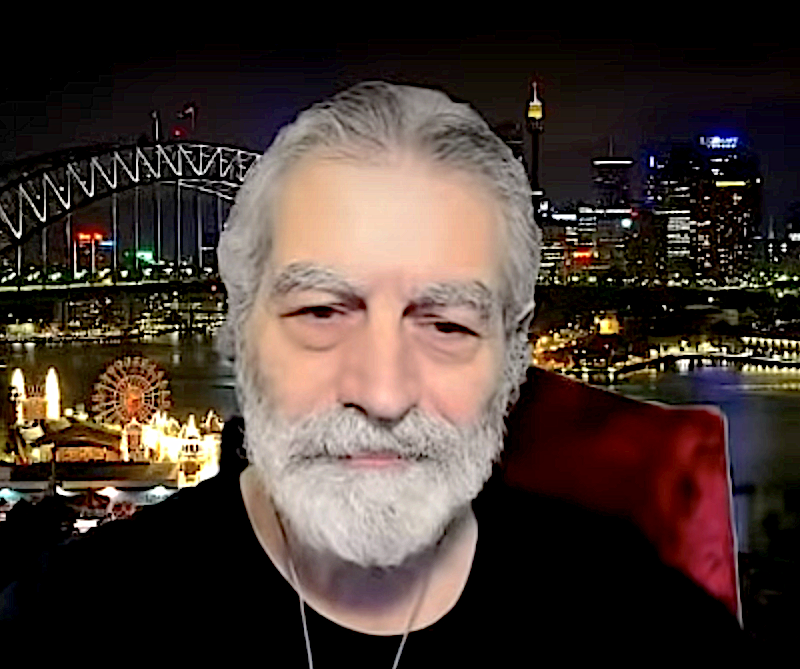
About midway through what was billed as the most consequential interview of Joe Biden’s political career, he uttered the most consequential words in the interview: “I am running the world.”
Those five words explain why he refuses to withdraw from the race and confirm what most Americans deny, but which most of the world knows: U.S. presidents act as if they were world emperors.
The interview with ABC News’ George Stephanopoulos was supposed to be Biden’s chance to show the country he is mentally fit to remain in the presidency and run for a second term ………………………………………………………………….
PRESIDENT JOE BIDEN: Look. I have a cognitive test every single day. Every day I have that test. Everything I do. You know, not only am I campaigning, but I’m running the world. Not– and that’s not hi– sounds like hyperbole, but we are the essential nation of the world..
Nuclear and associated news -week to 8th July

Some bits of good news. Conservation and economic development go hand in hand, more often than expected. Peru has protected 6,449 hectares of an endemic fog oasis that hosts hundreds of rare and threatened species.
TOP STORIES
Trump has a strategic plan for the country: Gearing up for nuclear war.
How do you convince someone to live next to a nuclear waste site?
Nuclear power would put our energy security into Russian hands– ALSO AT https://nuclear-news.net/2024/07/05/1-a-nuclear-power-would-put-our-energy-security-into-russian-hands/
Climate. Climate hazards impact more than four-fifths of cities worldwide, study finds. How record-breaking Hurricane Beryl is a sign of a warming world.
Noel’s notes. Australia further in the grip of the USA, with the Amazon data spy hub – paid for by Aussie tax-payers. The world must stop creating nuclear garbage.
AUSTRALIA. Australians being kept in the dark about Pine Gap expansion. Australia to build ‘top-secret’ cloud for intelligence agencies in $2bn deal with Amazon. Political Mastermind: a toxic waste of everyone’s time. https://www.youtube.com/watch?v=R4HGJ42c2Kg With its nuclear energy policy, Peter Dutton seems to have forgotten the Liberal Party’s core beliefs. See more Australian news at Australian nuclear news headlines this week.
NUCLEAR ISSUES
| ATROCITIES. Israel Has Forcibly Displaced 1.9 Million Palestinians in Gaza. | CLIMATE. Can the climate survive the insatiable energy demands of the AI arms race? | ECONOMICS. French nuclear giant scraps SMR plans due to soaring costs, will start over. EDF’s Nuward U-turn shows risk of betting on Small Nuclear Reactors – analysts. Labour must act fast to fire up Rolls-Royce nuclear reactor deals.Too uncertain, too slow: funds rule out financing Australia’s Dutton nuclear plan. |
| EMPLOYMENT. Talent Shortage Threatens Europe’s Nuclear Renaissance. | EVENTS. 10 July Rally to oppose nuclear mega-dump and support Kebaowek First Nation – at noon in Ottawa https://www.stopnuclearwaste.com/ | LEGAL. Why Julian Assange couldn’t outrun the Espionage Act. | MEDIA. Book. Nuclear is Not the Solution. The Folly of Atomic Power in the Age of Climate Change. |
POLITICS.
- Now Keir Starmer Has to Decide If He’d Use Nukes. https://www.youtube.com/watch?v=NQO6rJsVNkw . Tory accused of exaggerating chances of new nuclear plant. SCOTTISH GREENS WILL OPPOSE ALL PLANS FOR NEW NUCLEAR ENERGY. Work to show UK nuclear ‘environmentally sustainable’ incomplete, 16 months after government announcement. ‘Letters of last resort’: deciding response to a nuclear attack among first of Starmer’s tasks.
- Trump Advisers Call for U.S. Nuclear Weapons Testing if He Is Elected. . Congressional group on nuclear arms sets July hearing for embattled missile program.
- Starmer’s role in Assange’s prosecution.
- Masoud Pezeshkian: Iranian reformer who wants to end Tehran’s nuclear stand-off.
- Public Vote on Nuclear Power Plant Sparks Debate in Kazakhstan.
| POLITICS INTERNATIONAL and DIPLOMACY.Europe is Quietly Debating a Nuclear Future Without the US.Trusting the ‘Five Eyes’ OnlyUkraine to be warned it’s ‘too corrupt’ for NATO .What does Iran’s Nuclear Policy look like with the new president? | SAFETY. Russia might restart the Zaporizhzhia Ukrainian nuclear plant it seized. | SECRETS and LIES. Former New Brunswick energy minister joins nuclear industry after resigning in June. Australian Opposition leader Dutton’s claim about G20 nuclear energy use doesn’t add up. |
| SPINBUSTER. The nuclear and renewable myths that mainstream media can’t be bothered challenging. The overblown hype of the nuclear “bros”. | TECHNOLOGY.The commissioning of the Flamanville EPR, nuclear reactor is proving difficult.Unable to effectively operate its lone existing nuclear reactor, New Brunswick is betting on advanced options ALSO AT https://nuclear-news.net/2024/07/04/1-b1-unable-to-effectively-operate-its-lone-existing-nuclear-reactor-new-brunswick-is-betting-on-advanced-options/World’s Largest Nuclear Fusion Reactor Delayed . ITER nuclear fusion reactor hit by massive decade-long delay and €5bn price hike. Fusion power could transform how we get our energy — and worsen problems it’s intended to solve.Constellation Energy plans restart of Three Mile Island nuclear plant. |
| WAR and CONFLICT. Ukrainian drones injure Zaporizhzhia nuclear power plant workers, say Russian-backed officials.Tensions with Iran spotlight Israel’s hidden nuclear arsenal.The obsolescence of war. | WEAPONS and WEAPONS SALES.You Don’t Want to Live in America’s ‘Nuclear Sponge’ .NATO Members Agree To Give Ukraine $43 Billion in Military Aid for 2025. US announces more than $2 billion package for Ukraine.US nuclear missile program costs soar to around $160 billion, sources say. Trump allies are peddling a catastrophic idea for U.S. nuclear weapon policy.Philippines Says US Will Pull Out Controversial Mid-Range Missile System. |
The Atlas Network and the Council for National Policy: America’s global revolution

Atlas has tended to function to create neoliberal conditions in America and across the globe: the purpose of this was to erase every obstacle to American corporations’ profit and growth.
The Atlas project, like that of its Mont Pelerin Society inner sanctum, has never been invested in democracy, which leading members saw as a threat to business interests. Democracy was a risk to be controlled or eliminated, not an aspirational form of government.
the movement that drives Atlas emerges out of the Cold War battle by business that asserts any social wage is a slippery slope to totalitarianism.
July 8, 2024, Lucy Hamilton, https://theaimn.com/the-atlas-network-and-the-council-for-national-policy-americas-global-revolution/
Twice in a fortnight, the president of the Heritage Foundation has declared that America is experiencing its second revolution. The revolution would remain bloodless (because their side is “winning”) “if the left allows it to be.” The two bodies whose acts provoked the announcements are leading Atlas Network partners; they are, furthermore, listed on the Council for National Policy (CNP) rolls. The two junktanks – and their partner organisations – are also spending millions of dollars in Europe to roll back rights for women and LGBTQIA people. The revolution is transnational. It is working to destroy rights and democratic projects around the world. The relentless pursuit of profit and the determination to impose virtue on an unruly world are united in authoritarian intent.
The Revolution
Both Heritage’s president Kevin Roberts’ announcements were made on Steve Bannon’s War Room broadcast, central to the Trumpist movement and its efforts to remake America from every school board and electoral precinct upwards.
The first announcement of revolution was made on the 22nd June. It functioned as an advertisement for the MAGA audience to take part. Becoming a revolutionary involves undertaking Project 2025’s recruitment and training of loyalists to staff the incoming Trump administration, but also at state and local government levels. Roberts declared they were building not just for 2025, but for the next century in the United States.
Project 2025 is the most recent iteration of Heritage’s Mandate for Leadership. The first was written for Ronald Reagan, spelling out his massive reforms. He implemented two thirds in his first term. The last iteration for Donald Trump’s first term was similarly “business Republican” in tone, and Trump too implemented two thirds in his first year. The newest iteration is, as Roberts describes, revolutionary. It dictates the process for the dismantling most of the federal government as well as setting America on track to eliminate reproductive and Queer rights.
It also sets out the intention to dismantle the vital energy transition work underway as a result of the Inflation Reduction Act, with plans to boost fossil fuel production instead. This is fitting as much of Heritage’s funding comes from fossil fuel sources. This is true for the Atlas Network generally, although it has tobacco and other unpopular corporate sectors as donors.
Project 2025 is a joint Atlas Network and CNP project.
The second announcement of revolution was made after the Supreme Court’s dramatic week of judgements. In particular, the one that granted the President of the United States immunity for the vaguely worded field of “official acts.” Naturally the partisan court will make the determination which acts are “official.”
The week also compounded the Trumpist Supreme Court’s norm-violating series of decisions that have rolled back reproductive healthcare access for women across Republican states, further damaged voters’ representation, and frozen programs that aim to address entrenched disadvantage.
As a footnote, the same week revealed a decision that said regions could make it illegal to be homeless. This can provide numbers for private prison operator profits. There prisoners are hired out to businesses for near slave-labour wages.
No matter who wins the election in November, the radical right majority on the court can now prevent action their faction rejects: they have created an imperial juristocracy.
All these decisions have resulted from the years of work by the Federalist Society which handed Trump his literal list from which to choose judges. Republicans had stalled appointments to federal benches over the Obama era, granting Trump the gift of over one hundred appointments; some appointees were considered scandalous.
The years of surreptitious work by the Federalist Society and its Machiavellian leader, Leonard Leo, have been documented by Pro Publica. The body made headlines when it was gifted $1.6 billion by a single donor. The corruption that pervades the Supreme Court features several Atlas and CNP junktanks. Heritage paid Justice Thomas’s insurrectionist wife a secret salary amounting to almost $700,000 between 2003 and 2007. The Federalist’s Leo paid Ginni Thomas through her “consulting” firm. An Atlas Partner, the Islamophobic Center for Security Policy, paid her. Another Project 2025 Advisory Council and CNP member, Hillsdale College, also “employed” her. The coup being perpetrated by the court is funded by plutocrat donors to remove any constraints on their action. It is also used, by the filing of amicus briefs, to achieve goals such as restricting voting rights.
Why are fossil fuel magnates working with Christian extremists?
Both Heritage and the Federalist Society are Atlas Network partners.
They are also Council for National Policy (CNP) members. The CNP is the Atlas-interlinked network that has been driving the Christian Nationalist takeover of America. In 2019, Columbia School of Journalism lecturer Ann Nelson documented that organisation, founded in 1981, in Shadow Network: Media, Money and the Secret Hub of the Radical Right. As with Atlas, Charles Koch is a major donor. The CNP has steered the evangelical television and radio media organisations that have helped turn (Heritage co-founder) Paul Weyrich’s Moral Majority from a marginal array of individual churches and groups into a more unified force with coherent policy platforms. The latest leaked CNP membership list from Documented includes several Atlas junktanks as integrated into that network as well as key players in American politics and media ranging from Mike Pence to Steve Bannon. Pence represents the Evangelical alliance that made Trump’s first term possible. Bannon represents both Rad Trad Catholicism and the esoteric “philosophy” of Traditionalism. This apocalyptic belief was explored in 2021’s The War for Eternity: The Return of Traditionalism and the Rise of the Populist Right by University of Colorado ethnography professor Benjamin Teitelbaum. Bannon was a leading figure in the Rad Trad Catholicism that has been fighting as sedevacantists to say that the Catholic Church has no Pope but has been infiltrated by a socialist. They place Putin as a hero of Christians, with Moscow as the Third Rome. Another of its leaders, Archbishop Viganò, has just been excommunicated.
Charles Koch by contrast has been one of the drivers of the most extreme libertarianism in America. His brother, David, was placed at the forefront of their goals as their Libertarian Party vice-presidential candidate in 1980. It was a disastrous experiment, with its brutal policies attracting a tiny percentage of the vote. The libertarian project needed a veil to win enough votes to enact it. Project 2025 is, likely, ultimately that veil. The Libertarian Party platform is expanded there, but so is the devastating statist authoritarianism of the Christian Nationalist movement. It appears that Charles Koch, unsurprisingly for anyone who has followed his career, will do anything to ensure his own freedom from constraint. Disdain for “woke” talking points might bolster that readiness.
Other key figures amongst the oligarch donors and their operatives appear much more committed to a statist agenda, whereby the government will enforce “Christian” virtue upon an immoral population. Their definition of virtue is distinctive. While the project to ensure women’s inability to engage in sexual activity outside inescapable marriage might not shock mainstream Christians, the concurrent oligarch campaign to prevent employers being compelled to ensure child labourers have a meal break should disturb them. The neofeudal truths at the core of the neoliberal branding are becoming clearer: to believe that employers will act responsibly without enforcement is to be their gull.
Both Heritage and the Federalist Society are run by Rad Trad Catholic extremists. Kevin Roberts has taken the Heritage Foundation from being the leading “business Republican” junktank in America to being at the tip of the spear of the Christian Nationalist attempt to turn the USA into a theocratic autocracy. Leonard Leo, who has orchestrated five radical Catholic appointments to the Supreme Court, is an extremist. The exact nature of the interactions between the two secretive networks is unclear.
The Atlas Network
Atlas has tended to function to create neoliberal conditions in America and across the globe: the purpose of this was to erase every obstacle to American corporations’ profit and growth. Local aspiring oligarchs are enlisted to fund the project within their own terrain for those same goals. While the intent was ostensibly free market, the impact has always been to promote the interests of monopolists and oligopolists at the expense of competitors and the society around them. Some of the junktanks in Atlas have promoted reactionary social messaging as their bailiwick. The Acton Institute for the Study of Religion and Liberty has been the highest profile example. It exists to educate business leaders and academics in “the connection that can exist between virtue and economic thinking.” Leonard Leo joked to the Institute in 2017 about not yet managing to “launch a hostile takeover” of the Supreme Court.
There appear to be two main intents for this aspect of the Atlas information campaign. One is to conceal the immorality of the “free market” project stripped of any constraints on the actions of business no matter the harm done. To appeal to a sufficient electoral percentage to gain power, they deployed a social message that endorsed individual “virtue.” The strategy was called paleoconservativism.
Evangelicals had worked in cooperation with the interests of fossil fuel (at the expense of First Peoples) for decades beforehand, but the movement that drives Atlas emerges out of the Cold War battle by business that asserts any social wage is a slippery slope to totalitarianism. During the Cold War, communism was depicted as deadly to business but also atheist and immoral: the Manichaean battle between good and evil made a Christian Libertarianism (or religious neoliberalism) the answer. It promoted both ultimate freedom for business and the enforcing of religion and virtue on the population.
This cynical project had the additional important role of ensuring that the damage done to society and family by the Fordist economic model was mitigated by pressure on individuals (mainly women) to fill the cracks in family and community created by ruthless market societies.
The Atlas project, like that of its Mont Pelerin Society inner sanctum, has never been invested in democracy, which leading members saw as a threat to business interests. Democracy was a risk to be controlled or eliminated, not an aspirational form of government.
Investigative journalist at the New Yorker Jane Mayer revealed Atlas’s American operations in Dark Money: How a Secretive Group of Billionaires is trying to buy Political Control in the US in 2016. She used the label “Kochtopus” after the networks’ biggest funders and strategists. In 2018, Duke University history Professor Nancy MacLean documented its longer history in Democracy in Chains: the deep history of the radical right’s stealth plan for America. It was only after the book’s completion that MacLean became aware of the network’s secretive global ramifications as Atlas.
Also founded in 1981, the Network systematises propaganda for the Chicago School’s bunk economics, so ably disseminated by Milton Friedman. It now has around 600 partner organisations in over 100 countries, but its global operations remain less obvious because the system is intentionally covert. Local transparency failures suppress information about its funding and impact.
The central “think” tanks foster the replication of more such bodies, providing seed funding if necessary and training in fundraising and public relations strategies to help the local offshoots become independent. They network. The primary function is to sell the donors’ messages by advertising them constantly: in 1985, Heritage Foundation co-founder Ed Feulner told Australian operatives to treat campaigns as if they were for a toothpaste brand that needed constant reinforcing. The messages: low tax, deregulation, small government, dismantling of social safety nets. Together the junktanks, as journalist George Monbiot has labelled them, create a chorus of voices from university centres and civil society bodies reinforcing the wishlist.
Dr Jeremy Walker explained the process by which the Atlas Network architecture of influence operates in the lead-up to the Voice referendum in 2023. His “Freedom to Burn” essay details the intimate connections in Australia between mining goals and the the Atlas Network’s architecture of influence. The sideline in culture war battles promoted by the low-rent Atlas junktanks like the Institute of Public Affairs (IPA) and LibertyWorks, aided by ally Atlas-connected Rupert Murdoch, both divides voters from their economic interests and fosters the demonisation of rights culture. Without rights, women, LGBTQIA people, non-White and non-Christian people can be returned to their traditional subservience.
Quinn Slobodian is tracking the interaction of (Atlas) junktanks and the European far-right. A French investigation has detailed the way that corporate goals are being pursued by Atlas affiliates in Europe. An Italian investigation explored corporate money and Atlas connections supporting far right politics there. Hungary’s Viktor Orbán is a leading figure in the transnational movement. Heritage has connections with these far-right parties.
The Washington Post last week featured the damage done in New Zealand/Aotearoa by Atlas operatives in government. Byline Times and investigative reporters such as Peter Geoghegan have tracked the deep corruption and devastation of Atlas’s influence on the UK through its Tufton Street operations and their American fundraising arms.
Hindsight reveals the way revolutionising political economy and the law to grant monopolist corporations their every goal has failed to produce the economic paradise promised by the Chicago School’s plutocrat economics. This year, UC law professor Mehrsa Baradaran has detailed in The Quiet Coup: Neoliberalism and the Looting of America the role that Atlas and Chicago School economics played in rewriting the law to oblige plutocrats. Columbia Law School professor Katharina Pistor has documented how contract law is used to concentrate power in the hands of the wealthy in The Code of Capital: How the Law Creates Wealth and Inequality.
In Australia, the presence of these Atlas junktanks has been primarily deployed to reinforce “business propaganda,” but the social messages of disgust for modern, inclusive society are readily apparent too. The interlinked Ramsay Centre seems to be the strongest voice for outright Christian goals. That may relate to the close involvement of Atlas-connected Tony Abbott who is a key figure in the global campaign to place Christianity both as a religion and as a cultural signifier for White Western “civilisation” to the forefront of politics. This is visible in his work with Viktor Orbán and also on the Alliance for Responsible Citizenship Advisory Board./
Atlas’s extremist connections
The more toxic and bigoted “family values” groups tend to appear interconnected with Atlas rather than Atlas partners themselves. Trump appointee Betsy DeVos, for example, links the two. She has been chair and on the board of two Atlas partners: the American Federation for Children that aims to replace the public school system with privatised charter schools and the Acton Institute Both her Prince and DeVos families are substantial donors to the anti-LGBTQIA group Focus on Family. Focus is part of the CNP, whose donors include Charles Koch and the Prince and DeVos families.
Both the extremist Christians and the libertarians are close to achieving their goals in America. Apart from the impact the implosion of the United States government and civil rights framework will have on the rest of the world, this is relevant because the very global nature of Atlas means that its outposts are trying to replicate its work outside the American homeland. These campaigns are reinforced by the fact that America’s homegrown Pentecostal form of Christianity has been an aggressively international missionary project from its earliest days.
The European Parliament conducted a study affirming reporting that $280 million dollars have been funnelled into the EU over the last decade by Atlas and CNP partners as well as by Evangelical mission programs. Heritage and Federalist stand alongside the Cato Institute, the Leadership Institute and Acton as having donated roughly $20 million towards European groups fighting to repeal reproductive healthcare rights and LGBTQIA rights. Another American body, the CNP-connected American Society for the Defense of Tradition, Family and Property (TFP) has also been training European groups in strategy in cooperation with Bruce Eberle a “visiting professor” at the Leadership Institute. The Koch, DeVos and Prince families are named as major sources of the money. (These donations are overshadowed in scale by those from European and Russian sources.)
Atlas and CNP seem to be convening around the National Conservative (NatCon) project. This is a transnational exercise that manifests in various conferences. Some are NatCon, or PopCon or CPAC or Faith and Freedom. The Alliance for Responsible Citizenship (in large part funded by the Atlas-partner, the Legatum Institute) would fall within the parameters. NatCon is a network of religio-ethnonationalist operators. The Christian Nationalists are supported by, and supportive of, extremist nationalist projects focused on religion as an ethnic identifier. A Jewish nationalist is one of the founders of the movement, and Modi’s Hindutva nationalism is also befriended. The projects all denote Muslims as a chief enemy, with ethnic cleansing implied and even stated. Each dictates a “traditional” identity and social roles as key to their mission. Natalist policies supporting higher birth rates in the approved identity group accompany such goals, often linked to attacks on feminism and LGBTQIA rights. Race suicide is the result of these “evils.”
The message of “freedom” is endorsed for business and the individual. The individual must be free from public health measures of protective regulations by demonised bodies such as the UN or EU or WHO. The freedom of “woke” people, by contrast, is a threat rather than a consideration.
Rod Dreher’s account of last October’s inaugural Alliance for Responsible Citizenship event focused on the extreme Christianity that underpinned it, not surprising since Dreher has converted twice in pursuit of a more rigorous faith. The (Atlas) Australian Institute for Progress reports emphasised that feature too. The populist NatCon events such as CPAC unite conspiracists with libertarians and preachers. Australia saw such a conference in Albury in March.
A key purpose of these events is shaping a communal identity in the face of a manufactured existential threat. The identity being forged stands in opposition to modern, inclusive and knowledge-based societies. The diagonalist ideology visible there too – where left and right attributes are muddied – is drawing Christianity in as a key component for that identity. Russell Brand is not the only influencer to have ostentatiously converted to Christianity recently.
For many of the participants, the identity they are building together is connected to being White. The Atlas Network, like the Kochs, emerges out of the John Birch Society era of American conspiracist racism. Christianity is the code.
Christianity has the added advantage for an extreme libertarian project of demanding obedience and promising rewards for it in the Afterlife.
The NatCon project is often intertwined with fossil fuel money. It is, unsurprisingly, also deeply antagonistic to climate action.
Conclusion
Evangelical groups in Australia are often transnational and importing ultraconservative goals here.
A separate presence of CNP groups is not yet obvious, but it is worth noting that Feulner, speaking to Atlas junktanks in Australia in 1985, would have been as much connected to the CNP as Atlas.
Australia’s Centre for Independent Studies (CIS) mostly leaves the culture war battles on gender and religious virtues to the IPA and their media ally, News Corp. This October’s CIS Consilium event where the Atlas pipeliners intermingle with local and international talking heads is running adjacent to the inaugural conference of the Australian Chapter of the Alliance for Responsible Citizenship. The consecutive timing is convenient for international guests to attend both.
America’s second revolution is frightening. While Trump disavows Project 2025, his current spokesperson is part of the project. It will be difficult for him to step away from a strategy designed by people he has worked with, setting out the steps his people need to take and providing him with the partisan leaders and employees he will need to enact his dreams of vengeance. He is too lazy not to accept the process.
The rest of us must remain focused on the fact that these networks operate transnationally. They share talking points, strategies, people and money. The revolution that Kevin Roberts has declared they are winning in the US is to be reenacted, piecemeal, for all of us.
It’s past time we fought back.
Civil War in Donbass 10 Years On
Zelensky did initially try to resolve the Donbass conflict through diplomatic means. In October 2019, he moved to hold a referendum on “special status” for the breakaway republics in a federalized Ukraine, while personally meeting with representatives of Azov Battalion, begging them to lay down their arms and accept the compromise. Mockingly rebuffed and threatened by the Neo-Nazi group’s leaders, while rocked by nationalist protests against the proposed plebiscite in Kiev, the plans were dropped. So then the President picked the “worst option”.
KIT KLARENBERG, JUL 08, 2024 https://www.kitklarenberg.com/p/civil-war-in-donbass-10-years-on
July 1st marked the 10th anniversary of a brutal resumption of hostilities in the Donbass civil war. Perhaps unsurprisingly, it passed without comment in the Western media. 10 years earlier, Ukrainian President Petro Poroshenko called a ceasefire in Kiev’s “anti-terrorist operation”. Launched two months prior following vast protests, and violent clashes between Russian-speaking pro-federal activists and authorities throughout eastern Ukraine, the intended lightning strike routing of internal opposition to the Maidan government quickly became an unwinnable quagmire.
Ukrainian forces were consistently beaten back by well-organised and determined rebel forces, hailing from the breakaway “People’s Republics” in Donetsk and Lugansk. Resultantly, Poroshenko outlined a peace plan intended to compel the separatists to put down their arms. They refused to do so, prompting the President to order an even more savage crackdown. This too was a counterproductive failure, with the rebels inflicting a series of embarrassing defeats on Western-sponsored government forces. Kiev was ultimately forced to accept the terms of the first Minsk Accords.
This agreement, like its successor, did not provide for secession or independence for the breakaway republics, but their full autonomy within Ukraine. Russia was named as a mediator, not party, in the conflict. Kiev was to resolve its dispute with rebel leaders directly. Successive Ukrainian governments consistently refused to do so, however. Instead, officials endlessly stonewalled, while pressuring Moscow to formally designate itself a party to the civil war.
No wonder – had Russia accepted, Kiev’s claims that its savage assault on the civilian population of Donbass was in fact a response to invasion by its giant neighbour would’ve been legitimised. In turn, all-out Western proxy war in eastern Ukraine, of the kind that erupted in February 2022, could’ve been precipitated. Which, it is increasingly clear, was the plan all along.
‘Grassroots Movement’
In the days prior to the April 2014 launch of Kiev’s “anti-terrorist operation” in Donbass, notorious war hawk Samantha Power, now USAID chief, openly spoke on ABC of “tell-tale signs of Moscow’s involvement” in the unrest. “It’s professional, coordinated. Nothing grassroots about it,” she alleged. Such framing gave Ukrainian officials, their foreign backers, and the mainstream media licence to brand the brutal operation a legitimate response to a fully-fledged, if unacknowledged, “invasion” by Russia. It is referred to as such in many quarters today.
Yet, at every stage of the Donbass conflict, there were unambiguous indications that the Ukrainian government’s claims of widespread Russian involvement – endorsed by Western governments, militaries, intelligence agencies, pundits and journalists – were fraudulent. One need look no further than the findings of a 2019 report published by the George Soros-funded International Crisis Group (ICG), Rebels Without A Cause. Completely unremarked upon in the mainstream, its headline conclusions are stark:
“The conflict in eastern Ukraine started as a grassroots movement…Demonstrations were led by local citizens claiming to represent the region’s Russian-speaking majority.”
ICG noted that Russian leaders were from the start publicly and privately sympathetic to Russian-speakers in Donbass. Nonetheless, they issued no “clear guidance” to businessmen, government advisers or the domestic population on whether – and how – they would be officially supported by Moscow in their dispute with the Maidan government. Hence, many Russian irregulars, encouraged by “what they regarded as the government’s tacit approval, made their way to Ukraine.”
Per ICG, it was only after the conflict started that the Russian government formalised a relationship with the Donbass rebels, although the Kremlin quickly changed tack on what they should do. A Ukrainian fighter told the organisation that he “began hearing calls for restraint in rebel efforts to take control of eastern Ukrainian towns and cities” in late April 2014. However, “the separatist movement in Donbass was determined to move ahead.”
Due to this lack of control, and repeated calls for direct intervention in the conflict from the rebels, Russia replaced the Donetsk and Lugansk rebel leadership with hand-picked figures, who took an explicitly defensive posture. But the Kremlin was ultimately “beholden” to the breakaway republics, not vice versa. It could not even reliably order the rebels to stop fighting. A Lugansk paramilitary told ICG:
“What do you do with 40,000 people who believe that, once they put down their arms, they will all be shot or arrested? Of course, they are going to fight to the death.”
Elsewhere, the report cited data provided by “Ukrainian nationalist fighters”, which showed rebel casualties to date were “overwhelmingly” Ukrainian citizens. This was at odds with the pronouncements of government officials, who invariably referred to them as “Russian mercenaries” or “occupiers”. More widely, figures within far-right President Petro Poroshenko’s government had routinely claimed Donbass was wholly populated by Russians and Russia-sympathisers.
One Ukrainian minister was quoted in the report as saying he felt “absolutely no pity” about the extremely harsh conditions suffered by Donbass civilians, due to the “legal, political, economic and ideological barriers isolating Ukrainian citizens in rebel-held territories” constructed by Kiev. This included enforcing a crippling blockade on the region in 2017, which created a “humanitarian crisis”, and left the population unable to claim pensions and welfare payments, among other gruelling hardships.
Several Donbass inhabitants interviewed by ICG expressed nostalgia for the Soviet Union. Most felt “under attack” by Kiev. A pensioner in Lugansk, whose “non-combatant son” was killed by a Ukrainian sniper, asked how Poroshenko could claim the territory was “a crucial part” of Ukraine: “then why did they kill so many of us?”
‘Worst Option’
In conclusion, ICG declared the situation in Donbass “ought not to be narrowly defined as a matter of Russian occupation,” while criticising Kiev’s “tendency to conflate” the Kremlin with the rebels. The organisation expressed optimism newly-elected President Volodymyr Zelensky could “peacefully reunify with the rebel-held territories,” and “[engage] the alienated east.” Given present day events, its report’s conclusions were eerily prescient:
“For Zelensky, the worst option…would be to try to forcibly retake the territories, as an all-out offensive would likely provoke a military response from Moscow and a bloodbath in Donbass. It could even lead Moscow…to recognise the statelets’ independence. The large-scale military option is mainly advocated by nationalists, not members of Ukraine’s political establishment. But some prominent mainstream politicians refuse to rule it out.”
Zelensky did initially try to resolve the Donbass conflict through diplomatic means.
Continue readingPhilippines Says US Will Pull Out Controversial Mid-Range Missile System
The US deployed the Typhon missile system for annual military drills
by Dave DeCamp July 4, 2024 ore https://news.antiwar.com/2024/07/04/philippines-says-us-will-pull-out-controversial-mid-range-missile-system/
On Thursday, the Philippines said the US was pulling out a new missile system it deployed to the Southeast Asian country for annual military exercises.
The US sent the Typhon missile system for the Balikatan exercises, which were held in April and May. The Typhon is a controversial launcher since it would have been banned by the Intermediate-Range Nuclear Forces (INF) Treaty, a treaty between the US and Russia that the Trump administration withdrew from in 2019.
The INF prohibited land-based missile systems with a range between 310 and 3,400 miles. The Typhon can launch nuclear-capable Tomahawk missiles, which have a range of about 1,000 miles. It can also fire SM-6 missiles, which can hit targets up to 290 miles away.
Philippine Col. Louie Dema-ala told AFP that the US planned to withdraw the Typhon from the Philippines following the military exercises. “As per plan… it will be shipped out of the country in September or even earlier,” he said. “The US Army is currently shipping out their equipment that we used during Balikatan and Salaknib (exercises).”
China strongly condemned the deployment of the Typhon system, which US officials have acknowledged was developed to prepare for a future conflict with Beijing over Taiwan or the South China Sea.
Russian President Vladimir Putin also recently mentioned the deployment. He made the comments when calling for Moscow to follow the US and develop missile systems previously banned by the INF.
“We need to start production of these strike systems and then, based on the actual situation, make decisions about where — if necessary to ensure our safety — to place them,” Putin said last week.
“Today it is known that the United States not only produces these missile systems, but has already brought them to Europe for exercises, to Denmark. Quite recently it was announced that they are in the Philippines,” the Russian leader added.
Trump allies are peddling a catastrophic idea for U.S. nuclear weapon policy

Resuming live testing could spark an arms race and will reduce American security.
By Zeeshan Aleem, MSNBC Opinion Writer/Editor, 6 July 24
Allies and former advisers to former President Donald Trump are arguing that the U.S., for the first time in decades, should resume nuclear testing. They say it’ll advance American safety by ensuring that the U.S. has a decisive military and technological advantage over other nuclear powers. In reality, the U.S. — and the world — would be made more dangerous by the kind of arms race this could spark. And it seems plausible that if Trump were to win the White House he could adopt the policy because of the manner in which it aligns with the unilateral militance of the “America First” worldview.
Influential figures in Trump’s orbit are pushing the idea of breaking long-held norms and resuming live nuclear testing. Former Trump national security adviser Robert O’Brien wrote in Foreign Affairs in June that “Washington must test new nuclear weapons for reliability and safety in the real world for the first time since 1992” in order to maintain technical superiority over China and Russia. Christian Whiton, who served as a State Department adviser to President George W. Bush and Trump, told The New York Times that “it would be negligent to field nuclear weapons of novel designs that we have never tested in the real world.” And the Heritage Foundation, the right-wing think tank that’s backing Project 2025, widely considered a policy blueprint for Trump’s second term, is proposing that the federal government expand its capacity for immediate nuclear testing.
Since 1992, the U.S. has refrained from explosive nuclear testing and opted for other techniques, including expert appraisals and sophisticated modeling generated by supercomputers, to calculate the efficacy of its long-term stockpile and its newer weapons. That policy has helped nudge other countries away from pursuing live testing. Most countries don’t conduct live tests of nuclear warheads in adherence to the Comprehensive Nuclear-Test-Ban Treaty.
Multiple nuclear proliferation experts say that if the U.S. resumes explosive testing, other countries will have more incentive to do so. “Resuming U.S. nuclear testing is technically and militarily unnecessary,” wrote Arms Control Association executive director Daryl Kimball in response to O’Brien’s article. “Moreover, it would lead to a global chain reaction of nuclear testing, raise global tensions, and blow apart global nonproliferation efforts at a time of heightened nuclear danger.” Kimball’s argument is in line with President Joe Biden’s outlook. During his 2020 presidential campaign, Biden endorsed the U.S. continuing to abstain from explosive testing and said a resumption would be “as reckless as it is dangerous.” …………………………………………………………………………..more https://www.msnbc.com/opinion/msnbc-opinion/trump-nuclear-policy-election-rcna160459
EDF’s Nuward U-turn shows risk of betting on Small Nuclear Reactors – analysts

(Montel) French utility EDF’s decision to ditch the design of its Nuward small modular reactor (SMR)in France shows the risk of expecting too much of the nuclear technology – with delays to the project expected, analysts told Montel.
too many technical uncertainties, analysts said.
(Montel) French utility EDF’s decision to ditch the design of its Nuward small modular reactor (SMR)in France shows the risk of expecting too much of the nuclear technology – with delays to the project expected, analysts told Montel.
Montel News, by: Muriel Boselli, Sophie Tetrel , 03 Jul 2024
“SMRs must remain a possibility for keeping a nuclear fleet in the long term but they cannot be the pillar of a reliable electricity strategy at this stage,” said Nicolas Goldberg of Colombus Consulting. “Hence the need for electric renewables, which should not be overlooked.”
France is relying on SMRs as part of a broader plan to spur its nuclear power industry and lower carbon emissions.
In 2022, president Emmanuel Macron announced plans to invest EUR 1bn by 2030 in the development of small modular reactors, with EUR 500m going to Nuward.
Technical difficulties
EDF confirmed media reports on Tuesday that it was scrapping its SMR design due to technical difficulties. The company wanted to “move towards a design built exclusively from proven technological building blocks”, a spokeswoman told Montel.
The market had been sceptical about the project as there were too many technical uncertainties, analysts said.
“This announcement allows us to be a little less involved in utopian and rhetorical discussions about nuclear power and to return to something much more technical, which brings us back to the limits of SMRs at the moment,” said Franck Gbaguidi, an analyst at Eurasia Group…………………………..
Safety adaptation
Ditching the design meant EDF would have to adapt the safety plan it submitted to France’s ASN nuclear safety authority last July, an ASN spokeswoman said.
The Nuward project has been in development since 2019, managed by a consortium of companies including EDF, Naval Group, TechnicAtome, the French Alternative Energies and Atomic Energy Commission (CEA), Framatome and Tractebel. Construction was scheduled to start in 2030
The Nuward project has been in development since 2019, managed by a consortium of companies including EDF, Naval Group, TechnicAtome, the French Alternative Energies and Atomic Energy Commission (CEA), Framatome and Tractebel. Construction was scheduled to start in 2030.
France is currently developing 11 SMR projects and the nuclear development has been backed by right and far-right political parties. In April, the start-up Jimmy said it had submitted a request to the ecology ministry for authorisation of a pair of 170 MW capacity SMRs it hopes to build in France after the European Commission approved EUR 300m in state aid for the project.
In December last year, the company said it would stick with its SMR plans in Europe despite American firm NuScale Power scrapping its plan to build SMRs in the US. https://montelnews.com/news/2edd2bd8-fa29-4629-95f9-c876c1e4e6ce/edfs-nuward-u-turn-shows-risk-of-betting-on-smrs-analysts
Labour must act fast to fire up Rolls-Royce nuclear reactor deals

Rolls-Royce risks losing billions in overseas contracts if Labour delays
vital strategic decisions on nuclear reactors, in what is emerging as the
first crucial test of its business policies.
Other projects may also be in
jeopardy, imperilling thousands of jobs, if new ministers are slow to take
action to tackle the overflowing in-trays confronting them. The engineering
giant is considered to be a front-runner of the six groups in the race to
build Britain’s first mini nuclear plants, known as small modular reactors
(SMRs).
State funding has been key to the development of its designs. One
of the company’s goals is to create a major export market for its SMRs. It
is eyeing contracts worth billions of pounds. [Really !!] The Mail on Sunday
understands that central European countries including the Czech Republic
are among those in talks with Rolls. But these negotiations will stall –
and possibly end – if Labour does not give the UK’s formal backing to the
project by the end of the year.
This is Money 6th July 2024
Australian Opposition leader Dutton’s claim about G20 nuclear energy use doesn’t add up
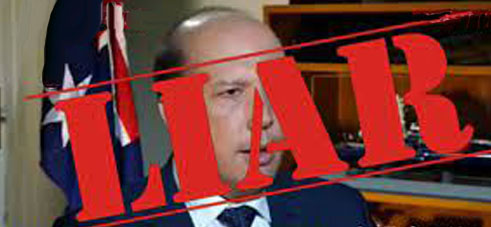
William Summers , July 5, 2024, https://www.aap.com.au/factcheck/duttons-claim-about-g20-nuclear-energy-use-doesnt-add-up/
WHAT WAS CLAIMED
Australia is the only G20 nation that doesn’t use nuclear power.
OUR VERDICT
Misleading. Five other G20 nations don’t generate nuclear power, and two of those don’t use it.
AAP FACTCHECK – Federal Opposition Leader Peter Dutton claims Australia is the only country not to use nuclear energy out of the world’s 20 largest economies.
This is misleading. Five other nations in the top 20 – Germany, Italy, Turkiye, Saudi Arabia and Indonesia – do not generate nuclear energy.
Germany, Italy and Turkiye import very small amounts of electricity generated from nuclear sources, but Indonesia and Saudi Arabia don’t consume any nuclear power.
Australia is the only top 20 economy that doesn’t generate, import or have a plan to do so.
Mr Dutton has made the claim at least four times in interviews about the coalition’s plan to build seven nuclear power stations in Australia without clarifying that he’s counting countries planning to use nuclear power among those that are actually using it.
Mr Dutton said nuclear power was “used by 19 of the 20 biggest economies in the world” at a June 18 press conference in NSW.
He again claimed that of the top 20 economies in the world, “Australia is the only one that doesn’t have nuclear” in a June 20 interview on Sky News.
That same day, the opposition leader spoke out about how Australia could benefit from nuclear power “as 19 of the world’s top 20 economies have done” in an ABC News Breakfast interview.
Mr Dutton again said Australia was the only one of the 20 biggest economies that “doesn’t operate” nuclear at a press conference on July 5.
When asked to clarify his claims, the opposition leader’s spokeswoman told AAP FactCheck that he’s counting countries that have nuclear power and those “taking steps towards embracing nuclear”.
Mr Dutton accurately stated 19 of the world’s 20 biggest economies used nuclear power or “have signed up to it” in another press conference on June 19, and a Today Show interview on June 21.
He also said Australia was the only G20 member that didn’t use or plan to use nuclear power in an ABC TV interview on April 21.
The G20 is a global forum for countries with large economies. Despite its name, the G20 includes only 19 nations, plus the African Union and the European Union. Spain is invited to the G20 as a permanent guest.
It’s unclear if Mr Dutton is referring to the G20 countries plus Spain, or the 20 largest nations by gross domestic product, as he’s used both interchangeably.
However, AAP FactCheck has analysed the former because the nations that don’t generate nuclear power and the nations that only import small amounts of it are exactly the same for both groupings, as per World Bank 2023 GDP data.
Fourteen G20 countries operate nuclear power plants: Argentina, Brazil, Canada, China, France, India, Japan, Mexico, Russia, South Africa, South Korea, Spain, the UK and the US.
Three G20 nations that don’t generate nuclear power but import small amounts are Germany, Italy and Turkiye.
Germany shut down its final three reactors in April 2023. That year, about 0.5 per cent of the electricity consumed there was imported from France, which generates about two-thirds of its electricity from nuclear sources.
Italy closed its last reactors in 1990. About six per cent of its electricity consumption is imported nuclear power.
The country effectively banned nuclear power in 2011, but the current government wants to restart it.
Turkiye is building a plant that could start generating electricity from 2025. The country is also planning to build two other nuclear plants.
In 2022, the country imported a tiny amount of the electricity it consumed, including 0.8 per cent from Bulgaria, which generates about 35 per cent of its electricity from nuclear sources.
Therefore, a fraction of Turkiye’s electricity consumption could be produced from nuclear – likely less than half a per cent.
Saudi Arabia doesn’t use any nuclear energy either but it’s taking steps towards doing so in future.
Indonesia doesn’t have any nuclear reactors but has tentative plans to build some in the coming decades.
Dr Yogi Sugiawan, a policy analyst at the Indonesian government agency responsible for developing nuclear energy policies and plans, told AAP FactCheck that his country doesn’t generate or import nuclear energy.
However, Dr Sugiawan says Indonesia’s government is considering nuclear power, with an initial plant “expected to be commissioned before 2040”.
THE VERDICT
The claim that Australia is the only G20 nation that doesn’t use nuclear power is misleading.
Evidence and experts say six G20 countries do not generate any nuclear energy, and three of those don’t consume it either.
Misleading – The claim is accurate in parts but information has also been presented incorrectly, out of context or omitted.
AAP FactCheck is an accredited member of the International Fact-Checking Network. To keep up with our latest fact checks, follow us on Facebook, Twitter and Instagram.
The obsolescence of war
War does not serve us. It represents the worst in humanity. Thankfully, we now have nonviolent tools to manage conflict in life-affirming ways.
Waging Non Violence Nadia Mejjati July 3, 2024
The proponents of war say that violence is necessary for “defense.” But is that true? Humanity has learned how to wipe itself out in a matter of minutes with just a fraction of its nuclear weapons capability. Our atrocious culture of violence shows thousands of children killed in cold blood like a relentless horror film playing out on social media. We have invented killer-drones to undertake massacres without personally witnessing the horrors inflicted. In the face of our threatened extinction as a species, we must do better. That starts with seeing war for what it is.
War is grotesque. It represents the worst of humanity: the cruelty of unharnessed anger and unhealed trauma, led by greedy leaders far from the frontlines, playing with human lives. No matter who wins or loses, the result is pain and increased trauma on both sides, fuelling further injustice and oppression.
Benjamin Casteillo describes, “In the past, dangers of hostility, scarcity and rejection were met with primal impulses of domination, accumulation and conformism, thus trapping a large part of humanity in self-perpetuating rivalries for power, resources and status. Yet, in the current context of exponential technological development which has resulted in weapons of mass destruction, multiplied extractive capacities, and amplified capacities for social engineering, these primal impulses are becoming increasingly obsolete and unsustainable, resulting in existential risks of catastrophic wars, ecosystems destruction and human obsolescence, threatening life itself.”
War does not create harmony. Despite this, we glorify it in our history classes when we could teach the history and practice of nonviolence, to our advantage. Erica Chenoweth and Maria Stephan provided us with statistical evidence that nonviolence is far more successful in reaching campaign objectives than violence. In other words, the belief that we must respond to violence with more violence to establish peace is now outdated by documented fact.
War is weak — especially compared to the hard work of nonviolent struggle, diplomacy and peacebuilding.
Transformational change takes courage and commitment. Nonviolence is not a wishy-washy choice we make because we have hippy parents. It is a response to the violence in our communities, our families, and most importantly, in ourselves. It is a dedicated yearning to find other ways to be, ways that favor life.
War is nonsensical, unless you profit from selling arms and destroying life. We face the ecological breakdown of our planet, while the military industrial complex is outrageously polluting, topping the fossil fuel consumption record, obliterating life and landscape. ……………………………………………………………………. more https://wagingnonviolence.org/cnv/2024/07/the-obsolescence-of-war/—
1 This Month
23-25 October – on Zoom – World BEYOND War’s annual global conferenc


Shut down the radiation-damaged Heysham nuclear reactors now
To see nuclear-related stories in greater depth and intensity – go to https://nuclearinformation.wordpress.com

Say No to NASA’s Reckless Nuclear Reactor on the Moon
Say No to NASA’s Reckless Nuclear Reactor on the Moon
-
Archives
- October 2026 (180)
- September 2026 (339)
- August 2026 (330)
- July 2026 (355)
- June 2026 (287)
- May 2026 (306)
- April 2026 (356)
- March 2026 (251)
- February 2026 (267)
- January 2026 (308)
- December 2025 (358)
- November 2025 (359)
-
Categories
- 1
- 1 NUCLEAR ISSUES
- business and costs
- climate change
- culture and arts
- ENERGY
- environment
- health
- history
- indigenous issues
- Legal
- marketing of nuclear
- media
- opposition to nuclear
- PERSONAL STORIES
- politics
- politics international
- Religion and ethics
- safety
- secrets,lies and civil liberties
- spinbuster
- technology
- Uranium
- wastes
- weapons and war
- Women
- 2 WORLD
- ACTION
- AFRICA
- Atrocities
- AUSTRALIA
- Christina's notes
- Christina's themes
- culture and arts
- Events
- Fuk 2022
- Fuk 2023
- Fukushima 2017
- Fukushima 2018
- fukushima 2019
- Fukushima 2020
- Fukushima 2021
- general
- global warming
- Humour (God we need it)
- Nuclear
- RARE EARTHS
- Reference
- resources – print
- Resources -audiovicual
- Weekly Newsletter
- World
- World Nuclear
- YouTube
-
RSS
Entries RSS
Comments RSS

