‘Near miss’ incident reported at nuclear waste site near Carlsbad
Federal watchdog reports ongoing safety concerns at WIPP
JULY 19, 2024, Adrian Hedden, Carlsbad Current-Argus
Federal nuclear oversight staff reported several safety problems at the Waste Isolation Pilot Plant in a monthly report, despite a “safety stand down” in April that was intended to pause work while WIPP officials retooled various protocols.
The Defense Nuclear Facilities Safety Board (DNSFB) reported “ongoing safety culture challenges” in its June 7 report on WIPP activities as the facility near Carlsbad disposes of transuranic (TRU) nuclear waste from federal facilities around the country.
The monthly report covered observations and incidents from May, noting a “near miss” incident which saw a waste handler improperly using a forklift instead of a crane to reposition weights in the parking lot waste storage area.
The May 20 event saw the waste handler using two forklifts to reposition a “six-ton” calibration weight, read the report, without proper documentation or analysis or the awareness of a shift supervisor.
The forklift sling broke while rotating the weight, read the report, causing it to fall on its side and send a shackle flying “a significant distance” away from the lift and past a spotter.
In another incident, all routine work was paused May 23 to 28 after a bolter contacted an electrical box near WIPP’s exhaust shaft, read the report, causing a bulkhead to lose function, rendering sump pumps inoperable and creating potential exposure to “hazardous energy.”………………………………………………….. more https://www.currentargus.com/2024/07/near-miss-incident-reported-at-nuclear-waste-site-near-carlsbad/
In New Mexico, a Walk Commemorates the Nuclear Disaster Few Outside the Navajo Nation Remember
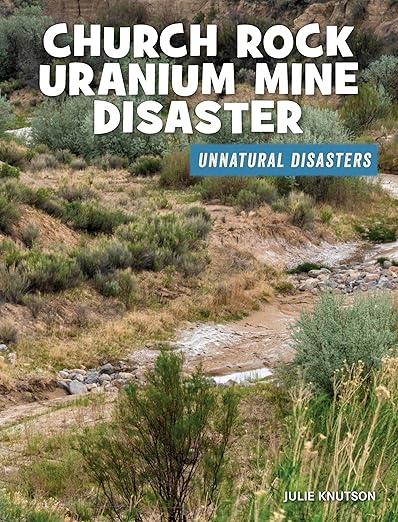
the Navajo Birth Cohort Study, which since 2010 has been looking at the relationship between uranium exposures, birth outcomes and child development on the Navajo Nation. Among the findings is that mothers were deficient in key nutrients for babies’ developing nervous systems.
The Church Rock spill released more radioactive material than the partial meltdown at Three Mile Island four months earlier. Last week’s walk highlights the continuing cleanup and the ongoing hazards uranium mining poses to tribal lands.
Inside Climate News, By Noel Lyn Smith, July 20, 2024
RED WATER POND ROAD, New Mexico—As Tony Hood walked along New Mexico Highway 566 last Saturday, he thought about where he was 45 years earlier, when an earthen dam broke at the site of a uranium mill operated by the United Nuclear Corp., releasing 94 million gallons of radioactive water and 1,100 tons of uranium waste across portions of New Mexico, Arizona and the Navajo Nation.
Hood was working inside a nearby underground mine owned by the Kerr-McGee Corp. when the dam broke on July 16, 1979. He didn’t learn about the spill until after returning to the surface.
As he walked in this month’s event commemorating the spill, he pointed to the spot where the dam was located.
“I guess they observed there was some cracks in the earthen dam but they didn’t do nothing about it,” he said. “Finally, the dam collapsed, breached.”
The dam failure at the processing mill north of Church Rock, New Mexico, released radioactive liquid that eventually flowed into the Rio Puerco and through areas on the Navajo Nation, nearby Gallup, New Mexico, and, finally, Arizona. Now known as the Church Rock spill, the accident released the most radioactive material in U.S. history—more than the notorious partial meltdown at the Three Mile Island Nuclear Generating Station four months earlier—yet remains largely unknown to the American public.
The nonprofit Red Water Pond Road Community Association tries to remedy that lack of awareness by organizing the annual walk by the site of the spill, during which current and former area residents, supporters and advocates remember what happened that day. They also talk about the aftermath, including what federal and tribal agencies have done and need to do to clean up the communities affected by the accident.
……………………………………………………………………………………………………….. A report in May 2014 by the U.S. Government Accountability Office found that “Navajo people continue to live with the environmental and health effects from mining operations: more than 500 abandoned mines are located across the reservation, some close to homes and communities, and an unknown number of homes and drinking water sources contain radioactive elements.”
Educational materials distributed by the Red Water Pond Road Community Association mention some health studies that residents participated in. One is the Navajo Birth Cohort Study, which since 2010 has been looking at the relationship between uranium exposures, birth outcomes and child development on the Navajo Nation. Among the findings is that mothers were deficient in key nutrients for babies’ developing nervous systems. The association notes that a comprehensive study still needs to be done about the effects of uranium on Navajo health.
“We sacrificed our lives, our bodies to mine that ore,” Hood said…………………………………………………………………………………………………………………………………. Link: https://insideclimatenews.org/news/20072024/new-mexico-walk-commemorates-navajo-nation-nuclear-disaster/
Please, No Weapons and Wars in Space
Honoring the Spirit of Apollo 11,
BILL ASTORE, JUL 21, 2024 https://bracingviews.substack.com/p/please-no-weapons-and-wars-in-space—
This weekend marks the 55th anniversary of humanity’s first trip to the moon, when Neil Armstrong and Buzz Aldrin got moon dust on their boots as Michael Collins waited in moon orbit to pick them up. It all went remarkably well, if not perfectly smoothly, for Apollo 11.
Humans haven’t been back to the moon to cavort on it for more than fifty years. Apollo 17 was the last mission in December of 1972. Once America beat the Soviets to the moon and explored it a few times, the program lost its impetus as people grew nonchalant if not bored with the Apollo missions. What a shame!
Apollo 11 left a plaque on the moon saying they went there in the name of peace and for all mankind. It’s a groovy sentiment, but tragically space has become yet another realm of war. Instead of occupying the moral high ground, the United States with its Space Force wants to dominate the military “high ground” of space. The dream of space as a realm for peace is increasingly a nightmare of information dominance and power projection.
A powerful trend is space exploitation by billionaires rather than space exploration funded and supported by the people. Privatization of space and its weaponization are proceeding together, even feeding off each other.
Of course, the military has always dreamed of weaponizing space. The new dream, apparently, is becoming super-rich by mining rare strategic minerals and the like, along with space tourism by the ultra-rich.
Again, the U.S. military sees space as its domain, working with a diverse range of countries, such as the UK, South Korea, and Sweden, among others, on new space ports, radar and launch sites, and related facilities. A key buzzword is “interoperability” between the U.S. and its junior partners in space, which, for you “Star Trek” fans, is akin to being assimilated by the Borg collective. (All of the Borg are “interoperable”; too bad they have no autonomy.)
We humans should not be exporting our violence and wars beyond our own planet. If you believe space should be reserved for peace, check out Space4Peace.org. Follow this link. It’s a global organization of people dedicated to the vision that space should remain free of weapons and wars. The group is kind enough to list me as one of its “advisers.”
Mark your calendars for the next “Keep Space for Peace” week from October 5-12. Together, let’s reject star wars and instead embrace peaceful star treks.
UK: Ed Miliband unveils plans for mini-nuclear reactors .
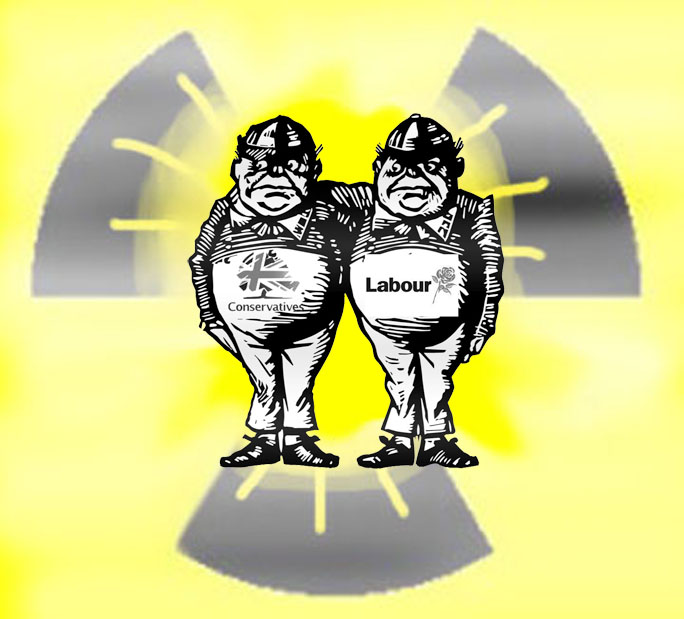
Ed Miliband will press ahead with a new generation of mini nuclear power
plants, with plans to unveil reactor designs by September. The energy
secretary has told MPs that he will give his “absolute support” to
plans to build a fleet of “small modular reactors” around Britain as
part of his clean energy drive.
Looser planning rules are expected to allow
these reactors almost anywhere outside built-up areas, ……………………………………………………….
He is now turning his attention to nuclear power, with a final decision on
Sizewell C due, alongside efforts to finish the Hinkley Point C plant.
Miliband has also committed to continuing the previous government’s drive
to make Britain a world leader in small modular reactors.
A decision on which designs to take forward is due by the end of the summer. Miliband
told MPs this week: “We will strive to keep to the timetable set out.”
Describing nuclear power as “very important for the future”, he said:
“This government were very clear in our manifesto about the role that
nuclear power — both large-scale nuclear and SMRs — can play.”
A final decision is also due this year on liberalising planning rules for
modular reactors. Currently nuclear power plants can be built only on eight
named sites but the previous government wanted developers to be able to
identify their own location based on a new list of safety and environmental
criteria.
Miliband is seen as unlikely to opt for tougher rules, after
repeatedly stressing to MPs this week that local concerns over development
would not be allowed to veto projects seen as vital to energy security and
economic growth. Under the draft rules, only “population density” and
“proximity to military activities” will rule out nuclear plants,
meaning they cannot be built in areas with more than 5,000 people per
square kilometres, covering most towns and cities. This is designed to
“minimise the risk to the public” in the event of a radioactive spill.
All other criteria would be discretionary, including size, flood risk,
proximity to civil airports, the natural beauty, ecological importance or
cultural heritage of the site.
Times 19th July 2024
**GB Energy**
‘Low level’ ionizing radiation, and the history of debate about its effects
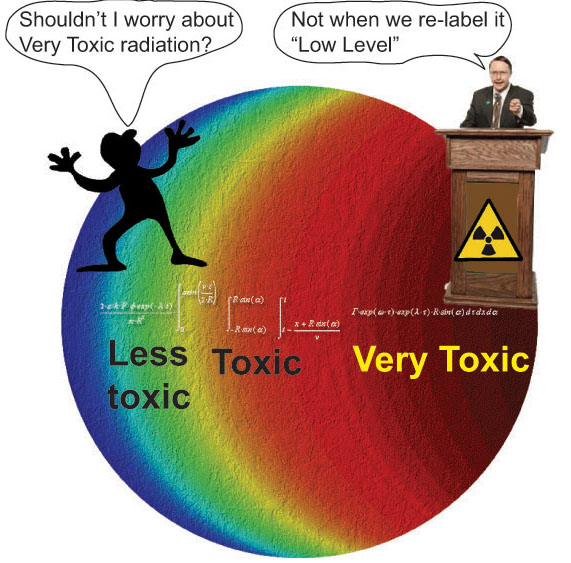
From Hiroshima to Fukushima to You, Dale Dewar, 4 July 2024
“……………………………………………………………………………………………………. Humans have lived with natural radiation for thousands of years – has it caused damage?
There are two distinct examples of natural radiation causing cancer: radon, largely in basements, and skin cancers from cosmic rays.
Cosmic rays were discovered in 1912 by an Austrian physicist, Victor Hess. He went up in a balloon and measured the ionizing radiation as he ascended and found that it was three times higher at 5300 meters elevation than at ground. Others discovered that cosmic rays were largely made up of protons (89%) and alpha particles (10%).
Alpha particles are stopped by skin, beta particles pass just through the skin and x-rays and gamma rays pass completely through a human body. This would make x-ray and gamma rays seem to be the most dangerous as they leave a trail of ions in their passage but if the particles become internal (by eating or breathing) they are up to 20 times more dangerous.
When any of these particles or rays interact with anything including biological matter, they cause ions. Sometimes the damage can be repaired, sometimes it cannot, and the cell dies or replicates the damage. Sometimes the damage affects the very process of replication itself.

This is what happens when a tumour is formed. A cell “goes wild” and doesn’t know when to turn off its growth.
If radioactive dust is inspired or eaten, the release of radioactivity occurs in the body. If it is radium dust, for example, the release of radioactivity continues for as long as the tiny bit of radium is present or 16,400 years (the half-life of radium x 10). The skeletal remains of the “radium girls” will still be radioactive for 16 millennia!
In 1927, an American, Hermann Muller was able to show the effect of radiation (he used x-rays) on genetic material. He had no doubt that it produced mutations in succeeding generations and remained a staunch defender of radiation protection measures and was opposed to atmospheric nuclear tests[iv].
To answer the question, how dangerous is the radiation that we call “background” radiation, the radiation that we cannot avoid? Some European researchers compared the incidence of cancers in children who lived in areas with low background radiation (0.70 mSv) to those who lived in areas with higher background radiation (2.3 mSv). Every tumour marker studied was higher in the children with the higher background radiation.[v]
Why do we know so little about radiation’s danger to health?
The nuclear industry has a singular interest in keeping populations ignorant. It continues to market nuclear energy as “safe” when no nuclear power plant can be operated without release of radiation in the form of tritiated hydrogen gas. By the time that Japan has released all its tritiated water (from Fukushima) into the Pacific Ocean, there will be no “unexposed” population with which to compare cancer rates.
In 1962 Dr. John Gofman was recruited by the US Atomic Energy Commission to head a biomedical unit. He was told that “the AEC was on the hot seat because a series [of atmospheric atomic bomb tests] had clobbered the Utah milkshed[vi]with radioiodine. And they have been getting a lot of flak. They think that maybe if we had a biology group working with the weaponeers at Livermore[vii], such things could be averted.”
The recruitment came with a very generous budget – 3 million dollars (almost three trillion dollars in 2020 dollars). John surrounded himself with scientists and technicians along with an outstanding colleague and Nobel laureate, Arthur Tamplin.
His first task as the chair of the biomedical unit was to squash a research paper[viii] by Dr. Harold Knapp that concluded a one hundred fold increase in the amount of radiation received from fallout by the people who lived in the downwind areas. Gofman and five other experts reviewed the data, asked technical questions and concluded that the research was scientifically sound and ought to be published.
The Atomic Energy Commission (AEC) balked,” We’ve told these people [in the fallout zone] all along that it’s safe and we can’t change our story now.”
Gofman’s committee remained firm.
It was clear that Gofman was not a lapdog hireling. When his department could not support the “Plowshares Project”[ix], the use of atomic bombs for “good”, they became known as the “enemy within”. Gofman thought that they were being teased and it was all in fun but this was the beginning of his demise as a go-to person for the AEC.
In 1969, Dr. Ernest Sternglass published research papers claiming that up to three hundred thousand children might have died from radioactive fallout from atmospheric bomb testing. It received popular coverage in Esquire under the title “The Death of all Children”. John’s colleague Arthur Tamplin re-calculated the data, and his result was an estimation of four thousand. Unfortunately, the AEC was still deeply displeased. The only answer they wanted was zero, that is, no children affected.
The Atomic Energy Commission had been promoting a “safe threshold” of radiation below which no health effects could be detected. A safe threshold made it possible to expose servicemen to atomic bomb tests, for workers in nuclear power plants to receive yearly doses of radiation and for people living near nuclear power plants to receive regular discharges of radiation. Drs Gofman and Tamplin estimated that the cancer risk from radiation was twenty times as bad as the most pessimistic estimate previously made.[x] Not only did they conclude that the risk was high, they also concluded that there was no safe amount of radiation and that it could be assumed that there was some risk all the way down to zero.” They presented their research at the Institute for Electrical Electronic Engineers (IEEE) meeting in October, 1969. A month later, John was invited to give the same paper to hearings convened by Senator Muskie.
Their research was picked up by the Washington Press. Their bosses in the AEC made a decision and started rumors. John heard that he “didn’t care about cancer at all and that he was trying to undermine national defense”[xi]. (He had already resigned his directorship of the laboratory but remained as a research associate.) Dr. Tamplin’s research staff was fired.
When John was called before the Joint Committee on Atomic Energy, a Congressional committee, he and Arthur reviewed all the data they could find. They concluded that “as a matter of fact, we’d underestimated the hazard of radiation when we’d given the Muskie testimony”. They wrote fourteen more research papers. John’s main research was now into chromosomes and their response to radiation. He applied elsewhere for funding to continue, including the Cancer Society but research funding had dried up. The AEC restructured its biomedical unit; it had discovered that doctors and health researchers were hard to control.
At the same time, two scientists with the Union of Concerned Scientists revealed that AEC didn’t know if the cooling system for a type of reactor worked. The credibility held by the AEC became questioable.
The government abolished it and created two new agencies: ERDA (Energy Research and Development Agency) and NRC (Nuclear Regulatory Commission), the former to oversee research and the latter to regulate the industry.
Drs John Gofman, Arthur Tamblin, and Harold Knapp were harassed, ridiculed, and sidelined because their research showed that radiation affected health. The industry didn’t stop there. Drs. Linus Pauling, Alice Stewart, Ernest Sternglass and Hermann Muller suffered similar fates. The US desire for nuclear arms required nuclear power plants. Nuclear radiation had to be safe………………………………………………………………………………………………………………………… https://ionizingradiationandyou.blogspot.com/
Overwhelming ICJ Ruling against Israeli Occupation Highlights Need for UN Action

The US government’s use of the veto must be shamed and condemned. The UN General Assembly must assert the will of the world.
SAM HUSSEINI, JUL 19, 2024, https://husseini.substack.com/p/overwhelming-icj-ruling-against-israel?utm_source=post-email-title&publication_id=201840&post_id=146793552&utm_campaign=email-post-title&isFreemail=true&r=9zi1x&triedRedirect=true&utm_medium=email
The International Court of Justice ruled today: the State of Israel has the obligation to make reparation for the damage caused to all the natural or legal persons concerned in the Occupied Palestinian Territory;
the State of Israel’s continued presence in the Occupied Palestinian Territory is unlawful;
the State of Israel is under an obligation to bring to an end its unlawful presence in the Occupied Palestinian Territory as rapidly as possible;
the State of Israel is under an obligation to cease immediately all new settlement activities, and to evacuate all settlers from the Occupied Palestinian Territory;
all States are under an obligation not to recognize as legal the situation arising from the unlawful presence of the State of Israel in the Occupied Palestinian Territory and not to render aid or assistance in maintaining the situation created by the continued presence of the State of Israel in the Occupied Palestinian Territory;- international organizations, including the United Nations, are under an obligation not to recognize as legal the situation arising from the unlawful presence of the State of Israel in the Occupied Palestinian Territory; and
- the United Nations, and especially the General Assembly, which requested the opinion, and the Security Council, should consider the precise modalities and further action required to bring to an end as rapidly as possible the unlawful presence of the State of Israel in the Occupied Palestinian Territory.
See video and background via here.
The UN Security Council has been prevented from action by the US (and British) veto.
As I have argued, the General Assembly must act, especially using Uniting for Peace. See my piece: “‘Uniting for Peace’ is Next Step in Invoking Genocide Convention Process to Protect Palestine.”
This is a major organizing challenge to people around the world; to get as many countries as possible to back as strong action as possible against Israel’s crimes.
Some resources are in my piece, above. Another key is action should be in NYC in front of the UN and various missions to the UN.
Never Forget Julian Assange
SCHEERPOST, JULY 19, 2024
Although Julian Assange is free and home in his native Australia, his story and decade-long suffering at the hands of the U.S. government must never be forgotten for the sake of the survival of the First Amendment. In this episode of the Scheer Intelligence podcast, host Robert Scheer is joined by Kevin Gosztola, who runs The Dissenter newsletter and has been reporting on the Assange case and whistleblowers in the U.S. for more than a decade. Together, they underscore the significance of the Assange case and delve into the details explored in Gosztola’s recent book, “Guilty of Journalism.”

Gosztola makes clear one of the main points of the whole ordeal, which is the inconsistency in the U.S.’s interpretation of its own laws. “The First Amendment and the Espionage Act are in conflict in this country. You can’t reconcile the two, at least the way that the Justice Department wants to use the Espionage Act against people who aren’t even just U.S. citizens. They’re trying to apply U.S. law to international journalists,” Gosztola told Scheer.
The U.S. response to the internet age and the powerful journalistic revelations of Assange and WikiLeaks was to criminalize such actions, sending a clear message: anyone attempting to blow the whistle or expose the U.S. government’s crimes would face severe punishment, including the use of the Espionage Act, which could imprison someone for life.
“Unlike Daniel Ellsberg, [Chelsea] Manning didn’t have to sit there at a Xerox machine making copies. [She] just sent the copies of the documents to WikiLeaks, and then WikiLeaks had all these files that they could share with the world,” Gosztola said.
Despite the online journalism revolution, many in the media space still remained quiet throughout the Assange debacle both because of their ties to government officials and their lack of professional rigor. Gosztola posed several questions to them:
“Where were you? Why weren’t you doing the investigations to uncover these details? Why did this WikiLeaks organization come along and reveal these details about Afghanistan, the Iraq War, the nature of US foreign policy? Why do you accept that all of this information that was classified should be classified?”
TRANSCRIPT – ……………………………………………………………………………. , https://scheerpost.com/2024/07/19/never-forget-julian-assange/
Shiny New MP’s Fizzingly Push For More Nuclear Waste – Hotter the better! And a Complaint to Advertising Standards – Standards? What Standards!
BY MARIANNEWILDART, https://mariannewildart.wordpress.com/2024/07/18/shiny-new-mps-fizzingly-push-for-more-nuclear-waste-hotter-the-better-and-a-complaint-to-advertising-standards-standards-what-standards/
Well we are now awash with new shiny MPs pushing the “clean” “green” nuclear myth and falling over themselves to write fizzingly enthusiastic letters “urging” the new Labour government to “deliver” new unlicensed untested nuclear crapola which the public would be paying for before during and well after any electricity production. Meanwhile Sellafield is bursting at the seams with nuclear wastes which keep on coming – nuclear wastes whose only “solution” is to “decommission” ie disperse, dump, incinerate and forget, make room for more.
How have we come to this – it has taken a lot of effort on the part of the industry and pro nuclear governments from Thatcher to Blair and now Starmer and a lot of forgetting on the part of mainstream environmental NGOs who were the ‘green’ conscience of the people and started out with fierce unequivocal opposition to nuclear but somehow got inveigled into demanding “climate jobs’ with no anti-nuclear caveats giving the now “climate friendly” nuclear industry exactly what it wants.
I wonder how the following adverts [on original] which were in local press over June will be viewed by humanity in future years, or by aliens?
Westinghouse the front end of the industry with its “clean” “climate friendly” uranium fuel and Sellafield, the arse end of the industry with its sponsorship of the “Pride of Cumbria Awards” the Shame of Cumbria is palpable with every radioactive particle that washes back from Sellafied’s radioactive sewers with the tide.
Full Page adverts over consecutive weeks in local press
Anyway more in hope than in expectation of Advertising Standards actually doing its job and making a ruling against breathtaking greenwashing by the most dangerous industry, here is a complaint – also sent to the Westmorland Gazette and Westinghouse on July 8th (no reply from either).
I would like to make a complaint about the advert run in the Westmorland Gazette (and Whitehaven News?) for Westinghouse.
The advert was produced on the same page (on consecutive weeks) with an advert for Sellafield “Proud to be sponsoring the Pride of Cumbria Awards 2024″”.The Westinghouse advert claims that its products: Nuclear Fuel, AP1000 reactors and assisting Sellafield in decommissioning, are “clean” and “carbon free.”
This can be easily refuted as falsehood.
The nuclear fuel produced by Westinghouse at the Springfields site has been burned in nuclear reactors across the UK (and abroad) since the mid-1940s.
Clifton Marsh Landfill
Some of the many waste streams from the manufacture of nuclear fuel are dispersed to the River Ribble and Clifton Marsh Landfill although in January 2022 “the Clifton Marsh low level waste landfill site, operated by Suez, stopped accepting consignments of radioactive waste for disposal. As most of the solid radioactive waste from Springfields is disposed at Clifton Marsh, this has significantly affected routine waste management operations on site. Together with ONR we have discussed and reviewed SFL’s contingency plans to manage waste in the short term, which includes temporary accumulation of radioactive waste on site, improvements to waste characterisation and alternative disposal options. It was anticipated that Clifton Marsh would become available for disposals during the second half of 2022, although this has not yet occurred,” Environment Agency report . Decommissioning Plans Include Incineration of Radioactive Wastes Three Miles from Preston by “Clean” Westinghouse are proposing an incineration plant on their Springfields site just 3 miles from Preston for ” a large, refractory lined oven designed to treat a wide range of low and intermediate-level radioactive materials.” The feed into the incinerator would include European radioactive wastes of up to 3 tonnes a day. Countries such as Germany have now rejected new nuclear on health, safety, climate and financial grounds but still have wastes to dispose of would be keen to use Westinghouse’s new incineration plant.https://www.world-nuclear-news.org/Articles/New-UK-waste-treatment-facility-planned#:~:text=Plans% 20to%20jointly%20develop%20a,for%20the%20European%20nuclear%20market.
River Ribble
“The Ribble estuary near Preston receives radioactive substances from liquid effluent, discharged directly from the nearby Springfields Fuels Ltd site, and also transported down the coast from the Sellafield Ltd site via the Irish Sea. Estuaries are complex environments, influenced by both the marine tidal processes and the freshwater input from rivers. Some of the radioactive substances eventually become deposited in sediment in the estuary and on the nearby salt marsh.” …”The amount of shielding provided by boat hulls varied from almost none in a small pleasure boat, to 50 percent in a medium sized houseboat. Thick, dense clothing materials like rubber boots reduced the dose received from beta radiation by around 80 percent, wax jacket by 20 to 40 percent, while thin, less dense materials like woollen jumpers did not provide any protection” Environment Agencyhttps://assets.publishing.service.gov.uk/media/5a7c323240f0b674ed20f75e/scho0211btkg-e-e.pdf
“Carbon Free”
The latest carbon emissions report for the Preston Springfields site by Westinghouse is 38,617 tonnes for 2019. This is the equivalent of 20,000 cars on the road. https://westinghousenuclear.com/media/5kulvl03/springfields-carbon-reduction-plan.pdf?ver=d5dd1Fr giH03Wqky98f_fA%3D%3D
The uranium fuel rod wastes from Westinghouse end up at Sellafield in Cumbria. The carbon footprint for looking after Westinghouse’s burnt uranium fuel rods last year was, according to Sellafield, 600,000 tonnes of CO2. This is far higher than all the emissions generated by all vehicles using the M6 through Cumbria every year according to Cumbria Action for Sustainability’s figures (CaFS give nuclear a free ride excluding figures despite their gargantuan C02 footprint)
AP1000 reactors – Bankruptcy, Crime and Failed Reactor Coolant Pumps
The advert states “Our AP1000 plant is setting operational records in its global fleet and is ready for deployment in the UK.” Yes it is setting operational records in being the most expensive, and fault ridden reactor to date causing Westinghouse to go into bankruptcy. “By 2016 Westinghouse began to grasp the scope of its dilemma, according to a document filed in its bankruptcy: Finishing the two projects would require Westinghouse to spend billions of dollars on labor, abandoning them would mean billions in penalties. Westinghouse determined it could not afford either option.” It chose Chapter 11 Bankruptcy. https://www.reuters.com/article/world/how-two-cutting-edge-us-nuclear-projects-bankrupted-westingho use-idUSKBN17Y0C7/ Alongside this were charges of Westinghouse executive with dozens of crimes including ” felony counts including conspiracy, wire fraud, securities fraud, and causing a publicly-traded company to keep a false record.”https://thebulletin.org/2021/08/us-attorney-details-illegal-acts-at-construction-projects-sealing-t he-fate-of-the-nuclear-renaissance/
Westinghouse’s “global fleet” is largely in China where AP1000 reactor coolant pumps have failed forcing shut down of the reactors. https://www.spglobal.com/commodityinsights/en/market-insights/latest-news/electric-power/031419-us -designed-chinese-nuclear-reactor-forced-to-shut-by-pump-defect
Scientists in China are concerned enough to have provided “environmental radiation impacts assessment for the hypothetical accident in Haiyang nuclear power plant” saying that “the impact of east wind in August will mainly affect the west area of HYNPP, but it also has an impact on Northeast China, the Korean Peninsula region and Kyushu, Japan. The research results are aimed at supporting emergency decision-making of nuclear accidents and improving nuclear emergency response capabilities in surrounding areas.” https://www.sciencedirect.com/science/article/abs/pii/S0149197020301153?via%3Dihub Former US nuclear regulator Arnie Gunderson has suggested that the AP1000 deployed in the UK could cause a catastrophe that would be “like Chernobyl on steroids.” https://www.independent.co.uk/climate-change/news/nuclear-expert-arnie-gundersen-warns-of-cherno byl-on-steroids-risk-in-uk-from-proposed-cumbria-plant-10109930.html
Clearly Westinghouse’s claim to be “clean” and “carbon free” is false.
yours sincerely
Marianne Birkby
on behalf of Lakes Against Nuclear Dump
Absent but not missed: No mention of nuclear in King’s Speech

https://www.nuclearpolicy.info/news/absent-but-not-missed-no-mention-of-the-n-word-in-kings-speech/ 18th July 2024
The UK/Ireland Nuclear Free Local Authorities could not help but notice that the first speech made by King Charles III at the State Opening of Parliament (17 July) was nuclear free as His Majesty was spared having to utter the word.
By tradition, the Sovereign reads the speech, written for him by Whitehall officials and signed off by Ministers, to a combined gathering of Lords and MPs. This sets out the legislative programme for the coming Parliament. Clearly with the return of a new Labour Government, elected with a huge majority, Ministers are keen to get on and exercise their mandate and the speech was brimming with forty proposals for new legislation[i].
On energy there was an emphasis on meeting the urgent
On energy there was an emphasis on meeting the urgent challenge of climate change whilst reducing customers’ bills through a ‘clean energy transition’, but His Majestry was notably not called upon to extole nuclear energy as a means to do so so; instead the speech referenced the need to ‘accelerate investment in renewable energy, such as offshore wind’ by creating a new vehicle Great Britain Energy which will be publicly owned and headquartered in Scotland. Nuclear was thankfully nowhere to be seen, seemingly stll on its summer holidays[ii].
Interestingly, the Background Briefing Notes issued to accompany the publication of the speech by Number 10 also makes no reference to nuclear.[iii]
Also interestingly, Ed Miliband shortly after his arrival at the Department for Energy Security and Net Zero issued a statement as Secretary of State to his staff – this too makes zero reference to nuclear as a component in the fight to achieve Net Zero.[iv]
Nuclear then appears late for the party, as per usual, or may even have been excluded from the invite list.
For it is notable that whilst Labour’s energy manifesto makes much of getting new nuclear projects at Hinkley and Sizewell ‘over the line’, extending the lifetime of existing plants, and backing new nuclear including Small Modular Reactors by the end of the government’s first term in 2030, mention of any of this has been noticably absent in the government’s recent pronouncements
The NFLAs hope that Ministers on being appraised of the huge costs and massive challenges of delivering a new nuclear programme has quietly opted to go for the common sense approach of choosing cheaper, practicable and achieveable renewables to deliver truly green energy, energy security, lower bills and Net Zero. Fingers crossed.
80 CANADIAN ORGANIZATIONS CALL ON FEDERAL GOVERNMENT TO RESCIND APPOINTMENT OF NUCLEAR REGULATORY AGENCY PRESIDENT.
Ottawa, 17 July 2024 .- www.nuclearwastewatch.ca
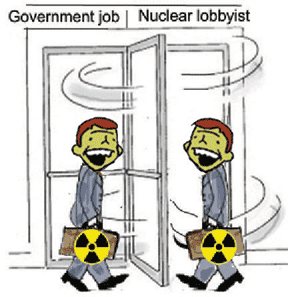
Over 80 civil society organizations from across Canada are speaking out and calling on Prime Minister Justin Trudeau and Governor General Mary Simon to rescind their recent appointment of Mr. Pierre Tremblay, a long time senior nuclear industry executive, as President of the Canadian Nuclear Safety Commission (CNSC).
In a joint letter citing conflict of interest and failure to adhere to International Atomic Energy Agency (IAEA) guidelines, the groups -a range of organizations that include in their ranks scientists and retired nuclear officials- also call on the Federal Government for an urgent reform of the CNSC and nuclear governance in Canada.
Mr. Tremblay has been a long-time senior business executive at Ontario Power Generation (Canada’s largest nuclear operator and contractor of nuclear businesses), reported co-owner of a private nuclear business involved in the Plutonium trade, and most recently president of AECOM Canada Nuclear Services -a key contractor for two questionable projects expected to report billions of dollars to the nuclear businesses involved, and impact populations for centuries: a nuclear waste dump (“Near Surface Disposal Facility”) by the Ottawa river and a project to abandon high-level nuclear waste underground in Northern Ontario, both of them expecting CNSC licenses.
The groups also call on the Federal Government to take the opportunity to initiate a long-needed reform of the CNSC, which has often been described by observers as an “industry-captured regulator”.
The request notes that the CNSC has a communications branch with 60-plus staff but no dedicated human health and environmental protection branch, and has not turned down a single nuclear industry application in more than a decade. It has also actively lobbied to weaken impact assessment legislation to exclude a range of nuclear reactors and processing facilities.
Mr. Tremblay’s appointment follows other appointments to the Commission of industry insiders, and two troubling assessments of the CNSC’s performance by the International Atomic Energy Agency (IAEA) -a June 2024 follow-up to an initial 2019 IAEA mission highlighted several problem areas; despite the CNSC’s positive spin on the IAEA missions, the findings are a cause of deep concern for independent observers and experts.
Given the CNSC’s often-stated priority and legal mandate to protect the environment and the health of Canadians, the groups are requesting the Federal Government consider recruiting CNSC senior ranks from within the health and environmental protection communities, including perhaps Environment and Climate Change Canada and the federal Health Portfolio.
The signatory organizations note that the appointment contravenes both IAEA guidelines and the Federal Government’s own guidance on the independence of regulatory bodies, and compromises the public’s expectation of neutrality, objectivity and independence of Canada’s nuclear regulatory body and reinforces the public perception of industry capture of that body. Rescinding the appointment would be a significant step towards a much-needed reform of the CNSC and towards restoring public trust in that critically important agency.
Quotes: The Canadian Nuclear Safety Commission is supposed to be a neutral body, carefully safeguarding the health of the Canadian public and the environment from the risks associated with the use of nuclear energy. Senior executives from the nuclear industry should be disqualified from positions at the CNSC.” – Dr. Ole Hendrickson.
“Having a nuclear business executive whose companies have pushed for questionable projects placed in charge of the very agency that would now regulate and approve them, is an obvious conflict of interest” – J. P. Unger, science writer and policy analyst. “The Government should abandon any pretense of having a watchdog and true regulator for nuclear matters -or carry out its urgently needed reform.”
History of the medical profession’s role in illnesses and death caused by nuclear radiation.

From Hiroshima to Fukushima to You, Dale Dewar, 4 July 2024 “…………………………………………………………………………………………………………. Are we still questioning the safety of ionizing radiation? Nuclear industry leaders are delighted to remind me that physicians are the leading causes of the radioactive “burden” that most people carry.
Inadvertent research in medicine
What is less well known is that the medical profession has inadvertently conducted research on radioactivity and, after the fact of the exposures, discovered correlations of injury with radioactivity. Only a few are listed here:
1. Radiation-Induced Meningiomas:
In the early 1900’s until after the discovery of topical anti-fungals[2] in the late 1950’s, the treatment of choice for fungal or yeast infections of the scalp was irradiation, especially for Jewish children planning to immigrate to Isreal. The technique exposed the scalp to 5 – 8 Gy to the scalp, and 1.4 – 1.5 Gy to the surface of the brain. Initially it seemed like a safe thing to do.
But then reports of somnolence (sleepiness) lasting from 4 – 14 days in 30 of 1100 children occurred. By the 1930’s side effects included atrophic changes to the scalp, epilepsy, hemiparesis, emotional changes and dilatation of the brain’s ventricles.
The absolute death knell to the practice occurred in 1966 when University Medical Center (New York) published a study showing a dramatic increase in cancers among those irradiated. An increase rate of psychiatric hospitalizations was also noted.
Studies continue to roll in – the latent phase for meningioma is approximately 30 years but metastatic tumours may take over 40 years to develop. No one irradiates scalps for ringworm now.[xvii]
2. Treatment of tuberculosis using chest fluoroscopy:
Between 1925 and 1954, one of the therapies for tuberculosis was collapse of the lung followed by x-Ray fluoroscopy. More than 2500 of these patients were followed for 30 years. Increases in the rate of cancer of the breast was not seen until about 10 to 15 years after first exposure[3]. There were 147 breast cancers in the treated cohort compared to 113.6 in tuberculosis patients that were not treated with fluoroscopy. The researchers concluded that younger women were more likely to develop cancer and that the risk of developing cancer remained high for their entire lives.
The fluoroscopic and x-ray doses were known. Another finding from this study was that fractionated doses had the same risk of developing cancer as the single total dose.[xviii]
3. Irradiation of the thymus gland and subsequent breast cancer
Young children normally have large thymus glands. With the advent of chest x-rays in the 1920’s, this large thymus was viewed with suspicion. Pediatricians feared that a large thymus could lead to respiratory problems. Until 1953[xix]irradiation of the thymus was done to decrease its size.
The rate of breast cancer among woman who were so treated as children was three times that of those that were not treated. The cancers occurred when women were in their early 30’s, more than 25 years after irradiation.
Since the amount of radiation given to the thymus was quite low, researchers have become concerned about the rising tendency for CT scans of the chest either for diagnosis or treatment. Their results “underscored the importance of limiting radiation exposure in the youngest children as much as possible.”
4. CT scans of children’s heads following injuries.
Like many physicians wishing to comfort parents whose child had a concussion, I was pleased to be able to refer the child to a CT scanner when one became available in 1996. We all slept better at night thinking that a normal CT meant that the kid’s brain was ok.
Maybe we should not have.
A Canadian study of children receiving CTs to the head indicated that as few as four CT scans before the age of six could result in doubling the risk of leukemias, lymphomas and intracranial tumours starting about ten years later.[xx]
5, Secondary cancers resulting from radiation treatment for cancer
Until recently second primary cancers were neither given serious thought nor studied. Most patients receiving radiation did not live long enough, the 15 to 20 years after their treatment, to display the side effects of ionizing radiation.
One of the first studies on this population indicated that the number of second cancers caused by radiation was as high as one person in five.
There are many criticisms of this study not the least of which is that the size of their sample was small and, at ten years, the length of time for the development of solid cancers was short, but the researchers still concluded that “an effort toward a reduction in their incidence is mandatory. In parallel, radiation therapy philosophy must evolve, and the aim of treatment should be to deliver the minimal effective radiation therapy rather than the maximal tolerable dose.[xxi]
Arising from their work were estimations of dose associated with harm. They concluded that the incidence increased with the dose even though thyroid and breast cancers were observed following doses as low as 100 mGy and adults developed cancers following treatment doses as little 500 mGy. The risk of developing sarcoma (bone cancer) was 30.6 times higher for doses of more than 44 Gray than for doses of less than 15 Gray.
6. Side effects of ionizing radiation tracers and heart disease.
Research has shown that the lifetime risk of developing fatal cancer from the use of a radioactive tracer as in a PET or MIBI scan is 1 in 2000, in other words, it is lower than the lifetime risk of dying in a motor vehicle accident (1 in 108).[xxii]
However, when Canadian researchers focused on their 82,861 patients who had heart attacks, they found that 77% underwent at least one cardiac imaging or therapeutic procedure involving low-dose ionizing radiation. By comparing populations, they found that for every 10 mSv of radiation there was a 3% increase in the risk of age- and sex-adjusted cancer over a follow-up period of five years.
Because five year follow-up is very short for the development of cancers, this is an underestimate, probably by a large factor…………………………………………………………………….. https://ionizingradiationandyou.blogspot.com/
TODAY. The cover-up of the danger of nuclear radiation and health, but who is speaking for our grandchildren?
From the earliest days of Marie and Pierre Curie, the harm from ionising radiation was observed, but not fully acknowledged. And before long, it was enthusiastically used in medicine, as x-rays, and in the general world, in various forms, as an aid to health and beauty. When the “radium girls” who painted watch dials with the glow-in-the-dark, radium-based paint, became ill, they were diagnosed by company doctors as having poor diet, neuroses or even syphilis.
Accidents during the Manhattan Project showed the horror effects of high doses of radiation, – but with some military propaganda sleight-of-hand this seemed to be taken to show that “low level” radiation is fine.
Doctors and scientists of integrity, who researched the harm of nuclear radiation were harassed, ridiculed, and sidelined. Integrity was a career killer for DrJohn Gofman, Arthur Tamblin, Harold Knapp, Linus Pauling, Alice Stewart, Ernest Sternglass and Hermann Muller.
Despite the scientific report in 2007 – Biological Effects of Ionizing Radiation (BEIR) stating the danger, the nuclear lobby has been successful in obscuring the truth, and putting across a general acceptance that low dose radiation is well, OK, really.
Dr. Alice Stewart and , Dr. Rosalie Bertell showed the link between x-rays in the mothers and leukemia in their children – their results were similarly rubbished, (but medical authorities quietly curtailed the widespread use of x-rays)
Epidemiology and Statistics are boring stuff, I know. But population statistics of infant deaths and child cancers have shown the increased danger to embryos, infants and children living near nuclear facilities.
Sadly, health authorities have colluded in this cover-up. Public anxiety about ionising radiation is a threat to the thriving nuclear medicine industry. How much of nuclear medicine is absolutely necessary? How many CT scans and other radiological examinations are not really called for? It’s easier for medical professionals to just go along with the view that low level radiation is OK.
After all, amongst many thousands, if only a few thousand children die as a result of exposure to low level radiation – from nuclear reactors and other nuclear facilities, that’s OK isn’t it?
As world leaders enthuse over more nuclear power, and more nuclear “deterrents” , Dr. Gordon Edwards asks the question “Who is speaking for our grandchildren?”
(My inspiration for this short article came from Dr Dale Dewar’s Ionizing Radiation and Human Health .)
International Court of Justice Tells Israel to End Occupation of Palestinian Territories, Pay Reparations

Racism in Israel is not a flaw in the system; it is the system.
Unlike the framing commonly put forth by politicians and mainstream media, it is not “complicated.” It is not “an age-old religious feud.” And, it is not “a conflict by extremists on both sides.”
While the Biden administration continues its insincere rhetorical support for the two-state solution, the U.S. has remained Israel’s staunchest supporter, always using its veto power to shield it from accountability and prevent Palestinian statehood despite Israel’s repeated violations of international law and UN Security Council resolutions.
Seventy-Five Percent of All UN Member States Recognize the State of Palestine
In an advisory opinion, the International Court of Justice reaffirmed the Palestinian right to self-determination.
By Michel Moushabeck , TRUTHOUT, July 19, 2024 https://truthout.org/articles/icj-tells-israel-to-end-occupation-of-palestinian-territories-pay-reparations/
In a landmark opinion issued today, the International Court of Justice (ICJ) has said that Israel’s 57-year occupation of the West Bank, East Jerusalem and the Gaza Strip is in breach of international law.The proceedings came out of a UN resolution passed in December of 2022. In the resolution, the UN General Assembly requested an advisory opinion from the International Court of Justice on “Israeli practices affecting the human rights of the Palestinian people in the Occupied Palestinian Territory, including East Jerusalem.”
The ICJ, also known as the World Court, is the UN’s principal judicial organ that adjudicates disputes between member states and provides advisory opinions on international legal matters.
This case is separate from the one brought forth by South Africa last year, in which the ICJ provisionally ruled that Israeli practices in Gaza are plausibly genocidal. Following that ruling, Israel indicated that it rejects the ICJ’s findings.
In a post on X, Prime Minister Benjamin Netanyahu wrote, “Nobody will stop us – not The Hague, not the axis of evil and not anybody else.”
Public hearings on Israel’s occupation of Palestine were held at The Hague on February 19 and lasted for six days, during which 52 countries participated and presented arguments. The panel of 15 judges on the court was asked by the UN General Assembly to consider “the legal consequences arising from the ongoing violation by Israel of the right of the Palestinian people to self-determination, from its prolonged occupation, settlement and annexation of the Palestinian territory occupied since 1967.”
The hearings commenced with remarks by Palestinian Foreign Minister Riyad al-Maliki, in which he asserted the rights of Palestinians to live “in freedom and dignity in their ancestral land.” He asked the ICJ to recognize the Palestinian people’s right to self-determination and called on the court to “declare Israel occupation is illegal and must end it completely and unconditionally.”
Israel did not participate in the oral arguments, but the Office of the Prime Minister issued a statement saying, “Israel does not recognize the legitimacy of the discussion at the International Court of Justice in The Hague regarding the ‘legality of the occupation’ — a move designed to harm Israel’s right to defend itself against existential threats.”
Israel’s Occupation Is Sustained by a Combination of State-Sponsored Violence and Apartheid
Israel was born of British colonialism; it was created through a mixture of state violence and vigilante terrorist acts that displaced Palestinians and dispossessed them from their homes and land; it is supported — financially, militarily and diplomatically — by Western, primarily U.S., imperialism-serving war profiteers; and it is sustained by a combination of state-sanctioned violence and a system of apartheid that denies Palestinians — who form half the people in the land under Israeli control from the river to the sea — their equal rights.
After the Nakba of 1948, the State of Israel was established on 78 percent of the land of what had been British Mandate Palestine. During the June 1967 war, Israel took over the West Bank, Gaza and Arab East Jerusalem, the remaining 22 percent of historic Palestine, now known as “the Occupied Territories.” In 1980, Israel unilaterally formalized its annexation of East Jerusalem — a move that was condemned as illegal by the international community.
Over the past 57 years, successive Israeli governments have brutally terrorized Palestinians, demolished homes, confiscated large tracts of Palestinian lands, expanded Israeli settlements in the West Bank — considered illegal under international law — and added many new ones that effectively rendered the “two-state solution” impossible. Now West Bank settlers number more than 700,000; they are heavily armed and are constantly terrorizing Palestinian residents in neighboring villages in an effort to force them to leave, as described in a report by Amnesty International.
According to the Palestinian Health Ministry, since October 7,575 Palestinians — of whom 138 are children — were killed in the occupied West Bank and East Jerusalem by soldiers and armed settlers.
Israel employs oppression, violence, persecution, checkpoints, house demolitions, displacement, expulsion, imprisonment, land theft, torture of children and collective punishment to ethnically cleanse non-Jewish inhabitants.
Continue readingSpecific Radioactive Elements and Their Effects on Health.
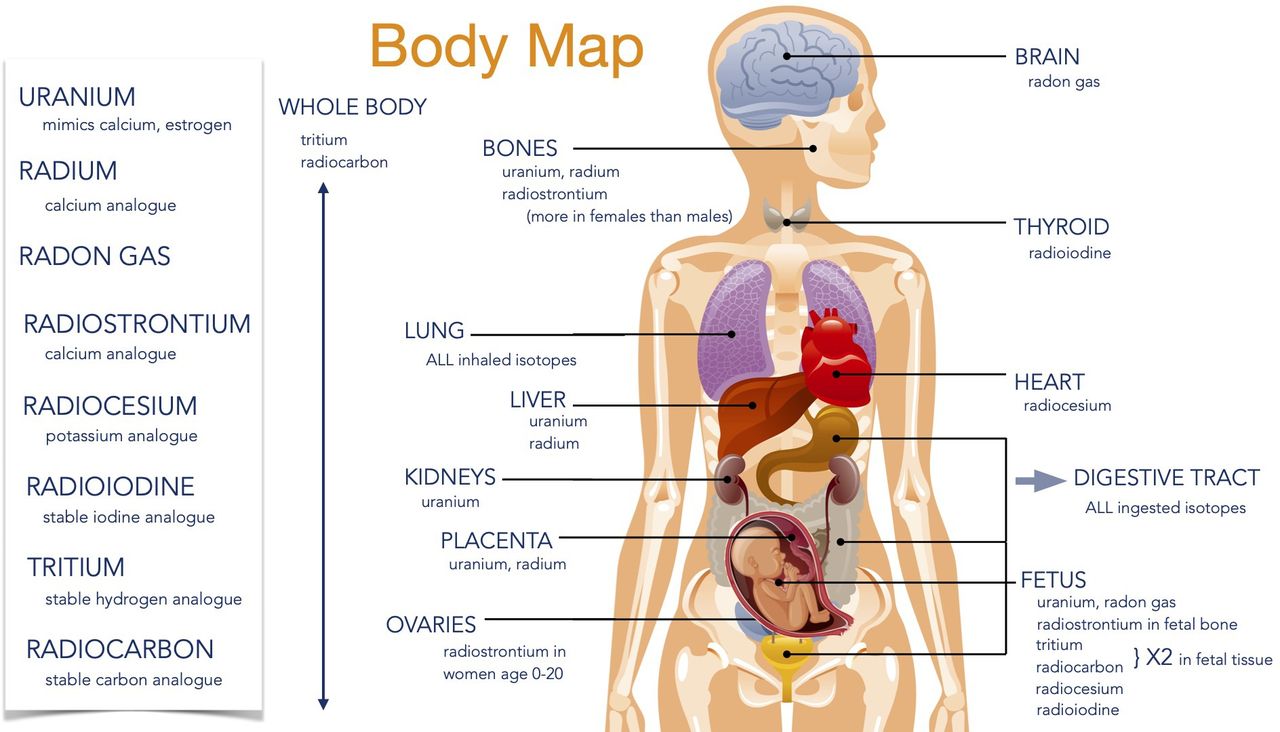
From Hiroshima to Fukushima to You, Dale Dewar, 4 July 2024 “……………………………………………………………………………………………………………..
That radioactive elements cause cancer is beyond doubt. Increasing their presence in our environment does increase the incidence of cancer. It seems that these elements may cause any number of other problems – auto-immune and cardiovascular diseases, ill-health and chronic tiredness, headaches and benign tumours all have suspicious links. Lowered resistance to bacterial and viral illnesses has been seen.
Funding to do the studies that extend over years is not available.
Even an accident as large as the Three Mile Nuclear Power plant accident received funding for only nine years. When studies done by Joseph Mancuso, Alice Stewart and Geoffry Knean on Hanford workers showed a health effect not only was their funding cut but demands were made that they release all their hard data to the National Research Council. (Mancuso lost his data but Stewart and Knean had taken most of the documentation home with them, to the UK.)
That radioactivity causes chromosomal defects in fruit flies is also not questioned. To show these effects, if they occur in humans, would require centuries.
The specific effects of some radioactive elements have been well studied:
Radon-222: Cancers caused by radon prompted the Canadian government to establish the Canadian National Radon Program using guidelines developed by the International Radiation Protection Association. Various public health offices believe that alpha radiation from radon causes up to 20% of Canadian lung cancers.
Radon is the main decay product of radium. It has a half-life of only 3.8 days so its decay chain is also of concern for health. One of its products is polonium-210, one of the most poisonous elements on earth. Are cancers blamed on radon really caused by polonium?
Radon has found some use as a tracer but, while found naturally, it is still considered part of uranium waste.
Uranium-238: This isotope of uranium is its most common. Forming 99.27% of natural uranium, it has a half-life of 4.5 billion years. It is the starting of a decay chain that includes radium, radon, polonium and ends with stable lead-210. This isotope, uranium-238, is popularly referred to as “depleted uranium” because its uranium-235 has been removed.
Uranium is a heavy metal and as such, its health effects resemble those of lead and mercury, kidney failure being the most common. It seems to have estrogen-mimicking properties and at least one chronic disease has found to be increased, systemic lupus erythematosus, among a cohort of uranium miners.
The Eldorado uranium miners study looked specifically for lung cancer and found a doubling effect – but was it due to powdered uranium or gaseous radon?
Uranium-235: This isotope is fissile, the isotope desired for nuclear bombs. “Enrichment” of uranium occurs to increase the percentage of U-235 and there are various percentages required for different tasks.
Most light water nuclear reactors require a concentration of 3 – 5% U-235 to operate, to reach criticality and produce the heat to boil water. It is anticipated that the proposed small modular reactors will require HALEU (High Assay Low Enriched) uranium which contains 19.5% uranium-235.
Aside from nuclear bombs and nuclear power plant fuel, uranium has no other functions. Uranium as an ore, refined to “yellow cake” is not very radioactive.
Radium-226: The most stable isotope of radium with a half-life of 1600 years is radium 226, itself a decay product of thorium-230 in the uranium-238 decay chain. Radium is considered the most radioactive element known. It emits alpha, beta and gamma radiation. Its glowing colour is the result of ionization of the air around it.
All 34 known isotopes are radioactive. It is found in nature.
Radium’s use has evolved from the dials of watches until the 1970’s and cancer treatments until the 1990’s when it was discarded in favour of less radioactive but still effective elements. It may have been the first element used in brachytherapy where the element is encapsulated and inserted inside a tumour. It is still used for prostate cancer that has spread to bones.
Radium is a relative of calcium and strontium. When it is in the blood, bones and muscles will absorb it and use it in place of calcium. In the bones and muscles, its radiation induces bone cancers, and cancers of the bone marrow (leukemias). Hence the dial workers and the industrialist developed bone cancers, osteosarcomas.
Strontium-90: Strontium (element 38) is found ubiquitously in radioactive fallout from nuclear bombs or nuclear power plants. It is a fission product of uranium.
Natural strontium is not radioactive, nor are its four isotopes. It belongs to the same family of elements as calcium and human biology treats them very similarly, strontium is scooped out of the blood to incorporate it into bones and muscles. It is believed to have a biophysical[4] half-life of 18 years. Because it is very close to blood-forming components in the bones, it is blamed for increases in leukemia, lymphomas and bone cancers. While in situ, it initially weakens bones.
Strontium-90 decays with a half-life of 29 years to yttrium-90 which also undergoes beta decay to zirconium-90 which is stable.
Strontium-90 has no commercial value and is considered entirely an environmental pollutant.
Iodine-131: Radioactive iodine therapy increases the risk of leukemia, stomach cancer and salivary gland cancer, according to the American Cancer Society[xxiii]. On March 27, 2011, Massachusetts Department of Public Health found I-131 in low concentration in rain water, likely originating from the Fukushima accident.
Iodine-127 is the only stable isotope of the element with 53 protons in its nucleus. Of the remaining 26 isotopes, iodine-131 is not only of greatest concern with respect to nuclear bomb testing fallout, nuclear power plant accidents and natural gas production, but of all fission-related radioisotopes, it has also found the greatest medical use. It has a half-life of about 8 days and emits an energetic electron, a beta particle. It is preferentially filtered out of the blood by the thyroid.
Because it is collected by the thyroid, it can be used in high doses to selectively kill hyperactive thyroid cells whether they are benign or malignant. Also, because it is collected by the thyroid, its action can be mitigated by taking normal oral iodine at the time of exposure.
Its short half-life means that it is an insignificant contributor to nuclear waste.
It decays to xenon-131 which is stable.
Tritium: All threehydrogen isotopes are gasses and can form water with oxygen. Hydrogen itself has one proton in its nucleus and one electron circling it. Deuterium is “heavy water” with one proton and one neutron in its nucleus. Tritium is radioactive with one proton and two neutrons in its nucleus.
While it is naturally formed by cosmic rays hitting hydrogen in the upper atmosphere, the bulk of today’s tritium is released from nuclear power plants. It is often characterized as a short-lived weakly radioactive radioisotope, but a half-life of 12.3 years is questionably “short” in human terms. The beta particle emitted by tritium is low energy but its presence inside human cells is a major concern.
Getting into human cells is pretty easy for a hydrogen isotope because, combined with oxygen, it forms tritiated water and water enters every cell of almost every biological being. It is very difficult to link specific exposures to cancers and chronic disease but using populations studies, researchers can link the health of populations around nuclear power plants with case-matched[5]populations that are not exposed to tritium releases from power plants.
Tritium has had commercial use as the energy source in radio luminescent lights for watches, gun sights, numerous instruments and tools, and even novelty items such as self-illuminating key chains[xxiv]. It is used in a medical and scientific setting as a radioactive tracer. The past use in exit signs was discontinued because of breakage.
Conclusion:
Does ionizing radiation cause cancer? Cancer seems to be at least one consequence of exposure. While it is difficult to determine whether a person has developed cancer because he/she worked in a uranium mine, had a high amount of radon in their home, got struck by cosmic rays, or had too much glyphosate or benzo(a)pyrene[6] in their diet, wherever the more difficult comparison of populations has been done, those affected by the higher ionizing radiation regardless of the element, show increased incidences of cancer.
We can say with certainty is that ionizing radiation causes ions. When It enters human cells, it can pass straight through or, like a cyclone, wreak havoc on the cell’s internal structure.
Ionizing radiation can break up chromosomes, the things in cells that tell the cell what it is. If it is a skin cell, the chromosome will tell the cell to make more skin cells. If the chromosome has been damaged, it may not be able to tell the cell how to make normal skin cells.
To say that ionizing radiation is safe is fraudulent.
What can you do to limit your exposure to ionizing radiation?
1. Whenever you or a child or someone under your care is asked to have an x-ray, ask the person ordering it how the x-ray result will change or otherwise affect treatment. Often the answer will be that they simply want to assess your progress. If you feel good (or better), you already know your progress.
2. Make sure that you are getting the right imaging for the problem you are facing. When a CT scan was suggested for one of my patients, I realized that he would be better served by an MRI which then revealed the small cyst in a tendon.
3. Don’t succumb to the doctor or other care provider’s “curiosity”. Ask questions.
My patient, call him “John”, told me this story. At 79 years of age, he had Chronic Myelogenous Lymphoma and was told by his specialist to have a biannual CT scan. He was feeling quite well.
He asked the doctor, “What are you looking for?” He was told that the physician was looking for “changes”. John already had one CT scan and hadn’t been told the results.
The specialist said that he hadn’t mentioned the previous CT scan because there wasn’t much to report. John thanked him and refused the new CT scan. He told the specialist he would return if his health changed.
4. There is almost no excuse for “routine x-rays”. At one time everyone who entered a hospital was submitted to chest x-rays.
To these choices that affect you personally, there is another action that we should be taking:
5. Oppose development of nuclear weapons and nuclear power. One will not exist without the other. While medical radioisotopes don’t need nuclear power reactors for their use and development nuclear bombs cannot be built or serviced without nuclear power. _…………………….. https://ionizingradiationandyou.blogspot.com/
History of Ionizing Radiation and Human Health.

From Hiroshima to Fukushima to You, Dale Dewar, 4 July 2024
Radiation was primordial, present since the Big Bang. Humans evolved with it. It could not be seen, felt, smelled or tasted. We didn’t even know it existed.
In November 1895, a German mechanical engineer and physicist, Wilhelm Roentgen produced and measured electromagnetic waves which, not knowing what they were, he called “x-rays”. Three months later, March 1896, a French engineer and physicist, Henri Becquerel found natural radiation that emanates from uranium salts.
The natural radiation, first thought to be x-rays, was soon parsed into alpha and beta particle radiation by Sir Ernest Rutherford and gamma rays by Paul Villard, French chemist and physicist.
The remarkable ability for x-rays to create images of bones led to widespread experimentation and medical diagnosis. The speed at which x-rays were adopted by physicians is exemplified by the opening of the first x-ray department in the Royal Infirmary in Scotland only one year later in 1896.

Radium was discovered by Madame Marie Curie when she was pursuing Becquerel’s “emanations” for her PhD thesis. It glowed in the dark by ionizing the air around it. It too enjoyed remarkable popularity and was incorporated into gels, creams, and drinking potions before its darker side was revealed.
In 1903, when Madame Curie received her degree, Sir Rutherford was visiting at a celebratory tea party. After darkness descended, Pierre brought out a sample of radium to oohs and ahs. Later that evening Sir Rutherford would refer to Pierre’s gnarled and deformed hands in his journal as “typical” of those who worked with radiation.

Most of the “typical hands” would have been those of x-ray machine operators. They used their hands to focus the x-rays of their primitive x-ray machines. To prevent this, Thomas Edison, US scientist and inventor, worked on a focussing mechanism but abandoned his work when his skin became reddened, and his eyes hurt. His assistant, Clarence Daily continued the work. Clarence’s hands became reddened, deformed, and painful and were finally amputated. By 1905 he died with bone cancer.
The turn of the century was an era of experimentation, and scientific exploration. It was also the time of rampant capitalism. New discoveries were quickly commodified for mass consumption.
Physicians x-rayed everything – the ethical were mesmerized by the sight of the insides of people’s bodies and explored the diagnostic limits of x-rays. The less ethical saw dollar signs. X-rays were focused on skin lesions and acne to remove them. The new gadget aided diagnosis and correct setting of broken bones. A physician with an x-ray machine attracted patients and, with them, their money.
Radium was Marie Curie’s pride and joy. She carried it in her pocket with a bottle containing her other discovery, polonium. At night at social gatherings, she would bring the radium out to show off its eerie pulsating blue glow made by the interaction between the ionizing radiation and the air.
People claimed that hot springs containing natural radium had healing properties. Many people boasted of miraculous cures after taking a few days off and going several times to the pool. Spas sprang up wherever there was hot water spilling out of rocks.
If radium was good on the outside, would it not be even better eaten or drank? Radium-infused drinking water was in demand. Doctors were recruited or bribed to participate in marketing schemes.
The early fascination with radium led to its widespread advertising and use by all kinds of charlatans as a cure-all for everything from menstrual cramps and headaches to impotence and anal warts. Physicians were drawn into the fray through a method of kickbacks for their prescriptions.

The radium industry was a shill game which included miners, millworkers and even steamboat operators at Great Bear Lake in Northern Canada. The market crashed when Eben McBurney Byers, a wealthy industrialist and competitive amateur golfer developed osteosarcoma (bone cancer) after drinking a prescribed radium-laced water, “Radithor”.
Shortly before he died, having survived the surgical removal of his jaw, a lawsuit was making its way through the courts. The property of glowing in the dark had found a use in dials for airplane instruments in WWI and for civilian clocks and wristwatches. The radium was painstakingly painted onto the dials by young women who were instructed to follow a mantra of “Lip, Dip, and Paint”, using their lips to bring their brushes to a point, each time ingesting a tiny bit of radium.
Radium is an element belonging to the same family as strontium and calcium. When ingested, our bones will suck radium atoms out of the blood stream and insert them where there should be calcium atoms. Women, some of them as young as twelve years old, were assured that it was safe. That was a lie. Every atom of radium in bone fires off radioactive shrapnel to the cells around it.
Company executives knew that it was not safe – they didn’t know how unsafe it was but they and their lab technicians both shielded and limited their contact with it. They denied compensation to the women for years. When the workers started developing anemia, bone pain and tumors, they were diagnosed by company doctors as having poor diet, neuroses or even syphilis. Even after one court case was concluded, women at another site sought compensation for their medical bills through legal means
The widespread use of x-rays during WWI using poorly constructed and calibrated units also led to international concern about the exposure of operators and patients to their harm. In the late 1920’s, both national and international commissions occurred to pool information and to set standards for exposure. The early belief was that as long as skin reddening did not occur or resolved quickly, no actual harm was done.
………………………………………………………………………………………………………………………………………………………………. During the Manhattan Project the first victims of very high radioactive exposures occurred. They were immediately hospitalized and followed through to their deaths. Those exposed to greater than 10,000 mSv had the same outcome no matter how quickly or how well they were treated. Death came over a period of four weeks. If the exposure was doubled to 20,000 mSv, death came within 24 hours.
In neither case was death painless.
Besides secrecy around the project, lying about the side effects of ionizing radiation was necessary for the further development of the bomb project. For example, General Lesley Groves, the administrative “boss” of the Project knowingly lied when he tried to convince a Senate Committee in 1945 after the bombs had been dropped on Hiroshima and Nagasaki that radiation exposure was a “pleasant way to die”[ii].
By observing soldiers, pilots and sailors, the medical teams for the Project were able to establish benchmarks for other exposures.
50 – 100 mSv changes in blood chemistry, anemia
400 – 500 mSv nausea, vomiting, poor coordination
700 mSv everyone vomits
750 mSv hair loss within two weeks
1000 mSv hemorrhage
4000 mSv death within months[iii]
For comparison, one chest x-ray, two views give 0.15 mSV, an abdominal CT scan 10.0 mSv.
But what of doses below these? What does 5 mSv do over time? 10 mSv? The nuclear industry maintains that low-dose exposure has such a low health effect that it can basically be ignored. This “harmless” rhetoric is maintained through the years by many medical personnel ordering CT scans and dentists requesting panoramic dental x-rays.
The United States National Academy of Sciences has examined the question of low dose for decades and intermittently produced a document called the Biological Effects of Ionizing Radiation (BEIR). In BEIR 2007 their report concluded that every exposure has the potential to cause damage to humans.
How does ionizing radiation harm human cells?
It is called “ionizing radiation” because it causes molecules to “ionize”. Molecules are formed when atoms join together to build virtually anything, especially, biological structures – cellular walls, protein structures, enzymes, RNA and DNA. Struck by radiation, these molecules can be broken into parts called “ions”. The ions can join together in different configurations so that the enzyme may no longer work properly, or the DNA molecule may no longer transmit its genetic information correctly.
Any one of the products of radiation – alpha, beta or neutron particles, x-ray, gamma or cosmic rays – can cause this. As far as a cell is concerned, it is as though “there’s a bull loose in the China shop”. The greater the energy carried by the radiation, the greater the damage.
It is impossible to say whether any given disease or cancerous growth can be blamed upon any given exposure to radiation. We can discern the damage only through populations studies, comparing a group of people who had been exposed to a group of people who had not.
Humans have lived with natural radiation for thousands of years – has it caused damage?
There are two distinct examples of natural radiation causing cancer: radon, largely in basements, and skin cancers from cosmic rays…………………………………………………………………………………………………………………………………………………………………………………………….
[i] Alan Chodos, Editor, This Month in Physics History, December 1938: Discovery of Nuclear Fission, December 2007 (Volume 16, Number 11) APS News
[ii] William King, A weapon too far: The British radiological warfare experience, 1940–1955, Sage Journals, Volume 29, Issue , January 11, 2021, https://doi.org/10.1177/0968344520922565 Accessed 28.12.23
[iii] United States Environmental Protection Agency, http://www.epa.gov/rpdweboo/understand/health-effectshtml#est_health_effects …………………….. https://ionizingradiationandyou.blogspot.com/
1 This Month
23-25 October – on Zoom – World BEYOND War’s annual global conferenc


Shut down the radiation-damaged Heysham nuclear reactors now
To see nuclear-related stories in greater depth and intensity – go to https://nuclearinformation.wordpress.com

Say No to NASA’s Reckless Nuclear Reactor on the Moon
Say No to NASA’s Reckless Nuclear Reactor on the Moon
-
Archives
- October 2026 (180)
- September 2026 (339)
- August 2026 (330)
- July 2026 (355)
- June 2026 (287)
- May 2026 (306)
- April 2026 (356)
- March 2026 (251)
- February 2026 (267)
- January 2026 (308)
- December 2025 (358)
- November 2025 (359)
-
Categories
- 1
- 1 NUCLEAR ISSUES
- business and costs
- climate change
- culture and arts
- ENERGY
- environment
- health
- history
- indigenous issues
- Legal
- marketing of nuclear
- media
- opposition to nuclear
- PERSONAL STORIES
- politics
- politics international
- Religion and ethics
- safety
- secrets,lies and civil liberties
- spinbuster
- technology
- Uranium
- wastes
- weapons and war
- Women
- 2 WORLD
- ACTION
- AFRICA
- Atrocities
- AUSTRALIA
- Christina's notes
- Christina's themes
- culture and arts
- Events
- Fuk 2022
- Fuk 2023
- Fukushima 2017
- Fukushima 2018
- fukushima 2019
- Fukushima 2020
- Fukushima 2021
- general
- global warming
- Humour (God we need it)
- Nuclear
- RARE EARTHS
- Reference
- resources – print
- Resources -audiovicual
- Weekly Newsletter
- World
- World Nuclear
- YouTube
-
RSS
Entries RSS
Comments RSS

