US and Japan clash over meltdown liability in $40bn nuclear power deal
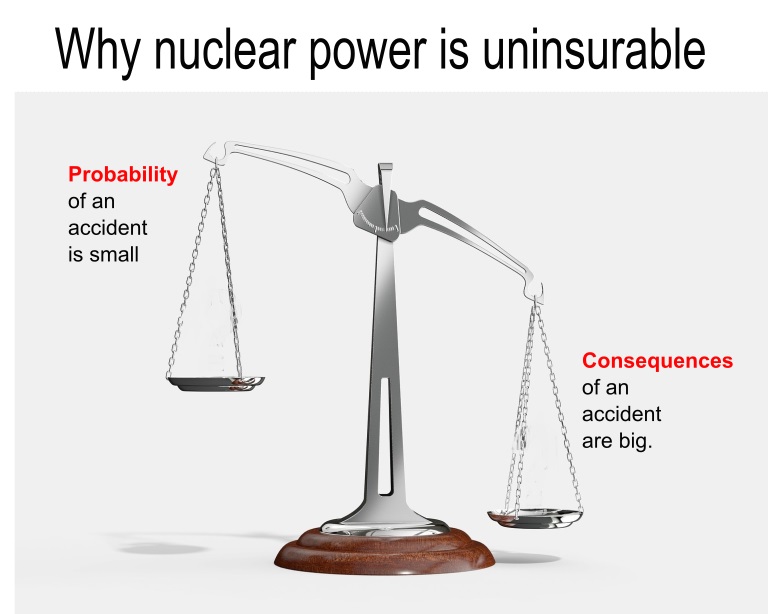
Japan’s participation in a $40bn nuclear power project in the US has hit
a roadblock over fears that its lenders might have to assume liability for
any meltdown on American soil.
Prime Minister Sanae Takaichi agreed during
a visit to Washington in March that Japan would provide funding and
industrial co-operation to build next-generation small modular reactors in
Tennessee and Alabama.
The project was agreed as part of Tokyo’s
commitment to invest $550bn in the US, a promise given in return for lower
US tariffs on Japanese exports under Donald Trump’s “liberation day”
regime. But details of the project are still being thrashed out between
Tokyo and Washington because of concerns on the Japanese side about their
potential liability in a nuclear accident, according to four people
familiar with the discussions.
The US commerce department has offered
verbal reassurance that the state-backed Japan Bank for International
Cooperation and other Japanese institutions would not take on any liability
for a potential nuclear accident, said the people. A person close to
commerce secretary Howard Lutnick said he had personally assured Japan it
would not have any liability in relation to the projects. However, that
promise has not been put in writing in legal terms — a process that could
take months or years of complex regulatory discussion to settle, said the
people.
FT 23rd July 2026, https://www.ft.com/content/4b9d0e1a-c423-4b14-a7fe-d4988e24c7c0
Two ageing nuclear power stations will stay operational until 2030

EDF said on Wednesday it had decided to extend
the life of the Hartlepool and Heysham 1 plants for an extra two years
after safety inspections of their cores
Hartlepool and Heysham 1 are two of four advanced gas-cooled reactors
(AGRs) that have been generating since the 1980s. The others, Heysham 2 and
Torness, also had their lifespans extended until March 2030 last year. EDF
said those dates remain “under review” and will be subject to further
safety extensions, leaving open the possibility that the plants could run
for even longer.
However, the country still potentially faces a “nuclear
gap” from 2030 if the AGRs come offline. That would leave Sizewell B, in
Suffolk, as the sole remaining plant, before Hinkley Point C in Somerset
and Sizewell C come online later in the 2030s.
How long the remaining four
will continue depends on the condition of their graphite reactor cores, EDF
has previously said. Hairline cracks can occur in the graphite over time,
potentially impeding control rods which must be dropped to lower output –
or shut the reactor down in emergencies. To continue operating, EDF must
prove to regulators that this will not happen and that it could still shut
down the reactors during a “one in 10,000 years” earthquake, much
larger than any the UK has ever experienced.
Telegraph 23rd July 2026 https://www.telegraph.co.uk/business/2026/07/23/ageing-nuclear-plants-to-be-kept-running-to-keep-lights-on/
Alarm over bid to keep cracked reactors running by cutting nuclear safety margins
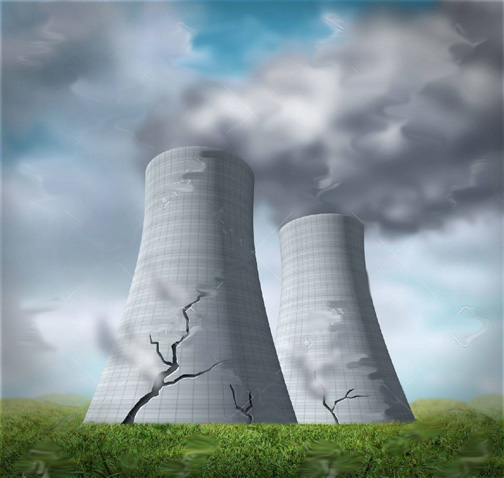
“The bottom line is that continuing to operate these reactors with cracks in the reactor core is gambling with public safety.”
The company that runs Scotland’s ageing nuclear power station wants to weaken safety standards to keep it running for at least four more years. But the nuclear safety watchdog has its doubts.
Rob Edwards, July 23 2026
Moves to keep Scotland’s increasingly cracked reactors at Torness in East Lothian generating electricity until 2030 or 2032 have prompted formal action from the UK government’s nuclear safety watchdog, according to internal files obtained by The Ferret.
The station’s operator, EDF Energy, has been pressing for safety margins to be relaxed so reactors can keep running for as long as possible with hundreds of cracks spreading through their highly radioactive cores.
But the Office for Nuclear Regulation (ONR) has “concerns” and has demanded that the company justify its understanding of the safety implications. ONR inspectors lacked confidence in some of the company’s measurements, and accused EDF of a “trend of under-predicting cracking”.
ONR has also revealed that the estimated number of cracks in one of the reactors at Torness leapt by more than a third from 585 to 782 in just six months. A further 62 cracks have been found in the second reactor at the site, which only started cracking in May 2025.
Campaigners urged ONR not to be “bullied” by EDF into allowing safety margins to slip. The cracks were “extremely worrying” and keeping Torness running was “gambling with public safety”, they said.
ONR told The Ferret that its inspectors made “independent and proportionate challenges” to EDF’s claims. It stressed that the current number of cracks at Torness did not breach safety margins.
EDF said that “robust challenge” by regulators was essential to a strong nuclear safety culture that prevented accidents. The company’s ambition was to generate electricity from the station “for as long as it is safe and commercially viable to do so.”
Torness nuclear power station, near Dunbar, is 37 years old, having been officially opened in May 1989 by the then Conservative prime minister, Margaret Thatcher. The site had been the target of anti-nuclear protests since 1978.
In 2016 the planned life of the station was extended from 2023 to 2030. In 2021 EDF backtracked on that, saying that Torness would be closing two years earlier in 2028 because of expected cracking.
But in 2024 EDF again changed its mind, and announced that Torness would keep generating electricity until March 2030. According to ONR, EDF had decided to extend the lifetime of the station “to 2030 plus or minus two years”, suggesting that operating to 2032 was also being considered.
Meanwhile, Scotland’s other nuclear power station at Hunterston in North Ayrshire was closed down in January 2022, more than a year earlier than planned. This followed the discovery of an estimated 586 cracks in its two reactors.
The graphite bricks that surround the uranium fuel in reactors, such as those at Torness and Hunterston, crack after being bombarded by radiation for decades. The danger is that this could distort reactor cores, making them more difficult to manage.
ONR previously said that spreading cracks could result in debris inhibiting the cooling of the hot fuel. In some scenarios, this could lead to a reactor meltdown, which could result in the escape of radioactivity to the environment.
In response to a freedom of information request by The Ferret, ONR has released 11 heavily redacted files about its latest moves to regulate cracking at Torness. They reveal that between April 2025 and April 2026 ONR held 23 meetings with EDF, and formally demanded action on safety issues.
There have been prolonged and gritty tussles between ONR and EDF over how to understand the way in which cracks were impacting safety. Some of the technical issues at stake are difficult to understand because key words and phrases have been blacked out.
But it is clear there have been a series of disagreements between the regulator and the company. EDF has been arguing to cut safety margins to allow Torness to operate for longer, while ONR has been challenging EDF’s assumptions, methodologies and conclusions.
ONR raised a formal “regulatory issue” because of potential shortfalls in EDF’s understanding of how cracks are spreading. ONR said it had “concerns over EDF’s ability adequately to predict the number of cracked bricks within the graphite core”.
ONR disputed EDF moves to relax the so-called “damage tolerance boundary”, which limits the operation of Torness. According to one account from ONR, after a series of meetings in 2025 consensus “has not been reached.”
ONR pursued a second regulatory issue in 2025 because it lacked confidence in EDF’s measurements of the width of cracks and resulting fragments. The company accepted that “a number of errors and incorrect assumptions” had been made, but rectified them and the issue was resolved.
“Safety margins cannot be something to be negotiated simply to keep an ageing reactor running.” – Kristopher Leask MSP
After an inspection in September 2025, ONR’s expert graphite panel commented that there was “reason to pause and think”. They said that EDF forecasts “suggested a continuation of the trend of under-predicting cracking”.
One meeting between ONR and EDF in 2025 was about the risk of vital safety systems shutting down because of “snags” caused by cracking. EDF was said to be proposing to increase the number of permissible snags from one to five
The Ferret also used freedom of information law to ask for an update on the number of cracks in the two reactors at Torness. We previously reported that there were an estimated 585 cracks in reactor one in March 2025, and the first crack had been found in reactor two in May 2025.
ONR has now told us that “reactor one was inspected in August 2025 where it was estimated the number of cracked bricks were 782.” It added that after an inspection of reactor two in February 2026 “it was estimated that 62 bricks were cracked”.
The Scottish Campaign to Resist the Atomic Menace (SCRAM) highlighted recent moves by the UK government to relax regulation to make building new nuclear power stations easier. The Ferret reported in May that this had prompted “serious concerns” from the Scottish Government.
“This is an extremely worrying situation,” said SCRAM’s Pete Roche. “There is bound to be huge public concern that the ONR will be bullied by EDF and the UK Government into allowing safety margins to slip.”
He added: “The bottom line is that continuing to operate these reactors with cracks in the reactor core is gambling with public safety.”
The Israeli crimes against Palestinians did not “start” in October 2023
Israel was born of Zionist terrorism (Irgun, Stern, Lehi) against the original, indigenous, inhabitants of Palestine

Eva Karene Bartlett, Jul 23, 2026, https://evakarenebartlett.substack.com/p/the-israeli-crimes-against-palestinians?utm_source=post-email-title&publication_id=3046064&post_id=208173581&utm_campaign=email-post-title&isFreemail=true&r=1ise1&triedRedirect=true&utm_medium=email
I lived in Gaza for 3 years (and 2 Israeli wars on Gaza) and spent a lot of time with farmers and fishers (who came under Israeli fire near-daily when they simply tried to fish or work their land), also lived in central Gaza, took public transit, and spoke directly with people. International organizations that worked there tended—from what I saw—to be cut off from the reality, living in expensive apartments, dining at one of a handful of expensive restaurants, driving around in their own SUVs…really not interacting meaningfully with people there (I’m sure there were exceptions, but from my experience this was the reality).
I wrote an overview after leaving Gaza, which is relevant today as it outlines the many ways Israel has been slow genociding Gaza over a decade and a half before it began its current, ongoing, horrific genocide—by ensuring Palestinians only just survived: bombing, burning or destroying their agricultural land, firing on farmers: bombing or stealing their fishing boats, firing on or abducting fishers; ensuring the sewage was untreated and pumped into the sea, or overflown into the streets; ensuring the water was almost completely undrinkable; deliberately starving Palestinians by denying the adequate entry of aid (and destroying their food sources, as above); denying exit for urgent medical care; and on and on…
During the December 2008/January 2009 Israeli war on Gaza, I was in Northern Gaza, riding in ambulances, documenting civilians injured and murdered by Israeli bombing, drone strikes, sniping…
During the November 2012 Israeli war on Gaza, I was in Deir al-Balah documenting the destruction and also at al-Aqsa hospital documenting the injured and the murdered.
This page has links to various articles I wrote at the time, also follow up investigations, including documentation of:
-Israel’s widespread use of White Phosphorous on civilians
-Israel’s deliberate sniping and shelling of Palestinian medics, maiming and killing numerous
-Israel’s deliberate sniping or point blank assassination of civilians, including children and infants
-Israel’s deliberate drone striking of civilians, including children
and more.
But before going (by boat) to Gaza in November 2008, in 2007 I spent 8 months in various West Bank communities which were being aggressed, abused, harassed by the Israeli army and by illegal Jewish colonists.
My overview of that time includes:
–Israeli army invasions into Nablus and into nearby villages, during which the Israeli army terrorized Palestinian civilians, shot up their homes, killed, injured and abducted Palestinian civilians (including a medic)
-Documenting some of the hundreds of Israeli checkpoints and roadblocks, and the impact (including deadly) they have on Palestinian civilians trying to move from one point to the next, for work, medical care, study, or other.
-The savagery of illegal Jewish colonists—usually enabled by accompanying Israeli soldiers, including attacks on farmers I was with, attacks on Palestinian civilians whose tents I slept in in Susiya, menacing and threatening Palestinian civilians (including children) in Khalil/Hebron (where illegal Jewish colonists have violently taken over Palestinian homes and occupy the streets, beating civilians, including children
-The brutality of the Apartheid Wall
-The courageous non-violent resistance of Palestinians in communities throughout the West Bank, especially in the village of Bil’in, whose demonstrations I joined nearly a dozen times. There, we immediately came under high velocity tear gas canisters fired at close proximity from invading Israeli soldiers, as well as rubber-coated bullets and even live ammunition (as such unarmed protests in Gaza, the Israeli army usually didn’t bother with tear gas but started immediately firing live ammunition at us, as they did to unarmed Palestinian farmers—elderly, young men and women, children—and myself).
The daily crimes I saw in the West Bank and Gaza continue today and impact every facet of Palestinians lives and existence. Post 2023, people who don’t even follow closely are aware of the ongoing Israeli genocide and land theft of Gaza, though that said the media has largely moved on. The crimes in the West Bank get less coverage, and are fully enabled top down in order for Israel to continue ethnic cleansing of indigenous Palestinians and continued illegal expansion.
Ukraine has a new butcher-in-chief – all the better to feed Ukrainians to the grinder

the comedian-on-the-way-to-the-presidency made one and only one specific promise: that he understood the absolute priority of peace and would do everything to find a negotiated solution with Russia.
Syrsky is gone, but his replacement is a sign that Zelensky as committed as ever to prolonging a losing war at terrible human cost
23 Jul, 2026 , By Tarik Cyril Amar, a historian from Germany working at Koç University, Istanbul, on Russia, Ukraine, and Eastern Europe, the history of World War II, the cultural Cold War, and the politics of memory https://www.rt.com/news/643351-ukraine-drapaty-new-butcher/
The rule of Vladimir Zelensky has been a catastrophe for Ukraine, and that is how it will be remembered once the dust of relentless info war campaigns in his favor – and against his critics – settles.
While the corruption of the Zelensky regime is stupendous, that fact – sad as it is – is not what makes him special, however. Because exorbitant, shameless embezzlement, kickbacks, and fraud have been the Ukrainian establishment’s perverse normal since independence. Zelensky and his cronies are certain to have cashed in like no one before because the West has pumped in money as never before while turning two blind eyes to what happens to it. But in principle, Zelensky has merely done what they all do. Not that that makes it any better.
Zelensky’s truly distinct contribution to Ukraine’s misery has consisted in two other things. His unprecedented ramping-up of authoritarianism – begun long before the escalation of the war in 2022 – and his merciless choice to relentlessly sacrifice his country and its people to serve as cannon fodder in a Western proxy war against Russia.
Zelensky’s responsibility before his country is all the greater because he once either knew better or he lied. During his 2019 election campaign, when he generally “avoided serious interviews and discussions about policy – preferring instead to post light-hearted videos to social media,” as the BBC back then was still ready to report, the comedian-on-the-way-to-the-presidency made one and only one specific promise: that he understood the absolute priority of peace and would do everything to find a negotiated solution with Russia.
And then in the spring of 2022, Zelensky, of course, deliberately missed a golden opportunity to end the large-scale war when it had barely begun. Heeding not Ukraine’s obvious national interest but duplicitous advice from the West’s emissary, then British Prime Minister Boris Johnson, Zelensky personally ditched an almost finished peace agreement, locking in years of devastation for his country. In the end, once the war will be fully lost, Kiev is virtually certain to get a deal much worse than what was on offer then.
Now, in the summer of 2026, it may seem as if Zelensky’s grip on Ukraine is finally slipping. A combination of street protests and – inevitable if quiet – Western pressure has forced him into a humiliating climb-down. After the president’s sudden dismissal of the popular – and much-hyped – defense minister Mikhail Fedorov, the protesters had demanded his re-instatement and the sacking of Fedorov’s rival, the military’s commander-in-chief Aleksandr ‘the Butcher’ Syrsky. Zelensky has now fired Syrsky to be replaced by General Mikhail Drapaty, while some new influential position for Fedorov is being discussed.
Boris Johnson, currently a more-than-usual washed-out has-been of British politics, busy trying to catch the public eye, has made meager headlines with blaming the Ukraine War on the Britain’s new foreign secretary, Ed Miliband. How is that supposed to work? Somehow via Syria. Yes, really.
The single most important cause of this perfectly avoidable war was of course the West’s reckless policy of NATO expansion. And the man who helped most directly to make the war go on when it could have ended quickly was Boris Johnson. But sure: “Syria.”
Boris, though, does stand for something, namely just how bizarre much of this developing story is. Here is a regime that, together with its Western supporters and users, has just been running an absurd but pervasive propaganda campaign claiming its drone and missile strikes are winning the war. And yet both the minister of defense and the head of the military have to go. An odd way to celebrate impending victory.
In reality, one thing the Fedorov-Syrsky saga shows is that even Zelensky doesn’t believe in his own boasts of moving the war from “the earth into the sky” and securing victory in that manner. Fedorov did not have to go despite finding a winning “asymmetrical” strategy, as many of the protesters and Western mainstream media claim. He never did. Fedorov did not fall over his alleged struggle against corruption either. He may have antagonized one set of war profiteers, but in Ukraine that only means another network will take a larger cut.
The most likely real reason for Fedorov’s sacking – whether it will be reversed or sort-of-reversed – is that Zelensky fears him as a rising political competitor, as Ukrainska Pravda reports. And while firing the defense minister, Zelensky himself created the cover story that there was no other way to deal with conflicts between Fedorov and Syrsky. In that way, it is Zelensky who made Syrsky, already widely disliked for wasting the lives of Ukrainian soldiers with futile and stubborn tactics, a target for the protesters.
The diehard Zelensky fans at Britain’s Telegraph may try to sell this outcome as “nimble” Zelensky successfully buying time by making Syrsky his fall guy in the same manner that he had already sacrificed his very intimate friend and top fixer Andrey Yermak to dodge the fallout from his own corruption. In reality, Zelensky has lost face again. His authority, brittle in any case, has taken another hit.
For Ukraine, though, none of this is good news. Yes, the de facto dictator Zelensky has suffered a defeat, and the abhorred ‘butcher’ Syrsky has been removed. But he has been replaced by a man who, while almost two decades younger, is very unlikely to be any better. Drapaty, who is treated with the usual kid gloves by Ukrainian and Western mainstream media, may or may not be an efficient commander. What is certain is that he first came to public attention in 2014, when his units brutally cracked down on resistance in the eastern Ukrainian city of Mariupol (before, as often forgotten, losing control of the city). Nothing in his career since then indicates a change of attitude. This is the man in charge of the whole Ukrainian military now.
Zelensky may well know that his own hype about the current air campaign turning the war around is propaganda. Yet clearly that does not mean that the Ukrainian leadership is willing to be serious about a negotiated solution. Emboldened by exceedingly rash Western support, Kiev has not yet given up on continuing a losing war, propped up by brutal forced mobilization, until an end that will be even more bitter than Ukraine’s current wretchedness.
Labour mayor candidate vows to push new nuclear with Burnham
News & Star, The Cumberland News, 21st July, By Gareth Cavanagh, Data Reporter
LABOUR’S mayoral candidate has pledged to work with new Prime Minister, Andy Burnham on delivering new nuclear in West Cumbria.
Speaking today, David Allen welcomed the appointment of Mr Burnham, as his party’s leader and Prime Minister.
Mr Allen, Police Fire and Crime Commissioner and a candidate in the Mayor of Cumbria election race, said that he was “delighted” to see Mr Burnham in 10 Downing Street.
Mr Allen said: “Andy has already signalled strong support for nuclear, so I’ll be working with him to help deliver new nuclear at Pioneer Park alongside Josh MacAlister MP.”………………………………………………………………………………………………………………………………… https://www.newsandstar.co.uk/news/26298408.labour-mayor-candidate-vows-push-new-nuclear-burnham/
US signs landmark nuclear deal with Saudi Arabia
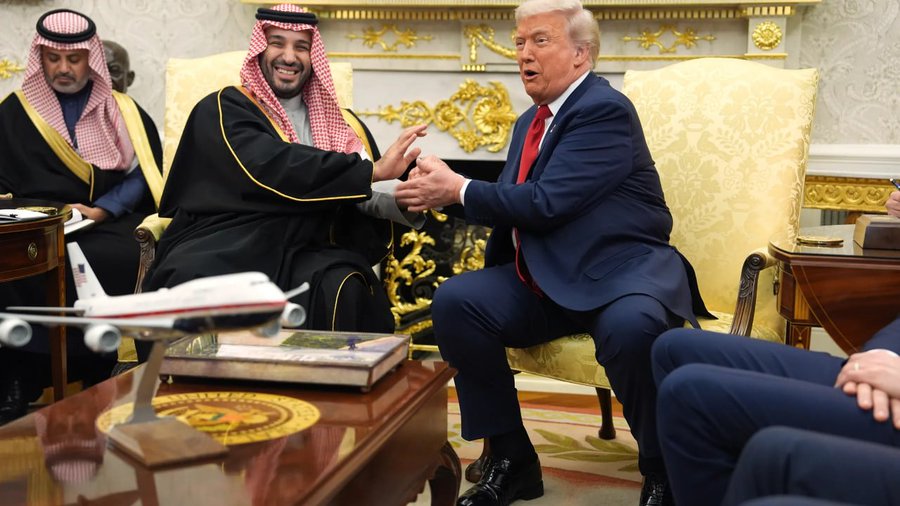
Nuclear experts and former officials in Israel – the US’s top ally in the Middle East – have voiced concern that the plan could ultimately lead to Saudi Arabia being able to develop a nuclear weapon – though other experts say that path would likely take decades and spark pushback from the international community.
James FitzGerald and Max Matza
The US and Saudi Arabia have signed a landmark deal that will allow the Gulf kingdom to develop a civilian nuclear programme.
The deal is described as a “peaceful nuclear co-operation agreement” that will provide “great access for American companies in the Saudi nuclear energy program” by the US energy department.
Text from the deal has not been made public, but US media report that it could allow Saudi Arabia to enrich uranium in the future – which can be used as fuel for power plants, but also to make nuclear bombs.
Experts say that would mark a first for the US and could run the risk of future nuclear proliferation in an already unstable region.
Trump’s nuclear deal with Saudis jettisons longstanding US demands
The US Department of Energy said a “bilateral safeguards agreement” had been signed along with the co-operation deal.
“Together, these two agreements lay the legal foundation for a decades-long, multi-billion-dollar partnership that advances several priority economic and strategic objectives, including nuclear nonproliferation,” the statement said.
The Saudi government also released a statement saying the deal “represents an extension of existing co-operation between the two countries in the energy sector”, noting that it comes after the Saudi leader visited Washington last November.
The nuclear issue has been at the centre of the months-long US-Israeli conflict with Iran. The two nations say one of the reasons they attacked Iran in February was to prevent the country from ever developing a nuclear weapon – something that Tehran denies planning to do.
Saudi Arabia’s de facto ruler, Crown Prince Mohammed bin Salman, told CBS News in 2018 that his own nation was not planning to acquire a nuclear weapon, but that “without a doubt if Iran developed a nuclear bomb, we will follow suit as soon as possible”.
Wednesday’s announcement came as fighting escalates between the US and Iran. Saudi Arabia, a longtime US ally, hosts several US bases that have been targeted by Iranian attacks. It also comes two days after Iran’s allies in Yemen, the Houthis, announced a “maritime blockade” against the kingdom.
Specific details of the nuclear deal have not been given but earlier media reports suggested that, after undertaking a joint study with the US, Saudi Arabia may be allowed to enrich uranium on its soil to produce fuel at a US-built enrichment facility, instead of relying on imported fuel.
This could be worth billions of dollars to the US, whose companies could be involved in building a facility to produce enriched uranium, which can be used as fuel for power plants but also to make nuclear bombs.
“Rest assured, these agreements uphold the highest standards of nuclear safety and nonproliferation, while relying on the world’s best nuclear technology and scientists, designed right here in the United States,” US Secretary of Energy Chris Wright said.
The energy department said the deal would advance both “US and regional security”, and would strengthen America’s “competitive edge in civil nuclear technology”.
Nuclear experts and former officials in Israel – the US’s top ally in the Middle East – have voiced concern that the plan could ultimately lead to Saudi Arabia being able to develop a nuclear weapon – though other experts say that path would likely take decades and spark pushback from the international community.
Israeli Economy Minister Nir Barkat said his country “can manage it” if Saudi Arabia had nuclear power for peaceful means.
Israel itself is widely believed to have nuclear weapons, but it neither confirms nor denies that this is the case.
Rosemary Kelanic, the director of the Middle East programme at the US-based Defense Priorities think tank, said it would be “quite shocking” if the US were to allow Saudi Arabia uranium enrichment facilities.
“The US has never done that before. We have never helped another country enrich on their own soil,” she said, adding that this was because “if you can produce your own nuclear fuel, you become a much bigger risk” for building nuclear weapons.
The agreement will now be sent to the US Congress for review.
UK’s old nuclear reactors to be kept going as we wait for Small Modular Nuclear Reactors
Two nuclear power stations will continue to generate electricity for two
more years than previously announced. In the latest of multiple extensions,
operator EDF said Hartlepool Power Station and Heysham 1 in Lancashire
would run until March 2030, two years longer than a previous estimate of
2028.
EDF said it took the decision after a “detailed review” of the
condition of the boilers and the graphite cores as well as supply chain
resilience. Chief executive of the Nuclear Industry Association, Tom
Greatrex, said: “The significance of this cannot be understated, given the
UK’s exposure to volatile gas prices and the need to protect households by
providing baseload power.”
The company also gave an update on hopes to
install the UK’s first Advanced Modular Reactors (AMRs) in Hartlepool,
which developers said would provide a “similar” amount of electricity to
the current plant’s power output. It said an application to enter the
generic design assessment had been submitted in June, describing it as the
“first critical step in the UK licensing progress”.
BBC 22nd July 2026,
https://www.bbc.co.uk/news/articles/clyvng9vl66o
Uncertainty over West Cumbria nuclear waste plan continues

22nd July, By Gareth Cavanagh, Data Reporter
CLARITY on the future of nuclear waste currently stored at Sellafield is eagerly awaited from West Cumbria to Westminster.
The cost of the Geological Disposal
Facility could soar to £54bn and the timeline for depositing legacy waste
into the GDF could be 2150. The UK’s grand ambition to deploy fleets of
SMRs is critically undermined by the uncertainty over disposal of nuclear
waste.
Carlisle News & Star 22nd July 2026, https://www.newsandstar.co.uk/news/26289564.uncertainty-west-cumbria-nuclear-waste-plan-continues/
4 August – WEBINAR – Hiroshima & Nagasaki: Nuclear Bombs Never Again
Tuesday, Aug. 4 at 5 pm PT / 8 pm ET.
Aug 5, 2026 10:00 AM in Australia/Melbourne
Join the Nuclear Bombs Never Again webinar on August 4th at 5pm Pacific Time / 8pm Eastern Time / 9am Japan Standard Time.
Cross generational voices at the intersection of Japan-Korea-US policy and militarization will share their lived experiences, nuclear impacts in these contexts, anti-war strategies, and actions you can take to advocate for a world with Nuclear Bombs Never Again. This 75-minute event is co-hosted by WILPF US and Korea Peace Now.
Israel spent £50,000 lobbying Reform

Before deputy leader Richard Tice told MPs not to talk about Israeli influence
DANIA AKKAD, 30 June 2026, https://www.declassifieduk.org/israel-spent-50000-lobbying-reform/
Reform UK’s deputy leader said last week that a parliamentary debate into Israeli influence on British politics was “antisemitic in its very motivation and at its core”.
“As such, we should utterly reject it,” argued Richard Tice to a room full of MPs.
What he did not tell them, however, was that he had been on a trip to “the Gaza front line” last September funded by the newly-created Reform Friends of Israel, where he concluded that the Gaza famine was a “blatant lie”.
And that trip is not the only example of pro-Israel pressure groups working with Reform. Just a few short weeks after Tice’s visit, his chief of staff and a motley crew of Reform figures visited Israel in a trip which has received scant media attention.
Their six-day jaunt in November 2025 included a visit to the illegally occupied Golan Heights, which the UK recognises as part of Syria.
They also visited Israel’s police headquarters, which is overseen by far-right national security minister Itamar Ben-Gvir, who is sanctioned by the UK for “repeated incitement of violence against Palestinian civilians”.
This trip was funded by the Israeli Ministry of Foreign Affairs, according to newly released Israeli government data seen by Declassified and found by Berlin-based journalist Yossi Bartel.
The records show that the ministry paid Conexión Israel – a company based in Jerusalem that organises high-level country visits – more than £50,000 to facilitate the delegation.
The delegates returned singing Israel’s praises and denouncing British protesters marching against the war in Gaza as antisemitic and “naively propping up a terrorist ideology”.
Dr David Bull, then Reform UK party chairman, said the trip had been “life changing”.
“I now understand the situation that Israel finds itself in and Reform UK will always stand with the Israeli people,” he said.
Andy Kalil, the member of the public who organised the petition that sparked last week’s debate in parliament, said the trip “goes to the heart of why we petitioned for an independent inquiry into pro-Israel influence in UK politics.”
“A trip funded by the Israeli Ministry of Foreign Affairs that exposed participants to the Israeli government’s perspective is clearly a matter of public interest,” he told Declassified.
‘Their fight, our fight’
In addition to Bull, delegates included Lancashire county council leader Stephen Atkinson, London assembly member Alex Wilson, and Reform UK board member Gawain Towler.
Both Atkinson and Wilson declared that their place on the trip cost Israel’s foreign ministry £4,861 each.
Ryan Powell, Tice’s parliamentary chief of staff who recently ran unsuccessfully as a Reform UK candidate in south London, was also on the trip.
As was Rafaella Stefani, another member of Tice’s parliamentary staff. She helped host an event at Reform’s party conference where Israel’s deputy ambassador spoke.
The reason for the visit, according to the parliamentary staff register, was to study Israel’s policing, border security, health service and immigration control.
The group visited several locations targeted during the Hamas-led attacks on 7 October 2023, including the Nir Oz kibbutz in southern Israel and the site of the Nova music festival massacre.
“It sickens me that something like this could ever happen,” said Wilson, who posted a video from where the mass killing took place.
“It also sickens me that back in the UK, week after week, we’ve seen thousands of people marching to give succour to the monsters who did this.”
Bull wrote that the group also met with Tel Aviv’s deputy mayor to discuss “visa overstayers and asylum seekers” and the Israeli National Police operation headquarters “where the very advanced use of technology enables them to act on ALL CRIME”.
Towler questioned how the UK “once a steadfast ally, let relations with Israel collapse into this sorry mess”.
“After all, their fight is, in many ways, our fight. A fight for enlightenment ideals, international norms, democracy and the rest,” he wrote.
Rising power
The cost of the trip represents only a small fraction of an enormous influx of money flowing into Reform UK, particularly from a small group of overseas expats.
The party raised more than £9 million in donations in the first three months of 2026, far more than any other political party and nearly half of total donations raised by all the parties put together.
Most of the funding came from two crypto billionaires: Christopher Harborne, a British-Thai dual national, and Ben Delo, who is relocating to the UK from Hong Kong so he can keep donating to the party after new legislation capped overseas donations from British citizens to £100,000.
The party has also held international fundraisers in wealthy British expatriate communities including in the United Arab Emirates, and has said it will hold ones in Monaco and the US.
Chris Doyle, director of the Council for Arab-British Understanding (Caabu), said the trip was “very typical” of the Israeli government’s approach over decades.
With Reform leading in opinion polls, Israel has clearly assessed that the party “will have a high chance of either forming the next government, being part of that government in a coalition perhaps or being the lead opposition,” Doyle said.
It’s also very much in keeping with the Israeli strategy of reaching out to far-right groups across Europe, in the US and India which “have adopted highly anti-Muslim, Islamophobic positions”, he said.
“This is perfectly standard operating practice to reach out to such groups, build long-term links to try to get them to see the world as one between Israel as a representative of Western civilisation against barbaric Muslim extremists,” he said.
‘Greater scrutiny is needed’
Kalil said he found the strongly pro-Israel public statements from the delegation “very concerning”.
“Delegates were shown sites highlighting Israel’s security concerns, but not the devastation in Gaza. That’s not a balanced fact-finding visit,” he said.
On Monday, Kalil submitted a formal complaint about last week’s debate.
Among his primary concerns, he said in his complaint, was “the repeated characterisation of the petition, its signatories and several MPs who spoke in support of it as antisemitic.”
“The debate did little to address fundamental questions relating to lobbying, political donations, parliamentary visits, transparency or influence,” his complaint said.
“Instead, it demonstrated why many people believe greater scrutiny is necessary.”
He has asked that the government review whether it met the standards expected of such debates and for it to be rerun.
In addition to trips paid for directly by the Israeli government, British politicians including Tice have been taken to Israel by Reform Friends of Israel.
The group is led by Jason Pearlman, who until December was a media adviser to Israel’s president, Isaac Herzog.
Herzog has been found by a UN commission to have incited genocide in Gaza.
Speaking from Israel, he told Declassified that he started a conversation with Reform about turning the party’s ‘Friends of Israel’ group into a “full-time” organisation while he was still working for Herzog.
In addition to trips paid for directly by the Israeli government, British politicians including Tice have been taken to Israel by Reform Friends of Israel.
The group is led by Jason Pearlman, who until December was a media adviser to Israel’s president, Isaac Herzog.
Herzog has been found by a UN commission to have incited genocide in Gaza.
Speaking from Israel, he told Declassified that he started a conversation with Reform about turning the party’s ‘Friends of Israel’ group into a “full-time” organisation while he was still working for Herzog.
“We did have a dinner with Nigel [Farage] and some key backers,” he said. “We were able to put seed funding together.” Pearlman refused to say who Reform Friends of Israel’s (RFOI) donors were.
The Israeli embassy in London and Richard Tice have been approached.
German historian and academic, Tarik Cyril Amar: “It is the West that is using Ukraine as cannon fodder and has been for years”
“They’re spreading this new story that Zelensky is producing, that Ukraine now shifts its war effort from the ground—where it is not successful–to mid range and long range drone and missile strikes against Russia.
The idea is that—and this would be very unusual historically, as every expert knows—that by this particular air campaign alone, Ukraine will turn the tables and defeat Russia. You find this all over the Western public space now.”
let’s just feed more weapons and money into Ukraine, Ukraine will provide the people.
German Historian and Academic, Tarik Cyril Amar on Na-zi Imagery, and Ethnic Cleansing Apologia in Early 2000s Lviv.
Eva Karene Bartlett, Jul 22, 2026, https://evakarenebartlett.substack.com/p/german-historian-and-academic-tarik?utm_source=post-email-title&publication_id=3046064&post_id=207930798&utm_campaign=email-post-title&isFreemail=true&r=1ise1&triedRedirect=true&utm_medium=email
Tarik Cyril Amar [ Tarik Cyril Amar ] lived for five years in Lviv, Ukraine, from 2001 on and off. He speaks fluent Russian and Ukrainian. A historian and author, Tarik has extensive knowledge, and first hand experience, on realities of Ukraine now whitewashed in Western corporate media, in particular the long festering and growing nationalism where Ukrainians nationalists—who committed war crimes, including ethnic cleansing in World War 2—are applauded and celebrated as “national heroes”.
In our conversation, he also spoke of the lead role of his country Germany in expanding and fuelling the proxy war—in which the West has used Ukraine to fight Russia, with no actual regard for the lives of Ukrainians themselves.
“It is the West that is using Ukraine as cannon fodder, and has been for years.”
-Long history of Lviv support of Bandera and OUN
“Even then, Lviv had a reputation as being a particularly patriotic, even nationalist, city. My personal experience at the time was that that was true, and that this tendency was on the rise.
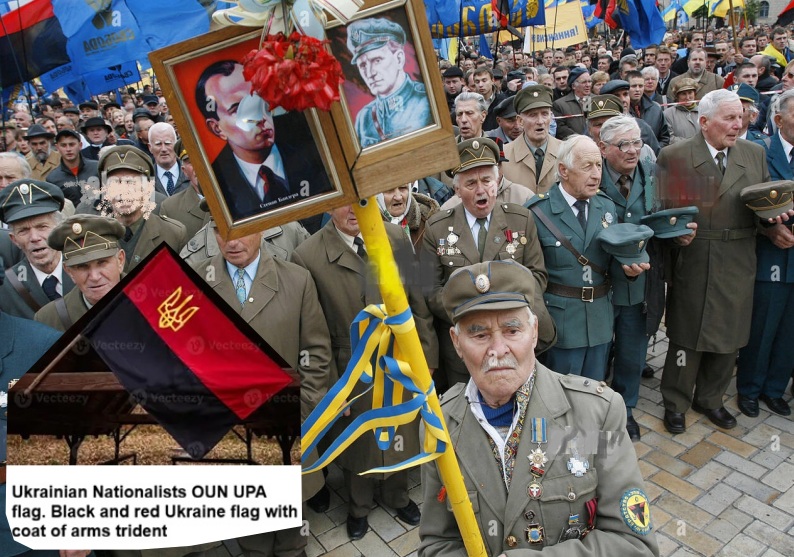
You had demonstrations celebrating the OUN (Organization of Ukrainian Nationalists in WW2). You found it in policies of public commemoration. Lviv has one of the largest monuments to Stepan Bandera in Ukraine, built or inaugurated during my time there.
There was already a very consistent denial of the crimes of Ukrainian nationalists in WW2, the enormous massacres that they conducted systematically against the Poles.
Nazi symbols in Lviv
“You had the symbolism of the Waffen-SS division that the Nazis established in 1943. Lviv was the epicentre of that operation. Their symbolism, their coat of arms, that was there in the public space.
You had the black and red of the OUN, that was prominent. You had attempts at building memorials in public spaces to the “heroism” of the nationalists.
From what I can see now, it must have become much more aggressive.
At the same time, there has been some resistance against forced mobilization in Lviv. On one side, there is this escalation of very strong nationalism that was already there. On the other, clearly the impact of the war is that some people are beginning to resist mobilization, even there.”
-Polish demand for Ukraine to renounce the honouring of Ukrainian “nationalist heroes” doesn’t represent a change of Polish support to the war.
The tension is old, the core of the tension is the systematic Ukrainian nationalist ethnic cleansing of Poles—estimates from 80,000-100,000 killed.
“The killing is a message to make people leave, it’s a genocidal ethnic cleansing. What the Ukrainian nationalists did then, deliberately, systematically, and what the Israelis are doing now in Gaza, its a parallel: Commit genocide and massacres to drive people out. It is one of the things that Ukrainian nationalists will not acknowledge…it’s state policy in Ukraine to lie about this.
The bigger story (regarding the recent Polish demand) is how successive Polish governments have always put the geopolitics of using Ukraine against Russia first. So there are these tensions. From time to time you get a blow up, like now with Zelensky. Has it made a difference in the way that they support Ukraine in this proxy war against Russia? It doesn’t.”
-Germany in the lead in support for Ukraine and the proxy war on Russia
“The war in Ukraine has always had this double aspect. On one side, superficially, it’s a war between Ukraine and Russia. But on the other side, and I think this is more important, it’s a proxy war, in which the West has used Ukraine to fight Russia.
The lead Western power in this proxy war against Russia used to be the United States…Under Trump, while Washington could have made a serious contribution to end the war, that’s not what they’ve done. They’ve essentially Europeanized the war, they’ve washed their hands on the money that they have to spend on it, but are still supporting Ukraine in other ways—with intelligence, black ops, CIA connections, etc—and they’re still giving Ukraine weapons, but they make the Europeans pay for them.
…The final outcome is a Western proxy war against Russia with Germany in the lead. What the German government, industry and arms manufacturers have done, they’ve intensified payments to Ukraine and military industrial cooperation cutting across the two countries: Things for the Ukrainian military industrial complex are being produced in Germany, or Germany companies are producing in Ukraine.
That means that the Russians probably, very likely, are telling us the truth when they’re saying that significant Ukrainian attacks on Russia now can only be carried out because of German assistance.
The Russians can point to very specific things that hurt them and that could not be done by Ukraine without (German assistance).
From Russia’s perspective, there is an argument for striking at the hinterland, where these weapons and these supplies are coming from or which supports them, and that’s actually us (Germany).”
Absurd Western media campaigns about defeating Russia
“German war mongers have been saying for years, publicly, ‘We (Germany) have to enable Ukraine so that they can take the war home to Russia.. We need to give Ukraine the capacity to strike deep into Russia.’
Ukraine is doing that now, and we clearly are heavily involved in having created that capacity, and nurturing it and supporting it.
There is clearly a coordinated media and information war campaign: Wall Street Journal, The Economist, Financial Times…they and the politicians are all doing the same things.
Continue readingBook. The Russo-Ukrainian War: Follies of Empire

By Richard Sakwa, 22 July26 https://www.ceris.be/blog/the-russo-ukrainian-war-follies-of-empire/
Overview
The number of casualties in the ongoing Russo-Ukrainian war is rapidly approaching 1.5 million, with no resolution in sight … a staggering reality. Seeking to make what sense is possible of this catastrophic conflict, Richard Sakwa meticulously explores the origins, course, and consequences of the war in the sweeping context of global and domestic politics since 1945.
Sakwa’s balanced analysis centers on what he perceives as the five levels of the conflict: the dynamics of Ukrainian politics, the evolution of Russo-Ukrainian relations, the relationship between Russia and the West, broad changes in international politics, and the prospects for a viable and sustainable peace. In explaining―without endorsing―the logic behind actions on all sides, his goal is to contribute to a path toward that peace.
Reviews
“Sakwa offers a transcendent explanation for how the war in Ukraine fits into a decimated relationship between Russia and what he calls the US-led political West…. Even those who believe that the war grew out of a dance that Russia and the West did together, but that Russia’s choice in February 2022 is indefensible, will find much in the book to ponder and much in Sakwa’s hopes for the war’s outcome and future Russian-West relations to admire.”
— Robert Legvold, Columbia University
“In this deeply researched book, Richard Sakwa displays a balance rare in Anglophone writing on the subject of the Russo-Ukrainian war…. Sakwa’s superb account should be read by all who want to understand the origins of this tragic, unnecessary conflict, and how it might be ended.”
— Robert Skidelsky, University of Warwick
“Sakwa’s analysis advances the most articulated interpretation of the war through the lens of sovereign internationalism. A must-read for all those who want alternative explanations of the broader framework of the conflict, accompanied by detailed analysis of the course and consequences of the war.”
— Marlene Laruelle, George Washington University
‘Gaza Is One Giant Graveyard’
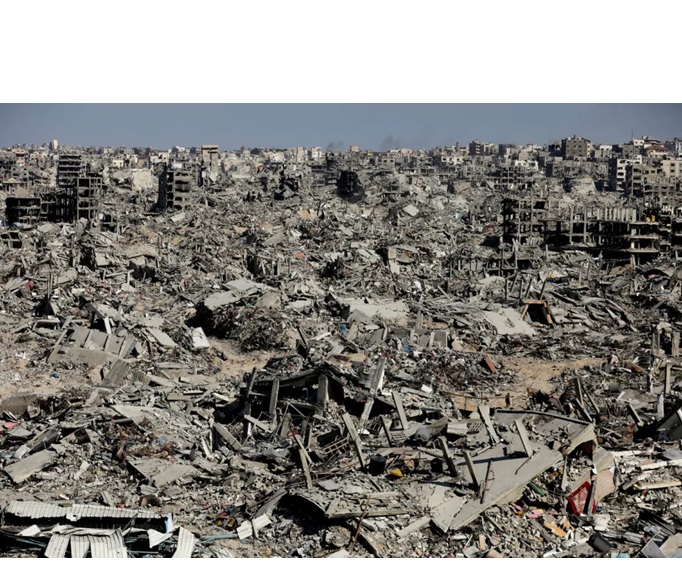
SCHEERPOST, July 21, 2026, Marah Abdel Jaber Prism
A seasoned humanitarian aid worker directing distributions to Gaza since the start of Israel’s genocide in October 2023 went on their first mission to the Strip last winter. During the two-week mission, they conducted a ground assessment: testing the efficacy of aid, recording field interviews with residents, and surveying the functionality of local hospitals. They have requested anonymity in order to share what they learned publicly, and minimize the risk of retaliation from Israeli officials.
In a Q&A with Prism in February, they reflected on the direct role of global humanitarian aid organizations in escalating the dehumanization of Palestinians under Israel’s genocide, the lack of a true ceasefire, and the world’s abandonment of Palestinians.
This interview has been edited for clarity and brevity.
Marah Abdel Jaber: What were the conditions of Gaza upon your arrival?
Humanitarian Aid Worker: When entering, we crossed through the Karem Abu Salem border and drove straight across the militarized yellow zone through Rafah. If I didn’t know any better, I wouldn’t think that it was an actual city before. It’s almost entirely flattened, and most of it has been bulldozed. As we made our way up towards Khan Younis, we saw some demolished buildings and rubble. You would never think that there were people living there before. It was obvious that the Israeli forces were bulldozing away evidence of war crimes, the genocide, and the dead. That was all I could think about while driving through it.
Abdel Jaber: What was a typical day in the field for you?
HAW: My role required visiting different programs that [a medical NGO] was running and giving feedback. I also looked into some of their pilot programs or their areas of interest for launching new programs. I visited a lot of different clinics, hospitals, a school, and even an orphanage. I spoke with different parts of the population dealing with orphaned or unaccompanied separated children, the elderly, amputees, or those receiving therapy. I had quite a diverse exposure to the issues that the population is facing there, in addition to the aid situation and the distribution.
Abdel Jaber: What was most striking about the reality on the ground?
HAW: The living conditions are horrendous. Many people don’t know about the reality on the ground because mainstream media is pushing the narrative of a ceasefire to distract from the next phase of the colonial project: to build on top of a cemetery. Gaza is essentially one giant graveyard. Airstrikes are happening in the dozens, day and night; the Israeli military ships would still shoot out from the sea; and fighter jets and drones were everywhere. Oftentimes people would tell me that I should have visited Gaza before the genocide, because it was heaven. It would stop me. I couldn’t bear the thought of that. It was still occupation, injustice, and apartheid, but they would say it was better than now. They want the Palestinian people to choose which level of oppression they have. You can have minimal or maximum oppression, because you will never have absolute freedom. These are your options. Genocide, or apartheid and occupation.
“People would tell me I should have visited Gaza before the genocide, because it was heaven. … I couldn’t bear the thought of that. It was still occupation, injustice, and apartheid, but they would say it was better than now.”
Abdel Jaber: How would you qualify the ceasefire in Gaza during your mission?
HAW: There was nothing that would indicate an actual ceasefire. People outside of Gaza view this as a successful ceasefire for two reasons. First, the idea that aid is flowing in daily. It is, but it is still incredibly minimal while being distributed inefficiently and ineffectively. Israeli forces are also allowing in consumer goods. This signals that residents can now purchase goods, but the vast majority in Gaza have been without work for two and a half years. And a lot of people lost their money in the banks because the [Israeli Occupation Forces (IOF)] destroyed them, so they could no longer access the systems.
The secondary narrative being pushed is that, before the ceasefire, we would hear of hundreds upon hundreds of Palestinians being killed every day. Now you don’t hear as much of that. People assume that there isn’t any more killing, when really dozens will get killed in a day. That’s not a ceasefire…………………………………………………………………………………………..
HAW: Everything that we’re seeing in this genocide in Gaza, everything that the Israeli forces have implemented, is intentional. It is by design. There is nothing coincidental about it. The intentional deprivation and inhumane conditions are meant to squeeze every ounce of hope out of Palestinians in Gaza. They signaled to people that if they want to stay in Gaza, they would have to get their aid in this way. The killing was intentional to serve as a warning for everyone else watching that they either starve or die trying to access essential aid. They don’t want them to have options. At first, it seemed like the only option was to leave. Now it looks like what is being done with this Board of Peace, and building this Riviera on a graveyard, is to use Palestinians as cheap labor………………………………………………………………………………………
HAW: Someone asked me the other day, if Israel is hellbent on getting rid of the Palestinian population, why not just drop a bomb and get it over with? Why are they torturing them? Everyone knows the IOF is killing them. Why not just do it? Well, first of all, that would make the genocide too obvious. But what a lot of people miss, and we really have to stress this as often as we can, is that genocide, ethnic cleansing, apartheid, occupation, injustice—and everything all within that realm—is not only physical, it’s psychological. The psychological aspect is crucial. You can control a population through psychological torture. It explains why, even before the genocide, Israel denied the entry of chocolates, wedding gowns, construction paper, and other menial things into Gaza. Cutting off food and medication, not allowing a catheter to come in for a dialysis patient, banning menstrual pads, and more—they want to remind you at every opportunity that they are in control of everything. There is a psychological toll that has detrimental, long-term impacts. The trauma, the lack of education, the epigenetic changes that are going to happen over the years, birth defects, and mental health will take forever to deal with. They want to ensure every aspect of Palestinian society, physical and psychological, has been damaged…………………………………………………………………………………………… https://scheerpost.com/2026/07/21/gaza-is-one-giant-graveyard/
This is the last of the TOO LONG nuclear-news emails – (next week -shorter)

Theme of the week – It’s all so complicated – time to simplify these newsletters. So, next week’s one will be shorter and clearer.Some bits of good news – The world’s largest and longest-running ecological project. Africa is smashing all the solar records. Road deaths have fallen 21% worldwide since 2011, even as more than a billion vehicles have joined the roads
TOP STORIES. The Theocratic Trap – How Divine Claims Become Engines of Destruction.
Ukraine: America’s Enduring Proxy War on Russia.
Climate. A supercharged El Niño is threatening more deadly heatwaves — and Americans are ignoring the risks. ‘It’s only going to get worse’: wildfires forcing firefighters to make impossible choices.
Noel’s notes. Crunch time for the nuclear lobby’s biggest lie (Small Modular Nuclear Reactors)?
AUSTRALIA.
“Intolerable pressure”- Inside the Israel lobby campaign to coerce regulators on antisemitism.
Close that Facility: The 2026 Pine Gap Protests.
Senior naval officer facing court martial over naval contracts – breaking news from WA.
UN refutes Jillian Segal’s Gaza death toll claim before Royal Commission.
NUCLEAR-RELATED ITEMS
| ATROCITIES. ‘Gaza Is One Giant Graveyard’ |
| ECONOMICS. Germany greenlights controversial joint French-Russian nuclear project. US and Japan clash over meltdown liability in $40bn nuclear power deal. Russia’s Financial Crisis Casts a Shadow Over Central Asia’s Nuclear Future. Data centers powered by next-gen nuclear? – Don’t fall for Big Tech’s PR hype. A Contract for Difference for nuclear lifetime extension for Sizewell B – a nice save for the nuclear industry? |
EMPLOYMENT. New Swiss nuclear plants could put thousands of renewables jobs at risk.
| EVENTS. 30 July – WEBINAR (Free) – Is Nuclear Power the Solution to Climate Change? 4 August – WEBINAR – Hiroshima & Nagasaki: Nuclear Bombs Never Again |
| HEALTH. Hegseth Announces Testosterone Testing as Part of Push for “Lethal” Military. |
| HISTORY. The Forgotten Jewish Movement That Rejected Zionism.Anti-zionist Jew Exposes Zionism’s Best Kept Secret | Molly Crabapple https://www.youtube.com/watch?v=7VFBa0AdgEA |
| LEGAL. Iran accuses US of violating international law after strike on nuclear plant. |
| MEDIA. Book. The Russo-Ukrainian War: Follies of Empire. |
| PERSONAL STORIES. The Israeli crimes against Palestinians did not “start” in October 2023. |
POLITICS.
- Labour mayor candidate vows to push new nuclear with Andy Burnham.
- Israel spent £50,000 lobbying Reform.
- Red, white and glowing blue: Trump’s push for new reactors reaches the finish line.
- New energy policy for Burnham?.
- Ceases to be a nuclear power’: The high-stakes deal the new UK PM inherits.
- Ukraine has a new butcher-in-chief – all the better to feed Ukrainians to the grinder.
- The Fall of Israel’s Longest-Serving Leader: Is This the End for Netanyahu?
POLITICS INTERNATIONAL and DIPLOMACY.
German historian and academic, Tarik Cyril Amar: “It is the West that is using Ukraine as cannon fodder and has been for years”.
Richard Sakwa interview on The Russo-Ukrainian War: Follies of Empire.
Von der Leyen paints target signs on Europe with Ukraine drone pact.
Nuclear deal that would permit uranium enrichment by Saudi Arabia in limbo awaiting Trump admin sign-off.
| SAFETY. Alarm over bid to keep cracked reactors running by cutting nuclear safety margins . UK’s old nuclear reactors to be kept going as we wait for Small Modular Nuclear Reactors. Two ageing nuclear power stations will stay operational until 2030. UK’s nuclear plants face risks of AI-powered cyber-attacks and insider threats. Incidents. A Seat Cushion Triggered One Of History’s Strangest Nuclear Accidents And A Geopolitical Scandal That Lasted Decades |
| SECRETS and LIES. Fatal fallout. Witness- A visit to Donald Morrison, a chief witness in the case of Willie McRae. |
| SPINBUSTER. Data centers powered by next-gen nuclear?- Don’t fall for Big Tech’s PR hype |
| URANIUM. US greenlights Saudi nuclear enrichment without safeguards: Report |
WASTES.
Uncertainty over West Cumbria nuclear waste plan continues.
| WAR and CONFLICT. The wear and tear of conflict: Ukraine, Europe, and the twilight of a great deception. Top Israeli Minister: ‘Best For Us’ If US Fights Iran While Israel Sits Out New Round of War Furious Iran accuses US of striking Iranian nuclear facility in revenge attacks for deaths of two Americans. American forces struck a nuclear power plant under construction in southern Iran. |
| WEAPONS and WEAPONS SALES. Germany To Join French Nuclear Exercise, Deepening ‘Counter-Russia’ Deterrence. AI for peace: In Rome, Nobel laureates call for disarming AI and nuclear weapon |
1 This Month
26 September – International Day for the Total Elimination of Nuclear Weapons





PLEASE OPPOSE HR 8255 AND S.3639 – bills would accelerate satellite deployment, with no environmental review or safeguards – https://ncstd5li.quorum.us/campaign/169331/
To see nuclear-related stories in greater depth and intensity – go to https://nuclearinformation.wordpress.com
-
Archives
- September 2026 (281)
- August 2026 (330)
- July 2026 (355)
- June 2026 (287)
- May 2026 (306)
- April 2026 (356)
- March 2026 (251)
- February 2026 (267)
- January 2026 (308)
- December 2025 (358)
- November 2025 (359)
- October 2025 (375)
-
Categories
- 1
- 1 NUCLEAR ISSUES
- business and costs
- climate change
- culture and arts
- ENERGY
- environment
- health
- history
- indigenous issues
- Legal
- marketing of nuclear
- media
- opposition to nuclear
- PERSONAL STORIES
- politics
- politics international
- Religion and ethics
- safety
- secrets,lies and civil liberties
- spinbuster
- technology
- Uranium
- wastes
- weapons and war
- Women
- 2 WORLD
- ACTION
- AFRICA
- Atrocities
- AUSTRALIA
- Christina's notes
- Christina's themes
- culture and arts
- Events
- Fuk 2022
- Fuk 2023
- Fukushima 2017
- Fukushima 2018
- fukushima 2019
- Fukushima 2020
- Fukushima 2021
- general
- global warming
- Humour (God we need it)
- Nuclear
- RARE EARTHS
- Reference
- resources – print
- Resources -audiovicual
- Weekly Newsletter
- World
- World Nuclear
- YouTube
-
RSS
Entries RSS
Comments RSS

