Recycling Nuclear Waste: A Win-Win or a Dangerous Gamble?
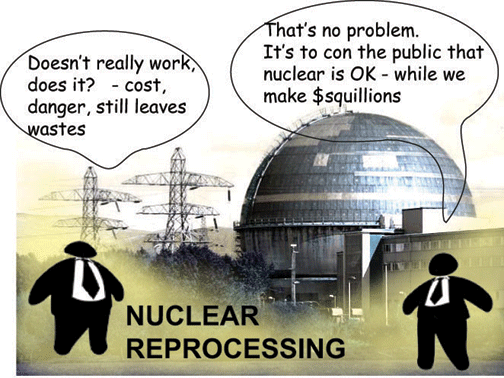
As interest in nuclear power rises, startups are pursuing plans to recycle spent fuel and reuse its untapped energy to power reactors. Advocates tout new recycling methods as a breakthrough, but many experts warn it will extract plutonium that could be used for nuclear weapons.
Yale Enevironment 360, By Rebecca Tuhus-Dubrow • April 2, 2025
Nuclear power plants keep their waste close by. Every nuclear plant in the United States includes an area onsite where spent fuel is being stored. This material — ceramic pellets stacked into rods and bundled together — consists mostly of uranium. But the spent fuel also includes elements that were created during the process: fast-decaying radionuclides such as cesium and strontium, as well as longer-lived, heavier elements, notably plutonium. Emanating intense heat and radiation, the spent fuel rods are placed first in cooling pools and then in “dry cask storage” — steel canisters that block these radioactive isotopes from escaping.
Most would see this legacy of radioactive waste as a burden and a danger. But some are now seeing it differently: as an asset and an opportunity. Although no longer capable of efficiently fissioning, spent fuel still contains significant amounts of untapped energy that can be harnessed and used again. In other words, it can be recycled — particularly in certain types of advanced reactors currently in development. Recycling would not only shrink the volume of radioactive material that would eventually need to be buried underground, advocates say, but it could also reduce the need to mine new uranium, another controversial aspect of the nuclear fuel cycle.
Recycling nuclear waste is probably the single biggest point of contention among people who otherwise support nuclear power.
It sounds like a win-win, as sensible as putting our aluminum cans in the bins with chasing arrows. And as interest in nuclear energy has grown in recent years — driven by climate concerns and, more recently, demand from energy-intensive data centers — so has enthusiasm in some quarters for recycling this waste stream. Late last year, the Department of Energy announced $10 million in funding for research on recycling technologies and at least two relevant bipartisan bills were introduced in Congress: one would “require the Secretary of Energy to study new technologies and opportunities for recycling spent nuclear fuel”; another would streamline licensing requirements for recycling facilities.
Several advanced nuclear startups, including Oklo and Curio, say they intend to run their reactors exclusively on spent fuel. Oklo, backed by OpenAI CEO Sam Altman and based in Santa Clara, California, is working toward building its first commercial unit at the Department of Energy’s Idaho National Laboratory. Jake DeWitte, Oklo’s CEO, told me, “Frankly, there’s enough energy content in the waste of today’s reactors to power the whole country for 150 years.”
In the last several years, while reporting a book on nuclear energy, I heard frequently from nuclear advocates about the possibility of recycling. It struck me as a promising solution that could mitigate several of the problems associated with nuclear power. But as I learned more, I realized that the concept, far from being a no-brainer, is intensely controversial — probably the single biggest point of contention among people who otherwise support nuclear power.
The fundamental issue is that reprocessing spent fuel involves extracting plutonium from fuel pellets. (Although the terms “reprocessing” and “recycling” are often used interchangeably, the former refers to separating out the usable material; the latter refers to deploying this material again in a reactor.) And nuclear nonproliferation experts are deeply concerned about any process that makes plutonium more accessible…………………………………..
Beyond proliferation concerns, there’s a host of other challenges, experts say. New waste streams are created along the way — everything that is touched during reprocessing, such as equipment, gets contaminated. And even after reprocessing, waste remains — the highly radioactive “fission products,” including cesium and strontium. …………………………………………………………………………………………………..
The greater concern is that nations, including those without nuclear weapons, could establish reprocessing facilities and use them to create bombs.

…………………………………………………………………..A crucial question is whether different reprocessing techniques can reduce the risks. Oklo is planning to use a technique called pyroprocessing, which was developed at Argonne National Laboratory, in Illinois, in the 1980s and 1990s, with the specific intention of reducing the proliferation risk……………..
………………. There is debate over how much pyroprocessing actually mitigates the risk. The finished product is still closer to weapons-usable than spent fuel that has not been reprocessed
…………..One expert worries that the prospect of recycling is being used to suggest that the nuclear waste problem is going to solve itself.…………………https://e360.yale.edu/features/nuclear-waste-recycling
Millom nuclear waste plans ‘currently detrimental’ to locals.
Proposed plans for a nuclear waste dump in Millom have been described as
‘detrimental’ for one of the town’s estates. Members of the community were
invited to attend a Town Council meeting at the end of last month to
discuss the construction of a Geological Disposal Facility (GDF) near
Haverigg. Residents of the Bank Head housing estate, which sits alongside
the proposed site, asked for support from the local authority, with a
particular concern on the impact of house prices in the area.
A spokesperson from Millom Town Council said: “[We continue] to have a
neutral stance and support the principle that residents will have the final
say if they wish to be the future host community for a GDF. “Whilst this
could be the biggest economic opportunity for the area since iron ore was
found at Hodbarrow, we cannot deny that the way the current Area of Focus
has been drawn on the map by NWS is currently detrimental to the residents
of the Bank Head estate.
“We do not believe at this early stage of the
investigation that any of our residents should be impacted in the way the
Bank Head estate currently is, with local estate agents reporting that they
have had no requests for viewing homes on this previously popular
estate.” A campaign group, Millom and District Against the Nuclear Dump,
argued that the majority of locals were ‘resoundingly’ against the GDF.
Whitehaven News 4th April 2025 https://www.whitehavennews.co.uk/news/25060423.millom-nuclear-waste-plans-currently-detrimental-locals/
Once seen as a symbolic protest, the nuclear ban treaty is growing teeth.

Olamide Samuel , Olamide Samuel leads network and engagement initiatives at Open Nuclear Network (ONN), a programme of PAX sapiens. April 3, 2025,
Amid Russia’s war in Ukraine, nuclear saber-rattling, and the United States’ sudden turn away from its longtime transatlantic alliances, fears of nuclear conflict are leading European governments to pursue new ways of protecting themselves. Last month, European Union leaders approved a massive new militarization independent of US support; France is considering extending its own nuclear deterrent over the whole continent; and some countries have resurrected Cold War-style civil defense plans. Germany, for example, has piloted a smartphone app to direct citizens to the nearest bomb shelter, while Norway is reintroducing a policy that requires bomb shelters in all new buildings. And the EU has called on its citizens to stockpile 72 hours-worth of supplies in the face of “emerging threats.”
But what of the rest of the world? Even so-called “limited” use of nuclear weapons is unlikely to stay limited to one region; a nuclear war of any kind will almost certainly not. Radioactive fallout, climate disruption, and economic shockwaves can cross borders and continents, meaning no country truly stands apart from the danger. Nations far from the blast zone—whether or not they participate in a nuclear conflict—could still face crop failures, mass migrations, and other cascading disasters. In short, if nuclear weapons are used anywhere, everyone’s safety is at risk.
Survival requires attention to larger, systemic issues—international cooperation, governance of risk, and global diplomacy—that offer more meaningful protection than any nuclear weapon or bunker can. The popularization of civil defense discussions, while potentially comforting in their simplicity, in fact exposes a collective failure to tackle the underlying causes of these fears. Humanity’s long-term survival depends on global efforts to reduce the risks that threaten us.
The Treaty on the Prohibition of Nuclear Weapons (TPNW) is one such global effort. Critics initially dismissed the treaty as a purely symbolic gesture—a “protest treaty” unlikely to affect real-world security. But recent developments suggest the ban treaty is growing some teeth. In November 2024, TPNW states prevailed on the United Nations General Assembly to launch a comprehensive scientific study on the effects of nuclear war. And at the treaty members’ most recent major meeting in March—which I attended—a detailed report articulating the security concerns of non-nuclear countries took center stage at the UN’s New York headquarters.
These steps represent a pivotal milestone for the treaty, which is now emerging as a key venue for serious diplomatic deliberations about nuclear security at a critical moment—a moment when many traditional arms-control agreements and forums have either collapsed or stalled. Thanks largely to the TPNW, a new space has opened up, in which frank and thorough examination of the catastrophic human and environmental consequences of nuclear weapons use can help expose the risks of nuclear deterrence itself.
Fixing the nuclear diplomacy gap. For decades, global arms control agreements have struggled to ease the fears of countries without nuclear weapons. The Nuclear Non-Proliferation Treaty (NPT)—essentially a bargain between nuclear haves and have-nots—promised eventual disarmament, but progress has been glacial. Major powers have been backsliding: The Intermediate-Range Nuclear Forces Treaty is history, and the last US-Russia arms pact, New START, is on life support and set to expire in less than a year. Traditional forums like the UN Conference on Disarmament have been deadlocked for years.
All the while, the security concerns of non-nuclear weapon states have been largely ignored. In meetings of treaties like the NPT, discussions tend to focus on keeping nuclear weapons out of the wrong hands—but what about the danger posed to everyone by the weapons the great powers already have? For a country with no nukes, the prospect of radiation drifting across its borders or a “nuclear winter” causing famine remains an existential threat. Yet, in the old forums, nuclear-armed states and their allies have often brushed aside these worries, insisting that their deterrence doctrines keep the peace.
Against this backdrop, the countries party to the TPNW have shifted focus to address these issues head-on. At the treaty’s third meeting of states parties in early 2025, they unveiled a report on the security concerns of states living under the shadow of nuclear weapons. This move signaled the ban-treaty states aren’t just pursuing disarmament ideals but are also eager to articulate their own concrete security priorities in a world with ongoing nuclear threats.
The report synthesizes the collected input of TPNW states, experts, and non-governmental organizations after the treaty’s second meeting at the end of 2023. The report’s findings challenge the notion that states consider deterrence a source of stability and security. The report notes that TPNW states consider that “nuclear deterrence is a dangerous, misguided and unacceptable approach to security.” It then recasts humanitarian impacts of nuclear weapons as core national security concerns for non-nuclear nations and explains why: a single nuclear detonation wouldn’t just devastate the immediate target; it could knock out electrical grids with electromagnetic pulses and blanket entire regions in radioactive fallout. And the damage wouldn’t stop there. The authors describe the “transboundary” impacts: mass migrations of refugees fleeing irradiated zones, the breakdown of emergency services, global supply chains for food and medicine ruptured, and the potential collapse of public order far from ground zero.
In other words, nuclear war anywhere endangers people everywhere—and since the existential security of the world’s non-nuclear states continues to be entirely determined by the security priorities of a few nuclear powers, the report reframes those humanitarian consequences as fundamental security concerns for every state: “From the perspective of States parties to the Treaty on the Prohibition of Nuclear Weapons, policy decisions regarding nuclear weapons should be based primarily on the available scientific facts about the consequences and risks of nuclear weapons rather than on the uncertain security benefits of nuclear deterrence.”
What we know and what we don’t know. The last UN-mandated study on nuclear war impacts, conducted by the United Nations Scientific Committee on the Effects of Atomic Radiation (UNSCEAR) in 1988, was a landmark assessment that brought scientific consensus to the global threat of nuclear winter. However, the study is now outdated. In the 37 years since, we have made significant advancements in climate modeling and environmental science in ways that allow for higher-resolution simulations of atmospheric effects, such as those caused by soot and dust following nuclear detonations to better simulate the cascading impacts of nuclear conflict.
Subsequent studies have examined the global impacts of nuclear war, including influential work by Alan Robock and Brian Toon in the 2000s and 2010s on cooling and agricultural effects, and a 2019 study projecting severe global food and health consequences from an India-Pakistan nuclear conflict. Although these supplementary independent studies are important, there is still a lack of broader appreciation of the full-scale impact of nuclear detonations.
Our ignorance is, to some extent, by design. The effects of nuclear war are often viewed (especially by nuclear weapon states and their allies) through a military lens, focused primarily on the immediate consequences of a nuclear strike, without fully accounting for the long-term environmental, societal, and human impacts.
To address this gap, members of the TPNW’s Scientific Advisory Group recommended in 2023 that the UN mandate an assessment of the effects of nuclear war. In November of last year, a resolution establishing an independent Scientific Panel on the Effects of Nuclear War was brought to the General Assembly, cosponsored by 20 TPNW states. Apart from the nuclear weapons states, the resolution received overwhelming support: 144 countries voted in favor, 30 abstained.
Of the nuclear weapon states, France, the United Kingdom and Russia voted against the resolution; the United States did not record a vote; and with the exception of China, which voted for the study, other nuclear states (Israel, India, Pakistan, and North Korea) all formally abstained.
In explaining their votes, both France and the UK curiously stated that a scientific panel would not provide any “new” insights into our understanding of the effects of nuclear war. The UK, in particular, raised concerns about the budgetary implications, despite the panel’s total operating cost being only $300,100—equivalent to the cost of operating the UK’s nuclear deterrent for two hours. Imagine then, if this panel (in conjunction with the World Trade Organization) were to reveal the economic impact of a limited nuclear war on global socioeconomic systems? Such findings are very feasible, given the broad mandate of the scientific panel: Article 7 of the resolution calls upon a range of global agencies to support the panel’s work beyond obvious ones like the International Atomic Energy Agency—including those that look at financial, health and agricultural effects, like the World Health Organization, the World Food Programme, the Food and Agricultural Organization, and the World Trade Organization.
Deterrence as science denial. Studies on self-deterrence have shown that political leaders’ decisions about nuclear weapons aren’t just shaped by military strategy—they’re deeply influenced by the moral and psychological weight of such decisions. Many leaders may hold back from using nuclear weapons not because they fear defeat, but because they want to maintaininternational legitimacy, avoid alienating allies, and protect the global non-proliferation system; and because they understand some of the devastating, irreversible consequences, especially for the environment and future generations. The idea of being the person who triggers the end of civilization or leaves the planet in ruins is something most leaders are reluctant to face.
Even Donald Trump has acknowledged the dangers of nuclear weapons, as when he said in October 2024, “getting rid of nuclear weapons would be so good … because it’s too powerful, it’s too much,” and his more recent statements suggesting that “the destructive capability is something that we don’t even want to talk about” and that the United States, China and Russia could denuclearize.
This, perhaps, explains why updated studies on the societal impact of nuclear war are so politically charged, and why some states opposed the new study (which after all, is just a study). To acknowledge the global societal impact of nuclear weapons is to confront the unmanageable consequences of their use and challenge the foundations of deterrence itself. As Robock notes in an interview with the Bulletin, if the US nuclear establishment “acknowledged the horrific impacts of nuclear war, their theory of deterrence would fail.”
Survival beyond bunkers. Ultimately, humanity’s safety depends not on geographical location, but on global efforts to reduce risks. Since its entry into force, the TPNW has begun to emerge as an unexpected yet indispensable forum for questioning whether the logic of deterrence itself makes sense in a world that cannot afford the consequences of failure.
Illuminating the true impacts of nuclear war has a way of cutting through abstract theories — as it did in the 1980s when public horror at nuclear winter nudged even hardline leaders toward arms control. In the same way, the convergence of the UN’s new impacts study and the TPNW’s security initiative could shatter any lingering illusion that nuclear war can be “managed.”
In just four years, the TPNW has evolved beyond the caricature of a “protest treaty.” It offers something the traditional forums often cannot: a willingness to confront the uncomfortable truths about nuclear weapons, from their humanitarian consequences to the fragility of deterrence itself. The TPNW is not about dismantling the system overnight; it’s about ensuring we have the courage and the foresight to imagine a future where nuclear arsenals—and the assumption that we need them—no longer exist.
Hegseth Orders Pentagon To Focus on Preparing for War With China Over Taiwan
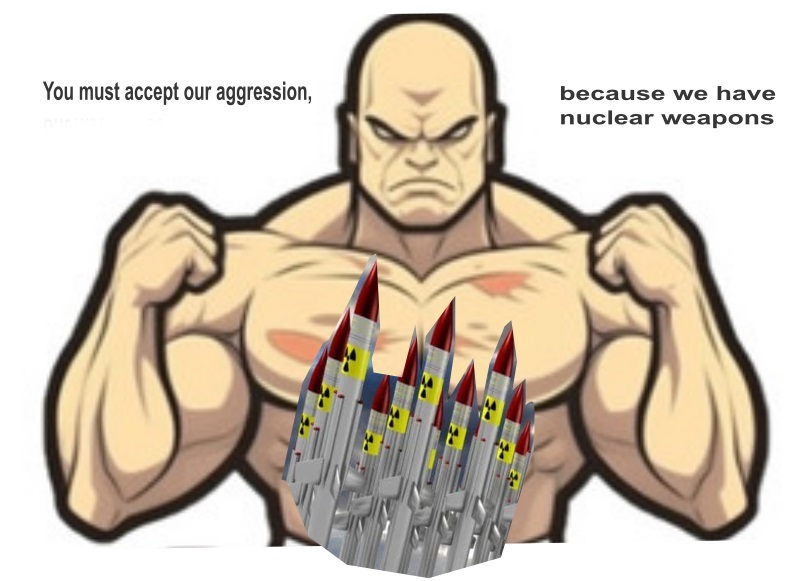
In an internal memo, Hegseth called China the ‘sole pacing threat’
by Dave DeCamp March 30, 2025 , https://news.antiwar.com/2025/03/30/hegseth-orders-pentagon-to-focus-on-preparing-for-war-with-china-over-taiwan/
Secretary of Defense Pete Hegseth distributed a memo in mid-March ordering the Pentagon to put its focus on preparing for a war with China, a nuclear-armed power, by “assuming risk” in Europe and other parts of the world, The Washington Post reported on Saturday.
The Post didn’t publish the full memo, known as the Interim National Defense Strategic Guidance, but said it “outlines, in broad and sometimes partisan detail, the execution of President Donald Trump’s vision to prepare for and win a potential war against Beijing and defend the United States from threats in the ‘near abroad,’ including Greenland and the Panama Canal.”
The Pentagon has considered China the top “threat” facing the US since the first Trump administration, but the Post report said the memo is “extraordinary in its description of the potential invasion of Taiwan as the exclusive animating scenario that must be prioritized over other potential dangers — reorienting the vast US military architecture toward the Indo-Pacific region beyond its homeland defense mission.”
The report said that the guidance from Hegseth says the Pentagon’s force planning construct “will consider conflict only with Beijing when planning contingencies for a major power war” and leave the “threat from Moscow largely attended by European allies.”
Hegseth wrote that China “is the Department’s sole pacing threat, and denial of a Chinese fait accompli seizure of Taiwan — while simultaneously defending the US homeland is the Department’s sole pacing scenario.”
The memo reflects the Trump administration’s policy toward Europe and calls for NATO allies to take a “far greater” burden sharing. The document says that the US is unlikely to provide substantial support to Europe if Russia’s military advances in the region, saying the US will only provide nuclear deterrence.
The memo also calls for the US to pressure Taiwan to increase military spending “significantly.”
For years now, the US military has been openly preparing for war with China despite the risk of nuclear escalation. It has done this by expanding military bases in the Asia Pacific, building alliances, and increasing support for Taiwan. While being done in the name of deterrence, these steps have only increased tensions in the region, making conflict more likely.
The Post report says that Hegseth’s plans to prepare a “denial defense” of Taiwan include “increasing the troop presence through submarines, bombers, unmanned ships, and specialty units from the Army and Marine Corps, as well as a greater focus on bombs that destroy reinforced and subterranean targets.” His memo also calls for increasing the defenses of US troop positions in the region and establishing more weapons stockpiles.
It’s Official: Ukraine Conflict is British ‘Proxy War’

The investigation’s most striking passages highlight London’s principal role in influencing and managing Ukrainian – and by extension US – actions and strategy in the conflict. Both direct references and unambiguous insinuations littered throughout point ineluctably to the conclusion that the “proxy war” is of British concoction and design
As this journalist has exposed, Ukraine’s Kursk folly was a British invasion in all but name. London was central to its planning, provided the bulk of the equipment deployed, and deliberately advertised its involvement. As The Times reported at the time, the goal was to mark Britain as a formal belligerent in the proxy war, in the hope other Western countries – particularly the US – would follow suit, and “send more equipment and give Kyiv more leeway to use them in Russia.”
Kit Klarenberg, Global Delinquents, Apr 02, 2025
On March 29th, the New York Times published a landmark investigation exposing how the US was “woven” into Ukraine’s battle with Russia “far more intimately and broadly than previously understood,” with Washington almost invariably serving as “the backbone of Ukrainian military operations.” The outlet went so far as to acknowledge the conflict was a “proxy war” – an irrefutable reality hitherto aggressively denied in the mainstream – dubbing it a “rematch” of “Vietnam in the 1960s, Afghanistan in the 1980s, Syria three decades later.”
That the US has since February 2022 supplied Ukraine with extraordinary amounts of weaponry, and been fundamental to the planning of many of Kiev’s military operations large and small, is hardly breaking news. Indeed, elements of this relationship have previously been widely reported, with White House apparatchiks occasionally admitting to Washington’s role. Granular detail on this assistance provided by the New York Times probe is nonetheless unprecedented. For example, a dedicated intelligence fusion centre was secretly created at a vast US military base in Germany.
Dubbed “Task Force Dragon”, it united officials from every major US intelligence agency, and “coalition intelligence officers”, to produce extensive daily targeting information on Russian “battlefield positions, movements and intentions”, to “pinpoint” and “determine the ripest, highest-value targets” for Ukraine to strike using Western-provided weapons. The fusion centre quickly became “the entire back office of the war.” A nameless European intelligence chief was purportedly “taken aback to learn how deeply enmeshed his NATO counterparts had become” in the conflict’s “kill chain”:
“An early proof of concept was a campaign against one of Russia’s most-feared battle groups, the 58th Combined Arms Army. In mid-2022, using American intelligence and targeting information, the Ukrainians unleashed a rocket barrage at the headquarters of the 58th in the Kherson region, killing generals and staff officers inside. Again and again, the group set up at another location; each time, the Americans found it and the Ukrainians destroyed it.”
Several other well-known Ukrainian broadsides, such as an October 2022 drone barrage on the port of Sevastopol, are now revealed by the New York Times to have been the handiwork of Task Force Dragon. Meanwhile, the outlet confirmed that each and every HIMARS strike conducted by Kiev was entirely dependent on the US, which supplied coordinates, and advice on “positioning [Kiev’s] launchers and timing their strikes.” Local HIMARS operators also required special electronic key [cards]” to fire the missiles, “which the Americans could deactivate anytime.”
Yet, the investigation’s most striking passages highlight London’s principal role in influencing and managing Ukrainian – and by extension US – actions and strategy in the conflict. Both direct references and unambiguous insinuations littered throughout point ineluctably to the conclusion that the “proxy war” is of British concoction and design. If rapprochement between Moscow and Washington succeeds, it would represent the most spectacular failure to date of Britain’s concerted post-World War II conspiracy to exploit American military might and wealth for its own purposes.
………………………………………………………………….. the British “had considerable clout” in Kiev and hands-on influence over Ukrainian officials.
This was because, “unlike the Americans,” Britain had formally inserted teams of military officers into the country, to advise Ukrainian officials directly. Still, despite Kiev failing to fully capitalise as desired by London and Washington, the 2022 counteroffensive’s success produced widespread “irrational exuberance”. Planning for a followup the next year thus “began straightaway.” The “prevailing wisdom” within Task Force Dragon was this counteroffensive “would be the war’s last”, with Ukraine claiming “outright triumph”, or Russia being “forced to sue for peace.”
……………………………………………………………………….Even Task Force Dragon’s Lieutenant General Donahue had doubts, advocating “a pause” of a year or more for “building and training new brigades.” Yet, intervention by the British was, per the New York Times, sufficient to neutralise internal opposition to a fresh counteroffensive in the spring. The British argued, “if the Ukrainians were going to go anyway, the coalition needed to help them.” Resultantly, enormous quantities of exorbitantly expensive, high-end military equipment were shipped to Kiev by almost every NATO member state for the purpose.
The counteroffensive was finally launched in June 2023. Relentlessly blitzed by artillery and drones from day one, tanks and soldiers were also routinely blown to smithereens by expansive Russian-laid minefields. Within a month, Ukraine had lost 20% of its Western-provided vehicles and armor, with nothing to show for it. When the counteroffensive fizzled out at the end of 2023, just 0.25% of territory occupied by Russia in the initial phase of the invasion had been regained. Meanwhile, Kiev’s casualties may have exceeded 100,000.
‘Knife Edge’
The New York Times reports that “the counteroffensive’s devastating outcome left bruised feelings on both sides,” with Washington and Kiev blaming each other for the catastrophe. A Pentagon official claims “the important relationships were maintained, but it was no longer the inspired and trusting brotherhood of 2022 and early 2023.” Given Britain’s determination to “keep Ukraine fighting at all costs”, this was bleak news indeed, threatening to halt all US support for the proxy war.
………………………………… Ukraine’s calamitous intervention in Russia’s Bryansk region was a “foreshadowing” of Kiev’s all-out invasion of Kursk on August 6th that year. The New York Times records how from Washington’s perspective, the operation “was a significant breach of trust.” For one, “the Ukrainians had again kept them in the dark” – but worse, “they had secretly crossed a mutually agreed-upon line.” Kiev was using “coalition-supplied equipment” on Russian territory, breaching “rules laid down” when limited strikes inside Russia were greenlit months earlier.
As this journalist has exposed, Ukraine’s Kursk folly was a British invasion in all but name. London was central to its planning, provided the bulk of the equipment deployed, and deliberately advertised its involvement. As The Times reported at the time, the goal was to mark Britain as a formal belligerent in the proxy war, in the hope other Western countries – particularly the US – would follow suit, and “send more equipment and give Kyiv more leeway to use them in Russia.”
Initially, US officials keenly distanced themselves from the Kursk incursion……………………………..
However, once Donald Trump prevailed in the November 2024 presidential election, Biden was encouraged to use his “last, lame-duck weeks” to make “a flurry of moves to stay the course…and shore up his Ukraine project.” In the process, per the New York Times, he “crossed his final red line,” allowing ATACMS and Storm Shadow strikes deep inside Russia, while permitting US military advisers to leave Kiev “for command posts closer to the fighting.”
Fast forward to today, and the Kursk invasion has ended in utter disaster, with the few remaining Ukrainian forces not captured or killed fleeing. Meanwhile, Biden’s flailing, farewell red line breaches have failed to tangibly shift the battlefield balance in Kiev’s favour at all. As the New York Times acknowledges, the proxy war’s continuation “teeters on a knife edge.” There is no knowing what British intelligence might have in store to prevent long-overdue peace prevailing at last, but the consequences could be world-threatening. https://www.kitklarenberg.com/p/its-official-ukraine-conflict-is
‘Another significant show of confidence’ in Sizewell C, – making the total of taxpayers’ money going into the project a staggering £6.4bn)

The government has confirmed that £2.7bn promised to the Sizewell C
project in the Autumn Budget is now available. The Department of Energy
Security and Net Zero (DESNZ) said the money will be drawn down by the
project company according to spending plans agreed with the government. The
sum – available under what is called the Devex (development expenditure)
scheme -is in addition to £1.2bn which was made available to the project
since July last year. (making the total of taxpayers’ money going into the
project a staggering £6.4bn).
East Anglian Daily Times 4th April 2025
https://www.eadt.co.uk/news/25065158.another-significant-show-confidence-sizewell-c/
TRUMP’S PURSUIT OF A UKRAINIAN PEACE: Early Results and Future Prospects
Russian and Eurasian Politics, by Gordonhahn, April 4, 2025
U.S. President Donald Trump and his new and internationally inexperienced administration have been in hot pursuit of a ceasefire and peaceful resolution of the NATO-Russia Ukrainian War. The pursuit has laid bare the false promise of an end to the war on the administration’s first or even one-hundredth day as previously advertised. This is no business deal. This the hardball world of international politics, national power and interests, ancient and not-so-ancient local and international resentments, grievances, betrayals, and hatreds. Despite what may seem as a disappointing complications and the inevitably longer timeline for the arrival of any prospective ceasefire or conclusive peace, significant early progress was made, and the stumbling blocs that have appeared were to be expected and can be overcome with time and the further deterioration of Ukraine’s position on the battle fronts, which is inevitable.
There has been some confusion among observers and the public regarding the process, with issues such as NATO expansion tied to a ceasefire in some minds. This is a subject for a final treaty, not a ceasefire, which is needed to allow peace talks to proceed more smoothly, niot to mention ending the bloodshed and destruction. The ceasefire agreement must not be conflated from peace treaty negotiations. A ceasefire will, therefore, take at least several, if not many months. This is not least of all because of the need to resolve what Russian President Vladimir Putin called “nuances” – organizational measures needed to implement a full-fledged ceasefire.
While agreement, violated albeit, has been achieved on a month-long ceasefire regarding energy infrastructure, the two sides are very far apart regarding any treaty. Putin’s 4 goals for Russia’s ‘special military operation (SMO) contradict directly Zelenskiy’s demands for security guarantees and the return of all territory annexed or occupied by Russia. Again, these are problems to be addressed under any peace treaty. The ceasefire must be fully implemented before any treaty can be addressed in any robust fashion.
Trust-building is desperately needed, especially between Russia and Ukraine and can develop as partial agreements are made, complied with, and yield new agreements. Recent history and a long cultural tradition of security vigilance in Russia and in part inherited by Ukraine, the apposition of Russian nationalism and more rabid Ukrainian ultras-nationalism and neofascism, and, most importantly, the exacerbating factor of outside interference in Ukraine and Russian-Ukrainian relations by the U.S., Europe, and NATO create a matrix of distrust between all the parties, including the ostensible mediating side, the U.S., which is the lead combatant on the NATO side of the NATO-Russia Ukrainian War. The last point undermines the peace process from the start, and depending on how that process develops could end in many in Moscow, already being suspicious, coming to see the entire process as a ruse to hold off a Russian victory, viewing Trump’s America as ‘playing the good cop’, while Zelenskiy and Europe continue the war.
The ceasefire is evolving into four distinct elements — energy infrastructure, sea, air, and land ceasefires – to comprise the overall ceasefire prospectively. The full ceasefire could be achieved by mid-summer but more a more realistic target is before the end of the year……………………………………………………………………………………………………………………………………..
Trump has levers to push the parties towards peace. For the Ukrainians, he can withhold intelligence and weapons supplies. For the Russians he can delay or threaten to forego rapprochement or various aspects of it: sanctions relief, trade agreements, and renewed cooperation regarding the world’s various conflicts. Pres. Trump’s “Liberation Day” 20 percent tariff on EU goods might be adjusted depending on Brussels’ compliance with American wishes for sanctions relief for Russia. Otherwise, the EU is positioned to scuttle BSI 2.0. Indeed, Russia’s 10 percent tariffs and 0 percent on Russia can be adjusted depending on where pressure needs to be applied.
In sum, there are a host of problems that will take months of concerted effective diplomacy led by the U.S. as things stand now. But the Trump administration is short of seasoned diplomats and experienced foreign and security policy experts. We have a long, hard way to go before peace reigns in Ukraine. https://gordonhahn.com/2025/04/04/trumps-pursuit-of-a-ukrainian-peace-early-results-and-future-prospects/
Climate crisis on track to destroy capitalism, warns top insurer.

Action urgently needed to save the conditions under which markets – and civilisation itself – can operate, says senior Allianz figure
The climate crisis is on track to destroy capitalism, a top insurer has
warned, with the vast cost of extreme weather impacts leaving the financial
sector unable to operate. The world is fast approaching temperature levels
where insurers will no longer be able to offer cover for many climate
risks, said Günther Thallinger, on the board of Allianz SE, one of the
world’s biggest insurance companies.
He said that without insurance,
which is already being pulled in some places, many other financial services
become unviable, from mortgages to investments. Global carbon emissions are
still rising and current policies will result in a rise in global
temperature between 2.2C and 3.4C above pre-industrial levels.
The damage at 3C will be so great that governments will be unable to provide financial
bailouts and it will be impossible to adapt to many climate impacts, said
Thallinger, who is also the chair of the German company’s investment
board and was previously CEO of Allianz Investment Management.
Guardian 3rd April 2025 https://www.theguardian.com/environment/2025/apr/03/climate-crisis-on-track-to-destroy-capitalism-warns-allianz-insurer
Atomic Safety and Licensing Board (ASLB) rejects intervenors’ Palisades “zombie” nuke reactor restart petition & hearing request
The U.S. Nuclear Regulatory Commission (NRC) Atomic Safety (sic) and Licensing Board (ASLB) has struck again. Per usual, the three-administrative law judge panel (formerly known as hearing examiners) has rejected all contentions re: health, safety, security, and the environment raised by an environmental coalition, denying hearings on the merits. Such rulings reflect the ASLB’s very well earned kangaroo court reputation. Not only is the NRC staff captured by the industry it is supposed to regulate, but so too is NRC’s ASLB.
See the 71-page ASLB ruling, here.
The coalition — Beyond Nuclear, Don’t Waste Michigan, Michigan Safe Energy Future, Nuclear Energy Information Service of Chicago, and Three Mile Island Alert of Pennsylvania — did get the NRC ASLB to acknowledge its legal standing, although the NRC staff sought to block most of the groups. Some of the members/supporters who provided legal standing to the groups opposed by the NRC staff for establishing legal standing happen to live within less than a mile of the Palisades atomic reactor, and thus are very much in harm’s way.
Attorneys Terry Lodge of Toledo, Ohio, and Wally Taylor of Cedar Rapids, Iowa, serve as the coalition’s legal counsel. Coalition expert witnesses include Arnie Gundersen, chief engineer of Fairewinds, as well as Dr. Mark Z. Jacobson of Stanford University, a world renowned advocate for renewable energy as the most time- and cost-effective pathway to climate mitigation. This means nuclear power is an opportunity cost, significantly hampering desperately needed reductions of greenhouse gas emissions, as soon as possible.
The coalition has resisted Holtec International’s scheme to restart the nearly 60-year old “zombie” atomic reactor at Palisades nuclear power plant since the get-go, on April 20, 2022, when Michigan Governor Gretchen Whitmer first floated the trial balloon of indefinite, continued operations, a month to the day before previous owner Entergy permanently shut down the reactor. Palisades was designed in the mid-1960s, and ground was broken on its construction in 1967.
Such a restart of a closed for good atomic reactor is unprecedented. It is also unneeded, insanely expensive for the public, and extremely risky. Palisades has been an atomic lemon since it was fired up in 1971, and is now dangerously age-degraded, after 51 years of problem-plagued operations, and three years of neglect by Holtec of safety-significant systems, structures, and components, such as the now dangerously degraded steam generator tubes. Holtec neglected steam generator tube maintenance for two years (2022-2024), a “rookie error” according to the coalition’s expert witness, Arnie Gundersen of Fairewinds. But this rookie error, Gundersen, points out, could result in a catastrophic reactor core meltdown, if and when NRC allows Holtec to restart Palisades with mere BAND-AID fixes on the breakdown phase steam generator tubes.
The coalition will appeal the ASLB’s absurd ruling to the commissioners of the five-member Nuclear Regulatory Commission. Once the NRC Commissioners rule against us too, we will have exhausted all administrative remedies. At that point, we will file an appeal to the federal courts.
Although the ASLB has rejected all previous coalition contentions, the three-judge panel did not terminate the licensing proceeding. This is because the coalition amended certain contentions, and introduced new ones, based on the recent publication, in late Jaunary 2025, by NRC staff of a draft Environmental Assessment and Finding of No Significant Impact regarding the “zombie” reactor restart scheme.
However, on March 28, 2025 — the 46th annual commemoration of the Three Mile Island Unit 2 meltdown in Pennsylvania — both the NRC staff, as well as Holtec International, opposed all of the coalition’s new and amended environmental contentions, as well.
The coalition will continue to defend its amended and new environmental contentions at every opportunity, as well. Our deadline to do so is later this week.
Local Communities Say NO to Los Alamos National Laboratory (LANL Expansion); Public Comments Due on Thursday, April 10th
2 Apr 25 https://nuclearactive.org/
Community members and Tribal advocates are standing together to say NO to the proposed expansion of Los Alamos National Laboratory (LANL). As part of a growing movement for environmental justice and accountability, local community organizations including Tewa Women United, Concerned Citizens for Nuclear Safety, Communities for Clean Water, Honor Our Pueblo Existence, and Three Sisters Collective launched the 2025 SovereignTea Community Conversations series that will end with a powerful hybrid session that will center public education, dialogue, and action around LANL’s ongoing and proposed nuclear weapons activities.
The hybrid session will be offered on Monday, April 7th from 6 to 8 pm at the Tewa Women United offices at 1003 East Fairview Lane, in Española. Please register for the hybrid session at: bit.ly/4iM42I0
This session will focus on the proposed venting of tens of thousands of curies of radioactive tritium into the air from four Flanged Tritium Waste Containers stored at LANL and the gendered health impacts of radiation. https://tewawomenunited.org/2024/11/press-release-new-report-reveals-lanl-tritium-venting-could-have-triple-the-radiation-exposure-to-infants-compared-to-adults
Dr. Arjun Makhijani, Ph.D., and President of the Institute for Energy and Environmental Research, will discuss on Zoom the latest research about the dangers of LANL releasing radioactive tritium into the air, its impacts on pregnant women, the fetus and the environment. https://ieer.org/wp/wp-content/uploads/2022/07/Arjun-Makhijani-Curriculum-Vita-2022-07-09.pdf, https://ieer.org/projects/healthy-from-the-start/
Global warming is ‘exposing’ new coastlines and islands as Arctic glaciers shrink .

Retreating glaciers created 2,500km of “new” coastline and 35
“new” islands in the Arctic between 2000 and 2020, according to a new
study. The research uses satellite images of more than 1,700 glaciers in
Greenland, Alaska, the Canadian Arctic, Russian Arctic, Iceland and
Svalbard.
The findings show that 85% of these glaciers retreated over
2000-20, revealing 123km of new coastline per year on average. The study,
published in Nature Climate Change, links the acceleration in glacier melt
to warmer ocean and air temperatures.
Carbon Brief 1st April 2025 https://www.carbonbrief.org/global-warming-is-exposing-new-coastlines-and-islands-as-arctic-glaciers-shrink/
Hinkley C nuclear power station site teaches A Level students about “clean” energy !!

By John Thorne Wednesday 2nd April 2025 ,https://www.wellington-today.co.uk/news/hinkley-c-nuclear-power-station-site-teaches-a-level-students-about-clean-energy-780053
A LEVEL students from Bridgwater and Taunton College (BTC) explored the UK’s clean energy future during an educational tour of the under-construction Hinkley Point C nuclear power station.
The trip was an opportunity for students studying subjects such as business, economics, mathematics, physics, and chemistry to witness first hand one of Europe’s most significant infrastructure projects.
Germany’s Conservative Christian Democratic Union (CDU) mulls reactivation of nuclear power plants
Germany’s Conservative Christian Democratic Union (CDU) party is
considering restarting six of the country’s recently deactivated nuclear
power plants. According to newspaper Handelsblatt on April 1, a new working
paper of the CDU’s parliamentary group demanded an investigation on
whether a reactivation of the power stations was technically possible and
economically feasible. If the current owners of the plants in question –
energy companies E.On, RWE and EnBW – were not willing to restart the
reactors themselves, a State-owned enterprise reportedly could take over
ownership of the infrastructure.
Brussels Signal 2nd April 2025 https://brusselssignal.eu/2025/04/germanys-cdu-mulls-reactivation-of-nuclear-power-plants/
Meltdown: the toxic culture that helped destroy the Nuclear Advanced Manufacturing Research Centre (AMRC)
Dan Hayes•28.03.2025, Sheffield Tribune
Complaints about bullying were made as far back as 2018. Why did the University of Sheffield turn a blind eye?
“This is a diary of events in note form and to be clear I have never felt the need, in 30 years of employment, to create such a record.”
That opening line was penned by Carl Hitchens in 2018. Hitchens, the former head of machining at the Nuclear AMRC, sent me the diary in place of a conversation. He told me he just couldn’t face reliving such a painful period.
The Nuclear AMRC was set up in 2009 with a simple mission: to help UK manufacturers win work in the civil nuclear sector. As well as research and development into nuclear technologies, the centre also worked with British firms to help them design and build components that could be used in nuclear power plants. Ostensibly part of the University of Sheffield, the Nuclear AMRC enjoyed a large degree of autonomy from its parent organisation.
As we found in our piece last year, the Nuclear AMRC never found its task easy. Continuing concerns about the safety of nuclear energy, the government’s refusal to commit to its future, and newer technologies like small modular reactors (SMRs) all created a challenging environment to navigate. Despite this, all indications are that, in its early days, the Nuclear AMRC was a fairly happy ship.
So how did something that was meant to put South Yorkshire at the centre of a generational transformation of the UK energy sector fall apart in a few short years? How did the Nuclear AMRC go from being touted as a huge growth success story, to being all but shut down? Carl Hitchens’ diary — and the recollections of his colleagues — are now allowing us to answer that question……………………………………..(subscribers only) https://www.sheffieldtribune.co.uk/meltdown-the-toxic-culture-that-helped-destroy-the-nuclear-amrc/
PLANT VOGTLE The True Cost of Nuclear Power in the United States.
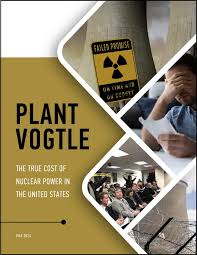
PLANT VOGTLE The True Cost of Nuclear Power in the United States is a report prepared by a coalition of six Georgia nonprofit organizations to educate the ratepaying public and its elected officials about the history and experience of having Georgia Power build two reactors at Plant Vogtle.
This historic report documents the harm to Georgia ratepayers, the enrichment of Georgia Power and the failure of the Georgia Public Service Commission to protect its citizens from a powerful monopoly seeking to expand profits for shareholders.
We offer this as a warning to other states considering nuclear energy: do not believe nuclear energy proponents. Nuclear energy is never on time or on budget.
Georgia Power’s Plant Vogtle is near Augusta in Burke County, Georgia.
It is the largest nuclear power plant in the United States.

The U.S. South hosts so many commercial and military nuclear facilities
it can be considered the nuclear hub of the United States.
The South is the only region with new nuclear reactor construction, and is home to over
three dozen operational nuclear reactors,1 two significant nuclear weapons manufacturing
complexes (Oak Ridge National Lab in Tennessee and Savannah River Site in South
Carolina, bordering Georgia), a majority of the nuclear fuel factories in the U.S.,
the contaminated “low-level” radioactive waste burial site at Barnwell, SC, the two
original uranium enrichment sites (Paducah, Kentucky and Portsmouth in Appalachian Ohio
— both now closed), and a closed Superfund nuclear waste burial site at Maxey Flats
in Kentucky. One-fourth of the U.S. nuclear weapons arsenal is deployed from the
Kings Bay Trident submarine base on the coast of Georgia……………………………………………………………………………………………………………………………………………………………………………………………………………………………………………………………
What are some myths vs. truths about nuclear energy?
We live in amazing times to experience the benefits of technology, not only with
smartphones, computers and medicine, but especially for energy. The number of
advancements in how energy is produced and delivered and stored is enormous.
Things like data analytics, virtual power plants, renewables, and distributed energy
mean the electricity grid can decarbonize affordably and rapidly, and it means people
can be engaged in ways never before possible.
For example, people now have access to their energy information in online portals, they can enroll in new programs that allow them to shift energy usage to less expensive periods in exchange for compensation, and they can produce and store their own electricity through rooftop solar and battery storage. Two common programs that residential customers often find appealing are smart thermostat programs that reduce energy consumption
at peak times of the day to save both the utility and the consumer money, and time of use rate plans that compensate consumers for using energy when it is less expensive to produce. Electric vehicles (EVs) can also be automated to charge overnight, and a future is coming where EV batteries can provide back-up power to homes during blackouts.
Nuclear energy proponents claim that nuclear energy is required to decarbonize the electricity grid, and that massive new generation requirements can only be met with nuclear power. These claims are false.
The following is a list of common myths about nuclear energy.
Myth #1: Nuclear energy is clean
Proponents claim that nuclear energy is clean because it emits no carbon
dioxide, the main gas that is causing climate change. However, the mining
of uranium for fuel is polluting and reactor construction is extremely
energy intensive.85 In Vogtle’s case, for 15 years construction activities
have been heavy emitters of carbon emissions, including the extensive
use of concrete which produces significant amounts of carbon dioxide.
So much concrete was used to build Plant Vogtle’s new reactors that,
according to Georgia Power, it was the equivalent of paving a sidewalk
across the United States from Miami to Seattle.
Claims that nuclear is clean energy also ignore the risks of highly
radioactive waste that remains lethal for hundreds of thousands of years,
which is generated and stored on-site at every nuclear facility in the
country.87 Despite years of research and debate, no viable, secure method
for long-term storage for radioactive nuclear waste has been found.
Myth # 2: Nuclear energy is safe
Nuclear power failures can be catastrophic, so there is no scenario in which the competitive business market would build nuclear power without government support. Similarly, the private insurance market will not provide protection for damage caused by nuclear power plant meltdowns or explosions. Indeed, utilities were only willing to invest in nuclear power reactors when Congress passed the Price-Anderson Act in 1957, which limited liability to all companies involved in all aspects of the nuclear industry, from reactor designers to
construction companies to owners and operators. The federal government has pledged that the U.S. Treasury will pay for damages beyond a $13 billion insurance cap from nuclear accidents. The Act was passed to help get the nuclear industry started with reactor construction, with the claim that insurance companies would no longer need a federal backstop once the industry had experience and a track record. Yet that has never been
true, and the Price-Anderson Act has been extended four times, most recently in 2024 when it it was extended
Because the Southeast is currently the only
region of the country where new reactors are
being built and brought on-line, it is the region
most in jeopardy of accidents due to the frontend of what is known as the “bathtub curve”
effect. This documented effect shows that more
accidents occur in the early stages of a reactor
coming online, and, as reactors age, the rate of
failure also increases, thus the curve. In Georgia,
Plant Vogtle’s Unit 3 and 4 are coming online
around the same time as Vogtle 1 and 2 move
into end-of-life phase.
To illustrate the bathtub effect, Vogtle 1 had a
near-miss early in its operating history when it
experienced a station black-out during a 1990
refueling outage. Emergency generators failed
to activate and uncirculated reactor cooling water began rapidly heating. Workers managed to avert disaster and the incident had national repercussions as officials admitted that Georgia Power nearly caused the worst nuclear accident since Three Mile Island.90 Three Mile Island, Chernobyl, and Fukushima, with its U.S.-based GE reactor design, have starkly illustrated that accidents can and do happen and when they do, the costs and
devastation are enormous, far beyond the $13 billion Price-Anderson insurance cap.
Myth # 3: Nuclear waste is no big deal
Similar to the Price-Anderson Act described above, utilities were wary of being stranded with highly radioactive, long-lived spent nuclear fuel. The U.S. government pledged to take responsibility for high-level radioactive waste which is codified in the Nuclear Waste Policy Act of 1982 and has been amended multiple times. The U.S. missed its self-imposed 1998 deadline to locate a site for, let alone build and operate, a central repository, and currently all high-level radioactive waste is stored on reactor sites. There are no viable plans underway to address this problem: over its lifetime, each operating reactor produces 30 tons of
highly radioactive waste which remains highly radioactive for hundreds of thousands of years.91
Myth #4: Small modular reactors are different
Small modular reactors (SMRs) are smaller than conventional nuclear reactors, which proponents claim would allow them to be built from modules that are manufactured in one location, then shipped, assembled, commissioned, and operated at a separate site. Instead of a traditional 1000-megawatt reactor, a small modular reactor is 300 megawatts or less. Despite the fact that SMRs are in the research phase and none have been built in the U.S., supporters promote them as a solution for forecasted increases in energy demand
and reducing carbon emissions. Opponents argue that the time frame for deploying SMRs is too long to impact climate change. There have only been three SMRs built anywhere, two in Russia and one in China, but they are not considered successful due to massive delays and low capacity factors.92
Indeed, SMRs are already stumbling, with front runner NuScale Power Corporation cancelling their SMR project in November, 2023.93 Recent news reports indicate that costs have escalated to well over $100/ MWh,94 once again pushing costs for new nuclear energy far above any other energy generation technology. Meanwhile, solar and wind energy, including battery storage, cost less than one-third that amount at about $30/MWh, and these technologies are available now.
Myth #5: Nuclear energy is required to provide baseload backup to renewables.
There is a myth that renewables are intermittent and thus require baseload backup, or 24×7 power which can only be delivered by conventional coal, gas or nuclear power.95 Although intermittent power sources were difficult to integrate into the grid early on, digital grid advancements mean this is no longer true.96
Grids throughout the world, including the U.S., can and do use digital applications and advanced analytics and devices to intelligently integrate renewable energy resources, storage, and software advancements into very high levels of load management.97
Flexibility is what is needed now, and flexibility is now available thanks to distributed energy made possible by clean-energy technology.99 Data analytics and digital applications allow for high levels of renewables to easily serve on the grid in ways never before possible, but many people don’t know it, including policymakers.
Nuclear and fossil fuel baseload power stations are inflexible power sources designed to run at maximum output all the time whether the power is needed or not. Conventional investments in large scale generation such as nuclear power harm the ratepayer
while rewarding those who build and operate
increasingly obsolete 20th century technologies,
a fact which the nuclear industry seeks to conceal
by renaming Small Modular Reactors “advanced
technology.”
Myth #6: Nuclear energy is required to meet future growth
There is a claim that nuclear energy is required to decarbonize the grid because the load growth from electrification, data centers, or manufacturing is too massive. There is a common misunderstanding that replacing fossil fuels with renewable energy like solar, wind, geothermal etc. requires the same amount of energy one-to-one, which is not the case. Fossil fuels and uranium are burned to boil water to produce steam to generate electricity which produces large amounts of waste heat. Renewable energy not only does not produce waste heat, but is more than twice as efficient as steam-generated power. Fossil fuel
and nuclear energy can thus be replaced by less than half as much clean, renewable energy. The task of reducing carbon emissions is much smaller than many people realize. In addition, the nation’s electricity grid is woefully underutilized because it is built to meet peak demand. Many programs and modern grid enhancements could improve the nation’s low utilization of its grid.
Myth #7: Nuclear energy is needed to combat climate change
There are dozens of studies that model a path to a zero-carbon grid without any expansion of nuclear power, including analyses by Stanford University researchers,100 and the highly credible RMI, a nonprofit whose mission is decarbonizing energy systems.101 In fact, many U.S. states and countries around the world already have high proportions of renewable energy servicing their grids. Washington, Oregon, Idaho, and South Dakota produced over 60% of their electricity from renewables in 2023, and ten countries generated 60% to 90% of their electricity from renewables in 2022 including Scotland, Iceland, the Netherlands, Germany, and Guatemala, among others.102, 103 California’s output from wind, water and solar power exceeded demand for 30 of 38 days early in 2024.104
Scandals and Litigation..…………………………………………………………………………………………………………..
Conclusion
These are inspiring times of energy transition in
many areas of the United States and the world,
though not in the Southeast United States. Leaders
in this region could easily accelerate the clean
energy transition by making greater investments in
efficiency, renewables, and a range of clean energy
initiatives and technologies such as heat pumps,
electric water heaters, smart connected devices,
rooftop solar and vehicle-to-grid EV battery storage.
It is especially tragic, given how poor the Southeast
region is, and how sunny Georgia, Mississippi, and
Alabama are, that these states are in 46th, 49th and
50th place in state rankings nationally for rooftop
solar penetration and are equally low in energy
efficiency. Investments in a clean energy transition
would save substantial amounts of ratepayer money,
and would quickly meet the reduced greenhouse
gas emissions reduction targets the world needs to
address the climate crisis. Yet these investments are
not made as they are not as profitable for monopoly utilities seeking to maximize profits.
Plant Vogtle points to the failure of the State of
Georgia generally, and the Georgia Public Service
Commission specifically, in protecting its people
from monopoly utility power and overreach. Plant
Vogtle would never have happened in a competitive
business environment, and should not have
happened in the Georgia regulatory environment
which was created to protect the public interest
from monopoly abuse. This is clearly seen by Georgia’s ranking in 6th place nationally for high power bills, and that is before Plant Vogtle drives up rates.113
It is very likely Georgians will soon be paying the highest
power bills in the nation due to Plant Vogtle. https://truthaboutvogtle.com/wp-content/uploads/2025/02/Vogtle-Truth-Report-2025.pdf
-
Archives
- October 2026 (129)
- September 2026 (339)
- August 2026 (330)
- July 2026 (355)
- June 2026 (287)
- May 2026 (306)
- April 2026 (356)
- March 2026 (251)
- February 2026 (267)
- January 2026 (308)
- December 2025 (358)
- November 2025 (359)
-
Categories
- 1
- 1 NUCLEAR ISSUES
- business and costs
- climate change
- culture and arts
- ENERGY
- environment
- health
- history
- indigenous issues
- Legal
- marketing of nuclear
- media
- opposition to nuclear
- PERSONAL STORIES
- politics
- politics international
- Religion and ethics
- safety
- secrets,lies and civil liberties
- spinbuster
- technology
- Uranium
- wastes
- weapons and war
- Women
- 2 WORLD
- ACTION
- AFRICA
- Atrocities
- AUSTRALIA
- Christina's notes
- Christina's themes
- culture and arts
- Events
- Fuk 2022
- Fuk 2023
- Fukushima 2017
- Fukushima 2018
- fukushima 2019
- Fukushima 2020
- Fukushima 2021
- general
- global warming
- Humour (God we need it)
- Nuclear
- RARE EARTHS
- Reference
- resources – print
- Resources -audiovicual
- Weekly Newsletter
- World
- World Nuclear
- YouTube
-
RSS
Entries RSS
Comments RSS

