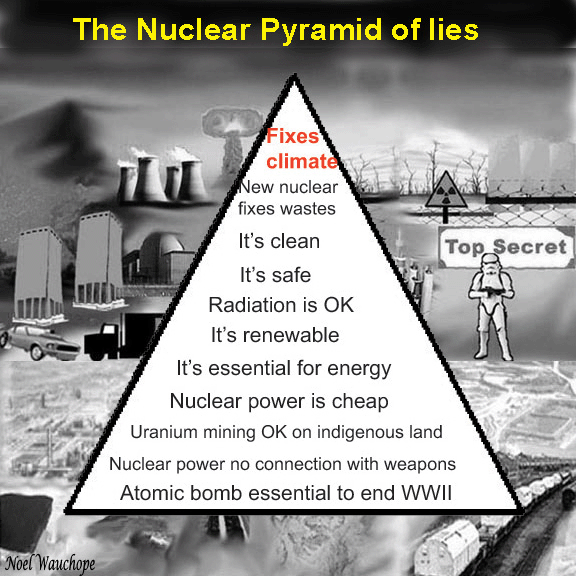
How does the nuclear industry get away with its persistent, repetitive lies?
Radiation Free Lakeland * nuclear landfill/geological dump * NO TA!
Steve Wallis , 25 May 25.
Thoughts on the nuclear industry and how it is “run” and perceived by the people who work in the industry and how it is “sold” to the public. An earlier thread details Trump’s executive orders re “new” nuclear and the lies spouting forth about new this, new safety that, and not like the other nukes nonsense.
There are a few things that are very puzzling when it comes to the nuclear industry, perhaps the main one is why tell lies and why these lies are believed. Before talking about this I am interested in the “new” nuclear and the growing criticism concerning lack/lapse of regulation, mainly to build them quicker, cheaper and more of them. For example the SMR’s in the US will not fall under the current impact surveys for standard nuclear plants, re environmental/public safety.
Trump mentions SMR’s as if they already exist. This is not true, the modular means these reactors are built on a production line and then assembled on site. No factory production line exists at the moment.
Then the question is how does the nuclear industry get away with telling the same lies over and over, which it always does? Maybe this is because of regulatory capture, when a regulatory agency becomes dominated by the industry it is meant to regulate, and therefore does not protect public interest. Sellafield is an example of this over and over.
So why does the public believe Trump and the nuclear industry who are liars? This brings me to The Nietzsche Thesis, in his words we will accept and look for “truth” only when it has “pleasant, life-preserving consequences.” Conversely, we are hostile “to potentially harmful and destructive truths.” So, I will accept what is said if it preserves my view of the world, conversely I present a hostile reaction to harmful truths. Surveys asking Trump supporters how they feel about the lies are unconcerned because the lies fulfil their goals, and do not threaten their status. Likewise, despite loads of nuclear accidents people still believe the industries lies about providing safe, clean and cheap energy.
The nuclear industry always tells the public it is safe, and how it prides itself on providing the safest form of energy. It is as if all the nuclear accidents simply never happened and the public tend to believe this lie rather than the truth.
Extermination as negotiation: Understanding Israel’s strategy in Gaza
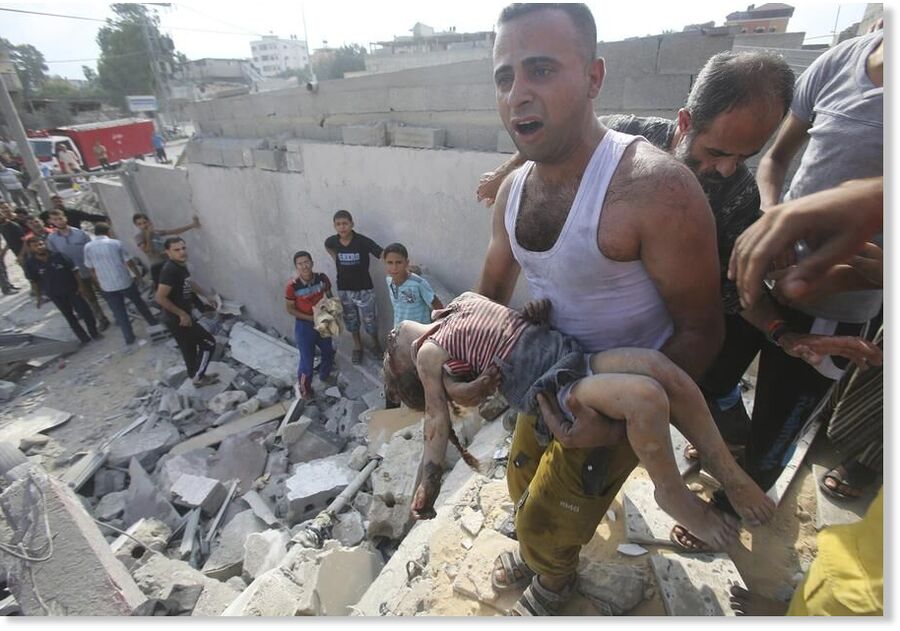
Behind the language of planning lies a campaign of sterilization and condensation — a vision of Gaza not as a home, but as a holding site. Leaked reports whisper of forced transfers, of Palestinians being sent to Libya or elsewhere in Africa, sketching futures of removal dressed in the language of pragmatism. In other words, Israel maneuvers, cajoles, agrees, renges, returns to blood, and ultimately remains hesitant in fulfilling even its own plans.
Whether it’s total conquest or managed containment, Israel doesn’t have a single grand strategy for Gaza, but it uses the possibility of both to prolong the war.
Mondoweiss, By Abdaljawad Omar May 23, 2025
In the weeks since the unveiling of “Operation Gideon’s Chariots,” the renewed Israeli offensive to permanently “conquer” all of Gaza, it has become increasingly clear that Israel’s internal decision-making is not oriented toward a singular strategic endgame, but toward a recursive logic of exhaustion.
Israel isn’t choosing between total conquest and technocratic containment via an Arab-brokered ceasefire plan. Instead, it is deploying these options as devices to stretch the war and weaponize its duration rather than end it. Neither is an actual alternative to the other.
This is not a paradox, but a method. “Gideon’s Chariots,” with its objective to concentrate over two million Palestinians in Rafah and “cleanse” the remainder of Gaza, is not merely a plan of conquest. It is a fantasy of sterilization dressed in logistical rationality. Its brutality lies not only in its intentions — military and demographic — but also in its open-endedness, because it will be an occupation without governance or responsibility.
It imagines Gaza as a surgical field: empty of social density and politics, a flattened terrain where the Israeli army may operate unhindered and where civilians are transformed into captives or debris. This is where extermination can proceed behind the veil of humanitarian logistics. But this is the thing: while Israel announces its plan and leaks many of its contours, making sure that the endgame of extermination is out in the open, it also delays its fulfillment.
The rejection of the Egyptian proposal for Gaza’s postwar governance, meanwhile, functions less as a strategic rebuttal and more as a temporal maneuver: it defers the stabilization of Gaza, suspends the possibility of a postwar architecture, and secures Israel’s role as the sole arbiter of movement, aid, reconstruction, and survival. The proposal — which secured the backing of the Arab League — offered a ceasefire, the release of prisoners, and the creation of a Palestinian technocratic administration in Gaza under regional and international auspices. The governing authority would be civilian, non-Hamas, and possibly linked to the Palestinian Authority. Arab security forces, primarily from Egypt and the UAE, would maintain public order. Israel, in theory, would retain the ability to strike if Hamas rearmed, but the core logic was one of pacified governance and externally monitored reconstruction.
But this alternative, while marketed as pragmatic containment, reveals its own structure of control. It does not offer Palestinains liberation or sovereignty. It does not restore Palestinian political life. Instead, it imagines a depoliticized Gaza, administered through foreign technocrats, where governance is reduced to management and resistance is metabolized into security threats.
Yes, it ends the massacres, but it continues the process of unmaking through other means. Yes, it stops ethnic cleansing and genocide, but it only offers a minimum respite. ……………………………………………………………………………………………………………………………………………………………
Behind the language of planning lies a campaign of sterilization and condensation — a vision of Gaza not as a home, but as a holding site. Leaked reports whisper of forced transfers, of Palestinians being sent to Libya or elsewhere in Africa, sketching futures of removal dressed in the language of pragmatism. In other words, Israel maneuvers, cajoles, agrees, renges, returns to blood, and ultimately remains hesitant in fulfilling even its own plans.
………………………………..rather than shift course, Israel doubles down, leaning into ambiguity and attrition, hoping to exhaust global outrage the way it hopes to exhaust Palestinian resistance: through delay, confusion, the normalization of collapse, and of course, through coercion by the weaponization of antisemitism.
In this moment, what Israel seeks is a “stable instability” in which Gaza is rendered uninhabitable yet governed, massacred yet silent, present yet politically nullified. Both plans — the one it executes and the one it rejects — serve this grammar. Whether through total war or managed containment, the objective remains: to erase Palestine as a subject of history, and to replace it with a population that can be controlled, administered, or vanished. Whether this will succeed remains uncertain. But the cracks are visible in the disillusionment of soldiers and in the rage of Israeli prisoners’ families. ……………………………………………………………………………………………………………………………. https://mondoweiss.net/2025/05/extermination-disguised-as-negotiation-understanding-israels-strategy-in-gaza/?fbclid=IwY2xjawKiJnVleHRuA2FlbQIxMQBicmlkETFhMVJScjZYcDE0UEpFRko2AR6Ov_j6MzhAmpAl-ntfqrrz9g7gbweyo2JQZgXmQD20EFcLFNN_7U3rbw1FBA_aem_EoA46q1R_Hz9m5KhsFpSqw
Why the US Won’t Be Able to Help Build Taiwan’s Nuclear Future
Washington itself hasn’t solved the problems that fed into Taiwan’s nuclear phase-out: waste storage and high costs.
By Benjamin Yang and M.V. Ramana, May 26, 2025, https://thediplomat.com/2025/05/why-the-us-wont-be-able-to-help-build-taiwans-nuclear-future/
When the 40-year operating license of Taiwan’s last remaining commercial nuclear reactor expired on May 17, the country realized its nuclear phase-out policy after decades of politicized debates.
If anything, though, the imminent decommissioning of the Maanshan Nuclear Power Plant’s second reactor has only fueled another round of heated discussions on the potential role of nuclear power in Taiwan’s energy future.
On May 13, the Legislative Yuan – Taiwan’s national legislature, where opposition parties currently hold a majority – passed amendments to the Nuclear Reactor Facilities Regulation Act, allowing nuclear power plant operators to apply for a 20-year license renewal beyond the original 40-year cap and easing restrictions on their restarts. In the meantime, it also passed a proposal from the Taiwan People’s Party (TPP) for a referendum on restarting the Maanshan plant, which is now set to take place in August.
Such renewed interest in nuclear energy is a result of a few compounding factors: power shortage concerns amid grid-induced blackouts over the past few years and growing power demands from the semiconductor and AI industries; rising electricity prices that pro-nuclear groups have framed as a result of phasing out nuclear; stalled momentum in renewable energy development; and national security threats of a naval blockade from China.
At the same time, there are several reasons why nuclear power may not really address these questions, most notably the high costs and long construction times of building nuclear plants. Meanwhile, proponents of the nuclear phase-out point to the risks of accidents associated with nuclear reactors and the lack of a demonstrated solution to managing radioactive wastes of different kinds produced by the nuclear fuel chain.
Amid this domestic debate in Taiwan over nuclear power, Director Raymond Greene of the American Institute in Taiwan, the de facto U.S. embassy, added a new twist. In a recent interview, he announced that the United States stands ready to introduce “existing and new technologies such as SMRs (small modular reactors) and to help Taiwan address its nuclear waste storage challenges.” Can U.S. support on SMRs and nuclear waste storage help with the challenges that led Taiwan to phase out nuclear power?
The problem with nuclear waste is two-fold: a shortage of short-term storage capacity at some sites, and the complete absence of a long-term option. Currently, Taiwan has over 21,500 spent fuel rods from almost five decades of operation; all but 112 of these are stored on-site, either in their respective reactor cores or spent fuel pools. Only a portion from the Chinshan Nuclear Power Plant has been moved to a dry storage facility. In July 2021, Taiwan Power Company, the state-owned utility that owns and operates all of Taiwan’s nuclear power plants, had to take unit 1 of the Kuosheng Nuclear Power Plant offline five months before the expiry of its operating license due to the lack of used fuel storage capacity. These are just the problems with short-term storage. In the long term, there is just no plan: the government has yet to create regulations governing the disposal of high-level waste.
With local government concerns over wastewater runoff pollution hampering progress on constructing dry storage facilities and a final disposal repository nowhere in sight, creating more nuclear waste through extensions, restarts, or even building new SMRs will only aggravate this unsolved issue.
The United States has no long-term plan for its nuclear waste, either. Yucca Mountain, the site selected back in 1987 under the 1982 Nuclear Waste Policy Act, proved to be technically problematic, because it had an oxidizing environment and, despite being advertised as a very dry site, proved to allow seepage of lots of water. No alternative site has been seriously considered since Yucca Mountain was picked, although high level committees like the Blue Ribbon Commission set up by President Barack Obama have recommended setting up a process to find a new site. In short, the United States has no successful experience to point to if it intends to help Taiwan with its nuclear waste.
The story is similar with SMRs, the other part of the offer from Greene. Despite much media attention and hype, the United States has so far not constructed a single small modular reactor. In terms of planning, the most advanced SMR project was proposed by the Utah Associated Municipal Power System. Announced in 2015, the UAMPS project was initially expected to start operations “around 2023” at an “overnight cost” of $3 billion. The estimated costs of the project subsequently rose to $6.1 billion, and finally $9.3 billion in 2023. That last figure was for a mere 462 megawatts of electricity capacity. Later that year, the project was canceled because of a lack of demand.
When viewed in terms of the cost per unit of power capacity (i.e., dollars per megawatt), the cost of the UAMPS project was higher than even the most expensive nuclear power plant built in the United States, the Vogle project in Georgia, which cost $36.8 billion. This is to be expected. Small modular nuclear reactors, which produce less than 300 megawatts of power as compared to the roughly 1,000 megawatts for the typical reactors that have been constructed in recent decades, are more expensive per unit of power capacity due to diseconomies of scale.
The underlying reason is that the cost of constructing or operating a nuclear reactor is not directly proportional to the amount of power it is designed to generate. SMRs, therefore, start off with an economic disadvantage and will further undermine the financial viability of nuclear plants.
In the United States, nuclear plants are the most expensive way to supply electricity and building SMRs will make nuclear power even less competitive, especially in comparison to solar and wind energy, with or without electricity storage. No wonder renewables constitute the vast majority of new electricity installations in the United States. Also growing rapidly are energy storage technology, geothermal technologies, and grid resilience innovations such as virtual power plants. If the U.S. is serious about addressing Taiwan’s energy situation, maybe these are the technologies it should be offering.
In the end, the decommissioning of Taiwan’s final nuclear reactor marks a critical crossroads in its energy transition. Every choice Taiwan makes at this juncture would need to tackle the multitude of challenges that come with balancing rising demands, economic development, national security, climate action, and public safety. With the storage solutions for existing nuclear waste yet to appear and the costliness of constructing SMRs both in terms of time and capital, nuclear is unable to serve as a safe, cost-effective, and timely climate solution – even with U.S. support.
Israeli Military Says It Will Occupy 75% of Gaza Within Two Months, ‘Concentrate’ the Civilian Population
The IDF’s plan is to force civilians into three small areas in Gaza
by Dave DeCamp May 25, 2025 , https://news.antiwar.com/2025/05/25/israeli-military-says-it-will-occupy-75-of-gaza-within-two-months-concentrate-the-civilian-population/
The Israeli military expects that it will occupy 75% of Gaza’s territory within two months and plans to “concentrate” the entire civilian population into three small areas in the Strip.
According to Israeli media, Palestinian civilians will be confined to the center of Gaza City, a strip of land in central Gaza’s Deir el-Balah and Nuseirat, and an area in al-Mawasi on the coast in southern Gaza.
The IDF said the purpose of the offensive is to destroy Hamas infrastructure, although previous reports have said the plan is to destroy every remaining building in Gaza.
Israeli Prime Minister Benjamin Netanyahu has already made clear that Israel’s goal was the full military occupation of Gaza and the ethnic cleansing of the territory, which he calls the “Trump plan,” although it’s unclear where the Palestinian population could go.
The IDF announcement about its offensive comes as a new US and Israeli-backed aid scheme is expected to be launched in Gaza, but there are conflicting reports about when it will actually start. According to Haaretz, the aid distribution, which will involve private American security contractors, will start Monday, although other Israeli media reports say it has been postponed.
The aid scheme has been rejected by the UN and other aid agencies that operate in Gaza, and it has been condemned as a transparent effort to forcibly displace starving Palestinian civilians into concentration camps. Amid the criticism, Jake Wood, the CEO of the Gaza Humanitarian Foundation (GHF), which was created for the US-Israeli aid plan, announced his resignation.
“The aid program cannot be implemented while adhering to humanitarian principles of humanity, neutrality, fairness, and independence – principles I will not abandon,” Wood said. He called on Israel to “significantly expand aid delivery to Gaza through all possible means.”
Israel’s aid plan for Gaza is a key part of its strategy to expel Palestinians
Israel’s plan to handle the distribution of aid in Gaza via a U.S. private contractor is a key part of its plan to ethnically cleanse its population. Here’s how.
Mondoweiss, By Qassam Muaddi May 22, 2025
The forcible expulsion of the Palestinian people is now the explicit goal of Israel’s war on Gaza. Late on Wednesday, Israeli Prime Minister Benjamin Netanyahu said that Israel would only end the war if “Hamas surrenders, Gaza is demilitarized, and we implement the Trump plan.”
Trump walked back his February plan for the U.S. to “own” Gaza, expel its people, and turn it into a “Riviera of the Middle East,” but Netanyahu seized upon it all the same and took it as a green light to exterminate Gaza. The latest phase in this plan is Israel’s weaponization of humanitarian aid for the purpose of furthering the Gaza final solution.
The plan is simple: starve Gaza’s population, and only create one designated flattened stretch of land where they can come to get food rations — facilitated by the Israeli army and run by a U.S. private contractor. Gaza’s population will be forced to go to these collection points, where they will be corralled inside what would effectively be a concentration camp, located in what used to be the city of Rafah, now a flattened wasteland.
Netanyahu made all this clear in his latest announcement, which came a day after Israel said it would allow “minimal” amounts of humanitarian aid into Gaza for “diplomatic reasons” — to avoid war crimes charges and images of famine.
On Monday, the Israeli war cabinet finally approved the entry of the aid, after two months of a complete Israeli blockade on the besieged territory. This forced starvation has led to the spread of hunger and disease, with the Gaza Government Media Office reporting that at least 70,000 Palestinian children have been hospitalized for severe malnutrition.
The cabinet decision followed intense negotiations with Hamas in Qatar, with the mediation of the Gulf state, and pressure from the U.S. envoy to the Middle East, Steve Witkoff. The talks started following Hamas’s release of Israeli-American soldier Edan Alexander earlier last week…………………………………………………………
Israel’s goal: Ethnic cleansing
When Israel announced its latest offensive aiming to control all of Gaza, dubbed operation “Gideon’s Chariot,” Israeli daily Yediot Ahronot reported that one of the phases of the the operation would include transferring the majority of the Palestinian population to the south of the Strip, especially in the Rafah area. These reports appeared simultaneously alongside Netanyahu’s statements to Israeli reservists last week that Israel aims to force Palestinians out of Gaza, and that the main obstacle is finding countries willing to accept them. The concentration of Palestinians in southern Gaza is seen by most analysts as a preparatory step for forcing them out. It is believed that this new plan to deliver humanitarian aid to Gaza might be the last piece of this strategy…………………………………………………..
New aid plan
Even though the Israeli war cabinet approved the entry of aid trucks on Monday, the actual implementation of the entry of aid has been gradual. On Thursday, the Gaza Government Media Office announced that some trucks arrived in the Strip for distribution three days after they were due.
International organizations, including UN bodies such as UNRWA and the World Food Programme (WFP), have traditionally been key players in aid distribution in Gaza. But minutes following the cabinet’s decision this week, the Times of Israel reported that Israel would be adopting a new mechanism to distribute aid through the Israeli army, bypassing international organizations.
The most important component of this new mechanism is that aid wouldn’t be distributed to all parts of the Gaza Strip, but to specific distribution points where Palestinians would be required to move to receive it.
This Israeli plan has actually been previously announced as a joint U.S.-Israeli plan, which included the distribution of aid determined by limited rations to households. In Israel’s new plan, rather than working with traditional aid groups, the distribution would be organized by the recently established, U.S.-based Gaza Humanitarian Foundation. On May 4, international organizations present in Gaza unanimously voiced their rejection of the plan in a joint statement, saying that “it contravenes fundamental humanitarian principles and appears designed to reinforce control over life-sustaining items as a pressure tactic as part of a military strategy.”
The statement was followed on May 6 by a statement by UN aid teams, who said the plan “appears to be a deliberate attempt to weaponize the aid.”
A month earlier, on April 8, UN Secretary General Antonio Guterres rejected Israeli control over aid distribution in Gaza, stating that it risks “further controlling and callously limiting aid down to the last calorie and grain of flour.” Guterres added that the UN “will not participate in any arrangement that does not fully respect the humanitarian principles: humanity, impartiality, independence, and neutrality.”
Meanwhile, Gaza starves
As Israel continues to be formally engaged in ceasefire talks with Hamas in Qatar, its decision to allow the entry of aid was presented as a step forward in the effort to end the humanitarian crisis in Gaza. However, if carried out according to Israel’s plan, the delivery of aid itself could become another step in the ongoing Israeli strategy to fulfill its now explicit goal of expelling the strip of its Palestinian population.
In the meantime, hunger in the strip accentuates by the minute, claiming so far the lives of at least 57 Palestinians, mostly children, since October 2023 according to the Palestinian health ministry, and provoking the miscarriage of 300 pregnant women due to lack of nutrients. Gaza’s government media office also said that an unspecified number of elderly people had died due to the lack of medicines, in the same time period.
All of this continues as Israeli forces escalate airstrikes across the strip, killing 82 Palestinians in the past 24 hours (Tuesday to Wednesday), according to the Palestinian health ministry. Since October 2023, the Israeli assault on Gaza has officially killed more than 53,000 Palestinians, with most estimates of the genocide’s total toll being much higher. https://mondoweiss.net/2025/05/israels-aid-plan-for-gaza-is-a-key-part-of-its-strategy-to-expel-palestinians/
Gaza “a Gaping Wound on Humanity:” Spain Convenes Int’l Conference to call for Arms Embargo on Israel

Juan Cole, 05/26/2025, https://www.juancole.com/2025/05/solution-international-meeting.html
Ann Arbor (Informed Comment) – The Spanish wire service EFE reports that delegations from 20 countries met Sunday in Madrid in a push to pressure Israel to halt its total war on Gaza and to establish a Palestinian state. Convened by Foreign Minister José Manuel Albares, the conference sought to move to concrete actions.
Israel had blocked all humanitarian aid for two months beginning in March, provoking a crisis of malnutrition in Gaza, almost all of whose people have been made internal refugees several times over by the Israeli military. Israel began letting a small amount of aid in last week, apparently under the pressure of the Trump administration, but United Nations officials decried it as “a drop in the ocean” compared to the urgent needs of 2.2 million Palestinians.
Addressing the attendees at the conference on Sunday, Madrid’s foreign minister said, “The sole interest that all of us gathered here today have is to stop this unjust, cruel, and inhumane Israeli war in Gaza, break the blockade of humanitarian aid, and move definitively toward a two-state solution.”
Of this last point, according to the Anadolu Agency, he asked, “What’s the alternative? Kill all the Palestinians? Send them, I don’t know where -— to the moon?”
Albares said, “Gaza is a gaping wound in humanity… There are no words to describe what is happening in Gaza—but just because there are no words doesn’t mean we will remain silent.”
He said that the proposed measures were not intended to be anti-Israel and that Spain recognized Israel’s legitimate security needs. “But,” he observed, “exactly the same right to peace and security that the Israeli people possess is also possessed by the Palestinian people.” He added,”the Palestinian people cannot be condemned eternally to the estate of a people of refugees.”
Albares called for three tangible steps, including the suspension of the EU-Israel trade agreement. As for the second, he insisted, “We all need to implement an arms embargo; there can be no arms sales to Israel.”
He said that the proposed measures were not intended to be anti-Israel and that Spain recognized Israel’s legitimate security needs. “But,” he observed, “exactly the same right to peace and security that the Israeli people possess is also possessed by the Palestinian people.” He added,”the Palestinian people cannot be condemned eternally to the estate of a people of refugees.”
Albares called for three tangible steps, including the suspension of the EU-Israel trade agreement. As for the second, he insisted, “We all need to implement an arms embargo; there can be no arms sales to Israel.”
Speaking of the gathering, he observed optimistically, “There is a lot of diplomatic muscle in Madrid.” He urged the breaking of the “vicious circle” of Israeli-Palestinian violence.
The Madrid Plus group of nations met once before with 10 attendees, including Western European nations that had recognized the State of Palestine (Ireland, Spain and Norway), along with the Middle Eastern countries of Egypt, Jordan, Qatar, Saudi Arabia and Turkiye. The membership has doubled for this meeting. Germany, Italy, France, and Portugal joined this time, having been absent at the first gathering. Brazil was also there.
Rise in nuclear incidents at Faslane naval base, that could leak radioactivity

Rob Edwards, The Ferret, May 25, 2025
There have been 12 nuclear incidents that could have leaked radioactivity at the Faslane naval base since 2023, The Ferret can reveal.
According to the Ministry of Defence (MoD), the incidents at the Clyde nuclear submarine base had “actual or high potential for radioactive release to the environment”.
But the MoD has refused to say what actually happened in any of the incidents, or exactly when they occurred. There were five in 2023, four in 2024 and three in the first four months of 2025 – the highest for 17 years.
Campaigners warned that a “catastrophic” accident at Faslane could put lives at risk. The Trident submarines based there were a “chronic national security threat to Scotland” because they were “decrepit” and over-worked, they claimed.
New figures also revealed that the total number of nuclear incidents categorised by the MoD at Faslane, and the neighbouring nuclear bomb store at Coulport, more than doubled from 57 in 2019 to 136 in 2024. That includes incidents deemed less serious by the MoD.
The Scottish National Party (SNP) described the rising number of incidents as “deeply concerning”. It branded the secrecy surrounding the incidents as “unacceptable”.
The MoD, however, insisted that it took safety incidents “very seriously”. The incidents could include “equipment failures, human error, procedural failings, documentation shortcomings or near-misses”, it said.
The latest figures on “nuclear site event reports” at Faslane and Coulport were disclosed in a parliamentary answer to the SNP’s defence spokesperson, Dave Doogan MP. They show that a rising trend of more serious events – first reported by The Ferret in April 2024 – is continuing.
There was one incident at Faslane between 1 January and 22 April 2025 given the MoD’s worst risk rating of “category A”. There was another category A incident at Faslane in 2023.
The MoD has defined category A incidents as having an “actual or high potential for radioactive release to the environment” in breach of safety limits.
The last category A incident reported by the MoD was in 2008, when radioactive waste leaked from a barge at Faslane into the Clyde. There were spillages from nuclear submarines at the base in 2007 and 2006.
There were also four “category B” incidents at Faslane in 2023, another four in 2024 and two in the first four months of 2025. The last time that many category B incidents were reported in a year was 2006, when there were five.
According to the MoD, category B meant “actual or high potential for a contained release within building or submarine”, or “actual or high potential for radioactive release to the environment” below safety limits.
The MoD also categorised nuclear site events as “C” and “D”. C meant there was “moderate potential for future release to the environment”, or an “actual radioactive release to the environment” too low to detect. D meant there was “low potential for release but may contribute towards an adverse trend”.
The number of reported C incidents at Faslane and Coulport increased from six in 2019 to 38 in 2024, while the number of D incidents rose from 50 to 94.
At the same time the number of incidents described by the MoD as “below scale” and “of safety interest or concern” dropped from 101 to 39.
The SNP’s Dave Doogan MP, criticised the MoD in the House of Commons for the “veil of secrecy” which covered nuclear incidents. Previous governments had outlined what happened where there were “severe safety breaches”, he told The Ferret.
“The increased number of safety incidents at Coulport and Faslane is deeply concerning, especially so in an era of increased secrecy around nuclear weapons and skyrocketing costs,” Doogan added.
“As a bare minimum the Labour Government should be transparent about the nature of safety incidents at nuclear weapons facilities in Scotland, and the status of their nuclear weapons projects. That the Scottish Government, and the Scottish people, are kept in the dark about these events is unacceptable.”
Doogan highlighted that the government’s Infrastructure and Projects Authority had judged many of the MoD’s nuclear projects to have “significant issues”, as reported in February by The Ferret. The MoD nuclear programmes would cost an “eye-watering” £117.8bn over the next ten years, he claimed.
He said: “If the UK cannot afford to store nuclear weapons safely, then it cannot afford nuclear weapons.”
Anti-nuclear campaigners argued that the four Trident-armed Vanguard submarines based at Faslane were ageing and increasingly unreliable. They required more maintenance and their patrols were getting longer to ensure that there was always one at sea.
“The Vanguard-class submarines are already years past their shelf-life and undergoing record-length assignments in the Atlantic due to increased problems with the maintenance of replacement vessels,” said Samuel Rafanell-Williams, from the Scottish Campaign for Nuclear Disarmament.
“There is a crisis-level urgency to decommission the nuclear-capable submarines lurking in the Clyde. They constitute a chronic national security threat to Scotland, especially now given their worsening state of disrepair.”
He added: “The UK government is placing the people of Scotland at risk by continuing to operate these decrepit nuclear vessels until their replacements are built, which will likely take a decade or more.
“The Vanguards must be scrapped and the Trident replacement programme abandoned in favour of a proper industrial policy that could genuinely revitalise the Scottish economy and underpin our future security and prosperity.”
Nuclear accident could ‘kill our own’
Dr David Lowry, a veteran nuclear consultant and adviser, said: “Ministers tell us the purpose of Britain’s nuclear weapons is to keep us safe.
“But with this series of accidents involving nuclear weapons-carrying submarines, we are in danger of actually killing our own, if one of these accidents proves to be catastrophic.”
According to Janet Fenton from the campaign group, Secure Scotland, successive governments had hidden information about behaviour that “puts us in harm’s way” while preventing spending on health and welfare.
She said: “Doubling the number of incidents while not telling us the nature of them is making us all hostages to warmongers and the arms trade, while we pay for it.”…………………………………
In 2024 The Ferret revealed earlier MoD figures showing that the number of safety incidents that could have leaked radiation at Faslane had risen to the highest in 15 years. We have also reported on the risks of Trident-armed submarines being on patrol at sea for increasingly long periods.https://theferret.scot/nuclear-incidents-radioactivity-faslane/
Wyoming nuclear developer Terra Power wants legal protections for private, armed security force

Cap City News, by Wyofile, May 24, 2025, By Dustin Bleizeffer
Don’t mess around at a nuclear power plant facility. If you have no business there but insert yourself anyway, you will be met with armed guards who are directed to “detect, assess, interdict and neutralize” all threats — including with lethal force.
Use of force in securing such facilities, including TerraPower’s Natrium nuclear plant underway near Kemmerer, is required by the U.S. Nuclear Regulatory Commission, according to agency officials. So are a litany of other security measures to ensure the sensitive operations don’t fall prey to “radiological sabotage” — among the highest threats to U.S. national security, they say.
Trained security guards must assume that “adversaries would be dedicated and willing to exhibit lethal force and, quite frankly, receive lethal force in return,” NRC Regional State Liaison Officer Ryan Alexander told members of the Joint Minerals, Business and Economic Development Committee on Thursday in Casper.
TerraPower officials, who will use a highly enriched uranium fuel to power an “advanced” nuclear reactor, presented a draft bill, “Wyoming Security,” to the committee. They’re asking lawmakers to extend protections against civil lawsuits to a private security force, which the company will be required to install when it begins handling nuclear materials. In addition to describing potential statutory changes to accommodate lawful “use of force” by private security guards and related civil protections, the measure refers to standard NRC security requirements and what would be considered criminal trespass.
“Wyoming law currently lacks clear legal authority for trained security personnel performing these duties without such [legal] protection,” TerraPower Nuclear Security Manager Melissa Darlington testified. Without expressed legal protection, TerraPower would still be held to federal NRC standards of security enforcement, she added, which “may result in hesitancy [upon private security personnel] in implementing their duties.”
The committee directed the Legislative Service Office to work up draft legislation based on TerraPower’s proposed language, and agreed to continue discussion at its next hearing in July…………………………………………………..
Several committee members expressed anxiety over providing civil liability protections to a private, corporate security force. Rothfuss suggested the committee should consider forming a special task force to explore the issue.
“When we’re writing statute, we don’t want to provide somebody who’s an armed-nuclear-security guard the authority to use deadly force on the other side of town,” he said. https://capcity.news/wyoming/2025/05/24/wyoming-nuclear-developer-wants-legal-protections-for-private-armed-security-force/
Donald Trump’s nine-word question to aide about executive order raises alarm bells
Indy100, 24 May 25
US president Donald Trump signed several new executive orders on Friday, but not without causing concern – again – around whether the Republican actually knows what he’s doing.
Alongside an EO about “restoring gold standard science”, Trump was also handed three orders pertaining to nuclear energy, including reform of nuclear reactor testing at the Department of Energy and nuclear energy production.
After an aide explained the context around the EOs, Trump asked him: “Are we doing something about the regulatory in here?”
The official replied: “Yes, sir, you are. That issue I just described will be addressed in this EO.”
Erm… one of the four executive orders you signed on Friday is genuinely titled ‘Ordering the reform of the Nuclear Regulatory Commission”, Donald.
And so, the basic question asked by the US president about an order he was about to put his name to has concerned social media users who think he “doesn’t know” what he is signing:
It’s not the first time social media users have expressed alarm at a question asked by Trump in the Oval Office, as just one week ago he had to ask an aide what the Biden administration did around energy efficiency requirements.
John Hersey
Did you know John Hersey had to circumvent military restrictions just to step foot in post-atomic Hiroshima? The young journalist’s 1946 pilgrimage to the still-smoldering city would become one of the most consequential acts of subterfuge in journalism history – and forever change how the world understood nuclear war.
As American occupation forces tightly controlled access to the decimated city, Hersey navigated checkpoints and bureaucracy with quiet determination. The rubble was still warm when he arrived, the air thick with the scent of charred wood and something more sinister – what survivors called “the atomic smell.” While military reports focused on blast radii and structural damage, Hersey carried no measuring tools. His instruments were a notebook, boundless empathy, and an unshakable belief that history should be recorded in human heartbeats rather than casualty counts.
What he found defied comprehension. A watchmaker’s shop where dozens of timepieces all stopped at 8:15. Shadows of vaporized office workers permanently etched onto concrete walls. A group of schoolgirls whose patterned kimonos had burned into their skin, the fabric’s flower designs now grotesque scars. Hersey moved through this nightmare landscape like a ghost, collecting stories with revolutionary patience. He would sit for hours with survivors in their makeshift lean-tos, letting long silences coax out memories too terrible to voice.
The genius of his approach lay in the ordinary details: a clerk who survived because he’d bent down to tie his shoe; a doctor who mistook the mushroom cloud for “a magnesium flare”; a mother who recognized her drowned child only by the yarn of a handmade sweater. These weren’t the sweeping narratives of generals or politicians – they were fragile human moments that made the unimaginable real.
Hersey’s reporting methods were as radical as his mission. He physically retraced survivors’ steps through the ruins, noting where each had been standing when the world ended. He recorded not just their words but their trembling hands, the way their voices broke decades later describing the taste of radioactive rain. Most astonishingly, he did it all while American soldiers played baseball nearby, their casual normalcy a surreal counterpoint to the surrounding devastation.
The result, of course, was Hiroshima – a work that stripped war reporting of its abstractions and forced readers to confront nuclear destruction one agonizing personal story at a time. But behind its publication lies this extraordinary truth: that one stubborn reporter’s unauthorized pilgrimage gave voice to history’s first atomic survivors when their own government preferred silence. Hersey proved that sometimes the most powerful journalism requires not just bearing witness, but first having the courage to slip past the guards.
This week’s antidotes to the corporate nuclear news

Some bits of good news – A welcoming haven for those fleeing strife and insecurity: Uganda’s unique refugee policy.One of Australia’s rarest birds returns to fire-ravaged habitat after 42 years.
TOP STORIES. Trump’s Golden Dome: Star Wars is Back – https://www.youtube.com/watch?v=DPRroMsiJ4M
The Western Media Brought Gaza To This Point.
The nuclear divide: Why are women cautious of nuclear energy?
Japan’s Fukushima nuclear wastewater ‘pose major environmental, human rights risks’ – UN experts.
Atomic bombs destroyed their lives – now they want Russia to pay.
Climate. Is the COP30 climate summit already in crisis, with six months to go? – ALSO AT https://nuclear-news.net/2025/05/26/1-b1-is-the-cop30-climate-summit-already-in-crisis-with-six-months-to-go/
Sea level rise will cause ‘catastrophic inland migration’, scientists warn.
Tropical forests destroyed at fastest recorded rate last year.
Noel’s notes. A tale of two dodgy domes.
AUSTRALIA. Nuclear power blows up Coalition’s political marriage. David Littleproud cites nuclear energy disagreement as major factor in Coalition split. Nuclear power may have cost the Coalition 11 seats in the federal election.
Rudd talking the AUKUS talk in Washington, but is the US walking?
Nothing to See Here: Australia’s Hidden Arms Trade With Israel.
Why US Interference in Australia Must Stop.
NUCLEAR ITEMS.
| ATROCITIES. The Ethnic Cleansing of Gaza: Israel’s Operation Gideon’s Chariots. |
| CIVIL LIBERTIES. UK’s Geological Disposal Facility Community Partnership operates under restrictive government guidance and the management of Nuclear Waste Services- ALSO AT https://nuclear-news.net/2025/05/21/2-b1-uks-geological-disposal-facility-community-partnership-operates-under-restrictive-government-guidance-and-the-management-of-nuclear-waste-services/ |
ECONOMICS. Nuclear has highest investment risk; solar shows lowest, say US researchers
| EMPLOYMENT. Top nuke officials admit staffing challenges after DOGE layoffs, hiring freeze. Nuclear weapons woes: Understaffed nuke agency hit by DOGE and safety worries. |
| ENERGY. Solar Power Set to Surpass Nuclear Generation This Summer. Two stories: Denmark’s soaring renewable success and global nuclear construction disaster. We did the math on AI’s energy footprint – Here’s the story you haven’t heard – EXCERPTS AT https://nuclear-news.net/2025/05/23/2-b1-we-did-the-math-on-ais-energy-footprint-heres-the-story-you-havent-heard/ We still don’t know how much energy AI consumes -ALSO AT https://nuclear-news.net/2025/05/22/1-b1-we-still-dont-know-how-much-energy-ai-consumes/ |
| ENVIRONMENT. Welcome to Britain’s biggest building site-There’s a ‘fishdisco’.ALSO AT https://nuclear-news.net/2025/05/22/1-b1-welcome-to-britains-biggest-building-site-theres-a-fishdisco/ |
| ETHICS and RELIGION. The World Cannot Know True Peace Until We Have Reckoned With What We Did To Gaza. |
| EVENTS. 27 May – Book launch, both in person and online – herehttps://www.lshtm.ac.uk/newsevents/events/radiation-whistleblowers-20th-century 29 May – UNLEASHING THE ATOM Zoom 8pm EDT Register Here. 7 June – Sizewell C Outrage Rally |
| INDIGENOUS ISSUES. First Nations warn of conflict if Ontario proceeds with Bill 5. |
| POLITICS. I wrote a speech for Trump’s Golden Dome defense – Get ready to feel something. Trump’s “wins” on nuclear power are losses for taxpayers and public safety. Donald Trump’s nine-word question to aide about executive order raises alarm bells. Trump sets out aim to quadruple US nuclear capacity. US nuclear sector intensifies lobbying in bid to prevent subsidy cuts – ALSO AT https://nuclear-news.net/2025/05/21/2-b1-us-nuclear-sector-intensifies-lobbying-in-bid-to-prevent-subsidy-cuts/ Civil society says nuclear deserves no place in Prime Minister Carney’s “Energy Superpower” project. Reactor closure marks Taiwan’s nuclear exit. Calls for new UK Reform-run council to confirm end to nuclear waste proposal. |
| POLITICS INTERNATIONAL and DIPLOMACY. Europe self destructing in efforts to continue Ukraine’s self destruction . Trump’s man in London backs Aukus partnership with UK and Australia. Is Trump negotiating the U.S. into war with Iran? Trump’s Break with Israel: Genuine Shift or Political Theater? US should never have intervened in Ukraine – Trump. US House seeks to create another Ukraine disaster in Georgia. |
| SAFETY. Experts Warn Trump Attack on Nuclear Regulator Raises Disaster Risk. White House weighs overhaul of Nuclear Regulatory Commission. Rise in nuclear incidents at Faslane naval base, that could leak radioactivity. |
| URANIUM. Trump Admin Fast Tracks Anfield’s Velvet-Wood Uranium Project in Push for US Energy Independence. Revealed: three tonnes of uranium legally dumped in protected English estuary in nine years. |
| WASTES. Govt Eyes Reuse of Fukushima Soil at PM’s Office. |
| WAR and CONFLICT. Republican Calls for Gaza to Be “Nuked” Like Hiroshima and Nagasaki. Staging for a Strike?– US Quietly Moves Bombers as Israel Prepares to Hit Iran. ‘Dad’s Army’ to return FOR REAL as UK military plans defence against Russian invasion. |
| WEAPONS and WEAPONS SALES. Trump’s Golden Dome Is a Combover. Canada wants to join Golden Dome missile-defence program. Trump says. NNSA completes assembly of the first B61-13 nuclear gravity bomb ahead of schedule. |
Republican Calls for Gaza to Be “Nuked” Like Hiroshima and Nagasaki

Rep. Randy Fine said “the Palestinian cause” is “evil” in stunning remarks on Fox
By Sharon Zhang , Truthout, May 22, 2025
A House Republican has called for Gaza to be “nuked” akin to the U.S. bombings of Hiroshima and Nagasaki and said that “Palestinianism” is “evil” in genocidal remarks on Fox News following the shooting of two Israeli embassy workers on Wednesday.
When asked about the killing of the two embassy workers in Washington, D.C., Rep. Randy Fine (Florida) launched into a tirade, calling for unhindered violence against Palestinians and the movement for Palestinian rights.
“This is what globalizing the intifada looks like. Palestinianism is built on violence,” said Fine. “This is a culture built on violence and we need to start treating it that way.”
“We need to start to call evil for what it is, and not make excuses for it. And the fact of the matter is, the Palestinian cause is an evil one,” he went on.
When asked about the stalled negotiations between Israel and Hamas to end Israel’s genocide in Gaza, Fine said that the only solution is nuclear warfare — and yet more horrific civilian dea
“The only end of the conflict is complete and total surrender by those who support Muslim terror. In World War II, we did not negotiate a surrender with the Nazis, we did not negotiate a surrender with the Japanese,” said Fine, ignoring historical records showing that the U.S. did negotiate with the Axis Powers to try to end WWII.
“We nuked the Japanese twice in order to get unconditional surrender. That needs to be the same here,” the Republican went on. “There is something deeply, deeply wrong with this culture and it needs to be defeated.”
The nuclear bombs on Hiroshima and Nagasaki killed between 100,000 and 200,000 civilians, and spread radiation that caused diseases still affecting survivors today.
Another Republican, Rep. Tim Walberg (Michigan), made similar comments during a town hall in March of 2024.
Fine, who was endorsed by President Donald Trump during his run for Congress, is known for making bigoted, inflammatory remarks, often specifically aimed at inciting violence against Muslims, Arabs, and other groups.
Earlier this month, Fine called Rep. Rashida Tlaib (D-Michigan) a “Muslim terrorist” in response to a post by Tlaib highlighting widespread famine conditions caused by Israel’s blockade of Gaza. “#StarveAway,” Fine wrote.
This came after Fine had celebrated Israel’s killing of American activist Ayşenur Ezgi Eygi in the occupied West Bank in September. “One less #MuslimTerrorist. #FireAway,” Fine wrote.
During his time in the Florida state legislature, Fine also introduced legislation to suppress speech supporting the movements for Palestinian, Black and transgender lives, once again referencing supposed “Muslim terror.”
Sharon Zhang is a news writer at Truthout covering politics, climate and labor. Before coming to Truthout, Sharon had written stories for Pacific Standard, The New Republic, and more. She has a master’s degree in environmental studies.
Trump sets out aim to quadruple US nuclear capacity

WNN, Saturday, 24 May 2025
US President Donald Trump has signed a series of executive orders titled Reinvigorating the Nuclear Industrial Base, Reforming Nuclear Reactor Testing at the Department of Energy and Ordering the Reform of the Nuclear Regulatory Commission with the goal of “re-establishing the United States as the global leader in nuclear energy”.
The aim is to increase US nuclear energy capacity from 100GW to 400GW by 2050, including the Department of Energy (DOE) prioritising work “with the nuclear energy industry to facilitate 5 gigawatt of power uprates to existing nuclear reactors and have 10 new large reactors with complete designs under construction by 2030”.
Among the measures included are a reorganisation and cuts to the Nuclear Regulatory Commission and an order for licence decisions on the construction and operation of new reactors to be taken within a maximum 18 months.
The president was joined in the Oval Office on Friday afternoon for the announcements by representatives from the US nuclear industry and Secretary of the Interior Doug Burgum, who is Chairman of the National Energy Dominance Council, and Secretary of Defense Pete Hegseth.
A White House statement summarising the impact of the orders, said: “Today’s executive orders allow for reactor design testing at DOE labs, clear the way for construction on federal lands to protect national and economic security, and remove regulatory barriers by requiring the Nuclear Regulatory Commission to issue timely licensing decisions.”
‘Reinvigorating the Nuclear Industrial Base’………………………………………………….
Answering questions from reporters after signing the orders. President Trump said that nuclear was “safe and clean” and said the country aimed to build small modular reactors but “we’ll build the big ones too … I think we’re going to be second to none because we are starting very strong. But it’s time for nuclear and we’re going to do it very big”.
Among those attending the Oval Office event was Nuclear Energy Institute (NEI) President and CEO Maria Korsnick who thanked the president for “leaning in” to support and bring attention to commercial nuclear energy. ………….. https://www.world-nuclear-news.org/articles/trump-sets-out-aim-to-quadruple-us-nuclear-capacity
Is Trump negotiating the U.S. into war with Iran?

May 26, 2025 AIMN Editorial, By Walt Zlotow , https://theaimn.net/is-trump-negotiating-the-u-s-into-war-with-iran/
Trump administration negotiations with Iran over their imaginary nuclear weapons program are disjointed beyond imagination. Trump swings back and forth between threatening massive bombing if no deal is reached, to claiming a deal can easily be reached. He hints Iran might be able to continue nuclear enrichment for peaceful purposes, then demands zero enrichment because their massive oil resources make enrichment unnecessary and unacceptable.
Iranian diplomats seeking end to US sanctions and recognition Iran is not building nuclear weapons are discombobulated by Trump’s unhinged negotiating style. They are stuck in negotiations with the guy who blew up Obama’s top foreign policy achievement, the 2015 Iran nuclear agreement which had potential to end America’s delusional obsession with Iran’s nonexistent nuclear weapons program.
Iran has good reason to distrust Trump’s negotiating tactics. His team negotiated Hamas’ release of an American Israeli hostage in return for resumption of food, water, medicine aid. Upon release Trump reneged on that promise to keep the genocidal ethnic cleansing on track to speed up his planed Gaza mega real estate project.
Complicating the negotiations is Israel’s decades’ long lust to destroy the Iranian regime and render Iran powerless to oppose Israeli hegemony in the region. Rumours are flying that Israel is prepared to attack Iran if a deal comes close to allowing any Iranian uranium enrichment whatever.
Regarding Iran, Trump has rewritten the rulebook on delicate foreign policy negotiations.
- Start by publicly threatening annihilation
- Claim success is at hand
- Promise nothing in return for everything
- Have negotiators offer contradictory views and statements on the negotiations
- Display duplicity in negotiating promises
- Allow a small country committing genocide to dictate negotiating terms
- Blame inevitable failure on one’s predecessors or the other side
Is Trump negotiating the U.S. into war with Iran? It’s beginning to look like it.
Is the COP30 climate summit already in crisis, with six months to go?

Mounting concerns about Brazil’s approach to the COP30 climate summit have
observers asking whether the meeting will be able to tackle the difficult
choices involved in curbing emissions. It is now less than six months
before the world’s nations gather in Brazil for the COP30 climate summit,
where observers hope to see key action on halting global warming. But with
skyrocketing accommodation prices, distracted world leaders and accusations
that the meeting’s Brazilian hosts are dodging the difficult topics, is
COP30 in crisis? This year’s meeting is particularly important, coming a
decade after countries struck the Paris Agreement, the landmark climate
deal designed that pledged to keep warming below 2°C or, ideally, 1.5°C.
While the latter goal looks increasingly out of reach, the Paris process
means all nations are required to submit fresh, more ambitious climate
plans this year outlining their strategies to cut emissions up to 2035.
“I think COP30 will be an inflection moment,” says Stela Herschmann at
the Brazilian climate NGO Observatório do Clima.
“We are in a tipping
point for the science – if we really want to keep the 1.5°C [goal]
within reach – we need to accelerate efforts.” But with just months to
go before the summit kicks off, that optimism is under threat. Under
current climate pledges, warming will escalate to 2.6°C by the end of the
century. Campaigners say it is critical that the next round of countries’
climate plans – known as nationally determined contributions (NDCs) –
ramp up to bring that number closer to the 2°C upper limit set by the
Paris Agreement.
New Scientist 20th May 2025, https://www.newscientist.com/article/2480461-is-the-cop30-climate-summit-already-in-crisis-with-six-months-to-go/
1 This Month





PLEASE OPPOSE HR 8255 AND S.3639 – bills would accelerate satellite deployment, with no environmental review or safeguards – https://ncstd5li.quorum.us/campaign/169331/
To see nuclear-related stories in greater depth and intensity – go to https://nuclearinformation.wordpress.com
-
Archives
- October 2026 (81)
- September 2026 (339)
- August 2026 (330)
- July 2026 (355)
- June 2026 (287)
- May 2026 (306)
- April 2026 (356)
- March 2026 (251)
- February 2026 (267)
- January 2026 (308)
- December 2025 (358)
- November 2025 (359)
-
Categories
- 1
- 1 NUCLEAR ISSUES
- business and costs
- climate change
- culture and arts
- ENERGY
- environment
- health
- history
- indigenous issues
- Legal
- marketing of nuclear
- media
- opposition to nuclear
- PERSONAL STORIES
- politics
- politics international
- Religion and ethics
- safety
- secrets,lies and civil liberties
- spinbuster
- technology
- Uranium
- wastes
- weapons and war
- Women
- 2 WORLD
- ACTION
- AFRICA
- Atrocities
- AUSTRALIA
- Christina's notes
- Christina's themes
- culture and arts
- Events
- Fuk 2022
- Fuk 2023
- Fukushima 2017
- Fukushima 2018
- fukushima 2019
- Fukushima 2020
- Fukushima 2021
- general
- global warming
- Humour (God we need it)
- Nuclear
- RARE EARTHS
- Reference
- resources – print
- Resources -audiovicual
- Weekly Newsletter
- World
- World Nuclear
- YouTube
-
RSS
Entries RSS
Comments RSS

