he vast majority of Americans say that the Trump administration hasn’t given proper explanation for potential military action in Venezuela and oppose the idea of strikes in the country, new polling finds as the U.S. builds up its military presence in the region.
New CBS/YouGov polling conducted late last week shows that 70 percent of Americans say that they would oppose the U.S. taking military action in Venezuela, with only 30 percent saying they support such an action.
In 1948 the US launched an airlift of food and supplies to keep Berliners fed and healthy during the Soviet blockade of allies from Berlin. During the airlift’s 15 months, US planes delivered over 1,800,000 tons of life sustaining material…a humanitarian gesture for the ages.
Twenty-six months ago the US embarked on another airlift. Alas, this one was not humanitarian. It was to further Israeli genocide that has largely obliterated Gaza’s 139 square miles. Even with the not so peaceful ceasefire, America keeps airlifting in supplies to keep killing and degrading hapless Palestinians trapped in the ruins. Over 300 slaughtered and 900 wounded since ceasefire began 45 days ago. Israel just received planeload number 1,000. Along with 150 cargo ships, the US air/sea lift has poured into Israel over 120,000 tons of advanced munitions, weapons, armored vehicles, medical equipment, communications systems, and personal protective equipment.
Besides destroying Gaza, US war material supports Israel’s destruction of Lebanon, Syria, Iran, Yemen, West Bank; even bombing imagined bad guys in US ally Qatar.
Whew! That takes a lot of US treasure that could be used to provide health care for all, end food insufficiency for 50 million sufferers, rebuild our crumbling infrastructure, convert to green energy, among other critically needed uplifting of the commons. How much treasure squandered on all that death and destruction? Over $21 Billion for Gaza alone with another $12 billion for Israel’s other bombing and terror campaigns.
Back in 1948 the beleaguered Berliners proclaimed the US Berlin airlift heaven sent. Seventy-seven years on, desperately starving and sick Palestinians not yet killed under American bombs dropped from US plans view the US genocidal airlift as arising from the lowest level of hell.
Yahoo News, Catherine Lévesque, Wed, November 26, 2025
OTTAWA — Pressed on a Crown corporation’s decision to award a contract to a U.S.-based joint venture for the management of the country’s nuclear laboratories, Energy Minister Tim Hodgson suggested his government’s promise of “elbows up” can mean “lots of things.”
The National Post first revealed in June that critics were sounding the alarm on the recent decision by Atomic Energy of Canada Limited (AECL) to award a contract to sole bidder Nuclear Laboratory Partners of Canada Inc. (NLPC) — a joint venture led by U.S.-based BWXT — for the management and operation of Canadian Nuclear Laboratories (CNL).
CNL includes mainly Chalk River Laboratories, the birthplace of the CANDU reactor.
Critics raised national security concerns about giving access to Canada’s homegrown nuclear technology to companies involved with the U.S. Department of Defence at a time when Canada’s sovereignty was seemingly under attack by the Trump administration.
It appeared to be also contrary to Prime Minister Mark Carney’s “elbows up” campaign promise, even though AECL awarded the contract independently from the government.
NLPC is spearheaded by Virginia-based BWXT — an important supplier to the U.S. Defence Department. The other partners are Amentum — also based in Virginia — and Kinectrics Inc. — a company based in Toronto but bought by BWXT earlier this year.
Its key subcontractor, Ohio-based Batelle Memorial Institute, is the world’s largest research and development organization and manages national laboratories, including for the U.S. Department of Energy and the U.S. Department of Homeland Security…………………………………………………………………………………………………..
Are you against any American company operating in Canada?” the minister asked Tochor, adding that he does not think that view is “consistent” with Conservative thinking.
Tochor shot back: “I think it’s consistent with the ‘elbows up’ campaign you just ran.”
Hodgson replied that “‘elbows up’ means lots of things.”
“Elbows up means negotiating with all of the countries in the world, doubling our exports, creating alternatives to Americans. That’s what we’re doing,” he said.
There are oodles of clueless, stupid leaders governing the world’s 193 countries. But likely none more clueless and stupid than Ukraine President Volodymyr Zelensky.
Zelensky did one smart thing in his public life. He campaigned for president in 2019 promising to implement the Minsk agreements to end the civil war in the Donbas. He also promised to maintain good relations with Russia. That resonated with beleaguered Donbas Ukrainians who carried him to overwhelming victory.
But once in office the Kyiv ultra-nationalists with the real power quickly disabused Zelensky of any thought of sane governance. They encouraged him to continue the Donbas civil war and seek NATO membership by hinting he may be removed from office, indeed life itself, should he persist in making peace in Donbas and with Russia.
Zelensky took the hint. He followed the Kyiv neonazi game plan to the letter…destroy Russian cultured Ukrainians there and bring Ukraine into NATO to weaken, isolate Russia from the West. Massing troops near Donbass in late 2021 to polish off Donbas Ukrainians, he triggered the Russian ‘Special Military Operation’ in February 2022 to stop both the civil war and prevent NATO membership in NATO.
As stupid as that was, Zelensky appeared smart enough to negotiate a quick end to the Russian invasion just 2 months in. It would require Ukraine to end the civil war by granting Donbas regional autonomy, give up NATO membership and pledge neutrality between Russia and the West. In return Ukraine would get back every square inch of Ukraine territory Russia had seized.
That was smart. But then Zelensky pivoted back to stupid. The US and UK sent Defense Secretary Lloyd Austin and Prime Minister Boris Johnson respectively, to Kyiv to fill Zelensky up with visions of grandeur. ‘Just keep fighting, Volodymyr. You can defeat Russia with our weaponry, technology, logistics and moral support. Trust us. We’ll will never let you fail.’
Austin and Johnson reeled in fool Zelensky. Forty-three months on Ukraine is a failed rump state of its former self. Economy shattered. Tens of millions fled. Over a million dead and wounded. Tens of thousands of troop deserters replaced by hapless souls shanghaied off the streets, terrified teens and aging grandfathers.
President Trump, seeking an out from his predecessor Biden’s folly, has offered a 28 point peace plan largely mirroring Russia’s sensible demands. But Zelensky keeps pushing back, claiming he just needs more tens of billions from the US and NATO to get back all that Ukraine land lost forever.
If you were writing an imaginary movie scrip about Zelensky, the producers would usher you to the door saying ‘Nobody could be that stupid.’ But Zelensky is real life. If they ever do make a movie about his destruction of his beloved homeland, a fitting title might be ‘Dumb, Dumber, Dumbest.’
Nuclear power’s “cheap, clean, and secure” promise is breaking down.
Small modular reactors (SMRs) remain largely theoretical, with the only advanced U.S. project cancelled over high costs.
Renewables and storage now dominate energy economics, offering faster build times, flexibility, and lower prices.
I’ve followed the promise of small modular reactors (SMRs) and next-generation nuclear in several of my earlier pieces on OilPrice. The argument is familiar: nuclear provides low-carbon baseload, ensures energy security, and will one day deliver affordable, clean power. It sounds persuasive, until you look at the numbers. New nuclear remains slow, expensive, and deeply reliant on state support. In today’s European power markets, where renewables are already driving prices to record lows or even negative territory, the idea that nuclear can deliver “cheap and secure” power no longer holds up.
Expensive power disguised as security
Let’s start with the UK. Hinkley Point C, the flagship of the country’s nuclear revival, was only made possible through a 35-year Contract for Difference guaranteeing a strike price of £92.50 per MWh (in 2012 money). That’s roughly double the current wholesale market price, indexed to inflation, and fully guaranteed by taxpayers. It isn’t market competitiveness, it’s a subsidy designed to get the project financed.
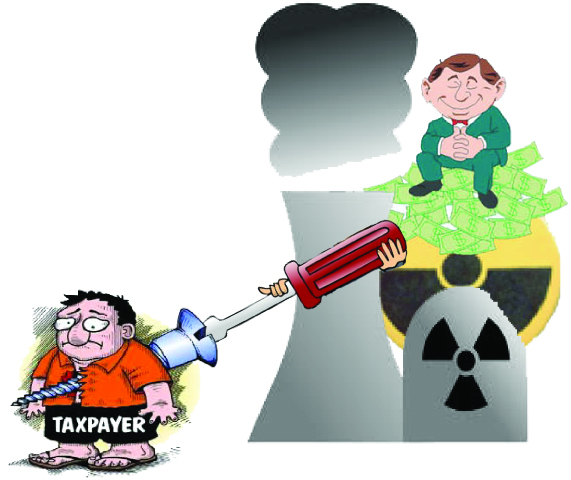
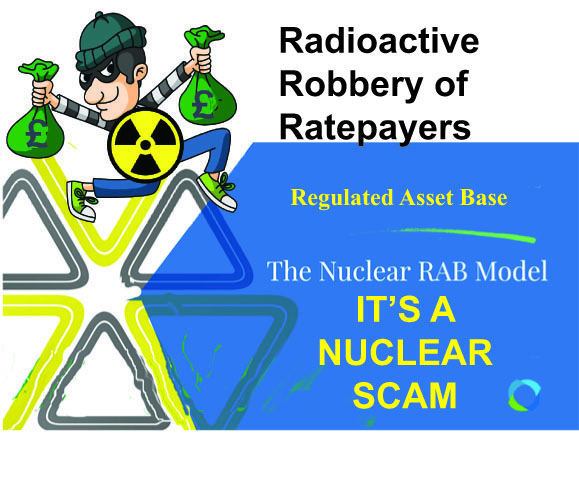
Sizewell C will take the same path under a Regulated Asset Base model, transferring part of the construction risk directly to consumers through levies on electricity bills long before a single watt is produced. When “cheap” energy requires that level of public underwriting, something is fundamentally off.
A track record written in red ink
This pattern isn’t unique to Britain. France’s Flamanville reactor, long touted as the EPR showpiece, is over a decade late and has quadrupled in cost to more than €13 billion. Finland’s Olkiluoto 3 only began commercial operations after 17 years of delays and legal disputes. In the United States, Vogtle 3 and 4 finally came online after 15 years and around $36 billion in total costs, double initial projections, with ratepayers footing much of the bill through regulated recovery.
The nuclear industry’s narrative of reliability is at odds with its delivery record. Projects start with optimism and end with budget blowouts, political fallout, and consumer bailouts.
The SMR Illusion
Advocates often pivot to SMRs as the saviour, the “Tesla moment” for nuclear. I explored that hype in an earlier OilPrice article, noting that SMRs were being promoted as modular, factory-built, and inherently cheaper. Yet so far, reality looks familiar.
The most advanced U.S. SMR project, NuScale’s Carbon Free Power Project in Idaho, was cancelled in 2023 after projected costs rose to $89 per MWh, far above renewables and storage. Other designs remain on paper, heavily dependent on public subsidies or guaranteed offtake. The promise of small reactors may eventually prove out, but at the moment, SMRs are an idea with a press office, not a business case.
The market reality has shifted
Europe’s electricity markets tell the other half of the story. In 2024, countries like Germany, Denmark, and the Netherlands each recorded more than 450 hours of negative day-ahead prices. France saw nearly 360. Across the EU, negative or ultra-low price hours exceeded 9,000 in total.
For inflexible, capital-intensive baseload assets like nuclear, that’s disastrous. These plants can’t ramp down profitably when prices collapse. Their economics depend on constant, high utilization, and that world is disappearing. The more renewables come online, the more volatile the price pattern becomes, with long stretches of near-zero wholesale power. Nuclear simply doesn’t fit this market geometry.
Renewables and storage are doing what nuclear can’t
The contrast is striking. Renewables can be deployed modularly, financed privately, and built within 18–36 months. Utility-scale batteries, once dismissed as expensive, are now scaling at record speed. Europe installed nearly 22 GWh of new storage capacity in 2024, bringing total installed capacity above 60 GWh. Italy’s first grid-scale auction secured 10 GWh of storage at competitive prices, no decade-long delays, no multi-billion-euro risk exposure.
Each incremental gigawatt of storage turns volatile wind and solar into a more stable, dispatchable asset. In that environment, nuclear’s supposed advantage of “firm capacity” starts to look less like a virtue and more like an anchor.
Security means flexibility, not monoliths
Nuclear advocates still frame the argument in security terms, stable, domestic generation insulated from fossil-fuel geopolitics. But in modern energy systems, security no longer means “always-on baseload.” It means adaptability, diversification, and resilience.
A network built from distributed solar, wind, storage, and demand-side flexibility is inherently harder to disrupt. It can absorb shocks, balance local fluctuations, and restart quickly after failures. A multi-billion-euro single-site nuclear facility, by contrast, is a high-value target for cost escalation, technical failure, or even physical risk.
Energy security in the 2020s is about systems thinking, not megaproject symbolism.
The economics of opportunity cost
Every euro sunk into new nuclear is a euro not available for faster, cheaper solutions. A 10 billion-euro reactor might take 15 years to produce its first electrons. The same money could build tens of gigawatts of solar and wind, backed by large-scale storage, grid upgrades, and hydrogen electrolysers to absorb surplus power, all online before the nuclear project breaks ground.
The opportunity cost is immense. Renewable portfolios are now financeable at market rates; nuclear requires a bespoke government rescue package before it even begins.
A niche role, not a blueprint
To be clear, existing reactors that can be safely life-extended make sense. Extending France’s fleet, or upgrading proven units, delivers low-carbon energy at marginal cost. But that’s asset management, not a case for new construction.
Building a fresh wave of reactors on 20-year timelines, in a power market already defined by negative pricing and flexible storage, is a strategic mismatch. Nuclear can remain a niche contributor, but not the foundation of affordable or adaptable decarbonization.
Conclusion: The future has moved on
The myth of nuclear as “secure, clean, and cheap” collapses under scrutiny. It is clean once built, but rarely cheap, and often far from secure when you consider financing and policy risk. Meanwhile, renewables plus storage are delivering real, scalable, market-driven results right now.
We no longer live in a world where the problem is lack of technology. The challenge is choosing the right ones for the energy system we are actually building, a fast, flexible, decentralized grid where adaptability equals security.
The resolution incorporates Donald Trump’s “peace plan.” It grants control over Gaza to the U.S.-led “Board of Peace” and it orders the deployment of a U.S.-led occupation force called “International Stabilization Force (ISF).” Trump will oversee both colonial bodies, in collaboration with Israel. Palestinians will not be allowed to participate in their own governance.
“It is a brazen attempt to impose, by threat of continued force against a virtually defenseless population, U.S. and Israeli interests, plain and simple.”
A UN Special Rapporteur has decried the resolution as a violation of Palestinian people’s right to self-determination.
In 1947, the United Nations General Assembly committed the UN’s original sin when it partitioned Palestine to create Israel. This launched the Nakba, the ethnic cleansing of the Indigenous people, and the establishment of a settler colonial state.
Now, 78 years later, the UN Security Council has committed the UN’s second cardinal sin. It enshrined Israel’s illegal occupation of Palestinian lands, put its imprimatur on Israel’s genocide, and granted colonial control over the lives of the Palestinians to the United States, which has aided and abetted the genocide.
On November 17, 2025, the Council adopted Resolution 2803, by a vote of 13-0. Russia and China, both permanent members of the Security Council, could have vetoed it. But shamefully they abstained, ostensibly influenced by support for the resolution from several Arab and Muslim states, including Egypt, Qatar, Jordan, Saudi Arabia, and the United Arab Emirates, as well as Turkey, Indonesia, and Pakistan.
The resolution incorporates Donald Trump’s “peace plan.” It grants control over Gaza to the U.S.-led “Board of Peace” and it orders the deployment of a U.S.-led occupation force called “International Stabilization Force (ISF).” Trump will oversee both colonial bodies, in collaboration with Israel. Palestinians will not be allowed to participate in their own governance.
The Board of Peace is designed to function as a transitional administrator of Gaza. It will control all services and humanitarian aid, all ingress and egress into and out of Gaza, and will supervise the financing and reconstruction of Gaza. The resolution “underscores the importance” of humanitarian assistance but does not require the unimpeded provision of aid.
The ISF will not be a peacekeeping force. Since the Council authorized it “to use all necessary measures to carry out its mandate,” the ISF will have the power to disarm Palestinian groups, as Israel insists. There is no provision in the resolution for disarming the Israel Occupation Forces, the body that has been conducting the genocide.
“A military force answering to a so-called ‘Board of Peace’ chaired by the President of the United States, an active party to this conflict that has continually provided military, economic and diplomatic support to the illegal occupying Power, is not legal,” said Francesca Albanese, Special Rapporteur on the situation of human rights in the Palestinian territories occupied since 1967. “It is a brazen attempt to impose, by threat of continued force against a virtually defenseless population, U.S. and Israeli interests, plain and simple.”
“Essentially, it will leave Palestine in the hands of a puppet administration, assigning the United States, which shares complicity in the genocide, as the new manager of the open-air prison that Israel has already established,” Albanese added.
Since October 2023, Israel has killed nearly 70,000 Palestinians and wounded more than 170,000. Nearly everyone in Gaza has been displaced by Israel multiple times and Gaza has largely been reduced to rubble. Israel has violated the latest ceasefire at least 393 times and killed at least 312 Palestinians since it went into effect on October 10, 2025.
In three recent cases, the International Court of Justice (ICJ) found a plausible case of genocide by Israel, that Israel’s occupation of Palestinian territory is unlawful, and that Israel has illegally used starvation of civilians as a weapon of war. The International Criminal Court issued arrest warrants for Israeli Prime Minister Benjamin Netanyahu and former Defense Minister Yoav Gallant for war crimes and crimes against humanity.
The Resolution Violates the Palestinian People’s Right to Self-Determination
The Security Council resolution violates fundamental tenets of international law including the right of the Palestinian people to self-determination. “The ICJ was clear: self-determination is an inalienable right of the Palestinian people and the UN and all States have an obligation to assist in its realization,” Albanese said…………………………………………………..
Resolution 2803 “rewards the U.S., a co-perpetrator of genocide, with control over Gaza and its potentially lucrative reconstruction process, while simultaneously relieving the Israeli regime of all of its responsibilities as an illegally occupying force,” Yara Hawari wrote in Al-Shabaka, a Palestinian-led think tank. “Palestinian participation is expected to be tightly limited and heavily conditioned. Trump’s plan confines it to ‘technocratic’ and ‘apolitical’ roles, subject to continuous external supervision and effectively excluding any representatives with democratic legitimacy or political agency.”
Hamas and other Palestinian factions rejected the resolution. They wrote in a joint statement that ISF “will turn into a type of imposed guardianship or administration — reproducing a reality that restricts the Palestinian people’s right to self-determination and to managing their own affairs.”
“Assigning the international force with tasks and roles inside the Gaza Strip, including disarming the resistance, strips it of its neutrality, and turns it into a party to the conflict in favor of the occupation,” Hamas said…………………………………………………………………………
it won’t prevent Israel from carrying out its military operations or aerial bombardments of Gaza. It may even help Israel achieve its goals.”
Uniting for Peace
……………………………………………..In adopting Resolution 2803, the Security Council did not discharge its responsibilities under the Charter to act on behalf of Palestine, a permanent observer state, which is undergoing the first live-streamed genocide in history. Nor is the Council discharging its responsibility to maintain international peace and security by memorializing an illegal occupation and an ongoing genocide.
Colombian President Gustavo Petro has declared that he will introduce a Uniting for Peace resolution in the UN General Assembly to establish a multinational protection force for Palestinians and levy sanctions and an arms blockade to end the genocide and liberate Palestine from the unlawful Israeli occupation.
In retaliation, the U.S. government has revoked Petro’s visa, imposed sanctions against him, raised punitive tariffs on Colombia, and threatened the use of military force against Colombia.
People opposed to the U.S.’s colonial takeover of Palestine can join the Boycott, Divestment, and Sanctions Movement, lobby for arms embargoes, and support accountability for Israeli and U.S. leaders responsible for perpetrating the genocide.
This war could have been avoided. A diplomatic pathway to peace existed in 2015 and in 2022. If the West had done what was right and needful on both occasions things would have been very different.
Russia has prevailed against the collective might of the West. Those who still retain their illusions and self-blinding prejudices concerning this are now totally irrelevant and unable to influence events now occurring. This includes the entire political elite of Europe apart from those in Hungary, Slovakia and since the recent presidential election, the Czech Republic.
We now stand before events which could herald the end of a conflict Russia never wanted. The last three and three quarter years of bloody warfare became inevitable following a catastrophic failure by the western political elites. The Russian president and his team walked every last mile and for six long years to achieve a diplomatic solution to the situation in Ukraine’s eastern regions following the West-supported insurrection and coup in Ukraine. The ultraviolent insurrection removed the democratically-elected president and government with full U.S., EU and UK support in 2014. Following the outbreak of hostilities when the new coup government irresponsibly and recklessly sent the Ukrainian army to quell unrest in the Russian-speaking east of Ukraine a diplomatic initiative between Russia and Ukraine began. This also included the then leaders of Germany and France. This process, which came to be known as ‘The Minsk Accords’ began in 2015.
The Minsk Accords began due to things going badly wrong for the Ukrainian army in Ukraine’s south-eastern region of the Donbass. They were begun after a plea by Angela Merkel, Chancellor of Germany at the time, to Vladimir Putin. These accords were meant to find a diplomatic solution to the question of the Russian-speaking population retaining their right to retain their language and democratic rights in the face of the removal of the president and government they had elected being illegally removed from office. The population of the Donbass saw gaining a semi-autonomous status as the way to achieve this and this is the outcome Putin sought to achieve for them.
The process to find a peaceful way through to a good outcome for both sides through diplomacy stretched on through th next six years to 2021 without success. The coup government in Kiev through its parliament refused to implement the steps that would have ensured a peaceful outcome. Instead of being willing to agree the way forward to the peaceful outcome visualized in Minsk they actively sought a military outcome favorable to them. Back in Minsk and throughout this period western leaders constantly attempted to put pressure on Russia and exerted virtually none on the Ukrainian regime in Kiev. This failure to put pressure on Kiev was the crucial missing ingredient that brought about the ultimate failure of the Minsk process by 2021. The two Kiev regimes since 2015 having felt no significant pressure from its western allies to implement Minsk finally abandoned it completely by late 2021. This set the stage for war
The Ukrainian army and the fortifications built to contain and attack the Russian-speaking populations of the Donbass which lay siege to the Donbass region had been built up and equipped massively by the West from 2014 to 2021. And in the first months of 2022 the number of attacks on the Russian-speaking population by the Ukrainian army rose significantly. It was clear that a major military push by the Ukrainian army against the population there was imminent. All this and all that came thereafter from February 24th 2022 could have been prevented if the West had been willing to put pressure on presidents Poroshenko and subsequently Zelensky, to agree the diplomatic solution which arose from the negotiations in Minsk. All the years of horrendous bloodshed could have been avoided. The western leaders could have applied massive pressure on Kiev but failed to apply any discernible pressure at all
Only now, after these years where over a million have died and countless numbers have experienced grievous injuries do we at last see significant pressure being applied to the Ukrainian regime. The new, 28-point Trump peace plan has been supplied to Zelensky and he has been told in no uncertain terms that he must agree to it or lose U.S. support. He has until November 27th to do this.
The big question is this: Why did we wait all the way from 2015 to now for the western powers to apply pressure on Kiev to settle?
The political leadership of the West concentrated solely applying pressure on Russia during the entire time from 2015 to now. If pressure had been applied to the degree possible and necessary by the West on the Ukrainian authorities they would have had to agree to the diplomatic peace initiatives, first in Minsk and if not then, in Istanbul. In Minsk the western leaders utterly failed in their duty to pressure BOTH sides, choosing to put pressure on Russia alone. In Istanbul we saw Boris Johnson, UK prime minister of the time, arrive in Kiev to urge Zelensky to abandon the road to peace and instead to instead choose war.
It has been the western leaders and their failure to apply this pressure where it would have been most effective that has precipitated the start and continuance of the fighting. It i the western leadership of this period and their anti-Russian strategies that are primarily responsible for this conflict and all the deaths and injuries that have occurred since 2015.
Now, as Russia achieves ever greater success on the battlefield, with the Kiev regime locked within a huge corruption scandal and its military forces in dissaray, lacking manpower, suffering massive desertions and in retreat, with western financial support to Ukraine failing, now at last pressure is being put where it should have been all along, on the Kiev regime and on Zelensky in particular. He must no decide by November 27th whether to sign up to the 28-point peace plan or lose the U.S. as ally. At long last pressure is being applied where needed as it ought to have been done all the way back in Minsk in 2015 and once again in Istanbul in 2022. Zelensky must now put up or shut up. Agree to a peace where Russia achieves th preponderance of its goals or reject that peace, fight on, and lose even MORE lives and land in the future.
the escalation that Trump claims is the latest battle in the “War on Drugs” comes two years after he explicitly announced his desire to take control of Venezuela’s oil,
War would deliver “not security but a torrent of bloodshed,” said a letter signed by dozens of political leaders.
ith thousands of US troops patrolling the Caribbean, at least eight warships deployed in the region, and the BBCreporting that it tracked four US military planes that flew near Venezuela Thursday night, lawmakers and other leaders from across Europe on Friday issued a unified demand for the Trump administration to deescalate the tensions it has ratcheted up in recent weeks.
The administration’s “show of force has already proved lethal,” said the leaders, with more than 80 people — including fishermen and an out-of-work bus driver — having been killed in the US military’s strikes on more than 20 boats, which the administration has insisted were trafficking drugs to the US. The White House has publicized no evidence of the claims.
President Donald Trump has not taken further military action against Venezuela since he was presented with “options” for potential strikes last week by officials including Defense Secretary Pete Hegseth, nor has he followed through with threats he’s made against Mexico and Colombia.
But the European leaders — including British Members of Parliament Zarah Sultana and Jeremy Corbyn, former Greek Finance Minister Yanis Varoufakis, and Spanish Member of European Parliament Irene Montero Gil — noted that Trump “severed diplomatic channels with Caracas and approved covert [Central Intelligence Agency] operations in Venezuela” as the military buildup continues in the region.
The Trump administration has insisted it is engaged in a legal “armed conflict” with drug cartels in Venezuela, which it has accused of trafficking fentanyl to the US — though experts say drug boats originating in Venezuela are “are mainly moving cocaine from South America to Europe,” and analysis by both the United Nations and US intelligence agencies have shown the South American country plays virtually no role in the production or transit of fentanyl.
The US Congress has not authorized any military action against drug cartels or Venezuela’s government, and lawmakers from both sides of the aisle have attempted to pass war powers resolutions blocking the US from striking more boats or targets on land in Venezuela, only to have the resolutions voted down.
In his second term, Trump has sought to tie Venezuelan President Nicolás Maduro to drug cartels — despite a declassified US intelligence memo showing officials rejected the claim — and designated Cartel de los Soles a foreign terrorist organization last week, giving the White House what Hegseth called “new options” to go after the group.
But the escalation that Trump claims is the latest battle in the “War on Drugs” comes two years after he explicitly announced his desire to take control of Venezuela’s oil, and following years of condemnation of Maduro’s socialist government from Secretary of State Marco Rubio.
The European leaders said the administration’s narrative about the threat Venezuela poses to the US and the escalation is simply the “latest attempt to threaten and undermine the sovereignty of Latin America and the Caribbean nations.”
“Declassified documents have confirmed the CIA’s hand in overthrowing democratically elected governments in Latin America, such as Salvador Allende’s Chile in 1973, João Goulart’s Brazil in 1964, and Jacobo Árbenz’s Guatemala in 1954. The human cost of these regime change operations was catastrophic, and their political legacy endures,” reads the letter, which was organized by Progressive International.
A military intervention by the US in Venezuela “would mark the first interstate war by the United States in South America,” the leaders said, yet “the pretext for intervention is as tired as it is familiar.”
“Under the banner of combating the ‘narco-terrorists,’ Trump celebrates lethal strikes against peaceful fishermen arbitrarily labeled as carrying drugs,” the leaders said.
As in the past, they added, moving the War on Drugs to Venezuela would deliver “not security but a torrent of bloodshed, dispossession, and destabilization.”
Therefore, we condemn in the strongest terms the military escalation against Venezuela,” they said. “Our demand is clear and our resolve is firm: No war on Venezuela.”
As Peoples Dispatchreported Thursday, many European leaders have “subordinated” themselves to Trump and have avoided speaking out against the US escalation with Venezuela, but left-wing political parties have led the way in denouncing the US deployment of soldiers and warships to the region.
The Workers’ Party of Belgium said recently that the world is “witnessing an unprecedented military escalation in 20 years, a multifaceted aggression that threatens not only Venezuela, but any project of sovereignty and social justice in Latin America.”
THE UK Government’s nuclear levy is to blame for rising energy bills, according to a leading utilities company. Octopus Energy has said that Labour’s imposition of a tax on energy bills to pay for the construction of the Sizewell C nuclear power plant in Suffolk is forcing up household costs.
Rachel Fletcher, the company’s director for regulation, said: “The price cap is rising again, driven by costly subsidies for mega projects like Sizewell C and major network upgrades that are adding billions to consumer bills – with no end in sight.
“Let’s be clear: this isn’t about supplier profits, which are capped at around 2%, or renewables. The real issue is our inefficient electricity system burdened by ever-growing policy and network costs that keep stacking up on household bills.
“Instead of paying wind farms not to generate and locking the country into tens of billions of unnecessary grid spending, we need bold market reform. This would save billpayers at least £5 billion a year and finally unlock the full potential of our homegrown green energy.”
Speaking to Westminster’s Energy Committee earlier this month, Fletcher estimated that contrary to Labour’s pledge to cut energy bills by £300 a year, they were actually going up by that amount to fund improvements to the grid and transmission networks.
LSE Shefali Khanna, Stephen Jarvis, November 21 2025
Nuclear energy’s capacity to help Britain meet its net-zero targets makes it a potentially attractive part of the energy mix. But do the high cost and complicated logistics of building new plants, as well as the emergence of renewable alternatives, make the government’s plans unviable? Shefali Khanna and Stephen Jarvis analyse whether ambition can be realised through delivery.
After decades of stagnation, nuclear energy is staging a comeback. The British government has called its plans for nuclear power a “renaissance”, with a goal to quadruple nuclear capacity by 2050. Projects like Hinkley Point C, under construction in Somerset, and the proposed Sizewell C, in Suffolk, dominate headlines, while small modular reactors (SMRs) promise to make nuclear energy cheaper, faster to deploy and safer. But Britain’s nuclear revival raises questions about how old technologies fit into a rapidly changing energy landscape.
From decline to revival
Britain was a nuclear pioneer. Its first commercial reactor, Calder Hall, opened in 1956 and symbolised postwar scientific ambition. Yet by the 1990s, nuclear energy had lost political and public support………………………………
The nuclear policy push
The British Energy Security Strategy , published in 2022, set an ambitious target of up to 24 gigawatts of nuclear capacity by 2050, meeting roughly a quarter of projected electricity demand. To deliver this the government created Great British Nuclear, a body tasked with accelerating nuclear project approvals and supporting innovative technologies……………Much of the optimism centres on small modular reactors, nuclear units with capacities typically under 500 megawatts, compared with the large gigawatt scale reactors at traditional plants. SMRs can be factory built, reducing on site construction delays and costs that have plagued conventional reactors. In November 2025 a domestic firm, Rolls-Royce SMR, was chosen to build three SMRs in Wylfa, in Wales. And several foreign developers, including NuScale and GE Hitachi, based in America, are vying for contracts. If successful, Britain could become a global exporter of modular nuclear technology, a rare case of industrial strategy aligning with energy policy.
SMRs are still unproven at scale, however. While prototypes exist, none have yet achieved commercial operation in a liberalised electricity market. Cost estimates remain speculative and nuclear waste management challenges persist. The modular approach may simplify construction but not necessarily long-term decommissioning or waste storage.
Economics and financing are the biggest barrier
Despite renewed enthusiasm, nuclear power remains expensive. The cost of Hinkley Point C has risen from £18 billion ($23.6 billion) to over £35 billion ($45.9 billion), with completion delayed from 2025 until as late as 2031. Financing such large projects in a deregulated market is daunting, especially when renewables and battery-storage technologies have seen such rapid cost declines.
Britain is experimenting with a Regulated Asset Base model, which allows developers to recover some costs from consumers during construction, reducing investor risk but increasing public exposure. This approach could make projects like Sizewell C more viable, yet it effectively shifts financial risk from corporations to consumers, reigniting debates about fairness and affordability.
Safety, waste and trust
Nuclear energy’s social licence remains fragile. Surveys show rising support for nuclear power as part of Britain’s low carbon mix, but opposition can intensify when communities face the prospect of new plants or local waste storage. The government’s search for a geological disposal facility for radioactive waste has struggled. Transparent governance, community benefit schemes and clear communication about risks are vital.
A deeper question is how nuclear fits into a net-zero electricity system increasingly dominated by renewables. Wind and solar costs have fallen dramatically, making them the backbone of Britain’s decarbonisation strategy. But their intermittency creates a need for flexible backup and firm supplies, particularly during dark, still winter days. Here nuclear advocates see an opportunity. Yet the future grid may evolve differently. Advances in battery storage, demand flexibility and even low-carbon thermal sources (such as hydrogen or gas with carbon capture) could provide reliability without the inflexibility and long lead times of nuclear projects. From a systems perspective, nuclear’s value depends on whether it complements or crowds out other low-carbon sources of power.
A combination of offshore wind, interconnectors with Europe and demand-side management could offer cheaper resilience than large scale nuclear expansion. National Grid ESO’s Future Energy Scenarios suggest multiple credible pathways to reliability that do not rely heavily on new nuclear power.
The global dimension
……………………………… Britain wants energy sovereignty but depends on foreign partners for both capital and technology. Balancing national security with project viability will require deft diplomacy and strategic clarity.
From renaissance to realism
Nuclear energy could play a valuable role in Britain’s net-zero transition, but not at any cost. Policymakers must avoid treating it as a silver bullet or a national vanity project. Nuclear should be evaluated within a whole systems framework that considers economic efficiency, environmental impact and technological diversity. A pragmatic approach would prioritise completing current projects (such as Hinkley and Sizewell) efficiently before scaling new builds; rigorous cost transparency in SMR development; integrated planning with renewables and storage; and public engagement to rebuild trust through co-benefits, not just compensation.
The rhetoric of a “nuclear renaissance” is powerful, evoking a return to industrial confidence and scientific progress. But the real test lies in delivery. If Britain can demonstrate that modern nuclear projects are on time, on budget and publicly legitimate, it could indeed reclaim some global leadership. If not, this revival may join a long list of grand plans that stumbled on the realities of cost, complexity and public trust. https://blogs.lse.ac.uk/businessreview/2025/11/21/the-promise-peril-and-pragmatism-of-britains-nuclear-renaissance/
The US is one big grift these days: the Trump Administration, traditional and social media, corporations, crypto, financial markets are all selling some kind of spurious promise. It’s hard to pick the most egregious example. But for me, it’s hard to go past Tesla. Having lost its dominant position in the electric car market, the company ought to be on the edge of delisting. Instead, its current market capitalisation is $US1.33 trillion ($A 2 trillion). Shareholders have just agreed on an incentive deal with Elon Musk, premised on the claim that he can take that number to $8.5 trillion.
Having failed with the Cybertruck and robotaxis, Tesla’s value depends almost entirely on the projected success of the Optimus humanoid robot. There’s a strong case that Optimus will be outperformed by rivals like Unitree But the bigger question is: why build a humanoid robot at all?
The choice of a humanoid form factor reveals more about the sloppy thinking of our tech elite than about engineering logic. The design represents a triumph of anthropomorphic fantasy over functional optimization, producing machines that excel primarily at generating media buzz rather than performing useful work.
In promoting Optimus, Tesla offers a long list of functions such as robot might perform: lifting and stacking goods in warehouses, operating in dangerous situations with ground too uneven for wheels and tracks, and performing various kinds of domestic labour.
In each of these cases, there is a better alternative available. Modern warehouses are designed around automated systems that exploit the advantages of robotics —conveyor networks, sorting systems, and wheeled or tracked robots specifically designed for lifting and moving tasks.
Industrial robots—fixed-position systems with multiple articulated arms—have dominated automotive and electronics assembly for decades precisely because they abandon human form constraints in favor of functional optimization.
Mobile warehouse robots can navigate autonomously while carrying loads that would topple any humanoid robot. Meanwhile, human workers remain more cost-effective for complex picking tasks, combining visual recognition, fine motor control, and problem-solving capabilities that no current robot approaches.
In less controlled environments, with uneven ground surfaces, quadruped robots (commonly presented as dog-like) are more stable than bipeds. They can be equipped with a wide range of grasping appendages including, but not limited to, the mechanical hands of a humanoid robot. Examples are already in use for tasks like bomb disposal and disaster response.
In domestic applications, Musk’s presentations envision Optimus folding laundry, preparing meals, and performing general housework—tasks that supposedly justify the human form factor because homes are designed for human occupancy.
This argument doesn’t stand up to even minimal scrutiny. Specialized appliances consistently outperform generalist approaches in domestic environments—robotic vacuum cleaners navigate more efficiently than any humanoid could, dishwashers clean more thoroughly than humanoid hands, and washing machines handle laundry with greater consistency than any robot attempting to mimic human movements. Where genuine flexibility is required, the combination of purpose-built tools and human intelligence remains unmatched. The complexity of truly autonomous domestic robots would require artificial intelligence capabilities that remain decades away, if achievable at all.
A final idea is that of robots as companions for lonely humans. This seems likely to fall into the “uncanny valley” – too human-like to be viewed as a machine, but too mechanical to be seen as human. But, if there is any market for Optimus, this will probably be it.
The humanoid form factor serves primarily to create an illusory impression of human-like intelligence. By mimicking human appearance and movement, these robots suggest cognitive capabilities they fundamentally lack. The fact that humans are more intelligent than dogs encourages the fallacious (implicit) inference that robot resambling a human must be more intelligent than one resembling a dog.
The humanoid form factor consistently proves inferior to specialized alternatives across every proposed application domain. I persists because it generates the kind of media attention and investor enthusiasm that Tesla requires for its business model. Effective robotics emerges from careful analysis of specific problems and optimisation for particular environments, not from attempts to recreate human form and movement. Until the technology sector abandons its anthropomorphic fantasies in favour of functional engineering, robotic development will remain trapped between impressive demonstrations and practical irrelevance.
Meanwhile, Tesla’s share price keeps going up, along with (until very recently), crypto, AI stocks, and the fortunes of the Trump family. By this time, the remaining sceptics have given up short-selling and retired to the sidelines to wait for the crash. That’s about the best advice I could give (bearing in mind that I Am Not a Financial Advisor).
But I’d be interested to read any contrary views on why humanoid robots are The Next Big Thing, or why bubbles like this can last forever.
On November 17, 2025, the UN Security Council betrayed the Palestinian people by adopting a resolution that endorsed Donald Trump’s criminal and fraudulent “peace plan” for Gaza.
That resolution, Resolution 2803, is by no means the first time that the UN Security Council has stabbed Arab and Muslim peoples in the back.
Another notorious example of the Security Council’s contempt for the rights and interests of Arab and Muslim peoples is UNSC Resolution 1973.
Adopted on March 17, 2011, Security Council Resolution 1973 approved a no-fly zone over Libya. This led directly to NATO’s destruction of the once-prosperous, African country.
Few people are as knowledgeable about NATO’s destruction of Libya, and the UN Security Council’s complicity in Libya’s destruction, as Canadian researcher and author, Owen Schalk.
A new book by Owen examines the role of Canada – a NATO member – in the destruction of Libya. The book is titled “Targeting Libya – How Canada went from building public works to bombing an oil-rich country and creating chaos for its citizens.”
I go through Trump’s 28 point plan line by line and talk about the need for negotiations between Russia and Ukraine to start
Ukrainian media has now published what it says is the draft Trump 28-point peace plan for Ukraine. I decided to go through it line by line and offer my thoughts on the prospects for negotitions going forward.
What is clear, first, is that the draft is merely a starting point for negotiations. Ukraine absolutely needs to be engaged bilaterally with Russia in the hard work of the negotiation process, and that depends on Zelensky finally committing to it.
I feel he is in a weaker position to resist US efforts now he is mired in a corruption scandal at home. But I still feel European leaders wants to keep him stuck in the permanent loop, in which Ukraine needs peace but doesn’t want it, whereas for Russia, there is a desire for peace but no urgent need to settle.
I consider the draft document to be a helpful first start but will need a lot of work from both sides. Some of the clauses are specific to Russia and Ukraine, whereas some reach more widely into the international community, which makes for a confusion mish mash. Some conditions, military neutrality for Ukraine in political, will see off Zelensky’s hopes of reelection as President, after the war, in my view, which he will know and understand all too well.
Offering no new plans to cut fossil fuels, the UN’s climate conference failed to produce a roadmap to stop global warming
BELÉM, Brazil—After negotiators at COP30 retreated from meaningful climate action by failing to specifically mention the need to stop using fossil fuels in the final conference documents published Saturday, the disappointment inside the COP30 conference center was as pervasive as the diesel fumes from the generators outside the tent.
This year’s United Nations Framework Convention on Climate Change was billed as the “COP of Truth” by host country Brazil, but it could go down in history “as the deadliest talk show ever,” said Harjeet Singh, founding director of the Satat Sampada Climate Foundation in India and strategic advisor to the Fossil Fuel Non-Proliferation Treaty Initiative.
COP30 was yet another “theater of delay” with endless discussions, and the creation of yet more administrative duties, “solely to avoid the actions that matter—committing to a just transition away from fossil fuels and putting money on the table,” he said.
A draft text released Nov. 18 clearly spelled out the need to transition away from fossil fuels, but in the final version, the language was watered down, merely acknowledging that “the global transition towards low greenhouse gas emissions and climate-resilient development is irreversible and the trend of the future.”
After setting out ambitious targets ahead of the climate talks, COP30 President André Corrêa do Lago, the secretary for climate, energy and environment in Brazil’s Ministry of Foreign Affairs, acknowledged the disappointment. ………………………………………………………………………………………………………………………………………………….. https://scheerpost.com/2025/11/22/cop30-backpedals-on-climate-action/
A Washington Post story headlined the “White House Blew Past Legal Concerns in Deadly Strikes on Drug Boats,” reported that “There is no actual threat justifying self defense — there are not organized armed groups seeking to kill Americans.” The Post quoted a former senior official saying, “The question is, is it legal just to kill the guy if he’s not threatening to kill you … There are people who are simply uncomfortable with the president just declaring we’re at war with drug traffickers.”
For a more critical perspective on Venezuela, we turn to Venezuelanalysis.com and their conversation with Atilio Borón (Borón is an Argentine sociologist, political scientist, professor, and essayist, he holds a doctorate in Political Science from Harvard University), Their conversation examines the administration’s military expansion in the country. Some key takeaways include:
“Venezuela remains a strategic target … global oil markets are more strategic than ever, and geological surveys confirm that Venezuela holds the largest proven oil reserves in the world … greater even than those of Saudi Arabia!”
“Latin America has long been described as a continent in dispute, and today that dispute is sharper than ever. … What we are witnessing now, however, is an open display of brute military force.”
“This is the largest imperialist air–naval military buildup in our region since the October 1962 Missile Crisis.”
“New actors have emerged with decisive weight, fundamentally reshaping geopolitics … China is here to stay.”
I also recommend checking out this graphic also from Venezuelanalysis.com — it details the scale of weaponry in the region:
Here’s the reporting from CNN on the situation, including Trump’s discussion about attacking Mexico, with a chilling interview at the end between Jake Tapper and GOP House member Carlos Gimenez.
From yesterday, former ambassador James Story discussed the situation. I’ll add that it still doesn’t pass the smell test. It feels like we’re being pushed toward a conflict — framed through what the former ambassador called Venezuela’s relationship with our “strategic competitors.” At this point in world history, can’t we find a way to get along? Naive or not, I don’t want the world to melt down.
Of course I’m posting this video from a mainstream source, but where are the questions for our leaders and former leaders that push back — even slightly — against the status quo narrative? Honestly, it brings me back to an old classroom discussion about nuclear war: If a nation is treated as an enemy, or labeled a “strategic competitor,” and you make it clear you want them weakened or destroyed, why wouldn’t they stockpile weapons? Or, more simply put: if your neighbor hates you and has an axe, maybe you go get an axe too.
I guess I’m still wishful enough to hope that the United States could be the bigger person and put the axe down — especially when, in our case, we have the Fifth Fleet. Here is former Ambassador Story: