Nuclear roadblocks.
The nuclear renaissance taking hold in Europe faces significant challenges, according to a new report by Global Energy Monitor, which outlines how frequent project cancellations and delays could hinder the continent’s decarbonisation drive.
Nearly 40 per cent of nuclear power projects
proposed across the world have been cancelled, according to the group. It found two-fifths of the nuclear capacity planned for Europe had been either cancelled or retired. Average construction time for nuclear plants has also increased, contributing to higher costs. The International Energy Agency has reported that nuclear power plants are taking longer to build in advanced economies and longer construction timelines are driving up costs.
FT 4th Sept 2025, https://www.ft.com/content/51f1f429-21a6-4b60-a920-95ef6ccd349d
Nuclear power is failing, and AI can’t rescue it

Nuclear generation is expensive and slow to develop. Claims that past failures won’t recur have convinced politicians to socialize investments rejected by private capital markets.
Sept. 5, 2025, By Amory B. Lovins, Amory Lovins teaches engineering at Stanford, and is cofounder and chairman emeritus of RMI. https://www.utilitydive.com/news/nuclear-power-smr-ai-amory-lovins/758660/
An intensive influence campaign seeks to resurrect a “nuclear renaissance” from the industry’s slow-motion collapse documented in the independent annual World Nuclear Industry Status Report. Claims that past failures won’t recur have convinced many politicians that socializing nuclear investments rejected by private capital markets, weakening or bypassing rigorous safety regulation, suppressing market competition, and commanding military reactor and data-center projects as a national-security imperative will restore nuclear expansion and transform the economy.
This illusion neatly fits the industry’s business-model shift from selling products to harvesting subsidies.
A few awkward facts intrude. Even the most skilled firms and nations keep delivering big reactors with several times the promised cost and construction time. A swarm of startup firms that have never built a reactor are dubiously rebranding their inexperience as a winning advantage. New designs are said to be so safe they don’t need normal precautions (though not safe enough to waive nuclear energy’s unique exemption from accident liability). Political interference in nuclear licensing is eroding public confidence. Proposed smaller reactors cost more per kWh, produce more nuclear waste per kWh, and often need more-concentrated fuel directly usable for nuclear weapons.
And nuclear power faces the same fundamental challenges as fossil fuels: uncompetitive costs, runaway competitors, dwindling profits, and uncertain demand. Few if any vendors have made profits selling reactors — only fueling and fixing them. Nuclear electricity loses in open auctions, so only Congressional bailouts — $27 billion ($15 billion paid out) in 2005, $133 billion in 2021-22, tens of billions more in 2025 — saved most existing U.S. reactors from closure.
Now comes another vision: powering the glorious new world of artificial intelligence. This may be a trillion-dollar bubble, but it’s sellable until market realities intervene. The International Energy Agency expects data centers, mostly non-AI, to cause only a tenth of global electricity demand growth to 2030, doubling their share of usage — to just 3%. So AI won’t eat the grid. But IEA forecasts renewables will power data-center growth 10-20 times over, while Bloomberg NEF predicts over 100. Nuclear lost the race to power the grid, so new reactors have no business case or operational need.
Each year, nuclear adds as much net global capacity as renewables add every two days. Soaring renewables generate three times more global electricity than stagnant nuclear power, whose 9% world and 18% U.S. shares keep shrinking. In 2023-24, China added 197 times more solar and wind than nuclear capacity, at half the cost. In May, China added 93 GW of solar, or 3 GW per day.
Despite having turned nuclear power into a minor distraction, renewables are dismissed as “intermittent.” Again, facts intrude.
Military and industrial installations already prefer 100% renewables for their most critical applications, including Apple’s data centers in four states. Ten kinds of carbon-free resources can balance variable (but highly predictable) renewables, keeping the grid stable. Using a small subset, power systems with modest or no hydropower already sustain such annual renewable fractions of electricity use as Denmark 88+%, South Australia 74% (expecting 100% in two years), and Germany 54%.
And since a nuclear kWh costs several to many times more than a renewable or saved kWh — even more if nuclear load-follows to “complement” rather than curtail renewables — nuclear displaces less fossil fuel per dollar (or year), making climate change worse.
Nonetheless, nuclear power is being boosted by fierce lobbying and federal policy as essential for new AI data centers vital for prosperity and security. This case can’t withstand scrutiny. My essay “Artificial Intelligence Meets Natural Stupidity: Managing the Risks” shows:
- Data centers use about 4.5-5% of U.S. and 1.5% of world electricity, and lately caused only about 5% of world electricity demand growth. Of all data-center electricity, about one-fourth in the U.S. or one-ninth globally is for AI, the rest for traditional uses.
- Claims of soaring AI electricity use are projections, not realities, except in a few “hot spots” like two Virginia counties. In 2023, AI added roughly 0.04% to world and 0.1% to U.S. electricity use.
- Most proposed AI data centers are speculative and unlikely to get built; many built won’t thrive. Major power-supply investments risk getting stranded.
- Demand for AI services is enormously uncertain. So is their business case: AI’s proven value in narrowly specialized technical applications looks too small to repay its immense investments. Many general users don’t need or want to pay for AI.
- Big Tech firms rarely sign specific nuclear power purchase agreements. Much of the hype is about vague statements of interest in buying electricity timely at an attractive price, or modest, symbolic investments. Big Tech rightly prefers renewables as faster, surer and cheaper.
- The efficiency of turning electricity into AI services roughly quadruples each year, so a new data center must roughly quadruple its sales of AI services each year for decades to keep using and paying for the same amount of electricity — a tall order.
- This spring, innovators showed how operating AI data centers slightly more flexibly without compromising service can power at least the next decade of U.S. AI growth with no new generators, stranding more electricity and gas investments.
- The coal industry’s 1999 campaign to create panic that the Internet would falter without huge power expansions misled investors, worsening a 2000-02 bloodbath when hundreds of new power plants weren’t needed. Today’s trends, pushing an AI case for unsellable and too-late nuclear and gas projects, rhyme with that disaster.
The latest risk to the AI/nuclear case came into focus in Sparks, Nevada, in June, when Redwood Energy (a new activity of dominant battery-recycler Redwood Materials) revealed North America’s largest microgrid.
Twenty MW-DC of photovoltaics are laid flat on level ground. Water-recovering Roomba-like crawlers clean them nightly. About 800 battery packs from retired or crashed cars — the world’s largest use of second-life batteries — are wrapped in white plastic and set on cinderblocks, safely separated. They’re good for another few years, then hot-swappable. Novel power electronics and software meld those diverse batteries into 63 MWh of storage with 2-48-hour nominal duration. (Redwood Energy is already engineering similar microgrids an order of magnitude larger, enough to run most existing data centers.)
The resulting 100%-solar microgrid produces 10 MW-AC of ultrareliable 24/7/365 power that runs modular Crusoe data centers onsite, eliminating transmission costs, losses and approvals. This all-solar power is more reliable than grid power, cheaper than the utility’s 8¢/kWh retail price, and all built in four months.
Thus, we needn’t guess or debate whether a particular data center will get built and flourish. Instead, we can commit to build its onsite solar power plant, perhaps by competitive procurement, only when the data center’s 1.5 to 2.5 years of construction is mostly done. Needing no grid connection, the solar microgrid needs few if any approvals — just cheap land. It’s inherently safe, silent, automatic, virtually water- and maintenance-free, based on common commodities, zero-emission, portable and durably profitable.
Can your reactor do that? If not, why build it?
Jellyfish Force another French Nuclear Reactor to Shut Down
By Charles Kennedy – Sep 04, 2025,
https://oilprice.com/Latest-Energy-News/World-News/Jellyfish-Force-another-French-Nuclear-Reactor-to-Shut-Down.html
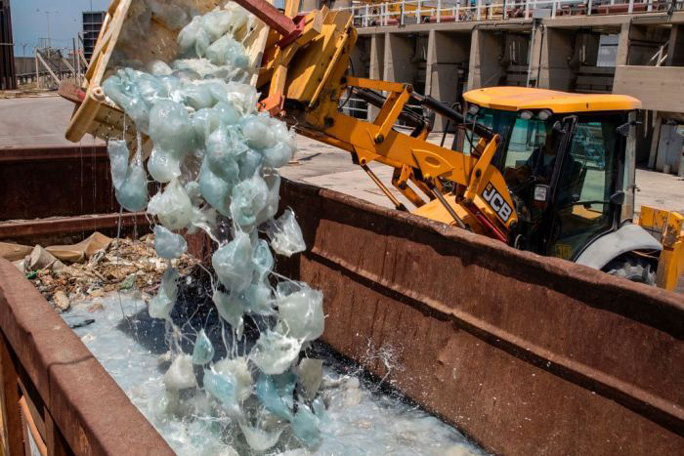
For a second time in three weeks, a swarm of jellyfish has forced the closure of a nuclear reactor in France in another curious incident in which jellyfish entered the filters of the water cooling systems.
The Paluel nuclear power plant in Normandy, northern France, saw its electricity generation nearly halve by 2.4 gigawatts (GW) out of a total 5.2-GW capacity, due to the presence of jellyfish that have entered the filtering system, French operator EDF said on Thursday, as carried by Reuters.
One of four reactors at Paluel was shut down while power output at another reactor was curtailed to prevent further disruption due to the jellyfish swarm.
oday’s incident at Paluel occurred just over three weeks after a jellyfish swarm clogged the cooling system of the Gravelines nuclear power plant near Dunkerque and Calais. As a result, four of six units at one of France’s largest nuclear power plants automatically switched off, while the remaining two units were already shut down for planned maintenance. Gravelines has six reactors, each with a capacity of 900 megawatts (MW).
At the time, France’s EDF said there was “no impact on the safety of the facilities, the safety of personnel, or the environment.”
Reactors at the Gravelines power plant are cooled from a canal linked to the North Sea, where jellyfish are swarming near the coast during hot weather and warm waters.
Global warming can worsen the jellyfish problem in waters cooling reactors close to seas, scientists have warned.
In recent years, heatwaves and too hot waters in rivers have disrupted France’s nuclear power generation, too.
France’s nuclear power generation accounts for around 70% of its electricity mix, and when its reactors are fully operational, it is a net exporter of electricity to other European countries.
But in 2022 and 2023, EDF was forced to curb power generation at some nuclear plants as heatwaves raised the temperatures of rivers. The power plant operator had to limit electricity output because of environmental regulations for using river water for cooling nuclear reactors.
The NEW, new world order
Introduction: How the Trump administration has upended international relations and increased existential risk
By Dan Drollette Jr | September 4, 2025
Proposed tariffs that are the highest in a century. Threatened annexations of other countries. Pulling out of the Paris agreements to fight climate change. Slashes to the funding of public health research. Attacks on higher education (and indeed, any outside source of expertise), along with threats to deport any foreign students or immigrants who don’t toe the line. Cozying up to dictators at the expense of long-time Western allies.
The role of the United States in international affairs is changing dramatically, as the Trump administration imposes a new order upon the planet. It may not be as coherent and coordinated as, say, the Marshall Plan to rebuild Europe after World War II, but the 80-year-old post-war order is clearly morphing into something else, for better or worse.
To help make sense of the thinking behind this new state of affairs, this issue of the Bulletin of the Atomic Scientists includes expert viewpoints from disparate fields—including a top analyst of international security policy, historians, a climate scientist, a college president, a former presidential science adviser, and a Nobel Prize-winning economist. Each examines a different facet of the new new world order that Donald Trump has wrought in his second presidential term.
As Harvard University strategist Graham Allison notes, the current US president enjoys violating rules. Indeed, Allison says, “he [Trump] sees rules and norms as invitations to violation—if by violating the rules he can outrage his audience. In his book The Art of the Deal he explains how if by violating a rule or norm, he can outrage his target audience, they will be less comfortable and thus more willing to give him a better deal than he could get otherwise.”…………………………………………………………………………………………..https://thebulletin.org/premium/2025-09/introduction-how-the-trump-administration-has-upended-international-relations-and-increased-existential-risk/?utm_source=ActiveCampaign&utm_medium=email&utm_content=The%20NEW%2C%20new%20world%20order&utm_campaign=20250901%20Monday%20Newsletter%20%28Copy%29
Nuclear industry says waste site is key
Jason Arunn Murugesu, BBC News, North East and Cumbria, 6 Sept 25
A functioning nuclear waste site is “key to the credibility and sustainability” of the UK’s nuclear programme, the nuclear industry has said.
Two area in Cumbria have been identified as possible locations for a geological disposal facility (GDF) by government body Nuclear Waste Services (NWS).
Sellafield in Cumbria holds the world’s largest stockpile of radioactive plutonium. Earlier this year the government said the material would be made ready for permanent disposal deep underground and put “beyond reach”.
The Nuclear Industry Association (NIA) said: “A functioning GDF is key to the credibility and sustainability of the UK’s nuclear programme.”
“Developers need confidence that the back end of the fuel cycle is being responsibly and sustainably managed, not just for regulatory compliance but also to secure investor confidence and public trust.”
The Department for Energy Security and Net Zero (DESNZ) said any potential GDF site would be subject to agreement with the community and “won’t be imposed on an area without local consent”.
The NIA also said it strongly supported this “partnership” approach.
Mid Copeland and south Copeland in Cumbria are the only two sites in the UK currently being considered by the government to host a nuclear waste disposal site.
A recent report by the National Infrastructure and Service Transformation Authority (Nista) said the GDF’s overall expected costs of between £20bn and £53bn would make it “unaffordable”.
It’s past time to start protecting U.S. nuclear power reactors from drones.

September 3, 2025
In January, I shared a Bulletin of Atomic Scientists piece with you in which I recommended President Trump protect our nuclear power plants from drone strikes.
In the attached piece, “It’s past time to start protecting U.S. nuclear power reactors from drones,” I return to this topic. Over the last eight months, more drones have overflown American nuclear power plants. Meanwhile, the House Armed Services Committee has proposed legislation authorizing the Secretary of Energy to defend Energy Department-operated nuclear plants against drone attacks.
What’s missing is authority for civilian nuclear power plant operators to protect their plants against such threats. These reactors produce 19 percent of America’s electricity.
In the piece below, I recommend that the congressional committees with jurisdiction over these civilian plants—the energy and homeland security committees—grant the operators similar authority to destroy or disable threatening drones.
I also propose that the Energy Department’s National Nuclear Security Administration launch a “Nuclear Security Initiative” to ensure American reactors don’t become attractive military targets.
NPEC 3rd Sept 2025, https://npolicy.org/its-past-time-to-start-protecting-u-s-nuclear-power-reactors-from-drones/
Jellyfish cause partial shutdown at French nuclear plant
EDF considered installing a so-called “fish disco” at Hinkley Point C,
the reactor under construction in Somerset, south-west England, to ward off sea life from the site, after protesters criticised the project’s fish protection measures. EDF is now exploring whether it can use new fish deterrent technology involving devices that make very high frequency sounds, having decided against its earlier plan to install underwater loudspeakers.
FT 4th Sept 2025, https://www.ft.com/content/dadaa032-55a3-4c09-9fc5-3bcaf2b90fe4
Fukushima and the Politics of Nuclear Disaster Recovery
The 2011 meltdown at Fukushima, triggered by an earthquake and tsunami, was the worst nuclear power plant disaster in Japan’s history, bringing back painful memories of trauma associated with the atomic bombings of Hiroshima and Nagasaki. While the aftermaths of Fukushima remain contentious, Japanese political elites have promoted a politics of recovery rather than a discourse of nuclear victimhood. This approach, which pushes aside competing visions of recovery, has come to emphasize assurances of minimal radiation-related dangers, repatriation of former evacuees to Fukushima, continued pursuit of nuclear power, and promotion of a resilient mindset in the face of ongoing ecological challenges.
Current History 1st Sept 2025, https://online.ucpress.edu/currenthistory/article-abstract/124/863/216/212836/Fukushima-and-the-Politics-of-Nuclear-Disaster
The World Has Failed to Stop Israel. Our Only Choices Now: Leave or Die.
I soon face the possibility of never being able to return to Gaza City.
By Shahad Ali , Truthout, September 5, 2025, https://truthout.org/articles/the-world-has-failed-to-stop-israel-our-only-choices-now-leave-or-die/?utm_source=Truthout&utm_campaign=8f0fef14a2-EMAIL_CAMPAIGN_2025_09_05_06_10_COPY_01&utm_medium=email&utm_term=0_bbb541a1db-78c28ffcdf-650192793
s the Israeli army launches the first phase of its latest military operation in Gaza City — aimed at fully occupying the area and displacing its roughly 1 million residents to the south — the city has descended into unending hell. Night after night, relentless and terrifying explosions rob us of sleep. Entire neighborhoods are being invaded and demolished, forcing families to flee toward an uncertain fate, while bloody massacres have become a grim part of daily life.
For a moment, these cruel scenes harken back to the first months of the war, when Israeli forces, for the first time, compelled residents of the city to flee south under threat of ground invasion. The sky then looked the same as it does now — gray and thick with billowing smoke, signaling imminent danger. The people’s faces reflected the same unbearable anxiety and fear, only now the worry is sharper: We fear that this time we may be forced to leave Gaza City forever, without ever being allowed to return.
The Israeli forces began their operation by intensifying military pressure along multiple axes in the north, east, and south of the city, including neighborhoods such as Al-Zaitoun, Tel al-Hawa, Al-Sabra, and Sheikh Radwan, with the seeming aim of fully encircling the city and confining its residents to a specific area to compel them to move southward.
These neighborhoods have witnessed heavy shelling from artillery and airstrikes, as well as the destruction of entire residential blocks by Israeli robots carrying tons of explosives, in addition to intense gunfire from Israeli tanks and drones. This has caused a large wave of displacement of residents toward the central and western parts of the city, which are already overcrowded and still considered dangerous war zones by the Israeli military. The threat of invasion looms at any moment.
The forced displacement has further exacerbated the suffering of Palestinians in Gaza, who are already drained mentally, physically, emotionally, and financially after enduring 23 months of ongoing genocide. Most families in Gaza City had been displaced to the south for more than 15 months and were only able to return during the ceasefire in January 2025. They have not forgotten what it was like to live in tents without basic necessities. They still vividly remember being displaced, bombed, and starved in areas that Israel claimed were safe. Moreover, their longing for their homes and neighborhoods remains unfulfilled.
Many of those families tried to resist by staying in their homes, but this time the Israeli forces have left them with no choice: either be killed or leave — though leaving is almost as dreadful as death. Within the past week, many have evacuated under heavy bombardment, and their focus on mere survival meant they were unable to take even the most basic necessities, such as food, clothes, and mattresses. They were later forced to repurchase these items at exorbitant prices within the informal economy. Those considered “lucky” enough to salvage a few belongings from their homes faced steep transportation costs — up to $150 for a donkey cart and $250 for a vehicle.
Adding to this suffering is the exhausting struggle of homelessness. Most families in Gaza City were forced to venture into the unknown, many ending up in the streets with nowhere to go. A single tent now costs $1,000 — an amount far beyond the reach of most families, as the war has destroyed livelihoods and driven poverty to unbearable levels. Even when a tent is secured, finding space to set it up is another challenge, since the central and western parts of Gaza City are already overcrowded with tents of displaced families from Gaza’s northern governorates, as well as from the eastern neighborhoods of Gaza City, following the start of the Israeli military operation Gideon’s Chariots, which was launched in May 2025.
Some families went directly to the south, driven by Israeli army threats and its claims of available space, tents, and aid, only to find the situation even worse. Israeli forces are now taking over two of the largest cities in the south — Khan Younis and Rafah — while people there are crammed into the Central Governorate and al-Mawasi near Khan Younis, with no sufficient space left to set up tents for the displaced from Gaza City.
Abed Abo Laban, 19, said he and his family initially refused to leave their Al-Zaitoun home despite the danger. “The artillery shelling was heavy, and shrapnel scattered across our roof. Quadcopters fired randomly and even burned neighboring tents, but we stayed because we had nowhere else to go,” he said.
Abo Laban recounted that they left only after an Israeli drone targeted their home, killing his brother and father. “We realized that if we hadn’t left, we would all have been killed like them,” he said.
Abo Laban and his family fled south to Al-Mawasi in Khan Younis but found no place to set up their tent. “The Israelis claim there is space in the south, but that is the biggest lie I have ever heard. There was absolutely no space; we just sat on the sand of Al-Mawasi Beach, helpless and exhausted, with nowhere to put our tent,” he said. “The area was cramped, with tents set up right next to each other. There was no privacy, no clean water, no sewage system, and it was infested with insects and flies.”
Mohamed Alkateeb, 46, who lives in the heart of Gaza City, said he has begun packing his belongings, preparing for an evacuation order at any moment. “The thought of leaving my home, fearing I might never return, and venturing into the unknown — without anywhere to go, not even a tent, and with winter approaching — is unbearable. If it were up to me, I would stay; I would prefer death over displacement, which feels like dying slowly. But when you have children, everything changes. I am now forced to leave to protect them as best I can,” he said.
The Israeli army is moving forward with its plan, and it seems nothing can stop it from erasing Gaza City, massacring its people, and displacing us. Now, Israel wants to push us south, but no one knows what the next destination will be. We have pleaded with the world in every way possible — to intervene, to protect us, to recognize our right to live in dignity — but it seems all our efforts have failed. We are left helpless and in despair, awaiting the next chapter of torture and suffering in exile, with no end in sight.
Coalition of the unwilling gets stuck in Groundhog Day
They need to change tack if they want to bring peace to Ukraine
In the case of the Coalition of the Willing and President Zelensky, their sole objective is to force President Putin to back down from his core demand in respect of the Ukraine war – to prevent NATO from obtaining any sort of foothold in Ukraine.
Ian Proud, Sep 06, 2025, https://thepeacemonger.substack.com/p/coalition-of-the-unwilling-gets-stuck?utm_source=post-email-title&publication_id=3221990&post_id=172949914&utm_campaign=email-post-title&isFreemail=true&r=1ise1&triedRedirect=true&utm_medium=email
In this week’s news, the ‘coalition of the willing’ has committed to deploying troops to Ukraine in the event of a future ceasefire. The EU sent a delegation to Washington DC to encourage the Trump administration to take a unified position on further economic sanctions, against Russia. President Zelensky has said that only pressure will force Russia to the negotiating table. And the Secretary General of NATO has declared that it is not for Russia to decide who can and cannot join the global military alliance.
If that sounds familiar, the headlines could have been written at any time since March of 2025 when the Coalition was formed at a meeting in London. Remove the Coalition reference, and the headline could have been written at any time since the war started.
Like in the 1993 cult movie ‘Groundhog Day’ the soundtrack is on repeat. Every day Ursula von der Leyen, Mark Rutte, Friedrich Merz and others wake up to hear ‘I Got You Babe’ by Sonny and Cher on their radio alarm clocks and the loop starts over again.
The key difference between real life and the movie, is that bad-tempered weatherman Phil Connors, played by Bill Murray, continually changes his daily routine to get what he wants – to win the affection of Rita, played by Andie McDowell. The only thing that doesn’t change is the ringing of the alarm clock.
In the case of the Coalition of the Willing and President Zelensky, their sole objective is to force President Putin to back down from his core demand in respect of the Ukraine war – to prevent NATO from obtaining any sort of foothold in Ukraine. Unfortunately, unlike Bill Murray, they do the same thing day after day in the hope of a different result.
The reason this won’t work, is that Putin has now been talking about NATO enlargement since the 2007 Munich Security Conference, 18 years ago. Let’s take a look back over a shorter, eleven year horizon.
Back in 2014, just eight months into the Ukraine crisis, veteran BBC correspondent John Simpson visited Moscow where, among other things, he interviewed President Putin’s Press Spokesman, Dmitry Peskov. You can still find the interview online, and I’d encourage you to watch it.
There are two critical passages from Peskov in his interview.
In the first, he said. ‘We’ll continue to make it much more tense, as far as our national interests are concerned. The longer our national interests will be endangered, the longer we will continue to reply. This does not mean that we want a cold war. It means we want our counterparts to understand that we have our red lines.’
The message, loud and clear, was that in the face of continued pressure to push Ukraine into NATO, President Putin would continue to respond harshly to prevent his red line being crossed.
That position has never changed and has been proved by events over the intervening 11 years, and there is not a scrap of evidence that it is likely to change.
During the Simpson interview, Peskov goes on to say, ‘We would like to hear a 100% guarantee, that no one would think about Ukraine’s joining NATO.’
Fast forward almost eleven years, and the BBC’s Steve Rosenburg this week interviewed Peskov in the margins of President Putin’s yearly Eastern Economic Forum in Vladivostok. Peskov says:
‘The main reason of the conflict was the attempt of NATO to infiltrate into Ukraine, thus endangering our country.’
Call it Kremlin talking points, historical grievances, or demands that he has no right to make. But unfortunately for Ukraine and its western backers, Putin has shown himself willing to go to war to uphold this single demand and he enjoys the domestic political support in Russia to do so. Moreover, Russia has far deeper pockets of financial and human reserves than Ukraine has, and Ukraine’s western backers have shown themselves progressively less willing to make up the difference.
In this week’s instalment of Groundhog Day, the coalition of the willing followed the same script by announcing a commitment by 26 nations to deploy troops to Ukraine to police any postwar settlement. President Putin responded to say that any western, read, NATO troops in Ukraine would represent ‘legitimate targets’ for Russia’s armed forces.
Anyone who believes Putin is bluffing has been living in a cave for eleven years.
In any case, the idea itself is absurd, and must be called out as such.
Ukraine has almost 900,000 active military personnel, apparently. That’s more than the combined total of active military personnel in Poland, France, Germany, Italy and the United Kingdom. Italy and Poland have been quite clear that they aren’t sending troops to Ukraine. Friedrich Merz, who appears in no hurry to end the war, has now ruled out sending the Bundeswehr. Britain has been sucking its teeth about sending even 10,000 troops. And there has been one big zut alors from the French, who are in the teeth of possibly their third change of government this year.
What would this reassurance force actually do, apart from encourage President Putin to keep fighting?
Foreign troops in Ukraine do not represent a vehicle to end the war, they represent a ploy to maintain the war. This may serve Zelensky’s interests and those of unhinged figures in the European system such as Kaja Kallas. But I doubt that, given the democratic choice, most European citizens would agree that a wider war between NATO and Russia was a good idea, given the risk of nuclear escalation. And not least at a time when it is far from certain that U.S. troops would deploy its conventional ground forces to support any war.
Yet fear not, the EU has deployed another delegation to Washington DC to try to get President Trump alongside in imposing further sanctions on Russia. Does that sound familiar?
It is certainly ironic during a week in which the Belgium Foreign Minister has effectively vetoed the handing over of Russia’s frozen assets. Amid signs of increasing concern among MAGA republicans that the Europeans are simply flailing around, focused only on keeping the war going, Donald Trump would be well advised not to agree.
Rather than seeking that which it will never be able to deliver – President Putin backing down from his red line of Ukraine’s NATO membership – the Coalition of the Willing needs to decide what it wants for Ukraine itself.
Stationing NATO troops in Ukraine is the antithesis of security guarantees, and battering on with sanctions will not bring Putin to the table.
Security guarantees must mean just that. Guarantees from western nations to come to Ukraine’s aid in the event of a future attack by Russia.
There is no reason to believe that a peace deal that led to Ukraine’s neutrality would result in a future war, but it is nonetheless important for the Ukrainian people to have this cast iron assurance.
Another security assurance should be clarity on when and under what terms Ukraine might join the European Union. President Putin has said he does not oppose this.
The real challenge, I suspect, is that several European nations are far from enthusiastic about Ukrainian membership. There are several reasons, including the vast cost, the impact this will have on the subsidies that existing members receive, the need for massive structural and legal change to the budgetary settlement of the EU which may encourage some members – notably France – to look for the exit, and the massive domestic political upheaval to mainstream elites.
I’ve said all this before, I sense, many times. It increasingly feels like I wake each morning at six to Sonny and Cher on repeat. As Bill Murray says in the movie, ‘there is no way this winter is going to end as long as this groundhog keeps seeing his shadow.’
When they wake up tomorrow, I’d encourage European leaders to come up with a different approach. Because going through the same loop each day will never bring peace to Ukraine.
Nuclear outpaced fourteen to one by wind and solar in Europe
- Joe Bernardi, Vanessa Levy, Ye Huang, and Jessie Cato
- Global Energy Monitor (accessed) 4th Sept 2025
Key points
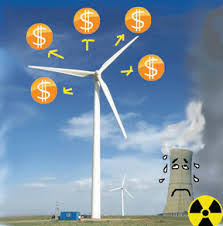
- Aging infrastructure, unrealized plans, and high costs continue to limit nuclear’s role in swift decarbonization, while solar and wind power are expanding rapidly and outpacing nuclear in new capacity and generation.
- Nearly 40% of all nuclear power ever proposed has been cancelled: 566 gigawatts (GW) of nuclear capacity has been cancelled worldwide, more than what is currently operational (401 GW) or retired (116 GW) combined.
- Europe’s nuclear sector has lost 122 GW of planned capacity to cancellations, more than the operating nuclear fleet of any single country worldwide. An additional 68 GW has been retired, and 90% of the remaining reactors are more than 35 years old. In contrast, European wind and utility-scale solar capacity under construction or in pre-construction outweighs nuclear by a factor of more than 13 to 1.
- Australia’s moratorium on nuclear, lengthy projected development timelines, high costs, lack of expertise, and strong public and policy preference for renewables mean nuclear is unlikely to play a significant role in filling the gap left by the country’s planned coal phaseout by 2038…………………………………………………………………………………………… https://globalenergymonitor.org/report/nuclear-outpaced-fourteen-to-one-by-wind-and-solar-in-europe/
World’s largest iceberg is finally about to disappear 40 years after breaking away from Antarctica
Megaberg twice the size of London could melt away within weeks

Stuti Mishra, Independent, 03 September 2025
A large Antarctic iceberg that calved almost four decades ago is now in its final days, with scientists saying it could vanish within weeks after drifting into warmer seas.
The megaberg, known as A23a, broke off the Filchner Ice Shelf in 1986 and became stuck on the seabed of the Weddell Sea, where it remained grounded for over 30 years.
It set adrift in 2020 and was carried by ocean currents into the “iceberg alley” – the South Atlantic route where most of Antarctica’s giants eventually meet their end.
Earlier this year, A23a still covered nearly 3,100 sq km, making it the world’s largest iceberg, bigger than Long Island and more than twice the size of London.
In recent months, however, enormous sections have splintered away. Satellite images analysed by the EU’s Copernicus programme show it has shrunk to less than half its original size, now measuring about 1,770 sq km.
Some of the breakaway fragments are themselves colossal, including one that is 400 sq km in area, while countless smaller bergs, still large enough to pose hazards to shipping, now litter surrounding waters.
The megaberg is breaking up “fairly dramatically”, Andrew Meijers, a physical oceanographer at the British Antarctic Survey, told AFP……………………………
Despite its size and longevity, researchers said the fate of A23a was inevitable once it left Antarctic waters. Exposed to warmer seas and battered by waves, it started dissolving at speed.
https://www.independent.co.uk/climate-change/news/iceberg-a23a-antarctica-melting-b2819233.html
Trump supports nuclear power as it is ‘more American’ than wind, solar, US official says

By Reuters, September 6, 2025
WASHINGTON, Sept 4 (Reuters) – The Trump administration is more willing to support loan guarantees and tax breaks for nuclear power than for wind and solar because it is “more American” than those forms of energy, the director of the U.S. Energy Dominance Council said on Thursday.
Jarrod Agen said nuclear power is more likely to be made from U.S.-made parts than wind and solar farms, so the administration is more willing to give it financial aid from the U.S. Loan Programs Office and support tax incentives. https://www.reuters.com/business/energy/trump-supports-nuclear-power-it-is-more-american-than-wind-solar-us-official-2025-09-04/
These fools plan to win a nuclear war. Flight tests begin on US Air Force’s new ‘doomsday plane’

Defense News, By Stephen Losey, Sep 5, 2025,
The Air Force and aerospace firm Sierra Nevada Corp. have started flight tests on the service’s next-generation “doomsday plane.”
Flight tests for the E-4C Survivable Airborne Operations Control, or SAOC, are being held at the Aviation Innovation and Technology Center in Dayton, Ohio, the company said in a Wednesday release.
Sierra Nevada, also known as SNC, carried out the SAOC’s first flight on Aug. 7 as part of the program’s engineering and manufacturing development process. Flight and ground testing will continue into 2026, primarily in Dayton, Ohio, and Wichita, Kansas, the company said.
SAOC is meant to serve as an airborne command-and-control center that would be used in the most catastrophic circumstances. In the event of a nuclear war or other widespread calamity that destroys or disrupts most military command centers, the SAOC would allow the president to direct U.S. forces and relay orders from the air.
The Air Force in 2024 awarded SNC a $13 billion contract to build five SAOC aircraft to replace the Air Force’s aging fleet of four E-4B Nightwatch planes. Sierra Nevada is expected to finish the work by July 2036……………………….
The SAOC deal is Sierra Nevada’s largest single contract in its six-decade history, and the company hopes it will lead to more big-ticket opportunities………….https://www.defensenews.com/air/2025/09/04/flight-tests-begin-on-us-air-forces-new-doomsday-plane/?utm_source=sailthru&utm_medium=email&utm_campaign=c4-overmatch
1
UKRAINIAN NEOFASCISM – War Time Developments: Part 1 ‘Azov’ and Part 2 ‘Right Sector’
by Gordonhahn, September 5, 2025
Neo-fascism and ultranationalism may not have been the most powerful element in Ukraine or even among Ukrainian nationalists before the NATO-Russia Ukrainian War, but they are almost certainly so now, and they are becoming increasingly powerful military-politically, culturally, and ideologically.
Ukraine’s neofascists have never been satisfied with the Maidan revolt, despite their pivotal role in overthrowing the previous oligarch-dominated order, which the Maidan revolt only replaced in part. They have always looked tot he future and completion of the ‚nationalist revolution‘, as they call it. A few years ago, Dmitro Yarosh, founder and then leader or “coordinator’ of Ukraine’s neofascist Right Sector (RS) and later advisor to now fired Ukrainian Armed Forces Commander, Gen. Valerii Zaluzhnyi, who is now Kiev’s ambassador to the UK, promised there would be a ‘second phase of the nationalist revolution’ of which the February 2014 Maidan revolt was supposedly but the first.
The second phase is to sweep away the liberal and oligarchic remnants of the pre-Maidan democratic order brought into the Maidan regime, in Yarosh’s view. Yarosh recently repeated his call for the completion of the neofascist revolution on his Facebook page: “As it turned out, during the Dignity Revolution and the Russian-Ukrainian War, Ukrainian nationalists became the main factor in the Ukrainian national-liberation struggle in the 21st century… I am a Ukrainian Nationalist – sounds proud both in Ukraine and across the world. The next power after the War for Independence should be nationalist. Otherwise, we will once again be led down an unbreakable cycle of national humiliation, corruption, degeneracy, moral degradation, economic decline, inferiority and defeat… Therefore, after the War for Independence, the wise, courageous and noble should rule in Ukraine. Glory to the Nation!”
Similar views are held by Ukraine’s many other ultra-nationalist and neo-fascist groups and their leaders, and they have been waiting for the moment to complete their revolution. The catastrophe of the war, its outcome, and consequences are bringing their dream ever closer to reality. These factors alone could assist the neo-fascist’s rise to power, even if only temporarily.
There once was a time when the West acknowledged Ukraine’s neofascist threat to republican rule, even as it helped armed, trained, and equipeed the neofascists‘ cocoons, the siloviki –, i.e. the Ukrainian military, SBU, and HRU. The de facto NATO think tank, the Atlantic Council, at the time noted:
Since the beginning of 2018, C14 and other far-right groups such as the Azov-affiliated National Militia, Right Sector, Karpatska Sich, and others have attacked Roma groups several times, as well as anti-fascist demonstrations, city councilmeetings, an event hosted by Amnesty International, art exhibitions, LGBT events, and environmental activists. On March 8, violent groups launched attacks against International Women’s Day marchers in cities across Ukraine. In only a few of these cases did police do anything to prevent the attacks, and in some they even arrested peaceful demonstrators rather than the actual perpetrators.
“International human rights groups have sounded the alarm. After the March 8 attacks, Amnesty International warned that “Ukraine is sinking into a chaos of uncontrolled violence posed by radical groups and their total impunity. Practically no one in the country can feel safe under these conditions.”[1]
Below I look at the political and cultural role neofascist groups have been playing in Ukraine, particularly since the beginning of the NATO-Russia Ukrainian War. In this Part 1, I begin with the most powerful and influential neofascist structure, Azov. No other neofascist or other fporm of Ukrainian group has seen its power and influence in the state and society be so enhanced over the last decade and certainly since the beginning of the beginning oft he NATO-Russia Ukrsainian War. Indeed, Azov’s leader, Andriy Biletskiy could very well be Ukraine’s next president and become so in the not too distant future.
Part 1: Azov
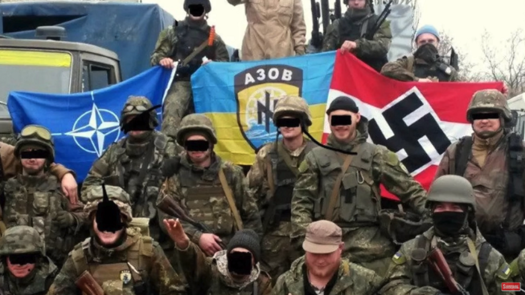
The Azov Battalion emerged from the Nazi-inspired Social-National Assembly (SNA) founded by Andriy Biletskiy, now commander of the Ukrainian army’s 3rd Separate Assault Battalion ‘Azov’. Azov’s rise along with its politics and ideology have much in common with Adolph Hitler’s Waffen SS.[2] Prior to running the SNA, Biletskiy led the equally ultra-nationalist ‘Patriots of Ukraine,’ the military wing of the Ukrainian National Army, self-procliamed successor to the Nazi-allied outfir of the same name during World War II. The ‘Patriots were infamous their beatings of immigrants. In a 2010 interview Biletskiy described his organization as nationalist “storm troopers.[3][4] A year later Biletskiy was in prison, after his organization—already renamed the SNA—had been involved in a series of shootouts and mass brawls.
The SNA’s, Azov’s, and Biletskiy’s ideology is an extremist brand of Ukrainian neofascism melded with international white supremacism. The SNA program emphasizes the concept of “nationocracy,” which was later incorporated into the RS program and propaganda courses. The SNA in power would ban all political parties, organizations, associations and ideological groups, so the ethnic Ukrainian elite holds full power: “Political power is wholly owned by the Ukrainian nation through its most talented, idealistic and altruistic national representatives who are able to ensure proper development of the nation and its competitiveness.” “Supreme power (executive, legislative and judicial) of the Ukrainian state will be in the hands of the head of state, who is personally responsible to the nation’s own blood and property.” Capitalism is to be “dismantled” and democracy is to be “eliminated.” All actions that fail “to comply with obligations to the nation and the state will entail the restriction of civil rights or deprivation of citizenship … The ultimate goal of Ukrainian foreign policy is world domination.”[5]
In 2007, Azov’s ideology is reflected in its leaders statements. Top leader, commander Biletskiy, castigated a government decision to introduce fines for racist remarks, noting: “So why the ‘Negro-love’ on a legislative level? They want to break everyone who has risen to defend themselves, their family, their right to be masters of their own land! They want to destroy the Nation’s biological resistance to everything alien and do to us what happened to Old Europe, where the immigrant hordes are a nightmare for the French, Germans and Belgians, where cities are ‘blackening’ fast and crime and the drug trade are invading even the remotest corners.”[6] Biletskiy has also said: “The historic mission of our nation in this critical moment is to lead the White Races of the world in a final crusade for their survival. A crusade against the Semite-led Untermenschen.”[7] In 2017, Biletskiy gathered his men in order to express Azov’s support for former Bosnian Serb military officer and convicted war criminal, Ratko Mladić, running directly counter to Western policy. Mladic was held responsible by a Western-sponsored war tribunal at the Hague for war crimes during the Yugoslav civil wars in the 1990s, including the Srebrenica massacre. Biletsky declared Mladić a “patriot of Serbia” and refers to the Iinternational Criminal Tribunal for Yugoslavia in the Hague as a “Zionist tribunal.”[8] More recently, in May 2025 Biletskiy claimed that Hungary, Poland, and Romania are waiting for Ukraine’s collapse so they can annex their former territories that became part of Ukraine under Sdtalin in the wake of the USSR’s victory over fascism: “They are not preparing for war. They are preparing to take their own scraps in the event of a global defeat of Ukraine,” he asserted.[9]`
On the basis of Azov, Biletskiy founded the National Corps with an affiliated paramilitary organization ‘National Teams.’ One of the points of Biletskiy’s foreign policy vision and of National Corps’ program is the creation of a union of countries called the ‘Intermarium’, which would include, among others, Ukraine and Poland – an idea also propagated by many Western apologists and supporters of Ukrainian neofascism. However, Poles, as victims of the OUN’s and UPA’s massacres 80 years ago in Volyn and elsewhere, do not shy away from noting Azov’s neofascism. They point out that Azov members eagerly use Nazi symbols, including the „Dirlewanger“ of the 36th SS Grenadier Division, which massacred Poles in Warsaw’s Wola during the Warsaw Uprising.[10] And, as noted above, Biletskiy recently accused Poland, along with Hungary and Rumania, with having designs on Ukrainian territory……………………………………………………………………………………….
The NATO-Russia Ukrainian War is strengthening Azov’s hand in Ukraine’s army, politics, and culture. In the course of the war, the Azov Battalion was incoroprated into the army, becoming the Ukrainian army’s 3rd Separate Assault Brigade, while retaining a brigade in the National Guard (the 12th National Guard Brigade), into which it was originally incorporated. Azov also has another military unit, known as ‚Kraken‘, under the control of Ukrainian Military Intelligence (GRU) and its director, the CIA-trained Kyrylo Budanov. Kraken has been involved in a series of war crimes, including the execution of captured Russian soldiers. This year,the 3rd Assault Brigade ‚Azov‘ was upgraded further to become the Third Army Corps ‚Azov‘.[18]Thousands of new soldiers will be integrated into Azov, and a special training school for sergeants established for it will inevitably indoctrinate recruits with ultra-nationalist ideology. Azov 3rd Assaualt Corps‘ founding ceremony, replete neo-Nazi pagan-like symbolism, was held near Kyiv and attended by Biletskiy and his fellow commanders. Participants offered “The Prayer for Ukraine,” a hymn borrowed from the neofascist, antisemitic OUN, whiuch enthusiastically collaborated with the Hitler’s Nazis in the Holocaust and ethnic cleansing of Poles during World War II.[19] The new commander of Azov’s 3rd Assault Brigade, Yaroslav Levenets, appointed in April-May, recently met Zelensky in an awards ceremony. He allegedly helped to organize the 2017 killing of Denis Voronenkov, a former member of the Russian parliament. As of December 2021, Levenets was still wanted in Ukraine.[20] Aside from the army’s and therefore Azov’s growing role in Ukrainian society as a result of the war, Azov maintains a youth organization called ‘Centuriya’, which networks Azov across Ukrainian society in schools, children’s camps, and sports clubs.
According to Havryshko, Azov benefits from „enormous media presence“ and university support in Ukraine and uses „celebrity journalists and media experts to create a glamorous image of their units.“[21] Indeed, Biletskiy, other leaders and members appear frequently on mainstream television and other media. Ukrainian and foreign media propagate Azov’s units as „true patriots“ and “elite brigades,” respectively, whereas in the West before the war there was significant reporting on Azov‘s and other Ukrainian groups‘ neofascist political orientation and ideology. …………………
With this media and academic network, Azov is able to insinuate neofascism into every knook and cranny of Ukrainian society. For example, it has been at the forefront of a campaign to slander and threaten the life of a leading scholar of historical and contemporary Ukrainian neofascism, Professor Marta Havryshko of Clark University in Massachusetts, running her out oft he country. As a result of the campaign Havryshko was fired from her position in the Kripyakevich Institute for Ukrainian Studies for her research on various aspects of this subject inculding the violence committed by the WW II-era Ukrainian fascist organizations OUN and UPA allied with Nazi Germany, contemporary Ukrainian glorification of Ukraine‘s Waffen-SS division “Galicia”, and her rejection of ultra-nationalist driven history policies. ………………………………………………………………………………………………………………………………………………………….. https://gordonhahn.com/2025/09/05/ukrainian-neofascism-war-time-developments-part-1-azov-and-part-2-right-sector/
1 This Month
26 April – Chernobyl: Inside the Meltdown airs on National Geographic on Sunday 26th April from 4pm
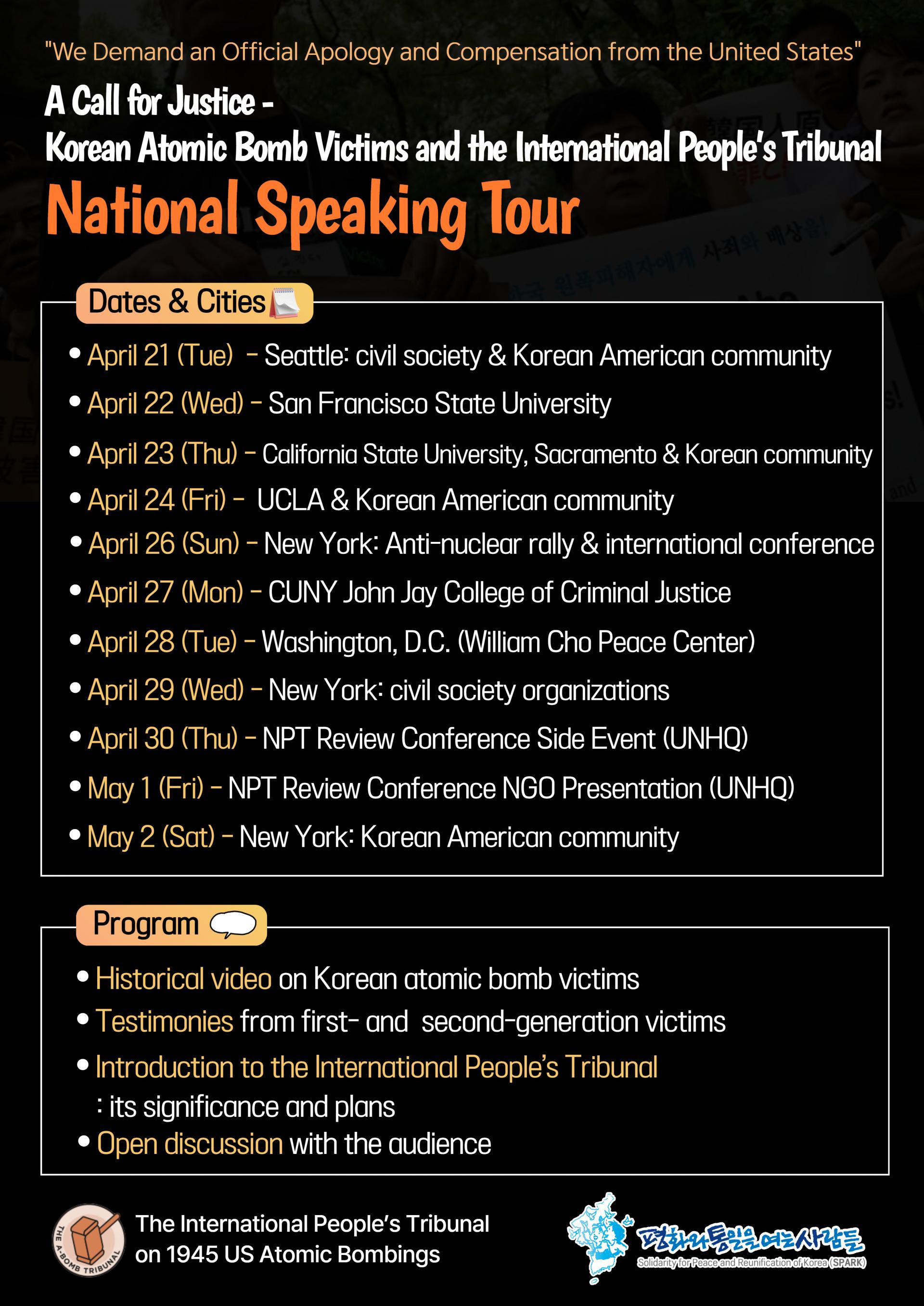

29 April – Nuclear Expert Webinar #1 – Radiation Impacts on Families with Mary Olson and Cindy Folkers
- 12:15 PM MT – 1:45 PM MT
- Location: Virtual – REGISTER TODAY

4 May -West Suburban Peace Coalition to discuss Iran war at May Educational Forum
Monday, May 4, 7:00 – 8:00 PM Central Standard Time
Title: : How Trump’s Narrative Tries to Shape the Reality of the War on Iran.
Contact Walt Zlotow, zlotow@hotmail.com 630 442 3045 for further information
14 May – online event From Bombs to Data Centres: the Face of Nuclear Colonialism

Pine Ridge Uranium is the real threat, not Tehran- Tell Burgum: Stop the Extraction.
Chernobyl: The Lost Tapes – A good documentary on Chernobyl on SBS available On Demand for the next 3 weeks– https://www.sbs.com.au/ondemand/tv-program/chernobyl-the-lost-tapes/2352741955560
To see nuclear-related stories in greater depth and intensity – go to https://nuclearinformation.wordpress.com
-
Archives
- May 2026 (12)
- April 2026 (356)
- March 2026 (251)
- February 2026 (268)
- January 2026 (308)
- December 2025 (358)
- November 2025 (359)
- October 2025 (376)
- September 2025 (257)
- August 2025 (319)
- July 2025 (230)
- June 2025 (348)
-
Categories
- 1
- 1 NUCLEAR ISSUES
- business and costs
- climate change
- culture and arts
- ENERGY
- environment
- health
- history
- indigenous issues
- Legal
- marketing of nuclear
- media
- opposition to nuclear
- PERSONAL STORIES
- politics
- politics international
- Religion and ethics
- safety
- secrets,lies and civil liberties
- spinbuster
- technology
- Uranium
- wastes
- weapons and war
- Women
- 2 WORLD
- ACTION
- AFRICA
- Atrocities
- AUSTRALIA
- Christina's notes
- Christina's themes
- culture and arts
- Events
- Fuk 2022
- Fuk 2023
- Fukushima 2017
- Fukushima 2018
- fukushima 2019
- Fukushima 2020
- Fukushima 2021
- general
- global warming
- Humour (God we need it)
- Nuclear
- RARE EARTHS
- Reference
- resources – print
- Resources -audiovicual
- Weekly Newsletter
- World
- World Nuclear
- YouTube
-
RSS
Entries RSS
Comments RSS
 nuclear-news