South Carolina’s dormant nuclear volcanoes

by beyondnuclearinternational, https://beyondnuclearinternational.org/2025/09/07/south-carolinas-dormant-nuclear-volcanos/
Resuming construction of the abandoned V.C. Summer reactors is rife with challenges, says a new report from Savannah River Site Watch
The proposal to restart the failed nuclear reactor construction project in South Carolina faces a host of unexamined challenges, according to a just-released report. The report, prepared by the nuclear policy expert who led the intervention against the project since its inception in 2008 through its collapse and termination in the face of ratepayer outrage 2017, outlines major stumbling blocks to the revival of the nation’s most shocking failure of a nuclear reactor construction project in the United States in the 21stcentury.
The V.C. Summer project involved the botched attempt by now-defunct South Carolina Electric & Gas (SCE&G) to construct two large Westinghouse AP1000 nuclear reactors 2 – units 2 & 3 – 25 miles north of Columbia, South Carolina. Over $10 billion was wasted on the construction of project.
Its abrupt termination was one of the most impactful and costly nuclear construction-project collapses in U.S. history, which was the death knell for the so-called “nuclear renaissance” in the U.S. Customers were hit hard and are still left holding the bag with nothing in return for a reported $2 billion payment so far, for financing costs, an amount that grows daily. Though far-fetched, project restart is now being discussed.
The report – presenting 14 unanalyzed challenges to the restart idea and prepared by the Columbia-based public-interest, non-profit group Savannah River Site Watch – is titled Economic, Technical and Regulatory Challenges Confound Restart of the Terminated V.C. Summer Nuclear Reactor Construction Project in South Carolina.
The 24-page report was written by Tom Clements, director of SRS Watch, who led interventions before the PSC by the environmental group Friends of The Earth beginning in 2008 and running through the bankruptcy of SCE&G and its takeover by Dominion Energy South Carolina in January 2019.
“As the public was so abused during the V.C Summer construction project, they now deserve a voice in raising concerns about proposals concerning rebirth of the project in which they still have financial ownership and that’s for whom this report speaks” said Clements. “We reveal in the report that Dominion ratepayers are right now paying 5.22% of the bill for the terminated project and are paying, since 2019, an additional $2.8 billion over 20 years. The restart effort could once again saddle customers with additional massive costs if VCSummer 2.0 proceeds.”
The 5.22% monthly rate hidden in the Dominion monthly bill was revealed in a Freedom of Information Act document provided by the S.C. Office of Regulatory Staff to SRS Watch on August 7, 2025. In January 2019, the S.C. Public Service Commission ordered Dominion customers to pay an additional $2.8 billion over the next 20 years for the cost of the bungled project. That monthly fee should be eliminated and consumer investment rebated, especially if restart is pursued, according to SRS Watch.
Themes covered in the “restart challenges” report include:
Nuclear Advisory Council restart report not a reliable guidepost;- Nuclear Regulatory Commission license terminated in 2019, hard to regain a new license;
- Reestablishing NRC certification for equipment will be difficult;
- Environmental permits must be secured anew or renewed;
- Unclear how much equipment remains and if it’s to be resold for reuse or just scrap;
- Dominion and Santee Cooper not interested in involvement in restart;
- Westinghouse plans for new AP1000s unclear, rhetoric might not be accurate;
- Cost and schedule of new Westinghouse AP1000s unclear; Last-of-a-Kind (LOAK) reactor?
- Ratepayers in South Carolina could be put on the hook again;
- S.C. Public Service Commission and Dominion ratepayers will be involved, can’t be sidelined;
- Federal rhetoric supporting nuclear power won’t carry the day or overcome big obstacles;
- Reactor restart fails to secure funds or protection from South Carolina legislature;
- Highly radioactive spent fuel at new units a challenge;
- When will the community near V.C. Summer be consulted?
Project 2025 agenda revives Nevada’s Yucca Mountain fears

By Judy Treichel, Thursday, Aug. 21, 2025, https://lasvegassun.com/news/2025/aug/21/project-2025-agenda-revives-nevadas-yucca-mountain/ Judy Treichel is the executive director of the Nevada Nuclear Waste Task Force.
A meeting was held in Las Vegas last month, paid for by a Department of Energy grant and hosted by Mothers for Nuclear and Native Nuclear .
The host groups tried to put a friendlier slant on the DOE message, but it was clear that the government and commercial nuclear industry have never gotten out of the rut they have been in from the start: advertise the glory of nuclear power and never get very far into the problem of what to do with the waste.
The purpose of the invitation-only event was to “elicit public feedback on consent-based siting and management of spent nuclear fuel…”
But my takeaway was that they hoped to get the audience to love new nuclear power more than we hate its waste.
The presenters sang the praises of nuclear power and shared frustration with many audience members about how the public was frightened of or opposed to nuclear power after watching “The Simpsons” on TV! There was a brief mention of the disastrous events at Three Mile Island, Chernobyl and Fukushima, but the impression left was that those were now over and that current public fears arose from “The Simpsons”!
Thirty years ago, the DOE was a huge presence in Nevada, studying Yucca Mountain 80 miles northwest of downtown Las Vegas, as the site for underground disposal of the nation’s high-level nuclear waste. Public meetings at that time brought out many longtime residents who related stories about the damage older family members or friends had suffered from widespread exposure to radiation from nuclear weapons testing at the Nevada Test Site. They described how they had been lied to about safety and how there was a lack of accountability for human and property damage. They wanted no part of any future nuclear experiments, be it nuclear power plants or a disposal site for the nation’s high-level nuclear waste.
The Yucca Mountain nuclear waste disposal program was determined to be “unworkable” by the Energy secretary in 2010. It has remained unfunded by Congress since then, but it has not been terminated by law.
When the Heritage Foundation’s Project 2025 became public, my colleagues and I were dismayed when we saw the recommendation to resume licensing the “unworkable” Yucca Mountain project. It was as if a switch could be flipped and the site’s safety flaws and the long-enduring opposition of Nevadans could be ignored.
Independent scientists determined that Yucca Mountain could not isolate the dangerous radiation for the long time period necessary. Those findings are reflected in the more than 200 contentions filed by Nevada that would have to be adjudicated during any future licensing proceeding.
Project 2025 would give us two unwanted nuclear-related gifts: a nuclear waste repository and a restart to nuclear weapons testing, side by side! The assurances we heard from the DOE at those long-ago meetings were that it had learned lessons during weapons testing. The DOE claimed that safety comes first now. But I’m not so sure.
Were Project 2025’s nuclear goals to be realized, there would be an operating repository at Yucca Mountain. It would have above-ground facilities and a decadeslong national nuclear waste transportation campaign flowing into Nevada on a currently nonexistent 200-plus-milelong rail access corridor to the repository site. Next door would be ground-blasting nuclear weapons testing. and flying over both of those operations would be the training and testing of military planes and drones from Creech Air Force Base. This would surely be a dangerous and untenable combination.
Project 2025 was not friendly to Southern Nevada. In addition to its calls for increased use of nuclear power, it also calls for — and President Donald Trump has largely followed through on — removing federal government support and incentives for solar power. This is shortsighted, as rooftop solar shades the underlying buildings while generating power and drastically reduces the power bills of consumers. Perhaps most importantly, solar power generation does not leave a legacy of lethal waste.
The Department of Energy was right 16 years ago when it announced that a national high-level nuclear waste repository at Yucca Mountain was unworkable. It still is. Convention attendees and visitors come to our great hotels and meeting venues. Nuclear waste shipments on the railroad tracks behind the hotels and through our downtown area may make some of that business choose other locations. If there was any sort of accident or incident on the tracks within Clark County, the national news services would blast out the images far and wide, and economic damage would occur whether there was radiation released or not.
Las Vegas has a fragile economy, and it is highly dependent on fun and enjoyment. We are becoming a major sports destination, continuing to be home to important conventions and putting on the best shows in the world. We must find ways to make our precious resources available for the worthwhile activities we have, with no backdrop of dreaded nuclear contamination and waste. We need to apply a compatibility test that honors our past and preserves our future.
Iran FM Araghchi warns Europe against ‘reckless’ approach to nuclear deal
Abbas Araghchi says despite ‘snapback’ sanctions process, Iran is open to a ‘realistic and lasting bargain’.
By Al Jazeera Staff, 7 Sep 20257 Sep 2025
Iran’s Foreign Minister Abbas Araghchi has accused Britain, France and Germany of pursuing a “reckless” strategy on his country’s nuclear programme, warning that their alignment with Washington will only diminish Europe’s global standing.
Writing in The Guardian on Sunday, Araghchi said the decision by the so-called E3 to trigger a process that could reinstate United Nations sanctions “lacks any legal standing” and is bound to fail.
“The truth is that they are intently pursuing a reckless course of action … This is a grave miscalculation that is bound to backfire,” Araghchi wrote.
In August, Germany, France and the United Kingdom – Europe’s largest economies – triggered a 30-day process to activate “snapback” sanctions over what they called “significant” violations of a 2015 agreement to limit Iran’s nuclear programme.
The United States, which bombed three nuclear facilities in June as part of an Israeli assault on Iran, has welcomed the European countries’ move.
Araghchi accused the three powers of ignoring the fact that it was the US, not Iran, that withdrew from the 2015 Joint Comprehensive Plan of Action (JCPOA). While Tehran took what he described as “lawful remedial measures” under the accord, the E3 failed to uphold their own obligations.
Araghchi noted that European leaders once pledged to protect trade with Iran after US President Donald Trump reimposed sanctions in 2018. “None of it materialised,” he wrote, adding that Europe’s promises of “strategic autonomy” collapsed under US pressure………………………..https://www.aljazeera.com/news/2025/9/7/iran-fm-araghchi-warns-europe-against-reckless-approach-to-nuclear-deal
Is fishmeal from Fukushima-affected fish the source of Indonesian shrimp’s radioactive contamination?

J. P. Unger, 8 Sept 25
It just hit me earlier, while thinking about the recently exposed case of radioactive shrimp being recalled in the US, and in particular why one Indonesian shrimp farming business’s harvests would be contaminated with radioactive Cesium and not those from other Indonesian shrimp farms: it’s probably the feed they used!
Cheap, radioactive fishmeal, perhaps made from fish impacted by contamination from Fukushima, I suspect could well be the source. This is why:
Shrimp farming has traditionally used fishmeal as a high-protein source to feed the shrimp -with fishmeal normally consisting of smaller fish, fishing “by-catch” and fish-processing byproducts, all shredded and ground to a texture like coarse sand or pellets to feed farm animals and aquaculture operations.
As ocean fish populations become increasingly strained and global demand for fish keeps increasing, fishmeal has become increasingly expensive and in shorter supply
Therefore, it’s quite likely that fishmeal from contaminated fisheries -for example, with high levels of radioactive pollution- would be offered at a comparatively low price. That would be quite attractive for a business that’s more concerned with profit margins than with what happens to consumers down the line.
If this was the case, and given that many businesses around the world likely prioritize profit margins over long-term effects in far-removed consumers (or might not even be aware of the contamination of the feed), this case could be the tip of a very worrisome iceberg and open up a big can of worms….
It certainly demands a careful inspection of food imports AND of food “precursors”, in particular imported fishmeal and food from animals raised on it. Also, international cooperation and vigilance, to know who might be selling contaminated fishmeal and where, who has been buying and using it, and what land- or water-farmed meat production it might be affecting.
Unless I hear concerns or suggestions to the contrary, I’ll prepare and send a slightly different articulation of these thoughts to a handful of government officials and media here and in the US who might be interested in investigating, as precautions should probably be ramped up for a variety of food products…
This would not be the first time radioactively contaminated foodstuff circulates at bargain prices… When I was starting as a science and environment journalist in Peru in the 1980’s I wrote about the post-Chernobyl arrival of radioactive powdered milk from Europe (a “generous” 12,000 ton donation from the European Community…), and radioactive meat from Germany (sold at a bargain price!). I received brush-offs, threats and warnings from corrupt government officials profiting from it, as well as ignorance and disinterest among other journalists and the general population, all with other “more immediate concerns” at the time, as the country faced five-digit inflation and the expansion of a brutally violent Maoist insurgency -nobody wanted to hear about yet more dangers then, and everywhere I was met by a frustrating fatalistic denial or avoidance mantra along the lines of “one has to die from something anyway.” Anyways… JPU
The Nuclear Waste Problem Haunting UK Energy Expansion
Oil Price, By Felicity Bradstock – Sep 07, 2025
Effective nuclear waste management is a critical global challenge, particularly for countries like the UK looking to expand their nuclear power sectors.- The UK has a substantial amount of existing radioactive waste and is struggling to implement a long-term disposal solution, with the proposed underground geological disposal facility facing significant hurdles and cost concerns.
- Public and local community pushback against potential nuclear waste sites further complicates the development of new disposal facilities, making finding a solution an ongoing and difficult process.
One of the biggest hurdles to expanding the global nuclear power sector is the concern over how best to manage nuclear waste. While some believe they have found sustainable solutions to dispose of nuclear waste, there is still widespread debate around how safe these methods are and the potential long-term impact of waste disposal and storage. In the United Kingdom, the government has put nuclear power back on the agenda, after decades with no new nuclear developments; however, managing nuclear waste continues to be a major barrier to development.
There are three types of nuclear waste: low-, intermediate-, and high-level radioactive waste. Most of the waste produced at nuclear facilities is lightly contaminated, including items such as tools and work clothing, with a level of around 1 percent radioactivity. Meanwhile, spent fuel is an example of high-level waste, which contributes around 3 percent of the total volume of waste from nuclear energy production. However, this contains around 95 percent of the radioactivity, making adequate waste management of these products extremely important.
In the U.K., the government continues to battle with how best to dispose of its nuclear waste,……………………………………………..
the U.K. Treasury believes the government’s plan for the waste dump is “unachievable”, rating the project as “red”, or not possible, in a recent assessment. ……………………………….. https://oilprice.com/Alternative-Energy/Nuclear-Power/The-Nuclear-Waste-Problem-Haunting-UK-Energy-Expansion.html
Pentagon Document: U.S. Wants to “Suppress Dissenting Arguments” Using AI Propaganda.
August 25, 2025, The Intercept
https://theintercept.com/2025/08/25/pentagon-military-ai-propaganda-influence/
The United States hopes to use machine learning to create and distribute propaganda overseas in a bid to “influence foreign target audiences” and “suppress dissenting arguments,” according to a U.S. Special Operations Command document.
SOCOM is looking for a contractor that can “Provide a capability leveraging agentic Al or multi LLM agent systems with specialized roles to increase the scale of influence operations.” So-called “agentic” systems … can be used in conjunction with large language models, or LLMs, like ChatGPT, which generate text based on user prompts.
While much marketing hype orbits around these agentic systems and LLMs for their potential to execute mundane tasks like online shopping and booking tickets, SOCOM believes the techniques could be well suited for running an autonomous propaganda outfit. Whether AI-generated propaganda works remains an open question, but the practice has already been amply documented in the wild.
In May 2024, OpenAI issued a report revealing efforts by Iranian, Chinese, and Russian actors to use the company’s tools to engage in covert influence campaigns, but found none had been particularly successful. The military has a history of manipulating civilian populations for political or ideological purposes. A troubling example was uncovered in 2024, when Reuters reported the Defense Department had operated a clandestine anti-vax social media campaign.
IAEA chief notes progress in Iran talks over nuclear site inspections
Head of the United Nations nuclear watchdog, Rafael Grossi, says he hopes for a ‘successful conclusion’ in the coming days.
Aljazeera, 8 Sept 25
Talks on resuming International Atomic Energy Agency (IAEA) inspections of Iran’s nuclear sites have made progress, but its chief warned that there was “not much” time remaining.
On Monday, the director general of the United Nations nuclear watchdog, Rafael Grossi, told the 35-nation IAEA Board of Governors in Vienna, Austria, that “Progress has been made”…….
He did not elaborate on what the timeframe meant exactly.
While Tehran allowed inspectors from the IAEA into Iran at the end of August, the Ministry of Foreign Affairs said no agreement had been reached on the resumption of full cooperation with the watchdog…….. ………………………….. https://www.aljazeera.com/news/2025/9/8/iaea-chief-notes-progress-in-iran-talks-over-nuclear-site-inspections
Is Israel quietly expanding its nuclear arsenal? Satellite images raise suspicion.
Given the secrecy of Israel’s programme, it remains difficult to estimate just how many nuclear weapons it possesses. The Bulletin of Atomic Scientists in 2022 put the number at around 90 warheads.
Israel is among nine countries confirmed or believed to have atomic weapons and among just four that have never joined the Nuclear Nonproliferation Treaty.
Construction work has intensified on a major new structure at a facility linked to Israel’s long-suspected atomic weapons programme, according to satellite images analysed by experts.
They say it could be a new reactor or a facility to assemble nuclear arms — but secrecy shrouding the programme makes it difficult to know for sure.
The work at the Shimon Peres Negev Nuclear Research Center near the city of Dimona will renew questions about Israel’s widely believed status as the Mideast’s only nuclear-armed state.
It could also draw international criticism, especially since it comes after Israel and the United States bombed nuclear sites across Iran in June over their fears that Tehran could use its enrichment facilities to pursue an atomic weapon.
Among the sites attacked was Iran’s heavy water reactor at Arak. Tehran has all along maintained that its nuclear programme is for civilian use only.
Long hidden secret
Reports on Israeli excavations at the facility, some 90 kilometers (55 miles) south of West Jerusalem, first emerged in 2021.
Then, satellite images only showed workers digging a hole some 150 metres (165 yards) long and 60 metres (65 yards) wide near the site’s original heavy water reactor.
Images taken on July 5 by Planet Labs PBC show intensified construction at the site of the dig. Thick concrete retaining walls seem to be laid at the site, which appears to have multiple floors underground. Cranes loom overhead.
Seven experts who examined the fresh images all said they believed the construction was related to Israel’s long-suspected nuclear weapons programme, given its proximity to the reactor at Dimona, where no civilian power plant exists.
However, they split on what the new construction could be.
Three said the location and size of the area under construction and the fact that it appeared to have multiple floors meant the most likely explanation for the work was the construction of a new heavy water reactor.
Such reactors can produce plutonium and another material key to nuclear weapons.
The other four acknowledged it could be a heavy water reactor but also suggested the work could be related to a new facility for assembling nuclear weapons. They declined to be definitive, given the construction was still in an early stage.
“It’s probably a reactor — that judgement is circumstantial but that’s the nature of these things,” said Jeffrey Lewis, an expert at the James Martin Center for Nonproliferation Studies at the Middlebury Institute of International Studies, who based his assessment on the images and Dimona’s history.
“It’s very hard to imagine it is anything else.”
Israel does not confirm or deny having atomic weapons, and its government did not respond to requests for comment. The White House, which is Israel’s staunchest ally, also did not respond to requests for comment.
An open secret
There’s no containment dome or other features typically associated with a heavy water reactor now visible at the site. However, one could be added later or a reactor could be designed without one.
Dimona’s current heavy water reactor, which came online in the 1960s, has been operating far longer than most reactors of the same era. That suggests it will need to be replaced or retrofitted soon.
“It’s tall, which you would expect, because the reactor core is going to be pretty tall,” Lewis said. “Based on the location, size and general lack of construction there, it’s more likely a reactor than anything.”
Edwin Lyman, a nuclear expert at the Cambridge, Massachusetts-based Union of Concerned Scientists, also said the new construction could be a box-shaped reactor that doesn’t have a visible containment dome, though he acknowledged the lack of transparency made it difficult to be certain.
Israel “doesn’t allow any international inspections or verification of what it’s doing, which forces the public to speculate”, said Lyman.
While details about Dimona remain closely held secrets in Israel, a whistleblower in the 1980s released details and photos of the facility that led experts to conclude that Israel had produced dozens of nuclear warheads.
“If it’s a heavy water reactor, they’re seeking to maintain the capability to produce spent fuel that they then can process to separate plutonium for more nuclear weapons,” said Daryl G. Kimball, the executive director of the Washington-based Arms Control Association.
“Or they are building a facility to maintain their arsenal or build additional warheads.”
Policy of nuclear ambiguity
Israel’s programme is thought to rely on byproducts of a heavy water reactor. Israel, like India and Pakistan, is believed to rely on a heavy water reactor to make its nuclear weapons.
The reactors can be used for scientific purposes, but plutonium — which causes the nuclear chain reaction needed in an atomic bomb — is a byproduct of the process. Tritium is another byproduct and can be used to boost the explosive yield of warheads.
Given the secrecy of Israel’s programme, it remains difficult to estimate just how many nuclear weapons it possesses. The Bulletin of Atomic Scientists in 2022 put the number at around 90 warheads.
Obtaining more tritium to replace decaying material may be the reason for the construction at Dimona, as Lyman noted it decays 5 percent each year.
“If they’re building a new production reactor,” he said, “it doesn’t necessarily mean they’re looking to expand the plutonium they have, but to manufacture tritium”.
Israel is believed to have begun building the nuclear site in the desert in the late 1950s.
Its policy of nuclear ambiguity is thought to have helped deter its enemies.
It is among nine countries confirmed or believed to have atomic weapons and among just four that have never joined the Nuclear Nonproliferation Treaty, a landmark international accord meant to stop the spread of nuclear arms.
That means the International Atomic Energy Agency, the United Nations’ nuclear watchdog, has no right to conduct inspections of Dimona.
Asked about the construction, the Vienna-based IAEA reiterated that Israel “is not obligated to provide information about other nuclear facilities in the country” outside of its Soreq research reactor.
Japan shocks the world — Solar panels as strong as 20 nuclear reactors unveiled.
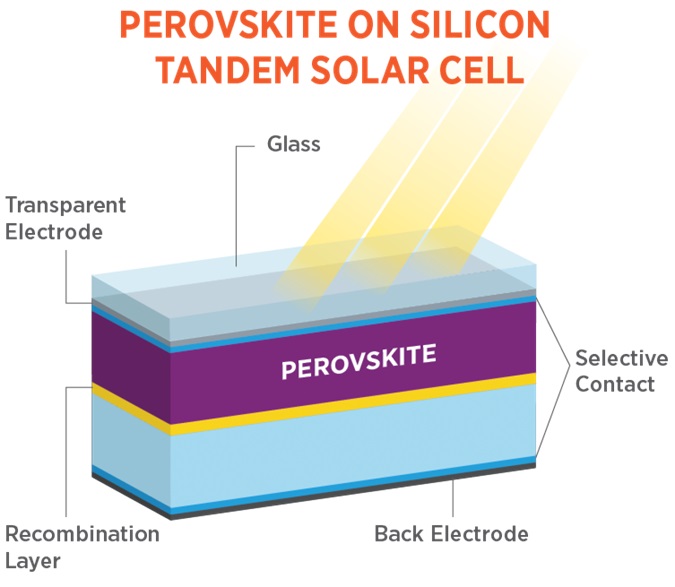
by Beatriz T., September 6, 2025.EcoNews,
Imagine a country with limited space, a large population, and an urgent need for clean energy. That’s Japan, a nation that, since the Fukushima disaster in 2011, has been burdened with rethinking its entire energy system. This is because the catastrophe not only shook confidence in nuclear energy but also accelerated the race for sustainable and safe alternatives. More than a decade later, Japan surprises the world again with revolutionary perovskite solar cells, a light, thin, and flexible material that can be installed in places unimaginable until recently, like windows, walls, and even car roofs.
There are several important advantages
of these cells, and some of these are: Superior efficiency; application
flexibility; strategic security; export potential. Japanese companies like
Sekisui Chemical are already investing heavily in research (and other
companies are investing in the first typhoon turbine).
Internationally, Swedish company Exeger has successfully applied flexible panels to consumer products like headphones and keyboards, demonstrating that the future may be closer than we imagine. The dilemma lies in Japan seeking not only clean energy but also economic security. Essentially, the question remains: invest billions in a still-immature technology or risk losing its global leadership once again?
For a country dependent on energy imports and
vulnerable to international crises, investing in perovskites is both a
necessity and a strategic move. The country’s plan is clear: by 2040,
Japan aims to generate 20 gigawatts of power with perovskites, the
equivalent of 20 nuclear power plants.
Achieving this goal will not only be
a technological victory but a historic milestone in the global energy
transition. Essentially, this advancement could transform Japan into an
exporter of energy technology, offering the world a more efficient
alternative that’s less dependent on large areas. For densely populated
countries like South Korea, Singapore, or even parts of Europe, the
Japanese experience could serve as a model.
Eco News 6th Sept 2025,
https://www.ecoticias.com/en/japan-shocks-the-world-solar-panels/19817/
Ukraine drones hit training centre at Zaporizhzhia nuclear plant, Russian management says

By Reuters, September 7, 2025 https://www.reuters.com/world/ukraine-drones-hit-training-centre-zaporizhzhia-nuclear-plant-russian-management-2025-09-06/
Sept 7 (Reuters) – Ukrainian drones hit the roof of the Zaporizhzhia nuclear plant training centre, causing no major damage and no increase in radiation levels, the Russian-installed administration of the Russia-held plant in Ukraine said on Saturday.
The strike occurred about 300 meters (984 ft) from a reactor unit, the administration said in a statement on the Telegram messaging app.
“This centre is unique — it houses the world’s only full-scale simulator of a reactor hall, which is critically important for staff training,” the statement said.
The station, Europe’s biggest nuclear power plant with six reactors, is not operating but still requires power to keep its nuclear fuel cool.
The attack caused no disruptions to the plant’s operation, the administration said.
“Operational safety limits were not violated and radiation levels remain normal,” the administration said.
There was no immediate comment from Ukraine. Reuters could not independently verify the Russian report.
Russian forces seized the Zaporizhzhia plant in the first weeks of Russia’s February 2022 invasion of Ukraine. Each side regularly accuses the other of firing or taking other actions that could trigger a nuclear accident.
Reporting by Lidia Kelly in Melbourne
Donald Trump orders ‘take down’ of 44-year-old peace vigil opposite White House.
The White House Peace Vigil has stood near the White House since 1981, calling for global disarmament. After a reporter asked about the “eyesore” tent, Donald Trump said he will look into taking it down.
One of the world’s longest-running peace vigils could be under threat after Donald Trump ordered to “take it down”.
The White House Peace Vigil, which has stood near the president’s residence since 1981, is a tent manned around the clock in a call for peace and global disarmament.
Flanked by various anti-war placards, the small blue tent was described as an “eyesore” by a reporter from conservative outlet Real America’s Voice, who asked Mr Trump about it.
“Take it down, today, right now,” he said, after asking where the tent is and claiming he hadn’t heard of it.
“We’re going to look into it right now.”
On Friday night, police were seen talking to what appeared to be demonstrators near the vigil, in Lafayette Park, across the street from the White House.
The vigil-keeper Philipos Melaku-Bello was seen hugging another protester, who feared the 44-year-old site could be torn down.
It follows another threat against the vigil earlier this year, when Representative Jeff Van Drew wrote a letter to the Interior Department describing the site as a “24-7 eyesore”.
In the letter, shared by the Washington Post, he said people have “every right to protest their government”, but not to “hijack a national park and turn it into a 24/7 eyesore”.
The site of the vigil is in a park run by the National Park Service (NPS), which stipulates this tent must be manned at all times to remain standing.
In 2013, the vigil was briefly taken down by park police when it was found abandoned.
Organisers said the man responsible for staying at the tent overnight that day was a veteran who had an episode of post-traumatic stress disorder.
Renaming Defense Dept. War Dept. wrong but accurately describes deranged US perpetual war policy
7 September 2025 AIMN Editorial By Walt Zlotow, https://theaimn.net/renaming-defense-dept-war-dept-wrong-but-accurately-describes-deranged-us-perpetual-war-policy/
President Trump’s Executive Order renaming the Department of Defense the Department of War disgraces and dishonours everything America should stand for in the community of nations.
What is that? Most importantly, peace and tranquility in our dealings with the other 192 UN states.
Early on Presidents George Washington and John Quincy Adams set the tone for this wise governing agenda.
Washington, in his Farewell Address on September 19, 1796 warned against foreign entanglements and alliances that could lead to war and jeopardise American independence and prosperity.
Before he was President, then Secretary of State John Quincy Adams advised on July 4, 1821 that America:
“… goes not abroad in search of monsters to destroy. She is the well-wisher to the freedom and independence of all. She is the champion and vindicator only of her own. She will commend the general cause by the countenance of her voice, and the benignant sympathy of her example. She well knows that by once enlisting under other banners than her own, were they even the banners of foreign independence, she would involve herself beyond the power of extrication, in all the wars of interest and intrigue, of individual avarice, envy, and ambition, which assume the colors and usurp the standard of freedom. The fundamental maxims of her policy would insensibly change from liberty to force… She might become the dictatress of the world. She would be no longer the ruler of her own spirit.”
Washington and Adams both spoke when America had a Department of War, but not a Military Industrial Complex such as the one that arose following WWII to wage perpetual war. Tho the US embarked on 80 years of senseless wars and regime change operations worldwide, it sugarcoated its belligerence by renaming the War Department, Defense. The only connection to defense was America’s willingness to intervene, even make war, wherever, whenever it suited America’s ‘defense’ of its unipolar world dominance.
So when Trump decreed it’s no longer defense but war at the Pentagon, he truly reflects our foreign policy enabling Israeli genocide in Gaza, destroying Ukraine to weaken, isolate Russia, preparing for war with China over Taiwan, obliterating a Venezuelan ship to “send a massage”, repeatedly bombing imagined bad guys in Somalia… and on and on.
If America doesn’t succeed in triggering nuclear war first, it would be wise to seek a third name change for the folks working at the Pentagon, CIA and a myriad of other perpetual war facilities. How about a Department of Peace? Then make peace, not war, its governing mission.
Nuclear crisis looms as Iran faces sanctions snapback, expert warns
Time is running out to avert a nuclear crisis, Nicole Grajewski of the
Carnegie Endowment said, describing Iran’s nuclear program as a complex
file where diplomacy is limited, military strikes are insufficient, and
Europe’s snapback of UN sanctions risks sparking fresh conflict.
Grajewski told Iran International’s Eye for Iran that only Washington can
break the deadlock by re-engaging directly with Tehran and backing a short
extension that ties International Atomic Energy Agency (IAEA) inspections
to credible security guarantees.
Iran International 5th Sept 2025, https://www.iranintl.com/en/202509058638
The U.S. visa cancellations for Palestinians mark another step towards West Bank annexation.
Mondoweiss, 7 Sept 25
The cancellation of visas for Palestinian officials is part of a a wider effort by Israel and the U.S. to prevent international recognition of a Palestinian state, and to further Trump’s grandiose plans for Gaza and Israel’s plans for the West Bank.
Mondoweiss, By Mitchell Plitnick , September 5, 2025
Last week, the U.S. State Department revoked visas for leaders of the Palestine Liberation Organization (PLO), including Palestinian President Mahmoud Abbas. That effectively blocked them from attending the upcoming United Nations General Assembly session in New York.
Abbas had hoped to address the assembly, where France and Saudi Arabia are planning to co-chair a meeting intended to salvage the long-dead and mythical “two-state solution.” The assembly is also expected to see a number of European states respond to Israel’s genocide in Gaza with recognition of Palestinian statehood. Of course, the recognition is largely symbolic and ineffective, given that no Palestinian state actually exists, thanks to Israel.
The U.S. claims its decision is based on “security concerns,” but this is obviously nonsense. A delegation from the PLO or Palestinian Authority presents no security issues. On the contrary, Abbas has lost all the legitimacy he once had many years ago due to his kowtowing to Israeli demands and American pressure in the vain hope that this would win the Palestinians some concessions toward self-governance.
The entirely predictable, and predicted, outcome of the PA’s quisling behavior is that Israel and the United States, under successive administrations and through years of congressional formations, routinely degrade and condescend to it, and offer it no boon or rewards for its genuflection.
The PA has seen Israel seize its tax revenues, and it continues to be demonized as a terrorist organization by virtue of nothing more than being Palestinian. Meanwhile, the Palestinian people living under its threadbare “authority” have lost all faith in the PA after years of “security coordination” with Israel, corruption, ineffective governance, and significant human rights violations against Palestinians, often in service of Israeli concerns and interests.
So no, it is not about the PA being a security threat. This was about sending messages to states recognizing Palestine as a state, and laying the groundwork for continuing the Gaza genocide and moving annexation forward on the West Bank.
When Reagan tried to stifle Yasser Arafat
This isn’t the first time the United States has abused its position as custodian of the United Nations building in New York to prevent a Palestinian leader from addressing the General Assembly. But the circumstances and, especially, the result, were very different the last time.
In November 1988, as Ronald Reagan was serving out the lame duck period of his second term as president, Secretary of State George Shultz denied visas to Yasser Arafat and his PLO delegation, preventing them from addressing the UN General Assembly. The technical excuse Shultz invoked — security concerns — was the same one the current Secretary, Marco Rubio, is using to block Abbas from speaking at the UN.
Other circumstances were markedly different……………………………………………………………………………………………. https://mondoweiss.net/2025/09/the-u-s-visa-cancellations-for-palestinians-marks-another-the-step-towards-west-bank-annexation/
Will Cancer Prove to be Another Weapon in Israel’s War in Gaza?
The Many Ways Bombs Can Kill
By Joshua Frank, September 4, 2025
Gaza’s Looming Cancer Epidemic
As devastating as the war in Iraq was — and as contaminated as Fallujah remains — it’s nearly impossible to envision what the future holds for those left in Gaza, where the situation is so much worse. If Fallujah teaches us anything, it’s that Israel’s destruction will cause cancer rates to rise significantly, impacting generations to come.
Manufacturing Cancer
The aerial photographs and satellite footage are grisly. Israel’s U.S.-backed military machine has dropped so many bombs that entire neighborhoods have been reduced to rubble. Gaza, by every measure, is a land of immense suffering. As Palestinian children hang on the brink of starvation, it feels strange to discuss the health effects they might face in the decades ahead, should they be fortunate enough to survive.
A week after the Hamas attacks on October 7, 2023, a large explosion incinerated a parking lot near the busy Al-Ahli Arab Hospital in Gaza City, killing more than 470 people. It was a horrifying, chaotic scene. Burnt clothing was strewn about, scorched vehicles piled atop one another, and charred buildings surrounded the impact zone. Israel claimed the blast was caused by an errant rocket fired by Palestinian extremists, but an investigation by Forensic Architecture later indicated that the missile was most likely launched from Israel, not from inside Gaza.
In those first days of the onslaught, it wasn’t yet clear that wiping out Gaza’s entire healthcare system could conceivably be part of the Israeli plan. After all, it’s well known that purposely bombing or otherwise destroying hospitals violates the Geneva Conventions and is a war crime, so there was still some hope that the explosion at Al-Ahli was accidental. And that, of course, would be the narrative that Israeli authorities would continue to push over the nearly two years of death and misery that followed.
A month into Israel’s Gaza offensive, however, soldiers of the Israel Defense Forces (IDF) would raid the Indonesian Hospital in northern Gaza, dismantling its dialysis center with no explanation as to why such life-saving medical equipment would be targeted. (Not even Israel was contending that Hamas was having kidney problems.) Then, in December 2023, Al-Awda Hospital, also in northern Gaza, was hit, while at least one doctor was shot by Israeli snipers stationed outside it. As unnerving as such news stories were, the most gruesome footage released at the time came from Al-Nasr children’s hospital, where infants were found dead and decomposing in an empty ICU ward. Evacuation orders had been given and the medical staff had fled, unable to take the babies with them.
For those monitoring such events, a deadly pattern was beginning to emerge, and Israel’s excuses for its malevolent behavior were already losing credibility.
Shortly after Israel issued warnings to evacuate the Al-Quds Hospital in Gaza City in mid-January 2024, its troops launched rockets at the building, destroying what remained of its functioning medical equipment. Following that attack, ever more clinics were also targeted by Israeli forces. A Jordan Field Hospital was shelled that January and again this past August. An air strike hit Yafa hospital early in December 2023. The Nasser Medical Complex in Khan Younis in southern Gaza was also damaged last May and again this August, when the hospital and an ambulance were struck, killing 20, including five journalists.
While human-rights groups like the International Criminal Court, the United Nations, and the Red Cross have condemned Israel for such attacks, its forces have continued to decimate medical facilities and aid sites. At the same time, Israeli authorities claimed that they were only targeting Hamas command centers and weapons storage facilities.
The Death of Gaza’s Only Cancer Center
In early 2024, the Turkish-Palestinian Friendship Hospital, first hit in October 2023 and shuttered in November of that year, was in the early stages of being demolished by IDF battalions. A video released in February by Middle East Eye showed footage of an elated Israeli soldier sharing a TikTok video of himself driving a bulldozer into that hospital, chuckling as his digger crushed a cinderblock wall. “The hospital accidentally broke,” he said. Evidence of Israel’s crimes was by then accumulating, much of it provided by the IDF itself.
When that Turkish-Palestinian Friendship Hospital opened in 2018, it quickly became Gaza’s leading and most well-equipped cancer treatment facility. As the Covid-19 pandemic reached Gaza in 2020, all oncology operations were transferred to that hospital to free up space at other clinics, making it the only cancer center to serve Gaza’s population of more than two million……………………………………………………………………………..
“The repercussions of the current conflict on cancer care in Gaza will likely be felt for years to come,” according to a November 2023 editorial in the medical journal Cureus. “The immediate challenges of drugs, damaged infrastructure, and reduced access to specialized treatment have long-term consequences on the overall health outcomes of current patients.”
In other words, lack of medical care and worse cancer rates will not only continue to disproportionately affect Gazans compared to Israelis, but conditions will undoubtedly deteriorate significantly more. And such predictions don’t even take into account the fact that war itself causes cancer, painting an even bleaker picture of the medical future for Palestinians in Gaza.
The Case of Fallujah
When the Second Battle of Fallujah, part of America’s nightmarish war in Iraq, ended in December 2004, the embattled city was a toxic warzone, contaminated with munitions, depleted uranium (DU), and poisoned dust from collapsed buildings. Not surprisingly, in the years that followed, cancer rates increased almost exponentially there. Initially, doctors began to notice that more cancers were being diagnosed. Scientific research would soon back up their observations, revealing a startling trend.
In the decade after the fighting had mostly ended, leukemia rates among the local population skyrocketed by a dizzying 2,200%. It was the most significant increase ever recorded after a war, exceeding even Hiroshima’s 660% rise over a more extended period of time. One study later tallied a fourfold increase in all cancers and, for childhood cancers, a twelvefold increase.
The most likely source of many of those cancers was the mixture of DU, building materials, and other leftover munitions. Researchers soon observed that residing inside or near contaminated sites in Fallujah was likely the catalyst for the boom in cancer rates.
“Our research in Fallujah indicated that the majority of families returned to their bombarded homes and lived there, or otherwise rebuilt on top of the contaminated rubble of their old homes,” explained Dr. Mozghan Savabieasfahani, an environmental toxicologist who studied the health impacts of war in Fallujah. “When possible, they also used building materials that were salvaged from the bombarded sites. Such common practices will contribute to the public’s continuous exposure to toxic metals years after the bombardment of their area has ended.”
While difficult to quantify, we do have some idea of the amount of munitions and DU that continues to plague that city. According to the International Atomic Energy Agency, the United States fired between 170 and 1,700 tons of tank-busting munitions in Iraq, including Fallujah, which might have amounted to as many as 300,000 rounds of DU. While only mildly radioactive, persistent exposure to depleted uranium has a cumulative effect on the human body. The more you’re exposed, the more the radioactive particles build up in your bones, which, in turn, can cause cancers like leukemia.
With its population of 300,000, Fallujah served as a military testing ground for munitions much like those that Gaza endures today. In the short span of one month, from March 19 to April 18, 2003, more than 29,199 bombs were dropped on Iraq, 19,040 of which were precision-guided, along with another 1,276 cluster bombs. The impacts were grave. More than 60 of Fallujah’s 200 mosques were destroyed, and of the city’s 50,000 buildings, more than 10,000 were imploded and 39,000 damaged. Amid such destruction, there was a whole lot of toxic waste. As a March 2025 report from Brown University’s Costs of War Project noted, “We found that the environmental impact of warfighting and the presence of heavy metals are long-lasting and widespread in both human bodies and soil.”
Exposure to heavy metals is distinctly associated with cancer risk. “Prolonged exposure to specific heavy metals has been correlated with the onset of various cancers, including those affecting the skin, lungs, and kidneys,” a 2023 report in Scientific Studies explains. “The gradual buildup of these metals within the body can lead to persistent toxic effects. Even minimal exposure levels can result in their gradual accumulation in tissues, disrupting normal cellular operations and heightening the likelihood of diseases, particularly cancer.”
And it wasn’t just cancer that afflicted the population that stuck around or returned to Fallujah. Infants began to be born with alarming birth defects. A 2010 study found a significant increase in heart ailments among babies there, with rates 13 times higher and nervous system defects 33 times higher than in European births.
“We have all kinds of defects now, ranging from congenital heart disease to severe physical abnormalities, both in numbers you cannot imagine,” Dr Samira Alani, a pediatric specialist at Fallujah General Hospital, who co-authored the birth-defect study, told Al Jazeera in 2013. “We have so many cases of babies with multiple system defects… Multiple abnormalities in one baby. For example, we just had one baby with central nervous system problems, skeletal defects, and heart abnormalities. This is common in Fallujah today.”
While comprehensive health assessments in Iraq are scant, evidence continues to suggest that high cancer rates persist in places like Fallujah. “Fallujah today, among other bombarded cities in Iraq, reports a high rate of cancers,” researchers from the Costs of War Project study report. “These high rates of cancer and birth defects may be attributed to exposure to the remnants of war, as are manifold other similar spikes in, for example, early onset cancers and respiratory diseases.”

As devastating as the war in Iraq was — and as contaminated as Fallujah remains — it’s nearly impossible to envision what the future holds for those left in Gaza, where the situation is so much worse. If Fallujah teaches us anything, it’s that Israel’s destruction will cause cancer rates to rise significantly, impacting generations to come.
Manufacturing Cancer
The aerial photographs and satellite footage are grisly. Israel’s U.S.-backed military machine has dropped so many bombs that entire neighborhoods have been reduced to rubble. Gaza, by every measure, is a land of immense suffering. As Palestinian children hang on the brink of starvation, it feels strange to discuss the health effects they might face in the decades ahead, should they be fortunate enough to survive.
As current cancer patients die slow deaths with no access to the care they need, future patients, who will acquire cancer thanks to Israel’s genocidal mania, will no doubt meet the same fate unless there is significant intervention.
“[A]pproximately 2,700 [Gazans] in advanced stages of the disease await treatment with no hope or treatment options within the Gaza Strip under an ongoing closure of Gaza’s crossings, and the disruption of emergency medical evacuation mechanisms,” states a May 2025 report by the Palestinian Centre for Human Rights. “[We hold] Israel fully responsible for the deaths of hundreds of cancer patients and for deliberately obliterating any opportunities of treatment for thousands more by destroying their treatment centers and depriving them of travel. Such acts fall under the crime of genocide ongoing in the Gaza Strip.”
Israel’s methodical destruction in Gaza has taken on many forms, from bombing civilian enclaves and hospitals to withholding food, water, and medical care from those most in need. In due time, Israel will undoubtedly use the cancers it will have created as a means to an end, fully aware that Palestinians there have no way of preparing for the health crises that are coming.
Cancer, in short, will be but another weapon added to Israel’s ever-increasing arsenal.
1 This Month
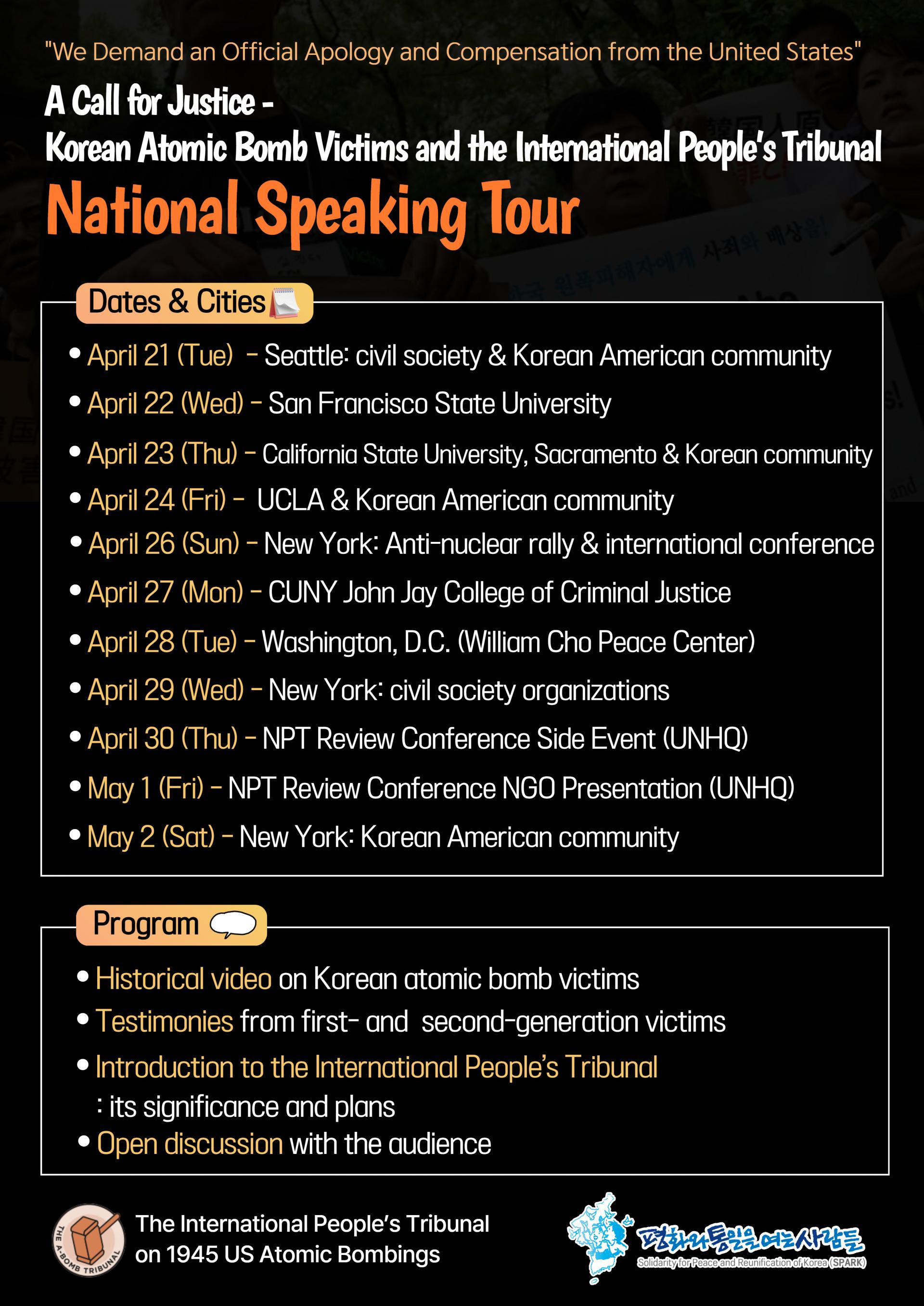
26 April – Chernobyl: Inside the Meltdown airs on National Geographic on Sunday 26th April from 4pm
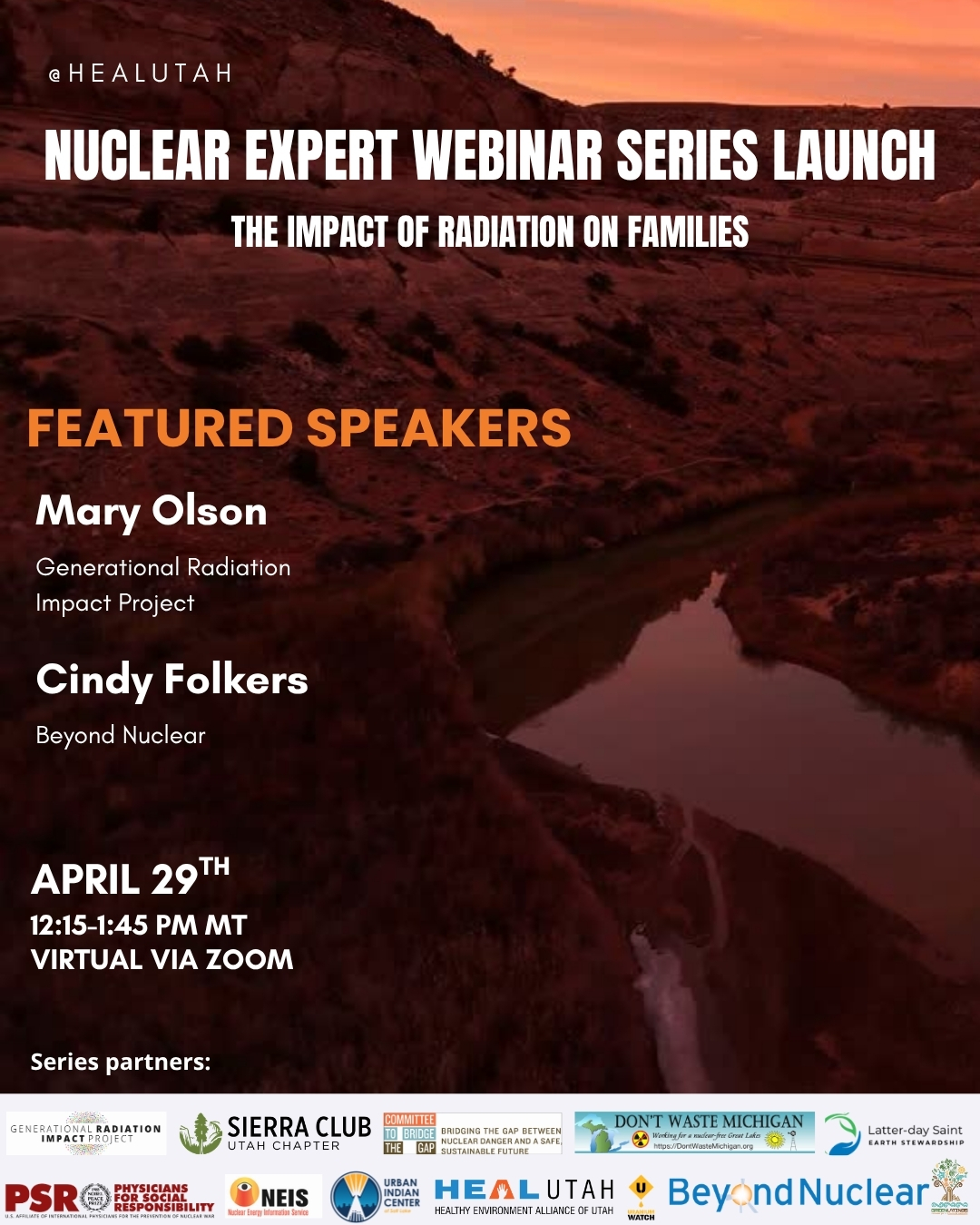
29 April – Nuclear Expert Webinar #1 – Radiation Impacts on Families with Mary Olson and Cindy Folkers
- 12:15 PM MT – 1:45 PM MT
- Location: Virtual – REGISTER TODAY

4 May -West Suburban Peace Coalition to discuss Iran war at May Educational Forum
Monday, May 4, 7:00 – 8:00 PM Central Standard Time
Title: : How Trump’s Narrative Tries to Shape the Reality of the War on Iran.
Contact Walt Zlotow, zlotow@hotmail.com 630 442 3045 for further information
14 May – online event From Bombs to Data Centres: the Face of Nuclear Colonialism

Pine Ridge Uranium is the real threat, not Tehran- Tell Burgum: Stop the Extraction.
Chernobyl: The Lost Tapes – A good documentary on Chernobyl on SBS available On Demand for the next 3 weeks– https://www.sbs.com.au/ondemand/tv-program/chernobyl-the-lost-tapes/2352741955560
To see nuclear-related stories in greater depth and intensity – go to https://nuclearinformation.wordpress.com
-
Archives
- May 2026 (12)
- April 2026 (356)
- March 2026 (251)
- February 2026 (268)
- January 2026 (308)
- December 2025 (358)
- November 2025 (359)
- October 2025 (376)
- September 2025 (257)
- August 2025 (319)
- July 2025 (230)
- June 2025 (348)
-
Categories
- 1
- 1 NUCLEAR ISSUES
- business and costs
- climate change
- culture and arts
- ENERGY
- environment
- health
- history
- indigenous issues
- Legal
- marketing of nuclear
- media
- opposition to nuclear
- PERSONAL STORIES
- politics
- politics international
- Religion and ethics
- safety
- secrets,lies and civil liberties
- spinbuster
- technology
- Uranium
- wastes
- weapons and war
- Women
- 2 WORLD
- ACTION
- AFRICA
- Atrocities
- AUSTRALIA
- Christina's notes
- Christina's themes
- culture and arts
- Events
- Fuk 2022
- Fuk 2023
- Fukushima 2017
- Fukushima 2018
- fukushima 2019
- Fukushima 2020
- Fukushima 2021
- general
- global warming
- Humour (God we need it)
- Nuclear
- RARE EARTHS
- Reference
- resources – print
- Resources -audiovicual
- Weekly Newsletter
- World
- World Nuclear
- YouTube
-
RSS
Entries RSS
Comments RSS
 nuclear-news