Court actions over delays in delivering Russia’s giant nuclear icebreaker line
|
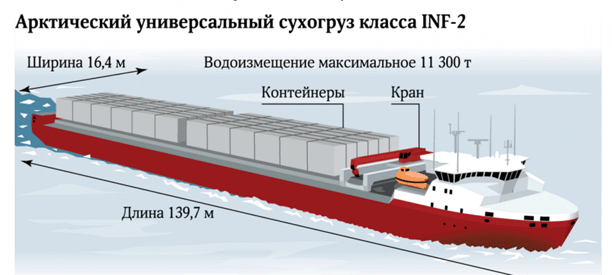
Delays in delivering Russia’s giant nuclear icebreaker line sparks lawsuitsDelays plaguing the launch of the Arktika nuclear icebreaker, billed to be Russia’s largest to date, have prompted a number of lawsuits against the ship’s builder as frustrations mount over a series of technical faults thwarting the vessel’s scheduled release. Bellona , August 21, 2020 by Charles Digges
According to the Barents Observer, which cites industry news portals, Atomflot, Russia’s nuclear icebreaker headquarters, has filed three multi-million dollar lawsuits against the Baltic Shipyard, the St Petersburg-based shipbuilder that has forged most of the country’s icebreaking muscle. Details of the lawsuits are sketchy. But the Barents Observer reports that the suits seek nearly $13.5 million in damages over faulty ship systems and overdue part deliveries, all of which have caused the icebreaker project to overshoot its 2017 deadline. The latest of these mishaps involves a 300-ton electric propulsion engine that failed during the Arktika’s sea trials in February, crippling one of the vessel’s three propeller systems. While the breakdown is not related to the Arktika’s nuclear propulsion system, it was nonetheless an embarrassing setback that will ultimately require the engine to be entirely replaced. Russian media now suggest that the Arktika won’t be repaired before 2021. A new series of upgraded nuclear icebreakers are central component of a Kremlin strategy to keep Arctic sea routes open on a year-round basis. Russia has since Soviet times maintained the world’s largest stable of these vessels. But many have been decommissioned in recent years, and Moscow has embarked on renewing the fleet. The target of this effort is the Northern Sea Route, a 5,600-kilometer sea artery joining Europe to Asia, whose frozen shores are laden with fossil fuels and mineral deposits. To stimulate its development, President Vladimir Putin ordered in 2017 that cargo volumes along the passage reach 80 million tons by the middle of this decade – more than double current volumes. The Arktika, and two other icebreakers in its class – the Ural and the Sibir – are meant to lead the way. Each vessel measures up to 173 meters in length and all are powered by twin RITM-200 nuclear reactors, which deliver a combined 175 megawatts of power – making them the most powerful civilian vessels in the world. Atomflot has filed its suits against the Baltic Shipyard in Moscow’s Arbitration court, the Barents Observer reports. In turn, the shipyard is suing one of its own suppliers – the giant Kirov Plant in St Petersburg, which manufactures heavy machinery. The Arktika’s rollout has face previous delays. In March of 2017, turbines produced by a Ukraine-based manufacturer were held up by military tensions between Moscow and Kiev. https://bellona.org/news/nuclear-issues/2020-08-%EF%BB%BF%EF%BB%BFdelays-in-delivering-russias-giant-nuclear-icebreaker-line-sparks-lawsuits |
|
City of Logan cuts its losses, withdraws from risky NuScam “small” nuclear reactor project
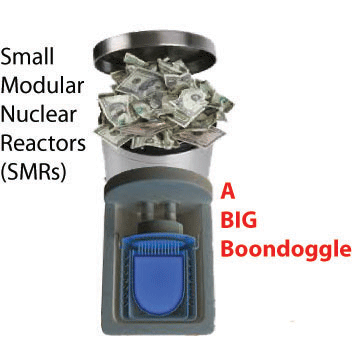 Logan withdraws from risky nuclear power project, Cache Valley
 Daily Charlie Schill August 19, 2020 LOGAN – Members of the Logan City Council voted Tuesday to end the city’s partnership in an increasingly expensive nuclear power project.
As a member of the Utah Associated Municipal Power Systems (UAMPS), Logan City owned a partial interest in a first-of-its-kind nuclear plant proposed to be constructed at the Idaho National Laboratory.
Faced with Sept. 15 deadline to ante up more funding for the risky project, both Mark Montgomery, the city’s light and power director, and Logan Finance Director Richard Anderson recommended that Logan withdraw from the Carbon Free Power Project…….
Montgomery told city council members that Logan had invested about $400,000 in the Small Modular Reactor (SMR) project since 2017. If the city had opted to continue its participation in the project into its initial licensing phase through 2023, the price tag would have been another $654,000.
In early August, the Utah Taxpayers Association urged all Utah cities to reconsider their participation in the SMR project due to its potential for out–of-control costs………
In the original CFPP proposal, the U.S. Department of Energy was to foot the bill for the development of the project’s first module. After pledging up to $1.4 billion for those expenses, federal officials have since backed out of that agreement, leaving UAMPS holding the bag for the project’s first-of-its-kind risks.
Montgomery added that estimated cost of the project have also escalated since 2017, jumping from $3.6 billion to $6.1 billion as of July of this year……… https://www.cachevalleydaily.com/news/archive/2020/08/19/logan-withdraws-from-risky-nuclear-power-project/#.X0BMOOgzbIU
Northern Europe: detecting radiation and where it comes from
|
Radiation detections in northern Europe: what we do and don’t know https://thebulletin.org/2020/08/radiation-detections-in-northern-europe-what-we-do-and-dont-know/# By Cheryl Rofer, August 21, 2020 Alarming events may not be what they initially seem. When an enormous explosion created a mushroom cloud over Beirut on August 4, some people immediately jumped to the wrong conclusion, spreading rumors on social media that a nuclear bomb had gone off. It hadn’t.
Eventually it became clear that the explosion was caused by chemicals stored improperly in warehouses at Beirut’s port. But weapons experts knew from the start that the powerful explosion was not nuclear, because it did not produce a blinding flash of light, or a blast of heat intense enough to set a city on fire. In the hours that followed the explosion, the Comprehensive Test Ban Treaty Organization (CTBTO), which operates a network of monitoring stations around the world, did not detect a telltale spike in atmospheric radiation. That last clue is how experts are able to narrow down the location of nuclear events, from the smallest accidents to major disasters like Chernobyl, and to make educated guesses about what happened. A release of nuclear material spreads its signature on the wind. But that signature is often incomplete or garbled. Nuclear experts are still puzzling over a mysterious event that happened in June, when several monitoring stations in northern Europe detected extremely small quantities of radionuclides in the atmosphere. That event was not a nuclear weapons test, because the CTBTO stations did not detect any seismic activity. So what was it? Experts have scrutinized the radiation signature and narrowed down the possibilities. The finger points to Russia. Radiation alerts. Radioisotope monitoring stations cover most of the globe. The CTBTO runs the biggest network. National radiation safety agencies—for example, in Finland and Sweden—operate other stations. Universities also operate monitoring stations, often in cooperation with the CTBTO or national agencies. Independent monitoring organizations, like the volunteer-driven Safecast, also report radiation measurements. In early June, Norwegian monitoring stations and a CTBTO station detected iodine 131 in far northern Norway. On June 16 and 17, Finland’s Radiation and Nuclear Safety Authority (STUK) detected cobalt 60, ruthenium 103, cesium 134, and cesium 137 in Helsinki. On June 22 and 23, a CTBTO station in Sweden detected ruthenium 103, cesium 134, and cesium 137. Radiation is easy to detect at low levels. The iodine 131 readings were around 1 microbecquerel per cubic meter of air. (A microbecquerel is one atomic disintegration per second in one million cubic meters of air.) But our knowledge of the Chernobyl explosion began with measuring small amounts of radionuclides, so any detection raises an alert. Interpreting the detections. The types of radionuclides detected also provide information. The radionuclides detected in June, except cobalt 60, are produced by nuclear fission. The half-lives of iodine 131 and ruthenium 103 are 8 days and 39 days, respectively, so they must be from recent fission events. These are common fission products from a nuclear reactor. A wider suite of radionuclides would help to pin down what kind of reactor. The iodine 131 detection is ambiguous, though. It is produced by fission, but it is also used fairly commonly to treat hyperthyroidism, in pet cats as well as people. It is easily sent into the air. So it may come from sewage plants or other sources. The fact that it showed up without the other fission products means that its source may be something other than a nuclear accident. Cobalt 60 is not a fission product, but rather an activation product of steel that has been in or very close to a nuclear reactor. It doesn’t usually show up with fission products. It could mean that something was broken in the reactor that released the fission products, or it could be that the Finnish reading was in error. Narrowing down the location. Airborne radionuclides by themselves cannot tell us how or precisely where they were released. The CTBTO tweeted a map indicating the region in northern Europe where the June release may have occurred. This map was probably constructed by tracing the winds during the period just before the radionuclides were detected. A couple of Russian nuclear power plants are located in the area identified, which also covers the location where the United States believes a Russian experimental reactor exploded last summer while it was being raised from the seabed. Last month’s release was probably a minor incident, like a breach in a filter at a nuclear power plant. But Russia has said that there were no incidents at its nuclear power plants. The presence of cobalt 60 and the location have led some to suggest that the release may have been from a new attempt to raise that experimental reactor. It’s not possible, with the limited additional data available so far, to do more than guess the origin of the June radionuclides. The source of a similarly ambiguous release of ruthenium 106 in 2017 took two years to identify. In that case, the release of a single fission product suggested a processing facility, and the wind patterns suggested the Mayak facility in Russia. A detailed study of the stable ruthenium isotopes collected with the ruthenium 106 confirmed those early provisional conclusions. Pinning down the source. Last year’s deadly accident seems to have occurred when a reactor for an experimental nuclear-powered cruise missile was being lifted from the seabed. Again, radionuclide readings from monitoring stations some distance from the source gave early warning to the rest of the world. The amounts and numbers of radionuclides were larger than in the recent release, and reporting on the accident, as people were brought to hospitals, provided more information, including radioisotope detection closer to the site, along with satellite photos and, later, photos of the damaged barge. The radioisotopes indicated that a fission source was involved, although early reports from Russia described an “isotopic source,” a phrase usually reserved for single-isotope heat sources, which would be unsuitable for propulsion. In all three of these cases over the past three years, the radionuclides initially detected by air sampling were ambiguous. Additional information was needed to pin down a source. The best information would come from the country responsible for the release – in all three cases, Russia, which is a signatory to the Convention on Early Notification of a Nuclear Accident. Somebody knows what happened in these cases. We need to hear from them. |
|
UK relations with China at a low point; bad news for nuclear power projects
|
UK nuclear power: The next Huawei? DW, 21 Aug, 20Once a key part of the UK’s energy plans, nuclear power faces rising costs, cheaper renewables and domestic opposition. It also finds itself at the center of a row between London and Beijing that could prove fatal.
London’s relations with China — hailed as entering a “golden era” only four years ago — have deteriorated badly over Hong Kong, hitting a nadir when the UK finally bowed to US pressure to ditch Huawei’s involvement in its new-generation internet (5G) rollout. In late 2019, the US published a list of companies linked to the Chinese military, and after Huawei came the China General Nuclear Power Group (CGN). The state-owned Chinese firm has invested 3.8 billion pounds (€4.1 billion, $4.3 billion) in Britain to date, mainly in the Hinkley Point nuclear plant under construction in Somerset, southwest England, and the Sizewell plant in eastern England. It is also seeking UK regulatory approval to build its own nuclear reactor at Bradwell in Essex, east of London. China warned the UK it would face “consequences if it chooses to be a hostile partner” after London announced its Huawei’s decision. Liu Xiaoming, the Chinese ambassador to the UK, reportedly said China could cut its backing for UK nuclear plants altogether. Years of Chinese involvement in UK nuclear industryCGN’s involvement in the UK nuclear industry began in 2016 when a deal was signed with French state-owned utility Electricite de France (EdF) to collaborate on three reactors totaling 8.7 gigawatts (GW) of power generation, starting with Hinkley Point. The agreement spoke of CGN’s “progressive entry” into the UK’s “resurgent” nuclear ambitions. The UK currently has 15 operational nuclear reactors at seven locations. At its height in 1997, 26% of the country’s power was generated from nuclear, but this has slipped since to 19%. In the Sizewell and Hinkley projects, CGN is providing cash, holding 66% stakes, but with Bradwell it wants to build the reactor itself, using its own technology, and it wants to operate it. Observers say Bradwell is the prize CGN is really seeking: the first Chinese-built nuclear plant outside China. In May, EdF outlined its plans to start work on Sizewell by the end of next year. The project would create 25,000 jobs, it said. But EdF’s continued involvement could be thrown into doubt if no other investor came forward to replace CGN. This is especially troubling given the project is also expected to result in cost overrun. Hinkley Point now costs about 3 billion pounds more than the 20 billion pounds originally planned. Sizewell is also slated to cost 20 billion pounds. “Several projects were planned but only Hinkley Point will likely go ahead,” Jonathan Marshall, Energy and Climate Intelligence Unit (ECIU), told DW. “Bradwell would be a Chinese project, but is now unlikely for political reasons.” Bradwell looks surplus to requirements for the reasons the National Infrastructure Assessment (NIC), a government advisory body, outlined in its most recent long-term assessment: “Given the balance of cost and risk, a renewables-based system looks a safer bet at present than constructing multiple new nuclear power plants,” it read. Financing of nuclear plans unclear“Sizewell is not dependent on CGN investment,” a spokesman from the the Department for Business, Energy and Industrial Strategy (BEIS) said. But not many agree. “Equity funding for nuclear power stations is very difficult for private actors,” Rob Gross, director of the UK Energy Research Centre, told DW. The government’s offer in 2018 to Hitachi to take a third of the equity at the Wylfa nuclear project wasn’t enough to keep the company interested, for example. As Paul Dorfman of University College London’s energy institute and founder of the Nuclear Consulting Group told environmental news platform electrictyinfo.org, it was hard to see who else might invest in Sizewell if the Chinese pull out. “The market won’t touch nuclear with a barge pole. You only see nuclear being built in command-and-control economies, like China and Russia, and a few outliers,” he said. One option would be for the government to take either a majority or minority stake in Sizewell. Another option is a Regulated Asset Base (RAB) model, where consumers are charged a fixed price to cover infrastructure costs. But this would hike energy prices in the long term and make it politically hard to justify. …….https://www.dw.com/en/uk-nuclear-power-the-next-huawei/a-54631808 |
|
Wow! Only the bare 313 years before the Dounreay nuclear power site could be used for anything else!

 uses in 313 years’ time, according to a new report. Dounreay, near Thurso,
was the UK site for the development of fast reactor research from 1955 to
1994. The facility on the north Caithness coast is in the process of being
closed down, demolished and cleaned up. However, the Nuclear
Decommissioning Authority said it would be 2333 before the 148-acre site is
safe for reuse. The date forms part of the authority’s newly-published
draft strategy. Waste is to be removed from the Shaft by 2029, according to
the NDA report.
https://www.bbc.co.uk/news/uk-scotland-highlands-islands-53848766
Independent 20th Aug 2020, In 313 years’ time, 378 years after it first opened in 1955, and 339
years after it ceased operations in 1994, the 178-acre nuclear power
facility site at Dounreay will be safe for other uses, a new report has
stated. Though the site on the north coast of Scotland was only home to
functioning nuclear reactors for 39 years, the clean-up will take roughly
ten times as long, with efforts already underway to clean up hazardous
radioactive material. Part of the demolition process has involved the use
of a remote controlled robot nicknamed the “Reactosaurus”, a 75-tonne
device with radiation-proof cameras, and robotic arms which are able to
reach 12 metres into the reactors where they can operate an array of
size-reduction and handling tools, including diamond wire and disks and
hydraulic shears. One of the areas targeted for waste removal is a highly
contaminated area called the Shaft. In 1977, a catastrophic leak allowed
seawater to flood a 65-metre-deep shaft which was packed full of
radioactive waste as well as more than 2kg or sodium and potassium.
Bikini Atoll – food grown there is radioactive – but, it’s “technically habitable”!

Technically Habitable The background radiation of the island has been found to be at normal levels, and even lower than that of some major US cities. While you could walk around on the island and suffer no real ill effects, living there is an entirely different story because of the aforementioned soil and subsequent food contamination.
Ironically for the islanders of Bikini Atoll, the word ‘bikini’ likely comes from ‘pikinni’ which, in the Marshallese language means ‘coconut place
The Radioactive Coconuts of Bikini Atoll, Beginning in 1946, a series of Atomic bombs were tested on and around the Marshall islands, of which Bikini Atoll is one, as both a means of testing and refining the incredibly destructive power demonstrated at Hiroshima and Nagasaki just a year earlier, as well as making a clear statement of US atomic superiority over the Russians. Medium 21 Aug 20, Danny Kane
For those that don’t know, Bikini Atoll was the US’ test site during the 1940s and 1950s for 23 separate Nuclear bombs.
Beginning in 1946, a series of Atomic bombs were tested on and around the Marshall islands, of which Bikini Atoll is one, as both a means of testing and refining the incredibly destructive power demonstrated at Hiroshima and Nagasaki just a year earlier, as well as making a clear statement of US atomic superiority over the Soviet Union.
The Micronesian inhabitants of Bikini Atoll were approached in 1946 by the US government and asked to re-locate while the tests were being carried out. They would be transported to Rongerik Atoll, which is about 6 times smaller than Bikini Atoll — it also has insufficient food and water supplies and was uninhabited at the time………..
The islanders on Rongerik Atoll were starving, the land their being far less fertile than their native Bikini. They were then moved to Kili Island. It was little improvement for the islanders. Relying on fishing for a large part of their diet, they found Kili, which has no lagoons and rough seas most of the year particularly difficult to survive on.
But on March 1st, 1954, the fate of Bikini Atoll was about to take a destructive turn. Ironically, the bomb that was detonated was one of the few not detonated on the Atoll, instead it was detonated on an artificial island 900m from Namu island. This was the infamous Castle Bravo hydrogen bomb. It exploded that day with the force of 15mt , far more than the 6mt that was expected. It was 750 times more powerful that the Fat Man bomb that levelled Nagasaki. It denoted with 2.5 times the expected yield and remains the largest nuclear bomb ever detonated by the US, equivalent to 15 million tonnes of TNT.
Appropriate precautions hadn’t been taken for such a large detonation, and so nuclear fallout rained down on Bikini Atoll, Rongelap Atoll and Rongerik Atoll. 20,000 people were affected by the Castle Bravo detonation and 15 islands and atolls were contaminated. People showed signs of acute radiation sickness, and, on Rongelap, 2 cm of nuclear ash blanketed the entire island. Children, unaware of the fallouts affects, began playing with the falling ash like snow.
Returning Home
Another 19 atomic bombs would be detonated on and around Bikini Atoll, the last one Juniper on July 22nd, 1954, almost 12 years to the day since the Baker detonation. Now, the fight to return to Bikini Atoll really began. Struggling to survive on Kili Island, the islanders were eager to return home.
In spite of all we’d put it through Bikini Atoll had recovered from its years of abuse at the hands of the US. Having been bounced between various islands and atolls since the testing began, Kili had become their permeant home since 1948, but the islands desperately wanted to return home. It wouldn’t be until 1968 until they got the chance. President Lyndon B Johnson promised that the islanders could return, but an investigation by the Atomic Energy Commission found that the radiation levels in the coconut crab, an essential food source for the islanders, were far above normal and acceptable limits. As such, the islanders were forced to remain on Kili island.
Three families did move back in 1972, followed by others in 1987 despite later advice. Issues continued to plague the islanders though, with a boy who’d been born on Bikini Atoll dying from cancer caused by the radiation. In 1982, those that had returned would be evacuated for a second time when it was found that the top 15 inches of soil contained high concentrations of Caesium 137, which would then make its way into the various plants and fruits the islanders ate — and yes, even the coconuts were affected. This resulted in a high number of stillbirths, miscarriages and genetic abnormalities in the children born from those affected by the atomic tests conducted in and around Bikini Atoll. What’s more men were four times as likely to develop lung cancer on the island, women 60 times more likely develop cervical cancer
Over $150 million has been paid to the Bikini islanders as compensation and to reconstruct homes, facilities and institutions for the islanders, many of whom now live on Kili Island. The call to return to Bikini Atoll is still strong though and many point to the fact that the island is still technically habitable.
Technically Habitable
The background radiation of the island has been found to be at normal levels, and even lower than that of some major US cities. While you could walk around on the island and suffer no real ill effects, living there is an entirely different story because of the aforementioned soil and subsequent food contamination.
One proposed solution, and the one favoured by the islanders themselves, is to scrap the topsoil. The top 15 inches of Caesium 137 contaminated soil would be removed and replaced with potassium rich soil. The plants, preferring the potassium over the caesium, would quickly switch to that. While Caesium 137 would still be present in the earth, it would be absent from the food.
There are unfortunately a number of issues with this. Removing the topsoil would have a devasting effect on the ecology of the island and scientists have argued that it would effectively turn Bikini Atoll into a wasteland. This is to say nothing of the expense and the fact that the scraping of the topsoil would likely have to be repeated on occasion to ensure that Caesium 137 didn’t return to the food supply.
Right now, the islanders live on a majority imported food supply and it’s likely that they could continue to do this on Bikini Atoll. It is hardly a return to normal life on the home island though and if the islanders are forced into the same food import practices they’ve had since the 40s, many argue why return to the island at all. Many islanders seem willing to take the risk of destroying the island if it means that they can return their a potentially grow food once more like their ancestors of old.
And so, it remains to this day. The Bikini islanders have never returned home, instead being forced into limbo. Most live on Kili Island today and there are as many as 2,400 Bikini islanders, with fewer than 40 of them having been alive to witness the fires of nuclear fission all those years ago. A great many of them have never even visited their home island, which in recent years has become a tourist attraction. A great many diving tours are offered, especially of the sunken USS Arkansas and the USS Saratoga aircraft carrier, two of the many ships sunk in the testing, as well as the colossal crater left by Castle Bravo…………..
Ironically for the islanders of Bikini Atoll, the word ‘bikini’ likely comes from ‘pikinni’ which, in the Marshallese language means ‘coconut place’………https://medium.com/@dannykane97/the-radioactive-coconuts-of-bikini-atoll-9bfb568b8b07
Community opposition to South Bruce Nuclear Waste Repository
|
Residents discuss opposition to South Bruce Nuclear Waste Repository, Blackburn News, By Janice MacKayAugust 21, 2020 About 100 South Bruce Residents who oppose an underground repository for used nuclear fuel gathered recently at a fundraiser for the Protect Our Waterways – No Nuclear Waste organization.Residents also had a chance to talk about mobilization efforts against the establishment of the Deep Geological Repository in South Bruce. Ignace is the only other community under consideration for the facility by the Nuclear Waste Management Organization.
Board members of Protect Our Waterways – No Nuclear Waste also spent time updating participants on efforts so far…….. https://blackburnnews.com/midwestern-ontario/midwestern-ontario-news/2020/08/21/residents-gather-discuss-opposition-south-bruce-nuclear-waste-repository/ |
|
Take the money away from nuclear weapons – spend it on Covid-19 relief
Nuclear weapons must go, https://www.goskagit.com/opinion/letters_to_the_editor/letter-nuclear-weapons-must-go/article_668b33b7-76f9-5a31-9c0c-7c85e222aae3.html, By Kathleen Lorence-Flanagan
On the 75th anniversaries of the Hiroshima and Nagasaki nuclear bombings, there were two days of videotaped testimony by hibakusha (survivors), scientists, artists, students, downwinders, mayors, Marshall Islanders, etc. Moving, informative, and inspiring testimony.
The question that kept arising was why do nuclear weapons still exist? It was said that as weapons of global annihilation, “we need to get rid of them before they get rid of us.”
Total global spending on nuclear weapons in 2019 was $73 billion, $35 billion of that by the U.S. alone (CNN).
Could that money not be better spent for COVID economic relief, education, health care, jobs, etc.?
More spending, deregulation of nuclear waste and resumption of nuclear testing are proposed by the current administration.
A positive note: the UN Treaty on the Prohibition of Nuclear Weapons has recently been signed by three more countries, bringing the total to 43.
A total of 50 are needed, at which point nuclear weapons will fall into the same category as biological and chemical weapons. Hopefully seven more nations will step up to the plate.
The Prospects of Nuclear Disarmament in the New Nuclear Architecture,
The Prospects of Nuclear Disarmament in the New Nuclear Architecture, Modern Diplomacy August 21, 2020, By Hamzah Taoqeer
The debate for arms control and nuclear disarmament has been unfortunately for long has been played as self-serving and hollow pledges by the major NWS which have failed to deliver upon them. The withdrawal from the INF would lead to further lowering of the nuclear threshold as the US would actively develop and deploy tactical nuclear weapons in regions of interest including Asia Pacific and Eastern Europe. The new nuclear architecture developed by the actions of major powers further weaken and deteriorate the efficacy of institutional norms. The efficacy and credibility of new initiatives such as CEND among other remains questionable as the P5 have failed to deliver measurable progress upon the existing arms control and disarmament initiatives.
The emerging nuclear architecture blur the legitimacy of the arms control initiatives and further encourage NNWS to pursue for alternative measures including nuclear weapons program to secure their interests. Thus, resulting in proliferation of nuclear weapons which threaten world peace and security. The major powers should for once initiate a robust implementation upon their aforementioned commitments in good faith rather than devising frameworks for achieving their limited interests……………. https://moderndiplomacy.eu/2020/08/21/the-prospects-of-nuclear-disarmament-in-the-new-nuclear-architecture/
Debate rages on for nuclear waste facility proposed near Carlsbad, more hearings scheduled
|
Debate rages on for nuclear waste facility proposed near Carlsbad, more hearings scheduled
Adrian Hedden, Carlsbad Current-Argus, 20 Aug 20, A project to build a temporary storage facility for high-level nuclear waste in southeast New Mexico will continue to be debated as the federal Nuclear Regulatory Commission scheduled four more public hearings to solicit public feedback on the proposal.Holtec International’s proposed consolidated interim storage facility (CISF) would temporarily hold spent nuclear fuel rods at the surface in an area near the Eddy-Lea county line…….. opponents continued to question the safety of the project and its plan to transport spent nuclear fuel from generators across the county and the legality of opening a temporary storage facility when the U.S. lacks a permanent repository for high-level nuclear waste…… The hearings were planned to be held online on Aug. 20 from 4 to 7 p.m., Aug. 25 from noon to 3 p.m., Aug. 26 from 4 to 7 p.m. and Sept. 2 from 9 a.m. to noon. Previously, the NRC held public meetings on the EIS on June 23 and July 9. Written comments were to be accepted until Sept. 22 via email to Holtec-CISFEIS@nrc.gov, via mail to the Office of Administration, Mail Stop: TWFN-7-A60M, ATTN: Program Management, Announcements and Editing Staff, U.S. Nuclear Regulatory Commission, Washington, DC or online to the federal government’s rulemaking page at regulations.gov using docket ID NRC-2018-0052………… Project debated by New Mexico officials, nuclear industry leadersNew Mexico Gov. Michelle Lujan Grisham and state officials voiced continued disapproval of the project, with Lujan Grisham writing a letter to President Donald Trump to voice her opposition last month. Lujan Grisham cited concerns the project could imperil the environment in New Mexico and threaten to disrupt local agriculture and extraction industries in the southeast region of the state…….. https://www.currentargus.com/story/news/local/2020/08/20/debate-rages-nuclear-waste-facility-proposed-near-carlsbad/5604978002/ |
|
Report: Israel ‘deeply concerned’ by Saudi Arabia, China alleged nuclear cooperation,
|
Report: Israel ‘deeply concerned’ by Saudi Arabia, China alleged nuclear cooperation, MEMO, Middle East Monitor, August 21, 2020 Israel’s Walla news website revealed that Tel Aviv has informed the United States that it was “gravely” concerned by alleged nuclear cooperation between Saudi Arabia and China.The website said senior Israeli intelligence officials had called their American counterparts to express their “grave concern” about the cooperation between Riyadh and Beijing.
According to the site, “unnamed” Israeli officials said there was a secret factory of primitive materials used in uranium enrichment in Saudi Arabia near the capital, Riyadh, explaining that the Wall Street Journal and the New York Times were the first to report on it, including satellite images of the factory. The officials pointed out that the office of Prime Minister Benjamin Netanyahu deals with the file as “very sensitive” politically since Israel considers Saudi Arabia an important ally in the face of Iran. The officials added that the Israeli intelligence services, the ministries of foreign affairs, intelligence and defence, and the Atomic Energy Commission are following the developments of the Saudi nuclear program………. According to Israeli officials, Saudi Arabia has cooperated with China, because the Chinese did not ask for guarantees that the programme would be purely civilian, which is what the United States always demands. https://www.middleeastmonitor.com/20200821-report-israel-deeply-concerned-by-saudi-arabia-china-alleged-nuclear-cooperation/ |
|
U.S. Democratic Party not really interested in reducing the bloated military spending

War, Peace and the Democrats, Common Wonders, Wednesday, August 19th, 2020 By Robert C. Koehler
 “There’s something happening here/What it is ain’t exactly clear . . .”
Or is it? “……………………………Yes, there are progressive, antiwar Democrats out there, gaining power, getting elected to office, almost winning presidential primaries — scaring the bejesus out of the Democratic establishment — but the party itself still stands firmly in the middle of nowhere, fully in favor of empathy and compassion and yet, somehow, fully supportive of the endless wars most of its own voters hate and utterly unwilling to challenge the bloated and ever-expanding defense budget.Citing the analysis of William Hartung and Many Smithberger, the Milwaukee Independent described that budget thus: “As of 2019, the annual Pentagon base budget, plus war budget, plus nuclear weapons in the Department of Energy, plus military spending by the Department of Homeland Security, plus interest on deficit military spending, and other military spending totaled $1.25 trillion . . .”
Indeed, as Alexander Sammon points out in the American Prospect, Democratic majorities were crucial this summer to the defeat of three separate bills, introduced by progressive Democrats, to reduce military spending and/or undo the militarization of police departments. These included amendments in both the Senate and the House to the National Defense Authorization Act, diverting 10 percent of the Department of Defense budget to health care, education and jobs; as well as a Senate proposal to end the 1033 Program, which allows the Pentagon to transfer military gear to the police. The amendment’s defeat in the House was especially an outrage, Sammon notes, in that the Dems hold a majority in the House and could have passed it.
“If Democrats are going to enact anything that resembles their own agenda,” Sammon writes, “they’re going to have to aim way higher than cutting defense to near Obama-era highs. Taking military spending not to pre-Trump but to pre-9/11 levels should be a starting point. Democratic voters abhor the War on Terror; it’s what helped deliver Obama the presidency back in 2008. It’s incumbent on Joe Biden to deliver on that preference, not just to end engagements in Iraq and Afghanistan but to bring an end to the bloated defense budgets of the War on Terror era. His silence on the proposal even in the thick of a campaign against Trump sends a troubling message.”
Climate, weather extremes, threaten nuclear reactors, and costs of preparing for them are increasing
Dozens of US nuclear power plants at risk due to climate change: Moody’s, S and P Global, Author Steven Dolley Washington Editor, Keiron Greenhalgh 19 Aug 20
37 GW of nuclear capacity at risk from flooding
48 GW at risk from heat, water stress
Merchant plants have fewer options to recover mitigation costs
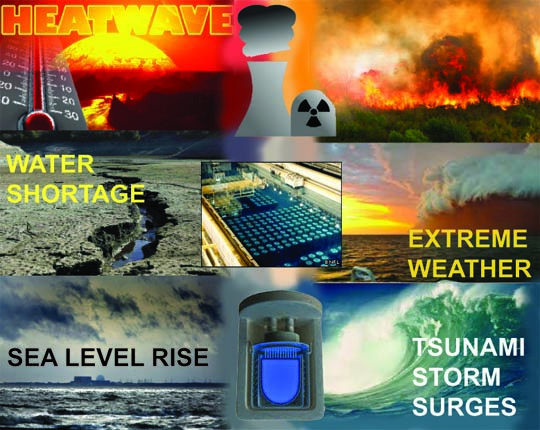
Washington — Dozens of US nuclear power plants, comprising nearly half the country’s operational nuclear generating capacity, “will face growing credit risks” in the next 10 to 20 years due to flooding, hurricanes, heat stress and other predicted impacts of climate change, Moody’s Investors Service said in a report Aug. 18.
“The consequences of climate change can affect every aspect of nuclear plant operations – from fuel handling and power and steam generation to maintenance, safety systems and waste processing,” the report said, noting that “the severity of these risks will vary by region, with the ultimate credit impact depending on the ability of plant operators to invest in mitigating measures to manage these risks.”
Moody’s did not specify mitigation measures that are being, or should be, taken.
Water cooling needs expose plants to the risk of flooding, sea-level rise and hurricanes, and “about 37 gigawatts (GW) of US nuclear capacity [have] elevated exposure to flood risk,” Moody’s said.
Also, the report noted, “rising heat and water stress can have an adverse impact on plant operations,” with “about 48 GW of nuclear capacity [having] elevated exposure to combined rising heat and water stress.”
“Regulated or cost-based nuclear plants,” comprising about 55 GW of capacity in the US, “face elevated heat and water stress across most locations, with moderate to high risk of floods, hurricanes, and sea level rise for certain coastal plants,” Moody’s said. However, it added: “The credit impact of these climate risks is likely to be more modest for operators of these nuclear plants, relative to market-based plants, because they have the ability to recoup costs through rate recovery mechanisms.”
By contrast, “market-based plants,” with a total of about 44 GW of capacity, “face elevated heat stress and more water stress than regulated/cost-based plants, with fewer plants at risk of floods and hurricanes,” it said.
The highest risk, or “red flag,” category includes plants that are “highly exposed to historical and/or projected risks, indicating high potential for negative impacts,” Moody’s said.
According to the report, five plants with a combined capacity of about 9.1 GW are in the red flag category for floods. Some 13 plants with a combined capacity of about 23.8 GW were found to be at red-flag risk for heat stress. The categories of hurricanes, sea level rise and water stress each had one plant expected to be at red-flag risk.
Because some US nuclear units “are seeking to extend their operations by 20, or even 40 years,” Moody’s said, “operators will have to consider these risks when implementing resilience measures.”………. https://www.spglobal.com/platts/en/market-insights/latest-news/electric-power/081820-dozens-of-us-nuclear-power-plants-at-risk-due-to-climate-change-moodys
Climate change a problem for nuclear waste dumps
 Climate change included in nuclear waste study, Dryden now, August 2020 by Mike Aiken
Experts with the Nuclear Waste Management Organization are adjusting their forecasts for the Ignace area, so they include the possibility of more rainfall. The adjustment will allow for climate change, including the possibility of extreme weather and increased flooding.
“This is the first time this modelling work has been done for a potential repository location and any assessment of sites for the safe storage of used nuclear fuels must take into account the potential future impact of climate change on its infrastructure,” said Kelly Liberda, who is a senior engineer with Golder Associates, who are working on the site selection process.
“While it’s difficult to project the extent to which precipitation could fluctuate in specific geographic areas, the NMWO is taking steps to anticipate the most likely scenarios,” Liberda added.
Based on a multi-model assessment of publicly available data, the Golder Associates study found that both one-day probable maximum precipitation and one-day rainfall events in the Ignace study area are projected to increase in the 2050s and 2080s. …….
Global heating now posing physical and financial risks to U.S. nuclear reactors
|
A new report from Moody’s shows that a warming world may cause more service disruptions in the US. Climate change—particularly intense heat—is advancing so rapidly that it poses physical as well as credit risks to America’s aging nuclear fleet, a new report from Moody’s Investors Service finds. “Our plants are fairly hardened to severe weather,” said David Kamran, a projects and infrastructure analyst at Moody’s and the lead author of the report. “But climate change is moving quickly.” ……… in 2011, the US Nuclear Regulatory Commission asked domestic plants to conduct their own assessments of risks from climate change and other natural hazards. A 2019 Bloomberg review of correspondence between the commission and owners of 60 plants concerning those assessments found that 54 of their facilities weren’t designed to handle the flood risk they now face. ……. The new report is the result of an analysis conducted by Four Twenty Seven Inc, a climate risk data company Moody’s acquired last year. The group evaluated the potential effects of heat stress, water stress, hurricanes, flooding, and rising sea levels on 57 US nuclear power plants over the next 20 years. It found that while a handful of plants—including Cooper Nuclear Station in Nemaha, Neb. and Prairie Island in Goodhue, Minn.—face severe risk from floods, far more either will face or already face “red flag” conditions from heat. Nuclear plants are cooled by water, and in times of intense heat and drought, water resources can become either too warm or too scarce, forcing shutdowns. This has already happened, and not just in the South: in 2012, Dominion Energy Inc’s Millstone nuclear plant in Waterford, Conn. The report predicts that nuclear plants in the Rocky Mountain states, the Colorado River region, and California face the highest levels of water stress risk going forward. …… the report was meant to highlight the extent of the environmental pressures plants will have to adapt to withstand if they want to operate consistently in the coming decades. Resisting those stresses is potentially expensive— even more expensive than the plants have currently estimated, he said: “In certain cases they will need to make investments to further reinforce their plants and they need to have money in their cap-ex funds to do that.” https://www.livemint.com/news/world/nuclear-plants-face-more-heat-risk-than-they-re-prepared-to-handle-11597848362280.html |
|

1 This Month


Tell Congress: Prevent Nuclear Catastrophe in Iran

Tell Congress: Prevent Nuclear Catastrophe in Iran

Read the Public Inquiry Report, the Commissioners’ report, Surrendering Australia: The AUKUS Deception is available to download for free at aukuspublicinquiry.com. Or just watch the replay of the National Press Club Luncheon.
To see nuclear-related stories in greater depth and intensity – go to https://nuclearinformation.wordpress.com
Say No to NASA’s Reckless Nuclear Reactor on the Moon
-
Archives
- November 2026 (284)
- October 2026 (302)
- September 2026 (339)
- August 2026 (330)
- July 2026 (355)
- June 2026 (287)
- May 2026 (306)
- April 2026 (356)
- March 2026 (251)
- February 2026 (267)
- January 2026 (308)
- December 2025 (358)
-
Categories
- 1
- 1 NUCLEAR ISSUES
- business and costs
- climate change
- culture and arts
- ENERGY
- environment
- health
- history
- indigenous issues
- Legal
- marketing of nuclear
- media
- opposition to nuclear
- PERSONAL STORIES
- politics
- politics international
- Religion and ethics
- safety
- secrets,lies and civil liberties
- spinbuster
- technology
- Uranium
- wastes
- weapons and war
- Women
- 2 WORLD
- ACTION
- AFRICA
- Atrocities
- AUSTRALIA
- Christina's notes
- Christina's themes
- culture and arts
- Events
- Fuk 2022
- Fuk 2023
- Fukushima 2017
- Fukushima 2018
- fukushima 2019
- Fukushima 2020
- Fukushima 2021
- general
- global warming
- Humour (God we need it)
- Nuclear
- RARE EARTHS
- Reference
- resources – print
- Resources -audiovicual
- Weekly Newsletter
- World
- World Nuclear
- YouTube
-
RSS
Entries RSS
Comments RSS

