Medical experts testify to court on Julian Assange’s precarious mental health
Medical evidence was produced in Julian Assange’s extradition hearing yesterday detailing the terrible harm done to the heroic journalist by a decade of state-orchestrated persecution.
The day was given over to the examination of Professor Michael Kopelman who testified to Assange’s mental health. Kopelman is a psychiatrist and Emeritus Professor of Neuropsychiatry at Kings College London. He has given expert evidence in multiple extradition cases on behalf of both the defence and the prosecution. In assessing Assange, he conducted seventeen visits in 2019 and additional visits in 2020, constructed a “full family history” and a “full personal psychiatric history,” and carried out “interviews with his family and lifelong friends.”
His findings constitute a clear bar to Assange’s extradition to the United States. Under Section 91 of the UK Extradition Act (2003), extradition is prohibited if “the physical or mental condition of the person is such that it would be unjust or oppressive to extradite him.”
Under Section 87, extradition is prohibited if it is incompatible with the European Convention on Human Rights (ECHR). Article 3 of the ECHR states, “No one shall be subjected to torture or to inhuman or degrading treatment or punishment.”
Medical evidence speaking to these bars has played a critical role in previous US-UK extradition hearings, for example in the case of Lauri Love. The risk of notoriously poor conditions in US prisons exacerbating mental illness is an important factor.
Assange’s case meets these criteria. The details in today’s WSWS coverage are being reported consistent with the “sensitivity” called for by defence lawyer Edward Fitzgerald QC, on behalf of his client. Nonetheless they make overwhelmingly clear the “unjust and oppressive” treatment to which Assange has already been subjected.
Assange, Kopelman told the court, has experienced periods of serious mental illness in his earlier life. Since being confined to the Ecuadorian Embassy and then Belmarsh maximum security prison, these issues have resurfaced and worsened. Assange has suffered symptoms of severe and recurrent depression. Those symptoms have included “loss of sleep, loss of weight, a sense of pre-occupation and helplessness” and auditory hallucinations which Kopelman summarised as “derogatory and persecutory.”
They have also included “suicidal preoccupations.” Kopelman told the court, “There are… an abundance of known risk factors in Mr Assange’s case” and that Assange has “made various plans and undergone various preparations.” He gave his opinion that there was a “very high risk of suicide.”
These symptoms and risks, Kopelman explained, are exacerbated by an anxiety disorder and Post Traumatic Stress Disorder (PTSD) and by a diagnosis of Asperger’s syndrome. Kopelman cited a paper by world-leading autism expert Dr Simon Baron-Cohen which found that the lifetime experience of suicidal thoughts in those with Asperger’s “was more than nine times higher than in the general population in England.”
Explaining the impact of the US government’s persecution, Kopelman said, “The risk of suicide arises out of the clinical factors of depression and the other diagnoses, but it is the imminence of extradition and/or an actual extradition that will trigger the attempt, in my opinion.”
If Assange were to be incarcerated in the US and segregated from other prisoners, Kopelman gave his opinion that the WikiLeaks founder would “deteriorate substantially” and see an “exacerbation” of his “suicidal ideas.” This would “amount to psychological harm and severe psychological suffering.”
Kopelman’s evidence confirms the warnings made since November 2019 by Doctors for Assange, representing hundreds of medical professionals from around the world, that Assange is suffering “psychological torture” and “could die in prison.” It underlines in distressing detail UN Special Rapporteur on Torture Nils Melzer’s comment regarding Assange’s treatment that “psychological torture is not torture-lite. Psychological torture aims to wreck and destroy the person’s personality and identity… to make them break.”
Assange’s year-and-a-half long incarceration at Belmarsh has been designed to achieve this objective. It has profoundly undermined, in numerous ways, his legal right to prepare his defence against extradition. Kopelman reported yesterday that Assange has repeatedly complained that the medication taken for his mental health has caused him “difficulty in thinking, in memorising [and] in concentration.”
During the morning’s cross examination, Kopelman forcefully rebuffed prosecution lawyer James Lewis QC’s challenge to his credentials. He said solicitors had called him several times in recent years saying that Lewis himself was “keen to have your services” in an extradition case.
In the afternoon, cross-examination continued, with Lewis challenging the veracity of Kopelman’s diagnosis, and claiming that Assange’s appearance was “wholly inconsistent with someone who is severely or moderately-severely depressed and with psychotic symptoms.”
Kopelman replied, “Could we go back a step?” Having seen Assange between May 30 and December [2019], “I thought he was severely depressed, suicidal and was experiencing hallucinations.”………….. https://www.wsws.org/en/articles/2020/09/23/assa-s23.html
Small modular nuclear reactors for Canada? – useless, expensive, untested, and a wasteful distraction
 NB Media Co-op 22nd Sept 2020,Premier Blaine Higgs has endorsed so-called “small modular nuclear reactors” or SMRs. SMRs represent an untested technology but what we know on the basis of technical characteristics and historical precedent is that they will be expensive and any electricity they generate will not be economical. The nuclear industry is pushing small reactors because large reactors are simply not economical. Constructing nuclear plants is just too expensive—as Ontario’s government found out after its call in 2008 for bids to build two more reactors at the Darlington site.
https://nbmediacoop.org/2020/09/22/no-business-case-for-new-nuclear-reactors-in-new-brunswick/
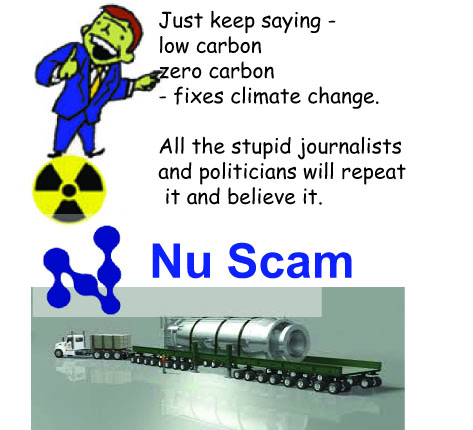 Sierra Club Canada (accessed) 23rd Sept 2020, No plan that gets us to net zero in a reasonable time frame includes new nuclear reactors. Nuclear is far too slow and expensive to deal with the climate emergency. Just like fossil fuel energy, nuclear produces wastes that pose unacceptable health hazards and economic costs.
The U.S. media’s resposibility to question Trump and Biden on nuclear arms control and nonproliferation

|
Whether President Trump or one of his challengers is sworn in as president on January 20, 2021, he or she will have the complete and unchecked authority to order the use of the approximately 4,000 nuclear weapons in the active US stockpile. When running for the highest office in the land, each presidential candidate is asking the American public to trust him or her implicitly with this singular responsibility. Given that reality, it is actually quite strange that plans and policies for the management of the most destructive force ever created are rarely discussed on the campaign trail. ………..with the exception of the Nov. 20, 2020 Democratic debate, television network hosts have largely avoided foreign policy questions in multi-candidate forums. Political reporters inside the Beltway and in the field rarely ask candidates about nuclear policy issues, despite the multiple nuclear crises unfolding around us in real time. There does not seem to be any acknowledgement that nuclear issues are inextricably linked to so many of the other issues being discussed. Relations with Russia, currently at a post-Cold War low, could slide from terrible to disastrous in the absence of verifiable, bilateral controls over the US and Russian nuclear arsenals. It is hard to envision a successful economic pivot to Asia that doesn’t involve a long-term solution to the North Korean nuclear crisis and a better strategic stability relationship between the United States and China. Getting the military budget under control is impossible without taking a hard look at the nearly $1.7 trillion (at least) that the United States is planning to spend on modernizing US nuclear forces. There is no “peace in the Middle East” without constraints on weapons of mass destruction in the region. Long-term solutions to climate change are all for naught if we ignore the other existential threat to humanity: nuclear war. The list could go on, but the point is that we ignore nuclear issues at our own peril. The next president will have to deal with many pressing questions on day one (or day 1,461), but few are as consequential as this one: Do we want to live in a world in which the number of nuclear weapons is going up or going down?……….. Despite the stated commitment to arms control and non-proliferation policies in the 2018 Nuclear Posture Reviewi, the Trump administration has mostly dismantled and dismissed standing nuclear agreements…….. No matter who sits behind the Resolute Desk on Jan. 20, 2021, he or she will have to scramble to triage the challenges left to them on the arms control and nonproliferation front. The most pressing challenge will be the possible end of the New Strategic Arms Reduction Treaty (New START), which is set to expire on Feb. 5, 2021. ………. While most Democratic candidates have affirmedv that they would extend the treaty as long as Russia remains in compliance, they should be asked to outline their plans for extension and how they would handle the broader strategic stability dialogue with Russia. ……… Plans to deal with the North Korean nuclear program are inextricably linked to other strategic security issues in the region. ………. The other major nonproliferation challenge for the candidates in 2020 will be the future of the Iranian nuclear program. The Trump administration’s decision to withdraw from the Joint Comprehensive Plan of Action (JCPOA) with Iran will affect the foreign policy landscape in 2021 and beyond. ………. With any of these matters, candidates should not be allowed to speak in bromides about the value of diplomacy. As uninspiring and tedious as the press may find it to focus on technical details, they should not buy into the idea that a quick-fix grand bargain is possible with Russia, Iran, or North Korea. Presidential candidates are asking for the privilege and responsibility of running American foreign policy, so it is completely reasonable to expect them to describe the mechanics of their proposals, even as they acknowledge that those proposals may need to change over time ………. The future president will also need to manage the growing unease between nuclear weapons states and non-nuclear weapons states. In particular, the United States will need to assess how it has related and will relate to signatories of the Treaty on the Prohibition of Nuclear Weapons, often known as the ban treaty, since the treaty will likely enter into force in the coming years. ……… Even with enhanced interest in and knowledge of nuclear policy, it is unlikely that reporters covering the 2020 presidential election will spend a significant amount of time on arms control and nonproliferation agreements. There are simply too many challenges facing the American public to expect hyper focus on any one policy area. That said, it would be extremely unfortunate to see the press ignore the subject of how we reduce nuclear risks—while gladly covering the president’s latest nickname for a rival or his challenger’s most memorable Trump put-down. For the past half-century, American presidents and administrations of both political parties have painstakingly built an intricate collection of arms control and nonproliferation agreements. They have brought the overall number of nuclear weapons in the world from almost 70,000 to around 14,000. They have prevented the mass spread of nuclear weapons, containing nuclear weapons programs to just nine countries. They have kept fear, mistrust, and the impulsive tendencies of fallible humans in check. As we approach the 75th year of the nuclear age, these hard-won agreements are disappearing. Americans will enter the voting booth on November 3, 2020 to select a leader who will either reverse that unfortunate trend or doom us to repeat the folly of the Cold War arms race. Let’s hope those voters they have all the information they need to make the right choice. https://thebulletin.org/premium/2020-01/what-the-presidential-candidates-should-be-asked-about-arms-control-and-nonproliferation/?utm_source=Announcement&utm_medium=Email&utm_campaign=Announcement09232020&utm_content=NuclearRisk_AskCandidates_01132020 |
|

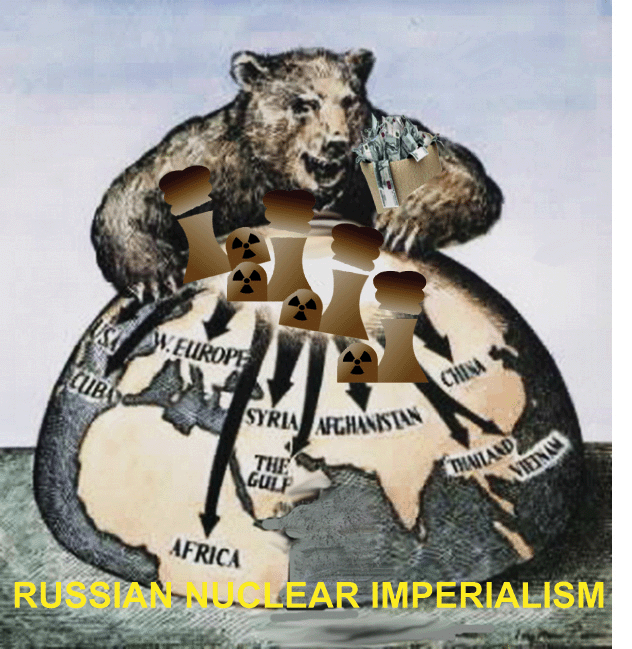
Power hungry Russia foisting nuclear power on Egypt – Africa – where it is not needed
|
Why Russia Is Pushing Unneeded Nuclear Power Plants On Egypt, Oil Price, By Haley Zaremba – Sep 22, 2020, In recent years, Russia and China have been facing off to spread their nuclear power dominion to a new, huge, and vastly untapped market: Africa. The two nuclear power giants have been in competition to corner the market, with Russia aiming to grow its position in a sector that China has historically dominated. Earlier this summer, German media company DW News reported on a new Russian-funded and -controlled nuclear center being developed in Kigali: “The Center of Nuclear Science and Technologies, planned for completion by 2024, will include nuclear research labs as well as a small research reactor with up to 10 MW capacity.” And the Rwandan plant is just the beginning. “Ethiopia, Nigeria and Zambia have signed similar deals with Rosatom, while countries such as Ghana, Uganda, Sudan, and DRC have less expansive cooperation agreements.”Now, there is a new forum for nuclear takeover in Africa: Egypt. As reported by AllAfrica this week, “Egypt’s venture into nuclear power has been planned from the top-down, with environmental groups and rights organizations expressing reservations, energy analysts questioning the need for the country’s first nuclear plant, and many details of agreements with Russia remaining murky.” ……….. The main issue at play here is water. In Egypt, most areas receive less than eighty millimeters of precipitation per year. Water, therefore, is an especially precious commodity. The top complaint, therefore, is about the massive quantities of water needed to keep nuclear reactors cool to avoid meltdown. Any concerns about public health due to radiation and high costs of construction are secondary to the issue of water usage.
Another common complaint is that nuclear is not really needed in Egypt, where considerable deposits of natural gas have been discovered off the coast – enough to account for an energy surplus. This raises questions about the purpose of the project – is it really to create more and greener energy, or is it ultimately about power relations and geopolitical attachments between the infamously opaque Egyptian Nuclear and Radiological Regulatory Authority and the infamously power-hungry Russian government? https://oilprice.com/Energy/Energy-General/Why-Russia-Is-Pushing-Unneeded-Nuclear-Power-Plants-On-Egypt.html |
|
Julian Assange dragged from embassy “on the orders of the president”
 Explosive evidence from Trump insider,Assange dragged from embassy “on the orders of the president”, WSWS, By Laura Tiernan and Thomas Scripps, 22 September 2020
Alt-right media personality Cassandra Fairbanks’ witness testimony was read out in court yesterday, providing evidence that Julian Assange’s April 2019 arrest at the Ecuadorian Embassy in London was politically motivated and directed by United States President Donald Trump.
Fairbanks testified that Arthur Schwartz, a wealthy Republican Party donor and key Trump ally, had told her that Assange was taken from the Ecuadorian Embassy “on orders from the president.” The conversation between Schwartz and Fairbanks occurred in September 2019 and was recorded by Fairbanks.
Schwartz, a frequent visitor to the White House and “informal adviser” or “fixer” to Donald Trump Jr., told Fairbanks the president’s orders were conveyed via US Ambassador to Germany Richard Grenell, who brokered a deal with the Ecuadorian government for Assange’s removal. Grenell was appointed acting director of national intelligence by Trump in February this year, holding the position until May.
Assange’s lawyer, Edward Fitzgerald QC, spelled out the significance of Fairbanks’ disclosures, telling Judge Vanessa Baraitser they were, “evidence of the declared intentions of those at the top who planned the prosecution and the eviction from the embassy.”
Fairbanks, who writes for the pro-Trump Gateway Pundit, is a prominent Assange supporter who visited the WikiLeaks founder at the Embassy on two key occasions. Her evidence was read into proceedings yesterday afternoon unopposed, with Fitzgerald explaining, “My learned friend [James Lewis QC for the prosecution] reserves the right to say ‘because she’s a supporter of Julian Assange you must take that into account in weighing her evidence.’ But we say [her evidence] is true.”
Given her close connections to leading figures in the Trump administration’s fascistic entourage, Fairbanks is uniquely positioned to expose key aspects of the politically motivated vendetta against the WikiLeaks founder. Throughout the extradition hearing, lawyers for the US government have repeatedly claimed the charges against Assange under the Espionage Act are motivated by “criminal justice concerns” and are “not political.”
Fairbanks’ evidence shreds the official narrative of the Department of Justice (DoJ) that Assange was arrested on April 11, 2019 in relation to “hacking.” In a phone call with Schwartz on October 30, 2018, he made clear that Assange would be arrested as political payback for his role in “the Manning case,” i.e., the disclosure by US Army whistle-blower Chelsea Manning of US war crimes in Afghanistan and Iraq……………
Speaking outside the court, Assange’s father, John Shipton, said, “Today we had the prosecution trying to prove that water runs uphill and up is down. … The defence replied and conclusively demonstrated that it was David Leigh [who caused the unredacted cables to be released]. We can only conclude from the amount of time that the prosecution spent defending David Leigh that David Leigh is a state asset.”
At the end of the hearing’s morning session, an exchange between District Judge Vanessa Baraitser and the legal teams pointed to further restrictions being imposed on the defence’s ability to present its case.
Seizing on the delays caused by a potential COVID-19 outbreak in the first week of the hearing, Baraitser insisted that the defence prepare a timetable that allowed the hearing to “finish within two weeks.” When the defence replied that this would leave no time for closing submissions, she reacted enthusiastically to the suggestion of prosecution lawyer James Lewis QC that these could be submitted in written form and summarised in just half a day each for the prosecution and the defence. A final decision is forthcoming.
The hearing continues today……… https://www.wsws.org/en/articles/2020/09/22/assa-s22.html
Compensation for some nuclear workers with mesothelioma .
|
Mesothelioma Compensation Center Urges the Family of a Navy or Civilian Nuclear Power Worker with Mesothelioma to Call Attorney Erik Karst of Karst von Oiste – Compensation Might Be in Excess of a Million Dollars, https://www.prnewswire.com/news-releases/mesothelioma-compensation-center-urges-the-family-of-a-navy-or-civilian-nuclear-power-worker-with-mesothelioma-to-call-attorney-erik-karst-of-karst-von-oiste—compensation-might-be-in-excess-of-a-million-dollars-301136249.html NEWS PROVIDED BY
Mesothelioma Compensation Center , Sep 23, 2020, HOUSTON, Sept. 23, 2020 /PRNewswire/ — The Mesothelioma Compensation Center is urging the immediate family of a Navy Veteran or civilian nuclear power worker who has just been diagnosed with mesothelioma to please call attorney Erik Karst of the law firm of Karst von Oiste at 800-714-0303. Compensation for a Navy Veteran or civilian nuclear power plant worker with mesothelioma could top the list when it comes to a financial compensation claim. Because many civilian nuclear power plant workers learned their craft on a nuclear-powered navy ship or submarine their asbestos exposure might have spanned decades. Financial compensation for a Navy Veteran or civilian nuclear power worker might exceed a million dollars.“We have endorsed, and we strongly recommend attorney Erik Karst because he and his amazing team at Karst von Oiste will work overtime for their clients. What Erik Karst and his team at Karst von Oiste do is ‘work a case’ which means they work overtime to answer the questions related to how, where and when the person with mesothelioma was exposed to asbestos. It is this vital information that becomes the basis for a mesothelioma compensation claim-and it is vitally important.”Do not let the Coronavirus stop a person with mesothelioma from pursing their financial compensation. Attorney Erik Karst and his colleagues now have the capabilities to work around the Coronavirus with conference calls and video conferences to make it easier on their client-and their client’s family. Erik Karst and his colleagues at the law firm of Karst von Oiste want their clients to receive the best possible financial compensation. For direct access to attorney Erik Karst of the law firm of Karst von Oiste please call 800-714-0303 anytime.” www.karstvonoiste.com/Some of the largest nuclear power plants in the US include:
For a list of all operating nuclear power plants in the United States please refer to the following website: https://www.nrc.gov/reactors/operating/list-power-reactor-units.html. The Mesothelioma Compensation Center specializes in assisting specific types of people who have been diagnosed with mesothelioma. The Center’s top priority is assisting US Navy Veterans, shipyard workers, oil refinery workers, public-utility workers, chemical plant workers, manufacturing workers, power plant workers, plumbers, welders, electricians, millwrights, pipefitters, boiler technicians, machinists, nuclear power plant workers, hydro-electric workers or oil and gas field production workers who have been diagnosed with this rare cancer caused by asbestos exposure. In most instances a diagnosed person with mesothelioma was exposed to asbestos in the 1950’s, 1960’s, 1970’s, or 1980’s. https://MesotheliomaCompensationCenter.Com According to the CDC the states indicated with the highest incidence of mesothelioma include Maine, Massachusetts, Connecticut, Maryland, New Jersey, Pennsylvania, Ohio, West Virginia, Virginia, Michigan, Illinois, Minnesota, Louisiana, Washington, and Oregon. However, a Nuclear Navy Veteran or a nuclear power worker with mesothelioma could live in any state including California, New York, Florida, Texas, Illinois, Kentucky, Tennessee, Mississippi, Georgia, Alabama, Wyoming, Colorado, New Mexico, Nevada, Utah, Arizona, Idaho, or Alaska. www.karstvonoiste.com/ For more information about mesothelioma please refer to the National Institutes of Health’s web site related to this rare form of cancer: Contact: |
|
Saudi Arabia may be able to produce its own nuclear fuel – with its uranium reserves
|
Revealed: Saudi Arabia may have enough uranium ore to produce nuclear fuel, Guardian
Emma Graham-Harrison, Stephanie Kirchgaessner and Julian Borger, 18 Sep 2020 Confidential Chinese report seen by the Guardian intensifies concerns about possible weapons programme, Saudi Arabia likely has enough mineable uranium ore reserves to pave the way for the domestic production of nuclear fuel, according to confidential documents seen by the Guardian.Details of the stocks are contained in reports prepared for the kingdom by Chinese geologists, who have been scrambling to help Riyadh map its uranium reserves at breakneck speed as part of their nuclear energy cooperation agreement. The disclosure will intensify concerns about Riyadh’s interest in an atomic weapons programme…….. The 2019 survey suggests that the reserves could potentially provide Saudi Arabia with both fuel for the reactors it wants to build, and surplus for export. ……. “If you are considering nuclear weapons development, the more indigenous your nuclear program is, the better. In some cases, foreign suppliers of uranium will require peaceful-use commitments from end users, so if your uranium is indigenous, you don’t have to be concerned about that constraint,” said Mark Hibbs, senior fellow in the nuclear policy program at the Carnegie Endowment for Peace. Another expert, Bruce Riedel at the Brookings Institution, said the information showed that the Saudis were “aggressively pursuing the prerequisites” for either an energy or weapons programme and that securing a domestic source of uranium would boost their effort……… The greatest international concern is over the kingdom’s lack of transparency. Under a 2005 agreement with the International Atomic Energy Agency (IAEA), Saudi Arabia avoided inspections through a small quantities protocol (SQP), which waives IAEA monitoring up to the point where fissile fuel is introduced into a reactor. The nuclear watchdog has been trying to convince the Saudi monarchy to now accept a full monitoring programme, but the Saudis have so far fended off that request. ……… https://www.theguardian.com/world/2020/sep/17/revealed-saudi-arabia-may-have-enough-uranium-ore-to-produce-nuclear-fuel |
Lawsuit: Ohio Attorney General sues to stop nuclear bailout money, and break up dark money groups

Ohio Attorney General Dave Yost sues to block nuclear bailout money from being paid, The lawsuit also seeks to dissolve the dark money groups involved in the bribery scheme. Author: WKYC Staff, Associated Press, 10TV Web Staff, September 23, 2020
COLUMBUS, Ohio — Ohio Attorney General Dave Yost filed a lawsuit on Wednesday to block the state’s nuclear plants from collecting fees on electricity bills that were authorized in a new law at the center of a $60 million federal bribery probe involving the former speaker of the Ohio House.
The suit was filed in Franklin County Court in Columbus against Energy Harbor, asking the judge to block payments to the company’s two nuclear plants near Cleveland and Toledo that were bailed out through the now-tainted legislation.
Energy Harbor is the former FirstEnergy Solutions, a onetime subsidiary of FirstEnergy Corp. The subsidiary filed for Chapter 11 bankruptcy in 2018 amid a mounting load brought on by the rise of competition from natural gas power in the East and Midwest.
HB 6, a roughly $1 billion financial bailout, was signed into law in July 2019. It added a new fee to every electricity bill in the state and directed over $150 million a year through 2026 to the plants in Lake and Ottawa counties. The fee will be added to every electricity bill in the state starting January 1.
Federal prosecutors allege that from March 2017 to March 2020, former Ohio House Speaker Larry Householder and others received millions of dollars in exchange for help in passing HB 6.
Wednesday’s lawsuit came hours after a House committee looking at repealing the law heard varying proponent testimony from energy lobbying groups and state office representing consumers. Governor Mike DeWine has said he supports a repeal of the law.
Yost had previously promised he would take the legal remedies necessary if the General Assembly could not do so in time.
The lawsuit also seeks to freeze the assets of former House Speaker Larry Householder’s $1 million campaign fund and dissolve the dark money groups involved in the bribery scheme, Yost said.
“Corruption like this doesn’t happen without cash, lots of cash,” he said.
Federal prosecutors in July accused Householder and four others of shepherding energy company money for personal and political use as part of an effort to pass the legislation, then kill any attempt to repeal it at the polls. All five men have pleaded not guilty………. https://www.wkyc.com/article/news/politics/attorney-general-dave-yost-sues-to-stop-nuclear-bailout-money-from-being-paid/95-431fd46c-44c0-440a-9076-46e1c9d23f8a
Japan’s nuclear regulator approves restart of Kashiwazaki-Kariwa plant, but still hurdles to overcome

The Nuclear Regulation Authority’s green light now shifts the focus over to whether local governments will agree in the coming months to restart the
TEPCO is keen to get the plant back up and running. It has been financially reeling from the closure of its nuclear plants in Fukushima Prefecture following the triple meltdown at the Fukushima No. 1 nuclear plant in 2011 triggered by the earthquake and tsunami disaster.
The company plans to bring the No. 6 and No. 7 reactors back online at the Kashiwazaki-Kariwa nuclear complex, which is among the world’s largest nuclear plants.
The two reactors each boast 1.35 gigawatts in output capacity. They are the newest of the seven reactors there, first put into service between 1996 and 1997.
TEPCO has not revealed specific plans yet on what to do with the older five reactors……..http://www.asahi.com/ajw/articles/13753076
USA Government Accountabilty Office calls for assessment of costs for planned new nuclear warheads
 NUCLEAR WEAPONS: NNSA Should Further Develop Cost, Schedule, and Risk Information for the W87-1 Warhead Program, https://www.gao.gov/products/GAO-20-703 GAO-20-703: Sep 23, 2020. The National Nuclear Security Administration plans to replace the W78—an older type of nuclear warhead used in intercontinental ballistic missiles—with the W87-1, starting in 2030. But it’s unclear if NNSA can produce enough of the W87-1’s fissile cores in time to meet its planned production schedule.NNSA estimated that the new warhead could cost up to $14.8 billion, which could make it the most expensive program of this type to date. Upcoming design decisions for the weapon could affect cost. But the agency didn’t have formal plans to assess the costs and benefits of these decisions. Our recommendations address these and other concerns. |
|
|
False report of a nuclear disaster in Ukraine
Hackers spread false reports of nuclear disaster, death of US troops in Ukraine, https://www.kyivpost.com/ukraine-politics/hackers-spread-false-reports-of-nuclear-disaster-death-of-us-troops-in-ukraine.html?cn-reloaded=1
Notably, the fake news campaign occurred during the climax of the large Ukrainian-American-British-Canadian military exercises Joint Endeavor 2020, which continue all across the country since Sept. 19, and during yet another round of Ukrainian-American anti-terror drills Rapid Trident in Lviv Oblast.
Moreover, the fake stories were published and massively spread not only by dubious Facebook accounts but also by hacked websites of local authorities and even the police.
The reports started off with a post published on the official website of the local government in the town of Varash some 340 kilometers northwest of Kyiv. The town is located just near the Rivne Nuclear Power Plant and is home to most of the enterprise’s personnel.
The message stated that during Rapid Trident drills, one of the Rivne power plant blocks was accidentally cut off from the electricity supply, which resulted in a catastrophic radioactive release, with severely contaminated materials spilled into the Styr River nearby. According to the fake report, the leak constituted 10% of the radioactive fallout registered during the 1986 Chornobyl accident, the worst nuclear disaster in human history.
So, the website said, the Varash town government had made a decision to declare the state of emergency and launch an operation to evacuate the civilian population from a newly established 30-kilometer alienation zone around the power plant.
Simultaneously with the Lviv report, the Kherson police website said the local law enforcers investigated “the death of American military councilors” in the oblast, which also on Sept. 23 hosted a major round of Ukrainian-American maneuvers Joint Endeavor 2020, which were visited by Ukraine’s President Volodymyr Zelensky.
And at the same time, an official website of the police department of Vinnytsya Oblast, also a scene of the Joint Endeavor exercises, suddenly said a U.S. military serviceperson was arrested on charges of raping a 16-year-old girl.
In all cases, the country’s police immediately refuted the claims on its official Telegram channel, adding that some of its regional websites were hacked simultaneously at 11:45 a.m. Kyiv time.
The police’s main website was switched off for emergency works. As of Sept. 23 evening, it was still not available for users.
Later in the day, the police said it had initiated a criminal case regarding the hacking campaign.
It’s important to dispel three persistent myths about China’s nuclear weapons
 THE DANGEROUS MYTHS ABOUT CHINA’S NUCLEAR WEAPONS, War on the Rocks, DAVID LOGAN, SEPTEMBER 18, 2020
……….While the Cold War superpowers engaged in arms racing, China committed to building a “lean and effective” force. Since obtaining a nuclear weapons capability, China has publicly claimed a categorical no-first-use policy and has asserted that “China does not engage in any nuclear arms race with any other country and keeps its nuclear capabilities at the minimum level required for national security.”
Misplaced Attention: The Real Risks of Beijing’s Nukes
Misplaced Attention: The Real Risks of Beijing’s Nukes………..
Addressing the Risks
These myths can exacerbate dangerous nuclear dynamics between China and the United States. The belief that China’s no-first-use policy is a sham increases the risk of Washington misidentifying a Chinese signal of resolve as preparations for a nuclear strike………
The myths can also hobble efforts to address more legitimate risks. Many of these risks, particularly those rooted in different perceptions, could be mitigated through formal dialogue. Beijing and Washington can share and refine understandings about escalation dynamics or their aims in a crisis or conflict. But misperception and miscommunication, sometimes rooted in the very myths discussed above, can make it difficult carry out such dialogues…………
Perhaps most significantly, a misguided focus on the myths could, perversely, make those myths realities. ……….
fixating on poorly sourced or unfounded claims makes any dialogue both less likely to occur and less effective if it does happen. There are enough real concerns about China’s nuclear modernization that need to be addressed without being distracted by myths. https://warontherocks.com/2020/09/the-dangerous-myths-about-chinas-nuclear-weapons/

Britain’s nuclear power plans in tatters
Climate News Network 23rd Sept 2020, The decision by the Japanese company Hitachi to abandon its plan to buildtwo large nuclear plants in the United Kingdom leaves the British government’s energy plans in tatters, and the UK nuclear industry
reeling.
The UK’s official plan is still to build ten nuclear stations in
Britain, but only three schemes remain. Most have now been cancelled by the
companies that planned to build them, principally because they cannot raise
the capital to do so.
This leaves only the debt-laden French giant EdF and
the Chinese state-owned industry still in the field. At the same time,
Britain’s existing nuclear plants are in trouble. They are not ageing
gracefully, cracks in their graphite cores and rust in their pipework
causing ever-lengthening shutdowns and retirement dates to be brought
forward.
The plants at Hunterston B in Scotland, Hinkley Point B in
Somerset in the West of England, and Dungeness B in Kent on the south-east
coast, are all struggling to survive.
https://climatenewsnetwork.net/uk-nuclear-industry-seeks-subsidies-for-survival/
Marshall Islands in danger of being overcome by rising sea levels
Star of the day: David Kabua, President of the Marshall Islands, believes his territory will disappear under rising sea levels, https://pledgetimes.com/star-of-the-day-david-kabua-president-of-the-marshall-islands-believes-his-territory-will-disappear-under-rising-sea-levels/ by Bhavi Mandalia, September 22, 2020 The Marshall Islands facing rising waters. (HILARY HOSIA / AFP)
David Kabua, 71, president for nine months of the Marschall Islands is worried. This small confetti of land lost in the Pacific Ocean, 180 km², perched just two meters from sea level, is threatened by rising waters. There is not much on the 30 atolls that make up the archipelago, nothing to covet, nothing to export, no natural resources, only small farms, fishing boats and a huge radioactive waste storage site. , memory of the American nuclear tests of the 1960s.
This little piece of land, so coveted during the wars for its strategic location, no longer has any leverage to attract attention. And yet, it will soon no longer appear on the world maps. This is the warning cry launched by David Kabua on Monday September 21 at the UN, a simple cry: “My country will disappear if the world does not keep its promises, those made during the Paris agreement.” He recounted the impact of climate change, the increasingly devastating tides, population evacuations, the intense droughts which generate another plague: swarms of mosquitoes carrying various diseases. And then there is the money that is lacking to build the necessary infrastructure to protect its 75,000 inhabitants. Money promised five years ago, and which does not arrive. Finally, there is worse:“The fact, he said, that industrialized countries continue to finance fossil fuels, oil, gas and coal. We are doing our part, but alone we can do nothing. “
David Kabua addresses the United Nations. The UN that the Marschall Islands joined in 1991 but that they could well leave, in fact, not voluntarily, but by force of circumstances, because the atolls will end up submerged. So he concluded by asking: “Will we still be here for the UN’s 100th anniversary in 2045? How about you? Are you going to help us keep our islands in this world?” In the assembly, the question created a long silence. David Kabua, for his part, has nothing more to give than a warning, a prophecy for all. We know. But we look elsewhere. Hope does exist, however, it is in the motto of the Marschall Islands: “Achievement through joint effort“. And we have 25 years ahead of us.
Will Bears Ears Become the World’s Radioactive Waste Dump?
First, it was a multinational corporation with a factory in the Baltic nation of Estonia that sought to send its unwanted radioactive waste to southeast Utah. Now, another overseas entity, the Japan Atomic Energy Agency (JAEA), has its sights set on the White Mesa uranium mill for new radioactive waste shipments as well.
Is the White Mesa Mill, on the doorstep of the White Mesa Ute community and just outside the original boundaries of Bears Ears National Monument, on a fast track to become a dumping ground for foreign industrial polluters and distant government entities? Not if we have anything to say about it.
Why White Mesa?
Why, you may ask, is the White Mesa Mill so attractive for those in faraway lands who want to dispose of their radioactive waste? It’s simple, really. Sending the material to a uranium mill halfway around the world is expedient when compared to other options. It’s likely the cheapest option for the waste generator.
And this waste-processing business helps keep the struggling uranium mill afloat amid market downturns, too. Usually, the mill would pay miners for the uranium ore they deliver. In this case, it’s likely that the party sending the waste will pay the mill. On a recent investor call, the mill owner’s CEO admitted that accepting, processing, and disposing of these kinds of wastes earns the company $5-15 million a year.
What is this stuff?
In late May, the mill’s owner, Energy Fuels Resources, notified the state of Utah’s Division of Waste Management and Radiation Control that the company plans to receive 136 tons (about 10 dump trucks full) of radioactive waste from two Japan Atomic Energy Agency research facilities: the Ningyo Center and the Tono Center.
The material includes natural uranium ores from mines in Japan and other mines around the world that the Japanese agency tested, as well as uranium-loaded resins, filter-bed sands, and uranium-loaded carbon — materials that concentrate uranium during water cleanup at the two facilities.
The waste contains very little uranium. According to the mill owner, the company would produce less than 0.6 tons of yellowcake from the waste; the rest of the 136 tons would be dumped in massive waste pits at the mill that sit above the White Mesa Ute community’s drinking-water supply. The company likes to claim that it’s “recycling.” But charging millions to accept waste and ultimately dumping more than 99 percent of it into waste pits sounds like a radioactive waste dump, not a recycling operation.
When is the Japanese waste coming?
Energy Fuels Resources’ letter gives no dates as to when it plans to accept this waste, to be shipped from Japan across the Pacific Ocean, likely to ports in Washington state, then transferred to White Mesa by rail and truck across the Western United States. Utah regulators have evaluated the company’s proposal, and on July 28, 2020, they issued a letter concurring with the company’s plans.
This means you, the public, had no formal opportunity to weigh in. That’s why letting regulators know that you object to the Japanese waste is so important now.
No import license, no public involvement
Energy Fuels Resources claims, and the state of Utah agrees, that it doesn’t need an individual import license issued by the U.S. Nuclear Regulatory Commission to accept the Japanese radioactive waste. Nor, the company claims, does it need an amendment to its state-issued license, which would trigger a public comment period.
These claims are based on regulatory alchemy. Though the material is radioactive and is viewed as waste in Japan, the mill owner prefers to call the material “natural ores and equivalent feed materials” because those are the materials the company is licensed to accept for processing and permanent disposal at the mill. But we disagree.
We object to more international radioactive waste being shipped to the White Mesa Mill near the Ute Mountain Ute Tribe’s White Mesa Community. We also believe the public should be heard on this matter. That’s why we’re asking you to take action.
Act now. Let Utah regulators know that the White Mesa Mill is no place for foreign waste ›
History repeats itself
This isn’t the first time the Japanese government has shipped radioactive waste to the White Mesa Mill. In 2004, the Japanese Supreme Court ordered the removal of contaminated soils from the Ningyo-Toge area (one of the two sites that could ship waste now) based on pressure and litigation from those living nearby. Hefty fines were levied against the Japan Atomic Energy Agency for each day the waste remained on site past a court-imposed deadline. In 2005, the agency paid the then-owners of the White Mesa Mill $5.8 million to process uranium from and permanently dispose of 500 tons of contaminated soils.
The Salt Lake Tribune covered the story then, and it sounds much like the situation today. The Tribune noted that “reports from Japan often describe the contaminated soil as waste headed to Utah for disposal.” In 2005, as now, the owners of the mill claim the material is “ore,” not “waste,” and that no special licenses are required.
What’s changed since then? In 2010, the Nuclear Regulatory Commission clarified that an import license is required unless the “materials [are] imported solely for the purposes of recycling and not for waste management or disposal…” A 2003 paper on Ningyo and Tono cleanup plans states repeatedly that: “reclamation of uranium mining and milling facilities is necessary to reduce the burden of the waste management on future generations.”
Then, as now, shipping the waste to White Mesa shifts the burden to the White Mesa Ute community. These materials are clearly treated as waste in Japan, just as the Estonian material is treated as undesirable waste in Estonia. In Japan as in Estonia, the goal is disposal — far away. For that reason, we believe the mill’s owners need an import license from the Nuclear Regulatory Commission for this waste, and for the Estonian waste.
Join us in letting the state of Utah know you agree. White Mesa, the White Mesa Ute community, and Bears Ears cannot become the world’s radioactive dumping ground.
1 This Month

Tell Congress: Prevent Nuclear Catastrophe in Iran

Tell Congress: Prevent Nuclear Catastrophe in Iran

Read the Public Inquiry Report, the Commissioners’ report, Surrendering Australia: The AUKUS Deception is available to download for free at aukuspublicinquiry.com. Or just watch the replay of the National Press Club Luncheon.


Shut down the radiation-damaged Heysham nuclear reactors now
To see nuclear-related stories in greater depth and intensity – go to https://nuclearinformation.wordpress.com

Say No to NASA’s Reckless Nuclear Reactor on the Moon
Say No to NASA’s Reckless Nuclear Reactor on the Moon
-
Archives
- November 2026 (269)
- October 2026 (302)
- September 2026 (339)
- August 2026 (330)
- July 2026 (355)
- June 2026 (287)
- May 2026 (306)
- April 2026 (356)
- March 2026 (251)
- February 2026 (267)
- January 2026 (308)
- December 2025 (358)
-
Categories
- 1
- 1 NUCLEAR ISSUES
- business and costs
- climate change
- culture and arts
- ENERGY
- environment
- health
- history
- indigenous issues
- Legal
- marketing of nuclear
- media
- opposition to nuclear
- PERSONAL STORIES
- politics
- politics international
- Religion and ethics
- safety
- secrets,lies and civil liberties
- spinbuster
- technology
- Uranium
- wastes
- weapons and war
- Women
- 2 WORLD
- ACTION
- AFRICA
- Atrocities
- AUSTRALIA
- Christina's notes
- Christina's themes
- culture and arts
- Events
- Fuk 2022
- Fuk 2023
- Fukushima 2017
- Fukushima 2018
- fukushima 2019
- Fukushima 2020
- Fukushima 2021
- general
- global warming
- Humour (God we need it)
- Nuclear
- RARE EARTHS
- Reference
- resources – print
- Resources -audiovicual
- Weekly Newsletter
- World
- World Nuclear
- YouTube
-
RSS
Entries RSS
Comments RSS

