Neighbouring countries oppose Japan’s plan to release nuclear waste water into the Pacific
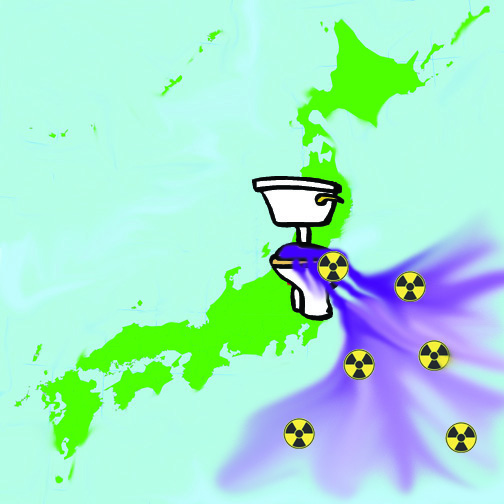 World worries about release of Fukushima nuclear water https://www.globaltimes.cn/content/1203852.shtml, By Xu Keyue Source: Global Times 2020/10/18
Analysts said that Japan should think twice before making the decision as the move would have disastrous consequences for the marine environment and human health, which could lead to criticism by related international organizations, countermeasures by affected countries including cessation of imports of Japanese seafood, and harm to the country’s image.
Japanese media said that the country’s government will hold a related cabinet meeting as early as this month to make the final decision on the plan to release more than 1 million tons of radioactive water from the Fukushima Daiichi nuclear power plant into the Pacific Ocean after reducing the level of radioactivity.
The plan has not gotten much rolling coverage in Japan, but there are still many Japanese netizens expressing their disagreement. According to a poll on Yahoo Japan, 41.5 percent of the 31,035 respondents disagreed with the plan
Local fishermen in Fukushima publicly announced their opposition, saying the plan will undo years of work rebuilding their industry’s reputation since the plant was wrecked by a huge tsunami in March 2011.
The public of South Korea has repeatedly voiced concern, claiming that discharging the water represents a “grave threat” to the marine environment.
A South Korean Foreign Ministry official told reporters that a meeting of related ministries regarding this issue was elevated to vice-ministerial status last month to step up the response to Japan’s move, reported South Korea’s KBS News on Friday. The official said the government will continue to closely monitor Tokyo’s activities and take measures based on cooperation with the international community.
Japan’s plan also sparked outrage among Chinese netizens, many of whom criticized Japan’s practice, saying it is throwing its responsibility onto the world to share.
Sun Yuliang, a nuclear expert at Tsinghua University in Beijing, told the Global Times on Sunday that whether to dump the waste water should depend on an authoritative scientific assessment to determine whether the processed radioactive water meets international standards for release.
Liu Junhong, a research fellow at the China Institutes of Contemporary International Relations, urged Japan to further communicate with the international community and share information transparently.
Liu said that the Japanese government should give priority to safeguarding public health and safety and the environment, rather than the cost of the rehabilitation work after the 2011 Fukushima disaster.
Liu noted that the seas in Asia are mostly connected and many of them are semi-closed, so that the contaminants from the Fukushima water could subside and then rise, which would severely affect the local marine and coastal environment and the health of people nearby.
Therefore, Japan’s neighboring countries including China and South Korea would be the first to react to the plan, Liu said.
He noted that if the Japanese government releases the water, these countries are likely to stop imports of seafood from Japan, and foreigners could be reluctant to visit the country and enjoy its food, which would harm Japan’s economy.
Other analysts noted that the plan goes against Japan’s long-established image of being friendly to the marine environment.
Another expert on nuclear safety, who requested anonymity, said that the issues is not only one of Japan’s own business but also relates to the interests of the global community, so countries and related organizations in the international community should cooperate and assist Japan to deal with the contamination.
The Daiichi Nuclear Power Plant in Fukushima went into meltdown and released radioactive material in the aftermath of a tsunami in March 2011.
The disaster cast doubts over the safety of nuclear power worldwide, leading China to launch a campaign to review and upgrade the safety systems of all its nuclear power stations.
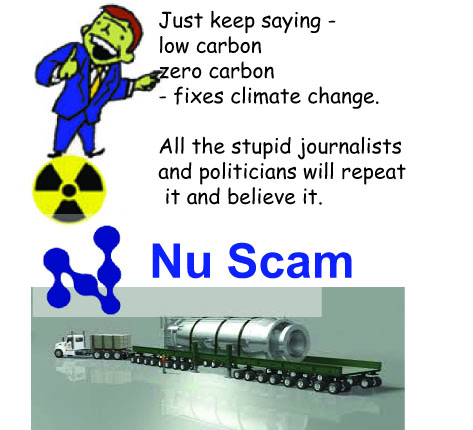
Hypocrisy prize to U.S. International Development Finance Corporation (DFC), for pretending that NuScam’s Small Nuclear Reactors are ”foreign aid”

|
DFC Convenes U.S., African Leaders for Investment Conference, U.S. International Development Finance Corporation (DFC), October 16, 2020 Announces new efforts aimed at bolstering agency’s reach across continent. WASHINGTON – Today, U.S. International Development Finance Corporation (DFC) and the Atlantic Council hosted the virtual Investing in Africa’s Future conference to bring together African heads of state, senior U.S. government officials, African development finance institutions and others to announce new efforts to promote and strengthen U.S. trade and investment in Africa, in support of the Administration’s Prosper Africa Initiative…….. DFC made the following announcements during the summit: …………
LOI for Nuclear in South Africa: In July 2020, DFC updated and modernized its nuclear energy policy—ending its prohibition on supporting nuclear power in order to help meet the energy needs in the developing world. DFC signed a Letter of Intent to support NuScale, a U.S. nuclear energy technology firm, to develop 2,500 MW of nuclear energy in South Africa. If successful, NuScale would be the first U.S. nuclear energy IPP on the continent and would help support energy resilience and security in one of Africa’s leading economies and a key partner on the continent for the United States Government……….. https://www.dfc.gov/media/press-releases/dfc-convenes-us-african-leaders-investment-conference
|
|
Canada’s government caught up in the Small Nuclear Reactor Ponzi Scheme
 Why is the federal government funding new nuclear power reactors? rabble.ca Susan O’Donnell, October 15, 2020
Today, the government made its first SMR funding announcement: $20 million from ISED’s Strategic Innovation Fund for the company Terrestrial Energy to develop its prototype SMR in Ontario.
Anyone interested in evidence-based policy is wondering: Why are they doing this? There is no evidence that nuclear power will achieve carbon reduction targets, while there is considerable research indicating the contrary.
In fact, in today’s funding announcement, federal Natural Resources Minister Seamus O’Regan confirmed that the new reactor will take more than a decade to develop and will contribute nothing to Canada’s 2030 target for reducing greenhouse gas (GHG) emissions.
The same week as the throne speech, the release of the 2020 World Nuclear Industry Status Report (WNISR) confirmed, as did its previous reports, that developing new nuclear energy is too slow and uneconomical to address the climate crisis compared to deploying renewable energy technologies.
Last week, research based on data from 123 countries over a 25-year period made a similar finding. December 2019 research from Stanford professor Mark Z. Jacobson refutes claims that nuclear energy is zero-carbon. A November 2019 article in the American business magazine Forbes argues that building new nuclear reactors instead of investing in more climate-effective energy resources actually makes climate change worse.
SMRs, the nuclear reactors promoted by the federal government, are in particular over-hyped as a climate crisis solution. SMRs have been proposed as a solution for remote communities and mining sites currently relying on diesel fuel but new research has found the potential market is too small to be viable.
SMRs exist only as computer models and nobody knows for sure if they will work. Last month, the Canadian energy watchdog The Energy Mix interviewed WNISR lead author Mycle Schneider, who called SMRs “PowerPoint reactors, not detailed engineering.”
Given all the research evidence pointing away from funding nuclear energy in a climate action plan, why is the federal government proposing to do it?
In a webinar presentation earlier this year, the president of the Canadian Coalition for Nuclear Responsibility Gordon Edwards put it bluntly: “The nuclear industry is desperate.”
Edwards believes the federal government’s push for new reactor development is coming from the nuclear industry. “If they can, the nuclear industry will convince governments to pour public money into this for whatever reason, by misrepresenting its advantages and minimizing or even ignoring its disadvantages.”……….
Nuclear reactor promoters are “barely keeping themselves alive,” said Edwards, and have realized for quite a while that “they are in trouble.”
The federal government created the nuclear industry in Canada and has funded it since the late 1940s. For more than 70 years Canada has been spending vast sums of public money to keep it going. Atomic Energy of Canada Limited (AECL), a Crown corporation with a mandate to promote and support nuclear science and technology and manage nuclear waste in Canada, received $826 million from the federal government in 2017-2018. Most of the public funds are turned over to a private-sector entity, Canadian Nuclear Laboratories, whose majority partner is SNC Lavalin.
One description of the nuclear industry in Canada is that it can be understood as a kind of Ponzi scheme. In its current corporate plan, AECL listed a cost liability of almost $6.4 billion for decommissioning and waste management provision and $988 million for contaminated sites in 2017-18.
The industry needs new nuclear reactors as a replacement revenue stream. New reactors require capital investment but no banks or private investors are willing to invest due to the poor return on investment. Public funding is the only option to keep the industry alive and pay off its liabilities, and more public money is always required or the entire scheme will collapse. ……..
a revolving door shuttles senior government personnel involved in nuclear energy files to the CNA lobby. In one recent example, the former parliamentary secretary to the minister of natural resources who was responsible for nuclear policy is now a consultant for the CNA.
Former senior AECL executives and government nuclear energy staff are now establishing and managing various start-up nuclear companies actively seeking public funding from the federal government. And according to the throne speech, the money is available…….
The Canadian government’s plans to invest in nuclear energy contrast with the European Union’s proposed Green New Deal released in June this year that specifically excludes investment in nuclear energy because of its harmful environmental impacts. The decision followed sustainable finance guidelines also adopted this year and developed in a process that included environmental and other civil society groups as well as energy industry representatives……….https://rabble.ca/blogs/bloggers/views-expressed/2020/10/why-federal-government-funding-new-nuclear-power-reactors#.X4t38dAXWFc.twitter
The biggest radioactive spill in US history
The biggest radioactive spill in US history https://www.vox.com/21514587/navajo-nation-new-mexico-radioactive-uranium-spill How the US poisoned Navajo Nation. By Ranjani Chakraborty and Melissa Hirsch Oct 13, 2020, (Excellent photography) For decades, Navajo Nation was a primary source for the United States’ uranium stockpile during the nuclear arms race. It was home to more than 700 uranium mines, which provided jobs to Navajo residents. But the mining industry came with impending peril. Cases of lung cancer and other diseases began cropping up in a community that had previously had few of them. Land, air, and water was poisoned. And on July 16, 1979, the mining led to the biggest radioactive spill in US history.
Watch the video above to hear from residents in Church Rock, New Mexico, who’ve lived with the effects of the spill. More than 40 years later, the site still hasn’t been properly cleaned up, and residents continue to face illnesses, tainted water, and the loss of livestock. Today, with the Environmental Protection Agency’s new plan for cleanup, they’re worried it could wipe out their entire community.
If you want to learn more about mining in Navajo Nation, check out Doug Brugge, Esther Yazzie-Lewis, and Timothy Benally’s book on the subject. Or the feature documentary The Return of Navajo Boy by Groundswell Educational Films.
Climate change: Arctic Circle teens call for help to save their homes
Climate change: Arctic Circle teens call for help to save their homes
Teenagers living in remote Arctic communities say they’re worried about the effects of climate change. Scientists warn that melting ice and warming temperatures show rapid climate change is taking place.
Rarely heard young people from multiple countries within the Arctic Circle say their way of life is at risk and governments must act. https://www.bbc.com/news/av/science-environment-54572400
Putin’s proposal for 12 month renewal of NewSTART arms control treaty is rejected by USA
US rejects Putin’s proposal on nuclear disarmament treaty as ‘nonstarter’ American Military News, 18 Oct 20, The United States says Russian President Vladimir Putin’s proposal to extend the New START nuclear disarmament treaty without freezing nuclear warheads is a “nonstarter.”
Putin proposed extending the bilateral treaty for one year without preconditions to keep it from expiring and to allow talks to revive it to continue.
Putin also instructed Foreign Minister Sergei Lavrov at a meeting with permanent members of Russia’s Security Council on October 16 to work out Russia’s position on New START and inform the United States of developments.
The issue of the New START treaty comes less than three weeks before the U.S. presidential election.
Democratic challenger Joe Biden supports extending New START “to use that as a foundation for new arms-control arrangements.” If Biden wins, the treaty will expire just weeks after he is inaugurated.
Biden calls the treaty — which was negotiated when he was vice president under President Barack Obama — an “anchor of strategic stability between the United States and Russia.”……..
On October 13, more than 75 lawmakers across Europe called on the United States to extend New START before its expiration.
U.S. Deputy Sheriff Australia bought a lemon with an obsolete $90 billion submarine


|
In for a penny, in for a pound: $90 billion for an obsolete submarine fleet, Michael West Media, by Brian Toohey | Oct 18, 2020 So much for sovereignty. Australia is locked out of repairing key US components of our submarines’ computer systems, and the government has committed our fleet to the extraordinarily dangerous role of helping the US conduct surveillance in the South China Sea. Brian Toohey reports. It is hard to believe that a government genuinely committed to defending the nation would sign a contract to buy 12 ludicrously expensive submarines that would not be operational for at least 20 years, with the final submarine not ready for nearly 40 years. The fleet will be obsolete before its delivered. But this is what the Turnbull government did when it announced in September 2016 that the majority French government-owned Naval Group would build 12 large submarines in Adelaide. The first sub is unlikely to be operational until the late 2030s and the last one until well after 2050. It is even harder to understand why the government endorsed the extraordinarily dangerous role for Australian submarines of helping the US conduct surveillance and possible combat operations within the increasingly crowded waters of the South China Sea. And while the Morrison government repeatedly claims that Australia’s defence force has a “sovereign” capability, in reality we are locked in “all the way” with the USA.
Ominously, an earlier Coalition government gave Lockheed Martin the contract to integrate these systems into the Attack subs. This is the same company that wasted billions on a dud computerised system for the US made F-35 fighter planes.. Called the Attack class, the conventionally powered submarines to be built in Adelaide by Naval will rely on an unfinished design based partly on France’s Barracuda nuclear submarines. Their official cost has already blown out from an initial $50 billion to $90 billion. It was revealed earlier this week that Defence officials knew in 2015 that the cost of the fleet had already blown out by $30 billion to $80 billion, yet continued to state publicly that the price tag was $50 billion. Life-cycle costs are expected to be around $300 billion…….. Under US commandAustralian subs in the South China Sea will be integrated into US forces and will be relying on them for operational and intelligence data. In an escalating clash, accidental or otherwise, they will be expected to follow orders from US commanders. Again, so much for Australia’s sovereignty. There is no compelling strategic reason why Australian submarines should travel that onerous distance to support the US in the South China Sea. ………… Perhaps the best argument, however, for not wasting $90 billion on the Attack class is that cheap underwater drones will soon have an important military role particularly suited to use from bases in northern Australia. https://www.michaelwest.com.au/in-for-a-penny-in-for-a-pound-90-billion-for-an-obsolete-submarine-fleet/ |
|
Ask pro-HB 6 lawmakers seeking reelection what they plan to do about the nuclear bailout bill
 Ask pro-HB 6 lawmakers seeking reelection what they plan to do about the nuclear
 bailout bill https://www.cleveland.com/opinion/2020/10/ask-pro-hb-6-lawmakers-seeking-reelection-what-they-plan-to-do-about-the-nuclear-bailout-bill.html Oct 18, 2020, By Thomas Suddes, cleveland.com
House Bill 6, which Ohio’s House and Senate passed last year, requires Ohio’s electricity consumers to bail out two nuclear power plants formerly owned by FirstEnergy Corp. – Perry, in Lake County, and Davis-Besse, in Ottawa County.
HB 6 also requires electricity customers to subsidize two coal-burning power plants, one of them in Indiana. Evidently, our General Assembly has solved all Ohio’s problems and now has the time, not to mention the wisdom, to address an Indiana problem.
True, Ohio’s House and Senate usually favor utilities over consumers. That’s not news. But this was: In July, a federal grand jury indicted then-House Speaker Larry Householder, a Republican from Perry County’s Glenford, and four other Statehouse figures because of an alleged racketeering conspiracy, “involving approximately $60 million,” to pass HB 6 – “a billion-dollar nuclear plant bailout.” (Householder and the others are presumed innocent unless convicted.)
Oh yes, the Senate will consider repealing HB 6 – but only after the House repeals it. There’s no reason why the Senate (led by President Larry Obhof, a Medina Republican who voted “yes” on HB 6) can’t repeal HB 6 before the House does. Maybe the real reason is that GOP senators think the House will never repeal it.
About all that Ohio electricity consumers can do is ask those members of the General Assembly who voted “yes” on House Bill 6 whether they will now vote to repeal it.
These Greater Cleveland House members also voted “yes” on HB 6 and are asking voters to reelect them: Republican Reps. Thomas F. Patton, of Strongsville; Jamie Callender, of Concord Township (HB 6′s co-sponsor); Diane V. Grendell, of Chesterland (whose district includes parts of Geauga and Portage counties); Darrell Kick, of Loudonville (whose district includes Ashland County and part of Medina County); Scott Oelslager, of North Canton; Bill Roemer, of Richfield; Dick Stein of Norwalk (whose district includes part of Lorain County); and Scott Wiggam, of Wooster.
Even if legislators run unopposed, they’re still answerable to residents of their districts.
If HB 6 is such great legislation, why did it only attract 51 “yes” votes in the 99-member House – just one more “yes” vote than the 50-vote constitutional minimum?
And why did 15 of the House’s 61 Republicans – one in four – vote “no” on HB 6 even though then-GOP leader Householder wanted it passed?
Finally: Why would anybody allegedly spend $60 million in dark money to pass a bill that’s supposed to be such a great deal for Ohio electricity consumers – unless it isn’t?
Thorium not likely to revive the nuclear energy industry
Could Thorium Revive The Nuclear Energy Industry? Oil Price, – Sep 27, 2020,………..It still remains to be seen whether the new thorium fuel will actually see the light of day.
The main sticking point to the promotion of thorium as a cleaner nuclear fuel is that it remains unproven on a commercial scale. Thorium MSRs (Molten Salt Reactors) have been in development since the 1960s by the United States, China, Russia, and France, yet nothing much ever came of them.
Nuclear radiologist Peter Karamoskos, of the International Campaign to Abolish Nuclear Weapons (ICAN) has advised the world not to hold its breath:
“Without exception, [thorium reactors] have never been commercially viable, nor do any of the intended new designs even remotely seem to be viable. Like all nuclear power production they rely on extensive taxpayer subsidies; the only difference is that with thorium and other breeder reactors these are of an order of magnitude greater, which is why no government has ever continued their funding.”
Nuclear power enthusiasts can only hope that ANEEL will not also fall victim to the thorium curse.
Solar energy is here with a vengeance – look at South Australia
 Forbes 17th Oct 2020, Anyone who follows developments in the energy sector will know that solar energy is no longer just the future but the present. According to thebInternational Energy Agency’s World Energy Outlook 2020, photovoltaic solar energy is already the cheapest source of electricity in history.
As a result, solar panels can now be fitted anywhere, covering water canals in India, on canopies over Germany’s autobahns, or on school roofs in the United States. When the economic variables of a technology change in this way, creating an oversized electricity generation grid based on solar and wind is the logical alternative, and whoever does not do so will be relegated to less efficient and, above all, dirtier energy sources.
https://www.forbes.com/sites/enriquedans/2020/10/17/what-is-happening-with-solarenergy/amp
/
South Africa the first sucker to get American experimental nuclear reactor + $billions in bribes?
 US firm ‘aims to build a nuclear power plant’ in South Africa, https://www.thesouthafrican.com/news/us-firm-aims-to-build-a-nuclear-power-plant-in-south-africa/What pandemic? An American investment group is looking to pump billions into South Africa, with one eye on a new nuclear power plant for Mzansi.by Tom Head 2020-10-18 The future of South Africa’s energy supply could be shaped by a cash injection from the United States of America. The government, in their ongoing discussions with NEDLAC and foreign investors, has entertained the idea of letting an international development firm finance and build a new nuclear power plant in Mzansi.
AN AMERICAN NUCLEAR POWER PLANT IN SOUTH AFRICA?As Bloomberg has confirmed, The US International Development Finance Corp (DFC) has signed a letter of intent to support plans laid out by NuScale, an American technology group that are ready to kick on with this project. Amongst the billions of dollars they’ve pledged to South Africa, a ‘secure, reliable energy supply through the construction of new nuclear plants’ is their major priority. A CONTINENTAL FIRST FOR SOUTH AFRICA?
The DFC released a statement last week, confirming that they would be pioneering in their ambitious blueprint. Should a new nuclear plant get the green light, this would be the first IPP funded by the USA throughout the whole of Africa. The future of South Africa’s energy supply could be shaped by a cash injection from the United States of America. The government, in their ongoing discussions with NEDLAC and foreign investors, has entertained the idea of letting an international development firm finance and build a new nuclear power plant in Mzansi. further R4.5 billion would be spent on public transport development over the next 12 months. |
Cybersecurity concerns about India’s nuclear reactors
SCALING UP THE CYBERSECURITY OF NUCLEAR SYSTEMS IN INDIA, CYBERSECURITY LATEST NEWS Analytics Insight,by Astha Oriel October 18, 2020 India is amongst the top five countries facing cyber threats and targeted attacks.
The world is divided to possess nuclear power. Countries like the USA and Iran, are already waging war against each other for nuclear power. Moreover, having an advanced nuclear system is important for the national security. Hence, countries are spending billions of dollars for gaining momentum in their nuclear plans.
But as nuclear power is proving to be authoritative, the nuclear system is becoming prone for cyber attacks. Over the past twenty years, five deadly cyberattacks compromised the national security in five countries. Not only affecting the internal security of any country, but cyberattacks has proven perilous for the privacy of the citizens. As new technological innovations are permeating the industry, the incidence of security breaches, and possibility of cyberattacks has heightened. That’s why scaling up cybersecurity in nuclear institutes and models, become important.
A cybersecurity breach has several implications. Due to a cyber malware, the confidential documents associated with cyber security can be leaked. It can increase the vulnerabilities of nuclear systems. With a disrupted nuclear system, the adversaries can take advantage in corrupting the communication, and preventing the flow of information. Moreover, cyber attacks are a direct threat to the integrity of any nation.
Policies associated with Cybersecurity
In India, many measures are taken to improve cyber security in the nuclear system. For example, in 2013, the department of Electronics and Information Technology created National cyber security policy, to mitigate the incidences of cyber attack. The government has announced setting up of Defence Cyber Agency, for battling cyber warfare and cyber infiltration in India’s defense Network. The Country also has a National Technical Research Organization (NTRO) in collaboration with Cyber Intelligence and Cyber Counter Intelligence to prevent cyber attacks.
Cyber Attacks in India
Many incidences of cyber breaches have challenged the national security of India. According to a report by Symantec, India is amongst the top five countries facing cyber threats and targeted attacks.
In September 2019, the cyber attack at Kudankulam Nuclear Power Plant only exposed the dearth of cyber-security management in India. The attack was caused by DTRACK Virus, which was developed by a group of hackers from North Korea. It was a direct attack to the administrative framework of India, and was confirmed by ISRO. The confidentiality of large amount of data was threatened due to this attack. Moreover, it also highlighted the lack of coordination in the administrative framework of the country.
Snowden Leaks was another cyberattack, after which the need to scale up cybersecurity was recognized in the country. It is reported that in Snowden Leaks, the US National Security agency (NSA), was spying the Indian citizens. Though no concrete proof was presented, but it made the government to take the cognizance of this incident and drafted the 2013 policy, which became the pillar for public and private infrastructure……. https://www.analyticsinsight.net/scaling-cybersecurity-nuclear-systems-india/
French nuclear company EDF disdains the Suffolk community with its cavalier change of plans
 Stop Sizewell C (Instagram) 16th Oct 2020, This morning the East Anglian Daily Times published a story about EDF
wanting to change its Sizewell C proposals, and plans to hold a new 30-day
consultation. This has generated much confusion and outrage – but having
spoken to the Planning Inspectorate (PINS) we have a little more
information about what this means.
looks like a 30-day consultation could be held from 16 November until 15
December during which we would be expected to send feedback to EDF.
Authority, which would then decide whether to accept these revised
proposals for examination. Whether new Relevant Representations would have
to be made, or whether the Examining Authority would decide the examination
timetable based on the ones already sent, is not totally clear to us.
cavalier treatment of people. Since it is not credible that EDF has only
just come up with these changes since 30 September (when Councils and MPs
expressed such strong concerns), EDF should have told us before 30
September that changes were coming, paused the process in order to conduct
their consultations, and then restarted it, so that everyone could make
their Relevant Representations based on up to date information.
https://www.instagram.com/p/CGaTm8TJ6Fw/?igshid=101p11ihmpbc2
 |
ReplyForward
|
Sizewell nuclear project: EDF messes Suffolk communities about, with yet another public consultation, after 1200 responses already
C plans which have been submitted just days after more than 1,200
respondents gave their views on the project.
– and a 30-day public consultation is to take place next month.
materials for the massive project, with an increase in trains and
alterations to the proposed beach landing facility. It was only a few days
ago that the opportunity to comment on the project closed and the Planning
Inspectorate is still verifying each of the 1,287 submissions from people,
businesses, councils and agencies.
that people are likely now to be asked all over again to submit comments on
EDF’s revised proposals. Stop Sizewell C said it could not believe EDF
had only just realised after years of consultation that Suffolk people
didn’t want a road-led transport strategy for delivery of construction
materials that would put 1,000 HGVs on the roads.
https://www.eadt.co.uk/news/sizewell-c-changes-provoke-frustration-from-campaigners-1-6887930
France’s nuclear company EDF promises a new design pressurised water nuclear reactor (EPR)
|
EDF plans to announce new EPR nuclear reactor by mid-2021By Reuters Staff https://www.reuters.com/article/us-edf-nuclear-idUSKBN2701B8, PARIS (Reuters) 18 Oct 20, – EDF EDF.PA aims to unveil a new, cheaper-to-build version of its EPR nuclear reactor by mid-2021, the French power company said on Thursday. EDF has faced costly delays in the construction of some plants, including its Flamanville 3 nuclear project in France which is more than a decade behind schedule. The French state last year called on the company to improve its record. EDF, which is majority-owned by the government, said in a presentation that next generation EPR reactors would benefit from a reduction in necessary preparatory studies. The group said it was also planning on bringing in new oversight measures for its major projects, after a government audit last year highlighted planning deficiencies and poor coordination at some sites. EDF added in its presentation that it would introduce more of a results-driven relationship with suppliers. The government has put off a decision on whether or not to build new nuclear reactors until after the Flamanville 3 project is operating, which is now expected at the end of 2022. Other EDF projects include the planned Sizewell C nuclear plant in eastern England. EDF is already building Britain’s first new nuclear plant in more than two decades, Hinkley Point C, with backing from China’s CGN. Reporting by Benjamin Mallet, writing by Sarah White; editing by Jason Neely |
1 This Month

Tell Congress: Prevent Nuclear Catastrophe in Iran

Tell Congress: Prevent Nuclear Catastrophe in Iran

Read the Public Inquiry Report, the Commissioners’ report, Surrendering Australia: The AUKUS Deception is available to download for free at aukuspublicinquiry.com. Or just watch the replay of the National Press Club Luncheon.


Shut down the radiation-damaged Heysham nuclear reactors now
To see nuclear-related stories in greater depth and intensity – go to https://nuclearinformation.wordpress.com

Say No to NASA’s Reckless Nuclear Reactor on the Moon
Say No to NASA’s Reckless Nuclear Reactor on the Moon
-
Archives
- November 2026 (269)
- October 2026 (302)
- September 2026 (339)
- August 2026 (330)
- July 2026 (355)
- June 2026 (287)
- May 2026 (306)
- April 2026 (356)
- March 2026 (251)
- February 2026 (267)
- January 2026 (308)
- December 2025 (358)
-
Categories
- 1
- 1 NUCLEAR ISSUES
- business and costs
- climate change
- culture and arts
- ENERGY
- environment
- health
- history
- indigenous issues
- Legal
- marketing of nuclear
- media
- opposition to nuclear
- PERSONAL STORIES
- politics
- politics international
- Religion and ethics
- safety
- secrets,lies and civil liberties
- spinbuster
- technology
- Uranium
- wastes
- weapons and war
- Women
- 2 WORLD
- ACTION
- AFRICA
- Atrocities
- AUSTRALIA
- Christina's notes
- Christina's themes
- culture and arts
- Events
- Fuk 2022
- Fuk 2023
- Fukushima 2017
- Fukushima 2018
- fukushima 2019
- Fukushima 2020
- Fukushima 2021
- general
- global warming
- Humour (God we need it)
- Nuclear
- RARE EARTHS
- Reference
- resources – print
- Resources -audiovicual
- Weekly Newsletter
- World
- World Nuclear
- YouTube
-
RSS
Entries RSS
Comments RSS

